
Поиск:ed ed
Стили
Все



Das in der schottischen Stadt Edinburgh gegründete Doom-Rock Trio KING WITCH engagierte für die Produktion von "III" den eigenen Gitarristen Jamie Gilchrist, der das neue Album auch in seinem Nameless City Sound Studio mischte. Am Schlagzeug saß Andrew Scott. Das Cover-Artwork gestaltete Blasted Heathen. Die Scheibe beschäftigt sich mit dem Status Quo der Menschheit und unserem scheinbar vorhandenen Wunsch, uns selbst zu zerstören, sowie dem mentalen Kampf, damit umzugehen und dennoch ein positives Leben zu führen.

- A1: Blue
- A2: Trouble Man – Kyle Eastwood Feat. Joni Mitchell
- A3: Moon At The Window - Demo
- A4: Be Cool – Demo
- A5: Harlem In Havana
- B1: Cherokee Louise
- B2: Come In From The Cold
- B3: In France They Kiss On Main Street
- B4: Nothing Can Be Done
- C1: Sex Kills
- C2: Edith And The Kingpin
- C3: Cold Blue Steel And Sweet Fire
- C4: The Jungle Line
- D1: Shades Of Scarlett Conquering
- D2: Yvette In English
- D3: Marcie
- D4: A Bird That Whistles
- E1: Love
- E2: Comes Love
- E3: The Man I Love – Herbie Hancock Feat. Joni Mitchell
- F1: At Last
- F2: You’re My Thrill
- F3: Sometimes I’m Happy
- F4: Stay In Touch
- G3: Sweet Sucker Dance – Early Alternate Version
- H1: You Dream Flat Tires
- H2: Answer Me, My Love
- H3: Love Puts On A New Face
- H4: Both Sides Now
- I1: Harry’s House/Centerpiece
- I2: Sunny Sunday
- I3: Hana
- I4: Last Chance Lost
- I5: Smokin’ (Empty, Try Another)
- J1: Paprika Plains
- K1: Hejira - Live At The Santa Barbara County Bowl, September 9, 1979
- K2: Refuge Of The Roads
- K3: Blue Motel Room
- L1: Black Crow
- L2: Off Night Backstreet
- L3: Just Like This Train
- L4: No Apologies
- L5: Not To Blame
- L6: The Magdalene Laundries
- M1: The Sire Of Sorrow (Job’s Sad Song)
- M2: God Must Be A Boogie Man
- M3: A Chair In The Sky
- N1: Goodbye Pork Pie Hat – Live At The Santa Barbara County Bowl, September 9, 1979
- N2: The Tea Leaf Prophecy (Lay Down Your Arms) – Herbie Hancock Feat. Joni Mitchell
- N3: Shine
- G1: The Crazy Cries Of Love
- O1: If I Had A Heart
- O2: Impossible Dreamer
- O3: One Week Last Summer
- O4: Summertime – Live At Newport Folk Festival, July 22, 2023
- P1: Stormy Weather
- P2: Two Grey Rooms – Demo
- P3: The Dry Cleaner From Des Moines
- P4: Twisted
- P5: If
- G2: Face Lift
- A1: Don Toliver - Lose My Mind (Feat. Doja Cat)
- A2: Dom Dolla - No Room For A Saint (Feat. Nathan Nicholson)
- A3: Ed Sheeran - Drive
- A4: Tate Mcrae - Just Keep Watching
- A5: Rosé - Messy
- A6: Burna Boy - Don't Let Me Drown
- A7: Roddy Ricch - Underdog
- A8: Raye - Grandma Calls The Boys Bad News
- B1: Chris Stapleton - Bad As I Used To Be
- B2: Myke Towers - Baja California
- B3: Tiësto & Sexyy Red - Omg!
- B4: Madison Beer - All At Once
- B5: Peggy Gou - D.a.n.c.e
- B6: Pawsa - Double C
- B7: Mr Eazi - Attention
- B8: Darkoo - Give Me Love
- B9: Obongjayar - Gasoline
17
Atlantic Records is thrilled to announce F1 The Album - the supercharged companion album to Apple Original Films and Warner Bros. Pictures’ high-octane, action-packed film F1, starring Brad Pitt. From the label that brought you the award-winning, blockbuster soundtracks Barbie The Album, Twisters: The Album, The Greatest Showman, Suicide Squad and more, F1 The Album is driven by brand new tracks from an exhilirating lineup of superstar artists.

9
Unreleased electronic / jazz / madness from two titans of jazz and experimentation: JOHN SURMAN and KARIN KROG.
I could now write a load of blown up puffery about how amazing this is, but everyone does that, and a lot of the time it’s all a load of bollocks. But basically this was sent to me by Karin / John when I asked if they had anything hanging about that had not been released. This came through and blew my tiny mind. Like something from prime Annette Peacock “Pony” period. Here is what John Surman said…
John Surman writes:
Back in 2012/13 there had been some talk about a big futuristic open air urban dance/theatre production for about 80/100 actors/dancers with lasers and all kinds of lighting effects on different stages. I was invited to get involved and, together with Ben and Karin, we eventually decided to get to work on some ideas. I think that the original plan was that in performance there would be a mixture of live music and electronica.
Not altogether surprisingly, bearing in mind the complexity of the project, it never moved forward and developed into anything more than an interesting idea. It was probably over ambitious & I guess the funding never came through.
The only information I that I can find relating to the production refers to two silent movies made in 1927/1928 by the filmmaker Eugene Deslaw, entitled `La Marche Des Machines´ and `Les Nuits Électriques.These were clearly intended to act as inspiration for the project.
After months turned into years it became obvious that the project was going nowhere, and so the recorded music laid around gathering dust until Johnny Trunk asked Karin if she had any interesting music that he might be interested in releasing. One thing led to another and so, finally, Electric Element found a home!
For anyone interested in the equipment used this will have to be an approximation since the memory might be playing tricks. Karin was probably using a Yamaha Rex50 f/x unit, a Roland VT-3 Voice Transformer and an Oberheim Ring Modulator. I was playing Bass Clarinet and Contrabass Clarinet through various f/x units together with a Yamaha WX5 wind synth. All the instruments and voice were also processed through Ben´s equipment. After writing this I asked Ben for his recollections and he came up with the following:
John, Karin and I created this music in 2 or 3 days in the winter of 2013 at their studio in Oslo, Norway. I followed up with another 2 or 3 days of mixing, editing and post-processing . We kept a collaborative, improvisational and free-form approach to the sessions. I grew up immersed in music such as Cloudline Blue, the 1979 duo album of Krog/Surman, and this felt like a similar approach. I have mixed sound for many of their live duo concerts and I would use effects and electronics as an
accompaniment and counterpoint to the performed music. The relation of organic and artificial sound sources in music has always fascinated. In this case, I used some contemporary digital signal processing to introduce my own aesthetic into the conversation, in particular using granular synthesis to recombine small 'clouds' of sound into alternate forms. Some of the software tools I used included Ableton Live, Max/MSP and Reaktor.

14
“Ti Ho Sposato Per Allegria” (1967) is a comedy directed by Luciano Salce, taken from the theatrical play of the same name (1965) by Natalia Ginzburg. The main characters are Pietro and Giuliana, respectively interpreted by Giorgio Albertazzi and Monica Vitti. A lawyer from a good family, serious, accustomed to a calm and regular life who got married to a indolent and dazed girl with a difficult past a month after meeting her at a party. Despite Giuliana's inability to transform herself into a good housewife, his relationship with Pietro continues to flourish, because he seems to find enjoyment in each of his wife's many mistakes. The reason for their union lies not in love but, perhaps, in a genuine sympathy, as strong as it is mutual. The story has become a minor classic with each new representation. On both stage and screen the themes of everyday life, and the more complex and existential ones, are addressed. The subtle irony of the work relies on recounting problematic events in a carefree tone: realities such as abortion, death, separation and the couple's incommunicability are underplayed with naturalness. The funny events of the film are commented on by Piero Piccioni's music, published for the first time on vinyl by Musica Per Immagini, with an harmonious tracklist. For this first orchestra rehearsal with the director, which will be followed by other important soundtracks, the composer makes an effective and elegant synthesis: on the one hand he reworks moods and aesthetic intuitions of some previous and happy experiences, while on the other he identifies and anticipates the first bars of that unmistakable sound between bossa nova, funk and lounge nuances that will characterize almost all the production of the Seventies. In fact, the Turin-native artist simplifies in a positive sense the articulated harmonic structures that have always distinguished his authorial figure – where the so called jazz features are to be considered more than central in the musical texture, as prominent elements of the harmonic syntax – and he tries a melodic reduction that will make the compositions more catchy or memorized, but not easier for this. Lightness of spirit and rarefied elegance are the keys of this new Dionysian world.

6
Civilistjävel! x Mayssa Jallad’s ‘Marjaa: The Battle of the Hotels (Versions)’ is a radical response to Mayssa Jallad’s 2023 original LP, a lyrical account of epochal events in Beirut at the dawn of Lebanon's civil war. ‘…(Versions)’ sees Civilistjävel! (aka Swedish producer Tomas Bodén) apply a stripped, dub methodology to Mayssa's rich stems, refracting the Arabic source through the hazy prism of Northern European electronica. Retaining ‘Marjaa…’s deep spatial framing and vaporous, shifting nature, traces are lifted and set down in a new landscape: a ghost of a ghost. Informed by Tomas' singular strand of ambient, minimalist, dub techno, ‘… (Versions)’ recalls the reductive, shimmering pulse of pioneering Berlin-based practitioners Basic Channel/Chain Reaction, but with the parameters stretched into the ether. Where versions typically focus on a rhythm, here the anchor is the tone and texture of Mayssa’s voice, around which a new world has been constructed. Disembodied and liminal, it conjures an eerie panorama that feels like a postscript to the original, further emphasizing the geopolitical events that have had such devastating effect in Mayssa’s homeland of Lebanon since that record’s release. ‘Marjaa…’ (tr. ‘reference’) combined Mayssa Jallad’s two main vocations: music and urban research/architectural history. The album was co-written with Fadi Tabbal and based on Mayssa's Historic Preservation master's thesis (‘Beirut’s Civil War Hotel District: Preserving the World’s First High-Rise Urban Battlefield’). The thesis examined a 5-month conflict that took place within Beirut's skyscraper-laden luxury hotel district of Minet El Husn near the start of the Lebanese Civil War. Addressing a post-war generation who have never been taught this difficult history, ‘Marjaa…’ was an attempt to process trauma, and “a call to protest for the renewal, rather than the recycling of the political class that once destroyed the country and holds us, to this day, hostage of its violence.” Often perceived as a mysterious, shadowy presence, Civilistjävel! has come increasingly to the fore in recent years through a consistently dazzling stream of records, released both anonymously and via Fergus Jones’ FELT imprint, often appearing with scant information and tracks for the most part untitled. Having featured tracks from ‘Marjaa…’ on mixes, and included the album in his picks of 2023, in early 2024 Tomas asked Mayssa to provide vocals for a track on his album ‘Brödföda’. Mayssa remembers, “Tomas asked me to choose one of the tracks he was working on. I was in Boston at the time, so I took a walk and chose a track. I wrote the lyrics at the public park, wondering if I was the only one around that was losing sleep over the genocide in Palestine and the war in South Lebanon. I went back to the apartment and recorded the vocals on my phone, while listening to the track on headphones. Tomas reworked it with the voice and sent it back. I liked it immediately.” Despite the geographical distance from Beirut to Uppsala, Sweden, where Tomas resides, Mayssa’s contribution sounds very much at home in Civilistjävel!’s atmospheric, contemplative sound-world. Tomas’ request was reciprocated by Mayssa soon after, resulting in the spectral, glassy ambience of ‘Etel, Kharita (Version)’. This was followed by an invitation to work on more tracks, which Tomas immediately embraced, intensively jamming out versions live to two-track tape in downtime between travelling. If not entirely dissimilar to his regular working practice, the immediacy of it was unusual. Much was improvised live with just a keyboard (not tethered to a grid), and a restricted set-up that largely forbade later edits - only the rhythm tracks are programmed. A sharp conceptual thinker and composer, Tomas takes creative liberties with Mayssa’s songs in a way that is deeply felt and sympathetically aligned, whilst unashamedly outside of the original context of the record. The voice is leaned into as an instrument, without the clear, specific details of language, and this axis provides an uncertain, amorphous footing - structure is often suggested or hinted at, before disappearing or collapsing into fog, and folding back into the message within the song. A somewhat unprecedented source for an album of versions, even those familiar with ‘Marjaa: The Battle of the Hotels’ may at points struggle to hear the songs these versions are rebuilt from, despite the vocal narratives remaining virtually intact. The light has shifted; eroded buildings are foregrounded; fragments of memories appear in chiaroscuro. Signs and signifiers have been replaced. Shorn of the original's warm guitar, ‘Baynana (Version)’ feels like an ominous visitation, the sun no longer visible. ‘Holiday Inn (March 21 to 29) (Version)’ is a molten, clattering invocation. The beat-less tracks nod towards the cold, otherworldly sound-scaping of late '90s isolationism. More propulsive and embodied, ‘Holiday Inn (January to March) (Version)’ and ‘Kharita (Dub)’ are strobing, iridescent techno - lithe, shifting and mutating with almost implausible finesse. A stunning addition to Civilistjävel!’s growing catalogue, ‘…(Versions)’ is a luminous counterpoint to ‘Marjaa…’, and a welcome reminder of how incredible that record remains.

Music is a language. This new label is a hypothetical sound trip between skyscrapers, wild places, deep imaginary oceans in our mistreated, but fascinating globe. No specific musical genre, but a sort of global beat, winking especially at the Balearic sounds. You can call them edits or re-publications, but our belief is that you can make tracks that are extremely expensive, in their original version or that have never been printed on vinyl. Imaginária wants to respect the publishers, authors, producers and musicians of the published songs, but fundamentally you who promote our idea.

- A1: As The Sun Beats Down
- A2: Atlanta's Own
- A3: Who The Hell Are You?
- A4: Goddamn These Hands
- A5: Drinking With Mickey Mantle
- A6: Raised In The Shadows
- A7: Weapon Of God
- A8: Jimmy Barlett's Teeth
- B1: Hungry Dog In The Street
- B2: The Business Man
- B3: The Carriage Town Clinic
- B4: I Love You Like An Alcoholic
- B5: Some Rotten Man
- B6: Let The Seconds Do Their Worst
- C1: Introduction
- C2: Go Fetch A Priest
- C3: Atlanta's Own Practice Demo
- C4: As The Sun Beat Down Practice Demo
- C5: I Love You Like An Alcoholic Practice Demo
- D1: Drinking With Mickey Mantle New Version
- D2: Who The Hell Are You? / When The Night Train Runs Low Florida Sessions
- D3: Get Your Cigarettes Florida Sessions
- D4: Hungry Dog In The Street Florida Sessions
- D5: He Was Born Outdoors Florida Sessions
- D6: Let The Seconds Do Their Worst Florida Sessions
- D7: Outro


9
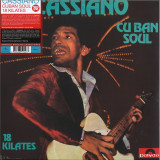
"Cuban Soul-18 Kilates" is Cassiano's third studio album, released in 1976, and stands as a milestone in Brazilian soul music. It combines Brazilian rhythms with classic American soul elements, creating a unique fusion. Cassiano's smooth, soulful vocal style and the album’s larger-than-life arrangements, reminiscent of Tim Maia's sound, give it a rich, deep feel.
The standout track, ‘Onda,’ is a relaxing anthem evoking beach vibes that has become a DJ’s favorite in recent years and also made it into several compilations. "Cuban Soul-18 Kilates" has earned cult status over the years, securing its place as one of the most coveted Brazilian records of all time. Remastered from the original tapes and pressed on 180g vinyl. This release is part of a new reissue series that will include many other outstanding Brazilian classics like Evinha “Cartão Postal” or Gerson King Combo.
"Cuban Soul-18 Kilates" is Cassiano's third studio album, released in 1976, and stands as a milestone in Brazilian soul music. Influenced by artists like Otis Redding, Eddie Kendricks, Stevie Wonder, and others, it combines Brazilian rhythms with classic American soul elements, creating a unique fusion. The album features 9 tracks, with ‘A Lua e Eu’ becoming a major commercial hit and the theme song for the soap opera “O Grito”. Cassiano's smooth, soulful vocal style and the album’s larger-than-life arrangements, reminiscent of Tim Maia's sound, give it a rich, deep feel. The standout track, ‘Onda,’ is a relaxing anthem evoking beach vibes, with its captivating bassline, subtle percussion, and natural sounds of the sea, making it perfect for moments of relaxation. This song, along with the album’s other tracks, showcases Cassiano's mastery of Brazilian soul, making “Cuban Soul-18 Kilates” a definitive and cherished record in the genre. This album has earned cult status over the years, securing its place as one of the most coveted Brazilian records of all time. Once incredibly rare and expensive, it's now at the top of every serious collector's wishlist. After not being available outside of Brazil for years, it’s finally been reissued – don’t miss your chance to own this legendary piece of music history.

4
KITCHEN FUNK: The Groove Legacy of Funk, Hip-Hop, and House
Founded in 1999 in Lorient by Tabasko and Ramirez, key figures in the Breton underground scene, KITCHEN FUNK fuses hip-hop, soul, funk, acid jazz, and house music into a unique sonic universe. Combining punchy rhythms with captivating grooves, the duo made a name for itself in the 2000s, marked by the excitement of clubs and radio stations.
"LETUGO": A Forgotten Treasure Finally Rediscovered
Among their notable collaborations, "LETUGO," recorded with Karl the Voice, embodies the very essence of KITCHEN FUNK. This powerful track, blending funky vibes and soulful energy, didn't receive the promotion it deserved upon its release.
25 years later, the story takes an unexpected turn. After rediscovering local archives, RAMIREZ and JULIEN LO BONO decided to reissue "LETUGO" on vinyl to mark the project's anniversary. The initiative sparked immediate interest: Breton radio stations picked it up, and the record finally found its audience, proving that KITCHEN FUNK's groove is timeless.
A resounding success with "PUSSY CALL"
Before this resurgence, KITCHEN FUNK had made a lasting impression with "PUSSY CALL", a hit that received critical acclaim on Europe 2, NRJ, and RADIO FG. This success allowed the duo to sign with CHRYSALIS PUBLISHING and then 909 RECORDZ (WARNER FRANCE), confirming their place in the French music scene.
A promising future
And this is just the beginning... Boosted by this renewed interest, KITCHEN FUNK is preparing new projects, supported by Jean Jérôme, a key player in the success of "PUSSY CALL." A return to the stage is in the works, ready to rekindle the flame of funk, hip-hop, and house music for a new generation of enthusiasts.
