Lndon Odense Ensemble is a powerhouse quintet that combines forces from the Causa Sui/El Paraiso family tree (Jakob Skott, Jonas Munk, Martin Rude) with the vibrant, experimental London jazz scene (Tamar Osborn, Al MacSween). On two studio full-lengths, released in 2022 and 2023, they have explored the confluence of psychedelia, improvisation and cosmic jazz. On this set, recorded at the 2021 edition of Denmark's Jaiyede Jazz Festival, the energy is cranked up another notch or two. Comprised almost entirely of exclusive material not found on the two studio records these three sonic excursions dive head-on into the fiery side of the group's sound. Taking up the entire A-side "Energy Ascending" starts out as a gently flowing piece of dreamy jazz that wouldn't have sounded out of place on a late 1960s Pharoah Sanders record. As the piece evolves the guitar takes it into rock territory, where it dissolves in a mesmerising breakdown before commencing a build of epic proportions, lead by Tamar Osborn's baritone sax, channelling The Stooges as much as John Coltrane. Heavy. On the B-side things get more electronic and spacy. Here the ensemble uses album track "Sojourner" as a starting point for a new improvisation guided by Al MacSween's virtuoso keyboard work. The rhythm section creates a hypnotic foundation for layers of synths and electric keys to fully blossom and travel into cosmic territory. Limited to 300 copies on transparent ochre vinyl.
Cerca:ed sanders
Taken from the album ‘Strata Records – The Sound of Detroit – Reimagined by Jazzanova’, BBE Music, DJ Amir and 180 Proof records present the 3rd single from this monumental project. This release features remixes by Japanese Club Jazz pioneers Kyoto Jazz Massive, and Genre Blending New Yorkers, musclecars. Kyoto Jazz Massive were enlisted to remix the Jazzanova reimagining of Sam Sanders’s iconic song Face at my Window. Their mix adds an intimate Jazz Club feel to vocalist Sean Haefeli’s recording, which highlights the dynamics of Sean’s voice. The subtle tempo increase maintains the feel of the original and adds a punch to the brass section, making the track an entirely new experience. musclecars add that traditional New York / Chicago House vibe to Jazzanova’s reimagining of Kenny Cox’s ‘Beyond the dream’, and the result is a skippy afro/latin dancefloor filler which can go on forever. musclecars demonstrate their genre blending superpowers on this mix which adds a garage swing to a jazz record, definitely going to be a jam for the dancefloors in 2023. Both remixes showcase the importance of DJ Amir's unearthing of these strata gems, and Jazzanova’s reimagining, how they have breathed new life into one of Detroit’s hidden gems - Strata Records. They will definitely on board new audiences to the treasure trove that is Strata, and the iconic stories surrounding the often overlooked record label.
Fredfades is finally ready with his second album as a solo artist. The producer and DJ and has remained active as a musician ever since his debut single in 2008. Since he released his debut solo album 'Warmth' six years ago he's ben diving into a bunch of different genres and cross-ing musical landscapes such as ambient, hip-hop and house, which has led to releases and productions across labels like his own Mutual Inten-tions imprint, as well as bigger labels like Stones Throw, Fresh Selects and Jakarta Records. This sonic voyage has resulted in ‘Caviar’ - an album that tells the story of a producer who's ready to let go of his youthful love and indulge himself to electronic music.
Fredfades name is more often seen on foreign club posters than back home in Norway. This has colored the musical expression of the Oslo-born multi-artist, and on ‘Caviar’ he is gathering inspiration from every corner of the world where he has traveled. You can clearly hear the inspi-rations from the sounds of Rome, Manchester, South-Africa, Detroit, New York, Berlin, Paris and the Balearic ocean, which are all well repre-sented throughout the album's eight tracks. If you close your eyes and put your ears close to the speakers you will hear loons, running water, African percussion instruments, roaring saxophones, bit-crushed samples, moaning women, TB 303’s, bottom-heavy basslines and recordings of whales communicating at the bottom of the ocean. Everything seamlessly put together for Fredfades’ own sonic world view. The album features a bunch of talented friends of Fred, such as Telephones or the vocalists MoRuf and Kristian Hamilton.
Despite being known as more of a progressive and edgy DJ that haunts down a lot of indie and private press electronic music, Fredfades has cultivated a more elegant and controversial output in his own music. His progressions often consist of dwelling jazz chords from electric pianos or mellow sub-filtered synth patches that creates space where he can unleash rowdy basslines, rhythm sections and leads just as confident and captivating as the man himself. On the jazzy ‘Tenerife 1994’ you can hear a tribute to one of Fred’s greatest heroes in music: Pharoah Sanders, while on ‘My Heart Is On The Edge’ and ‘Summer of Love’ the energy and euphoria is boiling over and directs your mind towards the summer raves which Fredfades is known to throw down in Oslo.
On the LP covers backside Fredfades is posing with a Korg Wavestation in front of the block where he grew up in the suburbs outside Oslo, while the front cover is showing an airbrushed illustration of Caviar from sturgeon - ‘From block to Beluga’. The black vinyl contains magic grooves created by an electronic musical convertite, with the power to transport the listener from a perpetual winter to the 90s warm dance floors and the 'Second Summer of Love’.
Tidal Waves Music proudly presents ‘Fly By Night’ for the FIRST TIME on vinyl (the album was only released as a limited compact disc back in the early nineties).
This unique record comes as a deluxe 180g vinyl edition (strictly limited to 500 copies) with obi strip.NonReturnable.
This vinyl edition also features the original painted front cover artwork by Virgil Grady (known for his work with Tribe records) and back photography by acclaimed Detroit scene photographer & author Barbara Barefield, whose work has appeared in many renowned publications such as The New York Times, LA Times, People magazine and countless others.
Released exclusively for Record Store Day 2023 (UK/Europe) and available in participating stores on April 22, 2023.
Wendell Harrison was born in Detroit in 1942 where he began formal jazz studies for piano, clarinet and tenor saxophone. At 14, while still in high school, Harrison started performing & recording professionally with artists such as Marvin Gaye, Grant Green, Sun Ra, Hank Crawford … and many others.
In 1971, Harrison began teaching music at Metro Arts (a multi-arts complex for youth) where he also connected with Marcus Belgrave, Harold McKinney and Phil Ranelin…soon after they formed the (now
legendary) Afro-centric TRIBE record label and artist collective. TRIBE used the Metro Arts complex as a vehicle to convey a growing black political consciousness. Wendell Harrison also published the very popular TRIBE magazine, a publication dedicated to local and national social and political issues, as well as featuring artistic contributions such as poetry and visual pieces.
In 1978 Harrison and McKinney co-founded REBIRTH, a non-profit jazz performance and education organization, in which many notable jazz artists have participated. Around the same time Wendell Harrison
also created the WENHA record label and publishing company, which released many of his (now classic) recordings as well as those of other artists, such as Phil Ranelin, Doug Hammond and Reggie Fields (The Real ShooBeeDoo).
In the early 1990s, Wendell Harrison was awarded the title of “Jazz Master” by Arts Midwest. This distinction led Harrison to collaborate with fellow honorees and gave him the chance to tour throughout the UnitedStates, Middle East and Africa. Even to this day Wendell Harrison's recordings for the TRIBE, WENHA and REBIRTH labels have a large worldwide fanbase.
It is on WEHHA in 1990 that Harrison released (and self-produced) the opus: ‘Fly By Night’ which we are proudly presenting you today. ‘Fly By Night’ is a monster of an album featuring an all-star line-up that
includes Doug Hammond (Mingus, Lonnie Liston Smith) on drums, Kirk Lightsey (Chet Baker, Calvin Keys) on piano, Cecil McBee (John Hicks, Pharoah Sanders, Alice Coltrane) on bass, Jaribu Shahid (Sun Ra) on contrabass and Pamela Wise (Tribe) on Piano. Harrison is killing it here with this selected ensemble (guys he grew up with in Detroit in the late 50’s, when hard bop was the thing and Miles and Coltrane were the heroes of the day). This group of talented veterans are taking this classic album to unseen heights.
On ‘Fly By Night’ the gloves come off…no more jazzy-funk or poppy-jazz. Wendell picks up his tenor for one tune but the remainder of the sessions he performs on clarinet. Wendell’s mastery coaxes the sweet piquant sound of the instrument and as it re-emerges in the contemporary jazz scene. The eight handpicked tunes demonstrate the fertile new directions Wendell Harrison has been working on, combing standards with a fresh new approach.
On these amazing recordings (recorded at the Rebirth Studios in Detroit) the listener is invited to experience a synthesis of what has been and what is now. The record shows Wendell’s trademark proficiency. All of the above makes this incredible record both timeless and as relevant today as it was back when it was initially
released.
Recorded with a who's who of fusion titans including trumpeter Eddie Henderson, bassist Stanley Clarke, and keyboardist Herbie Hancock, Dance of Magic channels the lessons drummer Norman Connors learned in the employ of Pharoah Sanders, Sam Rivers, and Sun Ra, marshalling Latin rhythms, electronic textures, and cosmic mysticism to create non-denominational yet deeply spiritual funk-jazz. The sprawling 21-minute title cut spans the entirety of the record's first half, capturing a monumental jam session that explores the outer edges of free improvisation but never steps past the point of no return.
Connors' furious drumming is like a trail of bread crumbs that leads his collaborators back home. The remaining three tracks are smaller in scale but no less epic in scope, culminating with the blistering "Give the Drummer Some." by Jason Ankeny
Limited edition colored pressing is for Indies Only. Vinyl housed in a tip-on jacket. For Fans Of... John Carol Kirby, Pharoah Sanders, Bill Evans, Durand Jones & The Indications, Misha Panfilov. Debut LP from Okonski. Features current and former members of Durand Jones & the Indications (Steve Okonski, Aaron Frazer, and Michael Montgomery). Follows the debut single 'By The Lake', a collaboration with Germanbased artist and new Karma Chief signee Pale Jay (500k Monthly listeners). The studio at 122 West Loveland Avenue was not an unfamiliar space for Steve Okonski, the leader of his eponymous trio Okonski. Ever since the Colemine label set up shop in Loveland, Ohio it has been a host to a number of groups passing through town, including Durand Jones and the Indications who all of this trio’s members have connections to. After setting aside some time in winter of 2020, Okonski, trained initially as a classical pianist, invited Michael Isvara “Ish” Montgomery and Aaron Frazer to work on an album that was initially planned to be beat driven and fully composed trio instrumentals. After finishing this first session with some improvisations, a second week was booked in the summer of 2021 to try and capture some more of that spontaneous energy. During this session, the tracks were all improvised and recorded live to a Tascam 388 during several late nights at the Colemine HQ. They were structured to allow the group’s collective intuition to fully shape the melodies and arcs of the music. The album opens with Runner Up, where a triumphant yet melancholic melody in the piano leads to a more reserved B-section driven by the drums and bass of Frazer and Montgomery. As you journey through the remainder of the album you are met with a plethora of evoked and explored emotions. The calmness one has walking down a moonlit street after midnight, the connection one has for a person who comes into their world for just a moment or a lifetime, and the nerves and catharsis one feels when starting upon a new, unknown journey. Magnolia closes with Sunday, a track that was recorded late into the night at the close of their first recording session. Without the spontaneity of Sunday, the remainder of Magnolia would likely have never come to fruition. Magnolia was composed from the heart and from the spirit of those in the studio those late nights in Loveland. It is the culmination of an emotional and artistic release that was not afforded or recognized before the band sat at their instruments, and because of that it is introspective, meditative, spiritual, and new.
The 2LP Great Moments With documents the music of Pharoah Sanders from 1983 to 1990, showcasing both the raw energy and tender nature of his music. It contains 12 of his recordings, including “Africa”, “Naima”, “You’ve Got To Have Freedom” and also the previously unreleased version of “Central Park West”. Featured guest musicians are John Hicks, Idris Muhammad, Curtis Lundy, Benny Golson, Cedar Walton, Ron Carter and more jazz masters. For this compilation, Bret Primack has written new liner notes and Timeless Records founders Ria and Wim Wigt here share additional great moments from Sanders’ sublime work.
Great Moments With is available as a limited edition of 1500 individually numbered copies on translucent blue coloured vinyl, housed in a gatefold sleeve.
A stalwart of the Leeds music scene for the best part of 3 decades, Tony Burkill has so far maintained a low profile nationally, choosing to favour continued study and development of the instrument over the attainment of success or recognition within the music industry. Working as a sideman for hire on the local circuit, he has impressed audiences with his powerful and gutsy approach to improvisation and has been a well-kept secret amongst both musicians and audiences in the north of England since the 1980s.Recently featuring as a guest soloist on the debut album by The Sorcerers, Tony has been on the radar of ATA Records since the inception of the label. Impressed by his exuberant and earthy performance style they decided to embark on the writing and production of what was to become "Work Money Death", choosing to frame his playing in the context of the performers that have helped to shape his sound, most notably the spiritual jazz of the 60s and 70s.
"Work Money Death"explores the foundations laid by the great Tenor players of the 60s & 70s: Gato Barbieri, Pharoah Sanders, John Klemmer and John Coltrane, taking inspiration from their work and using it as a springboard for Tenor Saxophonist Tony Burkill's improvisation. Co-written with Bassist Neil Innes, the album attempts to frame Tony's playing within the context of that which has been most influential to him over the span of a 20+ year long career. Featuring on the record are Drummer Sam Hobbs (The Electric Doctor M and Producer of Matthew Bourne's Moogmemory), Bassist Neil Innes (The Sorcerers, Eddie Roberts' Roughneck), Pianist George Cooper (Abstract Orchestra), Percussionist Pete Williams (The Sorcerers) and features a guest performance from Pianist Matthew Bourne on the track "Beginning and End".
Support and airplay from Gilles Peterson (BBC6 Music, Worldwide FM), Jamie Cullum (BBC Radio 2). Good reviews have so far been forthcoming from the likes of Jazzman Gerald and Nat Birchall who described it as sounding "like a lost album from the spiritual jazz scene of the 1970s".
Known for their dynamic sound and complex song structures, De Beren Gieren deliver an extravagant blend of polyrhythmic soundscapes and elitist twists, showing an ability to change mood in a way that constantly holds the listener’s attention. They effortlessly shift from more rigidly styled compositions to improvised sections and thus reveal the pulsating and ominous futuristic sound of a new world.
Produced by Dijf Sanders and Frederik Segers, ‘Less Is Endless’ is an ode to a universe teeming with life. Seen as an extension to the critically acclaimed 2017 album ‘Dug Out Skyscrapers’, it searches for vents through which life can emerge and evolve. The secret of communicating creativity can be found in the cultivation of the unfinished; the missing piece of the puzzle tickles the imagination more than the perfect end result.
From the psychotropic opener ‘A Funny Discovery’ and off-kilter piano rhythms of ‘Animalcules’ to the impressionist melodies and harmonic soundscapes of ‘Tuin’, De Beren Gieren give the music the space to breath and grow with every unexpected twist and turn. Elsewhere, ‘Guggenheim House’ is a lesson in the avant-garde, while ‘Gentse Leugentjes’ is a far cry from the traditional piano-bass-drum set-up, before the affecting ‘Moments Never a Moment’ and 18-minute ‘A Random Walk’ is an adventure in improvisation and electronics that defies any logical convention.
Forming in 2009, Fulco Ottervanger (piano, fx, synths), Lieven Van Pée (double bass, electric bass) and Simon Segers (drums, fx) quickly built a reputation across the Benelux region with their ‘must-see’ live shows and have since taken their transcendental live energy across Europe, Morocco and Japan and have performed at North Sea Jazz, Jazz Middelheim, Trondheim Jazzfestival, Ljubljana Jazz Festival, Moers Festival, Gent Jazz, Kanazawa Jazz Street and Eurosonic.
The trio’s breakthrough came with second album ‘A Raveling’ (2013) which received rave reviews, and the following year, a live recording with Portuguese trumpet player Susana Santos Silva was released as ‘The Detour Fish’ (2014) on the Clean Feed label, gaining De Beren Gieren further widespread recognition. Their 2015 release ‘One Mirrors Many’ was lauded by Dutch magazine Jazzism and signalled the beginning of their electronic quest, finding its maturity in ‘Dug Out Skyscrapers’ (2017). In 2019, they celebrated their 10th anniversary, releasing the limited edition ‘Broensgebuzze EP’.
De Beren Gieren have collaborated with renowned jazz artists including Louis Sclavis, Ernst Reijseger, Joachim Badenhorst, Marc Ribot, Jan Klare and Jean-Yves Evrard.
Cornetist Don Cherry first rose to prominence as part of the revolutionary Ornette Coleman Quartet that turned the jazz world on its ear in 1959 when it arrived at the Five Spot Café in NYC. Though Cherry co-led the album The Avant-Garde with John Coltrane in 1961, it wasn’t until he signed with Blue Note in 1965 that he began his career as a leader with a run of fiery albums including Complete Communion, Symphony for Improvisers, and 1966’s Where Is Brooklyn? This last session was a highly interactive quartet date that featured Pharoah Sanders on tenor saxophone and piccolo, Henry Grimes on bass, and Ed Blackwell on drums. This Blue Note Classic Vinyl Edition is all-analog, mastered by Kevin Gray from the original master tapes, and pressed on 180g vinyl at Optimal. from Coleman's playful lyricism.
Moreover, the rhythm team of Ed Blackwell on drums and Henry Grimes on bass provides a scintillating underpinning for the music that is worth listening to all on its own. Sanders' mix of Coltrane's yearning long notes, Ayler's ghostly, fluttering wail, Coleman's fast, bumpy phrasing and his own manic bagpipe screams certainly separates the faint-hearted from the stayers on the opening Awake Nu. But the conversation between Sanders and Cherry is light, lyrical and engaging on The Thing, and the saxophonist even gets into a stubborn, Sonny Rollins-like repeating Latin vamp on There Is the Bomb. An unflinchingly quirky classic. (THE GUARDIAN)
This Is For You, John is an album by saxophonist/composer
Benny Golson, recorded at Vanguard Studio, New York City in
1983 and released the year after. For the recordings, Golson was accompanied by Pharoah Sanders on tenor sax, Cedar Walton on piano, Ron Carter on bass and Jack DeJohnette on drums. The album features tunes associated with, or inspired by the famous American Jazz saxophonist John Coltrane, including “Times Past (This Is For You, John)”. “Origin” is an original, composed by Pharoah Sanders.
This Is For You, John is available as a limited edition of 1000 individually numbered copies on green coloured vinyl. The back of the sleeve contains extensive liner notes by Benny Golson, reflecting meetings with John Coltrane and the inspirations behind the songs.
Repress expected. Date TBA
By 1980 when this was originally released Pharoah Sanders was solidly entrenched with his own voice on tenor. The passing of John Coltrane and Sanders's fruitful years of playing with the prolific saxophone genius resulted with an unmistakable influence on his sound and explorations of the instrument. Beginning with "Greetings to Idris" the structure of the music is one that follows tradition yet opens up for the musicians to improvise within the arrangements. "Greetings to Idris" is in reference to the featured drummer Idris Muhammad who also played with Coltrane during his late period. Naturally Sanders is featured as the main instrument and his horn can be bold and demanding of your full attention. Always interested in other instruments from other cultures, much like Trane, he incorporates the Japanese instrument the koto, a beautifully harmonic stringed instrument to counter his soft rich blowing on tenor with only wind chimes and a harmonium for a delicious peaceful bit of music on "Kazuko"(Peace Child) that has the qualities of a meditative offering. Most of the music, eight tracks, is composed and arranged by Sanders and demonstrates his leadership. There is one John Coltrane composition entitled "After The Rain" that gets the Tranesque treatment by Sanders that makes it hard for even the most discerning listener to distinguish between the original version and Sanders impression. It is a bluesy duet featuring only sax and piano and leaves you wanting to hear it over and over again because of it's simple and haunting melodies. Another song that Coltrane recorded entitled "Easy To Remember" has a gentle swing to it built around a classic quartet (drums, bass, piano, sax) like that employed by Coltrane that results in a superb standard. Sanders incorporates the use of another "foreign" instrument to jazz by working in a tabla and sitar on "Soledad " that takes center stage before Sanders joins in on the music. The result is a thing of genius as the East and West merge and interface for composition that is peaceful. Sanders music on this LP fluctuates between the tranquil sounds of his mellow horn to the outer limits where he left off with the explorations of Trane's late period. What separates this LP from others is that it is a group playing under his leadership where he gives all others close to equal billing. The uptempo, "You've Got To Have freedom" is one such song where Sanders gets out there on some of his solos but works within the group structure as the other musicians, most notably Eddie Henderson on flugelhorn, bring the music back home. There is a chorus sung much of the time throughout where the the proclamation "Ya gotta have peace and love, ya gotta have freedom" is presented in Manhattan Transfer style but with much more soul. The use of vocalists is done again on the track entitled "Think About The One." The chorus features vocalese specialist Bobby McFerrin. This LP shows the different sides of Pharoah Sanders, a man always willing to explore the music, explore his soul and share it with you. The closing track "Bedria" is a mellow exploration of the various ranges of the tenor. It is a ten minute song that displays all the grace of his being, a gentle giant who can manipulate the horn to do extraordinary things, reverberating out and back in undulating waves of harmonic bliss. Sanders on this LP is next to perfect. One of his best recording from his post Impulse career. It belongs in your jazz collection right next to John Coltrane.
Deluxe 180gram vinyl edition comes in a foil-embossed and die-cut cardstock jacket with printed inner sleeve and additional 12x12 art cards featuring the collages of Maciek Szczerbowski. All the art interacts with the die-cut jacket framing. Edition of 300. Rooted in a distinct and immediately identifiable sound_with the cello of Rebecca Foon (Saltland, Set Fire To Flames, Thee Silver Mt Zion) and the marimba of ex-Godspeed You! Black Emperor percussionist Bruce Cawdron at its core_Esmerine has long embroidered emotive chamber works using threads of post-classical, post-rock, Minimalism, neo-Baroque, jazz, pop and a wide array of folk traditions. Multi-instrumentalist Brian Sanderson, who joined the group in 2012, has furthered Esmerine's melodic and ethnomusicological sensibility ever since, expanding the ensemble's palette as its third core member with guitars, ngoni, ekonting, hulusi, brass horns of all sorts, and more. Since 2003, six stately and filmic instrumental albums have inscribed compositional landscapes through epigrammatic miniatures, longform multi-movement chronicles, and all manner of evocative musical prosody between. Marked by an inimitably turbid yet tempered pastoralism, alternately lit by dappled dawn and disquieted dusk, Esmerine's musical narratives balance asceticism and romanticism, melancholy and hope, stillness and wanderlust. Esmerine now shares Everything Was Forever Until It Was No More, its seventh full-length album and first in five years. The band surprise-dropped the full album digitally on 06 May 2022, with the CD and Deluxe 180gram LP editions hitting stores on official release date 26 August 2022. Following an acclaimed run of mid-career records on Constellation through the 2010s_the last three of which have all been finalists or winners of Juno Awards for Instrumental Album of the Year and/or Album Packaging of the Year_Esmerine began working on new music at decade's end. Under the auspices of a grant from the Canada Council for the Arts, and a summer 2019 residency at Le Château de Monthelon (an artist commune in France where the band has cherished long-standing spiritual, creative, and personal connections), compositional seeds were planted_and then pandemic rooted everyone in place. In between lockdown waves, at the respective rural Québec homesteads of Cawdron and Foon, longtime co-producer Jace Lasek (The Bernard Lakes) began capturing the band in various stripped-down configurations with spartan remote equipment. More fulsome arrangement and overdub sessions at Foon's converted barn during the summer of 2021 brought the album to full fruition_where a notable increase in the use of acoustic piano also poured forth, with just about every band member having a go. The record also signals the definitive integration of bassist Philippe Charbonneau_having joined Esmerine as a touring member pre-pandemic, he plays throughout the album on upright and electric bass, with turns on piano and synth, as well as sound design contributions via tape echo and other processing. Everything Was Forever Until It Was No More grapples with the existential tensions between atmosphere and airlessness, seclusion and claustrophobia, forbearance and coalescence. In many ways it is one of Esmerine's most restrained records. Only a few passages are driven by full percussion. There is palpably less Sturm and Drang or overt crescendos compared to its recent predecessors. The new album roils with a different sort of dynamic intensity, where instrumental densities ebb and flow within an overtonal centre, melding into each other with gauzy timbral warmth, sometimes tracing fleeting tendrils outwards, but always rotating around a saturnine gravitational force. Everything Was Forever Until It Was No More is like a dark forest lit by a closely-orbiting opalescent planet; it could be the alternate score to Von Trier's Melancholia or Cormac McCarthy's The Road.
In association with DJ Amir’s 180 Proof Records, BBE Music continues its exploration of rare gems from the Strata Records catalogue, with previously unreleased Sam Sanders album ‘Mirror Mirror’. A collector’s dream come true, this is musical treasure is so rare that the recordings on this album have never before seen a proper release and even the cover art had to be created from scratch. An almost unbelievable fact, given that it ranks as one of the strongest releases in the already air-tight era of Strata’s Detroit. Although he’s been compared to John Coltrane, Ornette Coleman and Joe Henderson, saxophonist Sam Sanders stands out as one of the most unique phenomena to come from the Motor City. Sanders’ approach to life was so 'out there' that one might say his relative obscurity was a personal choice. Sanders caught glimpses of fame early on performing with several internationally known acts and subsequently, he also learned a bit about what the Record Industry’s primary goals were. Realizing that he did not share them, Sanders chose instead to walk his own path. This drive for artistic freedom turned out to be a double-edged sword: while it allowed Sanders to produce some of the most electric jazz, funk, and soul to come from Detroit, it also meant that most of his recordings were never widely released, if they were released at all. Drawing on his experience with Motown acts like Stevie Wonder and Smokey Robinson, Sanders incorporated a fresh soul sound into recordings that would have otherwise been categorised as jazz. As such, 'Mirror Mirror' moves seamlessly between spirit and style: The album starts on the street with “Inner City Player,” a superfly breakdown of a Detroit hustler’s life, before moving into distinctly abstract territory with the melancholy “Face At My Window.” The experience is held together by a no-nonsense rhythm section featuring the aggressive drumming of Jimmy Allen and the intensely focused bass playing of Ed Pickens. Perhaps the most straightforward jazz song on the album, “Lover’s Gain” showcases Sanders at his freewheelin’ best. And if there was to be any doubt that 'Mirror Mirror' can get funky as hell, look no further than the wah-wah guitar and early synth sounds of “Funk’ed Up,” easily the greasiest cut on the album. 'Mirror Mirror' is remastered from the original reel to reel master tapes.
- 1: Preliminary Purification Before The Calling Of Inanna
- 2: Rapture Of The Empty Spaces
- 3: Contemplate This On The Tree Of Woe
- 4: A Most Effective Exorcism Against Azagthoth And His Emissaries
- 5: Slavery Unto Nitokris
- 6: Shira Gula Pazu
- 7: Kali Ma
- 8: Curse The Sun
- 9: Impalement And Cruxifiction Of The Last Remnants Of The Pre-Human Serpent Volk
- 10: Dying Embers Of The Aga Mass Sssratu
The subterranean slumber of Nile mastermind Karl Sanders’ Eastern-ambient Saurian series finally ceases with the third chapter of his darkly hypnotizing saga, Saurian Apocalypse! The album’s musical and lyrical themes detail the vexing fictional journey of Dr. Eduardo Lucciani, one of very few survivors of mankind’s self-destruction, who descends into madness after discovering the violent horrors occurring at the hands of the Saurian Masters. Emphasized by unique instruments like the baglama saz (Turkish lute), Ancient Egyptian Anubis Sistrum, Dumbek (Middle Eastern goblet drum), glissentar and gongs, the album’s score weaves cinematic auras and deep grooves, accented by the tribal percussive stylings of original Nile drummer Pete Hammoura and returning Saurian vocalist Mike Breazeale. Whispering atop the ominous sands of opener “The Sun Has Set on the Age of Man” are resonant flutes, forewarning percussion, and an exquisitely tasteful and contextual acoustic guest solo by guitar virtuoso Rusty Cooley – kicking in the massive doors of Saurian Apocalypse. Immediately, the album’s impactful production and crystal clarity versus its predecessors is apparent
- A1: The Dynamic Sound
- A2: Girls And Boys
- A3: 7 Nation Army
- A4: Land Of 1000 Dances
- A5: Rockit
- B1: Green Onions
- B2: Miss You (Long Edit)
- B3: Brothers On The Slide
- B4: Lay Lady Lay
- C1: Whole Lotta Love
- C2: 90 % Of Me Is You
- C3: Music
- C4: Feel Like Making Love
- D1: The Creator Has A Masterplan
- D2: Fever
- D3: Move On Up
Stix Records, a sub-label of Favorite Recordings, proudly presents the long awaited reissue of Version Excursions, first album by The Dynamics. Originally released in 2007 and highly hard to find today, it could be considered as a modern reggae classic.
The band composed of Bruno “Patchwork” Hovart (production & programming), Eric “Flab” True (programming) and a vocal trio made of Mr Day, Sandra “Mounam” and Stevie Levi, quickly became famous with a 7inch single series, displaying their unique recipe of covers from classic hits by Madonna, Curtis Mayfield or The White Stripes to name just a few. True to Rocksteady and Reggae’s timeless tradition, everything from Pop, Roots, Disco, Soul & Rock is distilled through their fuzzy hypnotic filters to create amazing cover versions.
Originally hailing from the villages of Cameroon, the halls of Harvard, the palaces of Versailles, the boweries of Bristol, or the squares of Provence, it’s then in Lyon that The Dynamics united and created their timeless music, both vintage and fresh. 15 years after its release, the album’s still a real success, with more than 350k listeners on Spotify every month. An achievement easily explained by the quality of the tracks gathered, which also brought the original release to become quite rare years after years, now selling for crazy prices on the second-hand market.
"Whole Lotta Love" (Led Zeppelin), "Fever" (Peggy Lee), "The Creator Has A Master Plan" (Pharoah Sanders), "Lay Lady Lay" (Bob Dylan), these are only a few of the Rock, Pop, Soul and Jazz most famous hits reimagined by The Dynamics. In addition to the original tracklisting, you'll find on our 2022 remastered edition their cover of "Music" by Madonna, previously only available as 7inch.
Strut present an exclusive collaboration between two jazz greats, Bennie Maupin and Adam Rudolph, on 'Symphonic Tone Poem For Brother Yusef', originally commissioned by the Angel City Jazz festival in Claremont, to mark the late, great Yusef Lateef's 100th birthday on 9th October, 2020. The album weaves a magical, meditative path across five movements, combining electronics, saxophone, voices and Rudolph's wide palette of percussion from hand drums to thumb pianos and gongs. Both artists bring unparalleled experience to the project. Detroit's Bennie Maupin is best known for his work with Miles Davis on Bitches Brew, Herbie Hancock and The Headhunters and Eddie Henderson. Chicago percussionist Adam Rudolph was Yusef Lateef's percussionist for 20 years and has worked with many other jazz luminaries including Pharoah Sanders, Wadada Leo Smith and Don Cherry. His work with Mandingo Griot Society during the '70s and '80s and, more recently, leading Hu Vibrational and Go Organic Orchestra constantly break new ground in the use and context of percussion.
To celebrate the 45th anniversary of iconic Dutch jazz label Timeless Records, Music On Vinyl is releasing a series that features albums that are part of the Timeless Records legacy and will be released mainly throughout 2022.
Part of this series is Pharoah Sanders’ Moon Child from 1990, which bookended a decade of musical soul searching for Sanders. The acclaimed free jazz player is known to have a raw and abrasive sound, but reinvented himself on this album as a more traditional improviser capable of thoughtful deliberations. Moon Child is a grand old time throughout, and Sanders has never been more eminently sing-along-able as he is on its title track. The record was co-written with Horace Silver, George Gershwin and Abdullah Ibrahim and recorded with William Henderson, Stafford James, Eddie Moore and Cheikh Tidiane Fal
"If I could watch any jazz band in the UK, any, I would choose Matthew Halsall's band, just love what he's been doing over the last few years... It's always high level, spiritual jazz music" Gilles Peterson BBC Radio 1.
Matthew Halsall (born September 11, 1983, in Manchester, England) is a Worldwide Award winning and MOBO nominated trumpeter, composer, producer and DJ.
Since 2008, Matthew has released seven critically acclaimed studio recordings and has been a key figure in the rise of a new jazz sound in the UK. In addition to his own releases Halsall has collaborated with many DJs and producers, most notably DJ Shadow and Mr. Scruff, and in 2013 Matthew's music was selected by Bonobo for his Late Night Tales compilation. Halsall is also the founder of Gondwana Records, a genre bending independent record label featuring a wealth defining albums by the likes of Portico Quartet, GoGo Penguin, Hania Rani and Mammal Hands.
His own rich music draws on the spiritual-jazz of Alice Coltrane and Phaorah Sanders, contemporary electronica and dance music alongside his travels in Japan, the traditional art and music of which, has left a lasting impression on his compositions.
Sending My Love (2008) and Colour Yes (2009) were his first releases and document Halsall's first great bands featuring the likes of flautist Chip Wickham, saxophonist Nat Birchall, harpist Rachael Gladwin, bassist Gavin Barras and drummer Gaz Hughes. Joyful, life-enhancing albums, drawing on UK jazz and spiritual jazz influences but with a decidedly modern bounce, they introduced Halsall's music to the world gathering support from the likes of Gilles Peterson and Jamie Cullum, Mojo, Straight No Chaser and beyond.
But Halsall was never completely happy with how the records were presented and as part of Gondwana Records 10th anniversary decided to revisit the recordings, meticulously remixing and remastering them for vinyl and commissioning new artwork from Ian Anderson, one of his favourite designers. These then are the definitive editions of the records.
Sending My Love comes complete with the beautiful bonus track This Time, while Colour Yes features the equally striking It's What We Do and Ai.
"I am very proud of these early recordings. They represent the starting point of my musical journey in Manchester and showcase some of the cities finest musicians such as: Nat Birchall, Chip Wickham, Rachael Gladwin, Adam Fairhall, Gavin Barras and Gaz Hughes. They are also the very first recordings my brother and I decided to release on our record label (Gondwana Records). Listening back they sound full of energy and joy and really reflect how I was feeling at that precise moment. But as much as I loved the music, I was never 100 percent happy with the sound of the mixes and mastering.
So I decided to go back to the original tapes to remix and remaster them and present them the way I'd always wanted, and along the way we unearthed a couple extra unreleased tracks, which we decided to include as bonus material. Myself and my brother also decided to bring in Ian Anderson of The Designers Republic to re-imagine the artwork and we are super blown away by the results!" Matthew Halsall, Oct 2019
Matthew Halsall unveils new band and announces 'Salute to the Sun'
his new album on Gondwana Records
Limited edition Double Clear vinyl, printed on reverse board with Gold foil artwork plus double printed reverse board inner sleeves including download code. Cover Artwork by Daniel Halsall with design and layout by Ian Anderson of The Designers Republic.
Comes packaged in a resealable, re-usable Polypropylene anti-static, acid-free, crystal clear sleeve for maximum protection.
Composer, trumpeter, producer, DJ and founder of Gondwana Records, Matthew Halsall has always worn many hats. But at the heart of everything that he does Halsall is first and foremost an artist and a musician. A trumpeter whose unflashy, soulful playing radiates a thoughtful beauty and a composer and band-leader who has created his own rich sound world. A sound that draws on the heritage of British jazz, the spiritual jazz of Alice Coltrane and Pharoah Sanders, as well as world music and electronica influences, and even modern art and architecture, to create something uniquely his own. A music that is rooted in Northern England but draws on global inspirations.
Salute to the Sun is his first album as a leader since Into Forever (2015) and marks the debut of his new band. A hand-picked ensemble featuring some of Manchester's finest young musicians: Matt Cliffe flute & saxophone, Maddie Herbert harp, Liviu Gheorghe piano, Alan Taylor drums and Jack McCarthy percussion as well as long-time Halsall collaborator, bassist, Gavin Barras who has been at the heart of Halsall's bands for over a decade. For Matthew it was important to have a band based locally and able, pre-Covid, to meet and play each week, and who also performed a sold-out monthly basement session at Yes in Manchester. The album draws energy from these sessions and inspiration from themes and ideas that have inspired Halsall through the years (on albums such as Oneness, Fletcher Moss Park and When the World Was One) ideas of ecology, the environment and harmony with nature.
"I feel Salute to the Sun is a positive earthy album. I wanted to create something playful but also quite primitive, earthy and organic that connected to the sounds in nature. I was listening to lush ambient field recordings of tropical environments such as jungles and rainforests and found myself drawn to percussive atmospheric sounds which replicated what I was hearing (bells / shakers / chimes / rain sticks) and I started to experiment with more wooden percussive instruments such as kalimba and marimba".
Salute to the Sun features lush wholly improvised tunes inspired by ambient rainforest and jungle field recordings, deeply soulful tunes built around hypnotic harp and kalimba patterns, deep Strata-East inspired spiritual jazz grooves and some of Halsall's most beautiful playing and inspiring healing melodies yet recorded.
The album was recorded at the band's weekly sessions, using Halsall's own recording set-up, giving the recordings a relaxed vibe and unforced energy that really lets the music breath. The album is also very much a family affair as Halsall's brother Daniel Halsall, artistic director of Gondwana Records, was an important presence at the sessions and co-produced the album. It is also his memorable artwork that adorns the cover of Salute to the Sun, an album beautifully designed by legendary designer Ian Anderson of The Designers Republic, who also created the covers for the recent archival releases Oneness, Sending My Love and Colour Yes and is one of Halsall's favourite designers. Together Daniel Halsall and Ian Anderson have designed all of Matthew's seven albums to date, so it felt extra-special to bring them together for, Salute to the Sun, an album that Halsall was determined to present in the very best way possible. The album was mixed with another long-time collaborator, George Atkins at 80 Hertz in Manchester, who works tirelessly with Halsall to perfect the sound and was mastered by noted engineer Peter Beckmann who brings an added depth to the sound specially around the bass notes as well as Halsall's trumpet. The magnificent double vinyl was cut as a Half Speed master by Barry Grint at Alchemy Mastering for the best possible analogue experience.
The result is arguably Halsall's most beautiful and complete recording to date, playful, charming and imbued with the warmth of the sun and the energy of life.
Deluxe 2LP editions with artwork re-imagined by Ian Anderson of 'The Designers Republic'. "If I could watch any jazz band in the UK, any, I would choose Matthew Halsall's band, just love what he's been doing over the last few years ... It's always high level, spiritual jazz music" - Gilles Peterson BBC Radio 1. Matthew Halsall (*September 11th' 1983, in Manchester, England) is a Worldwide Award winning and MOBO nominated trumpeter, composer, producer and DJ.
Since 2008, Matthew has released seven critically acclaimed studio recordings and has been a key figure in the rise of a new jazz sound in the UK. In addition to his own releases Halsall has collaborated with many DJs and producers, most notably DJ Shadow and Mr. Scruff, and in 2013 Matthew's music was selected by Bonobo for his Late Night Tales compilation. Halsall is also the founder of Gondwana Records, a genre bending independent record label featuring a wealth defining albums by the likes of Portico Quartet, GoGo Penguin, Hania Rani and Mammal Hands. His own rich music draws on the spiritual-jazz of Alice Coltrane and Phaorah Sanders, contemporary electronica and dance music alongside his travels in Japan, the traditional art and music of which, has left a lasting impression on his compositions.
Sending My Love (2008) and Colour Yes (2009) were his first releases and document Halsall's first great bands featuring the likes of flautist Chip Wickham, saxophonist Nat Birchall, harpist Rachael Gladwin, bassist Gavin Barras and drummer Gaz Hughes. Joyful, life-enhancing albums, drawing on UK jazz and spiritual jazz influences but with a decidedly modern bounce, they introduced Halsall's music to the world gathering support from the likes of Gilles Peterson and Jamie Cullum, Mojo, Straight No Chaser and beyond. But Halsall was never completely happy with how the records were presented and as part of Gondwana Records 10th anniversary decided to revisit the recordings, meticulously remixing and remastering them for vinyl and commissioning new artwork from Ian Anderson, one of his favourite designers. These then are the definitive editions of the records. Sending My Love comes complete with the beautiful bonus track This Time, while Colour Yes features the equally striking It's What We Do and Ai.
"I am very proud of these early recordings. They represent the starting point of my musical journey in Manchester and showcase some of the cities finest musicians such as: Nat Birchall, Chip Wickham, Rachael Gladwin, Adam Fairhall, Gavin Barras and Gaz Hughes. They are also the very first recordings my brother and I decided to release on our record label (Gondwana Records). Listening back they sound full of energy and joy and really reflect how I was feeling at that precise moment. But as much as I loved the music, I was never 100 percent happy with the sound of the mixes and mastering. So I decided to go back to the original tapes to remix and remaster them and present them the way I'd always wanted, and along the way we unearthed a couple extra unreleased tracks, which we decided to include as bonus material. Myself and my brother also decided to bring in Ian Anderson of The Designers Republic to re-imagine the artwork and we are super blown away by the results!" Matthew Halsall, Oct 2019.
Tete Mbambisa has performed and recorded with many of the giants of South African Jazz (Bazil ‘Manenberg’ Coetzee, Johnny Dyani, Dick Khoza, Duku Makasi, Gideon Nxumalo, Dudu Pukwana, etc...), and is one of the very few South African jazz musicians that can claim to have played with the three jazz generations of the last fifty years. His work as a pianist, vocalist, composer and arranger is a landmark on South African jazz history.
After a recording hiatus, Mbambisa returned in 1974 with an octet album, 'Tete's Big Sound' released on a newly formed label, As Shams or The Sun, established by South African record store owner and independent producer Rashid Vally. 'Tet's Big Sound' included tracks like 'Unity' and the 'Black Heroes Lamentation', now considered a classic in the South African jazz underground. The sound that Mbambisa carved in this period was wholly acoustic, and is a style that now is often loosely labelled spiritual jazz, a sound that alludes to deep African textures and rhythms balanced with clear nods to American hard bop and modal jazz, sometimes edging toward free improvisation in echoes of John Coltrane and Pharaoh Sanders.
Spoken word recordings from Gregory Corso, Tina May Hall, Sam Lipsyte, Christine Schutt, Gary Lutz, Allen Ginsberg, Dawn Raffel, Jason Schwartz, Kathryn Scanlan, Scott McClanahan, & Terry Southern. About 40 years ago, in a record shop on Long Island during a weekend visit there to see my parents, i found a double-LP that looked like something i should definitely buy. It was called "BIG EGO", by the The DIAL-a-POEM POETS. On the cover was a picture of John Giorno (a great poet Ed Sanders had turned me on to) on a NYC rooftop with Philip Glass, Meredith Monk, and two kids. It cost $2. I bought it and rushed back to my parents house, where i still had my old turntable in the basement, not far from my Jimi Hendrix and Zappa Crappa posters, and my framed portrait of John Cage. My copy of Eno's "Discreet Music" was still on the turntable, having been left there years before, when i'd fled Long Island for good. I lifted it from the platter, gently slid it back into its sleeve, like a priceless religious artifact, and put Side A of the Dial-a-Poem LP on. I almost lost my mind while listening to it. The next day i went back to the same record shop looking for more DIAL-A-POEM LP's. i found two. One had a long list of names on the back, some famous, and some i'd never heard of before. I bought both LP's, and an hour later, for the first time in my life, i was exposed to the art of Laurie Anderson, whom i'd never heard of before. This was 1978. Her contribution was a piece called "Time To Go". It changed my life. Or at least, that’s how I remember it. I was just a kid, so there were a lot of moments like that, around then. Nowadays, these moments can be had in seconds, with a click of the cursor. That evening, as i sat alone by my imaginary campfire (ie; that record player in my parents basement), i promised myself that someday, somehow, i would embark upon a WORDS & MUSIC project that might move people the same way i was moved when i first heard Laurie, and Robert Wilson & Christopher Knowles, and Burroughs, and Ginsberg, and Corso, and Anne Waldman, and John Ashbery, and the great Charles Olson, and so many others. Words, for the very first time, had wielded the same power as music. And it was visceral. Just like music. It ran deep. It was a FEELING. John Giorno died in 2019, but he kept poetry alive like nobody's business. I was lucky enough to have spent some time with him in the early 1980's, when i was briefly a member of The Fugs, and often found myself surrounded by those Ginsberg called, "...the greatest minds of my generation". Ed Sanders (who'd ushered me into that scene) once told me that when he came to NYC, it was easy to go to a cafe, or to St Marks Church, and hear Burroughs, Corso, Ginsberg, and all the greats, reading their poetry. He said that even if you were just a bum on the street, you could just walk right up to them, and start a conversation. They were totally accessible, if they were in the right mood at that particular moment. So i was shocked when Sanders told me he didn't approach any of them, not even once, til he'd been going to their readings for nearly ten years. "For almost a decade, I went to every reading, every lecture, every panel discussion. But I never went near them. Never approached them. Not even once", Sanders told me. "For ten years, all I did, was listen." It took me four decades, but ... better late than never. I finally made WORDS & MUSIC, Book One.
Born in Naples, educated in New York and now residing in Paris, drummer Francesco Ciniglio combines spotless drumming facility with substantial compositional flair, and has the capacity to move, reflect and express through his music. An in-demand sideman, Ciniglio has collaborated with Wynton Marsalis, Shai Maestro, Aaron Parks, Dayna Stephens, Seamus Blake and Tony Tixier. Following his debut solo solo release ('Wood', with Parks and Joe Sanders), Ciniglio returns as leader for his Whirlwind debut, 'The Locomotive Suite', a set of compositions for sextet that combine a personal metaphor of resilience with snapshots of his formative familial influences. Barcelona-based Raynald Colom (trumpet), fellow Paris emigrée Matt Chalk (alto) and Matteo Pastorino (bass clarinet) take the frontline duties, with Frenchman Alexis Valet on vibraphone and rising star Felix Moseholm on double bass.
oracle and audioMER. are honoured to announce the release of a new LP; Reading the City with music by oracle, Laszlo Umbreit & Mira Sanders.
In 2019 oracle invited artist Mira Sanders to interact with their practice through her writing. Due to the corona crisis, their shared working time couldn’t happen in the planned way:
“The writing project was originally planned as an exchange while travelling together one week on the Buratinas boat, navigating on the canals and rivers starting from Brussels. Due to the sanitary conditions with the Covid19, the trip together could not be realised or at least was complicated.
Instead of seeing the situation as an obstacle, I saw it as an opportunity to travel with them from afar. Me, living outside the city and them, inside. My question was ‘how, through their voices echoing with the urban spaces, will I imagine the city’s everyday life?’. Because one of the things that oracle’s practice does is to offer ways to perceive and encounter the city and its inhabitants.
For the texts I was inspired by the recordings oracle sent me every day during one week. Besides that, the book Invisible Cities written by Italo Calvino gave me a way of structuring my imagination.” – Mira Sanders
Following this artistic exchange and during a collaboration with sound artist Laszlo Umbreit, the idea of the record Reading the City was born. The existing recordings and the written sci-fi episodes by Mira Sanders functioned as a source of inspiration for the electronic sound composition Places, infiltrated by the original voices and city soundscapes. The recordings of the texts From Afar reflect oracle’s playful and spontaneous way of interacting with their given environment. From Afar is an invitation for the reader to immerse in the city while being in movement. Each track on this side has its own identity or colour, often in relation to what Mira’s text evoked, but this also happened in an empirical way, by trial and error.
Places is a composition in movement, following the idea of interaction with imaginary cities but regularly coming back to a presence of the workshop’s raw documentary sound. While being a carefully edited piece, it tries to keep a certain sense of immediacy and improvisation through semi-random dropping of heterogeneous sound materials in the timeline. Accidents are welcome. The arc drawn by the journey through different “places” is an interpretation of what can happen inside (and outside) when experiencing the oracle practice: being around them, imagining what was felt at different moments in the street, from a distance, preparing the itinerary in the city beforehand, talking about what oracle could be as a record and if it can exist outside the moment it happens.
Born in Naples, educated in New York and now residing in Paris, drummer Francesco Ciniglio combines spotless drumming facility with substantial compositional flair, and has the capacity to move, reflect and express through his music. An in-demand sideman, Ciniglio has collaborated with Wynton Marsalis, Shai Maestro, Aaron Parks, Dayna Stephens, Seamus Blake and Tony Tixier. Following his debut solo release (‘Wood’, with Parks and Joe Sanders), Ciniglio returns as leader for his Whirlwind debut, ‘The Locomotive Suite’, a set of compositions for sextet that combine a personal metaphor of resilience with snapshots of his formative familial influences. Barcelona-based Raynald Colom (trumpet), fellow Paris emigr e Matt Chalk (alto) and Matteo Pastorino (bass clarinet) take the frontline duties, with Frenchman Alexis Valet on vibraphone and rising star Felix Moseholm on double bass. The suite is a collection of substantial, knotty harmonies, rhythmic shifts and spacious textures. But it also experiments internally, with chordal horn textures giving bass and vibraphone more melodic freedom. The unusual scoring is inspired by the soundworlds of Pat Metheny and Ben van Gelder, bridging the gap between music for large ensemble and harmonically focused trio music. Or, as Ciniglio puts it, it’s all about “finding an ensemble that’s not too big or small.” “This album is all about movement - getting a train here, marching there,” summarises Ciniglio. But it also reflects on people and places, and on the personal growth that helps make ‘The Locomotive’ Suite a significant compositional statement.
Re-mastering by: Cicely Baston at Alchemy/Air Mastering, Lyndhurst Hall, London
A two-LP set on Theresa, Rejoice features Pharoah Sanders in excellent form in 1981. Sanders sounds much more mellow than he had a decade earlier, often improvising in a style similar to late-'50s John Coltrane, particularly on "When Lights Are Low," "Moments Notice," and "Central Park West." The personnel changes on many of the selections and includes such top players as pianists Joe Bonner and John Hicks, bassist Art Davis, drummers Elvin Jones and Billy Higgins, vibraphonist Bobby Hutcherson, trombonist Steve Turre, trumpeter Danny Moore, a harpist, and (on "Origin" and "Central Park West") five vocalists. The music always holds one's interest, making this one of Sanders' better later recordings. Scott Yanow/AMG
COLTRANE'S classic "Moments Notice" is a complete gas! Sanders like Coltrane, pulls and holds attention with his entrances. Bobby Hutcherson's and Hicks solo's are heated and models of vivid imagination. The three put forth some of the very best solo...'s in the entire album.
Then there's the arresting new talent introduced here -GEORGE V JOHNSON JR., whose marvelous lyrics and vocal work are truly auspicious! He sings with James Moody on occassion and is happily remindful of the insistent giftness of the late EDDIE JEFFERSON. Johnson's three stanzers close with "Relax dig the sounds of Coltrane's Music. Coltrane fills your heart with love and harmony. Trane played with magic. Listen to the melodies and you will see momently. When you here the message of his song!". There's no doubt in my mind that henceforth George V Johnson should and will be sought for his own gift to the music. He sang the song for Sanders at the Village Vanguard, and Sanders "felt that George ought to be heard".Thank you, Pharoah Sanders for Sharing.... by Herb Wong
- A1: The John Coltrane Quartet — Africa 16:27
- B1: Max Roach — Garvey's Ghost 7:52
- B2: Quincy Jones And His Orchestra — Hard Sock Dance 3:20
- B3: John Coltrane — Up 'Gainst The Wall 3:14
- B4: Elvin Jones/Jimmy Garrison Sextet — Just Us Blues 5:55
- C1: John Coltrane — Alabama 5:09
- C2: Charles Mingus — Better Get Hit In Yo' Soul 6:31
- C3: Shirley Scott Trio — Freedom Dance 4:50
- C4: Yusef Lateef — Sister Mamie 5:27
- D1: Archie Shepp — Malcolm, Malcolm—Semper Malcolm 4:48
- D2: Stanley Turrentine — Good Lookin' Out 5:21
- D3: Earl Hines — Black And Tan Fantasy 5:11
- D4: Oliver Nelson — The Rights Of All 3:58
- E1: Pharoah Sanders — The Creator Has A Master Plan (Edit) 9:08
- E2: John Coltrane & Alice Coltrane — Reverend King 11:03
- F1: The Ahmad Jamal Trio — The Awakening 6:22
- F2: Albert Ayler — Music Is The Healing Force Of The Universe 8:41
- F3: Charlie Haden — We Shall Overcome 1:19
- G1: Alice Coltrane — Blue Nile 7:02
- G2: Pharoah Sanders — Astral Traveling 5:50
- G3: Archie Shepp — Blues For Brother George Jackson 3:52
- G4: Michael White — Lament (Mankind) 2:28
- H1: Dewey Redman — Imani 7:09
- H2: Marion Brown — Bismillahi 'Rrahmani 'Rrahim 6:02
- H3: John Handy — Hard Work 6:58
Orange and black. Fire and ebony. Fury and pride. Wearing its signature colors proudly and raising its exclamation point high, Impulse! Records was the go-to label for music that harnessed the searching and political stand-taking of the Sixties. Launched in 1961, Impulse grew to become an inherent part of the era’s velocity as well as its volume, pulling jazz into the age of Black Power, Afrocentricity, and Spiritual Expansion. In its balance of tradition and transition, it bridged the golden age of jazz, that brief window from the late Fifties to the Seventies when players representing every jazz era were alive and active—from Louis Armstrong to Albert Ayler, from the legends of lore to a new generation of energy players. Impulse treated all its musicians as innovators, revolutionaries even—from swing and bebop, to free and Afrofuturist. The performances on Impulse Records: Music, Message and the Moment draw their staying power from a wide embrace of styles and sounds, as well as a tight focus on a historic moment when the promise of change was in the air and the message of racial harmony was in the music. Today that music has lost none of its relevance: the promise still deferred, the message still on time.
Ed Cosens is stepping out of the shadows to take centre stage. The bewitching ‘If', his debut single, marks both the start of an overdue solo career and the latest chapter in the life of a longtime lynchpin of the Sheffield music scene. Best known as the guitarist/bassist and co-songwriter in Reverend & The Makers, Ed has spent 15 years conquering the charts and touring the world, yet leaving the limelight to others. With ‘If', the first song written for his forthcoming solo album, Fortunes Favour (due early 2021), he’s finally ready to reveal his true self. “It’s only taken 10 years or so for me to find the confidence!” says the self-depreciating singer, who shared stages with Arctic Monkeys members Matt Helders and Alex Turner before the Makers took off. “I subscribe to the fine wine way of thinking - allow things to mature fully before enjoying. Nobody wants to be Lambrusco!” ‘If' distils a lifetime of longing and loss, of dreams Vs. desires, into three mesmerising minutes of tremolo-rich, strings-soaked melody. Plangent chord progressions and mournful tones pair with poetic reflections on life’s twists and turns. Shades of The Beatles, Echo & The Bunnymen and Richard Hawley snake in and out. Emotions take over as Ed opens up fully for the first time. Drawing on Ed’s personal experience, he says of ‘If' "Its a love-lorn tale of the struggle between true love’s path and the path which you think you're destined to follow. It’s about the conflict between what you think you want, where you unwittingly lead yourself and ultimately where you should really be." “After several attempts, it became the song that sent me in the right direction. With a lot of albums, it takes one song to kick things off and this was that moment for me. It set out the stall for who I wanted to be as an artist with its strong sense of emotion and the journey that runs through it.” ‘If' was produced by Dave Sanderson, recorded at Giant Wafer studios in Wales at the tail end of 2018 and finally the man from Sheffield’s musical shadows can relish the start his solo career. “People ask why I waited so long, but there was no masterplan,” says Ed. “The time had to feel right. I found my voice along with an inner confidence and suddenly the itch was too much not to scratch. Once I'd started, I scratched like there was no tomorrow.”
Strut continue their in-depth archive reissues from the Black Fire label witha definitive edition of JuJu's 'Live At 131 Prince Street',recorded in 1973 atOrnette Coleman's gallery in New York and featuring a previously unheardrecording of the Pharoah Sanders composition "Thembi". After forming in San Francisco while working on the Marvin X theatre piece'The Resurrection of the Dead', JuJu began to hone their uncompromisingfusion of Afro-Latin rhythms with free and spiritual jazz before signing toStrata-East for the 'A Message From Mozambique' album in 1972. "Wemoved to New York and became part of the avant-garde community on theLower East Side and Greenwich Village," remembers bandleader PlunkyBranch. Following a high profile live show at the Lincoln Center, OrnetteColeman invited JuJu to his gallery and loft at 131 Prince Street to performthere and to stay on while he left on tour. "That was life-changing for us,"continues Plunky."It was fabulous. The recordings you hear on this albumare in close proximity to each other, maybe across one day or a weekendat the gallery."Alongside tracks written by the JuJu band members, like the5/4 tempo 'At Least We Have A Horizon Now', they play choice coversfrom their peers. Plunky explains, "'Thembi' is a Pharoah Sanders piecewhich he wrote for his wife in 1971 and it's one of my favourite pieces byhim. 'Azucar Pa Ti' was written by Eddie Palmieri; we loved him too andenjoyed Latin music in general. Here we play 'Mozambique', based on anAfro-Cuban rhythm and we regularly played that for 10 minutes beforemorphing into 'Azucar'. 'Out Of This World', written by Johnny Mercer andHarold Arlen, was inspired by John Coltrane who recorded a version of iton his 'Coltrane' album in '62." JuJu's 'Live At 131 Prince Street' is out on Strut on 12th February 2021 on2LP and 1CD. Remastered by The Carvery from the original reel to reeltapes and including full sleeve notes based around a new interview withbandleader James "Plunky" Branch.
Though it’s hard to pick a winner among the estimable Black Jazz catalog, this 1972 release from bassist Henry “The Skipper” Franklin would have to be near the top of the list. Franklin got his start woodshedding with Latin maverick Willie Bobo in the mid-‘60s and went on to play with The Three Sounds, but probably his most notable gig prior to this debut album was his stint in Hugh Masekela’s band (that’s Franklin playing bass with Masekela at the 1967 Monterey Pop Festival). For The Skipper, Franklin assembled a crack outfit that included a horn section of trumpeter/flugelhornist Oscar Brashear (Bobby Hutcherson, Ry Cooder, Donny Hathaway) and tenor & soprano sax man Charles Owens (Buddy Rich, Horace Tapscott, John Mayall) along with a Masekela bandmate in electric pianist Bill Henderson and ace drummer Michael Carvin (Pharoah Sanders, Lonnie Liston Smith, Freddie Hubbard). This is such a unique, organic recording that it’s hard to make comparisons; definitely a little fusion, a little ‘60s Blue Note feel, and the usual Black Jazz journey to the more lyrical, pop-inspired (“Little Miss Laurie”) and funk-infused (“Plastic Creek Stomp”) sides of jazz, but perhaps the best comparison is late-‘60s Miles before he went electric. In any case, The Skipper is just a joy to listen to from start to finish, beautifully recorded by Black Jazz producer Gene Russell and blessed with some really fine writing, most of it by Franklin himself. First-time LP reissue and a must-have!
Columbus, Ohio’s Rudolph Johnson drew comparisons to John Coltrane during his career; like the jazz legend in his later years, Johnson eschewed drugs or alcohol and spent his time every day either meditating and rehearsing on his horn. You can definitely hear
a little bit of Coltrane in Johnson’s playing on this, his 1971 debut release for the Black Jazz label, the first of two he recorded for the
imprint and the first he recorded as a leader after some sideman work (most notably for organist Jimmy McGriff); his ability to explore the upper registers and overtones of his tenor sax while retaining control is quite striking. Of course, this being a Black Jazz release, along with the bebop sounds of “Sylvia Ann” and the mid-‘60s Blue Note stylings of “Sylvia Ann,” there’s the soul jazz of “Diswa” and the groove funk of “Devon Jean,” all played by, as is typical on Black Jazz releases, by top-notch sidemen including drummer Raymond Pounds, who’s layed
with everybody from Stevie Wonder to Pharoah Sanders to Bob Dylan, and pianist John Barnes, whose work is very familiar to Motown fans (Supremes, Temptations, Marvin Gaye). Bassist Reggie Jackson, who appeared on the Walter Bishop, Jr. Coral Keys record we previously released, rounds out the quartet. First vinyl reissue of another stellar Black Jazz release!
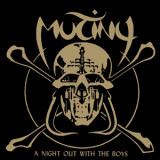
- Rare P-Funk album from 1983 - Funkadelic/Parliament All-Star Line-Up - First ever vinyl reissue - Comes with a repro of the original insert - 180g Black Vinyl Edition - Limited to 500 copies, comes with obi strip // Jerome "Bigfoot" Brailey is an American drummer who started performing in the early 1970s with several R&B groups from the likes of The Unifics, The Chambers Brothers and The Five Stairsteps where he developed his unique style and finesse on drums. Later in 1975 he joined George Clinton's P-Funk collective and has appeared on many of Parliament & Funkadelic's most popular recordings (some of which he also co-wrote). Brailey played on classic albums like `Mothership Connection' and `One Nation Under A Groove'. Samples from that body of work (and his drum arrangements) have since then appeared on hundreds of hip hop and contemporary R&B songs by renowned artists such as Kendrick Lamar and Childish Gambino. Jerome Brailey is a member of the Rock and Roll Hall of Fame (inducted in 1997) and part of their `50 greatest drummers in the Hall' list (stating that his drum style kept Parliament-Funkadelic rooted in the old-school `James Brown-style funk')_next to this achievement, he was proclaimed by Rolling Stone as one of the `100 Greatest Drummers of All Time' for his steady kick drum, shifty hi-hat action and intricately unpredictable snare patterns. Brailey earned numerous Gold and Platinum records with the P-Funk Organization and has worked as a session drummer for many talented artists such as Herbie Hancock, Buddy Miles, Snoop Dogg and Pharoah Sanders. George Clinton's funk empire was not without its disagreements and Jerome Brailey's `Mutiny' project was a direct result of just such a disagreement (as well as one of the more notable offshoots of the P-Funk axis). Mutiny performed in a style not far removed from the classic P-Funk style and with a lot of emphasis on the dual lead guitar work, but what makes them unique compared to their contemporaries is that at times their recordings also emit a darker, more sinister feeling. Besides Brailey on drums (and on most of the lead vocals) Mutiny featured a funk-alumni line-up and released three amazing and collectible albums: `Mutiny On The Mammaship' (CBS, 1979), `Funk Plus The One' (Columbia, 1980) and `A Night Out With the Boys' (J. Romeo, 1983)_these were followed by two comeback albums: `Aftershock' (Rykodisc 1995) and `Funk Road' (Catbone, 2013). The `Mutiny' album we are proudly presenting you today (A Night Out With The Boys) is an underrated gem made by musicians who defined the funk scene of the '70s and '80s! Featuring an all-star line-up that includes Rodney Curtis (Fred Wesley, Maceo Parker), Michael Hampton (Funkadelic-Parliament, Deee-Lite), Kenni Hairston (Cameo) and Maceo Bond of Osiris/Afrika Bambaataa fame! `A Night Out With The Boys' has it all: Jerome's trademark drumbeats, funky bass grooves, driving riffs accented by stinging synth parts, slow spacey (and prominently featured) guitars, top-notch lead vocals and chants that recall Sly Stone's "Loose Booty". The whole album is a hot dance jam with crisp percussion_an extremely infectious, locked-in-the-pocket bass-heavy monster-funk-bomb that any serious self-respecting funk fanatic must have in his/her collection!
Powerful new spiritual jazz from Chile on Soul Jazz Records!
This album comes as a very limited one-off unique pressing of 1000-edition vinyl, limited editon CD and digital release.
Enrique Rodríguez and the Negra Chiway Band group have an instantly powerful and unique sound that is reminiscent of the ensembles of Sun Ra and his Arkestra as well as Horace Tapscott and his Pan-Afrikan Peoples Arkestra, one that channels the righteous spirits of Alice Coltrane, John Coltrane, Pharoah Sanders, Archie Shepp and McCoy Tyner together with a stunning Latin rhythmical and new consciousness and percussive energy. Added to this are elements of the Samurai film soundtracks of Akira Kurosawa, Popol Vuh’s musical spirituality (especially their work with film director Werner Herzog), Tibetan Buddhism and over-blowing chants, that all combine to give a truly unique new sound.
Enrique Rodríguez is a composer, percussionist, keyboardist, and producer from Santiago, Chile, whose work shows many similarities with the music featured on Soul Jazz Records’ recent collection ‘Kaleidoscope - New Spirts Known and Unknown’, featuring new forward-looking jazz artists including Mathew Halsall, Theon Cross, Emma-Jean Thackray and Makaya McCraven.
Like all these artists, Rodríguez’s work is a progressive and experimental fusion of earlier influences that combine into a new and definitely 21st century ground-breaking sound that, on account of its South American setting, give the group its truly unique feeling. Hypnotic modal piano riffs, powerful brass and flutes, an army of Latin percussion instruments, and addictive vocal chants all combine in this powerful mix of radical 60s Afro-centric jazz, eastern spirituality and cosmology, and Latin American rhythmical movement.
Die besten musikalischen Außenseiter sitzen nie lange still. Sie mutieren stetig, verwandeln sich in neue Formen und weigern sich, in Schubladen gesteckt zu werden. Floating Points hat so viele Gestalten, dass es ohnehin nicht einfach ist, ihn irgendwie einzuordnen. Da ist zum einen der Komponist, dessen Debütalbum „Elaenia“ im Jahr 2015 begeisterte Kritiken erhielt, darunter als Pitchforks „Best New Music“ und Resident Advisor's „Album of the Year“ - und ihn von den Tanzflächen auf die Festivalbühnen weltweit brachte. Dann ist da wiederum der Kurator, dessen Plattenlabels gefühlvolle neue Klänge in den Club gebracht haben, und der auf seinem geschätzten Imprint Melodies International alte Klänge wieder zum Vorschein gebracht hat. Ferner ist da der Traditionalist, der Disco-Typ, der Maschinenmusik macht, der Digger, der stets auf der Suche nach unentdeckten Edelsteinen zwecks Wiederveröffentlichung ist. Und dann ist da noch der DJ, dessen offener und zugleich mutiger Umgang mit dem Genre ihn einst ein 20-minütiges Instrumental des Spiritual-Jazz-Saxophonisten Pharoah Sanders im Berghain spielen ließ.
Nach der Veröffentlichung seiner Zusammenstellung von funkelnder, analoger Ambient- und Atmosphärenmusik für die geschätzte „Late Night Tales“-Reihe, stellt Floating Points' erstes Album seit vier Jahren, „Crush“, alles, was man über ihn zu wissen meint, wieder auf den Kopf. Nicht minder als ein knallender Donnerschlag elektronischen Experimentalismus’, dessen Titel auf den langsam überkochenden Schnellkochtopf anspielt, den die aktuelle politische Gemengelage in der Welt suggeriert, in der wir uns derzeit befinden. So hat Shepherd einige seiner bisher härtesten und treibendsten Tracks produziert, mit Blick auf die britische Bass-Szene (aus der er in den späten 2000er Jahren selbst hervorgegangen ist), wie beispielsweise die zuvor veröffentlichte markante Lead-Single „LesAlpx“ (Pitchforks „Best New Track“). Auf „Crush“ sind allerdings auch einige seiner ausdrucksstärksten Songs zu finden: seine charakteristische Melancholie ist in den erhabeneren, sanfteren Momenten des Albums oder im Buchla-Synthesizer zu finden, dessen unheimliche Modulation das Album prägt.
Sein neues Album fühlt sich augenblicklich an - und lebendig. Es ist der Klang der vielen Seiten von Floating Points, die schließlich miteinander verschmelzen. Es bezieht sich auf die „explosiven“ Momente während seiner Sets, die normalerweise auftreten, wenn er unerwartete Genres zusammenwirft, aus dem ganz einfachen Grund, weil er sich darüber freut, diese Platte „jetzt wirklich laut hören zu können“ und dann die Nadel aufsetzt. Es ist „genau wie das, was passiert, wenn man zu Hause mit seinen Freunden Musik spielt und diese sich überall im Raum ausbreitet.“, erklärt er.
Adele Sebastian was an Afro American jazz flutist and singer, active from the early 70s (when she was still a teenager) until her untimely death at the age of 27 (!) in 1983 from a kidney failure. In fact she had been depending on monthly dialysis to stay alive for years. She lived through and for the music and you can hear it on her only solo album 'Desert Fairy Princess' which was first issued in 1981. The mostly acoustic instrumentation brings a very natural and therefore rather retrospective sound considering the year the album was recorded. Adele and her band pull it off right from the start as if it had been 1966 and it was time for a revolution to shake the dust from the old time jazz. In a perfect way she mixes classic American vocal jazz elements with playful and more free passages, Latin music and tribal African sounds in the lengthy and quite rhythm oriented 'Man From Tanganyika' and makes the title track start with a mystical 'Allahu akbar' chant while it turns more and more into a dark and gloomy song with something like a psychedelic edge reminiscent of Pharoah Sanders on his early works. Wild rhythms from drums, percussions with tons of bells and chimes weave a thick groove carpet and conjure a magical atmosphere. Those jazz aficionados who love the mid 60s John Coltrane, his sidekick Pharoah Sanders and Alice Coltrane will go crazy for this album.
- A1: Natural Selection
- A2: Mother And Daughters Now Mothers
- A3: Forbidden Fruit
- B1: Epsilon Transmission
- B2: Epsilon
- B3: Love Lies Bleeding
- C1: Time Capsule
- C2: Mind And Matter
- C3: Retrospective
- C4: Solo
- C5: Extra Vehicular Activity (Eva)
- C6: Life Support
- D1: Telescopic One
- D2: Telescopic Two
- D3: Telescopic Three
- D4: Sane
- D5: Angel Falls
- D6: Mothers Too
- D7: Deaf Out
The Stunning And Ground-breaking Album From The Composer And Saxophonist Chris Bowden.
'this Is The Album That Connected It All.' Gilles Peterson 2018
Chris Bowden's Debut Album Time Capsule Was First Released On Soul Jazz Records In 1992 To Universal And Widespread Critical Acclaim. Now 20 Years On A New Wave Of Current Jazz Artists Led By The Likes Of Kamasi Washington In The Usa And A Host Of British Artists - Shabaka Hutchings /sons Of Kemet, The Ezra Collective, Moses Boyd, Nubya Garcia, Fourtet, Yussef Kamaal, Tenderlonious, Binker & Moses - Have Brought This Original Ground-breaking Album Into The Limelight Once More As A Pivotal Starting Point, Sharing Many Of The Aesthetics Of These Current Artists At Work Today.
Musically All Are Inspired By The Spiritual Jazz Of John Coltrane, Alice Coltrane, Pharoah Sanders, Archie Shepp, Don Cherry Et Al Paired With A Modern Electronic Music Sensibility. Chris Bowden's Time Capsule Has Stood The Test Of Time Like Few Other Albums (as The Title Of The Album Suggested), And Remains A Pivotal, Wholly-successful And Original Experimental Musical Collage, A Radical Inspiration And Forebearer To Many Of The Best Progressive Jazz And Electronic Artists Working Today.
The Album Has Been Fully Hi-spec Re-mastered And Is Available As A Limited-edition Heavyweight Double-vinyl Release With Gatefold Sleeve (+ Free Download Code), Slipcase Cd And Digital Album.
'Garage bands suddenly obtain cult status and become the antithesis of their initial appeal'
Garage Class were a group of reluctant outliers who produced one of the finest contributions to the wave of UK DIY music that emerged during the late 70s and early to mid-80s.
Hailing from Alsager in North West England and comprised of Tim Shutt (vocals) Phil Murphy (lead guitar) Clive Williams (guitar) Lynne Sanders (bass) and Phil Bourne (drums / bass on studio recordings) Garage Class originally went by the name of The Pits before their then manager Steve Hurt imposed an alias which, though unpopular within their ranks, would nevertheless reflect the shambolic art they would eventually capture on their first and only single.
As The Pits the group offered a loutish inflection on glam-punk flamboyance, evoking Johnny Thunder hitting the north and remaining disowned yet undeterred in a dreary old boozer. But as Garage Class the group distilled a roughcast and homespun primitivism that felt quintessentially their own. In this they proved too unruly to be assimilated into any wider scene. Early gigs descended into acrimony and recognition proved elusive. Yet what they managed to make back then now sounds like an extraordinary article of underdog ambition.
Released in 1984, four years after it was originally recorded, the Terminal Tokyo single is an unlikely triumph of exceptional messthetic punk. Though raw and unpolished the songs here are precariously pop-minded and indisputably anthemic. The titular A-side reveals the dry and detached drawl of Shutt aka The Subliminal Kid, a sharp, jaded and poetic voice that has some of the most iconic lines never heard in punk. Accompanied by second-hand guitars, on-the-fly handclaps and a chorus like a terrace chant this is the cult hit that never was, a heroically artless masterpiece that has all the ragged character and misfit euphoria of Swell Maps and The Buzzcocks if they were more impulsive and boisterous, and left to their own devices in the remote margins of a Cheshire town. The original B-side is here substituted for I Got Standards, a track that, until now, has somehow remained unreleased. An ideal twin to Terminal Tokyo there's the same brusque and dog-eared quality to the band's delivery, as well as the same upfront emphasis on strong hooks and insistent momentum. Yet again, Shutt is on impeccable form, perfecting an inflated, adolescent antagonism that has all the sardonic, malcontented charm of similarly 'shirty' buggers like Dan Treacy (Television Personalities), Patrik Fitzgerald and Mark Perry (Alternative TV).
Although never accepted in their own time both tracks represent a brief but inspired moment of fervent imperfection, one that epitomized the best of a diffuse and autonomous underground movement spearheaded by The Desperate Bicycles and built upon by the likes of Amos & Sara, The Homosexuals, The Cleaners From Venus and Family Fodder. Like them Garage Class were situated at a point where punk, art, humour and a sense of stubborn independence all intersected.
In the years since Terminal Tokyo has accumulated a retrospective appeal among certain trusted circles, with Jon Dale celebrating the single in his exhaustive and essential Story of UK DIY for Fact Magazine, and original copies regularly changing hands for a foolish forty quid or so. With this inaugural release on the Outer Reaches label Terminal Tokyo is not only restored for the very first time but given a worthy expansion courtesy of JD Twitch (Optimo).
Continuing his own fascination with the fringe history of UK DIY - documented on his own outstanding compilation Cease & Desist: DIY! (Cult Classics From The Post Punk Era 1978-1982) and in his re-edits of Crass Records classics for an early release on RVNG INTL - Twitch reinterprets I Got Standards as an incisive, dubwise outing that pictures Jaki Liebezeit and Muslimgauze on a bender in England's provinces, tasked with remixing the raw product of local punks. A new slant on Garage Class' crude magnificence, built to play loud on contemporary soundsystems.
Although the latter part of 1980 spelled the end for Garage Class with members moving on to other projects (Bourne fell in with The Colours Out of Time, Murphy went on to front The Regular Guys and Shutt eventually left to form Happy Refugees) this reissue attempts to give their fleeting time together and the unique single statement they made the treatment it deserves. If this means Garage Class have obtained cult status, their initial appeal remains. Just listen for yourself.
Matthew Halsall first met the La-based, spiritual jazz vocal legend, Dwight Trible(Kamasi Washington, Pharoah Sanders and Horace Tapscott) at the Joy of Jazz Festival in South Africa back in 2015, when a chance encounter backstage led to Trible sitting in with The Gondwana Orchestra for an impromptu reading of the classic Pharoah Sanders and Leon Thomas anthem 'The Creator Has A Master Plan'. In 2017 they released the deep, soulful Inspirationsalbum together (GOND017) but inspired by their first meeting Matt arranged some classic Pharoah tunes for Dwight to revisit. This then is The Gondwana Orchestra featuring Dwight Trible, Colors: a 4 track vinyl and digital only EP featuring brilliant new versions of Colors,The Creator Has a Master Plan, Love is Everywhereand You've Got to Have Freedomand featuring the Gondwana Orchestra with pianist Taz Modi, bassist Gavin Barras, drummer Jon Scott, harpist Rachel Gladwin and Matt himself on trumpet.
Packed in a distinctive bright orange Gondwana Records sleeve this is the second in a collectors series of spiritual jazz limited-edition EPs set for release in 2018 as part of Gondwana Records' 10th anniversary.
Most of the musicians who gathered to record this fantastic spiritual jazz record for the Strata-East label on May 24th, 1974 had crossed each other's paths in various musical pairings over the preceding few years. Husband and wife team Dee Dee Bridgewater (vocals) and Cecil Bridgewater (trumpet) had been working together on albums like Frank Foster's "Loud Minority", and Roy Ayers' "Coffy" and "Virgo Red". Ten weeks before the "Freedom Of Speech" session, the couple had been joined in Tokyo by Cecil's brother Ronald Bridgewater (tenor saxaphone) to record Dee Dee's debut album, the beautiful "Afro Blue". Also in the studio on May 24th, 1974 was Donald Smith, (piano, vocals), fresh from recording on his older brother Lonnie Liston Smith's "Cosmic Funk" - on which Ronald Bridgewater had also played percussion. Cecil McBee (bass) was also there - just two weeks before, he'd completed his own Strata East date "Mutima", and in February he'd played on Mtume's "Rebirth Cycle" - with both albums also featuring Dee Dee Bridgewater on vocals. He'd also played on Lonnie Liston Smith's "Astral Travelling".
So 1974 was a huge year for all five of these people. Donald Smith and Cecil McBee were six months away from recording on Lonnie Liston Smith's massive "Expansions", with McBee fitting in a few Pharoah Sanders albums in between.
AND THEN, THE MYSTERY ... So with all this fervent activity, the question has to be asked ...Who was Billy Earl Parker Jr (drums), the leader of this session
Billy Parker remains unlisted as a musician on all major jazz sites. His only other recording appears to be as a percussionist on Charles Tolliver's "Impact" in 1975. Then there's nothing.
Finally, by backtracking one of those Zoom info pages, I found a summary of a "SUNY Rockland Community College" 2002 press release that no longer exists :
"Billy Parker's Fourth World Legacy Concert ...The concert, Billy Parker's Fourth World Legacy, is the eighth annual tribute honouring the late percussionist and RCC educator, Billy Parker. A long-time Rockland County resident, Parker began his affiliation with RCC in 1987, building its jazz program and maintaining his life-long tradition of teaching and inspiring others. A lifelong student himself, Parker was near completion of his doctorate in music education at New York University when he died in 1996.
But then people began to read this blog post, and in the comments, Aaron Fuller said :
"Billy Parker was my uncle. He was an incredibly talented, smart, and kind man. I'm very happy to see that folks are still enjoying his masterpiece. Just to give you a bit more information about him... He was born and raised in Buffalo, NY and then attended college at Michigan State University. He met my aunt in Lansing. They lived in NY and toured in Europe for quite a while. Sometime later they relocated to Nyack, NY and he ended up on the faculty of the community college while he pursued advanced degrees from NYU. He was an Ellington scholar. Although his name isn't well-known even among the most avid jazz fans, I think that if you were to talk to some of the great NY musicians that were around in the late 60s and 70s you would find that most knew him. He also had a huge impact as a music educator and I have no doubt that his former students are all over the place, continuing to put his love of the art into practice."