Exciting news for music lovers! We are thrilled to unveil the highly anticipated release of a brand new vinyl by the talented Colombian artist, Lamediscos. This rising star in the Latin American electronic music scene has crafted a unique sound that seamlessly blends vintage synths, funky acid basslines, and broken rhythms, resulting in tracks that are infectious and groovy. Drawing inspiration from classic disco, breaks, and house music, Lamediscos has caught the attention of well-known artists like VTSS who praise his ability to create captivating melodies and irresistible beats.
But that's not all! This vinyl also includes two remixes one by the legendary Eddy C, a Canadian DJ and producer who has been pushing the boundaries of dance music for over three decades. Known for his unparalleled skill in remixing, Eddy C has reimagined Lamediscos' original track, infusing it with his unique style and taking it to a whole new level.
For the second remix for this special release, we also have one by label boss Lega, who gives us his own interpretation of the track, showcasing his production prowess and adding yet another layer of musical depth to the vinyl.
Stay Raw!
Поиск:eddie s
Все
repressed !
It takes a lot to achieve the status of legendary or era defining in dance music, its sands shift so quickly artists, genres and labels have often come and gone before you realise.
So it's with some pride and deserved justification that Yoshitoshi marks its 20th anniversary with celebratory remix packages of its most iconic tracks.
Already riding high in the Beatport charts with the success of the Uto Karem and Robosonic mixes of Eddie Amadors House Music, the latter of which has spent the past month in the overall top 5, the label now plans a one, two punch with the follow-up: Alcatraz seminal Giv Me Luv.
We thought long and hard about how we scheduled this 20th anniversary project, says label boss Sharam, little point launching big and then following up with a whimper so we deliberately chose Alcatraz for this difficult task.
But the challenge didnt end there; a massive record still deserves a massive remix and I think its safe to say we found the perfect woman for the job...
Step forward undisputed techno titan Nicole Moudaber who leapt at the opportunity to remix the track.
Ive got so many fond memories of Giv Me Luv, it was one of my favourite tunes from my formative clubbing days, recalls Nicole happily, so, when Yoshi mentioned the idea of me remix-ing it I just couldn't say no.
In fact I was so familiar with Alcatraz I was already awash with ideas of what I could, or should, do with it.
As I got into the mix one of those ideas just grew and grew, namely an extended breakdown that constantly builds; layering the memorable vocal to an intense pay-off and (hopeful) moment of real dancefloor drama. Nicoles humble description doesn't quite do the end result justice, which is a modern, masterful take on the classic.
Her iconic techno beats, dark twisted stabs and arrangement of that bassline drive toward the mentioned break, which will undoubtedly rival the fireworks of any impending NYE celebrations. In fact, expect this track to be THE soundtrack to many a dance floor come the all-important hand-over to 2015. And, just in case that weren't enough, Yoshi has also secured the skills of Tent Cantrelle to deliver the perfect deep house foil to Nicoles techno ferocity as Sharam concludes, We wanted a real slice of contemporary funk from the companion mix.
Yoshi is synonymous with exploring the line between deep house and techno, perhaps no more so than during its formative years, so this re-mix completes the package perfectly.
Omni AM presents the long-awaited reissue of “Can We Get / Keep Doing That.” This timeless record sent dance music in a new direction. Euphoria Record’s vaults are open and finally, for the first time since 1997, this seminal tech-house classic is available to everyone for the very first time in over 25 years. This 1997 indie record was Euphoria Records second release – and their first international record. Whether you agree with it or not, many people consider this one of the pioneering records of American Tech-House. Both sides and several mysterious alternate versions have graced the decks of DJs like Evil Eddie Richards, Terry Francis, Derrick Carter, Tyler Stadius, and Magda. The list goes on.
We were lucky. Curve Pusher lovingly remastered the original four tracks from the 1997 studio masters. Then, he went a step further, and remastered some previously unreleased versions – including a live version in Chicago that encapsulates what Omni AM was back then: ambient house. There’s a bit of Chicago, a bit of London, a bit of New York, and a bit of Tokyo in every second of these classic, genre-defining tracks.
A1.
“Can We Get” happily sits with the finest works of Ron Trent, Chez Damier, and Mood II Swing – and goes further, as Omni AM has never feared genre definitions. It opens with classic deep house chords, floating synth pads, and sparse vocals. The bassline is deep and warm. Marky Star and Adam Collins expertly work the percussive effects but always keep the theme simple and clear. Everyone knows this is a classic house track because it hypnotizes you.
A2.
“Keep Doing That” continues the theme with another classic late-night killer. However, this one is totally different – almost industrial, yet clearly housey and ambient. It drives deep into a tough groove that just builds and builds. The dub-influenced bass line gives way to a more angular synth riff that both offsets and adds to the track's forward thinking sound design. It’s dark and dirty, yet terribly sexxxy at the same time. It was and always will be mesmerizing. Once again, musical magic by Marky Star and Adam Collins.
B-Sides
The flip side features two remixes of “Keep Doing That” by UK tech-house legend Mark Ambrose. His bubbly, psychedelic take on the track pumps up the percussive Chi-town groove while going in a distinctly London afterhours direction. Trippy, for sure. Fun for all, for sure. These remixes are guaranteed to make your afterhours weird.
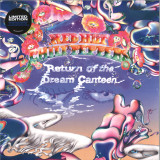
Red Hot Chili Peppers announce their brand new studio album, Return of the Dream Canteen which will be released October 14th on Warner Records. The surprise announcement was dropped at Denver’s Empower Field to rapturous response as the North American leg of their critically and commercially acclaimed global stadium tour kicked off.
The news of Return of the Dream Canteen's imminent release marks the band’s second album of 2022, hot on the heels of the platinum-selling chart topper Unlimited Love which was released in April debuting at #1 in the UK. It will also be the band's second Rick Rubin produced album of 2022, and reinforces their reputation as a band at their absolute peak, riding the crest of an undeniable creative wave.
Continuing to win over audiences across the generations, the band performed a run of sold-out UK/EU dates earlier this year, including two nights at London Stadium. "A scorching European touch-down from the California legends" – CLASH
We went in search of ourselves as the band that we have somehow always been. Just for the fun of it we jammed and learned some old songs. Before long we started the mysterious process of building new songs. A beautiful bit of chemistry meddling that had befriended us hundreds of times along the way. Once we found that slip stream of sound and vision, we just kept mining. With time turned into an elastic waist band of oversized underwear, we had no reason to stop writing and rocking. It felt like a dream. When all was said and done, our moody love for each other and the magic of music had gifted us with more songs than we knew what to do with. Well we figured it out. 2 double albums released back to back. The second of which is easily as meaningful as the first or should that be reversed. 'Return of the Dream Canteen' is everything we are and ever dreamed of being. It’s packed. Made with the blood of our hearts, yours truly, the Red Hot Chili Peppers.
Israeli DJ and collector Elado makes his debut on RNT with a pack of impossibly rare edit heat! A relative newcomer to the scene, Elado made some waves recently with a stunning entry on Eddie C’s Red Motorbike, and he’s clearly no novice when it comes to digging as this exceptional pack of tunes shows.
With rarefied material ranging from Africa, India and the Mideast, Elado works these 4 tunes with a careful editor’s touch, nipping and tucking only where necessary to let the incredible source selections shine through, but rendered eminently DJ-friendly. Already supported by Antal and many others, this 12” is the first essential add of 2021!
- A1: Ring My Bell - Blood Sisters
- A2: Don't Stop Til You Get Enough - Derrick Laro And Trinity
- B1: Do It Nice & Easy - Chariot Riders
- B2: Don't Let It Go To Your Head - Black Harmony
- C1: I'm Every Woman - Latisha
- C2: In The Rain - Ernest Ranglin
- C3: Reggae Beat Goes On - Family Choice
- D1: Ain't No Stopping Us Now - Risco Connection
- D2: Rappers Delight - Xanadu And Sweet Lady
- E1: Love Don't Live Here Any More - Sharon Forrester
- E2: Upside Down - Carol Cool
- F1: Be Thankful For What You've Got - One Blood
- F2: Am I The Same Girl - Charmaine Burnette
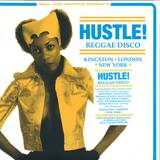
Soul Jazz Records' are releasing their long-out-of-print album 'Hustle! Reggae Disco' in a new expanded 2017 edition which now features five extra tracks. This ground-breaking album features non-stop killer reggae versions of original funk and soul classics in a disco style. Reggae disco updates of seminal classics by Anita Ward ('Ring
My Bell'), Chaka Khan ('I'm Every Woman'), Michael Jackson 'Don't Stop 'til You Get Enough,' Sugarhill Gang ('Rappers Delight' here performed by Derrick Laro and Trinity for producer Joe Gibbs) and more, all showing the hidden but inseparable link between the dance floors of New York, Kingston and London.
New bonus tracks to this collection include Derrick Harriott's funky take on Eddie Drennon's 'Do It Nice and Easy', the classic disco reggae of Risco Connection's take on McFadden and Whitehead's 'Ain't No Stopping Us Now' and the London rare groove lovers rock take on Barbara Acklin's soul classic 'Am I The Same Girl'.
'Hustle! Reggae Disco' has been one of Soul Jazz Records' best-selling releases since its first release 15 years ago (and subsequently featured heavily in the early Grand Theft Auto games!). This new edition comes complete fully re-mastered and with all original titles plus new tracks. This new expanded edition now comes a triple album (+ download code), CD and digital album.
'The effect of American R&B and soul music on Jamaican reggae is well documented, but the story doesn't stop there, for disco (and more so now for rap and hip-hop) have also been subsumed into the reggae mix, and while one might suspect that the resulting hybrid would die of its own implausibility, the feral mix of disco with reggae rhythms is so darn infectious that it hardly matters. Once you take your brain out of the frame and just let your feet go, this collection is a dancer's delight all done up in full-blown disco style, but with huge dub-style rhythm tracks ... if you're looking for an impossibly infectious dance collection, this is
it.' All Music
It was in 1973, on the 14 of October, late in the afternoon; on a pretty Sunday under the Big Top in the heart of the “Parc de la Pépinière”, in Nancy; it was the “premiere”, the world
first hearing, and it has so far remained the only one commissioned by composer and trumpet player lvan Jullien, for the first international Nancy Jazz Pulsations festival. In order to complete this work of composition and orchestration, Ivan asked the great Eddie Louiss on organ, and chose to do without a double bassist who would have been drowned in a telluric outburst, for the best drummers in Europe and beyond had accepted out of sympathy to offer their contribution to such a festival. The only melodist with Louiss was the English John Surman (born in 1944) here on soprano saxophone, discharging torrents of incandescent lava.
Conversing with drums, cymbals, xylophones, kettledrums, vibraphones, tumbas, djembes and all other percussive things that you’ll like to imagine – a bunch of talents such as those
of the French André Ceccarelli, Daniel Humair or Bernard Lubat, the New Yorker Stu Martin, who reminds of Paul Motian in his “breaks”, South African Louis Mo-Holo, young Lamont Hampton, the great trombonist “Slide” Hampton’s son and the Malagasy Franck
Raholison, the Senegalese Lamine Konte. And we will scrupulously refrain from omitting the four musketeers, here representing
percussion in classical music, namely the Percussion Quartet of Paris under the leadership of Mr. Lucien Lemaire.
Repress!
Wiggle celebrate 25 years and relaunch their iconic label with a releases including co-founders Terry Francis, Nathan Coles and Eddie Richards, as well as artists like D’julz, Silverlining, Mihai Popoviciu, and more.
Wiggle, the brand that gave birth to tech house a sound that would power London’s club music community for over two decades, step out into their 25th year. To mark reaching this remarkable milestone, they plan a special series of international shows and a relaunch of their influential and ground-breaking label.
Taking their lead directly from the acid house movement, Nathan Coles and Terry Francis first brought Wiggle to life through their heady warehouse parties in the early 90s. Unpretentious to their core, these now infamous events were known for their purist values – community and a sound that booms. Finding a kindred spirit in another new face, Eddie Richards became resident from early sets and was a key figure from the off.
Through these now historic events, they embedded themselves deeply into London’s party landscape becoming familiar faces at cultural institution fabric. Heavily based around the core residents they also invited parts of the international and local world from Richie Hawtin, Jay Tripwire, Abe Duque and Colin Dale.
It’s about here we acknowledge Wiggle’s place in originating tech house - working the hard line swagger of techno together with the depth of feeling of house, matching rhythm with bass in a way perfectly aligned with endless hours of hedonism. This potent mix of musical elements is where it began and set down the foundation of London’s rich and active community of DJs, producers and ravers.
The label was founded close to the parties, sourcing tracks from the ever building network of producers who were fuelling this sound evolution. For their 25th birthday you can expect to see the Wiggle imprint coming back in strength - returning to cutting tracks to wax and continuing its legacy for bass fuelled party sounds and pioneering new talent.
2019 will see a series of international shows and a quarterly London party bringing the much loved Wiggle sensibilities and celebrate what they are and have achieved.
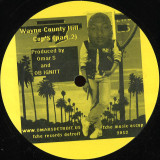
After more or less owning 2011 with a surprise album, a collaboration with urban crooner Colonel Abrams, an ahead-of-the-game reissue of Marc Kinchen and the all-conquering "Here's Your Trance Now Dance", FXHE don Omar S kicks off a new year with Wayne County Hills Cops Pt 2 (where, we ask, was Part 1?), a hook-up with the mysterious OB IGNITT. The eponymous A-Side is characterised by the kind of glistening synths last seen on "Here's Your Trance...", with a rugged analogue bass line giving the track with the requisite bump. A tired cliche it may be, but this could easily soundtrack an 80s cop movie: clearly Omar has this in mind given the 12"'s title and the fact the record's centre label features a doctored image of Eddie Murphy from Beverly Hills Cop! On the flip, Omar S provides his own remix, drowning the synths in dubby textures and showering them with shuffling hats for a more heads-down take. Another killer 12" - business as usual at FXHE, then.
- A1: Sweet Potato Gravy Maurice Simon & Pie Men
- A2: Mmm Mmm Mmm Dave Lewis
- A3: Sorry ‘Bout That Harold Johnson Sextet
- A4: Sophisticated Funk John Roberts
- A5: Chittlin' Salad The Soul Runners
- A6: Hijack Jackie Hairston
- A7: Whip You Little Charles Whitworth
- A8: The Shing-A-Ling Thing The Naked Truth
- B1: I Can't Afford To Lose Him Sound Stage House Band
- B2: Sunny Jerome Richardson
- B3: Bucket O Grease Les Mccann
- B4: Cornbread And Buttermilk Leon Haywood
- B5: Dead The Mark Ii
- B6: The Skrooch Little Eddie
- B7: Flunky Flunky The Soul Set
- B8: Mother Blues Gene Ludwig
- A1: Dick Morrissey Quartet - Bang!
- A2: Emcee Five - Mike's Dilemma
- A3: Michael Garrick Quintet - Vishnu
- A4: Vic Lewis & His Bossa Nova All Stars - Last Minute Bossa Nova
- A5: Johnny Burch Octet - Early In The Morning
- B1: Pony Poindexter - 4-11-44
- B2: Terrell Prude - Princess
- B3: Johnny Hartsman - Soppin
- B4: Eddie Kochak & Hakki Obadia - Jazz In Port Said
- B5: Charles Kynard With Clifford Scott - Where's It At
- B6: Gene Ammons - Jungle Soul
Compare the best of British jazz circa 1963 with American sounds from labels such as Prestige, Tangerine and World Pacific. This album captures the period when rhythm and blues is emerging as the dominant club sound, forcing Soho jazz clubs to change their music policy in order to survive. On the British side, you’ve got Ronnie Scott’s arrangement of Last Minute Bossa Nova; Bang!, taken from Dick Morrissey Quartet’s first session for the BBC’s World Service, recorded around the time of the release of their first album Have You Heard? The version here is take two. You can hear take one along with the rest of the eleven-track session on R&B18 Jazz For Moderns.
Early In The Morning is a Ginger Baker/Jack Bruce arrangement of the traditional work song realized as a repeated blues riff, and is the first ever recording that is recognizably British Blues. Graham Bond features on alto sax along with Bruce and Baker together as members of the Johnny Burch Octet heard playing live at a BBC staff party from March 1963. Side Two features Jazz Stateside, such as West Coast guitarist Johnny Hartsman, Gene Ammons veering into proto jazz-funk on Jungle Soul, aka Ca' Purange plus a couple of top notch Hammond workouts from Terrell Prude and Charles Kynard.
UILTY RAZORS, BONA FIDE PUNKS.
Writings on the topic that go off in all directions, mind-numbing lectures given by academics, and testimonies, most of them heavily doctored, from those who “lived through that era”: so many people today fantasize about the early days of punk in our country… This blessed moment when no one had yet thought of flaunting a ridiculous green mohawk, taking Sid Vicious as a hero, or – even worse – making the so-called alternative scene both festive and boorish. There was no such thing in 1976 or 1977, when it wasn’t easy to get hold of the first 45s by the Pistols or the Clash. Few people were aware of what was happening on the fringes of the fringes at the time. Malcolm McLaren was virtually unknown, and having short hair made you seem strange. Who knew then that rock music, which had taken a very bad turn since the early 1970s, would once again become an essential element of liberation? That, thanks to short and fast songs, it would once again rediscover that primitive, social side that was so hated by older generations? Who knew that, besides a few loners who read the music press (it was even better if they read it in English) and frequented the right record stores? Many of these formed bands, because it was impossible to do otherwise. We quickly went from listening to the Velvet Underground to trying to play the Stooges’ intros. It’s a somewhat collective story, even though there weren’t many people to start it.
The Guilty Razors were among those who took part in this initial upheaval in Paris. They were far from being the worst. They had something special and even released a single that was well above the national average. They also had enough songs to fill an album, the one you’re holding. In everyone’s opinion, they were definitely not among the punk impostors that followed in their wake. They were, at least, genuine and credible.
Guilty Razors, Parisian punk band (1975-1978). To understand something about their somewhat linear but very energetic sound, we might need to talk about the context in which it was born and, more broadly, recall the boredom (a theme that would become capital in punk songs) coupled with the desire to blow everything off, which were the basis for the formation of bands playing a rejuvenated rock music ; about the passion for a few records by the Kinks or the early Who, by the Stooges, by the Velvet mostly, which set you apart from the crowd.
And of course, we should remember this new wave, which was promoted by a few articles in the specialized press and some cutting-edge record stores, coming from New York or London, whose small but powerful influence could be felt in Paris and in a handful of isolated places in the provinces, lulled to sleep by so many appalling things, from Tangerine Dream to President Giscard d’Estaing...
In 1975-76, French music was, as almost always, in a sorry state ; it was still dominated by Johnny Hallyday and Sylvie Vartan. Local rock music was also rather bleak, apart from Bijou and Little Bob who tried to revive this small scene with poorly sound-engineered gigs played to almost no one.
In the working class suburbs at the time, it was mainly hard rock music played to 11 that helped people forget about their gruelling shifts at the factory. Here and there, on the outskirts of major cities, you still could find a few rockers with sideburns wearing black armbands since the death of Gene Vincent, but it wasn’t a proper mass movement, just a source of real danger to anyone they came across who wasn't like them. In August 1976, a festival unlike any other took place in Mont-de-Marsan – the First European Punk Festival as the poster said – with almost as many people on stage as in the audience. Yet, on that day, a quasi historical event happened, when, under the blazing afternoon sun, a band of unknowns called The Damned made an unprecedented noise in the arena, reminiscent of the chaotic Stooges in their early adolescence. They were the first genuine punk band to perform in our country: from then on, anything was possible, almost anything seemed permissible.
It makes sense that the four+1 members of Guilty Razors, who initially amplified acoustic guitars with crappy tape recorder microphones, would adopt punk music (pronounced paink in French) naturally and instinctively, since it combines liberating noise with speed of execution and – crucially – a very healthy sense of rebellion (the protesters of May 1968 proclaimed, and it was even a slogan, that they weren’t against old people, but against what had made them grow old. In the mid-1970s, it seemed normal and obvious that old people should now ALSO be targeted!!!).
At the time, the desire to fight back, and break down authority and apathy, was either red or black, often taking the form of leafleting, tumultuous general assemblies in the schoolyard, and massive or shabby demonstrations, most of the time overflowing with an exciting vitality that sometimes turned into fights with the riot police. Indeed, soon after the end of the Vietnam War and following Pinochet’s coup in Chile, all over France, Trotskyist and anarcho-libertarian fervour was firmly entrenched among parts of the educated youth population, who were equally rebellious and troublemakers whenever they had the chance. It should also be noted that when the single "Anarchy in the UK" was first heard, even though not many of us had access to it, both the title and its explosive sound immediately resonated with some of those troublemakers crying out for ANARCHY!!! Meanwhile, the left-wing majority still equated punks with reckless young neo-Nazis. Of course, the widely circulated photos in the mainstream press of Siouxsie Sioux with her swastikas didn’t necessarily help to win over the theorists of the Great Revolution. It took Joe Strummer to introduce The Clash as an anti-racist, anti-fascist and anti-ignorance band for the rejection of old-school revolutionaries to fade a little.
The Lycée Jean-Baptiste Say at Porte d’Auteuil, despite being located in the very posh and very exclusive 16th arrondissement of Paris, didn’t escape these "committed" upheavals, which doubled as the perfect outlet for the less timid members of this generation.
“Back then, politics were fun,” says Tristam Nada, who studied there and went on to become Guilty Razors’ frontman. “Jean-Baptiste was the leftist high-school in the neighbourhood. When the far right guys from the GUD came down there, the Communist League guys from elsewhere helped us fight them off.”
Anything that could challenge authority was fair game and of course, strikes for just about any reason would lead to increasingly frequent truancy (with a definitive farewell to education that would soon follow). Tristam Nada spent his 10th and 11th unfinished grades with José Perez, who had come from Spain, where his father, a janitor, had been sentenced to death by Franco. “José steered my tastes towards solid acts such as The Who. Like most teenagers, I had previously absorbed just about everything that came my way, from Yes to Led Zeppelin to Genesis. I was exploring… And then one day, he told me that he and his brother Carlos wanted to start a rock band.” The Perez brothers already played guitar. “Of course, they were Spanish!”, jokes their singer. “Then, somewhat reluctantly, José took up the bass and we were soon joined by Jano – who called himself Jano Homicid – who took up the rhythm guitar.” Several drummers would later join this core of not easily intimidated young guys who didn’t let adversity get the better of them.
The first rehearsals of the newly named Guilty Razors took place in the bedroom of a Perez aunt. There, the three rookies tried to cover a few standards, songs that often were an integral part of their lives. During a first, short gig, in front of a bewildered audience of tough old-school rockers, they launched into a clunky version of the Velvet Underground's “Heroin”. Challenge or recklessness? A bit of both, probably… And then, step by step, their limited repertoire expanded as they decided to write their own songs, sung in a not always very accurate or academic English, but who cared about proper grammar or the right vocabulary, since what truly mattered was to make the words sound as good as possible while playing very, very fast music? And spitting out those words in a language that left no doubt as to what it conveyed mattered as well.
Trying their hand a the kind of rock music disliked by most of the neighbourhood, making noise, being fiercely provocative: they still belonged to a tiny clique who, at this very moment, had chosen to impose this difference. And there were very few places in France or elsewhere, where one could witness the first stirrings of something that wasn’t a trend yet, let alone a movement.
In the provinces, in late 1976 or early 1977, there couldn’t be more than thirty record stores that were a bit more discerning than average, where you could hear this new kind of short-haired rock music called “punk”. The old clientele, who previously had no problem coming in to buy the latest McCartney or Aerosmith LP, now felt a little less comfortable there…
In Paris, these enlightened places were quite rare and often located nex to what would become the Forum des Halles, a big shopping mall. Between three aging sex workers, a couple of second-hand clothes shops, sellers of hippie paraphernalia and small fashion designers, the good word was loudly spread in two pioneering places – propagators of what was still only a new underground movement. Historically, the first one was the Open Market, a kind of poorly, but tastefully stocked cave. Speakers blasted out the sound of sixties garage bands from the Nuggets compilation (a crucial reference for José Perez) or the badly dressed English kids of Eddie and the Hot Rods. This black-painted den was opened a few years earlier by Marc Zermati, a character who wasn’t always in a sunny disposition, but always quite radical in his (good) choices and his opinions. He founded the independent label Skydog and was one of the promoters of the Mont-de-Marsan punk festivals. Not far from there was Harry Cover, another store more in tune with the new New York scene, which was amply covered in the house fanzine, Rock News (even though it was in it that the photos of the Sex Pistols were first published in France).
It was a favorite hang-out of the Perez brothers and Tristam Nada, as the latter explained. “It’s at Harry Cover’s that we first heard the Pistols and Clash’s 45s, and after that, we decided to start writing our first songs. If they could do it, so could we!”
The sonic shocks that were “Anarchy in the UK”, “White Riot” or the Buzzcocks’s EP, “Spiral Scratch” – which Guilty Razors' sound is reminiscent of – were soon to be amplified by an unparalleled visual shock. In April 1977, right after the release of their first LP, The Clash performed at the Palais des Glaces in Paris, during a punk night organised by Marc Zermati. For many who were there, it was the gig of a lifetime…
Of course, Guilty Razors and Tristam were in the audience: “That concert was fabulous… We Parisian punks were almost all dressed in black and white, with white shirts, skinny leather ties, bikers jackets or light jackets, etc. The Clash, on the other hand, wore colourful clothes. Well, the next day, at the Gibus, you’d spot everyone who had been at this concert, but they weren’t wearing anything black, they were all wearing colours.”
It makes sense to mention the Gibus club, as Guilty Razors often played there (sometimes in front of a hostile audience). It was also the only place in Paris that regularly scheduled new Parisian or Anglo-Saxon acts, such as Generation X, Siouxsie and the Banshees, the Slits, and Johnny Thunders who would become a kind of messed-up mascot for the venue. A little later, in 1978, the Rose Bonbon – formerly the Nashville – also attracted nightly owls in search of electric thrills… In 1977, the iconic but not necessarily excellent Asphalt Jungle often played at the Gibus, sometimes sharing the bill with Metal Urbain, the only band whose aura would later transcend the French borders (“I saw them as the French Sex Pistols,” said Geoff Travis, head of their British label Rough Trade). Already established in this small scene, Metal Urbain helped the young and restless Guilty Razors who had just arrived. Guitarist for Metal Urbain Hermann Schwartz remembers it: “They were younger than us, we were a bit like their mentors even if it’s too strong a word… At least they were credible. We thought they were good, and they had good songs which reminded of the Buzzcocks that I liked a lot. But at some point, they started hanging out with the Hells Angels. That’s when we stopped following them.”
The break-up was mutual, since, Guilty Razors, for their part, were shocked when they saw a fringe element of the audience at Metal Urbain concerts who repeatedly shouted “Sieg Heil” and gave Nazi salutes. These provocations, even still minor (the bulk of the skinhead crowd would later make their presence felt during concerts), weren’t really to the liking of the Perez brothers, whose anti-fascist convictions were firmly rooted. Some things are non-negotiable.
A few months earlier (in July 1978), Guilty Razors had nevertheless opened very successfully for Metal Urbain at the Bus Palladium, a more traditonally old-school rock night-club. But, as was sometimes the case back then, the night turned into a mass brawl when suburban rockers came to “beat up punks”.
Back then, Parisian nights weren’t always sweet and serene.
So, after opening as best as they could for The Jam (their sound having been ruined by the PA system), our local heroes were – once again – met outside by a horde of greasers out to get them. “Thankfully,” says Tristam, “we were with our roadies, motorless bikers who acted as a protective barrier. We were chased in the neighbouring streets and the whole thing ended in front of a bar, with the owner coming out with a rifle…”
Although Tristam and the Perez brothers narrowly escaped various, potentially bloody, incidents, they weren’t completely innocent of wrongdoing either. They still find amusing their mugging of two strangers in the street for example (“We were broke and we simply wanted to buy tickets for the Heartbreakers concert that night,” says Tristam). It so happened that their victims were two key figures in the rock business at the time: radio presenter Alain Manneval and music publisher Philippe Constantin. They filed a complaint and sought monetary compensation, but somehow the band’s manager, the skilful but very controversial Alexis, managed to get the complaint withdrawn and Guilty Razors ended up signing with Constantin with a substantial advance.
They also signed with Polydor and the label released in 1978 their only three-track 45, featuring “I Don't Wanna be A Rich”, “Hurts and Noises” and “Provocate” (songs that exuded perpetual rebellion and an unquenchable desire for “class” confrontation). It was a very good record, but due to a lack of promotion (radio stations didn’t play French artists singing in English), it didn’t sell very well. Only 800 copies were allegedly sold and the rest of the stock was pulped… Initially, the three tracks were to be included on a LP that never came to be, since they were dropped by Polydor (“Let’s say we sometimes caused a ruckus in their offices!” laughs Tristam.) In order to perfect the long-awaited LP, the band recorded demos of other tracks. There was a cover of Pink Floyd's “Lucifer Sam” from the Syd Barrett era – proof of an enduring love for the sixties’ greats –, “Wake Up” a hangover tale and “Bad Heart” about the Baader-Meinhof gang, whose actions had a profound impact on the era and on a generation seeking extreme dissent... On the album you’re now discovering, you can also hear five previously unreleased tracks recorded a bit later during an extended and freezing stay in Madrid, in a makeshift studio with the invaluable help of a drummer also acting as sound engineer. He was both an enthusiastic old hippie and a proper whizz at sound engineering. Here too, certain influences from the fifties and sixties (Link Wray, the Troggs) are more than obvious in the band’s music.
Shortly after a final stormy and rather barbaric (on the audience’s side) “Punk night” at the Olympia in June 1978, Tristam left the band ; his bandmates continued without him for a short while.
But like most pioneering punk bands of the era, Guilty Razors eventually split up for good after three years (besides once in Spain, they’d only played in Paris). The reason for ceasing business activities were more or less the same for everyone: there were no venues outside one’s small circuit to play this kind of rock music, which was still frightening, unknown, or of little interest to most people. The chances of recording an LP were virtually null, since major labels were only signing unoriginal but reassuring sub-Téléphone clones, and the smaller ones were only interested in progressive rock or French chanson for youth clubs. And what about self-production? No one in our small safety-pinned world had thought about it yet. There wasn’t enough money to embark on that sort of venture anyway.
So yes, the early days of punk in France were truly No Future!
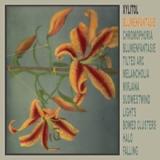
Xylitol, aka producer and DJ Catherine Backhouse, shifts up the refinement and musical breadth for her second album Blumenfantasie, the follow-up to her Planet Mu debut Anemones.
With Blumenfantasie, Xylitol wanted “to make space and for the music to float and propel at once”, finding routes through the pointillistic figures, cascading synths and the meditative stillness of kosmische musik and bolder breakbeat programming. She reaches this delicate balance through careful subtraction, hoping “to convey a sense of intimacy and sadness but without sentimentality” which she manages with a feel and sound that's raw and intuitive.
Blumenfantasie rolls through detailed jungle workouts that flutter and bleep, through beatless ambience, taking a rare dip below 160 bpm for the elegiac Mirjana, the album’s most explicit nod to Krautrock with a drum break chopped up from Amon Duul II’s anthemic ‘Archangel’s Thunderbird’, through to Halo, a bare bones grime rhythm that calls to mind the missing link between industrial pioneers Nurse With Wound and Wiley's Eskibeat.
Catherine cast her net to draw in experimental audiovisual duo Sculpture and Reading based post-rock band The Leaf Library as collaborators, pulling the former’s whirling eddies of musique concrète into a slice of sublime aquatic jungle, and the latter’s radiophonic folksong into a dark and disorientating breakbeat workout equally indebted to Source Direct as to Broadcast.
Blumenfantasie moves with a confident, self-effacing fluidity which has been informed by DJ Bunnyhausen’s more regular DJ gigs. She speculates ‘if this album feels more cohesive than its predecessor it's likely because I've been DJing a lot more, with Worthing Techno Militia, with central and eastern european electronica collective Slav to the Rhythm, as well as being part of Italo Disco crew Flex. Moving between these zones seemed to open up hidden pathways between the disparate musical trajectories they represent.'
While Anemones contrasted the rough and the delicate, its successor is an album built for the head, hips and heart, with painterly sounds and a sense of intimacy that encourages deep listening while keeping its eyes on the strobelight and its feet on the dancefloor.
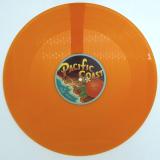
Introducing the 4th instalment of the Pacific Coast House rebirth. We bring back another much sought-after 12” from The Coastal Commission & Jesse Outlaw. “Bring down the Walls” was a nod to Raze’s “Break for Love”, Robert Owens “Bring Down the Walls” and Ritchie Hawtin’s use of the Roland 606 throughout “Sheet One”. Long out of reach and fetching $100+ on Discogs, Atjazz’s freshly remastered editions are finally available .. “Let it Go” was never mastered & only ever cut to dub-plate. It has now been mastered & available in all it’s glory.
Coastal Commission “Bring Down the Walls” “Bring down the Walls” was a nod to Raze’s “Break for Love”, Robert Owens “Bring Down the Walls” and Ritchie Hawtin’s use of the Roland 606 throughout “Sheet One.” We gave the tune a Californian psychedelic twist with conga laden drums, a moody synth, low pulsing 303 patterns + Benjamin Zephaniahs patois call to “Move the Body Rhythmwize!” The first PCH releases had dropped Worldwide to International acclaim from DJ’s far and wide across the Globe with support in London, Paris & New York. However the local scene here in L.A that preached “Love, inclusion & Unity” was anything but that. L.A at that time was very tribal & divided up into 3 camps. If you weren’t affiliated with any of them (aka independent) then you were pretty much locked out of getting any kind of gig support or the Dj’s from those camps actually playing the music. The local feedback from Dj’s was that what we were making wasn’t “house,” but “Techno” which was absurd to me. “Bring Down the Walls” was a mantra to “move the bod”y and in doing so “bring down the walls” of separation not just in L.A but throughout society in general. Thank goodness for support from people like Terry Francis, Eddie Richards, DJ Deep & Philly Stalwart King Britt. After years of copies going for upward of $100+ on Discogs the now freshly remastered copies by At Jazz’s Martin Iveson are finally hitting the platters this Spring.
Jesse Outlaw “Let it Go” I met Jesse at Beatnonstop Records on Melrose Ave with Miguel Placencia in the late 90’s. Miguel (RIP) was a mainstay in the Underground scene and had always been very supportive of my endeavors. He had had success with a huge release on Yellow Orange and was working with Jesse under the moniker “When Worlds Collide.” I signed “Brighter Days” & “Set you Free” from them and released the tracks on my Seductive imprint. They told me that they were making the tracks on a Sony Playstation “Music Now” program and I was like FFS “What.s more Underground than that!?” Later Jesse gave me some of his solo work. The track “Let it Go” was never mastered & only ever cut to Dub-plate and featured on my 1st PCH mix “Pacific Coast House Sounds.” It has now been mastered by Martin Iveson and is available in all it’s glory. The dreamy vocal “You need to let it go” beckons over the top of driving percussive Latin beats and church organ which is a great compliment to the flip side of “Bring down the Walls.” All in all two West Coast stompers now finally available remastered on PCH in Orange vinyl.
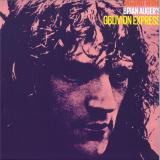
Strut Records highlights a landmark in British jazz-rock with Second Wind, the 1972 album from keyboard visionary Brian Auger and his powerhouse group Oblivion Express. Capturing a fully matured lineup, the record finds Auger expanding his fusion language - bridging jazz sophistication, funk-driven rhythm, and soul-infused songwriting with the clarity and fire that defined his early ’70s work.
Though Auger’s roots lie in the lineage of hard-swinging jazz organ and the improvisational fire of the ’60s British scene, he has never been an artist content with tradition. With Second Wind, he moves further into a hybrid language that fuses rhythm with harmonic depth and groove, without sacrificing sophistication. His playing is expansive yet precise, translating the electricity of live performance into a studio work that breathes with immediacy.
At the heart of this era of Oblivion Express is the telepathic rapport among its members. Vocalist Alex Ligertwood (in one of his earliest major recordings before Santana fame) brings a soulful intensity that feels both grounded and forward- looking. Second Wind contains tracks that have become deeply significant in Auger’s discography - original compositions Second Wind, and Truth to name a few - but it was Auger's high octane revisioning of Eddie Harris' Freedom Jazz Dance, (adding new lyrics to the original instrumental) that genuinely broke barriers. The track became a DJ friendly classic and highlighted the groups deeply original approach.
The rhythm section of Barry Dean and Robbie McIntosh balances weight and fluidity, giving Auger the space to stretch across Hammond organ, Rhodes, and keys with characteristic boldness. Their collective sound is one of seamless motion: jazz-inflected lines swelling into rock-driven crescendos, funk-leaning grooves locking with vocal hooks, moments of quiet clarity emerging between bursts of improvisation.
Second Wind stands as a pivotal moment in Auger’s discography: a record that bridges the exploratory spirit of his earlier projects with the more groove-oriented approach that would soon bring international attention. More than five decades later, it remains a vivid document of a band carving out its own language. Music born of instinct, collaboration, and a restless desire to push beyond the expected.
- A1: Introducing Dames Brown (With Amp Fiddler)
- A2: What Would You Do? (Ft. Andrés & Amp Fiddler)
- A3: You're The One For Me
- B1: Glory (Ft. Waajeed)
- B2: Take Me As I Am (With Amp Fiddler)
- B3: What Up Doe (With Amp Fiddler)
- B4: Do It (With Eddie Fowlkes)
- C1: Who Do You (Think You Are)? (With Amp Fiddler)
- C2: Provider (With Amp Fiddler)
- C3: Introducing Pt. Ii (Dirty Hips) (With Amp Fiddler)
- C4: Sweat
- D1: This Time (With Amp Fiddler)
- D2: Why You Got Me Crazy (Walk Away) (With Amp Fiddler)
- D3: Ova (With Amp Fiddler)
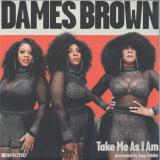
Detroit powerhouse vocal trio Dames Brown make their long-awaited debut with ‘Take Me As I Am’, a bold, soulful celebration of the Motor City’s sound and a heartfelt tribute to their late mentor, Amp Fiddler.
Crafted at Amp’s legendary home studio, the album captures the essence of Detroit through rich instrumentation, gospel-infused harmonies, and unfiltered soul. Blending house, funk, techno, and 70s groove, Take Me As I Am embodies the city’s spirit; timeless, raw, and full of life.
Featuring collaborations with Detroit icons Andrés, Eddie Fowlkes, and Waajeed, standout tracks like ‘You’re The One For Me’, ‘Glory’, and ‘What Would You Do’ showcase the trio’s unmatched energy and vocal chemistry.
Across fourteen tracks, Athena Johnson, Teresa Marbury, and LaRae Starr channel the soul of Motown, the groove of Parliament Funkadelic, and the power of Aretha Franklin, uniting their influences into one authentic, uplifting sound.
With nearly a decade of releases on Defected and its sub-labels, including collaborations with Sophie Lloyd, The Vision, Floorplan, and Horse Meat Disco, Dames Brown continue to shine as one of Detroit’s most dynamic vocal collectives.
‘Take Me As I Am’ is more than an album… it’s a declaration of love, legacy, and Detroit soul.
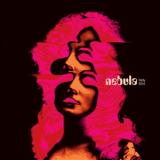
Nachauflage auf schwarzem Vinyl. 22 Jahre nach ihrer ersten Veröffentlichung und 10 Jahre nach ihrem letzten Album sind Nebula wieder da. Wenn du jetzt "Holy Shit!" denkst hast du es ziemlich genau getroffen. "Holy Shit" ist Nebulas erste LP seit "Heavy Psych" (2009), und beantwortet schnell die Frage die sich stellte, seitdem Gitarrist/Sänger Eddie Glass, Bassist Tom Davies und Schlagzeuger Michael Amster 2017 die Reformierung der Band angekündigt haben: Nebula sind immer noch Nebula. Seit den Tagen der 1998er Let it Burn EP und dem mittlerweile klassischen To the Center Debütalbum waren Nebula immer nur ein wenig gefährlicher. Nur etwas mehr aus den Angeln gehoben. Holy Shit zeigt diesen von vorne nach hinten für den wesentlichen Teil ihres Charakters, der er ist, und doch versucht er nicht, etwas zu sein, was sie schon einmal getan haben, sei es bei diesen frühen Ausflügen oder Heavy Psych or Charged (2001), Apollo (2003) oder Atomic Ritual (2005). Es ist ein sechstes Nebula-Album - etwas, worauf selbst die leidenschaftlichsten Fans kaum gehofft hätten. Die Grundtracks wurden in zwei Tagen aufgenommen, aufgenommen in den Mysterious Mammal Studios in L.A. mit Matt Lynch (ebenfalls von Snail) am Steuer. Leads und Loops und Feedback-Effekte wurden von Glass and Davies live aufgenommen, als sie die Basic-Tracks aufnahmen, genau so, wie sie es auf der Bühne tun würden, und Overdubs folgten bei Bedarf. Eine Fülle von Material wurde produziert und auf den Kern dessen, was man hier hört, reduziert. Ein sechstes Nebelalbum. Und wenn du es hörst, wirst du feststellen, dass du diesen Titel immer wieder sagst. Cover Art von ROBIN GNISTA
Nachauflage auf senfgelbem Vinyl. Limitiert auf 300 Exemplare. 22 Jahre nach ihrer ersten Veröffentlichung und 10 Jahre nach ihrem letzten Album sind Nebula wieder da. Wenn du jetzt "Holy Shit!" denkst hast du es ziemlich genau getroffen. "Holy Shit" ist Nebulas erste LP seit "Heavy Psych" (2009), und beantwortet schnell die Frage die sich stellte, seitdem Gitarrist/Sänger Eddie Glass, Bassist Tom Davies und Schlagzeuger Michael Amster 2017 die Reformierung der Band angekündigt haben: Nebula sind immer noch Nebula. Seit den Tagen der 1998er Let it Burn EP und dem mittlerweile klassischen To the Center Debütalbum waren Nebula immer nur ein wenig gefährlicher. Nur etwas mehr aus den Angeln gehoben. Holy Shit zeigt diesen von vorne nach hinten für den wesentlichen Teil ihres Charakters, der er ist, und doch versucht er nicht, etwas zu sein, was sie schon einmal getan haben, sei es bei diesen frühen Ausflügen oder Heavy Psych or Charged (2001), Apollo (2003) oder Atomic Ritual (2005). Es ist ein sechstes Nebula-Album - etwas, worauf selbst die leidenschaftlichsten Fans kaum gehofft hätten. Die Grundtracks wurden in zwei Tagen aufgenommen, aufgenommen in den Mysterious Mammal Studios in L.A. mit Matt Lynch (ebenfalls von Snail) am Steuer. Leads und Loops und Feedback-Effekte wurden von Glass and Davies live aufgenommen, als sie die Basic-Tracks aufnahmen, genau so, wie sie es auf der Bühne tun würden, und Overdubs folgten bei Bedarf. Eine Fülle von Material wurde produziert und auf den Kern dessen, was man hier hört, reduziert. Ein sechstes Nebelalbum. Und wenn du es hörst, wirst du feststellen, dass du diesen Titel immer wieder sagst. Cover Art von ROBIN GNISTA
Red Motorbike hits the road in '26 with an original production from Berlin's master of boogie funk LJ Simon!
Givin' Up is a soulful modern funk 7" steeped in warm '80s analogue production and classic groove.
The OG version blends vintage synth textures with a deep, understated rhythm section. Known for his love of fat-sounding vintage gear, LJ Simon begins every song with no blueprint, working purely from sound, instinct, and feel, tuning in to receive what the moment brings. The influences are unmistakable, yet the result feels fresh, intuitive and alive.
Vocals are delivered by Denice Brooks, a formidable singer from Austin, Texas, now based in Berlin. Denice built her solo career while performing with an exceptional list of artists including Tina Turner, Roy Ayers, David Bowie, Nancy Wilson, Natalie Cole, and many others. She is notably the only singer to receive Prince's blessing to record an official cover of 'Purple Rain' - a distinction that speaks volumes about her artistry.
Her career has taken her across Germany, Europe, the Middle East, and South Africa, where she even once performed for Nelson Mandela. Her continued experience across stage, studio, television, and musical theatre shines through in a vocal performance rich in depth and soul.
Label head Eddie C offers up his Disko Mix and reframes the track through a '90s street soul lens; stripped-back, dusty, and perfectly tuned for late-night selectors and heads-down dancefloors.
Music From Memory is thrilled to present ‘Aquáticos’, a captivating new record from Los Angeles producer Eddie Ruscha and Brazilian guitarist Fabiano Do Nascimento. Blending Nascimento’s expressive, Afro-samba and choro-inflected guitar with Ruscha’s cosmic, groove-driven sound, ‘Aquáticos’ marks the start of a vibrant musical partnership—an organic, free-spirited collaboration full of interplay and vitality.
Conceived during the early 2020’s, ‘Aquáticos’ grew from a series of recording sessions in which the music unfolded naturally, in a state of effortless flow. Album opener ‘Nascer,’ the very first piece they recorded, captures such a moment perfectly: Nascimento’s 7- and 10-string nylon guitars weave seamlessly with Ruscha’s modular synths, drum machines, and vintage keyboards. Like much of Ruscha’s work under Secret Circuit and E Ruscha V, it is rich in lush, rhythmic textures—pulsing and bubbling with vibrant energy.
The initial session that produced the opening track set the tone for the record, establishing a template of intuitive interplay and musical freedom. Each subsequent session built upon the last, gradually shaping ‘Aquáticos’ across nine tracks, all characterized by melodic richness, rhythmic depth, and an unshakable sense of spontaneity.
‘Aquáticos’ pulls the listener gently into a celebration of musical conversation — a radiant, immersive journey where Ruscha and Nascimento’s instruments breathe together, echoing the joy, curiosity, and playful spirit that define their collaboration.
Sleeve art and design by Michael Willis.