A1 - Side Effect
Diving straight into the breakbeats for a classic atmospheric workout, Side Effect sees Aural Imbalance utilise the timeless Hot Pants break with a juddering, detailed beat pattern which sets the tone for a delightfully dreamlike track. Inspiring washes of floaty, subtle synthwork sail serenely across bassy seas - an inquisitive, tonally perfect 808 sub rising and falling below like distant waves, far away from land.
A2 - Blue Light
Panning, swooshing effects and filtered breaks introduce Blue Light, dancing gently before presenting us with an elegantly sombre synth that surrounds the ears like a calming comfort blanket. A clutch of discreet melodies develop throughout, hovering over the breaks like a living watercolour, begging you to shut the noise of the world out and allow this expertly crafted atmosphere to soothe your core.
AA1 - Cascade
Clouds of wistful pads wash over delicate hi hats as Aural Imbalance smoothly introduces Cascade, an immensely tight, break-driven track with a beat pattern to die for. The breaks are crisp and intense in the mix with swathes of inimitable ambience flowing as the 808 dutifully rumbles below. This track is a classic, impeccable fusion of atmospherics and breakbeats that make you move, and will fit any discerning DJ setlist.
AA2 - Different World
An inspired, melodic underwater kaleidoscopic introduction welcomes a fitting closing track to the EP, Different World. Conjuring images of playful marine life dancing in the filtered light, a serene landscape of sound rides analogue old-school breaks laden with dense kickdrums and excitable hats. The track develops with quiet intent, effects constantly added and retracted as the breaks flow, effortlessly.
Words by Chris Hayes (Spatial / Red Mist)
quête:eff el
2025 Repress
For the second installment of its renewed imprint, Fuse's own in-house resident and one of Belgium's proudest exports Phara takes the reins for a deep dive into thick percussion and vibrant club landscapes. 'The Wall' puts current dance music under a microscope with a brush of truly vintage spontaneity, merging techno's confrontational nature with house's harmonic genuineness. This duality is reflected through Phara's own relationship with his home base Fuse and the complementary contrast between its two rooms.
The EP's title track serves as a hypnotic introduction for the A1, imposing a bass-heavy rhythm and a persistently oscillating synthline. A dense production full of energy, 'The Wall' inspires intrigue throughout its duration, revealing its true intentions through a capable sound system. Sharing the first side of the press is 'Blaes 208', a name that Fuse club goers will likely recognise, that guides the listener from effect into embrace. With lush keys echoing past a comforting drum sequence fit for a close-eyed dancefloor experience, Phara's impactful tendencies meet his affinity for the melodic through a blissful six minutes of crowd to selector connection. Switching sides, a return to a cold cold aesthetic is quickly apparent through 'Hush Now 206'. A pummeling, saturated bass competes with a kick of equal effect, rolling through a storm of metallic stabs. Mastering the message of urgency, Phara presents a lightshow of resonating percussive work, defining his space just to cut right through it. To close out with a lasting impression, the producer mutes the acoustics of his work through razor-sharp sound design dotting along playful snares, a duality reminiscent of the dynamism of Detroit electro. 'Motion Steps', referring to the stairs that ascend from Fuse's main room to its more left-field counterpart, captures the atmosphere of the almost shimmering music that can be expected to be played there; a place where Phara and many others have been known to explore the extremities of their music. He swiftly throws in melodic elements to recontextualize an otherwise pressing composition, and after three chapters of considerable weight, he concludes his record with infectious groove that flaunts technical ability.
2025 Repress
More than once Jay Richford and Gary Stevan’s Feelings has been described as the greatest library record ever released. Of course Be With can’t be seen to be playing favourites, but we have to admit, it’s pretty good. Insanely rare and immensely sought-after, it’s a tough funk, street jazz masterpiece coveted for many years by collectors of all musical genres.
Since its original release on Italian label Carosello in 1974, Feelings has appeared on several labels with different sleeves and even under a different artist. Indeed cult library label Conroy put it out in one of their iconic red sleeves in 1976 and yes, Feelings has indeed had more than one modern re-issue since these “original” releases. But a record this special deserves to be kept in press and we think it deserves the Be With treatment.
No, Jay Richford and Gary Stevan aren’t two of the most Italian sounding names. As the story goes these were the pseudonyms adopted by Stefano Torossi and Giancarlo Gazzani who wrote the album but couldn’t use their real names on the original release for legal reasons. But Stefano Torossi himself later both clarified and confused the tale further by explaining that Feelings was the work of four people not just Gazzani and himself. Fellow composers and musicians Sandro Brugnolini and Puccio Roelens also worked on the album and as Torossi himself explained “we all worked together”, with all four gents “dividing the royalties in equal parts… that’s the story.” Right, so, with that all sorted out let’s get back to talking about the music. And what music it is.
Long hailed as a holy grail of library music, Feelings is the epitome of the sort of cinematic orchestral jazzy funk that is “that 70s library music sound”. Infectiously funky, deliciously melodic and with impeccible, elegant production, this record is the showcase for a stunning set of compositions and arrangements and with performances that are nothing short of virtuoso.
The record’s first side lifts off with “Flying High”, soaring brilliant and shimmering. Funk licks, menacing strings and swaggering horns combine for an ice-cold intro groove that Isaac Hayes would surely have envied, before the steady-paced drums deliver the slo-mo TKO. The string-drenched cop-funk of “Going Home” raises the tempo. All funky quick-fire bass lines and killer electric guitar soloing. A real thriller.
“Walking In The Dark” positively drips in blaxploitation-funk drama strings and horn struts, all laced with delicate drums, velvet piano and more filthy wah-wah. “Fighting For Life” is another funk-fuelled workout built around an effortlessly relentless drum track that refuses to give up until even the stiffest-necked head is nodding.
The loping, open drum break that guides the much-loved “Feeling Tense” through its early stages would be good enough on its own. The heavy bass gloss, swirling strings and ominous horns that follow take things to the next level.
The second side opens with another favourite “Running Fast”, and the track does precisely that. This is one fine rollicking chase theme underpinned by frenetic (yet funky) Fender Rhodes and skipping bass and drums. Those sweeping strings are a gorgeous extra. It’s a deliciously feel-good groove that sets the heart racing.
“Loving Tenderly” envelops us in warm, velvety night-time vibes with easy listening horns and slinky strings dialing up the seduction. Definitely one for the lithe lovers out there. The pace picks up on the electrifying “Fearing Much” where strings dart around deep bass, buzzing guitars and another funky drum break. The lush, melancholic “Being Friendly” is another easy beauty, all warm Rhodes and strings. Majestic stuff that puts an aural arm around you. The climactic “Having Fun” rides a pulsating, bass-heavy drum break with snatches of a funky guitar refrain, some luxurious keys, sweeping strings and triumphant horns. Sensational.
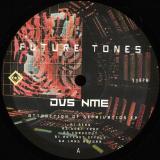
DVS NME is a Colorado-based Electro producer and DJ originally from Southern California. Active since 1999, he crafts stark, machine-driven music rooted in analog hardware and recorded live in single takes. Influenced by Drexciya, AUX88, and Anthony Rother, his sound blends dystopian textures with precise rhythm programming. He’s released music on respected underground labels like Solar One Music, Transient Force, and Ukonx Recordings, and now Future Tones Rcoeds. A key advocate for the genre, he also curates the long-running Dark Science Electro podcast, supporting global Electro since 2010.
1. Beam
A slow-burning opener built around a TR-606 groove, chopped vocal fragments, and delicate string flourishes. At 116 BPM, it's the most restrained cut on the EP—staccato and skeletal, but quietly emotional.
2. Carveout
Driven by a classic four-on-the-floor pulse, "Carveout" rides a surging bassline and tightly layered synths. Functional on the surface, but subtle shifts in tone give it depth beneath the structure.
3. Debt Trap
The most club-oriented track on the record. With a jerky low-end and nimble 606 programming, "Debt Trap" combines dancefloor impact with off-kilter synth work that refuses to settle.
4. Ratchet Effect
A standout cut that channels DVS NME's signature sound—sharp, modular arpeggios, machine-funk rhythms, and intricate modulation. At once clinical and soulful, it’s the EP’s most complex and defining moment.
5. Land Reform
TB-303 acid lines coil around melodic string pads and skittering hi-hats in this mid-tempo closer. "Land Reform" balances raw rhythmic motion with introspective synth textures, ending the record on a reflective note.
Long kept in the shadows, "+ Ou – 8000" is a rare gem of the French musical avant-garde, born from the meeting of three
composers at the peak of their inventiveness. Initially intended as sound illustration, this album crosses the boundaries of
library music, space jazz, and electronic experimentation, with a freedom and boldness that today give it cult status.
Teddy Lasry, an iconic figure from the MAGMA universe, has always moved between jazz, progressive rock, and electronic
music. A saxophonist by training, he explores here synthetic and spatial territories with striking modernity.
Francis Mercier, discreet yet remarkably effective, is a sound craftsman who left his mark on many library music records
in the 1970s. Here he delivers precise rhythmic textures, tense atmospheres, and a minimalist groove mastery.
Christian Perraudin, a chameleon composer bridging academic music and film scoring, brings his cinematic touch—
floating melancholy and sci-fi tension. A true artisan of sonic ambiance.
Boldly visionary, + Ou - 8000 is an invitation to active listening, a journey into the heart of a fascinating sound laboratory.
This unprecedented vinyl reissue is a unique opportunity to (re)discover a crucial record that remained out of reach for far
too long.
Limited edition – for lovers of rarities, analog synths, and genre-defying musical exploration.
Makhunik Records Presents: "Withdrawals" - A Bold New Vinyl Release by RAKANS Withdrawals, the highly anticipated follow-up to Emergence EP and Deep State (Midnight Stallion) EP, marks a bold new chapter in RAKANS's ever-evolving sonic journey.
Set for release on I Makhunik Records, Withdrawals explores the tension between desire and detachment, featuring five tracks that blur the lines between electronic, experimental, and club sounds. Available on vinyl, Withdrawals invites listeners to experience the raw and intimate emotions that inspired its creation. Following the success of Emergence EP (Gently Leftfield Techno from a Core Dresden Artist - Resident Advisor/Single Review by Andrew Ryce) and Deep State (Midnight Stallion) EP on Boudica, which gained recognition for their atmospheric intricacies and deep, immersive textures, Withdrawals delves deeper into personal and societal themes, paired with the artist's signature ethereal soundscapes and captivating beats. Each track carries a narrative, from late-night reflection to hedonistic encounters, with a pulsating intensity that mirrors the artist's own process of creative and emotional release. With Withdrawals, RAKANS continues to push boundaries, creating a profound listening experience that resonates both in its melancholy and its intensity.
Description of the Title: The title Withdrawals reflects a state of emotional and mental transition, where one is caught between the craving for connection and the unsettling effects of isolation. It symbolizes the artist's inner turmoil and process of reclaiming personal agency after experiences of burnout and separation. The tracks are an expression of that journey-tracking the highs and lows of life in a world that constantly demands more. Through these melodies, RAKANS has captured the intensity of longing and the aftermath of desire, inviting listeners to confront their own internal conflicts. The narrative is personal yet universally relatable, and the title speaks to the often painful but necessary process of letting go, detoxifying from past habits, and learning to be at peace with oneself. "With Withdrawals, He wanted to channel the emotions that often come from the struggle between desire and self-preservation, between the drive to connect and the need to retreat. he's journey, both as an artist and as an individual, has been filled with moments of intense reflection, self-discovery, and sometimes, disconnection.
These tracks are the culmination of that inner conflict, a raw exploration of what it means to both lose oneself and find a deeper, often painful, form of clarity. Like the music he's created before, the sound of Withdrawals speaks to the space between tension and release, the liminal space where truth is often revealed in its most vulnerable form. He's always believed that music is a mirror to the soul, and in this EP, He's tried to reflect that feeling of being both pulled in and out of something greater. It's a raw and intimate look at the way we navigate modern life, often feeling like we're running toward something that we can't quite reach, yet constantly pulled back into our own personal truths.
This EP is personal, but it's also for anyone who's ever felt caught between two worlds, the one they want and the one they need. I hope it resonates with listeners who are experiencing their own form of withdrawal, whether it's from people, places, or even from themselves.
432HERTZ BERLIN Returns With a Fierce Second Vinyl: “303rd Dimensions”
After the hypnotic depths of its debut release, 432HERTZ BERLIN surges back with a blistering six-track compilation crafted for the more daring corners of the dancefloor.
“303rd Dimensions” is a raw and relentless journey through acid-laced techno and electro, where analog grit meets mind-expanding energy.
The label continues to push boundaries, cementing its place in Berlin’s underground with a second release that’s as functional as it is uncompromising.
Side A: Acid Pressure and Dancefloor Dynamics
• A1: Cognitive Dissonance – Dan Piu
An acid-drenched techno voyage from Dan Piu, where 90s-inspired psycho vocals intertwine with layered pads and driving TB-303 lines. Tension builds, reality blurs.
• A2: Reverse – Rinaldo Makaj
Rinaldo Makaj delivers a raw analog workout with “Reverse”: pounding drums, sizzling acid riffs, and sensual vocal snippets collide in a late-night warehouse ritual.
• A3: TAR 1000 – Electric City
A full-throttle electro weapon — massive analog sound design, laser-sharp grooves, and pure machine funk engineered for peak-time destruction.
Side B: Acid Tension and Mind Games
• B1: Drop The Bass – Gela
Obscure, elegant, and acid-infused — Gela crafts a stripped-back electro trip that hypnotizes dancers with subtle menace and percussive clarity.
• B2: Pressure – Mathii
Mystical vocals echo through a lattice of electro arpeggios, as Mathii channels tension and atmosphere into a slow-burning, magnetic groove.
• B3: Functionality – Gianluca Pellerano
A masterclass in minimal effectiveness — Gianluca Pellerano’s contribution is pure dancefloor utility, built with MPS precision, rhythmic control, and vocal finesse.
A Testament to Underground Electronic Music
Curated by Rinaldo Makaj, 432HERTZ BERLIN's second vinyl release is a powerful testament to the boundless creativity and diversity of underground electronic music.
As The Matrix ushered in the new millennium, voices of apocalypse and optimism alike wrestled for the narrative high ground over what the future held in store. Ever more inclined toward skepticism than hope, we have since grown prone to withdrawing in exhaustion when confronted by such gargantuan expectations — “lost in the Matrix,” if you will.
Less’s new album opens by building a bridge back to his previous album “Stranger” (released on the “Freude am Tanzen” label and conceived as an imaginary Blade Runner soundtrack). In the intro, breathy references from vocalist Alice immediately set the tone for the journey ahead: Electro, High Energy, Acid, Chicago, Italo Disco.
A full-fledged club album quickly unfolds—one that invites the listener to dance and switch off, while at the same time, if you allow it, provoking reflection through its lyrics. Now a Berlin-based artist with Thuringian roots, Less draws on deacades of DJ experience and channels it deftly into ten tracks. Less (real name Stefan Leßner) isn’t afraid to go “old school.” Classic touches like vocoder effects are as integral here as Alice’s irresistibly
cool spoken-word vocals—delivered in English (“I Care”, “Mirror, Mirror”) and German (“Alles was du willst”). This retro spirit even extends to his remix of the French-language Underground Cottage track “Canada (2003 Less Remix)” which surfaced in DJ Hell’s setlists last year—bringing things full circle.
“Living in the Matrix” on Lebensfreude Records is not merely a nostalgic reference to times past, but also counters exhaustion with a sense of trust in the future. It is, in essence, a call — an appeal — not to lose oneself in any kind of ‘Matrix.’ Accordingly, the album will be released both digitally and analog. The latter will come as a 180g double vinyl with a high-quality, thematically appropriate gatefold cover.
- A1: Maria Kocic And The Mk Sound - Trust Me
- A2: Whadya Want - Open Spaces
- A3: Poets Of The Machine - Arabs
- A4: The Couch - Full Treatment
- A5: Sedation
- B1: The Igniters - Hakka Suru
- B2: Mumbo Jumbo - Wind It Up
- B3: Mix - Do You Do It
- B4: Cameron Allen And Graham Bidstrup - Bikini Atoll
- B5: Foot And Mouth - I Want My Mummy On Midnite Spares
2025 Repress
Australian music devotees András and Instant Peterson hold a candle to overlooked avant-pop and electronic works by antipodean artists and outsiders working through the 80s and 90s. Through co-presenting weekly radio show Strange Holiday, the duo slowly upturned their locale for inspiration - archives, country bookstores, private collections and convenience stores, searching for a place to anchor their own identities in the oceans of the island continent. The 10 tracks acknowledge a minor history, passed on via a network of friends, friends of friends, the libraries of radio station 3RRR and more often than not, the artists themselves. Renowned mixed media artist Maria Kozic enters with the mysterious downbeat of Trust Me, her husband Philip Brophy responsible for digital and analogue sonic construction. A recurring character in András and Instant Peterson's investigations, Brophy reappears with a score piece from his divisive feature film Salt, Saliva, Sperm and Sweat, recorded as (pronounced 'Tch Tch Tch"). Other links are thread under the surface. Melbourne inner north experimentalist David Chesworth explores his Australiana songcraft leading Whadya Want. The short lived project also featured Philip Jackson, whose husband-wife duo The Couch is restored from Fast Forward's dance issue - a pioneering cassette fanzine published by early-80s 3RRR personality Bruce Milne.
Norman Connors' Mr. C is a masterclass in sophisticated modern funk and boogie-infused soul that was way ahead of its time. Originally released in 1981, the album finds the renowned jazz drummer/producer at a creative crossroads, boldly diving deep into street-level boogie-funk without losing his soulful, jazzy touch. What once might have puzzled jazz purists now delights soul/funk aficionados; it has quietly become a cult favourite and now, nearly 45 years later, Mr. C sounds fresher than ever. Brimming with infectious heavy funk, lush arrangements and soul-stirring performances, it's an album that flirts with perfection, ensuring its enduring significance in the boogie/jazz-funk-soul canon.
From its opening moments, Mr. C makes one thing clear: this is Norman Connors at his funkiest. The majority of the album is a straight-up party: think dancefloor-ready beats complemented by punchy horn riffs and slick early-80s boogie vibes. There’s heavy use of synths and drum-machines, demonstrating Connors' gleeful embrace of contemporary funk trends. Each track shines in uniquely thrilling fashion, showcasing Connors’ versatility and happy knack for blending genres whilst crafting unforgettable melodies.
Irresistible thumper “She’s Gone” opens the album with a dyno-Rhodes electric piano groove and a seriously thick boogie-funk rhythm. Lush string accents and horn stabs weave through the funky bassline, while the vocals (handled by a young Beau Williams) soar with gospel-tinged emotion. Over four decades later, it endures as a masterpiece. Living up to its name, the shimmering “Party Town” brings deep Electro-Funk Energy by layering bubbling synth bass and shiny lead synth lines. The groove is downright addictive, a brisk, brass-kissed jam that implores you to move. Up next, the sophisticated funk of “Keep Doin’ It” is a low-slung post-disco glider, propelled by a sleek vibe, leaning into the late-night boogie sound. Funky guitar, tight drumming (with Connors’ jazz-honed chops in the pocket) and smooth vocals urge you to “keep doin'” whatever it is that's working. “Stay with Me” works a bit of island flavour into the mix, riding a thick Caribbean groove complete with tropical percussion and an upbeat tempo that could almost be calypsoul. The fusion of Caribbean rhythm elements into an R&B context demonstrates Connors’ willingness to experiment with global sounds while keeping things soulful and danceable.
Side B opens with the sassy funk-deluxe workout, "Anyway You Want" dripping with that soulful strut. Bringing a real quiet storm swagger, “Sing a Love Song” slows the tempo ever so slightly into a sexy, swaying jazz-funk gem, featuring a young Glenn Jones on lead vocals. The arrangement is elegant, built on warm keys and an undeniable groove. The celestial “Love’s In Your Corner” is all about soulful uplift. Featuring the legendary Jean Carn's powerhouse vocals soaring over a brass-kissed driving funk, it's an R&B burner. The refined, jazzy instrumental “Mr. C” is a slinky, smooth, funk-filled mid-tempo groove, with sax and warm keys gliding effortlessly. Connors combines jazzy arrangements into the post-disco/boogie framework one last time, and the result is sublime. It’s sophisticated and cool and, as a finale, “Mr. C” wraps up the album in classy style.
On release, Mr. C flew under the radar but time has been exceptionally kind to this record. DJs, collectors and soul connoisseurs alike have since rediscovered its magic. As ever, this crucial reissue has been lovingly remastered by Simon Francis, cut by engineer of the year Cicely Balston at Abbey Road Studios and pressed to perfection by Record Industry in Holland. Norman Connors was something truly extra. He was a visionary. And Mr. C is proof.
- A1: She's Getting Married In August
- A2: Evenin' Rain
- A3: Les Papillons
- A4: Zeena
- A5: Virgin Morn
- A6: Seeds
- B1: Crystal Blue
- B2: Lady Carole
- B3: Lotus Child
- B4: Last Prayer
- B5: Hymn For Today
- C1: Boston
- C2: Blackbird Charlie
- C3: My Sun
- C4: Closer To The Truth
- C5: Strange News
- D1: Moonchild
- D2: Red Shoe Truckin
- D3: Beautiful
- D4: Opal Blue Sunday
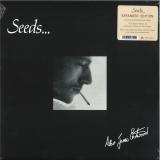
First time vinyl reissue, expanded and deluxe double gatefold 140g double vinyl, remastered audio with restored artwork and fresh liners written by Paul Hillery (Folk Funk & Trippy Troubadours)
Alan James Eastwood's glorious Seeds is a certified folk-funk lost-classic.
But who was Alan James Eastwood? He had never hit the big time and commercial success eluded him. By the mid-1970s, his musical career was pretty much over and he was almost unknown except among deep heads, amongst whom he would gain cult status.
Original copies of the 1971 vinyl release of Seeds exchange hands for high sums, if you can find one. This expanded 2LP contains an extra record, collecting 9 rare non-album singles and is presented in a gatefold sleeve complete with freshly commissioned liner notes courtesy of Paul Hillery (Folk Funk & Trippy Troubadours).
With the long overdue deluxe reissue of this prized artefact, we hope to finally shine a light on the unheralded genius of Alan James Eastwood. RIYL Nick Drake, Rodriguez, Richie Havens.
Alan James ‘Bugsy’ Eastwood was a renowned musician and singer who came to prominence in the late 1960s with The Exception, an unsung but excellent band from Birmingham. The Exception released many singles, the first featuring friend Robert Plant on tambourine, before an album, The Exceptional Exception. However, by this time, Bugsy was feeling constrained and restless; he left the band within weeks of the release.
Having vanished from the scene, he was honing a deeper, introspective edge to his songwriting. His demos found their way to the sound engineer and producer Mike Cooper at Pan Music Studios in Denmark Street. Loving what he heard, Eastwood soon entered a recording session with Cooper. The session was just Alan, his guitar and harmonica and - by all accounts - it was remarkable. With the songs, the voice and such an exceptional talent, it was hard to go wrong. Says Mike: "We had John Hawkins do the big string arrangements and Richard Hewson arranged the string quartet. We overdubbed the orchestrations on Alan's original session recordings, adding Chris Karan on tabla and various percussion. We considered re-recording the vocals but found that the magic on that original session was so exceptional overdubbing would not be as good as the atmospheric 'live' performance."
Mike and Alan viewed each track as a different entity, giving the album a diverse sonic palette. Assessing each song individually, they decided which would be suitable for each arranger. Top-flight session musicians were added to the roster to complete the sound, with Byron Lye Fook (father of musician Omar) on drums, bassist Mike Ward, Brian Pickles on marimba and jazz drummer Chris Karan on tabla and percussion. Recorded in a matter of days in Pan's small 8-track studio, they carefully added overdubs, rhythm sections and four string sessions arranged by Hawkins, with Hewson's arrangements recorded at Trident Studios.
Seeds was Alan James Eastwood's debut solo album – indeed, his only solo album - and was originally issued on President in 1971. It melded Eastwood’s impressive rock sensibilities with a folk thread to superb effect. His arresting voice - its deep, rough-hewn soulfulness - coupled with gorgeous string-drenched backing, make this a phenomenal listen. It really is a great 70s singer-songwriter record - with touches of acid-folk and folk-funk throughout.
It opens with "She's Getting Married In August", a mellow tune with Richard Hewson's strings arranged around Alan's straightforward guitar structure. Up next, the joyous, sun-dappled guitar and strings workout "Evenin' Rain" glides by before the fragile, accordion-enhanced "Les Papillons" breezes out of the speakers. The bluesy "Zeena" follows, featuring vocals and acoustic guitar and showcasing Eastwood's effortless harmonica. Starting out as a ballad, "Virgin Morn" builds with soaring strings and gospel-tinged backing vocals from Marilyn Powell and jazz singer Josephine Stahl. The A-side closes with the title track, "Seeds". With a chugging mid-tempo beat, soulful vocals and a beautiful Bacharach-esque string arrangement, it truly is stop-you-in-your-tracks spectacular.
Side B opens with "Crystal Blue", gilded by Lye Fook's marimba, lush gospel-esque backing vocals and handclaps. Eastwood's acoustic guitar begins "Lady Carole", which starts as a bluesy ballad and builds with more string arrangement, lifting the track to another height. A towering highlight of epic proportions, "Lotus Child" is a true masterpiece of arrangement. It opens with simple yet stunning do-do-dah vocal harmonies blended with John Hawkins's strings, bass lines and rhythmic beats, forming a vibe very much in conversation with the sounds coming from LA's Laurel Canyon. Next up, the heartwarming "Last Prayer", dedicated to Alan's first and last love, contains a melancholic vocal with a wistful string-drenched arrangement that would sit comfortably in a Federico Fellini score. Bringing the album to a close, "Hymn For Today" is a melodic raga with tabla, strings and a soft-psych feel. Eastwood's prophetic whisper - "I am real. At last, I am real" - profoundly hits home.
Kicking off the extra disc is the sparsely funky and country-tinged "Boston", released as the flip to the astonishing "Seeds". Next up are the two tracks that comprised Alan’s debut solo 7" single from 1968. The laconic, Bobby Charles-esque "Blackbird Charlie" evidences a real depth and charm in Eastwood's songwriting whilst the starkly brilliant flip, "My Sun", was a horizontal, atmospheric folk-tinged soundtracky precursor to his later work on Seeds.
In 1972, two further standalone singles followed. The first was the evergreen flute-driven folk-funk bomb, "Closer To The Truth", backed by the funky blues of "Strange News". The second, a deeply moving Havens-inspired "Moonchild" - rightly fawned over to this day - was flipped with "Red Shoe Truckin'", a groove-infused track. Eastwood also paired up with Marilyn Powell for a single produced by Powell's partner, Mike Cooper. Under the name Eastwood & Powell, they released their staggering rendition of "Beautiful", a rock-blues-pop song arranged by Ivor Raymonde and written by Carole King. Over on the flip, a funky Eastwood original "Opal Blue Sunday" lurked. This is not to be overlooked.
Over the years, Alan remained active on the music scene, but problems with alcohol and health complications from diabetes severely impacted his career. He spent his latter years living in London until his untimely death from heart failure on 25 October 2007, just one day before his 62nd birthday and without his music having received the real acclaim it so dearly deserved.
This deluxe reissue, spellbinding from beginning to end, should hopefully go some way to rectifying this tragic fact. Mastering for this special double vinyl edition was overseen by Be With regular Simon Francis and it was cut by the esteemed Cicely Balston at Abbey Road Studios to be pressed in the Netherlands by Record Industry. The original artwork has been lovingly brought back to life at Be With HQ, with the addition of passionately written liner notes specially for this landmark reissue by none other than Paul Hillery.
Written and produced in 2014, Gianluca Caiati brings back the unique, elegant and timeless sound of dub-techno. Pressed on a striking blueberry-colored 10'' vinyl, this record effortlessly blends depth and freshness into a sound that feels as relevant today as it did over a decade ago. A true collector's piece, crafted for those who appreciate sophisticated grooves, immersive atmospheres, and the warm touch of analog.
Radio City EP marks the vinyl debut on DOTS. Music, showcasing three distinctive cuts from Dutch producer Pascal Benjamin, along with a standout remix by Argentinian artist Alexis Cabrera. Built around tight grooves, warm analog textures, and playful percussive details, the EP captures a rhythmic, dynamic, and dancefloor-ready energy.
Opening the A-side, Radio City blends sexy chord stabs with Rhodes keys and tiny vocal fragments that lock effortlessly into the groove. Cabrera’s remix flips the original into funkier territory, adding a gliding bassline, electric guitar riffs, and an irresistibly rolling swing that complements the original’s flow while offering a fresh twist.
On the flip, Rewind explores a more underground dimension with sharp drum programming, subtle acid touches, and chopped vocals. A groovy, short-note bassline drives the rhythm forward, while deep chords make the track equally effective in afterhours sessions or peak-time club sets.
Flat Sprite closes the EP with a forward-driving acid hook riding over rolling snares and synths — a functional groove weapon with hypnotic momentum.
With Radio City, Pascal Benjamin delivers a tightly curated selection that merges minimalistic sound design with groove-driven charm — a confident debut that balances functionality with character on the dancefloor.
Bogotá duo Rush City — aka Jonahlo and Joint4Nine, and heads of the Ritmo Terco label dig deep into their crates for this second vinyl outing, delivering four razor-sharp reworks that balance nostalgia with dancefloor punch. Spanning boogie, Italo disco, electro, and deep house, each track is reimagined with a tasteful blend of analog grit, acid textures, and precise drum programming.
Opener “When Your Ex Wants You Back” breathes new life into Surface’s 1984 boogie anthem, fusing its soulful acapella with 808 rhythms, acid basslines, and shimmering synths for a raw electro-funk twist. Following “Brown Sugar”, lifted from a rare 80s adult film soundtrack, becomes a dubbed-out, indie-leaning acid disco tool — weird, seductive, and undeniably effective.
On the B-side, Dream 2 Science’s deep house classic “My Love Turns To Liquid” is transformed into a hypnotic acid roller, stripping things back while keeping the soul intact. Closer “Don Quichotte” rebuilds Magazine 60’s Italo gem from the ground up — with re-recorded vocals and fresh synth work, it’s a full-throttle electro bomb.
A versatile and expertly crafted four-tracker, this is crate-digger gold with serious club utility.
Grupo Yoyi's rare gem 'Paco La Calle' comes from 1977 and is now available on its own 45rpm for the first time ever, and is a fine window into the artist's pioneering blend of Afro-Cuban rhythms, jazz, funk and disco. Originally released on Cuba's iconic Egrem label, it's the only known solo project from producer Jorge Soler. It's brimming with lush horn arrangements and warm analogue synths, so both sides effervesce with genre-crossing spirit that feels timeless even now, almost half a century on. These are the sort of sounds that are perfect for both soundtracking a sunlit afternoon or heating up a dancefloor and will have Latin fusion freaks and crate-diggers alike in a spin.
In 2047, amidst the deafening yet oh-so-familiar soundscape of the Movement Festival in Detroit, we met again: I, pdqb, and Scape One, known as two of the most respected electronic music composers worldwide. The air pulsed not only with the latest beats but also with a barely perceptible energy only the two of us knew. We hadn't simply flown in; we'd arrived with our fantastic "Diskmind" time-travel machine, an incredible invention, capable of effortlessly catapulting us through the centuries.
"It's unbelievable, isn't it?" I shouted over the bass, eyebrows raised. "A machine that lets us travel through all of history, and there isn't a single song that honors it! Not one!"
Scape One nodded vigorously, his gaze sweeping over the stage lights. "That's absurd! How can such a revolutionary invention remain unsung? It's almost an insult to music history itself."
We looked at each other, a silent understanding in our gazes. The mission was clear: The "Diskmind" needed its anthems. And who, if not us, who used and loved it, should create them?
And so, we decided to become the musical chroniclers of the "Diskmind," ready to tell the story of our time machine across four different eras...
For Synaptic Cliffs, it's an extraordinary honor to present these three Scape One variations of the original song 'Diskmind' (first released on The Electrifying Dojo, 2025). Each masterpiece was recorded in different future decades of the 21st century (of ourse with the help of the Diskmind time travel machine) and reflects the corresponding trend in electronic music. A1: A timeless, pristine Electro composition from the year 2035. A2: An IDM marvel from late summer 2075, recorded in the Zero gravity of Space Station 775. B: An Experimental Electronica symphony recorded at pdqb's Studio 577 on Mars Outpost 47A. Only musical equipment that doesn't currently exist was used for this release
Seoul-based producer and DJ Yetsuby conjures immersive, layered soundscapes that glide between breakbeat, jungle, and leftfield bass. As one half of the duo Salamanda and co-founder of Computer Music Club, she has released music on labels like Wisdom Teeth, all my thoughts, Human Pitch, and Métron. And her boundary pushing sets on Seoul Community Radio, Boiler Room, and NTS Radio have brought her experimental Seoul roots to a global audience.
Her new album, 4EVA, invites listeners to wander through strange musical landscapes. Blending digital, analog, and acoustic sounds, Yetsuby explores the magnetic pull between people and music—an experience that feels both cosmic and deeply personal. Effortlessly weaving through genres such as bass, breakbeat, ambient, footwork, contemporary club, and IDM, she creates maximalist compositions that remain cohesive and refined.
The inspiration behind 4EVA is equally surreal. A childhood doodle from her sister, calling her a “brain-ful human,” sparked reflections on loneliness, togetherness, and the joy of navigating both. The album channels these themes of connection, introspection, and the transformative power of music, delivering catchy melodies and restless harmonies that invite listeners to lose themselves in its nuanced rhythms.
Out on Pink Oyster Records in LP and digital formats, 4EVA marks a bold new chapter for Yetsuby. With this release, she emerges as one of electronic music’s most original and exciting voices, defining the sound of Seoul’s underground—and beyond.
Pink Oyster is a new label from Jess Goodchild and Jack Hardwicke (Métron Records)
The writer Max Sebald often pondered over the nature of human memory, specifically, how our thoughts and desires - and their results - overlap and mutate over time. In A Place in the Country, he writes of the significance of what see as “similarities, overlaps and coincidences”. Are they the “delusions” of the self and senses, or manifestations of “an order underlying the chaos of human relationships, ... which lies beyond our comprehension”?
Song of the Night Mists, the new album by post-classical composer Stefan Wesołowski, often feels it draws on Sebald’s premise.
On a simpler plane, the one where the market dictates the neatly ordered information we consume, Song of the Night Mists can be described thus: recorded in the main by Stefan Wesołowski in Gdańsk, both in his studio and in Saint Nicholas' Basilica, the album incorporates acoustic instruments - piano, violin, double bass - and classic synthesizers such as the Roland Jupiter-8, the Soviet Polivoks. A Roland Space Echo RE-150 tape delay was also pressed into service as an instrument. We also hear the basillica’s organ and field recordings from the Tatra Mountains. Other musicians were Maja Miro, who played the flute parts on ‘Glacial Troughs’ and brother Piotr Wesołowski, who played the organ on ‘Wilhelm Tombeau’. Sound engineer was Marcin Nenko, who was also on hand to record the basilica organ parts. The album was mixed in New York by Al Carlson (Oneohtrix Point Never, Jessica Pratt, Zola Jesus, Lady Gaga, and Liturgy) and Rafael Anton Irisarri handled the mastering.
Ostensibly, Song of the Night Mists is the last in a trilogy, following on from albums Liebestod (2013) and Rite of the End (2017). All three deal with existential matters such as love, death, decay and “an ultimate end”; apocalyptic and Promethean in spirit, and betraying very human conceits. The Sebaldian nature of the new record starts to make itself felt when Wesołowski talks of how he used sampling. One element is unexpected, that of sampling himself: “I go back to dozens of my own unused sketches and recordings, treating them as raw material to cut, slow down, reverse, and transform in every possible way.” Memory as sound, to be reemployed by the listener through their own imaginings.
Another set of samples made by Wesołowski plays another role. These are field recordings, originally created for an audio illustration of the formation of the Tatra Mountains, and used in a film by sound designer Michał Fojcik. Wesołowski: “You can hear cracking ice, streams, footsteps in the snow and the wind, and a real avalanche, recorded from the inside.” The “Tatra connection” on the album is also found in samples referencing composer Karol Szymanowski. The album’s title alludes to a poem about the mountains by Polish poet, Kazimierz Przerwa-Tetmajer.
Wesołowski’s Tatra recordings are “about a world without humans - about the fact that the world existed, was beautiful, and had meaning long before people arrived, and for the vast majority of its history, it was a place without us.” Wesołowski, using one iteration of the natural world, plays out in sound Sebald’s idea of another order, underlying the chaos of human relationships lying beyond human comprehension.
These feelings play themselves out on the five album tracks. Sonorous and rich, they illustrate tectonic shifts we have no control over. Wesołowski hints that the overall sound is a “meditation on the metaphysics of the non-human set against the spirituality that human presence has brought into it.” In that light, the opening number, ‘Core’, with its slow build, and crackling and straining sound effects, create an effect of the earth groaning into life in a creation myth. Once the piano part raps out a simple melody and modulated tonguing trumpet samples add to the overall atmosphere, the listener can certainly find a cue in the “spiritual”, or “human” side of the story. Human versus nature: from the strains and harmonic muscle stretches of the second number, ‘Glacial Troughs’, through to the powerful and filmic ‘Stalagmite’ and heart-on-sleeve romance expressed in closer, ‘Wilhelm Tombeau’, we listeners are cast as Friedrich’s wanderer, looking out over a landscape that will appear only if we engage with it.
Formations of melody appear incrementally, almost appearing by chance - like hidden footings in the rock shelves to give us something to grasp onto. Rhythms are used sparsely: the prolonged percussive taps on ‘Glacial Troughs’ are an anomaly and maybe there to give pace to the album to come; essentially to keep the listener strapped in. Elsewhere, percussion is used as an aid to mood, the two thudding, timpani-style passages on ‘Peak’ there to offset the short, beautiful, kosmische passage that splits them.
Elements of the borderline religious spirit that drove German electronic music in the late 1960s and 1970s also find a place on Song of the Night Mists. The swells and recessions of the organ find their emotional climax on ‘Wilhelm Tombeau’, a track which summons up echoes of the “mountain magic” vistas created by Popol Vuh or Tangerine Dream, especially with the slightly atonal wobble of the Mellotron that counters it.
This is a dramatic album, but it does feel a strangely short, or curtailed listen on ending, evoking the feeling one gets when waking from a dream, and, for all its incipient grandeur, a track like ‘Stalagmite’, for instance, ends on a minor note. Wesołowski admits that Song of the Night Mists is born of the all too human process of temptation, doubt and recalibration - Sebaldian overlaps and coincidences forming something that must live another life, away from its creator. In Wesołowski’s words, the album is “a newborn foal must stand up and walk right after birth.” Now it is yours to ponder.
After the first, extremely successful "Motor City Days Vol.1" release from 2002/04 with all those then-and-now enduring tracks by Jeff Mills, Tronic Pulse, Drivetrain and St. Andy, the "Motor City Days Vol.2" follow-up comes along now as another ambitious showcase of the continous work of that other electronic music axis Detroit-Cologne in full effect!
The extra limited MLP-Vinyl offers 6 more, typical Planet Detroit tracks on the cutting edge of Techno, House, and Electro by Teknobrat (Bunkerbliss, Ottawa), Claus Bachor (remixed by the D's own Lockstep, Soire Rec. Int.), Ferndale Parking Attendants (House Gallery Detroit), Thomas Barnett (Visillusion Rec.), Eno Justin (BangTech 12/ DTM), and Jason Garcia (Cryovac Rec. / House Gallery).
They all pay attention to the innovations that have come before them. And this is where some experiments in the Motor City's E-Funk fusion show a high fondness for the past while sacrificing none of the production tricks of the modern day. Brimming with full spirit and box-energy.
Finally, this is one of those records that when you hear the DJ play it, you'll leave your drink behind and run out to the dancefloor. While all these trainspotters ran up to ask what was playing? So "Motor City Days Vol. 2" is definitely on fire!