"L'idée nous est venu lors d'une conversation un peu arrosée dans un pub du sud de Londres avec Philippe du label Tapeworm" dixit François Kirmann Gamaury alias Franz Kirmann alias Dj Salinger – producteur français établi à Londres depuis plus d'une vingtaine d'années.
"Voyage voyage voyage" est une mixtape. Mais pas dans le sens traditionnelle du terme. Kirmann l'appelle une mixtape subjective, où les morceaux ne sont pas joués tels quels mais présentés tels qu'ils sont ressentis par l'artiste.
Un peu comme le DJ Vladimir Ivkovic qui ralentit certain morceaux sur ses platines pour en révéler un autre aspect, Kirmann zoom dans l'étoffe même des enregistrements, étire les notes et les sons à l'infini, pour en mettre à jour un sens caché, altérer notre perception de ces chansons qui peuvent parfois sembler un peu désuètes. Ici elles sont transformées en nappes fantomatiques et envoutantes qui évoquent un souvenir d'une période de sa vie, une trace sonore d'une époque un peu naive, qui revient aujourd'hui sous forme d'echo, une musique nostalgique trempée dans la reverb et la distortion.
Kirmann a grandit au Sénégal pendant les années 80 et il se souvient des étés de son enfance passé chez ses grand parents, les chansons à la radio, dans le bus du centre aéré, dans un Prisunic en Dordogne, où une fête de camping en Alsace: Catherine Lara, Elsa, Veronique Jeannot et bien sûr Desireless et son fameux tube "Voyage voyage".
Les chansons sélectionnées pour la cassette ont toutes en commun une incitation au départ, une recherche de l'ailleurs, un amour perdu, un souvenir, les thèmes de predilection d'une certaine pop française que l'on nommait variété.
Ces idées d'évasion sont accentuées ici par le traitement sonore qui leur est appliqué. Les chansons sont paralysés dans le temps, figées dans le son, comme si l'on avait souligné certain passages dans un roman pour les détacher du texte intégral.
Distortion, écho, réverbération et autres effets sont appliqués et donnent à la musique et au son une qualité rêveuse et distante. Certains passages reconnaissables se dévoilent et sortent de la brume sonore, ils se révèlent plus net, d'autres sont noyés dans un brouillard imprécis, une musique proche de l'ambient qui enveloppe l'auditeur.
Kirmann: "Chaque track est basé sur une chanson de variété française des années 80, je voulais re-créer une impression de distance, quelque chose de lointain. Les morceaux deviennent des sortes de tapisseries sonores mais dont l'essence de la chanson originelle est toujours présente. Il y'a un roman de Patrick Modiano où les personnages lancent des avis de recherche pour la France à partir d'une station de radio d'un pays lointain. Le son est brouillé, les voix étouffées. J'avais un peu cette idée en tête de faire quelque chose de similaire, comme si les chansons étaient entendus sur un vieux poste de radio mais émises d'une station lointaine et d'un autre temps."
Le résultat est un voyage nostalgique, une musique ambient et nébuleuse façonnée à partir de tubes synthétiques 80's. Imaginez Fennesz ou My Bloody Valentine jouant des reprises de Laurent Voulzy et vous y êtes presque…
Loveless non, Desireless oui!
DJ Salinger. Voyage Voyage Voyage – Disponible en cassette uniquement. 100 exemplaires sur le label Tapeworm.
—
Franz Kirmann is a French music producer living in London. He has made albums for various labels including Denovali, Bytes, Mercury KX. He also writes music for film and TV and is a lecturer in music production at Point Blank Music school.
Поиск:eff el
Все
Jeb Loy Nichols describes 'parish bar' as "some covers, some jazz, some country, some soul... what it sounds like at my house". if so, nichols's house sounds like the place to be, never more so than when he's spinning 'countrymusicdisco45', the infectious lead-off track. over what sounds like a swamp-funk version of the 'superstition' riff, nichols explains how he was getting down at a club when a country record came on and killed the mood, everywhere except in his head, and how he tried to convert the throng to 'the new country style' by demonstrating a ridiculous dance - "roll like the wind and scoot like a rooster / skip around the room like you usta". fun, funky. elsewhere, his familiar crossover style is in full effect, with dancehall twitches enlivening the country standard 'i'm blue i'm lonesome too' and the country-funk groove 'whole thing going on'; the classic 'just a country boy' whispered over an itchy drum shuffle in his baritone murmur; 'foggy road ride' sounding like 'family affair' -era family stone; 'neath the cold ground' and 'so sad' navigating the area between dub, blues, country and funk, and nichols's own booze warning, 'satan's helper', done lambchop style. his best collection since 'lover's knot'.
Following on from debut album 'For Years' and previous Hemlock releases 'October/Macondo' and 'Shaded/Antipolo' we are proud to present the new release from Airhead.
'Lightness' marks a subtle yet precise shift into new sonic territory, beating at a higher tempo and releasing from much of the dominant of sub bass that propelled his earlier work. The refracted take on drum and bass was conceived while staring out over Laurel Canyon and realising the desire to float away. Once grounded, Rob set about trying to capture that feeling by removing all weight from the drums and letting the melodies drift through. Harmonically this is his most advanced record, drawing inspiration from studying and adapting some of the techniques from Joe Pass, Barry Harris, Ted Greene and Mick Goodrick to work for other instruments.
The overall sound is analog and highly dynamic, featuring tightly packed layers of guitar recordings and effects treatments. Clips of ethereal sounding experiments with synthetic voice software can be heard on 'Still Waiting For U' and 'Ghosts in CS' punctuating the sweetness with an air of uncertainty. The symphonic closing piece 'Unbearable Lightness' is a collaboration with American contemporary classical composer Nico Muhly.
Airhead operates uniquely within electronic music, as a session musician he regularly performs at iconic venues to huge crowds yet is still relatively unknown as a producer outside of UK underground circles. Lightness is his most bold and individual release to date and is destined to reach a wider audience.
If there ever was a monicker apt for describing an artist’s behavior, that is Ghost Lemurs. Manifesting spottily in compilations and limited edition tapes, then returning to the shadows without much fanfare, the project has indeed demonstrated a ghostly behavior and a nature as puzzling as the animal it takes its name from. Wombs And Alien Spirits represents now their most public outing, one in which the duo of visual artist / producer Kareem Lofty and Daniele Guerrini (better known as Heith and as Haunter’s co-founder) are happy to showcase all the discoveries in a process of musical and spiritual research begun in 2019. Described by the artists themselves as an experiment in mediterranean psi-trance, the album makes use of an incredibly diverse number of traditions, sonic sources and techniques of musical experimentation, keeping its psychedelic intentions central to the whole creative endeavor. Moments of meditative relaxation are brought to unsettling new levels by cavernous basses and spaced out drones, while tight polyrhythms bring beautiful granular melodies to a sidereal ceremonial dance. As beautiful and captivating as it is, Wombs And Alien Spirits remains as chimeric and unrestrained as any previous effort by the two artists. It’s a type of folk music devoid of a specific homeland, but resulting from the authors’ heritages, simultaneously divided and united by the mediterranean sea, injected with all the trajectories of their personal journeys. It ends up sounding profoundly human and uncannily inhuman, tapping into the undiscovered alien element at the beginning of the experience of life. Genre: Electronic / Experimental Listen:
For the five members of Punchlove - multi-instrumentalists Jillian Olesen, Ethan Williams, Joey Machina, Ian Lange-McPherson, and visual artist Viz Wel - moving into a maze of a house in Brooklyn together was the transition that created the album they had been writing their whole lives. Quietly evolving from a bedroom project to a headlining live phenom, Punchlove has geared up a densely layered bed of emotionally serrated pain-pop songs that coalesce around a digitally-stimulated, emotional brand of modern neoshoegaze. Channels, out March 1st on Kanine Records, is an album of deeply prepared sounds, sharply honed instrumentals, and a band performing them that knows each other all the way through. Having met studying music technology in college, multiple members of Punchlove work mixing live bands at prominent NYC venues and in the studio. Using that expertise, the inhouse production, mixing, and recording is a palpable highlight; mastered by 2000s shoegaze stalwart Kurt Feldman (The Depreciation Guild), the record melds DIY recording and experimental sonic visions with studio quality. Punchlove is dedicated to pushing the envelope of experimental sonic practices in live performances, where they can be seen performing with real-time audio reactive analog visuals, executing real-time sampling and looping, self-mixing onstage, running radios and tape loops through effects, improvising, and playing guitar with everything from double bass bows to vibrators. In their home recording environment, experimentation is at the core of their creative process, where they integrate self-programmed digital signal processing systems, psychoacoustic phenomena, tailored feedback, elements of 3D audio, immersive field recording soundscapes, early electronic instruments, and experimental recording and mixing techniques into the greater backdrop of pop songwriting. FOR FANS OF: Radiohead, Wednesday, Hum, DIIV, my bloody valentine, The Smashing Pumpkins, bdrmm, A Place to Bury Strangers
The Pheromoans are tenants of an unruly domain. Over the last 18 years the group have evolved from garage rock primitivists to auteurs of their own curious sound; a frothy brew of loose electronics, refractory rock and humdrum musing. Their songs are mutable, capricious, unreliable narrations, often withholding as much as they reveal. Russell Walker’s understated vocal has always been the band’s unifying focus, it is wry, unsparing and wilfully honest. Walker’s lyrics are an observational tour de force, sometimes droll, yet often tipping over into unlikely pathos. With previous releases on Upset The Rhythm, Convulsive and Alter, 2024 will witness The Pheromoans return with lucky album number 13, entitled ‘Wyrd Psearch’ (out March 1st on Upset The Rhythm).
‘Wyrd Psearch’ was recorded in Lewes throughout 2023. This was undertaken by founding member James Tranmer, his keen instinct for how the band should sound shaping many of the creative decisions. Joined by new guitarist Henry Holmes, the five piece doubled down on a decidedly breezy, melodic approach. Scott Reeve’s drumming is ever brisk, whilst Daniel Bolger explores AOR peripheries on keyboard and bass. “Wyrd Psearch finds us on relatively zestful form” affirms Walker “whether it be merrily recalling the Jason Williamson / Tim Lovejoy Covid summit, or mentally bathing in the pleasures of lunch hours spent strapped to a listening post in Borders.” With The Pheromoans there is always a familiarity at play, only broken and reassembled, like a bygone sitcom gone rogue in your memory. This contributes to the group’s peculiarly British outsider perspective, one that shouts from the sidelines, but never goes unnoticed.
Subjects covered lyrically on ‘Wyrd Psearch’ include “mid-life crises, male pattern baldness, and thwarted artistic and personal ambitions” according to Walker himself. “Nothing is off limits for scrutiny, even rural arts communities” he concludes. Lead single ‘Downtown’ swings with chiming guitars and finds Walker mid-breakdown trying to persuade a loved one to accompany him into the town centre to collect controlled medication and wind back the clock to happier times. “I want to keep you in cotton wool until pay day” he confides. ‘Cropped to Death’ and ‘Father Austin’ are ruminative and more relaxed in nature, whilst ‘Twibbon Wife’ is a more energetic effort, all jabbed synth chords, circuitous basslines and rampant drum fills. ‘Faith in the Future’ similarly bounds along with reverie.
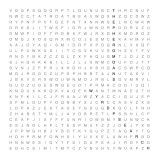
Walker claims that the album’s title is an expression of his frustration at the ubiquity of people claiming things are eerie or weird / wyrd in the present cultural milieu. The artwork for the record is designed as an actual word search too, a knowing nod to how we all grapple for meaning amongst the absurdity of each day. Leaning into ‘weird’ as a coping mechanism is not on The Pheromoans’ agenda however. This album holds little sway with the supernatural, it’s not enough. The overriding impression given by ‘Wyrd Psearch’ is of a band renewed with ideas. There’s no trouble finding the right words, they’re hitting their mark, keeping up with the commentary. ‘Wyrd Psearch’ is a document of The Pheromoans mastering their unquiet moment.
- A1: Wear Your Love Like Heaven
- A2: Mad John's Escape
- A3: Skip-A-Long Sam
- A4: Sun
- A5: There Was A Time
- B1: Oh Gosh
- B2: Little Boy In Corduroy
- B3: Under The Greenwood Tree" (Words By William Shakespeare, Music By Leitch)
- B4: The Land Of Doesn't Have To Be
- B5: Someone Singing
- C1: The Enchanted Gypsy
- C2: Voyage Into The Golden Screen
- C3: Isle Of Islay
- C4: The Mandolin Man And His Secret
- C5: Lay Of The Last Tinker
- D1: The Tinker And The Crab
- D2: Widow With A Shawl (A Portrait)
- D3: The Lullaby Of Spring
- D4: The Magpie
- D5: Starfish-On-The-Toast
- D6: Epistle To Derrol
Donovan’s Original
A Gift From a Flower to a Garden made for a few firsts: the first double LP of Donovan’s
career, one of the first box sets in pop and, most importantly for Donovan himself; the first
pop album for the children of tomorrow.
He resolved to make A Gift From a Flower to a Garden an album of two halves. The first,
Wear Your Love Like Heaven, was intended for his own generation as they started to think
about the kind of world they wanted to leave behind. The second, For Little Ones, was for
the children they had or would have in the years to come. The result was a kaleidoscopic
folk-jazz suite on the power of love, imbued with all the romance and mystery of an Arthur
Rackham illustration for an ancient English fairy tale. The songs, remarkably adventurous
given Donovan was a globally famous singer at his commercial height, combined the
influences he had amassed so far.
There is something about A Gift From a Flower to a Garden that could never be repeated,
though. It is such an innocent evocation of the childlike imagination, so redolent of its time,
yet set apart from it too. All these years later, the peaceful qualities of this pioneering,
enchanting, deeply unusual album feel more valuable than ever.
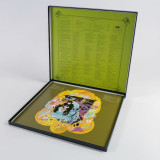
The state51 Box Set
With authenticity core to the project, The state51 Conspiracy engaged one of the UK’s
leading experts in box set design, Daniel Mason at Something Else, to painstakingly recreate
the box, records and accompanying ephemera. The first challenge was to find the deep blue
leatherette paper the original box set was covered in; a problem since it was no longer in
production. “I knew people who had stacks of it, gathering dust on top shelves, so I bought it
up wherever I could find it,” says Mason. Then came the reproduction of 12 loose leaf lyric
sheets on fine art watercolour paper, each of them featuring a watermark and a fairytale-like
illustration by Donovan’s artist friends Sheena McCall and Mick Taylor. Where, though, to
find the same paper stock? “I found out that it was made at a paper mill in North Wales
called Abbey Mills. Unfortunately the mill dissolved in the early 70s and very little of the
paper remained. However enough paper remained to allow us to produce the numbered
certificate also signed by Donovan that sits within the box.”
Then to the iconic cover image. Donovan and Jimi Hendrix’s personal photographer Karl
Ferris, used infra-red film to achieve the psychedelic effect on the cover, but the original
negatives couldn’t be found. Mason then used digital technology to ramp up the colour levels
on a reproduction from an original copy of the album while allowing it to remain a little bit
faded, as it would be after half a century. The same labour of love and care has gone into
producing all elements of the box; from the rebuilding of the famous front cover font to the
hand-numbered and signed certificate; letterpress printed on the original paper stock of the
1968 UK release lyric sheets.
To cap it all off the original mono master tapes were waiting safely in the EMI Donovan
Archive and transferred from tape to digital by Abbey Road Studios where new lacquers
were cut, ensuring Donovan's favoured mono version of the album would be presented both
physically (and digitally for the very first time) in striking audiophile quality. The final touch to
Complete with 10" vinyl record and booklet presenting Laurianne Bixhain's photographic work and text by Chloe Chignell.
Presented at the Mudam (Museum of Modern Art of Luxembourg) and initiated by a photographic exploration by Laurianne Bixhain, the work "The day begins with a loud boom" interrogates the manner and extent to which we are defined by our relationship to the physical environment, and the cultural import of the techniques of production. Its imagery follows the trajectories of the materials subjected to the processes of diamond cutting and automotive glassware fabrication, and presents the traces of human intervention of which those materials are both the object and the repository.
The interplay of its imagery, music and text constitutes a theatrical whole: both the staging of the text and the sonorities create an architectural space within which each constituent object is deployed. That spatiality is shared and complemented by the text’s sonorous and performative qualities. Likewise, the elements of texture and abstraction in the imagery invoke our sense of touch, as a means of material and spatial appreciation.
The succeeding reiterations of the ostinato the day begins with are treated graphically by its progressive effacement, evoking the tension in assembly line work between repetition and linearity, accumulation and exhaustion, trace and erasure. Such attrition is equally conveyed by the harsh, impassive, and architectural qualities of both the images and the music which accompany the text. The latter notably deploys a range of insidious effects, from the marriage of dissonance and unsettling rhythm evocative of the competing cycles of multiple industrial machines, to sensual and reassuring sonorities which are contaminated by their contrast with the harsh acoustic aesthetic elsewhere.
Returning to Intrepid Skin after her brilliant debut EP, and following on from a string of acclaimed releases since then, Berlin-based producer, DJ, and label owner Valerie Ace presents four new cuts of powerful hard dance and techno. Strass and Stress is out 1st March as both vinyl and digital.
With a background in organising DIY raves and a commitment to community-led efforts in electronic music, Valerie carefully fuses references from a range of genres into a singular, contemporary take on techno. Guided by an instinctive ear for experimental, groove-driven frameworks, her strain of dance music is hard-edged but mischievous, playful but heartfelt.
Diving straight into the peak hours, opening track 'Taking a Risk' is a swirl of hard kicks, frantic alarms and distorted leads; a statement of intent for what is to follow. Hot on its heels is the aptly-titled 'Slay'- a marching roller with double drops of acid, warped sonics and echoing glitches. Plunging into a hazier zone, 'Anxious not Afraid' takes an intoxicated spin on psytrance, building a vast acoustic space with equal parts tension and release. Closing off the EP, 'How To Fit In' jumps back onto the floor with an unrelenting spiral of
industrial-leaning hard drum chaos.
Strass and Stress is an all gas no brakes package of four crucial cuts from a producer on top of her game.
Best known for his work for legendary Thai director Apichatpong Weerasethakul (he even designed the enigmatic “bang” in 2021’s labyrinthine ‘Memoria’), Japan’s Koichi Shimizu has been honing a unique musical language since the early ‘90s, where some of his earliest material can be found on a split LP with Yoshiteru Himuro via once-iconic imprint Worm Interface (itself home to music from Autechre side-line Gescom). ‘Imprint’, was initially released quietly back in 2021 and has been remastered for this new edition, removing one track and bumping it up with four more, making it all available on vinyl for the first time.
The album offers a perfect overview of Shimizu’s broad palette, ranging from fine-wrought keys to electronic brutalism and guttural rhythmic pulses, plotted with an underlying narrative cadence that evinces his ability to heighten the impact of moving image, whilst also colouring the imagination with ephemeral sound imagery. His tekkerz are in bracing, anticipatory effect on a retooled, expanded version of his music from ‘Memoria’ within the convulsive, swarming silhouette of ‘Imprint’, and ‘The Path’ finds his aural accompaniment to ‘Uncle Boonmee...’ given room to breathe and develop into an unexpected, OOBE-like experience. In ‘Moth’ he magnifies and anthropomorphises a winged insect with finely chiselled technical nous, and his exquisite arrangement to ‘Faded Sign’ is somehow comparable to the ephemeral emotional register of cinematic collaborations between Ryuichi Sakamoto and Carsten Nicolai.
Ben Metek open this dancefloor session with a powerfull tribe very inbetween style : Pumpin & Hardfloor.... Efficient since the start the non-stop progression is defenitly in the OQP style ! Then comes Zayonne and a futuristic Pumpin teaser that delivers his kick after 1 minute...The style reminds Arobass and Fky. Sweet tenderness ! B side belongs to X-Tech and his Techno Tribe 160 electro vibe ! He finishes the job with hardfloor kick, hypnotized by the 7 minutes long set mental OQP smile !
Hi-NRG synth pioneer Patrick Cowley moved away from his usual robotic steeliness on 1982’s “Primitive World,” drawing instead on the groove rock of early 1970s gay discos. It’s a percussion track influenced by Baba- tunde Olatunji’s 1959 hit “Jin-Go-Lo-Ba,” made more famous by Santana’s 1969 cover. Cowley updated the sound for the 1980s with electronics and drum machines but kept the playful attitude of the original. Two choirs of voices chant back and forth to each other, giving Cowley a chance to include many of his friends from the San Francisco dance music community.
This has been DJ Hifi Sean’s year, with a best-selling album with David McAlmont , count- less live gigs and high-profile remixes to his name. His interpretation of Cowley’s “Primitive World” can be counted among his best, bringing an intense TB-303 acid house vibe that perfectly complements Cowley’s weird electronic blips and bleeps. The effect is a disorienting mix of psychedelic 70’s groove, 80s synth pop, and 90s tacky house vibes. “Primitive World,” is one of the brilliant standouts on Cowley’s final record, Mind Warp, the so-called “death album” written as his health was rapidly sinking. Hifi Sean’s new remixes pay tribute to Cowley’s genius while fusing the track even more strongly to dance music’s electronic future.
"The 'Kashkaval EP' marks DJ 3000's fourth vinyl release, stemming from his acclaimed 'Mezë' album.
This EP encapsulates DJ 3000's evolution, weaving a narrative from his Albanian heritage to his current thriving career. 'Kashkaval EP' stands as his most intimate and comprehensive work to date, embodying a profound musical odyssey. It extends an invitation to all, urging them to partake in a celebration of diverse cultures and a symphony of sound that transcends geographical boundaries. Through meticulously crafted tracks, it guides listeners on a shared and cherished voyage, forging connections through the universal languages of music, culture, and food.”
Kashkaval - Is a cheese originating from the Balkans. When producing this electro track, it all came together quite swiftly, to be honest. I only needed one final element to complete it. Coincidentally, my dad was discussing this cheese at the time, so I recorded him talking about it on my phone and seamlessly integrated it into the track. I applied various effects and kept it subtle in the mix, making it almost unrecognizable in Albanian. The chords fell into place after that.
Constant Sorrow - This song took shape during the pandemic. I had nearly completed the concept, and for some time before that, I had been in conversation with producer and vocalist Keith Caden. I believed his vocal talents would be a perfect fit for this track. I shared the track and its title with him, and he subsequently wrote the vocals, even contributing harmonica and a few other embellishments. I'm particularly fond of this electro-style track, and Keith's vocals truly bring a unique and special dimension to it.
From The Ashes - Electro played a significant role in this album. When I mention electro, it's not the typical style of tracks but rather a more unique approach. The vocals on this album truly infuse profound meaning into the songs, and I have a deep appreciation for the way the chords resonate and create a dynamic bounce in the tracks.
Crown Royal - There's an amusing backstory to the essence of this track. "Crown Royal" harkens back to a liquor we used to enjoy back in the day. We'd have our Crown Royal and pair it with those Black & Mild cigars – quite the combo! This track was born from the memories of those late-night drives back home from the club.
Following on from their contribution to theButter SessionsCome Togethercompilation released in March this year, Melbourne'sPolitodeliver their debut EPUltraparallel.Politois the collaboration between musicians Robert Downie and Finnian Langham and dancers Arabella Frahn-Starkieand Hillary Goldsmith. The ensemble integrates improvised techno and contemporary dance to form well-considered and captivating performances. The spirit of these performances are masterfully captured on the 12" record. On the transition between mediums, the group states; "we always aim to capture the unpredictability and liveliness of our improvised performances when we record, and try to sculpt the feeling of continuous movement which is so intrinsically tied to Polito's identity."
Ultraparallelconsists of four tracks that were extracted from studio sessions, emerging organically whilst jamming. The EP's introductionHornet's Webwields mutilated samples of vocals and spoken word, paired with abrupt rhythms to forge anomalous techno. The eponymous trackUltraparallel, recorded in 2018, is a dark and brooding arrangement with a murmuring melody and an infectious recurring bassline. Polito reflects; "this track is from the first batch of studio sessions we had as Polito where our intention was to create more discrete 'tracks' which could be played by DJs, rather than the longform compositions more similar to the live performances which we had recorded up to that point."
Turning the record over,Seventh Limbembodies the music for dance nuance by infusing dub with sounds from outer-space. Polito reveals; "we wanted to explore creating something more in line with the mood of our live performances, which are typically slower and have a rather meditative atmosphere. The more relaxed tempo allows the dancers to move at a sustainable pace and gives the musicians more space to prepare and manipulate the various musical elements in real-time. The result is our first formal exploration of 'the chugger.'"Ultraparallel'sfinaleSublunaryis a playful sequence mingling electronics with an airy clarinet and saxophone.
Attuned to their audience,Politoimagines how their music will be consumed throughout the creative process. They comment "while making music in the studio, we try to transport ourselves mentally to hypothetical dancefloors the music we're making could be played on, adding moments and sounds which would excite, energise, disorient, or have some other desired somatic effect. We're also considering not just how the music sounds, but how it would 'feel' when played on large sound systems."Ultraparallelultimatelypresents a refreshing visual take on literal dance music; a considered and holistic approach to enhancing the experience of listening and moving.
From out of nowhere - if nowhere is the febrile, warped and twilit imagination of Julia McFarlane - comes Whoopee, the second album by J.McFarlane’s Reality Guest. Whoopee is an esoteric, kaleidoscopic movie in music form directed by Julia McFarlane and co-conspirator Thomas Kernot. Full of life, breakbeats and smokey vignettes on the fragile nature of interpersonal relationships, Whoopee is a stylistic evolution from everything McFarlane has done before. Surreal, beautiful in parts and replete with the aching wisdom McFarlane’s songwriting has always promised, this Reality Guest pulls back the curtain on a whole scene of naked truth. Recorded in Melbourne in bursts since the release of 2019’s Ta Da, Whoopee features a new sound palette and band member in Kernot. The duo dive deep into electronic pop tropes, mining digital synths, samples, breakbeats and deep bass grooves, largely dispensing with live instrumentation. If Ta Da took twists and turns with your expectations, offering a Dada-ist, monochromatic take on pop music, Whoopee is McFarlane’s subterranean love-sick pinks, reds, greens, purples and blues. Becoming something of a tradition, the album starts with an instrumental intro pilfered from a 90s’ spy film or cinema intro music, puffing up the listener for the heart-squeezing bathos of Full Stops. Over a bleary backdrop of walking bass lines, jazz- inflected keys and smoked-out atmosphere, McFarlane’s poetry narrates the fragile state of a relationship: “You put a full stop where I thought there’d be a comma, I want the story to continue even with all the drama.” Over a palpable pain, the narrator is revelling in the drama of a relationship, addicted to tumult and heightened emotion. On Sensory, a space age bachelor lounge pad ballad, the converse state of the previous song is explored, here the narrator is battling the numbness of being out of the drama, stuck in a sensory-deprivation tank, anaesthesized and battling to emerge from the fog. Wrong Planet explores an otherworldly pop music, hewing a bright hook out of a sense of confusion. A bona-fide, sing-along chorus bursts out of the narrator musing on the absurdity of existing in this reality. It speaks of one of Julia McFarlane’s main talents, her knack of inspecting human relationships and states with a clear perspective, like an alien visiting Earth and realising everything we are is really, really strange. Whoopee is both more accessible than previous Reality Guest work and somehow more obfuscated. Where the production on Ta Da was dry, sharp and strange, this Reality Guest is blurred, almost smeared with the effluvium of 90s+00s culture and existence. Through it all, it’s hard to deny the undeniable pull of the songs. Precious Boy carries on the lounge theme with a whole sampler of cut up sounds fading in and out of the haze as McFarlane’s voice is right up to the speaker cooing and free- associating, maybe in love or maybe in confusion... maybe they’re the same thing? Sometimes the listener is invited to just bathe in the tone of the vocal, as on Apocalypse, where the texture and timbre of the vocal is luxurious, bathing in piano tinkles and double bass throb. On lead single Slinky, a cut up beat reminiscent of Washingtonian Go-Go drum patterns leads, the song slipping through your fingers, elusive and presenting sound as pure pleasure. Closer Caviar jumps back into the broken breakbeats of a surreal funk, fuelled by the sensory pleasure of the music, a hedonistic whirl in rapture, the narrator now living life to the fullest in all its giddy heights and deep troughs. This is the album’s main character fully-actualised and in the terrible, beautiful moment.
Dave Saved makes his debut release on studio 33 with Passing Images, an entrancing suite of hazy dance floor mementos, infused with a characteristic chopped and screwed soul.
As if heard through the dusty circuits of an android's dying memory drive, replaying songs picked up during its lifetime and mixing them into elegiac reveries in a final flashback of its existence, the sound is glowing with a patina hued warmth that feels uncannily familiar.
It's a considerably more dance oriented work than Dave's previous output but with a distinctly textural approach to the composition as well. The result is a densely vaporous sublimation of pure emotion. All refracted through an almost ghostly view of dance music's potentially hypnagogic effect, by way of repetitive progression and dreamy abstraction.
- A1: Il Tempo Profondo
- A2: Stella Ominis
- A3: Winter (In Memory Of Adrian Borland)
- A4: Götter, Geht Weg!
- B1: Monarch Architecture
- B2: Wrong
- B3: Madre Nera
- B4: Luminous Shade (Incl. Julian Assange's Speech Excerpts)
- C1: The Great Unknown
- C2: C. R. U. D (Corpse Recovery Unit D)
- C3: Deleted Msg
- C4: Genocide Litanies
- D1: Il Tempo Profondo (Radio Signal Version)
- D2: Esilio
- D2: We Have To Amputate
- D4: Homicide Aristocracy
KIRLIAN CAMERA sind ein kreativer Wirbelwind der musikalischen Innovation. Die mitreißende Kraft ihrer Inspiration manifestiert sich sowohl destruktiv, wenn es um das Einreißen von Grenzen in Bezug auf Genre, Stil und Konventionen geht, als auch konstruktiv, wie beim Errichten einer neuen Klangarchitektur auf den Ruinen der alten. Auch das jüngste Meisterwerk der Italiener, "Radio Signals for the Dying", folgt dieser Tradition und erklimmt dabei einen weiteren künstlerischen Höhepunkt. Oberflächlich betrachtet wandeln KIRLIAN CAMERA erneut auf dem dunklen musikalischen Pfad, den sie auf ihrem letzten Doppelalbum "Cold Pills (Scarlet Gate of Toxic Daybreak)" (2021) eingeschlagen haben. Dass die italienischen Elektro-Provokateure direkt mit dem Nachfolger noch ein prächtiges Doppelwerk folgen lassen können, spricht Bände über ihre ungeheure kreative Energie. Dabei bringt "Radio Signals for the Dying" keineswegs eine bloße Wiederholung des glorreichen Vorgängers. Stattdessen verändern KIRLIAN CAMERA ihren Sound auf subtile Weise durch raffinierte Details, reizvolle Tricks, großartige Effekte, unerwartete Wendungen und musikalische Ausflüge sowie spannende Variationen bestehender Themen. Seit über vier Jahrzehnten erschaffen KIRLIAN CAMERA ein Reich vielschichtiger Klangkonstruktionen, okkulter Transzendenz und subversiver Inhalte, die schon immer zum Kern ihrer Kunst gehörten. In der Vergangenheit hat die im besten Sinne schamlose, zuweilen geradezu unverschämte Lust der Italiener an der Provokation der Welt einen ehrlichen Spiegel vorgehalten und damit wiederholt Kontroversen ausgelöst. Die Italiener haben nie damit aufgehört, nach neuen Antworten zu suchen und ihre Hörer auf eine abenteuerlichen musikalischen Reise zu okkulte Dimensionen und magischen Orte von gefährlicher Schönheit und freudiger Dunkelheit mitzunehmen. KIRLIAN CAMERA sind Elektro-Schamanen, Rockmystiker, Klangrevolutionäre und Hohepriester der freien Künste, die als musikalischer Phönix im kreativen Feuer von "Radio Signals for the Dying" erneut wiedergeboren werden.
The studies with Goffredo Petrassi and the association with Gruppo di Improvvisazione Nuova Consonanza let the Avant-garde playing an important role in the career of Ennio Morricone,
who wrote many contemporary pieces for himself, but then the author composed soundtracks where dissonance played a major role.
For the Italian edition of the film SPACE: 1999 (1975), the cult British TV series, he composed a very neurotic Jazz with muted horns.
Also for the science-fiction film THE HUMANOID (1979) Ennio Morricone created hallucinating strings scores mixed with electronic effects. For SACCO E VANZETTI (1971)
an electronic score by Walter Bianchi evokes all the drama of the undeserved death sentence of the two protagonists.
Experimental music of great impact in the film and off the screen for famous thrillers such as THE DEATH DEALER (1974), SHORT NIGHT OF GLASS DOLLS (1971).
Avant-garde music has always been present in Elio Petri’s films set to music by Morricone such as PROPERTY IS NO LONGER A THEFT (1973).
Avant-garde music in the noir cinema of VIOLENT CITY (1970) and A PURE FORMAL- ITY (1994) and in auteur films such as GARDEN OF DELIGHTS (1967) and SARAH’S LAST MAN (1972).
Six years ago, Oum Shatt released a critically acclaimed debut album that led to Song of the Year awards from Berlin Radio Eins ("Gold To Straw") and TAZ Popblog ("Power To The Women Of The Morning Shift"), as well as BBC and Arte features and appearances at SXSW, Transmusicales in France and Electric Picnic in Ireland. Now, the Berlin-based band, whose members are otherwise known from bands such as Kissogram, Fenster, Die Türen, Golden Showers and Peaches, consisting of singer and songwriter Jonas Poppe, founding member Chris Imler on drums, guitarist Richard Murphy, and Rémi Letournelle on bass and synthesizer – return with a second effort that even surpasses their debut. Building on the minimal-rock style of their debut album (Vogue Magazine), OUM SHATT weaves a mystic, at times psychedelic soundscape with meandering guitars, a wild percussive aesthetic, and Jonas Poppe’s evocative, mantra-like baritone. "Opt Out" also stands as a thematic concept album, delving into the individual's various forms of resistance against societal expectations. While drawing from obscure influences, the album remains unmistakably unique.
Opt Out by Oum Shatt, released 26 January 2024, includes the following tracks: "Love the Way She Stands", "Madame LeSoleil LeVant", "Over the World and Out", "Investors" and more.
This version of Opt Out comes as a 1xLP.
The vinyl is pressed as a blue disc.
It’s a family affair. One formed almost thirty years ago, back in the mid-nineties, when the pair joined seminal French jazz combo Olympic Grammofon. For twenty-four years they have worked together as Bumcello, each complementing the other, echoing polar opposites. The Boom in Bumcello is none other than Cyril Atef, incisive drummer, relentlessly pushing beats towards new horizons. The Cello is Vincent Ségal, cellist without blinkers and extraordinary musical alchemist. Since 1999, these two die-hard music fans, coming together for mercurial results, have released one record after the other whilst conquering the hearts of their live audiences, old regulars as well as new recruits. We have all been seduced by the way their music leapfrogs categories - these two experts are much more interested in kindred spirits than pigeonholing, and this very spirit is celebrated on more than one track of this ninth record, whose concept is original to say the least.
Everything began with an idea by Cyril Atef - a soundtrack based upon drawings penned by Marin, Vincent’s son, architect and visual artist. The musicians involved then coached their reaction to these images on a score, and the pair were charged with collating and adjusting the results. These thirteen ink drawings, in a heroic fantasy vein, constituted a matrix which was then to serve as a guide, like a roadmap through a singular and multi-faceted labyrinth. The key to this sonic fresco is in Bumcello’s image – an eclectic aesthetic twinned with a great sense of contrast. Herein lies the trademark of this entity animated by the gift of musical ubiquity, gorged on scales and rhythms, capable of a slap as much as a gentle caress. From classical music to electronics, from improvised music to sophisti-pop, everything is allowed with no preconceived ideas. They can even reclaim the traditions of others, all the better to propel them towards new horizons - this is how the very history of music has always panned out.
If you listen between the lines and look at the details, more than one piece bears witness to the moments and individuals that have impacted the criss-crossing lives of Vincent and Cyril. The track Crash is the perfect excuse to create a Jamaican-style jam with New York inflections, and we can see, in capital letters, the name Hilaire Penda, playing alongside Bumcello at the Apollo Theater in the associated drawing. This bass player from Cameroon, who died on 5th November 2018, was more than just a friend for the two Frenchmen. He was one of the family. Similarly, they give a nod to another Cameroonian, and another departed friend - singer of rock band les Têtes brûlées, Zanzibar, through the vocals of fellow countryman Zanzi. The ghost of Rémi Kolpa Kopul, emblematic voice of Radio Nova, haunts the margins of Spark Av, in a vocal sample with a smattering of effects. As for I Remember Tim, it directly honours the memory of Timothy Jerome Parker, aka The Gift Of Gab, another friend who left us in 2021. Tim is depicted in a drawing with the docks of Oakland in the background, and it’s his alter ego within Blackalicious, Chief Xcel, who remotely added his signature to the track, notably by adding the words of Lateef The Truthspeaker to brass and woodwind sounds.
These are the only additions to Bumcello’s original nucleus, all the better to create a genuine musical concoction where Vincent Taurelle is in charge of production and mixing sessions recorded live and direct. He is also invited for a twinkle on the keys (piano, synths, Wurlitzer, organ), on a handful of tracks. Already at the commands of previous opus Monster Talk, always taking care over the slightest detail, the one that makes all the difference, this pianist is now also part of the family. “Everything he brings is perfect, whether added though slight touches or through very important choices”, say the two members of a combo which today, appears to us under the guise of a trio, adding an extra dimension to a far-reaching mix, in the image of the veiled or more explicit tributes making up the cornerstones of this release.
Booker, a drawing where we see the musicians enter a club, honours James Booker, great pianist from New Orleans who has always fascinated Vincent, in a genre that is off-beat and gender defying. Her Story was created by Cyril in support of the Iranian women’s movement. Aysyen Kampe evokes, even in the original drawing, a tradition that remains impactful for Bumcello – Haitian mysticism, and Ouï Khouïette Ouï conjures up the beats of the Allaoui, a war dance from Western Algeria, one they have taken part in in the past with the help of Cheikha Rabia. They deliver a metal version, original and surprising, especially as Marin Ségal’s drawing features the Nicholas Brothers, those iconic dancers of the 30s jazz scene!
Resolutely hard to pin down, Bumcello’s beats can initially take on the structure of disjointed house, though Sangre begins like a film soundtrack, “in a Mexican style” adds Vincent, who was at the origin of this track. A delicate alap on the cello can open up onto afrobeat rhythms, a well-pitched voice can enchant, like on the amazing The City Has Eyes which has everything of a hummable pop hit. Emblematic of this manner of encompassing all music without being exclusive, Le Grand Sommeil, a direct reference to the Howard Hawks movie inspired by Raymond Chandler, a precursor of David Lynch, begins nice and smooth but ends on a wild tempo, on a drum’n’bass tip, as in the good old days of Cithéa, when this Party story began in the other century.