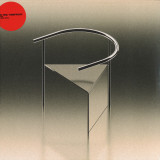
In the centre of deep space we tune in to the radio broadcasts from an old Class T interstellar spaceship. The emissions endlessly resonate the frequencies of the seventeenth release on the label HC Records by one of the titans of the Valencian scene, The Lost Boys, new pseudonym of the DJ and producer Raszia.
With releases on labels such as Bass Agenda, Subsist or Hxagrm Records, the artist mesmerises our senses with the Exiles of Mars Ep, available in both double vinyl and digital.
Syncopated rhythms are the protagonists across four original tracks together
with remixes by four electro legends: Boris Divider, Estrato Aurora, Dark Vektor, and Filmmaker.
The EP’s first cut is a remix of "Wall Of Bricks" by the legendary Boris Divider, which gives the track an air of crystalline, synthetic and cosmic sound, very much in line with his latest works on the Generative Operations series. Next, we find the original version, where the kick drums are heavier, the synths and basses more colourful and the acid sequences take centre stage in an odyssey of sidereal intensity.
On the record’s flip side, a feeling of overwhelming melancholy takes root in our soul. Valencian Estrato Aurora mentally transports us to the mysterious red sand of Mars in a precise exercise in symphonic minimalism with his remix of "Exiles of Mars", which mutates the original idea with velvety pads, synths and a slow and rapturous hypnotism that sinks us to unfathomable depths.
The Lost Boys' original concept on B2 is a combination of Miami Bass-style breaks and a demonic mantra-like main synth line, backed by what seems like an infinity of pearly effects and secondary melodies, pushing the track towards a crescendo punctuated by a dry and sharp snare.
The second disc’s opener "Bust My Moves" is a masterclass in deconstruction and reconstruction by Dark Vektor with his "Electro Escuadrón Remix”. The genius from Terrassa provides powerful lyrics loaded with a message about the modern rise of the 808 movement. We return to the original Lost Boys version on C2, a futuristic martial discourse takes shape with combating breaks combined with rave chords and brief episodes of respite, almost dreamlike, in the middle and end of the track’s exciting development.
On the D side, rough frequencies verging on distortion materialise through our ship's speakers as we pick up the Colombian Filmmaker’s remix of "Data Recovery For Brains". A psychotronic final appetiser that combines harshness and elegance in the use of the rolling kick drums and saturation of the sound, it is without a doubt the ideal soundtrack to narrate the collision of two galaxies. The closing of the EP features the original track, in which The Lost Boys show us his most mental and lysergic side as the track progresses along a slow and comforting broken rhythm, made dynamic by clever use of diverse acid sequences and clairvoyant stellar melodies.
The complete artistic experience is enhanced in all dimensions with accompanying artwork by
Daniel Requeni and videos elaborated by Frank-F.
Mastering as usual by Steve Voidloss at Black Monolith Studios in London (UK).
Search:effect men
black 12"[20,13 €]
First time on wax for P.0.3 and BLUMET!!!
Printed sleeve
A1 TRASHIN is a POWERFUL 194 bpm melodic hardfloor banger, old school off beat bass, full of mini breaks and surprises with a stomping kick!! FIRST DEBUT FOR P.0.3 ON VINYL!!!
A2 ANTRAX is a mega TRIBE CORE track with an impressing solid kick and mental melodies. Slowing down a bit to 165 bpm, driving off beat bass and ghosty effects, nice mixing tool!! FIRST DEBUT FOR P.0.3 ON VINYL ALSO!!!
B1 BLUE ANGER is the very first debut on vinyl for BLUMET, 2013 RS7000 drum machine remake. The track recall IVAR THE BONELESS war cry saying "you cannot kill me". Mad 210 bpm angry tune to make the crowd gabber kick the air! Edit and mix from STITCH!
B2 THE NAME OF DOVA is an old school hardfloor unreleased banger at 180 bpm from the infamous UZI. Stomping and deep first part with fidget recalls and digi sound effects, second part goes melodic on a Zelda Epic theme sound like, very cool!
MASTER from the very talented producer and Master engineer 1NC1N.
GRAPHICS from STITCH!!
repress !
Electro veterans “Middle Men” (Bass Junkie & Jim Kneen) return, to seek the future...
4 stellar Electro cuts in their distinctive machine funk style, feature on this their 4th EP outing, brought to you by the mighty Fdb Recordings:
Laura Poitras’ Oscar-nominated film »All the Beauty and the Bloodshed« is an epic, emotional and interconnected story about internationally renowned artist and activist Nan Goldin. Told through intimate interviews, photography, and footage, central to the story is her personal fight to hold the Sackler family accountable for the opioid crisis. The film cuts to the bone with its incandescent celebration of life and condemnation of those who threaten it. Art and activism are one and the same.
Helping to interweave Goldin’s past and present, multi-disciplinary duo Soundwalk Collective soundtrack her personal and political struggles to sublime effect. The contemporary sonic arts platform of founder and artist Stephan Crasneanscki and producer Simone Merli, the pair work with a rotating constellation of artists and musicians, developing site-and-context-specific sound projects through which to examine conceptual, literary, or artistic themes. And for all the beauty and the bloodshed on show here, the duo strike the balance just right; their compositions in collaboration with Zacharias Falkenberg and Johannes Malfatti producing a trance that oscillates between grace and madness.
Within the score, Crasneanscki draws connections with the life and work of German poet Friedrich Hölderlin, who was removed from society through confinement in institutions. In his last poems, written as fragments while he was plagued by mental illness, Hölderlin renders nature, in all its fragility and ephemerality. Similar themes merge in Laura's portrait of Goldin and serve as an inspiration for the composition of the choral songs and cantus within the soundtrack. Through the repetition of words and the layering of voices, the lyric scansion operates like a language possessed, echoing various styles from sacred music to modern minimalist techniques. The music is characterised by quivering strings and swells, de-tuning and lingering, shifting around the surreal, and creating a spectrum of musical experience. Exerts of Nan’s narration are featured in two of the tracks, her powerful narration offering a more direct approach to the storytelling.
In »All the Beauty and the Bloodshed,« Poitras shows protest is really Goldin’s great artwork: Her entire life had been leading to this moment of passionate expression, an inspired situationist gesture which fused the personal and the political. Art can change the world, which Poitras and Goldin tell us with powerful results. While there are multiple threads in this remarkable portrait which could have carried entire films, the soundtrack provides a sonic identity that helps keep track of proceedings. Utterly unique in their approach, Soundwalk Collective have delivered a gripping and thoughtful score, helping turn Goldin’s personal pain into culture-rattling impact.
Timo Kaukolampi, frontman for Finnish electronic rock group K-X-P and tireless sonic wanderer, is releasing his second solo album, this time on Optimo Music. Exquisitely rendered, shadowy, curiously claustrophobic and even occasionally paranoid, Inside The Sphere is an album wholly deserving of its name.
A sense of paranoia is one of the threads through this glittering, winking electronic maze. Kaukolampi says “I came up with this metaphysical concept of the “sphere”. When you are manipulated you are ‘Inside The Sphere’. It’s like this dome of ‘undue influence’ that you don’t know exists around you. It’s a bit like the inside of a cult.”
Indeed, it’s amazing the effects achieved with a few sparse electronic textures, the odd smattering of studio trickery, and two or three well-placed synthesizer parts. Though the result might sound ostensibly simplistic, Inside The Sphere is an album of reduction rather than addition. The rhythmic and textural scaffolding is based around what’s not there, rather than what is. Take ‘VCS3’. At first listen, it seems forged from a few synth lines and a simple percussion part – so far, so simple. But listen closer, enter the sphere, look behind the mask – notice the slightly detuned drones, the chattering percussive textures, that distant swell of bass, the way the central fugue shifts and mutates somehow statically, like a barber’s pole.
Might we be listening to an album within an album, a more complex song cycle hiding within the folds of an ambient electronic album? This ties in with another of Kaukolampi’s thematic frameworks – that of the mask. He references Oscar Wilde’s quotation that “Man is least himself when he talks in his own person. Give him a mask, and he will tell you the truth.”
Inside The Sphere is not a one-note album. For every moment where a clammy ambient space enters, a buttery analogue bassline is there to fill it. This clash seems to be the album’s engine room, its power supply.
Timo references devotional and choir music as an influence on this album. The paranoia and foreboding is tempered by these headier aspects. Kaukolampi mentions “empty and hollow spaces” in relation to several of the songs. Perhaps this is the very space behind the mask, where outward disguise merges with inner reality. Perhaps inside the sphere is not always such a bad place to be.
Fans of Coltrane will certainly dig this historical 1970s spiritual jazz album from Argentina which left an everlasting imprint in the local jazz scene. From the eerie "Blues para un cosmonauta" —which could easily fit in the Twin Peaks soundtrack—, to the majestic "Líneas Torcidas" or the mid-tempo groove of "Mi amigo Tarzán", new landscapes in jazz are explored without hiding, at moments, the musicians' bebop pedigree. Venturing into unchartered dimensions, the album breaks with traditionalism and combines jazz and new electronic instruments into a contemporary concept that is both cosmic and sensual, a sound where timbre and space play a crucial role. Here, no track sounds like the other.
The charismatic, multifaceted saxophone player Horacio "Chivo" Borraro is joined here most notably by Fernando Gelbard —who pioneered electronic keyboards and analog synths in Argentina, playing here Fender Rhodes and Minimoog— and Brazilian musician Stenio Mendes —who plays the 12-string craviola and contributes two tracks. Jorge González on bass and Néstor Astarita on drums —both part of Gato Barbieri's rhythm section in the early 60s— and Chino Rossi —responsible for much of the unusual percussion and special effects that give the album its unprejudiced aura— complete the line-up of Blues para un Cosmonauta.
Ebalunga!!! is thrilled to announce the first official reissue of the self-released, self-produced, and self-titled 1985 LP Scott Seskind. The album is a lo-fi singer-songwriter jewel. Don’t miss it.
“Authentic and personal, at times it reminds this writer of luminaries such as Jackson C. Frank, PF Sloan, Skip Spence, and Phil Orchs while never feeling derivative.
The songs are melodic and haunting, fueled by existential woes, political angst, and good ol’ fashioned love. Scott’s rich voice has an unpretentious gravitas, his simple-yet-effective guitar playing ranging from delicate fingerpicking to angry bashing.
Created at home on a Tascam 4-Track Portastudio, the recording features few frills and is all the better for it. Unlike most mid-80s records it sounds like it could have come from any time since the late ’60s onwards. As a testament to its greatness, and despite the late recording date, it even gets a nod on Patrick Lundborg’s “Acid Archives” compilation website, Lysergiawhere it’s described thus: “Late phase downer-loner folk and singer-songwriter trip, mostly acoustic, some tracks with a small band.” – Andrew Ure for Ugly
Things.Read a long story about the album in the upcoming Shindig! issue: Story about Scott Seskind in Shiding Mag.
The reissue is available on vinyl with a lyric insert.
Mastering (as always) by Jessica Thompson.
Feedbacks and reviews:
“Almost totally inheralded singer-songwriter Scott Seskind gets the reissue treatment, and I couldn’t be happier. About a year ago I pulled Seskind’s sole vinyl release out of the used bin of a Boulder record store, and with its almost Wallace Berman-esque cover art, could immediately suspect it was something special. The first listen didn’t dispel that notion one bit; here was an impressively captivating and moving collection of four-tracked bedroom folk of the highest order, with an out-of-time vibe that didn’t really snyc with its 1984 recording date. Definitely on the loner-ish end of the folk spectrum, with some aspects of the album harkening back to Skip Spence’s iconic Oar, while other moments revealed the urgency of the ’80s lo-fi revolution. But most importantly, the songs were just really, really great and managed to remain haunting long past their leaving.
Here, I thought, is an album that needs to be heard by more people, NOW. I asked around amongst some record collecting friends and discovered it was pretty highly rated by a small circle of people in the know, and that it had even managed to garner a mention in the Acid Archives despite its late recording date, and most excitingly that there was talk that the digital reissue label Yoga had managed to track Seskind down and secure the rights to his LP. (…) So here we have it, the best songs from Seskind’s eponymous LP. (…) I really hope this release continues to garner the listeners that it deserves.” – Michael Klausman
“The one that struck us the most this year was the almost totally unheralded work of singer-songwriter Scott Seskind, who recorded an impressively captivating and moving collection of four-tracked bedroom folk of the highest order, with an out-of-time vibe that doesn’t really sync with its original 1984 release date. Definitely on the loner-ish end of the folk spectrum, with songs that are really, really great and which manage to remain haunting long past their leaving. Truly an album that deserves to be heard by more people immediately. ” – Other Music
- A1: Erstes Kapitel (Verschliffen)
- A2: Zweites Kapitel (Ruckartig)
- A3: Drittes Kapitel (Ungesagt, Dann Vergessen)
- A4: Viertes Kapitel (Bewusstseinsfrei)
- B1: Fünftes Kapitel (Kreuzweis)
- B2: Sechstes Kapitel (Herausgewunden)
- B3: Siebentes Kapitel (Verflochten)
- B4: Letztes Kapitel (Halb Vermutet, Halb Gesehen)
11th album by the one-of-a-kind collective: psychedelia and free form jazz (not jazz) trigger a sophisticated excursion into weird textures with drastic turns. Dislocated dense music full of secret connections!
Kammerflimmer Kollektief – "Schemen"
Before reason prevails, invoked by those who want everything to remain as it is, Kammerflimmer Kollektief disrupts the established supply chains of sound. It seeks more interesting ways to assemble them. Trusting in this, because of the fact that every sound that still comes out of a guitar, a bass, a harmonium, drums and electronic devices has already been taken into the common mangle of meaning anyway. Enough of all that. Here, nothing is explained. Here we speak in schemes. Polished and jerky.
The images that Kammerflimmer Kollektief conjures up therefore happen not in the focus of consciousness, but rather in its outer realms. In those to which one does not give one's full attention at the moment, but which are nevertheless perceived. For example, when a leaf falls from the ground back up to the tree in the corner of your eye, and for an instant you think this is possible, before you realize it was a small bird flying into the tree; it is in just such irritating moments between perception and realization that the art of the Kollektief also unfolds. On "Schemen", familiar fragments float gently around their core – a Fender Rhodes tone, a bass figure, a guitar motif, a masterful drum shuffle, a moment of icy stasis borrowed from the harmonium playing of Christa 'Nico' Päffgen. Triggering brief associations, they slowly rush off in other directions through free jazz-informed editing work, whereupon such zones can also arise in which perception has a few tricks ready and earlier experience suddenly breaks into the now in a completely different way. Half suspected, half seen.
Half-music like Can from Cologne – also masters of improvised editing – sometimes produced a few decades ago in their in-between moments. The first minutes of "Future Days" for example, which fade in gently, sketch a barely graspable figure emerging from all directions of the room. Kammerflimmer Kollektief also engages in similarly open moments of development. Loosely, it eludes the first formative impressions, keeping itself ready for moments that do not follow any logic of appointment. This looseness in handling makes Kammerflimmer Kollektief so fluidly audible, even when dissonant peaks and free playing arise. What Karlheinz Stockhausen is to Can's understanding of composition, the recordings of The Cocoon are to Kammerflimmer Kollektief. The Cocoon, a meeting of garage psychedelics from the Hannover area with free jazzers from the Galaxie Dream Band, whose album "While The Recording Engineer Sleeps", recorded in 1985 in unguarded moments, operates in a very similar way with decentralized perceptual ambivalences and only appeared more or less secretly four years later on Wilhelm Reich Schallspeicher. Other traces of "Schemen" lead to the debut album of Quicksilver Messenger Service. The guitars of Gary Duncan and John Cipollina, which refer to themselves in an unforced manner, are instructions to let go. They don't want to be traced in every note as a solo, but they give their music a sense that the essential takes place off center, in the mutual and intuitive gift of loving attentions. Consciousness-free.
Loving turns like the little guitar phrase that, like a kind of leitmotif, is repeatedly ghosting more or less unchanged through all of the Kammerflimmer Kollektief albums. A Coricidin induced, very catchy slide idea filtered out of ancient Æther, which – who knows – maybe even centuries ago found its way from somewhere to America – the old, the eerie – and from there wafted on through the ages to southern Germany, to a smoky studio in the Upper Rhine lowlands. A memory of which even the memory no longer knows what it once reminded. Unsaid, then forgotten.
In Kammerflimmer Kollektief you will also find a friend of slowly building, unhurried music, which probably would have been appreciated by the old Franz Mesmer, who 200 years ago, after tranquilizing treatments, sometimes used to play for his patients ambient melodies on the enormous glass harmonica. However, in order not to surrender completely to the flow of one's own life energy, as Mesmer had in mind with his therapies, Kammerflimmer Kollektief occasionally adds hectic tensions, gently embraced by the droning of a sine wave generator, as if a trance could briefly refesh. This old analog sine wave generator is new in the Kammerflimmer assortment of sounds. So, the art of the Kollektief likes to dock occasionally in modern times, yet with the past in mind. Mental states begin to flicker between imagination and certainty, between culture-bound art expression and coincidences: A cawing and scraping can always just be a cawing and scraping with Kammerflimmer Kollektief, the way Andy Warhol's mushroom eater just eats a mushroom.
Heike Aumüller's cover works, which illustrate all the Kammerflimmer Kollektief albums, additionally act as amplifiers of unexplained refractions. Her style consists of eye-corner art that remains so, even when looked at directly. Her shots remain disquieting because they do not jolt themselves into a reassuring order, even in retrospect. Rather than evading the fear that arises when looking at them by trying to impose some irrational rhyme or reason, that fear must simply be endured. This strategy of endurance is equally applicable to the music. The trick is to let parts be parts without compulsively seeking delusional patterns that lull us into a false sense of security and in doing so, possibly delude ourselves. In this context, freedom means not having to anxiously attach a fantasized superior meaning to everything. "Schemen" has an conspiracy disintegrating effect.
b A2 Zweites Kapitel (ruckartig) [feat. Heike Aumüller]
If Susan Subtract of High-Functioning Flesh / Physical Wash personally supports this Portand based duo is because everything that should be the modern american funky ebm / minimal synth is present in “Costo Humano”. Puerta Negra delivers amazing industrial breaks covered in a very simple but extremely effective by funky bass lines perfectly finished by ensoniq style super synth leads culminated by harsh raged vocals sung in castillan language. This is for sure one of the most fresh and brilliant modern ebm work coming from the states recently. For the likes of the west coast modern ebm acts such as Spike Hellis or the mentioned High-Functioning Flesh.
The title of Ital Tek's seventh album "Timeproof" reflects what Alan Myson has observed and learned whilst making the album. Firstly, how distorted the perception of time is in the creative headspace - being in the studio creates a timeless environment, one's mind starts wandering and the perception of time is altered. Secondly, the bizarre effect of the last few years of lockdown have somehow infected the title, temporarily contracting our collective notion of time. And thirdly, Alan has learnt how spending time away from the studio can be as effective as being there, giving one space to process. Appreciating the power of being out in nature, putting other things into perspective, refreshing one's ability to approach work with both patience and creativity. Overall "Timeproof" feels more introspective than Alan's last album "Outland". Perhaps because of the time in which it was created or this new relationship to the creative process. The sounds and textures of the record hint at brutality and menace whilst also pulsing and evolving softly with a more refined interior life. It's expansive and elegant, neatly balanced between light and dark, more mossy and dreamy than the extremes of "Outland".
When making the album, Alan spent about a year or so working quickly and intuitively, churning out ideas, sketches and sound experiments without any attempt to finish or perfect anything. "I let it settle until I was ready to return to this body of raw material with fresh ears some months later, sometimes barely remembering what or how I’d done much of it." Over the course of another year he dived into the details, rendering all of this rough material and sound into something with form. Alan also visited older material and ideas, trying out, reworking and sampling, building it into this new body. The finished album feels open, with a gentle intuition that feels as if it's guiding you through.
French techno titan Madben unveils his much anticipated ‘Troisième Sens’ LP on Maceo Plex’s Ellum Audio.
Madben started absorbing the techno of Jeff Mills, Dave Clarke and Speedy J in the 90s, growing up in Lille in northern France. He retains a passion for DIY culture and warehouse parties thanks to youthful raving at Brussels' Fuse, Gent's Kozzmozz or in abandoned factories in Courtrai. All this has shone through in his music, including a debut album on Astropolis in 2018 that featured a collaboration with Laurent Garnier and a recent EP for Garnier and Scan X’s label.
Over the last decade, he has become a European club and festival favourite playing places like Berghain and Awakenings. His studio boasts a fine array of machines utilised to full effect on this latest opus. ‘Troisième Sens’ perfectly reflects what the artist has always loved, listened to and played, keeping one eye on the dance floor but never at the expense of musical narrative. It’s a genuinely progressive, multi-genre body of work that allows listeners to fully immerse themselves in the seemingly limitless depths of the Frenchman’s sonic capabilities.
He says, “Over the years, I learned to have more fun with the gear in my studio, and this has been the result. The album took three years to finish; I started in an underground basement studio in Paris before moving to Nantes. Therefore, it may surprise listeners with such a diverse selection of moods. It's dark in places but happy in others.”
'Departure' kicks off with uplifting synth work and broken techno beats that have a celebratory feel. 'Addicted' is a lithe cut with steamy vocals and a more fulsome combo of drums and bass, while 'Circuit Breaker' cuts loose in the cosmos. Acid wobbles, smeared synths and metallic percussion all make for a bouncy cut before 'Fade In Fade Out' continues the cosmic trip with vastly oversized synth patterns that will light up a dark space with overwhelming euphoria.
The brilliant 'It's 1 am In A Rave' is a dark, heads-down banger with 'Lost Memories' then layering up melancholic synths and Plastikman-style drum loops into something full of deep thought. There is no let up with the superb acid techno gymnastics of 'No fear', and 'The March' is a turbulent mix of sheet metal synths that whip about over steel-plated drums. 'You Dance Like A Robot' is end-of-the-world electro with a menacing robot vocal, and the electro tip continues with expert drum programming and menacing leads on 'Deep In The Jungle'. 'Meta' is a flailing rhythmic workout that sounds like the machines are in meltdown, and 'I Made A Dream During This Nightmare' is a serene techno soundscape for ruminating about the future of the human race.
Intelligent yet immediate, impactful but emotional, ‘Troisième Sens’ is another standout techno record from Madben.
- A1: Diamond Door Feat. Princess Shaw
- A2: I’m The Best Rapper In The World
- A3: Choosy Choosy (Feat. Yunoka Berry)
- A4: My Favorite Ghost (Phantom Pains) (Feat. Anjelika “Jelly” Joseph And Nigel Hall)
- B1: Bang Bang Bang
- B2: Who’s The Best? (Dear Young Lb)
- B3: Go Ape Shit (Feat. L-Deez & Cut Chemist)
- B4: Alligator Boots (Feat. Say Sway)
- B5: Greatness On Repeat (Go Me!) (Feat. D Sharp)
“This is me at my most imaginative, freakiest, and yet still most grounded and introspective,” says Japanese American rapper/actor Lyrics Born not only about his new album Vision Board, but also his “self” and his existence. “I feel like a new man! I’m healthier physically, spiritually, mentally, and emotionally.” The lead single and video “Diamond Door” is a pop/rap banger that lands you with an infectious barb and keeps you hooked for days, and is a thinly-veiled tribute to a particular style of female appreciation, but it can also be taken as a welcome mat to the new era of Lyrics Born. The accompanying video which shows Lyrics Born in his current physical form - svelte, stylish and with a confident swagger - reinforces this next chapter in his life. 60 pounds lighter, he lost the weight during the pandemic when he knew he needed to make a change. “Touring was becoming harder, and I was having all these weird health problems, but nothing that anybody could put their finger on,” he explains “My anxiety was high. I was not sleeping well. I was on the verge of really bad health.” And this improvement brought more confidence which shows in his new album. Vision Board is a focused affair that found him stretching his creativity farther and challenging himself to write in a way he’s never written before. Recorded primarily in New Orleans and produced by Rob Mercurio of Galactic (who also produced 2015’s Real People and 2018’s Quite a Life), it posited him in a new environment that helped his creative juices flow even more fluidly. “There’s nothing like recording in the Crescent City. It just gets in your blood, and the results are always funky and wild.” “This is about as psychedelic as I’ve ever been,” LB says. “I’m so proud of this album. I’m in a different space. The world is in a different space, and I wanted to celebrate that, loosen up and really create some imagery and share some emotion that I never have. I was listening to a lot of Shuggie Otis; a lot of obscure psychedelic soul and later Temptations,” he explained. “This is like if Alice in Wonderland was Japanese.” Vision Board was also inspired by another Bay Area rap luminary, although one who’s no longer with us - Gift of Gab. The dexterous Blackalicious MC and fellow Quannum Projects alum had a profound effect on Lyrics Born’s life, both creatively and philosophically. “I asked myself on some of these songs: ‘How would Gab approach them?’” he said. “I’d play with certain cadences, certain styles; I tried to stretch stylistically, lyrically and vocally on every single song. None of the patterns are the same.” Lyrics Born’s vulnerability shines through on the nine-track effort, something he’s not ashamed to admit (nor should he be). At one point during the pandemic, he was losing one friend, peer or family member every other week - from Zumbi of Zion I to Gift of Gab to Digital Underground’s Shock G. While many of the songs are deeply introspective, he had to “write some fun shit,” too. Celebratory horns, uptempo rhythms and fiery bars pepper the project from start to finish, and truly encapsulate Lyrics Born’s evolution of not just a groundbreaking Asian-American MC but also a human being. As the only Asian-American MC to release 10 studio albums, the first Asian-American to play major music festivals like Coachella and Lollapalooza and the first Asian-American to release a greatest hits compilation, Lyrics Born has been breaking barriers his entire life - and he’s not going to stop anytime soon. From the bombastic and tribal “I’m the Best Rapper in the World” with its self-winking boastfulness to the playful scat of “Bang Bang Bang” that slinks like an outtake from West Side Story, to the smooth and seductive “Who's The Best? (Dear Young LB)," to the psychedelic and swoony ”Alligator Boots” with it dreamy “Walk on the Wildside”-esque reverby sway, Vision Board sees Lyrics Born tackling different tones, textures and genres without fear and making them completely his own. It's an eclectic body of work that boasts more synths, more psychedelia and is generally more abstract.
I:Cube has made a new album. It is a very “hands on” album, as the eight tracks on show were created almost entirely by improvising with electronic hardware – synthesizers, sequencers, drum machines and effects units – and recorded in real time, with very little after-editing. It is also his first album in a decade, should you be keeping track.
During the time he spent recording it, which was in part inspired by the processes behind his ‘Cubo Live Sessions’ series, I:Cube had fun, experimented, unleashed the raw, primitive energy of his machines, and emptied his head of thought. The resultant tracks are instinctive, immersive and otherworldly, driven by the emotion of the moment rather than the formulaic structures of dance music. They are unpolished and immediate, but also immersive and sincere.
Think of it as a soundtrack to time spent alone in the studio, daydreaming in darkness and light, translating mental and physical messages in real time. It is not calculated, overblown or over-produced like much modern electronic music, but gently odd, engaging and pleasingly rough round the edges. In some ways, it is I:Cube’s most personal and emotional album to date.
Matt Annis
- 1: Margaret Murie 02 46
- 2: Crux 04 07
- 3: Nameless 0 6
- 4: Eidetic 01 36
- 5: Thursday Night 03 09
- 6: Halve 03 12
- 7: Osco Drug 01 19
- 8: Lillian Isola 02 3
- 9: Safn 01 10
- 10: Maple Seed 02 21
- 11: Viridiana 03 29
- 12: Tet 01 51
- 13: God Innocent Controller 01 36
- 14: The Void 03 17
- 15: Alces 01 06
- 16: Pastel Dust 03 30
- 17: Where To 04 02
Dark Green Vinyl[24,33 €]
American singer-songwriter, poet, and photographer Thomas Meluch, known musically as Benoît Pioulard, returns with his most structured and vocal release to date. Titled »Eidetic,« a word denoting the ability to recall mental images with extraordinarily rich precision, the album presents unprecedented clarity and vitality for Benoît Pioulard. To access its thematic ground, Meluch looked inward with an affinity towards the people he loves during a period marked by his move from Seattle to Brooklyn in 2019. The resulting work engages with the universe's unflinching mortality and, as he says, »the ways it has modified and improved my relationships, especially with family.« Embodied by the creek, leaves, and ferns of the cover photography — taken in Michigan’s Burchfield Park, where he and his dad used to hike and »muse on existence« — the music glistens and unfurls with the flow of life he’s come to know. »Eidetic« is the culmination of Meluch's craft both as a producer and writer. An evocative sonic vocabulary meets deft lyrical introspection, articulated with the nuance, vulnerability, and confidence of a longtime artist hitting a stride.
Meluch has continually refined, redefined, and adjusted the focus of his gentle pop project over the last 20 years. Recorded primarily with guitar, tapes, and voice — and spanning labels with albums for Kranky, Morr Music, Beacon Sound, and Past Inside the Present — his catalog flows seamlessly between ambient improvisation and pop composition. Much like the analog photos that often accompany his releases, songs can feel dreamily softened and distant, and others beautifully vivid and detailed. 2021 full-length »Bloodless« found Meluch deep in droning decay, expressive yet wordless. With »Eidetic,« he swings back to sharpened forms. Lush banks of treated guitar and synth brush against hushed percussion; there is mist in the distance, but everything up close is intricately constructed and radiant. Meluch's voice is notably forward in the mix — a warm and calming tenor, a harmonic coo more than a whisper — ever-observant and actively processing.
To record much of the album, Meluch filled a cabin in rural Maine with his usual setup of simple percussion, a couple of Fender electrics, and a parlor guitar made by his friend who does bespoke luthier work. The modest utility is what he knows best, and here he pushes the output to its most pristine potential.
»Eidetic« opens in a swirl of familiar haze; »Margaret Murie« eases listeners in, as lush and verdant as the landscapes conserved by its famed namesake. With the setting established, Meluch, the narrator, enters the foreground with »Crux,« a tender piece written about finding new motivations in a new city. »We covet this rare green hue / Here at the farthest point from home,« he sings above a reassuring pattern of strums and percussion. Meluch's prose shines on the swiftly-moving »Nameless,« inspired by the neurological effects that came with the antiquated practice of manufacturing mercury mirrors; »folks would slowly go insane while looking into their own reflections every day,« he adds. The idea informs a series of surreal abstractions before everything drops out in the final minute, and we are left free-floating in eerie nothingness.
Across the album, labyrinthine lyrical ponderings scatter with dazzling imagery, artfully blurring scenes from world history with Meluch's more personal, present-day. The propulsive and earnest »Thursday Night« catches his mind overly active and too stoned, riffing on black holes and songwriting itself. »Halve« references the splitting of the atom, what he considers »the beginning of man's downfall,« and the unrealized initiative proposed by the US government that would have created 'nuclear refuges' in its national parks. Meluch's loved ones weave throughout; »Tet« holds his father's experience in Vietnam and its lasting effects. »Lillian Isola« touches on his maternal grandmother's spinal curvature, and »Pastel Dust« navigates the wake of his cat, who died on New Year's Eve 2020.
At first blush, Meluch's atmospheric and melodic sensibilities resonate purely in their own right. Upon closer meditation, his ability to render stories — many of which surround human tragedy, misfortune, and understanding — through the prism of his poetry makes »Eidetic« even more rewarding.
- 1: Margaret Murie 02 46
- 2: Crux 04 07
- 3: Nameless 0 6
- 4: Eidetic 01 36
- 5: Thursday Night 03 09
- 6: Halve 03 12
- 7: Osco Drug 01 19
- 8: Lillian Isola 02 3
- 9: Safn 01 10
- 10: Maple Seed 02 21
- 11: Viridiana 03 29
- 12: Tet 01 51
- 13: God Innocent Controller 01 36
- 14: The Void 03 17
- 15: Alces 01 06
- 16: Pastel Dust 03 30
- 17: Where To 04 02
Black Vinyl[24,33 €]
Dark Green Vinyl
American singer-songwriter, poet, and photographer Thomas Meluch, known musically as Benoît Pioulard, returns with his most structured and vocal release to date. Titled »Eidetic,« a word denoting the ability to recall mental images with extraordinarily rich precision, the album presents unprecedented clarity and vitality for Benoît Pioulard. To access its thematic ground, Meluch looked inward with an affinity towards the people he loves during a period marked by his move from Seattle to Brooklyn in 2019. The resulting work engages with the universe's unflinching mortality and, as he says, »the ways it has modified and improved my relationships, especially with family.« Embodied by the creek, leaves, and ferns of the cover photography — taken in Michigan’s Burchfield Park, where he and his dad used to hike and »muse on existence« — the music glistens and unfurls with the flow of life he’s come to know. »Eidetic« is the culmination of Meluch's craft both as a producer and writer. An evocative sonic vocabulary meets deft lyrical introspection, articulated with the nuance, vulnerability, and confidence of a longtime artist hitting a stride.
Meluch has continually refined, redefined, and adjusted the focus of his gentle pop project over the last 20 years. Recorded primarily with guitar, tapes, and voice — and spanning labels with albums for Kranky, Morr Music, Beacon Sound, and Past Inside the Present — his catalog flows seamlessly between ambient improvisation and pop composition. Much like the analog photos that often accompany his releases, songs can feel dreamily softened and distant, and others beautifully vivid and detailed. 2021 full-length »Bloodless« found Meluch deep in droning decay, expressive yet wordless. With »Eidetic,« he swings back to sharpened forms. Lush banks of treated guitar and synth brush against hushed percussion; there is mist in the distance, but everything up close is intricately constructed and radiant. Meluch's voice is notably forward in the mix — a warm and calming tenor, a harmonic coo more than a whisper — ever-observant and actively processing.
To record much of the album, Meluch filled a cabin in rural Maine with his usual setup of simple percussion, a couple of Fender electrics, and a parlor guitar made by his friend who does bespoke luthier work. The modest utility is what he knows best, and here he pushes the output to its most pristine potential.
»Eidetic« opens in a swirl of familiar haze; »Margaret Murie« eases listeners in, as lush and verdant as the landscapes conserved by its famed namesake. With the setting established, Meluch, the narrator, enters the foreground with »Crux,« a tender piece written about finding new motivations in a new city. »We covet this rare green hue / Here at the farthest point from home,« he sings above a reassuring pattern of strums and percussion. Meluch's prose shines on the swiftly-moving »Nameless,« inspired by the neurological effects that came with the antiquated practice of manufacturing mercury mirrors; »folks would slowly go insane while looking into their own reflections every day,« he adds. The idea informs a series of surreal abstractions before everything drops out in the final minute, and we are left free-floating in eerie nothingness.
Across the album, labyrinthine lyrical ponderings scatter with dazzling imagery, artfully blurring scenes from world history with Meluch's more personal, present-day. The propulsive and earnest »Thursday Night« catches his mind overly active and too stoned, riffing on black holes and songwriting itself. »Halve« references the splitting of the atom, what he considers »the beginning of man's downfall,« and the unrealized initiative proposed by the US government that would have created 'nuclear refuges' in its national parks. Meluch's loved ones weave throughout; »Tet« holds his father's experience in Vietnam and its lasting effects. »Lillian Isola« touches on his maternal grandmother's spinal curvature, and »Pastel Dust« navigates the wake of his cat, who died on New Year's Eve 2020.
At first blush, Meluch's atmospheric and melodic sensibilities resonate purely in their own right. Upon closer meditation, his ability to render stories — many of which surround human tragedy, misfortune, and understanding — through the prism of his poetry makes »Eidetic« even more rewarding.
Belgium's Ahl Iver has become synonymous with the Lenske name since founder Amelie Lens singled out one of his demo submissions back in 2018. Since then, the young DJ/producer has dropped two EPs on Lenske whilst holding down a busy international touring schedule including regular appearances at Amelie's revered Exhale party series. 'Paradox' contains four dance-floor orientated cuts with the typical Ahl Iver sound that's steadily become a Lenske staple.
Opening the record is 'Reverse Psychology', featuring a thunderous kick drum, whirring sonics and industrial slams. Ahl includes a stripped back rave synth and siren combo with sharp stabbing sequences. Next up is 'Paradox', kicking off with a distant alarm, wicked keys and another blistering kick drum. The elements build together to form the foundation for the jacking vocal sample that dominates and drives the track onward, always with a singular acid line buzzing menacingly in the background.
On the flip is 'Rumble In The Jungle', kicking off with twisted and devilish effects that snicker and shoot across the hurried pace of the roaring kick. The track develops into a battlefield, with the initial mischievous sounds mimicking a frenetic laser fight, before stripping back the focus onto the main kick drum and singular percussive slap. Rounding off the record is 'No Salvation'. The track builds on the initial kick drum combo as well as an ever-present melody that gradually rises to the forefront of the track in a powerful takeover. There's a cinematic feeling to the cut created by airy elongated pads as the hook of the track, gliding and ascending under the harsher elements.
- A1: Atomic Plant 1 (3:13)
- A2: Atomic Plant 2 (3:16)
- A3: Atomic Plant 3 (1:02)
- A4: Fusion Point 1 (2:45)
- A5: Fusion Point 2 (1:34)
- A6: Fusion Point 3 (1:00)
- A7: Nuclear Radiation 1 (2:46)
- A8: Nuclear Radiation 2 (2:30)
- A9: Nuclear Radiation 3 (1:06)
- B1: Regulators 1 (3:30)
- B2: Regulators 2 (1:54)
- B3: Data Load (2:11)
- B4: Modem (1:07)
- B5: Robot Masters (4:26)
- B6: Digiheart 1 (3:21)
- B7: Digiheart 2 (2:01)
Heads have been after Otakar Olšaník and Jan Martiš's Advanced Process for a long time. That's because "coincidentally-cosmic disco" packed with spaced-out, smacky-synth dynamite tends to become sought-after. Originally slipping out on the mighty Coloursound in 1986, the label described the sound as "contemporary synthesizer underscores played by computers; depicting future technologies in today's process." If they'd just added "acid-drenched", they'd have been closer to nailing it.
The A-Side is totally beatless. It's also totally perfect. "Atomic Plant 1" is a pulsing synth epic and could've easily soundtracked a stylish 80s thriller such as Thief or To Live And Die In LA. It's a narcotically enhanced meeting between John Carpenter and Steve "Lovelock" Moore. "Atomic Plant 2" adds extra squelch and proper early computer synth squiggles. This stuff is addictive and truly ace. The 3 part "Fusion Point" showcases a dramatic and insistent industrial mood via a gripping sequencer pattern mixed with effects and accents. Menacing and magnificent. The trio of "Nuclear Radiation" tracks veer majestically from a hypnotic sequencer pattern with a heavy dramatic tune to hectic patterns without much of a tune, managing nevertheless to maintain a hold on the listener.
The drums enter proceedings on Side B and they're absolutely outstanding. Coming on like a slicker, heavier Johnny Jewel production, 20 years before Italians Do It Better, "Regulators 1" marries the smoothest head-nod beat you can wish for, with a murky mechanical rhythm and phasing effects. After the stunning beatless version ("Regulators 2") the suuuupppper slo-mo "Data Load" sounds like its wading through the heaviest K-Hole and is all the more thrilling for it. "Modem" is a brief and breezy funky bass and synth squiggle wonder, of the beatless variety. "Robot Masters", would you believe, actually sounds like something those Daft Parisians would've sampled on Discovery, over 15 years later. An uptempo, optimistic track with a real strut; propulsive rhythms with dramatic synths, what can only be described as "very-80s sounds" and digi-handclaps. The breathless "Digiheart" double bill rounds things out, one with a dynamic driving rhythm and more slick-as-hell beats and the other without drums. Mental, brilliant and completely essential.
As David Hollander, in Unusual Sounds: The Hidden History of Library Music, states, Coloursound was "founded in 1979 by composer, music lawyer, and vibraphonist Gunter Greffenius. A Munich-based library with a reputation for releasing innovative and ambitious music, it catered largely to the market for experimental sounds, its first release was 1980’s Biomechanoid, an abstract synthesizer excursion by Joel Vandroogenbroeck, of the pioneering kosmische band Brainticket. The record — complete with imposing, anonymous title and unearthly H.R. Giger cover art — set the tone for the label’s progressive leanings. The label’s catalogue stands as a tribute to the unfettered creative license that libraries were able to provide to forward-thinking musicians who, frustrated by the whims and constraints of the commercial scene, found complete freedom in the world of production music."
As with all our library music re-issues, the audio for Advanced Process comes from the original analogue tapes and has been remastered for vinyl by Be With regular Simon Francis. Richard Robinson has brought the original Coloursound sleeve back to life in all its metallic silver glory.
In the midst of a wave of hybridizing ambient, drone, folklore and experimental electroacoustic music, Roxane Métayer has gained a cult following with only a couple of releases to date. Following her debut album (Éclipse Des Ocelles) for Morc with a split EP and a limited cassette for Wabi-Sabi, Roxane now turns to Marionette with her intimate narrative based multi-instrumental recordings, a match made in the heavens if you ask us. With her violin, woodwind, voice and various effect pedals, Métayer takes the listener on a newfound journey into the ancient, medieval, and primordial.
Perlée de sève is Métayer’s second full length, a sophomore to the critically acclaimed Éclipse Des Ocelles, where Métayer continues to sonically realize the map of the fictional habitats that inhabit her mind. Coming from a background of studying narration and different animation mediums, it’s no surprise that her recordings evoke vivid imagery and carry a trace of the environment they were conceived in. The instruments morph as extensions of her body and ultimately become new organs, a means of communicating these bio-memetic stories and creating a dialogue between herself and her surroundings. Meandering melodies intertwine with accompanying drones, mantra-like fragments and a handfeel percussion lend themselves as living and breathing elements in Roxane’s beguiling and spellbinding anecdotes.
Roxane is an observer of the world, her projects conceived from elements that inform her reality, such as the organic imagery and sounds of nature, then transforming that into a strangely familiar parallel universe that would not exist otherwise. Whether it's active research or taking her instruments to the forest, Métayer opens up her imagination by taking this mental journey to discover locations, creatures, and time periods then channeling that into her own fairy tales. The album and track titles act as a portal into those worlds, like chapters in a book where the protagonists are animalia, plantae, and fungi. As Métayer wrote in an interview: “Stories are a privileged way to create an awareness of a specific subject.”
Hot Jams Straight out the 330XX !!
In collaboration with his Ritmo Astral label, Belters is pleased to introduce Orion Agassi from the Asturias region of Spain! Remastered for vinyl, this one has been a while in the making and seems to be reaching the right ears so far. It's very exciting to now share with yours too.
Who knew that classic house and boogie had been missing some reggaeton vocals?? Each track has been very effective on dancefloors around the world and counts support from people you've heard of. 'Dos Blokes' even got a notable mention in the New Yorker.
“a fluorescent EP that fuses reggaeton house and electro into unexpected but undeniably effective club tracks” - Resident Advisor
- A1: Logic System - Unit
- A2: Kraftwerk - Computerwelt (2009 Remastered
- B1: Whodini - Magic's Wand
- B2: Rocker's Revenger - Walking On Sunshine (Feat Donnie Calvin
- C1: Klein & Mbo - Dirty Talk (European Connection
- D1: Liaisons Dangereuses - Los Niños Del Parque
- D2: Yello - Bostich
- E1: The The - Giant
- F1: The Residents - Kaw-Liga
- G1: Clan Of Xymox - Stranger
- G2: A Split - Second - Flesh
- H1: Severed Heads - Dead Eyes Opened
- H2: The Weathermen - Poison!
- I1: New Order - Blue Monday
- J1: Anne Clark - Our Darkness
- J2: 16 Bit - Where Are You?
- K1: Phuture - We Are Phuture
- K2: Model 500 - No Ufo's (Vocal
- L1: Frankie Knuckles Feat Jamie Principle - Your Love
- L2: Quest - Mind Games (Street Mix
- M1: Jasper Van't Hof - Pili Pili
- N1: Guem Et Zaka Percussion - Le Serpent
- N2: Hugh Masekela - Don't Go Lose It Baby
- O1: Sly & Robbie - Make 'Em Move
- Q1: The Ecstasy Club - Jesus Loves The Acid
- R1: Foremost Poets - Reason To Be Dismal?
- S1: Lhasa - The Attic
- S2: A Guy Called Gerald - Voodoo Ray
- T1: M/A/R/R/S - Pump Up The Volume - Usa 12" Mix
- T2: Bobby Konders - Nervous Acid
- U1: Meat Beat Manifesto - Helter Skelter
- V1: Raze - Break 4 Love
- W1: Sueño Latino With Manuel Goettsching Performing E2-E4 - Sueño Latino (Paradise Version
- X1: Off - Electrica Salsa
- O2: Brian Eno - David Byrne - Help Me Somebody
- P1: Primal Scream - Loaded (Andy Weatherall Mix
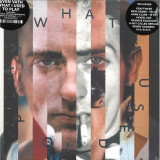
For this uniquely personal retrospective spread over twelve vinyl discs, Sven Väth takes us back to the early days of his DJ career. On What I Used To Play we meet great pioneers of electronic music, gifted percussionists, obscure wave bands, and innovative producers of a bygone 'new electronic' era. Rough beats and irresistible grooves from the identification stage of house, techno, and acid remind us not just how far electronic music has evolved over the past four decades, but how great it was to dance to EBM, techno, and house for the very first time.
If there is one protagonist of the electronic music scene who has remained curious, innovative and at the very cutting edge of music for over four decades, it's Sven Väth. His multi-layered artist albums and Sound of the Season mix compilations have been defining the genre for over two decades, and even today, he is constantly on the lookout for the next top tune to add to the highlights of his next set. At least, that's the case when he's not producing them himself as an artist or remixer. "Actually, it's always been part of my DNA to think ahead," and nothing had been further from his mind than looking back at his past, but when in spring of 2020 the international DJ circuit had to be scaled down to virtually zero, the 'restless traveler' suddenly had time. Time to stop and reflect on "how it actually was back then, at the very beginning of my career..."
"It was a great trip and with every track, beautiful memories came flooding back".
In the London apartment, he had just moved into, Sven has set up a "little music room", where he cocooned himself for several days, "to look way back for the first time and review my musical journey through the eighties, so to speak."
The interim result was six thematically oriented playlists with a grand total of 120 tracks from 'early 80s' to 'Balearic late 80s', together with excursions into afrobeat, European new wave, and EBM sounds and a few epochal techno/house tracks from the USA in between. From these 'Best of Sven Väth's favorites', the project What I Used To Play crystallized. Sven remembers how the Cocoon team reacted to his proposal: "They found the idea of making a compilation out of it MEGA from the beginning and everyone said 'Sven, go for it', but then, of course, the work really started, namely, to clear the rights and to get clean sounding masters of the up to 40-year-old tracks. There was also disappointment, of course. We couldn't clear certain titles because the rights holders in the USA had fallen out with each other or simply disappeared from the scene. In short, it wasn't easy, but now I can safely say we got the most important tracks."
Finally, after two years of research, curation, design, and administrative fine-tuning, the "little retrospective" from 1981 to 1990 is available. The exquisitely packaged, and three-kilo heavy box set is not only physically impressive, WIUTP is also the definitive record of Sven Väth's musical development. On each of the twenty-four sides of vinyl, you can trace track by track, what influenced him during which phase, and how he took off as a DJ from his parents' Queen's Pub straight into the spotlight at Dorian Gray. There and at Vogue (later OMEN), Sven became the style-defining player in the DJ booth that he still is today.
1981 - 1990: Future Sounds of Now
In the early eighties, the crowd in clubs like Vogue and Dorian Gray danced to what nowadays we call 'dance classics' - mainly disco, funk, soul, and chart pop. It was up to a new generation of DJs, including Sven Väth, the youngest protagonist in the Rhine-Main area at the time, to create their own club-ready music mix. Good new tracks and potential floor-fillers were rarities that had to be sought out and found, in order to prove oneself worthy.
Without MP3s, internet streaming, or other digital download possibilities, music didn't just gravitate to the DJ, instead, it had to be tracked down. In well-stocked record stores in Frankfurt and Wiesbaden or even in Amsterdam, London, or New York, Sven and friends sourced the material for countless magical nights. On WIUTP we can follow Sven's very personal journey through this wild, innovative era in which synth-pop, funk, hip-hop, and disco were successively replaced as 'club music' by house, techno, acid, and breakbeat. By the end of the decade, it was clear to see that these once exotic 'fringe' phenomena would soon become 'mass' phenomena.
Early 80s
Dirty Talk by the Italian-American duo Klein & M.B.O. represents the most innovative phase of the Italo-disco genre in the early eighties like no other track. Mario Boncaldo (I) and Tony Carrasco relied entirely on the original synthetic drum and percussion sounds of the Roland TR-808, coupled with the raunchy vocals of Rossana Casale and guitar accents of Davide Piatto. Of course, other tracks from this period were also influential in style, most notably Unit by Logic System, which worked as the perfect soundtrack to the laser lighting system at the legendary Dorian Gray club. With stomping beats and robotic rap interludes, Bostich by Yello also belongs on Sven's eternal playlist - after all, it caught the attention of Afrikaa Bambaataa, who invited the Swiss duo to perform at the Roxy in New York in 1983.
EBM Wave - Mid 80s
From today's point of view, the almost ten-minute-long, downtempo track Giant by Matt Johnson's band project The The, would probably not be considered an obvious club classic. However, a closer (re)listen reveals the rhythmic intricacies of the percussion overdubs by JG Thirlwell (aka Foetus) on Johnson's composition, and it becomes clear why this exceptional piece of music is one of Sven's absolute favorites. Other classics from this phase include Kaw-Liga by the mysterious The Residents, the hypnotic-synthetic Our Darkness by Anne Clark (and David Harrow), and last but not least, the somber, monotonous anthem Where Are You? by 16Bit, one of Sven Väth's projects together with Michael Münzing, Luca Anzilotti from 1986.
US House - Late 80s
You certainly can't talk about Chicago house without mentioning Frankie Knuckles. The resident DJ at the Warehouse not only gave the name to an entire genre, but also produced epochal floor fillers on the Trax label like the timeless Your Love, sung (and moaned) by Jamie Principle. Acid house protagonists Phuture also hail from Chicago, and on We Are Phuture (also released on Trax) we hear the chirping acid sounds of the legendary Roland TB-303 in full effect. Another featured classic is No UFO's by Detroit's Model 500 aka Juan Atkins, who is rightly considered the 'Godfather of Techno' even if the genre-defining track from 1985 still breathes with the spirit of hip-hop and electro from the first breakdance era.
Afrobeat
Le Serpent, by Algerian-born Abdelmadjid Guemguem, is a track that sounds completely different from everything else on WIUTP. Made in 1978, it's a monumental, rousing groove created without bass or synths, just with five congas! Even though Guem sadly passed away in 2021, his immortal, acoustic beats are understood all over the world and will continue to enrich many thousands of DJ sets for years to come. Another classic that not only Sven appreciates beyond measure is Hugh Masekela's Don't Go Lose it, Baby. In addition to being one of the most important jazz pioneers, the trumpeter and freedom fighter from Johannesburg was very experimental, integrating electronic sounds into his music in later years, in a similar vein to Miles Davis and Herbie Hancock. Dutch jazz pianist Jasper van't Hof's afrobeat project Pili Pili has also aged well. The trance-like, almost sixteen-minute-long track of the same name, manages to fill a whole side on the seventh of twelve vinyl discs in the WIUTP box.
UK-US-Euro - Late 80s
Time for a change of scene, in the truest sense of the word, and from a musical perspective, this section is like landing on another planet. First up is Andrew Weatherall's classic remix of Primal Scream's Loaded, featuring the iconic Peter Fonda sample (lifted from the 1966 biker film Wild Angels) that came to personify the mood triggered by the British Second Summer of Love in the late eighties: "We wanna be free to do what we wanna do, and we wanna get loaded...". This period also saw the emergence of M/A/R/R/S whose only single, 1987's Pump Up The Volume, became a club classic with support from DJ legend CJ Mackintosh. In this most eclectic of sections, we also encounter New York house and reggae producer Bobby Konders and his seminal Nervous Acid.
Balearic - Late 80s
Those who know him, know that Sven had already lost his heart to the 'magic island' of Ibiza as a teenager, so with that in mind, the WIUTP project couldn't end without a Balearic chapter. Inspired by Manuel Göttsching's E2-E4, the immortal, eponymously titled Sueño Latino belongs in there without question. Equally popular on the island was, and still is Break 4 Love by Raze, which thinking about it, would also fit perfectly into the house chapter. Last, but not least, there's an overdue reunion with Sven Väth himself, in his role as frontman of the successful Frankfurt trio OFF. Together with Michael Münzing and Luca Anzilotti (later of Snap!) this 'Organization For Fun' created the off-the-wall club hit Electric Salsa in 1986 which incidentally turned into an international chart smash, putting Sven in the enviable position of having to decide between pop stardom and a DJ career. Well, we all know how that decision turned out and the rest, as they say, is history. A not insignificant part of his story is What I Used To Play. Enjoy!