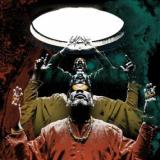
The incomparable Hawksmoor return with their latest long player for Manchester's impeccable Before I Die.
Previous self-released outings and those splendid 7's for Soul Jazz have rightfully earned them a place in the lysergic musical canon.
This LP, like their other work, uses a central theme as a hub of influence, permeating the direction each composition takes.
On 'Am I Conscious Now ?' the band explore sonic realms influenced by their experiences with the powerful psychedelic 5-MeO-DMT.
Ego collapse and rebirth sonically reflected through this extraordinary record.
Its intensity is an instant hit and, once you are sucked into its orbit, it's routinely mesmerising and completely absorbing.
quête:eg
Fast zwei Jahrzehnte nach der Veröffentlichung des Originalalbums, das mit einem Grammy ausgezeichnet
wurde, lebt die Legende des Buena Vista Social Club mit „Lost and Found“ weiter, einer Sammlung bisher
unveröffentlichter Titel. Einige entstanden bei den legendären ersten Sessions in Havanna mit Produzent
Ry Cooder, andere während der darauffolgenden, außergewöhnlich produktiven Phase.
Das Originalalbum des Buena Vista Social Club wurde 1996 von Ry Cooder und Nick Gold innerhalb von
sieben Tagen in Havanna für World Circuit Records aufgenommen. Es vereinte viele der großen Namen des
goldenen Zeitalters der kubanischen Musik der 1950er-Jahre, von denen einige für die Sessions aus dem
Ruhestand zurückgeholt wurden.
Das Album wurde überraschend zum internationalen Bestseller und zum erfolgreichsten Album in der
Geschichte der kubanischen Musik. Damals ahnte niemand, dass die Platte erst der Anfang eines musikalischen Phänomens sein würde. In den folgenden Jahren tourten die Buena-Vista-Veteranen vor begeistertem
Publikum um die Welt und waren Gegenstand eines gefeierten Spielfilms von Wim Wenders.
Es folgten weitere gefeierte Aufnahmen, darunter Soloalben der Sänger Ibrahim Ferrer und Omara Portuondo, des virtuosen Pianisten Rubén González und des Bassisten Cachaíto López sowie ein mitreißendes
Live-Album, aufgenommen bei einem triumphalen Konzert in der New Yorker Carnegie Hall.
Der Buena Vista Social Club war zu einem bekannten Namen geworden. „Über die Jahre wurden wir oft
gefragt, welches unveröffentlichte Material noch in den Archiven schlummert“, sagt Nick Gold von World
Circuit. „Wir kannten einige Schätze, Favoriten der Musiker, aber wir waren immer zu sehr mit dem
nächsten Projekt beschäftigt, um nachzusehen, was wir sonst noch hatten. Als wir endlich die Zeit dazu
fanden, waren wir erstaunt, wie viel wunderbare Musik es gab.“
Alle Studioaufnahmen für World Circuit entstanden im Egrem-Studio in Havanna während der produktiven
und kreativen Phase nach der Aufnahme des Originalalbums, die bis in die frühen 2000er-Jahre andauerte.
Angereichert mit Live-Aufnahmen aus derselben produktiven Phase, bietet das Material auf „Lost and
Found“ eine enorme und mitunter überraschende Vielfalt. Doch es gibt einen roten Faden, der von einem
Kernteam legendärer Musiker getragen wird, die einen Korpsgeist zum Ausdruck bringen, den jeder, der
jemals vom Buena Vista Social Club verzaubert war, wiedererkennen und genießen wird.
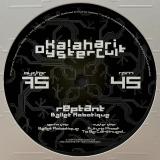
Release 75. Reptant’s third. The reptilian overlord surfaces only once every 25 – right on the jubilee, without fail.
Combining menace and kitsch the way only the Rotterdam greats do so effortlessly, he comes in smooth af on the opening cut. Mainframe-tapping machine funk, almost sounding like the Antipodean lovechild of Kraftwerk and Egyptian Lover.
From there, laced with spite and insectoid detail. Noirish cybernetics delivered with genuine vigour, all across a triple-pronged strike of electro excellence. Properly aerodynamic.
Not a tribute to a classic period – rather, a continuation of what the genre’s forebears built. A tried and tested formula that never loses bite, truly heralding Reptant as a standard bearer for electro in the modern era.
The cold-blooded one, right on schedule.
- A1: Never Change Your Mind - Harada Yoshio
- A2: American Night - Asakawa Maki
- A3: Goodbye Transfer - Rajie
- A4: Dream Is Alive - Hamada Kingo
- B1: Uwaki Na Kare - Kazami Ritsuko
- B2: Soradaki - Kado Asami
- B3: Heart And Soul - Ito Ginji
- B4: Loves Super Magic - Inagaki Junichi
- C1: Eternal 1/2 - Ishikawa Seri
- C2: Yokaze No Information - Hamada Kingo
- C3: Cold Field - Ueda Masaki
- D1: Scrambled Eggs - Noguchi Goro
- D2: Gardenia - Kato Kazuhiko
- D3: Natsu/Kimi Ni - My Love Bluew
- D4: Good Morning Kiss - Kazuto Murata
EU/UK Exclusive
Japanese pressing
From Universal Music's vast catalogue, the essence of Japanese AOR, all tracks are selected and played in Muro's mix cd 'Diggin' Japanese AOR' released in 2017 and now released on 2LP.
This includes some of hidden gems such as Maki Asakawa's 'American Night', Yoshio Harada and more from the late 80's to early 90's - the golden time of Japanese AOR.
Bambino Recordings is back with the highly anticipated repress of Toka Project's 'Ego Trip’ EP due to overwhelming demand for the vinyl. W&P by Andrew Riley, renowned as one-half of the legendary Inland Knights. Originally released 21 years ago, this timeless classic is now available once again. Secure your fresh copy now before it sells out! The tracks still sound as fresh today as they did 21 years ago, one of the very reasons they have been in constant rotation in many of well known DJ’s sets for years. Expect deep, tough, bumping underground house aimed to liven up any dance floor.
The label Erdgeschoss celebrates the freedom of sound and vision at the bar of life, like football – only with a bass drum instead of a ball. And with beer. Because even with vinyl records, the ball has to go in the net.
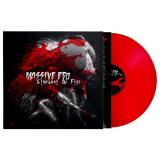
Pop Vampires Cologne will kick things off; their surrealist debut masterpiece, Karianne, was already released at Total 25 last year. PVC lives up to its name. Like vampires, oskø and Wassermann once again sample their way through the pop supermarket of unlimited possibilities.
Almost overnight, in their illegal, digital garage, they clone hybrid sound structures, saturated with both foreign and self-injected blood doping. Forbidden fruit is known to taste the best. Consciously, explicitly, and provocatively, PVC explores sampling as an indispensable stylistic device, a universal tool for quotation and pop networking. Equally daring and respectfully irreverent, they oppose the new, all-disenchanting AI search engines on the internet with the freedom of art. The rest is surrealism. Just like the accompanying video, which isn't a video in the conventional sense, but rather a kind of making-of with Sabine as the main front character. And the digital versions of some tracks may differ slightly from the vinyl versions.
Because: Anything goes…
Das Label Erdgeschoss feiert an der Theke des Lebens die Freiheit von Sound and Vision wie Fussball - nur mit Bassdrum statt Ball. Und mit Bier. Denn auch bei der Schallplatte muss das Runde ins Eckige.
Den Anfang machen Pop Vampires Cologne, deren surrealistisches Debüt-Meisterstück Karianne bereits im letzten Jahr auf der Total 25 erschienen ist. Bei PVC ist der Name Programm. Wie Vampire sampeln sich oskø und Wassermann einmal mehr durch den Pop-Supermarkt der unbegrenzten Möglichkeiten. Quasi über Nacht klonen sie in ihrer illegalen, digitalen Garage hybride Sound-Gebilde, getränkt mit Fremd- und Eigenblutdoping. Verbotene Früchte schmecken bekanntlich am besten. Bewusst, explizit und provokant arbeiten sich PVC am für sie unverzichtbaren Stilmittel des Sampling als universelle Zitat- und Pop-Vernetzungsmaschine ab. Ebenso wagemutig wie respektvoll respektlos, halten sie den neuen, alles entzaubernden K.I. Suchmaschinen im Netz die Freiheit der Kunst entgegen. Der Rest ist Surrealismus. So wie das dazugehörige Video kein Video im herkömmlichen Sinne ist, sondern eine Art Making Off mit Sabine als Frontdarstellerin. Und die digitalen Versionen einiger Stücke sich leicht von den Vinyl Versionen unterscheiden. Denn: Erlaubt ist, was gefällt…
- A1: Underground Up
- A2: Jour De Sortie
- A3: Hip Hop (Feat. Degom)
- A4: Dans Mon Secteur
- A5: Appel À La Resistance (Feat. Olivier Besancenot) (Interlude)
- B1: On Te Voit
- B2: On N On (Feat. Nathy Boss)
- B3: Complexe
- B4: Faut S' Lever
- C1: I Got Kimfu On My Track (Interlude)
- C2: Mon Rôle (Feat. Oxmo Puccino)
- C3: Mamy…. (Feat. Nicoletta)
- C4: Champagne
- D1: Affamé
- D2: Je Paie Pas (Feat. Fdy Phénomen)
- D3: Egomaniac (Interlude)
- D4: Jour De Sortie (Kimfu Remix)
JoeyStarr is the co-founder of the famous French rap duo Suprême NTM. Originally starting out as breakdancers and graffiti writers, the duo is known for representing the perspective of minorities residing in the underprivileged neighbourhoods of Paris and beyond through dark, gritty, politically-conscious lyrics. Despite achieving record sales with their four albums, they split in 1998.
After a few detours away from the music business, in 2006 JoeyStarr dropped his first solo album. Egomaniac, released in 2011, is his second album and includes some high-profile collaborations; on "Mamy..." he works together with Nicoletta on a rework of her 1971 hit single "Mamy Blue" and the interlude "Appel À La Resistance" features a speech by leading left-wing politician Olivier Besancenot. After its initial release, the vinyl edition went out of print so we're happy we can finally make it available again.
Egomaniac is available as 15th anniversary edition of 1000 individually numbered copies on orange vinyl and includes an 8-page booklet.
- 1-: Opening Scene/ The Currency - Antony Genn, Carlos O’connell And Martin Slattery
- 2-: The Immortal Man - Antony Genn,Carlos O’connell And Martin Slattery
- 3-: Ruby’s Scarf - Antony Genn, Martin Slattery And Grian Chatten
- 4-: Nobody’s Son - Amy Taylor,Tom Coll, Antony Genn And Martin Slattery
- 5-: No Heaven No Hell For Duke Shelby - Antony Genn And Martin Slattery
- 6: People Person - Andrew Falkous, Jack Egglestone, Damien Sayell
- 7-: Duke And Beckett Strike A Deal - Antony Genn And Martin Slattery
- 8-: An Intruder In The House - Antony Genn And Martin Slattery
- 9-: Ada And Duke - Antony Genn And Martin Slattery
- 10-: Opium Dreams - Antony Genn, Martin Slattery And Grian Chatten
- 11: Tommy, Kaulo And Zelda - Antony Genn And Martin Slattery
- 12-: Black Dahlia - Grian Chatten, Antony Genn And Martin Slattery
- 13-: Beckett Tests Duke - Antony Genn And Martin Slattery
- 14-: Close The Door - Antony Genn And Martin Slattery
- 15-: Dukes Descent - Antony Genn And Martin Slattery
- 16-: A Hero’s Death - Grian Chatten, Carlos O’connell, Conor Curley, Conor Deegan Iii, Tom Coll
- 17-: Pig Pen - Antony Genn And Martin Slattery
- 18-: Puppet - Grian Chatten, Antony Genn And Martin Slattery
- 19-: A Gun Is No Good - Antony Genn And Martin Slattery
- 20-: Tommy Vs Duke - Antony Genn And Martin Slattery
- 21-: St Elizabeth’s Mortuary - Antony Genn And Martin Slattery
- 23-: Stable Shootout - Antony Genn And Martin Slattery
- 24-: Red Right Hand (Immortal) - Nick Cave, Mick Harvey And Thomas Wydler
- 25-: The Bullet - Antony Genn And Martin Slattery
- 26-: The Coin - Antony Genn And Martin Slattery
- 27-: Teardrop - Girl In The Year Above
- 28-: Romance - Grian Chatten, Carlos O’connell, Tom Coll, Conor Curley, Conor Deegan (Iii)
- 29-: The Map - Antony Genn And Martin Slattery
- 30-: Angel - Grian Chatten, Antony Genn And Martin Slattery
- 31-: The Tunnel - Antony Genn, Martin Slattery And Grian Chatten
- 32-: Medusa - Grian Chatten, Antony Genn And Martin Slattery
- 33-: Tommy Vs Beckett - Carlos O’connell, Antony Genn And Martin Slattery
- 34: Father And Son - Antony Genn And Martin Slattery
- 35-: Hunting The Wren (The Immortal Man Version) - Lankum With Grian Chatten
- 36-: Ellipsis - Grian Chatten, Antony Genn And Martin Slattery
- A1: Yede Aba
- A2: Mene Menua Mienu
- A3: Sabarima
- A4: Ebia Nie
- A5: Amintiminim
- A6: Siakwaa
- A7: Nana Agyei
- B1: Efie Ne Fie
- B2: Nyankonton Nko Nyaa
- B3: Kwankwaasem Nti
- B4: Egya Ananse Yi Wonan Baako
- B5: Kwaadede Meyare Merewu
- B6: Eda A Mewu
Strut proudly presents the first-ever reissue of a landmark 1974 Ghanaian highlife classic Sikyi Highlife by Dr K. Gyasi & His Noble Kings, originally released on Essiebons.
A defining recording of the era, Sikyi Highlife bridges tradition and innovation at a pivotal moment in Ghanaian music. Deeply rooted in the classic 1950s–’60s highlife sound, K. Gyasi drew inspiration from the ancient sikyi drum-dance of the Akan people of southern Ghana, shaping the album’s rhythms around its distinctive pulse.
The vocal arrangements echo the traditional Akan modal style, grounding the music firmly in Ghana’s cultural heritage. Yet Sikyi Highlife is equally forward-thinking. As electric guitars became standard in highlife during the 1960s, the 1970s ushered in further experimentation. The Noble Kings broke new ground as the first highlife guitar band to incorporate keyboards and a full horn section into their sound, expanding the genre’s sonic possibilities while retaining its rootsy spirit.
Gyasi’s approach was part of a broader indigenisation movement among Ghana’s electric highlife bands in the post-independence era. Inspired by the nation’s ‘African Personality’ ethos and reinforced by Afrocentric messages arriving from American soul and funk, artists began reclaiming traditional forms within modern arrangements. Contemporaries included Koo Nimo, who revived the older palmwine style, and drummer Nii Ashitey, whose Wulomei band pioneered a folklorised Ga highlife sound from 1973.
Like many musicians of his generation, Gyasi was a passionate supporter of Ghana’s independence movement. In 1963, he travelled as a musical ambassador alongside Ghana’s first president, Kwame Nkrumah, performing across North Africa and the USSR and carrying Ghanaian culture onto the world stage.
The Noble Kings’ mid-’70s line-up featured some of the country’s finest musicians, including guitarist Eric Agyeman (who led the band at the time), Thomas Frimpong on drums and vocals, Ernest Honny on organ, and bassist Ralph Karikari - who was renowned for his innovative technique of translating the rhythms and tonal language of the traditional talking drum onto electric bass.
Upon its original release, Sikyi Highlife became one of the biggest-selling albums of the 1970s for Essiebons, earning Gyasi the affectionate honorary title of “Dr” from his devoted fans. Today, the album remains an evergreen classic, still cherished across Ghana and beyond.
- A1: Return Of The Knödler Show 2 52
- A2: The Frogs Of Miwa - Cho (1) 4 52
- A3: Waiting (I) 5 38
- A4: An Old Friend Passes By 3 46
- A5: Coco Bolo Strip (1) 5 25
- B1: Peace And Pipe Utopia 3 14
- B2: Unidentified Dancing Object 1 44
- B3: The Call (I) 2 41
- B4: Wenn Das Rohr Dommelt 4 03
- B5: Mariahilf (Live Version) 3 36
- B6: Watching The Shades (I) 2 59
- B7: Playing The Table Music (Ii) 2 43
- C1: Could Be Nice Too 5 29
- C2: Ox Of Inner Depth 4 51
- C3: Ymir Shows Up 3 58
- C4: Could Be Nice 5 24
- C5: Playing The Table Music (I) 4 23
- D1: Coco Bolo Strip (Ii) 4 52
- D2: Locusts Looking Like Men 5 55
- D3: Waiting (Ii) ︎ 3 36
- D4: No Stove 2 29
- D5: An Old Friend Passes By Again 3 00
- D6: Heimkehr Der Holzböcke 3 16
Black Truffle is thrilled to announce Dalbergia Retusa, an extensive double LP selection of the solo guitar music of Hans Reichel, compiled by Oren Ambarchi. Last heard on Black Truffle as one quarter of the joyously anarchic Bergisch-Brandenburgisches Quartett, Hans Reichel (1949-2011) is one of the great figures of experimental guitar music. Though perhaps lesser known than peers like Derek Bailey, Fred Frith and Keith Rowe, Reichel’s rethinking of the instrument was in some ways the most radical of all. Early on, he dispensed with existing guitars to build a series of his own that explored the use of additional strings and fretboards, moveable pickups, extra bridges, special capos, and other innovations documented in the extensive booklet accompanying this release.
Reichel was a long-term resident of Wuppertal, the small Western Germany city that became an unlikely centre of European free jazz in the late 1960s, also home to Peter Brötzmann and Peter Kowald. His solo debut Wichlinghauser Blues was an early entry into the FMP discography and began a relationship with the label that stretched into the 1990s; all the solo performances heard here were first released on FMP. As Reichel says in the charming archival interview with Markus Müller included here, he was ‘always a cuckoo’s egg at FMP’, a label that began as an outlet for roaring European free jazz. What strikes the listener right from the opening selection on Dalbergia Retusa—‘Return of the Knödler show’, from 1987’s The Dawn of Dachsman—is the extraordinary beauty of Reichel’s music, at once alien in the shimmering sonorities and unconventional pitch relationships made possible by his invented instruments, and deeply lyrical, even romantic in its harmonic content. Growing up in West Germany in the 1960s, Reichel’s formative influences were mainly British and American rock bands, a background that shines through in many of the pieces included here: ‘An old friend passes by’ is haunted by the ghost of Hendrix’s rhythm guitar, and the wild closer ‘Heimkehr der Holzböcke’, taken from a rare 1975 7” and the only piece to use overdubbing, layers errant hammer-on and slide tones over a Canned Heat boogie chug.
Reichel was an important source for the development of Oren Ambarchi’s own extended approach to the electric guitar. Appropriately enough, his selection opens with the very first piece by Reichel he ever heard, on a flexidisc included with a 1989 issue of Guitar Player magazine. Though Reichel collaborated with others extensively in many settings and also performed on violin and his other major contribution to instrument invention, the daxophone, his music for solo guitar remains at the core of his oeuvre. Focusing exclusively on solo pieces recorded between 1973 and 1988, the 23 pieces on Dalbergia Retusa showcase the range and consistency of Reichel’s work, allowing the listener to see how his performances developed hand-in-hand with his instrumental inventions. On a piece from his very first LP, played on an 11-string instrument (partly strung with piano strings and using a schnapps glass a slide), we hear his intensive exploration of fret-hammering to create zither-like, chiming tone, which Reichel would hone further in later years with a double fretboard guitar specifically designed to be hammered rather than fretted and picked. On a piece from 1979’s Death of the Rare Bird Ymir, Reichel uses two steel-string acoustic guitars at once, with beautiful results: ‘some even say too beautiful’, he jokes in the interview included here. Many of the pieces from the 1980s make use of varieties of the ‘pick behind the bridge guitar’, instruments of uncanny harmonic richness primarily designed to be played on the ‘wrong’ side of the bridge. At times the unexpected behaviour of attacks, resonance, and decay can almost seem electronic, conjuring up the technology-assisted work of Henry Kaiser or even Fennesz, but realised solely through Reichel’s unorthodox techniques on his invented instruments. Extensively illustrated with photos and Reichel’s own plans and drawings of his instruments, Dalbergia Retusa is an essential introduction to the unique world of Hans Reichel. Rarely has music been at once so strange and so beautiful.
- A1: The Sweeping Wind (Kwa Ti Feng)
- A2: Ice Cream Man
- A3: Rockin’ Rockin’ Leprechauns
- A4: Summer Morning
- A5: Afternoon
- A6: Fly Into The Mystery
- B1: South American Folk Song
- B2: Roller Coaster By The Sea
- B3: Dodge Veg-O-Matic
- B4: Egyptian Reggae
- B5: Coomyah
- B6: The Wheels On The Bus
- B7: Angels Watching Over Me
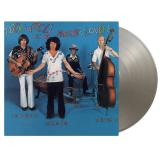
Rock 'n Roll With The Modern Lovers is the second album released by The Modern Lovers.
The band was formed in 1970 by singer, songwriter, and guitarist Jonathan Richman, with Jerry Harrison (keyboards - later went on to join Talking Heads), Ernie Brooks (bass), and David Robinson (drums). Richman's friend John Felice joined them occasionally. Their sound almost totally focuses on the sound from the Fifties. The lo-fi record breathes folky roots music and rock ‘n roll as it would sound ages ago. The albums features the popular tracks "Ice Cream Man", "Roller Coaster By The Sea", and "Egyptian Reggae". The latter was a cover version of Earl Zero "None Shall Escape The Judgement" and became a UK Top 5 hit.
Rock 'n Roll With The Modern Lovers is available as a limited edition of 750 individually numbered copies on silver vinyl.
- A1: Come As You Are 2:40
- A2: Russian Roulette 3:22
- A3: Egyptian Reggae 1:02
- A4: Ramblin’ Rose 2:16
- A5: Johnny Guitar 1:48
- A6: I Love Joan Jett 4:00
- A7: Purple Haze 2:04
- B1: The Sad Skinhead 2:06
- B2: Brown Sugar 3:00
- B3: Sheena Is A Punk Rocker 2:02
- B4: Green Fuz 3:18
- B5: Sunny Afternoon 1:04
- B6: Girl From The North Country 1:36
- B7: Mother Of Earth 2:44
- B8: Dali's Car 1:26
I first encountered Pascal Comelade’s music thirty years ago—and nothing has sounded quite the same since. I was immediately captivated: he is an artist like no other, whose sincere and selfless love of music is always evident, especially in his tender reworkings of other people’s songs.
Comelade seems to work like a watchmaker: meticulous, precise, and obsessive—yet always drifting into something dreamlike. His music opens hidden doors, telling strange and beguiling stories filled with obscurity, kindness, and reserved humour.
Back then, my fascination was instinctive. Today, with a few more words at my disposal, I look to this exceptional 70-year-old French musician and feel exactly the same pull.
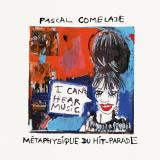
Métaphysique Du Hit-Parade is the first vinyl compilation devoted to Pascal Comelade’s favourite cover versions. It spans a forty-year career and traces sixty years of rock and roll history along the way. “Sheena Is a Punk Rocker” becomes a soft, soothing lullaby that may well have made the Ramones weep. Then there are his idiosyncratic tributes to Jonathan Richman (“Egyptian Reggae”) and The Kinks (“Sunny Afternoon”), alongside nods to formative heroes such as The Gun Club, Captain Beefheart, and MC5.
Two exclusive recordings stand out particularly: Bob Dylan’s “Girl from the North Country” and Nirvana’s “Come As You Are”—a song that shaped my early youth. Both were recorded especially for this release.
Jan Lankisch, January 2026
- 1: Male - Sirenen
- 1: 2Die Radierer - Angriff Auf's Schlaraffenland
- 1: 3Der Kfc - Gefangen In Der Brd
- 1: 4Hans-A-Plast - Rock'n Roll Freitag
- 1: 5Brüllen - Dämmerung Canceln, Gesang Stehen Lassen (Tage
- 1: 6Palais Schaumburg - Telefon
- 1: 7Egotronic - Raven Gegen Deutschland
- 1: 8Carambolage - Tu Doch Nicht So
- 1: 9Die Aeronauten - Freundin
- 1: 0Korpus Kristi - Stadt Der Blauen Eier
- 1: Östro 430 - Zu Cool
- 1: 2... But Alive - Ohnmacht
- 1: 3Isolierband - Keine Gnade
- 1: 4Mutter - Ich Weiß Ja Wer Du Bist
- 1: 5Die Goldenen Zitronen - Flimmern
- 1: 6Rotzkotz - Computamensch
- 1: 7Acht Eimer Hühnerherzen - Eisenhüttenstadt
- 1: 8Freiwillige Selbstkontrolle - Herz Aus Stein
- 1: 9Family 5 - Hau Weg Den Dreck
- 2: 1S.y.p.h. - Industrie-Mädchen
- 2: Bärchen Und Die Milchbubis - Happy Bonbon
- 2: 3Ea80 - Verloren
- 2: 4Die Nerven - Eine Minute Schweben
- 2: 5Superpunk - Nein Nein Nein
- 2: 6Tommi Stumpff - Mich Kriegt Ihr Nicht
- 2: 7Toxoplasma - Ordinäre Liebe
- 2: 8Schnipo Schranke - Pisse
- 2: 9Terrorgruppe - Opa
- 2: 10Antilopen Gang - Beate Zschäpe Hört U (Mit Jan Windmei
- 2: 11Slime - Deutschland
- 2: 1Tocotronic - Freiburg
- 2: 13Muff Potter - Auf Der Bordsteinkante (Nachts Um Halb Ei
- 2: 14Dritte Wahl - Greif Ein
- 2: 15Normahl - Geh Wie Ein Tiger
- 2: 16Stereo Total - Die Dachkatze
- 2: 17The Shocks - More Kicks
Mit "Angriff auf"s Schlaraffenland" veröffentlicht Tapete Records eine umfassende, musikalisch kuratierte Reise durch 50 Jahre deutschsprachigen Punk - von den frühen Experimenten der späten 1970er bis zu modernen Positionen der Gegenwart. Die Compilation begleitet die Jubiläums-Veröffentlichungen des Ventil Verlags, der über 200 Autor:innen zu ihren prägendsten Punk-Songs versammelt und damit das Vermächtnis sowie die Relevanz des Genres würdigt. Wie ein gutes Mixtape verzichtet die Sammlung bewusst auf Chronologie und setzt auf rein musikalische Kriterien: rohe Energie, politische Haltung, Humor, Widerspruchsgeist und stilistische Vielfalt. Vertreten sind u. a. Die Radierer, Hans-A-Plast, Palais Schaumburg, Egotronic, Bärchen und die Milchbubis, Toxoplasma, Slime, Schnipo Schranke, Stereo Total, Die Nerven - Bands, die Punk mit Pop, Dada, Elektronik, Chanson oder Noise neu definiert haben. "Angriff auf"s Schlaraffenland" ist damit ein unverzichtbares Dokument für alle, die Punk nicht als Nostalgie, sondern als lebendige, widersprüchliche und weiterhin unbequeme Kulturform verstehen.
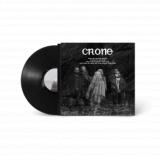
Irish drone-doom-folk act One Leg One Eye, the project of founding Lankum member Ian Lynch and veteran noise monger George Brennan, announce their new album, CRONE, out on 1 May on AD 93.
Today the group share the first track on the album, ‘Many are my Names Besides’, on which they are joined by the elemental force that is legendary actor, performer, writer and director Olwen Fouéré (Operating Theatre) contributing vocals.
Olwen Fouéré comments:
“When Ian and George first approached me to work with them, they were already creating the Crone album as a sonic invocation of the ‘sovereignty goddess’, who personifies the land and the legitimacy to rule it, in her darkest and most terrifying form. As we spoke, the triple goddess figure of the Morrigan entered my mind, reinforced by a marked presence of crows every time we met. The Morrigan is essentially a war goddess, frequently appearing as a crow in a battlefield, a death prophet, a guardian of sovereignty, and a very powerful figure in Irish Mythology.
So I invoked her energy as a starting point, using text extracts that Ian sent me from the Ulster Cycle and other sources. The voice recording was done in one day, improvising the source material while the already composed music occupied my psyche through headphones.
Listening back, at this time in our world, I can only wonder at how much blood and war the Crone/ Crow of sovereignty is preparing to unleash now. Watch out.”
CRONE is the second album from Lynch and Brennan, following on from 2022’s slowburn slab of ambient grit, …And Take The Black Worm With Me. Bewildering, psychedelic and ultimately transcendental, the four tracks of One Leg One Eye’s CRONE shapeshift and morph endlessly in a coarse miasma. Traditional song structures and vocal melody are eschewed, instead the trio directly channel energies from the rich seams of mythological significance submerged below the Irish psyche. The anger, rage and beauty of the sovereignty goddess burn a consistent and deliberate line through the album in the form of obscure incantations and dire pronouncements, the gnarled sinews that bind it all together.
Just as the subject matter of the tracks delve deeper into Irish myth and the remote past, the temporal reality of the album reaches back into the bands prehistory, with the majority of it the material being recorded by Lynch and Brennan in 2021 before One Leg One Eye was conceived of as an entity with Brennan working on the CRONE project while Lynch worked on …And Take The Black Worm With Me.
When they were there they saw a lone woman coming to the door of the Hostel, after sunset, and seeking to be let in. As long as a weaver’s beam was each of her two shins, and they were as dark as the back of a stag-beetle. A greyish, wooly mantle she wore. Her lower hair used to reach as far as her knee. Her lips were on one side of her head.
She came and put one of her shoulders against the door-post of the house, casting the evil eye on the king and the youths who surrounded him in the Hostel. He himself addressed her from within.
"Well, O woman," says Conaire, "if thou art a wizard, what seest thou for us?"
"Truly I see for thee," she answers, "that neither fell nor flesh of thine shall escape from the place into which thou hast come, save what birds will bear away in their claws."
"It was not an evil omen we foreboded, O woman," saith he: "it is not thou that always augurs for us. What is thy name, O woman?"
"Calib," she answers.
"That is not much of a name," says Conaire.
"Lo, many are my names besides."
"Which be they?" asks Conaire.
"Easy to say," quoth she. "Samon, Sinand, Seisclend, Sodb, Caill, Coll, Díchóem, Dichiúil, Díthím, Díchuimne, Dichruidne, Dairne, Dáríne, Déruaine, Egem, Agam, Ethamne, Gním, Cluiche, Cethardam, Níth, Némain, Nóennen, Badb, Blosc, Bloár, Huae, óe Aife la Sruth, Mache, Médé, Mod."
On one foot, and holding up one hand, and breathing one breath she sang all that to them from the door of the house.
Time To Get On Board A New Black Universal Express.
With each new recording Anthony Joseph presents an imaginative, personal vision of contemporary black culture, and The Ark is yet another compelling album by the award-winning Trinidadian poet and musician. This second part of a sequence of two albums launched with last year’s Rowing Up River To Get Our Names Back, finds Joseph giving full vent to his desire to explore many thought-provoking themes. However, there is a specific thread running through the glorious offering of sounds.
”I was especially interested in the idea of using Afrofuturism as a means of using the future in order to correct the wrongs of the past,” explains Joseph. “And so a lot of lyrics reimage or imagine an alternate black history. At the same time there are elements of autobiography.” The aforesaid cultural phenomenon, a view of the black experience through the prism of science fiction and ancient Egypt and Africa, as mapped out by visionaries from music and literature such as Sun Ra, Parliament-Funkadelic and Octavia E. Butler, has previously inspired Joseph. His 2006 novel The African Origins Of UFOs was a multi-hued work, and the new music shows how Joseph
has, much like all significant artists, gone on to broaden his conceptual palette, creating beguiling new stories and images set to startling rhythms and tones. Tracks such as ‘James’, with its taut, crisp bass and dubbed-up brass, and ‘Transposition Of Space (Glissant)’, a potent evocation of the influential Martiniquan theorist set in a haze of jazz guitar and ambient synthesizers, are marvels of text-sound painting.
As for ‘Baron Samedi’, shaped by a languid, almost wounded guitar line and slow rise of horns that frame Joseph’s journey to the ‘mountain of fire, almost touching the sky’ it is an epic blend of commanding vocal delivery and dramatic sonic tapestry.
Joseph led the Spasm band in the early 2000s and recorded well-received albums such as Bird Head Son and Time, in which songs were largely based on spirituals or chants enhanced by improvisation. But his musical curiosity has naturally led to collaborations, and the new work is produced by Dave Okumu, the prodigiously talented guitarist-vocalist-composer known as the leader of Mercury Music Prize-nominated The Invisible, and who was also a member of the seminal band Jade Fox.
Having first performed together at a show curated by influential saxophonist-flautist Shabaka Hutchings at the storied Total Refreshment Centre In London during lockdown, Joseph and Okumu struck up a rapport that further developed when the former guested on he latter’s album. With the connection made Joseph knew Okumu was the ideal producer for this latest project, which has a freewheeling, almost black psychedelic thing. After sifting through demos and loops the guitarist made on pro-tools the poet started to live with the music. Many months later words began to take shape. Joseph then went into the studio with Okumu’s band and set about creating a magnum opus. Boasting a stellar cast such as vocalist Eska Mtungwazi, trumpeter Byron Wallen and keyboardist Nick Ramm, The Ark is a highly intricate musical mosaic framed by simmering funk grooves, wily jazz improvisation and haunting dub effects. Through the use of many genres the music has simply become its own genre.
The Ark can be perceived as a vessel or means of transport to new worlds, along the lines of Sun Ra’s Ark or Funkadelic’s Mothership, and the material it contains is a unique blend of who Anthony Joseph is and how he sees the world and society in these stimulating, challenging times. “It balances the personal with the universal in a much more vulnerable, accessible way than on previous albums,” Joseph explains.
“It has become less about a personal experience and more about a collective, communal experience in which the artist is conduit, messenger, urban griot.”
After a three year hiatus A Good Christian and Abel return to their beloved Surfing In Kansas label with 4 brand new cutzz..
Throwaway New Wave pop gets twisted into unadulterated Balearic bliss, making it safe to even those who are least in touch with their feelings for a chance to dance. Late night double and early hours trouble guaranteed!
- A1: The Mountain (Feat. Dennis Hopper, Ajay Prasanna, Anoushka Shankar, Amaan & Ayaan Ali Bangash)
- A2: The Moon Cave (Feat. Asha Puthli, Bobby Womack, Dave Jolicoeur, Jalen Ngonda And Black Thought)
- A3: The Happy Dictator (Feat. Sparks)
- B1: The Hardest Thing (Feat. Tony Allen)
- B2: Orange County (Feat. Bizarrap, Kara Jackson And Anoushka Shankar)
- B3: The God Of Lying (Feat. Idles)
- B4: The Empty Dream Machine (Feat. Black Thought, Johnny Marr And Anoushka Shankar)
- C1: The Manifesto (Feat. Trueno And Proof)
- C2: The Plastic Guru (Feat. Johnny Marr And Anoushka Shankar)
- C3: Delirium (Feat. Mark E. Smith)
- C4: Damascus (Feat. Omar Souleyman And Yasiin Bey)
- D1: The Shadowy Light (Feat. Asha Bhosle, Gruff Rhys, Ajay Prasanna, Amaan & Ayaan Ali Bangash)
- D2: Casablanca (Feat. Paul Simonon And Johnny Marr)
- D3: The Sweet Prince (Feat. Ajay Prasanna, Johnny Marr And Anoushka Shankar)
- D4: The Sad God (Feat. Black Thought, Ajay Prasanna And Anoushka Shankar)
Yellow Bio Vinyl[31,89 €]
The Mountain is Gorillaz’ ninth studio album, a collection of 15 new tracks featuring a stellar list of artists and collaborators. Jamie Hewlett’s album artwork captures the four much-loved animated band members - Murdoc, Noodle, Russel and 2D – in a series of beautifully intricate, hand-drawn illustrations.
The Mountain is Gorillaz 9th studio album. The album is a collection of 15 new tracks featuring artists and collaborators including: Ajay Prasanna, Anoushka Shankar, Asha Bhosle, Asha Puthli, Bizarrap, Black Thought, Gruff Rhys, Idles, Jalen Ngonda, Johnny Marr, Kara Jackson, Omar Souleyman, Paul Simonon, Sparks, Trueno and Yasiin Bey; as well as the voices of Bobby Womack, Dave Jolicoeur, Dennis Hopper, Mark E. Smith, Proof and Tony Allen. Produced by Gorillaz, James Ford, Samuel Egglenton, Remi Kabaka Jr. and Bizarrap (Orange County), The Mountain was recorded in London, Devon, Miami, Jaipur, Mumbai, New Delhi and Rishikesh; and features artists performing in five languages: Arabic, English, Hindi, Spanish and Yoruba. The artwork for The Mountain sees Jamie Hewlett’s distinct, yet ever-evolving, style illustrate the world of Gorillaz with an ever more detailed and beautiful intricacy across a series of hand-drawn illustrations. Circumstances find Murdoc Niccals, Russel Hobbs, 2D and Noodle in India, where our heroes are immersed in the rhythms of mystical music-making as they navigate the mountainous terrain of this thing called life.