Mind Dance unveils ‘Mystic Minds, Volume 1’ - a five track compilation warmly welcoming label associates old and new. The first in an ongoing series of VA outputs, Mystic Minds was established to provide a new space to foster the collaborative nature of the electronic underground. Whilst only scratching the surface of the cross-continental contemporary dance landscape, the first edition of Mystic Minds effortlessly showcases the breadth and depth of talent in Australia and afar.
Поиск:eg
Все
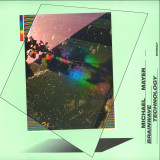
Michael Mayer’s latest EP, Brainwave Technology, comes at you purposeful, stealthy and sly. It’s a glorious left turn for the redoubtable producer, one that sees his typically lean and lithe productions buffed to a metallic, futurist sheen. There’s a gleam in the eyes of tracks like “Brainwave Technology” and “Alpha” that speaks of serious fun, of the intersection of the pleasure zone and the frontal lobe.
“Brainwave Technology” itself is informed by Mayer’s deep dive into the thorny terrain of artificial intelligence, transhumanism and posthumanism. Inspired by reading German philosopher Richard David Precht, Mayer found himself heading down the “proverbial rabbit hole,” as he describes it, “watching hours of YouTube material by self-proclaimed prophets of these ‘inevitable’ changes to come.” Never one to be taken in by the egotist’s dance, Mayer’s cynicism about the whole endeavour is tempered, a little, by the deeper questions that these figures gesture towards: “Is it really an evolutionary step that man and machine become one? Or is it rather a marketing plot by Silicon Valley billionaires?”
On “Brainwave Technology”, Mayer plays the charlatans at their own game, turning their logic against them by exposing the fruitiness of their ‘visions’. “I chose irony as my sword with which I chopped off some quotes from some of those batshit crazy prophets and self-promoters,” he explains of the drooling psychobabble he drops in the track’s lacuna. There’s a sense of humour here – how could you not laugh at these hungover egotists? – but there’s levity too, a sense that Mayer’s using sound to expose the contradictions and double-speak at the heart of these half-formed ideas. It’s a Burroughsian tactic, to slice into the heart of the voice to see what hidden truths surface.
It was Burroughs, too, who once said that “when you cut into the past, the future leaks out”; Brainwave Technology cuts into the logic of the futurologist to leak out the messiness of modern reality. On “Alpha” and “Gamma”, Mayer seems to conjure up the stark, ominous music that’d soundtrack a science fiction reinterpretation – or preinterpretation – of our modern malaise, all funereal wreaths of electronic noise and clatterboxing beats. As the EP resolves with “Device For The Young At Heart”, Mayer’s questions are piling up: “Do we want to become immortal and live on as a download? Do we really give up on Earth and put all our effort into colonising Mars?” There are no answers, of course, but plenty of imaginings-to-be. Brainwave Technology soundtracks both dystopian and utopian possibilities of what could come next.
LA-based rockers The Bronx return for their sixth studio album 'Bronx VI' which comes out worldwide on Cooking Vinyl August 27th. Bronx VI builds on the legacy The Bronx has established in its near two-decade existence, but which definitely proves the door to what’s next has not just been kicked down, but chopped up and burned to a cinder. Yes, the first four tracks – “White Shadow”, “Superbloom”, “Watering The Well” and “Curb Feelers” – bristles with the wild and untamed energy that’s defined the band from the off, but then – all of a sudden, as “Peace Pipe” kicks in – the pace and mood shifts to something a little less aggressive. Elsewhere, “Mexican Summer” and its (relatively) chilled-out mariachi vibes serve as an homage to the band’s alter-ego, Mariachi El Bronx (and was written while that incarnation of the band was on tour), while fatalistic closer “Participation Trophy” masks the Caughthran’s existential dread behind searing riffs and a catchy, defiant and exuberant melody. “The feelings I got when writing for this sixth record is the same type of feeling I got writing “Heart Attack American”. It all comes from the same place and it’s all still 100% genuine and real. Believe me – I’m still feeling the raw emotion that I felt when this band first started. That’s just who I am, that’s who we are as people. You can’t fake stuff like that when it comes to music or art. You have to stay connected. You’ve just got to be real” - Matt Caughthran, vocalist. Bronx VI was produced by Joe Baressi (Melvins, Tool, Bad Religion).
- 1: Xenon
- 2: Krypton
- 3: The King Of Drowning
- 4: Peckham Rye
- 5: Burnt Oak
- 6: Argon
- 7: Saturn Dragon And Child
- 8: Mercury Burns And Eats Itself
- 9: The Shape Of Our Container
- 10: Megabear
- 11: The Weapons Of Artemis
- 12: For Transmutation
- 13: Lead
- 14: Hale’s Comet
- 15: Venus
- 16: Peck
- 17: The Party Eating Its Own Tail
- 18: Excavation
- 19: Ursa Major
- 20: Distillate
- 21: Wandle
- 22: Static And Splendour
- 23: Pulled Apart
- 24: Oganesson
- 25: Lapis Lazuli
- 26: Applewhite Iron Sulphide
- 27: Nettles
- 28: God Of Rain
- 29: Silver Iodide
- 30: Crystal Palaces
- 31: Sun Rising Over The City
- 32: Royal Art
- 33: Moon Rising
- 34: Heaven’s Gate 35. Radon
- 36: Jupiter
- 37: Putrefaction
- 38: Ancient Ash
- 39: Weaving Clothes
- 40: Opus
- 41: Tin
- 42: Reclaimed From The Water
- 43: Iron Oxide
- 44: Helium
- 45: Neon
- 46: Iron Sulphide
- 47: Iron Gated
- 48: Sulphur And Mercury
- 49: Split Egg In The Mirror
- 50: Cod Liver Oil And Orange Juice
- 51: Hydrogen
- 52: Aion And Ficus
Having taken a break from music for a few years, South London’s ME REX began life in 2018 in the home of songwriter Myles McCabe experimenting with shouty, electronic bedroom pop. Armed with a slew of “surging gargantuan hooks” and themes of friendship, forgiveness, joy and dinosaurs, McCabe was quickly joined by longtime friends Kathryn Woods (guitar/vocals), Phoebe Cross (drums/vocals) and Rich Mandell (bass/keys/vocals). Now, graduated from producing songs at home to recording at Resident Studios in North London with Mandell behind the mixing desk: ME REX spent the latter half of 2020 bashing down the doors to the indie world with double EP ‘Triceratops/Stegosuarus’. Finding their penchant for constructing delicate threads of vocal layering to convey feelings of calm while building on luscious swathes of reverberated guitar and keys on single ‘Rites’, the band are not afraid to explore different musical concepts: shaping material that strays from traditional album and single structures that results in a sound that could easily find a home on the big screen as they do behind closed doors. Described as “making for both a potent and cathartic listen all round” by DIY magazine — as well as seeing praise from Stereogum, BBC 6Music, Radio X, Amazing Radio, For The Rabbits and Circuit Sweet — ME REX are back with a new and ambitious project ‘Megabear’, an album made up of 52 tracks that has no beginning or end but exists as a cyclical body of work.
Boy Golden has a purpose: enjoy each day and make good music. Founder and minister of The Church of Better Daze, he wants to help people seeking to improve on yesterday’s themes. His songs, like hymns, are hopeful, fresh and upbeat. KD & Lunch Meat is fluorescent and fun, like its namesake, and easily ingested. Something to Work Towards searches for the meaning in life, while Smoke on the Breeze and Any Way It Works are warm, tender and linger like perfume. Church of Better Daze is the inspirational, musical manifesto. The harmonies are the collective idea of working together, the mellow melodies keep our hopes alive and the lyrics are golden rules to live by: Follow your heart / Make good art / Call your momma / Work real hard. Redefining jam band and stoner cultures by turning dead heads into lively brains, Boy Golden wants to unite us all in a hazy dream under one roof. “We’re all the same at the Church of Better Daze,” he sings. Find unity in the congregation of these 11 tracks, which redefine the precedent for collaboration, common goals and cannabis. If you’re open to learn, and can speak your truth, you can blaze and still get paid in Boy Golden’s Church of Better Daze.
Memphis Industries are reissuing Manchester's idiosyncratic art-popologists, Dutch Uncles' fantastic second album "Cadenza". "Cadenza" was a breakthrough record for the band which drew praise from the likes of BBC Music "A brilliant second album of intelligent pop from the rightly rising Manchester band.", Q magazine "Cadenza is a thoroughly captivating listen." and propelled the band onto the stages at Reading and Leeds, Latitude and The Great Escape. Available on limited edition duck egg blue vinyl for the first time since its release 10 years ago.
- A1: Miguel A Ruiz - Transparent
- A2: Camino Al Desvan - La Contorsion De Pollo
- A3: Mecanica Popular - Impresionistas 2
- A4: Finis Africae - Hybla
- A5: Orfeon Gagarin - Ultima Instancia
- B1: Victor Nubla - 2000 Lenguas
- B2: Javier Segura - Malaguenas 2
- B3: Jabir - Vuelo Por Las Alturas De Xauen
- B4: Miguel A Ruiz - Trivandrum
- B5: Mecanica Popular - Impresionistas 1
- C1: Finis Africae - Hombres Lluvia
- C2: Esplendor Geometrico - Sheikh
- C3: Victor Nubla - Chandernagor
- C4: Luis Delgado - El Llanto De Nouronihar
- C5: Camino Al Desvan - Adjudicado A La Danza
- D1: Mataparda - Me Llena La Cachimba
- D2: Suso Saiz - Horizonte Paseo
- D3: Camino Al Desvan - Fock Intimida A Gordi
- D4: Mataparda - La Papa Suave
- D5: Eli Gras - Flu
Following “La Contra Ola” (BJR015), Bongo Joe presents 'La Ola Interior', a compilation exploring the ambient side of the Spanish electronic music produced in the 80’s, bringing together 19 little-known and innovative pieces from the golden age of Spanish electronic music !
It gathers musicians from various horizons and of many generations, who shared the desire to create an immersive soundscape and to combine electronic music with non-Western musical traditions. As a general rule, the Anglo-Saxon tropism did relate the spanish peninsula’s ambient music to the Balearic Sound, that is to say to the relaxing music played in Ibiza’s nightclubs. But this music takes place in the productive territory of experimental musics, and particularly in its two main breeding grounds: the tape recording underground and the independent musicians-producers scene.
Inseparable from the processes of self-publishing, distribution and exchange of music that were then taking place in Spain in an artisanal way, the vast underground movement of cassettes was divided between an "ethno-trance" combining industrial beats and oriental sounds on the one hand (Esplendor Geométrico, Miguel A. Ruiz / Orfeón Gagarin) and unclassifiable low-fi tinkerers on the other hand (Camino al desván, Eli Gras, Mataparda, Victor Nubla). Hyperactive, this scene is radical and strongly dominated by the hardest musical styles, but the ambient, influenced by the German Kosmische Musik and "krautrock", also develops here.
The second vein of Spanish ambient comes from some of the independent labels of the peninsula (DRO, GASA, El Cometa de Madrid, EGK) whose activity will mark the return of some of the most adventurous musicians-producers of the 70s. Some were influenced by American minimalism (Luis Delgado / Mecánica Popular, Suso Saiz, Javier Segura), others by Fourth-World Music conceived by Jon Hassell and Brian Eno (Finis Africae, Jabir). Having passed through folk, ancient, traditional or contemporary music, and being familiar with improvisation and studio techniques, these artists come from a mutant hippie culture, capable of phagocyting many musical styles from electronic ambient to ethnic improvisation and modal jazz.
These two scenes and generations that make up LA OLA INTERIOR intersect around a common interest in non-Western musical traditions. Their exploration may be that of the tribal origins of electronic rhythms or the Arab heritage of Spain. Above all, it is a dreamy exoticism, an immobile journey as the sounds, rhythms or instruments of these traditions are scrutinized by Western practices (avant-garde music, electronic technology). The result is a hybrid music, filtered and reinvented, neither Western nor extra-Western, with a pronounced taste for the fusion of opposites, which we have called "Acid Exoticism" because of its permanent search for trance or contemplation. Atmospheric, contemplative and serial, these musics still plunge us today into a sensorial journey, at the same time interior and distant, organic and technological, between exotic reminiscences and interior visions.
- 1: All I Need
- 2: Kiss Like The Sun
- 3: About Last Night
- 4: Downtown
- 5: Rabbit Hole
- 6: Lost
- 7: Scene
- 8: Lonely Hours
- 9: Maybe It’s Today
- 10: Screaming
- 11: Hold Tight
It may be his fifth album, but Saturday Night, Sunday Morning marks the start of chapter two for Jake Bugg. Arguably his most complete and coherent record to date, Saturday Night, Sunday Morning manages to combine a love of ABBA, the Beach Boys, Supertramp and the Bee Gees, with a contemporary pop sound: one that’s already spawned his most ubiquitous song in years via euphoric lead single, All I Need. “I knew what I was looking for this time around,” the 27-year-old says, firmly. “And I feel like I accomplished it.” It’s almost 10 years since a two-fingered Bugg burst onto the scene with his eponymous debut, one that topped the UK album charts and saw the then 18-year-old from Nottingham fêted as the next Bob Dylan. A Rick Rubin-produced follow up, Shangri La, quickly followed. But progress stalled with Bugg’s third, largely self-produced, record, On My One, in 2016. “I was having a hard time on that third record,” Bugg admits, five years removed. “The support from the industry wasn’t what it was. All those people telling you how great you are weren’t there anymore. It does feel like the rug’s been swept from under your feet.” What that record provided, however – along with its comparatively stripped-back follow up, Hearts That Strain (2017) – was a much-needed course corrector: one that set Bugg on the upward trajectory he finds himself on today. “When I came to terms with that was when I left the ego at the door,” he says. “It didn’t work out. But it led here. And this is probably my strongest record." It’s testament to Bugg’s rediscovered confidence that Saturday Night, Sunday Morning – a nod to the debut novel by Nottingham author Alan Sillitoe – sees him working with some of his highest profile collaborators to date, most notably American songwriters Andrew Watt and Ali Tamposi, best known for their work with pop heavyweights Post Malone, Dua Lipa, Miley Cyrus, Camila Cabello. “I was looking for how I can incorporate my sound for a more modern era. And I kind of struck gold working with Andrew Watt and Ali Tamposi,” Bugg says. Convening in LA, the first track the trio wrote together is the jealousy-inflected About Last Night, a song about the “insecurities you go through as a young person in a relationship with someone.” “It’s got such dark undertones, which I love,” Bugg says, of a song that showcases a newly discovered, Beach Boys-esque falsetto. “But it’s also very, very pop. That’s what I’ve always loved. With ABBA, with Supertramp. I love pop music. But when you can get it to be dark, I love it even more.” It’s a trick the trio repeated again on Scene, Bugg’s personal favourite from the album and a song that best encapsulates the combination of old and new: Watt’s George Harrison-esquire guitar brushing up against contemporary melodic choices by Tamposi. “I love writing with her,” Bugg says of the Havana hitmaker. “She brought that women’s perspective. And I knew that I’d got that balance of what I wanted. That old school chorus with contemporary verses. That to me was my favourite song when I wrote it, and it still is.” Perhaps the biggest example of Bugg’s newfound ego-less approach to writing, however, came in the shape of Downtown, a song that grew from an idea by Jamie Hartman (Celeste, Lewis Capaldi, Rag'n'Bone Man), and sees Bugg deploy the higher range of his voice to ethereal, ’60s Bee Gees effect. “Usually, the initial spark of an idea comes from me. And when it doesn't, it sometimes loses my attention,” Bugg admits. On Downtown, however, he relished his role as arranger: “Because there were a lot of moving parts and chords, it was almost like a puzzle,” he says. “I’d never approached a song like that before. “What I’ve been enjoying on this record is the collaborative process,” he continues. Working with people, writing with people. Because I’ve realised all I really want to achieve is to be the best writer I can possibly be. And I think by working with other people, it allows you to learn a lot as well.” It’s a theory Bugg has put to the test during lockdown, when he was approached by his manager about writing the soundtrack to an upcoming documentary, The Happiest Man In The World, about Brazilian footballer Ronaldinho. “It’s kind of a completely different experimental outlet,” Bugg explains of his first ever score. “I approach my own work quite professionally. But with this I can just switch off and go into a different world. And it’s been brilliant – I’ve had to learn different styles of guitar: bossa nova, samba. It’s a bit Vangelis, who’s probably my favourite artist – which may surprise people.” Possibly. But you get the impression that surprising is what Bugg likes to do. “I don’t like to be stuck doing the same thing,” he admits. “And that’s what this record Saturday Night, Sunday Morning was. I wanted to push myself. I’m always learning new influences. I’m careful not to get stuck on the same thing. “It’s not going to be right every time. It’s not going to be good every time,” he continues. “But if that’s the process it takes to get to this record, where people are loving the songs again, then that’s the journey we have to take.” For Jake Bugg, chapter two starts now. New album ‘Saturday Night, Sunday Morning’ is out August 20th on RCA Records
- 1: Unsuccessfully Coping With The Natural Beauty Of Infidelity
- 2: Der Untermensch
- 3: Xero Tolerance
- 1: Prelude To Agony
- 2: Glass Walls Of Limbo (Dance Mix)
- 1: The Misinterpretation Of Silence
- 2: And Its Disastrous Consequences
- 3: Gravitational Constant
- 4: G = 6.67 X 10 – 8 Cm – 3 Gm – 1 Sec – 2
- 5: Hey Pete (Pete’s Ego Trip Version)
Type O Negative is an American goth-metal band formed in Brooklyn in 1989 by Peter Steele (lead vocals, bass), Kenny Hickey (guitar, backing vocals), Josh Silver (keyboards, backing vocals), and Sal Abruscato (drums, percussions), who was later replaced by Johnny Kelly. Slow, Deep and Hard is their debut studio album, released in 1991 on Roadrunner Records. The album, originally titled None More Negative and released in 1990 under the group’s former name Repulsion, launched the band’s career. The album has a rawness that was prominent in Peter Steele’s previous band, Carnivore, but it incorporates elements that became standard for Type O Negative, merging styles including doom metal, gothic rock, new wave and industrial music.
Slow, Deep and Hard is a semi-autobiographical album with heavy amounts of black humour, based on a failed relationship in which the vocalist/bass guitarist Peter Steele was involved. In keeping with the band’s notable humour, the album’s cover artwork is a blurred image of sexual penetration. According to guitarist Kenny Hickey, Steele based a riff of “Gravitational Constant: G = 6.67 x 10 – 8 cm – 3 gm – 1 sec – 2” (later known as “Gravity”) from the theme song of the 1964 American sitcom The Munsters. For the 30th anniversary of Slow, Deep and Hard, Roadrunner Records in conjunction with Run Out Groove, is reissuing the debut on vinyl in all it’s remastered glory.
- A1: Watch Me Now
- A2: Ease Back
- A3: Ego Trippin
- A4: Moe Luv's Theme
- A5: Kool Keith Housing Things
- A6: Traveling At The Speed Of Thought (Remix)
- A7: Feelin' It
- A8: One Minute Less
- B1: Ain't It Good To You
- B2: Funky (Remix)
- B3: Give The Drummer Some
- B4: Break North
- B5: Critical Beatdown
- B6: When I Burn
- B7: Ced-Gee (Delta Force One) (Delta Force One)
- C1: Funky
- C2: Bait
- C3: A Chorus Line (Feat Tim Dog - 12" Version - Bonus Track)
- D1: Traveling At The Speed Of Thought (Hip House Club Mix - Bonus Track)
- D2: Ego Trippin' (Bonus Beats - Bonus Track)
- D3: Mentally Mad
New York Hip Hop revolutionaries Ced-Gee, Kool Keith, Moe Luv and T.R. Love, known as Ultramagnetic Mc’s dropped their seminal debut album Critical Beatdown in 1988. Immediately grabbing the attention and pushing the boundaries of hip hop into new horizons, it was hailed as a masterpiece by the underground. Influential hip hop magazines The Source and Hip Hop Connection both listed Critical Beatdown in their Top 100 charts, naming it one of the best 100 hip hop albums ever. The 1986 single “Ego Trippin” is one of the first tracks to use the SP1200 drum machine (programmed by producer Ced-Gee), and the SP1200 would later become the golden standard for many hip hop producers. This expanded edition features not only the original album with the 15 tracks, it also includes 6 bonus tracks: the original 12” versions of “Funky”, “Bait”, “A Chorus Line” featuring Tim Dog, “Mentally Mad” plus “Traveling At The Speed Of Thought (Hip House Club Mix)” and “Ego Trippin (Bonus Beats)”. It also contains a 4 page booklet with interviews, rare photos and liner notes written by Angus Batey, the author of Rhyming and Stealing: A History Of The Beastie Boys and a writer for Hip Hop Connection and Mojo magazine.
Schneider TM is the multidimensional music project of Dirk Dresselhaus which has been operating since the mid 90's. His latest opus is also his first for release for Editions Mego.
With an extensive catalogue under his belt, one may wonder where this one takes us? The 8 of Space orbits the realm of "pop" more overtly than the project has done for 14 years, residing in the line of works that temporarily ended with "Skoda Mluvit" from 2006. In the age of scattered streaming listening habits The 8 Of Space champions the classic album format with connected tracks that act like chapters adding up to what could be framed as an 'audio-movie'. The 'plot' revolves around a post-dystopian landscape which posits the make up of reality in the future.
The vessel is electronic pop music but one which takes inspiration from the spirit of a multitude of musical forms absorbed into a trans human sound world where biological & technological elements complement each other (We are NOT The Robots!). The music unifies the analog world of acoustic and electric instruments with electronic & digital possibilities that range from heavily processed acoustic & electric guitars and bass, tube organ, analog modular synth units, acoustic drums and percussion, analog & digital drum machines & effect units, hardware and software processing. Experimental & extended musical techniques build a world of musical elements that is sometimes upside down and mirrored. Electric guitar becomes rhythm machine & modular system, voice becomes sound object & synthesizer, effects are used as instruments, acoustic guitars are being modulated by voices etc. Reality and illusion are getting mixed up. One can hear short moments of longer recordings in the tracks which are snapshots of bigger musical pictures that lurk behind what's actually audible. Generative music, audio spirals like clockworks create ever changing musical combinations; thrown-in sounds, polyrhythms & cascades based on the concept of chance attributed to the service of the SONG.
The lyrics are a key component. Holistic, associative poetry acts as interactive trigger points for the mechanisms of existence in times of a paradigm shift that are open to the listeners discretion. Autobiographical elements combine with science fiction and dreams, protagonists shift where the 'I' or 'me' is not necessarily the voice of the artist, nor even the same person. Alongside a more naturalised voice another protagonist appears represented by a processed voice. This character, named iBot, evolved around the start of the millennium and has appeared on some previous Schneider TM recordings. It can be seen as a post-human, or even a trans-human character, a combination of human & technology, uncertain of the future, which lends iBot it's melancholic tone.
In the opening song "Light & Grace" iBot appears in an advanced form of AI, which managed to hack & hijack a commercial space travel program (eg, Virgin Galactic) to invite those rich, who profited most from the destruction of planet earth, for a holiday trip into space to unknowingly fly them directly into the middle of the sun. In this episode it seems to have developed higher ethics than humanity itself with ambition to save the planet with as much of its cooperative life as possible."Light & Grace" serves as an intro / opener for this album to be followed by 7 other tracks featuring different windows of consciousness represented by diverse characters & protagonists.
All the elements on The 8 of Space, the music, sounds, vocals and artwork fit together as a whole, creating a dazzling electro pop future questioning it's own certainty. This is experimental electroacoustic pop music featuring glorious melodies dancing along human/machine voices, each track is a small universe that triggers the physical mind and tickles the subconsciousness.
This summer, multidisciplinary producer, designer and 3D artist Raynor de Groot serves up Future Static, his debut full-length on Atomnation as Coloray. More than simply a collection of music, the record will be presented in an all-new virtual space where each track is a portal to a different world.
Dutchman de Groot has proven himself as an accomplished conceptual artist who draws together many different creative fields. He has released everything from lush synth-pop to deep techno, and has real songwriting ability. 2019's 'Can't Stop' in collaboration with Eagles & Butterflies proved that as it crossed over multiple scenes and became one of the year's standout tracks thanks to support from heavy hitters as diverse as Hunee and Four Tet. Âme & Dixon have also regularly supported Coloray's music and asked him to release 'Gazing Eyes' on their Innervisions label.
Two years after his Real Life Cinema EP on Atomnation, Future Static finds de Groot open a new chapter that explores a more conceptual sound. The album "translates the concept of man and computer creating a new reality where logic and emotion seems to be at odds with one another." Its 12 tracks have club-ready grooves, but also exquisite synth designs that are edgy and uptempo. They will be translated to a live show and interactive music experience in VR, on your phone and desktop. In the show, online visitors will be able to get lost inside the mind of an AI and watch and interact with a Coloray performance.
Presented with an artfully designed gatefold sleeve, Future Static is a groundbreaking project from Coloray that pushes creative boundaries while offering an immersive listening experience.
Bjarki’s bbbbbb records welcomes its first-ever non-electronic project as Icelandic rock band Skrattar joins the label to unveil their thirteen-track album, ‘Hellraiser IV’.
Four-piece outfit Skrattar can be described as cigarette rock with an electronic vibe that makes your upper lip sweat. Having already developed a loyal fanbase in Iceland as a powerful live act with an energetic and provocative stage presence, the band now look further afield to global horizons as they reveal their latest album, ‘Hellraiser IV’.
With the release of ‘Hellraiser IV’, bbbbbb broadens its catalogue beyond dance and electronic music. While the label’s primary focus will remain electronic, several other genres will also feature - the connecting factor being that the music is Icelandic, experimental and fresh... the best that grassroots has to offer.
‘Good music should be heard, and this is my take on delivering probably the best music coming from Iceland at the moment. It’s an honest, wild love story of true friendship and creativity coming together in one album’ - Bjarki
‘Hellraiser IV’ contains thirteen tracks written over three years, with the oldest songs composed the year the band was founded, 2016. In 2019, when a good foundation for an LP had been laid as the band gained followers and honed its sound, they locked themselves in the studio until they completed the album. With many of the tracks composed in the dead of night, containing both lyrics written over a long period as well as improvisation, the final product is a record made by them from A to Z, in line with the band’s endearing DIY ethos.
‘Skrattar’ is Icelandic for a specific type of demon that you can’t control, but in Swedish, it means ‘to laugh’ - with laughter involved across many of the tracks on ‘Hellraiser IV’ as if to mock the dualism of seriousness. Their subject matter is chaos and anarchism - but their humour and satire are never far away. The music is an ode to the eternal void, while at the same time laughing in its face.
In addition, a remix album will be released digitally alongside Hellraiser IV, reimagined and reworked by a host of fellow musicians, producers, and artists. Among them, label regular Kuldaboli, bbbbbb boss Bjarki, DJ Flugvél og Geimskip, russian.girls, KGB and Anton Newcombe - the founder of The Brian Jonestown Massacre.
REISSUE - from original press release: For three decades the reclusive Revolutionary Army of The Infant Jesus (RAIJ) have confounded musical classification and studiously declined every invitation to explain their unique form of musical and artistic experimentation. Initially the Liverpool outfit built their reputation on their extraordinary immersive multi-media performances combining multiple layers of visual imagery, elements of ritual, enigmatic samples, field recordings and mesmeric live music. Their cult status was further reinforced with the release of the now much sought-after two studio albums The Gift of Tears (1987) and Mirror (1990) and two EP collections, Liturgie Pour La Fin Du Temps (1992) and Paradis (1995). After an 18-year hiatus the appearance of a new RAIJ album, and the apparent relaxation of their strict vow of silence, are generating predictable excitement and expectancy. Beauty Will Save the World does not disappoint. RAIJ's intoxicating mix of ethereal beauty, dazzling soundscapes and oblique mystery reach new levels of intensity and subtlety. The album title - a quote from Russian novelist Fyodor Dostoevsky - is one of the many literary, cinematic and spiritual references underpinning RAIJ's unexpected comeback. Founder members Paul Boyce, Jon Egan and Les Hampson, joined by a fresh wave of collaborators, have crafted an album of unique beauty and originality. Prolonged silence seems to have deepened rather than dimmed their creative impulse. As ever it is the breadth of musical genres, cultural references, borrowings and retrieved sounds that define the RAIJ aesthetic, but there is also a more consistently meditative and melodic strain that underpins the album's integrity and purpose. In a rare insight into the RAIJ's creative method, Jon Egan explains: "Although our work takes elements and inspiration from many disparate sources we have never viewed it as deconstruction. We are looking for the thread that connects every manifestation of beauty, however fragile, transitory and seemingly accidental. " In addition to the album release on Occultation, RAIJ's second coming also includes a live performance at this year's Greenbelt Festival and the re-release on vinyl of The Gift of Tears by California-based label Feral Sounds. "There is renewed interest and appreciation of our music and that's great", said Leslie Hampson. "We have never tried to cultivate obscurity or anonymity, we simply wanted to avoid having to explain and justify a creative process that isn't necessarily premeditated. Isn't it enough to listen to and experience it?"
- A1: Noah Gibson – Returning
- A2: The Pelican Company – Temple Bells
- A3: Varg2Tm Vtss – Vargtss1 (Do The Roar)
- B1: Anthony Linell – Hallucinations
- B2: Exploited Body – She Blames The River
- B3: The Empire Line – Traet Av Lagen, Traet Av Systembolaget
- C1: Puce Mary Ft Varg2Tm - Violent And Delusional
- C2: Fatal – Indolent
- C3: Tusagi – Swetti
- D1: E-Saggila – Blue Amps
- D2: Js Aurelius – Crime Is The Highest Form Of Sensuality
- D3: Mischa Pavlovski – Fra Midt Til Slutning Ii
- E1: Free The Id – Red Fall Foliage
- E2: Evigt Morker – Stege
- E3: Ulwhednar – Dimman Runt Borgen
- F1: Bhmf – Morkertal
- F2: Ca+ – Taki Patch-Out
- F3: Age Coin – No Corner, No Devil
3x12" Repress
Some serious hot tracks on this fourth instalment of the Scandinavian Swords series. It breaks with its predecessors' forms. Deviating from the austere brevity that marks Northern Electronics out, Scandinavian Swords IIII: Atlas of Visions completes a survey of the label's confidants and components in the same breath as it introduces a swarm of new artists and genre-collisions. With the swell of the last 12 months behind them, Anthony Linell and Jonas Ronnberg have forged the compilation with a paradoxical formula: Atlas of Visions stakes itself as a milestone release that retains the sure-footed programming of its proprietors yet cuts a new silhouette for what the platform of a Northern Electronics release consists of. Presented across two volumes, Atlas of Visions courses through the hyper-pigmented and infectious fallout zone between club-focused works and the abstract territories of experimental modes. The release compiles egression and intensification into a pandemoniac whole, a refracting design for fractured times. Recommended!!!
The second compilation EP to commemorate the 20th anniversary of the establishment of Sound Of Speed!
A-1, by UK Kieron Ifill K15 (WILD OATS, EGLO, APRON) with an impressive sophisticated electric jazzy track that symbolizes the label.
The debut work "Wait" from DISTANT HAWAII is a cult hit, and also from RHYTHM SECTION INTERNATIONAL and MOODS & GROOVES.
A-2 by HIDDEN SPHERES from Manchester, who has release experience and has an impressive unique rhythm composition and airy synth usage.
The Japanese twin duo SATOSHI & MAKOTO, whose two albums released from YOUNG MARCO's label attracted a lot of attention.
Sapporo's KUNIYUKI participated in the music of his brother SATOSHI as percussion, a 90's synth riff reminiscent of the dawn of Detroit techno.
KUNIYUKI from Sapporo, who has live experience on the world stage, participated in the percussion with an ambient feeling that delicate keyboard
work is folded in multiple layers.B-1, which weaves a groove in a quiet humor, a masterpiece electric jazz world that draws you in from the beginning
of the song and gets caught up in the world view in a blink of an eye
Includes 4 songs including KUNIYUKI TAKAHASHI's new song B-2, which has been developed and acclaimed by DJ Sprinkles. KUNIYUKI is in charge of mastering.
Lift-top box including the first 10 numbered records and objects, with a 60-page exhibition style book, plus a bonus 12” single and 2CDs of unheard Joy Division interviews. Strictly limited and numbered to 4000 units WW.
Use Hearing Protection: Factory Records 1978-1979 contains facsimile editions of the first 10 numbered Factory items: 4 vinyl records, 3 posters, a short film, Factory stationery and an egg-timer design. The early history of the label is traced in a 60 page book with text by James Nice, photos by Kevin Cummins and archival interviews with Tony Wilson, Rob Gretton, Joy Division and more.
All 3 original Factory posters are contained in the box as well as the first 4 records: The Factory Sample EP (Fac 2), including the Fac2 stickers, All Night Party by A Certain Ratio (Fac 5), Electricity by Orchestral Manoeuvres in the Dark (Fac 6) and classic album Unknown Pleasures by Joy Division (Fact 10).
Bonus items include a white label 12” single by The Tiller Boys (originally intended as FAC3 but ultimately not released), and a lengthy audio interview with Joy Division, Tony Wilson and Rob Gretton, conducted in August 1979 by journalist Mary Harron, never before heard and now restored across two CDs. Also newly restored, and seldom seen since 1979, is evocative 8mm short No City Fun (Fac 9), featuring music by Joy Division.
- Generation Genocide
- Let It Slide
- Good Enough
- Something So Clear
- Thorn
- Into The Drink
- Broken Hands
- Who You Drivin’ Now?
- Move Out
- Shoot The Moon
- Fuzzgun ‘91
- Pokin’ Around
- Don’t Fade Iv
- Check-Out Time
- March To Fuzz
- Ounce Of Deception
- Paperback Life (Alternate Version)
- Fuzzbuster
- Bushpusher Man
- Flowers For Industry
- Thorn (1St Attempt)
- Overblown
- March From Fuzz
- You’re Gone
- Something So Clear (24-Track Demo)
- Bushpusher Man (24-Track Demo)
- Pokin’ Around (24-Track Demo)
- Check-Out Time (24-Track Demo)
- Generation Genocide (24-Track Demo)
The classic 1991 album remastered and expanded with rare and previously
unreleased tracks. Extensive liner notes by band biographer Keith Cameron.
A landmark of the grunge era.
By going back to basics with ‘Every Good Boy Deserves Fudge’, Mudhoney
flipped conventional wisdom. Not for the first time - or the last - they would be
vindicated. A month after release in July 1991, the album entered the UK
album chart at Number 34 (five weeks later, Nirvana’s ‘Nevermind’ entered
at 36) and went on to sell 75,000 copies worldwide. A more meaningful
measure of success, however, lay in its revitalisation of the band, casting a
touchstone for the future. The record is a major chapter in Mudhoney’s
ongoing story, the moral of which has to be: when in doubt, fudge it.
The album began at Music Source Studio, a large space equipped with a 24-
track mixing board - downright futuristic, compared to the 8-track setup that
birthed the band’s catalytic 1988 debut, ‘Touch Me I’m Sick’. The Music
Source session quickly turned into a false start when the results, in guitarist
Steve Turner’s words, “sounded a little too fancy, too clean.” Lesson learned,
the band went primitive and got to work at Conrad Uno’s 8-track setup at Egg
Studio. Named after the cartons pasted on the walls in an optimistic attempt
at sound-proofing, Egg boasted a 1960s vintage 8-track Spectra Sonics
recording console, originally built for Stax in Memphis.
So it was that, in the spring of 1991, Mudhoney made ‘Every Good Boy
Deserves Fudge’. The resulting album is a whirlwind of the band’s influences
at the time: the fierce ‘60s garage rock of their Pacific Northwest
predecessors The Sonics and The Lollipop Shoppe, the gnashing posthardcore of Drunks With Guns, the heavy guitar moods of Neil Young, the
lysergic workouts of Spacemen 3 and Hawkwind, the gloomy existentialism
of Zounds and the satirical ferocity of ‘80s hardcore punk. The quartet’s
special alchemy meant these fond homages never slid into pastiche.
Ultimately, ‘Every Good Boy Deserves Fudge’ epitomised the best of
Mudhoney: here was a band reconnecting with its purest instincts and, in the
process, reinventing itself.
This 30th Anniversary edition, remastered by Bob Weston at Chicago
Mastering Service, stands as testimony to the creative surge that drove them
in this period. The album sessions yielded a clutch of material that would
subsequently appear on B-sides, compilations, and split-singles. This edition
includes all those tracks and a slew of previously unreleased songs,
including the entire five-track Music Source session.
Clear Vinyl
Hitting us with a double LP of sublime dance music lingering on the border of ambience, Interstate is the alter ego of DJ Swagger. Earlier this year, he graced Shall Not Fade's Time Is Now sub label in collaboration with DJ Aedidias for four feelgood UKG cuts - now returning for the second album in the Seasons Series, expect something a little different. Dominion Swing is his first LP under the Interstate moniker.
The four sides of vinyl hold their fair share of punchy kick drums and funky melodies, though across them is a blissed out ambient softness that comes to the forefront by the end. "Doublet Doureet" is a low end groover driven by skippy percs, the speedy bass melody chilled out with some lingering natural chords. "Second Mass" is futuristic and clean cut, tickling the ear with panning synth stabs and a powerful electro bassline that cuts through the track sharply, giving memories of the dancefloor while perfectly leading into "Habitat" - the sustained ambient shimmer that closes the A side.
Onto the reverse side, "This Rather Than That" and "Misty" are glitchy, playful evening music, "Misty" leaning into a fun organ ditty. The almost imperceptible bassline of "Two To Get Ready" hangs in the air giving it a dub atmosphere.
More genre exploration is to be found on the C side, from the pulsing but delicate house of "Appliance" to the tranquil guitar-lead journey of "Condone The Drama", ending with a return to blissful, oceanic ambience in "Bubblebath".
The closing side of Dominion Swing stays in this vein - blissed out haze is soaked into summer sundowner "Ascension" and its romantic melodies. "Stigma" is built on misty ambient pads but carries a persistent heartbeat rhythm, fading slowly into album closer "Yosemites" tropical field recordings and scattered drum hits.