
8
Veyl Industries is releasing ‚Dreams & Memories‘, the debut work from Ori, one half of TV.OUT. This 8-tracker
features malevolent electronics, experiments with noise, textures and blood.
Veyl Industries is releasing ‚Dreams & Memories‘, the debut work from Ori, one half of TV.OUT. This 8-tracker
features malevolent electronics, experiments with noise, textures and blood.


Spearheaded by James Dean Brown (also known from Perlon's Narcotic Syntax) and Victor Sol, and featuring other rotating members, Hypnobeat is a true product of the open-ended spirit of DIY music that proliferated in the 1980s. The prescient project championed deft, machine-powered rhythm programming as its modus operandi long before the practice would become a dominant global cultural form. Since Hypnobeat was revived in 2012 with Helena Hauff joining JDB on stage for improvised live performances based on one 707 and three 808s, there have been a string of archival releases shining a light on the early and more recently recorded works of this forward-thinking venture.
This latest collection for Artificial Dance comprises three freshly unearthed iterations. Long-form A-side track 'Polychrome Desert' is a pure percussive exercise, programmed and recorded by JDB in 1986 with a chain of three 808s filling out a stereo panorama. The intention was to create a pure, meditative rhythm drawing on African influences and reinterpreted through what was then the music technology of the future. 'Spies In Malaysia' is a live recording from a concert Hypnobeat performed in 1985. Its lurid melodic passages and crunchy percussive blasts formed the closing track of the set, which was met with rapturous response. Recorded in the same year, 'Sumatra Railway' was the product of an impromptu session between JDB and Victor Sol. The song finds the pair exploring a more shadowy, surf-inspired sound, laden with echo and freewheeling through seven minutes of sun-kissed, subtly tropical subversion.
With each successive release, the plot surrounding Hypnobeat thickens in a tangle of 1/4' jack cables and ancient effect pedals. From its shifting line-up to the diverse sonic repertoire, it remains one of the wondrous plants of German electronic music in the pre-techno era.

Formerly clandestine, today manifest, both sacred but also profane, sometimes meditated, very often improvised, the Kabar transpires in the daily Reunion, getting rid with insolence of any label that dares to impose. The Kabar is a fleeting but bubbling manifestation of an identity and a local culture that is still difficult to define. A moment of life and sharing where handcrafted instruments, neighborhood meetings, ritual dances and lyrical demands are mixed. A meeting.
Born from the musical union of maloya and electronic music, Digital Kabar is a compilation at the crossroads of cultures, porous to all sound experiences. It's also the result of a friendship that drives InFiné at Les Electropicales festival, from the fascination of a small team dedicated to the independent musical cause for a musical scene and its diversity.
Digital Kabar features tracks & reworks from Jako Maron, InFiné affiliate Labelle, Alex Barck, Christine Salem, Boogzbrown, Loya, Sheitan Brothers,Ti Fock, Force Indigène, Agnesca, Zong, Psychorigid, J-ZeuS, and Kwalud.

New LP from French beat-makers La Fine Equipe featuring Illa J, T3, 20Syl, Mr J Medeiros, Georgia Anne Muldrow, Fakear ...
Let's be clear: La Fine Equipe is a band. The numerous hats wore by its four members are so various that it could mislead one's. Indeed, surrounding Blanka, oOgo, Chomsky and Mr. Gib, there are recording studios, collaborations, lives, side-projects... There is also and especially a whole universe built during the past ten years around their passion for beatmaking, embodied by the release of « 5th Season », new album.
So yes, La Fine Equipe is a band, but it's also much more than that.
Since their creation in 2006 and their first album « La Boulangerie » two years later, the four producers became inevitable when you think about a new scene breaking the barriers between musical genders. Hip Hop is at the heart of their craft, corner stone of their musical background and inspirations where the paths of J Dilla, Madlib, Flying Lotus, Kaytranada and the turntablists A-Trak, C2C and Birdy Nam Nam are crossing ways. Two things gather La Fine Equipe and those big names, the constant need of collaboration with other artists, and this thirst of discovery, main feature of the digger.
From 2008 to 2014, La Fine Equipe mastered its craft with the « Boulangerie », compilation gathering 34 beatmakers on 113 tracks. They also work on the creation of the label Nowadays Records (Fakear, Skence, Unno, Clément Bazin, Leska, Douchka...) and released more than 75 EPs and LPs in five years.
With an outrageous number of shows across the world, tour in Asia, South America, collaborations with several international artists... Their success changed the game: Whereas many producers coming from this environment where isolated, La Fine Equipe federated a growing scene and became its reference.
After years spent paving the way for other artists and creating a structure that could support the growth of a musical scene, they decided to go further and launch a new era with « 5th Season ».
Because the band works with eight hands and four brains, there's nothing surprising in the fact that the album sounds like a condensed of each and everyone inspirations and experiences, from hip hop and sampling, to electronica, jazz and Latinas inspirations. If homogeneity is the new trend, La Fine Equipe isn't ready to sacrifice its wishes to fit the mould.
« 5th Season » is also a glance at the world looking over our planet's current state, the cosmos, the vegetal and these things that are greater and stronger than us, and the things and behaviour that could led to our loss.
It's an almost apocalyptic vision of our future, but full of optimism at the same time. There is something solar and cinematographic in this album, a format that goes beyond the one chosen before, closer to playlist and compilations such as the three Boulangerie opuses remind us.
Loyal to their status of ambassadors, the four beatmakers keep on inviting other artists to complete their universe. Illa J and T3, respectively brother and partner (Slum Village) of the late J. Dilla, make the connection between a glorious past and the future embodied by La Fine Equipe on the track « The Source ». With « Aurora », it's the solemn and mystical voice of Madjo that take this electro-pop track to another level. The American rapper Mr. J. Medeiros on the boom bap anthem « What Eva », the Montrealer ZeFire on « Typical », each and every artists brings its stone to the edifice of « 5th Season », giving to the album a limitless and freed musical richness.
But to release an album isn't enough. In parallel, each member of La Fine Equipe continues to fulfil its multiples tasks and work on a new concept live show bringing a scenic and visual show in addition to their music. It is what the artists looking toward the future do, and La Fine Equipe is looking straight ahead.
_________________________________________________________________________
TRACK BY TRACK
AURORA (Ft. Madjo)
Already remixed by the quatuor on the beautiful track « Choose The Heart », it's Madjo's turn to be invited by La Fine Equipe for a collaboration. Her mystical voice, which fragility paradoxically seems to strengthen its power, turns the track into an epic pop anthem.
NOBU (Ft. Grems & 20syl)
The association of these three names seems obvious, like a family reunion. Grems did the visual of the anniversary box of La Boulangerie, 20syl (C2C, Hocus Pocus) was one of the beatmakers who took part in the project.
This time, the two big brothers are side by side behind the mic, for the first French speaking collaboration of La Fine Equipe.
On this trapy/footwork beat, the two rappers ring the alarm before it's too late to save our house, the earth.
THE SOURCE (Ft. T3 & Illa J)
In the family of Hip Hop jewels of 5th Season, here is one coming from the USA. Fans of J Dilla and Slum Village since the first hour, La Fine Equipe pays its respects to its influences by inviting T3 and Illa J. Respectively member of Slum Village and brother of the legendary Detroit producer, these two MCs build a bridge between the eras and let their sharpened flows confuse our perception of time.
5TH SEASON (Ft. Fakear)
A second collaboration with their little brother from the Nowadays Family, Fakear. Eponymous title, it represents the universe of both entities, true road trip through Fakearians melodies and La Fine Equipe's funk declined in five seasons.
TYPICAL BOY (Ft. ZeFire)
With « Typical Boy », La Fine Equipe express its love for House music with chopped rhythms and a heavy but swaying bass line. The freed track oscillate between power and lightness. A beat that quickly becomes ZeFire's playground. The Montreal singer, already heard on Her's tracks, brings a missing r'n'b touch to create the perfect chemistry.

“Ta Da” is the debut full length from J. McFarlane Reality Guest, the collective name for the trio headed by the eponymous McFarlane. As a member of the group Twerps, McFarlane has traversed guitar-centric, melodic pop music for some years while honing a highly unique, personal musical language. Ta Da is the first recorded unveiling of McFarlane’s affecting, oblique songwriting panache. Originally released in her native Australia on Hobbies Galore, Ta Da will be released worldwide by Night School in June 2019.
Wheezing into view with a troubled reed instrument set against a s of whoozy synth lines, Human Tissue Act is a foggy curtain the listener is invited to peel back. The dissonant notes are left to dance entwined, with clarinet heralding a Harry Partch-esque mallet percussion interlude. It’s a mood. With no resolution in sight, an audience dragged closer into uncertainty is suddenly drenched with the light of inter-weaving wah wah synth and saxophone. I Am A Toy introduces us to McFarlane’s vocal, an effortless and matter-of-fact, accented statement that quietly takes the reins. While McFarlane’s previous work in Twerps might reference 80s UK and antipodean guitar pop, Ta Da showcases a different influences immersed in psychedelic music and synths. It’s a brilliant, deft concoction swimming in Young Marble Giants-type minimalism washed with bare pop and harmony similar to Kevin Ayers making sense of a Melbourne suburb full of faces half-recognised in the blanching sun.
What Has He Bought begins with a Casio-keyboard rhythm pattern, palm-muted guitars and immaculately enunciated vocal give way to a burnt melodica part that elevates the spirits. Simple patterns repeated, like a well-tempered pop song that does what it needs to do and no more, build into the sound of summer leaking orange juice. They’re moments of joy, layered on top of each other like a melting cake. Do You Like What I’m Sayin’ recalls Marine Girls covering a classic ‘66 Garage nugget, organ lines fighting funk with guitar chords played just behind the percussion. “In a talking world, meanings are the same. Words want to hold on to the people they contain. Do you like what I’m sayin’?” We’re in a Beckett play perhaps, obtuse absurdities rendered pretty. Alien Ceremony is a heart-melter, given a melancholic timbre by bowed double bass it’s a tragi-comic piece that almost reeks of Robert Wyatt at his mid-whimsical twisting a fugue completely out of shape. Beneath the layers of harmony and twinkling instrumentation you sense there’s a genuine sadness somewhere even if it remains veiled.
Through out Ta Da, McFarlane plays with counterpoint and contrast to sometimes delirious effect. On Your Torturer, a simple, upbeat chord progression is hard panned, underpinning a flute solo which seems out of place, hence making it completely in place on this warmly surreal album. My Enemy is a slowly swinging eulogy to a failed relationship punctuated by analogue synth burbles, with our protagonist simply asking, in the aftermath, “can we be nice?” Here McFarlane’s vocal is straight forward, lyrically conversational but still not completely in focus, a surreal kitchen sink drama filtered through a dream where everything is in the wrong place. It’s a fine precursor to Heartburn, which similarly borrows BBC Radiophonic Workshop-style noise synths and the use of space to carve up the simple “You Will Make My Heart Burn” line. At this point, the listener has been in such close proximity to McFarlane’s show, the reality guest in a performance where they’re the sole audience member, that when Where Are You My Love rises on the horizon as a sleepy, psychedelic send off it’s uplifting. The vocal drifts away into the sunset, simple and direct. It leaves the listener slightly confused, perhaps, but grateful for the gentle surprise.

Vor 20 Jahren startete Chloé Thévenin ihre Karriere mit Mixer und
Plattenspieler, bereits 1999 zählte sie zur Speerspitze der Pariser
Techno-Szene. Seitdem kennt man Chloé als technisch versierte und
groovig agierende DJ mit Vorliebe für Deep House und Minimal. In der
französischen Kapitale sind besonders die Batofar-Residency und PulpNächte im Rex in Erinnerung geblieben. Ihre Skills präsentierte sie einem
größeren Publikum auf Mix-CDs wie "I Hate Dancing" (2004) oder "Live
At Robert Johnson" (2008). Hinzu kamen regelmäßig eigene
Produktionen, die sie auf über einem Dutzend 12_ÇÖ_ÇÖes
veröffentlichte. Daneben brachte Chloé mit "The Waiting Room" (2007)
und "One In Other" (2010) auch zwei Großformate heraus. Dass es bis
zur Fertigstellung ihres dritten Langspielers sieben Jahre gedauert hat,
erklärt sich für Chloé durch die Wechselfälle des Lebens. Aufgrund
spannender Kollaborationsarbeiten und verschiedener
Kompositionsaufträge für Filme und Installationen blieb ihr zu wenig Zeit
für die Albumproduktion. Außerdem gründete sie mit Lumière Noire ein
eigenes Label, auf dem "Endless Revisions" als eines der ersten Werke
erscheint. Dieses gleicht einem elektroakustischen Soundabenteuer und
hat mit Tanzmusik nichts am Hut. Zwar mäandern immer mal wieder
satte Beats durch die Tracks, aber eben nur als ein Element unter vielen
anderen. Ein Album für den kontemplativen Hörgenuss

Sie haben es wirklich nochmal getan...Calexico und Iron & Wine haben sich fast 15 Jahre nach ihrem ersten gemeinsamen Geniestreich - In the Reins' (2005) für ein überraschendes, zweites Mal zusammen gefunden, in ein Studio eingeschlossen und acht mal die Engel singen lassen. Am 14. Juni wird das Album namens - Years to Burn' erscheinen, und natürlich wird dies ein Feiertag für die Fans der Bands, für alle Freunde von Alternative, Americana, Folk und Roots Music.

LTD Edition!
Sie haben es wirklich nochmal getan...Calexico und Iron & Wine haben sich fast 15 Jahre nach ihrem ersten gemeinsamen Geniestreich - In the Reins' (2005) für ein überraschendes, zweites Mal zusammen gefunden, in ein Studio eingeschlossen und acht mal die Engel singen lassen. Am 14. Juni wird das Album namens - Years to Burn' erscheinen, und natürlich wird dies ein Feiertag für die Fans der Bands, für alle Freunde von Alternative, Americana, Folk und Roots Music.
Idiosyncratic producer DMX Krew offers up four playful acid-tinged tracks for the Malekko Phase Mod EP, released through eclectic Spanish label/club night/promotion agency, Fanzine Records. The vinyl-only release is the first output of 2019 for the Coruna based imprint currently celebrating their 10th anniversary and is the follow up to C44's bizarro-techno Res Publica Populi Romani EP, and Dijuma's dubby and atmospheric Cold Tracks EP.
For DMX Krew's first Fanzine release the eccentric producer adopts a much lighter and brighter sound, in line with his recent records on Hypercolour and his classic output on Aphex Twin's Rephlex Records. The EP also comes hot on the heels of the prolific producer's latest album, Glad To Be Sad - twelve wavey cuts of vigorous electronic funk released in March through Hypercolour.
Kicking off the A-side with "Maleko Phase Mod", DMX Krew immediately conjures an effortlessly enjoyable mood. From the opening bars, a bouncing synth line is met with a classic acid house beat - prominently featuring the requisite skipping snares, rustic rimshots and phasing percussion that gives this track its distinctly Chicago feel. Meanwhile, shimmering chords fill the track with sunny warmth and enthusiastic energy.
Next up, "Smoke Stack" matches a groovy acid bassline with vintage drums, clusters of claps and a mischievous marimba-esque lead. Don't let the whimsy fool you, however, DMX Krew is a master craftsman at sequencing intricate synth lines and programming complex drum patterns.
On the flip, "Low Star" imbues DMX Krew's familiar elements bubbling bass, sparkling synths, and a pumping groove with a twisted 80s lo-fi essence. Crunchy claps, distorted hats, and tumbling toms keep the track bouncing at a frenetic pace, while a glossy lead contrasts with solemn pads to create a mood at once exuberant and earnest.
Closing track "Suspicion Ruff Mix" once again finds the producer riding a classic jacking 80s house beat, filling any gaps in the groove with crashing cymbals, rolling snares, and cascading claps. With his squelchy bass, vibrant lead, and oddball melody, DMX Krew concludes the Malekko Phase Mod EP with a sense of effervescent joy undeniably his own.

In her varied career that would combine art gallery installations, major film soundtrackings and commissions for Atari, Suzanne Ciani’s earliest experiments remain some of her most challenging, beguiling and timeless... Flowers Of Evil ticks all the above boxes and flicks switches that would power-up a new uncharted universe of her own musical modernité. Finders Keepers present the first-ever release of these vital archive recordings.
As a genuine vanguard of electronic music composition at the forefront of the modular synthesiser revolution in the late 1960s, Suzanne Ciani’s forward-thinking approach to new music would rarely look to the past for inspiration, which makes this unheard composition from 1969 a rare exception to the collective futurist vision of Ciani and synthesiser designer Don Buchla. In choosing to adapt the controversial prose of French poet Charles Baudelaire, Suzanne would join the ranks of ongoing generations of pioneering musicians like Olivier Messiaen, Karlheinz Stockhausen, Serge Gainsbourg, Etron Fou Leloublan, Celtic Frost and Marc Almond (not forgetting Star Trek’s William Shatner!), all equally inspired by the 19th century writer’s works of “modernité” (modernity), a self-coined term dedicated to capturing the fleeting, ephemeral experience of life in an urban metropolis, best exemplified in his symbolic, erotic and macabre ode to Parisian industrialisation, Les Fleurs du mal (Flowers Of Evil).
In her varied career that would combine art gallery installations, major film soundtrackings and commissions for Atari, Suzanne Ciani’s earliest experiments remain some of her most challenging, beguiling and timeless... Flowers Of Evil ticks all the above boxes and flicks switches that would power-up a new uncharted universe of her own musical modernité. For the many enthusiasts that have already drawn the parallels between Baudelaire’s writings and experimental/electronic music (a relationship rivalled only by the likes of J. G. Ballard and Aldous
Huxley) some might instantly recognise an unconscious sistership between this recording and another 1969 electronic adaptation of Flowers Of Evil by celebrated female electronic composer Ruth White. An interesting distinction of White’s excellent version of Flowers Of Evil (released via Limelight records, home to the likes of Fifty Foot Hose and Paul Bley) is that its dark tone generation and vocal manipulation was created with a Moog synthesiser, the commercially triumphant
rival to Suzanne and Don’s Buchla Systems (Buchla and Moog’s historic, simultaneous, neck-and-neck synth developments are well documented.) The fact that Ciani’s version was never intended for commercial release (not unlike her 1975 Buchla concerts, which could easily have taken Morton Subotnick’s Bull by the horns!) is also poetically reflective of the nature of Ciani and Buchla’s alternative perspective. The choice to present this extract from Flowers Of Evil in its intended French language further distances Ciani’s faithful reaction from some of its better-known variations. Having attempted to voice the poem herself, the multilingual Italian-American composer’s French accent did not meet her own standards, resulting in the request for a fellow unnamed French student who lived on campus at Mills College in Oakland to accurately verbalise the section of Baudelaire’s collection entitled Élévation.

Vanishing Twin is songwriter, singer and multi-instrumentalist Cathy Lucas, drummer Valentina Magaletti, bassist Susumu Mukai, synth/guitar player Phil MFU and visual artist/film maker Elliott Arndt on flute and percussion; and on this album they have made their first artistic statement for the ages.
Some of its great power comes from liberation. The album was produced by Lucas in a number of non-standard, non-studio settings. 'KRK (At Home In Strange Places)' summons up the spirit of Sun Ra's Lanquidity and Broadcast And The Focus Group Investigate Witch Cults Of The Radio was simply recorded on an iPhone during a live set which crackled with psychic connectivity on the Croatian island of Krk.
The magical Morricone-esque lounge of 'You Are Not an Island', the blissed-out Jean-Claude Vannier style arrangement of 'Invisible World' and burbling sci fi funk ode to a 1972 cult French animation, 'Plane`te Sauvage', were all recorded in nighttime sessions in an abandoned mill in Sudbury. The only two outsiders to work on the recording were '6th member' and engineer Syd Kemp and trusted friend Malcolm Catto, band leader of the spiritual jazz/future funk outfit The Heliocentrics, who mixed seven of the tracks (with Lucas taking care of the other three).
Vanishing Twin formed in 2015 - their first LP, Choose Your Own Adventure, which came out on Soundway in 2016; followed by the darker, more abstract, mostly instrumental Dream By Numbers EP in 2017. The band explored their more experimental tendencies on the Magic And Machines tape released by Blank Editions in 2018, an improvised session recorded in the dead of night, offering a glimpse into their practice of deep listening, near band telepathy, and ritually improvised sound making. These sessions formed the basis of The Age Of Immunology.

We’ve got something a bit different from usual for our next release: Meeting of Waters by Josiah Steinbrick.
Back in 2017 the unassuming Los Angeles-based multi-instrumentalist and producer released his first collection of solo pieces and we’ve been listening to it compulsively since then. Given that its initial release was only in North America, both on cassette with Leaving records and in an extremely limited vinyl self-release via BANANA editions, we felt that this meticulously crafted, essential work righteously deserved to get a proper spin in Europe too!
The album is composed of what you could call nine sculptural environments, each a mixture of organic sketches and improvisations, recorded rapidly and more or less free of any processing. Each piece is based on up to five simple elements - electronic and/or (tonal) percussions - used to create subtle evolving patterns and harmonies. The sounds explore the wilderness of jazz in a concrete setting, devotional in nature, creating a timeless cartography.

Cosmo Vitelli hasn’t slept since 1973. Instead, he’s replaced slumber with the tireless exploration of electronic music, sharing his finds as an accomplished DJ and label manager as well as an esteemed producer, with heaps of records, remixes and edits under his belt. With his upcoming two-part LP on Malka Tuti, Cosmo brings forward his more diverse and somehow mature musical side, combining elements of post-punk, krautrock, electronica and pop on this first of 2 four-track records. The songs on the LP transcend style and genre. They manage to hold and playfully sustain an idea that echoes throughout them all - a musical “saying” as well as a personal life experience, and they reflect Cosmo’s prolific studio work of the past 2 years since he moved to Berlin. On the opening song A Brand New City he collaborates with longtime friend Julienne Dessagne (aka Fantastic Twins). Dessagne's vocals cut through the quirky and addictive percussion groove and synth sequence, leading to a a strong emotional melancholic melodic catharsis. On the following two songs Groupe Surdose & Die Alraune we find Cosmo collaborating with Sebastian Lee Philipp (of Die Wilde Jagd fame) to show his more post-rock/krautrock side. Groupe Surdose is an instant classic slow burning dance floor Krautrock tune while in Die Alruane we find poetic German lyrics sung by Lee-Philipp on top of organic grooves, guitars and an epic Saxophone line that together create a distinctive highlight for the record. The closing track Kuldip is the curve ball of them all, sealing the first part of his album with a Mediterranean mid tempo dance tune for the selectors and the middle-eastern inspired electro aficionados.

Celebrating its 25th anniversary, Far Out Recordings proudly presents two albums of previously unheard Azymuth demo recordings from 1973-75
Since their debut album release in 1975, Azymuth have risen to rank alongside the world’s greatest jazz, funk and fusion artists. As young men in Rio de Janeiro, they stood out for both their exceptional talent as musicians, and their wild rock ‘n’ roll antics in the predominantly middle-class worlds of bossa nova and jazz. Their signature ‘Samba Doido’ (crazy samba) sound ruptured the tried and tested musical structures of the day, resulting in what can only be described as an electric, psychedelic, samba jazz-funk hybrid.
Before they became Azymuth, José Roberto Bertrami (keyboards), Ivan ‘Mamão’ Conti (drums), Alex Malheiros (bass) and Ariovaldo Contesini (percussion) played backing band to just about every major artist in Brazil. Bertrami was also contracted as an arranger and songwriter at some the biggest labels of the era: Polydor, Philips, Som Livre, and EMI being just a few. Azymuth’s name can be found on record sleeves by the likes of Jorge Ben, Elis Regina, Marcos Valle, Ana Mazzotti and countless others. But at the dawn of the seventies, fascinated by developments in improvisational music - from jazz in the US, to progressive rock in the UK and of course samba, bossa and tropicália on home turf - the energetic young group were inspired and ready to move forward. Any spare moment in which they weren’t in sessions and writing music for other artists, they would be carving out their own sound.
These previously unheard recordings took place between 1973-75 at Bertrami’s home studio in the Laranjeiras district of Rio de Janeiro. At the time of recording, there was nothing in Brazil, less the world that sounded anything like them, so perhaps it’s unsurprising that when Bertrami presented his demos to the record companies he had been working for, he was turned away, and told in effect that the music was ‘wrong’.
One of the demos ‘Manhã’ would be picked up by Som Livre and Azymuth released their seminal debut album in 1975. Throughout the late seventies and eighties, the group released a series of now classic albums for Milestone Records, before taking an indefinite hiatus to pursue their individual careers.
When English producers Joe Davis and Roc Hunter arrived in Brazil in 1994 to record the first Azymuth album in over a decade, Bertrami dug out the demos which had sat virtually untouched for over twenty years. Joe recalls how he was “blown away by the freedom and intensity of the music, as well as the genius of the ideas musically.” Beginning a long and fruitful relationship, ‘Prefacio’ would be the first track Azymuth recorded for Far Out Recordings and was released on the Carnival album (1996).
Along with ‘Manhã’ and ‘Prefacio’, only a handful of these demos were ever professionally recorded and released, making this the first opportunity to hear many of these early Azymuth compositions in their raw, original form.
On every track the frenetic energy in the studio is palpable, giving the recordings a beautifully personal feel and a sense of the phenomenally creative vision Bertrami, Malheiros and Conti were realising at the time. Fifty years on, Azymuth’s earliest recorded music retains an ineffable, futuristic quality, standing amongst their most captivating and moving work.
Credits:
Keyboards: José Roberto Bertrami (Mini Moog Series One, Arp Omni, Arp 2600, Arp Solina Strings, Fender Rhodes 88, Hammond B3 with box speaker, Clavinet with Wah Wah)
Drums: Ivan ‘Mamão’ Conti
Bass: Alex Malheiros
Percussion: Ariovaldo Contesini
Produced by Azymuth and Jose Roberto Bertrami
Recorded at José Roberto Bertrami’s home studio in Laranjeiras, Rio De Janeiro, Brazil between 1973–1975.
Issue and project co-ordinator: Joe Davis
Tape transfers by Roc Hunter (thanks to Simon Hitner)
Mastered by Daniel Maunick at the Sugar Shack, Lanark, Scotland
Mastered by Frank at Carvery Cuts
All tracks published by Far Out Music Publishing/Westbury Music LTD

Celebrating its 25th anniversary, Far Out Recordings proudly presents two albums of previously unheard Azymuth demo recordings from 1973-75
Since their debut album release in 1975, Azymuth have risen to rank alongside the world’s greatest jazz, funk and fusion artists. As young men in Rio de Janeiro, they stood out for both their exceptional talent as musicians, and their wild rock ‘n’ roll antics in the predominantly middle-class worlds of bossa nova and jazz. Their signature ‘Samba Doido’ (crazy samba) sound ruptured the tried and tested musical structures of the day, resulting in what can only be described as an electric, psychedelic, samba jazz-funk hybrid.
Before they became Azymuth, José Roberto Bertrami (keyboards), Ivan ‘Mamão’ Conti (drums), Alex Malheiros (bass) and Ariovaldo Contesini (percussion) played backing band to just about every major artist in Brazil. Bertrami was also contracted as an arranger and songwriter at some the biggest labels of the era: Polydor, Philips, Som Livre, and EMI being just a few. Azymuth’s name can be found on record sleeves by the likes of Jorge Ben, Elis Regina, Marcos Valle, Ana Mazzotti and countless others. But at the dawn of the seventies, fascinated by developments in improvisational music - from jazz in the US, to progressive rock in the UK and of course samba, bossa and tropicália on home turf - the energetic young group were inspired and ready to move forward. Any spare moment in which they weren’t in sessions and writing music for other artists, they would be carving out their own sound.
These previously unheard recordings took place between 1973-75 at Bertrami’s home studio in the Laranjeiras district of Rio de Janeiro. At the time of recording, there was nothing in Brazil, less the world that sounded anything like them, so perhaps it’s unsurprising that when Bertrami presented his demos to the record companies he had been working for, he was turned away, and told in effect that the music was ‘wrong’.
One of the demos ‘Manhã’ would be picked up by Som Livre and Azymuth released their seminal debut album in 1975. Throughout the late seventies and eighties, the group released a series of now classic albums for Milestone Records, before taking an indefinite hiatus to pursue their individual careers.
When English producers Joe Davis and Roc Hunter arrived in Brazil in 1994 to record the first Azymuth album in over a decade, Bertrami dug out the demos which had sat virtually untouched for over twenty years. Joe recalls how he was “blown away by the freedom and intensity of the music, as well as the genius of the ideas musically.” Beginning a long and fruitful relationship, ‘Prefacio’ would be the first track Azymuth recorded for Far Out Recordings and was released on the Carnival album (1996).
Along with ‘Manhã’ and ‘Prefacio’, only a handful of these demos were ever professionally recorded and released, making this the first opportunity to hear many of these early Azymuth compositions in their raw, original form.
On every track the frenetic energy in the studio is palpable, giving the recordings a beautifully personal feel and a sense of the phenomenally creative vision Bertrami, Malheiros and Conti were realising at the time. Fifty years on, Azymuth’s earliest recorded music retains an ineffable, futuristic quality, standing amongst their most captivating and moving work.
Credits:
Keyboards: José Roberto Bertrami (Mini Moog Series One, Arp Omni, Arp 2600, Arp Solina Strings, Fender Rhodes 88, Hammond B3 with box speaker, Clavinet with Wah Wah)
Drums: Ivan ‘Mamão’ Conti
Bass: Alex Malheiros
Percussion: Ariovaldo Contesini
Produced by Azymuth and Jose Roberto Bertrami
Recorded at José Roberto Bertrami’s home studio in Laranjeiras, Rio De Janeiro, Brazil between 1973–1975.
Issue and project co-ordinator: Joe Davis
Tape transfers by Roc Hunter (thanks to Simon Hitner)
Mastered by Daniel Maunick at the Sugar Shack, Lanark, Scotland
Mastered by Frank at Carvery Cuts
All tracks published by Far Out Music Publishing/Westbury Music LTD

“Le Lisse et le Strié is a new work by french composer François J. Bonnet, released under his project name Kassel Jaeger. Based in Paris, Bonnet is the Director of INA GRM. He is also a writer and theoretician (The Order of Sounds, a sonorous Archipelago and The Infra-World have been published in english by Urbanomic). As a musician, Bonnet has been collaborating with artists such as Stephen O’Malley, Oren Ambarchi or Jim O’Rourke and most of his recent work has been published by Editions Mego.
Le Lisse et le Strié has been conceived as an exploration of the two antagonist concepts of “smooth” and “striated”, applied to the realm of electroacoustic sounds. If the “smooth” is linked to “nomos” as an open space of organic distribution, the “striated”, on the contrary, is associated to “logos”, as an enclosed space defined by a grid.
Elaborating a dialogue between these aspects, Kassel Jaeger draws here an intermediary space where pulsations become textures and layers, and where rhythmic elements are found in the qualities and bodies of sounds instead of being functionnalised, pre-determined sound objects, abstracted and frozen onto a temporal grid. The concept of “striated” is made audible only through the sonic landscape it inhabits, like the stripes of the camouflage fur of wild animals only exist as such in the woods and long grass, disappearing into a potentially uselessness in a desert plain.”

'Buntús Rince' translates from Irish as 'basic rhythms', and this new compilation explores how Irish musicians were influenced by strands of different genres of music from around the world, merging them to create their own unique sounds. The compilation features some of the most innovative and talented figures in the history of Irish music and includes rare Irish jazz, fusion and folk outliers from the 1970s and early 1980s from musicians relatively unknown outside of Ireland.
Often regarded as a musical backwater, the 1970s finally saw Ireland begin to make its mark on international music. The nature of this feat is all the more commendable, considering how isolated and conservative the country still was in the middle of the last century. The emergence of acts like Skid Row, Thin Lizzy and Van Morrison instilled in budding young Irish musicians the belief to dream big.
Unlike many other European countries, Ireland had not benefited from the cultural impact of immigration. Pioneering Irish musicians did not have access to the type of vibrant music scenes ubiquitous to most European cities at that time. With no talented players or even in some cases recordings of the music, they had to cultivate and invent their own small scenes.
A jazz scene had begun to blossom in Dublin in the late 1950s. Self-taught players like Noel Kelehan and Louis Stewart emerged as the Irish standard-bearers. Their level of musicianship saw them play with some of the world's most renowned artists. The 1960s would see the emergence of the 'beat' scene in Ireland, with groups like Granny's Intentions, Taste and Eire Apparent finally challenging the hegemony of Irish Showbands. Change was in the air.
The late 1960s also saw many Irish emigrants returning home, bringing with them inspiration from the new styles and sounds of London and further afield. The arrival in the late 1960s of pirate radio stations like Radio Caroline, new music magazines and the availability of music on vinyl meant that different genres were now becoming more accessible. The musical landscape of the country began to transform and evolve, influencing a new generation of musicians in the process.
The 1970s saw advancements in studio technology. 8-track studios began appearing in Dublin, offering more opportunities for groups to record singles and albums. Synthesizers and other instruments were also becoming easier to acquire as the younger generation turned to electric jazz and fusion music.
While the level of musicianship was high, the levels of opportunities in Ireland were still very limited. Many groups and solo musicians had to emigrate to try and succeed.
Thankfully for those who remained, this new emerging scene didn't go totally unnoticed and local labels began to take a chance on more obscure Irish groups. Labels like Mulligan and also producers like John D'Ardis and Terri Hooley championed and documented music from the Irish underground of the 1970s.
Their valuable work is a common thread which connects many of the tracks on this compilation. From the soaring flute playing of Brian Dunning, to the swinging piano of Noel Kelehan and the sonic force of Jolyon Jackson's synthesizers; 'Buntús Rince' lifts the lid on a vastly underappreciated period of Irish music history.
One for the collectors.
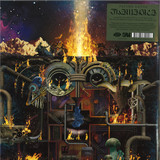
Sein letztes Werk "You're Dead" (2014) bescherte ihm eine Grammy-Nominierung, sein Brainfeeder-Label ist zu einem der innovativsten Klanglabors der Welt avanciert, er co-produzierte Kendrick Lamars mit fünf Grammies ausgezeichnetes Meisterwerk "To Pimp A Butterfly" (2015). Nun veröffentlicht Flying Lotus sein neues Album für Warp: "Flamagra" greift alle kreativen Quantensprünge und innovativen Elemente aus 12 Jahren FlyLo-Karriere auf und denkt sie weiter, größer, epischer und universeller: Hip-Hop, Funk, Soul, Jazz, Electro, IDM, die Ansätze der befreundeten Beatmaker aus L.A., Tribal-Elemente, Polyrhythmen. Aber selbst diese Liste reicht nicht aus, um "Flamagra" auch nur ansatzweise zu verorten, weil es immer wieder ausbricht aus diesem Koordinatensystem. Die Gästeliste liest sich wie ein Traum: Anderson .Paak, George Clinton, Little Dragon, Solange, Tierra Whack, Denzel Curry, Ishmael Butler (Shabazz Palaces), Toro Y Moi, sein musikalischer Stammesbruder Thundercat, ja selbst David Lynch ist zu hören. Der legendäre Regisseur steuert ein paar schaurige Worte bei, eine düstere Erzählpassage, mit der er uns eindringlich warnt: "Fire is coming". "Flamagra" ist die Essenz des letzten Jahrhunderts im Bereich der afroamerikanischen Musik, vollkommen neu und weitergedacht, kollektiv gefiltert und feingeschliffen. Auch wenn Flying Lotus ein Nachkomme seiner ehrwürdigen Großtante Alice Coltrane ist, die mit John verheiratet war (wobei auch Miles und Madlib, Dilla und DOOM als seine Vorfahren gelten dürfen), hat er inzwischen seinen eigenen Kult geschaffen: Eine Gefolgschaft, die alles Geniale aus der Vergangenheit absorbiert und in Bereiche überführt, die sich die genannten Vorfahren nicht mal im Traum hätten ausmalen können. Flying Lotus ist zurück. Fire is coming.

The long-standing collaboration between Fairuz and The Rahbani Brothers and her many appearances in their musical plays helped propel the Lebanese singer to stardom in the Arab world and beyond. This album features highlights from Natourit al Mafatih (The Guardian of the Keys) and is an opportunity to hear Fairuz at the height of her powers before civil war forced her to withdraw from live performances in her homeland for more than a decade.
