Vinyl release of the album from 2023. Black vinyl in a standard sleeve. “out of love in the face of a shadow” is the new album from Credit Electric. Exploring the human unconscious through impressionistic pop vignettes, the album represents a significant evolution of the band’s sound that originally stemmed from limitations put in place by the global pandemic, before blossoming into something altogether new and unexpected. What started to emerge was a body of work that drew upon lo-fi jazz, dub, post-rock, ambient music, 70’s studio experimentation, and 90’s indie rock as much as the rustic folk of their past releases. The resulting album “out of love in face of a shadow” calls to mind influences as disparate as Hiroshi Yoshimura, American Football, Scientist, and Magnolia Electric Co, all the while inhabiting a world completely of their own design. Highly anticipated sophomore album from Credit Electric. Press coverage on recent releases includes reviews and features in New Commute (Albums of the Year), Various Small Flames, Raven Sings the Blues, Psychedelic Baby Magazine, and more. UK/EU Publicity handled by Chris Carr & Mal Smith. “…the band crafts American hymns that peer through fogged glass, tracing the lines of lament in hazy relief…” - Raven Sings the Blues // Albums of the Year - New Commute
Cerca:el mal
- A1: Nuseance
- A2: Du Trik
- A3: Go (Feat. May)
- A4: Haunted House
- A5: El Snorto (Feat. Ruoy Yaw)
- A6: Oldtimer
- B1: Babylon Hills
- B2: Malandragem
- B3: Roy Roy
- B4: The Muted Sound Of Falling Things (Feat. Pb Louison)
- B5: Cyclo
- B6: Daftari Hili (Feat. Imam Ally-Salaam)
- B7: Nunu
- 7: ’ A1. Freispiel
- A2: Oklahoma
- 7: B1. Florida Nails
- B2: Doux
Green Vinyl[25,63 €]
Schwarze Vinyl LP Edition. Inklusive 7’’ Vinyl mit unveröffentlichten Bonus Tracks.
10-Jahre-Jubiläums-Reissue von Twit Ones wegweisendem Album „The Sit-In“ aus dem Jahr 2015. Von vielen Twit-Aficionados als eines seiner besten Werke gefeiert, unterschied sich „The Sit-In“ bei seinem Erscheinen deutlich von seinen vorherigen Alben – und Twits Musik war noch nie leicht vorhersehbar. „The Sit-In“ war die erste Twit-Platte, zu der man Räucherstäbchen anzünden kann, und auch zehn Jahre später hat sie nichts von ihrem Zauber verloren. Mit Sängerin May sowie den Poeten PB Louison und Imam Ally-Salaam. Artwork von Van Lagerstein und Robert Winter. Das 10-Jahres-Jubiläums-Reissue enthält außerdem eine Bonus 7"" mit vier neuen Tracks.
Peter Rehberg is known for his pioneering electronic work with computer software which over time evolved into a modular set up alongside running MEGO and then Editions Mego labels.
Rehberg was a prolific collaborator, with other musicians and with contemporary dance and theatre productions, most notably with French artist and choreographer, Gisèle Vienne with whom he created a series of soundtracks from Showroomdummies, released under the name DACM in 2002 (Showroomdummies MEGO 056), to Crowd in 2017. A collection of Rehberg’s solo works for Vienne was released in 2008 (Work for GV 2004-2008 EMEGO 092). The outfit KTL, with Stephen O’Malley, was initiated by Gisèle Vienne for her work Kindertotenlieder and subsequently made a series of soundtracks for Vienne’s works branching off into a prolific series of live shows. The work Rehberg did for theatre and performance teased out aspects of his practice one may not have encountered in his own solo work as PITA or that of collaborations with other musicians.
Editions Mego is proud to present a previously unreleased theatre soundtrack made for Icelandic choreographer Margrét Sara Guðjónsdóttir, whom Rehberg had a decade long collaboration with until his untimely passing in 2021. The original composition for Liminal States was created by Rehberg for the performance Pervasive Magnetic Stimuli in 2018 and then revisited as a catalyst for the concepts behind Liminal States. This work is based on an ongoing artistic research conducted by the choreographer into altered states of perception through phenomenological embodiment. It is the last in a trilogy dealing with the notion of larger forces that act on us beyond our conscious mind. The trilogy consists of Pervasive Magnetic Stimuli (2018), Boundless Ominous Fields (2024) and now Liminal States (2024).
Rehberg's score for Liminal States is a vast canvas of spectral ambience at once tangible and unfathomable in its constantly shapeshifting lysergic dread. The results are a psychological journey through the mental effects of sound on space and subsequently the mind. The first part presents cascading waves of shimmering electronics laying the groundwork for the second part where the psychological illusion splinters into all manner of sonic effects taking the listener on a deep mental voyage. If references are witnessed the late period long form hallucinatory works of Coil, such as Time Machines and Constant shallowness leads to evil, are amongst a similar mind message delivered here. Unlike any other release in Rehberg’s output Liminal States is a single long form work which, despite the form, retains Rehberg’s idiosyncratic sound vision.
Guðjónsdóttir and Rehberg’s collaboration blurs that relationship into a greater force which truly enables the theme of liminal states to unfold in a brave new fashion. Rich in timbre and sonic invention this is powerful work easily holding its own outside of the intended performance whilst still complimenting the missions statement entirely. This profound collaboration has the cumulative effect where the concept and soundtrack are one and may be one of the strongest works in the entire Rehberg canon.
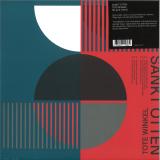
In spring 2022, Sankt Otten released their album “Symmetrie und Wahnsinn”, and now the next record is ready to enlighten our maltreated minds. “Tote Winkel” (Blind spots) is once again part of an album series with a geometric context, both creatively and musically.
Stephan Otten and Oliver Klemm made productive use of 2021, which has been decelerated to the maximum by Corona. For the first time, an external studio was booked (Mühle der Freundschaft, Bad Iburg) and the pool of analog synthesizers and other sound generators there was dusted off. Sankt Otten came up with the master plan to first free the spirit of 50 years of German electronic music trapped in the antiquated keyboards and oscillator housings, then to dismantle it, turn it inside out and reinterpret it. Echoes of music from Düssel- dorf are joined by sounds familiar from the Weserbergland, or mystical, sublime arcs of sound and, of course, the sequences typical of the Berlin School - whether side by side or interwoven. In a departure from the usual way of working, the majority of the tracks were created in the studio and in part from improvisations, which makes “Tote Winkel “ the most organic material we have heard from Sankt Otten to date.
New York-based Rafael Anton Irisarri mastered “Tote Winkel”, as he has done on productions by Biosphere, Ryuichi Sakamoto, Tycho, Terry Riley, Fennesz and many more. As part of the series of graphic covers, this extraordinary die-cut artwork was also designed by Daniel Castrejon. The vinyl version comes in a die-cut cover and colored vinyl, the CD in an elegant cardboard slipcase.
The Osnabrück duo Sankt Otten, founded in 1999, have been releasing on DENOVALI since 2009. “Tote Winkel” is their 14th album of timeless (instrumental) music. The band has dedicated itself to the holy trinity of Krautrock, Ambient and contemporary Elecronics.
Swan Song
The vinyl LP at the heart of this éthiopiques 31 tracks 2 to 11 was one of the very last vinyl records ever released in Ethiopia. But above all it represents, we felt, the absolute masterpiece of the Ethiopian Groove – the Swan Song of Swinging Addis. The album leaves a clear idea for posterity of the level of sophistication and mastery that modern Ethiopian music had achieved, before being crushed under the Stalino-military heel of the Derg – as the bloody revolution that was unfolding came to be called.
Ethiopia1976.
The Revolution that broke out in February 1974 rolled on in a ruthless march. The whole of Ethiopian society was utterly stunned. The bouquets of flowers handed joyfully to the first tanks of the coup d'état were to wilt very rapidly. From September 1976 to February 1978, 18 months of Red Terror (the name given by the junta itself) spilled blood throughout the country. This fratricidal conflict took its heaviest toll among students and youth. The shift from feudalism to a cruel and primitive Stalinism left the country's citizens deeply traumatised, and snuffed out any pretence of activism, whatever the sector of society. This ice age was to last for seventeen long years.
ሙሉቀን፡መለሰ Mulukèn Mellèssè Muluqän Mälläsä
It was three tracks by Muluken that served as the opener for éthiopiques-1 more than 25 years ago. Seven more tracks appeared on éthiopiques-3 and 13, all accompanied by The Equators, which was soon to become the Dahlak Band.
The first track, Hédètch alu, also the very first piece that Muluken ever recorded, left audiences both unsettled and amazed. Reflecting the singer's extremely young age (he was just 17 at the time), this angelic voice mystified many, who thought they were in fact listening to a feminine voice. He was not yet 22 when he released his last vinyl record in 1976 with Kaifa Records (KF 39LP), one of the very last to be issued in Ethiopia, before the cassette tape became the dominant medium for music distribution – and before the new revolutionary regime put a stop to all independent musical life, via an unspeakable barrage of prohibitions and other persecutions.
Mulu qèn, literally, “A well filled day”. This tender maternal intention wasn't enough to ward off the cruelty of fate. His mother's premature death drove Muluken to leave his native Godjam, in northeast Ethiopia, to live with an uncle in Addis Ababa. Born Muluken Tamer, he took his uncle's last name – Mèllèssè.
The spelling Muluken appeared in his administrative records. Transcription of Amharic to the Latin alphabet, both in Ethiopia and for scholars, gives rise to controversies and quibbles that can never be neatly settled. French allows for a closer approximation of the original pronunciation, thanks to its battery of accent marks, confusing as they may be to anglophones.
Between rather accommodating administrative record-keepers and the various versions that pop up in interviews given by the artist, Muluken's year of birth oscillates between 1953 and 1955…
1954? One thing is certain: the artist's talent made itself known very early indeed, because he got his start in 1966-67, at the age of 13 or 14. Photos from the period attest to his extreme youth. It's a strange sort of initiation for a very young teenager to become a sensation in the heart of Addis's nightlife at the time, Woubé Bèrèha – the Wilds of Woubé. And what's more, in the club of the Queen of the Night, the Godjamé Assègèdètch Alamrèw herself, the very same that was portrayed by Sebhat Guèbrè-Egziabhér in his novel-memoir Les Nuits d’Addis Abeba2… The legendary female club owner who is remembered to this day by the capital's ageing boomers.
Muluken first tried his hand at the drums, before he grabbed the microphone. He emigrated briefly to the Zula Club, across the street from the old Addis Post Office, one of the ground-breaking bars of the burgeoning musical scene, before joining the Second Police Band in 1968, for around three years. He spent a few months with the short-lived Blue Nile Band founded by saxophonist Besrat Tammènè. As the musical scene grew increasingly successful, and pulled slowly but decisively away from its institutional ties, Muluken released his first 45rpm single in February 1972 (Amha Records AE 440). It was included in two LP Ethiopian Hit Parade compilation albums in September of the same year. All in all, Muluken released eight two-track 45s and the same number of original cassette tapes between February 1972 and 1984, the year that he departed for permanent exile in the USA. After converting to Pentecostalism in 1980, Muluken gradually abandoned all secular musical activity. In 1985, at the end of a concert in Philadelphia, he decided to quit concerts and recording for good. Mèlakè Gèbré, the historic bass player from the Walias band who was playing with him that night, recalls that everything appeared so irredeemably diabolical in Muluken's eyes, that it was to be the end of his contribution to Ethiopian Groove.
The end of the story, the beginning of a legend.
Dahlak Band, forgotten by History
Aside from his personal history and vocal talents, it must be remembered that Muluken Mèllèssè was one of the biggest names in the musical innovations that marked the end of the imperial period. These éthiopiques aim to convince those who are just discovering this hidden gem... As for Ethiopians themselves, they are to this day captivated by this singular and atypical figure in the Abyssinian pop landscape – even though he withdrew from public life some 40 years ago. Incorrigible devotees of poetic twists, of more or less hidden meanings, Ethiopians appreciate above all the care Muluken took in choosing his lyrics and the writers who penned them, such as Feqerte Haylou, Alemtsehay Wodajo and, here, Shewalul Mengistu (1944-1977). Love songs, written by women, a far cry from the conventional drivel that pleases sappy sentimentalists.
Muluken is equally acclaimed for his perfectionism when it came to music, the opposite of the overly casual approach that is all too common. He remained a faithful partner of musicians who came from a lineage that borrowed from several inventive and pioneering bands (Venus, Equators, Dahlak). Amongst them were certain artists who began their musical lives with Nersès Nalbandian at the Haile Sellassie Theatre and who come of age in around 1973 – at just the wrong time, you might say. Among them were the pillars Shimèlis Bèyènè (trumpet), Dawit Yifru (keyboards) and Tilayé Gèbrè (sax & flute). Most notably Tilayé Gèbrè, certainly one of the most important musicians, composers and arrangers of his generation, of the end of the imperial era, and of the early years of the Derg.
It was only in 1981 that a miraculous opportunity arose for Tilayé to escape the Stalinist paradise of the dictator Menguistou Haylè-Maryam. Once again it was Amha Eshèté (1946-2021) who provided a solution. The spirited and courageous producer, who had been in exile in Washington since 1975, succeeded, thanks to his incredible perseverence, in bringing the Walias Band to the USA. It was, in fact an extended Walias Band comprising ten musicians3, six of whom chose to slip away after a few concerts and the recording of an LP (The Best of Walias, WRS 100). Tilayé Gèbrè was one of these. He has been living in the USA ever since. There he joined the then-nascent Ethiopian diaspora, which lived largely unto itself, and was making only very modest headway in the American musical market. It seems unfair that Tilayé Gèbrè and the Dahlak Band were not able to benefit earlier from the public recognition that they do deserve.
A similar draining away of the top-rate talents would lead to the reorganization of the major groups of the “Derg Time”. The remaining artists spread themselves around between Ibex Band (renamed Roha Band), Ethio Star Band and a remodeled Walias Band. That spelled the end of the Dahlak Band.
With this record, produced by the essential Ali Abdella Kaifa a.k.a. Ali Tango, we can appreciate everything that the Derg not only destroyed, but also prevented from flourishing. This gem of Ethiopian-style afrobeat came out in 1976 (and, by way of a parenthesis, before the FESTAC 1977 in Lagos, which was attended by an impressive delegation of Ethiopian musicians — although Fela was already personna non grata in his own country). Despite everything that might distinguish this ethio-groove from Fela’s music – no colonial axe to grind, no question of political confrontation with the authorities, no claims to negritude or Africanism for the Ethiopian musicians, and less extrovertion! –, this LP fits beautifully into the saga of intense and electrified soul of the new “African” groove that Fela and Manu Dibango embodied so well from that point onwards.
In restoring this record to its place in the afrobeat epic, it can be seen that, if nothing else, the timeline bestows a legitimate pedigree and a historical primacy to works that had no international impact when they were originally released.
Warning! Masterpiece!

Our journey through “Música Para Boliche” literally “music for the club” from Argentina’s underground scene doesn’t stop. We dug even deeper, right into the ’90s.
Four tracks plus one, all visionary even at the time of their release. Once again, you can feel the magical touch of the Italian and Argentine DJs who worked on it.
Jack Bulgaro did his part, bringing home an instrumental unreleased version of Podés Seguir Sin Arriesgarte, taken from the album Undermalabia, produced by El Signo, pioneers of electronic music in Latin America.
The version will be officially released for the first time, vinyl only, by Maledetta Discoteca Records.
- A1: The Return To Consciousness - Intro
- A2: Human Aberration
- A3: Pernicious Anguish
- A4: Incipience To The Butchery
- A5: Disrupting The Inhabitants
- A6: Decepted By The Cross
- A7: The Day Of Maturity
- A8: Beyond The Unknown
- A9: Immortal Souls
- A10: Decepted By The Cross
- A11: Maze Of Existence
- A12: Beyond The Unknown
- B1: The Day Of Maturity
- B2: Immortal Souls
- B3: Serenade For The Dead - Outro
- B4: The Dead
- B5: Angel Of Distress
- B6: Impulsive Necroplasma
- B7: The Gathering - Intro
- B8: A Curfew For The Damned
- B9: Everlasting
- B10: When All Is Said
- B11: The Departure - Outro
- C1: Human Aberration
- C4: Disrupting The Inhabitants
- C5: Decepted By The Cross
- C6: Maze Of Existence
- C7: Beyond The Unknown
- D1: The Day Of Maturity
- D2: Immortal Souls
- D3: Serenade For The Dead
- D4: The Dead
- D5: Angel Of Distress
- D6: Impulsive Necroplasma
- C2: Pernicious Anguish
- C3: Incipience To The Butchery
Zum ersten Mal überhaupt ist eine anzügliche Auswahl von EDGE OF SANITYs obskuren, frühesten Aufnahmen offiziell auf 2LP (23 Tracks) Unter dem Titel "Elegy - Chapter I" wurden die frühen (Promo-, Pro-be- oder Studio-) Demos "Euthanasia" (1989), "The Immortal Rehearsals" (1990), "kur-nu-gi-a" (1990), "The Dead" (1990) und "Dead But Dreaming" (1991) von Songwriter/Frontmann/Produzent Dan Swanö (Opeth, Dissection, Bloodbath) vom Friedhof in die Leichenhalle zur Wiederbelebung gebracht. Alle fünf Demos wurden von Swanö neu gemastert, wobei die 13 Tracks von "Euthanasia", "kur-nu-gi-a" und "The Dead" für die Bonus-Disc auch nekromantische Remixe erhalten haben. Ausgestattet mit einem brandneuen, handgezeichneten Cover des Künstlers Mark Rudolph (Carcass, Undeath), ist "Elegy - Chapter I" von der alten Garde für alle Wachen zum Wiedererleben oder Neuentdecken. EDGE OF SANITY waren nicht immer an der Spitze des Death Metal. Nein, auf "Elegy - Chapter I" haben die Schweden tatsächlich Death Metal geblutet. Dies ist eine Sammlung von schwedischem Underground-Death Metal der alten Schule in seiner besten Form!
- Ich Nehme Das Amt Nicht An
- Ändern Wir Je Den Akkord?
- Gnzrznd
- Wenn Es Liebe Ist
- Open Water
- Ich Habe Nichts Gemacht (Außer Weiter)
- Es War Nur Ein Traum
- Easy Auf Rezept
- Fan Von Irgendwas
- Immer Noch Sprachlos
Mit „Wenn es Liebe ist“ veröffentlichen Die Sterne ihr neues Studioalbum – ein Werk, das die Band einmal mehr als scharfsinnige Chronisten unserer Zeit zeigt. Zwischen Indiepop, Post-Punk und subtiler Elektronik verbinden sich gesellschaftliche Beobachtungen mit persönlicher Reflexion, Humor mit Haltung. Die Songs klingen frisch, direkt und unerwartet vielseitig – mal politisch, mal romantisch, immer mit dieser unverwechselbaren Sterne-Handschrift.
Neben deutschen Texten finden sich erstmals auch englischsprachige Stücke sowie zwei Songs mit Dyan Valdés am Leadgesang. Das Ergebnis ist kein Rückblick, sondern ein mutiger Schritt nach vorn – kompromisslos, lebendig und voller Energie.
Zur Veröffentlichung geht die Band auf große Tournee durch Deutschland, Österreich und die Schweiz – inklusive eines besonderen Konzerts mit dem Filmorchester Babelsberg im Potsdamer Nikolaisaal.
- A1: Nuseance
- A2: Du Trik
- A3: Go (Feat. May)
- A4: Haunted House
- A5: El Snorto (Feat. Ruoy Yaw)
- A6: Oldtimer
- B1: Babylon Hills
- B2: Malandragem
- B3: Roy Roy
- B4: The Muted Sound Of Falling Things (Feat. Pb Louison)
- B5: Cyclo
- B6: Daftari Hili (Feat. Imam Ally-Salaam)
- B7: Nunu
- 7: ’ A1. Freispiel
- A2: Oklahoma
- 7: B1. Florida Nails
- B2: Doux
Black Vinyl[25,63 €]
10-Jahre-Jubiläums-Reissue von Twit Ones wegweisendem Album „The Sit-In“ aus dem Jahr 2015. Von vielen Twit-Aficionados als eines seiner besten Werke gefeiert, unterschied sich „The Sit-In“ bei seinem Erscheinen deutlich von seinen vorherigen Alben – und Twits Musik war noch nie leicht vorhersehbar. „The Sit-In“ war die erste Twit-Platte, zu der man Räucherstäbchen anzünden kann, und auch zehn Jahre später hat sie nichts von ihrem Zauber verloren. Mit Sängerin May sowie den Poeten PB Louison und Imam Ally-Salaam. Artwork von Van Lagerstein und Robert Winter. Das 10-Jahres-Jubiläums-Reissue enthält außerdem eine Bonus 7"" mit vier neuen Tracks.
- Vinyl 1: Speedy
- Vinyl 2: Sacrifice
- Vinyl 3: Ampyre
Schon in den späten Achtzigern waren Teile von Ampyre in Gruppen wie Tindale Creek, Silk´n´Steel oder Dark Haze aktiv, die Veröffentlichungen vorweisen konnten. Mit Sängerin Elke Grötzinger, die auch heute noch erfolgreich mit FRONTROW WARRIOR die Bühnen rockt, hatte man dazu einen perfekten Fang gemacht. Somit hatte man im Raum Stuttgart direkt einen guten Start und volle Häuser, trotz starker Konkurrenz.
Für das im Marquee Studio produzierte 5-Track-Demo griff man tief in die Tasche, was zu einem dementsprechend professionell klingenden Ergebnis führte. Das musikalische Können und ein für diesen Stil perfektes Songwriting hätten eigentlich für den großen Knall sorgen müssen, doch 1991 änderte sich die musikalische Landschaft und auch der melodische Metal musste gegen Grunge, Crossover, sowie Thrash- und Death Metal antreten. Das Label Golden Core machte diese Aufnahmen erstmals zugänglich und die Reviews in Magazinen wie Rock Hard oder Break Out waren traumhaft. Aus der Schweiz stammten Sacrifice, die sich 1984 mit einer selbstproduzierten Single vorstellten und dann einen Deal mit dem GAMA Musikverlag bekamen. „On The Altar Of Rock“ erschien 1985 auf dem GAMA-Label Camel und platzierte die Band in der damaligen Heavyrock-Szene.
Die Mischung aus melodischem Hardrock und Heavy Metal macht den Reiz dieses Albums aus. Geschicktes Songwriting mit vielen Hooklines paart sich mit dem spielerischen Können.
Die Wiederauflage auf Golden Core enthält als Bonus die zwei raren Tracks der 12“ Single und ist remastert. Ende der Siebziger befanden sich The Teens auf dem Siegeszug und dominierten die Jugendhefte wie die Bravo. Natürlich sollte es nicht lange dauern, bis man Konkurrenz bekam. Speedy waren eine waschechte Band, die beim Musizieren in ihrem Proberaum entdeckt wurde. Kurze Zeit später wurde die erste Single „Willy Is Back“ von Didi Zill (Birth Control, The Nighthawks) produziert, der auch als Fotograf für die Bravo bekannt war. Man schaffte es ohne Umweg in die Kultsendung Ilya Richer´s Disco. Dies führte zur ersten und leider einzigen LP „Much Too Young To Rock´n´Roll“ und zur gleichnamigen Single mit dem Knaller „Fight Like A Fighter“ auf der B-Seite.
Beide Tracks schafften es erneut ins TV (eine Ferienshow mit Karl Dall und zum zweiten Mal die Sendung Disco) – das Thema Speedy brodelte! Leider entschieden sich die Eltern der minderjährigen Musiker gegen eine Tournee mit Def Leppard, was die Karriere beendete. Die Wiederauflage enthält als Zusatz auch die Songs, die es nur als Single gab.
- A1: Ain't That Loving You (Feat. Chris Murray)
- A2: I Only Have Eyes For You (Feat. Chris Dowd & Tippa Lee)
- A3: Your Old Stand By (Feat. Trish Toledo)
- A4: Are You Lonely For Me, Baby (Feat. Malik Moore)
- A5: Hercules (Feat. Alex Désert & The Lions)
- A6: You Don't Know Me (Feat. Eli "Paperboy" Reed)
- B1: After Laughter (Feat. Destani Wolf)
- B2: Cramp Your Style (Feat. N'dea Davenport)
- B3: Got That Will (Feat. Gina Murrell & Ranking Joe)
- B4: Live & Let Live (Feat. Miles Tackett)
- B5: Tell It Like It Is (Feat. Asdru Sierra)
- B6: Didn't I (Feat. Hollie Cook)
- B7: If You Let Me (Feat. Jr Thomas & The Volcanos)
- A1: Rone - The Dolphin Ambassador
- A2: Mézigue & Swooh - Broken Roll To Venice
- A3: Kink - Give Me
- B1: Belaria & Madben - Into The Void
- B2: Oniris & Benjamin Rippert - Sonate
- C1: Legowelt & Cuften - Liar
- C2: Zaatar & Trunkline - Come Into The Light
- C3: Scan X & Electric Rescue - Lost In Time
- D1: Manu Le Malin & Kmyle - Little Big Man
- D2: Célélé & Théo Muller - Drum And Drift
Astropolis Records — the label born from the legendary electronic French festival — celebrates a decade of electronic devotion with a generous and deeply emotional anniversary compilation - a bit late, but never short on flair.
This double vinyl gathers the many faces of the Astropolis galaxy: in-house artists, long-time companions of the festival, and rising voices from a perpetually vibrant French scene. Across 18 artists, listeners are invited on a sonic journey where rave legacy, electronic dreamscapes, and collective fervor intertwine — true to the DNA of a festival that’s never known boundaries.
The record opens with grace and wonder courtesy of Rone, whose electronic touch channels both the intimate and the infinite. Between electronica and downtempo, The Dolphin Ambassador bathes in luminous melancholy, offering a moment of calm before the storm. In the same contemplative vein, we’re proud to unveil one of the first productions from Célélé alongside Théo Muller: Drum and Drift, a subtle blend of dubby vibrations and sunlit textures.
Astropolis has always thrived on happy collisions — and this compilation is proof of it. The unlikely meeting between Mézigue and Swooh sends house spiraling into a g-tech vortex on Broken Roll To Venice, a playful burst of groove, hybrid energy, and cheeky mischief. The same spirit of alchemy fuels Belaria & Madben, whose Into The Void burns bright as a 90s rave-meets-EBM anthem wrapped in hypnotic trance. Zaatar & Trunkline bring raw intensity to Come Into The Light, a sweaty, visceral banger at the crossroads of techno, dark disco, and EBM.
French techno pillars Scan X & Electric Rescue deliver a masterclass in elegant machine soul on Lost In Time. When Manu Le Malin teams up with Kmyle, the result is as sharp as it is cinematic: Little Big Man pulses with dramatic tension, balancing raw emotion and restrained fury. Elsewhere, Oniris & Benjamin Rippert reconnect with the melodic techno spirit of the label’s early days on Sonate, guided by a craftsman’s sense of harmony.
For the machine lovers, Legowelt & Cuften resurrect the spirit of early electroclash on Liar, a carnal fusion of analog synths and DIY attitude. And for the diehard dancefloor devotees, KiNK finally releases a cult track from his live sets: Give Me, a breakbeat-meets-vintage-house stormer tailor-made for those late-night sweats.
This anniversary compilation reaffirms the label’s openness to new generations and hybrid sounds, while paying tribute to the techno roots that shaped its foundation. Like the festival itself, it embodies sincerity and collective energy — a small manifesto linking generations, aesthetics, and territories, celebrating roots without nostalgia and the future without bending to trends.
Wenn du zehn Jahre in die Vergangenheit reisen könntest, was würdest du deinem jüngeren Ich sagen wollen? Das war eine Frage, die sich Khruangbin selbst stellten, als sie sich dem zehnjährigen Jubiläum ihres Debütalbums näherten - dem einstigen Kultklassiker, der heute als genreprägend gilt: The Universe Smiles Upon You". Wenn wir zurückgehen und uns selbst sagen könnten, wie viel nach diesem Album auf uns zukommen würde, was würden wir feiern wollen?" fragte Laura Lee, Bassistin, Sängerin und Gründungsmitglied der Band. Stattdessen dachten sie: Lasst es uns noch einmal machen." The Universe Smiles Upon You ii" wurde vom 4. bis 6. Januar 2025 in derselben Familien-Scheune des Gitarristen Mark Speer aufgenommen, an denselben Tagen, an denen TUSUY vor zehn Jahren erstmals entstand. Obwohl die Bedingungen dieselben waren - Schmutzboden, brutal kalt, minimale Schalldämmung, alle Aufnahmen live - sind die Songs es nicht. Sie wurden neu angegangen, einige stärker verändert als andere, mit der eingefangenen Blitz-in-der-Flasche"-Energie des ursprünglichen Albums, während gleichzeitig entdeckt wurde, was diesmal einzigartig sein würde, in dieser Phase des Bandlebens. Das Ergebnis bewegt sich wie Wellen auf dem Wasser über zehn hypnotisierende Tracks, die Scheune erzeugt ein Gefühl von Weite, Gelassenheit und kreativer Freiheit, die nahegelegene Tierwelt ist hörbar (achtet auf die Vögel bei August Twelve ii"), ebenso das Knarren und Klappern der Scheune. Es ist ein Geflecht aus kleinen Bewegungen in nuancierten Arrangements, das langsam das neue Leben, die Geschichten und den Charakter von jemandem enthüllt, den man nach zehn Jahren wieder wie zum ersten Mal trifft.
- A1: Down
- A2: Run It Up
- A3: Put Yo Hands Up
- A4: Let's Get Down
- A5: Sad Songs
- A6: Set Me Free
- A7: Room To Fall
- B1: Angklung Life
- B2: Earthquake
- B3: Falling To Pieces
- B4: Here We Go Again
- B5: Rescue Me
- B6: Proud
Die Trilogie ist komplett, und zum ersten Mal überhaupt erscheint Marshmellos „Joytime III“ auf Vinyl in einer speziellen 10-Jahres-Jubiläumsausgabe, die eines seiner bisher ambitioniertesten und kollaborativsten Projekte feiert. Als entscheidender Moment in der Joytime-Saga hat dieses Album den Mello-Sound in neues, mutiges Terrain vorangetrieben und hochoktanige EDM mit emotionalen Melodien und festivaltauglicher Energie vereint.
Von „Rescue Me“ mit A Day to Remember bis hin zur explosiven Trap-Hymne „Room to Fall“ (mit Flux Pavilion und Elohim) – dem unbestreitbaren Smash-Hit des Albums – ist Joytime III ein Kaleidoskop des Sounds. Marshmello versammelt eine All-Star-Besetzung, darunter Slushii, YULTRON, Wiwek, Crankdat und TYNAN, zu einer genreübergreifenden Feier der Einheit, Kreativität und puren Klangfreude.
Joytime III ist ein kraftvoller Abschluss der Joytime-Reihe, ein mutiges, emotionales und mitreißendes Statement, das nun zum ersten Mal auf Vinyl verewigt wurde.
Feiern Sie 10 Jahre musikalische Entwicklung, Zusammenarbeit und Mello-Magie mit dieser unverzichtbaren Ausgabe eines modernen Dance-Klassikers.
- A1: Know Me
- A2: Summer
- A3: Find Me
- A4: Take It Back
- A5: Bounce
- B1: Blocks
- B2: Show You
- B3: Want U 2
- B4: Home
- B5: Keep It Mello (Feat. Omar Linx)
Zum ersten Mal überhaupt ist Marshmellos bahnbrechendes Debütalbum „Joytime“ auf Vinyl erhältlich. Diese Jubiläumsausgabe feiert 10 Jahre euphorische Beats und genreübergreifende Energie und würdigt das Album, das der Welt Marshmellos charakteristischen Sound vorgestellt hat.
Von dem boomenden Trap-Track „Know Me“ bis hin zu „Want U 2“ ist „Joytime“ eine Meisterklasse in melodischer Tanzmusik, die es wagt, mutig zu sein. „Joytime“ enthält auch die Debütsingle „Keep It Mello“ mit Omar Linx, eine Crossover-Hymne, die bis heute zu Marshmellos ikonischen Werken zählt.
Feiern Sie das Album, das ein globales Phänomen ausgelöst hat.
„Joytime“ auf Vinyl ist mehr als ein Sammlerstück, es ist ein Stück Elektronik-Musikgeschichte.“
- Vinyl 1
- Morbid Jester - Until The Battle Is Won
- Vinyl 2
- Sphinx - Here We Are
- Vinyl 3
- Starstruck- Thru´ To You
MORBID JESTER „Until The Battle Is Won“ - Dieses Kleinod deutscher Metalkunst erschien 1994 auf CD und wurde von S.L. Coe in den Dust Studios produziert. Eben jener dürfte eingefleischten Metalfans noch als Sänger auf der zweiten LP von ANGEL DUST, sowie von SCANNER ein Begriff sein.
Rund 2000 CDs konnten von der Eigenproduktion (!) abgesetzt werden, darunter auch viele Exemplare in Griechenland und vor allem Japan, wo die Band ein Geheimtipp wurde. Das Coverartwork stammt von niemand geringeren als Ken Kelly (Manowar, Kiss). Auftritte mit u.a. SAXON waren nur eine logische Folge. MORBID JESTER vereinen auf „Until The Battle Is Won“ Elemente des German Metal mit einer US-MetalPräzision, was für eine ganz eigene Mischung sorgt. Die transparente und dennoch druckvolle Produktion mit einem natürlichen Drumsound, wie man ihn heute oft vermisst, lässt das Songmaterial glänzen. Das respektvolle Remastering für diese Wiederveröffentlichung bringt all die Vorteile noch ein Stück weit nach vorne. Der Stilmix aus Progressive Rock und Heavy Metal wurde von Bands wie Dream Theater kultiviert, aber keinesfalls erfunden. In ihrer Konsequenz waren SPHINX im Jahr 1981 ihrer Zeit um einige Jahre voraus. Die Band aus dem Raum Stuttgart, 1977 gegründet, bestand zum größten Teil aus italienischen Gastarbeitersöhnen, was der Gruppe einen internationalen Flair verlieh. „Rock Made In Italy“, wie man auf der Originalhülle von „Here We Are“ lesen kann, war also nur ein Promotiongag, oder eben nur die halbe Wahrheit.
Ganz besonders auch deshalb, weil der Gitarrist Thomas Metzger niemand Geringeres als Tommy Newton ist, der später mit der Band Victory, anschließend auch als Produzent bekannt wurde. „Here We Are“ erschien 1981 bei Peak, einem Label der Firma GAMA, die zu diesem Zeitpunkt noch ganz neu im Geschäft war und ein solch erstklassiges Produkt noch nicht durchsetzen konnte. 1985 erschien die LP als „Burning Lights“ ein zweites Mal. Mausoleum und auch Camel (ebenso ein GAMA Label) versuchten mit einem typischen Heavy Metal-Coverartwork und umgestellter Tracklist dem Album eine zweite Chance zu geben. 1984 veröffentlichte die Band STARSTRUCK aus Karlsruhe ihr einziges Lebenszeichen: Die LP „Thru´ To You“. Aufgenommen wurde die Platte im Spygel Studio mit Engineer Batze Kramer. Eben dieser hat auch kultige Scheiben von Bands wie Tyrant, Stormwitch, Bloody Six, Vampyr, Gravestone, Restless oder Necronomicon veredelt. „Thru´ To You“ ist purer Zeitgeist und dazu passt auch das
Cover, welches beim genauen Hinschauen viel Humor beweist. Stilistisch wechselt man geschickt zwischen Hardrock und Heavy Metal.
- Anders Gewollt
- Schwer
- Heute Abend
- Irgendwas Mit Wiederholung / Feat. Hannes Wittmer
- Meine Schuld/Deine Schuld
- Du Bleibst
- Unter Meiner Haut
- An Der Bar
- Wut / Feat. Tilman Von Tigeryouth
- Zuhause
- Beruhig Dich, Du Stirbst Nicht
"es ist nie zu spät für frühstück" ist das erste Album der Hamburger Musikerin jule. Ein Satz, der so beiläufig klingt, dass man fast übersieht, wie viel darin steckt. Zwischen Müdigkeit und Hoffnung, Alltag und Überforderung erzählt jule von dem Moment, in dem man weitermacht, obwohl längst Mittag ist. Von dem Drang, trotzdem aufzustehen, auch wenn nichts so läuft, wie man es geplant hatte. Nach mehreren Singles und der Debüt EP "Im Regio weinen" (Sommer 2024), deren Songs zwischen Unsicherheit und Wut pendeln, öffnet die Mittzwanzigerin jule jetzt ein neues Kapitel: Zum ersten Mal auch mit Band. Was früher allein mit Gitarre begann, ist gewachsen. Der Sound ist größer geworden, bleibt aber nahbar: Ehrlich, manchmal zärtlich, manchmal laut. Die elf Songs bewegen sich zwischen Melancholie und Aufbruch, zwischen Gitarre und Klavier. Sie handeln von Beziehungen die kippen, von Überforderung und dem Versuch, sich selbst auszuhalten. Von der Frage was bleibt, wenn Sicherheit fehlt. Produziert und aufgenommen wurde das Album von Alexander Kallenberg im Poolhaus Tonstudio/Hamburg, gemastert wurde es von Raphael Rasmus (u.a. Captain Planet, Matula, Deutsche Laichen) im Studio Gisela/Mühlheim am Main. Die Band bringt eine neue Tiefe und Energie in die Songs, ohne den Raum zu nehmen, die jules Texte brauchen."es ist nie zu spät für frühstück" erscheint bei Zeitstrafe und markiert für jule mehr als nur ein Langspiel-Debüt: Es ist eine Bestandsaufnahme zwischen Erschöpfung und Anfang. Kein Optimismus-Album, eher eins für die Möglichkeit, um überhaupt wieder aufzustehen.
"Ray Fernández is a name that cannot be forgotten when we talk about the new generation of Cuban singer-songwriters.
"The current moments the world is going through are reflected in his lyrics. What better for this artist than to be accompanied by the Zanja All Stars! Ray Fernández, accompanied by the Zanja All Stars under the direction of Julio Padrón, make a formidable combination. This allows us to see new shades by blending his lyrics with a selection of the best musicians in Cuba today.
"The social and political issues shaking the world right now are perfectly reflected in his work, which, like all songs, can be interpreted in different ways. Ray’s lyrics become a bridge that should foster understanding between different sides of thinking, where the most important bridges are formed by art.
"The largest of the Antilles, Cuba, is one of the few places in the world where such revolutionary music can emerge. His lyrics deserve to be heard at a time when the world needs people unafraid to express ideas and willing to give everything."