First heard by global audiences on Sahel Sounds' Music from Saharan WhatsApp series, Malian guitar hero Bounaly (the stage name of Ali "Bounaly" Traore) makes his full-length debut with "Dimanche à Bamako" ("Sunday in Bamako"). Recorded live on location, the music on "Dimanche à Bamako" is a mix of regional favorites, traditional standards, and originals. Long songs with looping rhythms, pounding kick, and electric shredding guitar, punctuated by shout outs to the guests of honor. A raw and frenetic take on Northern Mali desert sound, playing for the diaspora at a Bamako wedding.
Search:el mal
Most of Gen X-ers who grew up in the mid-1980s Indonesia must have seen Soedjarwoto Soemarsono, known with his nom de guerre “Gombloh” performing on a state-run television station, playing some of his biggest hits from that era, pop gems like “Kugadaikan Cintaku (I Pawn Off My Love)”, “Setengah Gila (Half-Crazy).”
But of course, it is not fair to judge Gombloh only from these hits. Dig deeper and you will find buried treasure in his early stuff from Indra Records, and there are many of them.
His album with the band Lemon Tree’s Anno ‘69 (yes, that’s the name of the band) is all remarkable, but what he did for Chandra Records was no less spectacular. How can you go wrong with songs like “Kebyar-Kebyar”, the unofficial national anthem for Indonesia, dan “Berita Cuaca” one of the better epic songs in a catalogue full of epochal songs? These were all long out of print and in our journey to source the original master for these albums we met Bob Djumara of Nirwana Records, the Surabaya, East Java-based label which broke Gombloh into the mainstream in the mid-1980s. Almost all albums Gombloh recorded for his early labels, Indra Records and Chandra Records were critically acclaimed, but commercially they bombed, big time. Nirwana Records came up with an ingenious plan. What if they recorded Gombloh performing live and release it as is. After all, the first song in Gombloh debut record Nadia & Atmospheer is him strumming on his guitar backed by the cheering of a crowd, who could be heard going wild when he hurled that epithet “bastard” at the end of the song
The end result is a brilliant recording which despite being recorded live the sound quality so pristine leading many to doubt the claim of being live. Regardless, Nirwana shipped a decent number of units and Gombloh could buy his first car, a Katana Jeep, with money from the royalty.
One of the best things about Live Gila is its perfect sequencing, beginning with Gombloh’s social commentary on the rich’s debauched lifestyle of preying on young boys and girls, one of the most popular subjects allowed by the censoring machine of the New Order authoritarian government. The second song “Untuk Persada” is a soaring ode to the nation. For this song, Gombloh could be heard drawing his inspiration from The Police, which was undoubtedly popular in the early 1980s, even in a faraway port city like Surabaya.
Listening to this record as a whole (we omitted the last song from the original master tape “Bagimu Negeri” which sounds too jingoistic), we could not help but point to some of similarities it has with Bob Dylan’s Blood on the Tracks. Not a single composition in this record sound indigenous (the Malay-influenced rock of Panbers or Koes Plus come to mind); they all sound modern and effortlessly catchy, and had it not been for the language, this album could be mistaken for a musical output from someone growing up in Laurel Canyon or Southern France.
There are only limited copies of vinyl records in the second-hand market today available for Gombloh music, if at all. For his ardent fans, they have to scavenge for old cassettes to continue to be able to enjoy his music and have to pay top dollar for that. In Indonesia, where he was a superstar in the early 1980s, Gombloh was largely forgotten. With this project, we can only hope that the time is ripe for Gombloh to reemerge and now, more than ever, his music could speak to a bigger audience.
Since their formation in 1977 Mark Perry’s group Alternative TV have moved far away from their more direct punk rock beginnings into all manner of other areas of music that have sometimes themselves drawn from improvisation, free jazz, industrial and electronic music. On Direct Action, Alternative TV’s first studio album since Opposing Forces in 2015, we are presented with six instrumental tracks which steadily rip apart all expectations as they shed all allusions to rock music in favour of the kinda sonic mutilations that once helped 1979’s classic (and Nurse With Wound list endorsed) Vibing Up the Senile Man (Part One) stumble into weird and wonderful shapes. Direct Action marries guttural electronics to sounds most artists would consign to the bin and through Perry’s long perfected mastery of pulling together disparate strands to create something entirely alchemical and invigorating delivers a unique stamp to the ATV story. With the help of longtime collaborator Dave Morgan alongside the input of Gareth Matthews, Ruth Tidmarsh and Cos Chapman, abstract patterns of dishevelled sound rub alongside occasional percussion, disembodied plasma guitar strums and even what seems like an oboe groaning in a murky corner. Similar to its distant cousin of Vibing…, everything adds up to a whole that’s demanding yet completely rewarding as every listen prises open the dark scab of contemporary malaise to reveal something fresh. The front cover’s homage to an incredible album by a pioneering electronic group we are not going to name should in itself point to the unpredictable nature of the music here. If you are savvy enough to get that reference, then you’re on the right path to understanding where Direct Action resides. Easy listening this ain’t. Limited to 600
Clear Marbled Vinyl[23,74 €]
To celebrate the 10th Anniversary of Major Arcana, Speedy Ortiz will release a remastered edition, on Carpark Records.
On their debut full-length, Western Massachusetts' Speedy Ortiz manages a bit of magic by conjuring the spirits of classic American indie rock, while twisting those ghosts into new shapes. It's easy to hear the influences of Helium, Jawbox, and Chavez on this album, as well as nods to their contemporaries including Grass is Green, Pile, and Roomrunner. Sweet vocal harmonies run up against gnarly distortion, aided by basic, chunky bass parts and heavy, fill-laden drums.
The album was recorded in a few days in November at Justin Pizzoferrato's (Dinosaur Jr., Chelsea Light Moving) studio, Sonelab, a huge space in an old factory in Easthampton, Mass. The sessions went from very early in the day until very late at night, with the band taking its time to experiment. Pizzoferrato's collection of old distortion pedals were utilized on both the record's guitars and vocals.
The theme of the occult and the supernatural runs deep through Major Arcana, inspired by singer-guitarist Sadie Dupuis' reading on black magic. Dupuis' sometimes knotty and abstract lyrics bring to mind fellow wordsmith Stephen Malkmus, while referencing horror film tropes, chemistry, and neuroscience. Major Arcana's literal translation is 'major mysteries,' a phrase from tarot cards. 'I don't write in a narrative way and am more concerned with use of language than meaning,' Dupuis says, 'so I like the open-endedness of the title and the way it invites interpretation.'
After too much time freelance writing and watching re-runs in a windowless Brooklyn basement, guitarist and songwriter Sadie Dupuis left New York City for the wilds of Northampton, MA in order to pursue a master's degree in poetry. In doing so, she began Speedy Ortiz, a self-recorded lo-fi project named after a minor character from the Love and Rockets comic series. Speedy Ortiz soon became something else entirely as bassist Darl Ferm, guitarist Matt Robidoux, and drummer Mike Falcone teamed up to form a full band, balancing abrasive noise with infectious earworms. The newly minted Speedy Ortiz quickly found an audience in the Boston DIY scene, playing frequently with their friends Pile, Grass is Green, Fat History Month, Sneeze, Krill, and Arvid Noe.
Almost immediately, the band recorded a two-song single, 'Taylor Swift' and 'Swim Fan,' with Paul Q. Kolderie (Pixies, Hole) and Justin Pizzoferrato (Chelsea Light Moving, Dinosaur Jr.), and self-released it in March of 2012. Shortly thereafter they spent a few weekends at the dingy yet atmospheric Sex Dungeon Studios in Philadelphia recording the Sports EP, a five-track, loosely conceptual 10' released that June on Exploding in Sound Records.
The creation of Major Arcana, their full-length debut, marks the evolution of Speedy Ortiz into a wholly collaborative effort. Darl leans toward basic, chunky parts, while Mike, a talented songwriter in his own right, helped arrange while also providing aggressive, boisterous drums. And Matt is a classically trained guitarist, but his experience in noise and experimental music comes through in his anti-melodic guitar solos, which counterbalance Sadie's angular, scalar guitar riffs and poppy vocals.
The end result is a band able to distill their influences and creative impulses into something at once dissonant and melodic, noisy yet undeniably pop.
TEMIC haben gerade mal ein Album aufgenommen, aber um an diesen Punkt zu gelangen, musste diese Supergruppe durch ein ziemliches Karrierelabyrinth navigieren. Die Jungs haben bereits mit Devin Townsend, Mike Portnoy's Shattered Fortress, Neal Morse, SHINING und Maraton gespielt. Aber erst als die Welt im Jahr 2020 stillstand, kamen Keyboarder Diego Tejedia und Gitarrist Eric Gillette dazu, gemeinsam eine Band zu gründen.
Ihre Idee war nicht gerade einfach: ihre Vorliebe für energiegeladene Electronica und Killer-Melodien in einer modernen Prog-Metal-Band zu orchestrieren. Aber mit der Verpflichtung von Sänger Fredrik Klemp und Simen Sandnes am Schlagzeug haben Temic es geschafft, dieses Konzept zu verwirklichen. Terror Management Theory" ist voller Wendungen und Überraschungen. "Count Your Losses" zermalmt tonnenweise Tech-Riffs, während "Falling Away" in ein schwarzes Loch aus sternenklaren Synthies abdriftet. Am Ende dieses labyrinthischen Albums steht "Mothalah", ein siebenminütiges Epos, das -angeführt von einem heroischen Falsett - nie aufhört, nach dem Himmel zu greifen.
TEMIC haben gerade mal ein Album aufgenommen, aber um an diesen Punkt zu gelangen, musste diese Supergruppe durch ein ziemliches Karrierelabyrinth navigieren. Die Jungs haben bereits mit Devin Townsend, Mike Portnoy's Shattered Fortress, Neal Morse, SHINING und Maraton gespielt. Aber erst als die Welt im Jahr 2020 stillstand, kamen Keyboarder Diego Tejedia und Gitarrist Eric Gillette dazu, gemeinsam eine Band zu gründen.
Ihre Idee war nicht gerade einfach: ihre Vorliebe für energiegeladene Electronica und Killer-Melodien in einer modernen Prog-Metal-Band zu orchestrieren. Aber mit der Verpflichtung von Sänger Fredrik Klemp und Simen Sandnes am Schlagzeug haben Temic es geschafft, dieses Konzept zu verwirklichen. Terror Management Theory" ist voller Wendungen und Überraschungen. "Count Your Losses" zermalmt tonnenweise Tech-Riffs, während "Falling Away" in ein schwarzes Loch aus sternenklaren Synthies abdriftet. Am Ende dieses labyrinthischen Albums steht "Mothalah", ein siebenminütiges Epos, das -angeführt von einem heroischen Falsett - nie aufhört, nach dem Himmel zu greifen.
Parallel zur Singleveröffentlichung hat die Band aus Los Angeles auch erste Details über GODMODE bekanntgegeben. Das achte Studioalbum von In This Moment, das in den Hideout Recording Studio in Las Vegas aufgenommen wurde, vereint insgesamt 10 Tracks. Produziert wurde es von Kane Churko (Ozzy Osbourne, Papa Roach, Five Finger Death Punch) und Tyler Bates (John Wick, Jerry Cantrell, Bush). „Wir können es echt kaum noch abwarten, bis alle hören, was wir dieses Mal aufgenommen haben“, so Howorth.
In This Moment sind Maria Brink (Leadgesang), Chris Howorth (Gitarre), Travis Johnson (Bass), Randy Weitzel (Rhythmusgitarre) und Kent Diimmel (Schlagzeug)
Über In This Moment:
Seit der Gründung im Jahr 2005 haben sich In This Moment aus Los Angeles eine riesige internationale Fanbase erspielt. Unterstützung bekommen die „Mother“-Figur und Sängerin Maria Brink und der Leadgitarrist Chris Howorth (ebenfalls ein Gründungsmitglied) aktuell vom Bassisten Travis Johnson, dem Gitarristen Randy Weitzel und dem Schlagzeuger Kent Diimmel. Besonders ihre gefeierten Live-Shows bescherten den Kaliforniern eine gewaltige Fanbase, weshalb sie ganz beiläufig zu einer der einfluss- und erfolgreichsten Bands des 21. Jahrhunderts avancieren konnten: Inzwischen gehen mehr als 1,3 Milliarden kombinierte Streams aufs Konto der US-Metalcore-Institution.
Nachdem ihnen schon das 2012 veröffentlichte Album Blood US-Gold beschert hatte, konnten zwischenzeitlich neben einem halben Dutzend Gold- und Platinsingles gleich drei Alben in Folge die Top-25 der US-Albumcharts aufmischen: Nach Blood und Black Widow (2014) stieg auch Ritual (2017) direkt auf Platz 23 in die Billboard-200 ein. Auch künstlerisch auf einem ganz neuen Level angekommen, sollten allein die Songs von Ritual seither mehr als eine Viertelmilliarde Streams generieren.
Neben ausverkauften Headliner-Tourneen rund um den Globus füllten sie die größten Stadien auch schon zusammen mit Disturbed und traten dazu bei den größten Festivals auf (u.a. Rockville, Sonic Temple).
Unterwegs zwischen den größten Bühnen war zuletzt das siebte Studioalbum Mother (Roadrunner Records) entstanden, das die US-Band mit dem angestammten Studiopartner Kevin Churko (Ozzy Osbourne, Five Finger Death Punch) aufgenommen hatte. Waren bei Ritual auch Blues-Elemente in ihrem knallharten Sound aufgetaucht, zog einen Mother schon mit der ersten Single unweigerlich in seinen Bann: Die Auskopplung „The In-Between“ wurde hinterher auch für einen GRAMMY Award nominiert. Im Jahr 2022 veröffentlichten In The Moment die EP Blood 1983 (BMG), ein musikalisches Update zum 10. Jubiläum des Blood-Albums. Außerdem war der Exklusivtitel „I Would Die For You“ auf dem Soundtrack zum Kinofilm John Wick: Chapter 4 zu hören.
Parallel zur Singleveröffentlichung hat die Band aus Los Angeles auch erste Details über GODMODE bekanntgegeben. Das achte Studioalbum von In This Moment, das in den Hideout Recording Studio in Las Vegas aufgenommen wurde, vereint insgesamt 10 Tracks. Produziert wurde es von Kane Churko (Ozzy Osbourne, Papa Roach, Five Finger Death Punch) und Tyler Bates (John Wick, Jerry Cantrell, Bush). „Wir können es echt kaum noch abwarten, bis alle hören, was wir dieses Mal aufgenommen haben“, so Howorth.
In This Moment sind Maria Brink (Leadgesang), Chris Howorth (Gitarre), Travis Johnson (Bass), Randy Weitzel (Rhythmusgitarre) und Kent Diimmel (Schlagzeug)
Über In This Moment:
Seit der Gründung im Jahr 2005 haben sich In This Moment aus Los Angeles eine riesige internationale Fanbase erspielt. Unterstützung bekommen die „Mother“-Figur und Sängerin Maria Brink und der Leadgitarrist Chris Howorth (ebenfalls ein Gründungsmitglied) aktuell vom Bassisten Travis Johnson, dem Gitarristen Randy Weitzel und dem Schlagzeuger Kent Diimmel. Besonders ihre gefeierten Live-Shows bescherten den Kaliforniern eine gewaltige Fanbase, weshalb sie ganz beiläufig zu einer der einfluss- und erfolgreichsten Bands des 21. Jahrhunderts avancieren konnten: Inzwischen gehen mehr als 1,3 Milliarden kombinierte Streams aufs Konto der US-Metalcore-Institution.
Nachdem ihnen schon das 2012 veröffentlichte Album Blood US-Gold beschert hatte, konnten zwischenzeitlich neben einem halben Dutzend Gold- und Platinsingles gleich drei Alben in Folge die Top-25 der US-Albumcharts aufmischen: Nach Blood und Black Widow (2014) stieg auch Ritual (2017) direkt auf Platz 23 in die Billboard-200 ein. Auch künstlerisch auf einem ganz neuen Level angekommen, sollten allein die Songs von Ritual seither mehr als eine Viertelmilliarde Streams generieren.
Neben ausverkauften Headliner-Tourneen rund um den Globus füllten sie die größten Stadien auch schon zusammen mit Disturbed und traten dazu bei den größten Festivals auf (u.a. Rockville, Sonic Temple).
Unterwegs zwischen den größten Bühnen war zuletzt das siebte Studioalbum Mother (Roadrunner Records) entstanden, das die US-Band mit dem angestammten Studiopartner Kevin Churko (Ozzy Osbourne, Five Finger Death Punch) aufgenommen hatte. Waren bei Ritual auch Blues-Elemente in ihrem knallharten Sound aufgetaucht, zog einen Mother schon mit der ersten Single unweigerlich in seinen Bann: Die Auskopplung „The In-Between“ wurde hinterher auch für einen GRAMMY Award nominiert. Im Jahr 2022 veröffentlichten In The Moment die EP Blood 1983 (BMG), ein musikalisches Update zum 10. Jubiläum des Blood-Albums. Außerdem war der Exklusivtitel „I Would Die For You“ auf dem Soundtrack zum Kinofilm John Wick: Chapter 4 zu hören.
- A1: A Hard Rain's A-Gonna Fall 4:32
- A2: Repossession Blues 2:46
- A3: Ballad Of A Thin Man 4:39
- A4: To Ramona 4:39
- B1: Like A Rolling Stone 6:32
- B2: Blowin' In The Wind 4:35
- B3: All Along The Watchtower 3:38
- B4: Tomorrow Is A Long Time 4:43
- C1: Love Her With A Feeling 2:47
- C2: I Threw It All Away 5:21
- C3: Girl From The North Country 4:15
- C4: One Of Us Must Know (Sooner Or Later) 4:46
- D1: I Don't Believe You (She Acts Like We Never Have Met) 4:28
- D2: You're A Big Girl Now 4:46
- D3: The Man In Me 3:59
- D4: Forever Young 5:43
Die Bob Dylan World Tour 1978 markierte die ersten internationalen Konzertdaten des Künstlers seit 1966 und seine ersten Live-Shows seit der Rolling Thunder Revue, die 1975-76 durch Nordamerika führte. Die einjährige Tournee war ein internationales Musikereignis, bei dem Bob Dylan in großer Besetzung weltweit vor mehr als zwei Millionen Fans spielte. Die Tournee begann im Februar 1978 mit elf historischen Auftritten: Dylans allererste Konzerte in Japan, darunter acht Auftritte in der berühmten Nippon Budokan Hall in Tokio. Zwei der Budokan-Konzerte - der 28. Februar und der 1. März 1978 - wurden auf analogen 24-Kanal-Mehrspurbändern aufgezeichnet. "The Complete Budokan 1978" ist das erste Mal, dass Dylans komplette Konzerte von seiner Welttournee 1978 offiziell als 4CD-Box erhältlich sind. Die Doppel-LP "Another Budokan 1978" ist speziell für Vinyl-Fans zusammengestellt, sie enthält 16 bisher unveröffentlichte Highlight-Titel aus dieser Box.
- A1: The Paradigm Shift (2023 Remaster)
- A2: Fools (2023 Remaster)
- A3: Beethoven (2023 Remaster)
- B1: The Impossible Dream (2023 Remaster)
- B2: Parade (2023 Remaster)
- B3: Ain't It Strange (2023 Remaster)
- B4: All In The Golden Afternoon (2023 Remaster)
- C1: Oh Patti (2023 Remaster)
- C2: Ivory Tower (2023 Remaster)
- C3: Faith (2023 Remaster)
- C4: Iron John (2023 Remaster)
- C5: The One Thing (2023 Remaster)
- D1: Some People (2023 Remaster)
- D2: Euphoria (2023 Remaster)
- D3: Apollo (2023 Remaster)
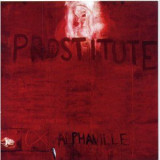
Ursprünglich 1994 veröffentlicht, ist Prostitute das vierte Album von Alphaville und war die erste Veröffentlichung seit fünf Jahren. Mit "einer großen Vielfalt an Stilen" enthält das Album elektronischen Jazz, New-Wave-Musik, Synthpop, Swing, Hip-Hop, klassische Balladen und Pink-Floyd-ähnliche elektronische Musik - es ist also eher ein theatralisches Album.
Die erste Singleauskopplung war "Fools", gefolgt von der zweiten Single aus dem Album, "The Impossible Dream". Das Album wird zum
ersten Mal auf Vinyl veröffentlicht. Die 2 CD Extended Version enthält mehrere Mixe und alternative Versionen.
- 2LP - remastered, Trifold-Hülle plus 24-seitiges Booklet,
- 2CD - mit der Original-CD und einer zusätzlichen Disc mit Tracks, die nur auf 12"-Vinyl erhältlich waren, und einer 5"-Maxi-CD mit Mixen, alternativen Versionen usw.
- A1: Peter Tevis - A Gringo Like M
- A2: Don Powell - Cannibal (Cantata Ii)
- A3: Peter Boom - Splash
- A4: Christy - Solo Nostalgia
- A5: The Sorrows - Pioggia Sul Tuo Viso
- B1: Lisa Gastoni - Una Stanza Vuota
- B2: Trio Junior - Fruscio Di Foglie Verdi
- B3: Patrick Samson - Gloria
- B4: Le Voci Bianche Di Renata Cortiglioni - Guerra E Pace, Pollo E Brace
- B5: I Cantori Moderni Di Alessandroni - Matto, Caldo, Soldi, Morto Girotondo
- C1: Christy - Man For Me
- C2: Florinda Bolkan - Vai Via Malinconia (#4)
- C3: Jimmy Fontana - Metti Una Sera A Cena
- C4: Sergio Endrigo - Nuvole
- C5: Domenico Modugno - Filastrocca Vietnamita
- C6: Edda Dell'orso - Uccellacci E Uccellini (Titoli De Testa) (Titoli De Testa)
- D1: Massimo Ranieri - Luce Chiara Per Vergine "Curve Oscure
- D2: Swan Robinson - Un Po' Per Giorno
- D3: King Harvest - No One Can
- D4: Daniel Beretta - You & I
- D5: Um Amico
Während seiner außergewöhnlichen Karriere, die sich über mehr als sechs Jahrzehnte erstreckte, schuf der weltberühmte italienische Komponist Ennio Morricone mehr als 600 Originalkompositionen und einen einzigartigen und unverwechselbaren Stil, der avantgardistische Lösungen mit feinster Pop-Psych-Attitüde verband.
Zu den Künstlern, die den Maestro sampelten oder sich in ihren Produktionen von ihm inspirieren ließen, gehören: Jay-Z, Flying Lotus, Danger Mouse, Madlib, Mark Knopfler, U2.
Anlässlich des 95. Geburtstags des Maestros (10. November 2023) präsentiert CAM Sugar eine neue Sammlung von wenig bekannten Perlen, die von Morricone komponiert wurden und die 2020 die Morricone Segreto Collection ergänzen: Morricone Segreto Songbook.
Ein Beweis dafür, dass auch einer der berühmtesten Komponisten unserer Zeit noch Geheimnisse zu lüften hat.
Das Morricone Segreto Songbook enthüllt die poppig psychedelischen, düster-kinematografischen und avantgardistischen Klänge, die die ursprüngliche Sammlung kennzeichneten, mit einigen Ausflügen in den Folk-Rock der Zeit, zwischen ergreifenden Balladen und eleganten Chansons.
Diese Anthologie entstand aus dem Wunsch heraus, Morricones Filmmusiken zu erforschen und einige versteckte Perlen zu entdecken, die trotz des innovativen Niveaus der Kompositionen und der Modernität der Orchestrierung mehr oder weniger in Vergessenheit geraten oder in den Hintergrund gedrängt worden sind.
Ab dem 10.11 als 2LP oder 1-CD Digipack verfügbar.
Five groups, one mythical studio - documenting the emergence of a generation!
The initial postulate was simple: five groups, one emblematic studio and 24 hours for each to imagine and record two unreleased tracks with one objective - the will to document a French jazz scene in the midst of renewal.
In these last few years, several innovative currents have shaken up the world of jazz and attracted new fans. They have bubbled up from Los Angeles, impregnated with hip-hop culture (Kamasi Washington, Terrace Martin, Thundercat), or from London, tinged with African rhythms (Nubya Garcia, Kokoroko, Ezra Collective). Meanwhile, in France, a new scene is emerging, carrying with it more of a dancefloor-oriented sound influenced by electronic music - an obvious kinship with the French Touch explosion of the late 90s.
Historically, every movement has been assimilated to a certain neighbourhood, to specific clubs where late at night, young guns stayed up to imagine the jazz of tomorrow - the Cotton Club for the jazz of the 20s, Minton’s Playhouse in Harlem for Be-Bop, the Black Hawk in San Francisco for West Coast jazz, Birdland in New York for Hard-Bop or a lot more recently, the Total Refreshment Centre which has been the playing field for the new London scene.
In Paris too, this new sound is associated with actual venues, places which have allowed these groups to form, create a repertoire and forge an aesthetic - Le Baiser Salé for Monsieur Mâlâ, La Gare/Le Gore for Photon, La Pêche in Montreuil for Ishkero, La Petite Halle for Underground Canopy and also le Duc des Lombards and le 38 Riv’ for Alex Monfort; it’s in a live context that this music will always continue to evolve.
Keeping this “live” spirit, with all its spontaneity, was actually the guiding line for the elaboration of this Studio Pigalle compilation. Each take was recorded in the most organic way possible, bringing all the musicians together in the same room to limit post-production alterations before the final cut was assembled, in just one day, by studio in-house sound engineer, Felix Rémy.
A feeling of urgency permeates a record guided by an artistic production taking care to crystalise the essence of this artistically free-range generation whose childhoods were rocked just as much by Bill Evans and Roy Hargrove as by J Dilla and Jeff Mills. One of the two tracks recorded is geared towards the dancefloor, and the other, more cosmic/ambient gives freer rein to individual interpretation.
There were therefore many possible ways of interpreting these guidelines for the five formations which number among the most distinctive on the current French musical landscape, and the occasion, for some, to rummage through their archives! With Transe (Mbappé) and Da Verdere (Vella), Monsieur
Mâlâ present us with two unreleased tracks issued from the very first rehearsals of the quintet reworked especially for this compilation. “Seen the aesthetic range of this group, it all worked out very naturally in the studio”, recounts keyboardist Nicholas Vella “Recording like they did in the sixties with all the channels live and working with small imperfections was a very interesting task, even when it came to the mix, we had to make do with the takes we had... “
“Our group is very recent, and with this session, in just two tracks, we had the opportunity to present the entirety of our musical universe,” says Photons pianist Gauthier Toux. “All too often, we assimilate this fusion between jazz and dance music to computers and post-production modifications. For “Dessine”, we kept the first take, and we must have recorded just three or four for the other track with more of a techno bent. In one day, we understood that we could play our entire repertoire live, from A to Z”.
“When the Komos label offered me this project, it immediately spoke to me”, remembers Alex Monfort “Straight away, I thought of “Since I Met You”, a track with a nine/four time signature which really is reminiscent of a new- soul groove, but with this extra cosmic vibe! I wrote the words to the chorus and Nina Tonji placed her voice on the track, adding her own verses. For “Tonight”, the up-tempo track, I wanted to head off in more of a hybrid direction inspired by Kaytranada or the Black Radio series by Robert Glasper. A cross-over between jazz and hip-hop which really does represent my world, and I also tried to place vocals centre stage (Emcee Agora)”.
“We truly resonated with the way Antoine Rajon imagined this compilation and the recording session”, confide Warren Dongué and Jérémy Tallon from Underground Canopy. “When arriving in this studio we felt as if we had gone backtothe70s! Inkeepingwiththespiritofthisera,heknewhowtoletus keep our spontaneity, without recording in too many takes, and that’s how we like to work”.
“We managed to adhere to the themes of the compilation without changing our instrumentation, we wanted to remain faithful to the sound of Ishkero on these new compositions and take them somewhere else” – says drummer TaoEhrlich -“Withoutaddinganyelectronics.Thesessionwassupervisedin a truly subtle and benevolent manner. From a human perspective, it was also a wonderful experience”.
Whether turned towards hip-hop, ethnic or electronic music, the artists featured on this Studio Pigalle compilation represent the eclecticism of a new generation in the process of writing the first chapters of its history. Open to experimentation, these artists continue to hold high an immutable love for improvisation and creation in the moment... another definition of the word Jazz!
Cylene II is the new materialization of the collaboration between François J. Bonnet & Stephen O"Malley, initiated in 2018 and continued without interruption since then, taking form in a myriad of contexts ranging from common practice to recording sessions, concerts and tours. Cylene II bears witness to these different contexts, offering a multifaceted sound signature developed on different occasions (artist residencies in La Becque, Switzerland and Modena, Italy, live performance excerpts, a studio session at INA-GRM Studios in Paris). The epic opening track "Four Rays (Anti Divide)" welcomes, for the first time, other musicians - in this case a wind quintet - expanding the duo"s sonic palette without betraying the fundamental component of their music, namely the driving of sonic energy. Elsewhere, Bonnet and O"Malley propel the energy between themselves, extending the singular climate that has characterized their musical development over the past five years. Among their minimal presentation of tones and resonances, as glacial harmonic intersections slowly elevate with massive physicality to an orchestral degree, new refinements become evident: the music"s relationship to silence, and a brightening of the fine metallic edge glowing at its core. For the listener, Cylene II is a sound that reaches from the deep and scales up to the far firmament in its careful motion, drawing emotions viscerally from the chest, giving rise to the suggestibility of the soul. A séance of sorts for all who witness it, whether playing or listening.
This is one of Tito Puente’s best original albums released under the label of Tico in the 60s. The album features one of his best hits, “Oye Cómo Va,”. Tito Puente and his orchestra lay down a driving irresistible beat that moves from beginning to end in a pulsating performance and create an added appeal with their ensemble singing which lends an authenticity to the music. Pressed on 180g black vinyl with a tip-on-jacket. US Import.
Color Vinyl[20,97 €]
In the decade or so that hard-working New York quartet Sunwatchers have operated, the group has steadily & subtly refined their sound - a brain-blasting mixture of jazz, psychedelia, krautrock, punk, noise, & Saharan blues - into something that is avant-leaning enough to appeal to the discerning jazz & experimental music fan & weird & wooly enough to get the true heads' toes tapping. "Music Is Victory Over Time" is the band's 5th album, and fourth for Chicago-based Trouble In Mind Records, seeing the long-running lineup of Peter Kerlin (bass guitar), Jim McHugh (guitars), Jason Robira (drums), and Jeff Tobias (alto saxophone and keyboards) in prime form. Album opener "World People" is a classic Sunwatchers number whose title expresses their Anarcho-Internationalist ideology (and the atypically multi-culti make up of their crowds), with an underlying melodic resonance to New Orleans funeral marches à la Albert Ayler _ a triumphant call to arms to all peoples. Live fave "Too Gary"'s gang vocal shout punctuates a motorik rager named for a phrase often uttered by a badass eight year old skateboarder McHugh knew with a speech impediment (it means "that's too scary"). "T.A.S.C." (or "Theme For Anarchist Sports Center") is inspired by Sonny Sharrock's maligned 80's output & sounds exactly like a wrathful, mutant version of a prime-time athletic show theme, replete with the requisite "sitcom ending." The sun- scorched "Foams" - a longform piece intended to depict natural stuff like tides, nightfall, and time slowly passing, ancient, peaceful and slightly gross all at once - practically jumps out of the speakers, its palpable intensity crackling in your eardrums. The title of "Tumulus" might reference an ancient burial mound, but the music itself might be the group's most high-tech song to date, complimented by an arpeggiating sequencer, three different forms of tape delay and an electric saxophone; ecstatic, fiery & deeply spiritual. "There Goes Ol' Ooze" is a smoky creeper that lets Tobias & Kerlin take a walk for a while, with respectful nods to the Stones and Steve Reich. "Song For The Gone" closes out the album, showcasing a sincerely tender moment for the gang, as an expression of love and resolve for dear friends who had recently, tragically died. Its cascading, bluesy melody attuning itself to our own collective unconscious grief. Having the distinct pleasure of being the first band to record in John Dwyer 's new LA-based recording studio Discount Mirrors, "Music Is Victory Over Time" boasts a beefed up sound. The band worked closely with in-house engineer Eric Bauer - facilitator, troubleshooter, sonic obsessive, a legendary freak and a DIY lifer. The band also had full access to the studio's epic armory of gear: amps, axes (it's Dwyer's Eddie Harris model electric sax), synths, a bass guitar once belonging to Klaus Flouride of the Dead Kennedys. Crucial for the sounds and the vibe. The album art was created by Josh MacPhee, the activist artist, author, archivist and founding member of both the radical artist collective Just Seeds and Interference Archive, a public collection of materials from social movements based in Brooklyn. MacPhee's participation in the project works as a statement of Sunwatchers' progressive utopian intentionality, and organically underscores their involvement in revolutionary projects within and without of their hometown. Listening to "Music Is Victory Over Time", Sunwatcher's rebellious spirit & unbridled enthusiasm remain fully intact, but the secret sauce is their infectious irreverence in the face of the horrors of this world. Much of our best cultural commentary is Trojan-horsed to the general public via humor & satire & the band has a knack for lacing the ridiculous with the radical. It's good to have them back. "Music Is Victory Over Time" is released worldwide digitally via most DSPs, on CD, black vinyl & a limited "Sunflare" blue/red splatter vinyl while supplies last.
Black Vinyl[20,97 €]
In the decade or so that hard-working New York quartet Sunwatchers have operated, the group has steadily & subtly refined their sound - a brain-blasting mixture of jazz, psychedelia, krautrock, punk, noise, & Saharan blues - into something that is avant-leaning enough to appeal to the discerning jazz & experimental music fan & weird & wooly enough to get the true heads' toes tapping. "Music Is Victory Over Time" is the band's 5th album, and fourth for Chicago-based Trouble In Mind Records, seeing the long-running lineup of Peter Kerlin (bass guitar), Jim McHugh (guitars), Jason Robira (drums), and Jeff Tobias (alto saxophone and keyboards) in prime form. Album opener "World People" is a classic Sunwatchers number whose title expresses their Anarcho-Internationalist ideology (and the atypically multi-culti make up of their crowds), with an underlying melodic resonance to New Orleans funeral marches à la Albert Ayler _ a triumphant call to arms to all peoples. Live fave "Too Gary"'s gang vocal shout punctuates a motorik rager named for a phrase often uttered by a badass eight year old skateboarder McHugh knew with a speech impediment (it means "that's too scary"). "T.A.S.C." (or "Theme For Anarchist Sports Center") is inspired by Sonny Sharrock's maligned 80's output & sounds exactly like a wrathful, mutant version of a prime-time athletic show theme, replete with the requisite "sitcom ending." The sun- scorched "Foams" - a longform piece intended to depict natural stuff like tides, nightfall, and time slowly passing, ancient, peaceful and slightly gross all at once - practically jumps out of the speakers, its palpable intensity crackling in your eardrums. The title of "Tumulus" might reference an ancient burial mound, but the music itself might be the group's most high-tech song to date, complimented by an arpeggiating sequencer, three different forms of tape delay and an electric saxophone; ecstatic, fiery & deeply spiritual. "There Goes Ol' Ooze" is a smoky creeper that lets Tobias & Kerlin take a walk for a while, with respectful nods to the Stones and Steve Reich. "Song For The Gone" closes out the album, showcasing a sincerely tender moment for the gang, as an expression of love and resolve for dear friends who had recently, tragically died. Its cascading, bluesy melody attuning itself to our own collective unconscious grief. Having the distinct pleasure of being the first band to record in John Dwyer 's new LA-based recording studio Discount Mirrors, "Music Is Victory Over Time" boasts a beefed up sound. The band worked closely with in-house engineer Eric Bauer - facilitator, troubleshooter, sonic obsessive, a legendary freak and a DIY lifer. The band also had full access to the studio's epic armory of gear: amps, axes (it's Dwyer's Eddie Harris model electric sax), synths, a bass guitar once belonging to Klaus Flouride of the Dead Kennedys. Crucial for the sounds and the vibe. The album art was created by Josh MacPhee, the activist artist, author, archivist and founding member of both the radical artist collective Just Seeds and Interference Archive, a public collection of materials from social movements based in Brooklyn. MacPhee's participation in the project works as a statement of Sunwatchers' progressive utopian intentionality, and organically underscores their involvement in revolutionary projects within and without of their hometown. Listening to "Music Is Victory Over Time", Sunwatcher's rebellious spirit & unbridled enthusiasm remain fully intact, but the secret sauce is their infectious irreverence in the face of the horrors of this world. Much of our best cultural commentary is Trojan-horsed to the general public via humor & satire & the band has a knack for lacing the ridiculous with the radical. It's good to have them back. "Music Is Victory Over Time" is released worldwide digitally via most DSPs, on CD, black vinyl & a limited "Sunflare" blue/red splatter vinyl while supplies last.
Auf Album Nr. 4 wendet die britische Electronic Music Komponistin, Produzentin und Musikerin, die auch mit Ihren Filmscores für einiges Aufsehen sorgen konnte, ihren Blick nach innen, setzt sich mit Trauma und Trauer auseinander und konfrontiert ihre Ängste. Für Fans von u.a. Fever Ray.
Elizabeth Bernholz (geb. Walling), geboren 1981 in Canterbury, England, besser bekannt unter ihrem Künstlernamen Gazelle Twin, ist eine Electronic Music Komponistin, Produzentin und Musikerin, die derzeit in Leicestershire, England, lebt.
Auf ihren bisherigen drei Studioalben hat Gazelle Twin nach außen geblickt: auf Städte, auf einen gequälten Körper, auf die sich windenden Eingeweide des ländlichen Großbritanniens. Auf ihrem ersten Album für das neue Label Invada Records wendet sie ihren Blick jedoch nach innen. Black Dog ist ein Album über die Konfrontation mit der Angst und die Erwartung, dass die Dinge, die in der Dunkelheit lauerten, als man ein Kind war, verschwinden werden, wenn man erwachsen wird.
Black Dog erzählt eine Geschichte, die sich wie ein Film entrollt. Es geht darum, wie unsere Kindheit unser Erwachsensein geprägt hat: wie sich jedes Gefühl von Trauma und Trauer für immer in die Erinnerung eines Menschen einbrennt, egal wie sehr wir versuchen, ihm zu entkommen. Black Dog deutet an, wie diese Gefühle in besonderer Intensität zurückkehren, wenn man Eltern wird, wenn man sich selbst dabei beobachtet, wie man Dinge weitergibt, von denen man sich wünscht, sie nicht gehabt zu haben, nicht zu wollen.
In gewisser Weise läutert sich Bernholz auf diesem Album selbst. Im Gegensatz zu ihren maskierten Charakteren bei früheren Veröffentlichungen ist ihr Gesicht erkennbar, und sie erklärt, dass sie sich „dieses Mal nicht so weit entfernt hat" von ihrer Persona. Sie stellt sich als Medium für die Stimmen in ihrem Inneren vor, anstatt sie mit anderen Ideen zu verdrängen. Dabei wirkt sie groß und innig, ihre Stimme wechselt von feinfühliger Zärtlichkeit zu doomiger Kraft.
Dies ist ein Album, bei dem alte Geschichten geplündert, verdaut und wieder hochgewürgt werden müssen, um neue zu schreiben, bei dem wir uns selbst völlig in Frage stellen müssen. Black Dog blickt zurück und blickt hinein. Wir verschaffen uns Zugang, während wir zuhören. Unser Innerstes nach außen gekehrt.
“A piece of music never truly comes to An end. Revisiting a theme illustrates this idea that life goes on.” These are the words of Wayne Shorter, uttered in 2018 upon the release of Emanon, his final opus. On this record, the octogenarian uses dusky hues to shade in the passions of his youth - drawing and science-fiction, as well as the causes he has defended all his life - the fight against ecological upheaval and structural racism. This sentiment did not fail to resonate with Julien Lourau, who has reached a stage in life where he has begun to look back over certain pages written by the man he has always considered one of the masters of his trade. Five years later, this Parisian native has also chosen to revisit his glory days, offering reworked versions of specific tracks composed by his titular elder throughout the 80s. “When I play this music, I find myself back in my teenage bedroom. These are my standards, and they remind me of autumn in Rambouillet.” At that time, after practising his scales, Julien would also play Dungeons & dragons, and immerse himself in SF as well as heroic fantasy - epic influences which are not without a certain connection to the dreamworlds Shorter conjured up, as another fan of landscapes beyond the grasp of reality.
This album features four themes taken from Atlantis, which came out in 1985, and two from Joy Ryder, released three years later. To these, he has added a composition penned at around the same time for Sportin’ Life, the penultimate LP by Weather Report. This is rounded off by a tune taken
from Native Dancer, the record which, ten years earlier, in 1975, brought together this saxophonist who learnt his trade alongside Art Blakey, before joining Miles’ second quintet, and Brazilian Milton Nascimento.
“Between Native Dancer and Atlantis, Shorter did not release anything under his own name, but he took the time and care to really perfect his writing. Upon his return, he injected a very Brazilian form of subtlety into his compositions, especially rhythmically. And from a harmonic point of view, these themes are extremely sophisticated, and reveal truly singular colours. In fact, he decided to display the score as if it constituted the liner notes of Atlantis.”
Julien Lourau is a fan of every Wayne Shorter era, from his Blue Note days, where Mr Gone defined the bases of a truly unique repertoire, all the way to his final quartet - a reference like no other. He decided to focus on this “highly electric” period, which is not necessarily Shorter’s best known, nor his most widely appreciated - despite being a unanimous reference, Shorter has nonetheless never had a direct descendent. In Lourau’s line of sight there lies a desire to focus on typically South American tonic accents which characterise this repertoire, twinned with the ambition to switch up their actual sound “by attempting to open up onto a production highly influenced by eighties fusion". However, he admits that modifying the structures of these most unique of worlds constituted a fresh challenge. “There’s this labyrinthine harmonic system where you’ve no idea how it holds together, but where it’s actually impossible to touch the slightest element without the whole edifice wavering. It is in fact a very difficult thing to achieve!”
In order to successfully transcribe all this creativity free of obstacles, Julien Lourau once again called upon the help of Mathieu Debordes. From January 2023 onwards, Mathieu endeavoured to break down all the musical elements, on paper, before creating any actual music. The record was therefore constructed on the faith of these scores, without necessarily transiting through a creative residency - just two live gigs, to make sure the setup worked. Besides Mathieu Debordes and his synthesisers, Julien Lourau has assembled an ad hoc team by his side. On the bass, according to the track, we can hear erstwhile companion Sylvain Daniel or a new acolyte on the fretless bass, Joan Eche Puig.
Stéphane Edouard, on percussion, even dives headfirst into an unlikely proto-rap of sorts, on Pearl On The Half Shell (where, on the original version, Bobby McFerrin adjusted his interventions in a rather madcap style). Aesthete and drummer Jim Hart as well as pianist Leo Jassef also figure on this release - both were present on previous project devoted to label
CTI. “At sixteen, I wanted to sound like Michael Brecker rather than Ben Webster - that was equated with modernity in those days”, adds Julien with a smile, as for him, all this rings out a little like a logical next step, a joyful immersion into the fountain of youth. And if, for this record, he plays the soprano more than ever, the saxophone Shorter set in his sights on, he never tries to replicate an unattainable ideal note by note. What would be the point?
“Wayne Shorter is not just a saxophonist’s saxophonist. In fact, I don’t know a single person who has risen to challenge of his solos. I have not done it myself either, but on the other hand, I have retained a lot of his phraseology. His way of approaching the instrument reveals a more evanescent language, a work on colour and shape. Keeping this in mind has allowed me to gravitate towards certain elements, that in hindsight, I find echoes of in my work, even in Groove Gang.” Shorter etches out these phrases, creating a groove within which Lourau had traced subtle punctuation, managing, from a highly written base, to create fresh apertures, promises of a great escape. Emblematic of this standpoint, his regal version of Ponte de Areia, originally a wonderful dialogue between Milton Nascimento and Wayne Shorter. Here, the Frenchman takes liberties with the original melodies, without ever growing distant from the original spirit, extending one section with delicacy, offering a rubato development and then a groove “like a little suite”. Julien Lourau also renews with an accomplice from last century, Magic Malik, who lends his high-pitched vocals to the track. Though they had not recorded together for more than twenty years, the two of them got on as if they had only ceased collaborating yesterday, everything flowed naturally. The track was wrapped up in just one take, much like other themes, such as opener Who Goes There where the flautist deploys smooth, enchanted and smoky wisps.
Fundamentally, reflecting of the sleeve which features a child playing with a ball, image that could symbolise the sun just as much as the moon, Julien Lourau manages to translate the ambiguous candour which characterizes Shorter’s work - solar and crepuscular at the same time, that of a visionary and poet definitively situated outside of all chronology, but with whom Julien shares surprising and ‘timely’ coincidences. Shorter was born August 25, 1933, the same day as Julien’s father, “if we take time zones into account”, and who died on Lourau’s birthday, March 2, 2023. Should we take this as a random fact? Or could we not see here the sign of a destiny connecting the agnostic Frenchman to the man who, as a fervent Buddhist, believed in the transmission of his spiritual flow ?
Yearly compilation album RADAR by KEROXEN returns with its fourth volume in the ongoing series of themed based albums showcasing the talents and misfortunes of carefully selected musical projects based or connected with the Canary Islands.
With its first volume released in 2020 aiming to promote and divulge adventurous Island based music, the Keroxen imprint now presents Vol.4 with another showcase of the various insular musical scenes made in the outermost regions – in this case, a very rare incursion outside the Canary Archipelago by way of handpicking friends and colleagues working in the further most regions we can think of. A very special showcase then, featuring the Azores Islands, Reunion Island, Canary Islands and French Guiana - a true connection of likeminded minds whom demonstrate once again that you do not need to be in an western hipster mecca to make interesting work.
The presentation format sticks to its breakable rules, with each artist offering one track per side and the full thing of course wrapped up in Pura Marquez dizzying post-tropical art.
The album opens with the Julee Cruise inspired project Akane by Tenerife’s Carolina Machado where synth arpeggios intertwine organically with her soothing voice, setting the tone for Reunion Island’s Jako Maron and his unique take on local Maloya music by way of electrifying it into a trance like looping beat. Enter French Guyana’s Daryanna Jean unique sound artistry with sampling, cutting and pasting local(?) sounds into a disorientating needle jump glitch fest. Side A eventually closes with a very Azorean take on the very English hauntological sound by borrowing those pastoral melodies and synth riffs of yesterday and transposing it to the remote Sub-Tropical fields of São Miguel island, in the Azores, courtesy of Flipping Candy.
Side B emphatically reinforces the compilation’s original concept that no matter where you are, in this post internet, post everything world, outsider music thrives and keeps raising the invisible bar, true that!
Take the 101 north out of Los Angeles, and you'll pass by Agoura Hills, where the core duo of the band Dub Thompson grew up. Whatever you see in that town won't readily prepare you for the music they wrote while there, but you're free to look."Most everyone who's in a group who's our age lives on the Internet," says guitarist Matt Pulos. "The kinds of things that have shaped our band aren't anchored to any one time or place."Pulos and his bandmate, drummer Evan Laffer, are currently both 19 years old, and are putting that line of thought to the test; their musical influences travel from the Midwestern malaise of Big Black and Pere Ubu, to Kraut pioneers Can and Kraftwerk, while bowing to the British belligerence of The Fall and This Heat.Recording the album while living with Foxygen's Jonathan Rado at his rented house in Bloomington, the band had its first taste of a heavy Indiana summer, and all the humidity and insect life that buzzes along with it. "We woke up every day, ate hard-boiled eggs and stood on a porch," says Pulos of the experience.Their first collection of songs slyly unties the shoes of genre and convention, shapeshifts mischievously, and tramples on the promises delivered on the name itself.There are only eight songs on this rangy debut.Intense blasts of hook-filled noise rock ("Hayward!"), rocksteady marionette stomp ("No Time"), hypnotic bouts of doomy poetics ("Epicondyles"), outlandishly sexy groove rock ("Dograces"), and a number of other bite-sized forays into parts unknown are made manifest across 9 Songs. The vibes are strong here. Pulos sings and plays like he's working out long-standing grudges, pulling the most sinewy tones from an acoustic guitar and ripping huge chunks of demon flesh out of his electric. Laffer matches him step for step on the drums, an exacting presence behind the kit who pushes even the band's more placid moments into bouts of tension. Together they succeed in animating their musical ideas to startling, almost unnatural life. Reverb units, keyboards, samples and processing gluing everything together, saturated in the August heat and worn in until they sound second nature, it's like somehow you've been listening to these songs forever.