Das neue Flamingods-Album 'Head Of Pomegranate' wurde vom Grammy-gekrönten Produzenten Ben H. Allen (Animal Collective, Deerhunter, M.I.A.) aufgenommen. Die Londoner Band kreiert seit über einem Jahrzehnt unverwechselbare, genreübergreifende Musik. Das Durchdringen von Genres wie Psychedelia, New Wave, Electronica und Punk – oft innerhalb desselben Songs – ist ihre Spezialität, ebenso wie das Talent, Einflüsse aus dem einzigartigen kulturellen Erbe und die Liebe zum UK Rock'n Roll der 70er Jahre zu vermischen. Opener und erste Single 'Dreams (On The Strip)' geben mit stimmungsvollen Synths, düsteren Drum-Machines und dem euphorischen Refrain den Ton vor. Es ist eine neue Ära für die Band und sie möchte, dass wir dies von Anfang an wissen.
When Kronos plays a piece, they become fellow composers, true collaborators. Without them, we wouldn’t have the kind of string quartet playing that we find around us today. There are two kinds of string quartet playing: the ‘Before Kronos’ and the ‘After Kronos’.” – Philip Glass
‘Kronos Quartet has broken the boundaries of what string quartets can do.’ – New York Times
Nonesuch releases Kronos Quartet’s acclaimed album Kronos Quartet Performs Philip Glass on vinyl for the first time to coincide with Kronos Quartet: Five Decades, a year-long celebration marking the quartet’s 50th anniversary. Originally released in 1995, the album features David Harrington (violin), John Sherba, (violin), Hank Dutt (viola) and Joan Jeanrenaud (cello) performing Quartet No. 2 (Company) (1983), No. 3 (Mishima) (1985), No. 4 (Buczak) (1990), and No. 5 (1991), the first piece Glass wrote especially for Kronos. Recorded at Skywalker Sound in California, the album was produced by Judith Sherman, Kurt Munkacsi and Philip Glass. The cover art features Francesco Clemente’s painting The Four Corners (1985). At the time of the album’s release, the New York Times said, ‘It contains some of Glass's best music since Koyaanisqatsi. His ear for sumptuous string sonorities is undeniable,’ while the Washington Post called it ‘An ideal combination of composer and performers.’ It was a top 10 hit on Billboard’s Top Classical Albums, and spent 12 weeks on Billboard’s Classical chart.
In his original liner note, critic Mark Swed wrote, ‘Glass’ string quartets may contain his most intimate music. They are works through which a very public composer, perhaps the most important opera reformer of our age and a longstanding collaborator in large-scale music theater, holds up a mirror to himself and his way of composing. “In an odd way,” Glass explains, “string quartets have always functioned like that for composers. I don’t really know why, but it’s almost impossible to get away from it. It’s the way composers of the past have thought and that’s no less true for me. It’s almost as if we say we’re going to write a string quartet, we take a deep breath, and we wade in to try to write the most serious, significant piece that we can.” Glass says that as he sat down to write String Quartet No. 5, he had discovered that perhaps not taking a serious tone might be the most serious way to deal with it. “I was thinking that I had really gone beyond the need to write a serious string quartet and that I could write a quartet that is about musicality, which in a certain way is the most serious subject.”’
Glass’ first numbered quartet was written in 1966; however, he did not return to the string quartet medium until 1983, when he provided incidental music for a dramatization of Samuel Beckett’s prose poem, Company. During those 17 years, Glass had formed an ensemble and developed his style in a series of increasingly elaborate pieces for it. String Quartet No. 3 is also adapted to dramatic music, this time from his score to the 1985 Paul Schrader film, Mishima. It was with the music of Mishima that Kronos became associated with Glass, recording the string quartet sections of the soundtrack and subsequently working extensively with the composer on all five of his numbered quartets. Kronos also gave the first concert performances of Company and Mishima. String Quartet No. 4 was composed in remembrance of the artist Brian Buczak, who died of AIDS in 1988.
As Kronos’ anniversary season continues with further concerts around the world, Nonesuch will reissue Black Angels on vinyl on February 16. First released in 1990, the award-winning album includes George Crumb’s title piece, which inspired David Harrington to found the quartet. Called ‘an unusually elevated and searing Vietnam War protest’ by the New York Times, it sets a dark, powerful tone for this collection, which addresses the political/physical/spiritual consequences of war. Also featured are works by Charles Ives, István Márta, Thomas Tallis, and Dmitri Shostakovich. ‘Stylishly packaged, intelligently programmed, superbly recorded and brilliantly performed,’ proclaimed Gramophone. ‘In short, very much the sort of disc we’ve come to expect from the talented and imaginative Kronos Quartet.’ The Evening Standard included it among its ‘100 Definitive Classical Albums of the 20th Century’.
Born in Baltimore, Maryland, in 1937, Philip Glass is a graduate of the University of Chicago and the Juilliard School. By 1974, he had created a large collection of music for The Philip Glass Ensemble. The period culminated in the landmark opera, Einstein on the Beach. Since Einstein, Glass’s repertoire has grown to include music for opera, dance, theatre, orchestra, and film. His scores have received Academy Award nominations (including Kundun and The Hours, as well as Notes on a Scandal) and a Golden Globe (The Truman Show). Recent works include his memoir, Words Without Music, his first Piano Sonata, opera Circus Days and Nights, and Symphony No. 14. Glass received the Praemium Imperiale in 2012, the US National Medal of the Arts from President Barack Obama in 2016, and 41st Kennedy Center Honors in 2018.
Nonesuch’s relationship with Glass began in 1985, with the release of the score for Paul Schrader’s Mishima featuring Kronos Quartet. Over the years other Glass works on Nonesuch have included Einstein on the Beach (1993), Kronos Quartet Performs Philip Glass (1995), Music in Twelve Parts (1996), Glass Box (2008), as well as the soundtracks for Powaqqatsi (1988), Kundun (1997), Koyaanisqatsi (1998), and The Hours (2002), amongst others.
For 50 years, San Francisco’s Kronos Quartet – David Harrington (violin), John Sherba (violin), Hank Dutt (viola), and Paul Wiancko (cello) – has challenged and reimagined what a string quartet can be. Founded at a time when the form was largely centred on long-established, Western European traditions, Kronos has been at the forefront of revolutionizing the string quartet into a living art form that responds to the people and issues of our time. In the process, Kronos has become one of the most celebrated and influential groups of our era, performing thousands of concerts worldwide, releasing more than 70 recordings of extraordinary breadth and creativity, and collaborating with many of the world’s most accomplished composers and performers. Through its nonprofit organization, Kronos Performing Arts Association, Kronos has commissioned more than 1,000 works and arrangements for string quartet – including the Kronos Fifty for the Future library of free, educational repertoire. Kronos has received more than 40 awards, including three Grammy Awards and the Polar Music, Avery Fisher, and Edison Klassiek Oeuvre Prizes.
Kronos is prolific and wide-ranging on recordings. The ensemble’s expansive discography on Nonesuch includes three Grammy-winning albums: Terry Riley’s Sun Rings (2019), Landfall with Laurie Anderson (2018), and Alban Berg’s Lyric Suite featuring soprano Dawn Upshaw (2003); the 40th-anniversary boxed set Kronos Explorer Series; Nuevo (2002), a Grammy- and Latin Grammy–nominated celebration of Mexican culture; Pieces of Africa (1992), a showcase of African-born composers that simultaneously topped Billboard’s Classical and World Music charts; and Folk Songs (2017), Nonesuch’s 50th album with Kronos, which featured Sam Amidon, Olivia Chaney, Rhiannon Giddens, and Natalie Merchant singing traditional folk songs.
out of Stock
Last delivered 2 years ago available to reorder, subject to availability
Bas Jan return with a polished and poignant collection of perfectly-crafted pop songs that retains their authentic indie edginess. 'Back To The Swamp' is a heady tussle between their incorrigible DIY ethics and new responsibilities. Serafina Steer, Charlotte Stock, Emma Smith and Rachel Horwood cast an examining eye over modern times, lost love, Tarot intuition and long days in an everyday swamp. Awash with lush chorale effects, orchestral hewn loops, pin sharp electronic beats and sublime harmonies. Back To The Swamp is filled with thought-provoking stories, it's a reflective worldview. It's a polished and poignant collection of perfectly-crafted pop songs that retains their authentic indie edginess. These new studio recordings feature more accomplished pop production; filled with cerebral one-liners that pluck at the senses. And, there's a nod to an eclectic mix of influences; The Pet Shop Boys, Lizzy Mercier Descloux, Kate Bush, Heaven 17 and Jon Hassell by way of Brian Eno. Witches, Tarot readings, road signs, Salt-N-Pepa namechecks and a river all cried out, welcome to the swamp_ "Beautifully fractured art-pop" MOJO
Daneshevskaya (Dawn-eh-shev-sky-uh), the project of New York's Anna Beckerman, writes songs steeped in the folklore of her own personal history. Her artist (and real middle) name comes from her Russian-Jewish great-grandmother, a person whose presence she has always felt although their paths never crossed in real life. Beckerman grew up in a musical family; her father is a music professor, her mother studied opera and her own songs often feel spiritual, less so by any religious connotation and more as a hymn-like, archival record of Beckerman's own past, present and future. Her first release on Winspear, Long is the Tunnel, contemplates how the people you meet impact the pathway you travel. Through songs like the poignant "Somewhere in the Middle," the lilting "Challenger Deep" and the surreal "Big Bird," the EP paints a distinctive collage between traditional songwriting and modern turns of phrase that remain spellbound in the unadulterated luster of self discovery. The seven songs read as both patchwork memories/diary entries and elegies to those in her life. Co-produced by Ruben Radlauer and Hayden Ticehurst of Model/Actriz and Artur Szerejko, the final versions of these initial demos also saw contributions from Lewis Evans of Black Country, New Road (saxophone), Maddy Leshner (keys) and Finnegan Shanahan (violin), adding to the gleaming instrumentation that makes each song sound like a world within itself. Long is the Tunnel is filled with hyperreal imagery that denotes a form of escapism: two of the songs reference birds, which Beckerman describes as about being transfixed by something you can't take your eyes o‑ while also being able to leave at will. Long is the Tunnel prolongs this feeling of being completely immersed: by desire, emotion, and fantasy, though the somber melancholy of her love songs are often more manifestations to her internal self than anyone else.
Daneshevskaya (Dawn-eh-shev-sky-uh), the project of New York's Anna Beckerman, writes songs steeped in the folklore of her own personal history. Her artist (and real middle) name comes from her Russian-Jewish great-grandmother, a person whose presence she has always felt although their paths never crossed in real life. Beckerman grew up in a musical family; her father is a music professor, her mother studied opera and her own songs often feel spiritual, less so by any religious connotation and more as a hymn-like, archival record of Beckerman's own past, present and future. Her first release on Winspear, Long is the Tunnel, contemplates how the people you meet impact the pathway you travel. Through songs like the poignant "Somewhere in the Middle," the lilting "Challenger Deep" and the surreal "Big Bird," the EP paints a distinctive collage between traditional songwriting and modern turns of phrase that remain spellbound in the unadulterated luster of self discovery. The seven songs read as both patchwork memories/diary entries and elegies to those in her life. Co-produced by Ruben Radlauer and Hayden Ticehurst of Model/Actriz and Artur Szerejko, the final versions of these initial demos also saw contributions from Lewis Evans of Black Country, New Road (saxophone), Maddy Leshner (keys) and Finnegan Shanahan (violin), adding to the gleaming instrumentation that makes each song sound like a world within itself. Long is the Tunnel is filled with hyperreal imagery that denotes a form of escapism: two of the songs reference birds, which Beckerman describes as about being transfixed by something you can't take your eyes o‑ while also being able to leave at will. Long is the Tunnel prolongs this feeling of being completely immersed: by desire, emotion, and fantasy, though the somber melancholy of her love songs are often more manifestations to her internal self than anyone else.
Daneshevskaya (Dawn-eh-shev-sky-uh), the project of New York's Anna Beckerman, writes songs steeped in the folklore of her own personal history. Her artist (and real middle) name comes from her Russian-Jewish great-grandmother, a person whose presence she has always felt although their paths never crossed in real life. Beckerman grew up in a musical family; her father is a music professor, her mother studied opera and her own songs often feel spiritual, less so by any religious connotation and more as a hymn-like, archival record of Beckerman's own past, present and future. Her first release on Winspear, Long is the Tunnel, contemplates how the people you meet impact the pathway you travel. Through songs like the poignant "Somewhere in the Middle," the lilting "Challenger Deep" and the surreal "Big Bird," the EP paints a distinctive collage between traditional songwriting and modern turns of phrase that remain spellbound in the unadulterated luster of self discovery. The seven songs read as both patchwork memories/diary entries and elegies to those in her life. Co-produced by Ruben Radlauer and Hayden Ticehurst of Model/Actriz and Artur Szerejko, the final versions of these initial demos also saw contributions from Lewis Evans of Black Country, New Road (saxophone), Maddy Leshner (keys) and Finnegan Shanahan (violin), adding to the gleaming instrumentation that makes each song sound like a world within itself. Long is the Tunnel is filled with hyperreal imagery that denotes a form of escapism: two of the songs reference birds, which Beckerman describes as about being transfixed by something you can't take your eyes o‑ while also being able to leave at will. Long is the Tunnel prolongs this feeling of being completely immersed: by desire, emotion, and fantasy, though the somber melancholy of her love songs are often more manifestations to her internal self than anyone else.
"Alles ist nur Übergang": So heißt das neue Album Max Riegers. Man kann dies als künstlerisches Credo betrachten, als Selbstbeschreibung, als ästhetisches Programm. Bei Max Rieger war es schon immer so; es ist immer schon alles im Übergang gewesen: im Werden, im Fluss. Seit über einem Jahrzehnt gehört er zu den prägendsten Künstlern im deutschen Pop, wandlungs- und erfindungsreich wie kaum einer sonst. Mit seiner Gruppe Die Nerven hat er dem elektrisch verstärkten Gitarrenrock hierzulande eine neue Gestalt und neue Schärfe geschenkt. Fünf Alben haben Die Nerven seit 2012 herausgebracht, zuletzt 2022 ihr schwarzes Album, finstere, harte, zugleich nihilistische und ironische Musik, getragen von großer Weisheit und dem Wissen um die Weisheit des Primitiven. Max Rieger ist auch ein großer Klangschöpfer, er ist jemand, der Musik und Ideen zu veredeln versteht, der sich ebenso inspirieren lässt wie er inspiriert. Für eine ganze Generation junger Künstlerinnen und Künstler ist er zu einem wichtigen, prägenden Partner und Mentor geworden, als Produzent und als unterstützender Songwriter. Er hat für Casper 2022 das Album "Alles war schön und nichts tat weh" produziert, Mia Morgan, Stella Sommer, Ilgen-Nur, Jungstötter und Drangsal gearbeitet und zuletzt mit den legendären Noise-Pionieren Swans. Wer die wahre Größe Max Riegers ermessen will, der - freilich - muss seine Soloalben anhören, die er unter dem Namen All diese Gewalt veröffentlicht. "Kein Punkt wird mehr fixiert" hieß das Solo-Debüt 2014, seither sind zwei weitere Alben erschienen, das majestätisch-weiche "Welt in Klammern" 2016 und das kühle "Andere" von 2020. "Alles ist nur Übergang" ist nun sein viertes Werk als All diese Gewalt, es führt die großen Linien des Rieger"schen Schaffens fort und hebt seine Kunst doch auf eine neue Ebene: So organisch, so schwebend hat seine Musik noch nie geklungen, so scheinbar anstrengungslos dahingespielt und zugleich intensiv, mit einem unwahrscheinlichen Gespür für Dramaturgien, für das rechte Maß zwischen dem Treibenlassen der Klänge und dem plötzlich alles ändernden Break.
"Alles ist nur Übergang": So heißt das neue Album Max Riegers. Man kann dies als künstlerisches Credo betrachten, als Selbstbeschreibung, als ästhetisches Programm. Bei Max Rieger war es schon immer so; es ist immer schon alles im Übergang gewesen: im Werden, im Fluss. Seit über einem Jahrzehnt gehört er zu den prägendsten Künstlern im deutschen Pop, wandlungs- und erfindungsreich wie kaum einer sonst. Mit seiner Gruppe Die Nerven hat er dem elektrisch verstärkten Gitarrenrock hierzulande eine neue Gestalt und neue Schärfe geschenkt. Fünf Alben haben Die Nerven seit 2012 herausgebracht, zuletzt 2022 ihr schwarzes Album, finstere, harte, zugleich nihilistische und ironische Musik, getragen von großer Weisheit und dem Wissen um die Weisheit des Primitiven. Max Rieger ist auch ein großer Klangschöpfer, er ist jemand, der Musik und Ideen zu veredeln versteht, der sich ebenso inspirieren lässt wie er inspiriert. Für eine ganze Generation junger Künstlerinnen und Künstler ist er zu einem wichtigen, prägenden Partner und Mentor geworden, als Produzent und als unterstützender Songwriter. Er hat für Casper 2022 das Album "Alles war schön und nichts tat weh" produziert, Mia Morgan, Stella Sommer, Ilgen-Nur, Jungstötter und Drangsal gearbeitet und zuletzt mit den legendären Noise-Pionieren Swans. Wer die wahre Größe Max Riegers ermessen will, der - freilich - muss seine Soloalben anhören, die er unter dem Namen All diese Gewalt veröffentlicht. "Kein Punkt wird mehr fixiert" hieß das Solo-Debüt 2014, seither sind zwei weitere Alben erschienen, das majestätisch-weiche "Welt in Klammern" 2016 und das kühle "Andere" von 2020. "Alles ist nur Übergang" ist nun sein viertes Werk als All diese Gewalt, es führt die großen Linien des Rieger"schen Schaffens fort und hebt seine Kunst doch auf eine neue Ebene: So organisch, so schwebend hat seine Musik noch nie geklungen, so scheinbar anstrengungslos dahingespielt und zugleich intensiv, mit einem unwahrscheinlichen Gespür für Dramaturgien, für das rechte Maß zwischen dem Treibenlassen der Klänge und dem plötzlich alles ändernden Break.
Assiko Golden Band de Grand Yoff is the sprawling drum collective tearing up Dakar's nightlife scene. Senegalese poet Djiby Ly (Wau Wau Collectif) is backed by fourteen different percussive instruments plus horns, winds, balafon, and the occasional accordion, combining Count Ossie's spiritually elevated polyrhythms with Fela Kuti's orchestra and Tony Allen's groove. Based in the impoverished neighborhood of Grand Yoff and operating as a mutual aid group for the larger community, the band builds its songs on ancient rhythms passed on from Senegal, Cameroon and the infamous Gorée Island. In both Wolof and French, Djiby preaches a message of uplift and cooperation rooted in the Sufi teachings of the Mouride Brotherhood, as well as Christianity and animist religions. "Senegal, my life my joy" is the call and response chanted over cascading, infinitely layered drum patterns on opener "La Musique Du Coeur." "We build our own country" the band proclaims in Wolof on "Xarritt." For twenty years and across three generations of band members, Assiko have played raucous all-night jams at weddings, secret parties, and political rallies. Grainy cellphone footage of their live shows have spread online. But this is their first album, the result of a collaboration with Swedish musician and archivist Karl-Jonas Winqvist (Sing A Song Fighter), who met the band in Dakar in 2018 and facilitated recording sessions and overdubs via Whatsapp (no small feat with so many musicians). This is vital, exciting and innovative music, alive with energy and purpose, a band rooted in a very specific community but speaking to the world.
Euroteuro, die Dritte! November 2023, Die Wiener Pop Gruppe EUROTEURO um Mastermind Peter T. präsentieren ihr neues drittes Album "VOLUME III". Mit ihrem Sommerhit "AUTOGRILL" hat das Wiener Kollektiv EUROTEURO einen ewigen Ohrwurm für alle italophilen Espresso-Freunde geschaffen. Mit dem 2022 erschienenem zweiten Album hat das Popkollektiv bewiesen, dass sie weit mehr als ein One-Hit-Wonder sind. Leichtfüssiger Elektropop trifft auf Cover-Versionen von XTC bzw Georg Kreisler-Songs. Dem folgten Auftritte im österreichischen ORF-Fernsehen, ein Headliner-Slot am Wiener Popfest, eine Einladung zum Fusion Festival nahe Berlin und so manche Cameo-Auftritte in österr. Filmen & Serien. Mit markantem Wiener Schmäh tourt EUROTEURO mit ihrem expressiven Synth-Pop nun in Duo-Besetzung durch den deutschsprachigen Raum. Mit im Gepäck ihre neue Vinylscheibe inkl. der Single "Teuer", wo sie das mittlerweile vom Gespenst zum realen Türsteher mutierte Phänomen der Teuerung besingen. "900 Euro warm. Viel zu teuer! Regelbruch - Strafe zahlen. Viel zu teuer!" Ein atemloses Stück Musik, das den Wahnsinn der uns umgibt ein Stück weit zu kanalisieren versucht. Die aktuelle Single "Zeit" kann als Ode an die Entschleunigung gesehen werden. Nicht alles muss immer sofort sein, manchmal muss man einfach nur um "ein bischen mehr Zeit" bitten. "Sie singen für dein Recht auf Eskapismus, selbst wenn du dir nichts mehr leisten kannst. Euroteuro zelebrieren einen Prekariat und Proletariat vereinenden Scheißdrauf-Hedonismus ("Insel" bzw. das unverwüstliche Debüt "Autogrill") und nehmen dabei auch vor die Song-gewordene Anwendung von Bertrand Russells Lob des Müßiggangs ("Kündigung", "Sag Alles Ab") nicht Halt. In diesem Sinn kann man Zeilen wie "Lassen sie einfach das Studium sein" aus "Wenn das alle täten" ebenso als ironisch wie ernsthaft subversiv interpretieren. Die Verweigerung der vom Neoliberalismus verlangten ständigen Selbstoptimierung trifft dabei auf den gelebten Widerspruch der beiden emblematischen europäischen Fetische von Bewegungsfreiheit und Wachstum." (Robert Rotifer)
Xavier Boyer, the lead singer of Tahiti 80 and one of the most distinctive voices in French indie pop, returns solo with a melodic and timeless new EP entitled "Soda Coda".
After "Tutu To Tango" (2007, under the name Axe Riverboy), "Some/Any/New" (2017), and not forgetting Tahiti 80's nine studio albums, Xavier Boyer has composed five songs navigating between soft rock, folk sounds and pop experimentation. "On previous albums, I'd done everything on my own, but this time I was looking for something more lively, more organic, more collective. I also wanted to exchange ideas with other musicians.
This mini-album (the vinyl version will include five alternative versions recorded on a 4-track cassette) was created with the help of three emblematic figures from the French music scene, Mehdi Zannad (Fugu, April March, A Girl Called Eddy) on keyboards, Laurent Blot (Le Superhomard) on drums and Stéphane Laporte (Domotic, Egyptology) on mix.
Recorded between tours and studio sessions with his main band, "Soda Coda" once again confirms his talent as a melodist and his appetite for sonic adventures. The power pop of "D Day" or the lyricism of "Children Of The Sun" would not be out of place on albums by Emitt Rhodes or Richard Swift (producer of Tahiti 80's "Ballroom" in 2014). "Oh Liza" is as smooth as an Elliott Smith novelty.
The singer assumes his influences: "My aim has always been to write timeless songs without pretending it's 1975, or 1998. I want my music to remain rooted in its time." "Read The Room" blends Jamaican music and avant-garde pop with its crystalline guitars and soaring synths, while "Soda Coda" brings a touch of Soul to the EP with its distorted piano and slap-back vocals.
More than a journey or a nostalgic trip, Soda Coda is a succession of luminous songs, and as Xavier Boyer sings on the eponymous track: "I'm singing something good, I can hear this tune lighting up my path".
Captea back in the game with the fifth catalogue. All the tracks written by the label boss Jamahr, they open the doors of the label to a new musical journey. Fresh and mature sound, ranging from Acid to Elektro, raw groove and the use of sounds coming from drum machines, is the new business card of the Italian artist.
out of Stock
Last delivered 4 months ago available to reorder, subject to availability
A tech company's "senior spirit guide" finally comes to the defense of the "financially unsuccessful" Vincent van Gogh; wonders of the natural world are reimagined as "muster points for brainstorming innovators"; the "artificial char lines" on fast-food burgers are cited as if signs of the apocalypse. For the better part of three decades, Aesop Rock has used the syntax of the moment to pinpoint the fault lines in that moment's supposedly solid foundation. With his tenth album, Integrated Tech Solutions, Aes wields insidious corporatespeak as a tool to pry that parasitic worldview away from the parts of life that truly matter. A concept album about an organization offering "lifestyle- and industry-specific applications designed to curate a desired multi-experience," Integrated Tech Solutions picks apart the charlatan language that hears app inventors put themselves on continuums starting with cavemen and continuing through da Vinci. On "Mindful Solutionism," the wheel evolves seamlessly into modern agriculture - and then into atomic bombs, Agent Orange, cigarettes, and surveillance cameras. In a rare moment of transparency, the engineers Aes give voice to sum up this spiral in just a few words: "We cannot be trusted with the stuff that we come up with." Appropriately, the album sounds like the past and future at once. Largely self-produced, Integrated Tech Solutions catches Aes at his leanest and most innovative, leveraging "SolutionismÖs careening bounce against the wistful "By the River" or the slow creep of "Salt and Pepper Squid." The effect is a record that sounds itself like an organism growing, mutating, hurtling toward profitability - and then destruction. As fans have come to expect, Aes is cuttingly funny and slyly profound at once, whether recounting a childhood restaurant run-in with Mr. T ("100 Feet Tall") or quipping, on "Pigeonometry," that "white dove is a pigeon - you motherfuckers is bigots." At the same time, Integrated Tech Solutions is working on another parallel project: tracing the sprawl of modernity and cutting directly to its core. "I've been doing laps of the lost worlds," he raps on "All City Nerve Map," sounding at once wearied and reinvigorated. "I can draw a map to the raw nerve."
out of Stock
Last delivered 2 years ago available to reorder, subject to availability
Cat Power veröffentlicht am 10. November ein Live-Album Cat Power Sings Bob Dylan: The 1966 Royal Albert Hall Concert via Domino.
Cat Power Sings Dylan: The 1966 Royal Albert Hall Concert" wurde am 5. November 2022 in der berühmten Londoner Royal Albert Hall aufgenommen und zeigt Chan Marshall wie sie Song für Song eines der legendärsten und transformativsten Live-Sets aller Zeiten nachspielt. Im Mai 1966 fand das Konzert in der Manchester Free Trade Hall statt, das aufgrund eines falsch beschrifteten Bootlegs lange Zeit als "Royal Albert Hall Concert" bekannt war. Bei dem Originalauftritt wechselte Bob Dylan in der Mitte des Konzerts von der akustischen auf die elektrische Gitarre, was den Zorn der Folk-Puristen auf sich zog und den Verlauf des Rock 'n' Roll für immer veränderte. "Cat Power Sings Dylan: The 1966 Royal Albert Hall Concert" würdigt liebevoll Dylans Spuren in der Geschichte und bringt eine bezaubernde Vitalität in viele seiner am meisten verehrten Songs, einschließlich "She Belongs to Me" und "Ballad of a Thin Man"."
Chicago's Magic Touch label gets the Numero treatment. Legendary rare groove selector & DJ Red Greg's edit of Disco Holy-Grail "Why Do I Love You" is now available on 7" for the first time and housed in official Magic Touch Double Disco Smash 7" Company Sleeve. This tune has been making waves in the DJ community for years only after Red Greg introduced his crucial edit eliminating the studio fluff and dialing in the raw disco meat. Certified Floor Filler with a groove guaranteed to answer all questions on love.
out of Stock
Last delivered 2 years ago available to reorder, subject to availability
Miguel Atwood-Ferguson lebt in seiner Heimatstadt Los Angeles und ist einer der herausragenden Musiker, Orchestratoren, Arrangeure und Komponisten unserer Zeit. „Les Jardins Mystiques Vol.1“ ist sein lang erwartetes Debütalbum. Es präsentiert uns eine leidenschaftliche Liebeserklärung und ein Reich der schönen Möglichkeiten.
Es gibt eine Fülle von Möglichkeiten, sich Miguel Atwood-Fergusons Musik zu nähern - und es gibt keine Grenzen, wohin sie jemanden führen könnte. Als Komponist, Arrangeur, Multiinstrumentalist und Produzent hat er an mehr als 600 Alben und Soundtracks für genreübergreifende Künstler:innen gearbeitet, darunter Flying Lotus, Thundercat, Anderson .Paak, Mary J. Blige oder Seu Jorge. Seine Klangpalette umfasst Jazz, Klassik, Hiphop, Electronica, Avantgarde, Pop und vieles mehr. Zu seinen gefeierten Live- und Aufnahmeprojekten gehören die innovative orchestrale Neuinterpretation des Repertoires von J Dilla, „Suite For Ma Dukes“ (2009), seine produktiven Werke mit seinem langjährigen Freund und Kollaborateur Carlos Niño, darunter das improvisierte Album, „Chicago Waves“ (2020), auf International Anthem, und seine Gruppen wie das Quartetto Fantastico und das Miguel Atwood-Ferguson Ensemble. „Les Jardins Mystiques“ ist ein Projekt, das Miguel Atwood-Fergusons musikalisches Universum offenlegt und mit anderen teilt. Es hat sich über ein Dutzend Jahre hinweg entwickelt, wurde größtenteils von ihm selbst finanziert und zeigt seine ausgesprochen elegante Musikalität (u. a. auf Geige, Bratsche, Cello und Keyboards) sowie seine freigeistigen Dialoge mit mehr als 50 Instrumentalist:innen. ‚Volume 1‘ ist hierbei bloß der erste Teil eines geplanten Triptychons, das insgesamt ganze zehneinhalb Stunden origineller und erfrischend ausladender Musik umfassen wird. Atwood-Ferguson verband sich mit seinen Gastmusiker:innen auf vielfältige Weise: durch gesellige Studiodialoge, durch Fernkommunikation während der Pandemie und durch die Energie von Live-Auftritten in seiner Heimatstadt, darunter im Del Monte Speakeasy (das herrlich belebende, von einem Klavier begleitete „Dream Dance“) und im Bluewhale (u. a. „Ano Yo“ mit dem temperamentvollen Alt-Saxophon von Devin Daniels und den kosmischen Harmonien von „Cho Oyu“). Bennie Maupin, der legendäre US-Multi-Blasinstrumentalist, zu dessen Repertoire auch Miles Davis' Fusion-Opus „Bitches Brew“ gehört, spielt Bassklarinette auf der hinreißenden Eröffnungsnummer „Kiseki“. Im Laufe seiner illustren Karriere hat Miguel Atwood-Ferguson mit Künstler:innen wie Rihanna, Ray Charles, Lana Del Rey, Lady Gaga, Anderson .Paak, Dr. Dre, Kamasi Washington, Mary J. Blige, will.i. am, Big Boi, Arthur Verocai, Bonobo, Lianne La Havas, Kaytranada, Moses Sumney, Seu Jorge, Common, The Roots, The Cinematic Orchestra, Jamael Dean, Shafiq Husayn, Adrian Younge & Ali Shaheed Muhammad, Carlos Niño, Bilal und viele mehr zusammengearbeitet.
Diviner ist eine 2011 gegründete griechische Heavy Metal Band. Nach ihrem donnernden Debüt Fallen Empires (2015) und dem grandiosen Zweitwerk Realms Of Time (2019), das ihren Status etabliert hat, kehren sie mit ihrem dritten und bisher besten Album zurück. Avaton zeigt eine verblüffende Musikalität, inspiriertes Songwriting und kompromisslosen Heavy Metal mit allen Elementen eines echten Klassikers. Kraftvoll, melodisch, episch, düster, spirituell, atmosphärisch, intensiv, Aggressiv, roh und vielfältig zugleich. Herausragende Produktion, dynamischer Sound, außergewöhnliche Texte, süchtig machende Riffs, wunderbare Melodien, eingängig-hymnische Refrains, atemberaubende Gitarrenarbeit, herausragendes Schlagzeugspiel und einige der großartigsten und leidenschaftlichsten Vocals. Avaton ist eine zeitlose, atemberaubende Reise von der grausamen dystopischen Welt zu unseren tiefsten Träumen, auf der Suche nach den wahren Geheimnissen des Lebens. Voller Abenteuer, Emotion und purer Magie, die das Herz eines jeden Metal Fans begeistern wird.
Diviner ist eine 2011 gegründete griechische Heavy Metal Band. Nach ihrem donnernden Debüt Fallen Empires (2015) und dem grandiosen Zweitwerk Realms Of Time (2019), das ihren Status etabliert hat, kehren sie mit ihrem dritten und bisher besten Album zurück. Avaton zeigt eine verblüffende Musikalität, inspiriertes Songwriting und kompromisslosen Heavy Metal mit allen Elementen eines echten Klassikers. Kraftvoll, melodisch, episch, düster, spirituell, atmosphärisch, intensiv, Aggressiv, roh und vielfältig zugleich. Herausragende Produktion, dynamischer Sound, außergewöhnliche Texte, süchtig machende Riffs, wunderbare Melodien, eingängig-hymnische Refrains, atemberaubende Gitarrenarbeit, herausragendes Schlagzeugspiel und einige der großartigsten und leidenschaftlichsten Vocals. Avaton ist eine zeitlose, atemberaubende Reise von der grausamen dystopischen Welt zu unseren tiefsten Träumen, auf der Suche nach den wahren Geheimnissen des Lebens. Voller Abenteuer, Emotion und purer Magie, die das Herz eines jeden Metal Fans begeistern wird.
Diviner ist eine 2011 gegründete griechische Heavy Metal Band. Nach ihrem donnernden Debüt Fallen Empires (2015) und dem grandiosen Zweitwerk Realms Of Time (2019), das ihren Status etabliert hat, kehren sie mit ihrem dritten und bisher besten Album zurück. Avaton zeigt eine verblüffende Musikalität, inspiriertes Songwriting und kompromisslosen Heavy Metal mit allen Elementen eines echten Klassikers. Kraftvoll, melodisch, episch, düster, spirituell, atmosphärisch, intensiv, Aggressiv, roh und vielfältig zugleich. Herausragende Produktion, dynamischer Sound, außergewöhnliche Texte, süchtig machende Riffs, wunderbare Melodien, eingängig-hymnische Refrains, atemberaubende Gitarrenarbeit, herausragendes Schlagzeugspiel und einige der großartigsten und leidenschaftlichsten Vocals. Avaton ist eine zeitlose, atemberaubende Reise von der grausamen dystopischen Welt zu unseren tiefsten Träumen, auf der Suche nach den wahren Geheimnissen des Lebens. Voller Abenteuer, Emotion und purer Magie, die das Herz eines jeden Metal Fans begeistern wird.
"Alles ist nur Übergang": So heißt das neue Album Max Riegers. Man kann dies als künstlerisches Credo betrachten, als Selbstbeschreibung, als ästhetisches Programm. Bei Max Rieger war es schon immer so; es ist immer schon alles im Übergang gewesen: im Werden, im Fluss. Seit über einem Jahrzehnt gehört er zu den prägendsten Künstlern im deutschen Pop, wandlungs- und erfindungsreich wie kaum einer sonst. Mit seiner Gruppe Die Nerven hat er dem elektrisch verstärkten Gitarrenrock hierzulande eine neue Gestalt und neue Schärfe geschenkt. Fünf Alben haben Die Nerven seit 2012 herausgebracht, zuletzt 2022 ihr schwarzes Album, finstere, harte, zugleich nihilistische und ironische Musik, getragen von großer Weisheit und dem Wissen um die Weisheit des Primitiven. Max Rieger ist auch ein großer Klangschöpfer, er ist jemand, der Musik und Ideen zu veredeln versteht, der sich ebenso inspirieren lässt wie er inspiriert. Für eine ganze Generation junger Künstlerinnen und Künstler ist er zu einem wichtigen, prägenden Partner und Mentor geworden, als Produzent und als unterstützender Songwriter. Er hat für Casper 2022 das Album "Alles war schön und nichts tat weh" produziert, Mia Morgan, Stella Sommer, Ilgen-Nur, Jungstötter und Drangsal gearbeitet und zuletzt mit den legendären Noise-Pionieren Swans. Wer die wahre Größe Max Riegers ermessen will, der - freilich - muss seine Soloalben anhören, die er unter dem Namen All diese Gewalt veröffentlicht. "Kein Punkt wird mehr fixiert" hieß das Solo-Debüt 2014, seither sind zwei weitere Alben erschienen, das majestätisch-weiche "Welt in Klammern" 2016 und das kühle "Andere" von 2020. "Alles ist nur Übergang" ist nun sein viertes Werk als All diese Gewalt, es führt die großen Linien des Rieger"schen Schaffens fort und hebt seine Kunst doch auf eine neue Ebene: So organisch, so schwebend hat seine Musik noch nie geklungen, so scheinbar anstrengungslos dahingespielt und zugleich intensiv, mit einem unwahrscheinlichen Gespür für Dramaturgien, für das rechte Maß zwischen dem Treibenlassen der Klänge und dem plötzlich alles ändernden Break.
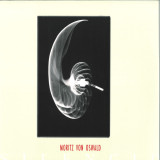
What are the differences and similarities between human and artificial sound, between oscillations generated by vocal cords and synthesizer voices, voltage amplified by speakers? On Silencio, his latest album for Tresor Records, Moritz von Oswald works with a 16-voice choir to explore this concept.
Drawing from the ensemble works of long-standing inspirations Edgard Varèse, György Ligeti and Iannis Xenakis, von Oswald and Vocalconsort Berlin delve into the space between sounds, creating a deeply textured collection that shifts between light & ethereal and
dark & dissonant.
As masterfully demonstrated in the early work of von Oswald and Mark Ernestus’ influential Basic Channel project, repetition and reduction are key elements here, much in the tradition of techno and minimalism. The vast dynamism of the human voice adds to the
profound weight of electronics while offering up a rhythmic source and sonic noise palette unexplored in von Oswald’s repertoire. In Silencio, von Oswald dredges a dank murk, pulling clouds over a distant pulse. It hangs, ready to take on new forms.
The compositions were written in von Oswald’s Berlin studio on classic synthesizers, such as the EMS VCS3 & AKS, Prophet V, Oberheim 4-Voice and the Moog Model 15. These abstract recordings were transcribed to sheet music for choir by Berlin-based Finnish composer and pianist, Jarkko Riihimäki and performed by Vocalconsort Berlin in Ölberg church in the city’s Kreuzberg district, only few metres down the road from where Dubplates & Mastering and Hard Wax opened their doors for music enthusiasts for many years so long. The recordings of the choral versions were then incorporated into the synthesized parts of the album and brought into anew electronic context; in Silencio, the focus is not on using one means to imitate the other, but to sonically discuss the tensions and harmonies between the two worlds and create a dialogue between them.
The relationship between von Oswald and Tresor Records goes back thirty years, all the way to Blake Baxter’s Dream Sequence in 1991 - which von Oswald engineered alongside Thomas Fehlmann. The collaboration with Fehlmann lived on, seeing the duo team up as 3MB with Eddie Fowlkes or Juan Atkins. More recently, the Detroit-Berlin connection continued as Juan Atkins & Moritz von Oswald present Borderland.
For von Oswald, Tresor Records and also the participating guest musicians of the choir, this release brings together audiences from other musical areas, cross-pollinating; Silencio is an album that stands for itself beyond the musical genre boundaries.
out of Stock
Last delivered 17 months ago available to reorder, subject to availability
In apartheid-era South Africa, gospel music provided solace and served as a tool for covert communication to circumvent the censorship of the settler regime. By the 2010s, South African gospel, deeply ingrained in the soul of Soweto, assumed a new role—as a heartfelt cry against persistent failures and shortcomings, a cry mourning a South Africa that never materialized.
A new South Africa needed a new gospel sound.
In 2016, nine young men from different parts of Diepkloof, a celebrated neighbourhood brimming with talent within Soweto's sprawling township, came together to form the sound of a new South Africa under the name Diepkloof United Voice.
Diepkloof United Voice's music has gone viral multiple times on TikTok, YouTube, and Facebook, garnering between 60,000 to 2 million views. The comments section displays flag emojis from Brazil to India, showcasing the global reach of their music.
This album was recorded on site in Soweto, in an abandoned classroom of Lebowa Elementary School in Diepkloof Zone 3, where the choir rehearsed for years. Amid rolling blackouts, Diepkloof United Voice poured their heart, soul, and vocal chords into their debut record, combining classic South Africa gospel, Soweto's own kasi soul, American blues, and Zulu flavor, to present the contemporary gospel sound of a changing South Africa.
The promise of a new South Africa might finally be realized, as Diepkloof United Voice guarantees the country's future is guided by the truth, uttered with each gasp of breath from their inimitable voices.
First music in 10 years from cult favourites Dark Dark Dark.
B Side is a solo cut from the bands lead vocalist Nona Maie Invie.
10” EP limited to 500 in UK/EU.
Fans of contemporaries Weyes Blood (of which DDD multi-instrumentalist Walt McClements is now a full-time member) and Angel Olsen (in whose live and studio band Invie is now a staple) will find much to love in these songs, as well as the b-side, Invie’s solo piece, “For Now” which, not unlike Invie’s 2017 solo release under the moniker IN / VIA, makes use of seamlessly interwoven piano and swelling, liquid synthesizer.
Invie sounds a bit like an alternate dimension Sharon Van Etten here and elsewhere. The three song set has the understated intensity of Nick Cave’s The Boatman’s Call and the promise of emotional liftoff that characterizes Kate Bush’s The Sensual World.
Dark Dark Dark’s rich history is punctuated by house shows and train hopping; touring as support for The National in Portugal;
playing both the National and TV on the Radio’s ATP Festivals, and years of indefatigable coast-to-coast U.S. touring. It’s a
history rich with recordings, including a pair of celebrated full-lengths produced by Tom Herbers (Low, The Cactus Blossoms),
three EPs, and a feature film score. Now, ten years later, –– surprise –– a new 10” single.
In 2013, when Dark Dark Dark released the What I Needed EP, anyone might have guessed it was a bridge between the previous year’s lauded LP Who Needs Who and the next big venture. The band had closed out 2012 as part of Australia's touring Harvest Festival, during which they stepped up to fill an unexpectedly vacant slot much later in the day, enchanting thousands of unsuspecting festival goers. Alas, after that, the band went silent.
The release of these new songs is certainly delightful and perhaps startling, as is the promise of more solo work from singer Nona Marie Invie. On the gorgeous and stately “Didn’t I Try,” Invie’s voice is elegant as ever, couched in the familiar sounds of Marshall LaCount’s distorted banjo and Mark Trecka’s rolling drums. The loping and haunted “Something Was There” follows –– a staple of Dark Dark Dark’s live sets in the last year of their touring.
Considering this band's history, their distinctive and dramatic sense of identity, this music is really and truly for fans of Dark Dark Dark.
Originally released as a hand-numbered CD on New Year's Eve of 2004, Last Light captures Tor Lundvall 's hushed songcraft at its most ghostly and grayscale, stripped bare like branches bracing for winter. Initially conceived of as "a piano album with sparse electronics" (with the working title November), Lundvall's palette steadily expanded, incorporating synthesizer, samples, bass, metronomes, and his signature spectral vocals. A journal entry from the spring of 2002 proved formative to his evolving vision: "I remember watching the blueish-grey light shimmering outside and hearing distant sounds echoing far away, eventually sinking into silence and stillness." The album's 12 tracks are steeped in this sense of autumnal transience, of bearing witness to what fades. The music moves in whispered swells, between dirge, drift, and devotional. Synths chime like slow-tolling bells; percussion shuffles and shivers, icy and isolated; bass traces a low-lidded plod - it's a mode both austere and seductive, lulling the listener into its landscapes of deepening dusk. Lyrically, Lundvall's language skews observational and depressive ("through lace curtains / grey light falls / dark clouds gather / in my soul" ), with each song like a gauzy glimpse into a different tableau framing winter's descent: rust - colored leaves, frozen ponds, cold crescent moons. Lundvall has long considered Last Light a "personal favorite" in his discography, and it's easy to hear why. In texture, finesse, and pacing, it vividly evokes the rare mood of fragile, frosty pastoral noir depicted in his iconic oil paintings. His is an art of the half-seen and half-remembered, of fleeting figures, shapes and shadows, and gathering darkness. Of all that disappears, and the ghosts that never leave: "So I wait / as the years / slowly drain the magic and the light / and the girl / I never loved / haunts me through the dark roads of my life."
Pixel Prison is a deeply introspective album that explores the themes of societal division and the struggle for unity. Rising Tide combines the best elements of Roots Reggae, Jazz, Rhythm & Blues and adds deep meditative Dub into their music. Incorporating sounds from across the musical landscape and rooted with hard-hitting conscious lyrics, the band has tapped into another deep well of inspiration for their sophomore release!
“We’re excited to share ‘Pixel Prison’ with our global following,” says Rising Tide founder Marcus Urani. “This album is a reflection of our commitment to using music as a tool for positive change, and we hope our fans will join us on this journey.”
Black Truffle is thrilled to present a previously unheard performance by rudra veena master Ustad Zia Mohiuddin Dagar, recorded in the North Indian city of Vrindavan at the Druhpad Samaroh festival in 1982. Z.M. Dagar was a nineteenth-generation descendant of the Dagar family of musicians, famed for their profoundly meditative approach to the tradition of Hindustani court music. Perhaps the most revered members of the family were the brothers Mohinuddin and Aminuddin Dagar, who played a key role in reawakening interest in dhrupad in the mid-20th century. The great exponents of the tradition from whom Z.M. Dagar descended were all singers, and dhrupad is essentially vocal music. However, as Z.M. Dagar explained, the veena family of instruments plays an important role in the education and practice of dhrupad singers, especially as an aid to mastering the fine microtonal nuances of pitch essential to the genre. Introduced as a child by his father to the rudra veena, a large and low-pitched veena amplified by two enormous gourds, Z.M. Dagar became the first modern dhrupad musician to perform with it as an instrumental soloist, giving his first recital at the age of 16. Devoted to the instrument throughout his life, he made innovations to its design and materials, as well as introducing novel techniques (such as playing without the use of the traditional wire plectrum, resulting in the remarkable warmth of his tone). In the great Dagar family tradition, his approach to the various ragas that make up the dhrupad repertoire was stately, slow, and considered, with a great emphasis on the alap, the heavily improvised exposition section. True to form, in this recording of Dagar performing the night raga Yaman Kalyan, the alap section stretches out to more than forty minutes of slow-motion bliss, a frozen tanpura drone hovering above Dagar’s gracefully bent notes and elegantly twisting phrases. In the alap’s first half, Dagar’s figures are so intently focused on the lower reaches of the rudra veena’s range that they register more as shudders and moans than melodic patterns. As the performance continues, he slowly climbs in pitch, though continuing with the same intent focus on the articulation of single notes and subtle microtonal variations. This leads to the jod section of the performance, which, though still accompanied only by the tanpura, gradually takes on a more rhythmic character. Developing almost imperceptibly over the course of nearly thirty minutes, the jod moves from the stillness of the opening alap to a rapid pulse that announces the closing section of the piece, where Dagar is joined by Shrikant Mishra on the pakhawaj (a double headed hand drum). Where many performers use the final section of the raga as an exercise in unrestrained virtuosity, Dagar and Mishra subtly weave a web of finely shifting accents and hypnotic melodic variations, bringing the recording to a fitting conclusion while remaining within the meditative space occupied by the performance as a whole. Adorned with beautiful archival photographs of Dagar taken by Swedish percussion legend Bengt Berger and accompanied by detailed notes from Bradford Bailey, Vrindavan 1982 is a stunning document of music unmatched in its patient focus and mysterious emotional depth. .
out of Stock
Last delivered 2 years ago available to reorder, subject to availability
By the early '70s, Milford Graves had more or less stopped gigging. Having learned his lesson the hard way in multiple-night runs like a legendary Slugs' residency with Albert Ayler, he knew that the level of energy that he put out during a performance would be difficult to sustain over the long haul. A concert was a kind of absolute ritual for him, after which he would be totally spent, emotionally and physically. Graves rarely left anything on the table. Any musical performance was an opportunity to present an amalgamated version of all the things he had learned. He was an innovator and a teacher at his core, and the concert venue was one of his first classroom settings.
In March 1976, Verna Gillis invited Graves to perform on WBAI's Free Music Store radio show. For the date, he chose to present a trio lineup which he had been occasionally playing – featuring two saxophonists who were dedicated to the drummer's vision. Hugh Glover is almost exclusively known for his work with Graves, while Arthur Doyle would gain exposure later for an obscure record that he made two years later, Alabama Feeling, which would become a highly collectable item among free jazz enthusiasts.
Originally released in 1977, Bäbi remains one of Graves' most seminal recordings. The music played by the trio was ecstatic. Extreme energy music, buoyant and joyful. It relied on Graves' new way of approaching the drum kit, in which he had opened up the bottoms of his skin-slackened toms and eliminated the snare. Graves' art was always unblemished by commercial interests, and this album is its finest mission statement.
"Chapter Two" umfasst die Alben "The Final Chapter" (1997), "Hypocrisy" (1999) und "Into The Abyss" (2000). Diese Alben gelten als Meilensteine in der Karriere von HYPOCRISY, da Peter Tägtgren, Mikael Hedlund und Lars Szöke in dieser Zeit ein neues Niveau an Songwriting-Qualität erreichten und die Dynamik betonten. Sie schufen zusätzliche atmosphärische Ebenen und setzten gelegentlich Clean-Vocals ein, was zu eindringlich schönen, aber dennoch schweren und aggressiven Melodic-Death-Metal-Hymnen führte. Nun kehren diese atemberaubenden Alben in edlen Vinyl- und CD-Editionen zurück, während Tägtgrens Remaster von "Into The Abyss" auch digital veröffentlicht wird.
Zero Years Kid is the alter ego of Joachim Badenhorst, one of the most fascinating and adventurous Belgian jazz musicians from the last 2 decades. He plays with the international band Carate Urio Orchestra but also as musician with Naima Joris or Chantal Acda.
Zero Years Kid started of as a solo project, but has grown into a full and organic live band.
Badenhorst sees Zero Years Kid as a kindergarten to explore other ideas and interests besides of jazz. Together with Jan de Vroede, Lennart Heyndels and Erik Heestermans he brings a colorful amalgam of hip-hop, pop, dance and r&b with playful and poetic lyrics in his native language: Dutch. Next to his clarinet and sax he adds samples and electronica which results in a surprising fantasy world where it is wonderful to wander.
In 2019 debut album Ongerijmde Rijmen was released. Successor Geen Grenzen is ready and will be released on November 10th of this year on Klein. Geen Grenzen is an ode to breaking boundaries, to color outside the lines and to don’t get hung up on expectations.
The title track is a rework of No Limits by 2Unlimited. The song got translated, slowed-down and distorted to the universe of Zero Years Kid. The album is a poetic and humorous trip with a melancholic twist, and themes like the covid pandemic, intense arguments that are forgiven, writers-block, desire and love.
“A piece of music never truly comes to An end. Revisiting a theme illustrates this idea that life goes on.” These are the words of Wayne Shorter, uttered in 2018 upon the release of Emanon, his final opus. On this record, the octogenarian uses dusky hues to shade in the passions of his youth - drawing and science-fiction, as well as the causes he has defended all his life - the fight against ecological upheaval and structural racism. This sentiment did not fail to resonate with Julien Lourau, who has reached a stage in life where he has begun to look back over certain pages written by the man he has always considered one of the masters of his trade. Five years later, this Parisian native has also chosen to revisit his glory days, offering reworked versions of specific tracks composed by his titular elder throughout the 80s. “When I play this music, I find myself back in my teenage bedroom. These are my standards, and they remind me of autumn in Rambouillet.” At that time, after practising his scales, Julien would also play Dungeons & dragons, and immerse himself in SF as well as heroic fantasy - epic influences which are not without a certain connection to the dreamworlds Shorter conjured up, as another fan of landscapes beyond the grasp of reality.
This album features four themes taken from Atlantis, which came out in 1985, and two from Joy Ryder, released three years later. To these, he has added a composition penned at around the same time for Sportin’ Life, the penultimate LP by Weather Report. This is rounded off by a tune taken
from Native Dancer, the record which, ten years earlier, in 1975, brought together this saxophonist who learnt his trade alongside Art Blakey, before joining Miles’ second quintet, and Brazilian Milton Nascimento.
“Between Native Dancer and Atlantis, Shorter did not release anything under his own name, but he took the time and care to really perfect his writing. Upon his return, he injected a very Brazilian form of subtlety into his compositions, especially rhythmically. And from a harmonic point of view, these themes are extremely sophisticated, and reveal truly singular colours. In fact, he decided to display the score as if it constituted the liner notes of Atlantis.”
Julien Lourau is a fan of every Wayne Shorter era, from his Blue Note days, where Mr Gone defined the bases of a truly unique repertoire, all the way to his final quartet - a reference like no other. He decided to focus on this “highly electric” period, which is not necessarily Shorter’s best known, nor his most widely appreciated - despite being a unanimous reference, Shorter has nonetheless never had a direct descendent. In Lourau’s line of sight there lies a desire to focus on typically South American tonic accents which characterise this repertoire, twinned with the ambition to switch up their actual sound “by attempting to open up onto a production highly influenced by eighties fusion". However, he admits that modifying the structures of these most unique of worlds constituted a fresh challenge. “There’s this labyrinthine harmonic system where you’ve no idea how it holds together, but where it’s actually impossible to touch the slightest element without the whole edifice wavering. It is in fact a very difficult thing to achieve!”
In order to successfully transcribe all this creativity free of obstacles, Julien Lourau once again called upon the help of Mathieu Debordes. From January 2023 onwards, Mathieu endeavoured to break down all the musical elements, on paper, before creating any actual music. The record was therefore constructed on the faith of these scores, without necessarily transiting through a creative residency - just two live gigs, to make sure the setup worked. Besides Mathieu Debordes and his synthesisers, Julien Lourau has assembled an ad hoc team by his side. On the bass, according to the track, we can hear erstwhile companion Sylvain Daniel or a new acolyte on the fretless bass, Joan Eche Puig.
Stéphane Edouard, on percussion, even dives headfirst into an unlikely proto-rap of sorts, on Pearl On The Half Shell (where, on the original version, Bobby McFerrin adjusted his interventions in a rather madcap style). Aesthete and drummer Jim Hart as well as pianist Leo Jassef also figure on this release - both were present on previous project devoted to label
CTI. “At sixteen, I wanted to sound like Michael Brecker rather than Ben Webster - that was equated with modernity in those days”, adds Julien with a smile, as for him, all this rings out a little like a logical next step, a joyful immersion into the fountain of youth. And if, for this record, he plays the soprano more than ever, the saxophone Shorter set in his sights on, he never tries to replicate an unattainable ideal note by note. What would be the point?
“Wayne Shorter is not just a saxophonist’s saxophonist. In fact, I don’t know a single person who has risen to challenge of his solos. I have not done it myself either, but on the other hand, I have retained a lot of his phraseology. His way of approaching the instrument reveals a more evanescent language, a work on colour and shape. Keeping this in mind has allowed me to gravitate towards certain elements, that in hindsight, I find echoes of in my work, even in Groove Gang.” Shorter etches out these phrases, creating a groove within which Lourau had traced subtle punctuation, managing, from a highly written base, to create fresh apertures, promises of a great escape. Emblematic of this standpoint, his regal version of Ponte de Areia, originally a wonderful dialogue between Milton Nascimento and Wayne Shorter. Here, the Frenchman takes liberties with the original melodies, without ever growing distant from the original spirit, extending one section with delicacy, offering a rubato development and then a groove “like a little suite”. Julien Lourau also renews with an accomplice from last century, Magic Malik, who lends his high-pitched vocals to the track. Though they had not recorded together for more than twenty years, the two of them got on as if they had only ceased collaborating yesterday, everything flowed naturally. The track was wrapped up in just one take, much like other themes, such as opener Who Goes There where the flautist deploys smooth, enchanted and smoky wisps.
Fundamentally, reflecting of the sleeve which features a child playing with a ball, image that could symbolise the sun just as much as the moon, Julien Lourau manages to translate the ambiguous candour which characterizes Shorter’s work - solar and crepuscular at the same time, that of a visionary and poet definitively situated outside of all chronology, but with whom Julien shares surprising and ‘timely’ coincidences. Shorter was born August 25, 1933, the same day as Julien’s father, “if we take time zones into account”, and who died on Lourau’s birthday, March 2, 2023. Should we take this as a random fact? Or could we not see here the sign of a destiny connecting the agnostic Frenchman to the man who, as a fervent Buddhist, believed in the transmission of his spiritual flow ?
Five groups, one mythical studio - documenting the emergence of a generation!
The initial postulate was simple: five groups, one emblematic studio and 24 hours for each to imagine and record two unreleased tracks with one objective - the will to document a French jazz scene in the midst of renewal.
In these last few years, several innovative currents have shaken up the world of jazz and attracted new fans. They have bubbled up from Los Angeles, impregnated with hip-hop culture (Kamasi Washington, Terrace Martin, Thundercat), or from London, tinged with African rhythms (Nubya Garcia, Kokoroko, Ezra Collective). Meanwhile, in France, a new scene is emerging, carrying with it more of a dancefloor-oriented sound influenced by electronic music - an obvious kinship with the French Touch explosion of the late 90s.
Historically, every movement has been assimilated to a certain neighbourhood, to specific clubs where late at night, young guns stayed up to imagine the jazz of tomorrow - the Cotton Club for the jazz of the 20s, Minton’s Playhouse in Harlem for Be-Bop, the Black Hawk in San Francisco for West Coast jazz, Birdland in New York for Hard-Bop or a lot more recently, the Total Refreshment Centre which has been the playing field for the new London scene.
In Paris too, this new sound is associated with actual venues, places which have allowed these groups to form, create a repertoire and forge an aesthetic - Le Baiser Salé for Monsieur Mâlâ, La Gare/Le Gore for Photon, La Pêche in Montreuil for Ishkero, La Petite Halle for Underground Canopy and also le Duc des Lombards and le 38 Riv’ for Alex Monfort; it’s in a live context that this music will always continue to evolve.
Keeping this “live” spirit, with all its spontaneity, was actually the guiding line for the elaboration of this Studio Pigalle compilation. Each take was recorded in the most organic way possible, bringing all the musicians together in the same room to limit post-production alterations before the final cut was assembled, in just one day, by studio in-house sound engineer, Felix Rémy.
A feeling of urgency permeates a record guided by an artistic production taking care to crystalise the essence of this artistically free-range generation whose childhoods were rocked just as much by Bill Evans and Roy Hargrove as by J Dilla and Jeff Mills. One of the two tracks recorded is geared towards the dancefloor, and the other, more cosmic/ambient gives freer rein to individual interpretation.
There were therefore many possible ways of interpreting these guidelines for the five formations which number among the most distinctive on the current French musical landscape, and the occasion, for some, to rummage through their archives! With Transe (Mbappé) and Da Verdere (Vella), Monsieur
Mâlâ present us with two unreleased tracks issued from the very first rehearsals of the quintet reworked especially for this compilation. “Seen the aesthetic range of this group, it all worked out very naturally in the studio”, recounts keyboardist Nicholas Vella “Recording like they did in the sixties with all the channels live and working with small imperfections was a very interesting task, even when it came to the mix, we had to make do with the takes we had... “
“Our group is very recent, and with this session, in just two tracks, we had the opportunity to present the entirety of our musical universe,” says Photons pianist Gauthier Toux. “All too often, we assimilate this fusion between jazz and dance music to computers and post-production modifications. For “Dessine”, we kept the first take, and we must have recorded just three or four for the other track with more of a techno bent. In one day, we understood that we could play our entire repertoire live, from A to Z”.
“When the Komos label offered me this project, it immediately spoke to me”, remembers Alex Monfort “Straight away, I thought of “Since I Met You”, a track with a nine/four time signature which really is reminiscent of a new- soul groove, but with this extra cosmic vibe! I wrote the words to the chorus and Nina Tonji placed her voice on the track, adding her own verses. For “Tonight”, the up-tempo track, I wanted to head off in more of a hybrid direction inspired by Kaytranada or the Black Radio series by Robert Glasper. A cross-over between jazz and hip-hop which really does represent my world, and I also tried to place vocals centre stage (Emcee Agora)”.
“We truly resonated with the way Antoine Rajon imagined this compilation and the recording session”, confide Warren Dongué and Jérémy Tallon from Underground Canopy. “When arriving in this studio we felt as if we had gone backtothe70s! Inkeepingwiththespiritofthisera,heknewhowtoletus keep our spontaneity, without recording in too many takes, and that’s how we like to work”.
“We managed to adhere to the themes of the compilation without changing our instrumentation, we wanted to remain faithful to the sound of Ishkero on these new compositions and take them somewhere else” – says drummer TaoEhrlich -“Withoutaddinganyelectronics.Thesessionwassupervisedin a truly subtle and benevolent manner. From a human perspective, it was also a wonderful experience”.
Whether turned towards hip-hop, ethnic or electronic music, the artists featured on this Studio Pigalle compilation represent the eclecticism of a new generation in the process of writing the first chapters of its history. Open to experimentation, these artists continue to hold high an immutable love for improvisation and creation in the moment... another definition of the word Jazz!
A thrilling immersion into FM synthesis and a puzzle of MIDI data, the Los Angeles based multi-instrumentalist Gregg Kowalsky returns to Mexican Summer with Eso Es, his sophomore outing for the label and first new music since 2017’s L'Orange L'Orange. Representing a significant creative leap for the veteran composer, Eso Es unfolds as a hypnotic journey into Kowalsky’s inner world, laced with a depth of emotiveness and vulnerability that’s rarely encountered in the electronic music realm. Raised in South Florida and trained at Mills College under Fred Frith and Pauline Oliveros, Kowalsky first came to prominence during the mid-2000s as a member of the thriving experimental music scene in the Bay Area, issuing a series of stunning albums on imprints like Kranky and Root Strata and contributing to a reinvigoration of American made Minimalist and electroacoustic music. In an addition to composing solo works, pieces for large ensembles, film soundtracks, dance performances, and site-specific installations over the past twenty years, during the 2010s Kowalsky concentrated his energies as one half of the critically acclaimed duo Date Palms, performing extensively and releasing three hypnotic albums, including 2011’s Honey Devash on Mexican Summer.
out of Stock
Last delivered 2 years ago available to reorder, subject to availability
Böhm is no stranger to the electronic music scene as he has made quite a splash with his latest releases on Dolly, PARTOUT, M>O>S and Undersound Recordings. His newest outing on eudemonia acts as an ideal successor as he delivers a versatile EP with dreamy and old-school ravey moments resonating perfectly with each other.
out of Stock
Last delivered 2 years ago available to reorder, subject to availability
Geordie Kieffer doesn’t f**k around. The impish, self-proclaimed “God Father of Agro Pop” writes hard core pop bangers that bark and bite, drawing influence from both his questionable past and the city-wide playground of his L.A. hometown. His sound is something novel: a sexy and comedic dark romp through Pop, Hip-Hop and Electro that dives head first into your brain and just won’t get out.
After the breakout of his first two singles, “Red Line” and “Swinger,” a sold-out headlining tour in Canada, he’s ready to drop his debut album, Just Kill Me Already, a heavy hitting and ferociously playful Alt Pop jamboree of self introspection and bravado. Like a charming outlaw dwelling on the outskirts of pop music, Geordie Kieffer is dangerous and oddly refreshing. His music will no doubt inspire fist fights and flirtation, anger and elation
9Million is a Toronto shoegaze band helmed by the multi instrumentalist, songwriter and producer Matthew Tomasi. Best known for his work with alt pop icons like Ethel Cain and Nicole Dollanganger, Tomasi has gained increased notoriety in recent years for his behind the scenes work as a producer and mix engineer, but he is also a tireless creator and songwriter himself; playing and contributing to the music of countless bands and independent artists. With 6 other members including Ace Mendoza (Lead Guitar, Vocals), Danielle Clark (Vocals), Lia Lepre (Keys), Jamie Fastlane (Bass), Brandon Santi (Drums), and Looch Man (Guitar, Vocals); Tomasi says 9million started out “as a creative outlet for myself to explore new sounds and ideas that I wasn’t touching on with any of my other projects or clients'', but quickly the project took on a collaborative spirit not unlike his hardcore band Friction.
The sound of 9million infuses a shoegaze / alt rock foundation with elements of brooding alternative pop, indie rock, and synthwave - resulting in something that recalls ahead of their time 90s bands like Hum and Failure while connecting that sound from the past to the modern world of post-Lana Del Rey slowcore pop sound that Tomasi traffics in on records like Preacher’s Daughter, Natural Born Losers,
and Married In Mount Airy. Featuring several new original songs and two covers, the mixtape explores more electronic elements and layers of vocal processing that, when paired with the fuzzed out rock sound of Between Us, present an exciting blend of styles the band is pulling from. As a whole, Gush is a loose yet emotionally hefty collection of songs that highlights Tomasi’s distinct approach to shoegaze while also capturing the unique dynamic and possibilities of this band as a whole.
A tech company's "senior spirit guide" finally comes to the defense of the "financially unsuccessful" Vincent van Gogh; wonders of the natural world are reimagined as "muster points for brainstorming innovators"; the "artificial char lines" on fast-food burgers are cited as if signs of the apocalypse. For the better part of three decades, Aesop Rock has used the syntax of the moment to pinpoint the fault lines in that moment's supposedly solid foundation. With his tenth album, Integrated Tech Solutions, Aes wields insidious corporatespeak as a tool to pry that parasitic worldview away from the parts of life that truly matter.
A concept album about an organization offering "lifestyle- and industry-specific applications designed to curate a desired multi-experience," Integrated Tech Solutions picks apart the charlatan language that hears app inventors put themselves on continuums starting with cavemen and continuing through da Vinci. On "Mindful Solutionism," the wheel evolves seamlessly into modern agriculture—and then into atomic bombs, Agent Orange, cigarettes, and surveillance cameras. In a rare moment of transparency, the engineers Aes give voice to sum up this spiral in just a few words: "We cannot be trusted with the stuff that we come up with."
Appropriately, the album sounds like the past and future at once. Largely self-produced, Integrated Tech Solutions catches Aes at his leanest and most innovative, leveraging "Solutionism"'s careening bounce against the wistful "By the River" or the slow creep of "Salt and Pepper Squid." The effect is a record that sounds itself like an organism growing, mutating, hurtling toward profitability-and then destruction. As fans have come to expect, Aes is cuttingly funny and slyly profound at once, whether recounting a childhood restaurant run-in with Mr. T ("100 Feet Tall") or quipping, on "Pigeonome- try," that "white dove is a pigeon-you motherfuckers is bigots." At the same time, Integrated Tech Solutions is working on another parallel project: tracing the sprawl of modernity and cutting directly to its core. "I've been doing laps of the lost worlds," he raps on "All City Nerve Map," sounding at once wearied and reinvigorated. "I can draw a map to the raw nerve."
[f] Kyanite Toothpick [feat. Hanni El Khatib]
[k] Bermuda [feat. Lealani Teano]
[n] Forward Compatibility Engine [feat. Rob Sonic]
In his “Pulse Music” compositions of the mid-1970s, composer John McGuire forged a unique interpretation of European serialism. A student of Karlheinz Stockhausen, Krzysztof Penderecki and Gottfried Michael Koenig, McGuire moved to Cologne, Germany in 1970, where he become associated with the world-leading Studio for Electronic Music at Westdeutscher Rundfunk (WDR) in Cologne. Like Stockhausen, McGuire found his musical imagination both constrained and inspired by the technology that was available to him.
A conversation with sculptor Hans Karl Burgeff led McGuire to think beyond the horizon and into limitless space. For “Vanishing Points” (1985–1988), McGuire used an entirely digital set-up for the first time: a digital sequencer, eight Yamaha DX-7 synthesizers and a Studer 24-track digital tape recorder. The piece was conceived as a “sequel” to the Pulse Music series, but also a step forward from it. Whereas the Pulse Music pieces had employed steady streams of pulses, with Vanishing Points McGuire employed pulse layers that accelerate or decelerate against one another, vastly increasing the resulting rhythmic complexity.
McGuire's exploration of music technology continued in “A Cappella” (1990–1997), written for his wife, the soprano Beth Griffith, known for her recording of Morton Feldman’s “Three Voices” made in 1983. Using samples, he created a four-voice choir of voice samples and arranged them into interacting parts. The composition faced challenges due to the organic nature of the human voice compared to the precision of synthesized sounds. This process involved extensive editing and a negotiation between the "material" and the "original conception". This sort of negotiation applies as much to the composition of a single piece as it does to the work of two decades.