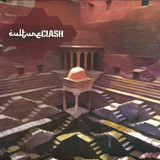
Globally adored Spanish techno protagonist Indira Paganotto releases her debut album 'Arte Como Amante' via ARTCORE / PIAS Électronique. It brings together thirteen fearless tracks that stretch way beyond any one genre. It's high-pressure, high-energy, and deeply personal. A full-spectrum dive into the world of one of electronic music's most dynamic artists.
It follows a huge 2025. She debuted at Coachella. Played her first ever b2bs with Armin van Buuren at Sonar and Sara Landry at EXIT. She became the first woman to close Monegros. She held down her first Club Room residency at Hï Ibiza for 14 weeks, and even launched her own creative studio space, ARTOPIA, in Santa Eulalia. Her label ARTCORE the home of this special album also took their presence in the dance world to the next level with their own curated stages at Tomorrowland, Mysteryland and Dreambeach.
Now, she's telling her story. The title 'Arte Como Amante' means 'art as a lover'. For Indira, that's not just a phrase. It's her life. This album has been 14 years in the making. It began in Madrid in 2012, when she was 19, and was completed in 2024. She waited for the right moment. She lived life. She collected experiences. She built the sound. "I know to take 14 years to make an album seems crazy," she says, "but without living those experiences, how could I have made the music about them?"
The result is a diverse, adrenaline-fuelled body of work that hits hard and moves deep.
quête:el patron
- 1
Our newest vinyl release highlights the artistry of Argentinian producer and DJ Kevin Toro.
He presents three dynamic house tracks, each brimming with dancefloor energy.
Complemented by an exquisite remix from the iconic “El Presidente,” Priku, this record is a must-have for all vinyl lovers.
Enjoy!
Archeo Recordings is a record label. Old, lost, obscure and forgotten gems and a boundless focus on the new Balearic scene for a wider audience of collectors, DJs and music lovers. All releases are limited edition. This release is a Limited Edition EP (250 on black vinyl). New life and an expanded treatment of Quiroga's epic Electronic/Future Jazz/House Snaporaz (Really Swing 2020), from none other than L.U.C.A. (AR029). Archeo delights us with this luscious and limited release featuring Quiroga's sleek jazz-house UFO "Snaporaz". This edition includes an exclusive extended version, a brand-new cut from the Neapolitan groover, and a completely cosmic overhaul from the mighty L.U.C.A. Operating at the nexus of future jazz, beatific electronics and deft house, Quiroga (Walter Del Vecchio to his nearest and dearest) has carved his own irresistible niche over the past two decades, gracing countless labels with nuanced body movers and forging his impressive Really Swing imprint, the original home to this melodic masterpiece. Tucked away on Del Vecchio's 2020 EP "Chords and Desire", the sunny and sultry Snaporaz fell foul of our communal pandemic preoccupation, missing out on the widespread acclaim, appreciation and ass-shaking it so richly deserves. Archeo steps in as patron, giving this Rhodes-led jazz-house heater the full 12" treatment it was born for. On the A1, Quiroga's extends the ecstasy of "Snaporaz", stretching its original elements into a loosely grooving, dopamine-deep delight. Sunkissed keys and tender pads ride the rhythm of a bubbling bassline while the sophisticated percussion snaps, crackles and pops in the background - the perfect environment for the P&P leadline to flourish. If that wasn't enough to have you slipping straight into your party pumps, Walter makes the most of the extra runtime with a HOT hand drum freakout down the final stretch, adding the most enticing icing to an already heady cake. A comparative cooldown follows in A2 offering "Escorpião", a fusion-tinged flirtation for aperitivo everywhere. Cutting back on the kick to save space for the swing, Quiroga leads us through a sublime sequence of hooks, riffs and solos, without ever overwhelming the ears but keeping the groove alive. It's a dizzying delight from start to finish and features one of the finest keytar and cowbell interplays you're likely to hear. The B-side belongs to the frankly legendary Francesco de Bellis, a house, disco, Italo and electro hero, appearing here under his deliciously downbeat alias L.U.C.A. Imbuing Quiroga's original with the atmospheric stylings of his Edizioni Mondo oeuvre, the Roman producer delivers a radical rework, slowing the tempo by 20 bpm and translating those jazzy tones into a drifting new age dancer for the cosmic crowd. Zero gravity rhythms meet mystical melodies uptown as the house hippies get down. Lest we overlook the batshit brilliance of the drum programming, L.U.C.A. caps it off with a bonus beats version sure to delight DJs and dancers alike in its otherworldly oddness.
- A1: Morning Of The Magicians
- A2: Absentia
- A3: Communion Phase
- B1: Spectrum Two
- B2: Quiet Storm
- B3: Mynd
- B4: Patron Saint Of Elsewhere
Artist, illustrator and bestselling author Matt Sewell is an avid ornithologist. He also plays the guitar in Sewell and the Gong, a music project with producer Chris Tate.
Their new album is a sonic journey into a whirling world of wild woods, dancing in the mud, late night pastoral adventures and some sort of 21st century hedonism connected to ancient rituals the mark the passing of seasons. It’s a glorious noise to get lost in.
- 1: This Music
- 2: Endless Summer
- 3: Abe’s Flamenco (Ft. Franco Franco)
- 4: The Urban Solitude
- 5: E-System (Ft. Manonmars)
- 6: A Feeling
- 7: Close Ur Eyes (Ft. Birthmark)
- 8: Overdrive
- 9: Walking Home (Ft. D. Ham)
- 10: Sunday Morning
Love in the time of collectively assured techno-capitalist-nuclear holocaust! It’s the endless summer the Brits have been harping on about since they think they won the World Cup. The soundtrack is the debut album of the Content Provider; where Octatrack illbient and industrial chanson mesh in a singed postcard addressed to the UK Border Force and co-signed by aliens plucked from the petri dishes of Young Echo, Cold Light and Avon Terror Corps.
It’s a name she tried to keep anonymous, but Drowned By Locals and Bokeh Versions are breaking contract to reveal that the Content Provider is in fact the shock production alias of DALI DE SAINT PAUL. Patron saint of Bristol’s self-destructive improv idols EP/64 as well as post-feminist chamber collective Viridian Ensemble, avant-terror duo Harrga and constant collaborator with the likes of *breathe* Moor Mother, Valentina Magaletti, Mariam Rezaei, Vincent Moon, Maxwell Sterling, Ossia, Ben Vince.
And isn’t it such a strange release? And won’t people be surprised? Endless Summer is grubby and heartfelt, defiant and hopeful, with flecks of warped reggae on E-System nudging the freeform dream balladry of A Feeling and Sunday Morning, Kode9 & Spaceape-worthy dread poetry of Close Ur Eyes next to anthemic electro-crush of Overdrive. Even to those that know her well, and EVERYONE with their belly in the Bristol underground knows her, Endless Summer is a revelation. Perhaps the apex of the known Dali-verse……where her live gigs have boiled with an experimental volcanic vocal force, Endless Summer is twisted, syrupy, sultry, POP.
- A1: Minos Pour Main Basse (Sur La Ville) - Le Patron Est Devenu Fou (Sur La Ville)
- A2: Air - Soldissimo (Edc Remix)
- B1: Etienne De Crecy - Prix Choc
- B2: La Chatte Rouge - Affaires A Faire
- B3: Mr Learn - Fermeture Definitive
- C1: Mooloodjee - Les 10 Jours Fous
- C2: Minos Pour Main Basse (Sur La Ville) - Tout Doit Disparaitre (Sur La Ville)
- D1: Alex Gopher - Super Disco
- D2: Dj Tall - Tout A 10 Balles
- D3: Etienne De Crecy - Liquidation Totale
- D4: Alex Gopher - Destockage Massif
Reissue of seminal ’90s house LP ‘Super Discount’ from Étienne
de Crécy, a founding classic of the French touch sound feat. Air,
Alex Gopher & more. Double LP housed in a gatefold sleeve.
Released in 1996, ‘Super Discount' is the debut album by Étienne de Crécy, one of the most influential figures on the electronic music scene and one of its most inspired producers.
Over time, this record has become one of the pioneering records of the French Touch and a founding classic of electronic music, both in France and abroad. It was a critical and commercial success from the start and is an icon of its time..
Apollo / R&S are delighted to welcome back The Primitive Painter, aka the duo of Roman Flügel and Jörn Elling Wuttke for a timely reissue of their 1994 lost classic self-titled album of sonorous IDM.
Growing up in Frankfurt, in the 80s and 90s the duo met at an indie rock club in their home town of Darmstadt, bonding over their shared obsession with the first wave of acid, Chicago house and early Detroit techno as well as their patronage of now iconic Frankfurt club nights like The Omen or Dorian Gray or the infamous Delirium Record shop run by scene stalwarts Ata (Robert Johnson) and Heiko MSO (Playhouse).
Taking inspiration from the likes of The Black Dog and Transmat as well as seminal compilations such as Planet E’s Intergalactic Beats and Warp’s Artificial intelligence compilation the duo honed their inventive take on the Detroit techno blueprint under the monicker Acid Jesus, debuting on their freshly minted Klang Elektronik label. The label was started in conjunction with Ata and Heiko after Fluegel & Wuttke (regular patrons of the Delirium store) pressed a demo on them, muttering the immortal line; “Please listen to the tape, we are big Mr. Fingers fans.”
Through the mid ’90s the project flourished giving rise to a classic album and a brace of singles that number amongst the best of the era’s techno, winning them a influential fans most notably Sven Väth, David Holmes and Andrew Weatherall who invited them to play live at one of the legendary Sabresonic parties in London.
Alongside the success of the Acid Jesus project, the duo found great inspiration in outside of the club, including an ambient happening when the KLF came to play Frankfurt; “There were live sheep eating grass on stage while they played at Mark Spoon’s club XS”, as well as cinematic influence from the likes of Jim Jarmush and Wim Wenders. It was however the euphonic IDM grandeur of Apollo Recordings self titled compilation of 1993 that really got their creative juices flowing: “It was a ten track compilation with artists like David Morley, Model 500, Aphex Twin which still sounds so good today,” Jörn enthuses. “ It was really the trigger to go away from the Detroit sound and more towards the big melodies of B12 etc.”
Deciding to make their tribute to this style of music the duo turned out 10 tracks of gauzy, melodious electronica in a white hot fever, one after another over the ensuing months. Settling on a name for the new project they picked ‘The Primitive Painters’ taking inspiration from the band Felt. “We are both children of the C86 movement,” explains Jörn. “this attitude of noisy art school influenced rock like Primal Scream, MBV, The Jesus & Mary Chain really inspired us to take a DIY approach to our music.”
They sent the resulting demo cassette to Renaat at R&S / Apollo. “We really had no expectations,” Jörn explains. “So we were shocked and delighted when we received a fax saying that he wanted to release it”.
The resulting release was bungled by an R&S mix up that attributed the album to the duo’s own Klang Elektronik label which confused both fans and distributors alike, denying the release the critical boost and attention that it so richly deserved. Accordingly the release slipped out without much fanfare, with a chastened Fluegel & Wuttke returning to their Acid Jesus activities which would eventually lead to their blockbusting success as Alter Ego.
Over the ensuing years the reputation of The Primitive Painter album has only grown, with second hand copies (only 500 vinyl were pressed) changing hands for exorbitant amounts on Discogs, leading us to this opportune moment of a richly deserved ‘first’ release on the label for which the project was started, Apollo / R&S.
“This really brings us full circle,” says Jörn. “Apollo / R&S meant and means so much to us as artists and so it was bittersweet to not have the official release - to put that right all these years later feels really good.”
This new vinyl release comes in re-created original gatefold artwork and includes all original 10 tracks (Stoned Soul Picnic was previously on the CD only).
- 1: Raza Odiada (Pito Wilson)
- 2: Colas De Rata
- 3: Hechando Chingasos (Greñudos Locos Ii)
- 4: La Migra (Cruza La Frontera Ii)
- 5: Revolucion
- 6: Consejos Narcos
- 7: Almas De Venta
- 8: La Ley Del Plomo
- 9: Los Tengo Colgando (Chingo De Mecos Ii)
- 10: Sesos Humanos (Sacrificio Iv)
- 11: Primer Meco
- 12: El Patron
- 13: Hermanos Menendez
- 14: Padre Nuestro
- 15: Ritmos Satanicos
BRUJERIA is an extreme Mexican-American metal band founded in 1989 in Los Angeles. Under cover of pseudonyms, its original members were the guitarist Dino Cazares ( FEAR FACTORY ), Jello Biafra ( DEAD KENNEDYS ), the drummer Pat Hoed, bassist Billy Gould ( FAITH NO MORE ) and singer Juan Bruno. BRUJERIA first appears as a terrorist group having kidnapped the bosses of Roadrunner Records in order to be able to release a record. This joke having been denied, the group appears as a parallel project that is characterized by the themes of satanism, terrorism, sex, rebellion, and politics. The group forges a reputation of psychopaths by playing on stage , with hooded or masked with scarves, titles called "Marijuana" or "Brujerizmo ( the word "Brujeria" which means "witchcraft" ). BRUJERIA is Mexican hence the name and lyrics in Spanish. Dino Cazares ( exFEAR FACTORY ) was the guitarist. The musicians of BRUJERIA keep their identities secret but it is known that ex-FEAR FACTORY's Dino Cazares, FEAR FACTORY's Asesino and Raymond Herrera, as well as Billy Gould, ex-FAITH NO MORE, have worked on guitar, drums and bass, Nicolas Barker ( ex-CRADLE OF FILTH etc ) takes also part of the butchery, just to name a few...
- A1: New Hook - Lebenskonzept Perfektion
- A2: Innere Tueren & Map Ache - Xxii (The Goodbye)
- A3: Curses - In Disarray
- A4: Mano Le Tough - Keep Noddin’
- B1: Skelesys - Synesthetic Serenade
- B2: Rebolledo - Alright Pingüino Rodriguez
- B3: Moderna Y Theus Mago - Amor De Verano
- C1: Massimiliano Pagliara - Get Moving
- C2: Man Power - Unbekannt
- C3: Dj Oyster - House Of Bookla (Gerd Janson Remix)
- D1: Lydia Eisenblätter - It Doesn’t Stop
- D2: Alinka - Light Tunnel 8
- D3: Dc Salas - A Journey
- E1: Llewellyn - High5, Twenty5
- E2: Benjamin Fröhlich - Perfectly (Version Pour Offenbach)
- E3: Peter Invasion & Gregor Habicht - Kasalina
- F1: Kalexis - Pulsar Radio Star
- F2: Adana Twins - Neue Realitä
- F3: Oskar Offermann - Live Forever
- G1: Robert Dietz - Deny The Flaw
- G2: Cromby - Lost Tool
- G3: Odopt - Gristlecut
- H1: Kadosh Feat Tony Y Not & Common Occupation - Wake Up
- H2: Ali Schwarz - Tougana
- J1: Ludwig A F. - Sky
- J2: Shubostar - First Children
- J3: Jennifer Touch - Shiver (Robert Johnson)
- H3: Current Location - Terrace Dub Tool
- I1: Hcl - Riv
- I2: Irakli - Infinite Errors
- I2: Rkjvk - Memory Lane
In the heart of Offenbach, where the city's pulse synchronizes with the beat of the night, stands the illustrious Robert Johnson Club. For a quarter of a century, it has stood as a bastion of sonic exploration, a sanctuary for those who seek solace in the rhythm, and a beacon of inspiration for the global electronic music community. As it proudly raises its glass to toast 25 years of unrivaled musical excellence, the echoes of countless memories reverberate through its storied halls. To honor this landmark anniversary, „Live at Robert Johnson“ presents a kinda like masters blueprint of sound: "Tell Me Something Good - 25 Years of Famous When Dead!" This compilation, aptly named after the club's mantra, serves not only as a celebration of its rich history but also as a testament to the enduring legacy of the artists who have graced its stage. Crafted with meticulous attention to detail, each track on the compilation is a sonic journey unto itself—a symphony of beats and melodies that weave together to tell the story of Robert Johnson's evolution over the past quarter-century. From the pulsating rhythms of underground techno to the ethereal melodies of deep house, the compilation encapsulates the club's eclectic spirit and unwavering commitment to pushing the boundaries of electronic music. But beyond the music lies something deeper—an intangible energy that permeates every aspect of Robert Johnson's existence. It's the sense of camaraderie that binds together the club's patrons and artists alike, the shared experience of losing oneself in the music, and the profound sense of belonging that transcends language and culture. As the compilation reverberates through the speakers, it serves as a rallying cry—a call to arms for all who have ever felt the transformative power of music. It's a reminder that, even in the darkest of times, there is beauty to be found in the simple act of coming together and losing oneself in the rhythm of the night. So let us raise our voices in celebration of Robert Johnson Club and the indelible mark it has left on the world of electronic music. Here's to 25 years of passion, of creativity, and of "something good" that will echo through the ages for generations to come.
Now on our sixth release & going strong, Brooklyn Sway returns with a heady combination of local producers, further-afield figures and scene-setting interludes to get that real Bucktown mood, accompanied by bold new artwork from NYC "Grafstract" muralist Fumero.
After words of wisdom from originator David Morales, St. Xose, patron saint of afterhours, re-rubs his own entry from BKS-01 into an electro flip with a forceful but smooth strut, Nathan Nothing's ephemeral vocals vanishing in spaces between steady bass pulses and broken beats. Those looking for late-night addresses check Noha's 'Madison Street 932', where the PanickPanick! label head proves his local cred with a funky, vocal sample-driven house jam equally at home on its eponymous street corner or somewhere later, darker, and preferably inside.
Label regulars DeWinter & Emma return with 'Unity', the spoken word Spanish vocals interweaving with choppy snare patterns and a room-filling reverberating bass roar that hits paydirt when English vox and a kick hit late in its second half. C&K are local legends Connie & Karina, and while that may not be some punters' first guess for their moniker's meaning, the track is an exercise in restraint and class, jaunty house swathed in dub echoes and hand drums that positively sways when the trombone lead swings in to carry the tune.
Permanent Parts is the second album released by visual artist Katharina Grosse (synthesizer) and musician Stefan Schneider (synthesizer; So Sner, To Rococo Rot, Mapstation). Grosse and Schneider were joined at Galerie Max Hetzler on 29 April 2023, performing as part of the Spectrum without Traces exhibition, by three artists who all generally work within improvised music - Carina Khorkhordina (trumpet), Tintin Patrone (trombone and electronics), and Billy Roisz (noise generator, piezo and mini cymbal). Permanent Parts is an extraordinary set of recordings that inhabits multiple zones at once: within its thirty-five minutes, we can hear the interactions of non-idiomatic collective music making, and the electronic glimmers of electro-acoustics, while, at the same time, the music remains untethered to genre.
Permanent Parts is the second album released by visual artist Katharina Grosse (synthesizer) and musician Stefan Schneider (synthesizer; So Sner, To Rococo Rot). Grosse and Schneider were joined at Galerie Max Hetzler on 29 April 2023, performing as part of the Spectrum without Traces exhibition, by three artists who all generally work within improvised music – Carina Khorkhordina (trumpet), Tintin Patrone (trombone and electronics), and Billy Roisz (noise generator, piezo and mini cymbal). Permanent Parts is an extraordinary set of recordings that inhabits multiple zones at once: within its thirty-five minutes, we can hear the interactions of non-idiomatic collective music making, and the electronic glimmers of electro-acoustics, while, at the same time, the music remains untethered to genre.
This capacity to work within liminal zones makes perfect sense when thinking about both Grosse’s and Schneider’s prior work, whether the energetic diffusions and spatial explorations of Grosse’s artistic practice, or the slippery texturology of Schneider’s recent work with electronics. Khorkhordina, Patrone and Roisz all find their own ways into this dynamic, too, and Permanent Parts feels like an equal exchange of presence and contribution; there are no hierarchies here. This might explain the music’s curious sense of development, where several elements are allowed to exist alongside each other, not in direct contact but in a mode that’s somewhere between carefree layering and unconscious juxtaposition. The musicians are listening, but not just with their ears – their skin, their bodies are hearing, too.
When talking about Permanent Parts, Schneider is careful to place it within contexts that are specific, to some degree, but which allow for difference to blossom. “Although it was recorded live, it somehow was not meant to be a documentation of a live event in the first place. The five piece line up that appears on the record had met for the first time only a few hours before the concert took place.” While it might take a leap of faith for all parties to walk together, and so willingly, into a place of such freedom, of such risk, there is clear sympathy here between the musicians, and a shared appreciation of the immediacies of the situation.
It also throws some of our preconceptions about this music out of the window. “The record does not feel like a document of a performance as the music was not pre-composed and there was no reference,” Schneider continues. “Perhaps it was not even an improvisation?” For Grosse, her musical relationship with Schneider similarly shakes free from expectation: “My sound does not exist without Stefan’s. It is neither written down nor is it improvised. It is instantaneous.” When thinking about the five-piece exploration on Permanent Parts and asked to expand on what each musician brings to the table, she continues, “We all love the thrill of an unknown encounter and we seem to have a need for building connections through the thicket of our voices.”
There’s a curious phrase on the back cover of the album, before the artists are listed: “Wir sind eine Batterie / We are a battery.” This sums up the spirit of Permanent Parts. Schneider recalls that Grosse said this phrase to the musicians at the start of the performance. Grosse explains further, “The figure of the battery referred to our placement in the space building out a small circle facing one another from where the sound could spill into the impressive volume of the gallery.” The battery as an arrangement of similar devices; but I also think of charge, and the conversion of chemical energy, and of fortification. It’s a poetic metaphor that sums up much of the febrile pleasure of the music contained on these Permanent Parts.
– Jon Dale, Melbourne
- Ocean Motion Mildew Mind
- Yes Sir Ree
- I Can’t Stand It
- Country Time
- If I Were A Poet
- Torero Piece
- Peachy Keen-O
Carving an unlikely and elaborate niche in the stoney academic landscape
which she once shared with the likes of Phill Niblock, John Cage and Sorel
Hayes, the excitable proto-punk poèmes sonores of the linguistic loose
cannon known as Beth Anderson first rolled through New York in the mid-
1970s (from Kentucky via San Francisco) like a jumbled tumbleweed of lost
Letterism, face paint and threadbare drummy funk to astonish gallery floors,
lecture theatres and loft apartment stages.
One thousand leagues under the radar of the commercial music industry,
with a sense of humour that elevated way above her highbrow peer group,
the music of Beth Anderson has successfully evaded the pressing plant for
most of her creative career, and not unlike fellow New York gallery actionist
Suzanne Ciani, it has taken decades to successfully collect and contextualise
these early recordings - expanding her elusive discography beyond the rare
and mysterious solo single entry in the process.
When uttered amongst the type of vinyl vampires that haplessly gravitate
between both art school vintage vanity pressings and family funded plunder
funk, there’s an outside chance that the name Beth Anderson might muster
some vague recognition on account of her one and only solo wax sojourn
into the expansive DIY market. In 1980 the 45rpm single, ‘I Can’t Stand It’,
combusted into the consciousness of adventurous participants with its deep
rhythmic backbeat (courtesy of future Sonic Youth / Dinosaur Jr producer
Wharton Tiers, member of the new wave band Theoretical Girls), climaxing
with two colourful and commanding linguistic tantrums before disappearing in
a puff of smoke leaving would-be fans dumbstruck without so much as a
label name or distribution contact to explain what they had just heard.
For those who have spent the subsequent years on the edge of that same
seat, it might come as some comfort knowing that somewhere out there,
there is also a contrasting world of gallery patrons and experimental sound
poetry enthusiasts that similarly didn’t know that their regular performance
poet Beth Anderson even made the ambitious pop record. For the uninitiated,
the enigmatic Beth Anderson has straddled both sides of the art / rock fence
placed between two equally niche pastures.
Hopefully this first ever vinyl compendium will succeed in joining the dots,
loops, yelps, squeaks, beats and repeats. Let us follow Beth’s lineage, along
her magnetic tape highways crossing multiple boundaries in a hope to bridge
unlikely anti-genres like ‘yoga punk’, ‘ramble rap’, ‘combustion pop’ and
‘formroom funk’… all of which were officially neatly bracketed under the
curious Text-Sound movement where Beth garnered utmost respect as a key
practitioner.
“En este varios artistas no existe la posibilidad de respiro hasta el final”
La segunda referencia del sello DIALECTO PERIFERICO ya esta disponible en formato físico 12”.
Esta referencia abre sus brazos a Dagga y Manao, Lord Jalapeños, Saigg, PromisingYoungster, Korrupted brothers y Vema-Diodes.
1- Dagga X Manao - Cuidao
-Estos dos Colombianos afincados en Berlin, revientan la pista con este track de patron reinventado, haciendo que el tecno y el electro sean uno solo para que las suelas de las zapatillas se desgasten hasta llegar al hueso.
2- Vema-Diodes - Trois
-Sin duda la energía industrial mezclada con el sampleo funk de este tema no te dejara indiferente, las trompetas punzantes de este track son la clave, el sazonador principal la distorsión y para acompañar un chupiito de acido.
3- Saigg - Perfect Result
-Track extraído del recopilatorio solidario “ELECTRO U.N.I.T.Y 2”, donde si o si tanta potencia tenia que reflejarse en vinilo. Voces de ultratumba y bajos punzantes como una navaja hacen que este track funcione en todas las pistas de baile.
4- Lord Jalapeños - Cosmic Microwave Background
-Este joven francés con un estilo muy particular, uno de los mejores en el manejo de lo oscuro y la distorsión.Un diseño sonoro que hará que leas esta historia de terror se lea hasta el final.
5- Korrupted Brothers - Dark Holes
-Como no ivamos a contar con este grupo de la vieja guardia de Iruña; responsables de la escena electro de Navarra y compañeros en el sello “GENTE SERIA VISTE CHANDAL”.
Verdaderamente nos llevan a un agujero oscuro con esa pregunta respuesta que los bajos y los sintes tienen en este ritmo que parece sacado de los 80´s.
6- PromisingYoungster - Signals
-Y como todo final tenia que llegar la claridad, La Luz.
Este leones últimamente lo encontramos en los mejores sellos nacionales, desde “Analogical forcé” hasta “Util récords”, Electro-Brain-dance es nuestra definición para este track, el cual nos da ganas de cerrar los ojos y sentir la energía del sol.
2024 Repress
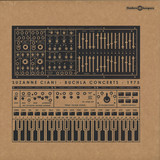
Finders Keepers invite you to witness the incredible first ever Buchla synthesiser concerts/demonstrations providing a distinctive feminine alternative to The Silver Apples Of The Moon if they had ever been presented in phonographic form. This is history in the remaking.
This spring Finders Keepers Records are proud to release an archival project that not only redefines musical history but boasts genuine claim to the overused buzzwords such as pioneering, maverick, experimental, groundbreaking and esoteric, while questioning social politics and the evolution of music technology as we've come to understand it. To describe this records as a game-changer is an understatement. This record represents a musical revolution, a scientific benchmark and a trophy in the cabinet of counter culture creativity. This record is a triumphant yardstick in the synthesiser space race and the untold story of the first woman on the proverbial moon. While pondering the early accolades of this record it's daunting to learn that this record was in fact not a record at all... It was a manifesto and a gateway to a new world, that somehow never quite opened. If the unfamiliar, modernistic, melodic, pulses, tones and harmonics found on this 1975 live presentation/grant application/educational demonstration had been placed in a phonographic context alongside the promoted work of Morton Subotnick, Walter Carlos or Tomita then the name Suzanne Ciani and her influence would have already radically changed the shape, sound and gender of our record collections. Hopefully there is still chance.
In short, Suzanne was a self-imposed twenty-year-old employee of the Buchla modular synthesiser company, San Francisco's neck and neck contender to New York's Moog. Buchla was run by a community of festival freaks and academic acid eaters whose roots in new age lifestyles and the reinvention of art and music replaced the business acumen enjoyed by its likeminded East Coasters. In the eyes of the consumer the creative refusal to adopt rudimentary facets like a piano keyboard controller rendered the Buchla synthesiser the more obscure stubborn sister of the synth marathon, steering these incredible units away from the mainstream into the homes and studios of free music aficionados, art house composers and die-hard revolutionaries. Championed and semi-showcased by composer Morton Subotnick on his albums The Bull and Silver Apples Of The Moon, Buchla's versatility began to open the minds of a new generation, but the high-end design features and no-compromise modus operandi was often confused with incompatibility and, in the pulsating shadow of Moog's marketing, the revolution would not be televised nor patronised. Suzanne Ciani, as one of the very few female composers on the frontline (and also providing the back line) did not lose faith.
These concerts' are the epitome of rare music technology historic documents, performed by a real musician whose skills and academic education in classical composition already outweighed her male synthesiser contemporaries of twice her age. At the very start of her fragile career these recordings are nothing short of sacrificial ode to her mentor and machine, sonic pickets of the revolution and love letters to an absolutely genuine vision of and 'alternative' musical future. In denouncing her own precocious polymathmatic past in a bid to persuade the world to sing from a new hymn sheet, Suzanne Ciani created a bi-product of never before heard music that would render the pigeon holes ambient' and futuristic' utterly inadequate. Providing nothing short of an entirely different feminine take on the experimental records' of Morton Subotnick and proving to a small, judgmental audience and jury the true versatility of one of the most radical and idiosyncratic musical instruments of the 20th century. These recordings have not been heard since then.
The importance of these genuinely lost pieces of electronic musics puzzle almost eclipses the glaring detail of Suzanne's gender as a distinct minority in an almost exclusively male dominated, faceless, coldly scientific landscape. Those familiar with Suzanne's work, a vast vault of previously unpublished non-records', will already know how the creative politics in her art of being' simultaneously reshaped the worlds of synth design, advertising and film composition before anyone had even dropped a stylus in her groove. Needless to say this record, finally commanding the archival format of choice, courtesy of the Ciani and Finders Keepers longstanding unison, was not the last first' with which this hugely important composer would gift society, and the future of a wide range of exciting evolving creative disciplines.
You have found a holy grail of electronic music and a female musical pioneer who was too proactive to take the trophies. With the light of Buchla and Ciani's initial flame Finders Keepers continues to take a torch through the vaults of this lesser-celebrated music legacy shining a beam on these non-records' that evaded the limelight for almost half a century. You can't write history when you are too busy making it. With fresh ink in the bottomless well, let's start at the beginning. Again. You, are invited!
- A1: Platform 9 ¾
- A2: The Hogwarts Express
- A3: Welcome To Hogwarts
- A4: Wand Dance
- A5: Albus Severus Potter
- A6: The Blanket
- A7: Hut On The Rock
- A8: A Malfoy
- A9: Anything From The Trolley, Dars?
- A10: Ministry Of Magic
- A11: St Oswald S
- A12: Wizarding World
- A13: Shadows And Spirits
- B1: Privet Drive
- B2: Into Mcgonalgall S Office
- B3: The Forbidden Forrest
- B4: Edge Of The Forest
- B5: Dragons!
- B6: Dumbledore
- B7: Staircase Ballet
- B8: The Duel
- B9: Invisibility Cloak
- B10: Moaning Myrtle
- B11: Scorpius Alone
- C1: Dementors
- C2: Expecto Patronum
- C3: In Trouble (Again)
- C4: Slytherin Dormitory
- C5: The Owlery
- C6: A New Prophecy
- C7: The Augurey
- C8: Extraordinary General Meeting
- C9: Godric S Hollow
- D1: Paint And Memory
- D2: Something Written
- D3: The Final Battle
- D4: The Arrival
- D5: Lilly And James
- D6: Burning Bed
- D7: A Nice Day
- D8: A World Of Darkness
- D9: Another Hogwarts
Harry Potter And The Cursed Child is a play based on the latest magical Harry Potter story, written by Jack Thorne from an original story written by J.K. Rowling, Thorne and John Tiffany. It’s the eighth story in the Harry Potter series and the first official to be presented on stage. The critically acclaimed production is the most awarded new play in theatre history with a record-breaking eleven nominations and won another record-breaking nine awards, including Best New Play at the 2017 Laurence Olivier Awards. The music is written, composed, performed, and recorded by Grammy and Ivor Novello Award-winner Imogen Heap. It is presented as four contemporary musical suites, each showcasing one of the play’s theatrical acts. This unique new album format from Imogen Heap chronologically features the music heard in the stage production, further reworked to transport listeners on a sonic journey through the world of Harry Potter and the Cursed Child. Harry Potter And The Cursed Child is available as a limited edition of 1000 individually numbered copies on translucent yellow coloured vinyl. This 2LP is housed in a gatefold sleeve and includes an 8-page booklet.
Remixed and remastered reissue of the legendary ORQUESTA DEL DESIERTO sophomore album. Unable to tour as a group due to commitments to other projects but fueled by the success of the debut release, Brown immediately turned to booking another recording session for the band. Hoping to further expand the group's dynamic sound, Brown and Stahl solicited song contributions from Mike Riley and Country Mark Engel for the second album. While the core of Brown, Stahl, Riley, Engel and Lalli remained intact for the second session, the group's diverse approach benefitted from the addition of drummer Adam Maples (earthlings?) and percussionist/drummer Pete Davidson. Additionally, the group was joined at famed Joshua Tree studio Rancho de la Luna by pianist Tim Jones and Bill Barrett on trumpet.
Green vinyl, limited to 350 copies. Remixed and remastered reissue of the legendary ORQUESTA DEL DESIERTO sophomore album. Unable to tour as a group due to commitments to other projects but fueled by the success of the debut release, Brown immediately turned to booking another recording session for the band. Hoping to further expand the group's dynamic sound, Brown and Stahl solicited song contributions from Mike Riley and Country Mark Engel for the second album. While the core of Brown, Stahl, Riley, Engel and Lalli remained intact for the second session, the group's diverse approach benefitted from the addition of drummer Adam Maples (earthlings?) and percussionist/drummer Pete Davidson. Additionally, the group was joined at famed Joshua Tree studio Rancho de la Luna by pianist Tim Jones and Bill Barrett on trumpet.
Señor Sapo is a character created based on the Mesoamerican deity Quetzalcoatl:
while capturing Sr. Sapo atop The Pyramid of the Sun at Teotihuacan
in The Valley of Mexico; dawn…
Augie Robles (the photographer) spotted an elementary school class of around 25 children with two teachers suddenly appear scaling the momentous stair case behind our subject!
They shouted;
“Sr. Sapo! Sr. Sapo!”
the name has stuck! they wanted to have their pictures taken with Sr. Sapo? however; they did not want to touch him as they thought his skin might be “viscoso” or “slimy”?
“Q’uq’umatz” (as it is known amongst the K’iche’ Maya) goes back to the Olmec culture and represents the duality of flight to reach the skies; whereas the reptilian (in most cases a snake) represents the ability to mingle amongst other creatures of the Earth;
Among the Aztecs he was related to the gods of wind; of the dawn; of merchants and arts; crafts; knowledge and the planet Venus: as well as their patron god of the priesthood…
THE FUTURE S0UND 0f YESTERDAY is as well a construct of the imagination; a fictitious “orchestra” with many imaginary characters; KENT CHESTERFiElD; LEE NAilZ; PHATTITUDE; EPiPHANY TALEUR; ThE ClARKETTES (they actually exist in the “real” world)…
The titles:
“0de to A Tree”;
is the culmination of a night out in Berlin; “…met a young man in a bar close to the “atelier”; he said he wanted to play something on a piano; we go to the place and he plays this melody over a rhythm though not in rhythm?
…basically edited none of it; then used a series of tone generators and filters to change the sound into all the soundscapes you hear in the final piece; the title was simply a tribute to the trees…” Eric D. Clark
“is it good for Ya’?”;
is a slow pumping House song with a message in the form of a question; “is it good for you?” as in “I could do it; however; should I? you know; look in a mirror and ask the question”…
the Music came about as an experiment at NADEL EiNS Studio in Berlin; Heavy bass at around 116bpm plus Erix’s cheeky vocal stylings weaving in & out of frame (as well key) deliver a unique aural experience!
the final track:
“Elsewhere playback”
is literally the playback of a track Eric did under the guise of KENT CHESTERFIELD for a party series he did in Sacramento CA with AJ Sachs…
it’s really just a tool; the good thing is you can drop -8 (or -16 assuming your tables are tuned) to bring it to a tempo one could easily rap over OR push it up to +8 and have a dry Tech number? Either way it BANGS! Dub Plates & Mastering did a swell job!!
overall a must for any Dance Music aficionado’s collection out on October 10th on SHADDOCK RECORDS !
country songwriter from Brooklyn's indie underground, Dougie Poole blurs the lines between genre and generation on his third solo album, The Rainbow Wheel of Death. Rooted in sharp songwritingvand the organic sounds of a live-in-the-studio band, it's a classic-sounding record for the modern world. The Rainbow Wheel of Death's title nods to the colorful pinwheel that appears onscreen whenever a computer's application stalls. For Poole _ who found himself working as a freelance computer programmer once the pandemic brought his touring schedule to a temporary halt in 2020 _ it's also a reference to the holding pattern that's left much of society feeling stuck, unable to move ahead in an uncertain world. That feeling was pervasive when he in his New York City bedroom and wrapping up the songwriting process in the recording studio itself. Once hailed as the "patron saint of millennial malaise" for his sardonic wit and topical, tongue-in-cheek songwriting, Poole broadens his reach here. "High School Gym" builds a bridge between 2020s lo-fi textures and 1980s pop vibes, while "Must Be In Here Somewhere" _ whose narrator sits at a lap top, searching through "every server burning in North Carolina" for a digital souvenir of a long-lost relationship _ mixes modern concerns with classic country instrumentation. If records like 2017's Wideass Highway and 2020's breakthrough release The Freelancer's Blues told stories about uninspired Millennials languishing in dead-end jobs and no-good relationships, then The Rainbow Wheel of Death focuses on more universal issues like mortality, love, and the passing of the time. With The Rainbow Wheel of Death, Dougie Poole breathes new life into country music, retaining the acclaimed elements of his previous work _ drum machines, synthesizers, and his deep-set voice _ while pushing toward something warm, organic, and prismatic.
- Trying To Catch A Fly
- La Grabuge (Pop Theme)
- Agent No. 1
- Opetanie Five
- Saved From Oblivion
- Tajemnica Enigmy
- W Instyucie
- W Pustiny I W Puszczy
- The Dziekanka Student's Hostel (Part Ii)
- Landscapes
- Losy (Mid-Beat Theme)
- Third Part Of The Night Czolownica
- Diabel
- La Grabuge 2 (Orch Pop Theme)
- Rosa Rosa (With Arp Life)
- Bossa Nova (Feat Ewa Wanat)
- The Dziekanka Student's Hostel (Part I)
- Lapanka
- La Grabuge 3 (Orchestral Theme)
- Losy 2 (Mid-Guitar Theme)
- Trying To Catch A Fly (Reprise)
- Wszystko Na Sprzedaz Taniec
Twenty-two rare and unreleased vintage tracks from the secret vaults of one of the most enigmatic composers in 60s/70s/80s European cinema. Originally recorded in the best studios in Poland, Italy and France for experimental film, political allegories, lost television shows, sound libraries and radio – these tracks have been hidden behind the Iron Curtain on lost master tapes and film reels until now! »Secret Enigma«, the first ever dedicated anthology of this great composer’s work, is now back in print.
Originally released exactly 30 years ag In artistic cinema Andrzej Korzyński’s unique experiments with jazz, pop, rock, orchestral and electronic music make his name synonymous with the most praised (Andrzej Wajda) and the most provocative (Andrzej Żuławski) Polish filmmakers (counting many more in between). As an early patron of the Polish New Wave and a key exponent of the development of conceptual Polish pop music his expansive portfolio has remained commercially unreleased and untravelled (like many of the original socialist era Polish made films) and has yet to find its deserved place next to the work of Ennio Morricone, François de Roubaix and John Barry. Now enhanced by a renewed interest in vintage art house film and a subculture of open minded music collectors many Easter European artists, such as Krzysztof Komeda (Poland), Zdeněk Liška (Czechoslovakia) and now Andrzej Korzynski,have finally begun to earn their place alongside their Central European peers.
For lovers of film music and experimental pop this debut anthology and appraisal of Andrzej Korzyński.
Das neue Album von BRUJERIA "Esto Es Brujeria" erscheint als limitierte, orangene Doppel-LP mit rot/schwarzem Splatter im Gatefold.
"Esto Es Brujeria" ist die fünfte Full-Length-Veröffentlichung der narco satanicos des Death Metal; BRUJERIA. Mit sechzehn Tracks schließt sich der Kreis zur Post-Pandemie-Ära, in der die tiefe Polarisierung, die zivilen Unruhen, die anhaltende Brutalität und die sozialen Umwälzungen der Zeit reif für die berüchtigten Kritiken der Band sind. Die berüchtigtsten Antihelden des extremen Metals, die von einem dichten Mythos umwoben sind, können jederzeit und überall auftauchen, um ihre Geschichten von anarchischem Chaos und gesetzloser Wut zu erzählen. Sie sind die ewigen Banditen, bereit zum Feiern.
Mo H. Zareei (mHz) returns to Imprec/Cassauna with Proof Of Identity, an album of pulsating, pattern-based electronic pieces that evolve in ways reminiscent of Steve Reich's early work or Philip Glass' Music In 12 Parts. With Proof Of Identity, Zareei confronts issues surrounding identity and authorship in composition specifically when created by non-Western musicians. He simultaneously tackles orientalism and the normative take on identity politics.
Artist's Statement:
More than a decade ago, I made a piece of beat-based electronic music and titled it "Middle Eastern IDM" for a course assignment. After listening to it in class, my professor asked what was Middle Eastern about it. It was only a year after I had left Iran to study in the US, and I didn't know that I could say "I am. I made the piece". So I went back and superimposed a sample of Egyptian protest chants on top of the piece, to make it "sufficiently Middle Eastern".
What prejudiced conservatism and performative liberalism share is gatekeeping practices that box one in a preconceived state of otherness. While the former overtly regards that otherness as inferior, the latter exoticises it through patronising paternalism. To me, it is especially troubling when exclusionary practices are driven by some form of overzealous "diversity and inclusion" agenda. If you don't fit the diversity box they've made for you, too bad. It's your fault for being "insufficiently diverse". "Poor thing, you've been colonised!", they tell you, as they claim ownership over a collection of frequencies and rhythms. When you look at who gets to decide if something's indigenous enough, you see how decolonisation itself has been colonised.
When you listen to this piece, I'm very happy for you to keep in mind that it was made by someone from Iran. But I might need to clarify that this piece has nothing to do with sufism and the whirling dervishes, the interweaving patterns of the Persian carpet, the poetry of Rumi, or Islamic architecture. And if you hear those moments of "non-western" sonorities, that is because I have constructed this piece from samples of a piece of Iranian traditional music – an overplayed piece that was all over TV and radio while I was growing up Iran, one that I never found particularly inspiring or interesting. Here, I have tried to make it more interesting by completely taking it apart and reconstructing it through my personal compositional techniques, aesthetic preferences, and a wide range of musical influences. So in short, while this piece might not sound like your archetypical Iranian music, I assure you that it is Iranian enough.
"Hungarian guitarist Gabor Szabo (1936-82) issued only three live recordings during his lifetime. Significantly, the first of these, The Sorcerer (1967), remains the most popular album in the guitarist’s all-too abbreviated discography. But there were also More Sorcery (1968) and Gabor Szabo Live with Charles Lloyd (1974), offering Szabo totally in his element and at his bewitching best.
Several more of Szabo’s concert recordings have surfaced in the intervening years, including this one, superbly captured for radio broadcast live in 1976 at the 600-seat Agora Ballroom in Cleveland, Ohio. It is a revelation. There is a sense here that concert patrons may have been hearing an altogether different Gabor Szabo than record buyers.
For one thing, Szabo is heard fronting what is likely his own group, rather than an army of studio musicians. In 1976, Szabo was leading a tremendous quartet with George Cables (or Joanne Grauer) on piano, Tony Dumas on bass and Sherman Ferguson on drums. Szabo had not had a band with this much jazz clout since his famed quartet with Jimmy Stewart in 1967-68 – and it is a union worth savoring: Szabo’s records during this period were light, at best, on jazz.
It’s unclear if any of these musicians are on the Agora date, but as Dumas’s “It Happens” opens the program, it’s a good bet, at least, that the bassist is on board here. But as Szabo’s ’76 quartet is not known to have recorded a studio record, Live in Cleveland is the closest thing to what a mid-seventies Szabo jazz album would sound like.
Gone, are the strings, vocals and concessions to commercial consideration so prevalent on so many of Szabo’s studio records at the time. What is present, though, is fine craftsmanship, tremendous interplay, and the exciting improvisation that good jazz always yields.
This particular concert was part of Sansui’s “New World of Jazz,” a series of 13 hour-long jazz concerts recorded at Cleveland’s iconic Agora Ballroom and broadcast over 40 FM radio stations. The series was sponsored by Sansui Electronics, a Japanese manufacturer of audio and video equipment, which previously sponsored a similar series of rock concerts recorded at the Agora as well.
Sansui was promoting its matrix QS 4-channel sound system – offering, what was considered at the time, superior diagonal separation and stereo compatibility. The firm, partnering with Agora Ballroom and Agency Recording Studio owner Hank LoConti (1929-2014), was looking to take advantage of what they rightly felt was the then-current jazz renaissance.
Each show’s 16-track master tape was mixed through the Sansui QS 4-channel encoder,” according to an August 1976 Billboard article detailing the arrangement, “for distribution to the 40 FM stations throughout the United States that bought the series” – allowing for three commercial spots for local dealers to advertise."
The recording is available for the first time on CD and VINYL. Mastering by grammy-nominated Jessica Thompson.
Country songwriter from Brooklyn's indie underground, Dougie Poole blurs the lines between genre and generation on his third solo album, The Rainbow Wheel of Death. Rooted in sharp songwritingvand the organic sounds of a live-in-the-studio band, it's a classic-sounding record for the modern world. The Rainbow Wheel of Death's title nods to the colorful pinwheel that appears onscreen whenever a computer's application stalls. For Poole _ who found himself working as a freelance computer programmer once the pandemic brought his touring schedule to a temporary halt in 2020 _ it's also a reference to the holding pattern that's left much of society feeling stuck, unable to move ahead in an uncertain world. That feeling was pervasive when he in his New York City bedroom and wrapping up the songwriting process in the recording studio itself. Once hailed as the "patron saint of millennial malaise" for his sardonic wit and topical, tongue-in-cheek songwriting, Poole broadens his reach here. "High School Gym" builds a bridge between 2020s lo-fi textures and 1980s pop vibes, while "Must Be In Here Somewhere" _ whose narrator sits at a lap top, searching through "every server burning in North Carolina" for a digital souvenir of a long-lost relationship _ mixes modern concerns with classic country instrumentation. If records like 2017's Wideass Highway and 2020's breakthrough release The Freelancer's Blues told stories about uninspired Millennials languishing in dead-end jobs and no-good relationships, then The Rainbow Wheel of Death focuses on more universal issues like mortality, love, and the passing of the time. With The Rainbow Wheel of Death, Dougie Poole breathes new life into country music, retaining the acclaimed elements of his previous work _ drum machines, synthesizers, and his deep-set voice _ while pushing toward something warm, organic, and prismatic.
imited dark green vinyl
With Jazz Is Dead Series 2, Younge and Muhammad have once again, together with a roster of world-renowned legends, crate digger patron saints, and an exciting vanguard of young talent, delivered another unimpeachable collection of fresh and captivating recordings inspired by jazz's past, present, and future. There are names that some may already be familiar with, such as Lonnie Liston Smith, Jean Carne, and Tony Allen, and those less so, like Henry Franklin, Phil Ranelin, Wendell Harrison, Garrett
Saracho, & Katalyst. What unites each new collaborator is their unbent dedication to remaining original, preserving their creativity, and sharing it with the world.
On behalf of re:discovery records, it is with great excitement that we announce the joint compilation from Facil and Prototype 909 called 'Excerpts from 1993-1995.
As most know, Prototype 909 was a legendary acid techno act from New York that toured the circuit as one of the premier rave acts from America during the 1990s.
Facil was a side small duo project that only made one album and a few appearances on a handful of compilations. The A-side features two Facil tracks. 'Tree Frog' has an amazingly robotic ambient dub electro sound. A killer track that will have dancefloor patrons staring at each other with blank wtf faces. '700x7' completes the A-side with ambient dub gem. Floaty and airy melodics balance out a devastating 808 drum beat.
This is ambient dub in the truest example. The b-side then offers two spacey trance beauties with 'Transit' & 'Planet S' from Prototype 909. The EP finishes with more space junk ambient dub with 'Same Place' by Facil.
Overall, a great look into the window of early to mid-1990s New York ambient dub.
With Jazz Is Dead Series 2, Younge and Muhammad have once again, together with a roster of world-renowned legends, crate digger patron saints, and an exciting vanguard of young talent, delivered another unimpeachable collection of fresh and captivating recordings inspired by jazz's past, present, and future. There are names that some may already be familiar with, such as Lonnie Liston Smith, Jean Carne, and Tony Allen, and those less so, like Henry Franklin, Phil Ranelin, Wendell Harrison, Garrett Saracho, & Katalyst. What unites each new collaborator is their unbent dedication to remaining original, preserving their creativity, and sharing it with the world.
Heavy-duty Colombian salsa group The Latin Brothers were formed in 1974 by the Discos Fuentes A&R team as a sibling band of Fruko Y Sus Tesos in order to provide the local market with a trombone-heavy ensemble in the mode of the popular Nuyorican Willie Colón orchestra. The band was led by Julio "Fruko" Estrada on bass, featuring basically the same musicians as Los Tesos, minus the trumpets and highlighting the cutthroat trombone work of Gustavo "La Pantera" García. At the time Fruko's Tesos were going through a transition and his talented former lead vocalist, Píper Pimienta, left to sing lead in The Latin Brothers while Joe Arroyo and Wilson "Saoko" Manyoma took over vocal duties in Los Tesos. "El Picotero" was The Latin Brothers' debut album and remains to this day a favorite of salsa dura fans the world over. The album established The Latin Brothers as a bona fide contender in the crowded field of trombone-centric salsa bands taking over the airwaves and dance floors around Latin America. With this bold and brassy record The Latin Brothers would inspire future Colombian salsa orchestras as well as helping establish Medellín as a center of salsa almost as famous as Cali.
“If you can imagine a late 1960s folk-rock approach allied to a doomy atmosphere with added touches of lo-fi psychedelia, then you’re getting close to the timbre of Finland’s Hexvessel. There are clearly nods towards King Crimson, Black Sabbath, the Beatles, HP Lovecraft and The Doors, but what the band have managed to do is create something that belongs specifically to them.” – Malcolm Dome, Prog Magazine Hexvessel’s fan-favorite album from 2012, No Holier Temple, gets a luxury 10-year anniversary reissue via Svart Records! No Holier Temple was Psychedelic Forest Folk band Hexvessel’s second full-length album, released to critical acclaim, cult status and some of their biggest sales figures to date. The Finnish “mushroom-devouring pixies” follow up to 2011’s critically acclaimed debut album, Dawnbearer, was described by Roadburn Festival as “a passionate, urgent and gorgeously strange musical spell.” Hexvessel’s break-through album No Holier Temple reached new heights for the band with two Emma Gala (Finnish Grammy Awards) nominations. No Holier Tample also won two Femma awards, which is the Alternative Finnish Grammy Awards. Hexvessel played the prestigious Roadburn Festival in The Netherlands for the first time that year in the church venue of Het Patronaat. The festival sold out in 7 minutes. No Holier Temple also landed in the Main Finnish Charts at #20 and in Alternative charts at #7. No Holier Temple fuses the acoustic 70s folk vibe of its predecessor into a more psychedelic, electric, doom-folk sound with Manzarek-like keys, screeching rhythmic Velvet Underground violins, Miles Davis trumpets and hypnotic freakouts. Weaving the uncanny songs together are the narrative vocals of Mat McNerney, who on this album has matured into the bastard child of Burke Shelley, young Jon Anderson and Paul Simon. Inspired by the progressive, spaced-out haze of bands like Amon Düül II, Van Der Graaf Generator and Ultimate Spinach, whose song “Your Head Is Reeling” they cover with religious abandon. Their sound now expands outward from their eerie, signature, ritual-esque intros into a genre-twisting cauldron of otherworldly rock and the late-night, dreamy spoken-word of artists such as Jim Morrison (An American Prayer) and Ken Nordine.
Since slipping out a decade ago, Fürsattl’s sole 12” on Claremont 56 has become an in-demand item, thanks to a mixture of its’ undeniable quality and the patronage of several high-profile, well-regarded DJs. Because of this, the label has responded to demand for a reissue of those two tracks and announced the release of a double-album of the krautrock-inspired trio’s works for the label.
Presented in a gatefold sleeve sporting Mark Warrington’s original 2012 artwork and limited to 400 copies, the 2022 album edition of Rheinlust not only tells the tale of the band’s now decade-long association with Claremont 56, but also features a previously unreleased track from the archives, ‘Für Paul’. Tucked away at the end of the LP, the track is amongst the most atmospheric in their catalogue – a slowly building number in which celestial synthesizer chords, ambient textures, echo-laden electric piano chords and lilting synth strings rise above a rubbery bassline and Jaki Liebezeit style drums.
It provides a superb conclusion to a genuinely evocative album of music you can get lost in, but it’s by no means the only highlight. Fittingly, the album’s first slab of wax boasts both tracks from Fürsattl’s hard-to-find debut 12”: title track ‘Rheinlust’, a driving but deep and hypnotic krautrock masterpiece full of elongated chords, restless bass, twinkling motifs and cascading electronic melodies, and the wonderfully epic ‘Links Der Pegnitz’. Clocking in at just under 15 minutes, this sublime excursion features band members trading glistening guitar and colourful synthesizer solos over a funky but laidback groove that sits somewhere between krautrock and cosmic funk.
The album’s second slab of wax showcases Fürsattl’s lesser-known tracks for Claremont 56, alongside the previously mentioned unreleased cut. These two workouts were originally featured on the label’s Claremont Editions compilations and further expand on their now trademark krautrock sound. There’s ‘Leerlauf’, a breathlessly up-tempo, weighty and immersive chunk of low-slung dancefloor creepiness that you’ll want to get lost in time and again, and the twangy and buzzing ‘Haru’, a birdsong-splattered affair that sounds like their tribute to krautrock originals Neu! and Harmonium. Like the rest of the album, these are seriously seductive outings that slowly build towards impactful, emotive conclusions.
"We’ve reached book IV in Rupert Clervaux’s series of “Zibaldone” audio diaries, at which point we find him telling a different kind of story.
“The first three all had very specific themes, while this one feels a little bit looser and doesn’t have just one thematic thrust,” he tells me, which maybe explains why listening feels a bit like annotating. I’m underlining, emphasizing, drawing arrows from here to there, highlighting symbols and noting motifs, realising, questioning, eureka-ing. An impressionistic meaning’s been encoded in and we’re lucky to be given the space to play that most poetic and boundless of all mental games: narrativization.
There are no wrong answers, but Rupert offers some clues either way. If there’s any cipher here it’s “something like a meditation on the concept of ‘depth’––in all its connotative forms.” Think below the surface, (the) underground, yawning oceans, being ‘down in the dirt’, soil, roots, rootlessness, pulling at the dregs, collapse, profundity, stable and unstable horizons, distance, perspective, intuition, not to mention relative opposites: to be shallow, to be above, to be beyond.
It’s got me thinking of Bresson’s “Bring things together that have as yet never been brought together and did not seem predisposed to be so.” His: “Dig deep where you are. Don't slip off elsewhere.” Rupert has realized these—two favourite goals of mine!—here.
This is music that catches you at your own periphery, gives pause, has you offering a little “huh” to, asking “I wonder why” to. Again, it’s got me musing on another mindworm, this time from New York publisher and multi-sensory reading room Dispersed Holdings: “Feeling-making-knowing feedback loop; cartography of feeling; water as text, read to know the land beneath and around it, and body as reader.”
Is it ok to offer up these other contexts out of context? I think so, because Zibaldone IV articulates a similarly swirly tone. Like, we’ve got Rebecca Solnit talking through Kropotkin’s “Mutual Aid” and later calling out to Michael Ruppert a ways away, and “Easy Rider” is playing in the wings. We’ve got Susan Sontag magically contextualizing Mariah Carey with poet Thylias Moss triangulating in order to sketch out (Rupert again) “something a little more interesting than wilful eclecticism or that laboured and patronising kind of pop-savvy.”
Are we following? Whether yes or no Vanessa Bedoret follows on with a performance of a performance of Moss’s 'Water Road’: to be once or twice removed, via strange transitions, purposeful confusions, and, suddenly, seagulls. We’re on a boat with Ingeborg Bachmann—and how I wish I could actually be! But maybe thanks to this music I can as literature, films, friends, lethargy, coincidences, little mental links, eternal wormholes, lingering notions come together to imagine something better."
Text by Natalia Panzer
- A1: Wanton Witch 1 (Daddyʼs Girl)
- A2: Wanton Witch 2 (Do I Pass)
- A3: Wanton Witch 3 (Walking On Moirai)
- A4: Wanton Witch 4 -5 (Lament Ceremony - Looping Projection Of You)
- B1: Wanton Witch 6 (Resentment)
- B2: Wanton Witch 7 - 8 (Is This All We Can Do - Unsound Mind)
- B3: Wanton Witch 9 (Nervous Burial)
- B4: Wanton Witch 10 (The Beautiful Trauma Of Being)
- B5: Wanton Witch 11 (Grieve)
Serendipities surround the collaboration between Berlin's Stroboscopic Artefacts label founder Lucy and their most recent record with Malaysian Bangkok based emerging artist Wanton Witch. The release culminates in the reimagining of WW debut LP as seen and felt through the lens of Lucy. This is a follow up full-length album by Lucy not approached as a usual remixes record, but instead a fully fleshed out new body of work with the WW material being an integral part of Lucy's sonic palette.
Despite the label hiatus during the first year of lockdowns, the isolation of the pandemic helped create a fertile ground for a back and forth between Wanton Witch and Lucy's own distinct sound palettes to collide. With the normal every day pressures of touring lifted and enlightened by WW's sonic world, Lucy has seen this as a positive opportunity to manifest new pathways of connectivity and process a phase of personal growth. Not simply about the breaking of gender lines, but also about the blurring of creative boundaries, especially when making music.
Lucy's original patronage of Wanton Witch and her relatively fresh and new voice in the electronic music scene can be seen as a contribution to this idea of dismantling industry norms. In more than a decade of SA operations this is a reset moment for the label's mission focusing on empowering new talent, refreshing and growing with them, presenting a dynamic two-way process bewtween the label as a whole and the individual artists output.
Lucy's personal revolution has coincided with Wanton Witch's own discovery of her musical voice and their paths have created a synchronicity. This osmosis of thought and feeling, even through massive distances, can be so real and tangible. Lucy's new album is a testament to the power of connective tissue in collaboration. It is this catalyst of realisation that has allowed the creative work to flourish under the toughest of pandemic conditions.
A little more than 2 years ago, labelhead honchos Paul & Dave released their "Nobody is Anywhere EP" on their own imprint Dynamic Reflection. It was a statement about the status quo in the techno scene back then, where many artists didn't know which way to go. Ironically enough, the contrary is very true as we speak.
The "Anybody is Nowhere EP" responds to their previous work and reflects the uncomfortable time we are currently living in, driven by uncertainty. Even though these are not the happiest thoughts, the track titles show that there is hope left. "Emergence" is a very seductive but psychedelic trip towards "Discharge", which feels like Abstract Division discharges themselves completely. The last track, "Polarise" points out the current divided society, which sets some doubtful thoughts about the future.
Scandinavian rebel and Northern Electronics patron Anthony Linell provides his interpretation of the track "Emergence" and delivers a distinctive remix as only he can.
Close your eyes and dive deep into the rabbit hole with us.
- A1: Memento Moria / Die Welt Brennt
- A2: Schwarzmaler
- A3: Ausguck
- A4: Patronen Aus Schuld
- A5: Get The Fuck Up (Das Bisschen Totschlag)
- A6: Haeuser Versus Traeume
- A7: Dass Es Besser Wird
- A8: So Weit Von Zuhaus
- A9: Unverfa¼Gbarkeit (Interlude)
- B1: Schattenboxen
- B2: Wa¼Ste Des Vergessens
- B3: Der Kapitalismus. Wachkomapatient 2020
- B4: Vive L'utopie
- B5: Daloy Politsey
- B6: Ich Hab Das Meer Geseh'n
- B7: Santa Maria
- B8: Frei & Geborgen
Jan Hertel, so CHAOZE ONE bürgerlicher Name, ist ein gesellschaftskritischer Rapper, Autor und Theaterschauspieler aus Mannheim. In seiner ersten aktiven Phase von 2000 bis 2009 veröffentlichte er zahlreiche Alben und EPs. Die Musik war immer Vehikel für seine politische Arbeit, die im Vordergrund seines künstlerischen Schaffens steht. 2019 veröffentlichte Hertel das Buch "Spielverderber - Mein Leben zwischen Rap & Antifa", in dem er seine musikalische wie politische Sozialisation beschreibt. "Venti" von CHAOZE ONE erscheint auf dem Hamburger Label Grand Hotel van Cleef. Auf dem Album finden sich 17 Stücke in knapp 70 Minuten. Als Gäste sind u.a. Torsun Burkhardt von Egotronic, Mal Éléve, Shana Supreme sowie Autor Jan Off und zahlreiche mehr zu hören. "Venti ist die erste Hip Hop-Platte auf GHvC, und der Opener Memento Moria / Die Welt brennt der erste echte Rap-Track auf unserem Label. Aber Genres sind egal. Denn beim Hören dieses Songs - auch beim vierhundertsten Mal - fangen und Gehirne und Herzen an zu glühen. Der Song und diese Platte umfasst all das, was wir denken und fühlen, wie wir Dinge sehen und was wir fordern. Und zwar ohne Zeige-, dafür ab und an aber gern mit Mittelfinger", lässt sich das Hamburger Label zitieren.
"When Candy Opera first appeared on the kaleidoscopic early 1980s Liverpool music scene, by rights they should have changed the world" ~ Louder Than War
"Very welcome news as a highly underrated band who is now back with a force. While their previous output is stellar, this new single is even more commanding of attention. This is absolutely stunning, the band reaching higher than ever before" ~ Big Takeover Magazine
Sometimes it takes a while to realise what you’ve got. So it goes with pop craftsmen Candy Opera, who emerged during Liverpool’s 1980s golden age and whose new LP 'The Patron Saint of Heartache' is their first collection of new material in nearly three decades.
Ahead of that, they present 'These Days Are Ours', a rally cry of hope for the current times and the first single from this long-play, which is due for release in mid-November via European / UK label A Turntable Friend Records. The video was created / produced by James
Davies and Paul Malone.
Mixed by Grammy award-winning producer Guy Massey and featuring back vocals by Paul Simpson of The Wild Swans, the track was recorded at Elevator Studios in Liverpool.
With all the hallmarks of an enduring pop anthem, this impeccably produced, adrenalin-fuelled song captures the essence of Candy Opera’s infectious energy and celebrates life with a genuine wonder-lust, whilst delivering the excitement of their live performances.
Following the overdue release of two archival sets - '45 Revolutions Per
Minute' and 'Rarities' (released in 2018 by Firestation Records., quickly selling out of their first runs) - their new album 'The Patron Saint of Heartache' picks up where the band left off, with 14 fresh songs ready for discovery of a sound as timeless as any Candy Opera output.
Candy Opera were formed in Liverpool in 1982 and went through various incarnations before calling it a day in 1992. By 1985, the band had played alongside the likes of The Pogues, The Go-Betweens and The Redskins, as well as appearing on Granada TV.
The band's current line-up is drawn from all eras of the band’s existence and features Brian Chin Smithers (guitar, vocals), Alan Currie (drums), Frank Mahon (bass), Paul Malone (vocals, guitar), Ken Moss (guitar) and Gary O'Donnell (keyboards, vocals, percussion).
This new LP also features a swathe of friends and contemporaries, including Paul Simpson (The Wild Swans) and Phil Jones (Afraid of Mice). The result is an exquisite piece of pop craftsmanship that brings their songs into the light. This is a labour of love born of experience, but retaining the sense of wonder that brought the band together in the first place.
"When Candy Opera first appeared on the kaleidoscopic early 1980s Liverpool music scene, by rights they should have changed the world" ~ Louder Than War
"Very welcome news as a highly underrated band who is now back with a force. While their previous output is stellar, this new single is even more commanding of attention. This is absolutely stunning, the band reaching higher than ever before" ~ Big Takeover Magazine
Sometimes it takes a while to realise what you’ve got. So it goes with pop craftsmen Candy Opera, who emerged during Liverpool’s 1980s golden age and whose new LP 'The Patron Saint of Heartache' is their first collection of new material in nearly three decades.
Ahead of that, they present 'These Days Are Ours', a rally cry of hope for the current times and the first single from this long-play, which is due for release in mid-November via European / UK label A Turntable Friend Records. The video was created / produced by James
Davies and Paul Malone.
Mixed by Grammy award-winning producer Guy Massey and featuring back vocals by Paul Simpson of The Wild Swans, the track was recorded at Elevator Studios in Liverpool.
With all the hallmarks of an enduring pop anthem, this impeccably produced, adrenalin-fuelled song captures the essence of Candy Opera’s infectious energy and celebrates life with a genuine wonder-lust, whilst delivering the excitement of their live performances.
Following the overdue release of two archival sets - '45 Revolutions Per
Minute' and 'Rarities' (released in 2018 by Firestation Records., quickly selling out of their first runs) - their new album 'The Patron Saint of Heartache' picks up where the band left off, with 14 fresh songs ready for discovery of a sound as timeless as any Candy Opera output.
Candy Opera were formed in Liverpool in 1982 and went through various incarnations before calling it a day in 1992. By 1985, the band had played alongside the likes of The Pogues, The Go-Betweens and The Redskins, as well as appearing on Granada TV.
The band's current line-up is drawn from all eras of the band’s existence and features Brian Chin Smithers (guitar, vocals), Alan Currie (drums), Frank Mahon (bass), Paul Malone (vocals, guitar), Ken Moss (guitar) and Gary O'Donnell (keyboards, vocals, percussion).
This new LP also features a swathe of friends and contemporaries, including Paul Simpson (The Wild Swans) and Phil Jones (Afraid of Mice). The result is an exquisite piece of pop craftsmanship that brings their songs into the light. This is a labour of love born of experience, but retaining the sense of wonder that brought the band together in the first place.
Type “Was Joan of Arc” into Google and the suggested endings for this statement give you an accurate gauge of her place in pop culture: “Catholic” / “a nun” / “canonised” / “a prophet” / “French” / “a witch” and so on. Related questions to “What were Joan of Arc’s last words” on the info-sharing site Quora include “Was Joan of Arc bisexual” and “Was Joan of Arc simply crazy?” Everyone seems to agree this person was burned at the stake in 1431, but beyond that, Joan’s narrative is an enigma. It is this lack of definition that the production duo Pillow Queen harnessed for their second release, Burn Me Up. Inverting the image of the devout Christian girl, the Joan who stands as this record’s heroine was a heretic, a transvestite, most definitely a dyke and a hot femme-top at that.
Opening up the A-side, the title track is a call— a battle cry, but also a summoning. In a time of need one calls upon their patrons and elders from history; a DJ beckons and gathers dancers to the floor; prayer and sweat go hand and hand. A traditional Irish bodhrán drum beats out the first rhythms, joined by a steamy vocal sample that gets caught, chopped, and soon “Burns Me Up” is pumping along with organ chords and distorted keys. Pivoting away from the 4/4 format, “Submission” is a textured, downtempo slow-burner, with close-mic’d vocals from Vani-T and the D. Tiffany’s deft drum programming. When the choral pads come in, there’s an echo of the 1990s German worldbeat project Enigma, with its Gregorian chants and flutes laid on top of lounge beats—here, though, the chorus is stripped of kitsch, only driving the track deeper into a mood.
If Burn Me Up’s sequence of tracks is read as a kind of narrative, they seem to tell the story of Joan’s last moments. “Burn Me Up” is, frankly, heat—aggressive, the high-end crackles and the bass puts a pyre under one’s feet. “Submission” is like an exhale, a giving-in to death’s grip; there is, along with the sensuous tread, a melancholy. It only makes sense that one flips the record to “Resurrection”, which rolls in a tremolo’d wail of pitched vocals for 30 seconds before a kick drum begins the 141-BPM march. The percussion is central here, as the track shifts between polyrhythms like a range of resuscitations, varied heartbeats. “Salvation” closes the record, again dialling back the tempo to the deep nod of dub. To no surprise, the scene of redemption here is not one of sunlit cherubs—the church bell sample tolls one strike every few measures of bass-throb and shadow, while Vani-T intones, “Then he lay down and died”. Death can be salvation to some; living as many selves, living in contradiction, is a saving grace to many more.
Skyf Connection (pronounced skAyf) was a short lived project by long time friends Anthony Mthembu and Enoch Nondala. At the time they were working for Annic Music, an independent label run by married couple Anne and Nic Blignaut. Although the label was known mostly for Zulu, Sotho, Tsonga and other traditional styles, they had a few Disco releases on the label including groups like Keith Hutchinson’s Focus and Enoch’s discovery Lena, who went on to have huge success under the name Ebony a few years later.
In 1984, when an artist didn’t show up for a booked session they decided to make use of the studio time and began working on a demo. At the time Anthony and Enoch had been playing for a year at a new club called Gamsho, located on a farm on the outskirts of Kliptown Soweto. Along with Blackie Sibisi, Sepate Mokoena and Elijah “chippa” Khumalo they made up the resident house band. Due to cultural boycotts and American artists refusing to perform in the country, locals took it upon themselves to fill the market with the American sound the crowds demanded. The demo they recorded at Blue Tree Studios was going to be their product they could use to promote their brand of the American sound. They then took the demo to Universal Studios where their friend and trusted engineer Jan “fast fingers” Smit was working. It would be here that they would polish their demo into something they could take to their bosses and have pressed. Equipped with a DX 7, Linn Drum and some Juno synthesizers they were on their way. Jan lived up to his name and programmed the drums, it is rumoured he could program in almost real time, a skill that translated to the local arcade where he held high scores on many machines. Enoch would be singing and playing guitar while Anthony would do all the Bass and Keyboards. The result was 4 funky party anthems with synth work like no other recording at the time. Their take on what they believed the crowd would want to hear at the beloved club they called home.
From start to finish the 4 tracks portray what would have been a standard night at the Gamshu. Although the club would open earlier and the standard hours of most clubs was 6 to 6 , the band would start playing at 10pm. With their standard set time and Anthony and Enoch unique view on what a Disco should be, they chose the motto Ten to Ten as the album title because those were the hours when they were the stars and Disco ruled the dance floor. To get to the club was a bit difficult, you needed to drive along an empty road where thieves waited for any patrons trying their luck walking after dark. Since there was no transport during the night, the safest way to get home was to wait till the next morning to walk home. Even though in the summer months of Johannesburg light begins to peek in just after 4am, crowds refused to leave and stayed enjoying good music and company until 10am. The lead off track “Let’s Freak Together” has powerful lyrics encouraging people to let go of their worries, put aside any differences and let the music bring everyone to freak and dance together. The whole album is about the joy we can all feel when we share the same moments and how music can bring people together in a unique way, a philosophy shared with the original nightclubs of 70s New York. This approach to music is where the name Skyf Connection comes from, translating from slang to mean the connection we create through sharing, in this case Music and good times.
Skyf Connection would go on to play at Gamsho till the club’s closure in 1986. In those years their popularity lead to being booked for private events like weddings and birthday parties, as well as gigs in some other venues like Mofolo Hall. They would share the stage with many artists through the years learning artist’s songs and providing support as a backing band. After the club closed Anthony would go on to join the house band at The Pelican, another famous club located in Orlando East, as well as dabbling with songwriting for artists like Phumi Maduna and helping Enoch on many projects through the years. Enoch would ditch live music altogether and immerse himself in studio work, starting full time as a house producer and A&R for the recently formed Ream Music. He would go on to produce hit albums for pop artists like Percy Kay and Makwerhu but made his mark discovering countless artists that would become stars in the traditional market. They would remain friends until Anthony’s passing in 2016 and although Anthony is no longer with us his spirit lives in the grooves he left on this one of a kind record. His wife Vinolia will be accepting his portion of the profits on his behalf.
Lost Futures is a new label that explores experimental and often radical approaches to dance music from the past. In a musical landscape that increasingly claims to seek and reward new forms and ideas, Lost Futures delves into the recent past to revisit forward-thinking, optimistic projects that, owing to the social, musical or outright political climate, perhaps struggled to find an audience. Allowing only time to re-contextualise these leftfield, sometimes misunderstood and ultimately human bodies of work, Lost Futures taps into the inherent idealism of rave.
LF001 trips back until the early nineties to revisit the alternative scene emerging from the Dutch city of Utrecht. Here, three young men - DJ Zero One (Sander Friedeman), TJ Tape TV (Arno Peeters) and DJ White Delight (Richard van der Giessen) - joined forces to form 'The Awax Foundation'. Inspired by the transcendent and revolutionary electronic music arriving on their shores imported from Chicago and Detroit, combining their knowledge, gear and ever-expanding vinyl collection allowed additional freedom in paying sincere tribute to these intoxicating sounds, while also developing their tastes in a more personal, eclectic direction.
The musical flavours of Awax initially leaned toward acid house and the roots of techno. However, with three different mindsets in the mix, their tastes were rarely fixed. One thing each shared in common was a devotion to collecting rare sounds, specifically more adventurous and international samples than those emanating from the increasingly-hard, masculine dance music emerging from the Netherlands during the period. Inspired by the cross-over global sound of bands like Suns of Arqa, or 'World Music', as it was perhaps patronisingly termed at the time, the trio became interested in the idea of making techno with 'ethnic instruments'.
Of course, this being 1992, none of The Awax Foundation had access to such instruments, instead, they had a vast, collective library of samples from all over the world. There were no collaborations and no clear plan. Instead, they set to work using a Yamaha TX16W sampler, the legendary Atari 1040ST computer, a cheap mixing desk and a couple of low-end synths and FX machines. When Richard mentioned the project to his friend, Akin Fernandez, the London DJ and owner of cult label Irdial Discs, Fernandez was intrigued enough to invite the trio to record a one-hour show for his 'Monster Music Radio' series on London's then-burgeoning Kiss FM.
Forced to come up with a name, 'CultureClash' seemed like the obvious choice, even if the members of Awax were only creatively sparring among themselves. Along with the term 'ethno-techno', slightly dubious to a hopefully more conscious Western audience in 2017, these were the only guiding principles to the quietly ambitious project that soon combined cutting-edge machine rhythms with samples sourced from everywhere from Bolivia to Togo, and inspired by everything from Ravi Shankar's epic soundtrack to the Oscar-winning movie Ghandi, to the technical limits of their own setup requiring a dazzling degree of cut-and-paste work. Some tracks even emerged out of academic studies within the ethnomusicology department at The University of Amsterdam.
The show aired on October 2nd, 1992, recorded in one blistering take and without any rehearsals, traversing a huge variety of tempos and styles. If the performance wasn't seamless, it was undeniably thrilling, fresh and ambitious. As such, several labels, including Fernandez's aforementioned Irdial Discs expressed an interesting in commercially releasing CultureClash, while another imprint proposed a series of twelve-inches and an album. But the sheer complexity of the project meant that it never saw the light of day, while the trio embarked on different journeys ahead, both creative and personal.
Twenty five years later, and the original CultureClash lineup and founding members of The Awax Foundation provide the sound of the first release from Lost Futures. An otherworldly, ambitious and optimistic compilation, accompanied by extensive sleeve notes from the trio, CultureClash is a timeless ode to experimentation in dance music's ever-overlapping culture.
- A1: Heliopause (Dbs & Aux 88) - Electro City
- A2: Middle Men - Space Quest Ii (Earth Odyssey)
- A3: Dibu-Z - Remote View
- B1: Kalson - Global Surveyor
- B2: Anthony Rother - Matrix
- B3: Keen K - Cat In Space
- C1: Tekkazula - Enya
- C2: Patronen - Zukunft Flug
- C3: Wilx - Vengonost
- D1: Amper Clap - Desolation (Robyrt Hecht Remix)
- D2: Tyraell - Paleocontact
- D3: C*Nt - Hunter
- E1: Silicon Scally - Machine Bias
- E2: Blake Casimir - At The Outer Sector
- E3: Low Orbit Satellite - Projected Memories
- F1: N-Ter - Agram Sunrise
- F2: Obsolete Robotics Feat. Phil Klein - Walk Alone
- F3: Hardfloor - Diet Starts Monday
- G1: Energy Principle - Tempus Fugit
- G2: Fleck E.s.c. - Phase 4
- G3: Adj - Days Of Light
- H1: Pi-Xl - Disciplinary Action (Remix)
- H2: Rauschenmaschine - Nebulous Spirograph (Subatomic Mix)
- H3: Visonia - Nausicaa
Electro globalisation! The German label Dominance Electricity presents Phase 4 of the Global Surveyor various artist album series (launched in 1998).
Featuring heavy-weights of the international Electro genre such as Anthony Rother, Hardfloor, Silicon Scally aka Carl Finlow and Heliopause (a project of Germany's Dynamik Bass System & Detroit's Keith Tucker of AUX 88) and many more, this carefully selected collection includes a total of 24 productions out of 13 countries / 5 continents ranging between clubbish acid power, deep space cruiser, playful kraftwerkesk melodic downtempo and ambient synth magic.
The young Dutch DJ & producer Lewski debuts on Darko Esser's Wolfskuil Limited series with 'Folkloric Human' EP presenting four fine Electro / Techno cuts.The title track opens the EP with a blend of old school electro and distinctly modern techno, featuring rhythmic bouncy beats and a playful built up perfect for the floor, followed by 'Phase Mistress', a vintage sounding beauty with captivating bass sequences and plenty of analog flavor.'EreBus' kicks off the B-side with its twisted drive, cyborg samples and sinister attitude that justifies it's name been derived from the mythological god of darkness. The atmospheric, Detroit flavored 'Decommissioned Androids' rounds the EP off with tight basslines and relentless analog madness.Lewski's debut EP on Patron Records last year gained support by the likes of Ben UFO, DJ Stingray and Umwelt. Lewski is part of a select cut of young artists who are absorbing electro's legacy, carrying it into the future and with his release on Wolfskuil Limited we can be sure that the future looks very promising.
Raga Yaman
1) Alap
2) Jod
3) Jhala
4) Gat (Composition in Chautal)
Zia Mohiuddin Dagar : rudra veena
Manik Munde : pakhawaj
Gayathri Rajapur & Annie Penta : tanpuras
Recorded by unknown at the University of Washington, HUB Auditorium, Seattle, Washington 15 March 1986 , concert co-sponsored by the UW Ethnomusicology Division and Ragamala.
Original digitally processed audio recording made with Panasonic PV-9000 VCR, Sony PCM-F1, PZM mics. Mastered & Cut by Rashad Becker at Dubplates & Mastering 1117 & 0318.
Liner notes by Renaud Brizard, Stephen O'Malley & Ian Christe.
Front and back cover photos by Niranjan B. Benegal, Seattle Center Folklife Festival 1979. Elizabeth Reeke & Annie Penta on tanpuras.
Inner gatefold photography by Niranjan B. Benegal & Ira Landgarten.
Around ten years ago, deep into a cozy and hazy night following a concert with my sound brothers Daniel O'Sullivan and Kristoffer Rygg in London (as Æthenor), they graciously introduced me to a recording of rudra veena (a kind of noble deeper bass relative to the sitar, in a way) as performed by dhrupad master Zia Mohiuddin Dagar.
Dhrupad, for those who do not know, is a branch of Hindustani classical music said to "show the raga in its clearest and purest form". It's pacing concentrates heavily on the slow, contemplative alap section and works with specific microtonal gestures and deep characteristics of resonance ... in short I was hooked on this new (to me) and ancient form of music from the first listen, and feel that a more or less continual listening & reviewing of Zia Mohiuddin Dagar's recordings in the years that followed have influenced my own approach to music quite heavily (if, albeit, indirectly).
In early 2015 I was able to make contact with Zia Mohiuddin Dagar's son Bahauddin and some of his American students/disciples, primarily Jeff Lewis. Over time we developed a friendly and educational exchange, access a massive archive of recordings and developed these two paired titles for my label. It's been a long path to arrive at actually releasing them but also probably in many ways one of the most significant releases I've worked on. And I'm proud to be able to reveal these to date unreleased archival recordings of one of the masters of dhrupad, Z. M. Dagar, to the public for the first time.
Zia Mohiuddin Dagar was the nineteenth generation in a family tradition known as Dagar gharana, a rich lineage which continued and performed the musical form of dhrupad (Bahauddin Dagar continues the lineage as a master rudra veena dhrupad player of note today). Initially, dhrupad was a rigorous, austere, devotional genre that was sung in Hindu temples. But between the 16th and the 18th centuries, it became the preeminent genre in royal courts in North and Central India, and the Dagar gharana developed and continued publicly following the eventual loss of court patronage for dhrupad in the 19th century. The French ethnomusicologist Renaud Brizard covers the story of Zia Mohiuddin Dagar's life and teaching (a long story also in Seattle, my hometown!), the Dagar family and gharana, the rudra veena and more topics in an extensive set of liner notes in this release.
Raga Yaman was recorded at a public concert in Seattle at the HUB Ballroom at the University of Washington in March 1986 (the week after the accompanying release SOMA028 Ragas Abhogi & Vardhani was recorded) at the end of his last tour of the United States. Yaman was a special raga for Zia Mohiuddin Dagar, one of his signature raags. For centuries, Yaman has been considered as one of the most fundamental ragas in Hindustani music and is one of the first ragas which is taught to students. A deep knowledge of Yaman gives a key for understanding many other ragas. It's filled with tranquility, contemplation, pathos and spiritual yearning. .
-Stephen O'Malley, March 2018, Paris, France
Music From Memory's final 12" for 2017 is a reissue of Dub Oven's self released, and sadly one-off, 1983 EP 'Skin N Bones'.
.
Pioneers in the Post Punk Industrial and New Wave scene in 1980's San Francisco, Gary Miles (Voice Farm) and Blaise Smith (Minimal Man), met at San Francisco's notorious 181 Club in December of 1982. This straight/same sex/swing-both-ways late night dive bar was tucked away in one of the city's most risky, drug riddled neighbourhoods. Stationed near the SF Museum of modern Art it attracted a wild audience of local patrons, aspiring young artists and music heads. In the thick of all this the duo felt impartial to a lot what was going on musically and set out to produce electronic music that could break through the "somewhat exhausted post disco sound that was then competing in the local San Francisco clubs". Enlisting soul vocalist Celeste Miller, the duo were also inspired by Lee 'Scratch' Perry / Upsetters dub tracks being produced in Jamaica and created a unique breed of avant guard hybrid New Wave/Electronic Funk.
With it's influences seemingly as much rooted in the past and the present as it was focused on the future, Dub Oven formed a distinct, mystical approach to music intended for the dance floor. All three tracks on this 12" embody a signature groove and an inventive synthesized abstraction to express a languishing urban unsettledness and spiritual awareness. Recorded at L7 Studios in San Francisco with the assistance of the the studio's in house producer Marco Perry (who currently now works with Bjork) the record was unfortunately overlooked by A&R at several major and even local labels and was finally self-released in very limited quantities. Utilising analog electronics and instrumentation, the record draws on elements of dub, new wave, soul and funk to create a sound that is uncategorizable and one that was perhaps simply too forward thinking for it's time.
De-Bons-en-Pierre is a project from Beau Wanzer & Maoupa Mazzocchetti. Beau Wanzer spends the majority of his days sifting through paraffin embedded animal tissues and reading old issues of Fangoria, occasionally breaking his monotonous routine to record in various fits and bursts. As well as solo material, he is also in numerous projects including Streetwalker, Mutant Beat Dance, Civil Duty, and Corporate Park. He's released on many labels including; Diagonal, L.I.E.S, Cititrax, Nation, Rush Hour, and Light Sounds Dark. Maoupa Mazzocchetti is the pseudonym of Florent Mazzocchetti, a French producer based in Brussels. Florent is strictly devoted to a DIY mentality around music production and his sound revives the electro-industrial aesthetic of the late 70s and early 80s. He's released notable productions on labels such as Unknown Precept, PRR! PRR!, Knekelhuis and Mannequin Records.
While Beau was visiting Brussels he stopped by Maoupa's house to jam for a bit. All songs were recorded on April 4, 2016 between 11:00am and 11:00pm, as single live takes.'Crepes' is a 6-track EP, titled so because they ate crepes the majority of the session. Beau says, "There was a bit of a language barrier. We'd mostly just laugh and nod when something sounded cool to us." The equipment set up included a Roland TR-808, TR-606, SH-101, CR-78, CR-8000, two Syncussions and effects. Over 23 minutes of garbles, sludgy synths and leviathan rhythms. Surfing the slippery slope between industrial and electro, but never quite falling in, just a dip of your pinky toe to to test the temperature.
All songs are mastered by George Horn at Fantasy Studios in Berkeley. Housed in a sewage green/blue jacket featuring a crepe-masked duo reminiscent of pulpy VHS covers. Designed by Eloise Leigh and Florent Mazzocchetti. Each copy includes a 2-sided postcard with a photo taken during the recording session.
- 1