DJ Support: Axel Boman, Coyote, Rune Lindbaek, Dr Rob (Ban Ban Ton Ton), Lefto, Johan Blende, Feel Fly, Marco Gallerani and many more
Secret Soul Society, aka South Wales's Cal Gibson, continues his red-hot streak of form with four original jams for Hell Yeah that effortlessly weave decades of influences into intimate, unusual sounds that go from Balearic daydreams to after-hours soul burners.
Gibson was one-half of Nottingham's deep house and downtempo outfit Neon Heights back in the 2000s, a collective that label head Marco has long admired. He has landed here before with the superb Keep The Mystique in 2023, a 15-track collection of brand new curveball cuts built from lovingly sourced samples. Since then, he has continued to collide jazz, funk, Afro, beats, dub, soul and reggae on Paper Wave and Magic Wand.
'To Be Happy' opens with gentle, sun-soaked grooves, swirling keys and dreamy pads that evoke a hazy Mediterranean sunset. Nostalgic soul samples tug at the heart while the track’s laid-back vibe is perfect for golden-hour moments. 'Orange Surprise' is a magical slice of downtempo bliss with hints of romantic vocals. It's built on soft broken rhythms and drifts between ambient soul and laid-back electronica, perfect for introspective moments or late-night winding down.
'Keep On Trying' flips the script with more texture. The synths are crystalline, the pads are sugary, and the meandering bassline unfolds in wonky fashion while soft male vocals bring a steamy edge. Last but not least, 'What You Do To Me' is funky and slow motion disco with 80s synths and reverb that drowns you in good vibes.
This EP is Secret Soul Society at his most expressive and emotive.
Suche:el sam
Four years on from their landmark Grassroots, visionary half-time heavyweights The Untouchables return with their third album, Lost Knowledge. The duo of Kate McGill and Ajit 'Nitrox' Steyns have carved out a space in modern D&B all their own, building on a legacy that reaches back to the late 00s to keep pushing into unexplored terrain with an assured and deadly line in rhythmic intrigue and atmospheric immersion.
Lost Knowledge launches into action instantly with the high-pressure drum science and dubby splashes of 'Drunken Bells', capturing the loopy techno propulsion and rolling intensity that drives so much of the output on Samurai Music. Where The Untouchables excel is in finding variety and nuance in their relatively forbidding, pared down sound. The heads-down groove of 'Mafia Town' owes as much to dembow and dancehall as D&B, while 'Lost Knowledge' spirals out into psychoactive flurries of synth strafes and organic percussion slathered in tight-locked delay trails. There's no light relief from strident hooks or riffs, just a pure, unshakeable commitment to the power of the beat and deeply designed layers of sound shaping out the space around.
'Busy Bones' makes space for carefully deployed hints of pad tone while the snares snap out of the mix with a sharp set of teeth. 'Four Eared Demon' baits the gabber crowd with its rapid-fire 4/4 hats atop seasick creaks across the midrange, keeping subtlety and patience in the lower frequencies to maintain the signature elegance readily associated with The Untouchables. 'Phase Correlation' teases an artfully unhinged ripple of synth that stands out amongst the murky murmurs filling out the middle distance, but it's still exercised with brutal precision.
Nothing happens by accident or feels out of place - McGill and Steyns are in total control, and they demonstrate incredible range and inventive approaches within their focused style. The accent of the grooves shifts, and individual sounds carry all kinds of artefacts, yet everything gets folded into the exacting Untouchables sound with a liberal dubwise sensibility. Brimming with inspiration and immaculately produced, on Lost Knowledge their one-of-a-kind sound is stronger than ever.
Warehouse Find!
Nikola Gala, Philipp's Federation, Mr Morning and Vincenzo with brand new and exclusive tracks.
- A1: Mirror Pursuit
- A2: Total Eclipse
- A3: Wires (Lazarus Version)
- A4: Dexion
- A5: Topaz
- A6: Ajar
Der britische Produzent Floating Points liefert einen Teil des Soundtracks zur Anime-Serie "Lazarus" von Shinichirō Watanabe. Die sechs Tracks von Floating Points verbinden auf einer Spielzeit von 33 Minuten elektronische Texturen, jazzige Rhythmen und hypnotische Grooves und begleiten die Serie von ruhigen bis spannungsgeladenen Momenten. Diese 1LP-Sammleredition erscheint auf opak schwarzem Vinyl. Auch auf Vinyl erhältlich sind die Soundtracks zur Serie von US-Saxophongröße Kamasi Washington und Elektro-Koryphäe Bonobo.
- A1: Disco Wich Aa
- A2: Nainan Da Pyar De Gaya
- A3: Par Toon Ki Janay
- A4: Pyar Mainu Kar
- A5: Aye Deewane
- B1: Soniya Mukh Tera
- B2: Mainu Apne Pyar Wich
- B3: Chum Chum Dil Nal
- B4: Ve Tu Jaldi Jaldi Aa
- B5: Dohai Ni Dohai
- C1: Disco Wich Aa (Peaking Lights Remix)
- C2: Turbotito & Ragz Featuring Piya Malik - Nainan Da Pyar De Gaya
- C3: Par Toon Ki Janay (Danger Boys Remix)
- D1: Nainan Da Pyar De Gaya (Psychemagik Remix)
- D2: Par Toon Ki Janay (Dexter+Franz Remix)
- D3: Mainu Apne Pyar Wich (Mystic Jungle Remix)
- D4: Disco Wich Aa (Baalti Remix)
Naya Beat is incredibly excited to announce the release of an astonishing lost “holy grail”, Mohinder Kaur Bhamra’s 1982 masterpiece ‘Punjabi Disco’. Unknown and inaccessible to even the deepest of diggers, it is the first British Asian electronic dance album recorded and a true lost relic. A chance find of the original multitrack masters during the Covid lockdown led to ‘Punjabi Disco’ being rediscovered. Lovingly mixed down and remastered from these very studio recordings, the reissue also includes remixes by Peaking Lights, Baalti, Mystic Jungle, Psychemagik, and Danger Boys, as well as a cover by Say She She’s Piya Malik and Turbotito & Ragz and a previously unreleased track. It is available for pre-order and out on x2LP vinyl and all digital platforms on October 31st, 2025.
Released the same year and into equal obscurity as ‘Ten Ragas To A Disco Beat’, Charanjit Singh’s acid house opus, the reissue of ‘Punjabi Disco’ is set to have similar reverberations in the world of dance music. Produced by Mohinder’s eldest son and legendary bhangra pioneer Kuljit Bhamra using a recently acquired Roland SH-1000 synthesizer and a CR-8000 CompuRhythm drum machine played by his then 11-year-old brother, the album was recorded at Roxy Music bass player Rick Kenton’s studio in London. The concept for a Punjabi disco album was subsequently stolen from the Bhamra’s by the very record label that had agreed to distribute the album. Eventually self-released with no label support, ‘Punjabi Disco’ vanished into complete obscurity.
A pivotal figure in British Asian music, West London-based vocalist and first-generation immigrant Mohinder Kaur Bhamra became the first woman to sing at Punjabi weddings and other community events in the UK. Her son, Kuljit, would accompany her, playing tabla at her events from the age of six. Wedding music was traditionally a tame, segregated affair: men and women seated and separated on opposite sides of the room. ‘Punjabi Disco’ was born out of a desire to create an unsegregated dancefloor and inspired by the sounds of disco from the era. A tapestry of electric drum rhythm, warbling bass, and psychedelic siren-like Roland synth melodies provide a vehicle for Mohinder’s powerful voice. Part disco, part funk, part acid house, and infused with Punjabi folk melodies, the sound of ‘Punjabi Disco’ is as mesmerising as it is undefinable.
Featuring an incredible gatefold package and exhaustive liner notes by the Guardian’s Global Music Critic, Ammar Kalia, the x2LP release has been cut to vinyl for the discerning listener and DJ by Grammy-nominated Frank Merritt from The Carvery, London.
This is Naya Beat’s ninth release in a series of reissues, remixes, and compilations dedicated to uncovering electronic and dance music from the subcontinent and South Asian diaspora.
Monolith 45 series I
A new chapter emerges within Organic Signs.Conceived as a vessel dedicated to a single frequency, Monolith 45 is born to trace the lineage of progressive trance — that tribal, hypnotic, and ceremonial sound that carved its path during the early 2000s, and which today we reclaim with reverence.
Each release stands as a stone marker along this continuum: timeless signals that resonate equally with memory and vision. As with the broader work of Organic Signs, this new line will follow a dual path: rescuing forgotten gems from the past while also curating new music that embodies the same spirit.
Monolith 45 becomes the place where past and present intertwine, shaping a narrative that honors tradition while opening new doors for exploration.
The first monolith in the series carries with it two totems of the genre:
On the A-side, Magnetrixx – Intraferences, originally released in the year 2000 on the legendary Tatsu Records. Behind this moniker stands Stefan Lewin, not only a key architect of the progressive trance sound but also the mind behind ACL (Audiophile Circuits League), one of the most special modular synthesizer brands..
His work bridges eras: from shaping the trancefloor at the turn of the millennium to designing instruments that define modern electronic creation.On the B-side, Ticon – Lo Mi Hi, a track that saw the light in 2001 on Digital Structures, one of the most influential labels of that era.
Ticon are nothing short of mythical within this universe — pioneers whose sound blurred borders between deep grooves, psychedelic textures, and progressive structures, leaving an indelible mark that still resonates with dancers and producers worldwide.
With Monolith 45, we seek not only to preserve these transmissions but to project them into the present: to reawaken a sound that was always more than music, a tribal pulse, a ritual language that invited bodies and minds into collective trance.
This is our homage, our offering, and our way of extending the path forward.
- A1: Lazarus
- A2: Vortex
- A3: Relativity
- A4: Magical Distance
- B1: Lie In Memory
- B2: Follower's Dream
- C1: Sageness
- C2: Hard Way To Wonder
- C3: Cold Slaw
- D1: Discovery
- D2: Rumor Has It
Der Jazz-Saxophonist Kamasi Washington liefert einen Teil des energiegeladenen Soundtracks zur Anime-Serie "Lazarus" von Shinichir\u014D Watanabe. Die elf Tracks von Kamasi Washington verbinden auf einer Spielzeit von 80 Minuten kraftvolle Jazz-Fusion mit cineastischer Dramatik und begleiten die actionreichen Szenen rund um Axels Wettlauf gegen die Zeit. Diese 2 x LP-Sammleredition erscheint auf opak grauem Vinyl. Auch auf Vinyl erhältlich sind die Soundtracks zur Serie von Elektro-Koryphäe Bonobo und Produzent Floating Points.
- A1: Prologue
- A2: Northport
- A3: Rippling
- A4: Beyond The Sky
- A5: Babylonia
- A6: Dark Will Fall
- A7: Prophets
- A8: Angeles
- A9: Aerials
- A10: Rings
- A11: Landfall
- A12: Hapuna
- A13: New Prophets
- A14: Drifting
- A15: Hearts
Die Elektro-Koryphäe Bonobo liefert einen Teil des Soundtracks zur gefeierten Anime-Serie "Lazarus" von Shinichir\u014D Watanabe. Die 15 Tracks von Bonobo verbinden auf einer Spielzeit von 44 Minuten elektronische Klänge, Trip-Hop und cineastische Elemente und begleiten die düstere Zukunftsvision rund um das Wundermittel "Hapna". Diese 1LP-Sammleredition erscheint auf transparentem "milky clear" Vinyl und ist ein Muss für Fans von Bonobo und atmosphärischen Soundtracks. Auch auf Vinyl erhältlich sind die Soundtracks zur Serie von Produzent Floating Points und der US-Saxophongröße Kamasi Washington.
2025 Repress
“UR wonders” What happens to jazz if combined with the current electronic sound tools used to make Detroit techno now?
What might Jazz sound like if the inspirational pioneers of fusion ie; Return to Forever, Astral Pirates or Weather Report had access to the music production technology available now or in the future?
The artform called Jazz was a unique reflection of “The African American experience here in the United States.Unfortunately by the 90″s it had been compromised by major record companies and made “smoother” for mainstream consumption and more profits.
Born in America’s rural black south Rock & Roll had suffered the same fate years earlier. Original artists eventually replaced by well studied clones and corporate mega profits!! Also happening the original artform of jazz appeared to be caught, processed & throughly EXPLAINED by people who sought to intellectualize “struggle & human emotion” into mere words and then benefit immensely financially by being authorities on the subject.
Hmm sound familiar?
As you watch the current intellectual colonization of the urban inner city African American art forms house music, hip-hop, Jungle & Detroit techno get studied, bent, twisted renamed and turned into EDM profit formulas.
There stands records like Nation 2 Nation that defy these definitions and inspire the next generation of Pioneers who continue the undefined exploration of Jazz like Derek Jamerson, Jon Dixon, Raphael Merriweathers, Desean Jones, Timeline, Galaxy 2 Galaxy, Raphael Statin & Ian Finkelstein. Mother to daughter, Father to son,
Nation 2 Nation a work inspired and that inspired what’s next.
Numbers welcome New York’s Jubilee to the Glasgow based label - Main Character EP features ‘Trippin’’, a collaboration with Jersey club Queen UNIIQU3. One of the most vital voices in American underground dance music for over a decade, Jubilee brings her South Florida rave roots and East Coast sensibilities to the imprint.
Born from the dizzying emotions of love and grief, the EP opens with the cheeky cackle of UNIIQU3 on ‘Trippin’’. Marking their hotly-anticipated first collaborative release, ‘Trippin’’ bridges Jubilee’s Miami bass heritage and UNIIQU3’s Jersey club sound to create a playful lead single featuring tantalizing vocals.
Starting to work on Main Character in 2019, Jubilee revisited the project during an intense period of change and loss. Bringing in further influences from electro, Baltimore club, 90’s dance and techno to create her signature sound, Jubilee channels the fun, drama and chaos that comes hand in hand during challenging times. A deeply personal release, Jubilee looks to her friends and family for inspiration, including a sample of her parents on ‘Lucky’.
Jubilee’s debut on Numbers continues a stand-out year for the dynamic artist who released two stellar EPs earlier this year alongside celebrating 10 years of Magic City - her party series and record label which was awarded DJ Mag’s ‘Best Record Label’ in 2023 - with a run of records, merch and events across the States.
Dutch record label, shop and club platform One Eye Witness presents a lively new entry in their V/A series with WITNESS08. Honing in on more fresh talent from across the globe, Amsterdam’s wandering eye gathers producers Sinqmin, Salomee, Kate08 and elusive duo The Evil B-Side Twins (DJ Tool & Yazzus) for another trip into tech house — and beyond!
Kate08’s “Sticky Toffee” is suitably viscous, burbling and oozing its way across shifting sections. The London artist delicately balances percussion atop warbling bass tones and synth lines that pop in and out. Salomee gets moody on “Night Behaviour”; lurking in the shadows, the track’s acid squelch and interlocking melodies point to the psychedelic, with a purring bassline that keeps things grounded.
The Evil B-Side Twins lay in wait on the flip, springing into action with the tightly-wound “Spindrift”. Propelled by a spiky break and cascading delays, its 303 lines sound like rubber, bouncing between the other synths deployed by the duo. All manner of FX trickery is woven into the production: the Twins layer up and load the track with intricate details. Supplying an unexpected respite from the club action, final cut “Aesthetics For Destination” marks the debut foray into hip-hop for OEW. Produced by Seoul-based Sinqmin and featuring the sultry vocals of 문선 (MOONSUN), the track’s sparse beat and ghostly samples make for a mellow, head-nodding end to another hit from the label.
WITNESS08 — More talent, more trax!
- A1: Guakacvo X Ron Carroll - I’m Alive (Touch The Sky) (Glenn Underground Extended Vocal Mix)
- A2: Shawn Christopher - He’s Got It (Richard Earnshaw Extended Mix)
- B1: Terry Dexter X Sweet Georgie - You Saved Me (Marc Cotterell Plastic Factory Vocal Mix)
- B2: Aires Adora - Magic Carpet Ride (Eric Kupper Mix)
Category 1 Music Sampler - Vol. 3 illustrates how the world’s most talented artists, producers and remixers come together to create great house music.
Beginning with 'I’m Alive (Touch the Sky)' featuring 2 of Chicago’s most iconic figures, Ron Carroll and Glenn Underground, it contains all of the elements that represent the ultimate Chicago soulful house production.
Shawn Christopher, another Chicago mainstay, has teamed up with the UK’s Richard Earnshaw and Ron Carroll to deliver a rousing Gospel inspired gem, 'He’s Got It'. This track will get everybody moving, whether it’s onto the dancefloor or off the sofa!
Terry Dexter’s hit, 'You Saved Me' is given a hard driving Garage infusion by UK born Marc Cotterell. It’s a fresh approach that’s been universally acclaimed. Lastly, the world-renowned DJ, Eric Kupper is the force behind Ron Carroll’s production of Aires Adora 'Magic Carpet Ride'. Eric’s big room touch is unmistakable throughout this masterful remix
Building on the foundations of his Braindance Records label (2017–2020), Korean musician Go Dam now presents the second release on Stellar Systems. The Digifuga Series: Stellar EP finds him in interplanetary hyperdrive, charting trails blazed by pioneers from Hashim to Mad Mike to Gerard Hanson.
The four tracks were written in the studio Go Dam built with his own hands in Eulji-ro — once Seoul’s printing district, now a hive of small businesses. That same meticulous, artisanal approach runs through all of his work, whether composing film scores, producing K-Pop for online personalities, or fine-tuning sound systems around the city. The EP opens with the irrepressible electro funk of 'Fevernova', its slapping beat driving growling bass and wide-eyed synths. 'Dream Powder' is a stormy banger, surfing waves of filtered acid and noise before breaking into light. 'Chrono Flux' sustains the high energy, like the soundtrack to an anime motorbike chase at sunset, while 'Quasiverve' drifts into deepest night, its sinuous leads creeping over a stalking bassline.
Blending heavyweight vintage hardware with sharp digital tools, Go Dam conjures an epic widescreen sound that nods both to the sci-fi optimism of early electro and techno and to today’s fractured, machine-mediated music economy.
- A1: Sigmund Und Seine Freu(N)De - Erdbeermund (French Kiss Mix)
- A2: Bruce & Bongo - Geil (Geilomatick Mix 1986)
- A3: O K. - Okay (Maxi Version)
- A4: Trio - Da Da Da Ich Lieb Dich Nicht Du Liebst Mich Nicht (Lange Version)
- B1: Rheingold - Dreiklangsdimensionen (Maxi Version)
- B2: U-Tek - Zahlentänzer
- B3: The Increadible T H. Scratchers Starring Freddy Love - Hip Hop Bommi Bop Bop
- B4: Off - Electrica Salsa (Maxi Version)
Nach dem großen Erfolg der CD-Ausgabe erscheint nun die exklusive Vinyl Edition mit acht sorgfältig ausgewählten Tracks.
Diese streng limitierte Ausgabe bringt die Energie und den Sound der deutschen Electro- und New-Wave-Szene der 80er und frühen 90er direkt auf den Plattenteller – authentisch, druckvoll und in bester Klangqualität.
Mit dabei sind u. a.:
Trio – Minimal-Pop mit Kultstatus
Rheingold – Pioniere der Düsseldorfer Szene
OFF – Electro-Hitprojekt von Sven Väth
U-Tek – Clubsound aus den frühen 90ern
Die German Electro Tracks – Vinyl Edition ist ein Muss für Vinyl-Sammler, DJs und Liebhaber elektronischer Klassiker.
Die Zusammenstellung vereint stilbildende Künstler, die den einzigartigen Sound „Made in Germany“ prägten – von avantgardistisch bis clubtauglich
Der legendäre Club-Klassiker “Distant Planet” aus dem Jahr 1998 kehrt zurück – in einer exklusiven 12“ Maxi Single für Sammler und Liebhaber elektronischer Musik.
Neben den originalen Mixen von Saccoman enthält dieses streng limitierte Release brandneue, moderne Remixe von:
Talla 2XLC
Carl Clarks x Tom Franke
Kalr8 + Andrea Monta
Jeder Remix verleiht dem zeitlosen Track eine frische Energie, perfekt für heutige Dancefloors – und gleichzeitig eine Hommage an den unverkennbaren Sound der späten 90er.
Gepresst auf hochwertigem, farbigem Vinyl in streng limitierter Auflage – ein Must-Have für DJs, Vinyl-Fans und alle, die elektronische Musikgeschichte in neuem Glanz erleben wollen
Dark Entries release 'A Boy Alone', a double LP set from Manchester electronic music pioneer Eric Random. Best known for his early recordings for New Hormones and Les Disques du Crépuscule and collaborations with Pete Shelley (Buzzcocks), Cabaret Voltaire and Nico.
As an original member of The Tiller Boys with Shelley, Random injected a healthy dose of Krautrock into the dour Manchester post-punk scene in 1978/79 before going solo the following year. Random's first 7' 'Subliminal'/'23 Skidoo' was released in 1981 via Les Disques du Crépuscule and explored ominous sonic surrounds. That same year also saw the release of a second 7" single on New Hormones, 'Dow Chemical Company'/ 'Skin Deep'. Both tracks offered bubbling, rhythmic sound patterns, and were the first to feature other musicians that would become know as The Bedlamites. Consisting of Lynn Walton on vocals, Ian Runacres and Andy Diagram of Dislocation Dance, and bassist Wayne Worm, aka Wayne Sedgeman. Their debut 12' single 'Subliminal Seduction'/'Bedlam-a-Go-Go' was released in 1982 through Plurex, mixing arid funk textures and sparse melodies. That same year the group contributed proto chill-out track '6.55' to Plurex compilation 'Hours' and the highly filmic track 'In Cassette Conference' to the Touch cassette package 'Feature Mist'. In 1983, Random spent several months in the Himalayas with a group of musicians from the Kulu Valley and studied non-Western instruments such as tabla. On returning to Manchester, Random convened a new group of Belamites including Walton, Sedgeman and drummer Graham Dowdall aka Dids of Ludus. They released the 12' single 'Mad As Mankind'/'Dream Web Of Maya' in 1984 on Cabaret Voltaire's Doublevision, embracing electronic, industrial and dub styles. In 1985 they contributed the soothing 'Pure Power' to Food Records' 'Imminent Episode One' compilation.
Our reissue also includes 4 unreleased bonus tracks from Eric's archives recorded between 1981-1984. The whole set adds up to 115 minutes of sinister, somnambulant Random music. All songs have been remastered by George Horn at Fantasy Studios. Each copy is housed in a gatefold jacket designed by Eloise Leigh featuring a spread of ephemera, photos with liner notes by James Nice of LTM.
Brown Angel descends upon Dark Entries with Pure Brown Energy, an EP featuring 6 tracks of gloom-laced electro-funk and retro house. Pure Brown Energy was born when San Francisco-based producer and Hard French collective member Brown Angel was faced with a gift and a loss: an original Roland TR-808 was given to them around the same time that their father passed away. To process their grief, they set about making an album that showcased the many facets of their being, in their words: “my gay tío side, my Latin goth side, my cruising down the boulevard side, and most of all my soft vulnerable side.” From slamming vogue/ballroom house to cumbia-inflected freestyle, Pure Brown Energy channels club sounds both contemporary and timeless, while centering the most eternal electronic instrument of all: the TR-808. Opener “Miel” grooves with the effortlessness of peak-era Masters at Work or vintage Kevin Saunderson, while “Dame Más” dials up the energy even further. The influences of Miami bass and West Coast electro shine through on “Maya” and “Love Me Right,” which pair razor-sharp beats with a flurry of samples culled from Brown Angel’s record collection. “PBE” and “En Movimiento” take the Planet Rock vibes to another level, combining influences from contemporary cumbia and reggaeton sounds with Brown Angel’s Latin goth flair. Each copy comes in a sleeve designed by Ricardo Diseño featuring illustrations inspired by Teen Angels, a popular 1980’s Chicano magazine. Pure Brown Energy brings a sense of urgency to the dancefloor, unreluctantly examining the crossover between creation and loss, between celebration and sorrow. But don’t forget: these cuts also slap.
- A1: The Street Enters The House
- A2: Overthere Comes Overhere
- A3: A Tunnel With Curves
- A4: Surrounded By Trees
- A5: A Light Moves Across Curtains
- A6: Weightless
- A7: No Longer
- B1: Running In The Dark
- B2: Moving In The Rain
- B3: On A Beach Lost At Sea
- B4: The End Of The Road
- B5: And Fall Asleep
- B6: An Empty Corridor
- B7: Outwards And Across
- B8: Goodnight
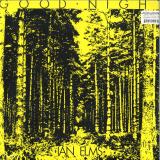
Ian Elms’s cult isolationist synth masterpiece Good Night returns via Dark Entries. Originally released in 1982, Good Night blends Berlin school minimalism and BBC Radiophonic weirdness with the aesthetics of then-nascent DIY punk electronics throughout its fifteen short tracks. According to Elms, these pieces were composed in two broad but interrelated modes: pieces with voice and synthesizer, which are obliquely narrative, and instrumental synthesizer pieces that aspire to capture fleeting emotions. Ian met with producer David Hoser at Octopus Studios and they began constructing pieces using a Polymoog Keyboard 280a, sampled drum tracks, and Elms’s synthesizer. On “The Street Enters the House”, live drums lurch along with skeletal motifs while Elms’s elliptical lyrics evoke domestic discontent. “A Light Moves Across Curtains” features metronomic pummeling and icy strings buttressing the scant cryptic lines from Elms. Instrumental gems like “Goodnight” and “Surrounded by Trees” are built around detuned riffs in round-like structure, both drifting and static like the motion of waves. With original pressings fetching three digits – if you can even find a copy – this reissue is essential listening for fans of John Bender, Transparent Illusion, and the early 80’s DIY cassette scene. Each copy of Good Night comes with a postcard featuring a photograph and notes by Elms. “This record is intended for anyone who by accident or design spends most of their time alone (whether in the body or in the mind).” – Ian Elms.
On Now Claims My Timid Heart, Harris and Hedrick continue the experiment started on Swann and Odette, crafting closed systems that promote a hushed correspondence between their sonic (Basic Channel, drone metal) and literary influences (Kafka, Sebald, Pynchon).
On this album (their first record since 2017 as well as their first release on NYC’s Quiet Time Tapes), Harris and Hedrick eliminated much of music’s normal dependence on physical space, instead creating hermetically sealed sonic ‘rooms’ where the songs can live by sending samples and loops through convolution reverb. Each of the eight tracks on Timid Heart is fundamentally, thus, a field recording from an inaccessible world.
Bringing together the elder statesman of the Zulu guitar Madala Kunene and internationally acclaimed Sibusile Xaba, kwaNTU pulls two generations of South African guitar mastery into a single point of focus. Under-represented on recordings outside of South Africa, Madala Kunene (b. 1951), the ‘King of the Zulu Guitar’, is revered as the greatest living master of the Zulu guitar tradition. Sibusile Xaba, whose collaboration with Mushroom Hour Half Hour reaches back to his first recording in 2017 (Open Letter To Adoniah/Unlearning), has garnered international acclaim for his unique voice and virtuoso guitar stylings, which bring together multiple South African guitar lineages in an original, spiritualised fusion. Collaborating with Mushroom Hour and New Soil for kwaNTU, the two players come together to weave a filigree sonic fabric which reaches down to the heartwood of Zulu guitar music but moves resolutely outward, building on the past to create a deeply rooted statement about present conditions and future travels. kwaNTU – which can be roughly translated ‘the place of the life-spirit’ – is also conclave of teacher and student, as Xaba has been taught by Kunene for the last decade. Meditative, rich and sonically sui generis, kwaNTU finds these two musicians linking up within the inimitable space of sound and spirit that they share through Kunene’s teaching.
The great masters of South African music have not all had equal exposure. For many years the generation of musicians who were exiled during apartheid took centre stage, as the regime made it very difficult for those at home to be heard. More recently, a new cohort of important voices, especially in jazz, has broken through to international consciousness. But for the generation of musicians in between – those who shone like beacons in the most difficult final years of apartheid and immediately afterward – international recognition has been slow in coming.
Madala Kunene, ‘the King of the Zulu Guitar’, is among this number. A revered figure for current generations of South African musicians, Kunene began his recording career in 1990, at the bitter end of apartheid, with a now classic self-titled LP for David Marks’ storied Third Ear imprint. Born in 1951 in Cato Manor, near Durban, he had determined to be a musician from early childhood, and by the time he first entered a recording studio he had already had a long career as a popular performer. His virtuoso absorption and transformation of the venerable Zulu maskanda guitar tradition and his richly spiritualised approach to music immediately marked him out as someone special, and in the years that followed, Kunene cemented his position as one of South Africa’s musical elders. He is without doubt the grand master of the Zulu guitar tradition, but his sound and sensibility ranges far beyond it into varied sonic terrain, and he has collaborated with a wide range of musicians both at home and abroad. Now in his mid-seventies, he remains a shining light for those that are making music in contemporary South Africa.
‘He is really an amazing person,’ says the guitarist Sibusile Xaba, who has been mentored by Kunene for over a decade, and now invites a collaboration with him on kwaNTU. ‘As a mentor, he's really powerful in showing us the way. For us to have this opportunity to make music together and have a project together is really a blessing to me.’
Xaba himself grew up in Newcastle, KwaZulu-Natal, where his mother had been in a band and his father sang in a church choir, and from early childhood Xaba played homemade tin guitars. He only later realised that music was his calling. ‘I just loved music. I was fortunate. My parents loved music. And when it was time for me to leave home and go to study outside Newcastle, I knew that music was what I wanted to do. There was no second option. It was just music.’ Moving to Pretoria to study music formally, Xaba committed himself to his craft, developing a unique style that draws on both US jazz masters such as Wes Montgomery and Jim Hall, and the rich and varied heritage of the South African guitar, from inspirational jazz players such as Allen Kwela and Enoch Mthalane, to the music of the Malombo groups and Dr. Philip Tabane (Xaba has previously collaborated with Dr. Tabane’s late son, Thabang), and the Zulu guitar tradition embodied by Kunene.
‘I was really in love with the jazz guitar, I really admired it, and I was digging a lot in that direction,’ says Xaba, recalling his first encounter with Kunene’s music, over a decade ago. ‘And then one day on my timeline, Kunene popped up, and I was like – “What's this sound?” I was so connected to it. It really touched me deep. I started checking out his records, and then I found out he's from the same region as I am, which is Zululand.’ After Kunene played a show at the Afrikan Freedom Station in Johannesburg, Xaba make contact with him, and visited him at home in Durban. They struck up a friendship, and Xaba became the elder’s student, as Kunene began to pass on his knowledge and his inimitable way of playing.
kwaNTU is a tribute to this relationship and the deep learning that has defined it. The album was recorded in Zululand in the town of Utrecht, at a cultural centre called Kwantu Village, which gives its name to the album. ‘It's such a broad word,’ Xaba says, ‘but the elders teach us that Ntu is basically an energy, almost chi, an energy, a force that all living beings have within them. It's a living energy, so kwaNTU is like, almost the place of this energy.’ The two men sequestered themselves for five days of jamming, improvising and planning, and then the session was recorded in one take over a single night, with Gontse Makhene joining on percussion and backing vocals and Fakazile on vocals. Other voices and overdubs were later added in the studio in Johannesburg.
The result is a rich and meditative recording that finds two generations in a deeply engaged dialogue. Teaching and passing on his knowledge, the elder Kunene has brought Xaba into a space of sound and knowledge that they now share; Xaba’s own practice of deep communion with nature and his dedication to his musical craft make him the perfect interlocutor for Kunene. The result is an album that foregrounds the two musicians engaged at the highest levels of responsive listening, sympathetic unity, and collaborative concentration. Bringing an elder statesman of South African music to an international listening audience for the first time in decades by pairing him with one of South Africa’s most important new voices, kwaNTU is a meeting of generations and a powerful demonstration of musical lineage and continuity.
‘Before music, there is sound,’ Xaba observes, speaking of Kunene’s unique approach to music. ‘And sound is like a common compartment…it's not restricted to particular people or particular geographic places, you know what I mean? It's sound. Everybody can hear it. So when he constructs that sound into music, I think everybody resonates with the energy behind his construction of sound into song. Here at home, we really love him for preserving our history through the guitar, through his stories as well the music, the songs that he writes. We really, really admire him.’