Got dust? Krash Slaughta has. In fact, for him, Everything’s Turning Up Dusty right about now. Surely this can’t be his brand-new double-vinyl LP journey into sound which finally realises an ambition to create a cut n paste opus held since his pre-turntable days of pause-button mixes? It certainly can! The project comes in four parts corresponding to four sides of 12″ vinyl which weigh in at approximately fifteen minutes each and each side of which took around a month to make!
Man, that is epic! When did he ever get the time and concentration to put such a beast together? Wait – are we talking about yet another Krash Slaughta lockdown project? We are! And this bad boy stitches together vintage vocal loops, rare breaks, library records and obscure samples along with remixes of Stetsasonic, O.C., Tanya Winley, Jurassic 5, Edan, Nas, ODB, Gang Starr, Super Lover Cee & Casanova Rud (any one of which would be straight fire on 7″or 12″) along with pretty much whatever the hell else he wanted to put on there. Pressed at 45 rpm, this one features two differently-coloured slabs of wax: one mauve and one blue while even the centre labels and cover art get in on the cut n paste vibe having been created by hand by Krash homie Saleem Andrew McGroarty. As with previous such efforts from the KS camp, there will be no re-press! Sleep at your peril.
Cerca:el sam
- Each record includes a download code for the release + 2 digital bonus tracks -
BlueBox is the first of its kind! The new colored series on Front Left by Elad Magdasi.
Elad is going back to his roots while trying something new. Keeping a balance between his serious and playful side, the release includes 4 DJ tools that are different yet embody Elad's sound in every way.
All the tracks are named by their position on the record, similar to the oldskool way, focusing on the music alone.
All BlueBox tracks were produced at the same time, on the same wave of inspiration, they compliment each other though being completely different.
Front Left Love.
Club U Nite Records presents 'Purple Kush': A Captivating Journey through Energetic House and Reggae Dub Fusion
Named after the renowned cannabis strain, 'Purple Kush' exudes a captivating blend of energetic house tracks and relaxing reggae dub elements.
On the A-side, prepare to be enchanted by the groove of 'Let The Spirit Flow.' This track's driving beats, pulsating rhythms, and deep house organ theme create an irresistible dancefloor anthem that will elevate the energy of any party.
Continuing the sonic journey on the A-side, 'La Bahia' takes us back to the roots of old-school house music. With its addictive organ riff and swing beat, this song instantly transports listeners to a nostalgia-laden dancefloor where the vibe is contagious.
Flipping the record to the B-side, 'Make Your Mind Up' keeps the momentum going with its pumping beats and soulful vocal samples. This track demands to be heard on a club's sound system, as it kickstarts an infectious dance atmosphere that will keep party-goers moving until the early hours.
Rounding off the vinyl, 'Purple Kush Theme' takes us on a mellow yet captivating journey. Seamlessly blending house vocal samples with the laid-back vibes of reggae dub, this track presents a refreshing fusion that invites listeners to let loose and unwind.
For Fans Of: Laibach, Trepaneringsritualen, Ulver, Skinny Puppy, industrialized Dead Can Dance, Celtic Frost. FORGOTTEN SUNRISE is a band both legendary and current; inventors in one era, and innovators in the present day. Celebrating their 30th anniversary this year, the group has evolved and morphed over time into its current formation of Anders Melts, Kadri Sammel, and Jaan Pullerits. A huge part of the Estonian cultural landscape that comprises dark music, Forgotten Sunrise began life as a death metal band in the early 90s, part of the movement that spawned groups such as Amorphis, Beherit, Anathema, My Dying Bride, and Katatonia. As styles converged, and electronics entered the picture, the group incorporated newer techniques and a more industrial approach over time, consolidating their methods into a unique strain they call “OUTDUSTRIAL” – outsider industrial. elu is the first album in the “HALL-ELU-JAH” trilogy. Starting in the middle, the band has an expansive story arc set across 3 albums. In this first presentation of the trilogy, elu synchronizes the classic Death Metal style vocal with ethereal female voice, horror atmosphere, and pounding EBM rhythyms to create 8 memorable and visceral tracks. From high-energy dancefloor-fillers like “Orthotoxic Waste” and “Deep Emoceans” to heavy industrial grinders like “Near Bye” and “iSaid” to the emotional close of “Meating 8:08” into “Elukas”, the album provides a serene metamorphosis, guiding the listener through the many-worlds-as-one experience of Forgotten Sunrise. – Forgotten Sunrise are: Anders Melts – Vocals, bass, guitars, cymbals, djembe, thunder tube, knife and fork. Kadri Sammel – Vocals, bass, keyboards, shaman drum Jaan “Suva” Pullerits – Controlling the arrangements of chaos Ants “Ank” Lill – B(l)ack vocals on “Elukas” Recorded, mixed, and mastered at In Dreams 2020-2022 Artwork by Rene 13 Cover Picture by hellish.cav Executive Producer for Ohm Resistance – Alexandra Portaluppi
twelve.to.zero is back with its second release, signed by Crihan. "While You Sleep EP" finds Alin shaping three slow-burning and hypnotic pieces of minimal dance music brimming with detail deeply rooted in the early years of organic micro-house.
A-side's 'The Visitor' (A1) opens the EP emersed in engrossing, cinematic textures and heavy doses of syncopated acoustic drum samples. Elements ebb and flow on top of a highly minimalistic 4/4 structure, creating a contemplative locomotive composition reminiscent of the a-rpia-r school.
Flip-side's 'Lust' (B1) feels like a continuation of the previous track - driving, mysterious, mesmerizing - bubbling with vocal samples, orchestral textures, and a distinctly subtle micro-house swing. 'The Chase' (B2) closes the EP with a fresh rhythmic flavour: odd drum arrangements and melodic sequences take centre stage, flowing on top of rolling basslines of deeply enigmatic character. Introspective piano chords razor through its swingy rhythmic patterns, folding the sonic space with elegance, proving Alin's innate talent for avant-guard minimal music.
Duo Drunken Kong step up for their Drumcode debut.
The residents at Tokyo’s legendary Womb have a distinct sound signature, as dreamy melodic and vocal elements rub shoulders with the pair’s trademark groove-orientated rhythms to create hypnotic techno outings that span the breadth of the genre, from heads down rollers to peak-time pleasure.
Their maiden outing on Drumcode is an inspiring four-track work ‘I Want To See’ that lays down this sonic manifesto, with each track built around different vocal samples used to skilful effect.
EP opener ‘It’s Then’ brings atmosphere in spades, mixing up a chugging bottom end, a sleek synth line and a sublime vocal that simmers throughout.
The title track is another late-night dancefloor affair that shifts between function and fun, as a slick mix of polished grooves and hypnotising melodies build towards a thrilling crescendo. ‘That’s It’ brings peak-time energy against a plump electro backbone and ’90-tinged vocal.
The EP rounds out with evocative ‘Need It’, as a stirring vox and metallic drumlines propel the track forward.
Repress.
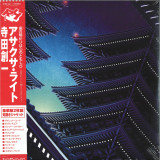
Back in 2015, Japanese DIY house pioneer Soichi Terada stepped back into the limelight courtesy of Rush Hour's 'Sounds From The Far East', a Hunee curated retrospective of material first released on his own Far East Recording label in the 1990s and early 2000s. Buoyed by the positive response and renewed interest in his work, Terada went back into studio to record his first new album of house music for over 25 years, Asakusa Light.
Developed over 18 months, Terada tried to recreate the mental and physical processes that led to the creation of his acclaimed earlier work. Those familiar with Terada’s celebrated, dancefloor-focused sound of the 1990s – a vibrant, atmospheric, and emotive take on deep house powered by the twin attractions of groove and melody – will find much to enjoy on Asakusa Light.
“I tried to recall my feelings 30 years ago, but when I tried it, I found it super difficult,” he explains. “I didn’t even know what I thought about myself five years ago, and the mental metabolic cycle seems to be faster than I thought. I tried different methods, including digging up my old MIDI data and composing by remembering old experiences. With the help of Rush Hour, I found some of the light from my heart that I had 30 years ago. I nicknamed the light I found in my heart, ‘Asakusa Light’.”
Produced using the very same synthesizers and drum machines that powered his 1990s work, the album is a joyous, colourful and life-affirming collection of timeless house music that not only recalls Terada’s own impeccable back catalogue, but also that of similarly celebrated contemporaries such as the Burrell Brothers or Ben Cenac (Dream 2 Science, Sha-Lor).
Terada, who has spent much of the last two decades writing video game music, has always had a gift for combining warm, undulating synthesizer basslines and perfectly programmed machine drums with stirring chords, smile-inducing melodies and mellow musical flourishes. It’s this immersive, sun-kissed and tuneful trademark style that takes centre stage on Asakusa Light, an album for the ages.
The set begins with the alien-sounding chords, soft-touch percussion and dawn-friendly warmth of ‘Silent Chord’ and ends on a high via the bouncing string stabs, starlight chords and thickset grooves of ‘Blinker’; in between, you’ll find a deluge of effortlessly feelgood music that’s the aural equivalent of a dopamine rush at sunrise.
There are subtle variations aplenty throughout the album – see the 8-bit lead lines and pulsing electronic textures of ‘Takusambient’, the vintage Tony Humphries flex of ‘Diving Into Minds’ and the effortlessly funky ‘Marimbau’ – but it’s the uniquely atmospheric, vivid and tactile nature of Terada’s loved-up sound that resonates. After well over 30 years in house music, the light in his heart is shining brighter than ever.
Die bereits mehrfach für die GRAMMYs nominierte brasilianische Sängerin Bebel Gilberto veröffentlicht ihr mittlerweile achtes Studioalbum 'João'. Das Album ist eine Sammlung von Liedern ihres Vaters João Gilberto, der weithin als Erfinder und Wegbereiter des Bossa Novas gilt und 2019 nach einer 70-jährigen Musikkarriere verstarb. Bebel begann schon als kleines Kind mit ihm zu singen und die Lieder, die sie nun in neuem Gewand präsentiert, begleiten sie schon ihr ganzes Leben - 'João' ist ihr ganz persönlicher Liebesbrief an João Gilberto und seine Musik.
More than a decade after the release of ´Land Lines', the mythical Humboldt County, California based duo of Brian Pyle and Merrick McKinlay reappears seemingly out of nowhere with 'Atheistsaregods'. With past releases on such cult-like labels as Root Strata, Weird Forest, Blackest Rainbow or Digitalis, Starving Weirdos were an indelible part of a sprawling and loose network of artists in Northern America whose DIY work ethic and extreme activity revolved around shoestring-budget constant touring, numerous limited editions on CDR, tape and vinyl and a relentless drive to push the boundaries of genre.
Out of that cauldron, Starving Weirdos stood out as one of the most persistent and visionary acts, developing a mind altering body of work that went from warm soundscapes through droney digressions, freeform improvisation and raucous noise summoned from a myriad of instrumentation and low budget processing - vocals, keyboards, violin, flute, percussion and an assortment of less identifiable sound sources. 10 years on their legacy remains a timeless and wildly under-appreciated one, but hopefully this new album will shine a light on their idiosyncratic approach. As time itself was never a constraint. This is music suspended outside of it.
Right from the start with the echoing percussion, dissonant keys and processed vocals of 'Haiku Nagasaki', 'Atheistsaregods' draws a continuous flux of psychedelic elevation that goes from the gloomy electronic motifs not unlike the early Cluster vibes of 'Invocation' into the dank percussive maze of the appropriately titled 'Barulho do Samba'. The self titled track induces a sense of post-apocalyptic vertigo via hallucinatory scraps of voice, suspended synth tones and reverberating field recordings, connecting into the droney mystics of 'Dudukahar (Reed Prayer)'. Coming full circle, 'For Vinny' brings back the echoing percussion amidst hypnotic cello lines until it drifts off into the unknown. With the same palpable sense of urgency, Starving Weirdos feel as vital as ever. And even if we didn't realize it we were in need of them. Welcome back.
‘The Nature of Nature’ is the debut LP by Hanegi Koen, the Japan-based creative duo composed of British ¦lmmaker Sam King and Canadian label head Sean Mallion (ADSR Collective). Picking up where they left off with their 2021 EP ‘Well Worth A Visit’, this album continues the legacy of spaced-out ambient guitars and driving analog beats the band nicely cued up for us. It has continuity from their previous work, going even deeper this time, further de¦ning the contours of their sound. As the title suggests, Nature was a big influence on the record. Many of the track titles are from the season they were recorded in – for example, ‘Hanafubuki’, when the cherry blossoms fall, ‘Tsuyu’, the rainy season, or ‘Kaminari’ which was written during a crazy thunderstorm. The sights and sounds of those times are reflected in the tracks, with ¦eld recordings helping to supplement the atmosphere. Hanegi’s founding ethos of only using analog instruments and drum machines to compose and perform, minimizing the need for the computer as an interface, is alive and well in this album. The tracks got tested in front of an audience and improved on, based on feedback from playing them live, leading to a psychedelic, synth-rich, analog journey. “We like all things analog. We both use computers and digital screens a fair amount in our day job, so it’s nice to give our eyes a rest from that and allow the music to be created from everything we have on the table.
Similarly vinyl records, ¦lm photography, and simply walking around outside in the forest – all these things are a way of slowing down and escaping the digital world.”
Greatly influenced by the wild contrasting outdoors of their home in Japan, the mountains, forests, and ocean, ‘The Nature of Nature’ is an open invitation to unplug to reconnect, a feeling that Hanegi Koen want to share with you. Released on August 18th, on vinyl and digital via Subtempo. Credits: Written and composed by Sean Mallion and Sam King Mixed by Aoki Takamasa Mastering by Manmade Mastering Album art by Laine Butler Design by Rocco Tyndale
Carved out from between the cracks of life over a 2 year period, Low Flung presents his eighth full length album ‘The Wheel’. Together, the 11 tracks provide a space to process and sit with difficult change. This takes the form of microscopic minimalist landscapes. Presented in both audio and physical form as micro grooves on a 12” vinyl.
At times the sound wanders and walks, other times it remains still, clear and precise. The omni-present artifacts found in ‘The Wheel’ are left to breathe a different life during each listen. Drones act like familiar trails losing their path as space transforms like a breeze over a table of sand. Hyper focused spores evolve around blurred waves of time. Electronic tones are captured flowing to the rhythm of a decaying natural world.
‘The Wheel’ is a patchwork of sonic experiments made using modular synthesis, fixed architecture synthesis, Buchla Music Easel (replica), outboard effects, cassette manipulation techniques, samplers and field recordings taken along the texturally rich and historically questionable eastern coastline of Australia.
The tracks have been composed with a materiality that embraces the acoustics of different listening environments. Much like mood, this means each listening experience is unique due to the natural acoustics of your listening space. The sounds on this album embrace this phenomena, creating a rich, visceral listening experience that slowly scratches away at discrete moments of time
Rather than attempting to traverse new sonic fields of experimentation in ‘The Wheel’, the album touches on the various spaces Danny has explored over the past ten years as an Audio Visual artist. Although technically eighth, it would be more fitting to say this album draws a clear line from ‘Blow Waves (2018)’ to ‘Outside The Circle (2020)’ to become the third and final chapter in the expanded non linear, unintentional landscape series. Serendipitous that each was conceived over 2 year periods of time.
While the key focus is sitting with difficult change, this album is also a celebration of any moment you might find yourself in. Good, bad, easy or hard, this album is an attempt to help with feeling content wherever you are along your path. With each cycle a new context.
Next up on Toolroom’s 4-track vinyl sampler series is another tasty collab from label founder, Mark Knight with legendary House DJ and producer Todd Terry and the Darryl James & David Anthony Project. Diving straight back into that classic 90’s House sound, Mark Knight delivers a taste of his finest production to date after unearthing Todd Terry’s edit of ‘Buddah’ by Darryl James & David Anthony Project, shaping up a seriously killer reworking of this gem fresh for the dance floor in 2023.
Next up, renowned German selector Eddie Thoneick makes a label debut with his club orientated big room weapon ‘Take It Back’. Taking it back straight through to the dance floor, Eddie Thoneick has become a name synonymous with high quality productions, providing remixes for Armand Van Helden, Steve Angello, Bob Sinclar and David Guetta. Eddie’s chunky production style shines through on ‘Take It Back’, offering up a slice of raw Tech House with deep, rumbling bass lines, metallic percussive elements and a resonating hook which will cause uproar in any club its played in.
Up next is another heater from DJ, producer and Toolroom Academy tutor Pete Griffiths who drops what can only be described as a House anthem in the making, with his brand-new track ‘Get Together’. A peak time record that sees Pete Griffiths dive deep into the sound of 90’s nostalgia, dropping a seriously well-produced and classy House banger. Also featuring on the record is American R&B, Gospel vocalist Ann Nesby, formerly the lead vocalist of the Sounds of Blackness ensemble who brings her powerful vocals to the forefront, elevating this release to anthemic status.
Last but not least, Hungarian duo Muzzaik return to the label with StadiumX on their collab track ‘Echoes’. Together, Muzzaik and StadiumX bring their signature sound to Toolroom with ‘Echoes’, a record that’ll command any dance floor it’s dropped on. Featuring a toughened-up groove, rolling bass line, and chopped vocal cuts mixed with just the right amount of edge.
Repressed! Jurassic 5 flexed serious old-to-the-new muscles in the ‘90s, beginning with their independently released single “Unified Rebelution” in 1994, and book-ending with their stellar debut full-length: 2000’s Quality Control. They walked a tightrope between underground and mainstream hip-hop, and toured alongside rap peers as well as punk rockers on the Vans Warped Tour. With double the pleasure of your average hip-hop group – two DJs and producers (Cut Chemist and DJ Nu-Mark); and four MCs (Chali 2na, Akil, Marc 7 and Zaakir aka Soup) – they brought the late 1970s “unison MC” style of pioneering groups like the Fantastic 5 and the Force MCs to a new generation. Even more surprisingly, they did so out of Los Angeles, whose hip-hop flavors generally leaned towards Gangsta, G-Funk or Electro lines. Musically inventive and lyrically forward-thinking, each song on Quality Control is a new adventure, exploring engaging territory, delivered via one of the best live hip-hop shows fans had seen in years. From singles like the strutting groove of the title track to the throwback doo-wop samples on “The Influence” and the catchy, keyboard groove-driven “World of Entertainment (WOE Is Me),” to deeper album tracks like the lyrical gymnastics of “Jurass Finish First” and the thought-provoking “Lausd,” Jurassic 5 consistently stepped to the plate and their fans responded in kind, nearly pushing the album to Gold status. Add the innovative DJ-and-sample workout which closes out the album, “Swing Set,” and you have one of the 2000s’ most unique and solid full-length platters.
As it celebrates its 50th anniversary, Bill Withers' Still Bill remains true to its title – and stands as the greatest male-fronted soul album not made by a singer named Marvin, Al, Sam, James, or Ray. Though the saying "keeping it real" did not exist in popular parlance when Withers released his sophomore effort on Sussex Records, no words better capture the music's approach, mindset, and value. Every facet of Still Bill radiates honesty, truth, and emotion.
These characteristics – along with Withers' strong singing, hybrid arrangements, and deceptively simple songwriting – have allowed the album to endure to the point where it sounds as fresh today as in 1972.
After rising into the Top 5 of the Billboard Album charts and attaining gold status within a year of release, Still Bill has long been evaluated not by sales – but according to its merit, spirit, and agelessness. Included by The Guardian on its "1,000 Albums to Hear Before You Die" list (2007) as well as in Tom Moon's 1,000 Recordings to Hear Before You Die book (2008), its contemporary standing as one of history's most venerated soul efforts eclipses the positive reception it enjoyed in the early ‘70s.
Still Bill walks the same hallowed ground as What's Going On, Call Me, Night Beat, and Genius + Soul = Jazz. Like those landmarks, Still Bill plays with a mix of consistency, effortlessness, and complexity that rewards repeat listening and transcends categorization.
In combining four of the era's predominant styles – Philly soul, sweaty funk, Southern-reared blues, acoustic-based folk – and melding them with standout production borrowed from both minimalist affairs and sophisticated singer-songwriter albums, Still Bill occupies a distinct universe.
Its rhythmic fare is equally laidback and invigorating; relaxing and rollicking; eloquent and muscular; soft and tough. Withers' calm, self-assured voice hovers above it all, doubling as a warm blanket that adds comfort and grace to lyrics steeped in maturity, perspective, and compassion.
Withers' balanced outlook on human desires, needs, and situations stem from his own existence as a former blue-collar employee who believed his time as a musician would soon end. That grounding forever separates Withers from other contemporary soul greats – and stamps Still Bill with a conversational nature and egoless approachability.
"I mean look, I'm really a factory worker," said Withers in 1972. "That's a real job." There's that word again: real. The songs on Still Bill are tethered to modesty and actuality, wedded to a belief in simplicity, and connected to universal truths that link us all – independent of our economic or social standing. No track better exemplifies those principles than "Lean on Me," a feel-good paean to brotherhood and community that hit No. 1 on the pop and R&B charts en route to becoming a mainstream staple.
Withers approaches the plainspoken insight on "Lonely Town, Lonely Street" and heartbreaking vulnerability of "I Don't Want You on My Mind" with similar sincerity and straightforwardness. His proclivity for authenticity extends to the record's other big hit: the sexual, funk-laden "Use Me," which reached No. 2 and reflects the singer's everyman persona. It's an identity couched in keeping it real, the very inclination that ultimately led Withers to retire in the mid-'80s rather than bend to industry pressures or risk credibility.
That commitment to truthfulness and realism helps make Still Bill feel as unaffected as the air we breathe. Looking back on "Lean on Me" years later, Withers said it seemed like "something that was there before I got here" – the kind of song that could be 100 or 10 years old, or one we encounter anew 10 years into the future. The same can be said for every note on Still Bill.
Two mavericks, out on the weekend, trying to make it pay...
"Maverick was the word that came to mind when I listened to this music. A slightly wayward independence of spirit and outlook. The word originally referred to an unbranded male calf that had become separated from the herd (because Texan rancher Sam Maverick was so negligent in his branding - ‘if it ain’t branded, it’s a Maverick’). But Sam’s grandson Maury Maverick gave it a different twist in his short but stormy Congressional career as the only liberal member of the Southern Democratic caucus. Maury was so out of step with his own folks that he not only voted in 1937 to make lynching a federal crime, he even addressed the House to condemn the practice as barbaric. His attempt to ban racist mob murder sadly failed, but it’s that refusal to march in step which distinguishes the two ‘mavericks’ who made this record.
Who would attempt to combine cunning ethnological forgery, Scottish folk songs, claw-hammer guitar, untutored horn-tootling, elastically relaxed drumming and garage electronic fuckery? Only Greg and Stefan, high on sea, sunshine and mis-judged micro-dosing – that’s who. ‘Don’t drown’ was offered as practical advice during the self-described ‘Yellow Submarine’ phase of making this record. And while they managed to avoid literally doing so (phew), they sound here like they got pretty ‘deep in’ to an Octopus’s sound world all their own. This surprisingly clear analogue recording has just enough Bikini Bottom grit to ensure traction. The tunes are inviting, and the sonic disruptions are too good-natured and goofy to upset even the most delicate digestion.
The sessions have had a couple of years to marinate, courtesy of some pandemic, and are here offered in that most Archducal of vinyl formats, the double ten inch. What are you waiting for, a side of Crabby Patties? Get your water-wings and dive in (unless you’re tripping)!" - Bruce Russell (The Dead C)
Pumice is the long-running, endlessly inventive project of New Zealand native Stefan Neville (1974), whose shambolic music is equally reminiscent of Kiwi pop groups such as The Clean and Tall Dwarfs as well as the country's experimental noise-rock bands like the Dead C. Largely recorded solo by himself on junky equipment, his songs typically feature blown-out guitars, wheezing chord organs, and vocals disguised by tape hiss and static.
Greg Malcolm (1965) is a guitarist from New Zealand who has played everywhere on the globe and with all most everyone, including Rosy Parlane, Toshimaru Nakamura, Tetuzi Akiyama and Bruce Russell, as well as solo releases on his own label, Corpus Hermeticum, Kraak and Celebrate Psi Phenomenon.
You know Krash Slaughta right? The man behind the recent wildly successful DOOM/Sugacubes mash-up LP Sugar-Coated DOOM, not to mention his unofficial remixes of the Wu’s K.R.E.A.M. and P.L.O. Style and collab. 45 with Phill Most Chill, Rebel Base? ‘Is he at it again?’ the monkey hears you ask. Yes, he is at it again, though the closest of the the three aforementioned releases to what he’s about to drop is the Wu remix 45. And what he’s about to drop is Diggin Deeper, not a single this time but a whole remix album of one of his (and the monkey’s!) all-time favourite hip-hop LPs – to wit, Niggamortis – more usually known as Six Feet Deep (especially in the U.S., though minus the best track under that name) by hip-hop supergroup Gravediggaz.
As many will know, this LP with its horror-movie fixated lyrics gave birth to a whole hip-hop sub-genre – that of ‘horrorcore.’ However, none of those who came after seemed to manage the lyrical humour of The RZArector, The Grym Reaper and The Gatekeeper (a.k.a. RZA, Poetic and Frukwan) and the only bit of production by The Undertaker (a.k.a. Prince Paul) that they seemed interested in was the sub-metal rap sludge of the shouty Bang Your Head – i.e. the LP’s one weak spot. But don’t worry, Krash isn’t interested in that sort of thing. Not only does he avoid rap-metal beats for Bang Your Head, he doesn’t use any on the LP at all – hurrah! What he does do is employ, arguably, as eclectic an array of sample sources as Prince Paul on the original – though with an entirely different end result. Bang Your Head with its apparently sixties garage band-derived beat for example is one of the standouts. The skeletal piano skank of 6 Feet Deep is another, while a beat featuring spaced-out eighties synths forms the new musical backdrop to Constant Elevation. Two more of the monkey’s favourites on this one are Here Comes The Gravediggaz, now underpinned by double-bass-led funk and the glorious inappropriately joyous bounce of Blood Brothers. The result? Your favourite cuts on this one might not be the same as your favourite cuts on the original. Two different versions of a much-loved LP, then; it’s why people remix hip-hop. All the vocal stems were created by Krash and the ultimate intention is to do a limited vinyl release. Cover art is by the Dead Residents’ Junior Disprol.
Eli Escobar returns for his 9th full length LP. While his last few projects found him exploring downtempo beats, EBM and ambient in§uences, this latest offering of Eli's studio craftsmanship marks a return to the sound of his early releases like Up All Night and Happiness. Warm samples expertly woven into classic drum machine rhythms and searing synth lines, The Beach Album takes listeners on a journey through golden era hip hop beats, feel-good NYstyled house grooves into sweaty techno bangers. Similar to Eli's DJ sets, the 16 track long player has something for everyone. Created during the uncertainty of the pandemic when as Eli put it, "It didn't feel like the right time to release dance music," The Beach album celebrates the return of NY nightlife and optimism for the future.
Tamango Records boss Yaya heads to TRMNL Records as he unveils his latest EP on the imprint, backed by remixes from Salty Nuts head honcho Fabe and label resident Vito.
Heading up his Tamango Records imprint while serving up killer cuts and remixes on Desolat, Moan, Revival New York and more, Yaya is a man in high demand across the globe. With his take on house music bridging influences from Africa to Italy, his percussive-driven and slick sound has made him a favourite for those looking for productions leaning towards the more energetic yet minimal end of the genre. That style is on show once more as he adds a new label to his catalogue. Joining the likes of Djebali, East End Dubs, Ray Mono and Samu.l, late July brings the release of his new EP ‘Para Siempre’ on UK imprint TRMNL Records, accompanied by a slick pair of remixes from Fabe and Vito to shape up the package.
Title track ‘Para Siempre’ is a skippy and bouncy lead effort as crisp drums, a zippy bassline, and warped vocals go to work to showcase a production bursting full of vigour, while ‘Umbrella Corps’ leans towards more organic, rolling percussion arrangements, shuffling rhythms and elastic melodies guide things towards the later hours. On the flip, Fabe steps up for the first remix as he brings his signature groove-led style to proceedings for a swingfuelled slice of funk, before Vito’s crisp take on ‘Umbrella Corps’ closes the show with a final injection of early hours goodness.
Early DJ Support:
Joseph Capriati, Marco Carola & ALISHA
Remastered reissue of another stone cold New York club classic from the legendary
SAM Records label - home to so many fabulous disco/boogie recordings from the
1980s.
• Pure early 80s electronic disco joy for the packed, sweaty dance-floors. A true boogie
classic, a huge club hit that got spun from The Garage to the streets of London.
• Not much is known about Komiko, an undercover studio outfit that featured guest
vocals Carol Williams, Tracey Weber and Vicky D. This single is their sole release.
• Remastered by Phil Kinrade and presented in a 7” Discobag sleeve.
Crackazat & Heist present: “Senses”. A stunning mini album that sees the artist deliver a heartwarming perspective on contemporary electronic music
On “Senses”, we see the pure talent of Crackazat come to life like never before. We’ve all danced to “Alfa” or his most recent hit on Heist “Demucha” and have heard his venture into the more poppy side of things with his 2022 album ‘Evergreen’ on Freerange. “Senses” however, is on another level. Crackazat takes you on a sonic journey exploring his musical personality with live keys, vocals, bass and production all coming from his studio in Uppsala, Sweden. The
jazzy horns that are featured throughout are recorded by Adeev and Ezra Potash, better known as the Potash twins. The duo took a sidestep from their recordings with John Legend, Robert Glasper and even Diplo to dive into this project with Crackazat and help him deliver arguably his best work to date.
The 6-track album starts off with the low-slung groove of ‘I need to know’. The whole atmosphere is warm, dreamy and seems to be written to lift your spirits, no matter where you are in life. Plucked strings, arpeggios and long horn notes give this song its energy, which is subtly supported by lo-fi drums and sparse bass licks.
“Do you think about me”, keeps the energy tight with a lovely drum groove and a sparse bass section. From the first note of the track, you get the feeling like the energy could change any moment. Halfway through this is exactly what happens, when uplifting keys and a buzzing lead take control of the track. The string arrangement is subtle enough to never overshadow the other instrumentation, but simply adds a beautiful layer to a track that’s already filled with
emotion. It’s all smiles when the energy of this track is set loose!
If “Do you think about me” is Crackazat in pop mode, “Freddie’s Groove” is Crackazat in full-on jazz mode. The nod to Freddie Hubbard is clear, and Crackazat cleverly takes ideas from both the jazz legend and his legendary French sampler, Pepe Bradock for this track. The horns are deep and moody, the groove is jazz-house at its best and Crackazat’s soft vocals have the perfect amount of fragility to fit the groove. The changeover into a stabby synth section
halfway through the track is a subtle reminder from the skilled producer that – even with all these musical elements – he can direct you to the front of the dancefloor with the twist of a note.
“Phantom” sees Crackazat move into a shuffling Latin-dance vibe. Here, the song reaches its full potential through the horn section, so it’s only fitting that this is the feature track for the Potash Twins. The Latin rhythms are lush, the key progression is on point and the energy on this track just keeps on going with layers and layers of horns, powerful vocal chops, and subtle but effective percussion changeovers.
“Endless life” is a track that feels like it’s building up momentum with every repetition. Whether it’s the broken beat groove, the offbeat keys or the sparse horn hits, chord hits or leads, there’s a certain energy in this track that takes a hold of you and simply doesn’t let go.
The outro “When we last met” is built around vibey drunk keys and a downtempo hip-hop groove. There’s a hint of old school D’angelo in this track and you can clearly hear the artist feels at ease with the path he’s taking the listener on. It’s a perfect ending to a record that showcases the beautiful world that Crackazat has crafted through his compositions and one thing is for sure: This is an album we will all keep coming back to for a long time to come.
Yours Sincerely,
Maarten & Lars