Lisbon-based producer & DJ, Helder Russo is a standout figure in Portugal's electronic music scene. Helder's work has gained acclaim since his early releases on Groovement, Tomorrow Is Now, Kid! & most recently, Percebes.
His 2019 release 'Onfrico' & the 2021 anthem 'Cascalho' showcased his unique blend of Chicago House, Detroit Techno, London-inspired breaks & rich African influences. As a true ambassador for Portuguese dance music, his music is highly regarded.
Now, Helder presents his debut album 'Nha Joia' (Creole for 'My Jewel'), a heartfelt tribute to his beloved mother. This collection features the 80's cop show inspired 'Parsley park', the infectious 'Whippit', the emotional 'Nha Joia', the Outkast-reminiscent 'Muscanite', the futuristic techno soul of '11.22' & the gritty 'Badio' & 'Sampa'.
This album is brilliant, honest, & complete - Recommended for fans of Carl Craig, Underground Resistance, Larry heard, Kamasi Washington & Thundercat. Sleep now, cry later.
Search:el tri
Black Vinyl[21,81 €]
Seit mehr als zwei Jahrzehnten ist CALIBAN eine der prägenden Kräfte im Metalcore. Mit ihrem kommenden Album "Back From Hell" entwickelt die deutsche Band ihren Sound weiter und bleibt dabei der Intensität und Emotion treu, die ihre Karriere definiert haben. Angeführt von den Gründungsmitgliedern Andreas Dörner (Gesang) und Marc Görtz (Gitarre), umfasst das aktuelle Lineup der Band zusätzlich den neuen Bassisten Iain Duncan, der mit seinen cleanen Vocals eine neue Dimension in die facet-tenreiche Dynamik der Band bringt.Nach dem Erfolg der letzten Singles - "I Was a Happy Kid Once", "Echoes" und "Guilt Trip feat. Mental Cruelty" - veröffentlichen CALIBAN ihr bisher ambitioniertestes Werk. "Back from Hell" erforscht Themen wie innere Kämpfe, Resilienz und Katharsis und verbindet ihre charakteristischen, krachenden Riffs und den gutturalen Gesang mit atmosphärischen Melodien und einer moder-nen Produktion.Im Laufe der Jahre haben sich CALIBAN ihren Platz unter den Metalcore-Legenden erarbeitet, mit unzähligen Tourneen, Festi-valauftritten und einer Diskografie, welche Genregrenze immer wieder aufs Neue definiert. Im Jahr 2024 und darüber hinaus wird die Band mit "Back From Hell" auf Tour gehen und ihren Ruf als einer der elektrisierendsten Live-Acts der Heavy Music unter-mauern. CALIBAN sind stärker als je zuvor!"Back From Hell" ist erhältlich als: Ltd. CD Digipak & Branded Air Freshener, LP, Digital Album.
Madteo is one of the great eccentric visionaries of Electronic Music and his new album Misto Atmosferico E Ad Azione Diretta on Unsure once more happens to be a mind-bending piece of art. Misto Atmosferico E Ad Azione Diretta shifts between focused gritty grooves and the long freeform associative adventures that you haven't heard before, never static, sometimes overwhelming, always on edge.
The opener Cans People is an archaic rave monster, To Know Those Who is non-linear dub techno, Nocturnal Palates expands the Filter House universe and Rave Nite Itz All Right hits you hard and strange (yet subtle, in a way). The last two tracks then let loose; Madteo manipulates time, space and sounds to create the psychedelic secrets of Luglio Ottantotto. And Emo G (Sticky Wicket) explores the outskirts not only of House or Techno or whatever but music in general, a 15-min-trip through the low frequencies, the rumble, the dark hearts and the enchantment. Breathtaking. Bring The Voodoo Down.
Looking behind the obvious, forming an orchestra out of everyday surroundings.
Finding the essence in the trivial, clarity in the complex, poetry in simplicity. All of this is part of the goal, meaning and character of Oh No Noh, the project of Leipzig-based guitarist, robot programmer, magnetic tape crumpler and composer Markus Rom. All of this floats and shines through "As Late As Possible", the third Oh No Noh album, which will be released on April 4th, 2025.
The focus of this album, as the title "As Late As Possible" suggests, was patience. A creative lingering, the selfimposed principle of letting ideas mature, consciously leaving them lying and looking at them again in order to discover and refine new things. Always looking for new ways of producing musical sounds, Markus Rom has been blurring the boundaries between LoFi, Indietronica, Postrock, Kraut and Pop with his solo project for several years. His main instruments for this are electric guitar, MIDI robots, tapes and samples. For “As Late As Possible”, Rom expands his setup with a new sound sources (acoustic guitar, banjo, organ) and musical guests: Damian Dalla Torre (Squama) on bass clarinet and Andi Haberl (the Notwist, Sun) on drums.
“As Late As Possible” continues the signature of past releases and adds new facets. Rom's distinctive looping in and over each other is particularly evident in the tracks “Missing the Point”, “Orb” and “Almost Everywhere”. With "Loot", a straightforward and folk-pop piece finds its way onto the album and coexists with math-trained tracks like "Dog Years" or "Dot", which conjure up associations with Weilheim bands like COUCH. The tracks "Bliss of Disconnect" and "Fawn" were created in collaboration with the featured guests Liz Kosack and KMRU. The confidently unplanned is one of the principles around which Oh No Noh itself is also continuously evolving. Part of this development: the radio series "Oh No Noh Radioh", which has so far consisted of over 40 parts, for which Rom invites a guest in each episode to research music together along roughly defined concepts, ideas and inspirations. Together with technology composer Hainbach, free jazz artist Limpe Fuchs and sound artist Elsa M’Bala, for example, encounters were created whose patient search and find and whose controlled coincidences also characterize “As Late As Possible” – but here concentrated, concise, and with all the love of sound and experimentation always committed to the song. With this will to create a song-like narrative, to move, to develop, “As Late As Possible” remains suspended and searching. Its concentration seems light-footed, its happy accidents well-placed, the melancholic beauty of outdated technologies, forgotten musical toys and broken noise sources always forward-looking. Music like the one that comes about when someone programs an entire robot band, which then becomes just a friendly part of the whole.
The artwork for “As Late As Possible” was created by Leipzig comic artist Anna Haifisch. The album was mixed by Adam Lenox and mastered by Frida Claeson Johannsson.
Big new release by Peter Van Hoesen! Continuing his exploration of intricate techno systems, their effect and direct perimeter of action, Peter van Hoesen turns in his newest four-track piece, ‘Prime Directive’: a fascinating dive into the artist’s shape-shifting headspace and inner creative chaos.
Fuelled on a furnace-hot mix of abstract-leaning immersion and hi-octane rhythmic thrust, ‘Prime Directive’ looks at contemporary techno from the angle of experimentation and intuitive abandon. The result comes in the form of four distinct movements, each carving out their own logic and associated behaviour out an endless pool of potentialities. Here comes chaology unfolding in all its unadulterated, visceral glory.
‘Definition by Absence’ breaks the trip in to the sound of a faux-random symphony: its train-like swing and fiery bass seesaw coalesce through an elliptic fluttering of sorts, iterative and not, patterns moving in and out of synchronicity as van Hoesen applies more or less pressure on both ends. All in gusty in-your-face-ness, ‘Variables Edit 1’ whirls and swirls like an ominous vengeance of nature; Its puncturing kicks and whistling menace set against stellar winds and rabid machinery on the prowl for its next victim.
An even more unsettling piece of disjointedly arrhythmic, anti-club music for the dance floor, ‘Prime Directive’ will have you zoning out like a bad dream, flush with metronome-faced monsters and molten clocks hanging from dead trees. ‘Morphology’ could be PVH’s attempt at giving his concepts a carnal carcass to hold onto. Here, rhythm becomes somewhat less erratic, offering his 360-degree vision more melodic surface and actual room for dispersion. One to keep the boundaries pushed and status-quo challenged, this is techno at its most entrancingly bold and fearless.
*This new four-track epic from Peter van Hoesen comes draped in a fine piece of artwork courtesy of Atact, and pressed according to our standards in 180g audiophile quality so you get to experience the Belgian master's chiselled sound design in all its glory.
The Ibex Band, with Giovanni Rico and Selam Woldemariam at the creative helm, provided the musical backbone for legends like Aster Aweke, Girma Beyene, Tilahun Gessesse, Mulatu Astatke, and Mahmoud Ahmed, including the iconic album Ere Mela Mela, shaping modern Ethiopian music as we know it today. This 1976 album (Ge’ez Year 1968) played a pivotal role in that legacy and has now resurfaced to set the record straight.
There’s a tendency to talk about the seventies as a golden age of Ethiopian music. There are good reasons for that, and just as good reasons against it. However, the notion of a golden past privileges the role of Western explorers and suggests that the pinnacle of Ethiopia’s musical culture is something only a foreigner can appreciate and unearth. It downplays the complexities of Ethiopia’s culture and history, creating an artificial divide between then and now. And it underestimates the constantly evolving sound that has followed.
The legendary musical outfit The Ibex Band, later metamorphosed into The Roha Band, has played a central role in defining the sound of many of the greatest stars on the music scene of Ethiopia from the mid-seventies onwards–but their golden output has never really waned. The story of the origins of the band that provided the musical backbone for greats such as Aster Aweke, Girma Beyene, Tilahun Gessesse, backing the solo career of group member Mahmoud Ahmed as well as backing Mulatu Astatke and many others has yet to be properly told.
Two misconceptions plague the image of Ethiopian music, one is that the music is pure because it is, by some notion, unexploited, the other is that it is all traditional. To begin with, a combination of political changes between the late sixties and the mid-nineties created an environment where only the most dedicated and skilled musicians struggled on and pursued a musical career against fierce odds. The whole Ibex Band, with Giovanni Rico and Selam “Selamino” Seyoum Woldermarian at the creative helm, are arguably the origo of the vibrant scene in the mid-seventies, and the said pair are foremost responsible for not only navigating the band through troubled times, but also modernizing the 6/8 chickchicka rhythm to a contemporary form. Giovanni laid the rhythmic foundation with heavy looped basslines that reinvented traditional melodies as dance music, and with Selamino’s innovative guitar work they influenced scores of musicians from Abegaz Kibrework Shiota to Henock Temesgen. Even Giovanni’s Fender bass and Selamino’s Gibson guitar inspired younger musicians in their choice of instruments. Not only in choice of instruments but also in sound–even as the digital revolution hit Ethiopian music, a lot of popular music still took its cue from the masters from Ibex and Roha.
Ibex emerged out of the ashes of the sixties group the Soul Echos band, adding Giovanni and Selamino to their ranks and taking their cues from a slew of influences, such as Motown and The Beatles, fused with traditional music. A tighter-knit unit than most bands at the time – Ibex has remained six to seven members throughout their whole career, compared to many bands that were as large as fifteen or sixteen men strong when Ibex set out. Their playing has been viciously focused, economical yet heavy. Just a year before the recording sessions of the album in your hands, Giovanni and Selamino made a contribution to the popular musical lexicon of Ethiopia that was simply defining the popular sound: their arrangement and recording of bandmate Mahmoud Ahmed’s solo effort and real commercial breakthrough tune and eponymous album, Ere Mela Mela, from 1975.
Selamino has never limited himself to being an adroit lead guitarist, but has always been a scholar of history, and as such he has probably contributed as much to modern Ethiopian music with his guitar playing and compositions as with a deepened understanding of modern or contemporary – Zemenawi – Ethiopian music. Selamino’s contributions serve as a metaphor for those of the whole band, at one and the same time creating and defining a new, danceable and updated sound anchored in Giovanni’s bass, whilst also elevating the broader scene through their support for others on the scene and on top of that, increasing the understanding of the music.
There is an understandable desire to romanticize the musical heyday Ibex and Roha were at the forefront of, because so much of the output is sorrowfully hard to come by. Ibex creativity was nothing short of ridiculously fierce compared to many of their Western contemporaries. Based on their sheer recorded output alone they could have usurped the title “hardest working in show business” from James Brown, recording more than 250 albums or 2500 songs in the seventies and eighties. Some only surface as cassettes today, others were never given full LP release, and some are simply impossible to find today. In the light of that, it’s nothing short of a miracle that the recording Stereo Instrumental Music from 1976 (Ge’ez Year 1968) has resurfaced. Unearthed in perfect condition on a chrome cassette, this is musical history comes alive–to set the future straight. Stereo Instrumental Music was recorded in collaboration with Karl-Gustav Lundgren, a Swedish national working for the Radio Voice of the Gospel. It took two sessions at the Ras Hotel ballroom in Addis Ababa. The Ibex Band was the first band in Ethiopia to employ a four-track recorder for their recording (the first available in the country, lent by Karl-Gustav). Later the same week, Giovanni and Selamino realized that, lengthwise, the recorded material fell short of what they wished for, so they recorded four more tracks in one more session on a single-track recorder. The Ras Hotel and Ghion Hotel, where the Ibex Band held musical residencies were to Ethiopia in general and Addis Ababa in particular what Motown was to the USA and Detroit a few years earlier – a hotbed of musical creativity and showmanship.
The most astonishing thing about Ethiopian music of the last half century is how tradition and modernity are intertwined. Because of this feature, it’s kind of hard to tell when there ever was or when we are in a “golden age”. So much of music from the past has been criminally neglected, but because of the hardships in the past, it would be an oversimplification to say that said past was a golden age. Probably, the golden age is what we are approaching, because for the first time both the past and future are accessible, and the monumental contributions from before can lay a firm foundation for a thriving music scene today. The Ibex Band stands firmly in the past, present and the future. That, if anything, is golden.
The detailed history of Stereo Instrumental Music is in many ways unique. To begin with, it couldn’t have been recorded earlier (there were no four-track recorders available) and it really couldn’t have been recorded afterwards either, at least not in the years directly following, because of the toll the musical scene took from the unfavorable political climate that followed when the nascent Derg regime and rival groups tried to assert themselves, the musical equipment lent from The Voice of Gospel Radio simply disappeared from Ethiopia when the radio station folded in 1977. Karl-Gustav Lundgren,
the Swedish foreign national who assisted during the recording, worked with the Ethiopian Evangelical Church Mekane Yesus at the time, recalls how they only had about fifteen minutes to get the microphones in place for the recording as to not alert neither the management at Ras Hotel nor the authorities and most importantly, to complete the recording before the curfew came into effect at midnight. In leaping to the opportunity to use previously unavailable equipment to push their sound forward and improvising to meet the logistical challenges, the Ibex Band displayed the very avant-gardism and adaptability that explains their longevity as a band through the years. The recording of Stereo Instrumental Music is from a given time in history, but it sounds as beyond time.
Much of the energy that burst out of the scene that Stereo Instrumental Music came out of dissipated or got sidetracked during the societal changes Ethiopia went through in the 1970s and 80s. Whilst leaders might have professed to be revolutionary, the work ethic of the Ibex Band can truly be described as that. They never called it quits, but adapted, toured extensively abroad in Africa, Europe, and the Middle East, and found ways to work even in the face of the curfew that curtailed a lot of musical life. They even played major arenas in the nineteen eighties, despite said curfew and restrictions. The whole extent of their legacy has never been told, but their music speaks louder than words, so therefore… tune in to the Ibex Band’s Stereo Instrumental Music.
Four Seasons in Kyoto’ marks the final chapter of The Kyoto Connection’s Ambient Japanese trilogy, following Postcards (2018) and The Flower, The Bird and The Mountain(2022). Like its predecessors, this album pays homage to the pioneering ambient and environmental music movements of 1980s and 1990s Japan.
The album unfolds as the imagined soundtrack to life in a quiet rural village, where nature and tradition shape the rhythm of everyday existence. Across 14 evocative compositions, The Kyoto Connection captures the essence of Japan’s ever-changing seasons, weaving together delicate melodies and immersive soundscapes. With contributions from friends and fans in Japan, Four Seasons in Kyoto is both a tribute and a transportive listening experience from producer Facundo Arena, the composer and producer behind The Kyoto Connection.
With Four Seasons in Kyoto, Facundo Arena continues his deep exploration of Japanese ambient and environmental music, blending his long-standing admiration for Kyoto’s cultural heritage with a sound that feels both nostalgic and timeless. While Postcards was an instinctive homage and The Flower, The Bird and The Mountain drew from real Kyoto field recordings, this final chapter in the trilogy leans further into the imagined, an intimate portrait of an unseen yet deeply felt Japan.
Recorded using a mix of vintage synths, delicate acoustic instrumentation, and subtle electronic textures, Four Seasons in Kyoto refines The Kyoto Connection’s signature approach. Organic soundscapes and drifting melodies mirror the slow change of seasons, evoking the impermanence central to Japanese aesthetics. The result is a record that seamlessly bridges the natural and the synthetic, memory and imagination, a fitting conclusion to a journey that began with an algorithmic discovery and blossomed into a rich sonic world of its own.
- Incarnadine
- A Wound Unhealing
- Angel Of Mercy
- The Sword Of The Slain
- Ruin
- The Penitent
- Armoured In Shadow
- And The Thorn-Choked Flowers Grow
- Between The Sea And Stars
Neon Violet/Mint Green Merge Vinyl[26,01 €]
Tribunal kehren mit ihrem zweiten Album "In Pentinence and Ruin" zurück, einer Elegie voller Trauer und Verlorenheit, die immer tiefer in den feierlichen Abgrund des Kummers hinabsteigt. Das Debüt "The Weight of Remembrance" von 2023 legte die Messlatte für die Kanadier hoch und wurde zu einer der bemerkenswertesten und am meisten gelobten Doom-Veröffentlichungen des Jahres, was Decibel Mag dazu veranlasste, das neue Album der Band in ihre jährliche Liste der am meisten erwarteten Veröffentlichungen aufzunehmen. Tribunal haben sich Zeit genommen und ein Werk von enormer Tragweite geschaffen, das in längst verlassenen Hallen noch lange nachhallen wird.
In Penitence and Ruin" hat sich zu einer vollwertigen fünfköpfigen Band und Live-Einheit entwickelt und bietet einen größeren Zusammenhalt und eine größere Reife, die das Wehklagen der Witwe mit düsteren Streichern, schaurigen Tasten und Schlagzeug, das wie die eiserne Glocke des Schicksals läutet, miteinander verwebt. Diese Elemente schmücken das monolithische Fundament aus erdrückenden Klageliedern und funeralen Melodien, die aus dem Mark der Trauer selbst gehauen sind. Die Dualität zwischen dem wehmütigen, leidenschaftlichen Gesang des Sängers/Cellisten Soren Morne und den gequälten Knurrlauten des Gitarristen/Sängers Etinne Flinn verbindet sich mit entschlossenem Schritt und schreitet voran in die Dunkelheit, auf einem Pfad, der nur durch das fahle Glühen einer fernen Klage erhellt wird.
Tribunal hath wrought a requiem most dire where beauty and ruin become one and in doing have forged a second album beyond expectations, progressive in its embrace of the penitent and eminently listenable as a scripture of loss. Like ivy upon the tombstone, 'In Penitence And Ruin' winds slowly but inexorably towards spectral grandeur and eternal oblivion.
Tribunal kehren mit ihrem zweiten Album "In Pentinence and Ruin" zurück, einer Elegie voller Trauer und Verlorenheit, die immer tiefer in den feierlichen Abgrund des Kummers hinabsteigt. Das Debüt "The Weight of Remembrance" von 2023 legte die Messlatte für die Kanadier hoch und wurde zu einer der bemerkenswertesten und am meisten gelobten Doom-Veröffentlichungen des Jahres, was Decibel Mag dazu veranlasste, das neue Album der Band in ihre jährliche Liste der am meisten erwarteten Veröffentlichungen aufzunehmen. Tribunal haben sich Zeit genommen und ein Werk von enormer Tragweite geschaffen, das in längst verlassenen Hallen noch lange nachhallen wird.
In Penitence and Ruin" hat sich zu einer vollwertigen fünfköpfigen Band und Live-Einheit entwickelt und bietet einen größeren Zusammenhalt und eine größere Reife, die das Wehklagen der Witwe mit düsteren Streichern, schaurigen Tasten und Schlagzeug, das wie die eiserne Glocke des Schicksals läutet, miteinander verwebt. Diese Elemente schmücken das monolithische Fundament aus erdrückenden Klageliedern und funeralen Melodien, die aus dem Mark der Trauer selbst gehauen sind. Die Dualität zwischen dem wehmütigen, leidenschaftlichen Gesang des Sängers/Cellisten Soren Morne und den gequälten Knurrlauten des Gitarristen/Sängers Etinne Flinn verbindet sich mit entschlossenem Schritt und schreitet voran in die Dunkelheit, auf einem Pfad, der nur durch das fahle Glühen einer fernen Klage erhellt wird.
Tribunal hath wrought a requiem most dire where beauty and ruin become one and in doing have forged a second album beyond expectations, progressive in its embrace of the penitent and eminently listenable as a scripture of loss. Like ivy upon the tombstone, 'In Penitence And Ruin' winds slowly but inexorably towards spectral grandeur and eternal oblivion.
Eridu's 'Nous Sommes' EP prepares us for the first open-air house sessions of Spring 2025! The A-side starts off with 'Nous Sommes' where a bouncy bassline is countered by a French vocalist, balancing style and punch. The Belgian trio continues with 'Je M'en Fous', ready to get the crowd in a 'carefree' mood with the funky elements we all enjoy. The real French touch comes with the B-side where they start off with a long-lost house gem 'Jean Babbie's Theme', finally seeing the light on a record. 'Mad About' catches you in a warm texture of classic samples that will keep you busy long after the last note has faded.
- A1: Ai, Absolutely!
- A2: White On White
- A3: Wywaywg
- B1: Helping Others
- B2: Momento
- B3: Benevolent Dictator
Das Berliner Avantgarde Pop Trio Painting veröffentlicht sein zweites Album 'Snapshot Of Pure Attention' und gibt darauf der KI eine menschliche Stimme!
Eine atemberaubend unberechenbare Kollision aus Punk-Energie, Math-Rock Taktarten, treibenden Techno-Beats, expressiven Free-Jazz Saxophon-Soli, kraftvollen Synthesizern und sich überschlagendem Call-and-Response-Gesang: 'Snapshot Of Pure Attention' ist das berauschende zweite Album des Berliner Trios Painting. Es ist der zu Recht mit Spannung erwartete Nachfolger des hochgelobten Debütalbums 'Painting Is Dead' von 2022, für das sie vom Rolling Stone als die "tollste neue Band, die man gegenwärtig in der deutschen Pop-Avantgarde findet" gefeiert werden.
Aus einem vielfältigen Spektrum von experimentellem Rock über elektronische Avant-Garde Sounds bis hin zu Leftfield Pop, Techno und Jazz schöpfend, ist die Musik von Painting ein sich ständig veränderndes, erfrischendes Kaleidoskop von Klängen, das aus den engen Grenzen konventionellen Songwritings ausbricht.
Tornamented Walls is the first result of a collaboration that began in 2022. The album is a freeze-frame of emergence: personal preparations prior and minor aside, the album was live and improvised. Rosa Anschütz sings, speaks, plays harmonium, and utilizes a looper as an instrument in itself. Her symbolic prose is at the heart of the music, emotionally direct yet haunted by a translucent potential of meaning. In lockstep with the voice, Tennota dissolve the dense rhythmic complexity of their recent work into a creeping mantra, the material interrogated until the patina of the sound is the music itself.
Tornamented Walls floats on top of a wave of slow-motion techno influences, a deepened ambient and experimental perspective, and a feel of subtle and subdued lyricism not strictly limited to its vocal parts. It is a record of darkly ambient and abstracted techno pop, listening music to be played loud. More disenchanted than dark, it is confrontational through its fearless incorporation of a widely varying set of different states of mind.
Tennota are Tom Wheatley & Grundik Kasyansky. Since 2019, they have been reimagining the relationship between physical and digital worlds through music, using gut strings, sine waves, tree sap, and feedback, and flexing them over contemporary technologies into an elemental suspension. Not futuristic, but rather an alternative present.
Rosa Anschütz is an artist and musician whose sound-based practice is framed by sculpture, installation, and scenography. Her meditative and sometimes haunting compositions combine the dark ambiance of post-punk and cold wave with ethereal polyphony, synth-driven melodies, and spoken word.
Теnnota & Rosa Anschütz will be touring in April, stopping over in Eupen on April 18th for a concert night at the Galerie vorn und oben. Further on the bill that night will be Tristwch Y Fenywod.
After two years in the making, the long anticipated Per Hammar album on Sushitech is finally here!
Presented as a beautifully crafted triple vinyl LP, the album is a deep journey into Per Hammar's refined dub techno sound, seamlessly blending classic Sushitech aesthetics with a modern, elegant touch.
This record perfectly embodies the label's signature balance between immersive club music and deep, textured home listening, delivering a rich sonic experience full of depth. The production is warm, expansive and hypnotic, merging intricate sound design with flowing organic tech driven grooves.
A stone-cold classic in the making and a fitting way to launch the label's 20th anniversary celebrations
After two years in the making, the long anticipated Per Hammar album on Sushitech is finally here!
Presented as a beautifully crafted triple vinyl LP, the album is a deep journey into Per Hammar's refined dub techno sound, seamlessly blending classic Sushitech aesthetics with a modern, elegant touch.
This record perfectly embodies the label's signature balance between immersive club music and deep, textured home listening, delivering a rich sonic experience full of depth. The production is warm, expansive and hypnotic, merging intricate sound design with flowing organic tech driven grooves.
A stone-cold classic in the making and a fitting way to launch the label's 20th anniversary celebrations
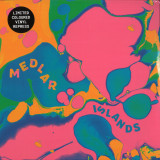
South Londons’ indomitable Medlar delivers an ambitious new album
The long-time underground favourite has collaborated with the likes of Dele Sosimi, Rebekah Reid, Deevoenay, Finn Peters, Sam Virdie, Afla Sackey and Arnau Obiols on an album that finds him taking his production to new levels.
From roots playing illegal raves in the South West to building up a cultured catalogue that bounces between house and garage, Medlar has long been part of the underground conversation. He has dropped a previous album and many innovative remixes and edits for the likes of Billy Cobham and Shirley Lites, worked in the studio and on stage with Afro legend Dele Sosimi and most recently released an album under his own name that collected myriad different sonic sketches from the past 15 years.
Islands is an altogether different proposition that comes after establishing himself as a mix engineer and producer of other people's music. In that time, Medlar has honed his skills, learnt new tricks and grown more able to express himself in sound. The result is an album that explores a more electronic palette inspired by '80s fusion sounds whilst maintaining a loose, organic flow through his use of live instrumentation. “The idea for the LP was for a collection of music which could sit alone as club tracks, but would work equally well as part of a whole. The name Islands came from this, as there's some connecting ideas but the tracks sit independently in their own little sonic worlds. I took a lot of inspiration from early 80’s electronic music produced during early years of MIDI technology… proto house, jazz fusion, electronic disco and experimental ambient. I wanted to juxtapose some of these methods with more contemporary production and make something that's ultimately quite fun!” says Medlar of the record which could easily soundtrack a summer road trip.
Across 11 tracks, he blends old-school techniques like a fusion of live instruments, FM synthesis and MIDI triggered vocal samples with more contemporary touches such as punchy, club-friendly drums and dub inspired, speaker-wobbling low end. The result is less reliant on samples than his previous works and makes for a perfect blend of retro authenticity and future freshness.
L.A. Witch haben schon immer eine Aura müheloser Coolness ausgestrahlt, sei es in Form des Americana Noir und des lakonischen Back-to-Basics-Rock'n'Roll ihres selbstbetitelten Debüts oder des glühend strengen Abenteurertums ihres zweiten Albums "Play With Fire". Die Band - bestehend aus Sade Sanchez (Gitarre/Gesang), Irita Pai (Bass) und Ellie English (Schlagzeug) - begann als informelle Angelegenheit, aber die schwülen und betörenden, von Hall umhüllten Songs, die sie schufen, fanden beim Publikum Anklang und brachten das Projekt über den isolierten Raum von Freunden und Gleichgesinnten in Südkalifornien hinaus in die weite Welt. Auf ihrem neuesten Album "DOGGOD" geht das Trio über die bisherigen kreativen und geografischen Grenzen hinaus - das Material wurde in Paris produziert und die Tracks im Motorbass Studio in der Rue de Martyrs aufgenommen. "DOGGOD" erkundet ein breiteres klangliches Terrain, setzt ein größeres Arsenal an Sounds ein und erforscht größere existenzielle und kosmische Themen, ohne dabei den für die Band typischen Sinn für das Verbotene, das Verlassene und die Vorahnung zu verlieren. "DOGGOD" ist ein Weg, das universelle Rätsel der spirituellen Natur von Liebe und Hingabe anzugehen. "Ich habe das Gefühl, eine Art Dienerin oder Sklavin der Liebe zu sein", sagt Sanchez. "Ich bin bereit, für die Liebe zu sterben, indem ich ihr diene, für sie leide oder nach ihr suche - so wie ein treuer, ergebener Diensthund es tun würde." Der Titel des Albums ist ein Palindrom, das DOG und GOD zusammenfasst - eine Verherrlichung des Unterwürfigen und eine Subversion des Göttlichen. Es ist eine Anspielung auf die Reinheit von Hunden und eine Anerkennung ihrer bedingungslosen Liebe und ihres beschützenden Wesens, die im Widerspruch zu den verschiedenen abwertenden Assoziationen stehen, die mit dieser Spezies verbunden werden. "Es gibt diese symbolische Verbindung zwischen Frauen und Hunden, die die untergeordnete Stellung der Frau in der Gesellschaft zum Ausdruck bringt", erklärt Sanchez. "Und alles, was solche göttlichen Eigenschaften verkörpert, hat es nicht verdient, als Schimpfwort benutzt zu werden." Diese widersprüchlichen Erkundungen von Liebe und Unterwerfung manifestieren sich in der sanften und rauchigen Garagerock-Alchemie der Band, mit einer neu entdeckten Nutzung der disziplinierten Zurückhaltung und eisigen Instrumentierung des Post-Punk. Der Album-Opener "Icicle" zeigt, wie L.A. Witch aus dem Proto-Punk, der Psychedelia und den düsteren Riffs der 70er Jahre in die von Refrains durchtränkten Gitarren und den verlorenen Minimalismus von Joy Division und den frühen The Cure reist. Es wird eine Parallele zwischen romantischem Selbstmord und Märtyrertum gezogen, die sich im zweiten Song, "Kiss Me Deep", fortsetzt. Hier beschreibt Sanchez eine Liebe, die so rein ist, dass sie die Zeit übersteigt und sich über mehrere Leben erstreckt. Es ist ein Lied über Leidenschaft, vorgetragen mit dem weltlichen und verletzten Stoizismus der frühen Goth-Pioniere. Von dort aus geht die Band zur Leadsingle "777" über, einem Song über Hingabe bis hin zum Tod. Ein treibender Beat, ein treibendes, verzerrtes Riff und Sanchez' ätherischer Gesang vereinen sich zu einem Song, der sowohl düster in seinem Fatalismus als auch sinnlich in seiner treuen Leidenschaft ist. Auf dem gesamten Album "DOGGOD" weichen L.A. Witch nie von ihrer Muse ab. In "I Hunt You Pray" legt Pai einen hypnotischen Basslauf hin, während English einen zyklischen Krautrock-Groove einsetzt und Sanchez das Bild eines verlassenen Hundes am Straßenrand malt, der allein in der Nacht ist und sowohl als Jäger als auch als Gejagter lebt. Auf "Eyes of Love" macht sich die Band die meditativen Mid-Tempo-Wiederholungen, dekonstruierten Akkorde und esoterischen Betrachtungen über Liebe, Tod und Spiritualität zunutze, die Lungfish zu einer so beliebten Band gemacht haben. Es unterstreicht die Parallele zwischen der unerschütterlichen Liebe in den Augen eines Hundes und der Selbstaufopferung eines Erlösers. Auf "The Lines" nimmt die Band den treibenden Puls des Post-Punk und fügt dem Mix eine Extraportion Chorus hinzu. "Chorus ist ein moderner Effekt, der auf der Idee beruht, die leichten Tonhöhenunterschiede eines Chors nachzubilden. Es gibt eine schimmernde Qualität, die uns zurück zu diesem spirituellen, göttlichen Gefühl bringt", erklärt Sanchez. Gepaart mit dem Einsatz von Orgel und einer grüblerischen Moll-Melodie, beschwört der Song gleichzeitig das Heilige und das Sakrileg. Der Titeltrack "DOGGOD" hat vielleicht die größte Ähnlichkeit mit dem Material des Vorgängeralbums "Play With Fire", in den schlanken und gemeinen Gitarren auf eine raue Rhythmusgruppe und verträumten Gesang treffen. Aber während ihr vorheriges Album ein Aufruf war, seinen eigenen Weg zu gehen, bleibt "DOGGOD" dem "Bis dass der Tod uns scheidet"-Thema des Albums treu und geht sogar so weit, ein Maß an Unterwerfung zu beschreiben, das in gefährliche und ungesunde Gefilde übergeht, wobei Sanchez singt "hang me on a leash / `til I wait for my release". Letztendlich ist "DOGGOD" eine perfekte Verkörperung des Ansatzes von L.A. Witch. Es ist gleichzeitig romantisch und bedrohlich, ehrfürchtig und profan, eine Feier und ein Klagelied. Es spannt den Bogen zwischen Vergangenheit und Gegenwart, indem es vertraute Klänge aufgreift und sie für die Jetztzeit aufbereitet. Aber es läutet auch eine neue Ära für die Band ein, die über die Kodachrome-Erinnerungen an das Amerika der Jahrhundertmitte hinausgeht und tiefer in den mittelalterlichen und gotischen Energien von Paris und darüber hinaus gräbt, während sie gleichzeitig ein besudeltes Herz erforscht.
Techno tastemaker Enrico Sangiuliano returns to his influential NINETOZERO label with his bold new Transcendence EP featuring two very different but equally powerful sounds; one track is to dance to, the other one to listen to.
This new release caps off an impressive year for the Italian underground icon. Coming just a couple of months after his Interconnection EP and a packed season of headline shows, it marks yet another subtle evolution of his always hard-to-classify sound. The EP is a collaboration with psychedelic trance pioneers GMS, who have been making their mark since the 90s. The award-winning pair have had their music used in a trio of Tony Scott movies and have dropped several vital albums and EPs.
“GMS and I met many years ago in their studio in Ibiza and spontaneously cemented our relationship through our passion for sound”, says Enrico Sangiuliano. “They are a pillar of psytrance, and collaborating with them to interpret the concept of Transcendence was the perfect way for us to finally merge our creative visions. With this release, we transcend our individual musical paths to create something entirely new. We explore the theme of elevation, challenging ourselves to move beyond the tangible. Here, music becomes a portal, expanding consciousness and providing an escape from material reality. Together, we shaped our sounds to build an immersive experience, with a guiding voice to lead you through it. Transcendence is an invitation to let go, release mental constructs, and flow with the sound. It's a journey into a timeless realm where what you feel and who you are become one. To transcend is to connect with your deepest self—and beyond.”
Superb opener 'Transcendence' is a sleek and futuristic soundscape with dynamic drums that take you up amongst the stars. The smeared pads bring a cosmic atmosphere, the lush arps layer in plenty of trance-tinged emotion, and smart spoken words add a cinematic feel to this most escapist track. 'The Inner World' is then a suspenseful two-minute synthscape with wise spoken words that muse on inner strength. It is a rousing piece of emotional electronic grandeur.
The Transcendence EP is another strong statement from the forward-looking creative mind of Enrico Sangiuliano.
repressed !
Setting out to make some 'happy music', Sophie Lloyd produced Calling Out' in a dreary January as an antidote to the pervading doom and gloom of the news, summoning the power of the most joy-filled sound of all, gospel. This no-holds-barred anthem radiates all the live atmosphere of gospel worship in mid flow, with full instrumentation, keyboard breaks and understated kick drum pulling it all together. Bringing in the uplifting voices of soul trio Dames Brown to re-record some old gospel samples was the icing on the cake, adding the last element of authenticity. A new member of the Classic family, Sophie Lloyd's impeccable knowledge of disco, soul and house shines through in this sparkling record, available on 7' for the very first time.
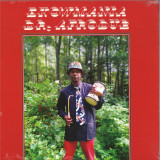
Seminal Afro-dub album "Dr. Afrodub" by Ghanaian Ekowmania aka Ekow Alabi Savage. The drummer, percussionist and singer who's played with Jimi Tenor & Kabukabu for more than 20 years explores the fields of classic Roots Reggae, Afro and Dub as well as uptempo modern African rhythms and ballads. This Jimi Tenor produced album is an expansion of Ekowmania's tribute song to Kwame Nkrumah (which is also released as 7" with different versions) and Tenor's electronic loops, which they developed into a full album in guitar player Lauri Kallio's country side studio in Kiikala, Finland. The album kicks off with a very heavy, club-ready and UK reggae-styled album mix of "Kwame Nkrumah", following up with 200% intensity on the voodooesque rhythm explosions of "Twerk Your Mind", then taking a 360 degree turn with the smoothness and laidback vibes of "Kiikala Reggae". Throughout its 9 cuts "Dr. Afrodub" always approach the balance of beautiful song writing and intensity in rhythm and melody, visiting the excellent and classically crafted 70's Roots tune "Dub Souljah", the upfront & tempo-fueled "Lagos Heavy" and ending with DJ Sotofett's mix of the albums ballad "Me Know".
CUT WITH EXCELLENCE BY TIMMION CUTTING LAB IN HELSINKI FINLAND.
For Record Store Day 2020, Far Out Recordings presents a special 'poisoned vinyl' edition of Ivan 'Mamão' Conti's critically acclaimed Poison Fruit album. The 180g splattered colour LP is accompanied by an exclusive bonus 7” with a previously unreleased track from the original Poison Fruit sessions ‘Katmandu, and ‘Ninho’, a track never before released on vinyl.
From an artist in their seventies, you probably wouldn’t expect to hear an album like this. But Brazilian drumming legend Ivan ‘Mamão’ Conti has been experimenting and innovating for the last half a century. As one third of cult Rio jazz-funk trio Azymuth, Mamão was at the root of the group’s ‘samba doido’ (crazy samba) philosophy, which warped the traditional samba compass with jazz influences and space age electronics. Even with his lesser known jovem guarda group The Youngsters, Mamão was experimenting with tapes and delays to create unique, ahead-of-its-time sounds, way back in the sixties. More recently Mamão recorded an album with hip-hop royalty Madlib under the shared moniker ‘Jackson Conti’.
With his first album in over twenty years, and the first to be released on vinyl since his 1984 classic The Human Factor, Mamão shares his zany carioca character across eleven tracks of rootsy electronic samba and tripped out jazz, beats and dance music. Featuring Alex Malheiros and Kiko Continentino on a number of tracks, the Azymuth lifeblood runs deep, but venturing into the modern discotheque (as Mamão would call it), Poison Fruit also experiments with sounds more commonly associated with house and techno, with the help of London based producer Daniel Maunick (aka Dokta Venom) and Mamão's son Thiago Maranhão.
Take a bite of Mamão’s psychoactive Papaya and join the maestro on a weird and wonderful stroll through the Brazilian jung