It all begins here.
Alba Gitana, Gipsy dawn, is a commencement, a turning point of particular importance in the career of a guitarist labelled as “manouche”. Because despite the universality within that word, (“manu” meaning “man” in Sanskrit), it is often reduced to the almost mystical musical legacy of the genius Django Reinhardt. Steeve Laffont’s dawn sees his artistry break away from the confines of this tradition.
In his original compositions we find the ingredients for an unexpected recipe. There is a manouche feel to it, but the fragrance of flamenco mixes with Indian spices, the bossa nova breaks and klezmer rhythms are coloured by Spain ; Steeve finds comfort in both the journey and it’s unexpected turns. Such is the very essence of Tzigane culture. This album tells the story of an emancipation and the joy of no longer being held to respect a legacy, a tradition, of finally having so many more roots to grow with.
Freedom is key to this project which never compromises on the essential : sharing the pleasure of playing together. In the company of such virtuosos as Costel Nitescu on violin, Dominique Di Piazza on bass and of course the ever-faithful Rudy Rabuffetti on rhythm guitar, the compositions are never shows of strength, rather finely crafted magic tricks.
With such vivid, liquid playing Alba Gitana is an invitation to let go, to submit to a harmonic wandering as deep as it is wide. A high-wire walk between structures and freedom, here is the spirit of jazz at its most elegant and universal.
Buscar:el tri
- 01: Introduction / Purple Haze Feat. Zdechly Osa
- 02: Slayaz / Elf Island
- 03: Fifi Feat. Lil B
- 04: House On The Hill
- 05: Pet Cemetery
- 06: The Cheshire Cat
- 07: Wipeout
- 08: Afro Samurai / Quest
- 09: Cat Kingdom
- 10: Magic Carpet
- 11: Pinocchio Feat. Jehst
- 12: The Horsemen
- 13: Ice King Feat. Lealani
- 14: Cat In Oz
- 15: Heaven's Gates
- 16: Outsiders
- 17: Psychosis City
- 18: Age Of Aquarius
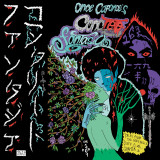
Psych-rap enigma Onoe Caponoe returns with his fifth studio album ‘Concrete Fantasia’ on High Focus Records. In crystal clear communication with the mothership; littered with striking references to fantastical realms and uncommon lore, but very much anchored in the inner city blocks and smoggy roadsides that inform his everyday, ‘Concrete Fantasia’ is a dark fantasy tape that expertly blurs the lines between genres, tones, moods and character profiles.
Of this world and out-of-this-world perfectly poised; Onoe offering up escape portals, before quickly pulling the listener back in with wave-upon-wave of catdelix riptides. ‘Concrete Fantasia’ is something of a tug-of-war; peppering movie samples, vignettes and complex go-betweens tickling the senses, combining with a cacophony of mind-bending lyricism resulting in a singular journey, with Onoe confidently filling the shoes of both author and narrator.
Pinocchio ducking feds in the hood, an Ice King ruling over a frostbitten kingdom, The Cheshire Cat trying to clean up Alice’s act, sweet serenades to off-shore mermaids, the trials and tribulations of life in a haunted trap house, big booty witches, flying carpets and beyond, ‘Concrete Fantasia’ is a real trip through the imaginative mind of Onoe Caponoe. With an eclectic line-up of featured artists and productional talent propping up the fictional cast, ‘Concrete Fantasia’ has all the makings of an alt-rap odyssey for the ages.
- 01: Introduction / Purple Haze Feat. Zdechly Osa
- 02: Slayaz / Elf Island
- 03: Fifi Feat. Lil B
- 04: House On The Hill
- 05: Pet Cemetery
- 06: The Cheshire Cat
- 07: Wipeout
- 08: Afro Samurai / Quest
- 09: Cat Kingdom
- 10: Magic Carpet
- 11: Pinocchio Feat. Jehst
- 12: The Horsemen
- 13: Ice King Feat. Lealani
- 14: Cat In Oz
- 15: Heaven's Gates
- 16: Outsiders
- 17: Psychosis City
- 18: Age Of Aquarius
Psych-rap enigma Onoe Caponoe returns with his fifth studio album ‘Concrete Fantasia’ on High Focus Records. In crystal clear communication with the mothership; littered with striking references to fantastical realms and uncommon lore, but very much anchored in the inner city blocks and smoggy roadsides that inform his everyday, ‘Concrete Fantasia’ is a dark fantasy tape that expertly blurs the lines between genres, tones, moods and character profiles.
Of this world and out-of-this-world perfectly poised; Onoe offering up escape portals, before quickly pulling the listener back in with wave-upon-wave of catdelix riptides. ‘Concrete Fantasia’ is something of a tug-of-war; peppering movie samples, vignettes and complex go-betweens tickling the senses, combining with a cacophony of mind-bending lyricism resulting in a singular journey, with Onoe confidently filling the shoes of both author and narrator.
Pinocchio ducking feds in the hood, an Ice King ruling over a frostbitten kingdom, The Cheshire Cat trying to clean up Alice’s act, sweet serenades to off-shore mermaids, the trials and tribulations of life in a haunted trap house, big booty witches, flying carpets and beyond, ‘Concrete Fantasia’ is a real trip through the imaginative mind of Onoe Caponoe. With an eclectic line-up of featured artists and productional talent propping up the fictional cast, ‘Concrete Fantasia’ has all the makings of an alt-rap odyssey for the ages.
- 01: Introduction / Purple Haze Feat. Zdechly Osa
- 02: Slayaz / Elf Island
- 03: Fifi Feat. Lil B
- 04: House On The Hill
- 05: Pet Cemetery
- 06: The Cheshire Cat
- 07: Wipeout
- 08: Afro Samurai / Quest
- 09: Cat Kingdom
- 10: Magic Carpet
- 11: Pinocchio Feat. Jehst
- 12: The Horsemen
- 13: Ice King Feat. Lealani
- 14: Cat In Oz
- 15: Heaven's Gates
- 16: Outsiders
- 17: Psychosis City
- 18: Age Of Aquarius
Psych-rap enigma Onoe Caponoe returns with his fifth studio album ‘Concrete Fantasia’ on High Focus Records. In crystal clear communication with the mothership; littered with striking references to fantastical realms and uncommon lore, but very much anchored in the inner city blocks and smoggy roadsides that inform his everyday, ‘Concrete Fantasia’ is a dark fantasy tape that expertly blurs the lines between genres, tones, moods and character profiles.
Of this world and out-of-this-world perfectly poised; Onoe offering up escape portals, before quickly pulling the listener back in with wave-upon-wave of catdelix riptides. ‘Concrete Fantasia’ is something of a tug-of-war; peppering movie samples, vignettes and complex go-betweens tickling the senses, combining with a cacophony of mind-bending lyricism resulting in a singular journey, with Onoe confidently filling the shoes of both author and narrator.
Pinocchio ducking feds in the hood, an Ice King ruling over a frostbitten kingdom, The Cheshire Cat trying to clean up Alice’s act, sweet serenades to off-shore mermaids, the trials and tribulations of life in a haunted trap house, big booty witches, flying carpets and beyond, ‘Concrete Fantasia’ is a real trip through the imaginative mind of Onoe Caponoe. With an eclectic line-up of featured artists and productional talent propping up the fictional cast, ‘Concrete Fantasia’ has all the makings of an alt-rap odyssey for the ages.
Kitchen sink Scuzz n’ Bass from 1998 Tokyo. Existing somewhere between Drum n Bass, Musique Concrète, Free Jazz and Noise, Jigen (aka Taro Nijikama) ran the cult Shi-Ra-Nui imprint and was a lynchpin of Tokyo's underground music scene, working as much behind the scenes as in front of them.
There is an inherent grit to the work on display here. Jazz-inflected drums, echoing bells, dissonant flutes, and haunting piano work coarsely interact with skipping breaks and industrial atmospherics, punctuated by tense gasps of silence. Samples disintegrate and reappear, creating a kind of elliptical narrative, and the 9 tracks here perhaps trigger a disorienting sense of dèjá vu.
Originally released on CD by Shi-Ra-Nui in 1998, Double Circumflex is proud to present the first officially licensed reissue of Stone Drum Avantgardism by Jigen and introduces the prescient sound of Shi-Ra-Nui for deeper excavation into its shadowy fissures. Mastered and cut with maximum precision by Beau Thomas at Teneightseven.
- A1: Daytime Tv (Rainy Miller Remix)
- A2: It’s Hard To Get To Know You (Space Afrika Ambiv)
- B1: Pigeon Flesh (Mobbs' Butcher Mix)
- B2: Love Like An Abscess (Aho Ssan Remix)
- C1: Nervous Energy (Teresa Winter Remix)
- C2: I Was Born By The Sea (Morgane Polanski Remix)
- D1: I Was Born By The Sea (Fila Brazillia Remix)
- D2: Dream About Yourself (Bonus)
Richie Culver had been waiting his whole life to record I was born by the sea. His debut album immediately and messily inscribed the artist into the canon of outsider music and experimental electronics, serving both as an arresting statement of intent and a painful reckoning with the difficult path that lead up to it, stealing one last glance back at a place he always knew he had to escape. Between grim lamentations, faded memories and anxiety attacks, all told with searing honesty and disarming openness, I was born by the sea excavates a space for hope, finding Culver digging through Humberside silt to find a world weary optimism, the raw material from which his visual and sound art is shaped. For this collection of expansions and inversions, Culver invites a collection of kindred spirits, contemporary inspirations and old heroes to wade into the salt water of his formative years spent living for impromptu raves and afterparties, connecting vivid memories of his birth place of Withernsea to artists hailing from as nearby as Preston and Bridlington, further afield, from Manchester and London, Berlin and Paris, before returning back to Hull, to where it all began.
For some, responding to I was born by the sea means diving even deeper into the record’s furthest reaches. Space Afrika clear away the pummelling loops of noise from ‘It’s hard to get to know you,’ revealing a cool and cavernous expanse in its wake. Distant chatter, previously heard as though through thin, plasterboard walls, now echoes from outside the maddening claustrophobia of the original’s Sisyphean sonics, illuminated as a dense storm cloud suspended amidst a more open scene, washed clean by a lighter rain, allowing the tender heart of the track to beat clear. London producer MOBBS stretches out ‘Pigeon Flesh’ into an epic, 10-minute, cold-sweat spiral, strung-out tension wrung from disconnected phone tones twisted in unexpected directions, snatches of Culver’s voice turned inside-out and deep fried bass threatening to tip the track over into oblivion, the build-and-release of a nervous breakdown experienced in real time. In an act of subversive self-reflection, Morgane Polanski switches one kind of ennui for another in her adaption of ‘I was born by the sea,’ swapping the sea for the city, English seaside towns in January for summer evenings in Paris and flashing lighthouses and sparkling oil rigs for the Eiffel Tower and the traffic around L’Arc de Triomphe. Even Culver finds time to revisit ‘Dream About Yourself,’ a track taken from his EP Post Traumatic Fantasy, breathing new words into its glacial drift, the half-remembered testimony of a shut-in: Woke up in the evening / Pray for me / Don’t trust anyone / Pray for algorithm. Reframed in a more melancholy light, the track’s reverberant keys even more clearly evoke a mournful nostalgia, fresh pain felt in old wounds.
Others find a parallel universe in Culver’s visceral world building. Rainy Miller flips the script with a scorched, avant-drill rework of ‘Daytime TV’, threading puncturing hi-hats and queasy low-end surge through the track’s steady ambient cascade, invoking the irresistible Preston beat magic of Miller’s own essential debut album, Desquamation. Aho Ssan melts away the crystalline textures of ‘Love Like an Abscess’ with the ominous crackle of a nascent fire, building through swathes of organic Max/MSP squelch and brittle, nails-down-chalkboard scrape, swelling and metastasising the original to spill over Culver’s desperate hymn to corporeal desire, at once flesh and not. Teresa Winter transports us an hour up the coast from Withernsea to her native Bridlington, replacing the sea wall of synthesis on ‘Nervous Energy’ with muffled ASMR murk and fever dream whispers, transforming Culver’s unflinching observations into a haunting call-and-response, filling in the blanks with her own eerie utterances, a fleeting conversation with a ghost. In a touching victory lap, Fila Brazillia, eccentric stalwarts of beloved ‘90s trip hop imprint Pork Recordings, whose performances at Hull institution The Lamp convinced a young Culver of the necessity to make his mark on club culture, resurface for their first remix in 20 years. Steve Cobby and David McSherry lead a low-slung, heartfelt stroll back through a suite of tracks from I was born by the sea, tracing a full circle saunter from Culver’s origins to his current musical practice, the sounds of his present repurposed by the sound of his youth. In a gesture that reflects the emotional complexity of the project, Fila Brazillia find joy at the end of Culver’s troubled reflection, picking out an undeniable groove in the stasis of feeling trapped in your hometown. Underlining Hull’s vital musical legacy, from Baby Mammoth to Throbbing Gristle, Cobby and McSherry demonstrate that, though there are certainly storms, by the sea there is also sun and through the fog, if you listen, you can hear a singular sound, a sound now carried by Richie Culver.
Participant is a record label and creative studio run by William Markarian-Martin and Richie Culver
- A1: 20
- A2: Little Love (Ft Roland Faunte)
- A3: I Looked Into Her Eyes (Ft Ural Thomas & The Pain)
- A4: Bonxair
- B1: Nomadics
- B2: See You Dancing In The Dark
- B3: Emotional
- B4: Don’t Smoke
- C1: Thinking Of
- C2: Memories (Ft Lord Apex)
- C3: Dreams
- C4: Mo1994By
- D1: Cuzratatat
- D2: Aye
- D3: When My Heart In Your Heart
- D4: Outro (End Of The Part 1)
Three years after his last album ‘I Need Space’, Mounika. is back on his favorite playground: electronic music, which arouses his curiosity since his beginnings. He is now ready to unveil ‘Don't Look At Me’, a new opus that takes us, by other paths, to his unique universe. Recorded during the confinement in the intimacy of his home studio, the French artist reveals little by little another facet of his artistic personality, more raw and affirmed, without totally abandoning the cottony sounds already proposed on titles like ‘Cut My Hair’ (diamond single) or ‘Tender Love’ (gold single). We discover sensitive compositions, still inspired by his love for trip-hop, piano and artists who made his musical culture during his youth: Moby, Ratatat, Air or Bonobo. After all, a Mounika. album without a tribute to these figures is not really an album...
But something new was needed to distinguish this opus from the previous ones. From the very first tracks, we can clearly feel this need for exploration that has always guided the French producer. ‘BonXair’ or ‘Nomadics’ take us, for example, in a more straight electronic, more heady than usual. In the same spirit, the rhythms close to the deep house of a track like ‘See You Dancing In The Dark’ offer to the album a new direction, and yet is quite representative of the work undertaken by Mounika. these last years.
In this new record that will also satisfy the fans of the first hour (a sample loop well felt, as on ‘Little Love’ or ‘I Looked Into Her Eyes’, always makes its effect), the French artist has also opened to collaborations of choice. Mounika. works on the heart, and thus wished to welcome those who have particularly marked him during his more or less recent discoveries. The American artist Roland Faunte lends his voice to the effective ‘Little Love’, while Ural Thomas & The Pain (discovered notably on the series ‘It's Bruno’) takes care of the chorus of ‘I Looked Into Her Eyes’. The British rapper Lord Apex delivers a spellbinding performance on ‘Memories’.
Finally, if you listen carefully, you can even hear Mounika. singing on some tracks... like ‘20’ or ‘Don't Smoke’. Put together, these appearances perfectly complement the energy transcribed by Mounika. throughout ‘Don't Look At Me’.
And what could be better than an amazing graphic universe to open the doors of this album like no other? Meet Carl & TJ, two cartoonish characters created in collaboration with Berlin-based artist Joe Taylor, who take care of guiding the listener through this new adventure. One is dreamy and contemplative, the other asks himself a lot of questions... and between them, they form a colorful duet illustrating with tenderness the universal emotions that punctuate this third opus, and that Mounika. will notably defend in the first part of Wax Tailor's French tour starting next April.
The successive pianos composing the productions of ‘When In My Heart In Your Heart’ then ‘Outro’ come, at the end of the record, to conclude the setting in orbit proposed by this ‘Don't Look At Me’. One more step in the sensory journey that Mounika. is committed, from the intimacy of her room to the international success, to build relentlessly.
This second volume of Mangle Rojo is a tribute to the spirit of celebration and diversity that reigns in the festivities of Colombia´s town squares. We created this compilation in vinyl format, in which we continue to explore the traditional sounds of the Caribbean and Pacific coasts, which have a rooted Afro tradition.
We begin this journey with field recordings of traditional groups such as Sexteto Tabalá from Palenque de San Basilio, who plays the sextet format heir to the Cuban Son and Los Alegres del Telembí, exponents of the marimba music of the Colombian South Pacific.
We continue this voyage with proposals that fuse traditional rhythms with modern instruments and musical genres: The popular singer Nelda Piña makes a featuring with the afrobeat orchestra La BOA and the marimba band Saborimba, from a small town on the Pacific coast, collaborates with urban musicians.
In addition, we find new protagonists like the big band formats that have been popular in Colombia since the beginning of the 20th century: the Papayera band (Calentanos Brass Band) and the Chirimía format (Chirrimía Balsámica), this last one with the collaboration of the renowned singer Alexis Play.
Finally, we invite artists who use traditional rhythms to develop electronic proposals, such as Ghetto Kumbé and the well-known singer Nidia Góngora.
Originally released back in 1999 via Mindfood Records, Tiny Elvis ‘Desire’ EP gets a much-needed reissue on Cosmocities, topped off by two incredible remixes from Bushwacka! and Max in the World.
A smoother-than-smooth introduction into Tiny Elvis’ deep and progressive headspace, ‘Desire’ blazes with a modern soul and timeless fire at heart. While there’s no denying the time and era emanating from the grooves, the record prefigures a lot of the mind-expanding house music that’s come to fill the shelves and crates of vinyl shops two decades on. A distinctive blend of pumped-up, 303-brined jazz and abstract-leaning vocal loops ushering us into a pulsating heart of LSD-fuelled visions and climax-seeking energies.
Adding his invariably genius spin to ‘Desire’, UK house maestro Bushwacka! tweaks the original’s trademark wonkiness into that of a floor focused weapon, geared up for deep boogie action down the basement but lacking none of that prominently silken, loungey magnetism either.
On the flip side, ‘Howze The Music’ cuts a path of squelchy, strings-driven hypnosis, beautifully combining the liquid-like essence of acid with a neo-classical sense of evolutive emotion, injecting it with a tang of trancey tribalism for good measure.
New York's Max in the World gives a further dreamy, cinematic twist to proceedings, taking us on a lush ride across flickering landscapes flush with honey-dipped synth stabs, a-propos sampling and blissful strings stirring all kind of emotional flows with unrelenting verve.
Ascion's debut solo album "ACIDTRAUM (You Know How It Is)" showcases his years of dedicated music production. It's a psychedelic blend of Underground Resistance, arcade games, 90s electronica, and sci-fi vibes, creating a unique post-modern club experience. The album reimagines the nostalgia of Trance, Acid, Electro, and Italo Disco, resulting in a captivating and innovative sound.
For it's 46th outing, Klasse Wrecks recruits the Brooklyn based producer Gee Dee to it's ranks. Gee Dee aka Greg Droggitis turns in a wonderful and fully fledged collection of tracks that burst to the brim with atmosphere and sunny vibrations. True to the label's ethos, the music is as always, hard to pin down under one specific genre but instead slyly calls on various classic House, Electro and Acid tropes. The overall sound is one that is both universal and transcendent, feeling familiar but still surprising. 'Dream In Colour' is indeed an apt title for the EP as it spans the musical spectrum and is a lucid and vivid trip into the imagination of this new and exciting producer.
- A1: Drawing Future Life - 1969
- A2: Ruutu Poiss - Ihatsin
- A3: Digital Distortion - Mellow Bug
- B1: French Audacity - The Final One (Feat. Valerie)
- B2: Dj Spike - Gaps In Space
- B3: Interdance - Kurz
- C1: Bad Behaviour - Living On Smoke (Edgware Mx)
- C2: Frequency - Systematic Input
- C3: Diffusion - Lushes
- D1: M.f.a. - Blue To Be Happy
- D2: R.i.p. - E.o.pan
- D3: Mad Professor - Oh Hell
Orpheu the Wizard has a magic touch at finding records that fall between the gaps in music - oddities, curios, the weird, the wonderful. But that's just half the trick. It takes a sensitive and selective ear to construct a coherent, accessible narrative from them. So you get DJs who can play for the crowd and "selectors" adept at mining the black gold. In Orpheu, you've got yourself someone who can do both. On a festival main stage, he can keep it weird enough for the heads. In an audiophile setting, he'll keep the flow.
These skill sets come into play on the fifth The Sound of Love International compilation. Jumping between genres, decades, continents, the truly rare, and many B-side cuts that passed you by. But never eclecticism for its own sake; this collection makes sense. Orpheu never loses sight of the listener - he's a friendly and knowledgeable guide to the cosmic outer reaches.
He opens his account with the warm, psychedelic electronics of Drawing Future Life, with ‘1969’. Tucked away on the B-side of an LP of ambient/trance hailing from Fukuoka, this is a very pretty piece of music on a truly rare piece of wax. Then, leapfrogging a couple of decades and timezones, we have Rutuu Poiss' "IHATSIN." Off-kilter, experimental sounds with an endearing melodic hook, followed up by the with lethargic ambient breakbeat of Digital Distortion's "Mellow Bug".
On the B-side, things start to get lively. French Audacity featuring Valerie's "That Fine One" is Gallic garage that has simultaneously got it hugely wrong and massively right. Owing as much to new wave as New York house, this is propulsive and quirky dance music at its finest. Next, we're on a ferry over the channel for DJ Spike and "Gaps In Space." Up-tempo electro with a fondness for sampled vocal cut-ups, like its predecessor.
lnterdance's "Kurz" (another B-side) is the perfect segway - house from 1990 with that sweet, slightly goofy naivete. Things move toward the gnarly with Bad Behaviour and "Living on Smoke," a lesser-known cut on the legendary Atmosphere records. The tempo edges upward on "Systematic Input" by Frequency, hectic hardcore techno that still retains a lightness of touch.
"Lushes" by Diffusion spins us off into space, filigree techno with an emotive trance edge. The chiming intro of "Blue to Be Happy" by MFA lulls us into a sense of false security before massively putting the boot in with a pounding kick drum, bassline, and arpeggiation. From there, it's a sharp left turn into the urban psychedelic dub of R.I.P's "E.O Pan" on cult label Digi Dub.
Sticking with UK sound system music but taking it down a notch, Orpheu closes proceedings with a leftfield reggae excursion from the master of the mixing desk, Mad Professor’s"Oh Hell".
It's a compilation as varied as the many moods and grooves of Love International itself - from sun-dappled olive groves to moments deep in the strobes. This is serious music for party freaks or party music for serious freaks. Tisno is calling.
Black Duck captures a band already deeply in tune with one another. The three-piece super-group consists of Douglas McCombs, Charles Rumback, and Bill MacKay each has a distinct musical voice that is instantly recognizable, yet blends seamlessly with one another-their time performing together, playing to the moment and reading each other and the spaces they"re in formed a fluency between the trio which allows them to follow each other down winding paths and short tangents alike. McCombs is a founding member of Tortoise, Pullman, and Brokeback and the long-standing bassist for Eleventh Dream Day, an artist whose contribution to the music world can not be overstated. MacKay began releasing records in the early 2000s. He has released several acclaimed solo albums with Drag City as well as a duo album each with Nathan Bowles (Banjo, Black Twig Pickers), and Katinka Kleijn (Cello, Chicago Symphony Orchestra (CSO)), and two beloved records with Ryley Walker. Rumback burst onto the fertile Chicago improvised music scene in the early 2000"s. His fluid technique and expressive playing garnered him much attention. In addition to his solo releases, Rumback has recorded with Ryley Walker, jazz greats such as Jim Baker, James Singleton, and Greg Ward. Black Duck"s debut is a testament to that fluency, an expedition led by three veterans into alluring worlds bathed in myriad splendors. Black Duck is a gallery of sonic tapestries, unbound by any genre constraints. Black Duck redefines what two guitarists and a drummer can do, pieces move from breezy shuffles to stormy blues rumbles to gorgeous textural drones. Playing entirely improvised live sets for years helped develop the trio"s acute senses for one another, knowing precisely how to listen to the others and bolster whatever direction they move in. In the short time the trio have played together, they have performed at Big Ears Festival and alongside acts like Yo La Tengo.
- A1: Easy To Slip (2023 Remaster)
- A2: Cold, Cold Cold (2023 Remaster)
- A3: Trouble (2023 Remaster)
- A4: Tripe Face Boogie (2023 Remaster)
- A5: Willin’ (2023 Remaster)
- A6: A Apolitical Blues (2023 Remaster)
- B1: Sailin’ Shoes (2023 Remaster)
- B2: Teenage Nervous Breakdown (2023 Remaster)
- B3: Got No Shadow (2023 Remaster)
- B4: Cat Fever (2023 Remaster)
- B5: Texas Rose Cafe (2023 Remaster)
- C1: Sailin’ Shoes (Demo)*
- C2: Easy To Fall (Easy To Slip)
- C3: Texas Rose Café (Demo For Doobie Bros.)
- C4: Cold, Cold, Cold (Alternate Version)*
- C5: Roto/Tone
- D1: A Apolitical Blues (Alternate Version)*
- D2: Boogie – Tripe Face Boogie
- D3: Trouble (Alternate Version)*
- D4: Doriville
- D5: Willin’ (Alternate Version)*
- D6: Easy To Slip (Mono Single Version)
- E1: Tripe Face Boogie (Live At The Palladium, Los Angeles, Ca 8/28/71)*
- E2: Hamburger Midnight (Live At The Palladium, Los Angeles, Ca 8/28/71)*
- E3: Cat Fever (Live At The Palladium, Los Angeles, Ca 8/28/71)*
- E4: Willin’ (Live At The Palladium, Los Angeles, Ca 8/28/71)*
- E5: Strawberry Flats (Live At The Palladium, Los Angeles, Ca 8/28/71)*
- F1: Got No Shadow (Live At The Palladium, Los Angeles, Ca 8/28/71)*
- F2: Texas Rose Café (Live At The Palladium, Los Angeles, Ca 8/28/71)*
- F3: Snakes On Everything (Live At The Palladium, Los Angeles, Ca 8/28/71)*
- F4: Hot Rod (Eldorado Slim)
- F5: Teenage Nervous Breakdown (Live At The Palladium, Los Angeles, Ca 8/28/71)*
Little Feat is the quintessential “cult” band. Started by Lowell George, 1972’s Sailin’ Shoes captures these musical rebels at one of their early peaks. The songs on Sailin’ Shoes are a masterful collage of inventive narrative, resplendent in countercultural irony and romance. Featuring the classic tracks “Willin’” (covered by Linda Rondstadt and many others), “Easy to Slip” (originally written for the Doobie Brothers) and the title track, it’s an album whose status has grown immeasurably, making it one of the most acclaimed releases of its era. With 1973’s Dixie Chicken, Little Feat found its signature sound as a band, producing a seductive, laid-back, funky record made up of what is arguably Lowell George's best-ever set of songs. With tracks that sound easy but are quite sophisticated, fans will enjoy hits like the rolling "Two Trains," the deeply soulful and funny "Fat Man in the Bathtub" and the country-funkified title track (which was covered nearly as frequently as "Willin'"). These deluxe editions include the original albums remastered and recut from the original tapes, alongside previously unreleased studio outtakes and demos, and complete unreleased live shows. It’s a treasure trove of material for their feverish fan base, and the first ever deep dive into one of the most influential bands from the 70’s Warner catalog.
[a] A1. EASY TO SLIP (2023 REMASTER) [3:19]
[b] A2. COLD, COLD COLD (2023 REMASTER) [3:58]
[c] A3. TROUBLE (2023 REMASTER) [2:15]
[d] A4. TRIPE FACE BOOGIE (2023 REMASTER) [3:14]
[e] A5. WILLIN’ (2023 REMASTER) [2:54]
[f] A6. A APOLITICAL BLUES (2023 REMASTER) [3:25]
[g] B1. SAILIN’ SHOES (2023 REMASTER) [2:49]
[h] B2. TEENAGE NERVOUS BREAKDOWN (2023 REMASTER) [2:10]
[i] B3. GOT NO SHADOW (2023 REMASTER) [5:05]
[j] B4. CAT FEVER (2023 REMASTER) [4:35]
[k] B5. TEXAS ROSE CAFE (2023 REMASTER) [3:43]
[l] C1. SAILIN’ SHOES (DEMO)* [2:57]
[m] C2. EASY TO FALL (EASY TO SLIP) [DEMO FOR DOOBIE BROS.] [2:41]
[n] C3. TEXAS ROSE CAFÉ (DEMO FOR DOOBIE BROS.) [3:24]
[o] C4. COLD, COLD, COLD (ALTERNATE VERSION)* [4:17]
[p] C5. ROTO/TONE [4:07]
[q] D1. A APOLITICAL BLUES (ALTERNATE VERSION)* [3:46]
[r] D2. BOOGIE – TRIPE FACE BOOGIE [3:58]
[s] D3. TROUBLE (ALTERNATE VERSION)* [2:23]
[t] D4. DORIVILLE [2:44]
[u] D5. WILLIN’ (ALTERNATE VERSION)* [3:00]
[w] E1. TRIPE FACE BOOGIE (LIVE AT THE PALLADIUM, LOS ANGELES, CA 8/28/71)* [4:30]
[x] E2. HAMBURGER MIDNIGHT (LIVE AT THE PALLADIUM, LOS ANGELES, CA 8/28/71)* [3:41]
[y] E3. CAT FEVER (LIVE AT THE PALLADIUM, LOS ANGELES, CA 8/28/71)*[5:19]
[z] E4. WILLIN’ (LIVE AT THE PALLADIUM, LOS ANGELES, CA 8/28/71)* [4:06]
[xa] E5. STRAWBERRY FLATS (LIVE AT THE PALLADIUM, LOS ANGELES, CA 8/28/71)* [3:11]
[xb] F1. GOT NO SHADOW (LIVE AT THE PALLADIUM, LOS ANGELES, CA 8/28/71)* [5:08]
[xc] F2. TEXAS ROSE CAFÉ (LIVE AT THE PALLADIUM, LOS ANGELES, CA 8/28/71)* [4:05]
[xd] F3. SNAKES ON EVERYTHING (LIVE AT THE PALLADIUM, LOS ANGELES, CA 8/28/71)* [4:18]
[xe] F4. HOT ROD (ELDORADO SLIM) [LIVE AT THE PALLADIUM, LOS ANGELES, CA 8/28/71]* [5:08]
Das nunmehr 20. Studioalbum der erfolgreichsten deutschen Art- & Progressive Rockband ELOY. Es ist zugleich das 3. Album einer einzigartigen, vom Band- Mastermind Frank Bornemann als Rock Opera gestalteten Trilogie über das Leben und Schicksal der französischen Nationalheldin und Heiligen Jeanne d´Arc.
Bereits die beiden ersten Alben mit dem Titel „The Vision, the Sword and the Pyre, Part 1 & 2“, auf denen sich diverse illustre Künstler (u.a. Alice Merton) auf der Gästeliste befinden, wurden nicht nur durchweg positiv rezensiert, und erreichten hohe Chartsplatzierungen, sondern fanden auch aufgrund ihrer auf profunden Kenntnissen basierenden Umsetzung in allen historischen Details auf kultureller Ebene viel Beachtung.
Mit „Echoes from the Past” legt nun der Autor nochmal nach, und lässt den durch die Handlung der ersten beiden Alben führenden Protagonisten und Waffengefährten von Jeanne d´Arc, Jean de Metz, die aufwühlenden Ereignisse der Vergangenheit auf sehr emotionale Weise reflektieren.
Musikalisch entstand dadurch ein Werk, bei dem sich sensible und atmosphärische Passagen mit gewaltigen, dramaturgisch geprägten Klangwogen abwechseln, die den ELOY-Fan sicherlich an frühere Konzept-Werke der Band erinnern werden.
Diese Melange ist aber gemäß Frank Bornemann, der sich bei dieser Produktion erneut mit Veränderungen im Line up konfrontiert sah, voll beabsichtigt. Obwohl es sich bzgl. seiner musikalischen Elemente bestens in die Trilogie integriert, ließ es bei seiner Entstehung offensichtlich doch viel Spielraum für künstlerische Momente, die man nicht erwartet, aber die sich außerordentlich prägend für das Album auswirken, welches wieder einmal einzigartig ist.
Das nunmehr 20. Studioalbum der erfolgreichsten deutschen Art- & Progressive Rockband ELOY. Es ist zugleich das 3. Album einer einzigartigen, vom Band- Mastermind Frank Bornemann als Rock Opera gestalteten Trilogie über das Leben und Schicksal der französischen Nationalheldin und Heiligen Jeanne d´Arc.
Bereits die beiden ersten Alben mit dem Titel „The Vision, the Sword and the Pyre, Part 1 & 2“, auf denen sich diverse illustre Künstler (u.a. Alice Merton) auf der Gästeliste befinden, wurden nicht nur durchweg positiv rezensiert, und erreichten hohe Chartsplatzierungen, sondern fanden auch aufgrund ihrer auf profunden Kenntnissen basierenden Umsetzung in allen historischen Details auf kultureller Ebene viel Beachtung.
Mit „Echoes from the Past” legt nun der Autor nochmal nach, und lässt den durch die Handlung der ersten beiden Alben führenden Protagonisten und Waffengefährten von Jeanne d´Arc, Jean de Metz, die aufwühlenden Ereignisse der Vergangenheit auf sehr emotionale Weise reflektieren.
Musikalisch entstand dadurch ein Werk, bei dem sich sensible und atmosphärische Passagen mit gewaltigen, dramaturgisch geprägten Klangwogen abwechseln, die den ELOY-Fan sicherlich an frühere Konzept-Werke der Band erinnern werden.
Diese Melange ist aber gemäß Frank Bornemann, der sich bei dieser Produktion erneut mit Veränderungen im Line up konfrontiert sah, voll beabsichtigt. Obwohl es sich bzgl. seiner musikalischen Elemente bestens in die Trilogie integriert, ließ es bei seiner Entstehung offensichtlich doch viel Spielraum für künstlerische Momente, die man nicht erwartet, aber die sich außerordentlich prägend für das Album auswirken, welches wieder einmal einzigartig ist.
Das nunmehr 20. Studioalbum der erfolgreichsten deutschen Art- & Progressive Rockband ELOY. Es ist zugleich das 3. Album einer einzigartigen, vom Band- Mastermind Frank Bornemann als Rock Opera gestalteten Trilogie über das Leben und Schicksal der französischen Nationalheldin und Heiligen Jeanne d´Arc.
Bereits die beiden ersten Alben mit dem Titel „The Vision, the Sword and the Pyre, Part 1 & 2“, auf denen sich diverse illustre Künstler (u.a. Alice Merton) auf der Gästeliste befinden, wurden nicht nur durchweg positiv rezensiert, und erreichten hohe Chartsplatzierungen, sondern fanden auch aufgrund ihrer auf profunden Kenntnissen basierenden Umsetzung in allen historischen Details auf kultureller Ebene viel Beachtung.
Mit „Echoes from the Past” legt nun der Autor nochmal nach, und lässt den durch die Handlung der ersten beiden Alben führenden Protagonisten und Waffengefährten von Jeanne d´Arc, Jean de Metz, die aufwühlenden Ereignisse der Vergangenheit auf sehr emotionale Weise reflektieren.
Musikalisch entstand dadurch ein Werk, bei dem sich sensible und atmosphärische Passagen mit gewaltigen, dramaturgisch geprägten Klangwogen abwechseln, die den ELOY-Fan sicherlich an frühere Konzept-Werke der Band erinnern werden.
Diese Melange ist aber gemäß Frank Bornemann, der sich bei dieser Produktion erneut mit Veränderungen im Line up konfrontiert sah, voll beabsichtigt. Obwohl es sich bzgl. seiner musikalischen Elemente bestens in die Trilogie integriert, ließ es bei seiner Entstehung offensichtlich doch viel Spielraum für künstlerische Momente, die man nicht erwartet, aber die sich außerordentlich prägend für das Album auswirken, welches wieder einmal einzigartig ist.
Black Truffle is pleased to announce Symphony No. 107 –The Bard, a previously unheard archival recording of the legendary improvising ensemble MEV (Musica Elettronica Viva), captured in concert at Bard College, New York in 2012. Formed by a group of American expat composers in Rome in 1966, the MEV ensemble played an important role in the development of free improvisation, bridging the live electronics tradition begun by Cage and Tudor and the high-energy squall of free jazz. Early recordings like Spacecraft or The Sound Pool unleash volleys of metal and glass amplified with contact microphones, howling winds, primitive synthesizer bleep and raucous audience participation, the intensity of which puts much later ‘noise’ to shame. In later decades, the ensemble would go through many iterations, often including legendary free players like Steve Lacy and George Lewis. In its final years, MEV settled into the core trio of founding members heard here: Alvin Curran, Frederic Rzewski, and Richard Teitelbaum, using piano, electronics, and small instruments.
Curran, Rzewski, and Teitelbaum were life-long friends blessed, as Curran says, with ‘incompatible personalities’: major figures in the post-Cagean experimental tradition, they explored countless divergent and even contradictory paths as composers and performers, from agitprop songs to brainwave-controlled synthesis. MEV is the sound of these three personalities coming together, their contributions radically individual yet attaining a state of ‘fundamental unity’ that Rzewski, in a text written in the collective’s earliest years, defined as the ‘final goal of improvisation’. Of course, listeners familiar with aspect of the trio’s individual works might hazard some guesses about who is doing what: the crisp piano figures are probably Rzewski’s, the cut-up hip-hop samples most likely Curran’s, the sliding, squelching synth possibly Teitelbaum’s. But often these identities are dissolved in a constantly shifting hall of mirrors, the listener unable to tell which of these pianos is live and which is a sample of a past virtuoso, or whether a horn blast derives from ethnographic documentation or Curran cutting loose on Shofar. The two side-long sets here occupy a similar terrain of constantly shifting texture and instrumentation, unexpected interruptions, and moments of sudden beauty. The first set is sparser, at times almost ominous, as a bell repeatedly sounds across wheezing harmonica, seasick orchestral textures, and creaking wood, making room for episodes of yodelling and delicate prepared piano before exploding into a storm of buzzing synth and piano fragments. The second set is more frenetic, moving rapidly across centuries and continents: cars crash into post-serial piano pointillism, wailing voices collide with chopped and screwed hip-hop samples, Hollywood strings are buried under layers of electronic gurgles. The performance slows in its final moments, making way for a sampled voice repeating the phrase ‘protest and the good of the world’, reminding us that MEV’s idea of freedom was always more than musical. Symphony No. 107 –The Bard is a beautifully recorded example of the endlessly multi-layered later MEV sound, accompanied by new liner notes by Alvin Curran (now the only surviving member of the group) and a selection of previously unseen photographs from across the many decades of the group’s activity. Arriving in an elegant sleeve bearing a beautiful photograph by Francis Zhou of the Olin Hall at Bard College where the concert was recorded, this is an essential document from a major group in the history of experimental music. As Rzewski wrote, this music is ‘like life, unpredictable, sometimes making sense, mostly not’.
Repress!
Japanese crustpunk and grindcore icon Eri Fuzz-Kristiansen, aka Gallhammer’s Viviankrist, keeps
the curveballs coming on Diagonal with a bloodied mastication of charred noise and and rhythmic
electronics, following up the label’s acclaimed sides by Sote and Not Waving/Jim O’Rourke
Co-released with the metal-minded Ritual Productions label, ‘Cross-Modulation’ is a brutal
testament to the acridly personalised sound that Viviankrist has explored solo since 1995 in Tokyo,
when she performing vocals, sax and SP-202 sampler in her first industrial/noise unit. 23 years
later her music is still sorely raw, yet riddled with a new found poignance and atmospheric unease
that places her music sometimes as close to Kali Malone’s see-sawing dissonance as the power
electronics of Pan Sonic or the possessed pulses of Conrad Schnitzler and Merzbow.
Since the demise of Eri’s main project Gallhammer at the start of this decade, when she moved
from Tokyo to Oslo (home of her husband and bandmate in Sehnsucht, Maniac - also former
vocalist for BM legends Mayhem), she returned to her early Viviankrist alias from 2017 as a place
to express her primitivist-futurist urges, resulting a trio of CDs including the vicious solo strike
of ‘Morgenrøde’ for Cold Spring. Now on ‘Cross-Modulation’ she intuitively tempers that album’s
phosphorous burn with a deadly incisive application of what Black Metal/Techno pioneer Black
Mecha terms “mentation electronics.”
Alloying avant-metal with rhythmic noise, ambient techno and mind-bending drone to a
metallurgic tang, ‘Cross-Modulation’ serves a dense flux of energies in seven parts, piercing a path
thru maelstrom electronics in ‘Eleventh’ to churn up grizzled Vainio-esque rhythms in ‘Blue Iron’,
while the tenderly bruised ambience of ‘Midnight Sun’ provides a bittersweet palette cleanser for
the tart technoid prang of ‘Insects’, a bout of slow gripping psychedelia in ‘Out of Body’, and the
rugged North European pastoralism of ‘Behind Mirror.’
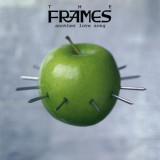
"Another Love Song - The Frames are an Irish indie rock band formed in Dublin in 1990. The band is known for their passionate and emotive sound, which blends elements of rock, folk, and traditional Irish music. Over the years, they have released several critically acclaimed albums, including ""Another Love Song,"" which is widely regarded as one of their most influential works.
""Another Love Song"" was released in 1991 and marked a turning point in the band's career. The album featured a raw, stripped-down sound that was a departure from their earlier, more polished work. The songs on the album were deeply personal and introspective, exploring themes of love, loss, and the complexities of human relationships. The album's title track, ""Another Love Song,"" became an instant classic, showcasing the band's signature sound with its driving rhythms and soaring vocals. The song's bittersweet lyrics and haunting melody struck a chord with listeners and quickly became a fan favourite.
In addition to ""Another Love Song,"" the album features several other standout tracks, including ""Say It to Me Now,"" ""The Dancer,"" and ""Downhill."" Each song on the album showcases the band's dynamic musicianship and poetic lyricism, earning the album a reputation as a seminal work in the Irish indie rock scene. Over the years, The Frames have continued to evolve and innovate, releasing several more critically acclaimed albums and earning a dedicated following of fans around the world. With their unique blend of raw emotion and musical artistry, The Frames continue to inspire and captivate audiences with their powerful, soulful music.
Fitzcarraldo - ""Fitzcarraldo"" is the sixth studio album by the Irish rock band The Frames, released in 1995. The album marked a significant departure from the band's earlier work, with a more experimental sound that blended rock, folk, and experimental elements.
The album takes its name from the Werner Herzog film of the same name, which tells the story of a man who attempts to build an opera house in the Amazon jungle. This theme of ambition and perseverance in the face of adversity runs throughout the album, as frontman Glen Hansard explores themes of love, loss, and the human experience. The album opens with the hauntingly beautiful track ""Revelate,"" which sets the tone for the rest of the album with its soaring vocals and intricate guitar work. From there, the album takes the listener on a journey through a diverse range of sounds and emotions, from the upbeat rock of ""What Happens When the Heart Just Stops"" to the melancholic balladry of ""Fitzcarraldo.""
One of the standout tracks on the album is ""Lay Me Down,"" a tender and heartfelt ballad that showcases Hansard's powerful vocals and poetic lyricism. The song has become a fan favourite and is often performed live by the band. Another highlight of the album is the epic nine-minute track ""Fitzcarraldo,"" which features lush instrumentation and intricate guitar work. The song is a tribute to the film of the same name and explores themes of ambition and determination in the face of seemingly insurmountable obstacles.
Overall, ""Fitzcarraldo"" is a powerful and deeply personal album that showcases The Frames at their most ambitious and experimental. With its diverse range of sounds and emotions, the album remains a fan favourite and a landmark in the Irish rock canon.
Dance the Devil
Dance the Devil is the fourth studio album by the Irish rock band, The Frames. Released in 1999, it marked a significant departure from the band's earlier sound and was a critical and commercial success.
The album features 10 tracks, including the hit single ""Pavement Tune,"" which received extensive radio play and helped to propel The Frames to greater prominence in the music industry. Dance the Devil showcases the band's versatility and musical prowess, blending elements of rock, folk, and pop to create a unique and compelling sound. The lyrics are introspective and poetic, exploring themes of love, loss, and self-discovery.
Produced by Steve Albini, the album was recorded in just five days, giving it a raw and unpolished feel that perfectly captures the energy and passion of The Frames' live performances.
Dance the Devil remains a beloved album among fans of Irish music and continues to inspire new generations of musicians. Its enduring popularity is a testament to the artistry and vision of The Frames and their commitment to pushing the boundaries of what is possible in rock music.
"