"This second series of Konduko reissues continues with the rare and in demand Street Talk. Noel Williams (aka King Sporty) again shows the breadth of his talent, recording reggae, funk, soul and disco in the space of a few years with groundbreaking results.
Back recording at Miami's legendary Quadradial Studios, alongside master engineer Paul Speck, Williams created a synth-assisted, beat-programmed bomb, adding Jeanette Williams and Betty Wright's vocals and Bert Bailey's (The Ex-tras) blazing guitar, Street Talk heralds the dawn of the computer funk called electro boogie.
The inclusion of Benji "The Mad Bomber" for some South Beach rapping showed Williams' encompassing new music styles that led to his music being heavily sampled and revered at the birth of Miami Bass.
This all comes together and out the other side in the panoramic Discomix by Rune Lindbaek. A legend of the Norwegian sound that has conquered far and wide, Rune is one of the elder statesmen, from setting up his own long standing Drum Island label, to releasing with Noid, Repap and recent edit excursions on Norsk Tripping. His psychedelic dub wonderland is an all-together outer-body experience where vocal and rap soundclash deep, deep in the echo chamber.
Suche:elder
Trouble, the aptly named new album on Goner Records, is a confident and joy-filled statement delivering the good-news gospel message unapologetically through music influenced by Ray Charles, Junior Kimbrough, Bill Withers and of course, his father.
Recorded at legendary Royal Studios in Memphis by Lawrence “Boo” Mitchell (Al Green, Solomon Burke, John Mayer, Buddy Guy, Mark Ronson & Bruno Mars, North Mississippi Allstars), Trouble is the culmination of everything in Rev. Wilkins’s remarkable life, his regional history, his family music history. And in a world once again riven with discord and division, like the Memphis of Wilkins’ youth in the 1960’s, Trouble delivers passionate and confident musical performances with a message of hope that meets our present moment equal to the best music from that earlier era.
To call the Reverend John Wilkins a national treasure would not be an overstatement. He is the son of pre-war blues/folk-revival legend Reverend Robert Wilkins and he leads one of the most exciting and uplifting musical acts on the blues and gospel circuit today. His multiracial, multi-generational band blends soul, southern gospel and hill country rhythm, into a sound that has the infectious drive of hill country blues with the emotional heights of a summer tent revival.
Following in the footsteps of his famous father Rev. Robert Wilkins, a blues-singer turned preacher who went from the juke joint to the pulpit, the life of Rev. John Wilkins took a similar path, echoing the story of the elder Wilkins’ most famous song, “Prodigal Son.”
But in 2020 John Wilkins’ life has been closer to a different iconic bible character, Lazarus, as he has miraculously risen after surviving a month-long stay in intensive care battling Covid19 in a Memphis hospital. As Rev. Wilkins sings on the closing track of his forthcoming album, “I’ve come through the storm and rain, I’ve come through the storm and rain, and I made it!”
MF001 marks the introduction of UK artist / producer Max Frith. Having made music since his early teens and now in his early twenties, this 10,000 hours honing in on self-education and exploration has resulted in a keen ability to be meticulous in his output. ‘Fade’ is an almost suppressed UKG, chord progressions running in the opposite direction of is elder cousin’s dancefloor swagger, right out the door and on the night bus home. Slipstream works to exemplify the attention to detail Max has managed to work into his productions, successfully unifying anxious percussion carried with cloud-like ambience.
Fade / Slipstream is release #1 of three incoming 12”s that will put the breadth of proficiency on display of the newcomer. Right now in 2020 the talent and ambition of Max Firth is exactly what we need, thankfully choosing not to heed the advice of the UK government and re-train to work in ‘cyber’.
Trouble, the aptly named new album on Goner Records, is a confident and joy-filled statement delivering the good-news gospel message unapologetically through music influenced by Ray Charles, Junior Kimbrough, Bill Withers and of course, his father.
Recorded at legendary Royal Studios in Memphis by Lawrence “Boo” Mitchell (Al Green, Solomon Burke, John Mayer, Buddy Guy, Mark Ronson & Bruno Mars, North Mississippi Allstars), Trouble is the culmination of everything in Rev. Wilkins’s remarkable life, his regional history, his family music history. And in a world once again riven with discord and division, like the Memphis of Wilkins’ youth in the 1960’s, Trouble delivers passionate and confident musical performances with a message of hope that meets our present moment equal to the best music from that earlier era.
To call the Reverend John Wilkins a national treasure would not be an overstatement. He is the son of pre-war blues/folk-revival legend Reverend Robert Wilkins and he leads one of the most exciting and uplifting musical acts on the blues and gospel circuit today. His multiracial, multi-generational band blends soul, southern gospel and hill country rhythm, into a sound that has the infectious drive of hill country blues with the emotional heights of a summer tent revival.
Following in the footsteps of his famous father Rev. Robert Wilkins, a blues-singer turned preacher who went from the juke joint to the pulpit, the life of Rev. John Wilkins took a similar path, echoing the story of the elder Wilkins’ most famous song, “Prodigal Son.”
But in 2020 John Wilkins’ life has been closer to a different iconic bible character, Lazarus, as he has miraculously risen after surviving a month-long stay in intensive care battling Covid19 in a Memphis hospital. As Rev. Wilkins sings on the closing track of his forthcoming album, “I’ve come through the storm and rain, I’ve come through the storm and rain, and I made it!”
And there is much to celebrate with this resurrection.
JK Group are a powerhouse nu-jazz band fronted by Melbourne saxophonist Josh Kelly, best known for his work with future soul-jazz collective, 30/70, and being the 2019 PBS Young Elder of Jazz.
They sit in the crossover of raw, live jazz and electronic/dance production. At times synth-heavy, effected and soundscapey, while at other times hard hitting groove laden with spiritual jazz overtones and no-holds-barred improvising. Their sound nods respectfully to classic
jazz traditions, whilst carving a path that unashamedly looks towards the future, embracing modern influences and production techniques.
The album received a 5* review from Melbourne's own Mike Gurrieri, and has garnered radio play on PBS, RRR, Worldwide FM, NTS and more. The debut LP 'The Young Ones' is due out on La Sape March 27th. (SAPE010).
Nantes-based Australian drummer and percussionist Will Guthrie returns to Black Truffle with Nist-Nah. Like his previous solo record on the label, the abrasive hip-hop concrète of People Pleaser 'BT027', Nist-Nah finds Guthrie branching out in a new direction, this time in a suite of six percussion pieces primarily using the metallaphones, hand drums and gongs of the Gamelan ensembles of Indonesia.
The music presented here is grounded in Guthrie’s travels in Indonesia and study of various forms of Gamelan music, from the stately suspended temporality of the courtly Javanese Gamelan Sekatan, to the delirious, thuggish repetition that accompanies the Javanese trance ritual Jathilan, to the shimmering acoustic glitch of contemporary Balinese composer Dewa Alit and his Gamelan Salukat.
However, far from an exercise in exoticism, Nist-Nah develops out of Guthrie’s extensive work with metal percussion in recent years (as heard, for example, on his 2015 LP for 'IDEAL', Sacrée Obsession), where gongs, singing bowls and cymbals are used to build up walls of hovering tones and sizzling details.
Though Guthrie is broadening his palette to explore Gamelan instrumentation and pay tribute to his love of this sophisticated yet elemental percussion music, the pieces presented here are equally informed by Guthrie’s interests in free jazz, electro-acoustic music and diverse experimental music practices, exploring long tones, extended techniques, and non-metered pulse.
'Nist-Nah' presents a variety of approaches across its six pieces, from the crisp, precise rhythmic complexity of the opening title track to the droning textures of ‘Catlike’ and ‘Elders’.
On the epic closing ‘Kebogiro Glendeng’, Guthrie offers an extended, layered rendition of a Javanese piece belonging to a repertoire primarily used for warmups, beginner’s groups and children first learning Gamelan, elegantly gesturing to his own amateur status while using the piece’s insistently repeated melody as an extended exploration of the hypnotic effects of repetition, falling in and out of time with himself to create woozy, narcotic effects until the piece eventually dissolves into a wavering fog.
The Flying Luttenbachers’ “Shattered Dimension” is the first offering by the seminal cult band since 2007. It is released on CD and download on March 1st, 2019 via ugEXPLODE Records and on gatefold double LP in April 2019 via the Austrian God Records label. The current New York City based version of the group on this recording features stalwart leader and primary composer Weasel Walter on drums, saxophonist Matt Nelson (GRID, Elder Ones), bass guitarist Tim Dahl (Child Abuse, Lydia Lunch) and guitarist Brandon Seabrook.
- A1: Pinta Manta - António Sanches
- A2: Dia Ja Manche - Dionisio Maio
- A3: Morti Sta Bidjàcu - José Casimiro
- A4: Pontin & Pontin - Bana
- B1: That Day - Fany Havest
- B2: Odio Sem Valor - Pedrinho
- B3: Mino Di Mama - Quirino Do Canto
- B4: Mundo D'margura - Tchiss Lopes
- C1: Po D'terra - Joao Cirilo
- C2: Corre Riba, Corre Baxo - Abel Lima
- C3: Ilyne - Os Apolos
- C4: Sintado Na Pracinha - Americo Brito
- D1: Capchona - Elisio Vieira
- D2: Djal Bai Si Camin - Antonio Dos Santos
- D3: Stebo Cu Anabela - Abel Lima
repress
2LP 140G VINYL + 12 PAGE BOOKLET.
"Space Echo - The mystery behind the "Cosmic Sound" of Cabo Verde finally revealed!" is the 20th release by the fabulous Analog Africa Label.
In the spring of 1968 a cargo ship was preparing to leave the port of Baltimore with an important shipment of musical instruments. Its final destination was Rio De Janeiro, where the EMSE Exhibition (Exposição Mundial Do Son Eletrônico) was going to be held.
It was the first expo of its kind to take place in the Southern Hemisphere and many of the leading companies in were all eager to present their newest synthesisers and other gadgets to a growing and promising South American market, spearheaded by Brazil and Colombia.
The ship with the goods set sail on the 20th of March on a calm morning and mysteriously disappeared from the radar on the very same day.
One can only imagine the surprise of the villagers of Cachaço, on the Sao Nicolau island of Cabo Verde, when a few months later they woke up and found a ship stranded in their fields, in the middle of nowhere, 8 km from any coastline.
After consulting with the village elders, the locals had decided to open the containers to see what was inside - however gossip as scintillating as this travels fast and colonial police had already arrived and secured the area.
Portuguese scientists and physicians were ordered to the scene and after weeks of thorough studies and research, it was concluded that the ship had fallen from the sky. One of the less plausible theories was that it might have fallen from a Russian military air carrier. The locals joked that again the government had wasted their tax money on a useless exercise, as a simple look at the crater generated by the impact could explain the phenomena. "No need for Portuguese rocket scientists to explain this!" they laughed.
What the villagers didn't know, was that traces of cosmic particles were discovered on the boat. The bow of the ship showed traces of extreme heat, very similar to traces found on meteors, suggesting that the ship had penetrated the hemisphere at high speed. That theory also didn't make sense as such an impact would have reduced the ship to dust. Mystery permeated the event.
Finally, a team of welders arrived to open the containers and the whole village waited impatiently.
The atmosphere, which had been filled with joy and excitement, quickly gave way to astonishment. Hundreds of boxes conjured, all containing keyboards and other instruments which they had never seen before: and all useless in an area devoid of electricity. Disappointment was palpable. The goods were temporarily stored in the local church and the women of the village had insisted a solution be found before Sunday mass.
It is said that charismatic anti-colonial leader Amílcar Cabral had ordered for the instruments to be distributed equally in places that had access to electricity, which placed them mainly in schools.
This distribution was best thing that could have happened - keyboards found fertile grounds in the hands of curious children, born with an innate sense of rhythm who picked up the ready-to-use instruments. This in turn facilitated the modernisation of local rhythms such as Mornas, Coladeras and the highly danceable music style called Funaná, which had been banned by the Portuguese colonial rulers until 1975 due to its sensuality!
The observation was made that the children who came into contact with the instruments found on the ship inherited prodigious capabilities to understand music and learn instruments. One of them was the musical genius Paulino Vieira, who by the end of the 70s would become the country´s most important music arranger. 8 out of the 15 songs presented in this compilation had been recorded with the backing of the band Voz de Cabo Verde, lead by Paulino Vieira, the mastermind behind the creation and promulgation of what is known today as "The Cosmic Sound of Cabo Verde".
The field of electronic music were involved. Rhodes, Moog, Farfisa, Hammond and Korg, just to name a few.
Sir James and King Johnny are the leading figures of the mysterious crew: L'ENTOURLOOP.
These elders, fed on the sound of sound systems, vinyl culture and lulled by the epic dialogues of the cinema of yesteryear, concoct a fine fusion of Reggae and Hip Hop.
These beatmakers like to use scratches and samples, all blended with a vintage french touch that makes us travel from France to Kingston, London and New York! The two unstoppable seniors come back this fall to hit ever stronger with a new EP called "Golden Nuggets" in collaboration with the Jamaican Skarra Mucci aka the "Dancehall President".
"Golden Nuggets" is a 6-piece-EP in which we find all the ingredients that make the magic of the sound of Entourloop and Skarra Mucci.
Neka Neka' (on General Purpose) is the first solo release by multi-disciplinary artist, Ex Ponto (Ivan Mašic). Coming of age during the mid-90s Melbourne rave scene, Ivan was infected with music by the legendary Kate Bathgate on 3RRR community radio.
Hearing music by the likes of Oliver Lieb, Will E Tell, HMC & and other producers of the time, an infection quickly turned into a music obsession that lives on today.
In the following years Ivan would go on to manage one of Melbourne's longest running record stores (Dixons Records) and in 2005 built a recording studio, aptly named The Womb. From 2005-15, he produced and played on over 20 albums for improvisation collective, Council of Elders and experimental, no-wave band, Wunderlust.
'Neka Neka' is a nod to ex-Yugoslavian experimentalists of the 80s (Rex Ilusivii, Kozmetika, Miha Kralj etc) and the thriving, late-night hedonism of Belgrade's Club 20/44.
- A1: Preaching To The Choir
- A2: Stronger (Feat Jswiss)
- A3: Superstrada
- A4: Concrete Stardust
- A5: Where Do We Go From Here (Feat Lee Fields)
- A6: Macumba
- B1: Take On The World (Feat Gizelle Smith)
- B2: Return To Space (Feat Peter Thomas)
- B3: Golden Shadow
- B4: Today
- B5: Here We Go (Feat Mocambo Kidz)
- B6: Bounce That Ass (Rmx)
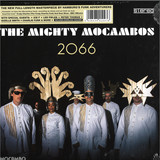
In a world awash with negativity and fear, you are invited to climb aboard the Mocambo mothership where all colours and creeds are celebrated. The Mighty Mocambos have returned - stronger, tighter and hungrier than ever.
Carrying blistering funk lines in their fingers and worldly influences in their hearts, the unique and distinctive Mocambo sound is not one to be confused with retro bands trying to recapture an era. Eschewing traditional recording methods, this DIY crew are
committed to driving forwards, and 2066 sees them at the height of their powers, broadcasting a call for unity.
After reaching new audiences worldwide and earning critical praise for their two long players on Brooklyn's Big Crown Records in their tropical guise as Bacao Rhythm & Steel Band, the band have reassembled and refocused in their original form, the workhorses behind dozens of 45s on the Mocambo label and beyond. Crossing generations, this album introduces some of the world's youngest funk talent to step up and rub shoulders with soul and rap legends, soul sisters, an elder statesman composer/arranger and a brand new emerging artist out of New York.
___ As with all Mocambo releases, the two sides of the record have been meticulously sequenced by the
band. Side A welcomes us aboard with joyous instrumental stomper Preaching To The Choir, and a call to build bridges from Mocambo chanteuse and percussionist Nichola Richards, duetting with emerging raptalent,NewYorkMCJSwiss.B-girlsandb-boysarecalledtothedancefloorasS uperstradaand Concrete Stardust commence, all buzzing synth lines and relentless drums. New Jersey legend and Big Crown associate Mr Lee Fields is guest of honour for Where Do We Go From Here before a horn workout brings us to a close with Macumba. It's time for a breather.
The B side kicks off with the grand return of the Golden Girl of Funk, Gizelle Smith, a sister who's been busy taking on the world. Composer and presenter Peter Thomas narrates a Return To Space to mark the centenary of the debut of his score to sci-fi show Space Patrol, which first broadcast in 1966. We're back down to Earth and the mean streets for the furious drums and car chase workout of Golden Shadow. Today slows down the pace for a reflective ballad with Nichola front and centre - and here's the next generation: the Mocambo Kidz sing along to their parents' instrumentation for Here We Go, a new kids' block party anthem... with no sleep 'til bedtime. The album closer makes it clear that the Mocambos are nowhere near powering down as Ice T and Charlie F unk bring their A-game for an old school attack which, since you're up bouncing anyway, gives you no excuse not to flip the LP and drop the needle right back on to Side A. Onwards!
___ A summation of their journey so far and a celebration in anticipation of what's to come, the album is set
to take its place in a legacy of open minded, organically recorded music, showering listeners with the crew's maze of tantalising sounds pulled from funk, Afro, hip hop with cinematic composition and storytelling.
Agent J
l 12 Bounce That Ass (RMX) feat. Ice-T & Charlie Funk
Ever since their debut 7” landed on our doorstep unannounced, we have been captivated by the powerfully understated movements of the duo known as Undefined. Sahara (keys/bass/programming) and Ohkuma (drums) have deep roots in the Japanese dub and reggae scenes (Heavymanners, Soul Dimension) and operate their own experimental dub label, Newdubhall. Recent collaborations with Kazufumi Kodama (of dub elders Mute Beat), dBridge, and Kabuki are nudging the group further into a spotlight that they richly deserve.
Named for the 3-feel of its colossal groove, “Three” is a locked groove of pure downtempo dubwise, techno in its repetition, hip hop in its tempo and swagger, motorik in its muscularity, meditative in its clarity. Featuring the unmistakable voice of ZamFam Rider Shafique, showcased in a moment of profound introspection and vulnerability, “Three" banishes all thoughts of flash-in-the-pan “big tunes” for an incredibly deep and immersive dive.
“Three Dub,” a version in the classic sense, strips out the vocal entirely to focus on the rockstone riddim, crafted of one of the most captivatingly beautiful bass tones we’ve ever heard, combined with wicked drum turnarounds, lightning hi-hat work, and extremely subtle & sophisticated dubbing technique. A masterclass in dubwise essentialism and profound attention to detail, stripped down to the foundation yet incredibly lush and alive.
Strictly limited to 600 copies for the world. No digital, no repress. Design & screen print by Polygon Press. Mastered by Sam Precise.
After a pleasing start to the New Year, 2 same night sell outs on lathe cut 45s and a single afternoon sell out of the recent Gabe Knox LP, Polytechnic Youth continue their relentless release schedule with 2 more awesome full lengths. In their own ways, both totally unique but very much befitting the tried and trusted synth / electronic PY blueprint.
First up is the fabulous 'Where comes the Dark' debut full length from shadowy, underground producer The Slow Engineer. 'An album of sculpted synthsonics and Eldritch electronics originally released on a limited run, blink and you'll miss it cassette which sold out in 24 hrs. Heavy on basslines, with driving rhythms and tweaked synthesisers, it's a record which openly acknowledges it's nod to horror scores and the work of the Radiophonic Workshop whilst pulling off something uniquely and freshly new, with an assembled array of wayward equipment stored at his Analogue Hades base.'
British horror actor Laurence R. Harvey adds suitably menacing narration in places, and across 10 fabulous tracks this is a richly, deliciously diverse electronic record which comes hugely recommended to fans of John Carpenter, not to mention label mates The Heartwood Institute and Dream Division.
A one time pressing of 300, destined to sell out pretty swiftly.....
Names You Can Trust presents the second installment of Rueda de Bullerengue, a collaborative series with NY-based Bullerengue collective, Bulla En El Barrio. Named after the group's ongoing monthly performance and workshop in Brooklyn, Bulla's collaborative spirit and dedication to the tradition of los bailes cantados has made an indelible mark on the bubbling tropical music scene of New York City, and in turn, found their way into the crates and sets of DJs and vinyl aficionados via their first 7-inch release on NYCT in 2017. Since those initial moves, Bulla has continued to grow and add working members while maintaining a philosophy and connection grounded in the traditions of their Colombian origins. They've studied and collaborated with elders and legends like Emilson Pacheco and Darlina Sáenz, and this past year embarked on a recording with Barranquilla-based collective Tonada Baile Cantado — the focus of this edition's recording and release.
Considered one of the premier groups advancing the tradition of Bullerengue within Colombia, this incredibly talented group of young musicians are a rarity for their skill and age. In a region where there are ongoing festivals celebrating the tradition of Bullerengue that still command massive audiences and performers, Tonada is a true representative of what can happen when such an amazing tradition is passed forward to an eager next generation. Produced by Bulla members Camilo Rodriguez and Diana Herrera (aka Carolina Oliveras) in between their time smashing stages across the U.S. for Combo Chimbita, this is a carefully nurtured and powerful bridge to the beloved traditions of Colombia's Caribe region.
Without further ado, here lies Volume 2 of Rueda de Bullerengue, featuring Tonada Baile Cantado, a new generation of traditional Colombian dance music transmitted directly from Barranquilla — Four dance floor crashers in the styles of fandango and chalupa, ready-made for your 45 spins in the inimitable style of Names You Can Trust.
Gitkin sold guitars. To be precise, he re-branded, sold and traded knock-off Gibsons. A lone, travelling salesman, he toted his counterfeit wares to guitar stores and music emporiums. His trade took him to most corners of the USA, passing through big, smoggy cities and nowheresville small towns. His nights were spent at not-so-salubrious motels. It was at those nocturnal stop-offs that he'd often cross paths with newcomers to the States. His fellow travellers were mostly immigrants, newly-arrived, from places like Ethiopia, Mexico, Indonesia.
Or at least, that's the story as Brian J Gitkin has been able to piece it together. This album, '5 Star Motel', is by a different Gitkin, an ode to the one described above. Or to put it another way, this is the younger Gitkin's homage to his elder relative: the elusive, guitar salesman uncle he never met. A steady drip of anecdotes have construed an image of his relation's itinerant, huckster lifestyle. Finding a cassette of his recordings, it spoke of the effect of those encounters: lo-fi and scratchy, the music leaped seamlessly, in difficult to discern ways, between different far-flung styles.
On '5 Star Motel', that younger Gitkin (henceforth referred to simply as Gitkin) has sought to expand the philosophy he encountered on that tape. The guitar is common thread, the raft to navigate a sun-dappled stream of ideas. It's an embrace of cultures where folkloric stringed instruments still rule, or where they've led to a more recent embrace of the electric guitar. He traces the loose, meandering paths which join them together.
It's about America, the world outside its borders, and the inscrutable, inevitable dialogue that exists between them. Take 'Cancion Del Rey', where the sound of Peruvian chicha - steady-moving, alluring, and lyrical - winds its way through Gitkin's fuzz-filtered licks, and the rhythm underpinning it. Or 'Yama', where Middle Eastern influences echo out of grooving, cyclical riffs. Touching on the distinctive tones of Tuareg music and the Sahara, too, 'Grand Street Feast' charts a sand-dusted, melodic misadventure.
A leading figure and respected elder in the Teklife family, Traxman has waited patientlywhile releases from young upstarts like Taso and Dj Earl have been enjoyed by footwork lovers all over the world. Now the time has come for Traxman to take centre stage, presenting a collection of new material that demonstrates his mastery of the footwork sound. Tekvision arrives hot on the heels of Teklife 005: Greenlight by DJ Manny, bringing an interesting contrast of production methods and styles. A prodigious crate digger, Traxman has provided the sample sources for many of Footwork's classic tracks over the years. So while DJ Manny recorded the majority of the vocals on Greenlight himself, Traxman uses his expert sample flipping techniques to add the human element to his productions. Traxman is a mainstay of the Chicago underground, with a discography stretching back to the golden era of Dance Mania Records in the 1990s. Ghetto House was an important precursor to Footwork, and Traxman was a key figure during this transition.
Echoes of the Ghetto House sound resonate through Tekvision, with tracks like Drop It Down and Twist The Party Out paying homage to the origins of Juke and Footwork music. Be Gagen feat DJ Earl is a beautiful opening track, with a soulful, melancholic synth unfolding patiently over a half-speed beat. When the bass kicks in after 1 minute 10 seconds it has a profoundly uplifting effect, and the late arriving vocal rounds off the composition perfectly.
Many of the tracks demonstrate brilliant and playful manipulation of vocal snippets, with Let Me Get Up and Control Ya Bitchezzz among the finest examples of this art. Finally,Tone Deaf and Whop Line show yet another side to Traxman's sound with an intoxicating and angular mix of bass and bleeps.
The return of Brain Machine, with their Peaks album, was one of the highlights of last year for Emotional Response. Juan Tripp (aka Jon Tye of Seahawks), Guido Zen (Vactrol Park) and Kyle Martin's (Spectral Empire/Land Of Light/Vactrol Park) acclaimed kosmiche opus is followed up with 2 remix EPs featuring some of the best proponents, peers and friends of deep electronic music.
Remixes One is given over to a quartet of trusted hands including man of the moment, Tolouse Low Trax, ambient visionary Gigi Masin, afro-techno-dub specialist Harmonious Thelonious and stalwarts Ronny & Renzo.First Detlef Weinrich shows his mastery of a unique percussive sound that has seen his identity become as respected outside of his native Dusseldorf as he is in it for his role as one of the founders and curator of Salon des Amateurs. A brooding, propulsive culmination, the original's haunting ambience is retained for a subtle, driving rework that hits the mark.
Surprise of the EP is Gigi Masin's remix of Crystal Clouds. Eschewing the original's celestial soundscapes, scattered percussion interplays with sub-bass to change the context, giving a rhythmic dimension while retaining the shimmering guitar and arpeggio infused cohesion.Starting the B-side is another Dusseldorf elder statesman, in the afro-visions of Harmonious Thelonious. Solo, as well as one third of The Durian Brothers, Stefan Schwander, has carved a distinct sound. Chrematistic percussion is matched with an atmospheric, dub-techno feel that perfectly fits the EP. Play loud for full understanding.
Finally, Remixes One concludes with the return of Ronny & Renzo. Long time associates of Brain Machine, their 10 minutes plus remix takes the glacial original's ambience to a darker plain, fusing rhythmic pulses with alluding acid intent.
12" with printed sleeve, Artwork by Albrecht Gaebel
DJ bwin follow up Leibniz's inaugural release for the newly-founded hundert imprint with a three-track EP. »Trinity« draws on feverish breakbeats, hardcore influences and about 2,3 gigatonnes of bass. Having released a split EP with DJ OK on Ireland's First Second Label, »Trinity« sees the production duo venture into the realm of the ancient and the mystical, the inexplicable and the possibly made-up. Conceived as a triangle with one foot deep in the past and the other one in a future yet to explore, »Trinity« points all gunfingaz to the startling revelation that, hey, we're all living in a computer simulation anyhow. Informed by the ancient knowledge of the Dubstep elders and Jungle's relentless search for a grain of truth amongst the lies fed to us by the Lo-Fi House empire, DJ bwin bring together the unholy trinity of paranoid hoover chords, melancholic textures and piercing synth notes for an EP that henceforth shall be known as »banging atmospheric Hardcore Continuum derivatives for late-night hours«. This is not a pyramid scheme - or is it
Until he was about 20, Texas-born Melvin Sparks was a rhythm & blues guitarist, backing Jackie Wilson, Curtis Mayfield and Marvin Gaye as a member of The Upsetters. But Sparks gave up his seat on The Upsetters' bus in New York City, where a chance introduction to George Benson led him to a place in soul jazz history. Melvin played and recorded with Lou Donaldson, Leon Spencer, Bernard Purdie, Jack McDuff, Jimmy McGriff, Idris Muhammad, Dr. Lonnie Smith, Charles Earland, Grover Washington Jr., Reuben Wilson and so many more. Even during the quietest years of soul-jazz Melvin stayed relevant through hip-hop and r&b, a quick search at WhoSampled turns up more than 150 samples of his funky chicken scratch. And Melvin's legacy is heard in contemporary soul/funk bands like The New Mastersounds, Soulive and The Greyboy Allstars, all of whom he also guested with several times before his early departure from this realm in 2011.
This release documents Melvin's final band just months before his death. Organist Beau Sasser and drummer Bill Carbone had been working with Sparks for several years, and, despite the power dynamic - they were in their early 30s, Melvin an elder-statesmen of the genre - the unit was sharp, relaxed and performed Melvin's music with a jovial spirit. The trio played the Burlington, VT club Nectar's regularly, but this night featured two "onlys." Per the recommendation of Nectar's agent they used the "Grippo Horns," the only time Sparks used a horn section in the last several years of his life, and they allowed a multitrack recording of the show. Both were strong decisions.
The tracks on this album, lovingly mixed by guitarist, producer and Melvin Sparks fan Eddie Roberts, demonstrate that Melvin played as well in the final months of his life as at any time. Sparks counts "Whip! Whop!" off at what he said The Upsetters called a "showtime tempo," and peppers it, as well as most of the album, with quotes from jazz standards, pop songs and cartoon themes, all woven effortlessly into the bebop-funk dialect he helped create. He unfolds amiable melodies, patiently and methodically, through his several-minute lead on "Breezin'." And Sparks is audibly uplifted by the Grippo Horns helping him perform his 1973 arrangement of "Ain't No Woman" for the first time in decades.
Jerome Meyer AKA Von D is a master craftsman, well-known for releasing dubstep and bass music since 2009. On an increasingly prolific trajectory since last year, recent 12's on Infernal Sounds, Trojan Audio and Scotch Bonnet have signaled his renewed focus on dubwise productions. We are proud to say that Von D's Khaliphonic debut sees him fully committing to reggae and dub - in his words, going back to my musical roots.'
Politricks' is a masterwork, cut from the same living rock as the classic Cuss Cuss riddim, a simply huge bass and drum workout that is truly one for the ages. Politricks is an anthem for now, a call to avoid the dead-end of politics-as-usual and a warning to beware of the lies politicians tell to keep themselves in power - full of promises but changing nothing. Von D says that working with Don Cotti was very natural,' and their easy relationship is audible - the tune fits the vocal like a glove, and Cotti's instantly-recognizable singjay style gives even more gravitas to an already heavy track. The dub version spools out Von D's signature saturated echoes even further, and opens up spectral chambers of reverb that shimmer and glow.
The B side Ygrec' is an equally massive tune, just as compelling if more meditative and mysterious, coming in both one drop and power-steppers mixes for maximum versatility and vibes. Both tunes and their versions feature an incredibly robust, warm, human sound - one that simply can't come from machines alone - live drums, bass, and kete drum among other instruments maintain the tradition of live musicians in dub - to say nothing of expert desk-based mixing and deployment of live analog effects the way the elders intended. Both tunes dial in at 140 making them perfect for roots and dubstep selectors alike.
Von D got his start as a drummer and engineer outside Paris, in the heady days of original jungle. Early releases on Disfigured Dubz, Hench, Boka, Black Acre and the seminal V Recordings, as well as his reggae-oriented Liquid Wicked project, cemented his reputation. Don Cotti is a prolific producer, DJ and MC with releases stretching back to 2006 on labels as varied as Bass Face, Studio Rockers, and Soul Jazz.
Mastered by Lewis at Stardelta. Art & design by Polygon Press.
Storming into our fifth release from the dirty shores of New Jersey, Green Village is proud to present Village Elders 001, a compilation EP featuring new material from artists who have already flown the flag for GV. The A-side is held down by the Plan B duo of DJ Spider and Dakini9, purveyors of the Metro Area's dirtiest and deepest house sounds. Spider gets toxic a second time, following his 2013 Instruction drop with 'Toxic Trace 2', a thickly layered deep house cut whose seedy percussion underbelly contrasts vividly with the more traditional deep house pads that accompany it. Dakini9's 'Lost Paradise' is dark and mysterious like its title, the hats, trumpets, and vocals emerging in tangled webs of dub effects, a strong follow-up to her dope EP for the label. Disaroen, a duo from Toronto, half of which previously appeared on GV, turns in the most barren of the four tracks, 'Serious Doorman', heads-down techno that crackles to life halfway in and an auspicious debut for a promising new group. Last is NJ heavyweight Nicuri, a rising star whose 'Ripples of Time' closes the EP in his signature searching, melodic style.