Italian jazz trio Collettivo Immaginario announces the release of their second full-length album, 'Oltreoceano'.
Known for their slick sound and energetic live performances, their style is firmly rooted in the jazz tradition of collective improvisation, through which they have developed an agile, kaleidoscopic sound. The trio’s unique fusion of funk, jazz, and 70's electronica continues in the trio’s latest release, forging connections across oceans through the universal language of music.
Consisting of founder Tommaso Cappellato on drums and percussion, Nicolò Masetto on electric bass, and Alberto Lincetto on rhodes, piano, and synths, Collettivo Immaginario have become rising stars in the Italian festival scene, from the streets of their hometown in Italy to the diverse audiences in Los Angeles, London and Milan.
Subtly paying homage to genre-bending giants like Azymuth, Lonnie Liston Smith, Herbie Hancock, and Hermeto Pascoal—alongside Italian film music legends Piero Piccioni and Piero Umiliani—their sound moves effortlessly between the heat of the club and the cinematic allure of evocative film scores, infused with touches of spiritual jazz.
Поиск:electric 6
Все
New bood red vinyl version! The master in scratch Dj T-Kut together Dj Yamal and Cut Sound Brothers have cooked this new battle vinyl ready to be to squeezed to the maximum, "Scratch Practice". Composed by 2 instrumental tracks and 8 tracks tools, each track is inspired in the classic tracks of the turntable worldwide that converts this record an indispensable piece for the fanatics. The cover is an art of the well-known graffiti artist Mast. Masterized in 126 Productions House. All tracks signed by Dj T-kut. This 2024 version comes as new limited version presented in blood red colour 7" format to enjoy in both ways of this wonderful single.
- A1: Mickey's Samba
- A2: Funky Wave
- A3: Moon Stone
- A4: Space Coaster
- B1: Let's Get Together
- B2: Vibration #1
- B3: Keep On Loving
At the time, Mikio Masuda was frequently mentioned as a Japanese jazz musician on par with the soft-and-mellow crossover sound of artists like Bob James and Ramsey Lewis. With a supple sensibility that moves effortlessly between jazz and rock, he stands as one of the defining figures of the 1970s. Now, one of his essential masterpieces, "Moon Stone", has been confirmed for reissue as the fifth installment from SPIN THIS NOW!
Electric Piano, Organ, Clavinet, Synthesizer - Mikio Masuda
Drums - Hideo Yamaki
Electric Bass - Motohiko Hamase
Electric Guitar - Kazumi Watanabe
Electric Guitar, Vocals - Kazumasa Akiyama
Amid rusted transistors and owner manuals blurred by dust, Rogelio Serrano rescued abandoned vintage synthesizers from Mexico City's flea markets. These devices, revived by a Japanese technician based in the capital, returned to life with electric pulses, becoming accomplices in nearly clandestine recording sessions at a solitary, remote location called "Ojo de Agua" on the city's outskirts. Sound Cartography is a sonic archive of tracks recorded between 2017 and 2019, which could easily be considered demo pieces, unfinished works, or simply orphaned creations.
We Release JAZZ is very happy to announce the limited vinyl edition of Obad’s powerful new album Suspended, a vivid document of the Tehran ensemble’s endlessly evolving sonic universe — now available as a limited LP housed in a heavyweight sleeve with an Obi strip and featuring original artwork by Iranian painter Sadra Baniasadi.
Suspended is a superbly spontaneous, improvisational blend of exploratory jazz fusion, progressive funk-rock, and transcendental groove. Built from lived experience and shaped by Tehran’s pulse, Obad’s music is kinetic and intuitive — an ever-morphing dialogue between rhythm and texture, emotion and message.
With Farid Farzian Pour on drums, Siavash Karimi on electric guitar, Kiarash Radmehr on bass guitar, and Hamidreza Keshavrpajuh (aka Pajuh) on tenor saxophone, Obad creates a soundworld where hypnotic basslines meet thunderous, free-flowing percussion; where searing guitar motifs coil around saxophone phrases that move from whispered invocation to explosive catharsis. Suspended captures the quartet at full creative stretch: alive, unguarded, and deeply attuned to one another.
Sadra Baniasadi’s striking cover painting mirrors the album’s energy — bold, dreamlike, charged with movement, and extending Obad’s world into the visual realm.
Suspended stands as a major statement from one of Iran’s most compelling contemporary ensembles, marking Obad’s first release on We Release JAZZ and continuing the label’s commitment to boundary-pushing music born from profound listening, place, and collective intuition.
- A1: Againstme - Snowfall
- A2: Anfs - Omnia
- A3: Alexander Kowalski - Falling Forward
- B1: Temudo - Lifted
- B2: Metapattern - La Galerie Des Glaces
- B3: Oliver Rosemann - Buy The Ticket, Take The Ride
- C1: Electric Rescue - S2I0L2K5Y
- C2: Sera J - Hypoxia
- C3: Annē - Soundscapes
- D1: Kerrie - Kontrapuntal
- D2: Endlec - Vitriolic
- D3: Nases Morur - Dancefloor 4Am
RENEGADE METHODZ presents ENACT
5 YEARS RM - MUSIC WITH THE FORCE OF FUTURE
Celebrating five years deep in the trenches of techno resistance, the Greek label presents ENACT, a Various Artists compilation that captures the ethos of Renegade Methodz in its purest form and collects together a carefully selected group of music that embodies the Renegade Methodz philosophy.
In a sharp-angled, fiercely inventive reflection on the nature of club culture and digital fatigue, Simo Cell and Abdullah Miniawy reunite to deliver their new album, Dying is the internet, to Dekmantel's UFO series.
French producer Simo Cell has blazed a singular path from his dubstep-influenced origins to become a leading light in contemporary leftfield club music, twisting up adventurous rhythms and flamboyant production in pursuit of a perpetual freshness for the floor. Egyptian singer, poet, producer and composer Abdullah Miniawy has become equally omnipresent in the past 10 years, straddling the arts world and leading with his piercing Arabic lyricism while maintaining an eternally curious spirit that leads into open-ended, experimental music from the abstract to the propulsive.
Following up on their 2020 EP for BFDM, Kill Me Or Negotiate, Miniawy describes their sharply focused new album as "a playful prophecy about the triggers of a new global revolution." Cell considers the title, Dying is the internet, to be a mantra about "how the internet lost its soul," becoming "less about sharing ideas and more about surviving in a digital business ecosystem." Deliberately at odds with the reel-ready two-minute attention span of the average social media surfer (i.e. everyone), the pair set out to make an album that takes its time to reveal nuanced ideas and expressions. Rather than one-note despair for the modern malaise, Cell and Miniawy offer a philosophical reminder that this present moment in the human experience is a temporary phase, no matter how overwhelming it feels.
Dying is the internet finds Miniawy experimenting with auto-tune across the record, while Cell has developed his voice design chops and compositional instincts, moving closer to fully realised song structures without losing the fundamental 'clubbiness' of each track. The result is a cohesive, wildly original kind of heavyweight dance music that slings out hooks left right and centre, from Miniawy's laconic trumpet looming through low-slung 'Reels in 360' and 'Travelling In BCC' to the persistent handclaps that bring 'Living Emojis' to life. Miniawy's poetry explores the power of insistent, repeated phrases in a break from his more typically structured form.
Kenyan powerhouse Lord Spikeheart adds extra snarl to stripped-back, slow-burn opener 'I See The Stadium', but otherwise Dying is the internet is purely the work of Miniawy and Cell casting their considerable chops out into unexplored territory. The results are electric, bound together by a consistent economy of sound that burrows into a shroud of bass-heavy minimalism barely masking Cell's incredibly detailed studio flex. Even the beatless flourish of the Miniawy-produced 'Tear Chime' comes loaded with physicality — a sensory rush at the mid-section of the album bookended by some of the most idiosyncratic club music in recent memory.
Both Simo Cell and Abdullah Miniawy have already proved themselves as fearless innovators across different fields. The strength of their partnership lies in their ability to make space for each other while letting their distinctive sonic identities ring loud and true. Dying is the internet has immediacy and physicality to translate over a soundsystem, but its intricacies are purpose-built for repeat visits and contemplation, unveiling hidden dimensions the deeper you dive into it.
Gatefold Sleeve
M’Bamina – African Roll (1975)
The story of an album born between Africa, Italy, and the nightclub culture of the 1970s
In the heart of 1970s Italy — a country undergoing profound social change and a music scene just beginning to open itself to distant sounds and cultures — an extraordinary, almost improbable story took shape. It is the story of a group of young African musicians who found their way to Europe, of a Turin nightclub that became a crossroads for communities and experimenters, and of an album which, released in small numbers and largely unnoticed at the time, is now considered a rare jewel of Afro-fusion.
The band called themselves M’Bamina — an ensemble of musicians from Congo, Cameroon, and Benin, who arrived in Italy in the early Seventies. Settling between northern Italy and the Pavia area, they began performing in small clubs and community events, bringing with them a vibrant rhythmic heritage: African polyrhythms, call-and-response vocals, funk-infused bass lines, and Caribbean or Afro-Latin colours absorbed along their musical journeys. Their raw, contagious energy on stage quickly drew attention.
Meanwhile, in Turin, another story was unfolding. There was a venue becoming almost legendary: Voom Voom, one of the city’s liveliest nightclubs, run by Ivo Lunardi. The club attracted an eclectic crowd — students, artists, foreigners, night owls — and Lunardi quickly understood that the dancefloor wasn’t just a place for music, but a melting pot for a new kind of cultural energy. Out of this vibrant atmosphere came his idea: to turn the club’s name into a small independent record label, Voom Voom Music, capable of capturing the spirit of those years and giving voice to unconventional projects.
When Lunardi heard M’Bamina, he immediately sensed that this was the sound he had been searching for: fresh, different from anything circulating in Italy at the time, and capable of blending African tradition with funk and European sensibility. He brought them into the studio.
Production was handled by Lunardi along with Christian Carbaza Michel, while the engineering was entrusted to Danilo Pennone, a young sound technician with a sharp, intuitive ear.
The recording sessions — held in Turin in 1975 — produced a remarkably warm and direct sound. The music feels almost live: grooves rooted in African tradition, but open to funk-rock structures and modern arrangements. It is a natural fusion, never forced. Tracks move between tribal rhythms, funk basslines, light electric guitars, congas and Afro-Latin percussion, with call-and-response vocals and melodies that echo both Congolese tradition and the lineage of Latin jazz. Not by chance, one of the album’s most striking tracks, Watchiwara, reinterprets a Latin standard through M’Bamina’s own rhythmic language.
The album was titled African Roll — a name that was already a statement of intention. It is African music that “rolls,” that moves, adapts, transforms within a new geographic and cultural setting. It is not strictly Afrobeat, nor Congolese rumba, nor Western funk: it is a spontaneous, hybrid blend, shaped more by lived experience than by any calculated aesthetic program.
When African Roll was released, the world around it barely noticed. Distribution was limited, and 1970s Italy had yet to develop a cultural framework for receiving such music. The national music press rarely paid attention to African or “world” productions. The album slipped into silence — though the band’s own story did not.
M’Bamina continued performing across Europe and Africa, even sharing a stage in Cameroon with none other than Manu Dibango. By the late Seventies, they moved to Paris, signed with Fiesta/Decca, and recorded a second LP, Experimental (1978). Meanwhile, the peculiar record they had made in Turin began to resurface quietly among vinyl collectors, Afro-funk enthusiasts, and DJs hunting for forgotten grooves.
That is when the album’s fate began to shift.
Over the decades, African Roll emerged as an almost unique document: a snapshot of an intercultural Italy before the word “intercultural” even existed, a fragment of migrant history, a spontaneous experiment in musical fusion born far from major industry circuits but rich in authenticity. Original copies began commanding high prices on the collector’s market, and the album became recognized as one of the hidden classics of European Afro-fusion from the 1970s.
Today, more than fifty years later, this reissue finally restores visibility and dignity to a project that deserves to be heard, studied, and celebrated. It is not simply an album: it is the testimony of a rare cultural encounter, born in an Italy unaware of how fertile such exchanges would one day become.
It is the story of a visionary producer, an extraordinary band, and a fleeting moment in which music, migration, and nightlife came together to create something genuinely new.
African Roll is — now more than ever — the sound of a bridge: between continents, between eras, between cultures. A record that, after rolling far and wide, has finally come home.
2026 Repress
French DJ and producer Hemka makes a striking solo debut on Mutual Rytm with 'Introspection'.
Born in Marseille and based in Paris, Hemka has been shaping her take on techno for over a decade, steadily growing her international presence with music on respected imprints such as Token. Her music fuses the raw energy of 90s techno with modern textures and is fast-paced, groovy and laced with subtle psychedelia. By weaving in her own vocals, Hemka adds a deeply personal and authentic layer that resonates with both the body and mind. Following the strong reception of her track 'Fragrance' on the 'Federation Of Rytm III' compilation, this potent new EP is a powerful reflection of her bold, emotional and forward-thinking artistic voice and the start of an exciting new chapter with SHDW's Mutual Rytm.
'Abyss' kicks off with tightly coiled, heavy-hitting drum funk and eerie synths that never let up while ghoulish vocals layer in extra darkness and anxiety. 'Time' is another sleek, stripped-back but banging wedge of linear techno excellence and 'I Can't Shine' layers up paranoid vocals with high-speed glitches and rubbery drums to ensure maximum impact in the club. The excellence continues with 'The Bad Place' with booming drums and moody synth atmospheres, getting you up on your toes and keeping you there. Last, 'Unchanged' fizzes with static electricity as wordless vocals refract around the mix next to wispy synths and icy hi-hats. Digital bonus cuts 'Voice In My Head' and 'Eternity' round things out with more heady and intense techno for driving deep into the night.
Label Cover[14,92 €]
2026 Repress
Sicily's SLV is able to merge technical mastery with emotional resonance. His potent techno sounds have come via the likes of SHWD's Mutual Rytm and Slam's Soma, and unite timeless yet forward-thinking sonics.
On 'Fleeting Dreams', he continues to refine his signature sound while channelling introspection and intensity into a collection of meticulously crafted cuts that balance precision and feeling, energy and space. Each track reveals a different side of his sonic identity: hypnotic rhythms intertwine with evolving soundscapes, while layers of distortion and melody merge into a dreamlike tension between the mechanical and the organic.
'Fading Moments' kicks off with a sleek blend of driving, supple kicks and warm synth ripples, while a euphoric vocal cry is buried deep to amp up the emotion. 'Scenario' then brings icy hi-hats and sinewy synths bring a futuristic feel to the unrelenting, high-pressure drums down low. 'Daruma' has a darker energy with menacing textures and paranoid FX bringing the rolling drums to life, while 'Bass Grit' has a hunched up rhythm, with groaning pads and fizzing static electricity that charge up the party. To close, 'Shimmer' sinks down into a muscular and deep rhythm that's marbled with restless synths and ever-rising tension.
In addition, digital bonus cuts 'Trust' and '1990' offer different perspectives with slamming drums, seductive vocals and feisty synth loops making for two more bold, immersive techno weapons.
2026 Repress
A notoriously jaw-dropping folk-funk classic, long treasured by the Balearic fraternity, the self-titled LP from the brothers Batteau nevertheless remains a criminally underheard gem. Appealing to fans stuck on Ned Doheny's scorching blue-eyed soul as well as Gene Clark's rich country-rock, it's an honour to present the first officially licensed vinyl reissue of this undoubted masterpiece of proto-Yacht-Rock.
Like a forgotten piece of baroque folk caught in 1973, Batteaux's eponymous album somehow sounds magically timeless. A full 45 years after the fact, it remains a mystery as to why they weren't better known. The lush production and virtuoso playing conforms with the ruling aesthetic of the time - well-crafted, melodic songs performed with precision and balance - whilst the shimmering AOR atmosphere and sun-dappled vocal washes align neatly with the best Crosby, Stills & Nash records.
Throughout, the beautifully penned tracks hold traces of Jimmie Spheeris, America and Seals & Crofts. The immaculately orchestrated percussion and additional instrumentation (electric piano and fiddle to name a few) are performed by perennially celebrated West-Coast cats including Tom Scott, John Guerin and Andy Newmark.
It's no surprise that the heavenly "High Tide" is such a Balearic touchstone. A free soul aqua-space groover, its sophisticated rhythms predict the swing of CSN's canonical "Dark Star" by a full four years. An alternative measure of its enduring magnificence can be gauged by MF Doom sampling Paul Horn's wonderful version, subsequently used by Ghostface Killah.
The highlights are many and memorable. Gorgeous opener "Tell Her She's Lovely" is the perfect example of the addictive, melody-driven songwriting which really should have earned them stardom. Moody ballad "Living's Worth Loving" is nothing short of heartbreaking whilst the chugging elegance of "Wake Me In The Morning" showcases their bewitching harmonies. The hypnotic yearning of "Lady Of The Lake" is an exquisitely string-drenched, piano-laced favourite that achieves a peculiar strutting-funk. It's that good.
This lovingly curated reissue enables a long overdue reappraisal of the hitherto buried genius of Batteaux. The serene aqua artwork which adorned the original jacket - their father worked on a dolphin-human communication project in Hawaii, hence the infamous design - and sumptuous inner sleeve have been faithfully restored. Whilst, with access to the original tapes, Simon Francis' sensitive mastering elevates the sound throughout and, as ever, it has been pressed at a reassuringly weighty 180g.
- 1: Water As A Metaphor
- 2: Waves
- 3: Annie (21St Century Working Class)
- 4: Milli Writes On Hotel Walls
- 5: Chandelier
- 6: Bathroom Floor
- 7: I Wanted To Tell You
- 8: King's Head
- 9: False Start
- 10: Sparrows
- 11: Long After Midnight
- 12: New Ways To Stay On Earth
Between Bodies als Geheimtipp der europäischen Punk/Indie-Szene zu bezeichnen, ist mittlerweile ein großes Understatement. Nach ihrem Debütalbum, "Electric Sleep" von 2022, war die Band in aller Munde derer, die ein Herz für melodischen, treibenden, emotionalen Punkrock mit DIY Spirit haben. Spätestens über das Jahr 2025, als die Band aus Köln, Toronto und Paderborn, etablierte Acts wie Touché Amore, The Get Up Kids, The Hotelier oder Captain Planet in ausverkauften Clubs supportet hat, auf zahlreichen Szene-Festivals zu sehen war und seine Hörer*innenschaft noch einmal deutlich erweitern konnte, sind Between Bodies zu einer der spannendsten up-and-coming Punk-Bands hierzulande geworden. Die Songs und Texte der Ende 2019 gegründeten Band haben - wird oft behauptet, hier stimmt es einmal - internationales Format und erinnern an Lieblinge wie Joyce Manor, The Menzingers oder Tigers Jaw. Ihr Sound lässt ebenso an 90er Jahre Emo-Punk Klassiker denken, zeigt sich beeinflusst von 00er Jahre Post-Punk/Indie und verfügt dabei über reichlich Charakter und ein Ideenreichtum, der Between Bodies schlicht zu einer außergewöhnlichen Band macht.
- 1: Cry, Cry, Baby
- 2: Moves Away
- 3: You're A Holy Man
- 4: You Can Take Your Time
- 5: This Familiar Way
- 6: What's Out There
- 7: A Kind Of Courage
- 8: Wakes
- 9: One Way Out
- 10: Outlaster
Nina Nastasia nahm mit Steve Albini bei Electrical Audio in Chicago auf und engagierte den Instrumentalisten und Arrangeur Paul Bryan aus Los Angeles, um ihre Songs für ein kleines Orchester zu arrangieren. Mit dem Schlagzeuger Jay Bellerose und dem Gitarristen Jeff Parker aus Chicago wird Outlaster von einer absoluten Traumband unterstützt. Dieses Album ist ein Werk von üppiger Raffinesse, das ohne Verlust an Charakter oder Wirtschaftlichkeit über Nastasias berühmte Sparsamkeit hinausgeht. Das Orchester geht mit Bryans kraftvoller, bewegender Partitur - die an Gil Evans und den verstorbenen Phil Ochs erinnert - eher formell vor und veredelt die Platte mit glänzenden Bläsern und einem dynamischen Streichensemble. Nachdem Outlaster mehr als ein Jahrzehnt lang vergriffen war, ist es nun endlich wieder auf Vinyl erhältlich. Die Neuauflage von Outlaster wurde 2025 von Josh Bonati für Vinyl remastert und ist auf limitiertem burgunderfarbenem Vinyl gepresst.
French electric producer RONI lands on fragrance with four powerful tracks, as part of her EP ‘amor fati’.
From the pulsating, kinetic energy of 2knymph to the propulsive, percussive force of Pulse, each track is layered with textured synth work, crisp drums and immersive electronic atmospheres designed for movement.
EP includes a remix by Big Ever who elevates the record into even more dynamic, club-ready hit.
- 1: Bed On Mars
- 2: Lost
- 3: The Age Of Sampling
- 4: Movement
- 5: Umi
- 6: Golden
- 7: Deception Dance
- 8: Azimuth
- 9: Fifteen
SILVER VINYL[24,79 €]
Nach den jazzigen Library-Klängen der 2023 erschienenen gemeinsamen LP ,Dolphin" mit Greg Foat und Moses Boyd kehrt der venezianische Maestro Gigi Masin zu dem Ambient-Sound zurück, für den er bekannt ist - mit ,Movement", seinem ersten Solo- Album seit ,Calypso" aus dem Jahr 2020 und seinem Debüt bei Sacred Bones Records. Angetrieben von kreativer Neuerfindung und rhythmischer Bewegung bewegt er sich nahtlos zwischen melancholischen MIDI-Klängen, technoider Robotik, groovigen, liminalen Wolkenlandschaften und meeres tiefem Ambient. Seit seinen frühen Anfängen in der Anonymität baute sein Debütalbum ,Wind" aus dem Jahr 1986 langsam eine organische Anhängerschaft im Late-Night-Radio auf, die später noch verstärkt wurde, als ,Clouds" von Künstlern wie Björk, Post Malone und anderen gesampelt wurde. Zu seinen Fans zählen heute Oneohtrix Point Never, Devendra Banhart, Caroline Polachek und der verstorbene Kenny Wheeler. Das neue Album ,Movement" reflektiert Masins Stellung im Pantheon der Ambient-Meister, seine anhaltenden künstlerischen Ambitionen und seine Bestrebungen für eine Szene, deren exponentielles Wachstum er seit ihren bescheidenen Anfängen miterlebt hat. Die LP ist zudem eine Ode an die wörtliche Bewegung, sowohl in der Natur als auch in den körperlichen Ausdrucksformen des Menschen gegenüber dem Klang. Masin strebte danach, Ambient-Musik für Bewegung zu schaffen, nicht im üblichen Sinne von Tanzmusik, sondern ,dynamische Musik, mit einem schlagenden Herzen voller Liebe". Indem er die Assoziation von Ambient mit einsamen Hörerlebnissen und kühler Akademik auflöste, wandte sich Gigi nach außen und kanalisierte etwas Somatisches, das sich mit dem Körper verbindet, nicht nur mit dem Geist. ,Bed on Mars" gibt den titelgebenden Ton für Masins neu entfachte Neugier an, mit kosmischen Atmosphären, die das Gefühl hervorrufen, auf einem neuen Planeten ohne Furcht zu erwachen, während die ergreifende synthetische Trompete und der schwebende liminale Schwebezustand von ,Lost" sich anfühlen, als würde man in einem unbekannten Meer treiben. Noch tiefer in die exzentrischen Beats taucht der himmlische Techno-Funk von ,Deception Dance" ein, der klingt, als würden Sun Electric mit Carl Craig und Kraftwerk jammen. Das strahlende Licht von ,Golden" strahlt Wärme aus und klingt wie der Bossa-Nova-Bruder von Göttschings Balearic- Klassiker E2 E4. Trotz des Todes seiner Frau nach langer Krankheit und des Verlusts seines musikalischen Archivs durch eine Überschwemmung bleibt Gigi im Herzen rein und positiv und legt seine ganze Seele in das Streben nach Schönheit. Als jüngstes Werk einer langsam beginnenden, aber stetig wachsenden Karriere festigt Masin mit ,Movement" weiterhin seinen Platz unter den wahren Ambient-Größen.
Philip Glass, the great American composer, was already in his mid-30s before his first album appeared, and then only because he produced the double LP himself. Music With Changing Parts was the inaugural release on his own Chatham Square imprint in 1971.
At this point, Einstein on the Beach, Glass' first opera, was still five years away. Yet in Changing Parts, one can already hear much of his vocabulary in full bloom: the buoyant arpeggios, the melding of electronic and acoustic instruments, the elongated drones of human voice, the primary emphasis on pulse (an interest he shared with fellow composer Steve Reich) and the ecstatic potential inherent in repetition.
The album features the original Philip Glass Ensemble – the composer himself, along with Jon Gibson, Dickie Landry, Art Murphy, Steve Chambers and Robert Prado – playing Farfisa organs and woodwinds as well as Barbara Benary on electric violin.
As Glass describes in his memoir Words Without Music, he secured a $500 interest-free loan for the recordings' initial release from the Hebrew Free Loan Society – an organization intended to help immigrants from the Old World upon arrival in the US. Though Glass was merely the grandson of immigrants, the venture wasn't far off the society's charter as Changing Parts helped usher in a new world of sound that would become known as Minimalism.
Chatham Square went on to release albums by other composers in Glass' circle, including Gibson and Landry. The label was named after the Manhattan intersection where Landry had a studio and the ensemble rehearsed.
Born in Baltimore in 1937, Glass first moved to New York to attend Juilliard at just nineteen, having already graduated from the University of Chicago. A staple of the Downtown scene, he can perhaps be appreciated as akin to the likes of sculptor Richard Serra or filmmaker Jim Jarmusch: mavericks who became major cultural figures entirely on their own terms.
This first-time vinyl reissue reproduces the original side-breaks and gatefold sleeve.
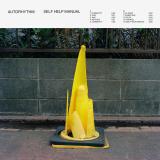
/// First track, Symmetry, debuted on BBC Radio 6 New Music Fix, 10th February: "A beautiful, beautiful album" /// I got my life back. On 17 February 2025, 1024 rays of ultra sound converged at an operation table in Bern, Switzerland, and disconnected a noisy circuit on my brain. 90% of the manifestation ceased – of a disease that I no longer wish to mention by its name. During the same period, I completed my new album: Self Help Manual. I’ve read more current research about the nameless disease than my neurologist, who despite that I didn’t follow his advice on suitable treatment, called me after the successful operation: a brave, brave man. I have composed the music in the same way as in my previous album – Songs for the Nervous System – through layers upon layers of improvisations in dialogue with my synthesizers, most of which are the same age as me. I made the majority of the songs in my studio in the remains of Old Hagalund in Solna. I edited the recordings in my bed during the waking hours of clarity at night. Some songs – NAC, Ketosis, Overkill – were recorded in the basement of my childhood home in Skutskär, in Norduppland, where I’d returned to be nurtured by my retired parents – who during a night when I couldn’t turn over in bed, or pull the blanket over me – made a list of what would happen to my belongings. To my friends who have stood out with me despite my disease, I want to state: you will not inherit me yet. On the new album, the electric bass takes on a leading role. ESG and Liquid Liquid have been important when I reinvented my baselines, limited and liberated by my poor fine motor skills. Plasma is my homage to Summertime Rolls by Jane’s Addiction, that I listened to frequently in my youth. I guess that no one will hear the resemblance. In several songs, the Fender Rhodes plays an important role, a magical instrument that I bought shortly after my diagnosis over a decade ago, and for a long time didn’t dare to touch out of respect for Herbie Hancock and Fela Kuti. A couple of songs draw inspiration from the Horn of Africa – Inner Nile and Delta. At first, subconsciously in the reverb-drenched Inner Nile, then more consciously in Delta. I’m sorry it doesn’t swing the right way, but it was my attempt to return to the cradle of humanity. Longevity is possibly my favourite. The melody is played by an arpeggiator that I controlled by pressing down different keys in an exhilarating sense of freedom. One song in particular, the second track – One – has caused friends to associate freely: one thought it sounded like Patrick Cowley, another like Sly & Robbie meets Kraftwerk, a third like Air – Moonlight Safari. I made one song just before the surgery: opening track Symmetry. It’s the mightiest and most minimal song. I made one song after the surgery: finishing track Self Help Manual. My previous medication pump is heard through the microphone of my Ovation Magnum. It’s the most hopeful song on the album. I took the cover photos with my Hasselblad during walks in Tokyo suburbs of Ōmori and Kamata more than ten years ago. It was something about the faith of the traffic cones that fascinated me – born in the same streamlined form, they had over the years become increasingly individual and lovable. The mixing was finalized by Christoffer Roth in the newly built Studio Dubious in Nacka. Rashad Becker, who in an interview said that he listens as much with his mouth as with his ears, mastered the album at Clunk in Berlin. Right now it feels like anything is possible. My recovery is perhaps a small step for mankind, but a giant leap for me. I hereby leave the music to you. Joakim Forsgren
Maybe it was inevitable that Vilhelm Bromander and Fredrik Rasten would find each other. A symbiotic musical alliance of suggestive combinatory magic that stretches back to the interstitial two day space that separates their dates of birth and manifests here as the movement between ‘perfect’ or ‘just’ intonation and the ragged, psychoactive energy of the slippages from and towards that togetherness that render otherwise simple patterns or generally understood repetitions as wildly other and alive.
Astral Twins shares ‘twin’ works by each composer. The patiently unfolding real time retuning of Fredrik Rasten’s guitars on the a-side’s Sojourns and Vilhelm Bromander’s quickened steps and spry looping melodies on the flip’s Partially Dancing.
Both artists have history of going deep into the aesthetic and acoustic impact of intonation (how you think about what is ‘in tune’). Where their first LP (...for some reason that escapes us, 2019, Differ Records) shared a gorgeous set of sustained tone colour fields, this time they lean more explicitly into the folk music traditions of Scandinavia and further afield, whilst echoing the zoned minimalist atmosphere of Arthur Russell’s classic Instrumentals.
Recorded up close and in real time at Fylkingen’s soon-to-be-abandoned temporary location in Stockholm’s southern suburb of Bredäng, Astral Twins sings with the possibility that one plus one can equal more than two.
Fredrik Rasten:
Sojourns explores the live retuning of guitar and double bass in a sequence of just intonation harmonies. A guitar ostinato runs throughout the piece where the retuning becomes an integral part of the composition. The slow pace reveals every detail in the transition from one harmonic arpeggio to another — how interfering waves emerge and disappear as the tonal interactions settle in electric clarity. The double bass shadows the guitar's process and comments with occasional pizzicato tones and register jumps, at times providing a low foundation for the sound and sometimes soaring together with the guitar. This is music that is deeply listening; experimental and at the same time humbly inviting many kinds of being with sound.
Vilhelm Bromander:
As the title suggests, this song has a partially dancing character. The title also has a double meaning with reference to the partials and harmonics that dance together. The basic idea was to write music in just intonation that instead of being drone-based is reminiscent of a lightly dancing folk music, where the joyous feeling of just being in the music — “musicking" — is allowed to lead the way.
The double bass plays repeated overtone double stops in an open harmonic progression with subtle modulations that is inspired in equal parts by Steve Lacy's persistent repetition of phrases as east-asian khaen music. The guitars and mandolin have a freer role, with plucked retuned strings that enhance the bass's modulations and provide forward movement. The music invites to both melodic and spectral listening, suddenly halting so that other focal points can reveal themselves. For example, a chord sequence suddenly transitions to a more spectral part where Fredrik is playing a bowed guitar with a chain, several plucking guitars, voices, and pitch pipes. I wanted to make something ‘orchestral’ with just two people and no overdubs: a dance of overtones and open resonant strings, where we seamlessly take turns standing in the foreground.
- A1: Michael Andrews - Something Bad’s Better Than Nothin’
- A2: Kevin John Agosti - The Reason
- A3: Ron Eliran - Sky Dust Drifter
- A4: Sunburst - Special Lady
- A5: Virgil Charles Mashburn - Why Should It Be
- B1: Randy Ream - Divorce Song
- B2: Ray Daly - Leave Me Alone
- B3: Richard David Spano - After So Long
- B4: Kerry - Stargazer
- B5: Black Water - All Night Company
2026 Repress
An anthology born out of isolation and deep introspection, Sky Dust Drifter is a cosmic medley of sun-soaked AOR, psychedelic folk, and soft rock. This soundtrack was driven by the lonesome cowboy, a lockdown savior leaving me adrift in desert winds and dimly lit country bars.
Long-distance trades and masked meetups yielded a collection of private press LPs and 45s from ten different artists spanning 1973 to 1980. This seemingly random stack of records revealed songs living entangled in themes of hard luck, heartache, and the inevitable loneliness of existence. Adorned in cracked leather and chrome, this album is an aimless wander from the soil to the stars.
Featuring an unreleased English version of the compilation’s title track “Sky Dust Drifter” (originally released only in Hebrew), the record shifts from laconic afterthoughts to bold proclamations. From Michael Andrews’ blue-eyed soul assertion “Something Bad’s Better Than Nothin’,” to the searing electric guitars and bold synths of Sunburst’s “Special Lady,” Sky Dust Drifter thrives on solitude in a universe of unconditional self-rule where loneliness is not darkness but rather a blazing light of autonomy.