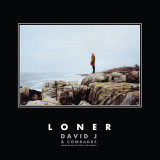
“…a surprisingly cohesive atmospheric soundtrack to a movie that does not yet exist.” LONER is the stunning album from cult auteur DAVID J (Bauhaus, Love & Rockets) featuring Mia Doi Todd and Tim Newman. U.K. Edition in orange vinyl with gatefold sleeve. Limited edition of 500. Former Bauhaus and current Love and Rockets bass man returns via Dakota Records with a series of deconstructions of an original twenty some year old demo. Originally streamed as part of his 2007 series of unreleased stash ‘Tracks from the Attic,’ a precursor to the now hugely successful platform: Patreon. David’s original demo titled ‘Albino Dog’ alongside singer/songwriter Mia Doi Todd’s sublime studio version both appeared via that platform in 2015; only the latter appears amongst this new series of arrangements. David’s premonition of Mia’s voice on this song is one to be applauded – perfectly suited creating a ghostly sepulchral aura. Here the Colonel is aided by a series of foot soldiers varying in rank. Veteran comrade Joyce Rooks adds texture with her trademark cello to Mia’s ‘Albino Dog’, whilst privates’ Nigel Gwennap (‘The Day that David Bowie Died’) and Whitehall Rec’s Joel Baldwin contribute electric guitar and drum programming respectively. But it’s the work of the captain that captivates this whole package. Tim Newman (Love is a Ghost), arranger, sound alchemist, mixer and lunatic. Tim’s work with David is best savoured via their ‘Analogue Excavations & Dream Excavations’ 2002 Glass Modern set. ‘Loner’ offers the listener a kaleidoscope of sounds best experienced with headphones, the journey from David’s simple ‘Albino Dog’ strummed acoustic demo to ‘Crescendo’ is quite staggering. Joel’s synth on ‘Cold, Cold, Cold’ and the glitch added to Mia’s vocal (‘Loner on the Range’) for example take the song into an altogether different direction. But it’s ‘Crescendo’ though that sits atop the apex. Building, as the title suggests, into a blistering array of guitars, bass and drums with a gorgeous, ethereal repeating low vocal motif from Mia wrapping itself around the cacophony.
Cerca:electric 6
- A1: John Martyn - Small Hours
- A2: Stephen Whynott – A Better Way
- A3: April Fulladosa - Sunlit Horizon
- B1: Sylvain Kassap - Plancoët
- B2: Manu Dibango - Night In Zeralda
- B3: Henri Texier - Hocoka Time
- B4: Nivaldo Orneleas - O Que Ha
- B5: 808 State – Pacific State (Massey’s Conga Mix)
- C1: Magma - Eliphas Levi
- C2: Homelife - Stranger
- C3: Michael Gregory Jackson - Unspoken Magic
- D1: Dora Morelenboum - Avermelhar
- D2: Simone - Tudo Que Você Podia Ser
- D3: Experience Unlimited – People
- D4: Otis G. Johnson - I Got It
- D5: Mel & Tim - Keep The Faith
Oxblood Coloured Vinyl[36,09 €]
Exploring late-night, after-hours meditations on sound; ‘Everything Above The Sky (Astral Travelling with Luke Una)’ is a new compilation by the titular DJ, promoter and enigmatic cultural curator. Off the back of the E Soul Cultura phenomena, this compilation comes at a timely point in Luke’s rich career as he soars the heights of playing all over the world. Avoiding any chance of his sound being pigeonholed, Luke has put together a tracklist of songs and music that have a transcendental feel, after coming off the grid, going back to source, outside the city walls .
Music has long been believed to aid out of body experiences and many of us have searched long and hard for a combination of those elusive ingredients that might alleviate some of the monotony of everyday life, our daily routines and obligations, and those things that seem to block us from the spirit of the universe. In this collection, Luke selects music with all the right ingredients in just the right quantities, allowing the listener to engage in an esoteric journey of enlightenment through sound. Being a prolific collector of music, Luke initially delivered enough tracks to compile several compilations, making the licensing process the biggest effort to date for the label. The music moves softly and slowly, never becoming too intrusive, exemplifying the wonderful elevating properties of simple songs played from the heart.
Luke’s Everything Above The Sky manifesto reads, “Astral Travelling in the meadowlands with acid folk, spiritual jazz, around midnight hocus pocus, cosmic psychedelic soul, magical spellbound whirling swirling love songs, Brazilian ballads of light into machine soul gospel utopia dreaming, Balearic bossa, Outer Space ancient African drum, the breath of trees, escaping the big bad modern world, gathering round winter fires, walking amongst the bracken in Padley Gorge in late summer twilight, overlooking the Hope Valley, escaping ego, detaching and finally letting go amongst the stars with the slowly floating people. It’s beautiful beyond. Everything above the Sky”.
Beginning his career as an original Sheffield house young blood in the mid 1980s, Luke’s move to Manchester and partnership with Justin Crawford saw the birth of Electric Chair, a cornerstone cult night in the UK underground club scene. Then came Electric Elephant, a Croatian festival paying homage to their wild eclecticism from Balearic to Brazilian to É Soul, house, disco and techno. Luke’s much loved, long-running Homoelectric night and more recently Homobloc sell out festival for 10,000 souls has been at the forefront of Manchester’s LGBTQ+ cultural landscape. Luke’s Friday evening show on Worldwide FM captured imaginations and became a cult four-hour must-listen monthly journey for fans all over the world. Today, Luke remains, as ever, at the forefront of a changing milieu, pairing the momentous legacy of Manchester’s 80s and 90s scene with the delivery of what today’s club communities need to get down.
*RED VINYL*Of the plethora of touted "private press hard rock monsters'' out there, very few live up to the swaggering riff-fury of west coast blasters ODA. Commonly known as the "Black Album," the first clobbering platter by the quartet was released on their own tiny Loud Phonograph Records imprint and now commands large sums—but is actually worth the heavy hype. The band naturally centered around Randy Oda, a multi-talented ax shredder and keyboardist, and the lineup was filled out by his brother Kevin on drum assault, Art Pantoja on lead bellows and rhythm guitar, and galloping bassist Kyle Schneider. The Oda brothers were born in Alameda County, California, attending Kennedy High School in Richmond, and started the band while still teenagers at the beginning of the '70s. ODA was influenced by hard UK rockers like Deep Purple, Zep, Free, and the Who, and they gigged all over the Bay Area, with Randy garnering comparisons to Jeff Beck's molten six-string mastery. This 1971 self-titled LP (aka the Black Album) fully displays their blistering talents, but despite some local airplay on KSAN radio, the band packed it in by '73. This would not be the end of the Oda story, as Randy joined CCR's Tom Fogerty in the outfit Ruby afterwards, laying down his licks on two LPs that flirted with the mainstream, while staying true to his highly electric guitar muse. In 1983, ODA actually reformed for one more LP on Loud Phonograph, entitled Power Of Love. The comeback album delves a little deeper into radio friendly power pop, which makes sense, as in '82 Oda co-wrote "Think I'm In Love" with Eddie Money (which, let's face it, is Money's best song by like a mile). Randy would also collaborate with Fogerty as a duo, and the posthumous Sidekicks album (released after Fogerty passed) listed the clearly-integral Randy Oda as "arranger, composer, guitar (acoustic), guitar (electric), keyboards, primary artist, and producer.” In the 2000s, Randy would start another band with his brother called OPO which means "to lay a foundation" in Hawaiian, and ODA would reform to play a benefit in 2015 along with other obscure and heady/heavy Bay Area rockers like Savage Resurrection and Country Weather (some live footage of the event shows the band still rocking hard). At last, Riding Easy is legitimately reissuing ODA's first smoking, gargantuan LP with bonus tracks, so crank this one up in the '70s Camaro with the windows open, and some dirt weed joints a-blazin'. #
SWIMS returns with their third release since last summer’s romance with London’s Kit Records which spawned two beautiful albums by Romeo Poirier and Electric Capablanca.
Leaving behind the soothing natural landscapes of the previous releases, Finomehanika is an intricate 42-minute machinist journey combining the frayed melancholia of Vladislav Delay’s recently reissued Multila, with the strangely real-sounding yet otherworldly mechanics of Autechre in their Confield era. However, Finomehanika sounds thoroughly unique. It makes heavy use of the piano and field recordings for depth and ambience. The line between synthesized sound and manipulated recordings blur to a point where one becomes the other. The often subtle use of field recordings prevents us from drifting too far into the abstract, keeping us grounded in a fragmented, confusing but familiar environment.
Finomehanika is Robert’s first solo release in 20 years since 2000’s Albumski on Phthalo. The sleeve was designed by Michael Tan known for his previous work with artists such as Blanck Mass and Dopplereffekt. The album features on piano Robert’s brother Miro, better known for his releases as Qwerty. The brothers also recently collaborated on 2019 album Na Vrućem Krovu by Robert’s art-pop band Marinada.
Austrian electronic music producer Peter Kalcic, better known as B.Visible, is set to release his third studio album titled "Life is my Hobby" on October 10th through his own imprint, Data Snacks.
This new album sees B.Visible continuing to blend genres, drawing inspiration from the trip-hop sounds of the 90s, the R&B of the 80s, and mellow house music. True to his signature style, he maintains a balanced mix of acoustic drum sounds, electric pianos, and shimmering synths.
Unlike his previous works, the creation process for "Life is my Hobby" extended beyond the traditional studio setting. Much of the album was crafted in his newly moved apartment and various cafes in Vienna's 5th district. His collaboration partners were close to home, literally-Anda Reverie and Silvia Ponce Marti, his upstairs and downstairs neighbors, respectively, feature as vocalists on the album.
Silvia Ponce Marti's contribution for instance is featured on the track "Ella," which addresses the sensitive issue of the hyper-sexualization of the female body in today's society. She also created a stunning mixed media video for the song, which can be viewed here.
Anda Reverie appears on the track "Bad Karma," portraying an alien questioning the moral implications of humanity's destruction. The music video for this song brings the scenario to life with dreamy environments and unsettling projections.
B.Visible describes the album's creation as guided by causality, resulting in a less experimental and more accessible sound-his closest encounter with pop music to date. Asked about the title he keeps quite. The listener is encouraged to form their own opinion from the impressions.
BIO (EN)
Viennese producer B.Visible is always pushing his craft forward, with each concept being an evolution. His music is mutating organically as each project brings novelty, but always while blending sharp electronic components with dusty acoustic layers. That duality exists in every aspect of his creative journey, with DJ sets revolving around second-hand records and modern-day productions, but also his live project offering a whole new dimension and generosity to the audience. B.Visible melts the barrier between analog and digital in a such distinctive and elegant way that it feels natural.
Forgetting You Is Like Breathing Water, the self-titled debut from the duo of trumpeter Will Evans and guitarist, synthesist, producer and multi-instrumentalist Theo Trump, arrives like a vault revelation. It feels like a decades-old yet newly unearthed masterwork of gorgeous ambient improvisation, the sort of thing scholars live to research and shepherd into deluxe reissue.
The patient, crystalline chords that swell and resonate like a series of confessions; the textured brass murmurs that suggest a ’60s or ’70s Fire Music master at their most poignant. Provocative found-sound experiments threading arcane religious recordings through dystopian soundscapes. Ear-shattering free-noise tumult. Where and when did this music come from? Who are these voices?
As it turns out, Forgetting You Is Like Breathing Water springs from an engrossing human story, though it isn’t necessarily the one you’d expect. This work of stunning maturity is in fact an entrance by two little-known explorers in their early 20s, who grew up together in Virginia, in the shadow of the Blue Ridge Mountains. It documents one of those perfect, sparkling moments in post-adolescence when big decisions and responsibilities are right around the corner, but for a spell, two young artists are able to create among the comforts and nostalgia of their shared past.
It also represents a reunion of sorts, as Evans and Trump connected as toddlers, became inseparable as boys, then pursued independent lives and creative paths as young adults. “Theo is my oldest friend,” Evans says, “and I feel like that’s what this band is — us meeting right in the middle of our interests.”
Now, having conjured this magic, they’ve detached once again: Evans, whose other works include the indie/avant-jazz unit Angelica X, is currently based in New York City. Trump recently moved to England, where he’d participated in his family’s theatre company, to go to school and further his solo ambient project. “This album didn’t start out as something super ambitious,” Evans explains. “It was more just an excuse to spend time together again and make music.”
***
In conversation, Evans and Trump are a delight, especially for cynics who might think that Gen-Z is only capable of doomscrolling. They come across as kindly young intellectuals who grew up using the internet as it was intended, for exposure to ideas and art across genres and generations. Trump points to indie-folk and the oracular post-rock of late Talk Talk, Bark Psychosis and Gastr del Sol. Pressed for his guitar heroes, he cites Bill Orcutt, Mary Halvorson and Marc Ribot, and mentions his devotion to alt-country. Heyday electro-industrial stuff like Skinny Puppy and Nine Inch Nails also meant a lot to him.
Evans is equally intrepid, though his background has a greater jazz focus. Ambrose Akinmusire, among today’s most thoughtfully commanding trumpeters, is a favorite. As for the soulful murmur he offers throughout Forgetting You, Pharoah Sanders’ wistful and lyrical contributions to Floating Points’ work is a touchstone.
The two grew up down the street from each other in the northern Piedmont town of Batesville, Virginia. Their families were friends, holidays were celebrated together and they became the most loyal of pals. As children they had a pretend band.
Then life unfolded, they attended different schools and their paths diverged. Evans discovered John Coltrane and became a jazz obsessive, as Trump found punk and hardcore and later began making ambient music. As a dedicated jazz trumpeter, Evans studied formally and widely; Trump was an autodidact, teaching himself guitar and absorbing synthesis and production techniques. The late teens and very early 20s brought moves away from home and back to home, as well as plenty of listening and learning. The Covid pandemic meant an opportunity to reconnect on long walks. Through it all, together and apart, they remained reverent of each other.
By early 2023, they found themselves living again among the Blue Ridge Mountains. In the evening, after giving trumpet lessons in Charlottesville, Evans would make the eerily beautiful trek “over the mountain” to Trump’s home in Staunton, Virginia. They’d talk and eat and begin to improvise, deep into the night. Evans played trumpet and sometimes drums. (Given the wee-hours recording schedule, the neighbors didn’t appreciate the latter.) Trump plugged a rickety, junk-store Telecaster-style guitar into a cheap solid-state amp and explored open tunings; he also layered on lap steel, electric bass, synths and electronics.
They locked in and relished each other’s gifts. In Trump, those include patience and intentionality and sonic decision-making; for Evans, a distinctive trumpet sound that both musicians think of as a singer’s voice. “Will’s playing is so thoughtful and well placed,” Trump says. “My goal from a producer’s mindset is that the trumpet will occupy the space that vocals would take.”
Often, they got lost in the best way. “The thing I look for most when I’m playing is that feeling of disappearing into what you’re doing,” Evans says. “Usually when that happens, the music is good.”
By the same token, they didn’t pursue free improvisation as an ethic, or as a pure process. Their goal was something closer to spontaneous composition. “We were trying to make good songs,” Evans says simply. Later, Trump did brilliant post-production work, expanding a modest setup into an enthralling soundworld. Under his judicious editorship, music that was wholly improvised sounds at times like a carefully composed new-music commission.
The results speak for themselves. “A Happy Death” summons up a swath of American desolation through the viewfinder of Wim Wenders. “Flesh of Lost Summers” and “Partings” are highlights from an essential ECM LP that never was. “A Collapse of Horses” infuses those seminal post-rock influences with the plod of doom metal or slowcore. The album’s final track, “The Mountains Are a Dream That Calls to Me,” was in fact the first thing the duo recorded, as an evocation of those twilit drives across the Blue Ridge Mountains. “Looking back at what we chose to name the songs,” Evans says, “and some of the sounds and how they make me feel, there is an air of impermanence and loss to this album.”
“I’m excited for everything that’s to come,” he adds, “but I recently thought, ‘Damn — that’s not going to happen again.’ It was a privilege for us to have that time together.”
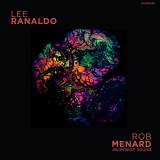
Lee Ranaldo and Rob Menard have been friends and collaborators for years and this split cassette release on Important Records' Cassauna label amplifies their unique musical personalities and sonic compatibility. Both artists contributed over 30 minutes of music making this a pair of mini-albums on one tape.
Ranaldo plays Farfisa, electric guitar, tres, marimba, bass and bells, taking the listener on a lyrical, hazy, ride full of life, time and echoing riff shimmer. Massive vibes from author, artist, Sonic Youth gtr slinger.
Rob Menard (Ascension Sound), delivers a mini-album of washed out, minimal lo-fi astral guitar and feedback drones. Menard founded the 20 Guitar Circular Wall Of Angelic Sound and practices vibrational frequency healing.
OH TELEPHONE haben ihren Ursprung in den tiefen Tälern des Glarnerlands, wo sie dank dem Veka Club bestens sozialisiert und resistent gemacht wurden gegen jegliche Mainstreameinflüsse. Bookingagenturen schiessen nur so um sich mit Bands mit Psych in der Bezeichnung welche gerne die nächsten Oh-Sees wären und dabei ihren Sound grausig radiotauglich modellieren. OH TELEPHONE hingegen sind "the real shit", Garage-Psych wie er momentan von keiner Band besser gespielt wird. Ihre Schreie wirken nie berechnet sondern wie ein spontaner Ausbruch der Leidenschaft, ihre Gitarren durchlöchern jedes Trommelfell und wenn am Boden so einige Effektgeräte rumstehen wird nicht Shoegaze sondern Steptanz betrieben. Nun haben die beiden Masterminds hinter ihren früheren Bands SHOUTIN' MOE und THE OUTTA MIND ihren Wohnwagen nach Bern gebracht und dort die perfekte Mischung ihrer beiden früheren Bands gezüchtet, zusammen mit Gael am druckvollen Post-Punk Bass und dem kalifornischen Import Timothy U. am effizienten Schlagzeug. Für diese Aufnahmen auf dem Album sind sie ins Tiefe Süd Frankreich gefahren um mitLo Spider in sein Swamp lands Studio (the Monsters, the Spits, Scanners, the Lullies etc) dieses album einzuspielen den schluss fix hatt dann noch Jim Diamond dazu gegeben (The Dirtbombs, Electric Six, The White Stripes, The Sonics, The Devils) Aufgepasst! Abfeiern! (wicked wiggler)
Weißes Vinyl, limitiert auf 300 Exemplare. Unwiederbringlich dem Credo ,born too late" verfallen, loten Traum in ihrer Musik die technischen Grenzen des Zeitreisens neu aus und kreieren dabei einen naiven Gegenentwurf zum Hier und Jetzt in oszillierendem Technicolor. Der Sound des Trios entfacht Reminiszenzen an die Ursprünge von Psychedelia, Acid Rock und Glam, getragen von einem eskapistischen Tunnelblick auf längst vergangene Dekaden des bewusstseinserweiternden Hedonismus. Die ersten Aufnahmen der Band weckten prompt das Interesse des kalifornischen, in Los Angeles ansässigen Psychedelic-Connaisseur-Labels Hypnotic Bridge, welches Anfang 2024 zwei Traum-Songs auf 7" Vinyl veröffentlichte und dazu schrieb: ,Traum präsentieren eine Ode an den mystischen Rausch eines Technicolor-Traums. Aufgeladen durch Vintage-Tape Echos und Ausbrüche von Fuzz-Gitarren, sind ihre Songs dazu gemacht, sich tief in die Doppelhelix-Matrix von mehrfach gespiegelten Gedankenströmen zu winden." Das renomierte englische Musikmagazin ,Shindig!" schrieb dazu: ,Das Debütalbum der drei deutschen Musiker von Traum lässt keinen Zweifel daran, wo ihr Herz schlägt. (...) Der Gesang ist verträumt und distanziert, die Gitarren schlängelnd und kurvenreich." und zog zahlreiche Vergleiche zu obskuren Vertretern des Psychedelic-Pop der späten 1960er Jahre in Großbritannien wie Fire, Tintern Abbey, The Smoke, u.ä. Im Frühjahr 2024 begab sich die Band erneut ins eigene Studio um vier weitere Stücke aufzunehmen, die von Frontmann Helen Lichter komplett analog abgemischt wurden und mit ihrem puristisch verträumten Sound nahtlos an die Erstveröffentlichung anschließen.
»Chromacolor« is one of those records that immediately feels like home even though it is hard to locate stylistically. Written and recorded by Hanno Leichtmann in Berlin and Madeira between 2020 and 2022, it draws on rhythmic minimalism as a guiding principle and might call to mind organic, instrument-based ambient music, but also incorporates jazzy moments as well as Annie Garlids multi-layered vocals that permeate through these nine pieces.
The foundation for Leichtmann’s Chromacolor project was laid when the prolific Berlin-based producer, musician, and drummer borrowed a vibraphone and a Fender Rhodes from two friends. Combining their unique sonic affordances with those of a Guitaret, an electric lamellophone, he further expanded his sound palette by inviting other musicians—Anthea Caddy, Sabine Vogel, Tobias Delius, Els Vandeweyer, Sabine Ercklentz, Mike Majkowski, Andrei Ladeishchikov, Oona Farchy, Gonçalo Caboz as well as Rafael and Hugo Andrade—to play small but vital parts in the production of the album.
The opener »Kisses and Wine« masterfully sets the tone for an album that is as inviting as it is challenging. Working with relaxed repetitive rhythms, Garlid’s anthemic vocals and a sprinkle of saxophone and flute tones courtesy of Delius and Vogel, respectively, as well as tender piano notes played by Leichtmann, it evokes a lot with only few means: a certain melancholy, but also an elevated atmosphere that feels both exuberant and restrained.
Leichtmann’s elegant study of the power of repetition, minute rhythmic shifts and subtle use of melodic and harmonic elements creates ambiguities and polyvalences like these throughout the entire record, up until its understated finale, aptly titled »A Beautiful Day«—a drone-jazz piece, if you will, both longing and joyful.
As an album, »Chromacolor« is hard to pigeonhole, but rich and rewarding. All it takes is immersing yourself in it.
A trio of innovative troubadours, Tryp Tych Tryo is the expression of three legends trading blows, in the singular, in the bilateral movement throughout this sonic stew and as tripartite working, pivoting, layering through modes and counterpoint to create Warsaw Conjunction. An album where each member lays their cornerstone into the foundations, abstractly sketching their complementary, supportive voices with each able to freewheel their own weather front across the record's terrain. Warsaw Conjunction is the project’s first album. The release in collaboration between friends and labels, On the Corner and Lanquidity Records, presents us with Natcyet Wakili FKA Edward Wakili-Hick on drums, Wojtek Mazolewski on electric and acoustic double bass and Tamar Osborn on flute, baritone saxophone and delay effects. Mazolewski led the production, with support from the other musicians.
- A1: Dvs Nme - The Pattern
- A2: Krypton 81 - Photo Electric Effect
- A3: Dvs Nme - Profit Motive
- B1: Krypton 81 - Younger Dryas
- B2: Dvs Nme - Muckraking
- B3: Krypton 81 - Wave-Particle Duality
- C1: Dvs Nme - Instrumentarianism
- C2: Krypton 81 - Human To Human
- C3: Dvs Nme - Los Vangelis
- C4: Krypton 81 - Quantum Entanglement
- D1: Dvs Nme - Capital Flight
- D2: Krypton 81 - Perfect Organism
- D3: Dvs Nme - Das Trauer
- D4: Krypton 81 - Coronal Mass Ejection
Excellent robotic electro(nix) as Pan-Am Tracks welcomes DVS NME and Krypton 81 with this ambitious project that pays homage to German Electro producer Das Muster. Both artists set the tone with intricate rhythms and analogue warmth. Pulsating basslines and shimmering synths intertwine, creating a vibrant, futuristic soundscape. This dynamic interplay between the two artists continues throughout the album, as DVS NME and Krypton 81 counterpoint each others explorations into the sound. A sonic trip that will surely resonate with fans of the genre.
- Live At Harvard Square Theater
- Cambridge, Ma, November 20, 1975
- Recording Supervised By Don Devito; Mixed By Sean Brennan
- 1: Introduction – Bob Neuwirth
- 2: Edith And The Kingpin
- 3: Don’t Interrupt The Sorrow
- Live At Music Hall
- Boston, Ma, November 21, 1975
- Recording Supervised By Don Devito; Mixed By Patrick Milligan
- 4: Introduction – Bob Neuwirth
- 5: Harry’s House
- Live In Bangor
- Bangor, Me, November 27, 1975
- Recorded By L.a. Johnson & Petur Hliddal
- 6: A Case Of You
- Live At Montreal Forum
- Montreal, Qc, Canada, December 4, 1975
- Recording Supervised By Don Devito; Mixed By Sean Brennan
- 1: Intro To Coyote
- 2: Coyote
- 1976: Tour Of The United States
- Recorded By Stanley Johnston From Pa Mixes By Brian Jonathan
- (Courtesy Of The Estate Of Stanley Tajima Johnston)
- Live At Music Hall
- Boston, Ma, February 19, 1976
- 3: Free Man In Paris
- 4: Shades Of Scarlett Conquering
- Live At Nassau Coliseum
- Uniondale, Ny, February 20, 1976
- 5: For Free
- Side Three
- Live At Music Hall
- Boston, Ma, February 19, 1976
- 1: Shadows And Light
- 2: In France They Kiss On Main Street
- 3: Intro To Furry Sings The Blues
- 4: Furry Sings The Blues
- Hejira Demos
- A&M Studios, Hollywood, Ca, March 1976
- Recorded By Henry Lewy; Mixed By Patrick Milligan
- 5: Traveling (Hejira)
- 1: Black Crow
- 2: Amelia
- Rolling Thunder Revue
- Tarrant County Convention Center, Fort Worth, Tx, May 16, 1976
- Recording Supervised By Don Devito; Engineered By
- Don Meehan; Mixed By Patrick Milligan
- 3: Intro To Song For Sharon
- 4: Song For Sharon
- Hejira Sessions
- A&M Studios, Hollywood, Ca, Summer 1976
- Recorded & Mixed By Henry Lewy
- 1: Refuge Of The Roads (Early Mix With Horns)
- 2: Don Juan’s Reckless Daughter (Early Rough Mix)
- Don Juan’s Reckless Daughter Sessions
- A&M Studios, Hollywood, Ca
- Recorded & Mixed By Henry Lewy
- 3: Otis And Marlena (Early Rough Mix)
- Mingus Sessions
- Electric Lady Studios, New York, Ny
- Recorded & Mixed By Henry Lewy & Jerry Solomon
- 4: Sweet Sucker Dance (Vocals & Drums Version – Take 5)
- Live At Bread & Roses Festival
- Greek Theatre, Berkeley, Ca, September 2 & 3, 1978
- Recorded & Mixed By Henry Lewy
- 1: Introduction
- 2: The Dry Cleaner From Des Moines
- 3: Intro To Goodbye Pork Pie Hat
- 4: Goodbye Pork Pie Hat
- 5: Intro To The Wolf That Lives In Lindsey
- 6: The Wolf That Lives In Lindsey
- Mingus Early Alternate Version
- Electric Lady Studios, New York, Ny And A&M Studios
- Hollywood, Ca, 1978 & 1979
- Recorded & Mixed By Henry Lewy & Jerry Solomon
- 15: God Must Be A Boogie Man
- 1: Sue And The Holy River
- 1979: Tour Rehearsals
- Sir Rehearsal Studios, Los Angeles, Ca
- Recorded By Joel Bernstein
- 2: Jericho
- 3: Help Me
- 1979: Tour Of The United States
- Live At Forest Hills Tennis Stadium
- Queens, Ny, August 25, 1979
- Recorded By Joel Bernstein From Pa Mix By Ed Wynne
- 4: Big Yellow Taxi
- 5: Just Like This Train
- 6: Raised On Robbery
- 1: The Last Time I Saw Richard
- Live At Greek Theatre
- Los Angeles, Ca, September 13, 1979
- Recorded By Andy Johns & Henry Lewy; Mixed By Patrick Milligan
- 2: Intro To A Chair In The Sky
- 3: A Chair In The Sky
Features Unreleased Studio Sessions, Alternate Versions, Live Recordings, Rarities, And 36-Page Book With New Photos & An Extensive Conversation Between Joni & Cameron Crowe
Sourced From Original Stereo Reels, Nagra Film Recordings, Multi-track Tapes, Radio Airchecks & Cassette Tapes
Throughout the latter half of the seventies, Joni continued to creatively break ground with her fearless and fluid exploration of jazz. Rather than tread the same path, she challenged and reinvented her style with a folk fusion like no other. Ascending to an unrivaled sonic peak, this innovative sound took shape across the gold-certified HEJIRA 1976, the gold-certified double-LP DON JUAN’S RECKLESS DAUGHTER [1977], her collaboration with Charles Mingus entitled MINGUS [1979], and live album SHADOWS AND LIGHT [1980]. Channeling the thrill and excitement of these records, she delves even further into this season on JONI MITCHELL ARCHIVES, VOL. 4: THE ASYLUM YEARS (1976-1980), due October 4th.
Available as a 6CD, 4LP (featuring Joni's personal favorites from the 6CD set), and digitally, this comprehensive and essential set spans one of the most prolific periods of her storied career. It boasts powerful live tracks from her time in Bob Dylan’s Rolling Thunder Revue during 1975 and 1976 Tour of the United States. It pulls back the curtain on the music by showcasing early recordings and alternate takes from the respective sessions for HEJIRA, DON JUAN’S RECKLESS DAUGHTER, and MINGUS. It covers the Bread & Roses Festival as well as the Anti-Nuclear Rally. Finally, VOL. 4 chronicles her 1979 tour, even showcasing two tracks from that year’s Tour Rehearsals. Not to mention, it showcases her versatility and adaptability, housing collaborations with everyone from Herbie Hancock and Jaco Pastorious to Wayne Shorter and Pat Metheny.
Vol. 4 culls the previously-unissued material from original stereo reels, cassette tapes, CD-Rs, and even a radio broadcast. Newly mixed tracks came from multi-track tapes, while a handful of hi-res digital tracks have been sourced from the Bob Dylan Archives.
Each version includes a book with never-before-seen photos and liner notes comprising a deep dive discussion between Mitchell and longtime friend Cameron Crowe. As part of their candid conversation, she shares intimate anecdotes, memories, and stories from that five-year creative run.
Behind the deceptive veneer of the demure monotone artwork, something unassuming lies within this long-play waiting to be explored. Intrigued by the ironic title, enticed by the elegant text positioned alone on the beautifully tactile matte canvas, the listener will experience musical wonderment at odds with the presentation and discover that the 1976 album Colours is a powerful yet sophisticated set of electric soul-jazz. An inspired recording that bursts with warmth and texture, the pivotal recording from an exceptional jazz musician. HER name - Judy Bailey.
Over the course of a 70 year career, the pianist and composer established herself as one of the central figures of Australian jazz. Her crowning achievement Colours is a spirited and ambitious recording that captured the maturation and shifting jazz landscape of the mid 1970s Australia. Alongside other notable albums recorded mid decade including the 1975 self titled album by Melbourne's Arena (see Roundtable SIR014)) and Jackie Orszaczky's Beramiada (1975), the album signalled the countries transition from semi-acoustic jazz to electric jazz-funk. Regularly compared to the albums released on Creed Taylor's CTI label, Colours parallel these recordings with their clean production and spacious soul-jazz arrangements. In particular the crisp drums and processed bass heard on Bob James and Joe Farrell albums, the sprightly flute of Hubert Laws or perhaps the more sensual side of Flora Purim's vocals could all be suggested as a source of influence.
Continuing to celebrate and re-document Australia's jazz music legacy, The Roundtable are pleased to offer the first vinyl reissue of this seminal Australian Jazz recording. Presented in a replica gatefold sleeve with new liner notes, the full palette can once again be appreciated including the moody funk of Fall Down Dead, the Iberian Waltz Toledo, the Jazz-Dance anthem Colours Of My Dream and the spacey impressionist piece The Eleven Eight Song.
Mwandishi is one of Herbie Hancock's first departures from his traditional jazz sounds. The album which was recorded in a single session on New Year's Eve is a much more spacier effort compared to his earlier works, created by Hancock's us of electronic effects devices. His sextet is the most progressive ensemble he played with and he took the next step in the future of jazz. The music on Mwandishi is beautifully atmospheric and the long tracks leave plenty of space for improvisations by the group. A fantastic recording with sonic layers of earth, existence and expression.
Herbie Hancock is one of the most prolific jazz pianists of the 20th century. A child prodigy, he played with the greats such as Donald Byrd and Miles Davis. As he was a bit of a geek, he enjoyed gadgets & buttons and he was one of the first to embrace and master the electric piano, but he always stayed true to the acoustic sound. In fact, he always bounced back and forth between his electronic and acoustic sound, touching upon almost every development in R&B, Funk and Jazz while retaining an original and distinctive voice.
Tamil Rogeon, the Melbourne based multifaceted jazz, classical and electronic violin & viola player firmly cemented his reputation with the critical success of his 2021 album Son Of Nyx which was released on Soul Bank Music, Impressive Collective head honcho Greg Boraman's previous label. Lauded as a modal and spiritual jazz fusion opus, Son Of Nyx found favour with Gilles Peterson, Laurent Garnier, Rebecca Vasmant, BBC6 Music's' Cerys Matthews and Deb Grant, was a Jazz FM’ Album of the Week. Building upon that highly original sound concept, Wave Theory draws from the jazz fusion movements of the 70s and 80s and conjures up textured soundscapes rich with cosmic synths, soaring vocals and deep jazz funk, and sees Tamil once again joining forces with Son of Nyx contributors Rita Satch and Daniel Mougerman, plus new collaborators and special guests including Lance Ferguson and celebrated trumpeter, friend Audrey Powne. Listeners can expect the same modal experiments, driving percussion and cosmic synths of Son of Nyx as well as new and exhilarating experiments in electric string instrumentation. Across all 6 tracks the highlights are numerous, but of particular note are the album opener "Ascend it!"; a fusion masterpiece that seamlessly blends psychedelic elements, funk grooves, intricate melodies, and improvisation. When "Doom Date" takes flight we are transported to Mahavishnu Orchestra-like territory, before finishing with an angular melody that is pure jazz-fusion inventiveness. The irresistibly funky 'Gift Of The Gab” is built upon a hypnotic bass line over drum and percussion. Laden with synth and retro keyboards reminiscent of the deep funk of Herbie Hancock’s late 70s period. "Mountain Bug' alternates between minor and major keys, a hallucinatory violin solo is followed by a dazzling trumpet improvisation. A restatement of the melody accompanied by the gunfire of the drum set and percussion. Tamil says of Wave Theory “Sometimes themes reveal themselves through creative encounters and through life experience. I wrote and recorded the album in six months. A lot happened to me and my friends during that time so, for me, ‘Wave Theory’ is like a musical snapshot of life’s relentless ebbs and flows. It’s about the sadness and thrills of endless transformation and the power of creative connection".
The sophomore effort from Gray/Smith refines their petroleum-based, hard-lullaby sound with a decidedly dusty precision. To call this pair's brand of country-rock détournement "cosmic" would be too breezy: L. Gray and Rob Smith prefer to stare into sunken depths, channeling their recondite affections for lay-by mauve zones and red-dirt guitar wanderings. Formed in the outer-edges of Kings and Richmond counties circa 2020, Gray/Smith is something of an East-Coast involution. L. Gray (guitar and vocals) and Rob Smith (drums, guitar and vocals) are both trusty veterans of "band's bands" like Pigeons (Soft Abuse), No-Neck Blues Band (Revenant, Locust), Rhyton (Thrill Jockey), and The Suntanama (Drag City), freewheeling groups known for mining from polyglot sources: rough-hewn folk and the spiritual avant-garde, bargain-bin hard rock and and collector's-choice psychedelia alike. On their first, self-released LP Gray/Smith, serendipitously recorded at Gary's Electric at the top of 2021, the pair trained their assured chops onto the great American song-form, honing a murky but tight approach that variously cribs "urban cowboy" and finger-picked primitivism. A string of cryptic appearances soon followed, including a short-lived residency at a now-shuttered vodka dive; a micro-tour with Coloradan songstress Josephine Foster; and a series of backyard and barroom gigs sharing stages with compatriots like Stella Kola, Blues Ambush, Samara Lubelski, and Wednesday Knudsen. Heels in the Aisle is the slipshod, burnt-out, mid-'70s unter-prog comedown to their debut's backwoods, bushy-tailed, early-'70s, country-rock meanderings_expect more unrestrained riffs, artful studio wizardry, and worn-down introspection. Joining the ranks of bloodshot-eyed, blues-rock medleys à la Canned Heat's "Parthenogenesis" and Grand Funk's "Into The Sun," "The SDSPS" is the nearly side-length opening cut, an expanded song-cycle condensing and riffing on the themes of their debut. "Help Me" ventriloquizes Pomona College outlaw Kris Kristofferson's slow-roaring ballad of libidinal woe. On the flip side, "Verrazano Tile" and the title track pay heed to lower bays of Staten Island, while their arrangement of the traditional Zimbabwean tune "Guabi Guabi" is a bright Dead/Feat-like jaunt with blissed-out wah-wah pay-off. "Gaslight Boulevard" is lean, mean, and eight-beers-in space rock, and the closing track "Kekule's Ring" is a slack-jawed, wistful crash back down to earth. All this, packaged in a luxe, expertly-printed sleeve photographed by downtown artist Lary 7 and designed by Eric Wrenn (Sophie's Oil of Every Pearl's Un-Insides).
Taylor Hollingsworth, the fingerpicking songwriter hailing from the vibrant city of Birmingham, AL, is back with an electrifying, foot stomper of an album titled "Yahola." With his unique blend of folk, rock, and blues, Taylor has carved out a distinct musical niche that he calls "folk n' roll" or electric folk. In a world full of manufactured pop sensations and cookie-cutter artists, Taylor Hollingsworth stands apart as a true maverick of original music.Taylor's dedication to his craft has earned him accolades and recognition both within and outside the local music scene. His immense talent on the guitar, coupled with his remarkable songwriting abilities, has earned him a rightful place among music connoisseurs. Notable achievements in Taylor's musical journey include having his works featured in popular TV shows, podcasts, and movies, showcasing his ability to strike an emotional chord with listeners. Esteemed artists such as Conor Oberst and Phoebe Bridgers have recognized Taylor's songwriting prowess by covering one of his songs.
repress !
Patrice Scott emerges from the studio, once again, with a fresh 4-tracker of authentic Sistrum sounds to soothe, move and invigorate listeners, worldwide.
The vibes are high and the grooves are modern, yet firmly rooted in tradition. Put simply, this is proper deep house music for the heads, crafted as only Patrice can. Enjoy the sonic journey…
1 – For My People
A low-slung groover, “For My People” opens the EP in fine form. Soft chords lay the groundwork as the bassline bobs and weaves through the rhythm section. Liquid synth stabs soon punctuate the groove, as dreamy layers float in and out. Without a doubt, this is a high quality head-nodder and a dancefloor delight.
2 – Let’s Dance
Elevating the BPMs ever-so-slightly, “Let’s Dance” gets moving with a proper, straight ahead rhythm, sprinkled with just enough shuffle to add that P. Scott signature. Blippy keys bounce atop a backdrop of sweet synth chords while the bassline punches through in refined fashion. This is the Sistrum brand of deep, hypnotic, spiritual house music, straight up.
3 - Abstract Jazz
This one is all about those keys… Amidst the crisp, punchy beats, the electric piano dances and hypnotizes. There is really only one option when this cut is on the system - close your eyes and feel it.
4 - The Detroit Track
Nothing less than an homage to his hometown and the sounds and culture that have shaped a musical revolution, “The Detroit Track” is a study in timeless quality. Jazzy synth riffs, punchy bass, spacey echoes and classic, shuffled beat structures remind us that Detroit house music has a special magic unto itself. Feel the magic and let it move you.