The Bombillas have emerged with two new original compositions in their recognizable sound of psychedelic eclectic soul meets world funk. "Hatif" b/w "Kidi Bloom" takes you on a narrative journey into the unknown.
Imagine speeding down Highway 10 into the desert at sunset, top down with one hand on the wheel; you end up all alone at night and hear a mysterious voice calling, screaming in your ear, but nowhere in sight. This imagery sets the stage for Side A, "Hatif." Lead by a driving phased-out strumming acoustic guitar and interweaving melodic lines from David Michael Celia on Keys and Tyler Nuffer on Electric Guitar, "Hatif" takes inspiration from the psychedelic funk and rock sounds of North Africa and The Middle East in the 1970s. Held together by the steady groove of Bassit Josh Wiener and Drummer Joey Campanella, The Bombillas explore sonic imagery and imagination in their interpretation of the Arabian Folklore, Hatif.
Then, on Side B, The Bombillas bring it down a notch with "Kidi Bloom." Featuring Patrick Bailey (Jungle Fire) on lap steel, "Kidi Bloom" continues with the desert imagery and mystical encounters one may find at night, strolling through the endless open landscape. Again, held together by Wiener and Campanella's solid groove, Celia and Bailey weave their melodic voices, creating a conversation of question and answer, or human and higher power. "Kidi Bloom" takes an ethio-inspired groove and flavors it with stoned-out psychedelic funk and country twang for a truly unique cinematic experience.
Search:electric funk
repressed !
With this Ep for Mother Tongue Gerald Mitchell really shows what Soul is all about. The first Los Hermanos Ep on vinyl in over a decade brings it back to Church and then some! From the Gospel tones of the dancefloor smasher 'Another Day', to the electric techno-jazz of 'Binary Funk Infusion' featuring Bob Rogue think of Herbie's Dedication meeting Axis and finally closing and melting with 'Let Lot Live' featuring the incredible voice of Billy Love...it was definitely worth the wait.
- A1: Genji Sawai - Hikobae
- A2: Today's Latin Project - Danza Lucumi
- A3: Shigeru Suzuki - On The Coast
- B1: Air Suspension Club Band - In The Hot City
- B2: Yasunori Soryo&Jim Rocks - So Long America
- B3: Jugando - Twisty
- C1: Kingkong Paradise - Samarkand
- C2: Katsutoshi Morizono With Bird's Eye View - Imagery
- C3: Om - Windmill
- D1: Parachute - Mystery Of Asian Port
- D2: Yuji Toriyama - Bay/Sky Provincetown 1977
- D3: Keiichi Oku - Heat Wave
- D4: Safari - Day Dream At The Bob's Beach
2025 Repress
Midnight In Tokyo 2, the second installment to the compilation series that rounds up hidden gems by Japanese artists that's perfect for listening at night in Tokyo, is here. This time the collection brings together some tasty electric jazz fusion from the '80s , compiled by Dubby, the man behind the online record store Ondas.
The compilation begins with "Hikobae," a dark and slow cosmic jazz by saxophonist Genji Sawai, followed by "Danza Lucumi," an odd Caribbean-style jam by Today's Latin Project, a band fronted by Tadaaki Misago of Tokyo Cuban Boys, with arrangements by Yasuaki Shimizu. "On The Coast" is a soulful and mellow vocal track arranged by Ryuichi Sakamoto, from guitarist Shigeru Suzuki's album White Heat, and fusion boogie cut "In The Hot City" is by Mr. Theodore, which was a one-off project by a mysterious artist.
The melancholic soul jazz number "So Long America" is the title track from the album Yasunori Soryo released in '82, following a stint in America with the band Brown Rice. "Twisty" is a tropical reggae tune from the album Samba Kathy, an underrated classic by Jugando which was released on Trash, a sublabel of one of Japan's finest jazz labels, Trio. "Samarkand" is an electric Latin jazz jam that sounds like something Miles Davis and Santana could have played on, performed by a Latin funk band from Fussa. "Imagery" is a primal African fusion track by Katsutoshi Morizono, a member of the prog rock band Yoninbayashi.
"Windmill" is the most acoustic sounding tune on this compilation, a breezy Brazilian affair with a Hermeto Pascoal feel. "Mystery Of Asian Port" is by the band Parachute, which consisted of Japa-nese fusion giants like Akira Inoue, Tatsuo Hayashi and Masaki Matsubara. The cosmic jazz record sounds like something Daniele Baldelli would play in his sets. "Bay Sky Provincetown 1977" is a classic Japanese fusion tune by guitarist Yuji Toriyama.
The set also features the mellow but danceable "Heatwave" by keyboardist Keiichi Oku, featuring a female vocalist (which some have identified as Rie Ida), and last but not least, closing out the 13 track compilation is "Day Dream At The Bob's Beach," a wonderful urban fusion with a beautiful vibraphone melody, from the Japanese fusion classic album that was a one-off project by studio musicians
- A1: Street Level Entrance (1:52)
- A2: Get At Me (4:08)
- A3: Diggin’ U Out (4:48)
- A4: Safe + Sound (4:49)
- B1: Somethin’ 4 Tha Mood (5:55)
- B2: Don’t You Eat It! (1:08)
- B3: Can I Eat It? (4:59)
- B4: It’z Your Fantasy (4:23)
- C1: Tha Ho In You (4:45)
- C2: Dollaz + Sense (5:53)
- C3: Let You Havit (3:40)
- C4: Summer Breeze (4:34)
- D1: Quik’s Groove Iii (2:37)
- D2: Sucka Free (2:11)
- D3: Keep Tha “P” In It (5:25)
- D4: Hooray 4 Tha Funk (2:11)
- D5: Tanqueray (4:19)
2025 Repress
DJ Quik is a giant of West Coast hip-hop. With 1995’s Safe + Sound, he scaled new levels of musical magnificence with his signature new age P-Funk/laconic G-Funk. A quintessential, sun-scorched LA album, this is pretty much essential. Typical for mid-90s albums the original vinyl copies are now rare so here’s the Be With re-issue, complete with “Tanqueray”, the hidden track from the original CD release.
A preternaturally gifted producer/rapper, DJ Quik has produced scores of LA gangsta rap classics. He’s released platinum and gold records of his own, as well as helped craft them for the likes of Tupac, Snoop Dogg, and Dr Dre. Quik has always been quirkier and more interesting than his gangsta rap peers, both musically and lyrically. An old-school funk producer at heart, he’s also incredibly nice on the mic. His raps often deal in boasts, jokes and good times but also cover his beefs, his trials and his trauma. Partying and pain, all mixed up. DJing and producing hype beat tapes from age 14, Quik’s tracks blended the languid funk and rubbery synths of Zapp and George Clinton with a gangsta aesthetic, creating a more danceable foil to Compton’s more typical nihilistic hedonism. Ultimately, his records sound custom engineered to drift out over sun-soaked barbecues.
By the time of his third album DJ Quik was a household name on the West Coast - California’s premier rapper/producer not named Andre Young. Released on Profile in 1995, Safe + Sound was certified gold. Less reliant on samples and more focused on live instruments, it elevated him from producer to fully-fledged composer. This sound — the quick, winding basslines, tinny high hats, smooth instrumental solos, soulful pipes, and Roger Troutman’s talkbox — defined him. This is an album of full-blown masterpieces. Rich soundscapes and masterfully arranged orchestrations with dense layers of sounds, intricate rhythms, and well-balanced songwriting.
The first track proper, “Get At Me” samples Cameo whilst Quik takes aim at the Judases in his life, the horn-laced chorus providing a triumphant feel. On the horizontal “Diggin’ U Out”, the soulful electric piano of Warryn Campbell lays a relaxed groove for Quik to talk over about one of his favourite topics: sex. Title track “Safe + Sound” chronicles Quik’s formative years over a slick instrumental. The moody bass locks a laidback infectious groove, the hook is catchy and Quik’s delivery is in fine form. On the uber-chilled “Somethin’ 4 Tha Mood”, Quik cooks up a breezy, feel good track of sparkly keyboards, syncopated claps, shuffling hi-hats, woozy synths and a floating two-minute flute solo courtesy of Robert “Fonksta” Bacon. Analysing the highs and lows of an average day in the hood, it echoes Cube’s “It Was a Good Day”.
“It’z Your Fantasy” is a silky smooth soundtrack to Quik’s detailed retelling of a sexcapade with a young lady and whilst “Tha Ho In You” is musically perfect for that midsummer family BBQ, its lyrical content is unsurprisingly decidedly less family-friendly. A real highlight, the infamous “Dollaz + Sense” is one of the most ruthless diss tracks of all time. The brutal lyrics ride a laidback West Coast beat, flipping a sample from Young & Company’s “I Like (What You’re Doing To Me)” as Quik fires lyrical shots at his arch Compton nemesis, MC Eiht. On the loping, hazy “Let You Havit”, Quik is again in gangsta mode, with more bars of barbs aimed at Eiht, rhyming over sun-kissed synthy-rollerskate funk.
Some of the finest tracks on Safe + Sound are those designed to de-stress. The evocative “Summer Breeze” is a classic warm-weather jam, anchored by a twangy funk guitar, breezy string arrangement, and a soulful hook delivered by Dionne Knighton. Quik’s nostalgic lyrics are not far from DJ Jazzy Jeff & The Fresh Prince’s “Summertime”, reminiscing over barbecues at the park, young love, and the brevity of halcyon youth. The relaxed and jazzy “Quik’s Groove III” is another highlight, as bass, guitar, piano and flute combine to create a smooth, soulful instrumental.
The swaggering “Shack Up”-sampling “Sucka Free” features a cameo from Playa Hamm, all funky braggadocio and over much too quikly (pun thoroughly intended). The jazz-flavoured “Keep Tha ‘P’ In It”, again featuring Playa Hamm but this time extending the cameo invitations to Hi-C, 2nd II None and Kam, is pure laidback P-Funk. The deep bass and industrial drums make sure the groove hits hard.
“Tanqueray” was originally a hidden track on the CD version of the album, but it’s too good to hide. This wild party samples Brass Construction’s gigantic “Get Up To Get Down” and soars in its drunk-ebullience. An apt way to close this party-driven set.
This 2022 Be With double LP re-issue has been mastered for vinyl by Simon Francis, cut by Pete Norman and pressed at Record Industry. Unusual for the time, Safe + Sound was originally pressed as a double, so all that was missing was the CD’s hidden bonus track “Tanqueray”, so we’ve fixed that. The original vinyl release never got a picture sleeve, so we’ve recreated the original’s promo-style silver-sticker and plain black jacket. A subtle cover for a wonderfully unsubtle record.
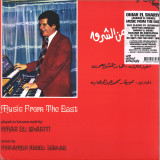
Wewantsounds is delighted to announce the reissue of Ammar El Sherei's sought-after instrumental album " Music From The East" from 1976. Here, the iconic Egyptian musician and composer revisits seven classic compositions by another Egyptian legend, Mohamed Abdel Wahab, in his own hypnotic way. Mixing Arabic music with funky arrangements and electric keyboard experimentations, the album is a perfect showcase for El Sherei's artistry. Curated and annotated by Lebanese-born Arabic music expert Mario Choueiry from Institut du Monde Arabe in Paris, this reissue has been newly remastered and comes with original Soutelphan artwork.
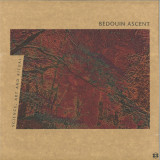
'Science, Art And Ritual' is a story of ‘process'. Growing up in Harrow (a then quiet suburb of London) in the 70’s and 80’s from the age of about 10, Kingsuk Biswas aka Bedouin Ascent's ears opened up to sound as he scanned the airwaves. The undeniable righteousness of 80’s dub via David Rodigan’s Roots Rockers shows was the first prominent influence he received, and with punk roots —and his burgeoning record collection— became exposed to the breathless post punk experimentation that followed in the early 80’s sweeping up free jazz, noise, dub and much more. Throughout though, he maintained his fascination with Indian Classical music which was a mainstay in his parent’s house and spoke with the same infinite space as Joy Division's 'Unknown Pleasures', and King Tubby’s Studio dispatches. Through those teens he assembled and de-assembled, knocking about with fellow travellers —punk bands, garage, space rock, noise. Something was happening. On-U Sound, ECM, Factory Records kept him plugged in and sane.
At that time Kingsuk's core studio setup revolved around his vintage Gretsch, Fender Jazz, Moog, TR-606 and rudimentary FX. He added congas, folk instruments, pipes, hand percussion, gongs, and jammed out shards of funk, noise, jazz fusion, electro and ambience into his hungry Tascam Portastudio. By 1987 these had morphed into what we’d now refer to broadly as techno, but the genre didn't exist beyond the reverberating walls of his bedsit, and he hadn’t yet plugged into the global conversation.
'Science, Art And Ritual' was released in 1994 by Rising High Records and was presented as Bedouin Ascent's debut album, although 'Music for Particles' (released in 1995, again on Rising High) was recorded even before —'SAR' sessions span from 1992-1993, whereas 'Music for Particles' were earlier from 1989-1992, with some older 4-track references from about 1986 too.
Weaved in throughout the album are subconscious references to music that Kingsuk heard in the past that still remained within sight as companions. The opening track "Ancient Ocean III", referencing the extinct ocean Tethis, unapologetically channels Tackhead, Colourbox, Mantronix and Lee Perry. The style was also deliberately juxtaposed to the prevailing sound in techno at the time, which had locked onto a rigid form of symmetrical kicks and light snare drums. Elsewhere 80’s soul and funk are frozen and captured in fragile glass lattices. Electric pianos resound throughout, such as in "He Is She", probably a half-memory of 70’s MOR radio from childhood sleepy night drives. A duel between kick drums from three generations of Roland drum machines —TR-808, TR-707 and R-8— is a central theme in "Transition-R", all in conversation, calling and responding. These were not just machines to Bedouin Ascent, but part of an extended family, with heart and soul.
Three decades after seeing the light, Lapsus is proud to present a special 30th anniversary reissue of this
left-field techno gem in a repackaged and redesigned edition. All pressed on a deluxe 3LP marbled vinyl and including a limited lithographic insert print of the original album cover. All tracks have been restored and remastered directly from the original DAT tapes, and the album also features previously unreleased tracks such as "In the Clouds" and "Thru Water" —regularly performed live at that time and produced in the same period as the album sessions in 1993.
'Science, Art And Ritual’ may refer to esoteric traditions in Indian philosophy, but equally embodies the collision of the science, the art and the ritual that is at the core of being immersed in a deep musical journey.
- A1: Flore
- B1: John Iii
- B2: Us
- C1: Just-Test
- D1: We The Blessed
- E1: Mother Africa
- F1: Sweet Evil Miss" Kisianga
- F2: Virginia
- G1: C Marianne Alicia
- G2: Dr Oliver W. Lancaster
- H1: Palm Sunday
- H2: Prima - Mr A.a
- I1: Keno - Exactement
- I2: Providence Baptiste Church
- J1: Just Test
- J2: Work And Pray
- J3: Rib Crib I
- K1: Rib Crib Ii
- K2: Loving Kindness
- K3: Dogtown
- L1: Love Always
Souffle Continu records presents Byard Lancaster – The Complete Palm Recordings 1973-1974, the definitive package of Philadelphia-born jazz wizard Byard Lancaster including his 4 legendary albums released on Jef Gilson’s Palm Records in the 1970s, Us, Mother Africa, Exactement and Funny Funky Rib Crib, along with the first ever standalone edition of Love Always, a fifteen minute modal jazz beauty plus a 20 page booklet with rare photos and in-depth article about Byard Lancaster’s Parisian years by Pierre Crépon.
At the beginning of the 1960s, at the Berklee College of Music, Byard Lancaster met some feisty friends: Sonny Sharrock, Dave Burrell and Ted Daniel. It is easy to see why he rapidly became involved in free jazz. Once he was settled in New York, he appeared on Sunny Murray Quintet, recorded under the leadership of the drum crazy colleague of Albert Ayler.
In 1968, the saxophonist and flutist recorded his first album under his own name: It’s Not Up To Us. The following year he came to Paris in the wake of... Sunny Murray. He would come back to France in 1971 (again with Murray) and in 1973 (without Murray for a change). This is when he met Jef Gilson, the pianist and producer who encouraged him to record under his own name again. On Palm Records (Gilson’s label), he would release four albums: Us, Mother Africa, Exactement and Funny Funky Rib Crib.
“Us”, the first of the four records was recorded on November 24th, 1973 with Sylvin Marc on electric bass (a Fender... Lancaster?) and the evergreen Steve McCall on drums.
On the album, the trio works from the John Coltrane model; free jazz shook up by the timely contributions of the bassist, followed by a mesmerizing atmospheric music. Then, Lancaster delivers a sinuous solo path, which is a reminder of his unique tone. On the album’s companion single, the trio launches into great black music of a different genre which would lead the clairvoyant François Tusques to claim that Byard Lancaster is an “authentic representative of soul/free jazz”, to sum up this is Great Black Music! A few months after recording “Us”, Lancaster recorded “Mother Africa” along with Clint Jackson III, a trumpeter, partner of Khan Jamal or Noah Howard on other recordings.
On march 8th, 1974, Lancaster and Jackson headed up a group composed of Jean-François Catoire (electric and double bass), Keno Speller (percussion) and Jonathan Dickinson (drums). Together, they create an immediate impression. From the first seconds of “We The Blessed”, they develop a free jazz which rapidly abandons any virulence under the effect of blues and soul based interventions. When Gilson’s composition “Mother Africa” begins, listeners are transported into the studio, listening to the musicians setting up: chatting and joking... Then comes the melody: a dozen or so notes of a repeated theme which is accelerated and deformed according to their whims... The jazz played by the association Byard Lancaster / Clint Jackson III is rare: creative AND recreational. “We the blessed”, is apt listening to this again today!
The recording of “Exactement” required two sessions in the studio: February 1st and May 18th 1974 – in between the two dates, Lancaster recorded, alongside Clint Jackson, the excellent Mother Africa.
Two names appear on the cover of “Exactement”: Lancaster (Byard) and Speller (Keno). Byard Lancaster wanted to be precise, moving regularly from one instrument to another: first on piano, which was the first instrument he learned. On “Sweet Evil Miss Kisianga”, his inspiration is first and foremost Coltrane (even if leaning more towards Alice than John), this announces the storm to follow.
It is Lancaster’s horn-playing which really stands out: on alto (the sound of which is transformed by an octavoice on one track, "Dr. Oliver W. Lancaster") or soprano saxophones, as well as on flute or bass clarinet, the musician walks a tightrope making the most of all the risks he takes. Using the full register of his instruments, he has fun with the possibilities.
Then, Lancaster invokes or evokes Ornette Coleman, Eric Dolphy and even Prokofiev, before going into a danse alongside Keno Speller on percussion. Above all, he has a unique sound. Byard Lancaster, on whatever instrument he plays and by continually seeking, always ends up hitting the right note... ends up by playing exactement the note he had to play.
“Funny Funky Rib Crib” is an unforgettable recording (made up of several sessions dating from the middle of 1974) of creative jazz overwhelmed by funk and soul. If Lancaster had already made successful albums in the same genre – notably New Horizons, under the name Sounds Of Liberation which he co-led with Khan Jamal –, this one is an homage to James Brown and Sammy Davis enjoying the company of a host of guests including François Tusques (electric piano), Clint Jackson III (trumpet), François Nyombo (guitar), Joseph Traindl (trombone)...
Funny Funky Rib Crib’s cover is a three-quarter profile portrait of the saxophonist (who can also be heard on flute, piano and even vocals), however, on the record, it is the whole group, inspired and frenetic, that tests the melodies of “Just Test”, “Dogtown” or “Rib Crib” – the two versions of which display leader Lancaster’s art of nuance. On both sides of the album, the group also moves into a calmer groove, infused by blues and soul, “Work And Pray” and “Loving Kindness” are meditative tracks where listeners can lay back and relax before asking for more: Funny Funky Rib Crib!
The magnificent “Love Always” was originally released on the fourth (and last) volume of the Jef Gilson Anthology series released in 1975.
Recorded on 8th March 1974, it is a beautiful 15-minute-long modal jazz piece. Four notes from the bass (the relentless Jean-François Catoire, who makes up the rhythm section alongside drummer Jonathan Dickinson and percussionist Keno Speller), and the group is up and running!
On piano, Gilson shows the subtle tact of a sideman, leaving the lions’ share of the place to the horns. This allows us to hear the trumpet of Clint Jackson III and the alto (which sometimes sounds almost flute-like) of Byard Lancaster each staking their claim in a long hallucinatory march which moves from moments of direct exaltation to profoundly sensitive collective playing. And if further proof was required of the confidence that Byard Lancaster and Jef Gilson inspire, “Love Always” provides it on this one sided release exclusive to the box set.
Released in 1981& the last in a decade-long run of Top 50 R&B albums, ‘The Electric Spanking Of War Babies’ was the band’s twelfth studio LP & featured several players new to the Funkadelic line-up, notably Sly Stone. With its allusions to the Vietnam War & US imperialism, George Clinton’s project was destined to court controversy from the start, not least for its uncompromising sleeve art which original label Warner Bros. censored. Described by Robert Christgau as “the solidest, weirdest chunk of P-Funk since one nation gathered under a groove” & originally conceived as a double LP, many tracks saw release on Clinton’s later P-Funk projects. Arguably, it is better for having been précised down to a single album while still spawning two hit singles, the title track (US R&B No. 60) & ‘Shockwaves’ (US R&B No.53). FUNKADELIC Masterminded by the larger-than-life figure of George Clinton, Funkadelic was a key component of his influential P-Funk empire. Funkadelic’s unique combination of Rock, Psychedelia, R&B & Soul led to the band crossing over to the pop mainstream & gaining a vast international following, becoming one of the most important & influential groups in music. On 6 May 1997, Parliament / Funkadelic were inducted into the Rock & Roll Hall Of Fame by Prince. To commemorate six decades of thrilling & delighting fans, George Clinton returned to the stage in 2022 for a series of concerts. To celebrate, Charly have reissued Funkadelic’s classic four albums ‘Hardcore Jollies’; ‘One Nation Under A Groove’; ‘Uncle Jam Wants You’; & ‘The Electric Spanking Of War Babies’ (originally released by Warner Bros during a golden period for the band between 1976-1981). Each album will be available as deluxe gatefold Digi-Sleeve CDs in PVC wallets + obi-strip & facsimile-edition gatefold LPs on 180-gram black vinyl & limited edition 180-gram colored vinyl + 1970s-style obi-strip in a protective PVC sleeve. “They played a HUGE role in creating the future of music.” PRINCE
- A1: Documentation
- A2: Block Rocker
- A3: Corals In Space
- A4: Meeting: Palermo
- A5: Astral Snow
- A6: Tooty Cutie
- B1: Coordinates Meeting
- B2: Mars Close Up
- B3: Alarm
- B4: Hammond A Lolo
- B5: Under Control
- B6: Lazer
- B7: Galaxy Fall-Out
- C1: Funky Flower
- C2: Power Boost
- C3: Lobby And Supercomputer
- C4: Schwarze Spinne
- C5: Wings
- C6: The Real Mccoy
- D1: Evening Air A
- D2: International Espionage
- D3: Milky Way
- D4: Electric Cats
- D5: Nightmare On Lsd
- D6: Cruising Crooner
Vol.2[28,78 €]
25 killer library music cuts by the German film music maestro on audiophile pressing in deluxe 2x10" set. Uberrare and never released before material from 1968-1976, sourced from Peter Thomas' personal reel-to-reel tape archive. Limited edition of 500 pieces.
From brassy big band funk, space jazz, krauty synth experiments to proto-hiphop, cosmic schlagers, heavy easy listening, soulful soundtrack moods and absurdly dreamy LSD ballads, this compilation encompasses the composer's most obscure and yet most transcendent work.
Peter Thomas is widely acknowledged as Germany's most inventive film music composer of the 1960s and 1970, best known for his iconic soundtrack work. He scored over 600 films and episodes, from the crime blockbusters of Jerry Cotton and Edgar Wallace to indie arthouse films like Playgirl, Bruce Lee's The Big Boss and the extraterrestrial Space Patrol and Chariot of the Gods.
His recordings for music libraries often provided an even more leftfield approach. Their visionary 'dope beats' appeal provoked a keen interest from vinyl aficionados, beatmakers and rare groove DJs alike. Unavailable for the public, the original "for professional usage only" albums are now sought-after collector's items that fetch astronomic prices on the 2ndhand market.
This double 10" album is the definite selection of Thomas' best library cues from the Golden Ring Records, KPM and DeWolfe catalogues, many of them available publicly for the first time - plus four recently unearthed "lost" tracks from Warner Chappell's CPM Archive series that have never been released on vinyl before. All music was carefully transferred from Peter Thomas' private master tapes and cut in full dynamics, housed in a beautiful fold-out cover with liner notes and private pictures. The compilation was realised in cooperation with Peter Thomas' son Philip who takes care of the Peter Thomas Sound Orchester catalogue after his father's death in 2020.
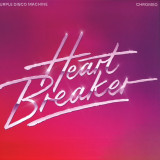
Two titans of modern disco and funk unite to produce a present-day love ballad (or rather love ache), drenched in 80s nostalgia, complete with melodic arpeggio, thumping drums, electric guitar solos and plenty of vocoder action. Heartbreaker is the title of the project, brought to you by none other than Purple Disco Machine & Chromeo. The 12-inch is released with an extended cut alongside the original mix and an instrumental version for good measure. An upbeat electronic track with early Daft Punk influence
Operating under the moniker Eat Them, Johannes Hofmann ravenously ingests and rearranges pretty much everything of interest that electric guitar music has produced over the last 50 years. King Crimson, Dinosaur Jr, Talking Heads or Germany's Tocotronic all resonate in Hofmann's expansive oeuvre. Having begun to record music as a 13-year-old for the main purpose of burning compilation CDs of his work for his grandma, the Eat Them catalogue now spans around 20 Bandcamp albums.
Chosen from these, a selection of 12 tracks will be released via Fun In The Church on March 1st. Entitled "All" in keeping with the holistic aspect of the project - and, of course, complementing the band's name - the album covers everything from Sonic-Youth-with-drum-machine-style mashups to nervous post-funk and anthemic lo-fi indie rock, recorded and sung entirely by Hofmann himself.
The first single, out today, is "Do You Love Me When I'm Dead?", a DIY pop diamond whose sonics are lovingly and firmly rooted in a garage-cum-teenage practice space. The track reflects the project's live line-up, which has been expanded to include bass and drums. However, Hofmann transcends the suburbs with urgent echoing vocals expressing an emotional need to stay on the move, to resist being pinned down.
This is framed by guitar arpeggios that actually point in a more introspective direction. This penchant for contrast and movement can be found in many Eat Them pieces - they are snapshots of an ongoing development, a work that you listen to as it grows and lives. To rephrase the question posed in this single's title: Would we love it if it was already dead?
There may already be 20 albums on Bandcamp - and that CD at Grandma's - but the journey has only just begun. Bon appétit!
The discography of the phantom Gruppo Sound exceeds over thirty titles published in an undefined time frame between the Eighties and the Nineties. However, there is very little information about this curious pseudonym. it is possible to find a library music album by Gruppo Sound inside the Canopo, Deneb, Flower, Monosound Records and Teams catalogues, all managed by Flipper Music publishing group, but both the creators and the musicians have never been the same. Gruppo Sound is only a collective name, maybe to identify a certain number of 'new' productions characterized by an electronic background And, not by chance, the author of “New York City” is a single artist, the multi-instrumentalist Gabriele Ducros. Son of the prolific composer Remigio Ducros, he first followed his footsteps in the field of music libraries and soundtracks and then become the author of many tracks for television commercials of a certain relevance, winning some international awards.
“Some of these tracks may have been associated with a pornographic film. Others were, however, made as brief comments for a theatrical show, perhaps never made”, remembers Gabriele Ducros. What unites the thirteen pieces is the same musical language, which derives from a widespread funk and jazz matrix. Both genres are thus declined through a different approach and taste, in line with the fusion trends of the time, when the early synthesizers were used by few artists. A handful of electric guitar notes for a 'urban' mood, the acoustic ones from a dreamy morning awakening. Electronic keyboards to arouse a sense of nostalgia in the listener, while flute and saxophone always punctuate different atmospheres. A computer melody, a theme for children and a sophisticated ode to the fusion sound of the Big Apple, perhaps true source of ispiration of the work. “New York City” is not a concept album, but one of the best cross-sections of Gabriele Ducros' great creativity.
- A1: Sungu Lubuka - Petelo Vicka Et Son Nzazi
- A2: Mfuur Ma - Groupe Minzoto Ya Zaïre
- A3: M.b.t's Sound - M.b.t's
- A4: Musique Tshiluba - Abeti Et Les Redoutables
- B1: Lalia - Trio Bydoli
- B2: Adeito - Tabu Ley Et L'orchestre Afrisa
- B3: Ngantsie Soul - Les Bantous De La Capitale
- C1: Nganga - Les Frères Soki Et L'orchestre Bella-Bella
- C2: Tembe Na Tembe Ya Nini - Orchestre Celi Bitshou
- C3: Lolo Soulfire - Lolo Et L'orchestre O.k. Jazz
- D1: Femme Ne Pleure Pas - Zaiko Langa Langa
- D2: Kiwita Kumunani - Orchestre O.k. Jazz
- D3: Fiancée Laya - G.o. Malebo
- D4: Ah! Congo - Orchestre National Du Congo
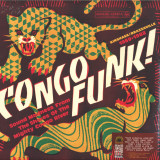
The making of Congo Funk!, our long-awaited journey to the musical heart of the African continent, took the Analog Africa Team on two journeys to Kinshasa and one to Brazzaville. Selected meticulously from around 2000 songs and boiled down to 14, this compilation aims to showcase the many facets of the funky, hypnotic and schizophrenic tunes emanating from the two Congolese capitals nestled on the banks of the Congo River.
On its south shore, the city of Kinshasa – capital of Democratic Republic of the Congo, the country formerly known as Zaïre – is often seen as Africa’s musical Mecca, the city that spawned such immortal bands as African Jazz, O.K. Jazz and African Fiesta, and the place to which aspiring musicians from throughout the continent would go to make a name for themselves.
But the city of Brazzaville on the north shore of the river – capital of the Congo Republic – played an equally important role in spreading Congolese sounds continentally. In addition to producing legendary bands such as Les Bantous de la Capital, it was the powerful transmitters of Radio Brazzaville that allowed the unmistakable groove of Congolese Rumba to be heard as far away as Nairobi, Yaoundé, Luanda and Lusaka thus turning the electric guitar into the continent’s most important instrument!
Although the musical landscape of these cities had been defined by a core group of bands in the late 1950s, the modernisation of Congolese music has been steadily evolving until the events surrounding the Muhammad Ali vs George Foreman boxing match marked a turning point. The promoter of that event known as “Rumble In The Jungle” was none other than the notorious Don King who needed 10 millions dollars to get Ali and Foreman into a boxing ring. The only candidate willing to put this kind of cash on the table was Mobutu Sese Seko, President of the Democratic Republic of the Congo.
Mobutu - the megalomaniac dictator who got to power with the support of the United States and Belgium in exchange for unlimited and affordable access to the riches of the country - had a soft spot for music and it doesn’t come as a surprise that he agreed to a three-day live music festival being organised prior to the “Rumble”. Zaïre 74 - as the festival was dubbed - was meant to hype the boxing match and many stars were invited.
Although a myriads of artists flocked in for the occasion, it was the performance of James Brown on Zairian soil that caused havoc among the younger generation, inspiring hundreds of would-be musicians to take up their electric guitars and reverbs cranked to the max in search of a new sound in which hyperactive Rumba was blended with elements of psych and funk. While the results were very different from the popular music of the three Musketeers - as Tabu Ley, Franco and Verckys were known - they weren’t a complete break with tradition.
These new sounds emerged at a time when the Congolese record industry – previously dominated by European major labels – was experiencing a period of decline due to rising production costs and needed a radical change. The void was filled by dozens of entrepreneurs willing to take chances on smaller scale releases. It was the beginning of a golden age for Congolese independent record labels, and the best of them – Cover N°1, Mondenge, Editions Moninga, Super Contact – preserved the work of some of the region’s finest artists, while launching a generation of younger musicians into the spotlight.
The movement was greatly helped by legendary radio shows but it was the dynamic productions of Télé-Zaïre that set the dynamite on fire. Legend has it that TV shows were so huge that president Mobutu himself ordered RTV du Zaïre to put on daily concerts since it halted criminal activities for the duration of the evening.
Congo Funk! is the story of these sounds and labels, but most of all it is the story of two cities, separated by water but united by an indestructible groove. The fourteen songs on this double LP showcase the many facets of the Congolese capitals, and highlight the bands and artists, famous and obscure, who pushed Rumba to new heights and ultimately influenced the musical landscape of the entire continent and beyond.
Transversales Disques proudly presents Alain Goraguer Rare Soundtracks & Lost Tapes.
French composer Alain Goraguer who first made a name for himself as a sideman and arranger for Serge Gainsbourg wrote very few soundtracks, but amongst them, the legendary La Planète Sauvage (1973) is an absolute staple of France’s essential music.
During that same period of time, Goraguer wrote two rare and beautiful scores using the same masterclass arrangements. On L’Affaire Dominici (1975), Alain Goraguer creates a theme of great melodic clarity from a palette of breathy flutes, clavinet D6 baroque textures, wah-wah guitars and slow-paced drums that clearly reminds La Planete Sauvage’s atmosphere. The same can be said about the score of Au delà de la peur (1975) with its descending clavinet melody, twanging bass riff, funky drums and flashes of bended electric guitars. This record also includes never before released tracks found in the vaults of French national radio: beautiful and timeless orchestral compositions recorded at Studio 105, Maison de la radio.
REMASTERED FROM THE ORIGINAL MASTER TAPES
Bright Magus is an instrumental quintet born under the influence of Miles Davis' metaphysical electric period, a visceral and magical passion always shared by Giovanni Calella and Leziero Rescigno. Davis' most eclectic and psychedelic period, that of recordings for Columbia from 1969 throughout the 70s. Albums like “In a Silent Way”, “Bitches Brew”, “A tribute to Jack Johnson”, “On The Corner”, “Big Fun” made them immerse themselves in one of the most fascinating experiments that Miles has generated in his long and prolific career. We are talking about music that is difficult to fit into one genre, in these masterpieces you can feel the contemporaneity of that historical period. Electric Jazz, Funk, Psychedelia, Rock, Afrobeat, Ambient, drag you into something absolutely new, mysterious and sometimes furious. Just a year ago Giovanni and Leziero took courage and started recruiting musicians who had to have the right attitude and knowledge. Guitarist Alberto Turra was the first to be interested in the project, then came Mauro Tre, pianist and keyboard player and Gianni Sansone on trumpet. All seduced by Miles and in love with that magical period.
Before making the first album "Jungle Corner", the band did some live shows to amalgamate all the ideas that came out during the improvs recorded by Tullio Treffiletti in the trumpeter's home studio (later baptized Selim Studio). At the Isola Studio in Manuel Agnelli's space and with the help of the very talented Guido Andreani, Bright Magus then recorded in three days live all the material which in the meantime had been enriched with more structured melodic themes and less casual drafts . Mauro's contribution was very important in this. The finalization of the album was then managed by them in the small "Diabolicus Studio" taking care of editing, post production and mixing.
Guest on the album in two songs, Enrico Gabrielle of Calibro 35 on flute and clarinet.
The cover design is a work by Barba Ughi alias BAX.
Fate is a funny old thing. One day in 2011, DJ/producer Tom Trago found himself sharing a train journey with Steven Van Lummel, a DIY musician, artist and co-founder of PIP, an underground nightclub and cultural hub in The Hague. Over the course of a rambling, open-ended conversation, the idea of making music together came up; a few weeks later, Trago travelled to van Lummel’s place – a former industrial unit that was now home to a rotating cast of artists and musicians – and didn’t leave for a month.
Cossetted away from the outside world in van Lummel’s loft, with multi-instrumentalists Janneke Nijhuijs and Wieger Hoogendorp joining them to create a musical four-piece, MEGA WEGA was born. Over the course of four weeks, the quartet embarked on an almost continuous creative session punctuated only by impromptu parties and mixing sessions. Life-long bonds were made and over 70 tracks recorded before the mundanity of day-to-day life came calling.
For one reason or another, the project never saw the light of day, with tracks sat gathering dust on hard drives for the best part of a decade. During the madness and loneliness of the COVID-19 pandemic, Trago rediscovered the tracks. Delighted by what he heard, a collective decision was made to add finishing touches and release the resultant album on van Lummel’s PIP Records imprint. Further instruments and vocals were added over two days at Hoogendorp’s studio, before mutual friend Tom Ruig got on board to mix the album.
So, what can you expect from Haunted, Mega Wega’s debut album? First and foremost, it’s the sound of pure creative expression – the distillation of a freewheeling, no-holds-barred, spontaneous musical journey variously inspired by the do-it-yourself ethos of musical counterculture, shared inspirations and influences, epic jam sessions, distant stars (Wega, sometimes known as Fidis or ‘the harp star’, is one of the brightest in the night sky), imaginary journeys across dusty deserts, and the comradeship of four new friends.
Enchanting and alluring, it’s an album that gleefully denies lazy categorization and ploughs its own eclectic, atmospheric musical furrow in vivid sonic detail. It’s a collective exploration of heady musical eclecticism unified by saucer-eyed vocals, low-slung bass, loose-limbed beats, sweaty percussion workouts and hazy electric piano motifs.
Haunted begins with the woozy and hallucinatory slow-burn soundscape of ‘Get Things Done’ – an effects laden shuffle akin to lying flat on your back tripping under an intense desert sun – and ends with the creepy, mind-mangling post-punk funk of ‘Brain Carpaccio’; in between, you’ll find spaced-out, low-tempo lo-fi soul (‘Move Around’, ‘Haunted’), tactile synth-powered boogie revivalism (‘Make Me Work’), deep and off-kilter opioid jazz (‘Copenhagen’), intoxicating psychedelia (‘Last Night on Earth’), piano-laden dream-pop epics (‘Shake Or Fall’), and Latin-infused, percussion-powered hedonism (‘Chopping Heads’).
Born out of spontaneous collaboration and immersive, almost endless recording sessions, Haunted is an album shot through with imagination and boundless energy, captured for posterity by four friends and collaborators at the top of their game.
The 1973 album “El Violento” was the fifth full-length salsa LP led by Julio Ernesto Estrada Rincón, aka Fruko, and the second credited to Fruko Y Sus Tesos. Though it did not contain hits like ‘A la memoria del muerto’ or ‘El Preso’, it’s a collector’s item today in places like the US, Europe and Japan, perhaps precisely because it is obscure yet full to the brim with unrelentingly hard and heavy salsa bangers that never let up from start to finish (hence the title, which translates as “The Violent One”). A mix of originals and interesting covers, the LP is “all killer and no filler”, purposely designed to set the dance floor ablaze. It features Fruko’s two main vocalists that took over from the first pair of Humberto “Huango” Muriel and “Píper Pimienta” Díaz, namely the beloved duo of Álvaro “Joe” Arroyo and Wilson “Saoko” Manyoma. Los Tesos were a talented “wild bunch” who listened to their fearless leader, with Fruko holding down the bottom end on electric bass, Hernán Gutiérrez in the piano chair, the Villegas brothers on hand percussion (Jesús tickling the bongos and Fernando slapping the congas), augmented by Rafael Benítez on timbales and an ace horn section of Freddy Ferrer and Gonzálo Gómez (trombones) and Jorge Gaviria and Salvador Pasos (trumpets). The super aggressive sound comes directly from the South Bronx playbook of Willie Colón. The snarling trombones and soaring trumpet are somewhat sweetened by a nice little Puerto Rican cuatro guitar solo. Sonically lightening the mood somewhat, ‘Nadando’ (‘Swimming’) is a bouncy tune in the ‘Mercy’ genre (basically a hybrid of pop, funky soul, cumbia and salsa, in the style of Nelson y Sus Estrellas), gleefully sung by Joe Arroyo. The beats are complex and ever changing, with a little bit of mozambique, conga, bomba, jala jala and of course salsa thrown in for good measure. The side closes out with a brilliant, uptempo salsa reworking of the venerable ranchera chestnut, ‘Tú, sólo tú’. Side two explodes with the frenetic descarga jam session ‘Salsa na’ ma’—which is exactly that: nothing more than the hottest “sauce” to make the dancers go crazy. Fruko’s tune is dedicated to the Latin community in New York that listens to salsa from everywhere and dances to it so fervently on the weekend. The relentless percussion propels the listener along at breakneck speed as if hurtling down the Bronx Expressway, demonstrating that Fruko y Sus Tesos have mastered the ‘violent’ form of urban salsa that was having its transnational moment in the early 1970s. While “El Violento” may not be as well known as some Fruko records, it certainly deserves a new look and should be assessed on its own merits as a very powerful, confident entry in the historical evolution of Colombian salsa dura.Sleeve
Life has changed in the eight years since the release of II. In ours, yours and Gala Drop themselves. Most times without noticing it, partly due to those two years of a semi-existence that still resonates and with the ongoing predatory gentrification process changing the landscape and life of Lisbon, home to the band since ever. Close to a decade and a half of existence, with various mutations along the way enacting new perspectives and moments of stillness and reflection to a sound that's been mutating itself to its own internal rhythm and agency under the guiding light of the core duo of Afonso Simões and Nélson Gomes. Now a trio, with Rui Dâmaso transitioning from II after the departure of Jerry the Cat and Guilherme Canhão, Gala Drop sound even more focused as a working band, with their new album title Amizade – friendship in Portuguese – making perfect sense in a celebration of their, by now, patented soundworld of cosmic inspiration: krautrock's endless and hypnotic potential, dub's sense of transient space, the throb of house, balearic dreams, polyrhythms and a communal sense of belonging.
Again, this sprawling sphere of influence opens itself to new shapes and inspirations, but there's a deeper sense of accuracy and direction, with the band channeling those legacies into something we can only grasp as the Gala Drop sound. An organic outcome of working steadily as a trio, made possible by a residency promoted by gnration in Braga, Amizade dwells on the psychedelic nature of the group through seven tracks made up of dreamy synth washes, loads of percussion, echoes, chilled guitars under a radiant aura. Gala Drop have never sounded as openly dubby as on 'Dub da Meia Noite' and 'Areal Dub' or capable of converging different tropes of the hardcore continuum – rave stabs and cut up vocals – on a slow burner as memorable as 'Monte do Ouro'. Or given free reign to electricity as on the narcotic guitars of 'Guitarra Voadora' – excepting the one off with Ben Chasny on 2012's Broda. 'Amizade' points towards all of that with comforting escapism and wrapping things up 'Raio' turns dubstep's original bass weight meditations into a cosmic funk workout. One last hug before we leave. An album that feels like a collective moment of celebration, just when we most need it.
Afonso Simões - Drums, percussion and synthesizers
Nelson Gomes - Electric guitar and electronics
Rui Dâmaso - Electric bass & guitar and synthesizer
Recorded by Budda Guedes at Estúdio Mobydick, Braga
Mixed by Gala Drop and Hugo Valverde at Estúdio Cão Andaluz, Lisboa
Mastered by Anne Taegert at Dubplates & Mastering, Berlim
Cover photo by Sara Graça
Design by Nicolai Sarbib
Nina Kraviz returns to Rekids with remixes of ‘Taxi Talk’ from David Löhlein and Sterac Electronics.
In the years since Nina Kraviz dropped some of her earliest music on Radio Slave's Rekids, she has become a bonafide global superstar. Founding two record labels трип (trip) and Galaxiid, she regularly headlines the world's largest music festivals and has continued to stay at the forefront of electronic music.
'Taxi Talk', initially released on Kraviz’s lauded eponymous debut LP in 2012, still stands the test of time with its spoken word vocals and smoky deep house grooves. Remixing the track alongside its reissue is Vision Ekstase founder and Lehmann Club resident David Löhlein who turns in a fresh remix, and Dutch techno mainstay Steve Rachmad, who unearths a remix made under his Sterac Electronics guise that had, until recently, been unreleased.
Löhlein’s remix sees the Stuttgart-based artist reach for his trademark ’snake sound’, delivering a sleek version flipped into a quick and urgent cut with pulsating synths and dynamic minimal drum funk. Sterac Electronics brings a distinctive sense of electric funk with a boogie-tinged remix full of colourful synths and hip-swinging drums that cannot fail to light up the floor.