Nach 27 Jahren im aktiven Dienst werden das Engagement und die Intensität des Trios immer größer, und ihre Popularität und ihr Bekanntheitsgrad steigen weiter an. Mit zahllosen Siegen und Erfolgen unter ihrem gemeinsamen Gürtel sind DANKO JONES eine Band von Brüdern, die wenig zu beweisen haben. Aber was soll's, es gibt immer mehr Leute, für die man spielen kann, und mehr Electric Sounds, die man singen kann.
In den letzten zehn Jahren haben DANKO JONES sichtlich einige Gänge hochgeschaltet. Seit sich Frontmann Danko und Bassist JC mit Schlagzeuger Rich Knox zusammengetan haben, lodert das kreative Feuer der Band heller denn je. Eine Reihe von Alben - Fire Music, Wild Cat, A Rock Supreme, Power Trio - hat zu noch intensiverem Touren und unermüdlichem Einsatz für die Sache des Rock geführt. „Electric Sounds“ ist der beste Beweis, dass selbst eine globale Pandemie DANKO JONES nicht aufhalten konnte.
"Hoffentlich kommen wir mit dieser Platte auf Tour und die Leute kommen", sagt Danko. "Ich bin immer angenehm überrascht, wenn jeden Abend ein Publikum vor uns steht. Ich habe gehört, dass Ozzy sich bis heute Sorgen macht, ob die Leute zum Gig kommen werden, und ich kann diese Einstellung irgendwie verstehen. Aber wisst ihr was? Wir haben gerade in der Wembley Arena gespielt! Das ist ein Häkchen auf der Bucket List. Ich bin stolz darauf, dass diese Band in der Wembley-Arena, im Maple Leaf Gardens, im Moskauer Stadion und im CBGBs gespielt hat. Und wirklich, jedes Mal, wenn wir ein neues Studioalbum herausbringen, ist das unser größter Erfolg. Dieses Album ist Nummer 11 und wir sind schon auf dem Weg zu Nummer 12!"
Buscar:electric jones
Nach 27 Jahren im aktiven Dienst werden das Engagement und die Intensität des Trios immer größer, und ihre Popularität und ihr Bekanntheitsgrad steigen weiter an. Mit zahllosen Siegen und Erfolgen unter ihrem gemeinsamen Gürtel sind DANKO JONES eine Band von Brüdern, die wenig zu beweisen haben. Aber was soll's, es gibt immer mehr Leute, für die man spielen kann, und mehr Electric Sounds, die man singen kann.
In den letzten zehn Jahren haben DANKO JONES sichtlich einige Gänge hochgeschaltet. Seit sich Frontmann Danko und Bassist JC mit Schlagzeuger Rich Knox zusammengetan haben, lodert das kreative Feuer der Band heller denn je. Eine Reihe von Alben - Fire Music, Wild Cat, A Rock Supreme, Power Trio - hat zu noch intensiverem Touren und unermüdlichem Einsatz für die Sache des Rock geführt. „Electric Sounds“ ist der beste Beweis, dass selbst eine globale Pandemie DANKO JONES nicht aufhalten konnte.
"Hoffentlich kommen wir mit dieser Platte auf Tour und die Leute kommen", sagt Danko. "Ich bin immer angenehm überrascht, wenn jeden Abend ein Publikum vor uns steht. Ich habe gehört, dass Ozzy sich bis heute Sorgen macht, ob die Leute zum Gig kommen werden, und ich kann diese Einstellung irgendwie verstehen. Aber wisst ihr was? Wir haben gerade in der Wembley Arena gespielt! Das ist ein Häkchen auf der Bucket List. Ich bin stolz darauf, dass diese Band in der Wembley-Arena, im Maple Leaf Gardens, im Moskauer Stadion und im CBGBs gespielt hat. Und wirklich, jedes Mal, wenn wir ein neues Studioalbum herausbringen, ist das unser größter Erfolg. Dieses Album ist Nummer 11 und wir sind schon auf dem Weg zu Nummer 12!"
Nach 27 Jahren im aktiven Dienst werden das Engagement und die Intensität des Trios immer größer, und ihre Popularität und ihr Bekanntheitsgrad steigen weiter an. Mit zahllosen Siegen und Erfolgen unter ihrem gemeinsamen Gürtel sind DANKO JONES eine Band von Brüdern, die wenig zu beweisen haben. Aber was soll's, es gibt immer mehr Leute, für die man spielen kann, und mehr Electric Sounds, die man singen kann.
In den letzten zehn Jahren haben DANKO JONES sichtlich einige Gänge hochgeschaltet. Seit sich Frontmann Danko und Bassist JC mit Schlagzeuger Rich Knox zusammengetan haben, lodert das kreative Feuer der Band heller denn je. Eine Reihe von Alben - Fire Music, Wild Cat, A Rock Supreme, Power Trio - hat zu noch intensiverem Touren und unermüdlichem Einsatz für die Sache des Rock geführt. „Electric Sounds“ ist der beste Beweis, dass selbst eine globale Pandemie DANKO JONES nicht aufhalten konnte.
"Hoffentlich kommen wir mit dieser Platte auf Tour und die Leute kommen", sagt Danko. "Ich bin immer angenehm überrascht, wenn jeden Abend ein Publikum vor uns steht. Ich habe gehört, dass Ozzy sich bis heute Sorgen macht, ob die Leute zum Gig kommen werden, und ich kann diese Einstellung irgendwie verstehen. Aber wisst ihr was? Wir haben gerade in der Wembley Arena gespielt! Das ist ein Häkchen auf der Bucket List. Ich bin stolz darauf, dass diese Band in der Wembley-Arena, im Maple Leaf Gardens, im Moskauer Stadion und im CBGBs gespielt hat. Und wirklich, jedes Mal, wenn wir ein neues Studioalbum herausbringen, ist das unser größter Erfolg. Dieses Album ist Nummer 11 und wir sind schon auf dem Weg zu Nummer 12!"
- A1: Barry Woolnough - Great Father Spirit In The Sky
- A2: David Holmes & Steve Jones - The Reiki Healer From County Down
- A3: The Children Of Sunshine - It's A Long Way To Heaven
- A4: Spark Sparkle - Slythtovery
- A5: Alain Maclean - Talking Judgement Day Blues
- A6: David Crosby - Orleans
- A7: Buddy Holly - Love Is Strange
- B1: After Dinner - Paradise Of Replica
- B2: Lullaby Movement - Ru-Ru (Sleep Little Baby)
- B3: Jeff Bridges & Keefus Ciancia - It's In Every One Of Us
- B4: Song Sung - I'm Not In Love
- C1: Neo Maya - I Wont Hurt You
- C2: Bp Fallon & David Holmes - Henry Mccullough
- C3: Documenta - Love As A Ghost (Produced By David Holmes)
- C4: Keith Fullerton Whitman - Stereo Music For Acoustic Guitar, Buchla Music Box 100 Hewlett Packard Model 236 Oscillator, Electric Guitar And Computer Part I
- D1: Eat Lights Become Lights - Into Forever
- D2: Geese - Andrew Parsnip
- D3: Die Hexen - Gloomy Sunday
- D4: Jon Hopkins & David Holmes Feat Stephen Rea - Elsewhere Anchises
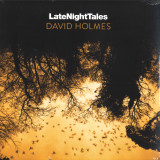
DJ and producer David Holmes is welcomed to the Late Night Tales fraternity with an evocative collection of personal songs and music, peppered with exclusive new material and rare gems. By now, I think we all know David Holmes, right There's acid house Holmes, with bone-rattling Chicago jams and Detroit destroyers, break-digger Holmes responsible for the grittily shaking 'Let's Get Killed' and seminal Essential Mix compilation (which brought Sixto Rodriguez to people's attention, and then there's soundtrack Holmes. His most enduring and vital source of musical inspiration - cinema - plugged into David's rst solo record 'This Film's Crap, Let's Slash the Seats' and inspired 2000's 'Bow Down to the Exit Sign', created as the soundtrack to a not-yet-made movie. Ofcial soundtracks have been bountiful, including scores for Soderbergh's Out Of Sight and Ocean's trilogy, '71, Hunger and Good Vibrations. In a series of personal songs sung by himself, David's last solo album 'The Holy Pictures' explored inuences of La Düsseldorf, The Jesus and Mary Chain and early Brian Eno. His Unloved collaboration with Keefus Ciancia and Jade Vincent then took us on a musical journey full of raw 60s pop-noir, psychedelia and French Ye Ye with a contemporary twist. Somehow he's also found time to produce records by Primal Scream and Jon Spencer Blues Explosion. Unsurprisingly, for someone au fait with matters cinematic, this Late Night Tales conjures up its own mindmovies. It's not only packed with the judiciously selected nuggets for which his mixes are noted but also stuffed with original material, including collaborations with BP Fallon and Jon Hopkins and an amazing new reading of 10cc's 'I'm Not In Love' by Holmes-produced Song Sung. In fact, there's a Celtic thread running through the whole journey with Stephen Rea's reading of an extract from Seamus Heaney's AENEID BOOK VI - Elsewhere Anchises. Among the other gems included here are David Crosby's lush 'Orleans', Buddy Holly's celestial 'Love Is Strange' and the Children Of Sunshine's 'It's A Long Way To Heaven'. David Holmes loves music. It's a way of expressing the sometimes inexpressible or the inconsolable, a questing desire to nd out just what is over the next hill. It's no surprise to learn he's a keen walker. Always on the move, headphones on, lost in some reverie or piece of music, the soundtrack to his life, the stuff that feeds his imagination. I walk a lot. It's amazing for listening to music: your phone or your emails aren't going and you're just in the forest listening to music. It's so intimate. Anyway, I was listening to the KLF's Chill Out album, which still sounds amazing, but it triggered an idea with concrete sounds through travelling and movement. And one of the things I was trying to do was to use this idea not just break up the moods but also as a metaphor for moving through life and arriving in different destinations or arriving at different stages in different parts of your life. Memory, Love, Living, Family, Friendship, Healing, Death and The Afterworld are some of the themes I wanted to explore within this record. Although these strong themes and tracks are personal to me, I also wanted it to be a great listen that was unpredictable yet had a seamless ow - a journey that was personal to me yet to the listener a great compilation of music that they may or may not have heard before. I hope I've succeeded in the later.' David Holmes 2016
November 5th, 2018 would have been Charles Bradley's 70th birthday. In celebration of his extraordinary life, Daptone imprint Dunham Records is proud to announce the release of his fourth and final album, Black Velvet. Black Velvet is a celebration of Charles Bradley, lovingly assembled by his friends and family at Dunham/Daptone Records. Though chronologically the material spans Charles' entire career, this is no anthology, greatest hits or other shallow rehashing of the songs that already made him famous. Rather, this album is a profound exploration through the less-travelled corners of the soulful universe that Charles and his longtime producer, co-writer and friend Tommy "TNT" Brenneck created in the studio together over their decade-long partnership.
It features new songs recorded during the sessions from each of his three albums, heard here for the very first time in all their scorching glory: "Can't Fight the Feeling," "Fly Little Girl" and the heart-wrenching single "I Feel a Change"; hard core rarities like his funk-bomb duet with LaRose Jackson, "Luv Jones," the psychedelic groover, "(I Hope You Find) The Good Life" and the ever-illusive alternate full band electric version of "Victim of Love"; sought-after covers of Nirvana's "Stay Away," Neal Young's "Heart of Gold" and Rodriguez's "Slip Away"; and the title track "Black Velvet," a stirring Menahan Street Band instrumental to which Charles was never able to cut a vocal.
Charles was truly a transcendent singer who led a remarkable life, overcoming unimaginable adversity to achieve great success and international acclaim very late in his life. What was really special about him and made him different from everybody else in the world was how he understood his pain as a cry for universal love and humanity. He felt that if he loved enough—if we all loved each other enough—we could take away the world's pain and sadness. That is why he jumped off the stage and literally tried to hug everybody he could. It's why he took such great care of a mother that had abandoned him. It's why he sang and danced like a lunatic. It's why he screamed like an eagle. And that's why we love him.
Black Velvet is a celebration of his life, and is destined to join Charles' first three albums alongside the cannon of essential soul records for the ages.
- A1: Tight Rope
- A2: For A Change
- A3: Cowboys Are My Weakness
- A4: No Show Jones
- A5: A World That Passed Me
- B1: One Day
- B2: Playing With Electric Trains
- B3: Lamas Fayre
- B4: Trafalgar Square
- B5: Parents
- C1: Come On Down
- C2: Broken Family
- C3: Battersea Boys
- C4: On My Own I'm Never Bored
- C5: Julian And Sandy
- C6: The Other Man In My Life
- C7: My Mother's Handbag
- D1: Fat As A Fiddle
- D2: The Gates Of Eden
- D3: Reverso
- D4: Never Coming Back
- D5: Good Life
- D6: The Party's Over
- E1: 1975
- E2: Like I Did
- E3: The Still And The Sparkling
- E4: Back In The Day
- E5: Sidney Street
- E6: Cotton Tops
- F1: Upgrade Me
- F2: Who'd Ever Want To Be
- F3: Passion Killer
- F4: Goldfish
- F5: Wrecked
- F6: Happy Once Again
- Chris Difford's place in the pantheon of great English songwriters is assured - surely nearly everyone can sing along to at
least one Squeeze song.
- So in anticipation of the new Squeeze album The Knowledge' (and extensiveUK and US tours this autumn), and following
Chris's autobiography and demos album as well as Edsel's CD box set of Difford's three solo albums (I DIDN'T GET WHERE
I AM (2002), THE LAST TEMPTATION OF CHRIS (2008) and CASHMERE IF YOU CAN (2011)), we now present all three albums on vinyl, with outer and inner sleeves, gathered together in a handsome rigid slipcase.
- Of these only the first album has appeared briefly on LP before - The Last Temptation...' and Cashmere...' make their
vinyl debuts.
- The inner sleeves feature all thealbum lyrics, track-by-track sleevenotes and brand new notes by Chris about the writing
and recording of each album.
- 1: The Package
- 2: Reality Cheque
- 3: Two Revolutions
- 4: Texas Relation
- 5: Greener Pastures
- 6: For Heads
- 7: Lodestar
- 8: Koresh Me Down
- 9: Out Of My Bag
- 10: Strawberry Hero
Manchmal hörst du eine Band, die sich gleichzeitig neu und vertraut anfühlt, und das lässt dich innehalten. TV Star ist so eine Band. In den letzten Jahren hat die fünfköpfige Band aus Seattle-Tacoma, Washington, still und leise an ihrer Stärke gearbeitet - EP für EP, Show für Show -, bis ihr lang erwartetes Debütalbum ,Music For Heads" rauskam und klar machte: Sie haben sich zu etwas Besonderem entwickelt. Eine Mischung aus jangly-psych, Garage-Grit und Soft-Focus-Tiefe; diese Songs leuchten von innen heraus mit einer beeindruckenden Originalität. In einer Zeit, in der so viel Musik in algorithmischer Gleichförmigkeit verschwindet, klingt TV Star trotzig menschlich. Auf den zehn Tracks der LP schärft die Band ihre Instinkte, die sie über die Jahre verfeinert hat - sie kombiniert zeitlose Pop-Sensibilität, psychedelisch angehauchten Jangle in der Tradition von The Brian Jonestown Massacre, punkige Rhythmussektionen und Vocals, die mit der Wärme von Mojave 3 dahinschweben, um etwas ganz Eigenes zu schaffen. Mit Music For Heads greifen sie nicht nur auf die Musik der Vergangenheit zurück, sondern treiben eine neue Welle voran. Die Band wurde 2020 aus der gemeinsamen Bewunderung für den Psych-Rock der 90er Jahre, klassischen Shoegaze und Alt-Country-Underdogs gegründet. Der Startschuss fiel, als jemand die Kassette ,Electriclarryland" der Butthole Surfers aus dem Jahr 1996 von der Wand nahm und auf den Track ,TV Star" zeigte. Was folgte, war weniger die Gründung einer Band als vielmehr die Entstehung eines kleinen Ökosystems. Ashlyn Nagel (Gesang, Keyboard), Bryan Coats (Gitarre), Che Hise-Gattone (Gitarre), Mark Palm (Bass) und Tucker Devault (Schlagzeug) brachten ihre eigenen Instinkte, Eigenheiten und musikalischen Hintergründe mit ein, bis die Songs schließlich nach allen gleichzeitig klangen. Aufgenommen in einer Reihe gemütlicher Studios im Nordwesten - The Unknown in Anacortes und ein paar Verstecken in Seattle - ist ihr Debütalbum ,Music For Heads" eine Mischung aus klirrender Gitarrenmusik, psychedelischem Pop und authentischem Indie-Rock, ohne sich ganz auf einen Stil festzulegen.
Norman Connors' Mr. C is a masterclass in sophisticated modern funk and boogie-infused soul that was way ahead of its time. Originally released in 1981, the album finds the renowned jazz drummer/producer at a creative crossroads, boldly diving deep into street-level boogie-funk without losing his soulful, jazzy touch. What once might have puzzled jazz purists now delights soul/funk aficionados; it has quietly become a cult favourite and now, nearly 45 years later, Mr. C sounds fresher than ever. Brimming with infectious heavy funk, lush arrangements and soul-stirring performances, it's an album that flirts with perfection, ensuring its enduring significance in the boogie/jazz-funk-soul canon.
From its opening moments, Mr. C makes one thing clear: this is Norman Connors at his funkiest. The majority of the album is a straight-up party: think dancefloor-ready beats complemented by punchy horn riffs and slick early-80s boogie vibes. There’s heavy use of synths and drum-machines, demonstrating Connors' gleeful embrace of contemporary funk trends. Each track shines in uniquely thrilling fashion, showcasing Connors’ versatility and happy knack for blending genres whilst crafting unforgettable melodies.
Irresistible thumper “She’s Gone” opens the album with a dyno-Rhodes electric piano groove and a seriously thick boogie-funk rhythm. Lush string accents and horn stabs weave through the funky bassline, while the vocals (handled by a young Beau Williams) soar with gospel-tinged emotion. Over four decades later, it endures as a masterpiece. Living up to its name, the shimmering “Party Town” brings deep Electro-Funk Energy by layering bubbling synth bass and shiny lead synth lines. The groove is downright addictive, a brisk, brass-kissed jam that implores you to move. Up next, the sophisticated funk of “Keep Doin’ It” is a low-slung post-disco glider, propelled by a sleek vibe, leaning into the late-night boogie sound. Funky guitar, tight drumming (with Connors’ jazz-honed chops in the pocket) and smooth vocals urge you to “keep doin'” whatever it is that's working. “Stay with Me” works a bit of island flavour into the mix, riding a thick Caribbean groove complete with tropical percussion and an upbeat tempo that could almost be calypsoul. The fusion of Caribbean rhythm elements into an R&B context demonstrates Connors’ willingness to experiment with global sounds while keeping things soulful and danceable.
Side B opens with the sassy funk-deluxe workout, "Anyway You Want" dripping with that soulful strut. Bringing a real quiet storm swagger, “Sing a Love Song” slows the tempo ever so slightly into a sexy, swaying jazz-funk gem, featuring a young Glenn Jones on lead vocals. The arrangement is elegant, built on warm keys and an undeniable groove. The celestial “Love’s In Your Corner” is all about soulful uplift. Featuring the legendary Jean Carn's powerhouse vocals soaring over a brass-kissed driving funk, it's an R&B burner. The refined, jazzy instrumental “Mr. C” is a slinky, smooth, funk-filled mid-tempo groove, with sax and warm keys gliding effortlessly. Connors combines jazzy arrangements into the post-disco/boogie framework one last time, and the result is sublime. It’s sophisticated and cool and, as a finale, “Mr. C” wraps up the album in classy style.
On release, Mr. C flew under the radar but time has been exceptionally kind to this record. DJs, collectors and soul connoisseurs alike have since rediscovered its magic. As ever, this crucial reissue has been lovingly remastered by Simon Francis, cut by engineer of the year Cicely Balston at Abbey Road Studios and pressed to perfection by Record Industry in Holland. Norman Connors was something truly extra. He was a visionary. And Mr. C is proof.
INDEPENDENT RECORD SHOP AND LABEL KLANG TONE RECORDS RE-ISSUE DEBUT ALBUM BY 8 PIECE INSTRUMENTAL EHTIOPIAN JAZZ/AFRO-BEAT/PROG COLLECTIVE;
TEZETA
“Absolutley gorgeous from start to finish…”
- Deb Grant, BBC 6 Music
“An instant obsession. Impeccable rhythms and hypnotic melodies—Tezeta crafts a spellbinding fusion of Addis and Avon that takes you on a journey."
- Don Leisure
“Gorgeous mood music with more than a nod to Addis. Lovely tapestries and textures”
- Matt Temple, Matsuli Music
'Formed in Bristol back in2014 Tezeta were an experimental 8 piece instrumental group effortlessly combining Ethiopian jazz, Afrobeat, prog and improvisation. The band spawned out of the much loved Bloom Collective - a collective of musicians and friends from an experimental corner of the city’s buzzing music scene.
Led by composer, pianist and bandleader Daniel Inzani (Spindle Ensemble, Cosmo Sheldrake) the band also featured tenor saxophonists Andrew Neil Hayes (Run Logan Run) and Lorenzo Prati (Count Bobo, the Evil Usses, Itchigo Evil), Harriet Riley (Spindle Ensemble, Paraorchestra) on Marimba, vibraphone and percussion, Pete Gibbs (Count Bobo) on bass, Conrad Singh (Alabaster dePlume, the Evil Usses) on electric guitar and finally two(!) drummers Matthew Jones (The Brackish, Slate Trio) and Daniel Truen (Yama Warashi, The Evil Usses, Rozi Plain, Count Bobo).
They initially got together to play music from ‘The Ethiopiques Volumes’, in particular, the work of Mulatu Astatke, hence the name Tezeta (Ethiopian for nostalgia) but quickly evolved into their own style with all original material, incorporating many other influences along the way. Their much loved, debut album 'Seventh Place' was released in Sept 2016.
“We at Klang Tone have been admirers of Daniel Inzani’s work with Spindle Ensemble and I was fortunate to catch Tezeta perform before they disbanded. I bought one of the last available copies of their home released cdr at their gig at local Stroud venue The Prince Albert. It became a firm favourite - a recording I keep playing and never got tired of. It’s such a beguiling mix of styles - always evolving and resolving in different ways to what you might expect - some thrilling ensemble playing rhythmically propelled by two drummers and a percussionist with Daniel’s evocative melodies at the centre. I was convinced this was a recording that deserved a bigger audience and felt it needed to be heard on vinyl so I started a conversation with Daniel about releasing it on Klang Tone as it perfectly encapsulated the raison d'être of the shop and label. We didn’t want this recording to languish online barely listened to - I felt it was in danger of becoming a lost classic. I hope that this vinyl release is a worthy testament to this great band and helps draw attention to the creative genius of composer Daniel Inzani and the talented ensemble of players featured on the recording.” - Sean Roe, Klang Tone Records
Tezeta had a cult following among other musicians and were known for their wild group solo wig outs, virtuoso musicianship and creative use of unusual rhythm, harmony and melody. They toured across the UK at various venues and festivals including Glastonbury, Shambala and Green Man, and subsequently released an EP named ‘Curious Bubble’ in 2020.
In 2023 Tezeta performed a sold out final show at Strange Brew, Bristol as Inzani decided to pursue solo releases, notably his critically acclaimed triple vinyl album ‘Selected Worlds’ released on Hidden Notes Records which landed in the Guardian Top 10 Contemporary Albums of the Year in 20204. The third disc ‘Play’ was a clear continuation and development of the music Inzani had developed with Tezeta and featured many of the same musicians.'
The cover image is from ‘Project Rewind’, a double exposure photography collaboration between Karen Dews and Paul Blakemore.
Graphic design by Adam Hinks.
360 mcn white-white light cardboard paper / one side only hand plasticization / 2 separated parts prints / hand gluing / PVC outers / original artwork / gatefold sleeve / Bandcamp limited edition 30x60 cm insert with extended liner notes by Tony Higgins and Interview with Babs Robert and Sébastien Gorlé with exclusive pictures and self-portrait by Babs Robert himself printed on GF Smith "Takeo Tant Select" Canvas Paper tip-on left jacket panel / Exclusive never released Memorabilia from Babs Robert's vault.
Personnel:
Babs Robert - alt sax, tenor-sax, electric tenor-sax, Bin Recorder, Acme siren, Chinese-bell, sleigh-bells, maracas, tambourine,hand-rattle,claves)
John Van Rymenant - baritone-sax, fluegelhorn, Bala, tambourine, sleight-bells, cowbell, triangle, claves
Johnny Peret - vibes, bongo's, cowbell, maracas, castanets, rattle-snakes, tambourine, drums, woodclock, trinagle
Johnny Brouwers - piano, prepared-piano, triangle, cowbell, sleigh-bells, maracas, caves,hand-rattle, guiro, woodblock, tambourine
Paul Dubois - bass, triangle, cowbell, claves, rattlesnakes, hand-rattle, woodblock, tambourine
Michel Gobbe - bass,Chinese-bell, claves
Robert Pernet - drum, tambourine, seven-notes M'Bichi, guiro, alarm-siren, home-made metal xylophone, African telephone-drum, triangle, sleigh-bells, Siku
Notes:
Despite its modest role on the world stage, Belgium has produced a number of internationally renowned musicians and composers. There is the iconic gypsy jazz guitar maestro Django Reinhardt, whose position remains unassailable, and guitarist/harmonica player Toots Thielemans, who became an internationally renowned artist performing and recording with Bill Evans, Oscar Peterson, Ella Fitzgerald, Peggy Lee, Shirley Horn and Quincy Jones. The other key Belgian figure is composer/arranger Francy Boland, co-leader with US bebop drumming legend Kenny Clarke of Europe's leading big band of the 60s, the Clarke-Boland Big Band.
The Love Planet performed in the main clubs of Brussels, such as Blue Note, Pol's Jazz Place, and Smog as well as in major musical events throughout Belgium including to big festivals in 1969 - the Avant-Garde Festival in Ghent and the First International Jazz Event in Liege – where the Love Planet shared the bill with Miles Davis - and the Bilzen Jazz Festival in 1970. The contrast between the musical architecture of the themes and sonic freedom in the improvised playing perfectly illustrated the polymorphism – an order within disorder – which the Love Planet aimed for.
The initial original quartet line-up was Babs Robert (sax), Paul Dubois (bass), Johnny Brouwers (piano), and Johnny Peret / Robert Pernet (dru- ms). On the album session, the quartet was augmented with the addition of John Van Rjimenant (saxes) and Michel Gobbe (bass). As well as their main instruments, the band members also played an array of unusual instruments, principally percussion. This is the first official re-release
of the 'Babs Robert and the Love Planet'. Original copies of the album fetch many hundreds of Euros on the collecting circuit and it remains a curious and fascinating window into a moment in time that still resona- tes some fifty years later. Come with us to the Love Planet. (Tony Higgins)
Limited Edition White Vinyl
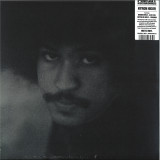
At the forefront of a rising wave of Brazilian artists captivating international audiences, Nyron Higor brings a quiet yet potent sense of wonder to his new self-titled album. Born in Maceió, Higor’s latest work is rooted in the traditions of Northeastern Brazilian music and golden-era MPB. Within the peaceful surroundings of his home, Higor weaves these roots together with global influences and contemporary production techniques, for a uniquely dreamlike vision of hope.
Following the success of his self-released debut Fio de Lâmina—an instrumental record of delicately balanced rhythmic and harmonic patterns, which earned support from tastemakers like Mr. Scruff, Gilles Peterson, and John Gomez—Higor’s new album is a move towards a more expansive, lyrical exploration of transcendence and triumph. As Higor explains, “This album is a test of resistance and a big event in my life as a young Black man from the Northeast and coming from a humble background, financially speaking, its context is political.”
Taking his demos and unfinished tracks to São Paulo, Higor worked alongside friends and collaborators from Brazil’s vibrant contemporary music scene—including fellow Maceioense artists Bruno Berle, Batata Boy, and New York-based Brazilian vocalist Alici Sol—assembling a rich musical landscape and a cutting edge development on the musical world from which he emerges.
For Higor, the process of recording and producing in close collaboration with Berle and Batata Boy allowed him to fully cultivate the emotive power of his compositions. Album opener "Ciranda" sets the tone with a slow frevo rhythm, as wistful trombone melodies and melancholic acoustic guitar harmonies create an atmosphere both intimate and grand. Lead single "São Só Palavras," featuring Alici Sol and Bruno Berle, captures both the lightness and depth of young love in an all too fleeting minute-and-a-half moment of soaring brilliance.
Building upon the instrumental sound of his debut, “Louro Cantador” with its playful organ, birdlike whistles and elegant acoustic guitar, emanates a kind of rare natural beauty, as each sound dances amidst the gentle pulse of Higor's bass—his main instrument.
Through ten carefully crafted tracks, Higor’s acuity for sound and silence draws listeners into a place that feels both deeply personal and universally resonant. “Above all, I value making music that brings me genuine satisfaction. I’m always looking for depth in the things I create.”
This album is a testament to the timeless themes that define Higor’s artistry, as well as his creative drive to overcome the obstacles he faces. Conveying his feelings of jubilance for his work, Higor notes, “This work is liberating, contemplative and victorious!” Each track invites the listener to experience the raw intimacy, the joy and longing, and the otherworldly ingenuity of Brazilian music, which seems to endlessly keep us coming back for more.
CREDITS
Ciranda (Nyron Higor)
Tico Lima: Trombone, Nyron Higor: Drums, Bass, Synthesizers, Electric Piano, Guitar, Molho de Jatobá, Ganzá, Caxixi, and Indigenous Whistle
Louro Cantador (Nyron Higor)
Nyron Higor: Drums, Bass, Keyboards, Guitar, Percussion, and Direct Sound
Demo Love (Nyron Higor)
Nyron Higor: Drums, Bass Synth, Keyboards, and Synthesizers
São Só Palavras feat. Alici, Bruno Berle (Nyron Higor, Batata Boy, Alici Sol, and Bruno Berle)
Alici Sol: Vocals, Bruno Berle: Vocals and Bass, Nyron Higor: Drums, Guitar, Keyboards, Synthesizers, and Whistles
Estou Pensando Em Você feat. Johanna (João Menezes, Rubens Adati)
Nyron Higor: Vocals, Johanna: Vocals. Bruno Berle: Vocals, Rubens Adati: Piano, Guitar, Programming, Stefan Costilhes: Bass, Batata Boy: Programming
Maravilhamento feat. Nathalia Grilo (Nyron Higor, Nathalia Grilo)
Nathalia Grilo: Vocals, Nyron Higor: Drums, Bass, Guitar, Keyboards, and Synthesizers
Som 24 (Nyron Higor)
Nyron Higor: Sampler, Keyboard, Bass Synth, Vocoder, and Steel Guitar
Pizzicato (Nyron Higor)
Nyron Higor: Double Bass and Keyboards
Eu Te Amo (João Menezes)
Nyron Higor: Vocals and Bass, João Menezes: Guitar, Batata Boy: Rhodes Piano, Bruno Berle: Xylophone
Me Vestir De Você feat. Johanna (Paulo Novaes and João Menezes)
Nyron Higor: Vocals, Johanna: Vocals, Bianca Godoi: Drums, Bruno Berle: Bass, Guitar, Percussion, and Rhodes Piano, Batata Boy: Rhodes Piano and Guitar
===================
Tracks 1, 2, 3, 4, 6, 7, and 8 were recorded by Nyron Higor in Maceió
Track 4: Bass and Synthesizers recorded by Ico dos Anjos. Vocals recorded by Batata Boy at Estúdio Rural
Track 5: Guitars, Bass, Programming, and Pianos recorded at Inhame Estúdio. Coproduced by Rubens Adati
Tracks 9 and 10 Recorded and Co produced by Ico dos Anjos
Mixed by Batata Boy, Ico dos Anjos, Bruno Berle, and Nyron Higor
Mastered by Batata Boy
Produced by Batata Boy, Bruno Berle, and Nyron Higor
Lacquer Cut by Caspar Sutton Jones @ Gearbox Records
Cover photo by Claudio Virginio
Vinyl centre label artwork by Tadáskía
Sleeve design by Alessandro Renaldin
Sept duos pour guitar acoustique et piano préparé is the second duo recording from Stephen O'Malley and Anthony Pateras. Their first together, Rêve Noir (2018), took an electro-acoustic scalpel to a 2011 duo concert for electric guitar and piano, using Revox and digital treatments to twist and smear gig documentation into ghostly echoes and fractured drones. Here, in contrast, the music is entirely acoustic and presented as it was performed, without overdubs. Both players’ choices of instruments are notable: this is O'Malley’s most extensive recording on steel string acoustic guitar (playing an instrument whose previous owners include Marissa Nadler and Glenn Jones) and Pateras return to the prepared piano, which he has rarely employed in recent years, after spending much of the first decade of the 21st century exploring its possibilities.
Recorded during O'Malley’s residency at La Becque on Lake Geneva in the summer of 2021, from the first moments of the opening ‘déjà revé’ the music immediately establishes the distinctive landscape of chiming tones and hovering clouds of resonance explored throughout its one-hour running time. Pateras’ preparations create tolling bell-like tones alive with complex overtones, alongside which O'Malley’s open strings and natural harmonics add a sparkling clarity. While Pateras’ music often uses a densely chromatic harmonic language, these duos are remarkable for their modal simplicity. However, the interaction between the pure intervals of O'Malley’s just-intoned strings and the unstable harmonies created by the piano preparations suspends the music in an oneiric state of hazy ambiguity. Without obvious reference to tempo or meter, the music floats in what the composer Ernstalbrecht Stiebler has called a ‘bottomless sound space’, the temporal placement of events determined by bodily rhythms and the performers’ own listening to (and enjoyment of) the sounds being made.
Heard one way, this music can seem striking in its consistency, almost environmental. Attending more carefully, the listener hears the pitch sets and tunings changing throughout the album’s length. Each piece has its own character, subtly distinguished from the others through mood, pacing, and timbre. On ‘déjà voulu’, for instance, O'Malley makes prominent use of slide, the woozy, bending pitches weaving through a series of lush arpeggiated chords from the piano. ‘Déjà senti’, on the other hand, is particularly spare, the gestures spaced out to the extent that they often float in isolation against the background of fading resonance. Much of ‘déjà su’ is built around a slowly pulsing single prepared piano tone, creating an almost ominous tension, whereas the sparkling guitar harmonics and arpeggios of the closing ‘déjà raconté’ have a gently triumphal air. While the music’s calm, rippling surface is immediately entrancing, these seven duos – in the tradition of the best improvised music – also reward close listening, which reveals sonic details and focuses the listener’s attention on how the music unfolds spontaneously from decision to decision, from gesture to gesture.
Recorded during a period when O'Malley and Pateras were grieving the loss of recently departed friends and collaborators, these seven duos possess a reflective, at times almost mournful quality. More importantly, though, they are imbued with other qualities that can arise from personal loss: a clarity that allows one to clear away the inessential, to begin again, to renew one’s faith in friendship and music.
repressed !
From samba and bossa nova through to baile funk, with carioca expressions of jazz, rock and hip hop in between, the sound of Rio de Janeiro, while continually evolving, has always held an unnameable quality which reflects the magic and mystique of the city itself. Multi-instrumentalist and arranger Antonio Neves is the city’s newest trailblazer: the enfant-terrible of Rio’s music scene, leading a vital and diverse constellation of both emerging and well-known artists advancing the city’s musical legacy.
“It all started one sleepless night, after watching a Quincy Jones documentary”. Inspired by the legendary music magnate, Neves began writing a list of artists residing in Rio de Janeiro “people that I admire, that I consider geniuses of their instruments, who share with me affinities, anxieties and projects.” The list included some of Brazil’s most revered living musicians who Neves has worked with in recent years: Hamilton de Holanda, Leo Gandelman and Dorival Caymmi. Neves also called on some of Brazil's most exciting emerging talents including Alice Cayymii and Ana Frango Eletrico.
A Pegada Agora É Essa (The Sway Now) is Neves’ second album: a vibrant portrait of the current Brazilian music scene. From the regional to universal, popular to erudite, samba to rap, Latin rhythms to jazz, MPB and pop to good old rock'n'roll, Neves walks with fluency and mastery amongst all the musical genres that Brazil has to offer.
“My offer to the musicians was complete freedom to express themselves through the songs I proposed – classics like “Summertime”, “Luz Negra” and “Noite de Temporal”, and compositions of my own – creating a space of authorship for the band and the guests. A space for inventions, purges, delusions, laughter. The idea was to bring the freedom of jazz crossed by Brazilian rhythms, such as the traditionals Partido Alto (A Pegada Agora É Essa) and Jongo (Jongo no Feudo and Luz Negra); rhythms of African-Brazilian religions like Candomblé (Noite de Temporal) and Umbanda (Forte Apache); and a tribute to newest Rio de Janeiro’s contribution to Brazilian music, the Funk Carioca (Simba)”.
Coming from a musical family, Antonio’s father, Eduardo Neves, was a renowned conductor and a professor at Juilliard School of Music and the California Jazz Conservatory. In the bohemian neighbourhood of Lapa, aged 14, Antonio began his career as a drummer, before experimenting with brass. He would soon become a skilled trombonist and arranger achieving the recognition of his teachers and peers. It wasn’t long before he would be playing with some of the biggest names in Brazilian music, such as Hamilton de Holanda, Leo Gandelman, Moreno Veloso, Kassin and Elza Soares.
His debut album as a trombonist was PA7 (2017, Rock It), released at the same time he was travelling the world playing with artists like Moreno Veloso, Kassin and Leo Gandelman, and recording the albums Jobim, Orquestra e Convidados (2017, Biscoito Fino), with Mário Adnet and Paulo Jobim; and Elza Soares Canta e Chora Lupi (2017, Coqueiro Verde Records). More recently, Neves was the arranger for the acclaimed Little Electric Chicken Heart album, by Ana Frango Elétrico, which has been nominated for a Latin Grammy and voted 2019’s ‘Brazilian Music Revelation’ by The Art Critics Association of São Paulo.
- The Silver Key
- The Crosshair
- Rooftop
- The Child In You
- Return Of The Reapers
- The Trickster
- I Lit A Light
- The Rifleman's Wedding
- As I Dive
- Beginning Of The End
- Shared Fate
With `The devil's door' And Also The Trees, one true original Post-Punk/New Wave band, presents a quiet storm of an album. At times filmic, poetic and intense with an undercurrent of dark psychedelia. It completes a trilogy of works `The Bone Carver', `Mother-of-pearl Moon' and now `The devil's door' created by the current line-up. Here there are signature `And also the trees' poetic lyrics, orchestral guitar and soundtrack influenced songs inspired by newsreel, oil paintings and folklore. But with this work we have the addition of some surprising instruments that skew the album towards a world where John Barry meets Bela Bartok. And also the trees (AATT) formed during the original post-punk era in rural Worcestershire, an environment that has provided a constant inspiration to a group whose music has often explored the dark underbelly as well as the beauty of the British countryside. They are renowned for their captivating live performances, a unique style of mandolin-like electric guitar, evocative lyrics and dark jazz rhythms - not to mention a creative independence fiercely preserved for over four decades. Back then AATT immediately caught the attention of Robert Smith of The Cure, who invited them to tour with his group on several occasions. Smith was also involved with their early recordings alongside his bandmate Lol Tolhurst, who produced their first records. This longterm friendship and mutual respect was further solidified when AATT were invited to perform at the Robert Smith curated 2018 Meltdown festival in London. This July AATT appear as The Cure's special guests at the Nimes festival. Founded by singer Simon Jones and his guitarist brother Justin, AATT have maintained a continuous presence on the post-punk, and alternative rock scenes worldwide, with a solid fanbase e.g. in Germany.
- A1: Cadillac Woman
- A2: Bamboo
- B1: For All We Know
- B2: Blue Road
- B3: Going Home
Bass: Sam Jones
Cello, Bass: Isao Suzuki
Drums: Billy Higgins
Electric Guitar: Kazumi Watanabe, Kazumasa Akiyama
Recording & Remix Engineer: Yoshikane Okada
Executive Producer: Toshinari Koinuma
Piano, Electric Piano, Fender Rhodes: Cedar Walton
A gem of a crossover album from Isao Suzuki, who has continued to lead the Japanese jazz scene as a bassist.
Capturing the vibrant energy of the 1970s, this record has been rediscovered by club music aficionados and rare groove collectors alike.
The album fuses Van Morrison–like bluesy grooves with deep funk and jazz sensibilities, along with a uniquely Japanese melodic sense.
- A1: Love's Coming Back
- B1: Houston (7" Exclusive)
Slinging back on the electric guitar, ditching the job, upping the BPMs, and falling in love again has resulted in Pete embracing his fuzzed up dream- pop past but also throwing in elements of pop and electronica.
The first fruits of this new-found labour is a brand new single "LOVE'S COMING BACK" which sums up the ethos for his new project all squeezed into 136 amp-frying seconds. Pete first burst onto the scene in the early 90s as the frontman and guitarist of postshoegaze / pre- Britpop band Adorable, whose 1993 album Against Perfection, released on Creation Records, is regularly referred to as a lost indie classic, with the band picking up multiple 'Single of the Week' awards in the NME, and topping the Indie charts. Noel Gallagher once told Creation Records' Alan McGhee that dropping Adorable from the label was one of his biggest mistakes, whilst other artists such as Ash, Slowdive and Brian Jonestown Massacre amongst others have all expressed their admiration for the band. Following this he joined up with his brother Krzys to form One Little Indian band Polak (Swansongs 2000 / Rubbernecking 2002) which took in influences from the likes of Sparklehorse, Radiohead and dEUS, and led The Independent to call him "the most gifted lyricist since Jarvis Cocker last put pen to paper".
There then followed a musical exile, after having what Pete now describes as 'a musical breakdown' before re-emerging alongside celebrated House of Love guitarist Terry Bickers to release two critically acclaimed albums as Pete Fij / Terry Bickers on 2014's Broken Heart Surgery, and 2017's We Are Millionaires, winning the Roundtable 'Single of The Week' on Steve Lamacq's BBC 6Music show - "Beautiful" (MOJO) "Unfailingly lovely" (UNCUT) "Stunning" (OHM) "Beautifully constructed" (Q). Adorable then reformed for a few weeks in 2019 for a series of one off dates that sold out in record time, playing bigger venues than they did in their heyday - and then broke up again.
Paul Murphy’s Claremont 56 label welcomes a genuine legend of UK music to its roster – Chaz Jankel, the man whose dizzying musicality and love of soul, funk and disco did much to shape the sound of Ian Dury’s Blockheads band in the late 1970s and early ‘80s.
A virtuoso keyboardist with a deep love of Black American music, Jankel’s arrangements and compositional skills were key to the success of their records, the funkiest of which not only became crossover pop hits – see ‘Hit Me With Your Rhythm Stick’ and ‘Reasons To be Cheerful, Part 3’ in particular – but also saw heavy rotation in now iconic New York clubs including the Paradise Garage and Studio 54.
This continued during the formative years of his solo career, with ‘My Occupation’, ‘Questionnaire’ and ‘Glad To Know You’ (later famously re-edited and dubbed out for nu-disco dancefloors by Todd Terje) all becoming club hits. The great Quincy Jones also covered Jankel’s infectious single ‘Ai No Carrida’, while experimental, club-ready synth-jam ‘3,000,000 Synths’ was also influential during the early years of the electro movement.
For his Claremont 56 bow, Jankel has delivered an all-new workout recorded earlier this year, the simply titled ‘Rhumba Jam’. A typically warm, groovy and rolling affair, it features Jankel delivering infectious, stretched-out Rhodes electric piano solos over toasty bass, clipped guitar licks, warm bass, accordion-style synth motifs and a densely layered Rhumba rhythm. While relaxed and sun-soaked, it also has bags of Balearic dancefloor potential.
Murphy remixes under his now familiar Mudd alias, leaning into the track’s languid Balearic vibe while keeping a firm focus on the dancefloor. Beginning with an enticing mix of metronomic drums and jangly acoustic guitars, Murphy slowly layers up key elements of Jankel’s original – think rubbery bass, rhythmic handclaps, mazy synth sounds and those wonderful, stretched-out solos. It’s a version that pays due reverence to the quality of Jankel’s musicianship, production and arrangement while subtly extending it and reframing it for 21st century Balearic dancefloors.
- A1: Come Over
- A2: Heartbreak Blues B1 Left Your Smile B2 My Baby Says
- B3: Southern Birds C1 Space
- C2: Grief
- D1: Basketball #1 D2 Ghost Town
MJ Lenderman is a songwriter born and raised in Asheville, North Carolina. The anatomy of an MJ record might go something like this: warped pedal steels and skuzzed out guitar; a voice reminiscent of the high-lonesome warble of a choirboy; the keen observations and reflections of a front stoop philosopher. Songs snake their way from a lo-fi home recording to something glossier made with longtime friends at Asheville's Drop of Sun studios, but the recording setting
doesn't seem to matter much - at its core, a Lenderman song rings true.
MJ Lenderman was recorded, mixed and mastered for digital in 2019 by Colin Miller in Asheville NC, and was self-released online to quiet but firm acclaim. Now available as a Double LP and remastered for vinyl by Heather Jones, it offers a glimpse into the formative steps of a style; focused and precise, yet expansive and rough around the edges, that remains consistent across MJ's catalogue to date.
Looking as firmly to the legacy of 90s slowcore as it does to the tenor of Magnolia Electric Co. and sound wall of Neil Young and Crazy Horse, these 9 songs clock in at just over an hour and offer warm, patient worlds of heavy colour that blow by breezily. These are songs that wrap mysterious and urgent feeling in layers of patience and clarity that unfold anew with each timeless listen.
"Imagine More is the follow-up to Lophae's acclaimed debut Perfect Strangers (January 2025).
Recorded live to 2-inch,16-track analogue tape with the band all in one room, engineered and mixed by Benedic Lamdin (Nostalgia 77), and mastered by Caspar Sutton-Jones (Gearbox Studios), this second offering from guitarist and composer Greg Sanders' quartet ventures deeper into their distinctive blend of modern jazz, psychedelic exploration, and world music flourishes.
Four gifted improvisers navigate Sanders' compositions with mercurial dialogue and musical communion, weaving melodic elegance with rhythmic complexity, creating sound-worlds that echo Jeff Parker, Joao Gilberto, and Blake Mills while channeling the sophistication of Stan Getz, Bill Frisell, and Edu Lobo.
Fizzing electric guitar, flowing saxophone lines, and skittering rhythmic interplay transport listeners from north-west London's Fish Factory recording studio to the musical capitals of New York, New Orleans, Rio De Janeiro, Bamako, and Johannesburg - anchored by Sanders' unmistakable compositional voice and the quartet's intuitive sensitivity."
François and Sylvain Rabbath have turned six years of touring into a joint album that patiently and intensely distills a variety of musical flavors gathered from around the world.
Since the early 1960s, François Rabbath's double bass has resonated through enough landmark recordings to fill several shelves in a record collection. As an arranger, composer, and musician, his imprint on music goes far beyond his collaborations with Barbara, Paco Ibáñez, Charles Aznavour, or Édith Piaf. Aspiring double bassists owe him a groundbreaking method for learning the instrument. Born into a lush musical universe that quickly became his own, his son Sylvain first accompanied him on his travels before settling at the piano and sharing stages around the world at his side.
Those years of accumulating visas in their passports were put to good use by father and son. The continents, countries, and cities they passed through became a rich source of inspiration for composing Amall, the album by the Rabbath Electric Orchestra.
Long hours spent in the air or on the road, watching passing landscapes that never stayed the same, were transformed into compositions imbued with the atmospheres of the places they crossed or visited. Inspiration sometimes struck with force, like a green oasis appearing in a desert of stone—unexpectedly, as glowing red rocks suddenly dominated an otherwise open landscape with an endless horizon, while the mind wandered into a state between meditation and introspection.
Born from these travels, the pieces took on their final colors once brought into the studio, refined, and finally arranged to welcome the guitars of Keziah Jones and Matthieu Chedid, the piano of Laurent de Wilde, the bass of Victor Wooten, the saxophone of Raphaël Imbert, and the percussion of Minino Garay. Enhanced by the scale of the jazz-soul orchestrations, by the richness of arrangements bursting from strings, brass, rhythms, or keyboards, the epic breath of vast plains became ingrained. The urban tension of funk, echoing their movements, found its place—alongside more electric expressions or the ambience of a darkened room.
Melancholic and melodious, expressive and edgy, the bowed double bass—played in the high register where few dare to go—emerged as the musical guide. One that draws a path between Seville and Minneapolis, connects François Rabbath's native Syria to France, and bridges South America to Europe. It sets the tone to follow—the emotion that will carry the piece, and if not filled with light, will carry it there nonetheless.
Musical visions packed in luggage, transported in cargo holds, or imprinted in their minds just long enough to cover the distances to the next stop—father and son deepened their bond, beyond family and art. And their hands have never held each other more tightly.
François et Sylvain Rabbath ont fait fructifier six ans de tournées pour un album commun distillant patiemment et intensément la variété de parfums musicaux récoltés autour du monde.
Depuis le début des 60’s, la contrebasse de François Rabbath résonne dans assez de références pour combler plusieurs étagères d’une collection de disques. Arrangeur, compositeur, musicien, l'empreinte laissée dans la musique va bien au-delà de ses collaborations avec Barbara, Paco Ibanez, Charles Aznavour, ou Edith Piaf. C’est à lui que les
apprentis contrebassistes doivent une méthode novatrice pour apprendre l’instrument.
Né dans un univers musical luxuriant qui est vite devenu aussi le sien, c’est d’abord dans ses voyages que son fils Sylvain l’a accompagné, avant de s’installer au piano, et parcourir les scènes du monde à ses côtés. Ces années où les visas se sont entassés sur leurs passeports, père et fils les ont mises à profit. Continents, pays, et villes qui se sont succédés sont devenues un gisement pour composer Amall, l’album du Rabbath Electric Orchestra.
Les longs moments passés dans les airs ou sur la route à contempler un paysage qui défile sans pour autant rester le même, se sont convertis en compositions habitées par les ambiances de ces endroits traversés ou visités. Là où l’inspiration s’est imposée parfois brutalement, sous
la forme d’un oasis de verdure surgissant au milieu d’un désert de pierres. Au hasard d’imposantes roches rougeoyantes s’invitant dans un paysage jusqu’alors dégagé sur un horizon sans fin, quand l’esprit se laisse aller à un mélange de méditation et d'introspection.
Nés de ces pérégrinations, les titres ont pris leurs couleurs définitives une fois ramenés en studio, peaufinés puis, enfin, pensés pour y inviter les guitares de Keziah Jones et de Matthieu Chedid, le piano de Laurent de Wilde, la basse de Victor Wooten, le saxophone de Raphaël Imbert, les percussions de Minino Garay. Sublimé par la dimension des orchestrations jazz-soul, par la richesse des arrangements jaillissant des cordes, des cuivres, des rythmiques ou des claviers, le souffle épique des plaines immenses s’est imprimé.
La nervosité citadine du funk rythmant les déplacements a trouvé sa place, non loin d’une expression plus électrique ou d’une atmosphère de salle obscure.
Mélancolique et mélodieuse, expressive et nerveuse, la contrebasse jouée à l’archet, dans les notes hautes du manche où peu s’aventurent, s’est érigée en guide musical. Celui qui trace le chemin entre Séville et Minneapolis, relie la Syrie natale de François Rabbath à la France,
réduit la distance entre l’Amérique du Sud et l’Europe. Donne la note à suivre, l’émotion qui traversera le morceau qui, s’il n’est pas habité par la lumière, le portera néanmoins jusque là.
Visions musicales mises dans le coffre, transportées en soute ou imprimées dans l’esprit le temps de couvrir les distances qui les mèneront aux prochaines, c’est côte à côte que père et fils ont prolongé leur lien par delà des seules limites familiales et artistiques. Et leurs mains ne se sont jamais serrées aussi fort.
credits