Anané Electrifies With New Version of Dancefloor Classic “Get On The Funk Train”
Known worldwide as one of the New York City’s most vibrant, charismatic and talented producer / DJs, Anané is uniquely positioned to bring light to the 1977 Number 1 Disco Hit “Get On The Funk Train,” originally released by the Munich Machine and produced by the renowned Giorgio Moroder
In addition to being a singer Anané is also DJ with residencies in New York, Ibiza and Naples. She knows how to move the dancefloor and how to elevate the mood of the room from first creating the vibe to getting the crowd into a groove; ultimately taking the dancefloor into full fledged party mode. Her strong and distinctive character can be traced to her experiences growing up in Cabo Verde’s capital city of Praia located on the island of Santiago during a time of extreme political strife, and to her many years of working hard to establish herself in the always competitive music industry. It takes a lot to tackle a classic and make it uniquely your own, but that’s exactly what Anané has accomplished with this fresh and vibrant new version of “Get On The Funk Train.”
With her wealth of talent as a performer, Anané is also highly accomplished as a record label owner. Her Nulu and Nulu Electric imprints over many years have been the source of some of the most played and sought after club bombs in the Afro House genre that is currently in vogue with DJs around the world. Her Nulu Movement line of merchandise represents the stylish, cutting edge fashion vibe of her NYC residency at Le Bain in the Standard Hotel, with designs created by Anané herself.
As befitting an artist so well respected and admired in the community, the producer and remixer team behind this project consists of several of the most legendary and successful producers in the industry. The recording was originally produced by Grammy Award winning producer / artist Louie Vega, one of the world’s premier producers who has the rare distinctive of attaining massive success in multiple genres including House, Freestyle, R&B and just recently he has been focusing on revitalizing the great musical genre known as Disco. The production includes live strings arranged by two of the most highly accomplished members of NYC’s storied musical history Patrick Adams & Leroy Burgess, and electric guitar by Carlos Alomar, formerly David Bowie’s music director. Remixes were supplied by Todd Terry, a man who is known as one of the original New York City based producers who help create the House Music genre that we know today, and by the recently formed production team of Michael Gray and Mark Knight, two of England’s most respected and successful producer / DJs. These two stars of the industry have generated a uniquely groove focused remixer style that has had DJ’s worldwide eagerly waiting each new production.
Buscar:electric machine
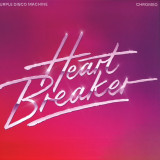
After a long delay due to his previous powerhouse 'Hypnotised' blowing up the worldwide spot, German maestro Purple Disco Machine finally lets loose the next step in his world dance domination. Every superlative under the sun has been used for this man's talents and he does not disappoint with a return to his updated Italo disco stylings on new single 'Exotica'.
Purple Disco Machine remains at the forefront of world dance music, following a series of remixes for A-list icons Diplo, Dua Lipa, Mark Ronson, Foals, Calvin Harris, Fatboy Slim, Sir Elton John, whilst more recently delivering his stellar cuts of Duke Dumont’s ‘Ocean Drive’, and Lady Gaga and Adriana Grande’s international hit single ‘Rain On Me’.
He now unveils yet another side of his impressive production prowess with new single ‘Exotica’ featuring the Italian electro funk producer Mind Enterprises on vocals, creating an electric club record exploring and playing homage to '80s German and Italian euro disco records that he grew up with.
Based around a replayed sample of 80’s Italo disco classic ‘Void Vision’ by Cyber People, Purple Disco Machine creates a high energy dance-floor heater with a lively modulated vocal. ‘Exotica’ shares its name with the forthcoming studio album, which the artist confirms will feature his playful interpretation of the music of the decade that birthed the Purple Disco Machine sound; Synth Pop, Italo Disco, Electro Funk, Soul, R&B and Boogie.
Certified as one of the most prolific electronic artists of our generation, the Dresden born producer ranks #2 on Beatport’s all-time Top Artists, with his 2013 breakthrough hit ‘My House’ remaining as one of the platform’s best-sellers through to today. With an undeniable midas touch, Purple Disco Machine landed himself in the record books once again in 2018, whilst amassing a stunning 100 million streams across his original ‘Dished (Male Stripper)’, and remixes of Weiss’ ‘Feel My Needs’, and most notably his remix of the seminal ‘Praise You’ by industry icon Fatboy Slim. With a slew of varied releases including hit singles ‘In My Arms’, ‘Body Funk’ and ‘Devil In Me’, the producer’s status was propelled by his debut LP ‘Soulmatic’, earning him critical acclaim across the globe.
Clikno Is Proud To Present The Second Strike Of Dr.nojoke's Double Ep 'zero'.
'aplose' Is A Straight 10 Minute-stomper, Which Sounds Like A Wild Horde Of Percussionists Clanging And Banging Cans And Pots. The Truth Is The Doctor Just Threw Glass Marbles On A Wooden Floor. Fun-time! For The Hips He Adds A Low Rolling Bassline And For The Head Some Freaky, Randomly Pitching Chords And Off It Goes! Call It Afro-kraut-jazz-tech Or Just Clikno - Aplose Is A Counter-action To Electronic Music Production With Electronic Machines - Marbles Do It As Well!
'kumuestu' On The Flipside Is The Antagonal Piece On Zero.two - More Dark And Deep It Is Music For A Fictional Ritual. Carried By A Hypnotic Fluctuating Bass-figure And Drones The Tune Slowly Mutates Into A Shamanic Rhythm Monster Creating A Resonating Field For Transcendental Dancefloor Action - From Here To Eternity.
Zero.two Is Purely Audiophile Electricity To Twitch Your Body In All Directions. Do The Clikno!
Again Zero.two Is A Limited Vinyl-only Release Pressed On Transparent Vinyl Coming In A Transparent Sleeve - Transparent As Light, As Ideas, As Music And As The World Should Be - No Borders, But Freedom, Peace And Equality For Everyone!
(180 gram pressing, black vinyl) Musique Pour La Danse presents CRON aka TODD SINES 'Scalable Architectures', the classic 1995 EP remastered. For fans of Dopplereffekt, Drexciya, Keith Tucker, Mid-West Electro A highly sought after EP equally blowing your mind and the floor. Cron is a project where Todd Sines focused on his long-running passion for electro music by exploring a specific set of machines composed of a Synton Vocoder SPX216, a Yamaha DX 100 and an Arp Avatar in a vibe completely different from his .xtrak alias or productions released under his own name.
The record visual presentation was equally important as it features 3-D objects created Todd Sines through intentional misuse of mathematical functions, creating unique forms and 'scalable architectures'.
Please find the complete 1995 liner notes below for more informations. Comprising of an intro + five highly danceable futuristic electro tracks of deep, sharp-edged electric grooves and hypnotic warm cuts that are each an exploration of a 'less is more' approach to production.
- A1: Harris & Orr - Spread Love
- A2: Terry And Deep South - Trying To Get By
- A3: Toshiyuki Honda - Burnin' Waves
- A4: Igna Igwebuike - Disco Bomp
- B1: Janette Renee - What's On Your Mind (Super Club Remix)
- B2: Grupo Serenata - Sodade, Tem Pena D’mim
- B3: Vital Disorders - Zombie
- B4: Alphonsus Idigo - Flight 505
- C1: Dj Food - Peace (Harvey's 30 Something Mix)
- C2: Man Jumping - In The Jungle
- C3: Stars - Dancin’ People
- D1: Gaucho - Dance Forever (Club Version)
- D2: 49Th Floor - Night Passage (Bongo Mix)
- D3: Orion Agassi - Desacato
- D4: Fatdog - Remember Feat Cj Raine
yellow vinyl[28,15 €]
With two deeply cherished compilations already in the bag, Luke Una steps up for the third volume in his É Soul Cultura series on Mr Bongo. A love letter to the dancefloor and its power to unite people from all corners of society amid growing division and extremist politics. Genre-spanning in nature, the 15 tracks travel between cosmic soul, boogie, proto-house, slo-mo technoid grooves, drum machine afro, astral bass-bugging futurism, jazz funk, dance, and disco. Each having the ability to move the body as much as the heart.
From his formative years in Sheffield to co-founding Manchester’s much-fabled Electric Chair with Justin Crawford, through to helming the iconic LGBTQ institutions of Homoelectric / Homobloc, Luke has spent 40 years immersed in dance music. His latest outlet, É Soul Cultura, has grown from a label to a globe-spanning events series with Luke holding residencies and embarking on tours across the world from Japan and Australia to America and Europe.
“For me, the dancefloor was never about a one-dimensional, thudding, 130 BPM beat only. It's a much more dynamic, broader vision than that. I cut my teeth in an era where a 100 BPM record had as much impact, excitement, and energy as a 134 BPM dancefloor jazz funk or techno record”, Luke mentions. É Soul Cultura Volume 3 is the perfect embodiment of that notion: “It’s about four decades in the trenches playing dance music, the late-night afters, the shebeens, the basements, warehouse parties, the eight-hour journeys in East London, through to festival sets at Houghton and We Out Here. It’s music unconstrained by genre or tempo and more about making your body move”.
But this isn’t simply a collection of disparate dance tracks; they carry meaning and soul. “It’s less about escapism, more about reconnection. My experience of post-covid has been the coming together of all the clans in various clubs and gatherings. A reaction to a very toxic world out there, where the aggro rhythms of division have sought to divide us, and people don't meet as often. The coming back together face-to-face in clubs has encouraged a real love in the air, there's a real togetherness and collective spirit”.
Opening up the compilation is a track that channels that very message, the transcendental, soul-rousing Harris & Orr ‘Spread Love’. Joining the dots from there, to the low-slung deep house closer of Fatdog ‘Remember’, you’ll find electronic drum machine Nigerian funk, sitting side by side with dancefloor Cape Verdean brilliance, a post-punk cover of Fela Kuti, rubbing shoulders with cosmic electro, and an Una-championed, 8-minute, kickless DJ Harvey remix. There’s jazz funk in various guises moving from boogie synth to astral travelling, slo-mo acidic raw techno, and a ‘79 soul stepper, alongside swirling percussive Italo disco and tribal-charged house. All infused with an innate ability to bring people together.
As society becomes increasingly fractured, É Soul Cultura Volume 3’s message is more than movement. It’s about dance music’s power to unify people from all walks of life and break down the barriers that divide us.
- A1: Harris & Orr - Spread Love
- A2: Terry And Deep South - Trying To Get By
- A3: Toshiyuki Honda - Burnin' Waves
- A4: Igna Igwebuike - Disco Bomp
- B1: Janette Renee - What's On Your Mind (Super Club Remix)
- B2: Grupo Serenata - Sodade, Tem Pena D’mim
- B3: Vital Disorders - Zombie
- B4: Alphonsus Idigo - Flight 505
- C1: Dj Food - Peace (Harvey's 30 Something Mix)
- C2: Man Jumping - In The Jungle
- C3: Stars - Dancin’ People
- D1: Gaucho - Dance Forever (Club Version)
- D2: 49Th Floor - Night Passage (Bongo Mix)
- D3: Orion Agassi - Desacato
- D4: Fatdog - Remember Feat Cj Raine
black vinyl[26,68 €]
With two deeply cherished compilations already in the bag, Luke Una steps up for the third volume in his É Soul Cultura series on Mr Bongo. A love letter to the dancefloor and its power to unite people from all corners of society amid growing division and extremist politics. Genre-spanning in nature, the 15 tracks travel between cosmic soul, boogie, proto-house, slo-mo technoid grooves, drum machine afro, astral bass-bugging futurism, jazz funk, dance, and disco. Each having the ability to move the body as much as the heart.
From his formative years in Sheffield to co-founding Manchester’s much-fabled Electric Chair with Justin Crawford, through to helming the iconic LGBTQ institutions of Homoelectric / Homobloc, Luke has spent 40 years immersed in dance music. His latest outlet, É Soul Cultura, has grown from a label to a globe-spanning events series with Luke holding residencies and embarking on tours across the world from Japan and Australia to America and Europe.
“For me, the dancefloor was never about a one-dimensional, thudding, 130 BPM beat only. It's a much more dynamic, broader vision than that. I cut my teeth in an era where a 100 BPM record had as much impact, excitement, and energy as a 134 BPM dancefloor jazz funk or techno record”, Luke mentions. É Soul Cultura Volume 3 is the perfect embodiment of that notion: “It’s about four decades in the trenches playing dance music, the late-night afters, the shebeens, the basements, warehouse parties, the eight-hour journeys in East London, through to festival sets at Houghton and We Out Here. It’s music unconstrained by genre or tempo and more about making your body move”.
But this isn’t simply a collection of disparate dance tracks; they carry meaning and soul. “It’s less about escapism, more about reconnection. My experience of post-covid has been the coming together of all the clans in various clubs and gatherings. A reaction to a very toxic world out there, where the aggro rhythms of division have sought to divide us, and people don't meet as often. The coming back together face-to-face in clubs has encouraged a real love in the air, there's a real togetherness and collective spirit”.
Opening up the compilation is a track that channels that very message, the transcendental, soul-rousing Harris & Orr ‘Spread Love’. Joining the dots from there, to the low-slung deep house closer of Fatdog ‘Remember’, you’ll find electronic drum machine Nigerian funk, sitting side by side with dancefloor Cape Verdean brilliance, a post-punk cover of Fela Kuti, rubbing shoulders with cosmic electro, and an Una-championed, 8-minute, kickless DJ Harvey remix. There’s jazz funk in various guises moving from boogie synth to astral travelling, slo-mo acidic raw techno, and a ‘79 soul stepper, alongside swirling percussive Italo disco and tribal-charged house. All infused with an innate ability to bring people together.
As society becomes increasingly fractured, É Soul Cultura Volume 3’s message is more than movement. It’s about dance music’s power to unify people from all walks of life and break down the barriers that divide us.
Dutch symphonic metal band Delain released their third studio album We Are the Others in 2012 to positive reviews from music critics. The album title was inspired by the murder of 20-year-old Sophie Lancaster, whose death was likely a hate crime due to her being part of the goth subculture.
Two singles were released: “Get The Devil Out of Me” and the title track "We Are The Others", for which the band shot a music video that included many well-known people from the metal scene, including George Oosthoek, Sharon den Adel, Robert Westerholt and Rob van der Loo. The album features guest contributions by the likes of Burton C. Bell (ex-Fear Factory) and Marko Hietala (ex-Nightwish) and was produced by Jacob Hellner (aka Tripod), who is best known for producing most of Rammstein’s albums.
This release of We Are the Others contains an insert and is limited to only 750 individually numbered copies on orange & black marble vinyl.
Borrowing from the melody of Rah Band’s “Electric Fling”, Stefano Breda’s cover version completely re-invents the theme into what came to be a “Afro Cosmic” classic. Not your average Italo Disco sound, the downtempo chuggy beat quickly got picked up by pioneering jocks in the cosmic scene. With plenty of silence in between transients putting the spotlight on the multiple percussive elements employed by the skilful drum machine techniques of Breda along with trippy electric wind instrument sounds, resulting in an overall aesthetic of highly unforgettable mediterranean dreaminess, take a deep dive into Breda’s instrumental bliss. This release is remastered and further embellished with yet another previously unreleased mix of “Electric Fling” which was recently alchemized by the artist himself — the “Long Afro Version” which goes in the bonus beat realm with another study in his percussive generosities.
“Tubby did three original dub albums, ‘Dub From The Roots’. ‘The Roots of Dub’ and the third is ‘Brass Rockers’ with Tommy McCook ‘pon the flying cymbals. Where he mixed it with the horn going in and out in a dub way and one named ‘Shalom Dub’ you can call Tubby’s too because he mixed the versions as they were off forty fives’’
Bunny ‘Striker’ Lee
King Tubby and Producer Bunny ‘Striker’ Lee are intertwined in the birth of Dub Music. After discovering a mistake that made a ‘serious joke’ (more of which later...) they went on to release the first pressings of this new musical genre namely ‘Dub Music’. Tubby’s vast knowledge of electronics and Bunny’s vast catalogue of rhythms would lay the foundations of what today is taken as a standard... the Remix / Version cuts to an existing vocal tune.
Osbourne ‘King Tubby’ Ruddock was born in Kingston, Jamaica on 28th January 1941 and grew up in the High Holborn Street area of downtown Kingston. He studied electronics at Kingston’s National Technical College and also on two correspondence courses from the U.S.A... When he had qualified Tubby began repairing radios and other electrical appliances in a shack in the back yard of his mother’s home. His work in the early days included winding transformers and building amplifiers for Kingston’s Sound Systems. Tubby built his first Sound System in 1957 playing jazz and Rhythm & Blues at local weddings and birthday parties. His reputation as a man who knew and understood both electronics and music grew steadily and as the sixties drew to a close. Tubby
purchased his own basic two track equipment. He installed this alongside his dub cutting machine, a home-made mixing console, and his impressive collection of jazz albums in the back bedroom of his home at 18 Dromilly Avenue which he christened his music room.
Tubby and Striker were at Treasure Isle Studio’s one day while Ruddy from Spanish Town was working with the engineer Byron Smith....
“Tubby and myself was talking when Ruddy was cutting some dub but Smithy (engineer) made a mistake through we were talking and forgot to put in the voice. It was two track recording in those days. Ruddy said ‘No Man! Make it stay! and so they cut the rhythm. When I went over to Ruddy’s that Saturday night a dance was in progress and when they played the vocal to the tune... then he said we’re going to play ‘Part Two’. They never called it ‘Version’..and then he played the rhythm track. The song was a catchy song and everybody started to sing along and the deejay started to toast so everything went down well. On Monday morning I went up and I said ‘Tubbs the mistake we made was a serious joke.It mash up Spanish Town! The people went wild. So you have to start to do that now ‘cause when the man put on the ‘Part Two’ everyone start singing this song. It played about twenty times. I said you try Tubbs!’...Well the next Saturday night now when Tubby strung up down the farm U Roy said he’s going to play ‘Part Two’ but Tubby did it different now. He started with the voice then dropped it out and let the rhythm run and then he brought in the voice in the middle and from there Tubby started to get really popular.’’
Bunny ‘Striker’ Lee
Dynamic Sounds upgraded to sixteen track recording in 1972 and Tubby purchased, again with the help of a deal brokered by Bunny Lee. The old four track equipment and the MCI console from their Studio B. The four tracks now gave him far wider scope to work with and he began to create a new musical form where the bass and drum parts were brought up while the faders allowed Tubby to ease the vocal and rhythm in and out of the mix. It was only a matter of time before Tubby’s dub plate experiments began to make it on to vinyl and the first ever long-playing King Tubby releases would feature a collection of his mixes to a selection of Strikers rhythms. So please sit back and enjoy this historic set of sounds. Lovingly restored and with a few extra gems added to the CD Editions. These releases were the first to carry the name of King Tubby and the first to credit the great musicians that contributed so much to the rhythms that made these albums possible.
- A1: Atomic Rotary Grinding God ~ Quicksilver Machine Head (15:44)
- B1: Loved And Confused (17:03)
- C1: Phantom Of Galactic Magnum (18:57)
- D1: Atomic Rotary Grinding God ~ Blues For Black Bible (Live) (19:36)
We’ve purged the Acid Mothers Temple archives once again, resurrecting another classic album ‘Electric Heavyland’.
Originally released in 2002 on CD only (via Alien 8 Recordings), ‘Electric Heavyland’ is presented here for the first time on vinyl, remastered and with a whole bonus live side!
Housed in a beautiful gatefold sleeve with heavy use of the original black and metallic silver ink artwork
“Suddenly, my world explodes as the band pounces on the joint with some hell-blues, laced with sci-fi laser transmissions. Jesus H. Fuck, this is loud. There comes a point when heavy jamming and pure noise meet, and that point is tearing shit up at this very moment.” Pitchfork
Of key note for AMT diehards/collectors. Side D was recorded live at at the 2nd Acid Mothers Temple Festival December 13th 2003 with Yamazaki Maso (Masonna) as a guest.
Makoto says "we have played this song, Atomic Rotary Grinding God live only once, this is that recording"
Produced, engineered and mixed by Kawabata Makoto live recorded by Takayama Manabu (original source is VHS video tape)
LP, Opaque Pink Vinyl, w/ download card
Mexico City’s Sunset Images emerge with their most daring and immersive work to date, Oscilador, arriving January 23 on Dedstrange. Known for pushing the boundaries of noise rock and psychedelic experimentation, the band plunges deeper into their raw, unrelenting sound—crafting an album that thrives in chaos, distortion, and hypnotic repetition.
Oscilador captures Sunset Images at a new creative peak: jagged guitars dissolve into swirling feedback, fractured rhythms pulse like machinery on the brink, and vocals echo through layers of reverb as if channeled from another dimension. The record balances intensity and atmosphere, offering both catharsis and transcendence. It’s a sonic free fall that feels at once destructive and redemptive—like watching a city crumble only to find strange beauty in the ruins.
The album title reflects the band’s fascination with constant motion and instability, the oscillations of sound and life itself. Across the record, Sunset Images embrace the extremes: minimal passages expand into walls of noise, meditative drones are shattered by bursts of primal energy, and every song teeters on the edge of collapse. This restless spirit makes Oscilador not just a collection of songs, but a visceral experience—one that mirrors the tension and electricity of Mexico City’s underground scene.
Joining forces with Dedstrange, Sunset Images step onto a global stage while staying true to their uncompromising vision. For fans of A Place To Bury Strangers, Sonic Youth, or My Bloody Valentine, Oscilador delivers the thrill of pure immersion—music that doesn’t just demand to be heard, but to be felt in the chest, the bones, and the subconscious.
With Oscilador, Sunset Images invite listeners to lose themselves in noise, distortion, and dissonance—and to find clarity within the chaos.
Grupo um celebrate 50 years with release of lost dictatorship-era album nineteen seventy seven!
First time release - vinyl comes with printed innersleeves
Brazilian avant-jazz vanguardists Grupo Um celebrate their 50th anniversary, sharing a second previously lost 1970s album from the vaults. Nineteen Seventy Seven (titled after the year it was recorded) is another rip-roaring instrumental fusion treasure from the band which spawned from within Hermeto Pascoal’s famed mid-1970s São Paulo collective.
Like their debut album Starting Point, Grupo Um’s Nineteen Seventy Seven was recorded when Brazil's military dictatorship was at its most repressive. “There were no open doors to those who dreamt to be protagonists in creative instrumental music”, remembers drummer Zé Eduardo Nazario, “even popular composers and singers had to submit their songs to censors and many records were banned and confiscated from the stores.”
Just like Hermeto Pascoal's Viajando Com O Som (1977) and Grupo Um's previous album Starting Point (1975), both of which remained unreleased until the 21st century, Zé Eduardo asserts that the 1977 album was flatly 'without any chance to be released at that time."
Recorded at Rogério Duprat’s Vice-Versa Studios in São Paulo, the group were under both time and space restraints, “we chose the small Studio B,” Lelo Nazario recalls, “which had a Tascam (TE AC) 12x8 console and a 4-channel AMPEX AG 440 machine. Therefore, we had to record without overdubs, everything straight to tape.”
Expanding from a trio to a quintet, original Grupo Um members Lelo Nazario (keys), Zé Eduardo Nazario (drums), and Zeca Assumpção (bass) were joined by saxophonist Roberto Sion and percussionist Carlinhos Gonçalves. Carlinhos, Zé and Zeca had already played together in the group Mandala, while brothers Lelo and Zé had just finished a stint backing Hermeto Pascoal during his years in São Paulo.
Lelo was deeply immersed in modular synthesizer experimentation during this period, working extensively with the ARP2600 and EMS Synthi AKS. These electroacoustic explorations formed the sonic foundation for "Mobile/Stabile," one of his first compositions to merge modular synthesis with Brazilian music, a fusion that would ripple throughout the Brazilian jazz scene. The piece premiered at the first São Paulo International Jazz Festival in 1978, performed by Grupo Um with guest trumpeter Márcio Montarroyos. In a shocking moment, festival organizers interrupted the show mid-performance, sparking fierce backlash from both audience members and journalists who denounced the incident as artistic censorship during Brazil's era of political and cultural repression. The version on Nineteen Seventy Seven is the first recording of the composition.
Nineteen Seventy Seven combines Afro-Brazilian rhythm, modular synthesis and a plethora of whistles, percussion and effects pedals. Album opener “Absurdo Mudo” - so titled for the absurd difficulty it poses to the musicians performing it - starts out in a cloud of mysterious dissonance, before the haze breaks for a glorious keyboard and saxophone interplay atop an uptempo samba groove. “Cortejo dos Reis Negros (Version 2)” (Procession of the Black Kings), based on the maracatu rhythm, inverts the traditional jazz song structure by beginning with improvisations, which are followed by the theme and a final coda. “The studio also had two Parasound electronic reverb units,” Lelo notes, “and the timbre is very audible on the soprano sax and percussion.”
Grupo Um’s daring music represents a manifesto of resistance during the dictatorship years, but it’s one which remains just as relevant today. As Lelo puts it: “For me, the aesthetic issue has always been about combining contemporary avant-garde languages with Brazilian music, independent of categories and commercial interests. The result of this fusion takes music to a new level.”
Recording credits (1977)
Recorded at Vice-Versa B Studio, São Paulo, November 9, 1977
Produced by Lelo Nazario and Zé Eduardo Nazario
Engineered by Ricardo “Franja” Carvalheira
Lelo Nazario – Wurlitzer electric piano, acoustic piano, signal generator, percussion
Zé Eduardo Nazario – drums, percussion
Zeca Assumpção – electric bass
Carlinhos Gonçalves – percussion
Roberto Sion – soprano sax, clarinet
Release credits (2025)
Produced by UTOPIA Studio, São Paulo
Project Coordination in Brazil by Irati Antonio (Utopia Studio)
Tape Restoration and Digital Mastering by Lelo Nazario at Utopia Studio, July 2025
Liner Notes by Lelo Nazario and Zé Eduardo Nazario
Photography by Jorge Las Heras, Lelo Nazario, and artists' personal archives
Photo Restoration by Lelo Nazario
Artwork and Design by Alessandro Renaldin
- A1: Wolfram Feat Desire – Sad Ibiza Song
- A2: Orion – Call A Psychic
- A3: Mothermary – Coming For You (Nicolaas Remix)
- A4: Double Mixte – Chateau D'eau
- B1: Love Object – Epicurus
- B2: The Operator – Danser
- B3: Talvi - The Day We Met Never Ended For Me
- B4: Kid Moxie & Nina* – Waiting For Tonight
- C1: Farah – Losing My Religion
- C2: Sally Shapiro – Moonlight Dance (Tommy '86 Remix)
- C3: Glüme – Dangerous Blue
- C4: Cigar Cigarette – Come Correct
- D1: Desire – Silver Machine
- D2: Causeway – I'm Falling Apart
- D3: Esper Star – Boys Of Summer
- D4: Juno Francis – Romantica
- E1: Sally Shapiro – Purple Colored Sky
- E2: Club Intl Feat Logan Avidan – Hazel Eyes
- E3: Mesh Kimono – Afterburn
- E4: Dlina Volny – Saturday
- F1: Annie-Claude Deschênes – Electric Light
- F2: Cameron Romance – Meet You On The Other Side
- F3: Joon – I Think They Call It Love
- F4: Lovelock Feat Orion – Riders On Dark Horses
- F6: Pynkie & Social Media – Zoom
- F7: Body Double – Telescope
- F5: Double Mixte – Am I A Fool To Love You
15 years since their fantasy disco scene-defining 1st volume, Johnny Jewel’s IDIB lasso Sally Shapiro, Desire, Farah, Lovelock and the kreme of their field for a 27-song, 2-hour re-up
Where previous volumes took their sweet time to arrive, ‘Volume 4’ graces the ‘floor only two years since the last, and nobody’s complaining. From its slo-mo, dry-iced covers of Jennifer Lopez’ ‘Waiting For Tonight’, Don Henley’s ’Boys of Summer’ and even flipping R.E.M.’s ‘Losing My Religion’, thru to exclusive pearls by our disco queen crush, Sally Shapiro, and Johnny Jewel as Desire, it’s the ideal soundtrack for late summer into silly season.
Childhood Intelligence’s 18th release by ADSR aka. Todd Nickolas & Dominic Paterson from Toronto, Canada. The 2x12” album presents mostly tracks written and produced by Todd, with A1/D1 being in collaboration with Paterson. "Give a teenager in a rural Canadian setting an analog synthesizer, a drum machine and a four-track cassette recorder and feed him a steady diet of 80s EBM, Post-Punk, Synthpop, Electro, Dub, Acid, Hip Hop and House, and you’ll get the kind of genre melding electronic-based music that Todd Nickolas has been known for since his early days of writing and producing." The end result is a versatile one, with “Passive Articulation” presenting abstract Techno - House - Electro visions, and fusing all the elements of vintage Intelligent Dance Music that we cherish so much: warm basslines, beautiful chord progressions, diverse and surprising arrangements infused with haunting melodies, hypnotic cyber sounds, detached vocal cuts and dubbed percussion.…Overall fresh & timeless classiness for the present, past & future.
Recorded various locations New Hamburg, Kitchener-Waterloo, Ottawa, Toronto, San Francisco and Los Angeles. ADSR greatly thanks those who were there from the start, those who joined along the journey and those here now.
- A1: Disco Mania
- A2: Miniminiminiminijupe
- A3: Noise Boys
- A4: Hungriges Afrika
- B1: One Second Too Late
- B2: Sweet Jane
- B3: Ping Pong Lied
2025 Reissue.
Münchenbuchsee, a suburb of Bern, Switzerland. Stephan Eicher is the youngest of three children. His father, a radio and TV repairman, is also a jazz violinist and a sound tinkerer in his spare time. In the family home's converted fallout shelter turned studio, Mr. Eicher experiments with homemade sequencers, tortures handcrafted drum machines, and abuses reel-to-reel tape recorders—all under the fascinated gaze of young Stephan.
The boy quickly develops a musical curiosity, exploring sound through various experiments and wanderings. Alongside his younger brother Martin, Stephan crafts audio plays on a homemade multi-track recorder (essentially several cassette decks hooked together!), which they write, record, add sound effects to, and perform for family and friends. Just a couple of nice kids, really...
Then comes 1972, and Lou Reed's Transformer album changes everything for the Eicher kids. For 13-year-old Stephan, it's a revelation—especially "Vicious", the opening track, which he plays on repeat for months. He convinces his father to buy him an electric guitar. Not stopping there, his father also builds him a tube amp using an old radio.
Then comes adolescence. A rough one. Stephan leaves home at 16 and moves to Zurich. With obvious artistic talent, he persuades his art teacher to help him get into F+F, a radical, alternative art school—despite his young age. Accepted, he starts learning video techniques, determined to become a filmmaker.
At F+F, Stephan organizes Dada-style happenings and concerts with a group of friends known as the Noise Boys. Among them: one of his teachers on bass, Veit Stauffer on drums (who would later found ReR/Recommended Records), his girlfriend Sacha on vocals, and Stephan on guitar. In one of their early performances, they release a remote-controlled mouse covered in dull razor blades into the audience to create panic and chaos. Keeping with this aggressive, confrontational spirit, they once played a concert while wearing headphones blasting Tristan and Isolde, trying to perform their own songs simultaneously—to maximize the cacophony. The goal was always the same: clear the room.
Their “songs,” if you can call them that, followed suit. Take "Hungeriges Afrika", for instance—performed entirely with power drills and some drum feedback.
To make ends meet, Stephan returns to Bern on weekends to work as a waiter at the Spex Club, the city’s main punk venue. On September 16, 1980, during a show by proto-electro group Starter, the police raid the club and arrest everyone. Stephan, who manages to avoid arrest, seizes the opportunity to “borrow” Starter’s gear left behind. He suddenly finds himself in possession of a Roland Promars synth, a Korg MS20, and a gorgeous CR78 drum machine, which he runs through a Big Muff distortion pedal to get that perfect gritty sound.
He then sets out to reinterpret some Noise Boys tracks, reworking them during impromptu sessions recorded on a dictaphone (yes, a dictaphone—now the lo-fi sound makes more sense, doesn’t it?). He ironically titles the resulting cassette "Stephan Eicher spielt Noise Boys" ("Stephan Eicher plays Noise Boys"). This gem features seven tracks, which are the ones reissued here.
Back in Zurich, he visits his friends Andrew Moore and Robert Vogel, who have a DIY cassette duplication setup. They make 25 copies of Stephan Eicher spielt Noise Boys for Stephan and his friends. Robert encourages him to visit Urs Steiger of Off Course Records and play him the tape.
Without much hope, Stephan shows up at Urs’s office. But Urs is instantly hooked and suggests releasing a 7” single. Due to space constraints, they reluctantly drop two of the seven tracks ("Hungeriges Afrika" and "One Second"). As for the musical score featured on the cover—it was randomly chosen and remains a mystery to this day. Calling all music theory nerds!
The 7-inch is pressed in 750 copies and released in the first week of December 1980—a date Stephan remembers well, as it’s the same week John Lennon was killed. Smartly, Urs sends a promo copy to François Murner, Switzerland’s answer to John Peel, who hosts a show on alternative station Sounds. Murner falls in love with the record and starts giving it airtime. To Stephan’s surprise, sales follow—and people actually seem interested in his music.
Even this modest underground success scares Stephan a bit. He stops making music for a year and moves to Bologna, where he works as a programmer at Radio Città, a feminist radio station.
Meanwhile, Stephan’s younger brother Martin, who’s also involved in the punk scene, joins the band Glueams as a singer and guitarist. Glueams, named after the fanzine run by two of its members (drummer Marco Repetto and bassist GT), eventually rebrands as Grauzone. Stephan is invited to their shows to project hacked Super 8 visuals live on stage.
Urs Steiger, now working on a compilation titled Swiss Wave – The Album, asks Grauzone to contribute alongside bands like Liliput, Jack and the Rippers, The Sick, and Ladyshave (Fall 1980).
For the album, Martin tasks Stephan with producing their recording sessions. Under Stephan's artistic direction, two tracks emerge: "Raum" and "Eisbär". During "Eisbär", Martin plays a minimalist bass line borrowed from post-punk band The Feelies (just an open string). Drummer Marco Repetto struggles to keep time. Later that evening, unhappy with the takes, Stephan builds a four-bar drum loop from a ¼-inch tape and uses it instead of the flawed original. He then adds bleepy synths and wind sounds to complete the track’s icy vibe before handing it over to Urs.
The Swiss Wave – The Album compilation is released quietly at first, but things snowball thanks to "Eisbär", which eventually becomes a smash hit—selling over 600,000 singles.
Meanwhile, Stephan plays in a rockabilly band called SMUV (named after Switzerland’s social security agency) and begins producing artists, including the debut album of Starter (1981), which includes a more pop-oriented version of "Minijupe".
By early 1982, Stephan starts spending time with the post-punk girl band Liliput (formerly Kleenex). They’re older than him, and he happily drives them around in his Renault Major, acting as their roadie.
By 1983, Grauzone—signed to the major label EMI, which turned out to be a misstep—is falling apart. Stephan begins to pivot toward a more mainstream pop sound with his debut solo album Les Chansons Bleues.
But that... is already another story.
Electric Satie is a one-off conceptual project by Japanese composer Mitsuto Suzuki, who is mostly known for his work on Final Fantasy soundtracks. Released on CD-only in 1998, “Gymnopédie ’99” reimagines Erik Satie’s beloved piano compositions in electronic form ranging sonically from downtempo bossa-nova (featuring Brazilian percussionist Marco Bosco and vocalist Silvio Anastacio) to freestyle ambience and chillout room IDM, not far from the music featured on Music from Memory’s “Virtual Dreams II” or Warp Record’s “Artificial Intelligence.” A deeply imaginative composer and arranger, Suzuki harnesses a unique mix of drum machines, synthesizers, live percussion, soprano saxophone, piano, and spoken word to craft a lush and vividly futuristic sound world that video game soundtrack enthusiasts will easily fall into.
"Guerra Total Na Boca Do Lixo" is CAVEIRAS' new album, to be released on February 13, 2026. The album will include 12 brand new tracks, displaying the usual mix of punk aggression, batucada rhythms, industrial / noise bravado and bass music.
---------------------
CAVEIRAS deal in obsessive rhythms and low frequencies, infusing punk with Afro-Brazilian vibes. Their spiritual birth can be traced back to a visit to Favela Rocinha: while watching two young boys improvise a batucada with a bucket and a bin, band members became obsessed with the possibility of an occult alliance between Rio de Janeiro and Einstürzende Neubauten’s Berlin. Back home, Caveiras made a blood oath, vowing to channel the dark side of samba. Armed with an electric bass, scrap percussions and a machine-gunning sampler, they began to butcher Brazilian standards with a wild and iconoclastic attitude. Claves and rhythms of the Brazilian tradition are heavily treated through electro-acoustic techniques, dub-oriented bass lines strip melody down to the bone, while screams cross the line separating punk’s rants from Quimbanda’s curses.
- A1: Rone - The Dolphin Ambassador
- A2: Mézigue & Swooh - Broken Roll To Venice
- A3: Kink - Give Me
- B1: Belaria & Madben - Into The Void
- B2: Oniris & Benjamin Rippert - Sonate
- C1: Legowelt & Cuften - Liar
- C2: Zaatar & Trunkline - Come Into The Light
- C3: Scan X & Electric Rescue - Lost In Time
- D1: Manu Le Malin & Kmyle - Little Big Man
- D2: Célélé & Théo Muller - Drum And Drift
Astropolis Records — the label born from the legendary electronic French festival — celebrates a decade of electronic devotion with a generous and deeply emotional anniversary compilation - a bit late, but never short on flair.
This double vinyl gathers the many faces of the Astropolis galaxy: in-house artists, long-time companions of the festival, and rising voices from a perpetually vibrant French scene. Across 18 artists, listeners are invited on a sonic journey where rave legacy, electronic dreamscapes, and collective fervor intertwine — true to the DNA of a festival that’s never known boundaries.
The record opens with grace and wonder courtesy of Rone, whose electronic touch channels both the intimate and the infinite. Between electronica and downtempo, The Dolphin Ambassador bathes in luminous melancholy, offering a moment of calm before the storm. In the same contemplative vein, we’re proud to unveil one of the first productions from Célélé alongside Théo Muller: Drum and Drift, a subtle blend of dubby vibrations and sunlit textures.
Astropolis has always thrived on happy collisions — and this compilation is proof of it. The unlikely meeting between Mézigue and Swooh sends house spiraling into a g-tech vortex on Broken Roll To Venice, a playful burst of groove, hybrid energy, and cheeky mischief. The same spirit of alchemy fuels Belaria & Madben, whose Into The Void burns bright as a 90s rave-meets-EBM anthem wrapped in hypnotic trance. Zaatar & Trunkline bring raw intensity to Come Into The Light, a sweaty, visceral banger at the crossroads of techno, dark disco, and EBM.
French techno pillars Scan X & Electric Rescue deliver a masterclass in elegant machine soul on Lost In Time. When Manu Le Malin teams up with Kmyle, the result is as sharp as it is cinematic: Little Big Man pulses with dramatic tension, balancing raw emotion and restrained fury. Elsewhere, Oniris & Benjamin Rippert reconnect with the melodic techno spirit of the label’s early days on Sonate, guided by a craftsman’s sense of harmony.
For the machine lovers, Legowelt & Cuften resurrect the spirit of early electroclash on Liar, a carnal fusion of analog synths and DIY attitude. And for the diehard dancefloor devotees, KiNK finally releases a cult track from his live sets: Give Me, a breakbeat-meets-vintage-house stormer tailor-made for those late-night sweats.
This anniversary compilation reaffirms the label’s openness to new generations and hybrid sounds, while paying tribute to the techno roots that shaped its foundation. Like the festival itself, it embodies sincerity and collective energy — a small manifesto linking generations, aesthetics, and territories, celebrating roots without nostalgia and the future without bending to trends.
- A1: Suburban Knight - Edge Of Space
- A2: Body Mechanic - Trappin Thru The Galaxy
- A3: Erotek Ft Dick Whyte - Bottles N Bootys
- B1: B Calloway & Ray 7 - Runaway Slave
- B2: The Bs Project - Underground 313
- B3: The Vontells - No Way
- C1: Folson & Tate - Closer (I Wanna Be)
- C2: Detroit Electronic Authority - Stuck N The Future
- C3: Mr Rabbit - The Love
- D1: Spade The Specialist - The O-Village
- D2: 207737 Ft Kinesis - Enjoy This Moment
- D3: Ray 7 - Hustle Hard
Straight from the heart of the Motor City, Detroit Techno Records presents From The Basement With Love, a double-vinyl transmission from the legendary Detroit Basement, where the pulse of real techno still beats in raw electricity and sweat. This isn’t nostalgia. This is living history, a direct line from the city that invented techno to the artists who continue to keep its soul alive. Across two slabs of black wax, the pioneers and torchbearers of Detroit gather in one place: Suburban Knight, Body Mechanic, Erotek, Ray 7, The BS Project, Detroit Electronic Authority, Spade The Specialist, and more. Each cut drips with the signature elements that defined a movement, machine funk, militant rhythm, deep emotional circuitry, and that unmistakable underground grit. Curated straight out of the Detroit Basement, this compilation captures the true spirit of a city that never stopped creating, never stopped fighting, never stopped dancing. Every groove is a love letter to the origin, pressed by the hands that built the sound — not a recreation, but a continuation.
For his last solo record ‘Through a Room’, Bill Nace shifted his usual saturated guitar sound and added tapes, hurdy gurdy, doughnut pipe, bird calls and the mysterious Japanese taishōgoto. Setting up for the final night of his three day residency at OTO with only the taishōgoto soundchecked, Nace hoped that Parker would arrive with his small soprano as its opposite. “I’ve been interested in state change, you know, playing until there’s a shift in time.” Known for his development of multiphonics to produce a constantly shifting pattern, Evan Parker has evolved an instantly recognizable sound - his work the soprano most distinct. Happily, it was the soprano Evan brought with him and as soon as the two start to play they entwine - taking off in a double helix of keys and reed primed for endless reconfiguration. Space warps under the velocity of playing, the pitch rising unrelentingly. It felt like unending lift off in the room, sheer energy until the last note makes remember your feet have been on the floor the whole time. Total time bending shredding.
–
"They had never played together before. They had never even met each other before this springtime 2024 concert at London’s Café Oto.
Evan Parker, circular breathing maestro of the saxophone, a legend in the universe that is Free Improvisation since the late 1960s and Bill Nace, one of the most intriguing experimental “noise” guitarists of the 1990s/2000s underground scene.
For those of us who have been enamored by the live and documented work of both these gents, this Café Oto duo was a must-hear event. It could have gone anywhere musically and that would have been totally fine. Particularly with Evan having a history of being thrown into a variety of challenging collaborations throughout his career, employing the learned elegance of trust in his own sensitivity to listening, responding, leading, following, sparring, intertwining, dialoguing, creating in the instant and, essentially, dignifying the non-hierarchical grace of chance.
The aesthetics of socialist consideration in Evan Parker’s playing, in his community of expanded and personal technique, for a younger player such as Bill Nace, strikes an exemplary model. This notion of respect would be entirely the reason Nace, when offered a residency at the most critical “new music” room in England, would request to play in duo with Parker.
Bill Nace came to prominence mostly during the apex of experimental music activity in and around Western Massachusetts in the early days of the aughts, with a focus on visual art and free improvisation guitar action. He could be found in the daytime hours, his head hanging down over a notepad, penning fine-tuned illustrations and abstract line drawings, while in the evenings he’d be attending any number of basement noise gigs, many of which he’d be participating in. His guitar style came across as being informed as much as by the physicality of his writing utensils in friction to the page as it was to his hearing and redefining of radical recordings ranging anywhere from the Black Unity Group to Black Flag.
Utilizing various metal files and other small cylindrical objects Bill would allow his guitar and amplifier to be in tandem with the improvisatory movements of his body as the instrument balanced, intentionally and, at times, precariously, upon his lap. The performances came across thrilling and daring and they would be mostly in the context of venues nothing more than a low-ceilinged damp and dank New England basement, a clutch of people hanging onto rusty pipes or sitting up on dilapidated washer/dryer machines, the shards of Bill’s “file guitar” sounds ringing out like the most alive music on Earth.
By the time Bill reached Café Oto in early 2024 he had relocated to Philadelphia all the while releasing a succession of collaborative LPs on his Open Mouth label to present his developing progression of solo and collaborative work. He also would find himself considerably engaged with playing the electric taishōgoto, a keyboard-activated string instrument from Japan which can exist as a one, two, four, five, or six string oblong sound object. Bill’s approach to the taishōgoto would not be too unlike his approach to the traditional electric guitar, though no outboard implements such as files, sticks, and rocks are utilized. The similarity would lie wholly with Bill’s full immersion of high velocity action-playing where, with the taishōgoto, an electric drone beauty occurs. The flurry of sonics and resultant harmonics emanating from the amplifier (which Bill opts to dial into with borderline loud-as fuck volume settings) furthers the meta-mantra properties of the instrument in an astounding display of drone dynamism.
This sound world of Bill’s two-stringed taishōgoto on this Café Oto night worked beautifully with Evan Parker’s improvisatory saxophone conceptions. The duology achieved instant lift off at ground zero only to find it’s eventual finale as if it were organically ordained. Time seemingly morphed from its ancient human construct of control, rendered inconsequential to the torrential transcendence of the room wildly activated by the magic resonance of the multi-directional pan-spatial sonance of the music as if it were some beatific blessing. It was one of those nights where art as a liberating force of spirit gifted the listeners with an offering of exaltation and joy. It was entirely mystical and mind blowing. A night of Total Music."
Thurston Moore, London, 2025
Funnuvojere’s curator and founder, Massimiliano Pagliara, reunites with longtime collaborator Gian to present a new chapter in their shared musical exploration: a full-length album under the moniker Hidden Frequencies. The pair’s creative dialogue began with a 2017 release on LACKREC — itself a tribute to Detroit electro — and this LP continues that sonic discourse, refining and expanding their vision. Hidden Frequencies pays homage to the emotive minimalism of acts like The Other People Place, channeling the melancholic elegance and machine soul of Detroit’s second wave.
It’s a record built on analog textures, brooding basslines, and crisp drum programming — both a reverent nod and a forward-looking reinterpretation. Tracks like “Oscillations Of Us” and “Dreaming In Electric Blue” inject peak-time energy into the atmospheric and almost restrained narrative, with a techno drive built for the dancefloor. “Obsidian Reflections” walks the line — structured around classic electroarchitecture but charged with intense propulsion. Pieces like “Dancing On Data Streams” — the contemplative title track — and “EncodedWhispers” offer more introspective soundscapes, inviting deep listening and emotional immersion.
Together, these tracks form a nuanced body of work that shifts seamlessly between reflective and kinetic, minimal and expansive. Familiar yet exploratory, Hidden Frequencies is the sound of two artists in conversation —not just with each other, but with a musical legacy they continue to honor and reshape. This is a modern electro séance that blends introspection with intention, nostalgia with forward motion.
- A1: Natty Dub Source: Natty Dread In A Greenwich Farm / Cornell Campbell
- A2: Lee's Dub Source: Lee's Dream / Derrick Morgan
- A3: Wonder Why Dub Source: Wonder Why / Cornell Campbell
- A4: I'm Gone Dub Source: I'm Gone / Derrick Morgan
- A5: Country Boy Dub Source: Country Boy / Cornell Campbell
- A6: True Believer Dub Source: True Believer / Johnny Clarke
- A7: Care Free Dub Source: Care Free / Mighty Diamonds
- A8: Rasta Train Dub Source: Mule Train / Johnny Clarke
- B1: Move Out Of Babylon Dub Source: Move Out Of Babylon / Johnny Clark
- B2: Give A Little Man A Great Big Hand Dub Source: Give A Little Man A Great Big Hand / Cornell Campbell
- B3: Feel So Good Dub Source: Feel So Good / Derrick Morgan & Paulette
- B4: For The Rest Of My Life Dub Source: Wonder Why / Cornell Campbell
- B5: When Will I Find My Way Dub Source: When Will I Find My Way / Owen Grey
- B6: I'm Leaving Dub Source: I'm Leaving / Derrick Morgan & Hortense Ellis
- B7: Feel Lost Dub Source: Feel Lost / Bb Seaton
- B8: Dawn Dub Source: Dear Dawn / Barrington Spence
2024 Reissue
“Tubby did three original dub albums, ‘Dub From The Roots’. ‘The Roots of Dub’ and the third is ‘Brass Rockers’ with Tommy McCook ‘pon the flying cymbals. Where he mixed it with the horn going in and out in a dub way and one named ‘Shalom Dub’ you can call Tubby’s too because he mixed the versions as they were off forty fives’’
Bunny ‘Striker‘ Lee
King Tubby and Producer Bunny ‘Striker’ Lee are intertwined in the birth of Dub Music. After discovering a mistake that made a ‘serious joke’ ( more of which later...) they went on to release the first pressings of this new musical genre namely ‘Dub Music’. Tubby’s vast knowledge of electronics and Bunny’s vast catalogue of rhythms would lay the foundations of what today is taken as a standard... the Remix / Version cuts to an existing vocal tune.
Osbourne ‘King Tubby’ Ruddock was born in Kingston, Jamaica on 28th January 1941 and grew up in the High Holborn Street area of downtown Kingston. He studied electronics at Kingston’s National Technical College and also on two correspondence courses from the U.S.A... When he had qualified Tubby began repairing radios and other electrical appliances in a shack in the back yard of his mother’s home. His work in the early days included winding transformers and building amplifiers for Kingston’s Sound Systems. Tubby built his first Sound System in 1957 playing jazz and Rhythm & Blues at local weddings and birthday parties. His reputation as a man who knew and understood both electronics and music grew steadily and as the sixties drew to a close. Tubby purchased his own basic two track equipment. He installed this alongside his dub cutting machine, a home made mixing console and his impressive collection of Jazz albums in the back bedroom of his home at 18 Dromilly Avenue which he christened his music room.
Tubby and Striker were at Treasure Isle Studio’s one day while Ruddy from Spanish Town was working with the engineer Byron Smith....
“Tubby and myself was talking when Ruddy was cutting some dub but Smithy (engineer) made a mistake through we were talking and forgot to put in the voice. It was two track recording in those days. Ruddy said ‘No Man! Make it stay! and so they cut the rhythm. When I went over to Ruddy’s that Saturday night a dance was in progress and when they played the vocal to the tune... then he said we’re going to play ‘Part Two’. They never called it ‘Version’..and then he played the rhythm track. The song was a catchy song and everybody started to sing along and the deejay started to toast so everything went down well. On Monday morning I went up and I said ‘Tubbs the mistake we made was a serious joke.It mash up Spanish Town! The people went wild. So you have to start to do that now ‘cause when the man put on the ‘Part Two’ everyone start singing this song. It played about twenty times. I said you try Tubbs!’...Well the next Saturday night now when Tubby strung up down the farm U Roy said he’s going to play ‘Part Two’ but Tubby did it different now. He started with the voice then dropped it out and let the rhythm run and then he brought in the voice in the middle and from there Tubby started to get really popular.’’
Bunny ‘Striker’ Lee
Dynamic Sounds upgraded to sixteen track recording in 1972 and Tubby purchased, again with the help of a deal brokered by Bunny Lee. The old four track equipment and the MCI console from their Studio B. The four tracks now gave him far wider scope to work with and he began to create a new musical form where the bass and drum parts were brought up while the faders allowed Tubby to ease the vocal and rhythm in and out of the mix. It was only a matter of time before Tubby’s dub plate experiments began to make it on to vinyl and the first ever long playing King Tubby releases would feature a collection of his mixes to a selection of Strikers rhythms. So please sit back and enjoy this historic set of sounds. Lovingly restored and with a few extra gems added to the CD Editions. These releases were the first to carry the name of King Tubby and the first to credit the great musicians that contributed so much to the rhythms that made these albums possible.
The Modulator, AKA Freddy Fresh is back in town !
LTD 100 COPIES !!!
To share this event in the best way i asked him a few questions...
Official Interview now begins :)
Tool : The last Analog Records USA was in 2000... Why did you stop it and why do you wish to realese vinyls again ?
Mr Fresh : Ii actually never stopped I just made alot of other styles of music that I do not think were proper for my Analog and E.M.F. labels (Analog is now run by Mike McLure of SAuto Kinetic we work together on that label and Electric Music Foundation is all my label.. we did some great digital releases on E.M.F. recently with ADSX / Scott Radke/Dave Olson / Poor Boy Rich etc.. and can be found here
for me my last Techno Analog vinyl 12” Release was in 1997 Quiver 12"
But I did release a few Techno/Electro style tracks on my Electric Music Foundation labels as 12” singles
in 2003 I made these
Black Out
Orange Krush
I always continue to make music and have hundreds of unreleased songs that I think some are not worth putting on 12” single as I fear to weird, experimental etc.. I try to isolate myself and make unique music hopefully not sounding like what others are making but try to be my own self
Tool : What are you favourite machines or software to make music these days ?
Mr Fresh : I still use many vintage synths like my Jupiter 8, Arp 2600, Roland System 100M, 303’s etc.. but now I also use some Eurorack Modules E950, Clouds, Metropolis Sequencer etc.. also TR8, Twisted Electrons Acid 8, Teenage Engineering Factory, PO Calculators, Korg Volca Sampler, Electrix Filter Factory, Space Echo (Boss) and MPC 4000 controlling Hardware and I usually record random ideas to a flash recorder and sometimes import into ableton tracks etc.. then use Reaktor or some other soft synths but I always start Analog. I also use Critter and Guitari Looper to record organic sounds to use for percussion.
Tool : What are your forthcoming projects on vinyl in the near future ?
Mr Fresh : I have a remix electro style for New Zealand Independent Cardboard and Computers soon on 12” single
I have COMACID EP coming out of Belgium on 12” single very soon which features some older tracks (Binder, Scared, Slow Death, Spacefunk) mainly re-release of Techno/Acid stuff all analog of course
Then I have two releases with Toolbox Records and possible new stuff with Acid.Paris and hopefully we start a nice relationship with Toolbox for a long term ha ha! My daughters start school next month so I am preparing new Eurorack Modules and getting Syncussion to really hit it and spend some serious time in the studios. I am really inspired to do the more electronic vibes now and feeling the A.C.I.D. alot lately with the newer technology
The Keith Tippett Group's Dedicated to You, But You Weren't Listening is a landmark in cutting edge fusion/avant-jazz. A vital and profoundly adventurous Jazz-Rock record that still swings very hard, it was first released on Vertigo in 1971.
Original copies are now very tricky to score and, as most of you really should know, it’s aged ridiculously well.
A legendary work, this Be With re-issue has been newly remastered from the original Vertigo master tapes, demonstrating just why this deserves to be back in press. The stunning gatefold jacket fully restores Roger and Martyn Dean's original, arresting album artwork to complete this must-have reissue.
Alive and bursting with a joyful energy that has to be heard to be believed, Dedicated to You, But You Weren't Listening flirts with perfection. It's truly magical and forever essential.
A brilliant jazz pianist, composer, arranger and bandleader "who could make the outlands of modern music feel like the most hospitable of places" (The Guardian), Keith Tippett's second album is oft-regarded as his Canterbury album.
Indeed, not only does he draw heavily on Soft Machine members past, present and future but the album title itself archly references a Soft Machine composition. Ray Babbington handles bass alongside Neville Whitehead and the drums are shared between Brian Spring (Nucleus), Robert Wyatt(!) and Phil Howard (who would go on to replace Wyatt in Soft Machine). Gary Boyle (Isotope) is on guitar whilst the great percussionist Tony Uter is enlisted for his conga and cow bell expertise. Elton Dean on Alto Saxello, cornetist Marc Charig and Nick Evans on trombone round out this quite stunning ensemble.
Dedicated to You, But You Weren't Listening presents a collective of superhuman musicians really, *really* enjoying themselves in the studio. The sheer exuberance of the performance is totally infectious. It's wild, energetic, atmospheric and, bluntly, bordering on chaotic at points. In a word, it's beautiful.
Robert Wyatt's drumming opens the record with a bang on the majestic Be With favourite "This Is What Happens". Some have described his work here as "easily the most inspired of his career on record." It's an ultra-funky conga-driven groove that truly sparks via the duelling interplay between the three horn players. In the background, Keith's insistent piano, in conversation with those unignorable drums, is the anchor that keeps this piece rollicking away. Breathtaking.
The epic, energetic "Thoughts to Geoff" is a 10-minute jammer that tends towards the dissonant and improvisational but becomes more fluid, laconic and melodic as it unravels. The interplay between soloists and ensembles is particularly dazzling here - blazing solos by Evans, Charig and Tippett himself in a flourish of angular arpeggios interspersed with chordal elocution. Phew.
Up next, the no less-urgent Mingus-referencing "Green and Orange Night Park" is a soaring example of ambitious jazz mixed with rock aggression, with Dean strutting his stuff by launching into a scorching solo. An absolutely jaw-dropping piece. Arguably the highlight of this album of huge highlights!
Though much of the album tends to fall on the raucous side ("Gridal Suite" approaches free-jazz at its most chaotic and, dare we say it, "difficult"), there are a few more sedate, at times spacey numbers, such as the deeply impressionistic "Five After Dawn". The rhythmically complex "Black Horse" is the most accessible track here, a sort of swinging Big Band number with tight grooves, soaring horn & reed melodies, a sizzling Boyle guitar solo and tasty electric piano riffs from Tippett. An hypnotic climax to a staggering record.
This Be With edition of Dedicated to You, But You Weren't Listening has been re-mastered from the original Vertigo master tapes, Simon Francis’ mastering working together with Cicely Balston's cut at Abbey Road Studios to weave their usual magic with these wonderful recordings. The stunning gatefold sleeve has been restored in all its brainchild glory so you know you're dealing with the definitive reissue, here. Now, are you listening?
Metroplex is proud to welcome Italian producers CEM3340 & 2030 to the label with the release of their new project "A Future Tribe"and their Machines Awake EP. This five-track release delivers a bold and immersive journey into electro, blending razor-sharp production with deep atmospheres and driving rhythms. Produced at their headquarters in Bari, the EP reflects both artists' precise craftsmanship and forward-looking approach to electronic music. With Machines Awake EP, CEM3340 & 2030 pay homage to the classic foundations of the genre while pushing it into new and exciting territory. Their sound aligns seamlessly with Metroplex's legacy of innovation, and we're thrilled to present this release as part of our ongoing commitment to groundbreaking electronic music. Machines Awake EP is available now across all major platforms.
- 088:
- 087:
- 089:
- 088:
- 087:
- 089:
DELUXE EDITION[26,01 €]
Requiescat Record is the new EP by New Brutalism, a minimal rock quartet formed in Knoxville, Tennessee, in 1998. The band comprises vocalist Shane Elliott, guitarist/vocalist Matt Hall, bassist/vocalist David Basford, and drummer Carey Balch. The three-track release - "088," "087" and "089," in keeping with their strict numerical naming convention - was recorded in 2021 by the late, great Steve Albini at Electrical Audio, and mastered by Bob Weston at Chicago Mastering Service in 2025. For the band, "less is more" became a guiding principle - channeled through an unwaveringly raw, direct, and honest approach to sound. Out of partly sound, partly aesthetic, mainly a thirst to build, New Brutalism performs on aluminum instruments built by the band members. They chose the material because itE¼s lighter than steel, more consistent than wood, and easy to machine. Above all, itE¼s precise - and thereby, can produce precise music. In 2021, New Brutalism entered Electrical Audio to record Requiescat Record. Named after a Latin term meaning a prayer for the repose of a dead person, Requiescat Record retroactively became a dedication to AlbiniE¼s memory. The band acknowledges that so much of the aesthetic, interests and sounds they admired are a product of his influence and the circle of artists around him. His death instigated a state of urgency. A desire to act became more pressing, to strike more often, and usher in a new era of productivity. Shattered and kinetic, forgedby time and tragedy, with god-given sonicquality, Requiescat Record may acknowledge the dead, but this music feels ever so alive.
BABYMETAL feiert ihr 15-jähriges Jubiläum mit ihrem vierten Studioalbum “METAL FORTH”. Nach dem
Erfolg von “METAL GALAXY” (2019) und dem Konzeptalbum “THE OTHER ONE” (2023) knüpfen sie
nun an ihre einzigartige Erfolgsgeschichte an. Das Album enthält 10 brandneue Tracks, die musikalische
Grenzen sprengen. Mit dabei sind einige Kollaborationen, darunter Tom Morello (Rage Against the Machine) und Electric Callboy. Auch Poppy, Slaughter to Prevail und Sunset Kiss verleihen dem Album ihren
Sound. Besonders hervorzuheben sind die Live-Hits “METALL!” und “TRATATATA”, die bereits jetzt die
Fans begeistern. Das Album vereint gekonnt Metal mit modernen Einflüssen und zeigt die Weiterentwicklung der Band. Außerdem wurde die Gründung von BABYMETAL WORLD LLC in den USA bekannt
gegeben.
- 01: River
- 02: The Destroyer
- 03: Constellations
- 04: Tsunami Waves
- 05: Star String Radio
- 06: We Are The Clouds
- 07: Time Machine
- 08: Magical Thinking
- 09: Shattered Stars
- 10: Broken Dragon Wings
- 11: Eulogy
Suzzallo (pronounced Süe-zahh-Lōw) is a new Seattle based rock band fronted by Rocky Votolato. After the devastating loss of his child in a tragic car accident, Votolato created an entire new world inside of aggressive anthemic rock songs to transmute extreme grief and loss into something healing and beautiful. This is a return to form for Votolato, who for the past 2 decades has had a successful career as an Indie-rock solo artist, but who started out playing in heavier bands - most well known for his work in Waxwing.
With Rudy Gajadhar on drums (ex-Waxwing), Steve Bonnell on bass (ex-Schoolyard Heroes) and teaming up with legendary producer John Goodmanson, Suzzallo recently finished recording their debut album “The Quiet Year” at Robert Lang Studios in Seattle, WA. Ben Gibbard (Death Cab For Cutie / The Postal Service) is featured on several tracks on the album, adding some levity to the songs with beautifully placed backing vocals, electric guitar, bass 6, and piano.
Funded via a crowdsourcing campaign that raised over 100K dollars, Suzzallo’s highly anticipated debut is due to be released on Thirty Something Records in the spring of 2025.
Between The Seed And The Timber is a cycle of six songs exploring ritual and mystical aspects of the modern era. At times both noir and psychedelic, they evoke a strong sense of nostalgia for a disappearing age. In contrast to industrial music’s dystopian semiotics, Jas Shaw challenges us to hear sounds inspired by machinery, electricity and mechanisation in a new light.
“I made the synth parts for a Swans gig,” says Shaw. “As SMD we’d supported Swans. James was away doing some production but I didn’t want to pass it up, so I offered to open solo. It turned out the gig was sooner than expected so I made all these synth things to do live.”
Shaw put the tracks to one side and forgot about them, only returning to them years later. “You know when you’ve changed as a person and you listen back to something from a different angle? I suddenly could hear what I had been after. It reminded me of experiences I’d had at Swans gigs. I wanted to achieve that energy and charge.”
Dubbing techniques are crucial to the sound of the record. “I set up a few synths on a table and had my mixer running loads of auxes back into the desk so it was all on the edge of feeding back. Then I realised that if I put a mic into the desk I’d have an extra feedback route. I found a setting where I could get it to build when I pointed the mic at the monitors but then turning it away you could put the brakes on the regen.”
Between The Seed And The Timber is Jas Shaw’s inaugural release for the London based, Kindred-affiliated TEETH label. TEETH is rooted in a reverence for texture, space, and sonic decay - amplifying experimental sounds that blend dreamlike melodies with weathered landscapes. Each release informs the next, with every track as vital as the last to complete the whole set.
Orchestrated by Jojo Mathiszig-Lee, founder of London’s Kindred, the label celebrates like-minded talent from the community, providing a platform for transgressing music.
Artworks are made by Scarlet Griffiths.
Released for the first time on vinyl - 2002's Can You Do Me Good? saw Del Amitri return after a 48 month hiatus with a new sound and a remarkable, yet almost entirely overlooked album - For the album's debut on LP it has been pressed on high quality 180g vinyl and includes a full-colour 16 page lyric booklet. By 2002, the pop world had turned; four years earlier, Del Amitri had released Hatful Of Rain, their greatest hits collection marking more-or-less a decade of success. Can You Do Me Good? relied on keyboards, samples and drum machines as much as previous albums centered on electric and acoustic guitars. Featuring its soulful lead single Just Before You Leave, Can You Do Me Good? is truly fascinating, and could well have been the groups biggest album ever had it come five years earlier. Ive got cash and prizes, but I don’t know who I am, Currie sings on Cash & Prizes; and the song seems to encapsulate the album.
Unreleased electronic / jazz / madness from two titans of jazz and experimentation: JOHN SURMAN and KARIN KROG.
I could now write a load of blown up puffery about how amazing this is, but everyone does that, and a lot of the time it’s all a load of bollocks. But basically this was sent to me by Karin / John when I asked if they had anything hanging about that had not been released. This came through and blew my tiny mind. Like something from prime Annette Peacock “Pony” period. Here is what John Surman said…
John Surman writes:
Back in 2012/13 there had been some talk about a big futuristic open air urban dance/theatre production for about 80/100 actors/dancers with lasers and all kinds of lighting effects on different stages. I was invited to get involved and, together with Ben and Karin, we eventually decided to get to work on some ideas. I think that the original plan was that in performance there would be a mixture of live music and electronica.
Not altogether surprisingly, bearing in mind the complexity of the project, it never moved forward and developed into anything more than an interesting idea. It was probably over ambitious & I guess the funding never came through.
The only information I that I can find relating to the production refers to two silent movies made in 1927/1928 by the filmmaker Eugene Deslaw, entitled `La Marche Des Machines´ and `Les Nuits Électriques.These were clearly intended to act as inspiration for the project.
After months turned into years it became obvious that the project was going nowhere, and so the recorded music laid around gathering dust until Johnny Trunk asked Karin if she had any interesting music that he might be interested in releasing. One thing led to another and so, finally, Electric Element found a home!
For anyone interested in the equipment used this will have to be an approximation since the memory might be playing tricks. Karin was probably using a Yamaha Rex50 f/x unit, a Roland VT-3 Voice Transformer and an Oberheim Ring Modulator. I was playing Bass Clarinet and Contrabass Clarinet through various f/x units together with a Yamaha WX5 wind synth. All the instruments and voice were also processed through Ben´s equipment. After writing this I asked Ben for his recollections and he came up with the following:
John, Karin and I created this music in 2 or 3 days in the winter of 2013 at their studio in Oslo, Norway. I followed up with another 2 or 3 days of mixing, editing and post-processing . We kept a collaborative, improvisational and free-form approach to the sessions. I grew up immersed in music such as Cloudline Blue, the 1979 duo album of Krog/Surman, and this felt like a similar approach. I have mixed sound for many of their live duo concerts and I would use effects and electronics as an
accompaniment and counterpoint to the performed music. The relation of organic and artificial sound sources in music has always fascinated. In this case, I used some contemporary digital signal processing to introduce my own aesthetic into the conversation, in particular using granular synthesis to recombine small 'clouds' of sound into alternate forms. Some of the software tools I used included Ableton Live, Max/MSP and Reaktor.
Bosconi Records is proud to present Tangled Waves, a dynamic split EP that brings together the sonic identities of two emerging Italian talents—Roberto Manolio and Giuseppe Angeloro—each making their debut on the label.
Like currents colliding below the surface, Tangled Waves reveals a natural convergence—where distinct styles drift together in subtle harmony.
The A-side features Roberto Manolio, known for releases on Cosmological, Nugs on Board, and Musek Records. He kicks off with Deeply Red, a UK tech house-influenced stomper driven by a fat, aggressive bassline and dreamy delayed chords. A haunting Russian voice sample adds a cinematic, retro-futurist edge—like a lost transmission from a 60s space mission. Next up is Machine City Road, a raw, gritty weapon where grinding synths and sharp textures drive the track forward with the force of a distorted electric guitar. It’s dark, edgy, and full of tension. On the B-side, Giuseppe Angeloro—previously featured on Cimedirapax, Havalon, and Polarity Records—brings a touch of italo-flavored euphoria with A Night Among the Trees. Lush arpeggios and nostalgic synth lines conjure up a dreamy atmosphere, building into an epic, cinematic anthem. Closing the EP is Mind Trip, a gentle, psychedelic excursion built on floating melodies, delayed vocals, and hazy atmospheres. It’s a reflective, emotionally rich track—perfect for the final moments on the dancefloor. Tangled Waves offers a meeting point of two unique sonic voices, flowing along parallel—but deeply connected—paths, resulting in four essential weapons built to last.
- 1: Galaxis
- 2: Galaxis (Short Version)
- 3: Polestar (Version 1)
- 4: Polestar (Version 2)
- 5: Flare Path
- 6: Flare Path (Alt. End)
- 7: Millenium
- 8: Sierra Nova
- 9: Perpetuum
- 10: Glory Road
- 11: Glory Road (Alt. Intro)
- 12: Robot Ton
- 13: Piccolette
- 14: Savannah Gold
The visionary 1983 album by Anthony Hobson, is a bold exploration of enterprising drama themes. Featuring hypnotic synth layers, commanding brass motifs, and the pulsating rhythms of electric bass and drum machine, each track resonates with confidence and ambition. Hobson's masterful compositions from this album were regular features on sports highlight reels throughout the 80’s and 90’s, including “Polestar 1” on NFL Films. From touchdowns and slam dunks to space age captains of industry, "Millenium" captivates listeners with its dynamic compositions, offering a compelling musical journey through the aspirations and achievements of the burgeoning digital age of the early 1980s.
Born from a desire to explore her background in film composing to create a music film, Hannah Holland’s upcoming album 'Last Exit On Bethnal’ is set for release via PRAH Recordings on 18th July. Together with director Lydia Garnett, the multi-faceted London producer shaped ideas born out of images the pair weren’t finding in film, inspired by queer icon filmmakers like Kenneth Anger and Derek Jarman. “We wanted to craft something unapologetically for dykes: a poetic, surreal exploration of dyke power and sexuality set in a fantasy underworld,” explains Holland. Once the film was shot, she channelled its stunning imagery and the energy of the cast into making the record. Seductive and bass-driven, its nine tracks merge sleazy guitars with 707 machine drums, beautiful evolving arps, and surreal moments of Lynchian dreaminess and Aphex Twin-inspired atmospherics. "It was a really amazing collaborative experience and coming together of a community to make something totally unique….and hot!” she continues. The first single ‘Biker’ features a filthy synth hook atop Hannah’s signature bass-guitar, perfectly capturing the raw and sexy energy of the album and its visual centrepiece. You can listen to it here. The film will be screened at a one-off club night at London’s ICA on 11th April in association with Culture Divided, Somesuch and Bala Project.
Hannah Holland has played a pivotal role in London’s alternative and queer London club scene since the mid-noughties. Rooted deeply in London’s fertile musical community, musical exploration and the transcendent potential of dancefloor have always been her biggest inspiration. Her recent delve into experimental theatre, film and TV scores has proved a future further artistic voyage to explore her creative vision. Holland first arrived on dancefloors sharing electro-tinged techno, with equal inspiration taken from the sounds of DnB and jungle heard at legendary parties such as Metalheadz, which she had frequented in her early teens. Having already been “borrowing” (and perhaps never since returning) Kraftwerk, Grace Jones and Talking Heads records from her parents, the influence of this metropolitan musical soup ensured that Holland emerged on the decks with a unique musical character and diverse taste, hallmarks of her sound that she has not lost since. This has been reinforced with trusted residencies at iconic parties such as Trailer Trash, Adonis, Glastonbury’s NYC Downlow, or undertaking far-reaching marathon sets at Berlin’s Panorama Bar. In 2006 Hannah started Batty Bass with vocalist Mama. Immediately a roadblock party and then a record label with releases from Josh Caffe and The Carry Nation sitting in its discography, Batty Bass explores the disparate strains of electro, acid, techno and house. Hannah also released her own music on the label including the ever-anthemic Paris’ Acid Ball.
A steady stream of releases have followed on Shall Not Fade, Super Rhythm Trax, Crosstown Rebels, Classic, Nervous, as well as remixes for Blessed Madonna ft. Kylie Minogue, Planningtorock, The Knife and Goldfrapp among others. Hannah also finds the time to play bass in several bands including Black Gold Buffalo whose debut album she also co-wrote. Her much-anticipated debut album, Tectonic, came out on PRAH Recordings in 2021, with a second on the way. Hannah’s latest venture into the world of film scores have included queer icon Bruce LaBruce’s ‘The Visitor,’ Channel 4 series Adult Material and award-winning indie feature Electrician.
Hannah Holland continues to push the boundaries of electronic and live music, telling stories and carving her own path in the deeper frequencies.
- Hey, Hey
- Scarborough Fair
- For Alisse Beethoven
- Sheila
- Pop Corn
- Twinkle, Twinkle
- Nowhere Man
- Sunset Sound
- Trumansburg Whistle
- Paperback Rider
Bob Moog’s invention of the analog Moog synthesizer ignited an explosion of creativity across the music spectrum. On the classical side, there was Isao Tomita and Wendy Carlos; on the more avant-garde side, such artists as Mort Garson and Craig Leon used the new technology to explore the limits of sound production while rockers like Keith Emerson incorporated the technology into their music. And, of course, there was also a silly pop side to the synth mania, or “moogsploitation” as some wags put it; albums by The Moog Machine, The Happy Moog, and other similarly-entitled acts provide good examples of that. But the one man straddling all these camps was Gershon Kingsley. Kingsley studied with John Cage before making a pair of groundbreaking albums with fellow electronic music pioneer Jean-Jacques Perry (their “Baroque Hoedown” was the theme for the Main Street Electrical Parade attractions in Walt Disney theme parks). Kingsley then embarked on a solo career and scored an instant hit with this album, 1968’s Music to Moog By, and its signature track, “Pop Corn.” “Popcorn” (one word) became an international smash for Hot Butter four years later, but Music to Moog By also caught consumer ears with its blend of originals, classical, and especially versions of Beatles tunes (though you will have to excuse the egregious misspelling of “Paperback Writer” as “Paperback Rider”)! Ever in pursuit of pop music’s most eccentric manifestations, we at Real Gone are proud to reissue Music to Moog By for the first time in the U.S., complete with the 8-page “The Book of Moog” that was inside some original copies. Strawberry with black swirl pressing limited to 900 copies!
- Undesigned
- Judge The Seeds (A/ Happiness For No Reason B/ Bright Sadness)
- Probably Wizards
- Sympathetic Magic
- Bracelets For Unicorns (A/ The Spiritiual Body B/ The Articulate Body)
- Filling In The Swamp
- The Wounded Place (A/ Subliminal B/ Anonymous)
- Metaphoric Leakage
Following the hyperactive “Blood Karaoke” (2022, Reading Group), “Performing Belief” builds rhythmic thickets from gathered sounds interwoven with synths, drum machines and other samples. Having built these rhythmic nests, Krivchenia then called on two contemporary mages of the low end: electric bassist and fellow Angeleno Sam Wilkes (Wilkes/Gendel) and double bassist/multi-instrumentalist from Krivchenia’s native Chicago, Joshua Abrams (Natural Information Society). Wilkes and Abrams bring the presence of a grounding human witness to the rhythmic undergrowth, providing a centering and even at times melodic voice to the gathering. This alchemy carries a profoundly fresh sense of time, blurring the edges of the quantized grid and the generic boundaries of electronic music.
The core of the album is a lush, opulent matrix of percussion ranging from the familiar—hand claps and drum machines—to the mysteriously verdant, sampled largely from Krivchenia’s own performed field recorded collection. For years, he would record any and all of his musical encounters with natural objects: performing on a particularly resonant log on a hike, throwing rocks into a pristine pond, tap dancing in the mud. This archive of “natural” sounds became the fertile soil out of which the tracks on “Performing Belief” grew. What is gained in the process is not just a novel set of sounds, but a new rhythmic language. The particular give, the anticipatory rustle, the extra breath of a hollow log when functioning as a kickdrum provides a greenness that overtakes the rhythmic grid, giving this music a peculiar kind of stickiness. This rhythmic language, set in Krivchenia’s long-fermenting electronic musical palate, feels like a revelation, even while it calls back not only to his wonderfully elastic timekeeping behind the kit with his beloved band Big Thief, but also to his prior work in computer music as well as his deep study and love of the vast human archive of drumming. “Performing Belief” is in good company in the rank and file of the legendary Planet Mu label. From the foundational early releases of the likes of Jega and Venetian Snares, to the contemporary envelope-warping work of Jlin and hundreds of brilliant releases in between, Planet Mu has been a beacon of forward-thinking rhythmic music for decades, informing Krivchenia’s own sense of the weird metaphysics of musical time since he was a kid. Krivchenia’s contribution to this history calls to mind the principle of organic danceability that subtends Mu’s whole catalogue, while bending our sense of rhythm in new and gracious dimensions. Krivchenia brings out the loamy complexity of natural rhythms, a clearing as generous as it is inviting. Let the drummer give you some.
- Collection 001 - 001 A 23:46
- Collection 001 - 001 B 23:48
- Collection 002 - 002 A 18:12
- Collection 002 - 002 B 20:54
- Collection 003 - 003 A 22:14
- Collection 003 - 003 B1 09:33
- Collection 003 - 003 B2 05:25
- Collection 004 - 004 A 16:11
- Collection 004 - 004 B1 07:08
- Collection 004 - 004 B2 09:52
- Collection 005 - 005 A1 08:38
- Collection 005 - 005 A2 08:54
- Collection 005 - 005 B1 07:14
- Collection 005 - 005 B2 03:53
- Collection 005 - 005 B3 03:57
- Collection 005 - 005 B4 04:03
- Collection 006 - 006 A1 17:35
- Collection 006 - 006 A2 05:12
- Collection 006 - 006 B 23:12
- Collection 007 - Merzrock B1 + Dubbing 5 11:21
- Collection 007 - Merzrock A1 + Anemic Pop 1 02:00
- Collection 007 - Merzrock A1 + Anemic Pop 2 08:32
- Collection 007 - E-Study #3-1 + Merzsolo 1 15:49
- Collection 007 - E-Study #3-1 + Merzsolo 2 05:58
- Collection 008 - Concrete Tape Ph#1~ 05:19
- Collection 008 - E8 A1 + 006 A1 06:03
- Collection 008 - Merzsolo 10/6.81 A1 10:36
- Collection 008 - E8 B2/Concrete Tape Ph#1~ 06:28
- Collection 008 - Sans Titre Merz 1 + Tape Loops 04:54
- Collection 008 E6 A3 + Concrete Tape Ph#1~ 06:46
- Collection 008 - Merzsolo 10/6.81 A5 + Violin 03:21
- Collection 009 - N.a.m.4 + E-8 06:11
- Collection 009 - Telecom 1/3 + N.a.m.5 17:32
- Collection 009 - E-3-1-1 11:24
- Collection 009 - E-3-1-2 01:50
- Collection 009 - Tape Loop + Noise 1 (Concrete Tapes) 02:39
- Collection 009 - Tape Loop + Noise 2 (Concrete Tapes) 04:25
- Collection 010 - 007 B1 + Ah Corps 11:47
- Collection 010 - E3 B2 + Ah Corps 11:28
- Collection 010 - N.a.m.6 With Radio & Tapes 22:47
Carrying on their longstanding dedication to the seminal output of Merzbow, Urashima returns with what is unquestionably their most ambitious release to date: “Collection 001-010”, a deluxe, 10 LP vinyl box set limited to 299 copies, gathering together the entirety of the project’s first ten releases, originally released in 1981. Encountering the band in its early incarnation of the duo of Masami Akita and Kiyoshi Mizutani, raw, exposed and bristling with energy, foreshadowing numerous trajectories they would follow over the coming years, these astounding full lengths - the majority of which have never been released on vinyl - come housed in a beautifully produced, deluxe wooden box, with each LP in its own individual sleeve reproducing the original artwork, and a LP-sized 32-page book containing reproductions of artworls and collages by Masami Akita, an interview conducted by Jim O'Rourke, and liner notes penned by Lasse Marhaug, Thurston Moore, and Akita himself, amounting to what is unquestionably one of the most historically significant releases we’re likely to encounter in 2025.
Deluxe Edition of 299 copies, remastered from the original analog tapes by Masami Akita, each LP comes in its individual sleeve reproducing the original artwork, also includes a LP-sized 32-page book. ** Since its founding during the late 2000s, the Italian imprint, Urashima, has become a definitive voice in the landscape of noise. Bringing forth beautiful limited edition releases, they’ve sculpted a singular vision of one of the most vibrant and revolutionary bodies of experimental sound to have graced the globe. Among the many projects that they have supported over the decades, there has been an undeniable dedication to the output of the seminal Japanese noise outfit, Merzbow, making a significant amount of the project’s out of print back catalog available across a range of formats. Now they return with what is arguably their most stunning and ambitious release dedicated to the project to date: “Collection 001-010”, gathering the entirety of Merzbow’s first ten releases, largely privately released by the band on cassette across 1981, in a deluxe, 10 LP vinyl box set. Representing what is effectively ground zero in Japanese noise and collectively amounting to some of the most sought after releases ever produced within that movement, Urashima’s truly beautiful collection comes fully remastered by Masami Akita himself from the original tapes, presenting all but a small number in their first ever vinyl pressings, with each LP housed in its own individual sleeve reproducing the original artwork, alongside a LP-sized 32-page book containing reproductions of artworks and collages by Masami Akita, an interview conducted by Jim O'Rourke, and liner notes penned by Lasse Marhaug, Thurston Moore and Akita himself. Towering with energy and groundbreaking creative vision, within the realms of noise and experimental music, releases don’t get more monumental or historically important than this!
Merzbow came roaring onto the Tokyo scene in 1979, and remains, to this day, one of the most prolific and aggressively forward-thinking projects in experimental music. Eventually becoming the solo vehicle for the efforts of Masami Akita, in its earliest incarnation the project was the duo of Akita and Kiyoshi Mizutani, taking their name from German artist Kurt Schwitters' pre-war architectural assemblage, The Cathedral of Erotic Misery or Merzbau, and quickly set out to challenge entrenched notions of what music could be. Embracing technology and the machine, even in its earliest iterations, Merzbow pushed toward new territories of the extreme, arriving at a space of pure, unadulterated sonic onslaught that has continued, for over 40 years, to set the pace for the entire genre of noise, and has remained one of the movement’s most important, definitive voices, continuously laying the groundwork for countless artists who have followed in its wake.
When dealing with historical gestures, there’s an invertible aura surrounding original line-ups and early statements, and rightfully so. It is often within a band’s debut that we catch the purest glimpse of the raw energy and creative ferment that made them what they are. This is certainly the case when regarding the coveted early releases of Merzbow, capturing the emergence of the project in its form as the duo of Masami Akita and Kiyoshi Mizutani as they helped set the blue print from the then emerging movement of Japanese noise. Over the course of its nearly five decades of activity, Merzbow has always been noted for how prolific and ambitious the project is. This was no less the case in the very beginning. While they were active for roughly two years prior, in 1981 alone they issued ten self-released cassettes numerically titled “Collection 001-010”, albums which have both individually and collectively become holy grails in the realms of noise, with only two - “Collection 007” and “Collection 009” - ever receiving vinyl reissues prior to now.
As Lasse Marhaug deftly articulates in the newly commissioned liner notes for “Collection 001-010”, despite having been recorded in different location across a span of time, the sum total of Merzbow’s first ten releases might be best regarded as a single release to be listened to in the same, durational sitting, with the material standing well apart from what most came to expect from Merzbow, while foreshadowing numerous trajectories the project would take over the coming years. Not only do these recordings feature a vast array of instrumentation - tapes, acoustic and electric guitar, violin, drums, voice, recorder, organ, found sounds, clarinet, homemade and prepared instruments, a vast arsenal of effects and electronics, and piano, to only begin to scratch the surface - the majority of which would disappear from the project’s active sources of sound generation over the subsequent years, but there is a slow pacing and raw sense of openness and exposure that reveals strong connections to the avant-garde improvisations of groups like AMM, Musica Elettronica Viva, and Gruppo di Improvvisazione Nuova Consonanza, the psychedelia of groups like Taj Mahal Travellers and Flower Traveling band (both of whom Akita mentions having seen in youth within his interview with Jim O’Rourke), and rock in general - albeit in fully abstracted forms - unspooling as brittle, pointillistic, textural, raw and abrasive forms, that occasionally flirts with unexpected tonal sensibilities. As Marhaug describes it in his excellent liner notes: «Sonically, “Collection” sounds more sparse and stripped. It’s dry sounding, up-front, no reverb, and there’s less heavy low-end grime and thin on the signature frequency sweeps. Viewed in a 1981 context, musically, it’s more akin to what the LAFMS (Los Angeles Free Music Society) pool of artists were doing at that time than what was happening in industrial music... There’s a strong playfulness throughout, like the sound objects are being explored for the first time, without neither restraint nor hurry. Events are allowed to be fully examined before the music moves on, or simply cuts off. To a large degree, the music on “Collection” feels acoustic in nature, although a Electro-Harmonix ring-modulator features prominently throughout.»
Easily described as a rarely encountered revelation into the original and earlier documented studio sound of Merzbow, “Collection 001-010” collectively amounts to an engrossing sonic journey in its own right, while also allowing for important, often overlooked connections drawn from numerous other creative wellsprings, notably free jazz, underground rock, the output of European and Japanese avant-garde music, as well as Dada, Fluxus, and Mail Art, much of which, beyond the illumination made possible by the sounds, Jim O’Rourke’s fantastic interview with Akita, published in the booklet, further explores, offering great insights into the origins of Merzbow and the thinking behind the project, as well as aspects of the earliest days of Japanese noise.
- A0: Intro Loop Urbain
- A1: Dans Les Coulisses Du Macadam
- A2: Cartoon Nightmare
- A2: 5 - Problemes Outro Loop
- B1: You Don't Know Me
- B1: 5 - Igf Interude
- B2: Dans La Ville D A Coté
- B2: 5 - Outro Pas De Changement Loop
Chronicles of the wasteland, an ode to those who remain in the shadows, a nod to the wild beauty of 40 rue Marceline. Solo looser project, Dimanche Midi goes fast (not always), and can be listened to in one go (as you like), at full throttle on your bike (or on the bus). Drum machine, electric bass, synth, guitar, cassette loops, samples and radio archives! This second release still speaks about our society in a light and relaxed way :) Peace