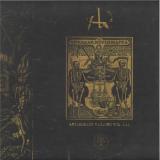
2025 Reissue.
Münchenbuchsee, a suburb of Bern, Switzerland. Stephan Eicher is the youngest of three children. His father, a radio and TV repairman, is also a jazz violinist and a sound tinkerer in his spare time. In the family home's converted fallout shelter turned studio, Mr. Eicher experiments with homemade sequencers, tortures handcrafted drum machines, and abuses reel-to-reel tape recorders—all under the fascinated gaze of young Stephan.
The boy quickly develops a musical curiosity, exploring sound through various experiments and wanderings. Alongside his younger brother Martin, Stephan crafts audio plays on a homemade multi-track recorder (essentially several cassette decks hooked together!), which they write, record, add sound effects to, and perform for family and friends. Just a couple of nice kids, really...
Then comes 1972, and Lou Reed's Transformer album changes everything for the Eicher kids. For 13-year-old Stephan, it's a revelation—especially "Vicious", the opening track, which he plays on repeat for months. He convinces his father to buy him an electric guitar. Not stopping there, his father also builds him a tube amp using an old radio.
Then comes adolescence. A rough one. Stephan leaves home at 16 and moves to Zurich. With obvious artistic talent, he persuades his art teacher to help him get into F+F, a radical, alternative art school—despite his young age. Accepted, he starts learning video techniques, determined to become a filmmaker.
At F+F, Stephan organizes Dada-style happenings and concerts with a group of friends known as the Noise Boys. Among them: one of his teachers on bass, Veit Stauffer on drums (who would later found ReR/Recommended Records), his girlfriend Sacha on vocals, and Stephan on guitar. In one of their early performances, they release a remote-controlled mouse covered in dull razor blades into the audience to create panic and chaos. Keeping with this aggressive, confrontational spirit, they once played a concert while wearing headphones blasting Tristan and Isolde, trying to perform their own songs simultaneously—to maximize the cacophony. The goal was always the same: clear the room.
Their “songs,” if you can call them that, followed suit. Take "Hungeriges Afrika", for instance—performed entirely with power drills and some drum feedback.
To make ends meet, Stephan returns to Bern on weekends to work as a waiter at the Spex Club, the city’s main punk venue. On September 16, 1980, during a show by proto-electro group Starter, the police raid the club and arrest everyone. Stephan, who manages to avoid arrest, seizes the opportunity to “borrow” Starter’s gear left behind. He suddenly finds himself in possession of a Roland Promars synth, a Korg MS20, and a gorgeous CR78 drum machine, which he runs through a Big Muff distortion pedal to get that perfect gritty sound.
He then sets out to reinterpret some Noise Boys tracks, reworking them during impromptu sessions recorded on a dictaphone (yes, a dictaphone—now the lo-fi sound makes more sense, doesn’t it?). He ironically titles the resulting cassette "Stephan Eicher spielt Noise Boys" ("Stephan Eicher plays Noise Boys"). This gem features seven tracks, which are the ones reissued here.
Back in Zurich, he visits his friends Andrew Moore and Robert Vogel, who have a DIY cassette duplication setup. They make 25 copies of Stephan Eicher spielt Noise Boys for Stephan and his friends. Robert encourages him to visit Urs Steiger of Off Course Records and play him the tape.
Without much hope, Stephan shows up at Urs’s office. But Urs is instantly hooked and suggests releasing a 7” single. Due to space constraints, they reluctantly drop two of the seven tracks ("Hungeriges Afrika" and "One Second"). As for the musical score featured on the cover—it was randomly chosen and remains a mystery to this day. Calling all music theory nerds!
The 7-inch is pressed in 750 copies and released in the first week of December 1980—a date Stephan remembers well, as it’s the same week John Lennon was killed. Smartly, Urs sends a promo copy to François Murner, Switzerland’s answer to John Peel, who hosts a show on alternative station Sounds. Murner falls in love with the record and starts giving it airtime. To Stephan’s surprise, sales follow—and people actually seem interested in his music.
Even this modest underground success scares Stephan a bit. He stops making music for a year and moves to Bologna, where he works as a programmer at Radio Città, a feminist radio station.
Meanwhile, Stephan’s younger brother Martin, who’s also involved in the punk scene, joins the band Glueams as a singer and guitarist. Glueams, named after the fanzine run by two of its members (drummer Marco Repetto and bassist GT), eventually rebrands as Grauzone. Stephan is invited to their shows to project hacked Super 8 visuals live on stage.
Urs Steiger, now working on a compilation titled Swiss Wave – The Album, asks Grauzone to contribute alongside bands like Liliput, Jack and the Rippers, The Sick, and Ladyshave (Fall 1980).
For the album, Martin tasks Stephan with producing their recording sessions. Under Stephan's artistic direction, two tracks emerge: "Raum" and "Eisbär". During "Eisbär", Martin plays a minimalist bass line borrowed from post-punk band The Feelies (just an open string). Drummer Marco Repetto struggles to keep time. Later that evening, unhappy with the takes, Stephan builds a four-bar drum loop from a ¼-inch tape and uses it instead of the flawed original. He then adds bleepy synths and wind sounds to complete the track’s icy vibe before handing it over to Urs.
The Swiss Wave – The Album compilation is released quietly at first, but things snowball thanks to "Eisbär", which eventually becomes a smash hit—selling over 600,000 singles.
Meanwhile, Stephan plays in a rockabilly band called SMUV (named after Switzerland’s social security agency) and begins producing artists, including the debut album of Starter (1981), which includes a more pop-oriented version of "Minijupe".
By early 1982, Stephan starts spending time with the post-punk girl band Liliput (formerly Kleenex). They’re older than him, and he happily drives them around in his Renault Major, acting as their roadie.
By 1983, Grauzone—signed to the major label EMI, which turned out to be a misstep—is falling apart. Stephan begins to pivot toward a more mainstream pop sound with his debut solo album Les Chansons Bleues.
But that... is already another story.
Suche:electric noise
UILTY RAZORS, BONA FIDE PUNKS.
Writings on the topic that go off in all directions, mind-numbing lectures given by academics, and testimonies, most of them heavily doctored, from those who “lived through that era”: so many people today fantasize about the early days of punk in our country… This blessed moment when no one had yet thought of flaunting a ridiculous green mohawk, taking Sid Vicious as a hero, or – even worse – making the so-called alternative scene both festive and boorish. There was no such thing in 1976 or 1977, when it wasn’t easy to get hold of the first 45s by the Pistols or the Clash. Few people were aware of what was happening on the fringes of the fringes at the time. Malcolm McLaren was virtually unknown, and having short hair made you seem strange. Who knew then that rock music, which had taken a very bad turn since the early 1970s, would once again become an essential element of liberation? That, thanks to short and fast songs, it would once again rediscover that primitive, social side that was so hated by older generations? Who knew that, besides a few loners who read the music press (it was even better if they read it in English) and frequented the right record stores? Many of these formed bands, because it was impossible to do otherwise. We quickly went from listening to the Velvet Underground to trying to play the Stooges’ intros. It’s a somewhat collective story, even though there weren’t many people to start it.
The Guilty Razors were among those who took part in this initial upheaval in Paris. They were far from being the worst. They had something special and even released a single that was well above the national average. They also had enough songs to fill an album, the one you’re holding. In everyone’s opinion, they were definitely not among the punk impostors that followed in their wake. They were, at least, genuine and credible.
Guilty Razors, Parisian punk band (1975-1978). To understand something about their somewhat linear but very energetic sound, we might need to talk about the context in which it was born and, more broadly, recall the boredom (a theme that would become capital in punk songs) coupled with the desire to blow everything off, which were the basis for the formation of bands playing a rejuvenated rock music ; about the passion for a few records by the Kinks or the early Who, by the Stooges, by the Velvet mostly, which set you apart from the crowd.
And of course, we should remember this new wave, which was promoted by a few articles in the specialized press and some cutting-edge record stores, coming from New York or London, whose small but powerful influence could be felt in Paris and in a handful of isolated places in the provinces, lulled to sleep by so many appalling things, from Tangerine Dream to President Giscard d’Estaing...
In 1975-76, French music was, as almost always, in a sorry state ; it was still dominated by Johnny Hallyday and Sylvie Vartan. Local rock music was also rather bleak, apart from Bijou and Little Bob who tried to revive this small scene with poorly sound-engineered gigs played to almost no one.
In the working class suburbs at the time, it was mainly hard rock music played to 11 that helped people forget about their gruelling shifts at the factory. Here and there, on the outskirts of major cities, you still could find a few rockers with sideburns wearing black armbands since the death of Gene Vincent, but it wasn’t a proper mass movement, just a source of real danger to anyone they came across who wasn't like them. In August 1976, a festival unlike any other took place in Mont-de-Marsan – the First European Punk Festival as the poster said – with almost as many people on stage as in the audience. Yet, on that day, a quasi historical event happened, when, under the blazing afternoon sun, a band of unknowns called The Damned made an unprecedented noise in the arena, reminiscent of the chaotic Stooges in their early adolescence. They were the first genuine punk band to perform in our country: from then on, anything was possible, almost anything seemed permissible.
It makes sense that the four+1 members of Guilty Razors, who initially amplified acoustic guitars with crappy tape recorder microphones, would adopt punk music (pronounced paink in French) naturally and instinctively, since it combines liberating noise with speed of execution and – crucially – a very healthy sense of rebellion (the protesters of May 1968 proclaimed, and it was even a slogan, that they weren’t against old people, but against what had made them grow old. In the mid-1970s, it seemed normal and obvious that old people should now ALSO be targeted!!!).
At the time, the desire to fight back, and break down authority and apathy, was either red or black, often taking the form of leafleting, tumultuous general assemblies in the schoolyard, and massive or shabby demonstrations, most of the time overflowing with an exciting vitality that sometimes turned into fights with the riot police. Indeed, soon after the end of the Vietnam War and following Pinochet’s coup in Chile, all over France, Trotskyist and anarcho-libertarian fervour was firmly entrenched among parts of the educated youth population, who were equally rebellious and troublemakers whenever they had the chance. It should also be noted that when the single "Anarchy in the UK" was first heard, even though not many of us had access to it, both the title and its explosive sound immediately resonated with some of those troublemakers crying out for ANARCHY!!! Meanwhile, the left-wing majority still equated punks with reckless young neo-Nazis. Of course, the widely circulated photos in the mainstream press of Siouxsie Sioux with her swastikas didn’t necessarily help to win over the theorists of the Great Revolution. It took Joe Strummer to introduce The Clash as an anti-racist, anti-fascist and anti-ignorance band for the rejection of old-school revolutionaries to fade a little.
The Lycée Jean-Baptiste Say at Porte d’Auteuil, despite being located in the very posh and very exclusive 16th arrondissement of Paris, didn’t escape these "committed" upheavals, which doubled as the perfect outlet for the less timid members of this generation.
“Back then, politics were fun,” says Tristam Nada, who studied there and went on to become Guilty Razors’ frontman. “Jean-Baptiste was the leftist high-school in the neighbourhood. When the far right guys from the GUD came down there, the Communist League guys from elsewhere helped us fight them off.”
Anything that could challenge authority was fair game and of course, strikes for just about any reason would lead to increasingly frequent truancy (with a definitive farewell to education that would soon follow). Tristam Nada spent his 10th and 11th unfinished grades with José Perez, who had come from Spain, where his father, a janitor, had been sentenced to death by Franco. “José steered my tastes towards solid acts such as The Who. Like most teenagers, I had previously absorbed just about everything that came my way, from Yes to Led Zeppelin to Genesis. I was exploring… And then one day, he told me that he and his brother Carlos wanted to start a rock band.” The Perez brothers already played guitar. “Of course, they were Spanish!”, jokes their singer. “Then, somewhat reluctantly, José took up the bass and we were soon joined by Jano – who called himself Jano Homicid – who took up the rhythm guitar.” Several drummers would later join this core of not easily intimidated young guys who didn’t let adversity get the better of them.
The first rehearsals of the newly named Guilty Razors took place in the bedroom of a Perez aunt. There, the three rookies tried to cover a few standards, songs that often were an integral part of their lives. During a first, short gig, in front of a bewildered audience of tough old-school rockers, they launched into a clunky version of the Velvet Underground's “Heroin”. Challenge or recklessness? A bit of both, probably… And then, step by step, their limited repertoire expanded as they decided to write their own songs, sung in a not always very accurate or academic English, but who cared about proper grammar or the right vocabulary, since what truly mattered was to make the words sound as good as possible while playing very, very fast music? And spitting out those words in a language that left no doubt as to what it conveyed mattered as well.
Trying their hand a the kind of rock music disliked by most of the neighbourhood, making noise, being fiercely provocative: they still belonged to a tiny clique who, at this very moment, had chosen to impose this difference. And there were very few places in France or elsewhere, where one could witness the first stirrings of something that wasn’t a trend yet, let alone a movement.
In the provinces, in late 1976 or early 1977, there couldn’t be more than thirty record stores that were a bit more discerning than average, where you could hear this new kind of short-haired rock music called “punk”. The old clientele, who previously had no problem coming in to buy the latest McCartney or Aerosmith LP, now felt a little less comfortable there…
In Paris, these enlightened places were quite rare and often located nex to what would become the Forum des Halles, a big shopping mall. Between three aging sex workers, a couple of second-hand clothes shops, sellers of hippie paraphernalia and small fashion designers, the good word was loudly spread in two pioneering places – propagators of what was still only a new underground movement. Historically, the first one was the Open Market, a kind of poorly, but tastefully stocked cave. Speakers blasted out the sound of sixties garage bands from the Nuggets compilation (a crucial reference for José Perez) or the badly dressed English kids of Eddie and the Hot Rods. This black-painted den was opened a few years earlier by Marc Zermati, a character who wasn’t always in a sunny disposition, but always quite radical in his (good) choices and his opinions. He founded the independent label Skydog and was one of the promoters of the Mont-de-Marsan punk festivals. Not far from there was Harry Cover, another store more in tune with the new New York scene, which was amply covered in the house fanzine, Rock News (even though it was in it that the photos of the Sex Pistols were first published in France).
It was a favorite hang-out of the Perez brothers and Tristam Nada, as the latter explained. “It’s at Harry Cover’s that we first heard the Pistols and Clash’s 45s, and after that, we decided to start writing our first songs. If they could do it, so could we!”
The sonic shocks that were “Anarchy in the UK”, “White Riot” or the Buzzcocks’s EP, “Spiral Scratch” – which Guilty Razors' sound is reminiscent of – were soon to be amplified by an unparalleled visual shock. In April 1977, right after the release of their first LP, The Clash performed at the Palais des Glaces in Paris, during a punk night organised by Marc Zermati. For many who were there, it was the gig of a lifetime…
Of course, Guilty Razors and Tristam were in the audience: “That concert was fabulous… We Parisian punks were almost all dressed in black and white, with white shirts, skinny leather ties, bikers jackets or light jackets, etc. The Clash, on the other hand, wore colourful clothes. Well, the next day, at the Gibus, you’d spot everyone who had been at this concert, but they weren’t wearing anything black, they were all wearing colours.”
It makes sense to mention the Gibus club, as Guilty Razors often played there (sometimes in front of a hostile audience). It was also the only place in Paris that regularly scheduled new Parisian or Anglo-Saxon acts, such as Generation X, Siouxsie and the Banshees, the Slits, and Johnny Thunders who would become a kind of messed-up mascot for the venue. A little later, in 1978, the Rose Bonbon – formerly the Nashville – also attracted nightly owls in search of electric thrills… In 1977, the iconic but not necessarily excellent Asphalt Jungle often played at the Gibus, sometimes sharing the bill with Metal Urbain, the only band whose aura would later transcend the French borders (“I saw them as the French Sex Pistols,” said Geoff Travis, head of their British label Rough Trade). Already established in this small scene, Metal Urbain helped the young and restless Guilty Razors who had just arrived. Guitarist for Metal Urbain Hermann Schwartz remembers it: “They were younger than us, we were a bit like their mentors even if it’s too strong a word… At least they were credible. We thought they were good, and they had good songs which reminded of the Buzzcocks that I liked a lot. But at some point, they started hanging out with the Hells Angels. That’s when we stopped following them.”
The break-up was mutual, since, Guilty Razors, for their part, were shocked when they saw a fringe element of the audience at Metal Urbain concerts who repeatedly shouted “Sieg Heil” and gave Nazi salutes. These provocations, even still minor (the bulk of the skinhead crowd would later make their presence felt during concerts), weren’t really to the liking of the Perez brothers, whose anti-fascist convictions were firmly rooted. Some things are non-negotiable.
A few months earlier (in July 1978), Guilty Razors had nevertheless opened very successfully for Metal Urbain at the Bus Palladium, a more traditonally old-school rock night-club. But, as was sometimes the case back then, the night turned into a mass brawl when suburban rockers came to “beat up punks”.
Back then, Parisian nights weren’t always sweet and serene.
So, after opening as best as they could for The Jam (their sound having been ruined by the PA system), our local heroes were – once again – met outside by a horde of greasers out to get them. “Thankfully,” says Tristam, “we were with our roadies, motorless bikers who acted as a protective barrier. We were chased in the neighbouring streets and the whole thing ended in front of a bar, with the owner coming out with a rifle…”
Although Tristam and the Perez brothers narrowly escaped various, potentially bloody, incidents, they weren’t completely innocent of wrongdoing either. They still find amusing their mugging of two strangers in the street for example (“We were broke and we simply wanted to buy tickets for the Heartbreakers concert that night,” says Tristam). It so happened that their victims were two key figures in the rock business at the time: radio presenter Alain Manneval and music publisher Philippe Constantin. They filed a complaint and sought monetary compensation, but somehow the band’s manager, the skilful but very controversial Alexis, managed to get the complaint withdrawn and Guilty Razors ended up signing with Constantin with a substantial advance.
They also signed with Polydor and the label released in 1978 their only three-track 45, featuring “I Don't Wanna be A Rich”, “Hurts and Noises” and “Provocate” (songs that exuded perpetual rebellion and an unquenchable desire for “class” confrontation). It was a very good record, but due to a lack of promotion (radio stations didn’t play French artists singing in English), it didn’t sell very well. Only 800 copies were allegedly sold and the rest of the stock was pulped… Initially, the three tracks were to be included on a LP that never came to be, since they were dropped by Polydor (“Let’s say we sometimes caused a ruckus in their offices!” laughs Tristam.) In order to perfect the long-awaited LP, the band recorded demos of other tracks. There was a cover of Pink Floyd's “Lucifer Sam” from the Syd Barrett era – proof of an enduring love for the sixties’ greats –, “Wake Up” a hangover tale and “Bad Heart” about the Baader-Meinhof gang, whose actions had a profound impact on the era and on a generation seeking extreme dissent... On the album you’re now discovering, you can also hear five previously unreleased tracks recorded a bit later during an extended and freezing stay in Madrid, in a makeshift studio with the invaluable help of a drummer also acting as sound engineer. He was both an enthusiastic old hippie and a proper whizz at sound engineering. Here too, certain influences from the fifties and sixties (Link Wray, the Troggs) are more than obvious in the band’s music.
Shortly after a final stormy and rather barbaric (on the audience’s side) “Punk night” at the Olympia in June 1978, Tristam left the band ; his bandmates continued without him for a short while.
But like most pioneering punk bands of the era, Guilty Razors eventually split up for good after three years (besides once in Spain, they’d only played in Paris). The reason for ceasing business activities were more or less the same for everyone: there were no venues outside one’s small circuit to play this kind of rock music, which was still frightening, unknown, or of little interest to most people. The chances of recording an LP were virtually null, since major labels were only signing unoriginal but reassuring sub-Téléphone clones, and the smaller ones were only interested in progressive rock or French chanson for youth clubs. And what about self-production? No one in our small safety-pinned world had thought about it yet. There wasn’t enough money to embark on that sort of venture anyway.
So yes, the early days of punk in France were truly No Future!
Relapse presents a remastered reissue from the undisputed king of Japanese noise-MERZBOW. "Pulse Demon" is one of the most celebrated releases of Masami Akita's storied 4 decade long career. Composed entirely by live noise concrete and the use of a fuzz box, "Pulse Demon" eschews all overdubs and studio trickery, laying MERZBOW bare. What follows in these recordings is the pure essence of unfettered noise. The rawness in "Pulse Demon" is palpable; praised as "genuinely extreme, downright torturous sounds that are strangely compelling in their shredding intensity." (A.V. Club) upon its original release in 1996. Remastered by James Plotkin (ISIS, ELECTRIC WIZARD, FULL OF HELL, and more,) the "Pulse Demon" reissues features "Extract 1", a never-before released track that was recorded as part of the original "Pulse Demon" sessions.
- How To Exist
- Best Days
- Getaway Car
- La Dolce Vita
- Work In Progress
- The Actor
- Magnificent Seven
- The Double
- Well Well Wellness
- Through The Looking Glass
- True Romance
- The Entertainment
Formed in Galway City, Ireland James McGregor (vocals/ guitar), Sean Connelly (guitar) and Damian Greaney (drums) went to school together there and met Tom Freeman (bass) on the music scene. Relocating to London in 2019, the quartet signed to Alan McGee's new record label 'Creation23' almost overnight. They have since impressed audiences across Europe with live performances at festivals including Rock Werchter, Eurosonic and Electric Picnic, performing to a huge crowd at Sefton Park in Liverpool in support of Kings of Leon, as well as a head- turning televised appearance on Sky 1's Soccer AM. Media have been quick to show their support too plus previous singles, taken from their 2023 debut "Exit Strategy" received praise on BBC Radio 1's Annie Mac on her "New Names" showcase, BBC 6 Music's Steve Lamacq on his 'Recommends' show, received day-time radio play on RTE 2FM, and impressed the legendary Rodney Bingenheimer on Sirius XM.
The four-piece are drawn together by not only a mutual appreciation of music past and present but also a love of films and books, notably the ones on the more 'noir' side of the spectrum. You could say Arctic Monkeys got them into a band, The Strokes showed them how tightly you could distil it and Radiohead showed them how wide you could take it. But these days there not afraid to also put Billie Eilish and Charlie XCX into that mixture and films from director Fellini to "Drive". What matters is that from starting out playing acoustic folk, that turned into 3 minute (post-)punkish songs, they now have expanded a lot from there, taking in all the experience they have now recording and touring. Pushing the emotion by being authentic and creating what you really want despite the noise and haste around you.
INDUSTRIAS MEKANIKAS is back with the third instalment of the ANTIKHRIST VISIONS saga. This release is particularly symbolic: it’s the ninth in the catalogue, marked by the infernal numerology that runs right through the whole series. It’s a descent into a sonic underworld, where noise becomes ritual and pleasure is just pure agony.
The artist tasked with opening this new chapter of the saga is the mighty Óscar Mulero, an essential figure on the national electronic scene and one of our biggest international ambassadors, whose career has left a deep mark on contemporary music. Here, with Faceless, he delves into dark, precise, and devastating electro territory; a spiritual machine that dictates the pulse of chaos.
Next up, we’ve got Pressurized Modulator with Reddrum: hard, crunchy, industrial electro, absolutely buzzing with electrical tension and twisted sonic matter.
Closing out the A-side is Jacko Volvone (aka Hoax Believers) with Quieren Cerrar Las Fábricas: a track that expertly blends electro, techno, and post-punk echoes, resulting in a tense, distorted, and combative sound, like a working-class echo shouting from the abyss.
Flipping over, the B-side opens with Hanging Nuts (made up of Waje Martín, Fake Robotik, and Ruben Montesco). They unleash a murky descent of filthy, distorted, primal electro, slashed through with guitars and raw, guttural vocals: a genuine chant from beyond the grave. The second cut marks the debut of Techselektah & Phil Fork with Champagne No Potable: a raging street anthem packed with fury, energy, and social criticism, where Spanish vocals emerge amidst EBM structures that have that ‘80s spirit, reinterpreted with today’s raw edge. And the big finish is down to HBK1 alongside Rigor Mortis, with Instinto Caníbal: a full-on explosion of electro-industrial and EBM that awakens the body’s most primitive urges.
Antikhrist Visions Vol. III is a sonic summoning from the lands of Hades: ritualistic matter, organic sound, and primal force. A testament to pleasure and torment—Tormento do Gostar—etched into the vinyl as if it were molten iron.
Memento Mori.
Detroit's Big Strick for his 7 Days Entertainment label has assembled of collection of Motor City leaning sounds from local and international artists here across four vital sides of wax. Generation Next opens with taught, pinging kicks and tinny melodies on deep house gem 'Senza Via D'Uscita' then Flabaire from Paris brings more bleeping sci-fi synths to a churning and dubbed out low end. Big Strick himself layers in electrically charged, fizzing synths and ticking hi-hats to his raw and gritty 'Bang My Shit' and Ron Cook ups the pace with the blissed out bumps of heady hymn, 'Again And Again.' Pegasvs from London also stands out with his great drum programming on '808 Jazz'.
- こびと
- ハレルヤ:左?
- 孤独のハープ弾き
- パラダイス:真昼
- Black Hole
- 紫の夕べ
- 目の前の天使達
- Another Lonely Harpist
- They’ve Gone, They Will Come
- パラダイス
- 童話
- Spirit In My Hair
World Of Echo announces the reissue of two remastered albums by Japanese guitarist and songwriter Naoki Zushi, 1988’s Paradise, and 2005’s III. Two classics of Japanese psychedelia, both Paradise and III were originally released on Org Records, the imprint of Shinji Shibayama of acid-folk group Nagisa Ni Te, with whom Zushi has guested on second guitar for decades. Both intimate and expansive, rich with revelatory songwriting and blasted, sky-scouring guitar, these reissues return these albums to print for the first time since the 2000s. It’s the first time III has been officially released on vinyl, with an extra, previously unreleased track, “Under The June Moonlight.”
Recorded in Kyoto’s Townhouse Studios in mid 1987 and released in limited-to-500 vinyl pressing in 1988, Paradise emerged from a scene in Kansai, Japan that was embracing the idiosyncracies of 1970s singer-songwriters, the soaring solos of early seventies psychedelia, and the DIY impulse of 1980s post-punk. While Zushi’s musical history stretched back to the early eighties – he was a founding member of Jojo Hiroshige’s noise outfit Hijokaidan – he found his feet with groups like Hallelujahs, whose dream-pop collection Niku O Kuraite Chikai Wo Tateyo was recently reissued by Black Editions, and Idiot O’Clock.
Paradise appeared two years after that Hallelujahs album and share much the same membership – Zushi’s backing band on several of the songs includes Shibayama on drums and Ken-Ichi Takayama (aka Idiot) on electric guitar, though just as often, Zushi plays all the instruments himself. The coordinates here are wide-reaching – you can hear the volume and intensity of Neil Young & Crazy Horse (on “Hallelujah: Left Side” and “Paradise: Midday”), the slow-motion magic of Galaxie 500, the idiosyncratic spirit of The Only Ones, all mixed up with tender guitar miniatures and stumbling garage-psych-pop moves.
Seven years later, after the transitional album Phenomenal Luciferin, Zushi released III. Perhaps his masterpiece, it’s already been bootlegged on vinyl, but this reissue is the real deal. The album was recorded at Studio Nemu over seven years, and sees Zushi backed by Shibayama (bass) and Masako Takeda (drums), his erstwhile bandmates in Nagisa Ni Te. By this stage, Zushi had started to really stretch out, and many of the songs on III swoon languorously, taking their sweet time to say what they need to say. It’s rich with lovely, melancholy songs, in a similar realm to bandmates Nagisa Ni Te, of course, but you can also hear traces of everything from Syd Barrett’s The Madcap Laughs, through seventies private press loner folk, to the slow-burn meanderings of the likes of early Low or Damon & Naomi.
When interviewed by Shibayama in the mid-nineties, Zushi said of Paradise, “it was a sort of collection of songs that had meant something to me up to that point… it was my paradise. I wanted to create paradise.” That’s something Zushi achieves on both of these albums – visionary Japanese psychedelia, en route to paradise. - Jon Dale
"Nearly two decades after their 2007 debut and a 2010–2022 hiatus, Austin, TX’s Voxtrot return with Dreamers in Exile, a new LP that turns an underdog story into a true second act.
The band who quietly became cult heroes in the streaming era deliver a record that carries the electric rush longtime fans remember while speaking directly to the new era of youth who discovered them through playlists and word of mouth.
Musically, Dreamers in Exile folds Voxtrot’s classic DNA—C86 sparkle, Sarah Records romanticism, the pulse of The Velvet Underground, the elegance of Felt—into a sharper, more confident sound.
Guitars chime and sprint, rhythms push forward, and Ramesh Srivastava’s literate, heart-forward lyrics trace the distance between youth and maturity, exile and home, regret and renewal. Mixed by Dean Reid (Lana Del Rey, James Blake), it reads as both reintroduction and redemption.
For a band born of the 2000s blog wave alongside Vampire Weekend, The National, and Grizzly Bear, Dreamers in Exile is less nostalgia than proof of life. It’s the sound of a beloved group returning on their own terms and finding their songs resonating more widely than ever."
Allowing yourself to find meaning or beauty in the mundane is an act of generosity, Whether it’s seeing a smiling face in an electrical outlet socket, or discerning cosmic design amidst the forest floor detritus, it comes from a place of kindness to yourself and senses – and openness to hidden spirit of the world. These tracks came together during a period of intense personal change for adaa, rooted in a fruitful reflection on the connections between spirit and body, “feeling my flesh so I can feel and understand my spirit,” as adaa puts it. The sense of a crossover and clash of multiple connected realities – on-screens, on-line, on-earth, off-world, after-life – unites adaa’s multifaceted productions.
Ostensibly an assemblage of found sounds. scribbled thoughts and poems from diaries, and musial snippets, the album's scattered production reflects adaa’s own many mirror worlds. Field recording sit behind most tracks, alongside VST synths, guitars, and a variety of voices, from adaa’s own mangled vox to EVP samples taken from YouTube (recorded sounds believed to be spirits or paranormal activity), all processed to varying degrees.
While the music was mostly produced either in adaa’s studio in Providence, Rhode Island, or in bed, the field recordings bring the outside world in. The result of walks in the woods, hum of roads and highways, hiss of beaches, warmth of walks with friends and past lovers “around the East Coast”. It sits behind tracks like ‘sight’ where a lilting piano lin bobs atop a pond of rustling and distant whistles. Is that birdsong? Or ghosts? Saccharine hyperpop arpeggiation crossfades sharply into noise guitar squall. Angelic demon voices yawn into a hefty crescendo. Pure drones duet with gales of undefinable field sounds.
“Sometimes I feel like a seed in frosted soil,” says adaa. “If i choose to be optimistic.”
- A1: Atomic Rotary Grinding God ~ Quicksilver Machine Head (15:44)
- B1: Loved And Confused (17:03)
- C1: Phantom Of Galactic Magnum (18:57)
- D1: Atomic Rotary Grinding God ~ Blues For Black Bible (Live) (19:36)
We’ve purged the Acid Mothers Temple archives once again, resurrecting another classic album ‘Electric Heavyland’.
Originally released in 2002 on CD only (via Alien 8 Recordings), ‘Electric Heavyland’ is presented here for the first time on vinyl, remastered and with a whole bonus live side!
Housed in a beautiful gatefold sleeve with heavy use of the original black and metallic silver ink artwork
“Suddenly, my world explodes as the band pounces on the joint with some hell-blues, laced with sci-fi laser transmissions. Jesus H. Fuck, this is loud. There comes a point when heavy jamming and pure noise meet, and that point is tearing shit up at this very moment.” Pitchfork
Of key note for AMT diehards/collectors. Side D was recorded live at at the 2nd Acid Mothers Temple Festival December 13th 2003 with Yamazaki Maso (Masonna) as a guest.
Makoto says "we have played this song, Atomic Rotary Grinding God live only once, this is that recording"
Produced, engineered and mixed by Kawabata Makoto live recorded by Takayama Manabu (original source is VHS video tape)
LP, Opaque Pink Vinyl, w/ download card
Mexico City’s Sunset Images emerge with their most daring and immersive work to date, Oscilador, arriving January 23 on Dedstrange. Known for pushing the boundaries of noise rock and psychedelic experimentation, the band plunges deeper into their raw, unrelenting sound—crafting an album that thrives in chaos, distortion, and hypnotic repetition.
Oscilador captures Sunset Images at a new creative peak: jagged guitars dissolve into swirling feedback, fractured rhythms pulse like machinery on the brink, and vocals echo through layers of reverb as if channeled from another dimension. The record balances intensity and atmosphere, offering both catharsis and transcendence. It’s a sonic free fall that feels at once destructive and redemptive—like watching a city crumble only to find strange beauty in the ruins.
The album title reflects the band’s fascination with constant motion and instability, the oscillations of sound and life itself. Across the record, Sunset Images embrace the extremes: minimal passages expand into walls of noise, meditative drones are shattered by bursts of primal energy, and every song teeters on the edge of collapse. This restless spirit makes Oscilador not just a collection of songs, but a visceral experience—one that mirrors the tension and electricity of Mexico City’s underground scene.
Joining forces with Dedstrange, Sunset Images step onto a global stage while staying true to their uncompromising vision. For fans of A Place To Bury Strangers, Sonic Youth, or My Bloody Valentine, Oscilador delivers the thrill of pure immersion—music that doesn’t just demand to be heard, but to be felt in the chest, the bones, and the subconscious.
With Oscilador, Sunset Images invite listeners to lose themselves in noise, distortion, and dissonance—and to find clarity within the chaos.
- A1: Intro
- A2: The Wonders At Your Feet
- A3: The Treason Wall
- A4: Hedon
- A5: White Noise
- A6: Black Silence
- A7: Haven
- B1: Punish My Heaven
- B2: Monochromatic Stains
- B3: Undo Control
- B4: Indifferent Suns
- B5: Format C For Cortex
- C1: Insanity's Crescendo
- C2: Hours Passed In Exile
- C3: The Sun Fired Blanks
- C4: Damage Done
- C5: Lethe
- D1: Not Built To Last
- D2: Therein
- D3: Zodijackyl Light
- D4: Final Resistance
- D5: Outro - Ex Nihilo
Gold Vinyl[35,08 €]
It's taken over two decades, but at last, the wait is over: Sevan Mater has unleashed the first- ever vinyl pressing of Live Damage , the iconic live performance by DARK TRANQUILLITY, captured during their "Damage Done" era. Pressed on Gold and Black swirl vinyl, limited to just 500 copies, and housed in a stunning gatefold cover, this reissue is nothing short of melodic death metal heaven. Originally released in 2003 as a DVD, Live Damage immortalized one of DT 's most intense and electric live shows - recorded in Krakow, Poland. Now, for the first time ever, that raw energy, that iconic Swedish aggression, and that perfectly balanced blend of melody and brutality has been etched into vinyl grooves for audiophiles and collectors alike. From the soaring leads of The Treason Wall to the punishing drive of Final Resistance, every track explodes with clarity and presence on wax.
The vinyl mastering brings new warmth and immediacy to the performance, giving fans the closest thing to being there, without the sweat and flying beer. And the packaging? Absolutely elite. Sevan Mater delivers a luxurious gatefold, featuring rare tour photos, liner notes, and an aesthetic drenched in cold, melancholic elegance. If you're a fan of At The Gates, In Flames, or if Damage Done was the soundtrack to your early 2000s fury, this release is a must-own. More than just a live album - it's a time capsule of melodic death metal at its peak.
"Guerra Total Na Boca Do Lixo" is CAVEIRAS' new album, to be released on February 13, 2026. The album will include 12 brand new tracks, displaying the usual mix of punk aggression, batucada rhythms, industrial / noise bravado and bass music.
---------------------
CAVEIRAS deal in obsessive rhythms and low frequencies, infusing punk with Afro-Brazilian vibes. Their spiritual birth can be traced back to a visit to Favela Rocinha: while watching two young boys improvise a batucada with a bucket and a bin, band members became obsessed with the possibility of an occult alliance between Rio de Janeiro and Einstürzende Neubauten’s Berlin. Back home, Caveiras made a blood oath, vowing to channel the dark side of samba. Armed with an electric bass, scrap percussions and a machine-gunning sampler, they began to butcher Brazilian standards with a wild and iconoclastic attitude. Claves and rhythms of the Brazilian tradition are heavily treated through electro-acoustic techniques, dub-oriented bass lines strip melody down to the bone, while screams cross the line separating punk’s rants from Quimbanda’s curses.
- 1: Intro
- 2: The Wonders At Your Feet
- 3: The Treason Wall
- 4: Hedon
- 5: White Noise
- 6: Black Silence
- 7: Haven
- 8: Punish My Heaven
- 9: Monochromatic Stains
- 10: Undo Control
- 11: Indifferent Suns
- 12: Format C: For Cortex
- 13: Insanity's Crescendo
- 14: Hours Passed In Exile
- 15: The Sun Fired Blanks
- 16: Damage Done
- 17: Lethe
- 18: Not Built To Last
- 19: Therein
- 20: Zodijackyl Light
- 21: Final Resistance
- 22: Outro - Ex Nihilo
Black Vinyl[35,08 €]
It's taken over two decades, but at last, the wait is over: Sevan Mater has unleashed the first- ever vinyl pressing of Live Damage , the iconic live performance by DARK TRANQUILLITY, captured during their "Damage Done" era. Pressed on Gold and Black swirl vinyl, limited to just 500 copies, and housed in a stunning gatefold cover, this reissue is nothing short of melodic death metal heaven. Originally released in 2003 as a DVD, Live Damage immortalized one of DT 's most intense and electric live shows - recorded in Krakow, Poland. Now, for the first time ever, that raw energy, that iconic Swedish aggression, and that perfectly balanced blend of melody and brutality has been etched into vinyl grooves for audiophiles and collectors alike. From the soaring leads of The Treason Wall to the punishing drive of Final Resistance, every track explodes with clarity and presence on wax.
The vinyl mastering brings new warmth and immediacy to the performance, giving fans the closest thing to being there, without the sweat and flying beer. And the packaging? Absolutely elite. Sevan Mater delivers a luxurious gatefold, featuring rare tour photos, liner notes, and an aesthetic drenched in cold, melancholic elegance. If you're a fan of At The Gates, In Flames, or if Damage Done was the soundtrack to your early 2000s fury, this release is a must-own. More than just a live album - it's a time capsule of melodic death metal at its peak.
For his last solo record ‘Through a Room’, Bill Nace shifted his usual saturated guitar sound and added tapes, hurdy gurdy, doughnut pipe, bird calls and the mysterious Japanese taishōgoto. Setting up for the final night of his three day residency at OTO with only the taishōgoto soundchecked, Nace hoped that Parker would arrive with his small soprano as its opposite. “I’ve been interested in state change, you know, playing until there’s a shift in time.” Known for his development of multiphonics to produce a constantly shifting pattern, Evan Parker has evolved an instantly recognizable sound - his work the soprano most distinct. Happily, it was the soprano Evan brought with him and as soon as the two start to play they entwine - taking off in a double helix of keys and reed primed for endless reconfiguration. Space warps under the velocity of playing, the pitch rising unrelentingly. It felt like unending lift off in the room, sheer energy until the last note makes remember your feet have been on the floor the whole time. Total time bending shredding.
–
"They had never played together before. They had never even met each other before this springtime 2024 concert at London’s Café Oto.
Evan Parker, circular breathing maestro of the saxophone, a legend in the universe that is Free Improvisation since the late 1960s and Bill Nace, one of the most intriguing experimental “noise” guitarists of the 1990s/2000s underground scene.
For those of us who have been enamored by the live and documented work of both these gents, this Café Oto duo was a must-hear event. It could have gone anywhere musically and that would have been totally fine. Particularly with Evan having a history of being thrown into a variety of challenging collaborations throughout his career, employing the learned elegance of trust in his own sensitivity to listening, responding, leading, following, sparring, intertwining, dialoguing, creating in the instant and, essentially, dignifying the non-hierarchical grace of chance.
The aesthetics of socialist consideration in Evan Parker’s playing, in his community of expanded and personal technique, for a younger player such as Bill Nace, strikes an exemplary model. This notion of respect would be entirely the reason Nace, when offered a residency at the most critical “new music” room in England, would request to play in duo with Parker.
Bill Nace came to prominence mostly during the apex of experimental music activity in and around Western Massachusetts in the early days of the aughts, with a focus on visual art and free improvisation guitar action. He could be found in the daytime hours, his head hanging down over a notepad, penning fine-tuned illustrations and abstract line drawings, while in the evenings he’d be attending any number of basement noise gigs, many of which he’d be participating in. His guitar style came across as being informed as much as by the physicality of his writing utensils in friction to the page as it was to his hearing and redefining of radical recordings ranging anywhere from the Black Unity Group to Black Flag.
Utilizing various metal files and other small cylindrical objects Bill would allow his guitar and amplifier to be in tandem with the improvisatory movements of his body as the instrument balanced, intentionally and, at times, precariously, upon his lap. The performances came across thrilling and daring and they would be mostly in the context of venues nothing more than a low-ceilinged damp and dank New England basement, a clutch of people hanging onto rusty pipes or sitting up on dilapidated washer/dryer machines, the shards of Bill’s “file guitar” sounds ringing out like the most alive music on Earth.
By the time Bill reached Café Oto in early 2024 he had relocated to Philadelphia all the while releasing a succession of collaborative LPs on his Open Mouth label to present his developing progression of solo and collaborative work. He also would find himself considerably engaged with playing the electric taishōgoto, a keyboard-activated string instrument from Japan which can exist as a one, two, four, five, or six string oblong sound object. Bill’s approach to the taishōgoto would not be too unlike his approach to the traditional electric guitar, though no outboard implements such as files, sticks, and rocks are utilized. The similarity would lie wholly with Bill’s full immersion of high velocity action-playing where, with the taishōgoto, an electric drone beauty occurs. The flurry of sonics and resultant harmonics emanating from the amplifier (which Bill opts to dial into with borderline loud-as fuck volume settings) furthers the meta-mantra properties of the instrument in an astounding display of drone dynamism.
This sound world of Bill’s two-stringed taishōgoto on this Café Oto night worked beautifully with Evan Parker’s improvisatory saxophone conceptions. The duology achieved instant lift off at ground zero only to find it’s eventual finale as if it were organically ordained. Time seemingly morphed from its ancient human construct of control, rendered inconsequential to the torrential transcendence of the room wildly activated by the magic resonance of the multi-directional pan-spatial sonance of the music as if it were some beatific blessing. It was one of those nights where art as a liberating force of spirit gifted the listeners with an offering of exaltation and joy. It was entirely mystical and mind blowing. A night of Total Music."
Thurston Moore, London, 2025
- Invisible
- The Archaeoptimist - Part 1
- Electric Monk
- The Archaeoptimist - Part 2
- Afourthoughts
- Next Step
- St. Jerome In The Wilderness
"PROG-ROCK LEGENDS SPOCK’S BEARD ARRIVE ON MADFISH WITH NEW ALBUM THE ARCHAEOPTIMIST. GATEFOLD 2LP VERSION, PRESSED ON RED VINYL. “mad time signatures, impossible harmonies, intense arrangements…sensational”
THE PROG REPORT “a true heir of the legacy of bands as Yes, Gentle Giant, Pink Floyd & old Genesis…a truly fascinating voyage.” METAL TEMPLE If Spock’s Beard have taught us anything over their 30+ years in the business, it’s that they have no interest in becoming their own tribute act. The Archaeoptimist - their latest offering & first release on Madfish - is not a retreat into old habits, but a recalibration. Just when you think they’re settling in, they kick the walls out instead. At the centre of this particular storm is Ryo Okumoto, whose fingerprints are all over the album - not just as a performer, but as a driving creative force. Teaming up with co-writer Michael Whiteman (I Am the Manic Whale) & longstanding bandmembers Alan Morse & Ted Leonard, Ryo has helped shape an album that is undeniably Spock’s Beard with a characteristic wry smile to boot. The album was produced by Okumoto & recorded at each band member’s respective home studios. Esteemed producer Rich Mouser (Dream Theater/Weezer) takes up the mixing & mastering duties. Over more than 30 years, Spock’s Beard have established themselves as one of modern progressive music’s most exciting & consistent acts, with live shows as renowned as their studio work & tours that draw sold-out audiences across the globe. Their albums regularly chart worldwide, with 2018’s Noise Floor reaching #3 on the UK Official Rock & Metal Chart & #6 on the Official Progressive Albums Chart.
- 1: Vivere Distaccati
- 2: Trasmissione
- 3: Decadente
- 4: Tarantola
- 5: Non Passerò A Trovarti
- 6: Ho Paura
- 7: Chiang Mai
- 8: Nelle Vene
- 9: Lavoro Troppo
- 10: Festa Di Compleanno
Hailing from Raw Culture, Anna Funk Damage returns with his third release on the Roman label, delivering a record as fierce as it is intimate. Tarantola was born out of a winter suspended between contrasting emotions – melancholy, anger, love, confusion – distilled into a sound that transforms personal fragility into collective energy. There’s no pursuit of perfection here, but rather an urgency running through the veins, taking shape across supersonic punk, wave, ambient and industrial.
Each track is an emotional fragment, a bite that leaves its mark: from the electric tension of Vivere Distaccati to the feverish rush of Trasmissione, from the rawness of Decadente to the hypnotic title track Tarantola, which embodies the beating heart of the album. Side B unfolds into more nocturnal and intimate landscapes, from Chiang Mai to the disenchanted sincerity of Lavoro Troppo, closing with a party that carries the bittersweet taste of reality.
Tarantola is a journey into the chaos of human emotions, an album that doesn’t just narrate but pulls you deep into its sonic labyrinth, giving noise back its vulnerable yet powerful soul.
- A1: The Great Pan Is Dead
- A2: Pacing Around The Church
- A3: Confetti
- A4: Catacombs
- A5: Underworld Usa
- B1: Icons Of Summer
- B2: Alchemy And You
- B3: Burning Sage
- B4: Villains Of The Moon
Reissue auf kristallklarem Glitzervinyl: "Cherish The Light Years", das zweite Cold CaveStudioalbum 2011 bei Matador Records erschienen, ist ein mutiger Sprung in düsteren
Stadion-Pop, auf dem Post-Punk-Intensität auf melodischer Noise, Industrial-Beats, ItaloDance-Euphorie und Momente purer Pop-Glückseligkeit trifft. Aufgenommen in den
Plantain Studios von Electric Lady und DFA in New York City, kanalisiert die LP das Drama
von Siouxsie and The Banshees, den Puls der frühen Depeche Mode und die emotionale
Schwere von Liebe, Reue, Triumph und Versagen. Mit Tracks wie "Confetti", "The Great Pan
Is Dead", "Underworld USA" und "Villains Of The Moon"brillierten Cold Cave in einem
Moment ohne offensichtliche Szene und schufen einen ganz eigenen Sound und Raum.
World Of Echo announces the reissue of two remastered albums by Japanese guitarist and songwriter Naoki Zushi, 1988’s Paradise, and 2005’s III. Two classics of Japanese psychedelia, both Paradise and III were originally released on Org Records, the imprint of Shinji Shibayama of acid-folk group Nagisa Ni Te, with whom Zushi has guested on second guitar for decades. Both intimate and expansive, rich with revelatory songwriting and blasted, sky-scouring guitar, these reissues return these albums to print for the first time since the 2000s. It’s the first time III has been officially released on vinyl, with an extra, previously unreleased track, “Under The June Moonlight.”
Recorded in Kyoto’s Townhouse Studios in mid 1987 and released in limited-to-500 vinyl pressing in 1988, Paradise emerged from a scene in Kansai, Japan that was embracing the idiosyncracies of 1970s singer-songwriters, the soaring solos of early seventies psychedelia, and the DIY impulse of 1980s post-punk. While Zushi’s musical history stretched back to the early eighties – he was a founding member of Jojo Hiroshige’s noise outfit Hijokaidan – he found his feet with groups like Hallelujahs, whose dream-pop collection Niku O Kuraite Chikai Wo Tateyo was recently reissued by Black Editions, and Idiot O’Clock.
Paradise appeared two years after that Hallelujahs album and share much the same membership – Zushi’s backing band on several of the songs includes Shibayama on drums and Ken-Ichi Takayama (aka Idiot) on electric guitar, though just as often, Zushi plays all the instruments himself. The coordinates here are wide-reaching – you can hear the volume and intensity of Neil Young & Crazy Horse (on “Hallelujah: Left Side” and “Paradise: Midday”), the slow-motion magic of Galaxie 500, the idiosyncratic spirit of The Only Ones, all mixed up with tender guitar miniatures and stumbling garage-psych-pop moves.
Seven years later, after the transitional album Phenomenal Luciferin, Zushi released III. Perhaps his masterpiece, it’s already been bootlegged on vinyl, but this reissue is the real deal. The album was recorded at Studio Nemu over seven years, and sees Zushi backed by Shibayama (bass) and Masako Takeda (drums), his erstwhile bandmates in Nagisa Ni Te. By this stage, Zushi had started to really stretch out, and many of the songs on III swoon languorously, taking their sweet time to say what they need to say. It’s rich with lovely, melancholy songs, in a similar realm to bandmates Nagisa Ni Te, of course, but you can also hear traces of everything from Syd Barrett’s The Madcap Laughs, through seventies private press loner folk, to the slow-burn meanderings of the likes of early Low or Damon & Naomi.
When interviewed by Shibayama in the mid-nineties, Zushi said of Paradise, “it was a sort of collection of songs that had meant something to me up to that point… it was my paradise. I wanted to create paradise.” That’s something Zushi achieves on both of these albums – visionary Japanese psychedelia, en route to paradise. - Jon Dale
g Under The June Moonlight vinyl only bonus track
- A1: Familiar Unfamiliarity
- A2: Navigated Dialogues As Language Ciphers
- A3: Observing The Crux
- A4: The Elimination Of Compassion Through Naivety
- A5: Prophet In View
- B1: Where Evil Grows
- B2: Several Layers Shifting Form
- B3: Tumbling Until Awakened
- B4: Thee Oath
- B5: Energy Source Transmutation (Press Shift 3 Times)
Demdike Stare & Cherrystones unveil a long-in-the-making darkside fantasy weaving atmospheric and loose-limbed cuts recorded at labs in London and Manchester, brilliantly shaking a bush of ghostly trig points ranging from the Mars rehearsal tapes to Minimal Man, Randy Greif’s cut-ups, Conrad Schnitzler’s industrial prototypes and ‘70s ECM sides – with vocal contributions from Ssabae’s mesmerising Laura Lippie.
In dazed pursuit of styles heard on Cherrystones’ DDS tape ‘Peregrinations in SHQ (Super High Quality)’, the renowned London digger properly hexes sonic leylines with his label bosses on 10 wickedly grubby and hazed sound experiments. They tumble down the rabbit hole like some sixth sense-guided call-and-response, resulting in an exquisite unfolding of psychoacoustic spaces familiar to their mutually spirited sounds.
Honestly it's some of the dirtiest and most esoteric gear we've heard from Demdike; you can sense a lifetime of incessant digging drip through every loop and crack; grotty no-wave, industrial noise, DIY psych, proto-techno and gnarled concrète, further bolstered by Cherrystones’ perpendicular, equally insatiable and fathoms-deep areas of interest. With a focus on scrappy, feral cuts and hastily recorded edits, the trio roughly re-draw wordless chants and hyper-compressed knocks over a vortex of found sounds that curdle in rhythmic heat. Never staying sill for long, the trio get drowned by watery ambience, then shredded loops, Technoid shrapnel and electric bass prangs dancing into the aether.
The crankiest spirit perfuses the whole thing, evoking states of unravel and psychic distress as they pit a near-peerless collective knowledge into the void. Laura Lippie acts as human ligature to sanity, a fleeting constant found smudged into the hip hop chops of ‘Familiar Unfamiliarity’, spectral incantations of ‘Prophet in View’, or a channelling of Ozzy in ‘Thee Oath’, among more deranged tongues on ‘Observing the Crux’.
It’s the missing link between ECM, Earth and Dilloway we didn’t know we needed - up there with some of the most satisfyingly deep and frazzled gear this century.