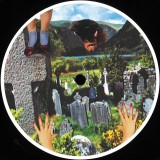
BSP // Bispebjerg is a record label that presents music from Copenhagen based artists and affiliates. BSP is closely related to the Copenhagen Underground Posse, music and party collective that where active on the Copenhagen scene for the past 8 years.
Behind the label are Philip Jun Kamata, has been making music for nearly two decades, where he, among other things released the underground bass sex anthem "you dont know what love is" on Hyperdub. J Kamata is debuting on this V/A two new alter egoes; the 313 high tech funk inspired Jun Anthony, as well as his raw electro moniker Sequential Hill.
The other half of the label, Daniel Savi has been active in the club scene for a good while, primarily releasing on house labels such as Underground Quality and Tartelet Records. For this release he hits you hard with his bass alias Savi DJ.
With BSP we attempt to build a universe with Jungle, Electro, House, Booty Tech and their derivative genres. The first release is a V/A consisting of 3 different artists as well as remix from local hero Kasper Marott (Kulor, Axces).
Release comes in white discobags w. blue sticker on front and double sided foto insert.
Track descriptions
A1. Jun Anthony - 313 Garage. 06.38
Jun Anthony presents his groovy take on a garage track under a heavy 313- high tech funk influence.
A2. Jun Anthony - 313 Garage (Kasper Marott Remix) 05.53
The second cut holds a dubby, deep and groovy remix from Copenhagen rising star Kasper Marott.
B1. Sequential Hill - Jakd Oscillateurs - 05.29
Jun's alter ego Sequential Hill presents a punk approach to electro - Raw, but with a tiny soft spot for lofty strings and emotional pads.
B2. Savi DJ-Djungle (Slow edit) 06.08.
Savi DJ presents savvy bass grooves on this revivalist jungle cut, in a slowed down version for your mixing pleasure.
Buscar:electro house
When Joakim aka Cray76 moved back from NYC to Paris in 2019, he knew he wouldn't have access to a studio for a little while. And although he welcomed that forced pause in making music, he felt the need to take at least one piece of gear with him in his suitcase. It was the legendary Roland TB303, one of the simplest and quirkest synth ever made and maybe the one that had the most important influence on electronic music since the mid 80s. Having recorded a few beats on his Roland TR808 before he packed his studio in Brooklyn to be shipped back to France, Joakim decided to make a record only using those 2 machines, an « exercice de style » that is a tribute to 30 years+ of acid house and techno and a way to make tools that he could use in his DJ sets. It goes deep, it goes hypnotic, it goes rough, many flavors of acid are packed in this 808+303=1111 12inch.
- A1: 4Hero - Hold It Down (Bugz In The Attic's Co-Operative
- A2: Nsm - Dj Power (Use It)
- A3: Domu Feat Face - Save It
- B1: Jazztronik - Samurai
- B2: Kaidi Tatham - Organic Juggernaut
- B3: Vikter Duplaix - Manhood
- C1: Agent K - Feed The Cat
- C2: Fourth Kind - Take Me To Your Sky
- C3: Taylor Mcferrin - Broken Vibes (Feat Vincent Parker)
- D1: Agent K - Hands
- D2: Nova Fronteira - Baila Conmigo (Atjazz Remix)
- D3: Blakai Feat Bembe Segue - Afrospace
At the end of the 90s, a movement began in West London that birthed a fresh direction in dance music. Though this movement never got mainstream press coverage, never had a crossover chart single, and never really transcended its community roots, there was a unique alchemy at work - a fertile moment of creativity, where a group of friends began to experiment with new cadences, rhythms and distilled influences, crafting a new direction in the attics and bedrooms of their neighbouring postcodes. Their music was a head-on collision between the sounds they had been raised on; the reggae sound system culture of Notting Hill Carnival, the sophistication and sheen of Electro-Funk, Jazz Fusion, Soulful House and Disco, the Afro-Beat sounds of Tony Allen and Fela Kuti, and the raw minimalism of early Hip Hop. Though "Broken Beat" was never a tagline that the producers anticipated, and one that they often publicly resisted, those two words would gradually come to represent the scattered rhythms, rolling basslines and soaring changes that were inherent to this exciting new sound. It's not clear who first coined the term "Broken Beat", but try to imagine how it felt to hear it for the first time; the production was grounded in MPCs and SP1200s, the hand-me-down samplers of the Hip-Hop and Jungle golden eras, and the drums that tumbled out of these machines at the hands of these creators had a jagged, stuttering feel, almost as though the groove was close to collapse.
Westcoast Goddess first came to our attention at the end of 2018 following his debut release on Canadian label Heart To Heart, but his productions actually date right back to ’93 (under various different guises) when he first began making music with his trusty Roland DR550 and Kawai K1. With a fresh and distinctive sound, WG successfully fused soulful touches and late 80’s-era digital synths with raw, punchy grooves and a euphoric, ravey atmosphere. Since then, the Berlin-based producer has built a solid following amongst underground house heads with subsequent releases dropping on esteemed labels such as Omena, Slam City Jams and Let’s Play House.
Opening up the EP we have Step Inline (The Narcotic Soul), which is a piano driven, uplifting slice of house heaven. A simple repeating 2 bar chord pattern lays down the foundation for soaring strings, cascading chimes and seductive echoing vocal hook.
Next up we have The Devil In Mr Holmes (The Erotic Soul) which once again goes heavy on the piano stabs but this time developing the arrangement into something that feels more like an instrumental dub of a long lost Prelude release. Crystalline synth lines come and go, whilst electronic tom hits add pace and energy to the unrelenting house groove.
Flipping over we have the epic I Might Be Ok (The Faithful Soul) coming in at over 9 minutes and being all the better for it. A dirty Moog bassline leads the charge with beautiful synth lines layering up on top, creating a blissed-out vibe which can’t fail to lift your spirits.
Along with its sister imprint Fluid Electronics - dedicated to all things more muscularly 4x4 oriented, from house to techno via ambient, Fluid Funk will offer a platform of choice for creators and lovers of soulful house, hip-hop, jazz, funk, disco et al. The goal of the label is to bring a community of like-minded people together, cleared from the complexities that sometimes hamper the good course of the label-artist relationship.
First to grace Fluid Funk's dance floor-ready grooves is Rotterdam-based emerging talent Beau Zwart. Fresh off a choice inaugural sortie on INI Movements that hit the streets a few weeks ago, Beau steps in with his debut 12", "Beyond Two Souls" - an infectiously smooth and solarpowered six-track platter featuring Dutch duo Fouk on remix duty.
Expect lavishly orchestrated cascades of ankle-twisting breaks, prismatic synthwork and summer-flavoured melodies to wrap your ears around as your feet and body give in to the power of that funky bass. Brewing elements of fuzzy pop, pixelated soul and tropicalised rhythms, Beau Zwarts sound takes us on a wildly enjoyable ride across luxuriantly flowered scapes and fluttering cosmic house horizons. Interlaced with sugary Rhodes stabs and 8-bit harmonics a la "Floating Points", Sykes' warm vox intonations shows us the way into a pulsating heart of wonky, bop-infused boogie.
Expanding to further out-there, club-optimised bravura, Fouk's take on the title-track is the kind of track that'll make an impact in the sweatbox as well as in a more cabaret-like setting. Pulling out the weirdo harmonics and left-of-centre jazz aerobatics, "Ixodus" lets its free spirited sense of playfulness take over completely. Flip sides and here's "Marble Book" unbolts the spacious pads and whirling alien riffs as a sturdy sub-bass and gut-churning kicks beat time onto further estranged
dimensions.
A slightly more muscular but thoroughly sensuous workout, "Bustin Out" fuses classical two-step-indebted breaks with lascivious "P-Funk" tropes into one compelling club heater, before the EP's sluggish closer "Illustrate My Way" sends us into orbit for good with its slowed down romanticism and otherworldly piano fantasy.
Appearing on Echovolt for the very first time, Vancouver-based producer Wolfey offers up a four-track excursion that draws direct inspiration from the often-rainy climate of his sleepy home city.
"Powell St. Blues" E.P. is a dance record of rare emotional depth that sees the Canadian bring out an impressive amount of warmth and soul from the machines he uses to make music. Drawing inspiration from early house and techno producers out of Chicago, NY and Detroit, Wolfey likes to work with a small selection of synthesizers, drum machines and outboard effects processors - only using the computer to record, edit and mix-down long multi-track takes and improvised jams. The resultant tracks bristle with vivid detail and texture while evoking distinctly hypnotic and alluring atmospheres.
Side A opener “Powell St. Blues” is a bittersweet melancholic chunk of deep house with spacey chords and subtle acid style motifs slowly undulating over dusty drum machine rhythms. Wolfey’s deep and emotive electro influences come to the fore on “No Fun City”, where tech-jazz style electric piano motifs, bleeping lead lines and dubby rhythmic delays dance around a tactile 808 groove. On languid B-side opener “Overcast”, aural storm clouds gather menacingly above a moody bassline and the crunchiest of machine rhythms. S.M.P (Slim Media Player) guests on the EP’s lusciously loved-up conclusion, “Southlands Transmission”, where morphing synth arpeggios, rich sunrise-ready chords and swinging skittering hi-hats recall the pitter-patter of rain on the windows of Wolfey’s Vancouver studio. It’s a fitting conclusion to an atmospheric, mood-enhancing EP.
Pascal Terstappen a.k.a. Applescal has released his new artist album, ‘Diamond Skies’ on Atomnation. The nine-tracker is a collection of expertly-produced, instrumental melodic house with lush, ambient soundscapes and a nod to the analog sounds of the 90’s. The album has received heavy support from key names in underground electronic music community and is Applescal’s sixth studio album to date.
Terstappen has been running Atomnation full-time since his early twenties and has shaped it into one of The Netherlands’ leading independent labels and a home for an eclectic mix of electronic music including signed artists such as Gidge, Polynation, Tunnelvisions and Sam Goku. ‘Diamond Skies’ exemplifies the vibrant sound of Atomnation, a lush, colourful album which journeys through melody, ambience and emotion while offering an occasional surprise to the senses. The album was written and produced through 2019 and completed in the early days of March 2020 when dark skies were looming.
‘Diamond Skies’ represents a creative optimism and brings a sense of something to look forward to. Applescal has created a musical dreamworld for a listener to step into as an antidote to troubled times. ‘Diamond Skies’ is an album which feels uplifting and effortless, a confluence of melodic house, occasional breakbeat and ambient energy; the sound of a producer at the height of his powers.
Linda “Babe” Majika’s insanely brilliant Don’t Treat Me So Bad is a tight six tracks of blistering electro-flavoured bubblegum and synth-drizzled solar-powered machine-funk. It has become increasingly hard to find, with copies currently moving for over £200. But this is definitely a case of eye-watering price equalling heart-thumping quality.
Once of the Hot Soul Singers, Don’t Treat Me So Bad was Linda’s debut LP as a solo artist. It was produced by Ace Mbuyisa of boogie-funk maestros Freeway and was originally released on Umkhonto Records in South Africa in 1988.
The enormous “Let’s Make A Deal” is probably the best known track here, and it’s definitely the best one if you ask us. Linda’s vocals drip with attitude over warm, breezy synths and an urgent, edgy electro beat to create a timeless club-ready bomb that sounds as fresh as ever. But the rest of the album is far from filler.
Opening track “Kunzima (Tabalaza Mjita)” instantly brings the sunshine vibes, strutting out the gate with that unmistakable South African steppers groove. It’s a deceptively simple song, with multiple instrumental elements arriving and taking leave with admirable restraint.
“It’s Our Home” is a powerful showcase for Linda’s vocals, enhanced by some life-affirming call and response backing vocals throughout. In fact they’re a joyous presence on the whole album. The insistent pipes and swirling, bubbling synths of title track “Don’t Treat Me So Bad” follow. A spacious proto-piano house banger that closes out the first side in phenomenal fashion.
Arriving as track two on the second side, “Unga B’Omthemba Umuntu” has the unenviable task of following the huge “Let’s Make A Deal”. It does the job with class, bringing the tempo down to a mid-paced tropical bounce with lilting harmonies and welcome traces of hi-life guitar. Wonderful stuff. “Playboy” is is another unbeatable head-nod groover rounds out the set wonderfully. That bassline high in the mix is to die for, and the chorus will make any dancefloor smile.
As ever, Simon Francis on mastering duties elevates this release, adding heft and elegance in all the right places with his customary deft touch. The memorable cover art, in which Linda appears straight out of the 1950s with her polka dot skirt and butter-wouldn't-melt pose, has been faithfully restored. But don’t let the innocent styling fool you - Don’t Treat Me So Bad is the work of one badass woman who can hold her own, and then some.
GEN-Y debuts on BAKK with a release that hits every corner. Four refreshing tracks that dabble in familiar styles without a single concern for tradition. Packed with three tracks by GEN-Y solo and one as G.F. together with Paule Perrier. Whether you like acid breaks, snappy electro, dreamy psychedelica or ghetto house with a twist, GEN-Y got you covered. Comes freshly served in screen printed comicly radiant artwork by the BAKK Catharsis Company.
When your roots have a broad geographical diversity, it’s very likely this will resonate in the music you make. This is certainly the case with Alma Negra and their new release on Heist. It seems they have embraced all their cultural influences more than ever in their new ‘Dakar Disco EP’. The whole record oozes class and musicality and feels like a carefree collage of the rich musical lives they live. The three originals on this EP vary in tempo and energy, giving you something for each moment of the day or night. They are accompanied by a remix from none other than the Japanese master of cosmic funk: Kuniyuki.
The EP kicks off with the title track ‘Dakar Disco’; an island style mid-tempo burner, rich with filtered guitars, bells and bleeps. Soothing chords and synth melodies are introduced for a lovely build up, but it’s the live horn section that takes centre stage. Here, the track really comes to full fruition, with a squeaky lead accompanying the horns for an electronic twist to what is above all a lovely summer jam.
‘Contra’ ups the pace and moves more into dance floor territory with loose claps, spacey pads and faraway chants. This track really gets to you with the live percussion and extremely catchy lead running throughout the track. This is afro house just the way we like it.
We’re very proud to have Kuniyuki remixing ‘Dakar disco’. This master of his craft has done an outstanding job with his cosmic take on ‘Dakar disco’. He lays down a great riff on bass guitar, while playing around with all the live elements and adds a serious bit of reverb for a stunning effect. This track is a perfect example of Kuniyuki’s musical skills and we can almost see him jamming this out, eyes closed and directed towards a distant point in space only he can see.
The EP’s closing track ‘Back in town’, is perhaps the clubbiest track of the set. A friendly acid line squeaks over tribal drums & chants and you immediately get pulled in by a great balafon hook. You can really hear how the guys feel at ease combining these worldly elements with modern electronics and ‘Back in town’ is a great example on how to blend these sonic worlds.
So there we are. A taste of the Alma Negra summer with a healthy dose of Japanese funk. Enjoy!
Yours sincerely,
Maarten & Lars
For the third release on Sofia Strahil Velchev is offering a selection of five diverse tracks, developing the concept of the label: rambling beats and alternative tunings, a feeling that the tracks will fall into pieces any moment. What keeps the compositions together is the artist’s sense of melody and relentless groove. House, Techno, Disco and Electro, twisted through a KiNKy mind.
Following the Turner Street Sound collaboration with Rings around Saturn, Melbourne producer and DJ Midnight Tenderness presents his second offering to Butter Sessions, Digi Modes. Throughout, Midnight Tenderness maintains his fixation with dub-wise rhythms and heavenly melody, delivered with his signature silky smooth production.
Digi Modes begins with the complementary pairing of tracks Crosswinds and Dub Dreams which feature on the limited yellow 7". Crosswinds is a bright medley of garage breaks against hazy synth-work that gently inhales and exhales. Dub Dreams, as its title affirms, is a mirage of sweeping synth loops and chattering rhythms. Elastic Dub is a more traditional homage to early dub works of the 1980s, marked by persistent echoes and rumbling bass that divides and conquers. Reflexitones, and the EP's endnote Regent St Dub, both add a sprinkle of house and electro, primed for a discerning dance floor or perhaps for now, a dance at home. As a whole, Didi Modes is an affirmation of Midnight Tenderness' mastery to adopt and adapt acquainted sounds in a unique way.
First up is Nehuen, an Argentinian born but Barcelona based artist who is notorious for his abrasive dance floor workouts on I Love Acid, BNR Trax and the Classicworks label he co-owns with Cardopusher. Cardopusher is, of course, a true electronic legend from Venezuela. His dizzyingly diverse sound takes in rave, acid, electro, techno and house influences and distills them into hugely
Raw and energetic new forms.
Nehuen's Psyops Part One kicks off with the excellent title track, which contorts acid and electro into a writhing monster filled with dark energy. The visceral 'Toxic' is built on slapping hits and spangled basslines that will tie you in knots as the bumping drums drive things forward. The late-night menace continues on 'Bailar', with tight synth arps layered up in robotic forms over clunky drums that are industrial and futuristic in equal measure. Last but not least, the eerie 'Desire' strikes a more twisted note with double kicks juddering beneath echoing hits. It's pure, filthy, brilliant body music.
Cardopusher kicks off Part Two with the fantastic 'Disobedience' (feat. Lbeeze) a slow-motion drum workout that is like dark disco mangled through a psychedelic filter, with robotic vocals and stiff arp
jerking your body. 'Abyss Antidote' is then a flurry of drum breaks and electro bass, frazzled synths and whipping hits that keep you on the edge of your seat. Darkness abounds on the gritty 'Initial Decay' (ft. Lbeeze), which layers up taught drums and hits with spraying synths that come from a dystopian planet.
Closing out this epic mini-series is 'Mutant Brain', a cyborg techno meltdown with manic acid for
company.
These are devilishly distorted tracks from two of the best producers around.
Sublime, unique, sexy and peculiar unreleased scores by electronic and jazz pioneer Ron Geesin, made for the sublime, unique, sexy and peculiar films by maverick director Stephen Dwoskin. There. we’ve said it. And if you have not heard of one or either of these two dudes it doesn’t really matter. Geesin made great music and worked with Pink Floyd. Dwoskin made odd films, most of them are in the BFI permanent collection. They are great and a bit strange.
These superb unreleased soundtracks come from a fascinating, progressive and important period in British film history. They represent an intriguing collaboration between the lively Ron Geesin from Scotland and the American Stephen Dwoskin, who both met in London.
Musically they are minimal, charismatic and quite groundbreaking. Here is the story…
HISTORY:
Steve Dwoskin arrived in London in 1964, aged 25, with several 16mm films in his trunk, shot in the cold-water flats of Greenwich Village. He had been on the fringe of the Factory scene, and some of his films starred Beverly Grant, ‘the queen of the underground’. But they had scarcely been seen, and they didn’t have soundtracks. For almost a year they stayed in the trunk, and stayed silent. Then he met Ron Geesin, somewhere around Portobello Road.
‘Slept last night, completely dressed after working over 12 hours on sound tracks at Ron’s,’ wrote Dwoskin in his diary for 29 July 1965. ‘My films are not anywhere near being anything. I need more energy, more concise and positive ideas and less inhibition. And of course space, money and people.’ Dwoskin, who taught and practised graphic design by day, had recently decided to stay in London beyond the term of the Fulbright scholarship that had brought him there.
Ron, living with Frankie in a basement flat in Elgin Crescent – they would marry the next year, with Dwoskin as best man – was about to leave the Original Downtown Syncopators, the trad jazz band he had joined aged seventeen-and-a-half, and was trying to go solo. On stage he would make vigorous use of piano and banjo; at home Frankie had bought him a new kind of instrument – a tape recorder. ‘Soon I had one tape recorder, two tape recorders, three tape recorders.’
Ron, wrote Dwoskin in his unpublished autobiography, ‘loved to record, and to cut and splice the quarter-inch recording tape to make new sounds. This triggered in me the idea of getting back to my films and finishing them’. Soon he was living in a dank basement in Denbigh Road, a few minutes’ walk from Elgin Crescent. Ron’s soundtracks for Dwoskin’ films, recorded in the Geesins’ flat, encompassed Ron’s very eclectic range of styles – madcap piano and fretted banjo as well as tape manipulation.
Aside from Ron’s soundtracks, some of which belong to films that no longer exist (including Pot Boiler), Frankie would act in one of the films that Dwoskin either lost or never finished during these years. He was disabled, having contracted polio as a child, and Ron and Frankie were both carers and collaborators; Ron had met him when he was struggling into his car.
There was no London equivalent to the underground film scene that Dwoskin had known in New York, and his films remained unseen until such a scene began to come into being, in the autumn of 1966. Some of them made their debut at the Mercury Theatre, near Notting Hill Gate, that September. Dwoskin wrote that Alone, starring Zelda Nelson (from Ron Rice’s Chumlum), and Chinese Checkers, with Beverly Grant and Dwoskin’s friend Joan Adler, went over best.
Soon both Dwoskin and Geesin became involved in the nascent London Film-Makers’ Co-op, which put on screenings in Better Books on Charing Cross Road – ‘if you can call them screenings,’ Ron recalls; ‘I’d call it fifteen blokes in various stages of disarray, peering through the smoke’. One or more of the films had been ‘striped’ with magnetic audiotape; with others ‘we had no means of direct syncing to the picture, so he started the film and I started the tape recorder’.
In the same autumn, Dwoskin moved into a flat almost opposite the Geesins on Elgin Crescent. More collaborations followed, including Naissant, on which Gavin Bryars, whom Geesin had met during a stint on the northern club circuit with novelty act Dr Crock and His Crackpots, played double bass.
Around the end of 1967 Geesin released his first solo LP, A Raise of Eyebrows, and Dwoskin won recognition the Fourth Experimental Film Competition, aka EXPRMNTL 4, an occasional film festival staged at Knokke-le-Zoute in Belgium. By now the films had optical soundtracks.
It was only after this that Dwoskin completed his first ‘British’ films, including Me Myself and I, with Barbara Gladstone, an American dancer who had appeared in Barbara Rubin’s Christmas on Earth, and with whom Dwoskin and Geesin had at one point devised a stage show, never produced. For Moment, a single-shot film, Geesin provided his most experimental score yet. At the time of its debut in 1970, Dwoskin and the Geesins were sharing a house in Ladbroke Grove.
By then, Ron was working with Pink Floyd, and soon afterwards he and Frankie moved out to the country, to be replaced by Bryars both in the house and as Dwoskin’s principal collaborator.
Until now these scores have remained part of the Geesin Archive and have never been issued.
Matthew Kirkis aka Destiny71z is back with the third and final instalment in his tweaked out EP series. 4 more experimental club cuts, dripping and acidic, created using a stacked modular hardware set up. These playful cuts bounce through house, techno, garage and electro with an aquatic touch. Loose, electric and stunning throughout.
Outfitted with anthemic romps, tongue-in-cheek pastiches, and percussions that pivot from rolling adventures to rain hitting the windowpane, Intimacy's 'Across the Bridge' marks the artist's fifth release on vinyl and first release on Bouquet.
A grab bag of fun, dancefloor-ready tracks written across 2019, the EP delivers his aesthetic of old computers, sci-fi movies, and science class educational videos configured into deep, spacey line-toting bedroom techno and melancholic house.
The title track features a catchy electroclash-esque (!!!) saw wave bassline, complete with emo Roland D50 strings and bells, all laid over a very beefy electro beat. It crossbreeds a Drexciya strain of low-end thump with a chewy, Eurotrash bassline evoking that time you lost your wallet at Tresor in '98. Strings and bells from the Roland D50 introduce the same euphoric high found in most of the products crawling out of Perdue's lab these days.
'Angelo's House' is a full-forced banger built around a well-traveled sample of Angelo Badalamenti's theme from Twin Peaks, recorded from an Intimacy live set early last year.
The flipside leads with the spiritual acid techno masterpiece 'Datalore 66'. Bubbling basslines hit a boiling point when placed in sequence with flutes showing genetic linkage to the Hartnoll family. Highly reactive material.
'Eternal September' opens a portal to the earliest hours of morning via synthesis of swirling pads and snapping drums. Closing the EP in introspective fashion, the track shows just how much emotional range Intimacy can pull out of decades-old disciplines.
ABOUT THE ARTIST
Parks Perdue is a Memphis-born electronic musician. A culmination of internet research and home listening in the club-barren Tennessee city, his style draws from stoned out Dutch West Coast concept albums, video game soundtracks, and old-school midwest house and techno. Perdue made his vinyl debut under the alias Intimacy in 2016 on the short lived UK, DJ Haus-run label Vector Works. Perdue is now based in Los Angeles, California.
On the Corner Records was awarded 'Label of the Year' at the Worldwide Awards 2018. OtC is a story of artists and scenes that goes way beyond being a record label. DJ and label owner Pete On the Corner has created a home for innovative, bordercrossing, genre pushing artists. The OtC vision is to bring music to the world that is knocking at the 'Door To The Cosmos'. The label is an inimitable mixture of Miles Davis 'call it what you want' attitude, Sun Ra's Afro Futurism and the ecstatic soul lifting influence of black music on electronic dance music. On 'Door To The Cosmos - Dancefloor Sampler' Pete has curated a volume of cuts from present and future label family. This first in the series, is not just knocking at the door but giving it a kick! It's club music referencing the source, be it Detroit, or UK bass culture combined with future sounds rising from cosmopolitan hotbeds of sonic heat. On this maxi EP Venezuela meets India via New York, the street sound of Dar Es Salaam, Tanzania pulses through UK Jungle. Undergrounds pushing the dance, breaking borders and genre alike. Rhythms from the ancestors channelled for future times.
- A1: Fireflies & Palmwine
- A2: Big Man (Feat Shungudzo)
- A3: Patty Cake
- A4: Rebosando (Feat Chico Mann)
- A5: Body Yako (Feat Kongo Elektro & Thornato)
- A6: Ghost Dance
- B1: Fly Where You Want (Feat Jesse Royal)
- B2: Mi Poni (Feat Zuzuka Poderosa)
- B3: Makubenjalo (Feat Ongx & Epplesauce)
- B4: Yalla (Feat Karenbe)
- B5: Come Along (Feat Sye Elaine Spence)
- B6: Ghazal (Feat Alsarah)
- B7: New Story
The globetrotting beat maestro is back, with a truckload of tropical vibes and the irresistibly danceable soundtrack to your Summer! 3 years after releasing his groundbreaking collaborative album with singer Chico Mann (which landed him live sets on Boiler Room & KCRW's Morning Becomes Eclectic as well as a feature on NYTimes "Best Songs Of The Week") DJ/producer Captain Planet returns with NO VISA, set to drop June 26th on Bastard Jazz Recordings. In his trademark "Gumbo Funk" sound, the album mixes rhythms and musical styles from the Caribbean, Latin America, the Middle East and Africa, over highly danceable electronic beats, all firmly rooted in the hip hop, dancehall and house music that the Captain grew up playing as a DJ. Seamlessly bouncing from Brazilian Baile Funk, to Afrobeat, to Roots Reggae and Latin House, the entire record delivers the uplifting feel of one of the Captain's legendary boundary-crossing DJ sets. Building on these traditions he draws from, the Captain has created something fully original and unique.
NO VISA, the 5th full-length album from producer Charlie Wilder (aka Captain Planet), is both a return to form and a launchpad into the future. With 13 songs that feature vocalists from around the world, long-time fans will recognize several previous collaborators as well as the global influences that have always been central to Captain Planet's music. New friends, like prolific Zimbabwean-American singer Shungudzo (who has recent hits with Oliver Heldens & Rudimental), and Jamaican reggae star Jesse Royal, bring powerful subversive messages to the music as well. Showcasing the Captain's production chops and songwriting talents equally, the album unveils a unique musical landscape, a place where our political boundaries and cultural hierarchies begin to dissolve, where foreign languages mingle together and deep rooted traditions dance with the future.
With NO VISA, Captain Planet unveils a fully matured and truly unique form of electronic music- one that bridges gaps between worldwide cultural diasporas as well as contemporary dance music sub-genres (house, hip hop, dancehall & global bass). Throughout every Captain Planet song, it's clear to hear his inspired appreciation for breaking the boundaries between genres and bridging continents through rhythm.
First up is Nehuen, an Argentinian born but Barcelona based artist who is notorious for his abrasive dance floor workouts on I Love Acid, BNR Trax and the Classicworks label he co-owns with Cardopusher. Cardopusher is, of course, a true electronic legend from Venezuela. His dizzyingly diverse sound takes in rave, acid, electro, techno and house influences and distills them into hugely
Raw and energetic new forms.
Nehuen's Psyops Part One kicks off with the excellent title track, which contorts acid and electro into a writhing monster filled with dark energy. The visceral 'Toxic' is built on slapping hits and spangled basslines that will tie you in knots as the bumping drums drive things forward. The late-night menace continues on 'Bailar', with tight synth arps layered up in robotic forms over clunky drums that are industrial and futuristic in equal measure. Last but not least, the eerie 'Desire' strikes a more twisted note with double kicks juddering beneath echoing hits. It's pure, filthy, brilliant body music.
Cardopusher kicks off Part Two with the fantastic 'Disobedience' (feat. Lbeeze) a slow-motion drum
workout that is like dark disco mangled through a psychedelic filter, with robotic vocals and stiff arp
jerking your body. 'Abyss Antidote' is then a flurry of drum breaks and electro bass, frazzled synths and whipping hits that keep you on the edge of your seat. Darkness abounds on the gritty 'Initial Decay' (ft. Lbeeze), which layers up taught drums and hits with spraying synths that come from a dystopian planet.
Closing out this epic mini-series is 'Mutant Brain', a cyborg techno meltdown with manic acid for
company.
These are devilishly distorted tracks from two of the best producers around.
Djebali and Jorge Savoretti combine to deliver their ‘Fraires’ EP on Infuse, accompanied by a remix from Stephan Bazbaz.
Two producers at the heart of today’s modern house and minimal scenes, Paris favourite Djebali and Argentinian DJ and producer Jorge Savoretti have grown to become two of the most consistent and impressive talents active within the scene today. With over thirty years of experience between them, releasing material via the likes of Freak’n’Chic, Raum…musik and Cadenza plus Djebali’s own self-titled imprint, the pairing now turn their attention to new ground as they make their collaborative debut on FUSE sister imprint Infuse this summer, offering up three fresh productions via their ‘Fraires’ EP alongside a remix from Tel Aviv’s Stephan Bazbaz.
The slow-blooming and hypnotic sonics of ‘101’ open the EP in style as the two talents merge sweeping synth lines atop of warped electronics and slick percussion shots, whilst Stephan Bazbaz’s remix ups the tempo and builds on the original with a combination of energetic builds and icy hats. On the flip, ‘Pigalle’ delves into a deep journey guided by a resonant lead line and hazy background murmurs, before closing with the classy ‘Devote Ville’ – a smooth and well measured production which oozes sophistication and quality from the opening minute.