
non in magazzino
Ordina ora e ordineremo l'articolo per te presso il nostro fornitore.
11,72 €
Last In: 10 months ago
Ordina ora e ordineremo l'articolo per te presso il nostro fornitore.

For Record Store Day 2020, Far Out Recordings presents a special 'poisoned vinyl' edition of Ivan 'Mamão' Conti's critically acclaimed Poison Fruit album. The 180g splattered colour LP is accompanied by an exclusive bonus 7” with a previously unreleased track from the original Poison Fruit sessions ‘Katmandu, and ‘Ninho’, a track never before released on vinyl.
From an artist in their seventies, you probably wouldn’t expect to hear an album like this. But Brazilian drumming legend Ivan ‘Mamão’ Conti has been experimenting and innovating for the last half a century. As one third of cult Rio jazz-funk trio Azymuth, Mamão was at the root of the group’s ‘samba doido’ (crazy samba) philosophy, which warped the traditional samba compass with jazz influences and space age electronics. Even with his lesser known jovem guarda group The Youngsters, Mamão was experimenting with tapes and delays to create unique, ahead-of-its-time sounds, way back in the sixties. More recently Mamão recorded an album with hip-hop royalty Madlib under the shared moniker ‘Jackson Conti’.
With his first album in over twenty years, and the first to be released on vinyl since his 1984 classic The Human Factor, Mamão shares his zany carioca character across eleven tracks of rootsy electronic samba and tripped out jazz, beats and dance music. Featuring Alex Malheiros and Kiko Continentino on a number of tracks, the Azymuth lifeblood runs deep, but venturing into the modern discotheque (as Mamão would call it), Poison Fruit also experiments with sounds more commonly associated with house and techno, with the help of London based producer Daniel Maunick (aka Dokta Venom) and Mamão's son Thiago Maranhão.
Take a bite of Mamão’s psychoactive Papaya and join the maestro on a weird and wonderful stroll through the Brazilian jung
Ordina ora e ordineremo l'articolo per te presso il nostro fornitore.
‘SUN SHONE’ is a multidisciplinary music and art project of Istanbul-born, Amsterdam-based Deniz Omeroglu AKA Loradeniz,. ‘SUN SHONE’ marks the arrival of her debut full-length album: eight tracks of ambient electronic music painted masterfully with a palette of synthesizers, effects, percussion and ethereal voice.
‘SUN SHONE’ was conceived in two parts: the first tracks coming spontaneously to life in the aftermath of heartbreak, with Omeroglu trusting the creative flow and using it as a method of self- healing. What was initially planned as an EP release grew into a full-length album as she spent one month consciously working on the perfect B-side to complement the music.
Omeroglu wrote, performed and produced everything on the album, drawing on her deep knowledge of music theory and production; in addition to studying classical piano in the Conservatory from an early age, she holds both a Bachelor’s degree in Composition Studies and a Masters degree in Sound Design.
Many of the compositions on ‘SUN SHONE’ centre around interplaying synth arpeggios, oscillators expertly tuned for an equal degree of menace and sweetness that balances on a knife-edge. This ambiguity is echoed lyrically across the record, with its recurring themes of love lost and memories revisited. From the spoken word of opener ‘Saint Odds’ and ‘Swimmer’ to the layered choral swells of ‘No Moon’ and the melodic hooks of ‘Brick House’, Omeroglu’s voice is central to ‘SUN SHONE’, employed with impressive versatility. At times, it feels simultaneously fragile and powerful, perhaps nowhere more so than in the yearning swells of “Cloud Sofa’, a healing lullaby for lost love that offers up one of the most delicate moments on the album.
Whilst this may loosely be referred to as an ‘ambient’ album, Loradeniz’s knowledge of modern day production techniques and experience as both a sound designer and seasoned DJ (both in clubs and on radio) makes its presence felt throughout; echoes of Artificial Intelligence-era IDM appear in the dancing arpeggios and rhythmic pulses of ‘Sea Serpent’ and ‘Waterbear’, while the album closer ‘Aftersun’ could easily be imagined working as the euphoric last tune of a club set at sunrise.
With her debut album, Loradeniz weaves together an impressive breadth of styles and sounds, all held seamlessly together by a feeling; a cathartic desire to bring out all the melancholia from within. The album opens with the words ‘The search of love continues in the face of great odds’ a suitable mantra for a record that manages to combine melancholy with intense rushes of positivity and hopes for the future.
Ordina ora e ordineremo l'articolo per te presso il nostro fornitore.

2025 Repress
Berlin-based Frenchman Alexkid lands on Rawax with ‘Wake Up’, a fantastic new album that explores acid from many different angles.
As an early protagonist in the 90s Parisian electronic music culture, Alexkid has been paving his own path for over two decades. Obsessed with drum-machines since his teens, he is a skilled producer and sound engineer who imbues his productions with real soul and warmth, even releasing his own lauded Ableton Live Plugins. He is a Rex club resident, released albums on Laurent Garnier's legendary F Communications and has also appeared on labels like FUSE London, Rekids, Ovum, Freerange, and
Underground Quality. With this new album he proves once again why he is so well respected by presenting eight acid laced beauties on the infamous Rawax, following appearances from iO (Mulen), Shonky, Enzo Siragusa, Julian Perez, and Diego Krause. 'Kick It' is a bristling, in your face and pricking acid banger with restless 303 lines spraying about above
punchy kicks, the mood switches up for the headier and dubbed out, but still acid laced, 'Le Manteau d'Argent', and 'Tribute' then takes you down a deeper, more shadowy and sparse late night path with a warm, bubbly acid bassline leading the way. Sublime atmospherics characterise the spacious, deeply cosmic 'Revolutions' which has contorted drums and bass making you move, followed by the physical force of acid head wrecker 'No Hiss'. The
excellent 'Idle' strips things back to a propulsive drum groove and a molten sub pattern, 'Yussuf Is In Control' is led by the sort of prying, freaky lead synth that is perfect for the afters, 'Your Love Is Fading' is a masterful track of suspensory synths and soulful vocal sounds all fused to a brightly airy house groove making this another fantastically accomplished album from one of the best in the game.
Support by:
Delano Smith, Seth Troxler, Radio Slave, Dan Curtin, Butane, Ian Pooley, Spacetravel, Satoshie Tomiie, Posthuman, Diego Krause, Samuel Deep, Sonja Moonear, Traumer, Akufen, Sakro, Italojohnson, Enzo Siragusa, Laurent Garnier, Dirian Paic, Ryan Crosson, Reiss, Roger Gerresen, Sebo K, Vinyl Speed Adjust, Franck Roger, Mihai Popoviciu, Fabe, Jamie Jones, Raresh
Ordina ora e ordineremo l'articolo per te presso il nostro fornitore.
Limited Edition to 200 copies incl. Remixes by DALO, Benedikt Frey and Nathan Dawidowicz
R.i.O. welcomes Brainwave Research Center, a NYC-based duo consisting of house/techno producer Chase Smith and documentary filmmaker Christa Majoras. In early 2023 they freed their debut album "figure 1" via their own label BRC. Two more albums followed. All documenting their love for experimental yet charming music of all kinds.
Their influences span a vast spectrum, from Steve Reich, Laurie Spiegel, and Edgar Froese to Martin Rev, John Carpenter, early Kraftwerk, or the ambient techno of Pete Namlook's Fax +49-69/45046 label. Yet, Brainwave Research Center forges a sound distinctly their own, seamlessly blending analog synthesis with electro-acoustic experimentation.
On "Psychic Antenna", the duo takes a gentle rawer approach. The tracks range from the manic verbal Die-Tödliche-Doris-like loops of "I Find Myself" to the meditative cosmic trance of "Open Your Mouth." "Orange Drop" and "Transmitter Park" toy with the dancefloor, channeling slow-motion acid trance and krautrock echoes.
The release is rounded out by three remixes: R.i.O.'s own Benedikt Frey delivers a deep, trippy groover full of inner musicality, while close companion DALO crafts a dark, echo-drenched pop rework, and Berlin's Nathan Dawidowicz injects psyched nu-disco rhythms, expanding "Psychic Antenna" into seven notions of intense neural oscillations.
ML
Ordina ora e ordineremo l'articolo per te presso il nostro fornitore.

Making a fresh comeback to Tresydos, Anderson needs no introduction. His latest EP is a strong display of his versatility, blending house, progressive, and electro elements, going through different moods without leaving out his signature sound.
Ordina ora e ordineremo l'articolo per te presso il nostro fornitore.

Ordina ora e ordineremo l'articolo per te presso il nostro fornitore.

London favourites FUSE continue their busy start to 2025 with the latest offering from eb_flow, the previously anonymous project from founder Enzo Siragusa and Burnski, as they officially reveal their identities for the first time. A project shrouded in mystery since its debut in late 2022, eb_flow has captured the attention of the global underground house and minimal realm with their signature fusion of deep grooves and hypnotic soundscapes. With speculation surrounding the masterminds behind the alias since its launch, the ‘Boundless EP’ officially confirms what many had suspected – that two of the scene’s most respected producers are at the helm. The EP marks the duo’s second release on FUSE and their third overall, following their debut on the label and their ‘Sunshine’ EP on Burnski’s Constant Sound.
The three-track EP showcases eb_flow’s dynamic sound, perfectly balancing signature and trademark touches from both artists. ‘Celestial’ is a cosmic journey through sweeping pads, shimmering textures, and crisp drums, bringing a simmering cut to the fore. The title track, ‘Boundless,’ is a dancefloor weapon, built on tight percussion, heavy low-slung basslines, and atmospheric flourishes that take things deeper. Closing the EP with a hypnotic and immersive groove, ‘Illusion’ layers wonky yet intricate drum programming with subtle electronic elements to craft a trippy late-night roller.
Essential fixtures in both Siragusa and Burnski’s sets, this latest instalment cements the project’s status as a driving force with a reveal many have been patiently awaiting.
Ordina ora e ordineremo l'articolo per te presso il nostro fornitore.

What's that, a new year means a new label from Burnski? We'd expect nothing else. The man has more imprints than a beach has grains of sand, but importantly they all serve a purpose and all kick out killer jams. Mikasa starts with this lush and lithe prog house EP from Abdul Raeva. Stylish opener 'Cream' is a bouncy, feel-good and sleek electronic house sound for peak time fun. 'Helico' is laced with acid and 'Tex Mex' has psyched-out lines rising through the uplifting drums while 'Vanguard' shuts down with a percussive edge and a killer bassline.
Ordina ora e ordineremo l'articolo per te presso il nostro fornitore.

Electronic music at its best offers a tantalising glimpse of the future, capturing the moment of conception where new worlds and genres are brought into being. Amsterdam-via-Berlin label Q1E2 (standing for “quality first, ego second”) embodies this expansive promise on their new various-artists compilation, a thrilling speed-run through the cosmic outer-reaches of contemporary club sounds that highlights the work of essential emerging producers from around the globe.
Milan producer Jack Bags opens the proceedings with “Natural Thing”, an astral deep-dance immersion with zero-gravity synthesizer pads and skeletal dub percussion that echo out through the void, sensuous vocal samples arriving like scattered transmissions from the stereo of some long-lost spacecraft. datSIM’s “Influx” races through kaleidoscopic sci-fi spacescapes, presenting a futuristic reimagining of UK bass sounds with dextrous organ melodics and widescreen atmospherics. Mike Riviera and Marco Ohboy bring us back down for a more earthly kind of ecstatic experience, cranking up the humidity and coaxing out the endorphins with the appropriately-titled “Euphoria” - a rugged, rave-adjacent heater that cleverly rearranges elements of classic house and garage into a decidedly modern club workout.
Elsewhere there’s a distinctive undercurrent of jazz flowing through the compilation, mapping out thrilling new evolutions of the music on and off the dancefloor. Dr Sud’s mesmeric rhythm excursion “Zaffiro” unfurls like the coils of a cosmic serpent, tessellating percussion and slinking subs tracing intricate beat geometries. A Soft Mist Production’s “Upside Down Rainbows” settles in for the afters with smoked-out soulful atmospherics, syrupy vocals curling and turning in the air like smoke vapors from the last vestiges of a still-lit cigarette. The Rabbit Hole’s “Tail Groove” closes out the proceedings with a surprising bait-and-switch - opening on lustrous lounge piano that could have been comped straight from a Bill Evans record, the track quickly gives way to interstellar bass ‘n’ breaks. The producer’s canny use of cello licks adds a grounded, organic feel, jazz futurism that recalls Photek or LTJ Bukem’s sampling experiments.
Taken together, the label’s new compilation provides a snapshot of a scene in constant evolution, taking the temperature of the modern electronic scene and finding it to be in rude health.
Written by Matthew Fidler
Ordina ora e ordineremo l'articolo per te presso il nostro fornitore.

Hüma Utku returns to Editions Mego with her new album. The title Dracones makes reference to the mediaeval latin term "Hic sunt dracones" (Here be dragons), marking the unexplored, dangerous places on world maps, expressing the fear of chaos, the unexpected and the unknown.
This new work by the Istanbul sound artist is a sonic journal of an expedition into uncharted territory, one which occupies self and domesticity. Inspired by Utku’s experience of matrescence, Dracones explores the themes of familial demonology, metamorphosis and homecoming as well as human relationship to the experience of love woven layers of euphoria, alienation and consumption.
Musically, Dracones traverses a wide array of sonic tools whereby industrial sounds are imbedded with certain psychological angles, this is an album where, all matter meshes into a sly snapshot of the human experience with a tension and release exposure occurring frequently with dark corners opening up to bright layers of electronic experimentation.
The haunting opening track ‘A World Between Worlds’ tackles pregnancy, of which Utku was experiencing when making this record. The emotional, physical, spiritual and mental experience of this journey is all documented here.. This track features the ‘Lyraei’, an electromagnetic string instrument and modern interpretation of the ancient lyre, that was built and played by Mihalis Shammas. ‘Comfort of The Shadows’ moves from within to without, what was once hidden is now exposed. Utku’s ability to conjure the visual in the sonic is at the forefront as howling electronics give a distinct impression of movement. ‘A Familial Curse’ presents a desire to break the cycle of generational trauma with a creeping sense of dread that rolls into an industrial rhythm prior to landing in a beautiful place represented with shimmering guitar tones. ‘Here be Dragons’ is a rich and dark evocation, a spooked surrender to the themes of the record whereby Utku’s wildly distorted voice beckons all manner of phantasmagoria over cello and recordings of her ultrasound. ‘Care in Consume’ engages in further sonic exploration as a means of conjuring ‘matriphagy’, with its unique psychic energy coursing through electronic veins. ‘A House within a House’ could also be read as a body within a body as the pulse of ultrasound audio rattle amongst a cage of thudding rhythms and swirling electronics, one also ending in optimism as an exquisite melody is born from the prior fire. The striking journey ends with the more soothing ‘Ayaz’a’, a track embracing love and all the hardships that a period of fundamental metamorphosis brings, this is a heartfelt dedication to her son and concludes an album draped in life, experience, joy and pain.
Dracones is a deeply visual journey through inner and outer worlds, a space where symbolic evocation is supreme and passive listening is not an option.
All tracks composed,performed and recorded by Hüma Utku
Buchla 100, vocals, cello, electric guitar performed by Hüma Utku
‘’A World Between Worlds’’ features the ‘Lyraei’ built, played and recorded by Mihalis Shammas
Buchla 100 recorded in EMS Stockholm 2022-2023
Mixed by Enyang Urbiks
Mastered by Heba Kadry, NYC
Cover Artwork by Marco Ciceri
Design by Tina Frank
Ordina ora e ordineremo l'articolo per te presso il nostro fornitore.

Long time electronic innovator Denis Horvat returns with "Unfold" featuring Lilli Ellen on Vokabularium. Croatian born and Danish bred, Horvat has made his mark on the scene with always original sounds across the house, tech and minimal spectrum and has landed on plenty of key labels like Innervisions and Afterlife. Lilli Ellen is a 15 year old singer/songwriter talent who has already featured with Denis before on his label and also Armada Electronic. Ltd 100 coloured Vinyl!
Ordina ora e ordineremo l'articolo per te presso il nostro fornitore.
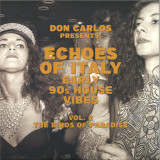
Vol 1[28,99 €]
Googling “paradise house”, the first results to pop up are an endless list of European b&b’s with whitewashed lime façades, all of them promising “…an unmatched travel experience a few steps from the sea”. Next, a little further down, are the institutional websites of a few select semi-luxury retirement homes (no photos shown, but lots of stock images of smiling nurses with reassuring looks). To find the “paradise house” we’re after, we have to scroll even further down. Much further down.
It feels like yesterday, and at the same time it seems like a million years ago. The Eighties had just ended, and it was still unclear what to expect from the Nineties. Mobile phones that were not the size of a briefcase and did not cost as much as a car? A frightening economic crisis? The guitar-rock revival?! Certainly, the best place to observe that moment of transition was the dancefloor. Truly epochal transformations were happening there. From America, within a short distance one from the other, two revolutionary new musical styles had arrived: the first one sounded a bit like an “on a budget” version of the best Seventies disco-music – Philly sound made with a set of piano-bar keyboards! – the other was even more sparse, futuristic and extraterrestrial. It was a music with a quite distinct “physical” component, which at the same time, to be fully grasped, seemed to call for the knotty theories of certain French post-modern philosophers: Gilles Deleuze, Félix Guattari, Paul Virilio... Both those genres – we would learn shortly after – were born in the black communities of Chicago and Detroit, although listening to those vinyl 12” (often wrapped in generic white covers, and with little indication in the label) you could not easily guess whether behind them there was a black boy from somewhere in the Usa, or a girl from Berlin, or a pale kid from a Cornish coastal town.
Quickly, similar sounds began to show up from all corners of Europe. A thousand variations of the same intuition: leaner, less lean, happier, slightly less intoxicated, more broken, slower, faster, much faster... Boom! From the dancefloors – the London ones at least, whose chronicles we eagerly read every month in the pages of The Face and i-D – came tales of a new generation of clubbers who had completely stopped “dressing up” to go dancing; of hot tempered hooligans bursting into tears and hugging everyone under the strobe lights as the notes of Strings of Life rose up through the fumes of dry ice (certain “smiling” pills were also involved, sure). At this point, however, we must move on to Switzerland.
In Switzerland, in the quiet and diligent town of Lugano, between the 1980s and 1990s there was a club called “Morandi”. Its hot night was on Wednesdays, when the audience also came from Milan, Como, Varese and Zurich. Legend goes that, one night, none less than Prince and Sheila E were spotted hiding among the sofas, on a day-off of the Italian dates of the Nude Tour… The Wednesday resident and superstar was an Italian dj with an exotic name: Don Carlos. The soundtrack he devised was a mixture of Chicago, Detroit, the most progressive R&B and certain forgotten classics of old disco music: practically, what the Paradise Garage in New York might have sounded like had it not closed in 1987. In between, Don Carlos also managed to squeeze in some tracks he had worked on in his studio on Lago Maggiore. One in particular: a track that was rather slow compared to the BPM in fashion at the time, but which was a perfect bridge between house and R&B. The title was Alone: Don Carlos would explain years later that it had to be intended both in the English meaning of “by itself” and like the Italian word meaning “halo”. That wasn’t the only double entendre about the song, anyway. Its own very deep nature was, indeed, double. On the one hand, Alone was built around an angelic keyboard pattern and a romantic piano riff that took you straight to heaven; on the other, it showcased enough electronic squelches (plus a sax part that sounded like it had been dissolved by acid rain) to pigeonhole the tune into the “junk modernity” section, aka the hallmark of all the most innovative sounds of the time: music that sounded like it was hand-crafted from the scraps of glittering overground pop.
No one knows who was the first to call it “paradise house”, nor when it happened. Alternative definitions on the same topic one happened to hear included “ambient house”, “dream house”, “Mediterranean progressive”… but of course none were as good (and alluring) as “paradise house”. What is certain is that such inclination for sounds that were in equal measure angelic and neurotic, romantic and unaffective, quickly became the trademark of the second generation of Italian house. Music that seemed shyly equidistant from all the rhythmic and electronic revolutions that had happened up to that moment (“Music perfectly adept at going nowhere slowly” as noted by English journalist Craig McLean in a legendary field report for Blah Blah Blah magazine). Music that to a inattentive ear might have sounded as anonymous as a snapshot of a random group of passers-by at 10AM in the centre of any major city, but perfectly described the (slow) awakening in the real world after the universal love binge of the so-called Second Summer of Love.
For a brief but unforgettable season, in Italy “paradise house” was the official soundtrack of interminable weekends spent inside the car, darting from one club to another, cutting the peninsula from North to centre, from East to West coast in pursuit of the latest after-hours disco, trading kilometres per hour with beats per minute: practically, a new New Year’s Eve every Friday and Saturday night. This too was no small transformation, as well as a shock for an adult Italy that was encountering for the first time – thanks to its sons and daughters – the wild side of industrial modernity. The clubbers of the so-called “fuoriorario” scene were the balls gone mad in the pinball machine most feared by newspapers, magazines and TV pundits. What they did each and every weekend, apart from going crazy to the sound of the current white labels, was linking distant geographical points and non-places (thank you Marc Augé!) – old dance halls, farmhouses and business centres – transformed for one night into house music heaven. As Marco D’Eramo wrote in his 1995 essay on Chicago, Il maiale e il grattacielo: “Four-wheeled capitalism distorts our age-old image of the city, it allows the suburbs to be connected to each other, whereas before they were connected only by the centre (…) It makes possible a metropolitan area without a metropolis, without a city centre, without downtown. The periphery is no longer a periphery of any centre, but is self-centred”.
“Paradise house” perfectly understood all of this and turned it into a sort of cyber-blues that didn’t even need words, and unexpectedly brought back a drop of melancholic (post?)-humanity within a world that by then – as we would wholly realise in the decades to come – was fully inhuman and heartless. A world where we were all alone, and surrounded by a sinister yellowish halo, like a neon at the end of its life cycle. But, for one night at least, happy."
Ordina ora e ordineremo l'articolo per te presso il nostro fornitore.

Now and again, an album project with no home comes along out of the blue, demanding to be licensed and shared with the world.
It was unearthed on one of Paper's digging trips. BOM's album sounded like nothing else out there, only the future. Shrouded in mystery and country-of-origin unknown, Africa runs through its DNA, but sometimes mysteries are best left...
Ase - a Yoruba philosophy signifying the power that makes things happen and produces change; given to Gods, ancestors, spirits, humans, animals, plants, rocks, rivers, songs and prayers.
BOM takes influence from all corners of Africa and its diaspora, blending them with 25 years of Western electronic music into a melange of forward facing, leftfield afro futurism.
The album features one of Africa's brightest rising stars, Luka Productions (from Mali), cosmic poet Sirius Rush (UK) and master drummer & vocalist Felix Ngindu (DRC/Liverpool) for a journey into kaleidoscopic Afro-tech funk. Gqom, Shangaan electro and township funk rub shoulders with hip-hop, bass, deep house and dub for a psychedelic celebration of collaboration and possibility.
As geographical and musical barriers are broken down, BOM's 'Ase' album is leading the charge; London to Lagos, Lisbon to Sao Paulo, Bamako to Berlin, BOM captures the sound of the underground.
Ordina ora e ordineremo l'articolo per te presso il nostro fornitore.

Limited Edition 12"
Left Ear are delivering two previous unreleased Australian ‘experimental’ electronic tracks from the 80’s and honoring them with a split 12” release.
Side A: Features an unreleased full-length version of Tim Gruchy’s Jungles, a solo electro-percussive piece recorded in Tim’s Lab D’Avoid studio in Brisbane. The track is emblematic of his style during an era when he worked extensively in music, both as a percussionist and primarily with electronics, including early analog synths.
A shorter version was originally released on the Meanjin (Brisbane) art collective ZIP’s Eye Ear EP book package in 1986 and, more recently, on Left Ear’s Antipodean Anomalies 2 compilation.
This original version of Jungles was initially part of the soundtrack for the ZIP Performing Group’s infamous Ironing Board Dances. Footage of the performance was treated through a Fairlight synthesizer, mixed with hand-painted slides, and transferred to VHS for various film festivals.
Side B: Michael Krillich’s Arnhem Land began its journey in 1982 in a shared house in North Bondi. Inspired by Brian Eno and David Byrne’s My Life in the Bush of Ghosts, he experimented with tape loops, cut-ups, and samples, incorporating synthesizers, effects pedals, a drum machine, and an unknown sample from an Australian Aboriginal record. This creation became part of his cassette release, Thematic Variations.
In 2010, Krillich uploaded an unreleased extended version of Arnhem Land from Thematic Variations to YouTube, which was shared by record dealer Matt Bowden with Left Ear Records, who pursued to release it on vinyl. Their search to uncover the sample’s origins led them to Arnhem Land Vol. 1 (1957), recorded by Peter Elkin in the Daly River region.
After years of research and through the guidance of Professor Allan Marrett and local custodians, the sample was verified as a “Wangga” ceremonial song sung by George Morkai, an Emmiyangarl man. Rights to the song had passed through generations to Tobias Worumbu, who granted us permission for its use, bringing Arnhem Land full circle.
dovrebbe essere pubblicato su 31.03.2025

After a year-long creative process fueled by collective composition and live jam sessions, Gin Tonic Orchestra returns with "Let The Children House" on Floors Records. The EP is a testament to their ever-evolving sound, deeply rooted in live improvisation and the spirit of club music.
Recorded in the heart of the Alps at "Maison des Artistes" in Chamonix, the band surrounded themselves with legendary analog synthesizers—ARP 2600, ARP Odyssey, Clavinet D6, Fender Rhodes MKII, Jupiter 4, Jupiter 8, JX-8P, Korg M1, Moog Subsequent 37, OB-X, Oberheim SEM, Roland MV8000, Wurlitzer—to sculpt a sound pulsating with the hypnotic grooves, euphoric synths, and raw underground spirit of '90s house music. Each track was shaped with care, influenced by the group's diverse influences and their shared vision of an immersive dancefloor experience, embracing the hypnotic trance of repetitive music that blurs the line between consciousness and surrender.
Much like children lost in play, Gin Tonic Orchestra embraced chaos, letting their creativity flow freely, drawing inspiration from their mentors, and the stories passed down through club culture. The result is an EP that not only embodies their musical identity but also carries a bold statement: "Let The Children House" is a call to let artists create without constraints, a message of artistic freedom in an industry often driven by formulas.
With a background that includes a debut EP on Mother Tongue, a standout performance at Nuits Sonores ranked in Resident Advisor's Top 5, and collaborations with UK jazz-funk legend Kaidi Tatham, deep house master Ron Trent, and the H2H project led by Chez Damier & Ben Vedren, Gin Tonic Orchestra continues to push boundaries between live music and electronic culture. Their new release is both a tribute to the past and a step into the future—a journey where house music is not just played, but lived
Ordina ora e ordineremo l'articolo per te presso il nostro fornitore.

Toy Tonics Music Berlin presents "Para Mytho Disco". The 2nd "Kapote" album of label founder and creative director Mathias Modica.
Keyboarder, DJ, producer, music nerd, graphic designer, multi-instrumentalist, sub-culture impressario and artist (formerly known as Munk of Gomma records.)
Kapote & Toy Tonics
In the last years Kapote was in the spotlight mainly for building the Toy Tonics label with his friends. Developing a platform for new positive quality dance music with a human touch. Toy Tonics is the opposite of the dark, druggy Techno and Trance sounds of the last years.
The warm inclusive music of Toy Tonics represents a new vibe that a young generation of diverse, stylish and culturally intersted generation of dancers loves now. Kapote's Toy Tonics became the key label for that vibe. (In 2024 Toy Tonics made 150 Toy Tonics events in 18 countries. With more than 150.000 people dancing. 90 millions streams on their music.)
Toy Tonics is more than a music label: It's a audio - visual universe. A community, almost a movement.
Based on a new positive attitude and aesthetic diversity. Mixing musicianship with DJ culture, analogue music with electronic, ideas from the past with sounds from now. To create something new. Connecting dance music with graphic design, art and underground fashion.
Kapote and his gang release vinyl, posters, shirts, art fanzines and make exhibitions and partys.
Toy Tonics started in Berlin as a underground niche project. But now became the key label of the new house, wild style disco and organic dance music scene.
Probably one of Berlin's biggest electronic music phenomena along with Keinemusik and Live from Earth.
It went fast: 2020 Kapote's crew started to make small parties in Berlin's off spaces. The "Toy Tonics Jams". The parties became "talk of the town", and Berlin clubs like Griesmühle and Panorama Bar invited the crew. Then international clubs and festival called. Toy Tonics were invited to SONAR (playing the mainstage with Kaytranada and DJ Tennis), KALA festival, Montreux Jazz festival.
Now TT has a residency at Panorama Bar Berlin and sold out events in Europe leading clubs like Phonox in London, Rex Club in Paris, Tunnel in Milan.
Toy Tonics now is the reference brand of a new generation of music loving dancers. Similar to Gomma records, Kapote's former label (2003 - 2015) that was one of the key labels of the "indie dance" scene of the Y2K years (along with DFA and Output Records).
Kapote created a multi-cultural movement with graphic designers, photographers, illustrators from the Berlin scene.
They publish the Toy Tonics Pocket Poster magazine, posters and design shirts. They organize the Toy Tonics Pop Up Galleries mixing music and art. In underground venues in Berlin and in new gallery spaces and museums around Europe.
Toy Tonics has been invited by Palais de Tokio museum in Paris, Triennale Museum Berlin, Design week Milano to create events.
The new Kapote album
The 12 tracks have a very own style. Based on dance music, but going much further. "Para Mytho Disco' is a futuristic mix of sounds. It's far away from the dark monotone techno and trance music from Kapote's hometown Berlin. Instead, he creates warm friendly atmospheres full of sonic colours and little musical surprises.
Kapote's knowlege of music history and his backround as a jazz piano student and son of classic music composer is clearly inside this music. Before turning into a DJ and electronic music producer he has been playing in bands since he was 13 years old.
The album is full of emotional chord progressions played by Kapote on various keyboards. Sometimes reminding music from the past, without being retro at all. The basslines and melodies are inspired by jazz fusion from the 1970ies. And he programmed syncopated grooves that come from afro-american dance music. There are influences from Japanese electronic music (Yellow Magic Orchestra), from 1980s Synthwave and from 1990s electronica (like Squarepusher and Luke Vibert).
Kapote plays keys, bass, flutes and percussions, he plays synth solos and sings on a few tracks. The complexity of the arrangements makes this music never boring. Lot of melodies and solos that catch the listener. Colourful soundscapes that make you want to listen or dance to this album more, and discover details also after you heard it several times.
Kapote background
Before starting Toy Tonics, Kapote used to run a label called Gomma. He produced four albums under the name Munk and music for other artists.
He produced music with Peaches, Franz Ferdinand founder Nick McCarthy, with New York street art legend The Rammellzee, Italian actress Asia Argento, the first three albums of WhoMadeWho and worked with LCD Soundsystem (listen to "Kick out the chairs", the Munk song with James Murphy )
In those "Gomma days" Kapote aka Munk was also one of the main DJs for VICE magazine parties and made music for art projects and fashion brands (Margiela, Prada, Colette).
In 2015 he stopped Munk and Gomma and started Toy Tonics. He found young producers and helped to develop their sound (Coeo, Cody Currie, Gee Lane, Barbara Boeing, Sam Ruffillo). Later he founded the sublabel Kryptox to release music by Berlin based bands that make new forms of jazz or neo classical sounds.
Under the name Kapote Mathias didnt release much:
Only his Kapote debut album "What it is" (2019) and an EP called "Electric Slide" (2022) and a collabo EP with Italian producer Sam Ruffillo ("Robot Salsa").
An although his Munk and Kapote music was an underground phenomena his music has always been a favourite of many great people from the scene.
Supported by DJs like Harvey, Chromeo, Moodymann, Jennifer Cardini, Gerd Janson, MYD, Andrew Weatherall to Blessed Madonna, Justice and Laurent Garnier… to name just a few.
Ordina ora e ordineremo l'articolo per te presso il nostro fornitore.

Apollo / R&S are delighted to welcome back The Primitive Painter, aka the duo of Roman Flügel and Jörn Elling Wuttke for a timely reissue of their 1994 lost classic self-titled album of sonorous IDM.
Growing up in Frankfurt, in the 80s and 90s the duo met at an indie rock club in their home town of Darmstadt, bonding over their shared obsession with the first wave of acid, Chicago house and early Detroit techno as well as their patronage of now iconic Frankfurt club nights like The Omen or Dorian Gray or the infamous Delirium Record shop run by scene stalwarts Ata (Robert Johnson) and Heiko MSO (Playhouse).
Taking inspiration from the likes of The Black Dog and Transmat as well as seminal compilations such as Planet E’s Intergalactic Beats and Warp’s Artificial intelligence compilation the duo honed their inventive take on the Detroit techno blueprint under the monicker Acid Jesus, debuting on their freshly minted Klang Elektronik label. The label was started in conjunction with Ata and Heiko after Fluegel & Wuttke (regular patrons of the Delirium store) pressed a demo on them, muttering the immortal line; “Please listen to the tape, we are big Mr. Fingers fans.”
Through the mid ’90s the project flourished giving rise to a classic album and a brace of singles that number amongst the best of the era’s techno, winning them a influential fans most notably Sven Väth, David Holmes and Andrew Weatherall who invited them to play live at one of the legendary Sabresonic parties in London.
Alongside the success of the Acid Jesus project, the duo found great inspiration in outside of the club, including an ambient happening when the KLF came to play Frankfurt; “There were live sheep eating grass on stage while they played at Mark Spoon’s club XS”, as well as cinematic influence from the likes of Jim Jarmush and Wim Wenders. It was however the euphonic IDM grandeur of Apollo Recordings self titled compilation of 1993 that really got their creative juices flowing: “It was a ten track compilation with artists like David Morley, Model 500, Aphex Twin which still sounds so good today,” Jörn enthuses. “ It was really the trigger to go away from the Detroit sound and more towards the big melodies of B12 etc.”
Deciding to make their tribute to this style of music the duo turned out 10 tracks of gauzy, melodious electronica in a white hot fever, one after another over the ensuing months. Settling on a name for the new project they picked ‘The Primitive Painters’ taking inspiration from the band Felt. “We are both children of the C86 movement,” explains Jörn. “this attitude of noisy art school influenced rock like Primal Scream, MBV, The Jesus & Mary Chain really inspired us to take a DIY approach to our music.”
They sent the resulting demo cassette to Renaat at R&S / Apollo. “We really had no expectations,” Jörn explains. “So we were shocked and delighted when we received a fax saying that he wanted to release it”.
The resulting release was bungled by an R&S mix up that attributed the album to the duo’s own Klang Elektronik label which confused both fans and distributors alike, denying the release the critical boost and attention that it so richly deserved. Accordingly the release slipped out without much fanfare, with a chastened Fluegel & Wuttke returning to their Acid Jesus activities which would eventually lead to their blockbusting success as Alter Ego.
Over the ensuing years the reputation of The Primitive Painter album has only grown, with second hand copies (only 500 vinyl were pressed) changing hands for exorbitant amounts on Discogs, leading us to this opportune moment of a richly deserved ‘first’ release on the label for which the project was started, Apollo / R&S.
“This really brings us full circle,” says Jörn. “Apollo / R&S meant and means so much to us as artists and so it was bittersweet to not have the official release - to put that right all these years later feels really good.”
This new vinyl release comes in re-created original gatefold artwork and includes all original 10 tracks (Stoned Soul Picnic was previously on the CD only).
Ordina ora e ordineremo l'articolo per te presso il nostro fornitore.

Khen has landed on All Day I Dream with his new My Pure Soul EP, a sentimental three-track collection that marks his first release on the beloved electronic label.
Written in dedication to his father, My Pure Soul explores themes of introspection and transcendence, blending organic percussion with lush synth work to create an emotive sonic journey. Offering a robust medley of dynamic rhythms and mesmerizing melodies, Khen’s hypnotic house grooves envelop listeners as the EP progresses from the titular track through its accompaniments ‘Lyup’ and ‘Uchi Mata’. A wondrous debut from Khen, My Pure Soul embodies the entrancing soundscapes synonymous with the label’s curation for more than a decade.
Ordina ora e ordineremo l'articolo per te presso il nostro fornitore.

Recut, the elusive DJ and producer whose roots trace back to Southern Italy but whose sound resonates globally, is back with a scorching new release titled "Narcotic Tango". This four-track EP, out on vinyl only, is a deep dive into the raw energy of Acid House and Chicago's underground, delivering an unforgettable experience for both DJs and dancefloors alike.
Opening with "Narcotic Tango", Recut lays down a track with intense rhythmic drive. The throbbing bassline and shimmering hi-hats combine with a tantalizing arpeggio that elevates the track to a hypnotic level. It’s a club banger with an irresistible groove, and once you’ve heard it, you won’t forget it. Next up, "Acid Street" transports listeners into a world of deep, dark synthetic atmospheres. The pounding drum machine and the rumbling analog bassline carry the track forward like an unstoppable force, while the overall vibe conjures a sense of gritty dancefloor energy that never lets up. "Jack On Acid" brings the heat with an unapologetically raw Chicago-inspired sound.
With a deep, looping acid groove and a steady, driving rhythm, it channels the essence of the Windy City’s storied dance music tradition, offering pure, unfiltered Acid House energy. Finally, "Feel The Heat" kicks things into overdrive with its infectious blend of New York house and Latin-infused vibes. This track is all about dancing until the break of dawn, breaking boundaries with its smooth yet aggressive energy and contagious rhythm. Recut’s unmistakable style shines through, blending the wild, experimental spirit of Acid House with the raw, soulful energy of Chicago House. Whether you're a vinyl collector, a club DJ, or simply a lover of pure dancefloor joy, this EP is an essential addition to your collection. A seasoned DJ and producer with a passion for underground sounds, Recut has been carving his name in the electronic music scene for years. With his eclectic mix of influences and cutting-edge production skills, he continues to push boundaries and captivate audiences worldwide.
