Minimal Wave presents the first vinyl reissue of French legends Martin Dupont’s seminal album from 1987, ‘Hot Paradox’. Martin Dupont was originally founded by Alain Seghir in Marseille in 1980. He enlisted numerous collaborators throughout the years, including Beverley Jane Crew, Brigitte Balian, and Catherine Loy. Martin Dupont was immensely talented with a rare dynamic between its varying members that was likely inspired by a combination of their magnetic personalities, creative vision, and the home studio where they recorded. Their music was colorful, enthusiastic, delicate, melancholy, and mysterious. A mixture of hot and cold, light and dark. They created electronic music that incorporated guitars, clarinets, and saxophones and is described by many as New Wave yet truly transcended genres.
Aside from having been released as part of ‘The Complete Collection: 1980-1988’ 5-LP box set, the ‘Hot Paradox’ album hasn’t been available on vinyl since 1987. It is one of Martin Dupont’s most exquisite albums, illustrating the band’s mastery of synthesizer work, drum programming, and vocal duets. The album is vibrant and emotive, simultaneously somber and bright, theatrical and danceable. It is an essential album in the French cold wave, new wave, and minimal synth scenes, and in recent years, has finally received the recognition it deserves beyond any musical categorization.
The Hot Paradox album reissue is pressed on 180-gram black vinyl, is accompanied by the original insert/lyrics sheet, and is housed in a heavy-weight sleeve featuring art by Yves Cheynet. After remaining under the radar for 35 years, Martin Dupont reformed in 2022 and returned to the stage in 2023 with a US tour and the Kintsugi album. The band continues to tour Europe and record new material in their new studio in France.
quête:electro minimal eu
2023 Repress
Best Record lights up a surefire classic from the annals of Italian dance music, made courtesy of Italo-Disco heavyweights Klein & MBO, who were not a company looking to get rich, but just 2 individuals: Tony Carrasco (USA), Mario Boncaldo (Italy), in one word... LEGENDARIES! with something burning inside to share. Italy certainly had a huge influence on the nascent Chicago house scene which embraced the best jams of Italo-Disco and created a movement of those simple yet complex sounds like those of "The MBO Theme", beautiful song, smooth and sweet, to give you time to think about some amazing dance moves and bring back very beautiful memories. The song was originally a hit created by the likes of Ron Hardy thanks to his punchy synth bass and captivating European vocals. So this was the first house song ever made and it's from the '80s, loved from the beginning by Derrick L. Carter, one of the pioneers of House Electronica in Chicago and Farley "Jackmaster" Funk, who broadcast on WBMX-FM of Chicago as a member of the DJ team Hot Mix 5. Pure Italo-Disco! Simple analog drum machine (sounds like a TR-606) and analog synthesizer, which in the case of Klein & MBO, is most likely a Sequential Circuits Pro-one. Italo's first purely minimal songs from the early 80s. This sought-after dancefloor gem has been given a faithful remastering touch, as is the Best Record method, which also brought out a previously unreleased edit of the track called "Italian Version", which extends the club qualities of the jam to the maximum impact of the party.
The elusive Hackney basement dweller Alpha Delta colloquially known as Alpha D drops his debutsingle “The Moat” as the very first 12” output on the mysterious new hybrid Berlin++Sydney based label Delphic Iris Records. The headline single inspired by a faithful rave session in Croatia whereAlpha D was simultaneously emotionally touched, scarred and sonically pummelled by kick drums ata wild and stormy Dimensions Festival.
This dark techno beast was the aggressive, distorted acid offspring of that faithful night ravingbetween the mud and tears of the crowd at the formidable Moat stage at Punta Christo. His OG Mixis classic 132bpm heavy pounding acid techno at its moodiest. In the Remix department we have support from the entire Delphic Iris Records crew on this one. Afitting introduction to the labels sound. Sydney based Drox of Analog Cabin fame has a low end electro bass bin rattler for us that delvesinto melancholic and psychedelic 303 territory, deep, minimal and functional a perfect mid setgroover in our opinion. Critical Automator takes us on a deep and elegant techno journey transcending both murky seasand lush hazy skies in his dub mix. Definitely dialled back from the OG mix but there is no shortage ofkick drum energy in this one. 16 Faces cooks up complex drum work and funk driven baselines in a hybrid 146 bpm number that’sa just a touch rave, grime and idm in his 5am mix. The off beat stabs and euphoric strings areplentiful, more than enough to get your through any wobbly kneed sunrise.
- A1: Boku No Kakera (Lp1 Hidari Ude No Yume Japanese Edition)
- A2: Saru To Yuki To Gomi No Kodomo
- A3: Kacha Kucha Nee
- A4: The Garden Of Poppies
- A5: Relache
- B1: Tell 'Em To Me
- B2: Living In The Dark
- B3: Slat Dance
- B4: Venezia
- B5: Saru No Ie
- C1: Boku No Kakera (Lp2 Hidari Ude No Yume Instrumental Mix)
- C2: Saru To Yuki To Gomi No Kodomo
- C3: Kacha Kucha Nee
- C4: The Garden Of Poppies
- C5: Relache
- D1: Tell 'Em To Me
- D2: Living In The Dark
- D3: Slat Dance
- D4: Venezia
- D5: Saru No Ie
RYUICHI SAKAMOTO'S LANDMARK 1981 ALBUM REISSUED FOR THE FIRST TIME IN DECADES OUTSIDE OF JAPAN. THE ALBUM WILL BE REISSUED IN ITS RARE JAPANESE EDITION TOGETHER WITH A 2-LP LIMITED EDITION FEATURING THE ALBUM PLUS A 2ND LP FEATURING ITS NEVER-RELEASED FULL INSTRUMENTAL MIX, ALL REMASTERED BY BERNIE GRUNDMAN.
Wewantsounds is proud to announce the reissue of Ryuichi Sakamoto's third solo album "Hidari Ude No Yume" (Left Handed Dream), originally released in 1981 on the Alfa label. Save for a small-scale Dutch vinyl release in 1981, it is the first time the album's original Japanese edition is released outside of Japan (the European release on Epic Records included significantly different tracks and mixes). Newly remastered from the original tapes by renowned engineer Bernie Grundman, this LP edition comes with original artwork featuring a striking cover shot by famous photographer Masayoshi Sukita (sourced from the original negative), OBI strip and 4-page insert with new introduction by journalist Anton Spice. The album will also be released as a 2-LP limited edition gatefold including the album's full instrumental mix.
Ryuichi Sakamoto's third album, "Hidari Ude No Yume" was recorded at the legendary Alfa Studio 'A' in Tokyo during the Summer of 1981. it came after "B-2 Unit" in 1980 and his debut album "Thousand Knives Of" in 1978, the very year Sakamoto was invited by Haruomi Hosono to join Yellow Magic Orchestra alongside Yukihiro Takahashi. In the process, they became global stars as the group rewrote the rules of electronic pop and toured around the world, yet Sakamoto was keen to remain active as a solo artist.
?In 1981, the musician decided to record an album rooted in Pop, following "B-2 Unit" which had a more of an experimental edge and his landmark electro debut from 1978. For this new album entitled "Hidari Ude No Yume," Sakamoto invited British producer Robin Scott, who had had huge hit with 'Pop Muzik,' to co-produce. They entered the Alfa studio in July 1981, accompanied by a handful of musicians. These included his fellow YMO musicians Haruomi Hosono and Yukihiro Takahashi, keyboard programmer extraordinaire Hideki Matsutake who'd been on Sakamoto's first two albums and became YMO's unofficial fourth member, violinist Kaoru Sato, saxophonist Satoshi Nakamura and American guitarist Adrian Belew who'd played with David Bowie, The Talking Heads' "Remain In Light" and more recently, Tom Tom Club’s debut (co-writing 'Genius Of Love').
?Together, they created a fascinating mix of pop, ambient and electronic music with elements of avant garde and traditional Japanese music, the whole firmly rooted in a solid groove. Sakamoto wanted to give the album a spontaneous feel and decided to let ideas flow and evolve organically during the sessions as musicians would develop them together. From the funk of 'Relâché' to the new wave feel of 'Venezia' and the ambient minimalism of 'Slat Dance,' the album is remarkably consistent while displaying a wealth of global influences as shown by the diversity of instruments featured on the credits: Marimba, didgeridu, traditional Japanese instruments such as the Sho and Hichiriki flutes.
?The album was released in Japan in 1981 and Epic Records picked it up for Europe a year later but decided to release it in a significantly altered version. The sequencing was completely reshuffled and two tracks, 'Saru No Ie' and 'Living In The Dark' were completely dropped while three others, ‘Relâché’, ‘Tell 'em To Me’, ‘Venezia’ were heavily remodelled with english lyrics and became 'Just About Enough', 'Once In A Lifetime' and 'The Left Bank'. Last but not least, a new English-sung track, 'The Arrangement,' was added, making the album nine tracks instead of ten for the Japanese edition.
Altogether this International version called "Left-Handed Dream" was a very different album from the Japanese one and although both were successful at the time and further established Ryuichi Sakamoto as a global solo artist, the Japanese edition of "Hidari Ude No Yume" remains largely unknown to international ears.
Wewantsounds is now delighted to release this original Japanese edition for the first time in decades as a single LP together with a 2-LP limited-edition set adding, as a bonus, its fascinating instrumental mix, discovered in the label's vaults a few years ago (Note that 'The Garden Of Poppies', 'Slat Dance' and 'Saru No Ie' are instrumentals but for the consistency of the album we kept them on the Instrumental Mix). "Hidari Ude No Yume" is an essential album in Ryuichi Sakamoto's rich discography. It is now available in its purest original Japanese form.
On this album, his third work published on Umor Rex, the french producer Alexandre Bazin takes what he started in Four Steps (Umor Rex 2022) to the maximum point. However, on Innervision, there is no longer that discreet flirtation towards the dance floor. Instead, the ten cuts that make up the album are influenced by musical research and the UK and Berlin electronic scene. Bazin's new proposal revolves around sound textures, saturations, feedback, autosampling, and cut and tuned sounds, allowing new melodic elements to emerge in the process, akin to a live act. While maintaining his minimalist exploration and obsession with melody and structure, Innervision undoubtedly marks a turning point in Bazin's discography. It is epic, compelling, euphoric, utterly enjoyable, and at times violently beautiful.
The album was composed and mixed by Alexandre Bazin at Château Rouge, Paris, and mastered by Rafael Anton Irisarri at Black Knoll, New York. François Desmoulins played the acoustic drums on Four Steps (Remix). The artwork for the album was created by Daniel Castrejón in Mexico City.
RYUICHI SAKAMOTO'S LANDMARK 1981 ALBUM REISSUED FOR THE FIRST TIME IN DECADES OUTSIDE OF JAPAN. THE ALBUM WILL BE REISSUED IN ITS RARE JAPANESE EDITION TOGETHER WITH A 2-LP LIMITED EDITION FEATURING THE ALBUM PLUS A 2ND LP FEATURING ITS NEVER-RELEASED FULL INSTRUMENTAL MIX, ALL REMASTERED BY BERNIE GRUNDMAN.
Wewantsounds is proud to announce the reissue of Ryuichi Sakamoto's third solo album "Hidari Ude No Yume" (Left Handed Dream), originally released in 1981 on the Alfa label. Save for a small-scale Dutch vinyl release in 1981, it is the first time the album's original Japanese edition is released outside of Japan (the European release on Epic Records included significantly different tracks and mixes). Newly remastered from the original tapes by renowned engineer Bernie Grundman, this LP edition comes with original artwork featuring a striking cover shot by famous photographer Masayoshi Sukita (sourced from the original negative), OBI strip and 4-page insert with new introduction by journalist Anton Spice. The album will also be released as a 2-LP limited edition gatefold including the album's full instrumental mix.
Ryuichi Sakamoto's third album, "Hidari Ude No Yume" was recorded at the legendary Alfa Studio 'A' in Tokyo during the Summer of 1981. it came after "B-2 Unit" in 1980 and his debut album "Thousand Knives Of" in 1978, the very year Sakamoto was invited by Haruomi Hosono to join Yellow Magic Orchestra alongside Yukihiro Takahashi. In the process, they became global stars as the group rewrote the rules of electronic pop and toured around the world, yet Sakamoto was keen to remain active as a solo artist.
?In 1981, the musician decided to record an album rooted in Pop, following "B-2 Unit" which had a more of an experimental edge and his landmark electro debut from 1978. For this new album entitled "Hidari Ude No Yume," Sakamoto invited British producer Robin Scott, who had had huge hit with 'Pop Muzik,' to co-produce. They entered the Alfa studio in July 1981, accompanied by a handful of musicians. These included his fellow YMO musicians Haruomi Hosono and Yukihiro Takahashi, keyboard programmer extraordinaire Hideki Matsutake who'd been on Sakamoto's first two albums and became YMO's unofficial fourth member, violinist Kaoru Sato, saxophonist Satoshi Nakamura and American guitarist Adrian Belew who'd played with David Bowie, The Talking Heads' "Remain In Light" and more recently, Tom Tom Club’s debut (co-writing 'Genius Of Love').
?Together, they created a fascinating mix of pop, ambient and electronic music with elements of avant garde and traditional Japanese music, the whole firmly rooted in a solid groove. Sakamoto wanted to give the album a spontaneous feel and decided to let ideas flow and evolve organically during the sessions as musicians would develop them together. From the funk of 'Relâché' to the new wave feel of 'Venezia' and the ambient minimalism of 'Slat Dance,' the album is remarkably consistent while displaying a wealth of global influences as shown by the diversity of instruments featured on the credits: Marimba, didgeridu, traditional Japanese instruments such as the Sho and Hichiriki flutes.
?The album was released in Japan in 1981 and Epic Records picked it up for Europe a year later but decided to release it in a significantly altered version. The sequencing was completely reshuffled and two tracks, 'Saru No Ie' and 'Living In The Dark' were completely dropped while three others, ‘Relâché’, ‘Tell 'em To Me’, ‘Venezia’ were heavily remodelled with english lyrics and became 'Just About Enough', 'Once In A Lifetime' and 'The Left Bank'. Last but not least, a new English-sung track, 'The Arrangement,' was added, making the album nine tracks instead of ten for the Japanese edition.
Altogether this International version called "Left-Handed Dream" was a very different album from the Japanese one and although both were successful at the time and further established Ryuichi Sakamoto as a global solo artist, the Japanese edition of "Hidari Ude No Yume" remains largely unknown to international ears.
Wewantsounds is now delighted to release this original Japanese edition for the first time in decades as a single LP together with a 2-LP limited-edition set adding, as a bonus, its fascinating instrumental mix, discovered in the label's vaults a few years ago (Note that 'The Garden Of Poppies', 'Slat Dance' and 'Saru No Ie' are instrumentals but for the consistency of the album we kept them on the Instrumental Mix). "Hidari Ude No Yume" is an essential album in Ryuichi Sakamoto's rich discography. It is now available in its purest original Japanese form.
- A1: Silvi's Dream (Damiano Von Erckert Remix)
- A2: What I Used To Play (Roman Flügel Remix)
- B1: The Worm (Robag Wruhme Remix)
- B2: We Are (Jonathan Kaspar Remix)
- C1: Feiern (Krystal Klear Remix)
- C2: Mystic Voices (Benjamin Damage Remix)
- D1: Sven | Väth – Nyx (Pas Deep Heet Remix)
- D2: Butoh (Robert Hood Remix)
- E1: Nyx (Planetary Assault Systems Remix)
- E2: Being In Love (Harald Björk Remix)
- F1: Catharsis (Mano Le Tough Remix)
- F2: Silvi‘s Dream (Florian Hollerith Remix)
The life-affirming energy at the heart of Sven Väth‘s recent album Catharsis is revisited, reanimated, and remixed by some of the most exciting names around, closing the circle on a superlative burst of
recent work that has not only given us the epic original LP, but also the extraordinary compilation What I Used To Play.
Roman Flügel, Benjamin Damage, Robert Hood, Planetary Assault Systems, Mano Le Tough… do we need to go on? This hand-picked list of luminaries have answered the call and certainly don’t disappoint, each fusing their signature sound with Sven‘s DNA to create a wild, uncompromising companion piece to the original album.
True to form, the running order is very much rooted on the dance floor, Silvi‘s Dream, revisited by Damiano von Erckert, explodes like a Balearic sunrise. Dreamy strings with a touch of Detroit create a lovely atmosphere while the beautiful piano sound goes right into your heart and appears as if you could feel the warm sun on your skin. Roman Flügel’s acidic rework of What I Used To Play is a homage to the 80s and the early sound of electronic music which creates nostalgic feelings and offers a greatly produced retro soundscape à la Kraftwerk. Staying close to the original, but with the perfect amount of spin, it’s a symbiotic interplay of synthetic bass pads, and a tiny bell melody. Robag Wruhme’s cranking minimal funk takes us down The Worm-hole. A concise interference sound builds
up sustained tension, tangled but structured, deep and yet driving. Robag took over the deep and dirty rhythms of the original perfectly and delivers a versatile piece. This opening salvo oozes quality and
sets things up perfectly for the electrified celebration of hi-octane technology come.
Jonathan Kaspar‘s growling interpretation of We Are provides a melancholic atmosphere with fascinating percussion parts. Zaps shoot through the air like small laser pistols while we let ourselves
be carried away by the bass, the frisky vocal stutter effect is the icing on the cake. Speeding things up, the euphoric trance that engulfs Krystal Klear’s epic version of Feiern. Expansive strings increase up
to ecstasy and guide us to a love-filled unity. This remix is sure to be an excellent peak-time smasher for the open-air season. On to a wild ride of pure techno with Benjamin Damage, who delivers a dry and uncompromising Berlin Techno version of Mystic Voices. Harder pace but the string synthesizer harmony brings light to an otherwise gloomy environment. Next up is Luke Slater’s PAS Deep Heet Mix to add a retro nineties vibe to proceedings on Nyx. Entering a rough space with gigantic clap impacts, we are blessed with straightforward Techno. Shimmering and spooling, this groove hits the
mark. Then, as if it was ever in doubt, Sven‘s lofty place in the techno firmament is underlined by a peak-time contribution by non-less than Detroit legend Robert Hood. Unmistakable, you must recognize the signature Robert Hood drive on Butoh. Chord stabs fulfill the Detroit feeling with offtaking string elements and high-energy vocal transformations. It’s a warm embrace that triggers emotions. Planetary Assault Systems then blasts things ever deeper into the cosmos on a second outing of Nyx. Reduced and to the point but of course, true to form, with powerful tribal percussion parts and intensive cutting hi-hats.
From there on in, the collection gradually re-enters the atmosphere, burning with a phosphorescent, melancholy glow. Harald Björk extrapolates Being In Love into a hypnotic groove for the early hours. A playful and atmospheric electronica interpretation to soothe our souls due to disharmonious synth pads and a dreamy deformation of the original melody. Mano Le Tough harnesses the ethno-rhythms
and brooding energy of Catharsis into a low-slung, tribal stomper. Anomalous organ parts ring out and link up with a trance-like sequence, summer feelings arouse as you feel like you can almost smell Ibizan air. The collection comes full circle with a second equally seductive interpretation of Silvi‘s Dream by Florian Hollerith. Stripped-down and hypnotic, the homage to Sven's girlfriend Silvi is extended as a reverence to Sven himself. Sven's profound vocal clearly infuse time and space and leave a forever-lasting memory of love.
By accident or design, it somehow leaves us with the reassuring sense that, although this specific part of the journey may be drawing to a close, the mission of the man behind it all most definitely isn't.
written & produced by: Sven Väth & Gregor Tresher
- A1: Don't Stop
- A2: Message From The Other Side
- A3: 3 A.m. At Moëf Gaga
- A4: When The Rain Is Falling ('85 Interlude)
- A5: Talk Too Much (Instrumental)
- B1: Jump In The Water (24-Track Mix)
- B2: Armer Teufel Am Morgen Nach Dem Maskenball
- B3: Close To You ('86 Interlude)
- B4: September Garden (Instrumental)
- B5: Message From The Other Side (Alternative Instrumental Mix)
"Don't Stop" is the third album retrospectively released by Ghia. As the subtitle "Early Works & Artefacts 1984-1987" implies, it features some of their earliest compositions as well as tracks that were recorded during the same period as their "Curaçao Blue" LP.
The album is a fusion of diverse music styles. Listeners will delight in a range of genres, including electro, funk, soul, jazz-funk, synth pop, and even rap/hip-hop, all woven together as a cohesive work that remains mostly instrumental. As a whole, "Don't Stop" represents Ghia's funkiest and most experimental release to date. Notably, the LP features a rap version of Hermann Hesse's controversial German poem "Armer Teufel am Morgen nach dem Maskenball" ("Poor Devil the Morning After the Costume Ball") from 1926, accompanied by a drum machine rhythm and funky guitar. This poem depicts a person who drank too much the night before, telling the story and describing his hangover. The title track "Don't Stop" and the thrilling minimal electro-funk tune "3 A.M. at Moëf Gaga" both evoke old-school electro influences. The latter references the Spanish discotheque Moëf Gaga, located on the Balearic coast, which the dynamic duo of Lutz Boberg and Frank Simon frequented during their 1980s holidays. While the exact music played at 3 A.M. is unknown, listening to Ghia's track will undoubtedly capture the mood of the place.
One of the key tracks of the album is "Message From The Other Side", which could easily be noted as one of the nicest European synth-funk instrumental pieces ever. The track is based on a sick synth bass line, sparkled with DX7 chord hits, funky guitar, and a delightful "marimba" solo in the last third. The solo was actually played on Boberg's keyboard, using a special sound cartridge. This particular track had to be edited and technically revised by Marian Tone and DJ Scientist as the existing demo version of the song could not be used as is. With its stunning groove, this track will surely be a DJ's favorite.
Listening to the complete album, there is more of Boberg's keyboard wizardry: could you believe that the trumpet solo on "Jump In The Water" as well as the short but stunning slap bass solo on "Talk Too Much" were both played by on the DX7? However, this new release, unlike the jazzy "Curaçao Blue", is not about solos or virtuous playing - it clearly shows the duo's direction towards more electronic composition and clear song structures. The versions of "September Garden", "When The Rain is Falling" as well as "Talk Too Much" are actually instrumental mixdowns of vocal songs. And again, we get a blissful take of "Close To You", here a version from 1986. This soulful jazz-funk ballad could already be heard on "Curaçao Blue" while the final vocal version with singer Lisa Ohm can be found on the recently released "This Is" LP. This shows that the Ghia composers, Boberg and Simon, were perfectionists - tracks were reworked again and again, making them better and better.
The album was mastered and restored with great care, and we are pleased to provide you with a perfect example of mid 1980s home-recording pleasures, tinged with a youthful spirit and providing a sound that cannot be recaptured anymore nowadays. Alongside "This Is" and "Curacao Blue" it should be another perfect addition to any 80s groove collection as well as a great pick for DJs that love and play disco, leftfield electro and funk. The LP is limited to 500 copies.
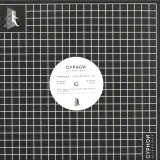
Cyphon is proud to bring you brand new music from one of Europe’s pioneers of techno and IDM, Stefan Robbers aka Terrace and Florence. His early releases for Djax-Up-Beats and his own Eevo Lute Muzique in the early 90’s were hugely influential striking a sweet spot between stark minimalism, majestic analogue lushness and dance floor grooves. In more recent years his own reinterpretation of the Detroit sound can be found on the highly regarded Dutch label Delsin.
Here on his ‘Thermionic EP’ Terrace sings out with such intensity that minds are blown. Listen to the brutal, exhilarating sequences of ‘Territorial’ which leads the new EP, and you will receive that message loud and clear. While the music is as much about the consequence of soulful depth, it is also about edgy machines communicating intimately. Sweet chords fuse and then contrast with grainy acidic sonics, leaving the tempo poised at an irresistible pace like all our futures depended on it.
As you move next onto the more subtle electro pulse of ‘Thermon’, shimmering keys dance around a frame-by-frame remembrance of robotic disco in the 23rd century. The uplifting brilliance of ‘Woodward’ follows filling the void with an explosion of colour that is all about life-affirming instrumentation, hitting you fast and loose with a cascade of arpeggios, tough drums plus an incendiary surge of melodic distraction causing the airwaves to crackle with celebration.
Completing this stunning release from Terrace are the fierce, hotwired grooves forged by ‘Ritual’, conjuring up endless combinations of an analogue model rediscovered. The sheer dancefloor animation found within each of Terrace’s productions on this EP purposefully point to and enhance Cyphon Recordings own mission to explore, propelling the emphasis forever forwards.
DJ Support:
Sean Johnston, Kevin Reynolds, Vince Watson, Gareth Sommerville, Daniele Baldelli, Dj Rocca, Massimiliano Pagliara, Craig Smith, Jason Kendig, Rarish & Yoshi Horino
- A1: Avalon - Linked (Move D Remix)
- A2: Alegria - Danger (It's For Real) (Alien Remake)
- A3: Gemini - 7 15 Pm
- B1: Solar Quest - Acid Nation
- C1: Modulate - Dreams
- C2: Nu Era - Pisces
- C3: Hans G - Anything You Like (B2)
- D1: Q-Burn's Abstract Message - Mess Of Afros (Glenn Underground Remix)
- D2: Hector Zazou & Harold Budd - The Light Gave Us Away (House Mix By Herbert)
Hi Scores is beyond excited to present SSR Records: In Retrospect. This 2LP compilation album presented in a beautiful gatefold sleeve and through all digital platforms, wishes to highlight the immense and hard to grasp legacy of the Brussels based label. SSR Records was founded in 1988 by Marc Hollander as a sub label of his Crammed Discs and spanned the nascent years of house, acid, rave, trance, new beat, hip-hop, future jazz and broken beat, collaborating internationally and racking up close to 200 releases until it was put to sleep in 2002. Far ahead of their time, SSR Records released music of both European and North American artists that hadn’t broken through yet, such as those collected on this compilation: Move D, Nu Era, Gemini, Bjørn Torske, Glenn Underground or Matthew Herbert.
SSR Records was run by Crammed Discs chief Marc Hollander and Minimal Compact singer Samy Birnbach aka DJ Morpheus. SSR Records: In Retrospect comes with extended liner notes, exploring the pivotal milestones in the history of the adventurous label and zooming in on the origins of all records featured on the compilation.
All nine tracks on SSR Records: In Retrospect were selected by Hi Scores’s head honcho Kong DJ and have been remastered. Created between 1990 and 1996 and in the at the time pioneering spheres of house, breakbeat, electro and trance music, these treasures from the vast SSR catalog today stand as a stunning testimony to a truly remarkable and timeless musical legacy. Kong DJ: ‘While collaborating with Crammed Discs on the releases of Aksak Maboul in 2016 and Zazou / Bikaye in 2018 on Ensemble, I began to grasp the impressive catalog of the label and its sub labels, including SSR. Surprised by the tiny footprint SSR had left on the world wide web - often the case for labels ceased before the internet revolution - I wrote an article for British website The Vinyl Factory.
This would later prove to be the first step towards this compilation album, collecting favorites from the label as a kid in a giant candy store.’
Beautiful mix of peak time minimalism, intricate electro, come-up euphorics and come-down remedies by the masterful 'not even noticed' duo on their Craigie Knowes debut EP Microtransitions.
A bit for everyone and something for every time, yet nothing out of place.
Back in 2018, two mysterious twelve-inch singles appeared in underground record sthops. Credited to Blotter Trax, a previously unknown outfit who cherished “faceless” anonymity, the pleasingly twisted and mind-altering music on show was a mutant form of electronic psychedelia. The included tracks were variously informed by analogue techno, acid, electro and minimal, but inhabited their own clandestine sonic space. These tracks were, we later discovered, lightly edited “straight to tape” jams, crafted on the fly by their creators in one of Berlin’s most admired studios.
By the time Blotter Trax delivered their follow-up on Clone offshoot Frustrated Funk a year later, the secret was out: the project was in fact a collaboration between two storied artists, techno titan Magda – a DJ/producer who should need little introduction – and serial underground aggravator (and man of many aliases) Jay Ahern, sometime Hauntologists member and acid techno royalty thanks to years spent releasing similarly shadowy EPs as T.B Arthur.
In the years that followed, and before the COVID-19 pandemic grounded them in Berlin, the pair took their incendiary, modular-driven live show to esteemed clubland institutions (Fabric included), on an acclaimed tour of Japan, and onto the stages of festivals across Europe.
Four years on from that appearance on Frustrated Funk, Blotter Trax are back in updated and expanded form. Now a trio thanks to the addition of bassist Hannes Strobl, the band is set to release their far-sighted, funk-fuelled debut album, Super Conductor – a pulsating, thrill-in-minute ride includes contributions from a swathe of notable guests (Nina Hynes, Ilhem Khodja and David Moss provided vocals, Shigeru Tanabu played guitar, Matthew Styles mixed the set and old friend John Tejada mastered it).
While rooted in electro and acid, the album is impressively low-slung, stylish and funky, with nods towards Blotter Trax’s mutual love of Arthur Russell, early ‘80s NYC downtown disco, leftfield new-wave pop and flash-fried punk-funk. Released by JD Twitch’s Optimo Music imprint, it charts the ongoing dancefloor evolution of a band whose days of mystery and mischief are now a distant memory.
Hatıralar was Anadol's second album, originally composed between Berlin and Istanbul around 2012 and released years later only in digital form on the Istanbul based label Inverted Spectrum. The title Hatıralar ("Memories") turns out to be a self-fulfilling prophecy. Anadol recalled and revisited the music in 2023, gently editing and mixing the compositions for the newly mastered LP format in which they now see the light of day. Hatıralar represents an early version of the melodic, instrumental synth-pop that Anadol refined on her album Uzun Havalar (2019) before exploring the more free, krautrock-inspired musique concrète of her last album Felicita (2021). Here is the text that accompanied the original 2017 release:
Anadol, named after an old-fashioned Turkish automobile brand, is an instrumental synth-pop project by Gözen Atila, an artist, dj and keyboard player. She records with mini organs manufactured during the 70s and 80s, the built-in rhythms and arpeggios of these machines provide the backbone of her sound, and her melodies are influenced by pop music and soundtracks from France, Italy and Turkey from the same period. The music is awash with allusions to the moods of old Turkish and European cinema, from the erotic to the melodramatic, and with a reminiscence of the sound and spirit of so-called "tavern music" popular in Turkey's urban nightlife in the 1980s, a flexible pop style usually performed by a solo keyboardist-singer. Anadol is a continuation of the tradition of lone synth experimentalists like Bruce Haack and The Space Lady with their childlike curiosity for electronic sounds, and of the keyboardists pushing the boundaries of minimal equipment to entertain middle aged drunk couples in pubs and wedding parties of Istanbul.
An intergenerational meeting of minds, Galaxy is the first collaborative EP from Meanjin, Brisbane musicians Sam Poggioli aka Sampology and Charlie Hill. Equal parts brain dance and body music, Galaxy’s seven tracks represent a vivid intermingling of 70s jazz-funk, fusion, machine-funk, Latin house and broken beat, accented by flourishes of minimalist composition. Considered as a whole, it evokes the possibility and potential of a space-age future where technology and nature exist in simpatico.
One of the most in-demand young jazz drummers in the Meanjin (Brisbane) music scene, Charlie started producing electronic music on his laptop three years ago. It was a vibe shift that hit him after several months spent immersing himself in Europe’s jazz and electronica scenes on the eve of the global coronavirus pandemic. After returning home, he approached Sam about recording some music together.
Sam, a well-travelled Australian DJ, producer and Worldwide FM radio host, was cautious about starting a new side project. However, when he heard his demos, he realised Charlie was blending rhythmic fundamentals he’d learned while completing a music degree with a beautifully wide-eyed approach to jazz-tinged electronica.
With Charlie on drums and Sam on MPC, they set about recording the songs on Galaxy, along the way discovering Sam’s mother taught Charlie visual art as a child. They also learned that Charlie’s mother plays with Sam’s father in the Queensland Symphony Orchestra, synchronicities which made their collaboration feel like it was meant to be.
As part of the Galaxy sessions, Sam and Charlie collaborated with fellow Australian vocalists Tiana Khasi and Merinda Dias-Jayasinha. On ‘Constant Call’, Tiana threads neo-soul/modern soul melodies through a backdrop that sounds like Burial on a future jazz tip. ‘Merinda’, on the other hand, sees Merinda laying a repeated Steve Riech-style vocal refrain over a man/machine instrumental accented by stargazed synths.
At the same time as they were creating Galaxy, Charlie was also busy recording his debut solo EP Yore, both of which are due for release in August 2023, respectively, through Middle Name Records.
The electronic music producer and DJ whose catalogue of collaborations namechecks acts as diverse as Agoria, Green Velvet, Roman Flugel to Nitzer Ebb, Depeche Mode and David Holmes is set to release his 6th studio album The Strand Cinema on the 24th March on his own label PKR.
The last five years have seen an evolutionary shift for the electronic musician, undertaking more soundtrack work, including for film (Nightride on Netflix, Rough), radio (The Northern Bank Job BBC R4) and theatre (East Belfast Boy).
The Strand Cinema album is a tribute to the art deco cinema building , The Strand, where Phil’s recording studio is. A stirring and beautiful record, it seamlessly traverses the worlds of contemporary classical to beautifully elevated dance music with a recognisably cinematic influence. Managing to sound both grand and expansive, as well as minimal and introspective – it’s a record that explores the macro and the micro.
The opening track “Strand Cinema”, begins with a steady, gentle, looping pulse, almost recalling the kosmische ripples of Cluster, before sweeping and enveloping strings enter, resulting in a track that manages to sound both grandiose and tender in one fell swoop.
Lead single “Atlantic” perhaps most perfectly encapsulates the various sonic worlds that Kieran is operating in, merging a bordering on euphoric dance beat layered with infectious melodies, while remaining anchored to organic sounds, as strings and percussion collide with the driving and hypnotic groove of the track.
“Strike the Match” showcases Kieran’s talents for detail, in a track that feels almost palpably textural and rich in complexity but without feeling overly busy or superfluous; while “Elephant in Castle” utilises intense, almost gargling electronics, that drone with a foreboding and ominous tone, but also produces fractured moments of light, beauty and poignancy.
Created during Covid Kieran’s method was “To literally be like a tuning fork and ask: What's in my chest? If I were to describe what's inside me, and what's going on in the outside world, If I had to score that in a film, what would it sound like right now? I guess I sort of soundtracked my own life”
“One positive side of lockdowns was that we spent more time in natural surroundings where I’d make field recordings. I’d also record acoustic sounds: cello, violin, percussion, guitar etc and then create my own sample bank from all these single one-note sounds. So, creating your own loops and drones. The album was created from organic sounds manipulated by machines; melted, mangled and hacked with computers but machines only sound as good as the human spirit put into them.
The idea of nature and humans versus technology is the concept behind the album’s A/V show which debuts in Belfast in March before touring. Featuring works by 11 artists from across the worlds of film, animation, advertising, architecture, computer science and dance such as Scottish BAFTA nominated Simone Smith, LA based director Frederico Marzio Vitetta who is famous for skateboarding films like ‘Wet Dream’ with Spike Jonze, to futuristic CGI from BAFTA nominated Kris Kelly and a video from contemporary dancer Oona Doherty. onscreen visualisations that explores The visuals explore nature and technology along a timeline from past, present to future with cinema as a loose reference point with varying degrees of utopian versus dystopian moods.
Official reissue of Civilistjävel!'s first, self-titled archival LP in sky-blue embossed sleeve, 500 copies.
A minor masterpiece of high-lonesome, ultra-spacey existential electronics, recorded in the ‘90s and early 2000s, the music on this album had never been heard outside the Swedish artist’s private tape/CD-R trading networks until 2018 - when London’s Low Company presented it in a hand-assembled vinyl edition of 250 with scant context or biographical info. Some people understandably thought the project might be a ruse - was it really plausible that material this accomplished and affecting had fallen under the radar for 20-odd years? Implausible, perhaps, but true nonetheless. Five years on we know that Civilistjävel is indeed the real deal: the alter ego of a discreet but by no means reclusive solo artist based in Uppsala who has for decades been quietly honing his craft without worrying about who's listening. Since 2019 he has become more visible: performing live several times in and around Europe, and last year releasing a brand new studio album, Järnnätter, on Felt Records. Meanwhile Low Company has put out four subsequent, vinyl-only volumes of archival material. These have increasingly tended towards the more rhythmic/techno-oriented impulse in Civilistjävel, so it’s interesting to return now to Volume 1: comprised of the most introspective and isolationist of his works, tapping into deep wells of northern European melancholy. It’s a music made with no audience in mind, but simply to suit itself: cold-world kosmische, intimate minimal synth etudes, bowled percussion clusters and impossibly yearning, 30-days-of-night ambient dronescapes. Created mostly using a Juno60 and Korg MS20, and home-recorded to DAT (crackles and surface-noise preserved intact), you can hear in these seven expansive instrumentals unconscious echoes of Serge Bulot and Anna SjalveTreje’s crepuscular dream-sequences, Scandinavian black metal's mist-cloaked forest-fantasies, the austere dub-techno of Thomas Köner and Basic Channel, and the gristly, consumptive concrète of Nurse With Wound and Asmus Tietchens.
ALEXANDER SKANCKE´s exciting debut ep for SLICES OF LIFE, including a collaboration track with FOEHN & JEROME.
Alexander Skancke is a Berlin-based DJ, producer and rising talent within Europe´s underground house scene. The young Norwegian has made a sizeable impact on the electronic music scene, dating from way back to his early releases on Neostrictly, to the internationally respected releases on his own label Quirk. Entrenched in his love for vinyl and analog productions, Skancke is imbued with a passion for the very roots of house music, but has also kept his ears open far beyond the boundaries of electronic music.
Skancke’s excitement for analogue is reflected in all aspects of his life: from his work at Bikini Waxx (a record shop in Berlin specializing in second-hand vinyl), to his fascination with vintage studio gear, all culminating in his music having a wonderfully raw and organic feeling.
The 3 tracks that make up his “Public Trouble” ep showcase Alexander Skancke´s knowledge of the history of dance music without copying the originals, but instead creating his own unique signature:
The A side - “This Go This Way” sends you on a crazy acid dream, driven by a hypnotic unstoppable beat with Alexander Skancke´s voice appearing out of the ether, before vanishing away.
For the B1 track “Wind Sync” Alex teamed up with his label mates and renowned DJ- and Producer-Duo Foehn & Jerome at their studio in Berlin. Together they've masterfully crafted a light footed minimal house track with a slightly melancholic touch.
The EP´s title track “Public Trouble” truly shows off Alexander Skancke´s love for deep minimal funk: An ultra groovy piece of music based around tight beats and warm basslines, topped off with a funky stripped back synth line.
It is recognized today that these tutelary pieces for four pianos are among the most powerful in contemporary music,their impact is almost unparalleled. After the historical version recorded forty years ago, this one, featuring four of the greatest European performers, is now regaining its full power. High level recordings too.
There was some for John Cage, then came Christian Wolff, and finally Morton Feldman, from this school in New York. Only Julius Eastman remained outside the game, the last figure, the most solitary and enigmatic - undoubtedly also one of the most powerful, and it is this power that is revealed through these recordings. In the 1970s and 1980s, Eastman was one of the very few African-Americans to gain recognition in the New York avant-garde music scene. He was politically committed, a figure of queer culture and a solar and solitary poet whose melancholy influenced his genius as well as his tragic destiny : suffering from various addictions, declared missing, actually homeless. During Winter of 1981-82, he got deported from his apartment by the police, who destroyed most of what he owned - including scores and recordings. He was found dead in 1990, on the streets of Buffalo, after years of vagrancy.
The Performers Nicolas Horvath, pianist and electroacoustic composer Nicolas Horvath is known for his boundariesless musical explorations - he has collaborated with leading contemporary composers from around the world, including Alvin Lucier, Alvin Curran and Valentyn Silvestrov - the recordings of his complete works for piano by Phil Glass made a lasting impression. He has collaborated recently with Lustmord on the Deconstruction of November by Dennis Johnson (Sub Rosa SR502: The Fall).
Melaine Dalibert, a French composer and pianist, fascinated by natural phenomena which are both expected and unpredictable, Dalibert has developed his own algorithmic procedures of composition which contain the notion of stretched time evoking Morton Feldman, minimal and introspective, adopting a unique concept of fractal series.
Stephane Ginsburgh, a tireless surveyor of the repertoire but also explorer of new music, collaborated with composers such as Philippe Boesmans, Jean-Luc Fafchamps, Stefan Prins, Frederic Rzewski and Matthew Shlomowitz of whom he premiered works, as well as with choreographers such as Anne Teresa De Keersmaeker (Rosas) and recorded Feldman, Duchamp and Satie for Sub Rosa and the complete set of Prokofiev piano sonatas for Cypres. Wilhem Latchoumia, he embraces both new music and the classical repertoire with success and charisma. His two last recordings for La Dolce Volta (Prokofiev and de Falla) have been highly acclaimed by critics with a FFFF in Télérama. Winner of the Hewlett-Packard Foundation and the Montsalvatge International Piano Competition, he brilliantly won the First Prize in the 2006 Orléans International Piano Competition.
2023 Repress
Marc Acardipane's Pitch-Hiker, originally released under Marc's Pilldriver alias, is without doubt one of the foundation tracks of European hardcore. From the moment it was released in 1995 it caused shockwaves with its stripped down, kick drum focused approach. Gone were the hoovers, sirens, breakbeats and vocal samples of that era's hardcore and instead a stark new minimalism emerged, focusing equally on the kick drum itself and the negative space and air around it.
Like all groundbreaking records it was soon followed by an endless stream of unofficial rip-offs, re-edits and remixes, none of which got close to the perfection of Marc's original. Now for the first time Pitch-Hiker gets officially remixed showing the level of trust Marc has in Perc Trax and Perc's own affection for PitchHiker and for Marc's enduring legacy as an electronic music innovator.
First up is Marc himself with his own take on his classic. Keeping the distinctive reverb soaked kick hits of his 1995 original mix he adds dive-bombing synths and scything hi-hats to increase the energy of the original mix without losing any of its dark charm.
Next label boss Perc adds more weight to the original's unmistakable kick drums, slowly building up the tension until his remix drops into the kind of noise assault not heard on Perc Trax since Tymon's devastating remix of Perc's own 'Hyperlink'. Kick drum specialists Ghost In The Machine step up next and work the original mixes' warping kick drums to the max. Updating and strengthening the track perfectly whilst keeping the sense of space that gave the original mix so much character.
Finally Sissel Wincent and Peder Mannerfelt team up for their Perc Trax debut following on from Perc's remix of 'Sissel & Bass' back in 2019. Flipping the script completely Sissel & Peder add multiple vocal hooks and fuse the original mix's 4/4 kick with half-speed broken beat rhythms to serve up a very different, but still successful interpretation of the original mix.
2023 Repress
Marc Acardipane's Pitch-Hiker, originally released under Marc's Pilldriver alias, is without doubt one of the foundation tracks of European hardcore. From the moment it was released in 1995 it caused shockwaves with its stripped down, kick drum focused approach. Gone were the hoovers, sirens, breakbeats and vocal samples of that era's hardcore and instead a stark new minimalism emerged, focusing equally on the kick drum itself and the negative space and air around it.
Like all groundbreaking records it was soon followed by an endless stream of unofficial rip-offs, re-edits and remixes, none of which got close to the perfection of Marc's original. Now for the first time Pitch-Hiker gets officially remixed showing the level of trust Marc has in Perc Trax and Perc's own affection for PitchHiker and for Marc's enduring legacy as an electronic music innovator.
First up is Marc himself with his own take on his classic. Keeping the distinctive reverb soaked kick hits of his 1995 original mix he adds dive-bombing synths and scything hi-hats to increase the energy of the original mix without losing any of its dark charm.
Next label boss Perc adds more weight to the original's unmistakable kick drums, slowly building up the tension until his remix drops into the kind of noise assault not heard on Perc Trax since Tymon's devastating remix of Perc's own 'Hyperlink'. Kick drum specialists Ghost In The Machine step up next and work the original mixes' warping kick drums to the max. Updating and strengthening the track perfectly whilst keeping the sense of space that gave the original mix so much character.
Finally Sissel Wincent and Peder Mannerfelt team up for their Perc Trax debut following on from Perc's remix of 'Sissel & Bass' back in 2019. Flipping the script completely Sissel & Peder add multiple vocal hooks and fuse the original mix's 4/4 kick with half-speed broken beat rhythms to serve up a very different, but still successful interpretation of the original mix.
Born in Paris but making waves across Europe, Vitess is quickly making a statement as both a producer and a live artist to know. An emerging name within house and minimal, with releases on Up The Stuss, Shall Not Fade, and his own Retro Futura Records, the French talent’s performances and releases under his Vitess alias and various other guises have led to a wealth of early support from the scene’s finest. Not slowing down, he makes an impressive debut outing on LOCUS, unveiling five new productions across his ‘Flight Recorder’ EP.
Lead cut ‘Flight Recorder’ opens proceedings, slowly descending down a warping cosmic path of sci-fi electronics and cinematic pads, leading into the tough kicks, warping bass and alluring vocals of ‘Alpha’. Next, ‘Dip 00s’ makes an immediate impact with its skippy drums, breezy tones and heady grooves. To close, ‘Global Dancing’ makes an impact with its shuffling drums, spiralling leads and rich keys
The impact Belfast born duo Bicep have had on Irish music is unmeasurable, capturing the hearts and minds of the next-gen with their future-facing sonics. The pairing started their FMB label in 2012, going on to support a plethora of Irish artists in the process, from Cromby and Hammer to Brassica and Brame & Hamo.
The label's latest record comes from yet another Irish artist. Swoose, a name that should be familiar to any Irish electronic lover, began his career handing out flyers for legendary club Stiff Kitten. From here Swoose went on to become a resident of Shine and AVA Festival, and has released a string of killer records on Shall Not Fade and Lost Palms. Now residing in London, his record on FMB brings the OG Belfast dance music community back together for a fittingly euphoric release.
Title track ‘Breathe’ produces poignant undertones and contemplative thought, meditative breaks channeling the producer's fascination with wild flora and fauna. The track's interior begins to distort our sense of time and self, liquid textures forming over celestial harmonies like psilocybin. ‘Hyphae’ takes a 4/4 approach, while keeping the EP’s emotional personality present. Its pulsating bassline is balanced by far-reaching syths and dancing hi-hats, resting in a unified space of motion and colour.
Rotterdam via Belfast based artist Kessler has been on the tip of everyone's tongue since the return of clubbing. He has released music on Sherelle’s BEAUTIFUL black and LGBTQ+ label and his debut Shall Not Fade release was one of the most celebrated EPs of 2021. Kesslers knackt to create beautiful, other-wordly soundscapes that are both functional and edge on the side of melancholy are unmatched. His flip of title track ‘Breathe’ swaps gentler tones for his signature UK-sound inspired drums and crowd-evaporating atmospherics. The arrangements gentle ebb and flow, maintaining that signature blend of pace and etherealness.
Toronto’s Peach is on hand for the second remix – ‘Hyphae – a stripped-back early-morning groover that mixes psychedelia with flexible percussion. The track gives off a subtly uplifting vibe that blends heads-down club with minimal, punchy aesthetic. Just when you thought it was time to go home too...
Wunderblock Records and La Notte Di Architetto label are proud to present a debut release of a new project, Urstadt, ruled by Michael Teplov of Wunderblock and Nikita Melnikov, also known as Relic Radiation. Been released on the Planet Rhythm label before, and now the duo appears in a pure new form with fresh techno material.
The EP is called "Ritornels Of Decay" and presents the Urstadt duo's view on the state of the electronic music scene during the post-Covid times, through the prism of classic Detroit and Birmingham techno grooves. As a special VIP guest featured Andreas Sandoval, also known as Developer, with a hyperkinetic, ultra-minimalistic rework of the first track.
Overall, all the tracks of the EP are like polyrhythmic, slowly developing mechanospheres with a touch of cold-euphoric and dreamcore harmonies, fused altogether in a modern superhybridic way. For true techno believers.
*Ltd Coloured Vinyl on Transparent Blue Vinyl* London-based musician and producer Ryan Lee West, aka Rival Consoles, creates driving, experimental electronic music that makes synthesisers sound human. His consistent desire to create a more organic, living sound, sees him forming pieces that capture a sense of songwriting behind the machines.
‘Now Is’ marks a new chapter in an ongoing quest for refinement and evolution. More playful and melodic, the album draws from much experimentation in minimalist songwriting and seamlessly blends synthesisers and acoustic instruments. “There are some pieces that are influenced quite strongly by the isolation and anxiety of these times. There are also pieces which are more optimistic and vibrant, which I think is a consistent attitude of my records, as I want art to express many aspects of life.”
From the elevating arrangements of ‘Beginnings’ and motorik beats of ‘World Turns’, to the isolation of ‘Frontiers’, influenced by the barren landscapes of Iceland, Rival Consoles’ eighth studio album subtly morphs and evolves. “The title of the record ‘Now Is’ interests me because it is the beginning of a statement, but it is incomplete. I like art that is open and suggestive of ideas even if they are inspired by very specific things. With my previous record ‘Overflow’ being very dark, heavy and almost dystopian, I wanted to escape into a different world with this music and ended up creating a record which is a lot more colourful and euphoric.”
For the sonic ‘Vision of Self’, West looked to create the kind of movement and colour a string section in an orchestra would construct, but with synthesisers. “I think there’s a lot of synergy between the two worlds. I wanted to create a hypnotic journey, where the synths and sounds weave in and out of each other, so you get lost in the music and don’t know where one sound starts or another ends.” This “journey” West refers to is symbiotic of the way he has approached music throughout a progressive career – an ongoing project that is never static and always moving forward.
A sense of euphoria is reached with the pulsating title track which bursts into colour like the appearance of the summer sun, while ‘Echoes’ is a vivid exploration of rhythm and sound for summer nights. The track starts with a dense collage of modular synths, fragmented metallic tones, broken sounding drums and a downcast melodic synth line. “This is a piece where the main melody has been in my head for a long time and was just waiting to come out. I kind of think of it as the sonic equivalent to an impressionist painting in that I wanted to explore the sensation of lots of small layers of different colours and textures that are constantly moving around each other.”
Rival Consoles is set to appear at festivals across Europe this summer, with headline shows expected to follow in the autumn.
ft. Cinna Peyghamy & Jay Duncan Remix
Soreab returns to Control Freak for a full length white label release - a masterclass in organic, dubbed-out, dancefloor psychedelia, featuring live recordings by sound artist and modular percussionist Cinna Peyghamy following a recent collaboration with Azu Tiwaline.
As a DJ, producer and co-founder of Baroque Sunburst, Italian-born Soreab has been a mainstay of London’s underground electronic music scene for over 5 years. On ‘Teleportation’, he manipulates and twists Cinna’s deft percussion work into a distinct range of UK styles, ranging from 170bpm euphoria to subby, half-time ex- plorations from the school of FWD>> and Plastic People.
On the B2, Jay Duncan (Phantasy Sound / Intergraded) takes a decidedly minimal tack on her remix of ‘Untitled 1’, with deep, dubby chord stabs and immersive rhythms for late night dancefloor revelations.
For Fans Of: Om Unit, Shackleton, Al Wootton
Limited pressing of just 300 hand-stamped records - don’t miss your chance to grab one
Mastered & cut by Ruy Marine @ D&M, Berlin
Welcome to the world of Edward Blankman, a retired dentist who wrote elegant, minimalist jazz in obscurity circa 1970. At least that's the story. In truth, Edward Blankman's Cape Cod Cottage is the 2021 concept album from Echo Park composer Brendan Eder. A tender, wistful follow up to 2020's To Mix With Time, the Cape Cod Cottage sound evokes the spirit of Erik Satie, Miles Davis with Gil Evans, and Stevie Wonder, balanced with the accessibility of 1960s lounge-exotica. Eder created Blankman's story to channel his own grief, with bittersweet tenderness. Read the liner notes (or watch the mini-doc), and you'll be transported to the quiet shores of Cape Cod in the early 70s, where a lonely retiree mourns his late wife, Natalie, with walks in nature and evenings at his Wurlitzer. The story is brought to life with a meticulously crafted package sporting classic liner notes, faux 1970s photographs documenting Edward with the musicians (taken during the actual session), a make-believe jazz label, and a commissioned oil painting of Edward's cottage. Eder brought together a dream line up with a ton of chemistry for the project; drummer Christian Euman (Jacob Collier), saxophonist Josh Johnson (Jeff Parker, Leon Bridges), and bassist Alex Boneham (Billy Childs), who all studied together at the Hancock Institute of Jazz. Rounding out the group is flutist Sarah Robinson, a recurring player in Eder's ensemble, and Edward Blankman (Brendan) on the Wurlitzer. The cast was booked for a single date with coveted engineer Michael Harris (Kamasi Washington, Angel Olsen) at famed Electro-Vox Recording Studios. To create realism for Edward's story, the charts were purposefully withheld from the musicians until they arrived at the studio. The result is an authentic and natural performance delivered by players at the top of their game, captured on lauded vintage equipment including the legendary Neve-8028 console. This was, hands down, one of the very best records of last year so don't miss out on this extremely limited pressing for UK and Europe. Under license from Jazz Dad Records.
- A1: Fragments Of Yesterday
- A2: Wendys Hollow Path
- A3: Less Real Than You
- A4: In Sosteso
- B1: L'ennui Hâté
- B2: Moving Tiles
- B3: Melee
- C1: The Place Is What Emerges
- C2: Setting Things Apart
- C3: Perhaps Significant
- D1: Non C'é
- D2: Indefinable Basement
- D3: Dance Of The Forgotten
- D4: Shaping The Experience
- D5: L'anticipazione Del Futuro
"While focusing on the current conditions we find ourselves in and bracing for what seems like the collapse of humanity, I made this collection of music in an attempt to ignite the essential remnants of my inner euphoria, and perhaps yours too" - Feldermelder
Euphoric Attempts is a finespun, voluminous manifestation of euphoria, a testimony to creativity, produced at a time when the outside world seems to be slowly disintegrating. The musical language is pure, vast, resilient, and vulnerable. The compositions of Feldermelder have a tonality both strange and familiar, intensified and influenced by classical music, yet distinguished by the coalescence of contrasting styles.
Euphoric Attempts relates to the state of our external surroundings but also refers to our inner life: it passes through our memories — through our organism — through our stories, and intends to elude the cold grip of analytical listening, instead retrieving intrinsic truths. The track titles signify a form of homage to our inner individuality, existing in parallel with the severities of the tangible, the external.
For this album, Feldermelder draws together compositions from his extensive archives, focussing on material that reflects the simple joy of making music. As a counterpoint to the abstract complexities and intricate rhythms of his live performances, here Feldermelder creates candid compositions of purity and minimalism, finding a sense of elegance in the details. Euphoric Attempts discovers the prospect of liberation and vitality in concealed intimacies, capturing their resemblance in gentle, elaborate, and prodigious movements of sound.
Feldermelder is a Swiss musician, sound designer, producer, and installation artist. He is co-founder of -OUS and part of the audio-visual collective Encor.studio. He has previously released several releases on -OUS, both as a solo artist, and in collaboration with Sara Oswald and Julian Sartorius. Feldermelder's influences range from pioneering early electronic music to contemporary analogue electronics to classic jazz and beyond. The diversity of the music that inspires him is mirrored in his own work, which illustrates an ever-evolving sound, and indicates that influence is seen as both map and compass, guiding divergent inclinations.
Double LP documenting a realtime collaboration between Terrence Dixon (Metroplex/Tresor/Rush Hour) and Jordan GCZ (Off Minor/Minimal Detroit/Rush Hour). Finally the full results of these special sessions see the light of day (a ltd edition 12" of exclusive tracks owas released in 2020).
BIG TIP!
"In September 2019, Motor City techno legend Terrence Dixon made a rare trip to Europe. He was introduced to Jordan Czamanski AKA Jordan GCZ, a serial collaborator and electronic music improviser best known for his work as part of Juju & Jordash and, alongside David Moufang and Gal “Juju” Aner, as Magic Mountain High.
The pair hit it off immediately, so Czamanski powered up his studio and the pair began to jam. Over the following five days, the pair improvised extensively, stopping only periodically to drink coffee and discuss music, life and much more besides. While in the studio, they barely uttered a word to each other, instead responding almost psychically to the rhythms, grooves, riffs and musical motifs the other was spinning into the mix.
The results of these surprisingly magical 2019 studio sessions are showcased on Keep In Mind, I’m Out of My Mind, the pair’s first joint album and Dixon’s most significant musical collaboration since the Detroiter’s 2018 hook-up with German techno and ambient veteran Thomas Fehlmann.
In keeping with the project’s improvised roots, the six-track set is notable for its immediacy, pleasing looseness – it was mostly created using outboard equipment including synthesizers, drum machines and effects units – and sonic fluidity. It offers a neat, symmetrical blend of the two producers’ trademark styles, with Czamanski’s attractive chords, melodies and jazz-flecked motifs rising above hypnotic, cymbal-heavy rhythms that have long been the hallmark of Detroit’s sci-fi-fuelled techno sound.
This unique and appealing, dancefloor-focused sound ripples through album opener ‘Fretless’, an ultra-deep chunk of heady liquid techno, and the breathless bustle of ‘Operation Delete’, where bubbly synthesizer motifs, cascading ambient electronics and urgent bass cluster around a killer broken techno groove.
It’s there, too, throughout the surging, deliciously percussive ‘Space Chime’, an alien-sounding concoction that sounds like it was beamed down from some distant galaxy, the warming-but-intoxicating minor key swirl of ‘Axis Mundi’ – a two-part slab of techno psychedelia full of trippy electronics, dystopian jazz riffs and intergalactic intent – and the pitched-down, mind-altering oddness of closing cut ‘Above Ground’, when the pair goes all-out in pursuit of leftfield techno perfection.
Created from scratch in a few days by two of electronic music’s most accomplished improvisers, Keep In Mind, I’m Out of My Mind is an exemplary meeting of musical minds and sonic sensibilities."
Matt Annis
Comes with insert with photographs by Atelier Fantasma (Jop Verberne).
(Cargo Collective Title) RIYL: Barker, burger/ink, Andy Stott, Shackleton, Monolake, Jan Jelinek, Perila, Fax. 180gLP in 350gsm jacket + 190gsm inner + DL. CD in custom mini-gatefold paperboard jacket. T. Gowdy has kept up a productive albeit mostly virtual pace since the release of Therapy With Colour (his third full-length album and first for Constellation) which dropped just as things were locking down back in spring 2020: performances at numerous festivals including MUTEK Montréal, Node Festival and NEW NOW; audiovisual pieces exhibited at various European galleries and events; a track and video for Constellation’s Corona Borealis Longplay Singles Series; sound design for the documentary Atalaya by filmmaker Emma Roufs. Gowdy now returns with Miracles, his second full-length for Constellation, which draws on source materials originally performed in 2018 for an unreleased audio/visual project based around surveillance footage—a precursor to video1capped, monitor-based horizons that soon took on new meanings. Re-immersing himself in those recordings, Gowdy disassembles and deploys them as raw source material for new experiments with vactrols, noise gates and analog-to-digital triggering and aliasing, the original recordings juxtaposed anew amidst their successive textural and rhythmic treatments. Gowdy keeps this re-composition process stripped down, elemental and purposive, guided by an ascetic Aufhebung: synthesis as sublation—subjecting a temporal material/theme to analysis and transformation, reintegrating to form a whole that overcomes what it preserves without erasure, reshaping and intrinsically carrying its origins forward. Where Therapy With Colour was strictly and rigorously a set of stereo live performances, Miracles fuses iterative—though still spartan—layers of performance. “Therapy With Colour was about healing through self-hypnosis; Miracles is about forging a future with memory through subjection to trigger mechanisms” notes Gowdy. The result is a captivating collection of minimal IDM and oscillated electronics from the Montréal/Berlin producer, working primarily in a 120-140 BPM zone of tonal percussion and corrugated pulse. Gowdy’s sensibility and sound palette gets deeper and dirtier, summoning new pathways of alluvial flicker and abraded euphoria. As the album progresses, low-pass gate vactrols coalesce into a clear and vital theme, conveying immanence through woody timbres at times reminiscent of the Shinrin-yoku aesthetic (Japanese ‘forest bathing’), though always with a grainy transcendence rather than invoking any clean pure sheen. Gowdy consistently heats and heightens the presence of each component in the mix, balancing different elements in democratic compression/distortion, attaining an unornamental and earnest form of mantric-industrial majesty. Miracles is live, corporeal, activated electronic music of the highest caliber, deployed with monastic and meditative focus. Tracklist: 1 350J 2 Miracles 3 Déneigeuse 4 Transcend I 5 U4A 6 Vidisions 7 Clipse 8 Transcend II
Gazelle Twin, Lali Puna, This Mortal Coil, Slow Walkers, Atlas Sound, Bowery Electric, Broadcast Press Release: Snakeskin is an album of visionary electronic dream pop, shapeshifting above ambient and industrial undercurrents. It is moody, unsettling, luminous – the culmination of a decade of collaboration and friendship between Lebanese producer/musician/ engineer Fadi Tabbal and singer-songwriter Julia Sabra from Beirut-based indie trio Postcards. The duo began working on Snakeskin in the aftermath of the August 2020 Beirut port explosion, which killed at least 218 people, injured 7,000, and left over 300,000 people homeless. Indeed, Julia's home was destroyed by the explosion and her partner and bandmate Pascal badly injured. The first song that they wrote together afterwards was 'Roots', which closes out the album and was composed for the Ruptured-curated series The Drone Sessions in the fall of 2020. Snakeskin utilizes tape loops, synthesizers, vocals, and drum machines, combining Julia’s pop-inspired melodies and choral roots (an echo from her religious upbringing) with Fadi’s affinity for minimalism and musique concrète. The album seamlessly incorporates the melancholy electro-pop of 'All The Birds', the quiet menace of 'In Our Garden' (long-lost treasures, ancient lies / another buried paradise), and the beat-driven 'Signs'. The title track sums up their frame of mind, beginning as a lullaby and evolving into a glittering tapestry of distortion and feedback. As the artists write, Snakeskin is a product of "the disappearance of life as we know it, and with it the decay of nature and living creatures. There is no rebirth, no renewal. It’s about what it means to feel at home in such a place." Some tracks were also inspired by events happening in the surrounding region, such as the invasion of Armenia by Azerbaijan and the Palestinian uprising of May 2021 in Sheikh Jarrah - both events shedding light on relationships to home and land across the wider region. That such compelling art can emerge from unceasing tragedy may be the ultimate testament to human resilience and the pursuit of freedom and justice. "The moon speaks in tongues we can't discern / A plastic dove hangs from a cypress branch / Haven't you heard? / Nothing grows here anymore / The air is burnt / Nothing grows..." Highlights: – This is the second volume in the Corrosion Series, a collaborative effort by Beacon Sound and Ruptured, and the sixth collaboration between the two labels. – Fadi used samples of Julia's voice on his fifth solo album Subject to Potential Errors and Distortions (2020, Beacon Sound/Ruptured) – The Tunefork Studios team, led by Fadi, administered the Beirut Musician's Fund after the port explosion, as covered by Pitchfork, NME, and the Financial Times. – Julia's band Postcards released their third full-length album After The Fire, Before The End on Berlin label T3 Records in 2021 and are currently touring Europe. Credits: All music composed, performed and produced by Julia Sabra and Fadi Tabbal between November 2020 and December 2022. Lyrics by Julia Sabra. Drum samples by Pascal Semerdjian. Recorded by Fadi Tabbal, mixed by Sary Moussa and Fadi Tabbal at Tunefork Studios, Beirut. Cover photo by Lujain Jo. Design by Josette 'ZOoz' Khalil. Mastered by Rashad Becker. Bios: Julia Sabra is a Lebanese musician, songwriter and composer. She co-founded acclaimed Lebanese dream-pop outfit Postcards in 2013 and is the band’s multi-instrumentalist, lead singer and lyricist. Postcards have released two EPs (2013, 2015) and three albums (2018, 2020, 2021) and have been regularly touring Europe and the Middle East since 2015. She has been the manager of Tunefork Studios since 2017. Lebanese musician, producer, and sound engineer Fadi Tabbal’s work consist of minimalist pieces ranging from ambient and electronic to drone and contemporary classical. He has released six solo albums and has collaborated with various musicians, artists and filmmakers through the years. Often referred to as “the hardest-working person in Lebanon’s alternative music scene”, Tabbal established Tunefork Studios, a collective of producers, engineers and musicians, which has helped shape Beirut's contemporary music scene since 2006.
Copenhagens own dj legend and veteran producer KIM KEMI releases another jacking and euphoric banger- ONLY SMOKE - his stylish and subtle sound design and varied arrangement take hints of Robert Hoods minimal riffs and flesh out a full funky arrangement taking us on that classic luxurious sonic journey. Pres play and trigger the
smoke machine - or the soap bubbles.
Martinez ́s remix is a more electro affair that could blend well with classic Underground Resistance releases. Watch out for the acid topline. Martinez is a Swedish electronic music producer and DJ, currently based in Copenhagen. Martinez kick started his carrier
in 2000 with his "Laidback Grooves EP" on the notorious Chicago based Deep-House label Guidance Recordings.
Asmus Odsats remix of SMOKE KILLS is taking the track in a more broken but funky IDM territory, breaking the track down adding avantgarde dub details over the stuttering beat.
Asmus Odsat is a former resident at Culture Box and co-founder of Ritual Malmö as well as the BULK club night releases via. FALK DISKS, the club focused sub-label of FALK (Fuck Art Lets Kill) with his ‘Ecstatic Half Truth’ EP, is played by Courtesy - even in her BBC Radio 1 show mix.
An added bonus to these 3 unique remixes is Kim Kemis beautiful
Tropical Tucan, a perfect opening track fusing sensual chilly Detroit pads and jacking understated beats into a growing glowing mind-state that is worthy of a Carl Craig spin - let it ride - don't miss the climax - you will end up looping it. An essential tool. Enjoy!
Tomotsugu Nakamura is a musician and graphic designer residing in Tokyo, Japan. His primary artistic practice is to compose music with some fragments of minimal acoustic and electronic tones and some field recordings. He has performed with various genre of musicians and his works have been released by Kaico, Audiobulb Records, and more recently by LAAPS.
»Nothing Left Behind« is his second release on LAAPS following his acclaimed album »Literature«, released in July 2020.
Belgian instrumentalists Glass Museum have found the perfect balance between piano and drums, where jazz and electronics collide, uniting the surgical precision of the best contemporary jazz, à la Gogo Penguin and Badbadnotgood, with the electronic influences of Jon Hopkins or Floating Points.
In motion since 2016, the duo consisting of keyboardist Antoine Flipo and drummer Martin Grégoire, have a rich history written around a powerful connection to duality. From the initial impact of the 'Deux' EP in 2018, to the synthetic and organic textures of the critically acclaimed 2020 album 'Reykjavik', Glass Museum has found its balance in symmetry.
Released 29th April via the groove-obsessed Sdban Ultra label, 'Reflet' was born out of a desire for freedom, a wish to innovate and travel differently. This new piece stands out as an artistic climax crafted at the crossroads of time and genres, an electronic proposition wrought by two brave hearts, tempered by the organic reflections delivered through computer free melodies. An album which places the human at the core of its compositions and in order to return to a more instinctive and instantaneous means of creation, the duo retreated to a secret location in one of the most remote parts of the Ardennes. It's there, in the shade of spruces, that the album was first born.
Extremely cinematographic, 'Reflet' delivers a panoramic view point: jazz, breakbeat, minimal techno and deep house, collide on neo classical grounds. From the dynamic instrumentation of album opener 'Caillebotis' to the absorbing oscillations of 'Shiitake' and grand gestures of the album title track, 'Reflet' is an odyssey running through troubled times, an ode to night time, to life, dreams and to all rhythms that convey emotions beyond words. Like its immersive creative process, the album offers a counterpoint and, above all, endless perspectives. Elsewhere, the pulsing, melodic 'Auburn' and entrancing electronic textures of 'Opal Sequences' continue the exploration before the strutting 'Kendama' showcases the electronic sensibilities that are buried within their productions.
Shining as a true instrumental tour de force, 'Reflet' also takes inspiration from the progress of the Ohme Collective. At the crossroads of art disciplines, science, new technologies and societal challenges, this creative community draws the future of visual arts and created the album artwork for this resolutely futuristic album.
Having initially won the opportunity to perform at the Dour Festival, Tournai back in 2016, Glass Museum have picked up a series of awards and distinctions back home in their homeland and they now find themselves dining at the top table of Europe's contemporary music scene. The international music scene opened itself to the band once again in 2019, with the duo performing at Elb Jazz in Hamburg, the legendary Ancienne Belgique in Brussels and the Iceland Airwaves Festival, Reykjavik.
In 2020, Glass Museum distinguished themselves by remixing a track for electronic artist, Rone. Having recently received a César Award for his soundtrack to the Jacques Audiard film, Les Olympiades, the French producer called on the Brussels duo's know-how - a mark of confidence which once again underlines the international reach of Glass Museum. Germany, Iceland, Turkey, Romania, Greece, France or Czech Republic have already approved Glass Museum's singular recipe.
Tape
Los Angeles native Sha Sha Kimbo undeniably lives for the rave. As exemplified through her every intentional move as a producer, DJ, promoter, radio host and label owner, Sha Sha radiates an unwavering love for amplifying, nurturing and supporting the culture of underground electronic music and the community that surrounds it, with her forthcoming release absolutely no exception to this.
Set for release as a digital download and limited edition cassette tape on August 13, the LA rave staple is happy to announce her debut EP on Evar Records, Total Chaos. A brilliant testament to the cathartic importance of staying up late and getting lost in a buzzing crowd of kindred spirits, Total Chaos harnesses the universal experience of having pent-up energy into massive, angst-ridden breakbeat anthems. Over six tracks, Sha Sha channels the hair-raising spirit of '90s rave along with her formative experiences with DMZ-via-Low End Theory dubstep and punk rock. Finding her place within LA's bass music, house, techno and rave scenes while defying easy categorization, Sha Sha personifies the no-rules electronic music ethos behind John Frusciante and Aura T-09's Evar Records. To supplement Total Chaos' three originals, LYZZA, Machine Girl and LCY provide three raw remixes highlighting various aspects of Sha Sha Kimbo's renegade rave spirit.
Drawing from the Los Angeles punk rock and '90s rave music that soundtracked her youth, Total Chaos personifies how she grew up on the dance floor, showcasing Sha Sha's tried and true ability to express rich, nuanced emotions through tracks that, first and foremost, can level a warehouse party. Kicking off the vibe on July 30, the EP's lead single "Save The World" is a perfect representation of this, with the jump-up rave cut employing a megaton breakbeat and sickly-sweet vocal samples over simmering base of dark, UK-influenced atmospherics. From the late night energy of the title track to the euphoric, dawn-breaking feel of "Limited Perfect," Total Chaos offers the refuge of a robust dance floor with the warm reassurance to be one with the universe.
Rounding out Total Chaos EP are three remixes that amicably and serendipitously support Sha Sha Kimbo's visionary aim to both explore the unknown and bring people together along the way. Brazilian-born, Amsterdam-based powerhouse LYZZA adds a full verse and a nest of serrated rhythms to her version of "Total Chaos," while New York's Machine Girl applies their trademark punk electronics approach to "Save The World." Meanwhile, Bristol's own LCY hollows out "Limited Perfect" into a haunting amalgam of post-punk minimalism and low-frequency pressure. A study of the opposing light and dark energies of underground dance music, Total Chaos presents a breakbeat-heavy vortex, sure to awaken everyone's inner raver.
The final installment of the electronic fusion projects that Walter Bachauer concocted for Klaus Schulze’s Innovative Communication label, Visions of Audio delves further into minimalist musique concrete, extending themes developed on Memorymetropolis in drawing on non-European vocal chants, here applied in dissociative layers. The diverse, complex arrangements include the symphonic synths of ‘Promised Land’ and the war-mode Sensurround of ‘1922 In Baku,’ as well as the obtuse loops of ‘The Final Ritual,’ the work inspiring future hitmaker Pilooski. Mondshine fans, Berlin School freaks and abstract electronica lovers should bag it.
T. Gowdy has kept up a productive albeit mostly virtual pace since the release of Therapy With Colour (his third full-length album and first for Constellation) which dropped just as things were locking down back in spring 2020: performances at numerous festivals including MUTEK Montréal, Node Festival and NEW NOW; audiovisual pieces exhibited at various European galleries and events; a track and video for Constellation's Corona Borealis Longplay Singles Series; sound design for the documentary Atalaya by filmmaker Emma Roufs. Gowdy now returns with Miracles, his second full-length for Constellation, which draws on source materials originally performed in 2018 for an unreleased audio/visual project based around surveillance footage_a precursor to videocapped, monitor-based horizons that soon took on new meanings. Re-immersing himself in those recordings, Gowdy disassembles and deploys them as raw source material for new experiments with vactrols, noise gates and analog-to-digital triggering and aliasing, the original recordings juxtaposed anew amidst their successive textural and rhythmic treatments. Gowdy keeps this re-composition process stripped down, elemental and purposive, guided by an ascetic Aufhebung: synthesis as sublation_subjecting a temporal material/theme to analysis and transformation, reintegrating to form a whole that overcomes what it preserves without erasure, reshaping and intrinsically carrying its origins forward. Where Therapy With Colour was strictly and rigorously a set of stereo live performances, Miracles fuses iterative_though still spartan_layers of performance. "Therapy With Colour was about healing through self-hypnosis; Miracles is about forging a future with memory through subjection to trigger mechanisms" notes Gowdy. The result is a captivating collection of minimal IDM and oscillated electronics from the Montréal/Berlin producer, working primarily in a 120-140 BPM zone of tonal percussion and corrugated pulse. Gowdy's sensibility and sound palette gets deeper and dirtier, summoning new pathways of alluvial flicker and abraded euphoria. As the album progresses, low-pass gate vactrols coalesce into a clear and vital theme, conveying immanence through woody timbres at times reminiscent of the Shinrin-yoku aesthetic (Japanese `forest bathing'), though always with a grainy transcendence rather than invoking any clean pure sheen. Gowdy consistently heats and heightens the presence of each component in the mix, balancing different elements in democratic compression/distortion, attaining an unornamental and earnest form of mantric-industrial majesty. Miracles is live, corporeal, activated electronic music of the highest caliber, deployed with monastic and meditative focus.
Closing out another breakthrough year, Anfisa Letyago has established herself as one of techno's most talked about names. An intrepid selector with a positive attitude regarding all things art and dancefloor related, the Russian born starlet has been making seismic waves within the industry for a number of years. Past releases have been featured on revered labels such as Carl Cox's Intec, Nervous Records, Hotflush and Rekids. Letyago returns now with a brand new project primed and ready for her own imprint - N:S:DA. Originally a celebration of her own dark-brooding style of techno, the label has entered a metamorphosis of sorts, welcoming in a host of established producers to remix the labels first releases.
The unapologetically raw house sound of DJ Seinfeld opens up the third and final remix EP, putting his own spin on Letyago's deep cut 'Insidia'. Cavernous synthlines occupy the track's main body, reminiscent of late seventies golden-era Chicago house. The remix is laced with hard hitting percussion and bubbling sound fx, a supercharged production primed for widespread club usage. Seinfeld welcomes us into the project with his trademark, rough and gloriously danceable sound palette.
Letyago follows suit by revisiting 'Nisida', reshaping the track into an electro-acid workout adorned with sharply tuned drums and heavily-treated shimmering vocals. The euphoria-inducing breakdown at the center point of the arrangement unfolds weightlessly, building into an energetic barrage of low-end frequencies. Letyago's ability to raise and release tensions within a track is truly exceptional, a technique she has perfected over several years of DJing, witnessing at first hand the importance of building up to moments of high intensity on the dancefloor for maximum impact.
Drum and bass royalty, Calibre offers his dark and brooding interpretation of 'Don't Hide'. The original track has been wickedly morphed into an after-dark roller fit for extensive basement usage. Commanding and minimal, Calibre's remix has been executed with devastating precision, perfectly balanced space-age pads glide seamlessly across the disjointed rattle of breakbeats and white-noise imbued hi-hats. A painter, fine artist, multi-instrumentalist, writer and producer, this multifaceted Belfast producer never ceases to disappoint.
Closet Yi concludes the compilation with a slow burning techno metamorphosis of Letyago's 'Listen'. Subterranean and primal, the track unfurls from its ambient beginnings into a low-end focused four-to-the-floor rhythm steeped in misty reverb and distant chords. Based in Seoul, South Korea, Yi has played at some of the most respected underground clubs in the capital, including Cakeshop, Faust, Pistil, Contra and more. A welcome addition to the remix project and a seductive end to this shadowy collection of tracks.
Without the West German-born Väth, techno would look, sound and feel very different. Since falling in love with electronic music and DJing in 1981, his dedication to the art has never faltered. He plays every party as if it were his last. His broad smile has connected with millions of people around the world. His colourful and curious character has imbued techno with a personality it was often lacking. His selections remain hugely unpredictable, despite the fact that he has been playing around the world for more than 40 years. To remain not only relevant but innovative after so long is a testament to Sven's ability to connect through music on a deeper level.
Technically, of course, he is a DJ who can play for thirty hours and not miss a beat. His track selections seem almost divine, and his aura is certainly otherworldly. But more than that, he is a ringleader who is able to mix the artful side of techno with the playful side of partying. Most famously he has done this for more than 20 years at his iconic Cocoon parties in Ibiza. They single-handedly introduced techno to the White Isle and have been its beating heart ever since. Under his charge, strict style guidelines and exaggerated pigeonholing no longer apply. Instead, he has perfected the art of playing far and wide while always remaining true to his own musical identity.
In the studio, Sven has always been just as unique. He has worked under several aliases but always brought a fresh perspective. Whether securing chart hits as part of OFF in the eighties, serving up brutalist techno and trance-tinged sounds in the nineties or crafting major label albums in the 2000s, his music has remained utterly forward-looking. That legacy continues with Catharsis as Sven teams up with highly respected producer Gregor Tresher for his latest long-form offering. Tresher has long been part of the Cocoon family and is a revered artist in his own right, when the two got together in the studio it was clear they had an instant connection and there would only be one person fit to co-author this LP.
It is a record inspired by Sven's interest in the physical and spiritual processes that take place when we dance. "They are realms into which we immerse ourselves to experience our own mysticism and ecstasy," he muses. "Dancing is a conversation between body and soul and it spiritually connects us with each other." Because of the pandemic, that is of course a feeling that we all missed out on for so long. "No dancing, no paradise!" says Sven. "My imagination for this record was fueled by the many cultural experiences and encounters I have had in my life. They gave me the strength to find a way, the way to myself." And that way to himself is through music, through purifying dancing rituals and the exchange of spiritual energies that are generated in the club.
The thirteen-track album explores all facets of Sven's sound. It opens with the stomping drums but sleek synths of 'What I Used To Play' and unfolds through deep and dirty rhythms like 'The Worm', subtly euphoric highs on 'The Inner Voice' and the bubbly tribalism of the title track. There is the impassioned call-to-arms that is 'Feiern', peak-time melodic workout 'Mystic Voices' and soothing electronic lullabies like 'Being In Love'. The second half of the album takes in many more twists and turns such as the exotic strings and driving drums of 'Butoh', the paranoid techno minimalism of 'NYX' and expansive synthscapes of ambient gem 'The Cranes Of Gangtey Valley' before things play out though rugged beats and emotive chords on 'We Are', which is named after the idea that we are what we think. "With our thoughts, we make the world.? says Sven.
Then comes the moody reflection of 'Silvi's Dream', which was written in French for Sven's girlfriend. Last but not least we have the immersive dream that is 'Panta Rhei', which completes a trio of electronica tunes on the album. Ambient music has been an integral part on almost every album Sven has written because it can bring a certain emotional deepness, a quality that Sven always has been looking for.
'Catharsis' is an adventurous album that captures the good times, the sad times and, most importantly, the times of hope.
Historically informed violin player, prize-winning street musician, new age experimentalist, chamber ensemble performer and conservatoire deviant. The career of Valentina Goncharova (b. Kyiv 1953) shares parallels with those associated with the broader new music movement of the 20th century and the dissemination of home recording technologies.
Valentina’s was a youth spent immersed in the world of classical music study under soviet rule, first in Kyiv- later in Leningrad & now St. Petersburg, from the age of 16. With the supervision of professors M. Vayman and B. Gutnikov she learned concert violin and developed alternate playing styles alongside skilled pianists. A student of the Leningrad conservatoire during the years 1969 - 1983, her repertoire included music for violin and later expanded to contemporary music composition.
The improvisatory nature of free jazz and then-budding experimental rock circles also intrigued Valentina during this period in Leningrad. Departing from the rules of the conservatoire, she briefly performed in underground rock clubs alongside future members of the industrial group Pop- Mechanika (Popular Mechanics). This perpetual state of flux is central to the variety found within ‘Recordings Vol. 1’, though as opposed to any degree of uncertainty Valentina’s practice is one
in flux by way of earnest curiosity.
Pushing further into an exploration of solo electro-acoustic sounds, she took to home taping on a modified Olimp reel to reel recorder. Intrigued by the manipulability of dubbing and the fresh sounds of DIY effects chains, Goncharova developed pickups alongside her husband Igor Zubkov. Her infatuation with the music of Stockhausen, Xenakis, Ganelin Trio and Pierre Boulez channels through considerations of space and erratic sound design, the 3 movements of ‘Metamorphoses’ embodying this textural approach to musique concrete.
The compositional skills developed in Leningrad unfold in the romantic gestures of ‘Higher Frequencies’, whilst manipulated cello combines with synthesise keys across ‘Passageway To Eternity’.
The slow, pulsating drone soundscapes recall the likes of Robert Rutman’s US Steel Cello Ensemble or even deep listening pioneer Pauline Oliveros.
The juxtaposition of written notation and improvisatory flare is central to Goncharova’s sound world. This period of home recording documents a confluence of minimalism, free form and flirtations
with new age tropes (inc. bell chimes and cavernous vocal mantras).
Experimenting with unusual performance techniques, such as shouting into amplified cello strings, Valentina’s home studio functioned as a place to foster full artistic and creative freedom
away from any academic strictures.
Relocating to Estonia in 1984, and in parallel to the deeply personal music of ‘Recordings Vol. 1’, Valentina performed at jazz festivals and gave classical concerts across Eastern Europe. In a sense, the recordings on these discs offer only a glimpse into her lifelong body of work. Over the past few decades she has taught at Tallinn Music College, expanded and updated post- Soviet popular music repertoire, collaborated with the Russian Philharmonic Society of Estonia and given concerts and charity events alongside the Catholic Church.
Hers is a life dedicated to the exploration of sound, a career forged through careful study and ceaseless intrigue. In a time where technological interconnectedness has allowed for music of the pas
to be continually mined and evaluated through new lenses, Shukai present an artist whose tendency for private home-taping had allowed recordings to go unheard for thirty years.
Recorded in 1991 by the quintet of vocalist Billie Ray Martin and Birmingham-based electronic musicians Brian Nordhoff, Joe Stevens, Les Fleming and Roberto Cimarosti, Electribal Soul was conceived as the sequel to the band’s 1990 debut album, Electribal Memories.
Electribal Memories had yielded the hits ‘Talking With Myself’ and ‘Tell Me When The Fever Ended’ and pushed Electribe 101 to the forefront of a crossover electronic scene that fused dance music with pop savvy. They were snapped up by Phonogram, managed by Tom Watkins and hailed as “the next band to meet the Queen” by i-D. The band took the coveted support slot for Depeche Mode on their epochal World Violation tour and supported Erasure at Milton Keynes Bowl. Seen as the next big thing, everything pointed toward enduring critical success for Electribe 101, and the band settled into putting their second album together.
“There was a degree of confidence among us when we came to write the second album,” recalls Billie Ray Martin. “To me, the songs we put down sound like some of our finest moments.” More immediately lush and warm than the dancefloor-friendly structures of Electribal Memories, the clue to the sound of Electribal Soul lies in the second word in its title: soul. Songs like the aching sensuality of opening track ‘Insatiable Love’ or the emboldened defiance of ‘Moving Downtown’ showcase Billie Ray Martin’s distinctive vocal range as it moves from haunting quiet to dramatic, euphoric rapture. Lyrics from ‘Moving Downtown’ had found their way into ‘Pimps, Pushers, Prostitutes’ by S’Express, and the song would appear as ‘Running Around Town’ on Martin’s 1996 solo album. The strikingproduction on the version of the song presented on Electribal Soul suggests classic late sixties soul influences, such as those of legendary Motown producer Norman Whitfield, with the long shadow cast by Kraftwerk never being far away.
‘Deadline For My Memories’, the song that provided the title for Martin’s first solo album, was originally intended for the second Electribe 101 album. Its lyrics document a sense of freedom and liberation from the darkness of a bad relationship, accompanied by jazzy piano and organ sounds over a quiet rhythm and discrete electronics. In contrast, ‘A Sigh Won’t Do’ finds Martin in soothing vocal mode, despite its devastating message about the final ending of a strained relationship, her lyrics framed by restrained and subtle beats and sounds.
To spend time with Martin’s voice on Electribal Soul is to find yourself moved deep into the ordinarily impenetrable emotional corners of your own psyche. “I was into big ballads at the time and listening to all kinds of US and UK singers, and I was also young enough to want to prove myself as a belter of ballads,” explains Martin of the classic soul edge the album showcased.
Electribal Soul heads into darker territory with ‘Hands Up And Amen’. Originally written by Martin in Berlin in the period before moving to London and forming Electribe 101, the song was then perfected and enhanced by the band’s production nous. ‘Hands Up And Amen’ savagely documents the mugging of a woman in Queens, NY at gunpoint, only to resolve itself with a middle section that nods reverently toward gospel tradition. The song coalesces around a regimented break and burbling synths, finally ending with layers of urgent synth sounds.
Meanwhile, a cover of Throbbing Gristle’s ‘Persuasion’ takes us into a seedy world of sexual coercion and creepy infatuation, predating Martin’s chilling version of the track with progressive house unit Spooky two years later. Supported by a minimal, nagging rhythm and barely-fluctuating sounds, Electribe 101’s take on ‘Persuasion’ makes for uneasy listening, even though Martin manages to inject a sort of twisted sympathy for the protagonist as the song progresses.
That Electribe 101 were as comfortable offering complicated, nuanced tracks like ‘Persuasion’ alongside pop house bangers like ‘Space Oasis’ – written by Billie Ray Martin with Martin King before Electribe 101 was formed – is testament to the way the band wove their way effortlessly through electronic music reference points. Framed by light, jazzy piano melodies and string sounds, the energy of ‘Space Oasis’ soars so high that it could easily reach the moon, while highlighting how well-suited Martin’s voice has always been to club music. We hear the same reminder of her dance music credentials on ‘True Memories Of My World’, finding her describing a Hollywood actress who reflects on being used by directors to sell her ‘tears’.
Hooking up with the Birmingham-based Nordhoff, Stevens, Fleming and Cimarosti after placing a Melody Maker ad in 1988 (“Soul rebel seeks musicians – genius only”), it was clear that Martin had found a group that recognised the unique power and importance of her voice. Having worked with genres as diverse as reggae, rock and R&B, the four producers proved to be perfect collaborators, presenting carefully-sculpted backdrops that emphasised the towering emotional dexterity of her voice.
“Listening back to these tracks now, I was reminded of what a bunch of great musicians they were,” says Martin. “They had a rule that if a part still sounded good after a day or two then it could stay. If it bothered the vocals, it would go.” Even more so than on Electribal Memories, Electribal Soul places Martin at the captivating centre of these pieces, surrounding her voice with everything from dubby rhythms to chunky R&B beats to nascent trip hop breaks; wiry, acid-hued synths uncoil gently without ever dominating, while horn samples and lush, disco-inflected strings provide a rich, naturalistic accompaniment for Martin’s emotional outpourings.
The band finished mixing the album at London’s Olympic Studios in 1991. They were assisted by Apollo 440’s Howard Gray on production duties for ‘Deadline For My Memories’, ‘Insatiable Love’ and ‘Space Oasis’, with Gray supported by talented engineer Al Stone. Pre-release promo tapes were issued and an enthusiastic energy started to build around the band’s anticipated second album.
It was not meant to be. Against a backdrop of a worsening relationship with Tom Watkins, and a disinterested Phonogram, instead of receiving a positive reaction to the new tracks, Electribe 101 were swiftly dropped by their label. Electribal Soul languished, unreleased, and the band yielded to pressures that had been building and split up. After collaborating with Spooky and The Grid, Billie Ray Martin went on to release her seminal debut solo album in 1996, with it securing the era-defining hit ‘Your Loving Arms’, while the other group members continued to work together as The Groove Corporation.
Thirty years after the songs were recorded, we’re now finally able to hear what the second and final chapter of Electribe 101’s story sounded like. Electribal Soul shows that the band had really only just got started when they dropped their first album in 1990. Heard only by a select and privileged few, what followed elevated the band’s music to a completely new level, making Electribal Soul musical buried treasure of the most precious and rare variety.
Electribal Soul will be released on LP, CD and digital formats on 18th February 2022 through Electribal Records. The physical formats include extensive liner notes from Billie Ray Martin, and the album sleeve features unseen archive photographs by Lewis Mulatero from the original 1990 sessions with the band that were never used in the sleeve designs for Electribal Memories.