Cerca:electro nation

Generi
Tutto
Funkadelic - The Electric Spanking Of War Babies LP

Released in 1981& the last in a decade-long run of Top 50 R&B albums, ‘The Electric Spanking Of War Babies’ was the band’s twelfth studio LP & featured several players new to the Funkadelic line-up, notably Sly Stone. With its allusions to the Vietnam War & US imperialism, George Clinton’s project was destined to court controversy from the start, not least for its uncompromising sleeve art which original label Warner Bros. censored. Described by Robert Christgau as “the solidest, weirdest chunk of P-Funk since one nation gathered under a groove” & originally conceived as a double LP, many tracks saw release on Clinton’s later P-Funk projects. Arguably, it is better for having been précised down to a single album while still spawning two hit singles, the title track (US R&B No. 60) & ‘Shockwaves’ (US R&B No.53). FUNKADELIC Masterminded by the larger-than-life figure of George Clinton, Funkadelic was a key component of his influential P-Funk empire. Funkadelic’s unique combination of Rock, Psychedelia, R&B & Soul led to the band crossing over to the pop mainstream & gaining a vast international following, becoming one of the most important & influential groups in music. On 6 May 1997, Parliament / Funkadelic were inducted into the Rock & Roll Hall Of Fame by Prince. To commemorate six decades of thrilling & delighting fans, George Clinton returned to the stage in 2022 for a series of concerts. To celebrate, Charly have reissued Funkadelic’s classic four albums ‘Hardcore Jollies’; ‘One Nation Under A Groove’; ‘Uncle Jam Wants You’; & ‘The Electric Spanking Of War Babies’ (originally released by Warner Bros during a golden period for the band between 1976-1981). Each album will be available as deluxe gatefold Digi-Sleeve CDs in PVC wallets + obi-strip & facsimile-edition gatefold LPs on 180-gram black vinyl & limited edition 180-gram colored vinyl + 1970s-style obi-strip in a protective PVC sleeve. “They played a HUGE role in creating the future of music.” PRINCE

non in magazzino

Ordina ora e ordineremo l'articolo per te presso il nostro fornitore.

32,56

Last In: 3 years ago
The Light Surgeons - SuperEverything* LP

Utter presents the extraordinary audio-visual project 'SuperEverything*' by multi-media artists The Light Surgeons.

'SuperEverything*' is a live cinema performance piece that explores identity, ritual and place in relation to Malaysia’s past, present and future. Commissioned by The British Council in 2011, it was created in collaboration with a group of Malaysian audio and visual artists. Over the past decade, the project has toured to various film and new media arts festivals internationally.

'SuperEverything*' is a fusion of music, field recordings, documentary filmmaking and real-time moving image manipulation that together transports its audiences through a series of universal narratives; exploring themes of tradition and modernity, globalisation and development, race and national identity, to consumer culture and belief.

'SuperEverything*' surveys our human condition to reveal what unites and divides us. It weaves together a rich kaleidoscope of stories, sounds, images and smells live on stage. It is a truly immersive, cross disciplinary performative artwork that reflects on how our complex identities are formed through ritual in relation to our rapidly evolving physical and psychological environments.

'SuperEverything*' poses many questions about how people form a sense of identity in a world increasingly dominated by information networks and fast changing social and economic landscapes.

This limited edition vinyl and digital album features the nine original tracks that make up the musical score to this groundbreaking live cinema project, fusing traditional South East Asian instruments with field recordings, electronica and western classical string instruments.

Accompanying the record is a 24 page full colour booklet and double-sided poster, housed in a gatefold sleeve. The booklet contains quotes from the narrative interviewees whose voices are interwoven throughout the performance. These quotes accompany images from the production and performances to help illustrate the musical journey and allow you to contemplate the themes and ideas explored in this work. The poster design features a collection of filmstrips taken from the video material in the show with a single striking album image photo on the reverse.

The release is also accompanied by a previously unavailable film of the full live cinema performance recorded at Hackney Empire in collaboration with The Barbican in 2013.

non in magazzino

Ordina ora e ordineremo l'articolo per te presso il nostro fornitore.

37,77

Last In: 3 years ago
Sha Ru - Match My Sway

Sha Ru

Match My Sway

12inchWZY003
Woozy
02.02.2023

EMA’s Woozy label returns with Sha Ru’s Match My Sway EP; a powerful club record that sits proudly in the canon of modern protest music. Dubstep-influenced electronics meet spoken word on the continued struggle of oppressed nations’ fight for liberation. Comes with a slamming Walton remix, with all artist profits going towards the Kyiv Angels and Repair Together charities in Ukraine.

Sha Ru are a New York-via-Berlin based duo renowned for their deft mix of spoken word and club electronics, gaining notoriety thanks to their exhilarating productions and renowned live, hybrid and DJ sets. Having spent most of their time based between two different countries, the covid pandemic unexpectedly united the band in Belarus and subsequently Ukraine for an extended period of time. They quickly found themselves immersed in each country’s respective electronic music scene, building strong relationships within each community. It quickly became apparent that both countries were actively fighting for their future freedom, and the duo felt compelled by the unity they experienced in this to respond with music. This resulted in Match My Sway, a record chronicling resistance both lyrically and sonically that found a suitable home on EMA’s impressively futurist-leaning Woozy imprint.

The EP opens with Temporary Iteration, a fierce steppers track with plummeting subs that chronicles a moment of transition into clarity by focusing on the ‘now’; staying true to your belief by moving directly towards your goal together. Not Fluctuating ups the sonic ante with hefty kicks, drill snares and potent throbbing bass, while the vocals describe the feeling of ultimate resistance in the name of seeking the truth.

Side B enters with Synced Energies, acting as the EP’s thrilling climax. Percolating synths pogo around a 2-step beat providing chest-gripping catharsis. Lyrics repeat a mantra of unity, refuting divisions. Tectonic and Ilian Tape affiliate Walton sees us out with the intense stuttering rave mechanics of his Not Fluctuating remix, a modern techno monster that deserves to be enjoyed on a 10ft tall rig; a complimentary take on a powerful original.

non in magazzino

Ordina ora e ordineremo l'articolo per te presso il nostro fornitore.

12,98

Last In: 3 years ago
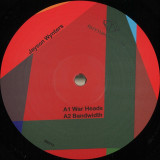
Jayson Wynters - Warheads

Rhythm Nation is back on vinyl, with a master of the deeper side of UK house and Detroit-inflected techno, Jayson Wynters.

Following up his 'Exit Wound' digital-only release of last year, which also featured remixes from Phantasy Sound's James Welsh, Jayson drops two brand new tracks as well as a physical pressing of those two originals from the previous release.

'War Heads' is a true late-night wormhole of a track, embarking on a journey of percussion and atmosphere, leading inexorably to the emergence of the warmest pads and the deepest bass.

'Bandwidth' flips the switch to a fresh take on classic electro, maintaining the signature Hayson Wynters sound of drum machines and classic synths that seem to hit just slightly left of where the listener expects.

Orginally released digitally in 2022, 'Exit Wound' and 'Lost City' offer a similar contrast - the former is a bassline-driven peak-time stomper, while the latter takes things deep into real electro with an infectious groove and evergreen textures.

Rhythm Nation is part of the Hotflush Recordings label group, curated by Paul Rose aka Scuba, celebrating 20 years in 2023.

non in magazzino

Ordina ora e ordineremo l'articolo per te presso il nostro fornitore.

13,82

Last In: 3 years ago
Felicity Mangan - Train Tracks Recorded And Edited By Felicity Mangan

Felicity is an Australian sound artist, composer and educator based in Berlin and her latest effort "Train Tracks Recorded And Edited By Felicity Mangan" will be out world wide on tape and digital December 9.

"Train Tracks Recorded And Edited By Felicity Mangan" composed of field recordings was made during a Green Tour, while traveling only by train and ferry through Denmark, Sweden, Finland and Norway in June 2022.

For this release Felicity utilised raw and sampled field recordings to create a sense of slow travel by train, train networks, train delays and the moments in between waiting for trains or missed train connection in cities and small towns.

Felicity has presented projects in many different settings from galleries, gardens, clubs, festivals and online platforms throughout Europe, including National Gallery Denmark, Technosphärenklänge CTM/HKW, Sonic Acts Academy, RIVERSSSOUNDS.org and recently sound design for 100 Climate Conversations , Powerhouse Museum, Sydney, Australia.

““Stations In Between” establishes a pulse early, recreating the initial excitement that turns to tedium. Four minutes in, the drums disappear, swept away by chimes; no longer stuck, the passenger is moving forward again. The station comes to life: another radio, a street musician, a bicycle, a cough ~ the last sound bearing a reminder of the last two years.”
Richard Allen — A Closer Listen

“the elements of sound are manipulated for effect, and the performance nature of Mangan’ work tends to be an effects driven construction of collated and improvised sounds.”
INNERVERSITYSOUND — Cyclic Defrost

“Throughout the album, it sounds rather as if Mangan had written elaborate electronic music permeated by discreet rhythms and pulsating drones equipped with a whole range of devices. The fact that this is not the case is as impressive as the actual music itself.”
— Fieldnotes Berlin

pre-ordina ora13.01.2023

dovrebbe essere pubblicato su 13.01.2023

10,71
LUIS DAVID AGUILAR - AYAHUASCA: SICA PARA CINE (1978-1983)

Ayahuasca: Music for Film, by Luis David Aguilar (1978-1983) compiles works by Luis David Aguilar, one of the most prolific composers of film scores in Peru. It shows the great versatility and avant-garde style that has distinguished his work. Luis David Aguilar (Arequipa, 1950) occupies a fundamental place in the history of film music in Peru, not only because of the prolific nature of his work (which also includes music for television and advertising), but because of the singular, experimental style found in many of his scores. Aguilar's music blends modern academic composition with the use of native instruments, synthesizers, sound collages and a diversity of resources, which identify him as a key figure to understand a period of Peruvian music marked by the imprint of the avant-garde and the use of native sounds, which developed during the late 70's and the early 80's. Aguilar belongs to the so called "Generation of the 70's", along with Peruvian composers such as Walter Casas, Seiji Asato and Aurelio Tello, who were then immersed in the languages of contemporary classical music. But he also shares the spirit of renewal of a generation of musicians who came from the world of jazz and electronic experimentation such as Manongo Mujica and Arturo Ruiz del Pozo. Ayahuasca is an album that collects pieces from 1978 to 1983 and offers an overview of the different musical paths that Aguilar followed during his career as a soundtrack composer. The album opens with music from the film El viento del ayahuasca The Wind of Ayahuasca (1983), by director Nora de Izcue, performed by the National Symphony Orchestra and Choir of Cuba under the baton of Luis David Aguilar, with Chucho Valdés on piano. Recorded at the ICAIC studios (Cuba), it is an ambitious orchestral and vocal composition, in which you can hear the beginning of the famous melody of "Mujer Hilandera" [Female Weaver], popularized by the Amazonian cumbia group Juaneco y su Combo, which serves as an introduction to the sound world of the jungle, a dense and hypnotic atmosphere that, without a doubt, places this work as one of the most important compositions of the author's repertoire. The next track is the music for the documentary Anónimo cotidiano [Anonymous Everyday] (1979), by director Jorge Rey, a unique experimental piece for synthesizers (played by Aguilar), drums and percussion (played by Manongo Mujica), with the addition of various Andean instruments (panpipes, charango, among others). It is a clear example of fusion of sound experimentation and timbres from the Andean world. And finally Los constructores [The Builders] (1978), by director José Carlos Huayhuaca, a salsa which incorporates unusual sounds of tubular bells and prepared pianos. Ayahuasca: Music for Film by Luis David Aguilar (1978-1983) is the second album by Aguilar released by Buh Records, following the celebrated Hombres de Viento/Venas de la Tierra (1978-1982), appeared in 2015. The album is published in vinyl format, in a limited edition of 300 copies, as part of the Essentials Sounds collection. It includes a booklet with notes by Luis David Aguilar. The audio has been remastered from the original reel tapes by Aldo Montalvo. The artwork and design is by About Studio.

pre-ordina ora23.12.2022

dovrebbe essere pubblicato su 23.12.2022

33,82
Toumba - Rosefinch EP

Toumba

Rosefinch EP

12inchHJK001
Hypnic Jerks
06.12.2022

Amman-based Toumba announces ‘Rosefinch’, his first EP on wax, and the debut release from London-based record label Hypnic Jerks.
Key info about the artist:
His next release will be on Hessle Audio and then Nervous Horizons. His first release was a digital EP through All Centre.
Toumba is one of the creative minds behind MNFA, Jordan's most important underground music venue. He serves there as a booker and curator, bringing the likes of TSVI, Giant Swan and Parrish Smith to the venue.
He is also anationally respected artist and holds a residency at the MMAG Foundation in Amman. The foundation works with a selection of the most gifted artists in the Levant. By sponsoring Toumba's ongoing artistic practice, MMAG has furthered his research into Levantine music, which he synthesises with avant garde and electronic music.
He is a resident on Movement Radio in Athens and formerly Ma3azef Radio, with guests including Ben UFO, aya and Gabber Eleganza.
About the release:
Integrates elements from Jordanian and Levantine folk music into his left-leaning, low-end heavy club sounds.
The EP is named after the national bird of Jordan.

non in magazzino

Ordina ora e ordineremo l'articolo per te presso il nostro fornitore.

7,14

Last In: 8 months ago
Terra Form - Entering The Void

Terra Form

Entering The Void

12inchCYBERDOME006
CYBERDOME
11.11.2022

DJ Different dons his Terraform alias as he begins his journey in ‘Entering The Void’ on CYBERDOME; exploring phat electro bass-lines and party-starting ghettotech energy with its crosshairs fixated firmly on the club environment.

Born and raised in the culturally rich city of Malmo, the Swedish producer has previously released on London based label Deeply Cultured, Distant Hawaii, Mood Of Era, 1Ø PILLS MATE and Traxx Underground, spanning atmospheric techno, ethereal breakbeat and chunky electro.

‘Ultrasonic’ is an ear-wriggling cut of stripped-back psychedelia. As David Holmes would say, all the best electronic music tracks are made up of only a few components. Here, typical electro synth stabs, robotic vocal sampling and sparse precision allows the track room to breathe, whilst maintaining a deep and funk-driven groove.

‘Ghettotech’ sounds how you would expect it to; pounding kicks, frantic atmospherics and lairy screw-face hype combine on a certified fire-starter, before ‘Exiting The Void’ introduces itself on a footwork vibe that evolves into a sequence of interstellar-dungeon dub-electro.

‘The Rise of the Slavs’ takes its inspiration from the diverse group of tribes who lived in Central and Eastern Europe in the 6th to 10th centuries, establishing the foundations for the Slavic nations; it’s marching rhythm beaming historical context into 21st Century dance music.

non in magazzino

Ordina ora e ordineremo l'articolo per te presso il nostro fornitore.

11,35

Last In: 2 years ago
Tanya Tagaq - Tongues North Star Remixes

Tongues North Star Remixes stretches out the vast musical universe of Tanya Tagaq, which encompasses experimental, avant, electronic, industrial and more, into a collection that features remixes by Daedelus, Kronos Quartet, Ash Koosha, The Halluci Nation and others, including many frequent collaborators. Tongues, produced by Saul Williams and co-produced by Gonjasufi, is Tanya Tagaq at her most explicit and specific. Delicate, poetic passages from Split Tooth, Tagaq’s bestselling, award winning mythobiography, crash against an industrial, electronic exoskeleton. Tongues is a journey into a psychic place of healing, rebirth and artistic Power with a capital “P” that will shake the world.exp

pre-ordina ora04.11.2022

dovrebbe essere pubblicato su 04.11.2022

23,74
DjeuhDjoah & Lieutenant Nicholson - 2+ LP 2x12"

2+ is the 3rd album of DjeuhDjoah & Lieutenant Nicholson. A new sound stopover in their funky trip since their beginning with T’es qui ? album in 2015. This new building stone prolongs their critically acclaimed album Aimez ces airs released in 2019.

What’s new? 15 tracks , eclectic, soft, deep, and funky, where electro, soul even afro beat touches , or bossa nova live together harmoniously. DjeuhDjoah & Lieutenant Nicholson make praise of slowness (« Pas si vite »), address environmental issues (« Coeur béton »), social statements on (« Police », « Raie publiques », « clic »), childhood on (« Bola Mba ») , the post colonial relation between Africa and the other continents. Love is also really well presented ( « Thé à la menthe «, « Ping Pong ») and why not sailing to Essaouira in Morocco ?

During the summer of 2020 , when the french national radio asked them to perform a live cover , our french funky duo chose the famous « Né quelque part » by Maxime Leforestier released in 1987. Their Suave interpretation, haunting beat and spatial & languid atmosphere give a fantastic tribute to this beautiful melody and strong lyrics. They found a very intimate link with chorus in Zulu, harking back to the strong connection they made with South Africa during their last tour.
It became clear that they needed to put this track on their new album , as their now club remix classic « Bwe Dlo « performed with their friend David Walters.

After their tour in South Africa, they met « Cool Affair », the musician and electro house producer in Johannesburg who made a beautiful remix of « Aimé Césaire » which close perfectly this new opus. Recorded at « Le triangle des Bermudes » the home studio of Lieutenant Nicholson, produced and mixed by him with a electro analog sound dear to them. Horns, live drums, percussions and vocal choir were recorded at Bastille village at the label basement , even during the pandemic… On 2+, we can also hear the swirls of Antoine Berjeaut at the trumpet and bugle, magic keys from Florian Pellissier , two new flagships of the French jazz scene.

Once again, DjeuhDjoah & Lieutenant Nicholson push the boundaries of the traditional « French song « to make the world dance. They want to keep their international audience , from Australia, Japan, Usa, South Africa to name a few the dance floors of the world will ignite with this new album . The French touch will still shine !

non in magazzino

Ordina ora e ordineremo l'articolo per te presso il nostro fornitore.

25,50

Last In: 3 years ago
Jacek Sienkiewicz - Pristine LP

The sun, kissing the forehead through half-closed blinds; the night, coming uninvited through a windowpane like a damp, sticky shroud. Light and darkness, solid foundations and elusive glimpses of parallel realities. Armies of digital insects - taken aback by warmth of one brave heart, 90s chillout rooms updated for todays vast and desolated space full of fragile souls desperate in their look for any kind of communion; “artificial intelligence” after three decades of wandering, trying to finally find a helping hand, solace and peace. Shimmer and shine. Welcome to “Pristine”, a new recording from the mind of Jacek Sienkiewicz.
For the past years Jacek has been escaping his image of relentless producer and performer of driving, multi-layered club music. His most recent works include deep ambient records, abstract electro-acoustic experiments, and super smart, stripped-down yet incredibly complex contemporary electronica. The last few records, mostly on his own label Recognition include albums with Max Loderbauer and Atom™, reinterpretations of works by Bogdan Mazurek of the legendary Polish Radio Experimental Studio, scores for radio plays and last year’s massively overlooked “Krasz”, music for theatrical performance of Ballard’s/Cronenberg’s “Crash”.
“Pristine”, a labour of love, is at times abstract and atonal, at times breathtakingly beautiful and tender.
8 tracks written and performed in Jacek’s unmistakable, singular style, and covering many grounds - abstract, electronic forms, neo-classical wonders, super tight compositions and freeform, jazz-like improvisations and stripped-down rhythms. Different moods, machine-translated and reverseengineered in a variety of recording locations, make up this exceptional record.
Shimmer and shine, immerse and enjoy.
Co-Financed By The Minister Of Culture And National Heritage of Poland.
The project has been implemented in co-production with Recognition Records and the National Centre for Culture of Poland

non in magazzino

Ordina ora e ordineremo l'articolo per te presso il nostro fornitore.

18,45

Last In: 3 years ago
Daft Punk - Alive 2007 (2x12")

Daft Punk

Alive 2007 (2x12")

2x12inch190296611964
Warner UK
21.10.2022

Daft Punk's 'ALIVE 2007' set, which won 2 Grammy Awards in 2009 (Best Electronic Album and Best Electronic Single categories) and was previously only available on CD and digital, will be released for the first time as a double vinyl with a triple gatefold sleeve.

Derived from their live performance at Bercy on 14 June 2007, this album was originally published the same year on November 19th. Through this amazing live experience, Daft Punk manipulated and reworked their established material, transposing and deconstructing the structures of their studio tracks.

A limited edition of 'ALIVE 2007' will be released at the same time, in a special box including the album on 2 solid white vinyls, plus a vinyl bonus (Side A: the show's encore (human after all / together / one more time (reprise) / music sounds better with you) /Side B : 'ALIVE 2007' pyramid logo etched), a 52 pages book (pictures taken during the shows), a slipmat and a download card.

'ALIVE 1997' is also being reissued separately. Recorded in 1997 in Birmingham during their first European tour, a few months after the release of 'Homework', this first live testimony was released in 2001. 45 minutes of non-stop live mixing, featuring the band's first standard tracks (Da Funk, Rollin' & Scratchin'...) along with those techno-electronic explosions unique to Daft Punk!

non in magazzino

Ordina ora e ordineremo l'articolo per te presso il nostro fornitore.

23,95

Last In: 15 days ago
Lee Tracy & Isaac Manning - Is it What You Want

As the sun sets on a quaint East Nashville house, a young man bares a piece of his soul. Facing the camera, sporting a silky suit jacket/shirt/slacks/fingerless gloves ensemble that announces "singer" before he's even opened his mouth, Lee Tracy Johnson settles onto his stage, the front yard. He sways to the dirge-like drum machine pulse of a synth-soaked slow jam, extends his arms as if gaining his balance, and croons in affecting, fragile earnest, "I need your love… oh baby…"

Dogs in the yard next door begin barking. A mysterious cardboard robot figure, beamed in from galaxies unknown and affixed to a tree, is less vocal. Lee doesn't acknowledge either's presence. He's busy feeling it, arms and hands gesticulating. His voice rises in falsetto over the now-quiet dogs, over the ambient noise from the street that seeps into the handheld camcorder's microphone, over the recording of his own voice played back from a boombox off-camera. After six minutes the single, continuous shot ends. In this intimate creative universe there are no re-takes. There are many more music videos to shoot, and as Lee later puts it, "The first time you do it is actually the best. Because you can never get that again. You expressing yourself from within."

"I Need Your Love" dates from a lost heyday. From some time in the '80s or early '90s, when Lee Tracy (as he was known in performance) and his music partner/producer/manager Isaac Manning committed hours upon hours of their sonic and visual ideas to tape. Embracing drum machines and synthesizers – electronics that made their personal futurism palpable – they recorded exclusively at home, live in a room into a simple cassette deck. Soul, funk, electro and new wave informed their songs, yet Lee and Isaac eschewed the confinement of conventional categories and genres, preferring to let experimentation guide them.

"Anytime somebody put out a new record they had the same instruments or the same sound," explains Isaac. "So I basically wanted to find something that's really gonna stand out away from all of the rest of 'em." Their ethos meant that every idea they came up with was at least worth trying: echoed out half-rapped exhortations over frantic techno-style beats, gospel synth soul, modal electro-funk, oddball pop reinterpretations, emo AOR balladry, nods to Prince and the Fat Boys, or arrangements that might collapse mid-song into a mess of arcade game-ish blips before rallying to reach the finish line. All of it conjoined by consistent tape hiss, and most vitally, Lee's chameleonic voice, which managed to wildly shape shift and still evoke something sincere – whether toggling between falsetto and tenor exalting Jesus's return, or punctuating a melismatic romantic adlib with a succinct, "We all know how it feels to be alone."

"People think we went to a studio," says Isaac derisively. "We never went to no studio. We didn't have the money to go to no studio! We did this stuff at home. I shot videos in my front yard with whatever we could to get things together." Sometimes Isaac would just put on an instrumental record, be it "Planet Rock" or "Don't Cry For Me Argentina" (from Evita), press "record," and let Lee improvise over it, yielding peculiar love songs, would-be patriotic anthems, or Elvis Presley or Marilyn Monroe tributes. Technical limitations and a lack of professional polish never dissuaded them. They believed they were onto something.

"That struggle," Isaac says, "made that sound sound good to me."

In the parlance of modern music criticism Lee and Isaac's dizzying DIY efforts would inevitably be described as "outsider." But "outsider" carries the burden of untold additional layers of meaning if you're Black and from the South, creating on a budget, and trying to get someone, anyone within the country music capital of the world to take your vision seriously. "What category should we put it in?" Isaac asks rhetorically. "I don't know. All I know is feeling. I ain't gonna name it nothing. It's music. If it grabs your soul and touch your heart that's what it basically is supposed to do."

=

Born in 1963, the baby boy of nine siblings, Lee Tracy spent his earliest years living amidst the shotgun houses on Nashville's south side. "We was poor, man!" he says, recalling the outhouse his family used for a bathroom and the blocks of ice they kept in the kitchen to chill perishables. "But I actually don't think I really realized I was in poverty until I got grown and started thinking about it." Lee's mom worked at the Holiday Inn; his dad did whatever he had to do, from selling fruit from a horse drawn cart to bootlegging. "We didn't have much," Lee continues, "but my mother and my father got us the things we needed, the clothes on our back." By the end of the decade with the city's urban renewal programs razing entire neighborhoods to accommodate construction of the Interstate, the family moved to Edgehill Projects. Lee remembers music and art as a constant source of inspiration for he and his brothers and sisters – especially after seeing the Jackson 5 perform on Ed Sullivan. "As a small child I just knew that was what I wanted to do."

His older brother Don began musically mentoring him, introducing Lee to a variety of instruments and sounds. "He would never play one particular type of music, like R&B," says Lee. "I was surrounded by jazz, hard rock and roll, easy listening, gospel, reggae, country music; I mean I was a sponge absorbing all of that." Lee taught himself to play drums by beating on cardboard boxes, gaining a rep around the way for his timekeeping, and his singing voice. Emulating his favorites, Earth Wind & Fire and Cameo, he formed groups with other kids with era-evocative band names like Concept and TNT Connection, and emerged as the leader of disciplined rehearsals. "I made them practice," says Lee. "We practiced and practiced and practiced. Because I wanted that perfection." By high school the most accomplished of these bands would take top prize in a prominent local talent show. It was a big moment for Lee, and he felt ready to take things to the next level. But his band-mates had other ideas.

"I don't know what happened," he says, still miffed at the memory. "It must have blew they mind after we won and people started showing notice, because it's like everybody quit! I was like, where the hell did everybody go?" Lee had always made a point of interrogating prospective musicians about their intentions before joining his groups: were they really serious or just looking for a way to pick up girls? Now he understood even more the importance of finding a collaborator just as committed to the music as he was.

=

Isaac Manning had spent much of his life immersed in music and the arts – singing in the church choir with his family on Nashville's north side, writing, painting, dancing, and working various gigs within the entertainment industry. After serving in the armed forces, in the early '70s he ran The Teenage Place, a music and performance venue that catered to the local youth. But he was forced out of town when word of one of his recreational routines created a stir beyond the safe haven of his bohemian circles.

"I was growing marijuana," Isaac explains. "It wasn't no business, I was smoking it myself… I would put marijuana in scrambled eggs, cornbread and stuff." His weed use originated as a form of self-medication to combat severe tooth pain. But when he began sharing it with some of the other young people he hung out with, some of who just so happened to be the kids of Nashville politicians, the cops came calling. "When I got busted," he remembers, "they were talking about how they were gonna get rid of me because they didn't want me saying nothing about they children because of the politics and stuff. So I got my family, took two raggedy cars, and left Nashville and went to Vegas."

Out in the desert, Isaac happened to meet Chubby Checker of "The Twist" fame while the singer was gigging at The Flamingo. Impressed by Isaac's zeal, Checker invited him to go on the road with him as his tour manager/roadie/valet. The experience gave Isaac a window into a part of the entertainment world he'd never encountered – a glimpse of what a true pop act's audience looked like. "Chubby Checker, none of his shows were played for Black folks," he remembers. "All his gigs were done at high-class white people areas." Returning home after a few years with Chubby, Isaac was properly motivated to make it in Music City. He began writing songs and scouting around Nashville for local talent anywhere he could find it with an expressed goal: "Find someone who can deliver your songs the way you want 'em delivered and make people feel what you want them to feel."

One day while walking through Edgehill Projects Isaac heard someone playing the drums in a way that made him stop and take notice. "The music was so tight, just the drums made me feel like, oh I'm-a find this person," he recalls. "So I circled through the projects until I found who it was.

"That's how I met him – Lee Tracy. When I found him and he started singing and stuff, I said, ohhh, this is somebody different."

=

Theirs was a true complementary partnership: young Lee possessed the raw talent, the older Isaac the belief. "He's really the only one besides my brother and my family that really seen the potential in me," says Lee. "He made me see that I could do it."

Isaac long being a night owl, his house also made for a fertile collaborative environment – a space where there always seemed to be a new piece of his visual art on display: paintings, illustrations, and dolls and figures (including an enigmatic cardboard robot). Lee and Issac would hang out together and talk, listen to music, conjure ideas, and smoke the herb Isaac had resumed growing in his yard. "It got to where I could trust him, he could trust me," Isaac says of their bond. They also worked together for hours on drawings, spreading larges rolls of paper on the walls and sketching faces with abstract patterns and imagery: alien-like beings, tri-horned horse heads, inverted Janus-like characters where one visage blurred into the other.

Soon it became apparent that they didn't need other collaborators; self-sufficiency was the natural way forward. At Isaac's behest Lee, already fed up with dealing with band musicians, began playing around with a poly-sonic Yamaha keyboard at the local music store. "It had everything on it – trumpet, bass, drums, organ," remembers Lee. "And that's when I started recording my own stuff."

The technology afforded Lee the flexibility and independence he craved, setting him on a path other bedroom musicians and producers around the world were simultaneously following through the '80s into the early '90s. Saving up money from day jobs, he eventually supplemented the Yamaha Isaac had gotten him with Roland and Casio drum machines and a Moog. Lee was living in an apartment in Hillside at that point caring for his dad, who'd been partially paralyzed since early in life. In the evenings up in his second floor room, the music put him in a zone where he could tune out everything and lose himself in his ideas.

"Oh I loved it," he recalls. "I would really experiment with the instruments and use a lot of different sound effects. I was looking for something nobody else had. I wanted something totally different. And once I found the sound I was looking for, I would just smoke me a good joint and just let it go, hit the record button." More potent a creative stimulant than even Isaac's weed was the holistic flow and spontaneity of recording. Between sessions at Isaac's place and Lee's apartment, their volume of output quickly ballooned.

"We was always recording," says Lee. "That's why we have so much music. Even when I went to Isaac's and we start creating, I get home, my mind is racing, I gotta start creating, creating, creating. I remember there were times when I took a 90-minute tape from front to back and just filled it up."

"We never practiced," says Isaac. "See, that was just so odd about the whole thing. I could relate to him, and tell him about the songs I had ideas for and everything and stuff. And then he would bring it back or whatever, and we'd get together and put it down." Once the taskmaster hell bent on rehearsing, Lee had flipped a full 180. Perfection was no longer an aspiration, but the enemy of inspiration.

"I seen where practicing and practicing got me," says Lee. "A lot of musicians you get to playing and they gotta stop, they have to analyze the music. But while you analyzing you losing a lot of the greatness of what you creating. Stop analyzing what you play, just play! And it'll all take shape."

=

"I hope you understood the beginning of the record because this was invented from a dream I had today… (You tell me, I'll tell you, we'll figure it out together)" – Lee Tracy and Isaac Manning, "Hope You Understand"

Lee lets loose a maniacal cackle when he acknowledges that the material that he and Isaac recorded was by anyone's estimation pretty out there. It's the same laugh that commences "Hope You Understand" – a chaotic transmission that encapsulates the duality at the heart of their music: a stated desire to reach people and a compulsion to go as leftfield as they saw fit.

"We just did it," says Lee. "We cut the music on and cut loose. I don't sit around and write. I do it by listening, get a feeling, play the music, and the lyrics and stuff just come out of me."

The approach proved adaptable to interpreting other artists' material. While recording a cover of Whitney Houston's pop ballad "Saving All My Love For You," Lee played Whitney's version in his headphones as he laid down his own vocals – partially following the lyrics, partially using them as a departure point. The end result is barely recognizable compared with the original, Lee and Isaac having switched up the time signature and reinvented the melody along the way towards morphing a slick mainstream radio standard into something that sounds solely their own.

"I really used that song to get me started," says Lee. "Then I said, well I need something else, something is missing. Something just came over me. That's when I came up with 'Is It What You Want.'"

The song would become the centerpiece of Lee and Isaac's repertoire. Pushed along by a percolating metronomic Rhythm King style beat somewhere between a military march and a samba, "Is It What You Want" finds Lee pleading the sincerity of his commitment to a potential love interest embellished by vocal tics and hiccups subtlely reminiscent of his childhood hero MJ. Absent chord changes, only synth riffs gliding in and out like apparitions, the song achieves a lingering lo-fi power that leaves you feeling like it's still playing, somewhere, even after the fade out.

"I don't know, it's like a real spiritual song," Lee reflects. "But it's not just spiritual. To me the more I listen to it it's like about everything that you do in your everyday life, period. Is it what you want? Do you want a car or you don't want a car? Do you want Jesus or do you want the Devil? It's basically asking you the question. Can't nobody answer the question but you yourself."

In 1989 Lee won a lawsuit stemming from injuries sustained from a fight he'd gotten into. He took part of the settlement money and with Isaac pressed up "Saving All My Love For You" b/w "Is It What You Want" as a 45 single. Isaac christened the label One Chance Records. "Because that's all we wanted," he says with a laugh, "one chance."

Isaac sent the record out to radio stations and major labels, hoping for it to make enough noise to get picked up nationally. But the response he and Lee were hoping for never materialized. According to Isaac the closest the single got to getting played on the radio is when a disk jock from a local station made a highly unusual announcement on air: "The dude said on the radio, 107.5 – 'We are not gonna play 'Is It What You Want.' We cracked up! Wow, that's deep.

"It was a whole racist thing that was going on," he reflects. "So we just looked over and kept on going. That was it. That was about the way it goes… If you were Black and you were living in Nashville and stuff, that's the way you got treated." Isaac already knew as much from all the times he'd brought he and Lee's tapes (even their cache of country music tunes) over to Music Row to try to drum up interest to no avail.

"Isaac, he really worked his ass off," says Lee. "He probably been to every record place down on Music Row." Nashville's famed recording and music business corridor wasn't but a few blocks from where Lee grew up. Close enough, he remembers, for him to ride his bike along its back alleys and stumble upon the occasional random treasure, like a discarded box of harmonicas. Getting in through the front door, however, still felt a world away.

"I just don't think at the time our music fell into a category for them," he concedes. "It was before its time."

=

Lee stopped making music some time in the latter part of the '90s, around the time his mom passed away and life became increasingly tough to manage. "When my mother died I had a nervous breakdown," he says, "So I shut down for a long time. I was in such a sadness frame of mind. That's why nobody seen me. I had just disappeared off the map." He fell out of touch with Isaac, and in an indication of just how bad things had gotten for him, lost track of all the recordings they'd made together. Music became a distant memory.

Fortunately, Isaac kept the faith. In a self-published collection of his poetry – paeans to some of his favorite entertainment and public figures entitled Friends and Dick Clark – he'd written that he believed "music has a life of its own." But his prescience and presence of mind were truly manifested in the fact that he kept an archive of he and Lee's work. As perfectly imperfect as "Is It What You Want" now sounds in a post-Personal Space world, Lee and Isaac's lone official release was in fact just a taste. The bulk of the Is It What You Want album is culled from the pair's essentially unheard home recordings – complete songs, half-realized experiments, Isaac's blue monologues and pronouncements et al – compiled, mixed and programmed in the loose and impulsive creative spirit of their regular get-togethers from decades ago. The rest of us, it seems, may have finally caught up to them.

On the prospect of at long last reaching a wider audience, Isaac says simply, "I been trying for a long time, it feels good." Ever the survivor, he adds, "The only way I know how to make it to the top is to keep climbing. If one leg break on the ladder, hey, you gotta fix it and keep on going… That's where I be at. I'll kill death to make it out there."

For Lee it all feels akin to a personal resurrection: "It's like I was in a tomb and the tomb was opened and I'm back… Man, it feels so great. I feel like I'm gonna jump out of my skin." Success at this stage of his life, he realizes, probably means something different than what it did back when he was singing and dancing in Isaac's front yard. "What I really mean by 'making it,'" he explains isn't just the music being heard but, "the story being told."

Occasionally Lee will pull up "Is It What You Want" on YouTube on his phone, put on his headphones, and listen. He remembers the first time he heard his recorded voice. How surreal it was, how he thought to himself, "Is that really me?" What would he say to that younger version of himself now?

"I would probably tell myself, hang in there, don't give up. Keep striving for the goal. And everything will work out."

Despite what's printed on the record label, sometimes you do get more than one chance.
non in magazzino

Ordina ora e ordineremo l'articolo per te presso il nostro fornitore.

11,72

Last In: 3 years ago
Lee Tracy & Isaac Manning - Is it What You Want LP

As the sun sets on a quaint East Nashville house, a young man bares a piece of his soul. Facing the camera, sporting a silky suit jacket/shirt/slacks/fingerless gloves ensemble that announces "singer" before he's even opened his mouth, Lee Tracy Johnson settles onto his stage, the front yard. He sways to the dirge-like drum machine pulse of a synth-soaked slow jam, extends his arms as if gaining his balance, and croons in affecting, fragile earnest, "I need your love… oh baby…"

Dogs in the yard next door begin barking. A mysterious cardboard robot figure, beamed in from galaxies unknown and affixed to a tree, is less vocal. Lee doesn't acknowledge either's presence. He's busy feeling it, arms and hands gesticulating. His voice rises in falsetto over the now-quiet dogs, over the ambient noise from the street that seeps into the handheld camcorder's microphone, over the recording of his own voice played back from a boombox off-camera. After six minutes the single, continuous shot ends. In this intimate creative universe there are no re-takes. There are many more music videos to shoot, and as Lee later puts it, "The first time you do it is actually the best. Because you can never get that again. You expressing yourself from within."

"I Need Your Love" dates from a lost heyday. From some time in the '80s or early '90s, when Lee Tracy (as he was known in performance) and his music partner/producer/manager Isaac Manning committed hours upon hours of their sonic and visual ideas to tape. Embracing drum machines and synthesizers – electronics that made their personal futurism palpable – they recorded exclusively at home, live in a room into a simple cassette deck. Soul, funk, electro and new wave informed their songs, yet Lee and Isaac eschewed the confinement of conventional categories and genres, preferring to let experimentation guide them.

"Anytime somebody put out a new record they had the same instruments or the same sound," explains Isaac. "So I basically wanted to find something that's really gonna stand out away from all of the rest of 'em." Their ethos meant that every idea they came up with was at least worth trying: echoed out half-rapped exhortations over frantic techno-style beats, gospel synth soul, modal electro-funk, oddball pop reinterpretations, emo AOR balladry, nods to Prince and the Fat Boys, or arrangements that might collapse mid-song into a mess of arcade game-ish blips before rallying to reach the finish line. All of it conjoined by consistent tape hiss, and most vitally, Lee's chameleonic voice, which managed to wildly shape shift and still evoke something sincere – whether toggling between falsetto and tenor exalting Jesus's return, or punctuating a melismatic romantic adlib with a succinct, "We all know how it feels to be alone."

"People think we went to a studio," says Isaac derisively. "We never went to no studio. We didn't have the money to go to no studio! We did this stuff at home. I shot videos in my front yard with whatever we could to get things together." Sometimes Isaac would just put on an instrumental record, be it "Planet Rock" or "Don't Cry For Me Argentina" (from Evita), press "record," and let Lee improvise over it, yielding peculiar love songs, would-be patriotic anthems, or Elvis Presley or Marilyn Monroe tributes. Technical limitations and a lack of professional polish never dissuaded them. They believed they were onto something.

"That struggle," Isaac says, "made that sound sound good to me."

In the parlance of modern music criticism Lee and Isaac's dizzying DIY efforts would inevitably be described as "outsider." But "outsider" carries the burden of untold additional layers of meaning if you're Black and from the South, creating on a budget, and trying to get someone, anyone within the country music capital of the world to take your vision seriously. "What category should we put it in?" Isaac asks rhetorically. "I don't know. All I know is feeling. I ain't gonna name it nothing. It's music. If it grabs your soul and touch your heart that's what it basically is supposed to do."

=

Born in 1963, the baby boy of nine siblings, Lee Tracy spent his earliest years living amidst the shotgun houses on Nashville's south side. "We was poor, man!" he says, recalling the outhouse his family used for a bathroom and the blocks of ice they kept in the kitchen to chill perishables. "But I actually don't think I really realized I was in poverty until I got grown and started thinking about it." Lee's mom worked at the Holiday Inn; his dad did whatever he had to do, from selling fruit from a horse drawn cart to bootlegging. "We didn't have much," Lee continues, "but my mother and my father got us the things we needed, the clothes on our back." By the end of the decade with the city's urban renewal programs razing entire neighborhoods to accommodate construction of the Interstate, the family moved to Edgehill Projects. Lee remembers music and art as a constant source of inspiration for he and his brothers and sisters – especially after seeing the Jackson 5 perform on Ed Sullivan. "As a small child I just knew that was what I wanted to do."

His older brother Don began musically mentoring him, introducing Lee to a variety of instruments and sounds. "He would never play one particular type of music, like R&B," says Lee. "I was surrounded by jazz, hard rock and roll, easy listening, gospel, reggae, country music; I mean I was a sponge absorbing all of that." Lee taught himself to play drums by beating on cardboard boxes, gaining a rep around the way for his timekeeping, and his singing voice. Emulating his favorites, Earth Wind & Fire and Cameo, he formed groups with other kids with era-evocative band names like Concept and TNT Connection, and emerged as the leader of disciplined rehearsals. "I made them practice," says Lee. "We practiced and practiced and practiced. Because I wanted that perfection." By high school the most accomplished of these bands would take top prize in a prominent local talent show. It was a big moment for Lee, and he felt ready to take things to the next level. But his band-mates had other ideas.

"I don't know what happened," he says, still miffed at the memory. "It must have blew they mind after we won and people started showing notice, because it's like everybody quit! I was like, where the hell did everybody go?" Lee had always made a point of interrogating prospective musicians about their intentions before joining his groups: were they really serious or just looking for a way to pick up girls? Now he understood even more the importance of finding a collaborator just as committed to the music as he was.

=

Isaac Manning had spent much of his life immersed in music and the arts – singing in the church choir with his family on Nashville's north side, writing, painting, dancing, and working various gigs within the entertainment industry. After serving in the armed forces, in the early '70s he ran The Teenage Place, a music and performance venue that catered to the local youth. But he was forced out of town when word of one of his recreational routines created a stir beyond the safe haven of his bohemian circles.

"I was growing marijuana," Isaac explains. "It wasn't no business, I was smoking it myself… I would put marijuana in scrambled eggs, cornbread and stuff." His weed use originated as a form of self-medication to combat severe tooth pain. But when he began sharing it with some of the other young people he hung out with, some of who just so happened to be the kids of Nashville politicians, the cops came calling. "When I got busted," he remembers, "they were talking about how they were gonna get rid of me because they didn't want me saying nothing about they children because of the politics and stuff. So I got my family, took two raggedy cars, and left Nashville and went to Vegas."

Out in the desert, Isaac happened to meet Chubby Checker of "The Twist" fame while the singer was gigging at The Flamingo. Impressed by Isaac's zeal, Checker invited him to go on the road with him as his tour manager/roadie/valet. The experience gave Isaac a window into a part of the entertainment world he'd never encountered – a glimpse of what a true pop act's audience looked like. "Chubby Checker, none of his shows were played for Black folks," he remembers. "All his gigs were done at high-class white people areas." Returning home after a few years with Chubby, Isaac was properly motivated to make it in Music City. He began writing songs and scouting around Nashville for local talent anywhere he could find it with an expressed goal: "Find someone who can deliver your songs the way you want 'em delivered and make people feel what you want them to feel."

One day while walking through Edgehill Projects Isaac heard someone playing the drums in a way that made him stop and take notice. "The music was so tight, just the drums made me feel like, oh I'm-a find this person," he recalls. "So I circled through the projects until I found who it was.

"That's how I met him – Lee Tracy. When I found him and he started singing and stuff, I said, ohhh, this is somebody different."

=

Theirs was a true complementary partnership: young Lee possessed the raw talent, the older Isaac the belief. "He's really the only one besides my brother and my family that really seen the potential in me," says Lee. "He made me see that I could do it."

Isaac long being a night owl, his house also made for a fertile collaborative environment – a space where there always seemed to be a new piece of his visual art on display: paintings, illustrations, and dolls and figures (including an enigmatic cardboard robot). Lee and Issac would hang out together and talk, listen to music, conjure ideas, and smoke the herb Isaac had resumed growing in his yard. "It got to where I could trust him, he could trust me," Isaac says of their bond. They also worked together for hours on drawings, spreading larges rolls of paper on the walls and sketching faces with abstract patterns and imagery: alien-like beings, tri-horned horse heads, inverted Janus-like characters where one visage blurred into the other.

Soon it became apparent that they didn't need other collaborators; self-sufficiency was the natural way forward. At Isaac's behest Lee, already fed up with dealing with band musicians, began playing around with a poly-sonic Yamaha keyboard at the local music store. "It had everything on it – trumpet, bass, drums, organ," remembers Lee. "And that's when I started recording my own stuff."

The technology afforded Lee the flexibility and independence he craved, setting him on a path other bedroom musicians and producers around the world were simultaneously following through the '80s into the early '90s. Saving up money from day jobs, he eventually supplemented the Yamaha Isaac had gotten him with Roland and Casio drum machines and a Moog. Lee was living in an apartment in Hillside at that point caring for his dad, who'd been partially paralyzed since early in life. In the evenings up in his second floor room, the music put him in a zone where he could tune out everything and lose himself in his ideas.

"Oh I loved it," he recalls. "I would really experiment with the instruments and use a lot of different sound effects. I was looking for something nobody else had. I wanted something totally different. And once I found the sound I was looking for, I would just smoke me a good joint and just let it go, hit the record button." More potent a creative stimulant than even Isaac's weed was the holistic flow and spontaneity of recording. Between sessions at Isaac's place and Lee's apartment, their volume of output quickly ballooned.

"We was always recording," says Lee. "That's why we have so much music. Even when I went to Isaac's and we start creating, I get home, my mind is racing, I gotta start creating, creating, creating. I remember there were times when I took a 90-minute tape from front to back and just filled it up."

"We never practiced," says Isaac. "See, that was just so odd about the whole thing. I could relate to him, and tell him about the songs I had ideas for and everything and stuff. And then he would bring it back or whatever, and we'd get together and put it down." Once the taskmaster hell bent on rehearsing, Lee had flipped a full 180. Perfection was no longer an aspiration, but the enemy of inspiration.

"I seen where practicing and practicing got me," says Lee. "A lot of musicians you get to playing and they gotta stop, they have to analyze the music. But while you analyzing you losing a lot of the greatness of what you creating. Stop analyzing what you play, just play! And it'll all take shape."

=

"I hope you understood the beginning of the record because this was invented from a dream I had today… (You tell me, I'll tell you, we'll figure it out together)" – Lee Tracy and Isaac Manning, "Hope You Understand"

Lee lets loose a maniacal cackle when he acknowledges that the material that he and Isaac recorded was by anyone's estimation pretty out there. It's the same laugh that commences "Hope You Understand" – a chaotic transmission that encapsulates the duality at the heart of their music: a stated desire to reach people and a compulsion to go as leftfield as they saw fit.

"We just did it," says Lee. "We cut the music on and cut loose. I don't sit around and write. I do it by listening, get a feeling, play the music, and the lyrics and stuff just come out of me."

The approach proved adaptable to interpreting other artists' material. While recording a cover of Whitney Houston's pop ballad "Saving All My Love For You," Lee played Whitney's version in his headphones as he laid down his own vocals – partially following the lyrics, partially using them as a departure point. The end result is barely recognizable compared with the original, Lee and Isaac having switched up the time signature and reinvented the melody along the way towards morphing a slick mainstream radio standard into something that sounds solely their own.

"I really used that song to get me started," says Lee. "Then I said, well I need something else, something is missing. Something just came over me. That's when I came up with 'Is It What You Want.'"

The song would become the centerpiece of Lee and Isaac's repertoire. Pushed along by a percolating metronomic Rhythm King style beat somewhere between a military march and a samba, "Is It What You Want" finds Lee pleading the sincerity of his commitment to a potential love interest embellished by vocal tics and hiccups subtlely reminiscent of his childhood hero MJ. Absent chord changes, only synth riffs gliding in and out like apparitions, the song achieves a lingering lo-fi power that leaves you feeling like it's still playing, somewhere, even after the fade out.

"I don't know, it's like a real spiritual song," Lee reflects. "But it's not just spiritual. To me the more I listen to it it's like about everything that you do in your everyday life, period. Is it what you want? Do you want a car or you don't want a car? Do you want Jesus or do you want the Devil? It's basically asking you the question. Can't nobody answer the question but you yourself."

In 1989 Lee won a lawsuit stemming from injuries sustained from a fight he'd gotten into. He took part of the settlement money and with Isaac pressed up "Saving All My Love For You" b/w "Is It What You Want" as a 45 single. Isaac christened the label One Chance Records. "Because that's all we wanted," he says with a laugh, "one chance."

Isaac sent the record out to radio stations and major labels, hoping for it to make enough noise to get picked up nationally. But the response he and Lee were hoping for never materialized. According to Isaac the closest the single got to getting played on the radio is when a disk jock from a local station made a highly unusual announcement on air: "The dude said on the radio, 107.5 – 'We are not gonna play 'Is It What You Want.' We cracked up! Wow, that's deep.

"It was a whole racist thing that was going on," he reflects. "So we just looked over and kept on going. That was it. That was about the way it goes… If you were Black and you were living in Nashville and stuff, that's the way you got treated." Isaac already knew as much from all the times he'd brought he and Lee's tapes (even their cache of country music tunes) over to Music Row to try to drum up interest to no avail.

"Isaac, he really worked his ass off," says Lee. "He probably been to every record place down on Music Row." Nashville's famed recording and music business corridor wasn't but a few blocks from where Lee grew up. Close enough, he remembers, for him to ride his bike along its back alleys and stumble upon the occasional random treasure, like a discarded box of harmonicas. Getting in through the front door, however, still felt a world away.

"I just don't think at the time our music fell into a category for them," he concedes. "It was before its time."

=

Lee stopped making music some time in the latter part of the '90s, around the time his mom passed away and life became increasingly tough to manage. "When my mother died I had a nervous breakdown," he says, "So I shut down for a long time. I was in such a sadness frame of mind. That's why nobody seen me. I had just disappeared off the map." He fell out of touch with Isaac, and in an indication of just how bad things had gotten for him, lost track of all the recordings they'd made together. Music became a distant memory.

Fortunately, Isaac kept the faith. In a self-published collection of his poetry – paeans to some of his favorite entertainment and public figures entitled Friends and Dick Clark – he'd written that he believed "music has a life of its own." But his prescience and presence of mind were truly manifested in the fact that he kept an archive of he and Lee's work. As perfectly imperfect as "Is It What You Want" now sounds in a post-Personal Space world, Lee and Isaac's lone official release was in fact just a taste. The bulk of the Is It What You Want album is culled from the pair's essentially unheard home recordings – complete songs, half-realized experiments, Isaac's blue monologues and pronouncements et al – compiled, mixed and programmed in the loose and impulsive creative spirit of their regular get-togethers from decades ago. The rest of us, it seems, may have finally caught up to them.

On the prospect of at long last reaching a wider audience, Isaac says simply, "I been trying for a long time, it feels good." Ever the survivor, he adds, "The only way I know how to make it to the top is to keep climbing. If one leg break on the ladder, hey, you gotta fix it and keep on going… That's where I be at. I'll kill death to make it out there."

For Lee it all feels akin to a personal resurrection: "It's like I was in a tomb and the tomb was opened and I'm back… Man, it feels so great. I feel like I'm gonna jump out of my skin." Success at this stage of his life, he realizes, probably means something different than what it did back when he was singing and dancing in Isaac's front yard. "What I really mean by 'making it,'" he explains isn't just the music being heard but, "the story being told."

Occasionally Lee will pull up "Is It What You Want" on YouTube on his phone, put on his headphones, and listen. He remembers the first time he heard his recorded voice. How surreal it was, how he thought to himself, "Is that really me?" What would he say to that younger version of himself now?

"I would probably tell myself, hang in there, don't give up. Keep striving for the goal. And everything will work out."

Despite what's printed on the record label, sometimes you do get more than one chance.

non in magazzino

Ordina ora e ordineremo l'articolo per te presso il nostro fornitore.

23,49

Last In: 3 years ago
Cawd Slaydaz - Totál

Cawd Slaydaz

Totál

12inchFRV040
Frigio Records
23.09.2022

Cawd Slaydaz is a clear shift for Frigio Records. Yet, this debutant also marks a return of sorts. The album brings together Hugo de Naranja, co-founder of former Red Light Radio, and Max Abysmal. The link that connects the two? Their love for Colombia and the rich musical melting pot of this diverse nation. Nothing is stable on this eleven track LP, recorded in Bogotá Colombia with 10 different local guest artists. Rhythms are cross pollinated, cold and stark city thump collides with rich and lively organic flows. The style pursued is anything but singular, like the messages. Social exclusion and brutality in the poetic Perreo “Dejen Bailar” is mirrored in the Cumbia food ode “Potato Trip”. Dark Electronics, Experimental Bass & Trap are the genre tags that most will attempt to label this record with. This ignores the Leftfield Funk of “El Gorila Del Desierto”, the Stoner Ambient of “Uffff” or the Synth-Punk rage of “Razones”. An audio snapshot of a country: TOTÁL.

non in magazzino

Ordina ora e ordineremo l'articolo per te presso il nostro fornitore.

16,18

Last In: 3 years ago
Ozric Tentacles - Jurassic Shift LP

Ozric Tentacles

Jurassic Shift LP

12inchKSCOPE1168
KSCOPE
08.08.2022

"Jurassic Shift remains a creative peak." Classic RockOne of the most influential
bands to emerge from the UK's festival scene, the Ozrics layer ambient & ethereal
landscapes with freeform dub trips, incredible rave grooves & psychedelic
progressive rock. It's an open exploration of music & the soul.
For over 30 years, the Ozrics have experienced the vicissitudes of the rock & roll
life. The band has flourished through several line- up changes, spawned several
side projects, created their own record label, scored a hit record & sold over a
million albums world- wide. And yet, the basic motivation behind the band's
existence has never wavered.
Their signature blend of hippy aesthetics & raver electronics with spiraling guitars,
textured waves of keyboard & midi samplers & super- groovy bass & drum
rhythms continue to delight fans across the world to this day.
'Jurassic Shift' was the fourth proper release from the band & the first album to
be recorded in their own studio The Mill. The album reached #11 in the UK
national chart when it was released in 1993.
This version of 'Jurassic Shift' features the 2020 remastering by frontman Ed
Wynne

non in magazzino

Ordina ora e ordineremo l'articolo per te presso il nostro fornitore.

26,85

Last In: 3 years ago
Σtella - Up And Away LP

Σtella

Up And Away LP

12inchSP1483
Sub Pop
08.08.2022

Sub Pop debut by accomplished Greek artist Σtella, produced by Redinho (Swet Shop Boys).
‘Up And Away’ is an eclectic, compelling modern pop album showcasing Σtella’s skilled songwriting and the influence of classic love songs, Greek folk, and contemporary electronic-music production.

Σtella makes her Sub Pop debut with the mesmerizing ‘Up And Away’, an oldschool pop paean to the pangs and raptures of love. From the Greek folkinflected get-go, we’re swept up in Σtella’s world - and it’s quite the captivating place to be.

The singer songwriter joined forces with artist and producer Tom Calvert (aka Redinho), and it was a match made in Athens; the results are heavenly. Tom caught one of Σtella’s gigs on a visit to the city. He reached out, they started hanging out, and the pair soon clicked creatively. Both mention chemistry when asked about their collaboration and it’s clear, from what we hear, they had it in spades. The meld is seamless.

Σtella’s songs have always riffed on American and Greek mid-century pop but ‘Up And Away’ doubles down on the vintage aesthetic. Tom says he styled the record “as if it was a rare gem from the ’60s found in a box of records in Athens,” and Σtella notes she was ready for a more “deeply Greek touch - it felt comfortable and right, smoothly fusing with the pop.” The bouzouki appears on a full five tracks played by Christos Skondras who, she says, “was brilliant at improvising,” while Sofia Labropoulou on the kanun “brought an insane amount of dreaminess to the last two songs. Having these amazing musicians play for ‘Up And Away’ - I couldn’t be more grateful.”

While not exclusively a confessional artist, Σtella is always intimate - when she sings, it’s personal. She writes “about things I feel passion for. Stories about me, about others, about all that’s there in love and war.” Σtella was “in a very emotional state at the time, which came through in the lyrics and vocals.” And it’s true, her honeyed voice - layered in those unmistakable harmonies of hers - thrillingly runs the gamut from tender to terse, by turns bracing and smitten, aching and forlorn. But it’s the lyrics that feel key. Across her output, Σtella has proven herself a strong storyteller, and ‘Up And Away’ is no exception (the guise of the medieval bard she assumes on the cover is telling). Past releases have been studded with gem-like vignettes - a diverse array of stories set tightly together to form non-linear narratives unified by emotion. Her latest feels singular in that it seems to trace a longer-form tale across songs, with each track escalating the record’s erotic arc.

By the end of the album, ‘Up And Away’s core concerns are clear: the conflicting and conflicted emotions inherent in love, that live on in ways we can’t always understand or control. Love is like this record: when it’s over, you still feel it for time to come.
Loser Edition LP pressed on blue vinyl.

non in magazzino

Ordina ora e ordineremo l'articolo per te presso il nostro fornitore.

24,79

Last In: 3 years ago
Deserta - Every Moment, Everything You Need

New version on Solar Orange Vinyl. RIYL: Slowdive, DIIV, Electric Youth, The Cure, My Bloody Valentine. Solo project of Los Angeles based Matthew Doty (ex-Saxon Shore). For Matthew Doty, Deserta has always been about exploring a sonic universe that allows him to express a kaleidoscope of emotions, without having to say much at all. Through a patchwork of reverb-tinged textures – drone guitars, lingering synths and driving percussion – the Los Angeles-based singer/songwriter and multi-instrumentalist weaves together stories of care, frustration and catharsis that ultimately stretch to a gentle resolve. On new album Every Moment, Everything You Need, Doty chronicles the kind of year we all fear, full of uncertainty, tension and sustained pressure, and transforms it into a celebration of perseverance. It’s an essential reminder that we have the power to shape the stories we tell. The pandemic meant that Doty had to give up his studio and downsize a lot of his gear and instead, carve out a space in his two-bedroom apartment to craft the next chapter of Deserta. Sharing the space with his wife and son, Doty and his partner are also essential healthcare workers, which meant the couple would often have to tag-team childcare, along with 13-hour shifts in PPE and people constantly calling with questions about the ever changing guidelines and protocols. Once the blueprint for Every Moment, Everything You Need was set, Doty reached out to a number of collaborators to stitch together his vision for the sonic landscape. James McAlister (Sufjan Stevens, The National, Taylor Swift) came onboard to perform and record drums, while Caroline Lufkin (Mice Parade) wrote and performed vocals on the ethereal “Where Did You Go.” Elsewhere, the LP was mixed by Dave Fridmann (Tame Impala, Mogwai, Interpol), with Beach House and Slowdive producer Chris Coady engineering and co-producing, making this the first time Fridmann and Coady had worked together on a project. While the vocals are more prominent than Deserta’s previous albums, it’s their amalgamation with the instrumental aspects that secures Every Moment, Everything You Need as Deserta’s most confident and assured release to date. An affecting emotional candor teamed with persistent riffs and tenacious rhythms sees Doty unafraid to dive deeper; an unrestrained approach that ushers in a lustrous purging of agitation and anxiety. Showcasing those dark, exhaustive thoughts through crucial swells and looped, electronic soundscapes, it’s an LP that’s infinitely layered, with something new to discover with each and every enchanting listen.

pre-ordina ora05.08.2022

dovrebbe essere pubblicato su 05.08.2022

27,10
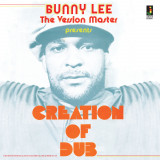
Bunny Lee - Creation Of Dub

King Tubby and Producer Bunny ‘Striker’ Lee are intertwined in the birth of Dub Music. After discovering a mistake that made a ‘serious joke’ (more of which later...) they went on to release the first pressings of this new musical genre namely ‘Dub Music’. Tubby’s vast knowledge of electronics and Bunny’s vast catalogue of rhythms would lay the foundations of what today is taken as a standard... the Remix / Version cuts to an existing vocal tune.

Osbourne ‘King Tubby’ Ruddock was born in Kingston, Jamaica on 28th January 1941 and grew up in the High Holborn Street area of downtown Kingston. He studied electronics at Kingston’s National Technical College and also on two correspondence courses from the U.S.A... When he had qualified Tubby began repairing radios and other electrical appliances in a shack in the back yard of his mother’s home. His work in the early days included winding transformers and building amplifiers for Kingston’s Sound Systems. Tubby built his first Sound System in 1957 playing jazz and Rhythm & Blues at local weddings and birthday parties. His reputation as a man who knew and understood both electronics and music grew steadily and as the sixties drew to a close. Tubby purchased his own basic two track equipment. He installed this alongside his dub cutting machine, a homemade mixing console and his impressive collection of Jazz albums in the back bedroom of his home at 18 Dromilly Avenue which he christened his music room.

Tubby and Striker were at Treasure Isle Studio’s one day while Ruddy from Spanish Town was working with the engineer Byron Smith....

“Tubby and myself was talking when Ruddy was cutting some dub but Smithy (engineer) made a mistake through we were talking and forgot to put in the voice. It was two track recording in those days. Ruddy said ‘No Man! Make it stay! and so they cut the rhythm. When I went over to Ruddy’s that Saturday night a dance was in progress and when they played the vocal to the tune... then he said we’re going to play ‘Part Two’. They never called it ‘Version’..and then he played the rhythm track. The song was a catchy song and everybody started to sing along and the deejay started to toast so everything went down well. On Monday morning I went up and I said ‘Tubbs the mistake we made was a serious joke. It mash up Spanish Town! The people went wild. So you have to start to do that now ‘cause when the man put on the ‘Part Two’ everyone start singing this song. It played about twenty times. I said you try Tubbs!’...Well the next Saturday night now when Tubby strung up down the farm U Roy said he’s going to play ‘Part Two’ but Tubby did it different now. He started with the voice then dropped it out and let the rhythm run and then he brought in the voice in the middle and from there Tubby started to get really popular.’’
Bunny ‘Striker’ Lee

Dynamic Sounds upgraded to sixteen track recording in 1972 and Tubby purchased, again with the help of a deal brokered by Bunny Lee. The old four track equipment and the MCI console from their Studio B. The four tracks now gave him far wider scope to work with and he began to create a new musical form where the bass and drum parts were brought up while the faders allowed Tubby to ease the vocal and rhythm in and out of the mix. It was only a matter of time before Tubby’s dub plate experiments began to make it on to vinyl and the first ever long-playing King Tubby releases would feature a collection of his mixes to a selection of Strikers rhythms. So please sit back and enjoy this historic set of sounds, mixed by King Tubby and Mr Prince Phillip Smart and another set of scorcher Bunny Lee rhythms.

non in magazzino

Ordina ora e ordineremo l'articolo per te presso il nostro fornitore.

13,40

Last In: 15 years ago
Andrew HEATH / ANNE CHRIS BAKKER / MI COSA DE RESISTANCE - Dispatches

Andrew Heath describes his music as 'lower case', but although this cross-nation collaboration with Anne Chris Bakker and M Cosa de Resistance is understated, serene and slow moving, it's also capable of painting ambitiously widescreen images at the same time. The seven tracks here revolve around the UK producer's trademarks - solitary sounding piano and atmospherics both courtesy of field recordings and electronics - but with extra embellishments, most notably the eerie sound of the zither and six string experiments from Dutch guitarist Bakker. It's a horizontal listen, certainly, but one that's full of life and creativity all the same.

pre-ordina ora18.07.2022

dovrebbe essere pubblicato su 18.07.2022

18,03
Articoli per pagina:
N/ABPM
Vinyl