2+ is the 3rd album of DjeuhDjoah & Lieutenant Nicholson. A new sound stopover in their funky trip since their beginning with T’es qui ? album in 2015. This new building stone prolongs their critically acclaimed album Aimez ces airs released in 2019.
What’s new? 15 tracks , eclectic, soft, deep, and funky, where electro, soul even afro beat touches , or bossa nova live together harmoniously. DjeuhDjoah & Lieutenant Nicholson make praise of slowness (« Pas si vite »), address environmental issues (« Coeur béton »), social statements on (« Police », « Raie publiques », « clic »), childhood on (« Bola Mba ») , the post colonial relation between Africa and the other continents. Love is also really well presented ( « Thé à la menthe «, « Ping Pong ») and why not sailing to Essaouira in Morocco ?
During the summer of 2020 , when the french national radio asked them to perform a live cover , our french funky duo chose the famous « Né quelque part » by Maxime Leforestier released in 1987. Their Suave interpretation, haunting beat and spatial & languid atmosphere give a fantastic tribute to this beautiful melody and strong lyrics. They found a very intimate link with chorus in Zulu, harking back to the strong connection they made with South Africa during their last tour.
It became clear that they needed to put this track on their new album , as their now club remix classic « Bwe Dlo « performed with their friend David Walters.
After their tour in South Africa, they met « Cool Affair », the musician and electro house producer in Johannesburg who made a beautiful remix of « Aimé Césaire » which close perfectly this new opus. Recorded at « Le triangle des Bermudes » the home studio of Lieutenant Nicholson, produced and mixed by him with a electro analog sound dear to them. Horns, live drums, percussions and vocal choir were recorded at Bastille village at the label basement , even during the pandemic… On 2+, we can also hear the swirls of Antoine Berjeaut at the trumpet and bugle, magic keys from Florian Pellissier , two new flagships of the French jazz scene.
Once again, DjeuhDjoah & Lieutenant Nicholson push the boundaries of the traditional « French song « to make the world dance. They want to keep their international audience , from Australia, Japan, Usa, South Africa to name a few the dance floors of the world will ignite with this new album . The French touch will still shine !
Cerca:electro nation
The sun, kissing the forehead through half-closed blinds; the night, coming uninvited through a windowpane like a damp, sticky shroud. Light and darkness, solid foundations and elusive glimpses of parallel realities. Armies of digital insects - taken aback by warmth of one brave heart, 90s chillout rooms updated for todays vast and desolated space full of fragile souls desperate in their look for any kind of communion; “artificial intelligence” after three decades of wandering, trying to finally find a helping hand, solace and peace. Shimmer and shine. Welcome to “Pristine”, a new recording from the mind of Jacek Sienkiewicz.
For the past years Jacek has been escaping his image of relentless producer and performer of driving, multi-layered club music. His most recent works include deep ambient records, abstract electro-acoustic experiments, and super smart, stripped-down yet incredibly complex contemporary electronica. The last few records, mostly on his own label Recognition include albums with Max Loderbauer and Atom™, reinterpretations of works by Bogdan Mazurek of the legendary Polish Radio Experimental Studio, scores for radio plays and last year’s massively overlooked “Krasz”, music for theatrical performance of Ballard’s/Cronenberg’s “Crash”.
“Pristine”, a labour of love, is at times abstract and atonal, at times breathtakingly beautiful and tender.
8 tracks written and performed in Jacek’s unmistakable, singular style, and covering many grounds - abstract, electronic forms, neo-classical wonders, super tight compositions and freeform, jazz-like improvisations and stripped-down rhythms. Different moods, machine-translated and reverseengineered in a variety of recording locations, make up this exceptional record.
Shimmer and shine, immerse and enjoy.
Co-Financed By The Minister Of Culture And National Heritage of Poland.
The project has been implemented in co-production with Recognition Records and the National Centre for Culture of Poland
- A1: Robot Rock/Oh Yeah
- A2: Touch It/Technologic
- A3: Television Rules The Nation/Crescendolls
- B1: Too Long/Steam Machine
- B2: Around The World/Harder, Better, Faster, Stronger
- B3: Burnin'/Too Long
- C1: Face To Face/Short Circuit
- C2: One More Time/Aerodynamic
- C3: Aerodynamic Beats/Gabrielle, Forget About The World
- D1: Prime Time Of Your Life/Brainwasher/Rollin' & Scratchin'/Alive
- D2: Da Funk/Dadftendirekt
- D3: Superheroes/Human After All/Rock'n Roll
Daft Punk's 'ALIVE 2007' set, which won 2 Grammy Awards in 2009 (Best Electronic Album and Best Electronic Single categories) and was previously only available on CD and digital, will be released for the first time as a double vinyl with a triple gatefold sleeve.
Derived from their live performance at Bercy on 14 June 2007, this album was originally published the same year on November 19th. Through this amazing live experience, Daft Punk manipulated and reworked their established material, transposing and deconstructing the structures of their studio tracks.
A limited edition of 'ALIVE 2007' will be released at the same time, in a special box including the album on 2 solid white vinyls, plus a vinyl bonus (Side A: the show's encore (human after all / together / one more time (reprise) / music sounds better with you) /Side B : 'ALIVE 2007' pyramid logo etched), a 52 pages book (pictures taken during the shows), a slipmat and a download card.
'ALIVE 1997' is also being reissued separately. Recorded in 1997 in Birmingham during their first European tour, a few months after the release of 'Homework', this first live testimony was released in 2001. 45 minutes of non-stop live mixing, featuring the band's first standard tracks (Da Funk, Rollin' & Scratchin'...) along with those techno-electronic explosions unique to Daft Punk!
- A1: Rock This Mother
- A2: Talk To Me Girl
- A3: You Can Find Me
- A4: Check This Out
- A5: Jesus Going To Clean House
- A6: Hope You Understood
- A7: Is It What You Want
- A8: Love Is Everlasting
- A9: This Is Hip-Hop Art
- A10: Opposite Of Love
- A11: Do You Know What I Mean
- B1: Saving All My Love For You
- B2: Look Out Here I Come
- B3: Girl You Always Talking
- B4: Have A Great Day
- B5: Take My Hand
- B6: I Need Your Love
- B7: Your Town
- B8: Talk Around Town
- B9: Booty Head/Take A Little Walk
- B10: I Love My Mama
- B11: I Never Found Anyone Like You
Vinyl LP[23,49 €]
As the sun sets on a quaint East Nashville house, a young man bares a piece of his soul. Facing the camera, sporting a silky suit jacket/shirt/slacks/fingerless gloves ensemble that announces "singer" before he's even opened his mouth, Lee Tracy Johnson settles onto his stage, the front yard. He sways to the dirge-like drum machine pulse of a synth-soaked slow jam, extends his arms as if gaining his balance, and croons in affecting, fragile earnest, "I need your love… oh baby…"
Dogs in the yard next door begin barking. A mysterious cardboard robot figure, beamed in from galaxies unknown and affixed to a tree, is less vocal. Lee doesn't acknowledge either's presence. He's busy feeling it, arms and hands gesticulating. His voice rises in falsetto over the now-quiet dogs, over the ambient noise from the street that seeps into the handheld camcorder's microphone, over the recording of his own voice played back from a boombox off-camera. After six minutes the single, continuous shot ends. In this intimate creative universe there are no re-takes. There are many more music videos to shoot, and as Lee later puts it, "The first time you do it is actually the best. Because you can never get that again. You expressing yourself from within."
"I Need Your Love" dates from a lost heyday. From some time in the '80s or early '90s, when Lee Tracy (as he was known in performance) and his music partner/producer/manager Isaac Manning committed hours upon hours of their sonic and visual ideas to tape. Embracing drum machines and synthesizers – electronics that made their personal futurism palpable – they recorded exclusively at home, live in a room into a simple cassette deck. Soul, funk, electro and new wave informed their songs, yet Lee and Isaac eschewed the confinement of conventional categories and genres, preferring to let experimentation guide them.
"Anytime somebody put out a new record they had the same instruments or the same sound," explains Isaac. "So I basically wanted to find something that's really gonna stand out away from all of the rest of 'em." Their ethos meant that every idea they came up with was at least worth trying: echoed out half-rapped exhortations over frantic techno-style beats, gospel synth soul, modal electro-funk, oddball pop reinterpretations, emo AOR balladry, nods to Prince and the Fat Boys, or arrangements that might collapse mid-song into a mess of arcade game-ish blips before rallying to reach the finish line. All of it conjoined by consistent tape hiss, and most vitally, Lee's chameleonic voice, which managed to wildly shape shift and still evoke something sincere – whether toggling between falsetto and tenor exalting Jesus's return, or punctuating a melismatic romantic adlib with a succinct, "We all know how it feels to be alone."
"People think we went to a studio," says Isaac derisively. "We never went to no studio. We didn't have the money to go to no studio! We did this stuff at home. I shot videos in my front yard with whatever we could to get things together." Sometimes Isaac would just put on an instrumental record, be it "Planet Rock" or "Don't Cry For Me Argentina" (from Evita), press "record," and let Lee improvise over it, yielding peculiar love songs, would-be patriotic anthems, or Elvis Presley or Marilyn Monroe tributes. Technical limitations and a lack of professional polish never dissuaded them. They believed they were onto something.
"That struggle," Isaac says, "made that sound sound good to me."
In the parlance of modern music criticism Lee and Isaac's dizzying DIY efforts would inevitably be described as "outsider." But "outsider" carries the burden of untold additional layers of meaning if you're Black and from the South, creating on a budget, and trying to get someone, anyone within the country music capital of the world to take your vision seriously. "What category should we put it in?" Isaac asks rhetorically. "I don't know. All I know is feeling. I ain't gonna name it nothing. It's music. If it grabs your soul and touch your heart that's what it basically is supposed to do."
=
Born in 1963, the baby boy of nine siblings, Lee Tracy spent his earliest years living amidst the shotgun houses on Nashville's south side. "We was poor, man!" he says, recalling the outhouse his family used for a bathroom and the blocks of ice they kept in the kitchen to chill perishables. "But I actually don't think I really realized I was in poverty until I got grown and started thinking about it." Lee's mom worked at the Holiday Inn; his dad did whatever he had to do, from selling fruit from a horse drawn cart to bootlegging. "We didn't have much," Lee continues, "but my mother and my father got us the things we needed, the clothes on our back." By the end of the decade with the city's urban renewal programs razing entire neighborhoods to accommodate construction of the Interstate, the family moved to Edgehill Projects. Lee remembers music and art as a constant source of inspiration for he and his brothers and sisters – especially after seeing the Jackson 5 perform on Ed Sullivan. "As a small child I just knew that was what I wanted to do."
His older brother Don began musically mentoring him, introducing Lee to a variety of instruments and sounds. "He would never play one particular type of music, like R&B," says Lee. "I was surrounded by jazz, hard rock and roll, easy listening, gospel, reggae, country music; I mean I was a sponge absorbing all of that." Lee taught himself to play drums by beating on cardboard boxes, gaining a rep around the way for his timekeeping, and his singing voice. Emulating his favorites, Earth Wind & Fire and Cameo, he formed groups with other kids with era-evocative band names like Concept and TNT Connection, and emerged as the leader of disciplined rehearsals. "I made them practice," says Lee. "We practiced and practiced and practiced. Because I wanted that perfection." By high school the most accomplished of these bands would take top prize in a prominent local talent show. It was a big moment for Lee, and he felt ready to take things to the next level. But his band-mates had other ideas.
"I don't know what happened," he says, still miffed at the memory. "It must have blew they mind after we won and people started showing notice, because it's like everybody quit! I was like, where the hell did everybody go?" Lee had always made a point of interrogating prospective musicians about their intentions before joining his groups: were they really serious or just looking for a way to pick up girls? Now he understood even more the importance of finding a collaborator just as committed to the music as he was.
=
Isaac Manning had spent much of his life immersed in music and the arts – singing in the church choir with his family on Nashville's north side, writing, painting, dancing, and working various gigs within the entertainment industry. After serving in the armed forces, in the early '70s he ran The Teenage Place, a music and performance venue that catered to the local youth. But he was forced out of town when word of one of his recreational routines created a stir beyond the safe haven of his bohemian circles.
"I was growing marijuana," Isaac explains. "It wasn't no business, I was smoking it myself… I would put marijuana in scrambled eggs, cornbread and stuff." His weed use originated as a form of self-medication to combat severe tooth pain. But when he began sharing it with some of the other young people he hung out with, some of who just so happened to be the kids of Nashville politicians, the cops came calling. "When I got busted," he remembers, "they were talking about how they were gonna get rid of me because they didn't want me saying nothing about they children because of the politics and stuff. So I got my family, took two raggedy cars, and left Nashville and went to Vegas."
Out in the desert, Isaac happened to meet Chubby Checker of "The Twist" fame while the singer was gigging at The Flamingo. Impressed by Isaac's zeal, Checker invited him to go on the road with him as his tour manager/roadie/valet. The experience gave Isaac a window into a part of the entertainment world he'd never encountered – a glimpse of what a true pop act's audience looked like. "Chubby Checker, none of his shows were played for Black folks," he remembers. "All his gigs were done at high-class white people areas." Returning home after a few years with Chubby, Isaac was properly motivated to make it in Music City. He began writing songs and scouting around Nashville for local talent anywhere he could find it with an expressed goal: "Find someone who can deliver your songs the way you want 'em delivered and make people feel what you want them to feel."
One day while walking through Edgehill Projects Isaac heard someone playing the drums in a way that made him stop and take notice. "The music was so tight, just the drums made me feel like, oh I'm-a find this person," he recalls. "So I circled through the projects until I found who it was.
"That's how I met him – Lee Tracy. When I found him and he started singing and stuff, I said, ohhh, this is somebody different."
=
Theirs was a true complementary partnership: young Lee possessed the raw talent, the older Isaac the belief. "He's really the only one besides my brother and my family that really seen the potential in me," says Lee. "He made me see that I could do it."
Isaac long being a night owl, his house also made for a fertile collaborative environment – a space where there always seemed to be a new piece of his visual art on display: paintings, illustrations, and dolls and figures (including an enigmatic cardboard robot). Lee and Issac would hang out together and talk, listen to music, conjure ideas, and smoke the herb Isaac had resumed growing in his yard. "It got to where I could trust him, he could trust me," Isaac says of their bond. They also worked together for hours on drawings, spreading larges rolls of paper on the walls and sketching faces with abstract patterns and imagery: alien-like beings, tri-horned horse heads, inverted Janus-like characters where one visage blurred into the other.
Soon it became apparent that they didn't need other collaborators; self-sufficiency was the natural way forward. At Isaac's behest Lee, already fed up with dealing with band musicians, began playing around with a poly-sonic Yamaha keyboard at the local music store. "It had everything on it – trumpet, bass, drums, organ," remembers Lee. "And that's when I started recording my own stuff."
The technology afforded Lee the flexibility and independence he craved, setting him on a path other bedroom musicians and producers around the world were simultaneously following through the '80s into the early '90s. Saving up money from day jobs, he eventually supplemented the Yamaha Isaac had gotten him with Roland and Casio drum machines and a Moog. Lee was living in an apartment in Hillside at that point caring for his dad, who'd been partially paralyzed since early in life. In the evenings up in his second floor room, the music put him in a zone where he could tune out everything and lose himself in his ideas.
"Oh I loved it," he recalls. "I would really experiment with the instruments and use a lot of different sound effects. I was looking for something nobody else had. I wanted something totally different. And once I found the sound I was looking for, I would just smoke me a good joint and just let it go, hit the record button." More potent a creative stimulant than even Isaac's weed was the holistic flow and spontaneity of recording. Between sessions at Isaac's place and Lee's apartment, their volume of output quickly ballooned.
"We was always recording," says Lee. "That's why we have so much music. Even when I went to Isaac's and we start creating, I get home, my mind is racing, I gotta start creating, creating, creating. I remember there were times when I took a 90-minute tape from front to back and just filled it up."
"We never practiced," says Isaac. "See, that was just so odd about the whole thing. I could relate to him, and tell him about the songs I had ideas for and everything and stuff. And then he would bring it back or whatever, and we'd get together and put it down." Once the taskmaster hell bent on rehearsing, Lee had flipped a full 180. Perfection was no longer an aspiration, but the enemy of inspiration.
"I seen where practicing and practicing got me," says Lee. "A lot of musicians you get to playing and they gotta stop, they have to analyze the music. But while you analyzing you losing a lot of the greatness of what you creating. Stop analyzing what you play, just play! And it'll all take shape."
=
"I hope you understood the beginning of the record because this was invented from a dream I had today… (You tell me, I'll tell you, we'll figure it out together)" – Lee Tracy and Isaac Manning, "Hope You Understand"
Lee lets loose a maniacal cackle when he acknowledges that the material that he and Isaac recorded was by anyone's estimation pretty out there. It's the same laugh that commences "Hope You Understand" – a chaotic transmission that encapsulates the duality at the heart of their music: a stated desire to reach people and a compulsion to go as leftfield as they saw fit.
"We just did it," says Lee. "We cut the music on and cut loose. I don't sit around and write. I do it by listening, get a feeling, play the music, and the lyrics and stuff just come out of me."
The approach proved adaptable to interpreting other artists' material. While recording a cover of Whitney Houston's pop ballad "Saving All My Love For You," Lee played Whitney's version in his headphones as he laid down his own vocals – partially following the lyrics, partially using them as a departure point. The end result is barely recognizable compared with the original, Lee and Isaac having switched up the time signature and reinvented the melody along the way towards morphing a slick mainstream radio standard into something that sounds solely their own.
"I really used that song to get me started," says Lee. "Then I said, well I need something else, something is missing. Something just came over me. That's when I came up with 'Is It What You Want.'"
The song would become the centerpiece of Lee and Isaac's repertoire. Pushed along by a percolating metronomic Rhythm King style beat somewhere between a military march and a samba, "Is It What You Want" finds Lee pleading the sincerity of his commitment to a potential love interest embellished by vocal tics and hiccups subtlely reminiscent of his childhood hero MJ. Absent chord changes, only synth riffs gliding in and out like apparitions, the song achieves a lingering lo-fi power that leaves you feeling like it's still playing, somewhere, even after the fade out.
"I don't know, it's like a real spiritual song," Lee reflects. "But it's not just spiritual. To me the more I listen to it it's like about everything that you do in your everyday life, period. Is it what you want? Do you want a car or you don't want a car? Do you want Jesus or do you want the Devil? It's basically asking you the question. Can't nobody answer the question but you yourself."
In 1989 Lee won a lawsuit stemming from injuries sustained from a fight he'd gotten into. He took part of the settlement money and with Isaac pressed up "Saving All My Love For You" b/w "Is It What You Want" as a 45 single. Isaac christened the label One Chance Records. "Because that's all we wanted," he says with a laugh, "one chance."
Isaac sent the record out to radio stations and major labels, hoping for it to make enough noise to get picked up nationally. But the response he and Lee were hoping for never materialized. According to Isaac the closest the single got to getting played on the radio is when a disk jock from a local station made a highly unusual announcement on air: "The dude said on the radio, 107.5 – 'We are not gonna play 'Is It What You Want.' We cracked up! Wow, that's deep.
"It was a whole racist thing that was going on," he reflects. "So we just looked over and kept on going. That was it. That was about the way it goes… If you were Black and you were living in Nashville and stuff, that's the way you got treated." Isaac already knew as much from all the times he'd brought he and Lee's tapes (even their cache of country music tunes) over to Music Row to try to drum up interest to no avail.
"Isaac, he really worked his ass off," says Lee. "He probably been to every record place down on Music Row." Nashville's famed recording and music business corridor wasn't but a few blocks from where Lee grew up. Close enough, he remembers, for him to ride his bike along its back alleys and stumble upon the occasional random treasure, like a discarded box of harmonicas. Getting in through the front door, however, still felt a world away.
"I just don't think at the time our music fell into a category for them," he concedes. "It was before its time."
=
Lee stopped making music some time in the latter part of the '90s, around the time his mom passed away and life became increasingly tough to manage. "When my mother died I had a nervous breakdown," he says, "So I shut down for a long time. I was in such a sadness frame of mind. That's why nobody seen me. I had just disappeared off the map." He fell out of touch with Isaac, and in an indication of just how bad things had gotten for him, lost track of all the recordings they'd made together. Music became a distant memory.
Fortunately, Isaac kept the faith. In a self-published collection of his poetry – paeans to some of his favorite entertainment and public figures entitled Friends and Dick Clark – he'd written that he believed "music has a life of its own." But his prescience and presence of mind were truly manifested in the fact that he kept an archive of he and Lee's work. As perfectly imperfect as "Is It What You Want" now sounds in a post-Personal Space world, Lee and Isaac's lone official release was in fact just a taste. The bulk of the Is It What You Want album is culled from the pair's essentially unheard home recordings – complete songs, half-realized experiments, Isaac's blue monologues and pronouncements et al – compiled, mixed and programmed in the loose and impulsive creative spirit of their regular get-togethers from decades ago. The rest of us, it seems, may have finally caught up to them.
On the prospect of at long last reaching a wider audience, Isaac says simply, "I been trying for a long time, it feels good." Ever the survivor, he adds, "The only way I know how to make it to the top is to keep climbing. If one leg break on the ladder, hey, you gotta fix it and keep on going… That's where I be at. I'll kill death to make it out there."
For Lee it all feels akin to a personal resurrection: "It's like I was in a tomb and the tomb was opened and I'm back… Man, it feels so great. I feel like I'm gonna jump out of my skin." Success at this stage of his life, he realizes, probably means something different than what it did back when he was singing and dancing in Isaac's front yard. "What I really mean by 'making it,'" he explains isn't just the music being heard but, "the story being told."
Occasionally Lee will pull up "Is It What You Want" on YouTube on his phone, put on his headphones, and listen. He remembers the first time he heard his recorded voice. How surreal it was, how he thought to himself, "Is that really me?" What would he say to that younger version of himself now?
"I would probably tell myself, hang in there, don't give up. Keep striving for the goal. And everything will work out."
Despite what's printed on the record label, sometimes you do get more than one chance.
- A1: Rock This Mother
- A2: Talk To Me Girl
- A3: You Can Find Me
- A4: Check This Out
- A5: Jesus Going To Clean House
- A6: Hope You Understood
- A7: Is It What You Want
- A8: Love Is Everlasting
- A9: This Is Hip-Hop Art
- A10: Opposite Of Love
- A11: Do You Know What I Mean
- B1: Saving All My Love For You
- B2: Look Out Here I Come
- B3: Girl You Always Talking
- B4: Have A Great Day
- B5: Take My Hand
- B6: I Need Your Love
- B7: Your Town
- B8: Talk Around Town
- B9: Booty Head/Take A Little Walk
- B10: I Love My Mama
- B11: I Never Found Anyone Like You
Cassette[11,72 €]
As the sun sets on a quaint East Nashville house, a young man bares a piece of his soul. Facing the camera, sporting a silky suit jacket/shirt/slacks/fingerless gloves ensemble that announces "singer" before he's even opened his mouth, Lee Tracy Johnson settles onto his stage, the front yard. He sways to the dirge-like drum machine pulse of a synth-soaked slow jam, extends his arms as if gaining his balance, and croons in affecting, fragile earnest, "I need your love… oh baby…"
Dogs in the yard next door begin barking. A mysterious cardboard robot figure, beamed in from galaxies unknown and affixed to a tree, is less vocal. Lee doesn't acknowledge either's presence. He's busy feeling it, arms and hands gesticulating. His voice rises in falsetto over the now-quiet dogs, over the ambient noise from the street that seeps into the handheld camcorder's microphone, over the recording of his own voice played back from a boombox off-camera. After six minutes the single, continuous shot ends. In this intimate creative universe there are no re-takes. There are many more music videos to shoot, and as Lee later puts it, "The first time you do it is actually the best. Because you can never get that again. You expressing yourself from within."
"I Need Your Love" dates from a lost heyday. From some time in the '80s or early '90s, when Lee Tracy (as he was known in performance) and his music partner/producer/manager Isaac Manning committed hours upon hours of their sonic and visual ideas to tape. Embracing drum machines and synthesizers – electronics that made their personal futurism palpable – they recorded exclusively at home, live in a room into a simple cassette deck. Soul, funk, electro and new wave informed their songs, yet Lee and Isaac eschewed the confinement of conventional categories and genres, preferring to let experimentation guide them.
"Anytime somebody put out a new record they had the same instruments or the same sound," explains Isaac. "So I basically wanted to find something that's really gonna stand out away from all of the rest of 'em." Their ethos meant that every idea they came up with was at least worth trying: echoed out half-rapped exhortations over frantic techno-style beats, gospel synth soul, modal electro-funk, oddball pop reinterpretations, emo AOR balladry, nods to Prince and the Fat Boys, or arrangements that might collapse mid-song into a mess of arcade game-ish blips before rallying to reach the finish line. All of it conjoined by consistent tape hiss, and most vitally, Lee's chameleonic voice, which managed to wildly shape shift and still evoke something sincere – whether toggling between falsetto and tenor exalting Jesus's return, or punctuating a melismatic romantic adlib with a succinct, "We all know how it feels to be alone."
"People think we went to a studio," says Isaac derisively. "We never went to no studio. We didn't have the money to go to no studio! We did this stuff at home. I shot videos in my front yard with whatever we could to get things together." Sometimes Isaac would just put on an instrumental record, be it "Planet Rock" or "Don't Cry For Me Argentina" (from Evita), press "record," and let Lee improvise over it, yielding peculiar love songs, would-be patriotic anthems, or Elvis Presley or Marilyn Monroe tributes. Technical limitations and a lack of professional polish never dissuaded them. They believed they were onto something.
"That struggle," Isaac says, "made that sound sound good to me."
In the parlance of modern music criticism Lee and Isaac's dizzying DIY efforts would inevitably be described as "outsider." But "outsider" carries the burden of untold additional layers of meaning if you're Black and from the South, creating on a budget, and trying to get someone, anyone within the country music capital of the world to take your vision seriously. "What category should we put it in?" Isaac asks rhetorically. "I don't know. All I know is feeling. I ain't gonna name it nothing. It's music. If it grabs your soul and touch your heart that's what it basically is supposed to do."
=
Born in 1963, the baby boy of nine siblings, Lee Tracy spent his earliest years living amidst the shotgun houses on Nashville's south side. "We was poor, man!" he says, recalling the outhouse his family used for a bathroom and the blocks of ice they kept in the kitchen to chill perishables. "But I actually don't think I really realized I was in poverty until I got grown and started thinking about it." Lee's mom worked at the Holiday Inn; his dad did whatever he had to do, from selling fruit from a horse drawn cart to bootlegging. "We didn't have much," Lee continues, "but my mother and my father got us the things we needed, the clothes on our back." By the end of the decade with the city's urban renewal programs razing entire neighborhoods to accommodate construction of the Interstate, the family moved to Edgehill Projects. Lee remembers music and art as a constant source of inspiration for he and his brothers and sisters – especially after seeing the Jackson 5 perform on Ed Sullivan. "As a small child I just knew that was what I wanted to do."
His older brother Don began musically mentoring him, introducing Lee to a variety of instruments and sounds. "He would never play one particular type of music, like R&B," says Lee. "I was surrounded by jazz, hard rock and roll, easy listening, gospel, reggae, country music; I mean I was a sponge absorbing all of that." Lee taught himself to play drums by beating on cardboard boxes, gaining a rep around the way for his timekeeping, and his singing voice. Emulating his favorites, Earth Wind & Fire and Cameo, he formed groups with other kids with era-evocative band names like Concept and TNT Connection, and emerged as the leader of disciplined rehearsals. "I made them practice," says Lee. "We practiced and practiced and practiced. Because I wanted that perfection." By high school the most accomplished of these bands would take top prize in a prominent local talent show. It was a big moment for Lee, and he felt ready to take things to the next level. But his band-mates had other ideas.
"I don't know what happened," he says, still miffed at the memory. "It must have blew they mind after we won and people started showing notice, because it's like everybody quit! I was like, where the hell did everybody go?" Lee had always made a point of interrogating prospective musicians about their intentions before joining his groups: were they really serious or just looking for a way to pick up girls? Now he understood even more the importance of finding a collaborator just as committed to the music as he was.
=
Isaac Manning had spent much of his life immersed in music and the arts – singing in the church choir with his family on Nashville's north side, writing, painting, dancing, and working various gigs within the entertainment industry. After serving in the armed forces, in the early '70s he ran The Teenage Place, a music and performance venue that catered to the local youth. But he was forced out of town when word of one of his recreational routines created a stir beyond the safe haven of his bohemian circles.
"I was growing marijuana," Isaac explains. "It wasn't no business, I was smoking it myself… I would put marijuana in scrambled eggs, cornbread and stuff." His weed use originated as a form of self-medication to combat severe tooth pain. But when he began sharing it with some of the other young people he hung out with, some of who just so happened to be the kids of Nashville politicians, the cops came calling. "When I got busted," he remembers, "they were talking about how they were gonna get rid of me because they didn't want me saying nothing about they children because of the politics and stuff. So I got my family, took two raggedy cars, and left Nashville and went to Vegas."
Out in the desert, Isaac happened to meet Chubby Checker of "The Twist" fame while the singer was gigging at The Flamingo. Impressed by Isaac's zeal, Checker invited him to go on the road with him as his tour manager/roadie/valet. The experience gave Isaac a window into a part of the entertainment world he'd never encountered – a glimpse of what a true pop act's audience looked like. "Chubby Checker, none of his shows were played for Black folks," he remembers. "All his gigs were done at high-class white people areas." Returning home after a few years with Chubby, Isaac was properly motivated to make it in Music City. He began writing songs and scouting around Nashville for local talent anywhere he could find it with an expressed goal: "Find someone who can deliver your songs the way you want 'em delivered and make people feel what you want them to feel."
One day while walking through Edgehill Projects Isaac heard someone playing the drums in a way that made him stop and take notice. "The music was so tight, just the drums made me feel like, oh I'm-a find this person," he recalls. "So I circled through the projects until I found who it was.
"That's how I met him – Lee Tracy. When I found him and he started singing and stuff, I said, ohhh, this is somebody different."
=
Theirs was a true complementary partnership: young Lee possessed the raw talent, the older Isaac the belief. "He's really the only one besides my brother and my family that really seen the potential in me," says Lee. "He made me see that I could do it."
Isaac long being a night owl, his house also made for a fertile collaborative environment – a space where there always seemed to be a new piece of his visual art on display: paintings, illustrations, and dolls and figures (including an enigmatic cardboard robot). Lee and Issac would hang out together and talk, listen to music, conjure ideas, and smoke the herb Isaac had resumed growing in his yard. "It got to where I could trust him, he could trust me," Isaac says of their bond. They also worked together for hours on drawings, spreading larges rolls of paper on the walls and sketching faces with abstract patterns and imagery: alien-like beings, tri-horned horse heads, inverted Janus-like characters where one visage blurred into the other.
Soon it became apparent that they didn't need other collaborators; self-sufficiency was the natural way forward. At Isaac's behest Lee, already fed up with dealing with band musicians, began playing around with a poly-sonic Yamaha keyboard at the local music store. "It had everything on it – trumpet, bass, drums, organ," remembers Lee. "And that's when I started recording my own stuff."
The technology afforded Lee the flexibility and independence he craved, setting him on a path other bedroom musicians and producers around the world were simultaneously following through the '80s into the early '90s. Saving up money from day jobs, he eventually supplemented the Yamaha Isaac had gotten him with Roland and Casio drum machines and a Moog. Lee was living in an apartment in Hillside at that point caring for his dad, who'd been partially paralyzed since early in life. In the evenings up in his second floor room, the music put him in a zone where he could tune out everything and lose himself in his ideas.
"Oh I loved it," he recalls. "I would really experiment with the instruments and use a lot of different sound effects. I was looking for something nobody else had. I wanted something totally different. And once I found the sound I was looking for, I would just smoke me a good joint and just let it go, hit the record button." More potent a creative stimulant than even Isaac's weed was the holistic flow and spontaneity of recording. Between sessions at Isaac's place and Lee's apartment, their volume of output quickly ballooned.
"We was always recording," says Lee. "That's why we have so much music. Even when I went to Isaac's and we start creating, I get home, my mind is racing, I gotta start creating, creating, creating. I remember there were times when I took a 90-minute tape from front to back and just filled it up."
"We never practiced," says Isaac. "See, that was just so odd about the whole thing. I could relate to him, and tell him about the songs I had ideas for and everything and stuff. And then he would bring it back or whatever, and we'd get together and put it down." Once the taskmaster hell bent on rehearsing, Lee had flipped a full 180. Perfection was no longer an aspiration, but the enemy of inspiration.
"I seen where practicing and practicing got me," says Lee. "A lot of musicians you get to playing and they gotta stop, they have to analyze the music. But while you analyzing you losing a lot of the greatness of what you creating. Stop analyzing what you play, just play! And it'll all take shape."
=
"I hope you understood the beginning of the record because this was invented from a dream I had today… (You tell me, I'll tell you, we'll figure it out together)" – Lee Tracy and Isaac Manning, "Hope You Understand"
Lee lets loose a maniacal cackle when he acknowledges that the material that he and Isaac recorded was by anyone's estimation pretty out there. It's the same laugh that commences "Hope You Understand" – a chaotic transmission that encapsulates the duality at the heart of their music: a stated desire to reach people and a compulsion to go as leftfield as they saw fit.
"We just did it," says Lee. "We cut the music on and cut loose. I don't sit around and write. I do it by listening, get a feeling, play the music, and the lyrics and stuff just come out of me."
The approach proved adaptable to interpreting other artists' material. While recording a cover of Whitney Houston's pop ballad "Saving All My Love For You," Lee played Whitney's version in his headphones as he laid down his own vocals – partially following the lyrics, partially using them as a departure point. The end result is barely recognizable compared with the original, Lee and Isaac having switched up the time signature and reinvented the melody along the way towards morphing a slick mainstream radio standard into something that sounds solely their own.
"I really used that song to get me started," says Lee. "Then I said, well I need something else, something is missing. Something just came over me. That's when I came up with 'Is It What You Want.'"
The song would become the centerpiece of Lee and Isaac's repertoire. Pushed along by a percolating metronomic Rhythm King style beat somewhere between a military march and a samba, "Is It What You Want" finds Lee pleading the sincerity of his commitment to a potential love interest embellished by vocal tics and hiccups subtlely reminiscent of his childhood hero MJ. Absent chord changes, only synth riffs gliding in and out like apparitions, the song achieves a lingering lo-fi power that leaves you feeling like it's still playing, somewhere, even after the fade out.
"I don't know, it's like a real spiritual song," Lee reflects. "But it's not just spiritual. To me the more I listen to it it's like about everything that you do in your everyday life, period. Is it what you want? Do you want a car or you don't want a car? Do you want Jesus or do you want the Devil? It's basically asking you the question. Can't nobody answer the question but you yourself."
In 1989 Lee won a lawsuit stemming from injuries sustained from a fight he'd gotten into. He took part of the settlement money and with Isaac pressed up "Saving All My Love For You" b/w "Is It What You Want" as a 45 single. Isaac christened the label One Chance Records. "Because that's all we wanted," he says with a laugh, "one chance."
Isaac sent the record out to radio stations and major labels, hoping for it to make enough noise to get picked up nationally. But the response he and Lee were hoping for never materialized. According to Isaac the closest the single got to getting played on the radio is when a disk jock from a local station made a highly unusual announcement on air: "The dude said on the radio, 107.5 – 'We are not gonna play 'Is It What You Want.' We cracked up! Wow, that's deep.
"It was a whole racist thing that was going on," he reflects. "So we just looked over and kept on going. That was it. That was about the way it goes… If you were Black and you were living in Nashville and stuff, that's the way you got treated." Isaac already knew as much from all the times he'd brought he and Lee's tapes (even their cache of country music tunes) over to Music Row to try to drum up interest to no avail.
"Isaac, he really worked his ass off," says Lee. "He probably been to every record place down on Music Row." Nashville's famed recording and music business corridor wasn't but a few blocks from where Lee grew up. Close enough, he remembers, for him to ride his bike along its back alleys and stumble upon the occasional random treasure, like a discarded box of harmonicas. Getting in through the front door, however, still felt a world away.
"I just don't think at the time our music fell into a category for them," he concedes. "It was before its time."
=
Lee stopped making music some time in the latter part of the '90s, around the time his mom passed away and life became increasingly tough to manage. "When my mother died I had a nervous breakdown," he says, "So I shut down for a long time. I was in such a sadness frame of mind. That's why nobody seen me. I had just disappeared off the map." He fell out of touch with Isaac, and in an indication of just how bad things had gotten for him, lost track of all the recordings they'd made together. Music became a distant memory.
Fortunately, Isaac kept the faith. In a self-published collection of his poetry – paeans to some of his favorite entertainment and public figures entitled Friends and Dick Clark – he'd written that he believed "music has a life of its own." But his prescience and presence of mind were truly manifested in the fact that he kept an archive of he and Lee's work. As perfectly imperfect as "Is It What You Want" now sounds in a post-Personal Space world, Lee and Isaac's lone official release was in fact just a taste. The bulk of the Is It What You Want album is culled from the pair's essentially unheard home recordings – complete songs, half-realized experiments, Isaac's blue monologues and pronouncements et al – compiled, mixed and programmed in the loose and impulsive creative spirit of their regular get-togethers from decades ago. The rest of us, it seems, may have finally caught up to them.
On the prospect of at long last reaching a wider audience, Isaac says simply, "I been trying for a long time, it feels good." Ever the survivor, he adds, "The only way I know how to make it to the top is to keep climbing. If one leg break on the ladder, hey, you gotta fix it and keep on going… That's where I be at. I'll kill death to make it out there."
For Lee it all feels akin to a personal resurrection: "It's like I was in a tomb and the tomb was opened and I'm back… Man, it feels so great. I feel like I'm gonna jump out of my skin." Success at this stage of his life, he realizes, probably means something different than what it did back when he was singing and dancing in Isaac's front yard. "What I really mean by 'making it,'" he explains isn't just the music being heard but, "the story being told."
Occasionally Lee will pull up "Is It What You Want" on YouTube on his phone, put on his headphones, and listen. He remembers the first time he heard his recorded voice. How surreal it was, how he thought to himself, "Is that really me?" What would he say to that younger version of himself now?
"I would probably tell myself, hang in there, don't give up. Keep striving for the goal. And everything will work out."
Despite what's printed on the record label, sometimes you do get more than one chance.
Cawd Slaydaz is a clear shift for Frigio Records. Yet, this debutant also marks a return of sorts. The album brings together Hugo de Naranja, co-founder of former Red Light Radio, and Max Abysmal. The link that connects the two? Their love for Colombia and the rich musical melting pot of this diverse nation. Nothing is stable on this eleven track LP, recorded in Bogotá Colombia with 10 different local guest artists. Rhythms are cross pollinated, cold and stark city thump collides with rich and lively organic flows. The style pursued is anything but singular, like the messages. Social exclusion and brutality in the poetic Perreo “Dejen Bailar” is mirrored in the Cumbia food ode “Potato Trip”. Dark Electronics, Experimental Bass & Trap are the genre tags that most will attempt to label this record with. This ignores the Leftfield Funk of “El Gorila Del Desierto”, the Stoner Ambient of “Uffff” or the Synth-Punk rage of “Razones”. An audio snapshot of a country: TOTÁL.
"Jurassic Shift remains a creative peak." Classic RockOne of the most influential
bands to emerge from the UK's festival scene, the Ozrics layer ambient & ethereal
landscapes with freeform dub trips, incredible rave grooves & psychedelic
progressive rock. It's an open exploration of music & the soul.
For over 30 years, the Ozrics have experienced the vicissitudes of the rock & roll
life. The band has flourished through several line- up changes, spawned several
side projects, created their own record label, scored a hit record & sold over a
million albums world- wide. And yet, the basic motivation behind the band's
existence has never wavered.
Their signature blend of hippy aesthetics & raver electronics with spiraling guitars,
textured waves of keyboard & midi samplers & super- groovy bass & drum
rhythms continue to delight fans across the world to this day.
'Jurassic Shift' was the fourth proper release from the band & the first album to
be recorded in their own studio The Mill. The album reached #11 in the UK
national chart when it was released in 1993.
This version of 'Jurassic Shift' features the 2020 remastering by frontman Ed
Wynne
Sub Pop debut by accomplished Greek artist Σtella, produced by Redinho (Swet Shop Boys).
‘Up And Away’ is an eclectic, compelling modern pop album showcasing Σtella’s skilled songwriting and the influence of classic love songs, Greek folk, and contemporary electronic-music production.
Σtella makes her Sub Pop debut with the mesmerizing ‘Up And Away’, an oldschool pop paean to the pangs and raptures of love. From the Greek folkinflected get-go, we’re swept up in Σtella’s world - and it’s quite the captivating place to be.
The singer songwriter joined forces with artist and producer Tom Calvert (aka Redinho), and it was a match made in Athens; the results are heavenly. Tom caught one of Σtella’s gigs on a visit to the city. He reached out, they started hanging out, and the pair soon clicked creatively. Both mention chemistry when asked about their collaboration and it’s clear, from what we hear, they had it in spades. The meld is seamless.
Σtella’s songs have always riffed on American and Greek mid-century pop but ‘Up And Away’ doubles down on the vintage aesthetic. Tom says he styled the record “as if it was a rare gem from the ’60s found in a box of records in Athens,” and Σtella notes she was ready for a more “deeply Greek touch - it felt comfortable and right, smoothly fusing with the pop.” The bouzouki appears on a full five tracks played by Christos Skondras who, she says, “was brilliant at improvising,” while Sofia Labropoulou on the kanun “brought an insane amount of dreaminess to the last two songs. Having these amazing musicians play for ‘Up And Away’ - I couldn’t be more grateful.”
While not exclusively a confessional artist, Σtella is always intimate - when she sings, it’s personal. She writes “about things I feel passion for. Stories about me, about others, about all that’s there in love and war.” Σtella was “in a very emotional state at the time, which came through in the lyrics and vocals.” And it’s true, her honeyed voice - layered in those unmistakable harmonies of hers - thrillingly runs the gamut from tender to terse, by turns bracing and smitten, aching and forlorn. But it’s the lyrics that feel key. Across her output, Σtella has proven herself a strong storyteller, and ‘Up And Away’ is no exception (the guise of the medieval bard she assumes on the cover is telling). Past releases have been studded with gem-like vignettes - a diverse array of stories set tightly together to form non-linear narratives unified by emotion. Her latest feels singular in that it seems to trace a longer-form tale across songs, with each track escalating the record’s erotic arc.
By the end of the album, ‘Up And Away’s core concerns are clear: the conflicting and conflicted emotions inherent in love, that live on in ways we can’t always understand or control. Love is like this record: when it’s over, you still feel it for time to come.
Loser Edition LP pressed on blue vinyl.
New version on Solar Orange Vinyl. RIYL: Slowdive, DIIV, Electric Youth, The Cure, My Bloody Valentine. Solo project of Los Angeles based Matthew Doty (ex-Saxon Shore). For Matthew Doty, Deserta has always been about exploring a sonic universe that allows him to express a kaleidoscope of emotions, without having to say much at all. Through a patchwork of reverb-tinged textures – drone guitars, lingering synths and driving percussion – the Los Angeles-based singer/songwriter and multi-instrumentalist weaves together stories of care, frustration and catharsis that ultimately stretch to a gentle resolve. On new album Every Moment, Everything You Need, Doty chronicles the kind of year we all fear, full of uncertainty, tension and sustained pressure, and transforms it into a celebration of perseverance. It’s an essential reminder that we have the power to shape the stories we tell. The pandemic meant that Doty had to give up his studio and downsize a lot of his gear and instead, carve out a space in his two-bedroom apartment to craft the next chapter of Deserta. Sharing the space with his wife and son, Doty and his partner are also essential healthcare workers, which meant the couple would often have to tag-team childcare, along with 13-hour shifts in PPE and people constantly calling with questions about the ever changing guidelines and protocols. Once the blueprint for Every Moment, Everything You Need was set, Doty reached out to a number of collaborators to stitch together his vision for the sonic landscape. James McAlister (Sufjan Stevens, The National, Taylor Swift) came onboard to perform and record drums, while Caroline Lufkin (Mice Parade) wrote and performed vocals on the ethereal “Where Did You Go.” Elsewhere, the LP was mixed by Dave Fridmann (Tame Impala, Mogwai, Interpol), with Beach House and Slowdive producer Chris Coady engineering and co-producing, making this the first time Fridmann and Coady had worked together on a project. While the vocals are more prominent than Deserta’s previous albums, it’s their amalgamation with the instrumental aspects that secures Every Moment, Everything You Need as Deserta’s most confident and assured release to date. An affecting emotional candor teamed with persistent riffs and tenacious rhythms sees Doty unafraid to dive deeper; an unrestrained approach that ushers in a lustrous purging of agitation and anxiety. Showcasing those dark, exhaustive thoughts through crucial swells and looped, electronic soundscapes, it’s an LP that’s infinitely layered, with something new to discover with each and every enchanting listen.
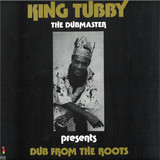
King Tubby and Producer Bunny ‘Striker’ Lee are intertwined in the birth of Dub Music. After discovering a mistake that made a ‘serious joke’ (more of which later...) they went on to release the first pressings of this new musical genre namely ‘Dub Music’. Tubby’s vast knowledge of electronics and Bunny’s vast catalogue of rhythms would lay the foundations of what today is taken as a standard... the Remix / Version cuts to an existing vocal tune.
Osbourne ‘King Tubby’ Ruddock was born in Kingston, Jamaica on 28th January 1941 and grew up in the High Holborn Street area of downtown Kingston. He studied electronics at Kingston’s National Technical College and also on two correspondence courses from the U.S.A... When he had qualified Tubby began repairing radios and other electrical appliances in a shack in the back yard of his mother’s home. His work in the early days included winding transformers and building amplifiers for Kingston’s Sound Systems. Tubby built his first Sound System in 1957 playing jazz and Rhythm & Blues at local weddings and birthday parties. His reputation as a man who knew and understood both electronics and music grew steadily and as the sixties drew to a close. Tubby purchased his own basic two track equipment. He installed this alongside his dub cutting machine, a homemade mixing console and his impressive collection of Jazz albums in the back bedroom of his home at 18 Dromilly Avenue which he christened his music room.
Tubby and Striker were at Treasure Isle Studio’s one day while Ruddy from Spanish Town was working with the engineer Byron Smith....
“Tubby and myself was talking when Ruddy was cutting some dub but Smithy (engineer) made a mistake through we were talking and forgot to put in the voice. It was two track recording in those days. Ruddy said ‘No Man! Make it stay! and so they cut the rhythm. When I went over to Ruddy’s that Saturday night a dance was in progress and when they played the vocal to the tune... then he said we’re going to play ‘Part Two’. They never called it ‘Version’..and then he played the rhythm track. The song was a catchy song and everybody started to sing along and the deejay started to toast so everything went down well. On Monday morning I went up and I said ‘Tubbs the mistake we made was a serious joke. It mash up Spanish Town! The people went wild. So you have to start to do that now ‘cause when the man put on the ‘Part Two’ everyone start singing this song. It played about twenty times. I said you try Tubbs!’...Well the next Saturday night now when Tubby strung up down the farm U Roy said he’s going to play ‘Part Two’ but Tubby did it different now. He started with the voice then dropped it out and let the rhythm run and then he brought in the voice in the middle and from there Tubby started to get really popular.’’
Bunny ‘Striker’ Lee
Dynamic Sounds upgraded to sixteen track recording in 1972 and Tubby purchased, again with the help of a deal brokered by Bunny Lee. The old four track equipment and the MCI console from their Studio B. The four tracks now gave him far wider scope to work with and he began to create a new musical form where the bass and drum parts were brought up while the faders allowed Tubby to ease the vocal and rhythm in and out of the mix. It was only a matter of time before Tubby’s dub plate experiments began to make it on to vinyl and the first ever long-playing King Tubby releases would feature a collection of his mixes to a selection of Strikers rhythms. So please sit back and enjoy this historic set of sounds, mixed by King Tubby and Mr Prince Phillip Smart and another set of scorcher Bunny Lee rhythms.
Andrew Heath describes his music as 'lower case', but although this cross-nation collaboration with Anne Chris Bakker and M Cosa de Resistance is understated, serene and slow moving, it's also capable of painting ambitiously widescreen images at the same time. The seven tracks here revolve around the UK producer's trademarks - solitary sounding piano and atmospherics both courtesy of field recordings and electronics - but with extra embellishments, most notably the eerie sound of the zither and six string experiments from Dutch guitarist Bakker. It's a horizontal listen, certainly, but one that's full of life and creativity all the same.
- A1: Alberto Radius - California Bill
- A2: Mario Lavezzi - In Alto Mare
- A3: Beppe Cantarelli - Se Il Mio Canto Sei Tu
- B1: I Ricci - Vienimi A Pigliare
- B2: Eduardo De Crescenzo - Alle Sei Di Sera
- B3: Im Porto - Smettila (Po-Para) (Po-Para)
- B4: Barnaba - Bianco E Nero
- C1: Enzo Cervo - Solo Mo
- C2: Peppino Di Capri - Mo
- C3: Franco Camassa - Non Andar Via
- C4: Stefano Pulga - La Mia Nave
- D1: Massimo Stella - C'e Una Donna Sola
- D2: Gino D'eliso - Ti Ricordi Vienna?
- D3: Enzo Carella - Contatto
- D4: Serafini - Serafini
Between the late 70s and the early 80s, pop music was in a transitional phase. After a return to the roots of punk, rock was morphing into new wave, while disco was rapidly declining and the electronic revolution, already on the rise, was ushering in the transition from analog to digital. This period also saw the emergence and relatively brief flowering of a commercially dominant style that mixed soul influences (especially Stevie Wonder and Ear th Wind & Fi re) , folk/pop songwriting and jazz sensibilities in equal measure, creating a hybrid easy on the ears but also emotionally and musically rich. It was the style represented by artists like Christopher Cross, Michael McDonald, Gino Vannelli and Kenny Loggins, who were all influenced by black music. They belonged to a larger trend that took place in all major music producing countries, including Italy where, like so many other things, the style was not merely imported or copied, but reshaped into a specifically local version based on the nation's tastes and cultural traditions. In Italy, a soulful and sophisticated approach to pop music was embraced not only by established names like Mina, Alan Sorrenti and Loredana Berté, but also, and perhaps most importantly, by an entire generation of writers, arrangers and musicians who had grown up listening to early fusion, to Steely Dan's refined recordings, and to Quincy Jones's productions. So, with this compilation we hope to give new exposure to artists and songs that, despite having moderate or little success when first released, must be regarded as among the creative peaks of Italian pop music. "Paisà Got Soul" features pop veterans Peppino Di Capri, Mario Lavezzi and Alberto Radius alongside atypical singer-songwriters (Enzo Carella, Enzo Cervo, Gino D'Eliso), Italo-disco heroes (Stefano Pulga), international hit composers (Beppe Cantarelli, who has co-written for Aretha Franklin and Mariah Carey), Brazilian-born naturalized Italians (Jim Porto) and complete unknowns (Franco Camassa, I Ricci, Massimo Stella).It brings together little gems that in most cases are no longer available on the market, or only available in their original and now very rare vinyl format. We believe they all deserve to be rediscovered today, partly because of the recently renewed interest in "yacht rock", as this music style has been retrospectively named, and partly because they provide further evidence that Italian artists rework international music styles in creative and original ways.
Compiled and conceived by David Nerattini partnered by Pierpaolo De Sanctis
Since his debut with the "Darling Darling Darling"track, immediately spotted by the media as well as by electronic music lovers, Louis Warynski has continued to evolve a world that belongs to him alone, over the last ten years and eight albums.Like Lewis Caroll's universe, Chapelier Fou's music is multiple, simple and complex, serious and light, classic and modern. Louis Warynski's work is woven on a classical basis, but it is constantly disrupted by subtle electronic arrangements and rhythms, thus taking the tracks outside of all convention.We find in Chapelier Fou the facetiousness of French composers such as Erik Satie, François de Roubaix or Robert Cohen Solal, not hesitating to blend pop and concrete music, but also this formidable capacity to make serious what is not serious, and vice versa of course. His music, very much at home on screen as well as on stage, has everything that makes up the trait of genius composers: accessible in appearance and adaptable in all forms. This is how Chapelier Fou has performed on stage as a soloist, juggling between violin, guitar, keyboards and pedals, in trio, quartet and even in orchestral formation with the Orchestre National of Metz. Often described as "electronic chamber music", it was expected that one day Chapelier Fou would offer us a version of his music without a single electronic or electrified part. It is now done with this Ensemb7e who performed on the stage of L'Arsenal de Metz, broadcasted by Arte Concert. Chapelier Fou Ensemb7e has received direct support from a wide audience, but also from venues programmers where the septet has been performing since June 2021. Ensemb7e stands for a mainly wooden septet: violin, viola, cello, piano, clarinet and drums accompany the multi-instrumentalist composer. It's hard to resist such musical enthusiasm! The magic happens immediately because the re-reading of these little jewels in pop format gives a touching and fulfilling dimension to Chapelier Fou's work: even more dreamy versions, sometimes more mischievous, but the richness of the classical instruments and the obvious pleasure of the musicians in interpreting them give a new life to all these titles that have filled us with wonder. It therefore seemed obvious to us after listening to his Ensemb7e concerts that there was more than a concert to be recorded, but a real album to offer. A studio album, but with the energy and vitality of a live one, produced with the care and generosity of Thomas Poli (who has collaborated with Dominique A, Yann Tiersen and many others).
Vinyl now gone back to June. RIYL: Slowdive, DIIV, Electric Youth, The Cure, My Bloody Valentine. Solo project of Los Angeles based Matthew Doty (ex-Saxon Shore). For Matthew Doty, Deserta has always been about exploring a sonic universe that allows him to express a kaleidoscope of emotions, without having to say much at all. Through a patchwork of reverb-tinged textures – drone guitars, lingering synths and driving percussion – the Los Angeles-based singer/songwriter and multi-instrumentalist weaves together stories of care, frustration and catharsis that ultimately stretch to a gentle resolve. On new album Every Moment, Everything You Need, Doty chronicles the kind of year we all fear, full of uncertainty, tension and sustained pressure, and transforms it into a celebration of perseverance. It’s an essential reminder that we have the power to shape the stories we tell. The pandemic meant that Doty had to give up his studio and downsize a lot of his gear and instead, carve out a space in his two-bedroom apartment to craft the next chapter of Deserta. Sharing the space with his wife and son, Doty and his partner are also essential healthcare workers, which meant the couple would often have to tag-team childcare, along with 13-hour shifts in PPE and people constantly calling with questions about the ever changing guidelines and protocols. Once the blueprint for Every Moment, Everything You Need was set, Doty reached out to a number of collaborators to stitch together his vision for the sonic landscape. James McAlister (Sufjan Stevens, The National, Taylor Swift) came onboard to perform and record drums, while Caroline Lufkin (Mice Parade) wrote and performed vocals on the ethereal “Where Did You Go.” Elsewhere, the LP was mixed by Dave Fridmann (Tame Impala, Mogwai, Interpol), with Beach House and Slowdive producer Chris Coady engineering and co-producing, making this the first time Fridmann and Coady had worked together on a project. While the vocals are more prominent than Deserta’s previous albums, it’s their amalgamation with the instrumental aspects that secures Every Moment, Everything You Need as Deserta’s most confident and assured release to date. An affecting emotional candor teamed with persistent riffs and tenacious rhythms sees Doty unafraid to dive deeper; an unrestrained approach that ushers in a lustrous purging of agitation and anxiety. Showcasing those dark, exhaustive thoughts through crucial swells and looped, electronic soundscapes, it’s an LP that’s infinitely layered, with something new to discover with each and every enchanting listen.
After a parentship hiatus, Richard Zepezauer´s n s y d e imprint is back to push new boundaries and save some souls.
N s y d e proudly presents a next release by Skymark. It's his second full EP on the Berlin based imprint.
His Easy Saturday Night EP includes two excellent deep house jams backed with remixes by Kevin Reynolds and Mike Huckaby. The latter was previously released as a single sided limited edition.Skymark brings a bright and sun tinged house anthem on the Instrumental version of Easy Saturday Night on the A1.
The remix is in our opinion amongst Mike Huckaby's best productions. It touches the classic soulfulness of Larry Heard-style piano chords and blissful vocals combined with clear hints of Basic Channel's eternal electrifying waves. It's a perfect testament to Mike's unparalleled knowledge and wide musical range, Not only those who knew him will feel his presence while listening to this beauty.
On Insomnia, Skymark goes even deeper into deep soul territories. Pure vibes. Reworked by Detroit DJ and producer Kevin Reynolds. Made his frst appearance on nsyde back in 2011 and here he twists the original into N s y d e was founded 2011 by Richard Zepezauer.
N S Y D E will continue to bring back the family by unifying diverse artists from all angles of the electronic music familytree. N S Y D E believes in the political power of art, it brings together people.
N S Y D E does not believe in the power of political marketing of art, it divides people from each other. House Nation still under one Groove.
Early DJ support by : Antal (Rushhour), XDB, Laurent Garnier, Steffi (Ostgut), Electric Indigo, Dan Curtin etc.
Federico Albanese is a composer born in Milan, Italy in 1982, and currently based in Berlin. His musical versatility is a natural gift that pushes him to explore music in all its facets. Albanese's compositions are airy and cinematic, blending classical music, electronics and psychedelia. Federico started studying piano and clarinet as a child before becoming fascinated by rock music. As a teenager he studied bass and became a self-taught guitarist and soon became one of the leading figures of Milan's underground scene, performing in several bands. Influenced by black music, folk, electronic, modern and contemporary classical music his skills as a composer soon emerged, He worked for 5 years as prop man in several film sets. This experience made him understand the power of the connection between music and images and helped him to develop his personal musical path. In 2007 Albanese met singer and songwriter Jessica Einaudi and together they founded the avant-garde duo ""La Blanche Alchimie"". Composing songs with Jessica he rediscovered his love for the piano, which from that moment on, became his main instrument. Since then Federico has scored several films, short films and documentaries, including a documentary on a project commissioned by Ermenegildo Zegna in the National Museum of XXI Century Arts in Rome. In February 2014, Federico Albanese will release his debut album entitled ""The Houseboat and the Moon"". He found a place, an imaginary place, where, whenever he wanted to, he could jump on and just float away. On this moving shelter, traveling across memories and imagination, lulled by water and led by the moon, Federico wrote the 13 compositions of his debut. He recorded all of the piano parts with a 1969 German tape recorder, the Uher Royal Deluxe, which allowed him to catch all of the tiny hidden shades, the imperfections, the noises of the piano and its surrounding space. Federico melts this rarefied sound with electronics, live recordings, strings, and homemade instruments. The result is a combination of contrasts and colors with a variety of atmospheres that wonderfully represents Federico's musical universe. Vinyl: thick gatefold covers, 180g vinyl,free download.
After the impact of Exist in Ramallah festival back in 2019, and how relationships between the artists got established and the attendees contribution that helped to shape the identity and the vision of the project itself. Exist decided to take the next step and expand the project with a label that is runned between Amman based and festival founder Odai Masri and Amsterdam based and label co-founder Chafik Chennouf with the same ethics that the festival is standing for. Some of the main principles Exist upholds include resistance to homophobia, and the ongoing colonization of various parts of the world by state actors or multi-national oligarchs. In turn, we think that this colonization leaves no one free, and that it especially targets communities (human and non-human) that are most marginalized by capital and historical racial and ethnic structures. The first release 'Marks of Existence' is a collection of mind-melds with some of the scene's most continuously exciting and refreshing artists: Drew McDowall, Muqata'a, CASKO, Adel Poursamadi & Tegh. The Scottish, NYC-based experimental musician, Drew McDowall, has been subverting the formula for many years now, having clocked up storied work with Coil and Psychic TV back in the day. His track 'Conceal the Wound' is a stunning, exquisitely chiselled piece of synth music. It's like waking from a dream, only to return to its febrile clutches. Ramallah's Muqata'a came through flawless with his cut 'Administrative Detention', a blast of chaotic chopped breaks and lurching neo-beat tape MPC programming. The breakcore influence in combination with referencing crimes against humanity makes the tune an intense headmelter. The ideal soundtrack for unorganized resistance from a firsthand perspective. ‘The Price You Pay To Be Unattached Flesh’ sees CASKO push the hi-tech dirt of his Opal Tapes, Leyla Records and Voidance releases down darker ginnels to claustrophobic, anxiety-raising effect in a collection of brilliantly neon explosions of colour and exuberance floating on a sleazy and slow beat with bags of North-African swagger. Experimental electronic musicians from Iran have marked their prints on the face of the universal experimental music scene for some time now, though the manner in which their status went from "non-existent" to "present" and from "silent" to "noisy" might somehow seem "unpredictable" to the naked eye. Tegh, known for his work on Opal Tapes joined forces with Adel Poursamadi to come up with a beautifully bittersweet synthetic orchestration in a staggering fashion to close this EP with.
- A1: Mateus Enter
- A2: O Cidadão Do Mundo
- A3: Etnia
- A4: Quilombo Groove
- A5: Mac?
- A6: Um Passeio No Mundo Livre
- A7: Samba Do Lado
- A8: Sangue De Bairro
- B1: Maracatu Atômico
- B2: O Encontro De Isaac Asimov Com Santos Dumont No Céu
- B3: Corpo De Lama
- B4: Manguetown
- B5: Um Satélite Na Cabeça
- B6: Baião Ambiental
- B7: Amor De Muito
Afrociberdelia is the second studio album Brazilian of manguebeat Chico Science & Zombie Nation, released on May 15 of 1996. It was ranked 18th in the list of 100 best records of Brazilian music by Rolling Stone Brasil magazine and 2nd in the election of the best national records of the years dev 1990, carried out by the website “Scream & Yell”. The album was produced by Eduardo BiD and recorded at Nas Nuvens studio, in Rio de Janeiro. With a stronger presence of elements of electronic music and hip hop than its predecessor, Da Lama ao Chaos, he would reach the gold record in April 1997. In interviews, members of the band stated that they preferred the timbre of the drums in Afrociberdelia, which would finally have approached the sound that the group made on stage.
The idiosyncratic musical style and production practices by Sheldon, Sidney Thompson (aka Sid Le Rock) are shaped by the DIY electronic-music movement that has encouraged his creativity to develop and thrive since the late ’90s. This is a contributing factor to his impressive discography that currently stands at twelve albums under his various aliases, including Sid’s collaborations with artists from various fields and musical genres such as Depeche Mode, DJ Koze, Placebo, and persistent impressions of the journeys he has made throughout the world as a result of his live music performances.
These invaluable experiences are the supplements for his next important leap forward as follows: As a tribal member of the Algonquin First Nations, Sid seeks to explore his ancestral heritage to uncover the traditional, ceremonial soundscapes of the Native American indigenous peoples as an integral component for his new solo album project – Invisible Nation. It is his respectful endeavour to bind this seamlessly together through his knowledge of music theory and his own distinctive production sound. Sid Le Rock’s current album concept is a fusion of traditional music and organic elements utilised by the Aboriginal peoples of Canada, combined with the modernisation of electronic-based music. Mixing of both sound styles achieve balance with a shared importance to rhythm as a source of impulse and functionality. It is his equitable attempt to produce and deliver a complementary synthesis of sonic peculiarities, modern electronic methods and the repurposed use of ceremonial music, to showcase a profound pride and pay homage to his forebears.
The Algonquin First Nations otherwise referred to as Anishinaabe, are a group of indigenous peoples present in the Great Lakes region of Canada. They consider music and dance to be sacred and an integral part of their lives. It is a culture in which it heavily relies on rich oral traditions to pass on its stories, teachings, history, and cultivates their verbal language. Membranophone, idiophone, aerophone, and chanting are traditionally essential components to our sacred sound, "Drumming is the heartbeat of Mother Earth, chanting is the heart”. This musical connection produces a narrative depth that can transport an effective atmosphere to dance-floors, bridged by the unconventional virtues, to which electronic music permits limitless possibilities. Sid Le Rock’s latest release, marks his eighth studio album – Invisible Nation, is an exploration into his cultural roots, combining myth and musical expression to bring forth a prideful nation.
Tubby did three original dub albums, “Dub From The Roots, “The Roots Of Dub” and the third is “Brass Rockers” with Tommy McCook ’pon the flying cymbals. Where he mixed it with the horn going in and out in a dub way and one named “Shalom Dub” you can call Tubby’s too because he mixed the versions as they were off the forty fives.
King Tubby and Producer Bunny “Striker” Lee are intertwined in the birth of Dub Music. After discovering a mistake that made a “serious joke” (more of which later…) they went on to release the first pressings of this new musical genre namely “Dub Music”. Tubby’s vast knowledge of electronics and Bunny’s vast catalogue of rhythms would lay the foundations of what today is taken as a standard…. The Remix / Version cuts to an existing vocal tune.
Osborne “King Tubby” Ruddock was born in Kingston, Jamaican the 28th January 1941 and grew up in the High Holborn Street area of downtown Kingston. He studied electronics at Kingston’s National Technical College and also on two correspondence courses from the USA. When he had qualified, Tubby began repairing radios and other electrical appliances in a shack in the back yard of his mother’s home. His work in the early days included winding transformers and building amplifiers for Kingston’s Sound Systems. Tubby built his first Sound System in 1957 playing jazz and Rhythm and Blues at local weddings and birthday parties His reputation as a man who knew and understood both electronics and music grew steadily and as the sixties drew to a close. Tubby purchased his own basic two track equipment. He installed this alongside his dub cutting machine, a homemade mixing console and his impressive collection of Jazz albums in the back bedroom of his home at 18 Dromilly Avenue which he christened his music room.
Dynamic Sounds upgraded to sixteen track recording in 1972 and Tubby purchased, again with the help of a deal brokered by Bunny Lee. The old four track equipment and the MCI console from their Studio B. The four tracks now gave him far wider scope to work with and he began to create a new musical form where the bass and drum parts were brought up while the faders allowed Tubby to ease the vocal and rhythm in and out of the mix. It was only a matter of time before Tubby’s dub plate experiments began to make it on to vinyl and the first ever long playing King Tubby releases would feature a collection of his mixes to a selection of Striker’s rhythms. So please sit back and enjoy this historic set of sounds. Lovingly restored and with a few extra gems added to the CD editions. These releases were the first to carry the name of King Tubby and the first to credit the great musicians that contributed so much to the rhythms that made these albums possible.
Hope you enjoy the set……
‘This Here Feels Good’ is the sound of an artist using music as
their second language. With all music self-produced / written,
Kay Young is defining an original generation of Black British
Music.
Moving between tightly rapped verses and glorious vocal
performances, often within the space of one track as well as
across the whole EP.
The release is a stunning collection of songs which expands
upon the sonic blueprint Kay has already laid out, that caught
the attention of Jay Electronica and Jay-Z, who later signed her
to Roc Nation.
She delves deeper into dance and soul while continuing to
explore themes of familial legacy and cultural relation, keeping a
perfect balance between lyrical vulnerability and musical uplift.
Live TV performance for Other Voices (Dec 2021), TV
performance for BT Sport (May 2021), Clash New Gen Artist
(autumn 2021), plus performances last year at Boiler Room
Festival, South Facing Festival, BBC Intro Live Summer By The
River, Live at Leeds Festival and more.
Supporting Jay Electronica for UK tour.
“uplifting groove” - The Fader
“pertinent, powerful lyrics” - Cool Hunting
“Young will undoubtedly keep shining” - Line of Best Fit
“Pure and bright promise.” - Beats Per Minute
“Kay Young finds a balance between smooth vocals and hardhitting lyrics” - Gigwise
“one of the UK’s most promising up and coming talents.” - Alfitude
“...an extremely exciting future ahead.” - CLASH Radio - 6 Music, BBC Radio 1, BBC Radio London, BBC 1Xtra, Amazing Radio A-List.
Rare Nigerian Afrobeat-Afropop Album.
First vinyl reissue since 1985.
Solo Album by Ofege Frontman Melvin Ukachi.
First Ever Release Outside Of The African Continent.
180g BLACK vinyl limited to 500 copies (w/obi strip). Non-Returnable.
Melvin Ukachi needs little introduction, the Lagos (Nigeria) based vocalist and bandleader is a living legend. Melvin is known for his fantastic solo albums, his vocals for the afrobeat star-groups M.F.B. and Ozzobia…but his biggest legacy is without a doubt him being the singer and bandleader of Ofege.
Melvin formed Ofege in the early 1970s (when he and the other band members were all still a bunch of teenagers). Due to their vibrant combo of sweet harmonies, hooks & fuzz, Ofege would become one of the most legendary Nigerian groups of all time, with expressive sales and national stardom to follow. At the turn of the century (and because of tracks appearing on various compilations) Ofege would receive international acknowledgment for being the first of their kind and THE ultimate West-African psychedelic funk band!
Melvin Ukachi recorded four milestone albums with Ofege: ‘Try and Love’ (1973) ‘The Last of The Origins’ (1976), ‘Higher Plane Breeze’ (1977) and ‘How Do You Feel’ (1978). When the Ofege story came to an end, Melvin recorded two astonishing solo albums: ‘Evolution-Bring Back The Ofege Beat’ (1981) and ‘I am Ok’ (1985). Both of his solo recordings have now become much sought-after holy grails for collectors and fans alike.
On the album we are presenting you today (I AM OK from 1985) the listener is treated to Ofege’s trademark sound…but we’re also shown a perfect glimpse of the late 70’s afrobeat works combining soul, jazzy rhythms, William Onyeabor style laid back electro funk synths & fluid boogie-danceability. The female backing vocals and handclaps by Princess Bunmi Olajubu (Femi Kuti) also deserve a special mention because they add so much depth and grooves to this amazing record.
Expect some serious local ‘all-star’ guest musicians on this record as well. Next to him playing the synth, Jake Sollo also produced this gem of an album! To top things off the tracks were recorded and mixed at the legendary RAS Studio in Akwa, Nigeria…all slickly engineered by John Malife (Black Children Sledge Funk Band, T-Fire, BLO).
‘I AM OK’ was released on CRS Nigeria in 1985 and is a total Afro-pop-funk classic that begs for a special place in your record collection. It’s tight, funky and Melvin’s soulful vocals are to die for. This record is a monster!
Tracklist:
I'm Ok , I Don't Mind , Come and Dance , We are Fine , Keep on Loving Him , Wanted , I Wanna Hide You
'Memory Box' - the new album by Rodney Cromwell - fuses a European synthpop sensibility with a world of magical realism. It was inspired as much by the literature of Alice in Wonderland, Franz Kafka and Anna Kavan, as by its musical influences of artists such as Kraftwerk, Neu!, The Cure, Silver Apples, Oppenheimer Analysis and Polyrock. The sonic pallet of 'Memory Box' is rich, colourful, often surprising and utterly unique. Since the release of his debut 'Age of Anxiety' album in 2015, Rodney Cromwell has been featured by the likes of NME, Electronic Sound Magazine, Huffington Post, Paste, BBC6 Music and national RNE3 in Spain for whom he recorded a live session. 'Age of Anxiety' was included in a wealth of Best of Lists, not least that of Electronic Sound. He has appeared on compilations alongside Cavern of Anti-Matter, John Foxx, Devo, OMD, Katy Perry and many more. Rodney Cromwell is the project of Adam Cresswell. The first band he founded was SALOON, who were John Peel darlings, who recorded three Peel Sessions and the Festive 50 number 1 of 2002. They released three acclaimed albums on Track & Field (UK) and Darla Records (US) and played with a host of alternative acts including Stereolab, Electrelane, Quickspace, Laika, Of Montreal & Movietone. He followed Saloon with ARTHUR & MARTHA the acclaimed tweetronica duo that released the sole album 'Navigation' before vanishing. In addition to performing as Rodney Cromwell, he runs the Happy Robots record label. The Rodney Cromwell live set is a joyful mixed-media extravaganza, incorporating analogue synths, video visuals and live instrumentation, interjected by Rodney's 'offbeat wit'. His debut festival appearance at Indietracks in 2015 was described as 'like a spiritual experience". He has shared stages with acts including Pram, Marsheaux, Death & Vanilla, Rowetta and Steve Davis. His sole performance in 2020 was as part of Damo Suzuki's backing band. He will be promoting the album with a series of live-dates in 2022. Cromwell's recent singles 'Memory Box' and 'Get Me To Prague' received play on BBC 6 Music as well as national play in Spain, Finland and Japan. 'Memory Box' featured in the Official Festive 50 on Dandelion Radio. To coincide with the album we have early confirmed reviews with Electronic Sound Magazine and interviews with ElectricityClub, Pennyback Music and You haven't heard this music vodcast.
Fiat Lux is the debut album by Tarta Relena, a Barcelona-based project featuring Marta Torrella and Helena Ros. The group approaches the oral traditions of the Mediterranean from a contemporary perspective using a unique combination of ancient vocal melodies and subtle electronic textures.
Tarta Relena’s inspiration for Fiat Lux comes from historical characters, such as the Virgin Mary and Hildegard of Bingen, and timeless verses that deal with the cyclic nature of the human experience: “E suïcidi i el cant” (1) is an adaptation of a traditional poem by Pashtun women in Afghanistan; “Esta montanya d’enfrente” (3) is a traditional Sephardic song; “Safo” (9) is based on the love poems by Sappho of Lesbos.
Singing in Catalan, Spanish, Greek, Latin, English, and even Sephardi, the language of Hispanic jews, Tarta Relena explore a complex array of Latin cultures through the simplicity of voice. They draw from vocal techniques that range from flamenco to jazz, introducing elements of electronic music to redefine the melodies.
In January 2019, Tarta Relena released their first EP, Ora Pro Nobis: eight a cappella songs with minimal electronics. In April 2020, they released their second EP, Intercede Pro Nobis: a five-song dialogue between voice and electronics.
Fiat Lux expands on past experimentations, moving away from organic harmonies to embrace digital textures and distortions. The musical production of Juan Luis Batalla and Òscar Garrobé is remnant of Holly Herndon or Eartheater.
Tarta Relena have perhaps been best described by Pitchfork in their review of Pack Pro Nobis: “Tarta Relena is a celebration of musical exchange. At a time of rising nationalisms across Europe, Tarta Relena’s songs are a testament both to the porousness of borders and the ideas that unite disparate cultures, running beneath the centuries like a pedal tone”.
Sdban Records will reissue several installments of the legendary library series 'A Special Radio ~ TV Record' on vinyl. These were originally released on Belgian imprint 'Selection Records' between 1975 and 1981. N°15 in the series was the Belgian milestone jazz album 'Solis Lacus' released in 1975.
Solis Lacus is the cult group around renowned Belgian pianist Michel Herr, a pioneer of electric jazz in the 70's in Europe. Michel Herr rose to international prominence after winning the first prize at the jazz festival in Loosdrecht, The Netherlands, in 1971. He accompanied many European and American jazz stars on foreign tours and ran the group Jazztrack with saxophone player Wolfgang Engstfeld in Germany. At the same time, he set up his own band Solis Lacus, which consisted of Belgian musicians who had all made a name for themselves on the national jazz scene of the 1960s including Richard Rousselet and Bruno Castelluci both from Placebo. Inspired by the reigning jazz-rock sound of the day, Herr expanded his musical vocabulary and started to play electronic keyboards. Solis Lacus recorded its only album in the course of 1974 and 1975, before the members of the group headed in their own direction.
Solis Lacus is considered the European counterpart to sound experimentations of Herbie Hancock's Headhunters, or the best albums of the CTI label such as Freddie Hubbard. This is groundbreaking, experimental and funky jazz fusion!
A homage to the wildlife and mountain people of Benedicte Maurseth’s home area in Hardanger. The acclaimed and innovative visionary musician Benedicte Maurseth is coming forth with the wonderful all-consuming album Hárr. The sound of her magic Hardanger fiddle is woven seamlessly together with that of birds and the other musicians’ musical impressions. Always moving forward with a steely calm disposition, the record draws you into a world where one feels to be one with nature, wandering over a mountain plateau. Benedicte was raised in Maurset in Eidfjord – near Hardangervidda National Park – and has hiked through the mountains her whole life, clearly laying the foundation for this musical expedition. As traditional folk musicians have always been, Maurseth is open to contemporary influences from interactive art and music styles. The work Hárr oscillates between Norwegian folk tunes, free improvised music, American minimalism, and extensive use of musique concrète. In the tracks you will also hear natural soundscapes via the shufflings of reindeer, reindeer herders, birds and insects all recorded in Hardangervidda. Benedicte Maurseth: Hardanger fiddle Mats Eilertsen: contrabass, electronics Håkon Stene: vibraphone, percussion, electronics Guests: Jørgen Træen: electronics Rolf-Erik Nystrøm: saxophone Stein Urheim: langeleik, harmonica, electronics, samples, percussion
Pure Space Records welcomes a newly emerging Naarm (Melbourne) producer, Dividens with his EP ‘Blueprints’. Across four tracks Dividens masterfully guides us through the fringes of modern drum n bass, eerie Dub and restrained Jungle styles.
Starting strong, ‘Audio Blueprint’ provides a fast and erratic baseline cushioned only by a deep, squelching synth. It’s a textural and delicately refined track, with each sound finding its perfect place with twisted effect.
Completing the A-side, in confidence, is ‘Rollin Smoke’. An acid tinged take on electro, composed with trancey pads and tight percussion.
Flipping over we find ‘Bionic’, luscious pads swirl amongst a deep sub bass rhythm before free-falling into stints of breakbeat. The ominous tone of the track is coloured by the disorienting vocals; lean in and let the bass hold your feet firmly on the ground.
Finally, ‘Tell Dem’ rounds out the release with a tasteful amount of dub. Here a mass of swamp-like synths envelop you completely, while the tight break patterns elevate the energy through to the final moments of the release.
~
Tracks written, produced and mixed by Dividens on Wurundjeri Land. Pure Space and Dividens both acknowledge the traditional custodians of this land and pay our respects to their elders past, present and emerging. Sovereignty was never ceded.
~
Pure Space Recordings is the label venture from the beloved radio show hosted by Andy Garvey, and produced by Mija Healey which has broadcast weekly on Eora Nation (Sydney) radio station FBi Radio for over four years. The label focuses on Australian music both for home listening and that made for the club.
Highly recommended. About the album Blind Emperor Through wetland, winters, rubble and fallout come horizons new; civilisation shattered under a vengeful cataclysm, eventually led to dawn from the light of a blighted leader. Every action has a reaction, and those who wish to prosper must first be willing to offer something of intrinsic value. As one empire crumbles, another takes its place. The struggle for a fleeting utopia comes at a cost, and those who strive towards golden gates must trek along a solemn valley. The Allegorist Berlin-based artist, The Allegorist, has been meandering through stories with her purposeful and introspective take on electronic music. Each release explores themes that require joint participation from the listener as they look to flood your mind with images of fabled characters and places through her artistic soundscapes. Her carefully build worlds that straddle sci-fi and fantasy, feeding off of the light and dark dualism are the perfect blend of reflective contemplation and storytelling. As a holistic artist, Anna Jordan (The Allegorist) encapsulates a myriad of her talents within her work. Her previous albums, Hybrid Dimensions I. and Hybrid Dimensions II., established her aesthetic and detailed fictitious stories, along with the language ‘Mondoneoh’, a language to unite all nations. Her latest endeavour, and 4th album, The Blind Emperor, portrays the essence of a mythical land that tells of struggle that will lead to prosperity. The protagonist, Blind Emperor, leads the charge into a brighter tomorrow. Like chapters from a novel, each track allows the listener to be carried by the story. It is an epic, cinematic, choral, ambient techno album. The album combines her depictive, written and musical storytelling with a concept portrayed visually, orally and audibly to deliver another saga in her ever-evolving figments of fantasy. It comes as an entire artistic project, as The Allegorist created the album art, wrote the included story and composed a poem that all combine to tell the tale of Blind Emperor.
Reinhold Weber, born in 1927, was known as a pioneer of electronic music. In his compositions, Weber placed a focus on twelve-tone music, he became increasingly fascinated in the field of computer music since the 1970s. He produced numerous works at the Studio for Electronic Music at the University of Karlsruhe.
Reinhold Weber was born in Gießen on July 18, 1927. He studied at Robert Schumann Conservatory in Düsseldorf (including composition with Jürg Baur, piano with Max Martin Stein) and passed his exam in composition, theory, piano and ear training with distinction. He completed further masterclasses with Wolfgang Fortner, Hermann Heiss, Oliver Messiaen (composition), Kurt Thomas (choral conducting), Andor Foldes (piano) and Gerhard Nestler (electronic music). Reinhold Weber was a professor at the Baden Conservatory of Music in Karlsruhe and also worked in the Studio for Electronic Music of the University of Karlsruhe. His works have been performed in numerous concerts and were broadcasted by SDR, WDR, NDR, HR, SWF and Radio Bremen. Reinhold Weber died March 25, 2013.
Actor Kurt Müller-Graf was born in 1913. After visiting the Theater Academy of Baden in Karlsruhe, he appeared on stage at National Theaters of Karlsruhe, Kassel and Munich since 1935. During World War II he performed in about 10 feature films by Bavaria Film Munich. After 1945 he played at National Theaters in Karlsruhe, Stuttgart and at Theaters in Nuremberg, Cologne, Munich, Mannheim, Baden-Baden and Burgtheater Vienna. Furthermore he had guest performances in Zurich, Basel, Salzburg and Heidelberg. Kurt Müller-Graf was touring and had broadcasts on radio and television shows at home and abroad. Kurt Müller-Graf died August 10, 2013.
"In Vivo" is the result of the photographic work of Klavdij Sluban at the Fleury-Mérogis Young Offender Institution (France) from 1995 to 2016 Beds in addition to his work from Izalco prison, located in El Salvador, from 2008 visiting rooms connected to the music of Gareth Davis.
Gareth Davis is an artist, composer and musician living in Amsterdam. He plays clarinet(s), the result of a somewhat impulsive purchase whilst window shopping in Covent Garden, London, around ten years before the turn of the century. The serendipitous location of a rather wonderful (and equally important, rather cheap) second hand record shop less than 10m from the bus stop required for seven years of schooling, combined with delivering newspapers on a daily basis, lead to a somewhat eclectic, dusty and generally unclassified taste in music.
The result. Activity covering sonic art and contemporary classical music through rock, improvisation and noise with collaborations that have included the premiering of new written pieces by composers such as Bernhard Lang, Peter Ablinger, Toshio Hosokawa and Jonathan Harvey, soloist with orchestras including the SWR Symphonieorchester, Warsaw Philharmonic and Orquesta de la Comunidad de Madrid, performances with groups and performers ranging from the Neue Vocalsolisten and Arditti Quartet through to improvisers Elliott Sharp and Frances Marie Uitti, electronic artists Robin Rimbaud and Merzbow and multimedia work with artists including Christian Marclay and Peter Greenaway.
"In Vivo" is his second solo release after to have recorded a bunch of collaborative albums with artists such as Scanner, Machinefabriek, Steven R. Smith, Kleefstra Brothers, Frances-Marie Uitti, Merzbow, Adain Baker, Duane Pitre and more...
Klavdij Sluban, winner of the European Publishers Award for Photography 2009, of the Leica Prize (2004) and of the Niépce Prize (2000), main French prize in photography, is a French photographer of Slovenian origin born in Paris in 1963.
He develops a rigorous and coherent body of work, nourished by literature, never inspired by immediate and sensational current affairs, making him one of the most interesting photographers of his generation. The Balkans, the Black Sea, the Baltic Sea, the Caribbean, Central America, Russia, China and the Antarctic (first artistic mission in the Kerguelen islands) can be read as many successive steps of an in-depth study of a patient proximity to the encountered real.
His images have been shown in such leading institutions as the Metropolitan Museum of Photography of Tokyo, the Maison Européenne de la Photographie in Paris, the Rencontres d’Arles, the Museum of Photography in Helsinki, the Fine Arts Museum in Canton, the Musée Beaubourg, the Museum of Texas Tech University. His many books include East to East (published simultaneously by Actes Sud, Dewi Lewis, Petliti, Braus, Apeiron & Lunwerg with a text by Erri de Luca), Entre Parenthèses, (Photo Poche, Actes Sud), Transverses, (Maison Européenne de la Photographie) and Balkans -Transit, with a text by François Maspero (Seuil). Since 1995, Sluban has been photographing teenagers in jails. In each prison he organizes workshops with the young offenders to share his passion. First originated in France, in the prison of Fleury-Mérogis with support of Henri Cartier-Bresson during 7 years, as well as Marc Riboud and William Klein punctually. This commitment was pursued in the disciplinary camps of Eastern Europe –Serbia, Slovenia, Ukraine, Georgia, Moldavia, Latvia – and in the disciplinary centres of Moscow and St Petersburg as well as in Ireland. From 2007 to 2012, Sluban has been working in Central America with imprisoned youngsters belonging to maras (gangs) in Guatemala and Salvador. In 2015, he started photographing imprisoned teenagers in Brazil. In 2013, the musée Niépce showed a retrospective of K.Sluban’s work, After Darkness, 1995-2012. In 2015/16, he was awarded the Villa Kujoyama Residence in Kyoto, Japan. K.Sluban is member of national and international jurys, such as prix Niépce, prix de la Jeune Photographie de Niort, prix Leica, All About Photo…
Combo Chimbita unleash a primal roar of catharsis on their latest album,
IRE, channeling a burning spiritual awakening blazing through the world
and in their hearts
Rapturous cumbia, ancestral drumming, free jazz, electronic distortion and
wordless chants abound throughout IRÉ; a testament to the ever expanding
scope of Combo Chimbita's sonic palette and acts of resistance in realms both
spiritual and terrestrial.
The New York City- based quartet are tracing their roots back to Colombia and
even further to the precolonial continent of Abya Yala. Often described as tropical
futurists for their ambitious melange of ancestral musical traditions and cutting
edge experimentation, the creative unity of Carolina Oliveros (vocals,
guacharaca), Niño Lento es Fuego (guitar), Prince of Queens (bass, synthesizers)
and Dilemastronauta (drums) transcends common concepts of time and
nationality. By identifying as Abya-yalistas, the ensemble takes yet another step
towards unshackling their essence from the cruelty of conquest and the stifing
oppression of land borders.
It's debut time!
Making his first appearance on wax is Manchester's hottest property, Approach Release. When he isn't creating cross-genre chaos behind the decks, this genial gee mans the tram, so you gotta know he's comfortable at the controls.
In addition to a clean drivers license, the man is in possession of some seriously deep crates and this three-tracker sees him pick out a few obscurities in serious need of some scalpel.
The A side serves up the swooning space disco of 'Krypton Factor', a mid-tempo trip into the mirror ball nebula which pairs sweet female vox and dramatic sax with malfunctioning electronics and chest height bass riffs. File it under set opener, sci-fi frother and future anthem!
Over on the B side, A.R. indulges in a little beatific boogie via 'Coma', an outer national excursion building from bubbling bass and classy keys into the eventual heart-swelling vocal, an arms aloft moment if ever we've heard one.
We've been dropping this anywhere there's a CDJ and are just as happy as you lot to have it on wax. Approach Release makes it three hits out of three on the B2, as a slept-on slice of synth-pop Francais gets a necessary extension and leaves its lame chorus on the cutting room floor. Tune in for taut drum machines, playful melodies and a chic vocal.
100% Drum Fun Guaranteed.
"In Vivo" is the result of the photographic work of Klavdij Sluban at the Fleury-Mérogis Young Offender Institution (France) from 1995 to 2016 Beds in addition to his work from Izalco prison, located in El Salvador, from 2008 [visiting rooms] connected to the music of Gareth Davis.
Gareth Davis is an artist, composer and musician living in Amsterdam. He plays clarinet(s), the result of a somewhat impulsive purchase whilst window shopping in Covent Garden, London, around ten years before the turn of the century. The serendipitous location of a rather wonderful (and equally important, rather cheap) second hand record shop less than 10m from the bus stop required for seven years of schooling, combined with delivering newspapers on a daily basis, lead to a somewhat eclectic, dusty and generally unclassified taste in music.
The result. Activity covering sonic art and contemporary classical music through rock, improvisation and noise with collaborations that have included the premiering of new written pieces by composers such as Bernhard Lang, Peter Ablinger, Toshio Hosokawa and Jonathan Harvey, soloist with orchestras including the SWR Symphonieorchester, Warsaw Philharmonic and Orquesta de la Comunidad de Madrid, performances with groups and performers ranging from the Neue Vocalsolisten and Arditti Quartet through to improvisers Elliott Sharp and Frances Marie Uitti, electronic artists Robin Rimbaud and Merzbow and multimedia work with artists including Christian Marclay and Peter Greenaway.
"In Vivo" is his second solo release after to have recorded a bunch of collaborative albums with artists such as Scanner, Machinefabriek, Steven R. Smith, Kleefstra Brothers, Frances-Marie Uitti, Merzbow, Adain Baker, Duane Pitre and more...
Klavdij Sluban, winner of the European Publishers Award for Photography 2009, of the Leica Prize (2004) and of the Niépce Prize (2000), main French prize in photography, is a French photographer of Slovenian origin born in Paris in 1963.
He develops a rigorous and coherent body of work, nourished by literature, never inspired by immediate and sensational current affairs, making him one of the most interesting photographers of his generation. The Balkans, the Black Sea, the Baltic Sea, the Caribbean, Central America, Russia, China and the Antarctic (first artistic mission in the Kerguelen islands) can be read as many successive steps of an in-depth study of a patient proximity to the encountered real.
His images have been shown in such leading institutions as the Metropolitan Museum of Photography of Tokyo, the Maison Européenne de la Photographie in Paris, the Rencontres d’Arles, the Museum of Photography in Helsinki, the Fine Arts Museum in Canton, the Musée Beaubourg, the Museum of Texas Tech University. His many books include East to East (published simultaneously by Actes Sud, Dewi Lewis, Petliti, Braus, Apeiron & Lunwerg with a text by Erri de Luca), Entre Parenthèses, (Photo Poche, Actes Sud), Transverses, (Maison Européenne de la Photographie) and Balkans -Transit, with a text by François Maspero (Seuil). Since 1995, Sluban has been photographing teenagers in jails. In each prison he organizes workshops with the young offenders to share his passion. First originated in France, in the prison of Fleury-Mérogis with support of Henri Cartier-Bresson during 7 years, as well as Marc Riboud and William Klein punctually. This commitment was pursued in the disciplinary camps of Eastern Europe –Serbia, Slovenia, Ukraine, Georgia, Moldavia, Latvia – and in the disciplinary centres of Moscow and St Petersburg as well as in Ireland. From 2007 to 2012, Sluban has been working in Central America with imprisoned youngsters belonging to maras (gangs) in Guatemala and Salvador. In 2015, he started photographing imprisoned teenagers in Brazil. In 2013, the musée Niépce showed a retrospective of K.Sluban’s work, After Darkness, 1995-2012. In 2015/16, he was awarded the Villa Kujoyama Residence in Kyoto, Japan. K.Sluban is member of national and international jurys, such as prix Niépce, prix de la Jeune Photographie de Niort, prix Leica, All About Photo…
- A1: 20/20 Vsn 00 03:11
- A2: Karþýlýklý (Talk To Me) 00 02:19
- A3: Holy Waters Feat Mulay 00 04:06
- A4: Being Alive Feat Sedric Perry 00 03:17
- A5: Dayrunner Feat Ndo 00 02:14
- A6: Power Feat Young Naughty Soul 00 03:00
- A7: Dream On 00 04:02
- B1: Interlude 00 01:12
- B2: On Me Feat Mike Nasa 00 03:18
- B3: Sex'n'ghetto 00 02:37
- B4: Wholesome Feat Barne 00 03:04
- B5: Resilience 00 04:01
When Berus debuted in January 2021 on Kommerz Records with his “Voyage EP”, he had no idea how precise the title would be for the coming months. A little over a year before the release of “Voyage” the Berlin based multi-instrumentalist and producer had taken his focus away from his, more than a decade lasting, house and techno career towards a new sound, inspired from neo soul and hip-hop. Whilst his electronic projects found home on Kerri Chandler's Madhouse Recordings and DVS1’s infamous Mistress and gained his moniker Frag Maddin worldwide attention, it was part of his progress to focus on himself and Berus, his real name. He took this step not knowing it would lead him into a dark journey of self revelation, identity finding and for the foremost new hope: blue hope.
Berus was born to a Zaza family in Kurdistan, which eventually migrated to Germany escaping prosecution and discrimination of the nationalist regime in Turkey. The family settled in Hamburg and Berus grew up to be a New Release Information
musician. He played the drums, formed teen punk bands and started producing at an early age experimenting and shaping his future as an artist.
Since the beginning of his career Berus releases can be seen like a diary, always expressing his very personal state at the time. For the work on “Blue Hope” two main topics fall into the production of the album: love relationships and seeking identity.
There is a blue melancholy and reflection leading through the album. On “Talk to Me (Karþýlýklý)” Berus opens up about his feelings of true love and the need to set free when they are not answered. Whilst the incredible Mulay who is featured on “Holy Waters” answers with her female perspective. And there is hope. The hope (“Dream On”) and fears (“Being Alive” feat. Sedric Perry) of a young migrant generation. “Blue Hope'' is a coming of age story that’s relatable and yet unique, honest but vulnerable and for the foremost: 100% Berus.
The album is a neatly curated mixtape and delivers a wide range of styles like the jiggy sounding Mike Nasa on “On Me” all the way to “Wholesome” on which Barne delivers a John Mayer-esque performance.
On “Blue Hope” Berus gathered a mixture of old friends and new talent around him to produce the record. The outcome is an LP referencing different influences without the use of any samples.
- A1: ) Fiend Discovered And Titles
- A2: ) Peter And Rosalind In Attic
- A3: ) Rosalind's Madness
- A4: ) Angel's Claw
- A5: ) Claw In Classroom
- A6: ) Judge By Fireside
- A7: ) Peter Fights Devil, Severs Hand
- A8: ) Judge Drives Off
- A9: ) Mark Alone
- A10: ) Death Of Marc
- A11: ) Angel Naked
- A12: ) Angel's First Curse
- A13: ) Angel's Second Curse
- B1: Return From The Graveyard
- B2: Return From The Graveyard
- B3: Kathy Crowned
- B4: Children Into Church
- B5: Kathy's Ceremony
- B6: Kathy's Rape And Death
- B7: Peter's Ride
- B8: Ralph Chops Tree
- B9: Ralph Saves Margaret
- B10: Margaret Escapes
- B11: Ralph's Wound
- B12: Ralph Bewitched
- B13: Finale And Credits - Total Running Time: 48:B8
Blood On Satan’s Claw – AKA Satan’s Skin in the USA, is a cult British horror movie from 1971. It’s a film from the golden age of British horror, and one that ticks most of the horror connoisseur’s boxes - it stars the Devil, Olde England, it has nudity, strange ritualism, a fair smattering of blood and of course, sublime music. Produced by cult masters Tigon, this film was the perfect companion piece to their earlier Witchfinder General (1968). Set in rural 17th century England, it tells the fine story of a small village that quickly falls under the devil’s spell. It’s brilliantly told and quite beautifully shot with a very fine cast of superb character actors.
Over many years the film has slowly gained a cultish reputation, and there are rumours that good old Tim Burton is a very big fan and used the movie as an influence for his “Sleepy Hollow” production.
The score was never released. Written by Marc Wilkinson, former director of music for the National Theatre, this cult soundtrack takes its lead from “The Devil’s Interval”, but more about that in the next paragraph. Musical appearances from the Ondes Martenot (the earliest electronic instrument) and Cimbalom add to the overall spookiness of this recording. And in 38 years the music has lost none of its depth or addictive, evil hooks. The first pressing sold out many years ago and commands high prices. A repress has been requested for many years.
Here’s Marc Wilkinson’s thoughts…
“The descending chromatic scale which features throughout the music omits the perfect fifth (the only true consonant in the chromatic scale) and therefore highlights the diminished fifth, which ever since the middle ages in Europe has been known as the Devil's Interval!!”
BRIEF ARTIST INFO: Marc Wilkinson was musical director of the National Theatre throughout the 1960s. He scored a number of films in the late 1960s and 1970s including “If” for Lindsay Anderson. Wilkinson currently lives in France.
Minimal Wave presents a reissue of the seminal first album from Swiss Wavers, Guyer's Connection. Tibor Csébits and Philippe Alioth formed Guyer''s Connection in Basel, Switzerland when they were only 14 and 15 years old. At the time they were in a new wave rock band called 'Kurtzschluss' which they decided to break from in order to make purely electronic music. They began with two synthesizers, a drum machine, a 4-track tape recorder and a multitude of ideas. They channeled their unique and humorous vision into their first album, entitled Portrait which they produced themselves and self-released in 1983. Over the years, the album became a highly sought after minimal synth cult classic. It stands alone as one of the strongest examples of Swiss Minimal Wave, and probably the only one that is in Baseldytsch.
- A1: Noriko Miyamoto - Arrows & Eyes
- A2: Mishio Ogawa - Hikari No Ito Kin No Ito
- A3: Yoshio Ojima - Days Man
- B1: Mkwaju Ensemble - Tira-Rin
- B2: Rna Organism - Weimar 22
- B3: Naoki Asai - Yakan Hikou
- B4: Takami Hasegawa - Koneko To Watashi
- C1: Mammy - Mizu No Naka No Himitsu
- C2: Dip In The Pool - Hasu No Enishi
- C3: Wha Ha Ha - Akatere
- D1: D Day - Sweet Sultan
- D2: Perfect Mother - Dark Disco-Da Da Da Da Run
- D3: Neo Museum - Area
- D4: Sonoko - Wedding With God (A Nijinski) (A Nijinski)
LTD. COLORED VINYL
Somewhere Between: Mutant Pop, Electronic Minimalism & Shadow Sounds of Japan 1980–1988 hovers vibe–wise between two distinct poles within Light In The Attic’s acclaimed Japan Archival Series—Kankyō Ongaku: Japanese Ambient, Environmental & New Age Music 1980–1990 and Pacific Breeze: Japanese City Pop, AOR & Boogie 1976–1986. All three albums showcase recordings produced during Japan’s soaring bubble economy of the 1980s, an era in which aesthetic visions and consumerism merged. Music echoed the nation’s prosperity and with financial abundance came the luxury to dream.
Sonically, Somewhere Between mines the midpoint between Kankyō Ongaku’s sparkling atmospherics and Pacific Breeze’s metropolitan boogie. The compilation encompasses ambient pop, underground electronics, liminal minimalism and shadow sounds—all descriptors emphasizing the hazy nature of the nebula. Out–of–focus rhythms wear ethereal accoutrements, ballads are shrouded in static, and angular drums snake skyward on transcendent tones. From the Avant–minimalism of Mkwaju Ensemble and Yoshio Ojima, to the leftfield techno-pop of Mishio Ogawa and Noriko Miyamoto (featuring members of YMO), and highlights from the groundbreaking Osaka underground label Vanity Records, these are blurry constellations defying collective categorization.
These tracks also exist in a space of transition when the major label grip on the Japanese recording market began to give way to the escalation of independents. Thanks to the idyllic economic climate and innovations in domestically–manufactured music gear, creators on the edges were empowered to focus on satisfying their artistic visions in the open headspace of home studios. While labels like Warner Music and Nippon Columbia explored new sounds through traditional channels, it was possible for Vanity, Balcony and other indie labels, not to mention self–released artists like Ojima and Naoki Asai, to publish their work via affordable media such as cassettes, 7" vinyl, and flexi–discs.
Expertly curated by Yosuke Kitazawa and Mark “Frosty” McNeill (dublab), Somewhere Between is a collection of music, much of it released for the first time outside Japan, that is bound more by energetic vibration than shared history, genre or scene. They are the sounds of transition and searching—a celebration of the freedom found in floating.
Note: The track “Days Man” by Yoshio Ojima is only available on the LP and Cassette versions.
One Instrument welcomes the Australian sound artist and composer Felicity Mangan. Based in Berlin since 2008 she plays her found native Australian wildlife archive and other field recordings exploring the timbre and biorhythm of animal voices and field recordings to create minimal quasi-bioacoustic environments.
For the release on One Instrument the mouth organ is her instrument of choice. Felicity explores the resonance and pitch of the reeds within at the harmonica The Echo Harp of the brand M.Hohner. “Bell Metal Reeds” shows a committed and ambitious composition in each singular tone. The striking attention to detail and commitment to investigating tonal possibility characterizes throughout the whole body of work.
As an amateur player, through breath and minimal electronic music composition techniques she composed four beautiful organic ambient pieces within the parameters of the One Instrument concept.
Felicity breaths new life into the harmonica and meditates on a the single instrument where she takes extraordinary sounds out of. The Echo Harp that Felicity used was found on a flea market in Hamburg in February 2020. All tracks were composed during the severe lockdown in the Autumn of 2020 in Berlin.
Felicity Mangan is an Australian sound artist and composer based in Berlin, Germany since 2008. In different situations such as solo performance, collaborative projects with other musicians or installation, Felicity plays her field recording archive exploring timbres and biorhythmic patterns to create quasi-bioacoustic electronic music. Felicity has played in collaborative projects Native Instrument (Shelter Press, Entr’acte) presenting electro-acoustic bug beats with vocalist Stine Janvin.
Felicity has released solo publications on Longform Editions titled Stereo’frog’ic, a play on the word stereophonic – presenting a sound piece, crafted from found recordings of frogs, insects and other ‘vocal’ animals wavering about in a stereo field.
More recently a tape release titled Creepy Crawly on Slovakian label Mappa Editions. With the up and coming release Bell Metal Reeds on One Instrument, November 2021. Felicity has presented projects in many different settings from galleries, gardens, clubs, festivals and online platforms throughout Europe, including National Gallery Denmark, Technosphärenklänge CTM/HKW, Sonic Acts Academy and RIVERSSSOUNDS
BBE Music celebrates the centenary of recorded Ghana Highlife music with a double album reissue of two rare 80s LPs recorded by the late Atakora Manu, AFRO HIGHLIFE and OMINTIMINIM. Born in Toase, Ghana, a proud Asante, Atakoras musical talent made itself clear from an early age. But it wasn’t until his late teens that he put that talent to use as a performer, first founding the legendary Princess Trio from 1961 till 1963 with drummer Togas and multi-instrumentalist Elder Osei Bonsu. After a spell from 1963 till 1966 as guitarist with the United Ghana Farmers’ Council Drama Troupe, Manu teamed up with Moses Kweku Oppong to form the legendary Kakaiku No. 2 Band, producing a string of national hit singles over the following three or four years. There followed a three year break from music until fate struck: Atakora found a job in 1973 as Recording Studio Attendant- and later recording engineer- at Ambassador Recording Studios in Kumasi, at that time the country’s largest independent label. On seeing his musical talents behind the studio desk, it wasn’t long before the boss suggested to Manu that he get back to making music himself, an opportunity that he was quick to take up- as will be more than apparent from the hardcore, rootsy Highlife and palmwine selections reissued here. As well as long-time associates Togas and Elder Bonsei, local Kumasi legends CK Mensah, Amoako Agyeman, Agyei Kyeremanteng (of the famous Keyeremanteng All Stars) , and Atta Fofie lent a hand from time to time, along with a handful of other seasoned Ambassador studio session players. THE MUSIC A unique selling point here is the mix of vintage, rootsy ‘palmwine’ blues-style guitar Highlife with quirky keyboard electronics, a sound well-established today but revolutionary in the comparatively conservative world of 70s and 80s Highlife. This comes across beautifully in Dada and Cape Coast Cousin, the latter toasting off guitar licks with bubbling wah wah organ. We find a similar juxtaposition in Asante Kotoko, a shout-out to Kumasi’s champion soccer team, which also features some sweet ‘village’ drumming, and in Meka A Ensa..
- A1: Deep In The Forest, A Sacred Pool
- A2: As I Fear The Ground Opening
- A3: Unturned
- B1: One Hundred Ideas
- B2: My Own Moon
- B3: The New Face Of England
- C1: Nothing Is Enough
- C2: The Myth Of Visibility
- C3: Void Hopping
- D1: Prisoner Of The Sun
- D2: Summer Of '18 Ft. Guy Liner (Album Version)
- D3: Let These Waves Wash Upon You
Following the release of Twisted Heads comes Slacker’s most complete work to date. The artist's debut LP - What Would I Do With Saturn - arrives on Lobster Theremin on Friday 2nd July and demonstrates Slacker’s killer ear for capturing the cross-sections that exist within UK sound; floating between the artist's drum & bass upbringing and introspective, world-building electronica.
“The main idea was to think 'what would an outside observer to our planet think when looking down at this moment in time, what does the moon think when looking down on us?'” he says. “It was a way of me both building another world whilst also expressing the strife of the world that we were living in. I was lucky enough to be quite secluded in the first lockdown around a lot of nature, but then feeling the isolation ten-fold as I was so far away from civilisation. I think that the album has this schism represented in it with the more classically "nice" tracks standing next to the more aggressive and expressive tracks; it is both an escape and capturing of the world we live in.”
Designed to have inward-gazing and aggressive tracks side by side - to represent the day to day mood swings that only extensive isolation can bring - the record is a tripped-out voyage through rich, flora-drenched ecosystems and Halo ring worlds. A cathartic release to heavy isolation, the album opens with ‘deep in the forest, a sacred pool’ - angelic tones and tranquil chords symbolising a melting in the ocean, the contemplative silence that comes when one puts their head beneath water, shutting out the outside world.
‘As I Fear The Ground Opening’ represents the anxious rush when the bubbles start to rush and your time of total freedom reaches its inevitable end; it’s frantic drum patterns scoring an intense scene, trancey atmospherics enticing you to keep turning the corner. ‘Unturned’ continues down the cinematic route, before the B-side introduces Slacker’s breaks heritage: ‘One Hundred Ideas’ sounding reminiscent of the fire wave of experimental, stripped-back percussion currently championed by the likes of Al Wooton and his TRULE label; green fields, optimism and wicked breaks.
‘My Own Moon’ channels open-the-clubs energy with a percussive melter, before completing the B-side with a call to arms on ‘The New Face of England’; it’s trap-techno energy encapsulating the anger and frustration felt in the face of rising English nationalism.
Staying true to the testament of his most complete work to date, Slacker relentlessly switches up his sonic palette in pursuit of differing - yet uniquely connected - experiences, entering future-electro territory on the C-side; ‘Nothing Is Enough’ giving off Tron Legacy largeness - temporarily paused by the emo-ambience of ‘the myth of visibility’ - before ‘Void Hopping’ crashes back down to earth with that rough-edged, raw aesthetic that has become so synonymous with the Slacker name.
The climatic D-side provides the most mixed bag yet; ‘Prisoner Of War’ opening an unmarked door as we venture further into the UK’s underground; the smells and sights of a packed-out jungle rave being expressed through ripples, blares and vaporous breaks, while the nostalgia inspired ‘Summer Of ‘18’ - featuring Guy Liner - offers a synthy, nu-disco vibe that manages to incorporate the emotional aesthetic that has been built throughout the album.
‘let these waves wash upon’ you draw the curtains as we take a deep breath to venture back into a scary world that lies beyond the door. A world of dreams, fears, love and sadness. Optimism, hopelessness, anxiety and inspiration. The world is opening up, and Slacker’s rise is imminent.