Repress!
Jurassic 5 flexed serious old-to-the-new muscles in the '90s, beginning with their independently released single Unified Rebelution' in 1994, and book-ending with their stellar debut full-length: 2000's Quality Control. They walked a tightrope between underground and mainstream hip-hop, and toured alongside rap peers as well as punk rockers on the Vans Warped Tour. With double the pleasure of your average hip-hop group - two DJs and producers (Cut Chemist and DJ Nu-Mark), and four MCs (Chali 2na, Akil, Marc 7 and Zaakir aka Soup) - they brought the late 1970s unison MC' style of pioneering groups like the Fantastic 5 and the Force MCs to a new generation. Even more surprisingly, they did so out of Los Angeles, whose hip-hop flavors generally leaned towards Gangsta, G-Funk or Electro lines. Musically inventive and lyrically forward-thinking, each song on Quality Control is a new adventure, exploring engaging territory, delivered via one of the best live hip-hop shows fans had seen in years. From singles like the strutting groove of the title track to the throwback doo-wop samples on The Influence' and the catchy, keyboard groove-driven World of Entertainment (WOE Is Me),' to deeper album tracks like the lyrical gymnastics of Jurass Finish First' and the thought-provoking Lausd,' Jurassic 5 consistently stepped to the plate and their fans responded in kind, nearly pushing the album to Gold status. Add the innovative DJ-and-sample workout which closes out the album, Swing Set,' and you have one of the 2000s' most unique and solid full-length platters.
Cerca:electro one
Except from Rachid Taha, who allowed himself a few forays into the teeming, vibrant heaths of techno, no raï singer other than Cheb Malik has ever ventured into this terrain known for its abundance of sound. If you know about Malik Adouane's ancestry, this is hardly surprising. Born in Librecourt, near Lens, he comes from a union between an Italo-Celtic mother who instilled Western sounds into his ears and a father, a former miner born in Biskra (north-east Algeria), a palm grove near the desert, musically renowned for its lively diwan that could be called Saharan opera. In addition, the town is renowned for its chakhchouka, a dish called after its rich blend of various ingredients and spices. Just like Malik’s music, as he was a fan of James Brown, Barry White, classical Arabic and raï music. He had been thinking about it from the beginning, but the dream took a long time to materialize. In January 1986, many raï idols turned up in Bobigny, France, for a historic and seminal festival. In the midst of the audience, the young man, dressed in black leather, provided security for the concerts of many stars before becoming one himself. He would rub his eyes, not because he was dazzled, but because they were clouded by a nostalgia that remained him of itself. So, with his head full of sounds warmly recommended by the best DJs, he set out, a little provocatively, to position himself at the cutting edge of music with a new concept called "After raï". It combined the sweet and precious past with an almost uncontrollable creative audacity. It's a balm made in a test-tube-studio from a mix of Arabic melodies and lyrics - a kind of "Arabeat", and the arrogant modernity produced by samplers, electronic spinning, roaring bass and guitars made for house music. The pinnacle of the record is a masterful cover of Isaac Hayes' Shaft, which set dancefloors on fire in Paris, London, Ibiza and New York, and became internationally known thanks to its presence on a Paris Dernière compilation curated by French musician and DJ Béatrice Ardisson along with Claude Challe's iconic Buddha Bar series. Now, shall we dance?
Scottish alt/post/progressive-rock outfit Midas Fall release their Fifth studio album, ‘Cold Waves Divide Us’ on March 8th, 2024 worldwide on Monotreme Records. Michael Hamilton joins founding members Elizabeth Heaton and Rowan Burn for the follow-up to their 2018 Prog Magazine Awards ‘Limelight Award’ winning album, ‘Evaporate’. ‘Cold Waves Divide Us’ sees Midas Fall at their most confidently visceral, each song moving beautifully between quiet and loud, gentle and crushing. “This album is a heavier and bigger experience than the last album”, says Heaton. “We kept the atmospheric strings and 80s synths of Evaporate but wanted to add heavier layered elements, to represent more what we sound like live.” Opener ‘In the Morning We’ll Be Someone Else’ starts quietly with serene piano and vocals, ominously ratcheting up the tension to walls of crashing guitars and Heaton’s soaring vocals. ‘I Am Wrong’ thunders along on pounding rhythmic drums swirling around heavy swathes of low and delicate melodic highs. On ‘Monsters’, the band are more contemplative, with an ethereal beginning making way for gorgeously syncopated guitar and drums, whilst ‘Cold Waves Divide Us’ builds slower, allowing Heaton’s voice to gracefully float over the growing force beneath it. ‘Avalanche’ is a bittersweet lullaby showcasing Heaton’s heart-rending vocals in one of the quieter moments on the album. ‘Point of Diminishing Return’ sees a more electronic influence, with glittering shimmered synths taking the space where guitar melodies were, but with all of the Post Rock beauty that the duo are known for, something ‘Little Wooden Boxes’ showcases perfectly, expertly hovering between gentle clean guitar and piano, and exhilarating, uplifting full-band, full-bore epic. Credits: Elizabeth Heaton - vocals, guitars, strings, synths, piano, drums // Rowan Burn - guitars, synths, piano, drums // Michael Hamilton - bass, synths, drums // Music by Elizabeth Heaton and Rowan Burn/Lyrics by Elizabeth Heaton
The newly reborn Danish label, tech-nology, is reintroducing its first two releases.
The second release on tech-nology back in 2003 by El Far, alsoknown as Bjorn Svin, stands as a true techno masterpiece andis now rereleased as the label has been relaunched in 2023. Bjorn Svin has taken the lead again, contributing a remix that kick-starts the label in 2023 with TN EDITS 02 Lotte kaersa:"Prov og gor li'som jeg" - played by Luca Bacchetti at Burning Man 2023.
Additionally, the track gained attention on the latest Michael Meyer podcast,
But this is all about the beginning of the label and the beginningon the dancefloor Bjorn Svin was one of the first electronic musician in Denmark spearheaded an uprising Scandinavian rave scene, developinga unique, recognizable sound inspired by Detroit techno and British early IDM pioneers: playful and melodic but simultaneously groovy and entrancing.
In 1997, April Records released Bjorn Svin's debut full-lengthalbum Mer Strom; the opening single became an unofficialanthem for the entire generation of Scandinavian ravers.
Tech-nology captured a mature Bjorn Svin in 2003 and releasedwhat is arguably his best techno track ever produced, featured on this EP that highlights his techno skills under the moniker El Far. This authentic techno experience transports you back to theorigins of electronic dance music, going back to the old abandoned warehouses where social and casual dancing defined the essence of the scene.
Yet, the record captures what it is still all about, the love to themusic, the love on the dancefloor, this is him, her and wet area.
Italian hard techno DJ-producer MAIKE DEPAS announces EP "Rave the Planet" (out 29 February) ahead of MAIKE DEPAS 2.0 audio-visual makeover
"Depas strikes a fine balance between raw energy and subtle melodic hooks." (DMY)
"Throughout the pounding track Midnight Ride, the Italian beatsmith expertly blends lush synths with intricate rhythmic components and gritty bass." (EDM com)
"Depas' approach to techno is a veritable melting pot of influences, blending sounds from the 80s and 90s with contemporary symphonic and cinematic elements." (Magnetic Mag)
Upon the return from the dark and dreamy regions of his previous EP "Euphoria", Milanese hard techno DJ-producer MAIKE DEPAS (Michelangelo De Pasquale) announces new EP "Rave the Planet", out 29 February via The Innovation Studio, ahead of MAIKE DEPAS 2.0 audio-visual makeover. Sending tremors through the electronic underground scene, Depas joins Kobosil and In Verruf in carrying the torch of uncompromising Berlin techno while keeping his feet firmly planted in the melodic 1990s trance of Push, Jam & Spoon, and Cygnus X.
Introducing his new heavy-duty fusion of face-melting techno and trance carrying "Go Hard or Go Home" warning sign, Depas makes the crowd grind their teeth with a behemoth of an opener "Heartbreaker" only to fill the dancefloor with dread on the shiver-inducing "Vortex", a power move designed to set the scene for the title track"s fervent rave sermon delivered in a cyborg voice by Depas, followed by the erotic undertones of throbbing closer "Float Together" including the blistering remix by the Italian DJ Amstra.
"Rave the planet / Stay together / In techno we trust / Rave the planet" - MAIKE DEPAS, Rave the Planet
At its core, "Rave the Planet" is Depas" personal paean to the true spirit of the original rave culture as represented by Lukas Havlik"s (Ludenworks) Luis Royo-esque artwork of a pulsating cybernetic planet of complex, interconnected nerve fibres wrapped around the Depas globe logo. “As a raver, you feel this sense of unity with community and it"s similar to a religion we"ve had for thousands and thousands of years,” Depas compares. “We are the planet, we are the culture, so both are the reflection of ourselves in the wider world.” For Depas, the concept of solidarity runs deep within techno culture. Coming right from the heart, Depas is driven by the opportunity to bring people together for one thing and one thing only: “Just for the love of techno and to celebrate the music in a club.”
"As a raver, you feel this sense of unity with a community similar to a religion we"ve had for thousands and thousands of years." - MAIKE DEPAS
"Rave the Planet" is released in conjunction with MAIKE DEPAS 2.0, a tectonic audio-visual shift that entails a wide array of digital content as varied as DJ sets live streamed from Berlin"s Teufelsberg and other dystopian locations around Europe as well as enhanced PR-photos featuring cyberpunk-inspired outfits designed by Demobaza, a cyberpunk-inspired casual couture brand best known for their sustainable Dune X Demobaza collection. Over the course of upcoming metamorphosis from a flesh-and-blood individual into a mysterious CGI character, Depas is another step closer to revolutionising the dance music scene through the metaverse.
The newly reborn Danish label, tech-nology, is reintroducing itsfirst two releases.
Tech-nology is thrilled to reintroduce the world to the groundbreaking debut releases from 2003.
This was the first release on the label bearing the title "RedSector" and catapulted tech-nology into the music scene with adistinctive blend of warm, raw, and captivating machine funk, fusing elements of techno and electroclash. The title track"Valyom" reach third place on Ricardo Villalobos' chart, while"Echo Dreams" became an enduring electro classic.
Hailing from Belgium, Valyom, also known as Filip Vandendriessche, had already left a strong mark on the music landscape under the moniker DJ Valium. He had previously released with the German label International DJ Gigolo Records and emerged as one of the first Belgian artists to contribute tothe Detroit sound with releases on Teknotika Records.
Filip Vandendriessche has been a fixture on record labels and event flyers since the early '90s when, fueled by his passion for dance music, he co-founded the UFO parties in the western provinces of Belgium. These early gatherings laid the foundation for a global journey that took him to some of the most iconic underground parties labels worldwide.
Tech-nology is proud that Valyom was the first artist to be released on the label.
Red is also the colour of love!
Dark Entries flashes back to the grimy streets of New York City circa 1982 to bring us an unreleased album from cult outfit Ike Yard. Comprised of Stuart Argabright, Michael Diekmann, Kenneth Compton, and Fred Szymanski, Ike Yard sits between the sinewy proto-body music of the Neue Deutsche Welle and the shattered grooves of their No Wave peers in New York. The band’s initial run was short but blinding. They released an EP for Les Disques du Crépuscule in 1981, which was followed by their legendary self-titled LP for Factory in 1982. They disbanded within a year, frustrated by the slow pace at which the industry was able to release their increasingly challenging music. 1982 features 10 tracks which likely would have become the band’s second LP - only four of these songs have previously seen release on 2006’s 1980-82 Collected via Acute Records. Following the release of Ike Yard, they continued down their tortured path of hybrid electro-acoustic music with an arsenal of now-classic analog instruments, including the Korg MS-20 and the Roland TR-808. Skittering rhythms teeter on the verge of collapse while seasick synth warbles threaten to push us overboard. Electronic washes devolve into waves of feedback. Sneering basslines threaten dancers to move, but how can the body obey? This is dangerous music, gliding along the brink. The album features a live photo of the band by Makoto Iida and includes an insert with liner notes from Stuart Argabright. 1982 is essential for fans of post-punk and caustic electronics from Liaisons Dangereuses to Beau Wanzer.
More Than Ten Years Since He First Emerged On Skull Disco, Appleblim Presents His Debut Album. The Label He Co-founded With Shackleton Was The First The World Heard Of His Productions, But Laurie Osborne's Innate Relationship With Electronic Music Culture Reaches Back Much Further Than Those Groundbreaking Early Days Of Dubstep. Early Days Spent Soaking Up Hardcore, Jungle, Techno And Plenty More Besides Were Fundamental Foundations From Which To Spring Into The Then-unknown Realms Of Sub-low Half-step Club Music. At That Time Fwd>> And Dmz Were The Church For This Ritualistic Sound, And Appleblim Was A Regular Fixture At Both.
As Dubstep Matured, Magnified, Mutated And Meandered, So Appleblim Moved Beyond Skull Disco To Explore Different Avenues Of Expression In The New Many- Layered Club Music Landscape. His Own Apple Pips Imprint Was A Natural Vessel On Which To Explore The Emergent Fusions Of Hardcore-derived Sounds And The Us-born House, Techno And Electro, While Labels Such As Aus Music Equally Provided A Home For His Work (often Alongside Komonazmuk). Meanwhile Long-standing Collaborations With Alec Storey (al Tourettes / Second Storey) Finally Manifested In The Hyper-modern Mind-twist Of Also, Captured As An Album On Legendary Rave Label R&s.
More Recently It's Been Possible To Hear Appleblim Delve Into Electro-acoustic And Ambient Production Alongside Bassweight Sounds On Tempa, One Of The Original Bastions Of Dubstep Culture. As The Existing Boundaries Between Genres, Cultures, Eras And Scenes Continue To Dissolve, On His Debut Album Appleblim Offers Up A Fresh Approach That Brings Some Of The Foundational Sound Ethics Of Rave Culture Into A Modern Framework.
Hardcore Breaks Are Still A Regular Sound Source In Contemporary Club Tracks, But On Life In A Laser It's Instantly Apparent That Appleblim Has Moved Beyond Choosing Popular Drum Samples To Truly Tap Into The Elusive Feeling Engendered By The Music Of The Era. It's A Tricky Feat To Manage, But In The Pie-eyed Chords Of ignite', The Subby 808 Tom Basslines On nci' Or The Mr. Fingers Synth Flex On manta Key' The Sonic Finish Sports The Same Understated Grit And Grime That Made Those Early Records So Timeless. There's Still Space For Modernism, Not Least On Snaking 2-step Killer i Think We'll Let The Gas Sort This One Out', But It's Offset By A Layer Of Dust, Not To Mention An Inherent Moodiness That Can't Be Faked.
This Fine Balance Of Rave Romanticism And Future-minded Approaches Binds Together In A Cohesive Conceptual Statement. First And Foremost It's Appleblim's Personal Reflection On The Music That Has Moved Him On Countless Dancefloors Since His First Flirtations With Soundsystem Culture. At The Same Time The Canny Influx Of Modern Ideas Into The Soundworld Of The 90s Genuinely Results In A New Proposition, Making For A Perfect Fit On The Modern-day 'ardcore Fetishists Label Of Choice, Sneaker Social Club. Many May Claim To Draw On Old-skool Influences In Their Modern Trax, But Take One Listen To flows From Within' And You'll Feel The Same Time-slipping Surge Of Future-shock As The Ravers At Lost, Dreamscape, The Dungeons, Clink Street, Blue Note And All Those Other Iconic Spots.
Idriss D welcomes to Memento Records UK electronic mavericks Dark Globe. The famed duo consisting of Pete Diggens and Matt Frost has been releasing influential music for the last 30 years, starting off with industrial noise inspired tunes and later developing their sound into an experimental blend of breakbeats and twisted melodies, in what they call “epic pop”, taking in influences from classical English composers to hip hop grooves. Collaborations with Television’s Tom Verlaine and Boy George add to the magic of their artistic journey.
For this special EP, Idriss D has acquired the licensing rights to Dark Globe’s own Take Me To The Sound: along with the original track, two exclusive remixes are included, one from Howie B. and one by Pete and Matt themselves.
The original version, although hailing directly from the early 90s, boasts timeless vibes and flavours: marching beats, drum rolls and analog squelching synth tones make it as relevant as ever, a sophisticated Electronica piece that would fit perfectly in every club compilation these days.
Howie B’s masterful version flows with a syncopated rhythm and trippy vibe, a stripped down rendition designed for an afterhour party in a dark basement. Dark Globe’s own remix features quieter vocals with reverb splashed over the 303.
If there ever was a monicker apt for describing an artist’s behavior, that is Ghost Lemurs. Manifesting spottily in compilations and limited edition tapes, then returning to the shadows without much fanfare, the project has indeed demonstrated a ghostly behavior and a nature as puzzling as the animal it takes its name from. Wombs And Alien Spirits represents now their most public outing, one in which the duo of visual artist / producer Kareem Lofty and Daniele Guerrini (better known as Heith and as Haunter’s co-founder) are happy to showcase all the discoveries in a process of musical and spiritual research begun in 2019. Described by the artists themselves as an experiment in mediterranean psi-trance, the album makes use of an incredibly diverse number of traditions, sonic sources and techniques of musical experimentation, keeping its psychedelic intentions central to the whole creative endeavor. Moments of meditative relaxation are brought to unsettling new levels by cavernous basses and spaced out drones, while tight polyrhythms bring beautiful granular melodies to a sidereal ceremonial dance. As beautiful and captivating as it is, Wombs And Alien Spirits remains as chimeric and unrestrained as any previous effort by the two artists. It’s a type of folk music devoid of a specific homeland, but resulting from the authors’ heritages, simultaneously divided and united by the mediterranean sea, injected with all the trajectories of their personal journeys. It ends up sounding profoundly human and uncannily inhuman, tapping into the undiscovered alien element at the beginning of the experience of life. Genre: Electronic / Experimental Listen:
2024 Repress
To celebrate its 30th anniversary, Plastikman's redefining acid techno masterpiece, Sheet One, has been mastered from the original tapes and reissued on vinyl via Mute and NovaMute.
Released in 1993 on Mute's subsidiary label NovaMute, this record was the debut for Richie Hawtin's alias Plastikman. 30 years on Sheet One is a landmark album in the field of electronic music, it changed the shape of what the genre could be and became.
Introducing one of techno's most recognisable logos, the album achieved a degree of notoriety for its acid blotter-style perforated artwork. Musically it focuses on laser-precise minimalist rhythms to drive a series of echo-box acid lines that gradually acquire power over the course of lengthy album tracks, with frequent use of the Roland TB-303, which gained prominence in the electronic music world as a staple of Chicago's acid house scene. Hawtin once described Sheet One perfectly in an interview with MusicRadar, saying "...It's music for the end of the party as you're melting into the floor, which is exactly what the name Plastikman was made to represent."
This seminal album helped to establish the template for minimal techno, and is a must listen for lovers of electronic music.
Available on double bio vinyl.
Although 30 years after its birth this fundamental electronic gem called 'Reflections' has achieved cult status, it is worth remembering that it all started in 1993 in a small apartment in Waterloo, London, with the help of a mixer and a bunch of hardware synth and drum machines of hardware, with the mastodontic Oberheim OB-8 synthesizer as the main partner.
While in the UK the vast majority of kids showed a certain rejection of what came from North America in the form of electro, Kirk Degiorgio, under his alias As One, embraced it openly and incorporated it into his productions along with influences from other genres that he had already adored since he was young, such as jazz, soul or funk, thus becoming one of the true early adopters of Detroit techno in the UK.
If we look back, 'Reflections' is a challenge in itself, and even more so considering what the consumption pattern of electronic music was in the early 90s. This timeless album fits into the delicate border between being enough club to work on the dance floor, and still being musical and cerebral enough to be listened to at home. A milestone that, whether premeditated or not, Degiorgio more than achieved.
Three decades later Lapsus Records has been able to access the pre-masters extracted from the original DATs to build a special 30th anniversary edition within its Perennial series. For the occasion, this reissue not only offers the tracks included in the first edition, it also adds the songs 'The Priestess' –never released on vinyl before– and Forgotten Memory –until now unreleased and rediscovered in one of the DATs dating back to 1992 from the 'Reflexions' recording sessions. We are therefore facing the definitive edition of an album that, despite coexisting with the explosion of the rave movement, would pave the path for the UK-Detroit connection.
Fire! have always been about finding the essence by getting to the core of the music. Their 8th album sees the trio - for the first time on record - stripped down to the bare-bones essentials; with no flutes, no electronics, no guests and no extras, recorded live in the studio to analogue tape - the Steve Albini way - with the master himself at the controls in Electrical Audio in Chicago. Thus, this album stands as a true testament to the group's expressive power and glowing intimacy. Musically, Testament can be seen as an extension of their previous full length album Defeat, released two years ago, to the month. A solitary bass figure from Johan Berthling, quickly joined by a stout drum groove, gets it all going in a familiar fashion before Gustafsson adds desolate cries and whispers from his baritone sax. This approach is even more honed on the second track, with the most simplistic groove you're likely to hear in jazz and Gustafsson shifting between extended, lonely, tortured lines, only once abrupted by a series of short bursts. The third track starts with loose and relatively lively drums that continue throughout, but the mournful saxophone maintains a subdued atmosphere. Track four is a real beauty with the trio slipping into a trance-like dream state before shifting gear halfway into its nine minutes. The final track is the most dynamic of the lot, shifting between bursts of energy and lyrical beauty. Fire's debut album, You Liked Me Five Minutes Ago, was released in 2009 to wide international acclaim. "The basic strategy of pairing the expressive energy of free jazz with a sturdy sense of groove has yielded something potent and self-contained" (New York Times). Between this and Testament there's been six albums, including collaborations with Jim O'Rourke (Unreleased?) and Oren Ambarchi (In The Mouth A Hand), as well as the Requies EP with Stephen O'Malley and David Sandström in 2022. Testament was recorded and mixed during a three-day stint at Steve Albini's Electrical Audio studio in Chicago in December 2022. Mats Gustafsson - baritone sax Johan Berthling - bass Andreas Werliin - drums.
The Pheromoans are tenants of an unruly domain. Over the last 18 years the group have evolved from garage rock primitivists to auteurs of their own curious sound; a frothy brew of loose electronics, refractory rock and humdrum musing. Their songs are mutable, capricious, unreliable narrations, often withholding as much as they reveal. Russell Walker’s understated vocal has always been the band’s unifying focus, it is wry, unsparing and wilfully honest. Walker’s lyrics are an observational tour de force, sometimes droll, yet often tipping over into unlikely pathos. With previous releases on Upset The Rhythm, Convulsive and Alter, 2024 will witness The Pheromoans return with lucky album number 13, entitled ‘Wyrd Psearch’ (out March 1st on Upset The Rhythm).
‘Wyrd Psearch’ was recorded in Lewes throughout 2023. This was undertaken by founding member James Tranmer, his keen instinct for how the band should sound shaping many of the creative decisions. Joined by new guitarist Henry Holmes, the five piece doubled down on a decidedly breezy, melodic approach. Scott Reeve’s drumming is ever brisk, whilst Daniel Bolger explores AOR peripheries on keyboard and bass. “Wyrd Psearch finds us on relatively zestful form” affirms Walker “whether it be merrily recalling the Jason Williamson / Tim Lovejoy Covid summit, or mentally bathing in the pleasures of lunch hours spent strapped to a listening post in Borders.” With The Pheromoans there is always a familiarity at play, only broken and reassembled, like a bygone sitcom gone rogue in your memory. This contributes to the group’s peculiarly British outsider perspective, one that shouts from the sidelines, but never goes unnoticed.
Subjects covered lyrically on ‘Wyrd Psearch’ include “mid-life crises, male pattern baldness, and thwarted artistic and personal ambitions” according to Walker himself. “Nothing is off limits for scrutiny, even rural arts communities” he concludes. Lead single ‘Downtown’ swings with chiming guitars and finds Walker mid-breakdown trying to persuade a loved one to accompany him into the town centre to collect controlled medication and wind back the clock to happier times. “I want to keep you in cotton wool until pay day” he confides. ‘Cropped to Death’ and ‘Father Austin’ are ruminative and more relaxed in nature, whilst ‘Twibbon Wife’ is a more energetic effort, all jabbed synth chords, circuitous basslines and rampant drum fills. ‘Faith in the Future’ similarly bounds along with reverie.
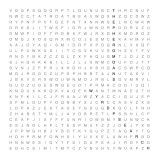
Walker claims that the album’s title is an expression of his frustration at the ubiquity of people claiming things are eerie or weird / wyrd in the present cultural milieu. The artwork for the record is designed as an actual word search too, a knowing nod to how we all grapple for meaning amongst the absurdity of each day. Leaning into ‘weird’ as a coping mechanism is not on The Pheromoans’ agenda however. This album holds little sway with the supernatural, it’s not enough. The overriding impression given by ‘Wyrd Psearch’ is of a band renewed with ideas. There’s no trouble finding the right words, they’re hitting their mark, keeping up with the commentary. ‘Wyrd Psearch’ is a document of The Pheromoans mastering their unquiet moment.
We welcome the English creator from Manchester Mark Wilkinson aka Kid Machine to HC Records.This album of 12 songs on vinyl and 4 digital bonus tracks, already seemed historic to us at the time of closing the album, but now it seems like a real event as it is the last one that the artist will publish under the pseudonym KID MACHINE.
Best known for his work for legendary Thai director Apichatpong Weerasethakul (he even designed the enigmatic “bang” in 2021’s labyrinthine ‘Memoria’), Japan’s Koichi Shimizu has been honing a unique musical language since the early ‘90s, where some of his earliest material can be found on a split LP with Yoshiteru Himuro via once-iconic imprint Worm Interface (itself home to music from Autechre side-line Gescom). ‘Imprint’, was initially released quietly back in 2021 and has been remastered for this new edition, removing one track and bumping it up with four more, making it all available on vinyl for the first time.
The album offers a perfect overview of Shimizu’s broad palette, ranging from fine-wrought keys to electronic brutalism and guttural rhythmic pulses, plotted with an underlying narrative cadence that evinces his ability to heighten the impact of moving image, whilst also colouring the imagination with ephemeral sound imagery. His tekkerz are in bracing, anticipatory effect on a retooled, expanded version of his music from ‘Memoria’ within the convulsive, swarming silhouette of ‘Imprint’, and ‘The Path’ finds his aural accompaniment to ‘Uncle Boonmee...’ given room to breathe and develop into an unexpected, OOBE-like experience. In ‘Moth’ he magnifies and anthropomorphises a winged insect with finely chiselled technical nous, and his exquisite arrangement to ‘Faded Sign’ is somehow comparable to the ephemeral emotional register of cinematic collaborations between Ryuichi Sakamoto and Carsten Nicolai.
Following his 2021 debut on the reverse label with Retreat Ites EP and a spot on the Molten Mirrors compilation, Jurango is back on Livity Sound with another four tracks of low-slung soundsystem pressure.
On An Amorphous Mass EP Jurango presents a particularly focused sound which draws on halftime D&B, dancehall and broken techno all filtered through the meditative pulse of low tempo club music. The measured pace of the tracks doesn’t detract from their weight, whether it manifests in the heavy roll of murky opener ‘Big Saver’, ‘Inner Seam’s mutant dembow rhythm or the heady breakbeat chops of the title track. The stripped-back subs and fractured percussion of ‘Muni Ce Boa’ close the record in potent yet understated style, proving minimal music doesn’t have to compromise on impact for the dance.
Livity Sound is a label set up by Peverelist in 2011 as a vehicle for a raw and exploratory strain of UK techno, rooted in the heritage of UK dance music and sound system culture. It has since become one of the UK's foremost protagonists for cutting edge underground electronic music.
Hi-NRG synth pioneer Patrick Cowley moved away from his usual robotic steeliness on 1982’s “Primitive World,” drawing instead on the groove rock of early 1970s gay discos. It’s a percussion track influenced by Baba- tunde Olatunji’s 1959 hit “Jin-Go-Lo-Ba,” made more famous by Santana’s 1969 cover. Cowley updated the sound for the 1980s with electronics and drum machines but kept the playful attitude of the original. Two choirs of voices chant back and forth to each other, giving Cowley a chance to include many of his friends from the San Francisco dance music community.
This has been DJ Hifi Sean’s year, with a best-selling album with David McAlmont , count- less live gigs and high-profile remixes to his name. His interpretation of Cowley’s “Primitive World” can be counted among his best, bringing an intense TB-303 acid house vibe that perfectly complements Cowley’s weird electronic blips and bleeps. The effect is a disorienting mix of psychedelic 70’s groove, 80s synth pop, and 90s tacky house vibes. “Primitive World,” is one of the brilliant standouts on Cowley’s final record, Mind Warp, the so-called “death album” written as his health was rapidly sinking. Hifi Sean’s new remixes pay tribute to Cowley’s genius while fusing the track even more strongly to dance music’s electronic future.
Felix Machtelinckx is a singer, composer, producer and lyricist from Belgium. Featuring an array of film scores, dance soundtracks, pop, folk and electronic music, Felix's music resonates with a familiar, almost nostalgic patina, applied with a distinctly crooked touch. Through artistic collaboration, coaching and production, Felix has cut a dash in the pop and indie cult scenes of Belgium, especially with his band Tin Fingers, who are feted as one of the most promising indie acts of the moment. Night Scenes, Felix’s solo debut is, in contrast to his other work, more humble and less traditional, roughly hewn from a series of ambient soundscapes, earthy textures and playful structures. Felix’s voice, normally the flagship of his music, becomes more of a distant memory, an indistinct emotion feathered throughout the music. Many lyrics are improvised, sometimes unintelligible, conjuring haunted, uncertain undertones. Similarly, the album is innately peripatetic to the core, being created, written and recorded in Lithuania, Belgium, France, mastered in the US, and finally released in the UK. In the first instance, some of the tracks were created for the contemporary dance piece Doggy Rugburn by Brandon Lagaert of Kaiho and Peeping Tom; others were created enigmatically for a film that never surfaced; while the remainder are the product of more personal work and research. As Felix began to collect and review these disparate parts, the concept of a unified album began to evolve. With 'night' featuring as a suitably dark leitmotif, or backdrop to a series of emotionally fraught 'scenes', each track depicts a form of trauma, locked within the confines of the mind. Felix observes: "Imagine yourself in a dusty old room unable to sleep. Emotions, fears and other demons haunt your mind. This in-between state makes your mind reach for other worlds. This is Night Scenes." For the most part, Night Scenes was created using a variety of old, and rare, analogue equipment. With almost no digital editing, the record was primarily mixed through a vintage cassette desk, giving it a nostalgic character with a noisy undertone. Felix fully embraced the synergy of his emotional themes and retrograde gear, enthusing: "A lot of textures were created on an old Soviet synthesizer that causes a blackout when you hit the lowest note on the keyboard. The dysfunctionality of the synths was often used to create rhythm and texture." This unnerving ability Night Scenes has to comfort and confound the listener is summed up by Jordan Hudson, House Of Media producer, and music podcaster, when he concludes: "Some songs on the album have this sort of fleeting comfort and tonality, which dissolves into a subtle rhythmic/structural or modulated disarray the moment I settle into them - this really fits with my experience of the night .. This record is a winner, and will be something I'll listen to a lot from here on