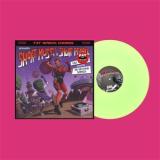
We welcome the English creator from Manchester Mark Wilkinson aka Kid Machine to HC Records.This album of 12 songs on vinyl and 4 digital bonus tracks, already seemed historic to us at the time of closing the album, but now it seems like a real event as it is the last one that the artist will publish under the pseudonym KID MACHINE.
Search:kid machine
It's been a while since Red Laser's last release which left a void in the UK output of Manctalo synth jams but now a planned schedule of three releases in quick succession means plenty more analogue chug for you to rattle your bones to.
First of the 3 is this unique double gatefold LP from Red Laser original Kid Machine.Kid Machine delivers a 5 star upgrade to the signature sound that people worldwide have fallen in love with. 808 kicks and DX 7 licks bubble under the atmospheric chord changes creating a soundtrack which is just as comfortable on the dance floor as it is on a midnight drive.Alien Dance darts around to irregular delight. The dramatic score of Asteroids builds until it soars high above the grid. The bassline on Beast drills a blackened dance floor in preparation to be replaced with 80's discotheque neon squares.Beyond Cygnus takes flight and drifts across a Martian plane. The 808 kicks and orchestral synth stabs of Conquest crush all known reality into a space the size of a photon and the weight of its gravity is unbeatable. Standing out amongst the pack is the apply titled 'Forever Machine'.
A proper Manctalo synth anthem guaranteed to deliver speaker destruction.The LP closes with classic Machine style bangers 'Flight Manoeuvres' and 'Seconds From Oblivion'.
They bring this galactic odyssey to a confident end. This is a cracking journey through the outer rim and back.
- A1: Tiësto - Lay Low
- A2: Sam Feldt Feat. Rani - Post Malone
- A3: Alok, Bruno Martini Feat. Zeeba - Hear Me Now
- A4: Bingo Players - Cry (Just A Little)
- A5: Dr Kucho! & Gregor Salto - Can’t Stop Playing (Oliver Heldens & Gregor Salto Remix)
- A6: Joe Stone - The Party Ft. Montell Jordan (This Is How We Do It)
- A7: Imanbek & Byor- Belly Dancer
- A8: Gabry Ponte X Lum!X X Prezioso - Thunder
- B1: Afrojack & Martin Garrix - Turn Up The Speakers
- B2: David Guetta Vs Benny Benassi - Satisfaction
- B3: Hardwell & Kshmr - Power
- B4: Tujamo - Drop That Low (When I Dip)
- B5: Blasterjaxx & Timmy Trumpet - Narco
- B6: Lum!X, Gabry Ponte - Monster
- B7: Lucas & Steve - Where Have You Gone (Anywhere)
- B8: Dubdogz & Bhaskar - Infinity
- C1: Martin Solveig & Gta - Intoxicated
- C2: Öwnboss, Sevek - Move Your Body
- C3: Maverick Sabre Feat. Jorja Smith - Slow Down
- C4: Camelphat - Constellations
- C5: Grooveyard - Mary Go Wild
- C6: Oliver Heldens - Gecko
- C7: R3Hab, Inna, Sash! - Rock My Body
- C8: Clokx - Overdrive
- D1: Cheat Codes X Kris Kross Amsterdam - Sex
- D2: Jason Derulo X Puri X Jhorrmountain - Coño (Ft. Adje)
- D3: Kris Kross Amsterdam X The Boy Next Door - Whenever (Feat. Conor Maynard)
- D4: Alok & Alan Walker - Headlights (Feat. Kiddo)
- D5: Mike Williams X Mesto - Wait Another Day
- D6: Dzeko & Torres - L'amour Toujours (Feat. Delaney Jane) (Tiësto Edit)
- D7: Aeroplane & Purple Disco Machine - Sambal
Chapter 1[40,29 €]
Spinnin' Records, one of the most influential dance music labels, celebrates its 25th anniversary with the Chapter 2 compilation featuring a further selection of iconic hits that have shaped the global electronic music scene.
Since its founding in 1999, Spinnin' has been a trendsetter in electronic dance music (EDM), nurturing superstar artists and groundbreaking tracks across house, future bass, big room, and deep house genres.
This edition of Spinnin' 25 Years...Chapter 2 double vinyl LP collection includes the hits "Lay Low" by Tiësto, "Turn Up The Speakers" by Afrojack & Martin Garrix, "Satisfaction" by David Guetta & Benni Benassi, "Intoxicated" by Martin Solveig & GTA, "Gecko" by Oliver Heldens, "Sex" by Cheat Codes x Kris Kross Amsterdam and 25 more tracks showcasing their signature sound and major contributions to the label.
Spinnin' 25 Years...Chapter 2 is available as a limited edition on blue vinyl. The iconic Spinnin' logo is printed with an uv spot varnish on the gatefold sleeve.
- A1: At The Bottom
- A2: Dance, Kid, Dance
- A3: Burning Down The Disco
- A4: Three Six Five
- B1: Young Again
- B2: Dizzy
- B3: Imposter
- B4: Machine Gun
- C1: Outlaw
- C2: Safe And Sound
- C3: Searchlight
- C4: Bear With Me
- C5: Deep End
- D1: Killing Fields
- D2: Back To The Living
- D3: Wide Open
- D4: So Glad That You Asked
- D5: The Pilot
- A1: Emerge / Fischerspooner
- A2: Seventeen / Ladytron
- A3: Strict Machine/ Goldfrapp
- A4: Girls On Pills / The Droyds
- A5: Hooked On Radiation (Pet Shop Boys Orange Alert Mix) / Atomizer
- B1: Fuck The Pain Away / Peaches
- B2: Do I Look Like A Slut? (Original Version) / Avenue D
- B3: Galang / M.i.a
- B4: Kernkraft 400 (Dj Gius Mix) (Radio Edit) / Zombie Nation
- B5: Poney Pt. 1. (Edit) / Vitalic
- B6: The Game Is Not Over / T. Raumschmiere Feat. Miss Kittin
- C1: Over And Over (Naum Gabo Remix) / Hot Chip (7.05)
- C2: Banquet (Phones Disco Remix) / Bloc Party (5.25)
- C3: E Talking (Nite Version) / Soulwax (6.08)
- C4: ?Zdarlight» / Digitalism (5.44)
- D1: Daft Punk Is Playing At My House (Edit) / Lcd Soundsystem (3.23)
- D2: Hustler / Simian Mobile Disco (3.43)
- D3: We Share Our Mother's Health / The Knife (4.09)
- D4: Missy Queen's Gonna Die / Tok Tok Vs. Soffy O (4.13)
- D5: What Was Her Name (Radio Edit) / Dave Clarke Featuring Chicks On Speed (4.44)
- D6: I Am The Fly / Adam Sky And Crossover (4.59)
- E1: We Are Your Friends / Justice Vs. Simian
- E2: Take Me Out (Daft Punk Remix) / Franz Ferdinand
- E3: Slow (Chemical Brothers Remix Edit) / Kylie Minogue
- F2: Warm Leatherette / The Normal
- F3: Empire State Human / The Human League
- F4: Tryouts For The Human Race / Sparks
- F5: Telephone Operator / Pete Shelley
- F6: Nag Nag Nag / Cabaret Voltaire
- E4: Let's Make Love And Listen To Death From Above / Css
- E5: Solta O Frango / Bonde De Rolê
- E6: Club Action / Yo Majesty
- F1: Numbers / Kraftwerk
‘When The 2000s Clashed: Machine Music For A New Millenium’ is the story of how, 25 years ago, a new form of electronic music – known as electroclash - reignited a tired clubland and gave the indie scene and mainstream pop a shot in the arm in the process. Over this 3LP highlights set, carefully curated from the 5CD box of the same name (also released, 3rd October) the collection showcases the back-to-basics electronic beats that heralded in a new generation of exciting and innovative new artists - Hot Chip, Peaches, LCD Soundystem, and Ladytron, to name a handful. It also shows how the sound and attitude of electroclash plugged into the decade’s cutting-edge indie bands, (Franz Ferdinand, Bloc Party), and became intrinsic to the way chart pop would sound in the first decade of the 2000s (Kylie, Goldfrapp).
The collection also shows how the scene’s underground DIY ethos evolved and inspired the next generation of electronic buccaneers (Simian Mobile Disco, Justice Vs. Simian). ‘When The 2000s Clashed’ brings together a dazzling, diverse selection of artists, producers and remixers from right across the 2000s zeitgeist – from The Chemical Brothers and Daft Punk, from M.I.A. to Soulwax and many points in-between. For good measure, there’s also one side of LP3 given over to the original post punk and electronic sounds (including Kraftwerk, The Human League and Cabaret Voltaire) who’d played such a big influence on the electroclash sound. ‘
When The 2000s Clashed’ was compiled and sequenced for Demon / Edsel by Jonny Slut, founder of London’s electroclash citadel Nag Nag Nag. Established in 2002, in a small Soho venue called Ghetto, ‘Nag’ quickly became THE hottest club, first in London and then in the whole world. A glorious mess and hedonists’ hotspot, a night at ‘Nag Nag Nag’ (if you could get in!) saw the capital’s club kids, students and creatives rub up alongside names from the fashion and music worlds - Björk, Pet Shop Boys, Kate Moss, Boy George, Alexander McQueen, and Pam Hogg were among the regulars. Madonna visited, so did John Peel, Yoko Ono asked to perform and did, Throbbing Gristle’s Chris and Cosey DJ’d, so did Marc Almond, and Too Many DJ’s.
Justin Timberlake was refused entry (too many bodyguards)… even Cilla Black was spotted getting down! Jonny shares these reminisces – and many more - in the collection’s sleevenotes. Named after the 1979 Cabaret Voltaire classic, ‘Nag, Nag, Nag’ became the first place to hear the seemingly endless flow of thrilling new tunes coming from every direction during that decade of dance. Many of them are included on this collection.
Eduardo de la Calle and DJ Surgeles meet Fabio Giachino, David Strike, and Manu Melero Amaya in Telmaco Xavier Quintet, a project where jazz and electronics engage in a real-time exchange rather than a controlled experiment. Set for release on Apnea 115 in May 2025, Time Pawn is built on interaction--musicians and machines reacting to each other, shifting between structure and instinct. Eduardo and Surgeles don't frame jazz within an electronic grid, nor do they treat electronic textures as a decorative layer. Instead, they allow both elements to retain their full character, pushing and pulling in ways that never settle into easy resolutions. Fabio Giachino's piano moves freely, alternately threading through and cutting across the pulse. David Strike and Manu Melero Amaya bring movement that resists the obvious, allowing groove to exist without being locked in place. The result isn't about merging styles but letting them exist in the same space--sometimes in harmony, sometimes in friction, always in motion.
DJ support comes from Roger Sanchez, Bob Sinclar, Claptone, Purple Disco Machine, Audiojack, David Penn, Sam Divine, Laurent Garnier, Chloe Caillet, Nicole Moudaber, Carlita, Groove Armada, Barry Can’t Swim, Bakermat, Danny Howard, Gorgon City and more!
Toolroom’s next Sampler showcases 4 big releases from Jesus Fernandez, Alex Preston, CASSIMM and Jewel Kid.
- A1: Astras Theme
- A2: Clearly Packing
- A3: Inspire (Draft)
- A4: Celebrate Some Time
- B1: Just One Bump
- B2: Inspire (Afterthought)
- B3: Whos The Kid ?
- B4: Radicalise
- B5: Living In The Future
- C1: Shine Your Light
- C2: Cyberfunk
- C3: Inspire (Deluxe)
- C4: Lifestyles Of The Hip And The Crazy
- C5: Radicalise (Urself)
- D1: Wavy
- D2: Baby Its U
- D3: Sylvester
- D4: Midas Touch
At the heart of this double album, and amid the intense internal struggle between creative instinct an artistic reasoning, Ziggy has identified two key themes: Inspire and Radicalise. It is within this duality that the 15 tracks of this new work, recorded between Berlin and London throughout January 2024, take shape. Throughout its creation, the crew enlisted a familiar pallet of materials, seeking those obscure and vintage music-making machines, meeting a myriad of percussion and drums with the new addition of electric guitar as the band ventures into disco / highlife inspired territories. bring this ambitious project to life, Ziggy enlisted a team of forward thinking musicians across Europe and the UK alongside old friends and collaborators from the grassroots in Melbourne, Australia: Lewis Moody (Energy Exchange Records), Szabolcs Bognar (Abase), Eric Owusu (Jemba Groove), and Tom Varrall (Jamie Cullum) form the core rhythm section alongside a hefty list of guest appearances (from the likes of Oscar Jerome & Tom Driessler) making this truly the most ambitious and diverse incarnation of ZFEX to date.
ML performs the most romantic, hypnotic guitar loop - live from under the sink! On the B-side, a coffee machine imitates a cyborg’s cleaning organ.
“Babyyyyyy, where r uuuuuu?”
Comes with special handmade design and two speed options! Very low business risk.
Mastered by Maximilian Schweizer at SMS™.
The A-side puts the fun in a funky psychedelic disco stomper complete with sing-along chants and breakbeats. Imagine an overlooked KID CREOLE garage dub cut. The B-side is a fresh take on classic Italo disco with analog percussion, vintage synths and his own guitar and bass.
At this point, Southern Italy's Giovanni Damico is basically an honorary Windy City Native. I don't think he's ever been to Chicago
but he certainly has status on all sides of the City. Damico's collaborations with Chicago's Star Creature kicked have spanned the
better part of the last decade with just as many vinyl releases during that time spanning 2 LPs, 2 EPs, a handful of 7's and an appearance on the 2020's Star Creature Vibes label compilation not to mention the over 20+ 12's and a dozen appearances on labels ranging from MCDE, Lumberjacks in Hell to Kalakuta Soul, Bordelllo A Parigi, his own White Rabbit Recordings and more.
That perfect blend of Tracky Italo Early Drum Machine, Bang the Box type of Proto House Electro Soul with adventurous and ambitious beats and melody combos pulled from a range of global influencers, mixing of electronic and acoustic instruments giving some of the most full body unique compositions in dance music, each being accomplished, evolving and truly unique.
At the start of the 1980’s X-Plode’s dad had a second-hand colour TV business in Bolton, Lancashire where he would buy, sell, repair and trade TVs. He would come back home with all kinds of things he had traded for a TV but the most memorable, to a 10 year old kid at that time, were the keyboards. He use to watch his dad play songs from the 1960’s on these keyboards and when his dad had gone out, Lee X-Plode would sneak on them and start messing about, experimenting with the drum programs and fiddling with the buttons, trying out ideas. He had to move fast though because these keyboards didn’t stay in the house for long as his dad would trade them again for something else; one time that was an old analogue echo chamber, which Lee also messed about with when his dad was out. That echo chamber was a revelation to Lee and opened up the possibilities of what was possible with sound. So by the time Lee was 16, he decided he wanted his own keyboard and started saving. When his 17th birthday came around he had saved up £200 and visited his local Argos where he bought himself a Yamaha PSS 680, an FM synthesizer with memory banks and a basic drum machine incorporated. ‘It was shit quality like, but I didn’t mind. I just wanted it for the programmable drum machine, the synth and the memory banks that came with it” Lee recalls. The year was 1987 and by this time in Lee’s life he was into reggae and hip hop, the latter he first embraced in 1983 by the way of breakdancing and listening to electro, so all he wanted to do when he got his gear was make reggae and electro sounding beats. Recalling his youth and the fun he had with the echo chamber, the next edition to his home set up was to acquire one of those, which he did via a mate of his. But by the time he got his minimal set up sorted in 1988, his musical tastes had changed. House music had landed here in UK and this was Lee’s new passion, so from that point on wards he started experimenting, trying to nail a decent house groove. ‘I wanted 808 sounds, but I didn’t know what one was!’ Lee explains.
Around late 1990 or early 1991, Lee started to improve upon his set up, purchasing an Atari STE, a Cheetah MS6 , a 6 voice polyphonic/multi-timbre analogue rack mounted synth that linked up to his Yamaha – “It wasn’t a great bit of kit, I kept getting electric shocks from it. Eventually it just blew up!” Lee had acquired a cracked copy of Cubase on floppy disk from his local computer game shop but struggled with it. “It was so complicated to understand and took me ages to get used to it. I was stoned a lot back then and I just couldn’t concentrate on anything for long” Lee laughs, continuing “I also picked up a 4 channel sampler/sequencer which plugged into the side of the Atari and that’s when I first started sampling, I think this would have been late 1991. I had the Simon Harris ‘Breaks, Beats and Scratches’ vinyl that he put out on Music for Life which were a godsend back then. I was also sampling a lot from cassette tapes, especially reggae. I would also record the Stu Allan show on Key 103FM, one of the main stations broadcasting out of Manchester. He would do a 3 hour show with hip hop and house, and then hardcore house came along. Eventually he dropped the hip hop altogether and it was just house and hardcore. I recorded the shows onto cassette most weeks and started to learn more about how house and hardcore was put together by listening to those shows.”
- A1: Montego Bay - Everything (Paradise Mix) 04 59
- A2: Atelier - Got To Live Together (Club Mix) 06 06
- A3: Golem - Music Sensations 04 56
- B1: The True Underground Sound Of Rome Feat. Stefano Di Carlo - Gladiators 05 26
- B2: Eagle Parade - I Believe 04 26
- C1: Dj Le Roi - Bocachica (Detroit Version) 05 28
- C2: Green Baize - Synthetic Rhythm 01 41
- C3: M.c.j. Feat. Sima - Sexitivity (Deep Mix) 05 30
- D1: Kwanzaa Posse Feat. Funk Master Sweat - Wicked Funk (Afro Ambient Mix) 06 31
- D2: Progetto Tribale - The Bird Of Paradise 06 29
- D3: Mbg - The Quite 06 59
Vol 1[28,99 €]
Googling “paradise house”, the first results to pop up are an endless list of European b&b’s with whitewashed lime façades, all of them promising “…an unmatched travel experience a few steps from the sea”. Next, a little further down, are the institutional websites of a few select semi-luxury retirement homes (no photos shown, but lots of stock images of smiling nurses with reassuring looks). To find the “paradise house” we’re after, we have to scroll even further down. Much further down.
It feels like yesterday, and at the same time it seems like a million years ago. The Eighties had just ended, and it was still unclear what to expect from the Nineties. Mobile phones that were not the size of a briefcase and did not cost as much as a car? A frightening economic crisis? The guitar-rock revival?! Certainly, the best place to observe that moment of transition was the dancefloor. Truly epochal transformations were happening there. From America, within a short distance one from the other, two revolutionary new musical styles had arrived: the first one sounded a bit like an “on a budget” version of the best Seventies disco-music – Philly sound made with a set of piano-bar keyboards! – the other was even more sparse, futuristic and extraterrestrial. It was a music with a quite distinct “physical” component, which at the same time, to be fully grasped, seemed to call for the knotty theories of certain French post-modern philosophers: Gilles Deleuze, Félix Guattari, Paul Virilio... Both those genres – we would learn shortly after – were born in the black communities of Chicago and Detroit, although listening to those vinyl 12” (often wrapped in generic white covers, and with little indication in the label) you could not easily guess whether behind them there was a black boy from somewhere in the Usa, or a girl from Berlin, or a pale kid from a Cornish coastal town.
Quickly, similar sounds began to show up from all corners of Europe. A thousand variations of the same intuition: leaner, less lean, happier, slightly less intoxicated, more broken, slower, faster, much faster... Boom! From the dancefloors – the London ones at least, whose chronicles we eagerly read every month in the pages of The Face and i-D – came tales of a new generation of clubbers who had completely stopped “dressing up” to go dancing; of hot tempered hooligans bursting into tears and hugging everyone under the strobe lights as the notes of Strings of Life rose up through the fumes of dry ice (certain “smiling” pills were also involved, sure). At this point, however, we must move on to Switzerland.
In Switzerland, in the quiet and diligent town of Lugano, between the 1980s and 1990s there was a club called “Morandi”. Its hot night was on Wednesdays, when the audience also came from Milan, Como, Varese and Zurich. Legend goes that, one night, none less than Prince and Sheila E were spotted hiding among the sofas, on a day-off of the Italian dates of the Nude Tour… The Wednesday resident and superstar was an Italian dj with an exotic name: Don Carlos. The soundtrack he devised was a mixture of Chicago, Detroit, the most progressive R&B and certain forgotten classics of old disco music: practically, what the Paradise Garage in New York might have sounded like had it not closed in 1987. In between, Don Carlos also managed to squeeze in some tracks he had worked on in his studio on Lago Maggiore. One in particular: a track that was rather slow compared to the BPM in fashion at the time, but which was a perfect bridge between house and R&B. The title was Alone: Don Carlos would explain years later that it had to be intended both in the English meaning of “by itself” and like the Italian word meaning “halo”. That wasn’t the only double entendre about the song, anyway. Its own very deep nature was, indeed, double. On the one hand, Alone was built around an angelic keyboard pattern and a romantic piano riff that took you straight to heaven; on the other, it showcased enough electronic squelches (plus a sax part that sounded like it had been dissolved by acid rain) to pigeonhole the tune into the “junk modernity” section, aka the hallmark of all the most innovative sounds of the time: music that sounded like it was hand-crafted from the scraps of glittering overground pop.
No one knows who was the first to call it “paradise house”, nor when it happened. Alternative definitions on the same topic one happened to hear included “ambient house”, “dream house”, “Mediterranean progressive”… but of course none were as good (and alluring) as “paradise house”. What is certain is that such inclination for sounds that were in equal measure angelic and neurotic, romantic and unaffective, quickly became the trademark of the second generation of Italian house. Music that seemed shyly equidistant from all the rhythmic and electronic revolutions that had happened up to that moment (“Music perfectly adept at going nowhere slowly” as noted by English journalist Craig McLean in a legendary field report for Blah Blah Blah magazine). Music that to a inattentive ear might have sounded as anonymous as a snapshot of a random group of passers-by at 10AM in the centre of any major city, but perfectly described the (slow) awakening in the real world after the universal love binge of the so-called Second Summer of Love.
For a brief but unforgettable season, in Italy “paradise house” was the official soundtrack of interminable weekends spent inside the car, darting from one club to another, cutting the peninsula from North to centre, from East to West coast in pursuit of the latest after-hours disco, trading kilometres per hour with beats per minute: practically, a new New Year’s Eve every Friday and Saturday night. This too was no small transformation, as well as a shock for an adult Italy that was encountering for the first time – thanks to its sons and daughters – the wild side of industrial modernity. The clubbers of the so-called “fuoriorario” scene were the balls gone mad in the pinball machine most feared by newspapers, magazines and TV pundits. What they did each and every weekend, apart from going crazy to the sound of the current white labels, was linking distant geographical points and non-places (thank you Marc Augé!) – old dance halls, farmhouses and business centres – transformed for one night into house music heaven. As Marco D’Eramo wrote in his 1995 essay on Chicago, Il maiale e il grattacielo: “Four-wheeled capitalism distorts our age-old image of the city, it allows the suburbs to be connected to each other, whereas before they were connected only by the centre (…) It makes possible a metropolitan area without a metropolis, without a city centre, without downtown. The periphery is no longer a periphery of any centre, but is self-centred”.
“Paradise house” perfectly understood all of this and turned it into a sort of cyber-blues that didn’t even need words, and unexpectedly brought back a drop of melancholic (post?)-humanity within a world that by then – as we would wholly realise in the decades to come – was fully inhuman and heartless. A world where we were all alone, and surrounded by a sinister yellowish halo, like a neon at the end of its life cycle. But, for one night at least, happy."
- A1: Passarani – Studiomaster Numero 3
- A2: Analog Fingerprints – Lofi Or Chee’say
- A3: Passarani – Studiomaster Numero 1
- A4: Passarani – Studiomaster Numero 5
- A5: Passarani – Studiomaster Numero 4
- A6: Passarani 2099 – Wake Up Shake It
- A7: Pss2099 – Kir’shara
- A8: Passarani 2099 – Betamethasone Quadrant
- B1: Analog Fingerprints – Psy Vs Psy
- B2: Passarani - Studiomaster Numero 2
- B3: Passarani 2099 – Bumpy Asstatic Probe
- B4: Passarani 2099 – Nerve Pinch
- B5: Kids Of Rotten Future – Feel The Struggle
- B6: Passarani – I Need My Acid
- B7: Passarani – Test Drive
- B8: Passarani 2099 – The Fury And The Storm
Studiomaster was born from an experiment I ran for a little over a year, releasing tracks exclusively on Bandcamp. I wanted to see how far music could travel without the institutional machinery of a label, without physical products, and without relying on mainstream platforms. The experiment worked so well that Studiomaster has now evolved into a label with physical vinyl releases. Throughout this journey, I found myself missing the physicality of music. So, to celebrate it, I decided to release something in a format I had never used before: the cassette tape. What better occasion to bring together a collection of previously unreleased tracks in the physical world and craft a mix the old-school way? Get your tape quickly, it's limited!
ps: The tape unlocks download for all the tracks featured in the mix!
‘One of the finest jazz guitarists of her generation, Halvorson is possessed of a questing, restless spirit.’ – Jazzwise
‘With an album of string quartet music as strong as this one, she is worthy of as much renown in the classical field as she holds in the jazz community.’ – New York Times
‘One of America’s finest guitarists. Halvorson’s musicianship is open-minded, demanding and richly engaging.’ – Uncut
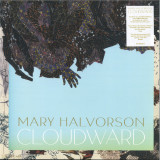
Nonesuch Records releases Cloudward by Brooklyn-based guitarist, composer, and MacArthur fellow Mary Halvorson on January 19. The album features eight new compositions by Halvorson, performed with her sextet Amaryllis, the improvisatory band that performed on her critically praised 2022 albums Amaryllis and Belladonna comprising Halvorson, Patricia Brennan (vibraphone), Nick Dunston (bass), Tomas Fujiwara (drums), Jacob Garchik (trombone), and Adam O’Farrill (trumpet). Labelmate Laurie Anderson also is featured on the album track ‘Incarnadine’. Halvorson and Amaryllis will tour internationally following the release of the new album, including January dates in Europe, as well as at the Big Ears Festival as part of Nonesuch’s 60th anniversary celebration.
Halvorson says, “All of the music on Amaryllis was written in 2020, during the thick of the pandemic, in one of the more bizarre time periods I’ve experienced in my life. While composing for Amaryllis, I expanded upon certain musical concepts I’d developed in my life up until that point—the ones that felt fruitful—and left others behind, hitting the reset button and attempting to build from scratch. Two years later, after the release of the first album, I was still writing music for Amaryllis.
“All the music on Cloudward was written in 2022, mostly in the fall and winter, when things started moving forward. Life felt like a creaky machine starting up again,” she continues. “Air travel, however chaotic, had resumed, and we were once again cloudward. Performances and tours and recordings were happening after a long hiatus and with a renewed sense of gratitude. This band, for me, was quite simply working, both musically and personally, and the main thing I felt while writing the music was optimism.”
The Guardian said Halvorson’s 2022 double release “shows how far this single-minded original has come, and affords a glimpse of how far she may go. Both sessions confirm how years of jaggedly lyrical solo and ensemble improvising and a quirkily subversive affection for mainstream music have now nurtured a composer of unpredictable but warmly expressive character… These are new landmarks in Halvorson’s already inimitable discography.” Pitchfork said, “Amaryllis and Belladonna are distinct statements; one could hear either album on its own without a sense that something is missing. But they are most powerful when taken together, like a landscape and its reflection in rippling water.”
Halvorson has released a series of critically acclaimed albums, from Dragon’s Head (2008), her trio debut featuring bassist John Hébert and drummer Ches Smith, expanding to a quintet with trumpeter Jonathan Finlayson and alto saxophonist Jon Irabagon on Saturn Sings (2010) and Bending Bridges (2012), a septet with tenor saxophonist Ingrid Laubrock and trombonist Jacob Garchik on Illusionary Sea (2014), and finally an octet with pedal steel guitarist Susan Alcorn on Away With You (2016). She also released the solo recording Meltframe (2015), and most recently debuted Code Girl (2018, 2020), a new ensemble featuring vocalist Amirtha Kidambi (singing Halvorson’s own lyrics), trumpeter Adam O’Farrill, saxophonist and vocalist María Grand, bassist Michael Formanek, and drummer Tomas Fujiwara.
One of New York City’s most in-demand guitarists, over the past decade Halvorson has worked with such diverse musicians as Tim Berne, Anthony Braxton, Taylor Ho Bynum, John Dieterich, Trevor Dunn, Bill Frisell, Ingrid Laubrock, Jason Moran, Joe Morris, Tom Rainey, Jessica Pavone, Tomeka Reid, Marc Ribot, and John Zorn. She is also part of several collaborative projects, most notably the longstanding trio Thumbscrew with Michael Formanek on bass and Tomas Fujiwara on drums.
It starts of with jacking proto ACID house song called Delayed Attraction. A song that would have made the kids crazy at the Music Box in the mid 80's. And are still as uplifting for all us house heds. The second song Tear Gas takes us back to Europe, with a slow Belgian beat that moves like a train and hits you straight in the chest, and on top of this a monotom synth pad on top of that it gives the song a some what a scary dream feeling. The third song Nasjiga is taking us further in to the complex dream but packaged in a Detroit electro vibe with sounds that makes me think of a hospital hart beat monitor but then mixed up with bit-crushd lo-fi dragon covers in a dubby inferno that keeps on building up without coming to a climax (in a good way). The forth song Verfolgung is a 8 minute stomping song that's starts of in a Burzum sounding flute but the quickly goes over to a freaky baseline that's sounds like its made out of a congas patch and a detuned bass on top of that. On top of that they put a march bands drum pattern that gives this song a freaky tivoli vibe and would be such a banger a the right time of a DJ set. /Jens W Limited numbered to 200x * Delayed Attraction - With a bumpy baseline that grooves, hard hits on the drum machine, this is are both funky and hypnotic. * Tear-Gas - A mid-tempo acid journey that blends funky drum patterns with psychedelic trance strings. Typical FRAK's acid-outed sound, with a hypnotic and thumping beat and bassline. * Nasjiga - The B-side kicks off with a deeply dubby and tribal vibe, with splashing hi-hats and echoed percussions. like the heartbeat of an underground train going of the rails. * Verfolgung - This track kicks hard with a marching beat that builds into a funky disco. It's playful yet progressive energy leaves you with a smile on your face and your feet moving on the dance floor. Honk Honk! // Dj Jespha Galore
You’re NEXUS 21, central to the dizzy zeitgeist of the 1991 adrenaline rammed UK House Music juggernaut, and you have just recorded a masterpiece of an album MIND MACHINES.
DON’T DO IT LIKE THAT - somehow even though your record label love the album it does not get released.
DO IT LIKE THIS - it finally gets issued now.
When Mark Archer and Chris Peat flew back from a seminal recording session at Kevin Saunderson’s KMS Studio in Detroit there was a palpable feel of excitement. Instead of merely paying homage to their Techno forerunners, they were now creating their own just as innovative waveforms.
In the can was a gem - DON’T DO IT LIKE THIS, DO IT LIKE THAT. Motor City songstress Donna Black had unconsciously seemed to add Ma to the start of her name and her recorded in the dark vocals helped conjure up an almost Madonna and a drum machine meets Techno hybrid. This it was agreed could be a huge breakthrough single which - preceded by strategically released set up tracks - would build up Nexus 21’s surely inevitable rise to glory. And the release of the MIND MACHINES album. But it never happened. Instead one day Mark and Chris burst into Network’s Birmingham office excitedly brandishing no less than 8 new recordings infused with a propulsive Rave energy flash compared to their more cerebral Nexus 21 work. The label agreed that the new tracks should be released under a new artist name and an initial suggestion. Alien 8 replaced by Altern 8. What was planned as temporary dalliance became a long term relationship. You all know the score - Altern 8 became surf riders supreme on the rave tsunami, not just music makers but myth creators. The plan has been to run Nexus 21 and Altern 8 parallel, a kind of schizophrenic experiment by two men, a drum machine and a mad for it record company. History shows that Altern 8 became too DOMIN 8 and the lovingly recorded Nexus 21 album was left on the proverbial shelf (actually a box in Birmingham)
So now MIND MACHINES finally meets the World. First thing that screams out that it hasn’t half aged well. Obviously it is a wet dream for the anoraks of electronica, that goes without saying. But above and beyond the history lesson of how 2 young UK techno mad kids got the dots from Detroit and deconstructed them to create something very British the music they created, sometimes naive but frequently knowledgeable, sounds .. well just great.
The four Detroit recordings - NEXODUS, TOGETHER, DON’T DO IT LIKE THAT, DO IT LIKE THIS and EVERYTHING (NO STATUES) - variously feature contributions from Motor City luminaries Marc Kinchen and Anthony Shakir.
Only two of the twelve recordings were properly released in 1990/1991 with two more making it on a withdrawn white label 12 inch at the time. Three of the tracks, including a live recording at London’s Brain Club that has been retrieved from a DAT that was thought to have disappeared, are previously unreleased. And as well as two previously unreleased much altered versions of Nexus 21 gems there is the legendary much tougher mix of the duo’s signature techno treasure Self Hypnosis.
NEXUS 21
LOST AND NOW FOUND
'Cupar Grain Silo' is Sam Annand's first release on the Blackford Hill label. Its nine tracks blur the lines between ambient electronica and sonic history, as synthesised melodies and rhythms reverberate through the extreme acoustics of the disused Cupar Grain Silo in Scotland. Built in 1964 as a sugar store, the silo towers 60 metres above the surrounding Fife countryside. Its industrial life was short: in 1971 it was closed, and barring a short period as a grain store, remained empty for decades.
In 2014, Sam Annand was given access to the silo as part of the Resono project, set up to study a series of highly reverberant locations across Scotland. The ambitious industrial architecture of the Cupar Grain Silo has given the space a reverberation time of 36.5 seconds. This measurement describes the time a sound takes to decay or 'fade away' in a closed space. To put this in perspective, the Cupar Grain Silo reverb time is around three times longer than that in cathedrals like York Minster and St Paul's.
"The acoustics are immediately noticeable when climbing the ladder into the main chamber", Sam says. "The sound of your voice begins to circle around and above you, inviting you to shout, clap and bang objects to excite the space into revealing its intimidating architectural voice."
Sam began to experiment with musical compositions which responded to the unique acoustics of the silo space. He used impulse responses – a short, sharp sound like a gunshot – to record these acoustics, allowing him to experiment with the silo's reverb in his production. Sam's compositions were performed using a modular synth system, a Roland Juno-6 polyphonic synthesizer and a bowed ride cymbal.
"Chords can be constructed in time by hanging successive single notes in the air," Sam describes, "The flutter echoes from the immediate cylindrical walls can be used to create bursts of scattering spatial imagery and harmonic blooms, following short percussive moments."
Originally recorded on 21st May 2016, 'Cupar Grain Silo' is now released on 12" vinyl with an accompanying booklet of imagery and essays. The compositions are at once true to the unique architectural acoustics of the silo whilst also being playful and experimental with the creative possibilities it offered. Arpeggiated melodies ebb and fall across extended call-and-response shapes formed by the silo's reverb; modular drum patterns crackle like dying machinery; whilst bowed drones waver and wash over.
"We all love reverberation," reflects Prof. Peter Stollery, Professor of Composition and Electroacoustic Music at the University of Aberdeen, on the project. "As kids, we play in it – yelling in forests and caves, surreptitiously dropping objects in huge churches – mouths wide open at the lingering smears of sound which come back to us."
In 'Cupar Grain Silo', Sam Annand has harnessed the extraordinary acoustics of the disused silo to tap into this sense of joy and amazement that reverberation can bring.
- A1: Kölsch - Grey
- A2: Mr Scruff - Get A Move On!
- A3: Nufrequency Feat Ben Onono - Fallen Hero (Motor City D
- A4: Fritz Kalkbrenner - Facing The Sun
- B1: Fakear Feat Deva Premal - La Lune Rousse
- B2: Scott Grooves Feat Parliament & Funkadelic - Mothership Re-Connetion (Daft Punk Rmx)
- B3: Isolee - Brazil Com (Freaks Reinterpretation)
- B4: Laurent Garnier - Wake Up
- C1: Bob Sinclar - The Ghetto
- C2: Tom & Joy - Queixume (Masters At Work Mix Edit)
- C3: Zaabriskie - Higher
- C4: General Elektriks - Raid The Radio
- C5: Alex Gopher - The Child (Radio Edit)
- D1: José Padilla - Bossa Rosa
- D2: Yuksek & Bertrand Burgalat - Icare
- D3: The Xx - On Hold (Jamie Xx Remix)
- D4: The Hacker - Classic Revisited Part
- E1: Dj Gregory - Tourment D'amour
- E2: St Germain - Alabama Blues (Todd Edwards Vocal Radio Ed
- E3: Sandy B - Make The World Go Round (Deep Dish Radio Edit
- E4: Purple Disco Machine - Walls
- E5: Avicii - Sweet Dreams
- F1: Zero 7 Feat Mozez - This World
- F2: Bicep - Glue
- G3: Superfunk | Feat Ron Carroll - Lucky Star
- G4: Mr Oizo - Flat Beat
- G5: Vitalic - Poison Lips
- H1: Thievery Corporation - It Takes A Thief
- H2: Ame - Rej
- H3: Claptone Feat Jaw - No Eyes
- H4: Marie Davidson - Work It (Soulwax Remix)
- I1: Bonobo - Terrapin
- I2: Dj Cam - Birds Also Sing For Anamaria
- I3: Kid Loco - A Grand Love Theme
- I4: Robin S - Show Me Love
- I5: Swayzak - Make Up Your Mind
- J1: The Mighty Bop - Feeling Good
- J2: Quantic - Time Is The Enemy
- J3: Thylacine - Piany Pianino
- J4: Scan X - Alpha
- J5: The Prodigy - Firestarter
- F3: Moderat - A New Error
- F4: Kerri Chandler - Get Up
- G1: Fkj & Masego - Tadow
- G2: Gotan Project - Diferente
Repress!
One of the gems on the smash hit album 'Soulmatic', Purple Disco Machine & Boris D'Lugosch's, 'Love For Days' gets the remix treatment three ways.
First up the master Kenny Dope - crisping up that shuffling rhythm with some added percussion and synthesiser arps to turn what was already a peak time soulful anthem, into a close to 8 minute extended journey drawing you in more and more with each build up and breakdown. Next up the PDM offers up an extended mix of the original, a welcome sight for those DJs on the club scene who have been rinsing this since the album dropped last year.
Finally, Motez takes you into raunchy, r&b tinged, garage territory, really honing in on Karen Harding's incredible vocals whilst incorporating brooding pads and sweeping fx's to create a special twist on the original.
DJ Support:
Aeroplane (Aeropop / Eskimo Recordings), Klingande / Kungs / Michael Calfan c/o (Unity Group Promo Sorter), Autograf (Counter Records), Treasure Fingers (Psycho Disco! / Fool's Gold), Malente (Southern Fried Records), Satin Jackets c/o (Eskimo Recordings / N.E.W.S.), Eric Sharp (9G Records), Gregor Salto c/o (Spinnin' Records), DJ Blake Jarrell (Armada Music), Jerome Price (Throne Room Records), DJ Licious (Spinnin' Records), Travis Emmons (Weapons Music), Electronic Youth (KMS), Solidisco (Fool's Gold / Ultra) :: Mark Knight c/o (Toolroom Knights), Mike Mago (Boemklatsch), Muzzaik (Spinnin' / Toolroom), The Disco Boys (We Play Music), Trevor Mac (Jalapeno Sound System), Ferdinand Weber (Spinnin' Deep), LCAW (Ultra), Plastic Plates (Sweat it Out), Mark Lower (Nurvous), Don Diablo c/o (Axtone / Spinnin' Records), Eton Messy, Après (Love & Other Records), Spada (Ego Music / Hysterical), Eelke Kleijn (Spinnin' / Suara), Horsemeat Disco (Strut Records / K7! Records), Horsemeat Disco (Strut Records / K7! Records), Adriana Lucia (Get Physical), Broc Roc (Dj B-Roc of The Knocks), Chordashian (Mullet Records), Hector Romero (Saw Recordings), Just Kiddin (Nervous Records)
Idris Elba c/o (Connaisseur Records / 7Wallace), Klingande / Kungs / Michael Calfan c/o (Unity Group Promo Sorter), Shiba San c/o (Suara / CUFF), Malente (Southern Fried Records), Rudimental (Asylum / Big Beat), Sirus Hood (Under No Illusion / Dirtybird), Marc Spence (This Ain't Bristol / Skint), Martin Solveig c/o (Spinnin' Records), Horsemeat Disco (Strut Records / K7! Records), Riva Starr c/o (Hot Creations), Mike Mago (Boemklatsch), Kokiri (Love & Other), Fred Falke (Work It Baby Records), Claptone c/o (Exploited), Roger Sanchez (Stealth Records / Astrx), Don Diablo c/o (Axtone / Spinnin' Records), Icarus (FFRR / SubSoul), Pezzner (Dirtybird), Jourdan Bordes (Phonetic Recordings), Mahalo (Toolroom / Bunny Tiger), AC Slater (Night Bass), Chordashian / Felix Feygin (Mullet Records), Fei-Fei Wang, Kristina Sky (Ultra / Armada), Thee Cool Cats (Toolroom / Bunny Tiger), Solidisco (Fool's Gold / Ultra), Infected Mushroom c/o (HOMmega Productions), DJ Blake Jarrell (Armada Music),Travis Emmons (Weapons Music), Human Life (LIFEX / Exploited), Treasure Fingers (Psycho Disco! / Fool's Gold), Hector Romero (Saw Recordings), and Danny Howard (BBC Radio 1 / Nothing Else Matters)
A moment in time. A casual afterhours jam with friends. Out of which something special comes together.
The story behind Hudd Traxx label head Eddie Leader’s new single is one that begins with a rescue mission. Driving from his base in Manchester to London, to collect a stranded Chez Damier, due to a cancelled flight, and deliver him to his gig in Manchester that same night. Old friends, on a mission and putting the world to rights on their way.
Post gig, deep in merriment, and having given way to the lure of the machines, both Eddie, Chez & Tomson spent time jamming in the studio, recording vocals from which came the classic track 'I Am With You'. Until very recently the remaining stems and ideas were locked, but never forgotten, in the Hudd Traxx archives. Late last year Leader dusted them off and set to work on crafting a new single…. Pressure.
Pressure was born from a distinct lack of. A factor that radiates from the speakers as Leader crafts an unhurried and simple groove, built upon a warm bassline and glistening Ivory chords, all garnished by Chez, featuring under his Kids In The Streets alias, with his soulful vocal delivery.
Hudd Traxx present Eddie Leader ft. Kids In The Streets ’Pressure’, complete with Dub, Instrumental and Dubstrumental mixes.
Luuk van Dijk has unveiled his hotly-anticipated debut album First Contact, out 11th November on his own Dark Side Of The Sun label. The Dutch DJ and producer’s maiden LP is the end result of a long and intense voyage of discovery.
Years in the making, it’s a project that Luuk can fully stand behind and be proud of. Next to a search for his own identity and his own place in music, it has also become a passage
through time.
By far his largest body of work to date, the 13-track release kicks off with the suitably-titled ‘Cosmiq’, a deep, grooving sonic exploration that immediately sets the tone. “Because of this
track I wanted to make an album to showcase my other kind of music that people won’t maybe expect of me,” Luuk explains.
Next up is the shimmering, ethereal sounds of ‘Love You’, a track that features the irresistible vocals of US singer-songwriter Dawn Richard and will be released as a single in October. “She really brought this track to a whole new level,” says Luuk. “I couldn’t be more happy with the result.”
Further collaborations come in the form of ‘Wolf’, a majestic, strings-led house cut featuring Steve Burton of oneofmanysteves; ‘Master Plug’, a deep, jackin’ number with Chicago artist
Kid Enigma; and the Detroit-indebted ‘Together We Rise’, punctuated by the spiritual vocals of MC Roga. “I tried making a track the way they used to make music,” Luuk says of the latter.
“With as few machines as possible, just a mixer, sampler and some synths.” Additional highlights include the enchanting ‘Let The Bass Kick’, orchestral ‘Lightning
Striking’ and hypnotic ‘Hot Stuff’, before ‘Knowing How To Love’ closes things out on a peculiarly wistful note. “The last track of the album, also a track that started as an interlude and
ended up being a full song,” says Luuk.
“This song basically sums up how I’ve been feeling the years 2020 and 2021, very emotional, sad, but also hopeful. Everything will be alright.”
One of the hottest new names coming out of Amsterdam’s bustling club scene, Luuk van Dijk is currently making waves in international waters with his infectious take on spirited house
music.
He has already released on labels like Hot Creations, Cuttin’ Headz, Solid Grooves Records and Eastenderz have established his name as a house music prodigy.
He launched Dark Side Of The Sun in 2020 with the aim of exploring a broader approach to his signature style.
First Contact represents a vivid sonic snapshot of one of electronic music’s brightest young talents.
Early DJ Support :
Jamie Jones
Marco Faraone
Carl Craig
Yuksek
Sasch BBC
CamelPhat
Paco Osuna
Stacey Pullen
Tocadisco
Analog Fingerprints Vol. 0 is a compilation bringing together the early 2000s works of Marco Passarani under his Analog Fingerprints alias, collecting key tracks originally released on Rome’s Plasmek and Pigna labels.
For Numbers, the story starts long before the label itself. In their formative years, digging in Glasgow’s Rubadub, Passarani’s records felt like dispatches from a future city. Releases on his own Nature Records and on labels such as Generator and Interr-Ference Communications were mind blowing: rooted in Detroit techno, Chicago house and electro, yet pushing somewhere new. Much like fellow travellers Autechre, who would remix him in 2001, Passarani’s music balanced machine funk with restless experimentation.
Information was scarce, and you would hear these records first on the dancefloor or at listening stations in shops like Rubadub. Print fanzines like Ear and early web outposts such as Forcefield offered only fragments. But there was a palpable axis forming between Detroit techno and a new European wave of record labels including Skam, Rephlex, Clone, Viewlexx and Nature itself. It was the sound that defined Saturday nights at Rubadub’s ‘69’ parties in Paisley, just outside of Glasgow.
Passarani’s records, in particular, were instrumental in bringing together the future Numbers co-founders. Richard had already booked him pre-Numbers; meanwhile Calum (Spencer) and Jack (Jackmaster), then 16/17 year olds working alternate Saturdays in Rubadub, were so enamoured with the Roman sound that they travelled to Rome for the Bitz Festival in 2003 to seek out Passarani and Lory D at their source.
The first Analog Fingerprints release landed as a 12” on Plasmek in 2001, following the fractured, IDM-leaning 6 Katun material. For Passarani, the project marked a recalibration. A DJ first and foremost, he had moved into production via early computer setups, from a Commodore Amiga through primitive PC audio, Cubase and Logic, later experimenting with Ableton. The IDM scene had offered a playground for trial and error, but there was always a tension between abstraction and the dancefloor. Analog Fingerprints became the bridge: still intelligent, but with more dance than distance. After years of broken beats and complex arrangements, he wanted directness without surrendering identity.
Working closely with Francesco de Bellis and Mario Pierro in the Pigneto district, the trio formed Pigna as a vehicle for reclaiming a more accessible dance sound, deliberately steering away from the minimal wave beginning to dominate Europe. Sessions were fast, instinctive, often stretching late into the night with friends dropping by. It was a studio as social space, production as collective energy.
“In that constant search for balance, Analog Fingerprints was my way of expressing something closer to the classic dance floor. The track 'Tribute' - a tribute to my favourite early Detroit techno track of all time, 'First Bass' by Separate Minds - came after I realised I had almost lost my connection with the dance floor. The simplest step was to take inspiration from early Chicago and Detroit and twist it in our Roman ‘Pigna’ way. My goal was to create more accessible dancefloor tracks by mixing my unconscious Italo roots with my teenage love for that early US sound, ensuring the result was as far as possible from the minimal sound that was starting to dominate everywhere.” - Marco Passarani
Technically, the Analog Fingerprints tracks span a transitional era: Roland TR-909, SH-101 and Alpha Juno hardware met early software experiments. A Novation Drumstation rack stood in for the unattainable TR-808, syncing with TB-303 and TR-606. Yet the true secret weapon was Jeskola Buzz, a tracker-style modular environment that allowed step-by-step parameter control and strange melodic constructions, later exported into the audio sequencer. Even the lead on ‘Tribute’ came from an early PPG Wave-style plugin. It was hybrid thinking at a moment when digital tools still felt unstable but full of possibility for technologists like Passarani.
Behind the music sat Finalfrontier, a loose Roman collective orbiting Nature and Plasmek. Distribution and production were intertwined; importing obscure records into Italy built connections with like-minded outsiders across Europe and the US. Expensive phone bills and fax machines forged an “electronix network” that linked Rome to Clone, Viewlexx, Skam, Rephlex, Rubadub and Detroit’s Underground Resistance. There was a shared sense of survival and resistance, of operating against commercial systems.
Passarani recalls “The first time I found a sheet of paper inside an Underground Resistance 12” with info about upcoming releases... and a huge picture of Spock on the back. Imagine that: you love the music, you love Star Trek, and there’s someone on the other side of the ocean sharing those same values and sounds. It was the perfect match. We even gave our original company the suffix ‘Finalfrontier’: that says it all.”
Feedback in that era arrived physically: distributor faxes, conversations with visiting DJs, the experience of playing abroad and meeting kids who had connected with the records. Glasgow became a key node in a scattered outlier network. Passarani personally brought the first two Nature releases to Fat Cat in London, playing them in-store. Shortly after, a fax arrived from Rubadub in Glasgow requesting copies.
“I still remember that phone buzz and the fax paper slowly sliding out, with someone I didn’t know saying they wanted 75 copies of Nature 001. Or like the time we got a fax from the Rephlex crew just saying, “Hello Nature Records, Keep up the good work.” That was how we knew the message was getting through. It was a fantastic feeling; just one piece of thermal fax paper as an analog notification - the mood for the entire week would change.” - Passarani
The connection to Glasgow has since stretched across generations. As Passarani reflects, links often fracture as scenes renew themselves, but in Glasgow something different happened. New and old mixed seamlessly. There was a visible trust in what came before, and a willingness to carry it forward rather than discard it. Observed from Rome, it was deeply encouraging.
Analog Fingerprints Vol. 0 captures that moment of exchange: Rome to Glasgow, Detroit to Europe, experiment to dancefloor. It documents an artist recalibrating his sound and a network of scenes discovering one another in real time, connected by vinyl, faxes and shared intent.
- A1: Wolfram Feat Desire – Sad Ibiza Song
- A2: Orion – Call A Psychic
- A3: Mothermary – Coming For You (Nicolaas Remix)
- A4: Double Mixte – Chateau D'eau
- B1: Love Object – Epicurus
- B2: The Operator – Danser
- B3: Talvi - The Day We Met Never Ended For Me
- B4: Kid Moxie & Nina* – Waiting For Tonight
- C1: Farah – Losing My Religion
- C2: Sally Shapiro – Moonlight Dance (Tommy '86 Remix)
- C3: Glüme – Dangerous Blue
- C4: Cigar Cigarette – Come Correct
- D1: Desire – Silver Machine
- D2: Causeway – I'm Falling Apart
- D3: Esper Star – Boys Of Summer
- D4: Juno Francis – Romantica
- E1: Sally Shapiro – Purple Colored Sky
- E2: Club Intl Feat Logan Avidan – Hazel Eyes
- E3: Mesh Kimono – Afterburn
- E4: Dlina Volny – Saturday
- F1: Annie-Claude Deschênes – Electric Light
- F2: Cameron Romance – Meet You On The Other Side
- F3: Joon – I Think They Call It Love
- F4: Lovelock Feat Orion – Riders On Dark Horses
- F6: Pynkie & Social Media – Zoom
- F7: Body Double – Telescope
- F5: Double Mixte – Am I A Fool To Love You
15 years since their fantasy disco scene-defining 1st volume, Johnny Jewel’s IDIB lasso Sally Shapiro, Desire, Farah, Lovelock and the kreme of their field for a 27-song, 2-hour re-up
Where previous volumes took their sweet time to arrive, ‘Volume 4’ graces the ‘floor only two years since the last, and nobody’s complaining. From its slo-mo, dry-iced covers of Jennifer Lopez’ ‘Waiting For Tonight’, Don Henley’s ’Boys of Summer’ and even flipping R.E.M.’s ‘Losing My Religion’, thru to exclusive pearls by our disco queen crush, Sally Shapiro, and Johnny Jewel as Desire, it’s the ideal soundtrack for late summer into silly season.
- A1: Disco Mania
- A2: Miniminiminiminijupe
- A3: Noise Boys
- A4: Hungriges Afrika
- B1: One Second Too Late
- B2: Sweet Jane
- B3: Ping Pong Lied
2025 Reissue.
Münchenbuchsee, a suburb of Bern, Switzerland. Stephan Eicher is the youngest of three children. His father, a radio and TV repairman, is also a jazz violinist and a sound tinkerer in his spare time. In the family home's converted fallout shelter turned studio, Mr. Eicher experiments with homemade sequencers, tortures handcrafted drum machines, and abuses reel-to-reel tape recorders—all under the fascinated gaze of young Stephan.
The boy quickly develops a musical curiosity, exploring sound through various experiments and wanderings. Alongside his younger brother Martin, Stephan crafts audio plays on a homemade multi-track recorder (essentially several cassette decks hooked together!), which they write, record, add sound effects to, and perform for family and friends. Just a couple of nice kids, really...
Then comes 1972, and Lou Reed's Transformer album changes everything for the Eicher kids. For 13-year-old Stephan, it's a revelation—especially "Vicious", the opening track, which he plays on repeat for months. He convinces his father to buy him an electric guitar. Not stopping there, his father also builds him a tube amp using an old radio.
Then comes adolescence. A rough one. Stephan leaves home at 16 and moves to Zurich. With obvious artistic talent, he persuades his art teacher to help him get into F+F, a radical, alternative art school—despite his young age. Accepted, he starts learning video techniques, determined to become a filmmaker.
At F+F, Stephan organizes Dada-style happenings and concerts with a group of friends known as the Noise Boys. Among them: one of his teachers on bass, Veit Stauffer on drums (who would later found ReR/Recommended Records), his girlfriend Sacha on vocals, and Stephan on guitar. In one of their early performances, they release a remote-controlled mouse covered in dull razor blades into the audience to create panic and chaos. Keeping with this aggressive, confrontational spirit, they once played a concert while wearing headphones blasting Tristan and Isolde, trying to perform their own songs simultaneously—to maximize the cacophony. The goal was always the same: clear the room.
Their “songs,” if you can call them that, followed suit. Take "Hungeriges Afrika", for instance—performed entirely with power drills and some drum feedback.
To make ends meet, Stephan returns to Bern on weekends to work as a waiter at the Spex Club, the city’s main punk venue. On September 16, 1980, during a show by proto-electro group Starter, the police raid the club and arrest everyone. Stephan, who manages to avoid arrest, seizes the opportunity to “borrow” Starter’s gear left behind. He suddenly finds himself in possession of a Roland Promars synth, a Korg MS20, and a gorgeous CR78 drum machine, which he runs through a Big Muff distortion pedal to get that perfect gritty sound.
He then sets out to reinterpret some Noise Boys tracks, reworking them during impromptu sessions recorded on a dictaphone (yes, a dictaphone—now the lo-fi sound makes more sense, doesn’t it?). He ironically titles the resulting cassette "Stephan Eicher spielt Noise Boys" ("Stephan Eicher plays Noise Boys"). This gem features seven tracks, which are the ones reissued here.
Back in Zurich, he visits his friends Andrew Moore and Robert Vogel, who have a DIY cassette duplication setup. They make 25 copies of Stephan Eicher spielt Noise Boys for Stephan and his friends. Robert encourages him to visit Urs Steiger of Off Course Records and play him the tape.
Without much hope, Stephan shows up at Urs’s office. But Urs is instantly hooked and suggests releasing a 7” single. Due to space constraints, they reluctantly drop two of the seven tracks ("Hungeriges Afrika" and "One Second"). As for the musical score featured on the cover—it was randomly chosen and remains a mystery to this day. Calling all music theory nerds!
The 7-inch is pressed in 750 copies and released in the first week of December 1980—a date Stephan remembers well, as it’s the same week John Lennon was killed. Smartly, Urs sends a promo copy to François Murner, Switzerland’s answer to John Peel, who hosts a show on alternative station Sounds. Murner falls in love with the record and starts giving it airtime. To Stephan’s surprise, sales follow—and people actually seem interested in his music.
Even this modest underground success scares Stephan a bit. He stops making music for a year and moves to Bologna, where he works as a programmer at Radio Città, a feminist radio station.
Meanwhile, Stephan’s younger brother Martin, who’s also involved in the punk scene, joins the band Glueams as a singer and guitarist. Glueams, named after the fanzine run by two of its members (drummer Marco Repetto and bassist GT), eventually rebrands as Grauzone. Stephan is invited to their shows to project hacked Super 8 visuals live on stage.
Urs Steiger, now working on a compilation titled Swiss Wave – The Album, asks Grauzone to contribute alongside bands like Liliput, Jack and the Rippers, The Sick, and Ladyshave (Fall 1980).
For the album, Martin tasks Stephan with producing their recording sessions. Under Stephan's artistic direction, two tracks emerge: "Raum" and "Eisbär". During "Eisbär", Martin plays a minimalist bass line borrowed from post-punk band The Feelies (just an open string). Drummer Marco Repetto struggles to keep time. Later that evening, unhappy with the takes, Stephan builds a four-bar drum loop from a ¼-inch tape and uses it instead of the flawed original. He then adds bleepy synths and wind sounds to complete the track’s icy vibe before handing it over to Urs.
The Swiss Wave – The Album compilation is released quietly at first, but things snowball thanks to "Eisbär", which eventually becomes a smash hit—selling over 600,000 singles.
Meanwhile, Stephan plays in a rockabilly band called SMUV (named after Switzerland’s social security agency) and begins producing artists, including the debut album of Starter (1981), which includes a more pop-oriented version of "Minijupe".
By early 1982, Stephan starts spending time with the post-punk girl band Liliput (formerly Kleenex). They’re older than him, and he happily drives them around in his Renault Major, acting as their roadie.
By 1983, Grauzone—signed to the major label EMI, which turned out to be a misstep—is falling apart. Stephan begins to pivot toward a more mainstream pop sound with his debut solo album Les Chansons Bleues.
But that... is already another story.
If there is one thing we at Real Gone have learned during our rollicking ride of reissuing The Donnas’ catalog, it’s that they never did anything halfway. And we’ve tried to do the same in bringing their music back to their devout fanbase. Now, by popular demand, and after years of pursuing the rights, we are thrilled to announce that we are releasing their last studio album, Bitchin’, in an expanded, newly annotated, and newly remastered edition! This 2007 release was put out by The Donnas’ own Purple Feather label, and marks a return to the girls’ glam metal and punk roots after the classic rock leanings of Gold Medal…they’ve escaped the major label machine, and are ready to have a good time! Singalong songs like “What Do I Have to Do” and “Don’t Wait Up for Me” have definitely entered The Donnas’ canon, and tunes like “Save Me” confirm that this band’s ability to set a hook in a chorus remains unabated. For this first-ever reissue, we’ve rounded up an entire side of bonus tracks, including the two songs (“Randi” and a cover of “Safety Dance”) that were only available on the vinyl release, a track (“New Kid in School”) that was previously available only as a download, two outtakes (“We Own the Night” and “She’s Out of Control”) that showed up on the Greatest Hits Vol. 16 comp, and a track that only came out in Japan (“Can’t Keep It a Secret”). The whole thing’s been remastered for vinyl by Mike Milchner at Sonic Vision, and our gatefold-plus-insert once again includes fresh commentary by Brett Anderson aka Donna A. Bitchin’ comes in a double scoop of strawberry with black swirl vinyl…we’re here for the party!
Detroit, MI based label Harbonder brings you Strand's latest 12" vinyl release “You Have Been Warned” - a bar-raising blend of classic musical motifs and forward-looking electronic production that dares/invites the listener to embrace the unknown.
A1: “Astral Plainsman” - A 4/4 excursion into a landscape of percussive funk driven by a soulful bassline and elevated by cosmic chordsmanship.
A2: “Quantum Game Engine” - An epic homage to the video games Strand played as kids with an eye towards the future of immersive, seemingly boundless gameplay. Ethereal pads, a soaring topline, precision machine bass, and killer percussion combine to form a driving, yet funky, yet euphoric standout that goes from 8 bits to qubits.
B1: “A Path Forward” - Techno and Jazz Fusion are brought together to create an afro- futuristic trip through space, guided by an otherworldly melody that traverses expansive strings, exemplifying Strand’s knack for exploring unexpected trajectories.
B2: “Quantum Game Engine (Reprise)” - An entangled version that bounces to the essence of the original mix.
For Mal-One’s second dub album he pulled the dub versions of these tracks, as they seemed to work together as an album. New York City Punk (New York Dub), 45 Random Punk Memories (45 Random Dub), Machine Bubble Disco (Machine Bubble Dub), I Used To Play Bass In A Punk Rock Band (I used to play Dub), Never Seen A Bad Picture of Debbie Harry ( Never seen a Bad Dub), Punk Rock Fanzines (Punk Rock Fanzine Dub). JJ’s Alright (JJ is Dub) The Buzz-cocks Are Coming (The Buzz-cocks are Dub), Damned
Disciple (Damned Dub), The Satellite Kid (Satellite Dub), Punk Rock is Back! (Punk Rock is Dub) and The Revolution Is Coming ( Revolution Dub).
The cover of the album is a collage of various mementos culled together over a target painted canvas. The style and objects seemed to suit the cut up style of the tracks. To add another dub layer to the project he also took the lyrics to these tracks and cut and reworked them into a Punk Art Poem for the back side of the record sleeve. A dub reworking of words, music and image.
Hope you enjoy the indulgence.
- 1: Filing Our Papers
- 2: Unmade Bed
- 3: I Think Of How It Ends
- 4: The New Kid
- 5: You'd Be Stars
- 6: Pretty Words
- 7: The House I Grew Up In
- 8: Growing
- 9: Same Car
- 10: Cool Girl
- 11: What Kind Of Winner
- 12: Out Of Service
- 13: Throwing Rocks
Black Ice Vinyl. On her debut album One Sided, 20 year-old Georga-native Sydney Rose wrestles with growth: growing up, growing apart, growing within. While the singer/songwriter’s 2022 EPs You Never Met Me and This Kind of Thing Doesn’t Last showcased intimate lyricism with the help of understated synths, muted drum machines, and stacked harmonies, One Sided returns to her stripped-back roots, offering tenderhearted meditations on childhood, love, and the evolution of friendship, with a guitar in hand. After Feb 2025 single, We Hug Now, had huge viral success, Syndey Rose has sold out shows all over the US, UK, and Europe.
ANTAM takes a seat for its 11th release to enjoy a dessert in the milky way. A deep-space VA featuring Jamie Leather, Kiddy Castle, Antoine Sy, and Karaba. From sunrise grooves to disco-tinged machines and seductive after-hour vibes, each track offers a unique flavour of the label’s bleepy, groovy identity. Strictly vinyl, strictly dancefloor.
- Some Wear A Dark Heart
- She Is Afraid
- Particle Physics (Feat. Patrick Stump)
- You Know Who The Fuck We Are
- Melancholia
- Your Days Are Numbered (Feat. Mat Kerekes)
- Downer
- Mi Corazon
- Bloodline
- Things Like This (Feat. Sincere Engineer)
- The Same Old Wasted Wonderful World
BLUE MARBLE Vinyl[23,49 €]
After a ten-year absence that left a palpable void in the hearts of millennial emo kids, MOTION CITY SOUNDTRACK are finally back-and yes, it"s everything we hoped for. The Same Old Wasted Wonderful World feels like coming home: a dizzying, emotionally articulate blast of guitar-laced pop-punk that reminds us why this band meant so much in the first place. It"s a sonic time machine, sure, but it never gets stuck in the past. Instead, it builds on it-older, a little bruised, but somehow more alive. Justin Pierre"s voice still wobbles gloriously between a scream and a sigh, only now it carries the weight of experience, not just anxiety. Rather than reinventing themselves, MOTION CITY SOUNDTRACK double down on what they"ve always done best: big hooks, bigger feelings, and that perfect tightrope walk between chaos and control. Tracks like "Particle Physics" (with Patrick Stump of Fallout Boy) and "Your Days Are Numbered" (featuring Mat Kerekes of Citizen) channel the kind of clarity that only comes after surviving your own worst years. In a world drowning in lazy nostalgia, The Same Old Wasted Wonderful World is a rare and welcome return that feels less like a reunion and more like a long-overdue continuation.
- Roadwork Rappin' - Main
- Roadwork Rappin' - Instrumental
After delighting fans of all ages with the surprise children's hit "Long Legged Larry," underground hip-hop icon Aesop Rock returns with "Roadwork Rappin'," a joyful ode to construction vehicles and the kids who love them. Inspired by the fascination many children have with bulldozers, front loaders, and cranes, the track delivers clever rhymes and vivid descriptions in classic Aesop fashion_this time with a whimsical twist. Over a minimal beat with a bouncing bass line that evokes the lumbering roll of oversized construction tires, Aesop celebrates the sights and sounds of work zones, bringing dump trucks and backhoes to life with vivid wordplay. The song is part educational, part imaginative world-building, capturing the wonder of watching giant machines reshape our surroundings. What makes it shine is Aesop's funny and wildly specific wit, packaged in a format that's approachable for younger listeners but still rewarding for longtime fans. With "Roadwork Rappin'," Aesop continues to expand his creative universe in unexpected ways, proving once again that his pen knows no bounds. Whether it's blaring from a car seat playlist or sparking nostalgia in adults who once chased garbage trucks down the block, this track is a joyful celebration of curiosity, machinery, and the poetry hiding in plain sight.
Red Laser Records switches on the smoke machine and strobe light, dishes out the high grade poppers and continues with the most unprofessional approach in the biz as they celebrate their FIFTIETH fuckin' release - a double disc photon torpedo diving into the label's roster and featuring all new tracks from RL stalwarts across the ages.
Marking this half century milestone, their in-house graphics team have been on a strict diet of kryptonite and engine oil, conjuring up one of the most lavish (and budget destroying) gatefold sleeves to date; alongside personal insights (and an in-depth cigar review) on their 13 year journey from label heads Il Bosco and Pharaoh Brunson.
Eight, sizzling, white hot MANCTALO jams that'll have knickers dropped, shirts lifted, fists pumping and your room stinking of fried circuit boards quicker than you can say #inabiteveryoneelse.
- A1: Pharoah Jones
- A2: Ghost Gospel
- A3: Ill Feeling
- A4: Capital Punishment
- A5: Do Not Adjust
- A6: Cool Green Trees
- A7: Chill Scratch
- A8: Poisonous Fumes
- A9: Welcome Aboard The Starship
- B1: Keep On Runnin
- B2: Sounds Impossible
- B3: Painted Faces
- B4: The Knew Style
- B5: Chicken Wing Blues Sauce
- B6: Kool Breeze
- B7: Sexx Bullets
- B8: Soul Child
- B9: Take Off Runnin
- B10: Centurian
- B11: Bozack
- B12: Church
- B13: Splash One
- B14: Hank
- B15: 73 Goatee
"Chasing the funky symphonies that filled my head and my dreams..."
December 25th, 2023 - an Instagram post. Stimulator Jones shared half a dozen FIRE tracks from his beat tape archive. We were immediately drawn to the rough hewn boom bap.
"I'd release that", Rob commented.
Hours of material was shared and the result is this: Cool Green Trees (1999-2005). A collection of beats and loops Stimulator Jones created between the ages of 14-20 at home in his basement, bedroom and computer room in Roanoke, Virginia.
You will not believe the profound soulful genius contained within these naive schoolboy melodies.
December 25th, 1998 - 25 years ago to the day and his much-coveted Yamaha SU10 sampler was finally bestowed upon young Stimmy AKA Sam Lunsford: "I immediately hooked up a CD Walkman to the input jack and looped the beginning two bars of Grover Washington Jr.'s "Mercy Mercy Me". I don't know what exactly was so thrilling about hearing two measures of music repeating over and over but it was so infectious and hypnotizing and enthralling to me. I'll never forget that ecstatic rush of making my first loop - an uncontrollable, gleeful smile plastered all over my face." When you hear the pocket breakbeat symphonies featured here on Cool Green Trees, you'll feel the same sense of frisson.
In the wake of his Stones Throw breakthrough - Exotic Worlds & Master Treasures - Stimulator Jones was pegged by many as a 90s throwback artist. However, he literally IS a 90s artist. He's been recording music most of his life and he's now 40. He created the bulk of Cool Green Trees as a teenager. Everything before 2004 was recorded when Sam was still in school. He was in 8th grade when he made the 1999 tracks - he didn't even have his learner's permit. This album is a snapshot of a young man in a simpler time. Things were still mysterious back then and he was flying blind, relying on his ears and having to figure things out for himself: "I had no road map for becoming a beatmaker. I have been collecting music since I was a kid, I am a lifelong digger and seeker of cool and interesting sounds. I was there in the golden age of Hip Hop, and while I may have been a suburban white kid in Roanoke, Virginia, I was tuned in and I bought so many classic albums when they came out. I was attracted to Hip Hop because of the musical and poetic quality. I was hypnotized by the rhythms, partially because I was a drummer. I didn't brag about collecting my breakbeat records or making beats - it was something I did in isolation. It wasn't something I generally wanted to bring attention to and it didn't really score me any cool points. I certainly wasn't flexing on social media about it."
Hell, he can do that now!
Opener "Pharoah Jones" was inspired by Yesterday's New Quintet and Madlib's ability to capture that classic 70s sound whilst playing all the instruments. Sam created this one stoned afternoon by laying down a 2 bar loop and a shaker loop on his Yamaha SU700 sampler. He hung a microphone from the ceiling and played his Yamaha Stage Custom drum kit over the top before adding ender Rhodes and playing his dad's Selmer tenor sax through an Electro Harmonix Memory Man echo pedal. Yes! Up next, "Ghost Gospel" utilises a dope loop from a gospel record and adds some soul-funk drums overtop, whilst working that filter knob. Says Sam: "The loop reminded me of something Ghostface would rap over. The sample was in 3/4 waltz time but I flipped it for a 4/4 groove, a technique I picked up from RZA. "Ill Feeling" uses sped-up pieces from a dusty old funk record and putting them over a classic NOLA drum loop; gain chopping up a slow, bluesy 3/4 time signature and bending it to a 4/4 groove. Classy shit. "Capital Punishment" features drums tapped in live, inspired by MF Doom's Special Herbs series. "Do Not Adjust" consists loops found on a compilation of 70s French music at Happy's Flea Market, a classic Roanoke digging spot.
The sublime, evocative title track, "Cool Green Trees" was created when Sam was still living at home. He dumped samples off his SU10 into the family desktop and arranged them in a demo version of Pro Tools: "This track was sort of my ode to the DJ Shadow style of sample based production. Super spacey, slow, and moody. The heavily filtered drums were inspired by Alec Empire's 'Low on Ice' album. I later added some scratches and sounds from a Spider Man storybook record." "Chill Scratch" snags the final bit of a bossanova record and pairs it with a drum loop before adding experimental scratching run through an Electro Harmonix Memory Man echo pedal. "Poisonous Fumes" was made using a sampler, mixer and a turntable; a kind of mixtape beat collage with added scratches and sounds from various records. Using dialogue from superhero records was a nod to Madlib. "Welcome Aboard The Starship" is dark, downtempo trip-hop with a spooky bent. Sam paired a slow, hard drum loop with a guitar sample grabbed off a psychedelic rock record. To finish, he added various backwards sounds and weird atmospheric effects and a little scratching. Swoon.
Side B opens with "Keep On Runnin", made on a borrowed Roland SP202 sampler. Having always loved the sound of the Lo-Fi filter on those machines, reminiscent of the Emu SP1200, Sam always imagined Del or another of the Hieroglyphics crew rapping over this beat. You can certainly hear why. "Sounds Impossible" sees Sam experimenting with layering multiple kick samples at different volumes to create patterns similar to those heard by Showbiz and Lord Finesse during their God-level 1995 period. "Painted Faces" was made by chopping up a REDACTED record which he had gotten from Happy's Flea Market and paired it with a REDACTED drum loop. By the time Sam recorded "The Knew Style", he had acquired a shitty old 1960s portable turntable off eBay. It didn't function properly when he bought it but his brother opened it up, cleaned it out and got it working: "I remember he told me that there was a bunch of sand inside of it when he opened it up, as if its previous owner had taken it to the beach. I would take that turntable on my Happy's Flea Market digs so I could preview records...that's how I found this loop."
"Chicken Wing Blues Sauce" loops up a classic blues joint and pairs it with some REDACTED drums. A bit of filtering and arranging et voilà! "Kool Breeze", from 1999, is one of Sam's oldest surviving beats, as is "Sexx Bullets". The Roots sampled the same record, leaving Sam frustrated yet vindicated. "Soul Child" was an early SU10 creation, looping a dusty old Soul Children 45 and pairing it with 70s rock drum loops to great effect. "Take Off Runnin" was another loop found digging with a portable turntable. Paired with some boom bap drums it makes for a hypnotic head-nod groove. "Centurian" was intended to be a little beat interlude a la Pete Rock. The sample is from a sun-dappled soft-psych record and it's paired with a Robin Trower drum loop that just happens to fit perfectly. Sometimes you slap things together kind of haphazardly and magic happens. "Bozack" was the first beat Sam made using Pro Tools, his first foray into using chopped sounds instead of loops, an exciting new world. "Church" is beat interlude using a Phil Upchurch loop with the "Long Red" drums - a favourite break of Dilla et al. Sam was really on a tear in late 2004, probably because he was unemployed and phoneless and able to just make beats all day. He made "Splash One" on a borrowed Yamaha SU700 and again was experimenting with tapping the drums in live with his fingers, instead of using a loop or sequenced pattern. Channeling 9th Wonder, Sam used a water splash sound effect from a Batman record as a percussive element, hence the title (also a 13th Floor Elevators reference). The main loop is a backwards portion of one of his favourite Roy Ayers songs.
"Hank" is another fun little beat interlude thing, created on a borrowed Roland SP202 sampler with the fantastic Lo-Fi effect that resembled the Emu SP1200 at a fraction of the price. "73 goatee", from 99, is another of his oldest surviving beats, created in his bedroom with his Yamaha SU10 and his brother's Vestax MR-300 4-track recorder: "This one will always feel special. I can remember having a feeling all the way back then on the night that I created it that this was a solid beat with a catchy loop. There was something in the Fender Rhodes melody that resonated with me emotionally, and I had never heard a producer sample that portion before. I felt like I had found my own unique sound, my own unique loop. It came from an Ahmad Jamal '73. I actually even recorded myself rapping and scratching over this beat way back then, I still have that version in all its imperfect sloppy glory."
Sam explains just how much these tracks mean to him: "They all have immense historical and sentimental value and I'm proud of them. These beats come from an innocent, simple time when I was just figuring out how to craft these sounds. They're something very personal to me. They are the initial part of a journey that I really was taking *alone*. There was no YouTube. I couldn't Google shit. I didn't even know any other beatmakers, producers or DJs in my town that could teach me anything. It was always just me, alone, in a room with some equipment - chasing the funky symphonies that filled my head and my dreams. What I was doing wasn't cool. Most of my peers thought I was a weirdo and couldn't care less. Creating these sounds was an anti-social endeavour. In a sense, I felt like it was me against the world, and all I had to instruct and assist me were the recordings produced by my heroes - RZA, DJ Premier, Erick Sermon, Beatminerz, Showbiz, Diamond D, Beatnuts, Prince Paul, The Bomb Squad, Pete Rock, Q-Tip, E-Swift, Mista Lawnge, DJ Shadow, Cut Chemist, Peanut Butter Wolf, El-P and so many more...I dedicate this collection to them, and to my older brother Joe who has always been a musical and technical guiding light for me.
This was a time before every kid was a self-described producer and beatmaker, before everyone had a DAW, before Kanye and "chipmunk soul", before Red Bull beat battles, before there was any social media beyond chat rooms and AOL Instant Messenger, before Soundcloud, before SP-404 mania, before lo-fi beats to study to, before Splice, before targeted ads for MIDI chord packs, etc. In 99 when I told people that I had a sampler and made beats I was mostly met with bewildered confusion and indifference. Kids and adults alike would wonder why I got this weird machine for Christmas instead of something worthwhile like a Playstation or a mountain bike or even a guitar for that matter because at least that could be used to make "real music". Back then, sampling was still not widely respected as an art form - it was seen as lazy, talentless and unoriginal at best and outright criminal theft at worst. I had gotten respect for playing drums and guitar and things of that nature but this was a step in the wrong direction in the eyes of many."
The cover photo is a picture of Sam standing on his back porch in the latter part of 1998, just before he got his first sampler. He was 13 years old, in 8th grade. His dad took the picture with his 35mm film camera: "I actually wanted to be pointing my dad's .22 pistol at the camera lens but he wouldn't let me. He gave me an old walking cane to use instead. The Tommy Hilfiger puffer jacket came from the lost and found at William Fleming High School where my mom worked as a secretary. I was thrilled when she brought it home because we never spent money on expensive name brand clothing like that - we were for the most part strictly a sale rack, bargain bin, thrift store, yard sale, flea market kind of family when it came to clothes. My watch is some cheap off-brand fake gold department store watch." Mastering for this vinyl edition was overseen by Be With regular Simon Francis and it was cut by the esteemed Cicely Balston at Abbey Road Studios to be pressed in the Netherlands by Record Industry.
B.o.B präsentiert: The Adventures of Bobby Ray ist das Debütalbum von B.o.B, das ursprünglich am 27. April 2010 veröffentlicht wurde. Die Produktion für das Album erstreckte sich von 2008 bis 2010 und wurde von einem talentierten Team übernommen, darunter B.o.B selbst, Crada, Dr. Luke, The Smeezingtons, Jim Jonsin, Lil' C, Alex da Kid, Polow da Don und DJ Frank E. Diese erstmalige Vinyl-Veröffentlichung als 2-LP enthält nicht nur die mit RIAA Diamant ausgezeichnete Single Airplanes mit Haley Williams von Paramore, sondern auch Gastbeiträge von Bruno Mars in Nothing On You und Janelle Monae in Ghost In The Machine.
- Undesigned
- Judge The Seeds (A/ Happiness For No Reason B/ Bright Sadness)
- Probably Wizards
- Sympathetic Magic
- Bracelets For Unicorns (A/ The Spiritiual Body B/ The Articulate Body)
- Filling In The Swamp
- The Wounded Place (A/ Subliminal B/ Anonymous)
- Metaphoric Leakage
Following the hyperactive “Blood Karaoke” (2022, Reading Group), “Performing Belief” builds rhythmic thickets from gathered sounds interwoven with synths, drum machines and other samples. Having built these rhythmic nests, Krivchenia then called on two contemporary mages of the low end: electric bassist and fellow Angeleno Sam Wilkes (Wilkes/Gendel) and double bassist/multi-instrumentalist from Krivchenia’s native Chicago, Joshua Abrams (Natural Information Society). Wilkes and Abrams bring the presence of a grounding human witness to the rhythmic undergrowth, providing a centering and even at times melodic voice to the gathering. This alchemy carries a profoundly fresh sense of time, blurring the edges of the quantized grid and the generic boundaries of electronic music.
The core of the album is a lush, opulent matrix of percussion ranging from the familiar—hand claps and drum machines—to the mysteriously verdant, sampled largely from Krivchenia’s own performed field recorded collection. For years, he would record any and all of his musical encounters with natural objects: performing on a particularly resonant log on a hike, throwing rocks into a pristine pond, tap dancing in the mud. This archive of “natural” sounds became the fertile soil out of which the tracks on “Performing Belief” grew. What is gained in the process is not just a novel set of sounds, but a new rhythmic language. The particular give, the anticipatory rustle, the extra breath of a hollow log when functioning as a kickdrum provides a greenness that overtakes the rhythmic grid, giving this music a peculiar kind of stickiness. This rhythmic language, set in Krivchenia’s long-fermenting electronic musical palate, feels like a revelation, even while it calls back not only to his wonderfully elastic timekeeping behind the kit with his beloved band Big Thief, but also to his prior work in computer music as well as his deep study and love of the vast human archive of drumming. “Performing Belief” is in good company in the rank and file of the legendary Planet Mu label. From the foundational early releases of the likes of Jega and Venetian Snares, to the contemporary envelope-warping work of Jlin and hundreds of brilliant releases in between, Planet Mu has been a beacon of forward-thinking rhythmic music for decades, informing Krivchenia’s own sense of the weird metaphysics of musical time since he was a kid. Krivchenia’s contribution to this history calls to mind the principle of organic danceability that subtends Mu’s whole catalogue, while bending our sense of rhythm in new and gracious dimensions. Krivchenia brings out the loamy complexity of natural rhythms, a clearing as generous as it is inviting. Let the drummer give you some.