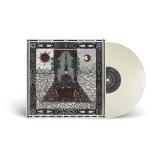
Following up on a cracker split single in 2023, Overload Liverpool enterted into 2024 firing on all cylinders with a 5 shooter of freaked-out electro, warm house, deep dub cuts, and gorgeous ambient.
Firstly, Liverpool-based label boss Morrison highlights two of his distinct and dissociative styles. On the front end of the A-side, his The Motorist alias provides us with a freaked-out formant-filtered electro that’s bursting at the lips. On the back end, a deep yet bright house cut from his The Cyclist alias, with warm warbling synths layered over his Wurlitzer electric piano and suitably grooved and jaunty beats.
To kick off the deeper B-side of the 12”, Wax Tek, a founder of the Liverpool Soundsystem crew Polyone Audio, hits us right in the chest with his dubbed-out breakbeat wonder, Get Set, which diverges through Balearic, bass music, a delirious breakdown, and hard-hitting breakbeats.
Deeper still, the second B-side from Puncta, another Liverpool-based artist, who last year came to light with their release on Sputnik One’s N-Face, dives into the deep Arctic seas with Snow Crab, an exercise in dubbed-out electro-style bass music.
Finally, Belfast-based Aaron Thomas brings the 12” EP to a fitting closure with Concert², which, washing over the listener, dances like opulent drapes with its ethereal synths that crash to and fro.
Cerca:electro one
- A1: First Hand Experience Insecond Hand Love (Extended 12” Mix)
- A2: First Hand Experience In Second Hand Love (Extended 12” Dub)
- B1: First Hand Experience In Second Hand Love (Mark Moore S-Express & Dan Donovan Remix)
- B2: First Hand Experience In Second Hand Love (Mark Moore S-Express & Dan Donovan Dub)
When Soft Cell played a spectacular, sold-out show before 20,000 fans at The O2 in September 2018, the London concert was seen by all and sundry as a grand finale. It had been billed as One Night: One Final Time, leaving devotees in no doubt that a duo who had done so much to define the sound of British electronic pop in the 1980s were saying hello to wave one last, emotional goodbye. At least that had been the idea. Singer Marc Almond and instrumentalist Dave Ball had originally gone their separate ways in 1984 before reuniting for two years in the early 2000s to make a new album, Cruelty Without Beauty. The intention at The O2 had been to draw a line under a rollercoaster ride that had seen Soft Cell secure three Top Ten albums and six Top Ten singles, including 1981’s all-conquering Tainted Love, while setting a template for synth acts from the Pet Shop Boys to Years & Years.
But such was the reaction – and the sense of purpose the pair rediscovered onstage – that the big adieu ultimately turned out to be a brilliant new dawn. The reality is that Marc and Dave bring the best out of one another as performers, both onstage and in the studio, and the sense that there was still plenty of mileage left in their partnership was inescapable. The latest fruits of a bond that was first forged in the art department of Leeds Polytechnic in 1977 were in the shape of a new studio album, *Happiness Not Included, and a series of live dates in the UK and the US that saw the band treat fans to a mixture of new material, classic hits and their 1981 debut album Non-Stop Erotic Cabaret, which was played in its entirety for the first time to mark its 40th anniversary.
- A1: Codename John Feat. Grooverider - Dreams Of Heaven
- A2: John B. - Secrets
- B1: Optical - Grey Odyssey
- B2: Matrix - Optical
- B3: Codename John Feat. Grooverider - Deep Inside
- C1: Dillinja - Silver Blade
- C2: Ed Rush & Fierce - Locust
- D1: Codename John Feat. Grooverider - Warned
- D2: Boymerang - Still
- D3: Lemon D - City Lights
Along with his long-time DJ partner Fabio and contemporaries Goldie and LTJ Bukem, Grooverider is known as one of the originators of the UK jungle/drum and bass scene. In the early nineties he founded Prototype Recordings which soon became the home of many influential 12” singles that showcased a new side of breaks-heavy electronic music: deep, gritty, and futuristic. In 1997 Grooverider put together a collection of 12 heavy hitters from the Prototype catalogue, some of which previously only available as white label promos on acetate such as Dillinja’s “Silver Blade” and Ed Rush & Fierce’s “Locust”. Lemon D’s “City Lights” was previously only available on acetate and the CD version of this release. Now, after more than 25 years, a selection of these tracks is available again in the form of a DJ-friendly double LP. Finding these tracks separately will be very difficult, so don’t miss your chance to snag yourself a copy of this one. The Prototype Years is now available as a limited edition of 750 individually numbered copies on translucent red coloured vinyl.
- A1: Natty Dub Source: Natty Dread In A Greenwich Farm / Cornell Campbell
- A2: Lee's Dub Source: Lee's Dream / Derrick Morgan
- A3: Wonder Why Dub Source: Wonder Why / Cornell Campbell
- A4: I'm Gone Dub Source: I'm Gone / Derrick Morgan
- A5: Country Boy Dub Source: Country Boy / Cornell Campbell
- A6: True Believer Dub Source: True Believer / Johnny Clarke
- A7: Care Free Dub Source: Care Free / Mighty Diamonds
- A8: Rasta Train Dub Source: Mule Train / Johnny Clarke
- B1: Move Out Of Babylon Dub Source: Move Out Of Babylon / Johnny Clark
- B2: Give A Little Man A Great Big Hand Dub Source: Give A Little Man A Great Big Hand / Cornell Campbell
- B3: Feel So Good Dub Source: Feel So Good / Derrick Morgan & Paulette
- B4: For The Rest Of My Life Dub Source: Wonder Why / Cornell Campbell
- B5: When Will I Find My Way Dub Source: When Will I Find My Way / Owen Grey
- B6: I'm Leaving Dub Source: I'm Leaving / Derrick Morgan & Hortense Ellis
- B7: Feel Lost Dub Source: Feel Lost / Bb Seaton
- B8: Dawn Dub Source: Dear Dawn / Barrington Spence
2024 Reissue
“Tubby did three original dub albums, ‘Dub From The Roots’. ‘The Roots of Dub’ and the third is ‘Brass Rockers’ with Tommy McCook ‘pon the flying cymbals. Where he mixed it with the horn going in and out in a dub way and one named ‘Shalom Dub’ you can call Tubby’s too because he mixed the versions as they were off forty fives’’
Bunny ‘Striker‘ Lee
King Tubby and Producer Bunny ‘Striker’ Lee are intertwined in the birth of Dub Music. After discovering a mistake that made a ‘serious joke’ ( more of which later...) they went on to release the first pressings of this new musical genre namely ‘Dub Music’. Tubby’s vast knowledge of electronics and Bunny’s vast catalogue of rhythms would lay the foundations of what today is taken as a standard... the Remix / Version cuts to an existing vocal tune.
Osbourne ‘King Tubby’ Ruddock was born in Kingston, Jamaica on 28th January 1941 and grew up in the High Holborn Street area of downtown Kingston. He studied electronics at Kingston’s National Technical College and also on two correspondence courses from the U.S.A... When he had qualified Tubby began repairing radios and other electrical appliances in a shack in the back yard of his mother’s home. His work in the early days included winding transformers and building amplifiers for Kingston’s Sound Systems. Tubby built his first Sound System in 1957 playing jazz and Rhythm & Blues at local weddings and birthday parties. His reputation as a man who knew and understood both electronics and music grew steadily and as the sixties drew to a close. Tubby purchased his own basic two track equipment. He installed this alongside his dub cutting machine, a home made mixing console and his impressive collection of Jazz albums in the back bedroom of his home at 18 Dromilly Avenue which he christened his music room.
Tubby and Striker were at Treasure Isle Studio’s one day while Ruddy from Spanish Town was working with the engineer Byron Smith....
“Tubby and myself was talking when Ruddy was cutting some dub but Smithy (engineer) made a mistake through we were talking and forgot to put in the voice. It was two track recording in those days. Ruddy said ‘No Man! Make it stay! and so they cut the rhythm. When I went over to Ruddy’s that Saturday night a dance was in progress and when they played the vocal to the tune... then he said we’re going to play ‘Part Two’. They never called it ‘Version’..and then he played the rhythm track. The song was a catchy song and everybody started to sing along and the deejay started to toast so everything went down well. On Monday morning I went up and I said ‘Tubbs the mistake we made was a serious joke.It mash up Spanish Town! The people went wild. So you have to start to do that now ‘cause when the man put on the ‘Part Two’ everyone start singing this song. It played about twenty times. I said you try Tubbs!’...Well the next Saturday night now when Tubby strung up down the farm U Roy said he’s going to play ‘Part Two’ but Tubby did it different now. He started with the voice then dropped it out and let the rhythm run and then he brought in the voice in the middle and from there Tubby started to get really popular.’’
Bunny ‘Striker’ Lee
Dynamic Sounds upgraded to sixteen track recording in 1972 and Tubby purchased, again with the help of a deal brokered by Bunny Lee. The old four track equipment and the MCI console from their Studio B. The four tracks now gave him far wider scope to work with and he began to create a new musical form where the bass and drum parts were brought up while the faders allowed Tubby to ease the vocal and rhythm in and out of the mix. It was only a matter of time before Tubby’s dub plate experiments began to make it on to vinyl and the first ever long playing King Tubby releases would feature a collection of his mixes to a selection of Strikers rhythms. So please sit back and enjoy this historic set of sounds. Lovingly restored and with a few extra gems added to the CD Editions. These releases were the first to carry the name of King Tubby and the first to credit the great musicians that contributed so much to the rhythms that made these albums possible.
Los Angeles-based duo LUCKYANDLOVE are back with their third album, evoking a new sense of art school originality, following their critically acclaimed “Transitions” album. The duo defines 'Humaura' as the atmosphere that emanates from the feelings of the human spirit void of technological control.
Blending raw analog synth sounds with driving punctuated percussion and punchy analogue bass, LUCKYANDLOVE’s music is shaped by the embers of Siouxsie and The Banshees and Bauhaus, resonant spectres carry over from synth-laden galaxies, where the needle hits the vinyl groove and Doc Martens marched to basement dance floors.
LUCKYANDLOVE is the raw sonic experiment of Loren Luck and April Love, whose music transcends genres. Their live analogue synth beats, Moog instrumentation and beautiful, harmonic vocals trigger an immediate download of fuzzy sunset synthgaze, blue-black neon darkwave, and tigerprint electro punk.
“‘Humaura’ is an action-packed, cinematic, entertaining and soulful electro-dance record full of fresh air and wide-open roads where there is more freedom to party, to be in nature, and to be our wild selves,” says April Love.
Fusing together pulsating molten kicks, abrasive fuzz-laden analog synths and sensual vocals, the anti-tech angst anthem ‘I Am Human’ is a call to take back our lives, underlining the need to reconnect with being Human before it’s too late. ‘Lonely at Night’ is a "last call" bar track about the desperate, frantic desire for human connection, building from a haunting sense of isolation to a fast-paced, climactic reunion with a crush. Elsewhere, this album features enchanting lyrics rooted in emotions from melancholy and sorrowful glom to a state of blissful trance.
This album was recorded, mixed and mastered for digital release by Grammy award-winning engineer Be Hussey (Modern English, Twin Tribes, Boy Harsher) at Balboa Studio and Catwater for the digital music, and mastered for vinyl and lathe-cut by Grammy-nominated engineer Nicholas Townsend (Weezer, Grimes) at Townsend Mastering.
Their 'Lucky + Love' and 'Transitions' albums having earning them a global fan following, US and UK tours, multiple tracks featured in the indie hit film 'Tiger Within' (Ed Asner's final performance), and wide acclaim, noting their “soulful, synthesized sound" (LA Weekly), “spectral synths and dazed-dreamy feeling” (Big Takeover Magazine), not to mention their "uncompromising and inventive sonic experiment” (The Spill Magazine) and sound that “oscillates between the asphalt synth streets & interstellar outer realms” (Impose Magazine).
LUCKYANDLOVE’s visceral, dark electro-pop appeal continues to stretch through time and space. Praise for the album’s lead track ‘I am Human’ have poured in from over a dozen countries. ‘Humaura’ promises to cement the duo’s reputation as one of America’s most vivacious electronic / synthwave acts, positioning them firmly within the lineage of artists like Phantogram, Ladytron, The Soft Moon, Twin Tribes and ACTORS.
‘Humaura’ Press:
“...In contrast to its synth-laden darkwave and electropunk sound, the song presents lyrical themes of championing the human spirit and emotions over the technological void" ~ Regen Magazine
“Moog textures and distorted synth tones weaving together like electric currents. An industrial edge that carries a dreamy undercurrent, nodding to darkwave, punk rock and post-punk influences without sounding dated" ~ Myth of Rock
"Every second and note is a meld of lava-esque incitement and beguiling melodic fixation and a breath to unpredictability and stirring fuzz hued uniqueness… a thrilling encounter" ~ The Ringmaster Review
"Layers fall into place and give rise to soaring vocals. The beautiful timbre of her voice sits over the landscapes of sound and reveal poignant lines that hit home." ~ Sound Read Six
With Michaela Melián's LP "music for a while", a-Musik is releasing the first album by the visual artist, co-founder of F.S.K., and solo musician since "Monaco", which appeared on Monika Enterprise in 2013. While her last releases, Electric Ladyland (2016), Music from a Frontier Town (2018), and Tania (2022) were created as part of exhibitions and sound installations, "music for a while" is Melián's fourth autonomous LP, characterized on the one hand by her unmistakable dreamlike sound along the interfaces between dark chamber music, solemn ambient techno, and cinematic sound art.
As with her previous albums, there is also a wonderful avant-pop cover version—this time of the track “My Other Voice” (1979) by the Sparks. On the other hand, music for while, whose cover is adorned with Melián's photographs of the clouds above her new home of Marseille, spreads a comparatively ominous mood – one that is nevertheless appropriate given the circumstances in 2025 – thanks in part to the sedate, almost ticking drum sounds of co-producer Felix Raethel. Once again, the multi-instrumentalist, supported by Ruth May on violin and Elen Harutyunyan on viola, weaves her recordings of various string instruments — cello, guitar, bass, and zither — into fascinating, lurching, looping, and almost hypnotic soundscapes, but atonal synthesizer sounds in tracks such as “traverse benjamin” and “märchenwald” open up the music to electroacoustic and experimental music. The concluding cover version of Irving Berlin's “they say it's wonderful” (1946) rounds off one of this year's most impressive releases in an incomparably groovy and melancholic way.
DJ Support: Luke Una, Justin Robertson, Trevor Fung, Leo Elstob, Bill Brewster , Sean Johnston, Duncan Gray, Nathan Gregory Wilkins and DJ mag Balearic album of the month.
Limited edition double vinyl release of Jezebell’s debut new-Balearic epic, which stylishly weaves the history of eclectic club bombs through 16 tracks of downtempo, electro dub, and acid chug.
After the huge, and now sold out, never to be repressed debut album release, Jezebell come again with their second instalment, delivering their trademark Balearic and chuggy, electro-tinged dancefloor bizness in the form of Jezebellearic Beats Volume 2. You get the vibe of the artwork, the Jez crew have the class. These won’t be around for long. One press only. Buy or Cry.
- Volver
- Tinta
- Pa Lxs Que Se Van
- Nombre De Bienes
- Sudaca Meeting
- Deep Horizon
- Guararapes
- Spit
Argentine pianist Hernán Jacinto and Uruguayan drummer Mateo Ottonello, come together in this boundary-pushing duo album recorded in New York. Blending acoustic and electronic textures, tradition and innovation, this project reimagines South American jazz through a contemporary lens-offering a powerful journey into the evolving sound of the Rio de la Plata. The two shores of the Río de la Plata-Buenos Aires and Montevideo-share a deep and vibrant jazz tradition, one that merges global influences with the region's rich musical heritage. For over half a century, rhythms like tango, candombe, and milonga have intertwined with jazz and other instrumental forms, continually exploring new directions and pushing creative boundaries. Argentine pianist and composer Hernán Jacinto and Uruguayan drummer and percussionist Mateo Ottonello embody this spirit of exploration. Though from different generations, both are among the most innovative voices in the Río de la Plata music scene-artists unafraid to blend past and present in pursuit of something new. Recorded in New York, their duo album offers a journey into the musical soul of the Río de la Plata, reimagined through a contemporary lens. It weaves a rich tapestry of acoustic and electronic textures, tradition and experimentation, groove and introspection. More than a fusion, it's a reinvention-revealing a new dimension of South American jazz musicianship.
Multi Culti dive deeper into muso alchemy with ‘Cimbal Tanz,’ a record release that bridges the cult solo 'cimbal’ performance of Emil Jourjou with fellow Moldavian producer Bliz Nochi’s electronics.
Bliz Nochi began learning music at age 7 playing the accordion, later mastering the guitar and piano. By 17, he was experimenting with new metal genres, Dub, electronic, and indie music. In 2016, he released his first works under the name Bliz Nochi, blending world music and exotica infused with Balkan elements, which led him to connect with master musician Emil Jourjou.
Emil Jourjou, a master cimbal player born in Chisinau, Republic of Moldova, studied at the prestigious Ciprian Porumbescu music school. His years of experience and deep connection to Balkan musical traditions build a cultural bridge between classical and folkloric orchestral music, having performed at such events as the World Expo in Hanover, and for the Philharmonic in Lübeck.
In 2021, the pair began recording together, remixing their friend and mentor Andi Otto for Multi Culti (later licensed to last year's Buddha Bar compilation). That collaboration paved the way for this full-length LP, with one side focused on traditional cimbal recordings and the other side a fusion featuring Bliz Nochi's production, a format Multi Culti initiated to showcase the too often obscured talent of the solo musician.
Bliz Nochi's LP is more than an album; it’s a journey through sound blending tradition and modernity, offering listeners a unique blend of Moldavian music and contemporary electronic styles. This project highlights Bliz Nochi's dedication to his roots and innovative spirit, bringing a fresh perspective to the music scene.
- A1: C-C (You Set The Fire In Me) (Glass Animals Remix)
- A2: I Ain't Saying My Goodbyes (Is Tropical Remix)
- A3: If You Want (Anna Prior Remix)
- B1: A Little Word In Your Ear (Dutch Uncles Remix)
- B2: If I Had Changed My Mind (Vivid Fever Dreams Remix)
- C1: The Lower The Sun (Baths Remix)
- C2: Cover (Gus Alt-J)
- C3: Nothing But Green Lights (Everything Everything Remix)
- D1: On The Road (Porji Remix)
- D2: That Can Be Arranged (Coby Sey Remix)
To mark the 20th anniversary of his cult classic debut album We Have Sound, multi-instrumentalist and creative iconoclast Tom Vek releases We Have Sound Remixed today via StrataSonic Records — a 10-track remix album in its original order that reimagines the influential original for a new era.
Led by remix singles from Dave Glass Animals, Everything Everything, and IS TROPICAL, the project is complete with a stacked lineup whose own sonic identities trace back to Vek’s genre-hopping, DIY spirit — including alt-J, Baths, Porij, and more.
We Have Sound is widely credited as one of the seminal albums that pioneered indie electronic music. Dave Bayley of Glass Animals calls the album “one of several responsible for us going on to make our music.” Gus Unger-Hamilton of alt-J adds, “I’ve loved this album since I was fifteen. Paul Epworth’s ‘Phones’ version opened my eyes to the art of the remix.”
We Have Sound Remixed, is a rare kind of tribute, curated by Vek himself, with each artist handpicked and invited to reinterpret the record that helped shape their creative DNA. The result is a celebration of We Have Sound not only as a pivotal album of the 2000s, but as a blueprint for the fusion of guitar music, DIY electronica, and sharp-edged pop that now defines a generation of UK and alternative acts. The project cements Tom Vek’s role as a cult figure whose music remains current — and deeply influential — two decades on.
- 1: Seeds
- 2: Friendzone
- 3: Growing Apart
- 4: Big Mouth
- 5: Lilly
- 6: Plans
- 7: Got You Here
- 8: Your Secrets
- 9: Knees
- 10: Red
- 11: Videogame
One of the most exciting voices in modern soul returns with Lilly - a deeply personal new album from Amsterdam-born singer, songwriter, and producer Danny Kuttner.
Blending 90s neo-soul, ECM-inspired jazz, and leftfield electronics, Lilly will resonate with fans of Hiatus Kaiyote, James Blake, and Billie Holiday – which Kuttner cites as some of the album’s key influences.
An emotional tour-de-force, the album is shaped by raw introspection and inspired by the passing of her grandmother. A stunning record that invites listeners into a world of vulnerability and sonic depth, and a must-have for vinyl lovers seeking soul, story, and standout production.
- 1: Cities Of The Plain (4:25)
- 2: Loss & The Hand Lense (4:)
- 3: The Falls (4:17)
- 4: The Torture Garden (:01)
- 5: The Fatal Muse (6:26)
- 6: Reign Of Ashes (3:04)
- 7: Dead Roads (3:20)
- 8: The Pressure Of The Text (3:15)
- 9: Trance Militant (2:14)
- 10: The Tears Of Eros (6:25)
- 11: Cities Of The Red Night (4:44)
"Originally released in 1990 on the legendary Australian label Extreme, The Annihilating Angel stands as one of Paul Schütze’s most visionary and cinematic works — a dark ambient masterpiece rooted in mystery, decay, and metaphysical beauty. Blending slow-burning soundscapes, processed field recordings, and abstract industrial textures, this album explores the sonic equivalent of sacred ruins and distant, imagined geographies.
Now officially reissued by Everland Music, this long out-of-print classic returns on vinyl with restored audio and updated packaging. The new brilliant remaster was handled by Miroslav Piškulić, a radio sound maestro renowned for his subtle approach to psychedelic electronic music. The result received praise from Paul Schütze himself — who called it the most faithful reproduction of his original vision to date."
Drawing from over three decades in electronic music, DJ Rame (one third of the acclaimed Italian Pastaboys team) showcases his House Music expertise with this genre-blending original EP on Memento Records, going right back to the roots of club culture.
Title track Life 3 starts off with a dreamy pad intro and New York-house inspired piano chords, setting the mood for the dance floor and suddenly exploding into a bouncy, tension-and-release energetic swing, trippy percussions and rubberized synth rhythms.
Toyholic’s infectious bassline and syncopated beats match retro-futuristic synths and acid melodies, while Niwa’s faster pace and robotic vocal samples are drenched in 80s Electro Disco moods.
Stone Garden rounds off the release with a breakbeat groove, vintage analog sounds and mesmerizing stop-and-gos.
A visceral ode to the free spirit of the early warehouse parties that came to define an era of revolutionary music, these 4 tracks are one part raw emotion, one part contemporary sonic innovation.
The Sator Arepo, or Sator Square, is an ancient word puzzle comprising five palindromes that's etched on various historical sites throughout the Western world. Its origins are unknown, but the square has long been thought to hold magical properties, used as a charm against illness and evil, to cure insanity or to determine whether someone was guilty of witchcraft. Self-styled "punk ethnomusicologist", acoustician and musician Julien Hairon uses this mystical symbol as the starting point for his debut Judgitzu album in an attempt to reconnect with his Celtic heritage, exploring how its hallowed messages might harmonize with contemporary Tanzanian dance music.Hairon has been traveling across the world for over a decade, collecting field recordings from countries such as Indonesia, Australia, Cambodia, China and Bangladesh, and presenting them on his Les Cartes Postales Sonores label, re-issuing any curious cassettes and CDs he came across on the PetPets' TAPES imprint. It was during this time that he became fascinated by rituals that involved spirits, prompting him to examine his own ancestry when he returned to Brittany. "Many artifacts in the landscape remain," Hairon explains, "and the power of spirits is still palpable." He represents this Celtic mysticism on 'Sator Arepo' with murky drones and magickal synth tones, using xenharmonic scales (tuning outside of standard 12-tone equal temperament) that reach back to the ancient world. These sounds are augmented with fast-paced, sci-fi rhythms informed by his time in Tanzania; "Singeli has contaminated me," admits the producer.The most astonishing example of this is 'Miracle', a thrusting soundsystem experiment that layers serpentine, bagpipe-esque electronic wails over extravagant clusters of blocky percussion. Driven by the frenetic 175BPM pulse that echoes through the streets of Dar Es Salaam - popularized globally by forward-thinking producers like Sisso, Duke and Jay Mitta - Hairon opens up a rare conversation, seeking to draw parallels between today's most urgent dance forms and the archaic rituals of antiquity. On 'Vitalimetre', Hairon drives his sonic palette into the red, harmonizing with Dutch hardstyle and gabber, and splaying distorted drones over maddeningly blown-out kicks and ratcheting percussion. 'L'or Des Fous' takes a more meditative route, prioritizing Hairon's eccentric tonality with expressive sheets of pitch-warped sound that ghost walk across energized, rattling beats.If you heard Hairon's last Judgitzu release 'Umeme / Kelele', described by Boomkat as "one of 2019's deadliest dancefloor sessions," then you'll know how mindboggling this material can be. And with 'Sator Arepo', the French producer deepens his reach, grasping a world that we've almost forgotten and juxtaposing it with a landscape most of us barely comprehend.
Free Universe follows up their highly acclaimed debut release with Impromptu Adventure, a three-track collaborative EP between Brooklyn-based label founder Gee Dee and one of the leading names in German electronic music, Roman Flügel.
The three-track EP, recorded in Brooklyn over the course of three days, perfectly captures the duo’s unique, evolving, and boundary-pushing style. “Trip Or Trap” opens with a punchy, psychedelic groove that immediately pulls listeners into the jour- ney. “Cosmetics” lifts the energy even higher with playful piano flourishes and an acidic bass line that’s a surefire crowd-pleas-er. Finally, the title track, “Impromptu Adventure”, brings the project to a close with a high-energy, acid-driven rip that leaves a lasting impression on DJs and dancers alike.
Mister Water Wet returns to Soda Gong with "Things Gone and Things Here Still," an album that radically expands the project’s purview while preserving the homespun warmth and oblique tactility that have long defined Iggy Romeu’s work. Where earlier records tilted toward the dusty swing of sample-based beatcraft or spectral minimalist jazz, here Romeu opens the frame to a more ensemble-minded approach, inviting a stellar cast of supporting musicians, including SG alumni Memotone and K. Freund, into the fold.
The result is an album that feels both broader and more intimate, with live instrumentation such as piano, strings, and reeds woven into MWW’s signature lattice of hand percussion, production sleights, and slippery time signatures. Acoustic and electronic textures bend toward each other like plants angling for the same light: bowed strings blur into vaporous pads, brushed drums scatter under riffing guitars, a horn phrase lingers in the same space as a cracked cassette loop.
A tension between decay and presence - the “things gone” and the “things here still” - runs throughout the record. At times, the music evokes a chamber session refracted through waterlogged tape; at others, it recalls the afterimage of a hip-hop instrumental slowed into an oneiric haze. In the world of MWW, memory functions less as nostalgia and more as a living fabric - mutable and resonant. "Things Gone and Things Here Still" finds Iggy Romeu at his most expansive, offering up a generous record of open spaces and porous boundaries.
Many Amerindian cultures share the belief that the future lies behind us, while the past is what we face ahead. This challenge to Western chronology is, however, rooted in common sense: the open possibilities of what is to come are, in theory, what we cannot see—the uncertain—whereas the events that have already happened unfold before our eyes and are available for us to learn from.
This second album by Chilean producer, live performer, and DJ Valesuchi could be described as an experiment with time through music. Some years after relocating to Rio de Janeiro, she released Tragicomic LP (2019) on MAMBA rec—a label founded by the boundary-pushing Brazilian party Mamba Negra—and the self-released EP Cascada (2024). In both works, we can already appreciate her musical imprint: rhythmic and emotional timbral lines—wet, filtered, mathematical,
devotional, multilingual, fantastic, and unreal. However, in Futuro Cercano (Discos Nutabe, 2025), we can hear a leap: the sedimentation of her lived experiences in electronic communities across Latin America, her search for a universal yet personal language to convey emotion and new spiritual meaning, finds in this release a consistency and spontaneity that is rarely heard these days.
In a time when all cultural expression is not only expected to be taggable, but is also increasingly produced from templates that precondition our perception—favoring categorization and connections to works or scenes of the past—the tracks on this album are generically unclassifiable. They represent an openness to experiment without prejudice with electronic instruments and rhythms that are asancestral as they are futuristic. They publicly reveal an intimacy born from the compositional process, a bond formed through the encounter—sometimes tense, sometimes harmonious—between human will and that of the machines themselves. Or, as Valesuchi put it, "cyborging my friendship with the machine and becoming a tempest." Tempest as an eruption of the unknown into the present, the result of opening oneself to a nearly meditative state to uncover the deepest feelings through improvisation on cybernetic feedback and loops. And in that improvisation, to develop “técnicas para estirar o medir el tiempo”
“techniques to stretch or measure time” as she sings in 22, the album’s first track. “Connecting knowledges” as a portal to access that future so near it lies behind us, and to anticipate it as intuition and prospection.
That’s why Futuro Cercano is more than just electronic music: it is a technological ritual, an immersion into the secrets that machines hold as artifacts of human and non-human knowledge, as mysterious objects that allow us to connect with our own otherness—the personal alien hiding beneath the skin that opens us up to uncertainty as possibility rather than catastrophe.
Developed over three years across residencies, tours, and periods of deep listening, “Your Whistle Tells of Landscape” finds Australian sound artist Alexandra Spence continuing her investigations into the perceptual entanglements of sound, place, memory, and imagination. Like much of the artist’s work, it unfolds at the liminal edge between the real and the imagined — between what is heard and what is remembered.
Composed from a constellation of materials gathered across sites and seasons — snowscapes recorded in Vancouver, insect choruses from a Sydney backyard, ceramic fragments unearthed while mudlarking with tinysound — it renders an intimate cartography of experience: one shaped equally by ecological resonance and internal drift. Each piece traces a kind of imaginary geography, where sonic ephemera become proxies for topography, weather, or myth.
The album is informed by time spent at EMS (Stockholm) and MESS (Melbourne), where Spence deepened her engagement with microtonality and tuned feedback systems, and by dialogues with sympathetic artists such as Tashi Wada and Patrick Farmer. Sound materials were sourced from Serge Modular systems, a custom lyre built by Tim Wall, amplified objects, handmade electronics, and Spence’s own field recordings captured within rockpools, beneath sand, and among a flock of sheep in the French Pyrenees. On “Magenta,” a collaboration with Delphine Dora, the domestic and mythic intertwine, as layers of voice, environmental recordings, and Halldorophone feedback drift in and out of one another like overlapping weather systems.
Despite its diverse material palette, the album resists spectacle or accumulation. Instead, it moves with a quiet sense of continuity and a rich interiority — less a sequence of compositions than a set of situated attunements. Across its duration, sounds seem to murmur, glint, or hover right at the edge of presence, invoking a listening practice that is as much about orientation as it is about reception. These are pieces not simply about place, but of place — etched with the grains of time, vibration, and breath.
Mark Fell inaugurates his new label – The National Centre for Mark Fell Studies – with his first solo electronic material in years; a slinky, ravishing volley of unique dance drills that have been in the works for over a decade, feeling somehow like Derek Bailey dissecting Singeli, or Autechre and Hermeto Pascoal dancing in hyperspace. There’s nothing else quite like it.
Back on the floor for the first time since dealing a pair of deep house 12”s with DJ Sprinkles, sending a contemporary classic in »Protogravity« with Errorsmith, plus a lauded collab with Gábor Lázár – all in 2015 – Fell taps back into core club concerns last explored to this uncompromising extent on his string of »Sensate Focus« EPs released between 2012–2013. He’s hardly been slacking since then, with a slew of far-reaching avant collabs with everyone from Rian Treanor to Limpe Fuchs, Okkyung Lee to Pat Thomas, Explore Ensemble to Will Guthrie – each one blurring distinctions between producer, composer, and conductor.
The »Nite Closures« EP is worth the wait – and then some. As ever, Fell manages to retain a highly distinctive, instantly identifiable sound while also tracing and mapping new bends in the continuum. His exploration of contemporary styles and patterns is here distilled and articulated with a rare, daring playfulness and sinuous intricacy – for over half an hour he flows from frantic to almost emotional at the drop of a snare. Trust it’s not your everyday / everynight club music, with an asymmetric angularity bound to wrong-foot fresher feet, but also the type of absolutely future-facing, skewed machine funk that clubs are crying out for, even if they don’t quite realise it.
As someone who’s witnessed the dominance of colouring-book Jive Bunny DJs recycle tested ideas ad infinitum, the message is a firm do-one to myopic ravers in »Nite Closures«. From the displaced anticipations tested in its extended dub and ravishing, tweaked polymetrics on its version, through a »Large Modulos #3« teeming with organismic details, to the hair-kissing swang of »auchterhouse (inversion)« and its clipped, cascading 2.1-step reprise, Fell offers thrilling new options for the loosey-gooseyest dancers at each turn. For us, it’s perhaps his greatest record this century.
Born Osborne Ruddock in Kingston in 1941, he grew up around High Holborn Street in Kingston, before moving to the new Waterhouse district in 1955. His electronic genius grew from working and fixing radios and TV sets. A natural progression led to working with amplifiers, and starting his own sound system, 'Tubby's Home Town Hi-Fi'. A very competitive games i the late 60's. You were as good as the EXCLUSIVE records you played.
Tubby discovered during his time cutting discs for Duke Reid's Treasure Isle set up, that by dropping vocals/instruments in and out of the backing tracks, you could invent new versions of existing old tunes. These early versions tried and tested on his sound system went down so well that he invested in a four track mixing console with delay echo effects, sliders and phasing units and so began King Tubby's 'Studio Of Dub' at 18 Drummlie Avenue, Kinston 11 , Jamaica...His Home.....
This is where all the producers would bring their tracks for Tubby to put his magic over. Most tracks that came out in Jamaica from here on in would carry a 'Version' on it's B- Side more than likely a Tubby Dub.
One of the producers who used him the most was Bunny Striker Lee, who's labels Jackpot, Justice and Attack all carried Tubby's mixes/versions on their flip sides.
Our collection here, all taken from original master tapes you might have heard the tracks before but not these versions....Lost in the vaults till now. So sit back and enjoy the dub master at work.
RESPECT.... JAH FLOYD
Track 1 CHERRY'S DUB
We start off with a very early version of Eric Donaldson's 'Cherry O Baby'.
This version was recorded at Dynamic Sounds, in 1971 and has remained lost on master tape until now.
Track 2 FRENEMY DUB
This classic rhythm known as 'Mad Mad World' and 'Crying in the Ghetto' both voiced by Winston Jarret
got worked on by Tubby as an exclusive mix for his sound system. Released here for the first time featuring
the late, great Jacob Miller on dubbed vocal.
Track 3 FALLING FOR DUB
A version here of Cornell Campbell's 'My Whole World is Falling Down' Tubby in fine form.
Track 4 DUB ON THE STREET AGAIN
Yes my friend The Street Again finds Cornell Campbell's vocal dubbed King Tubby Style Nice Rockers drums from Sly Dunbar.
Track 5 DECEIVING THE DUB
Sly and Robbie dubbing up Delroy Wilson's ' So Long Jenny' with King Tubby at the boards