For their sixth release London based record label and clubnight Snap, Crackle & Pop return with another slice of the post punk and kraut influenced electro/techno sounds that are coming to define the label. The latest release comes from Niv Ast and it serves as a follow up to his appearence on this summers Relish compilation. The EP leads with an ice cold slab of post punk swagger in the form of Quebec / Makolet which gets the remix treatment from previous collaborators Khidja, the Romanian duo strip the percussion back for the dancefloor and tease out the track's darker side with more than a hint of acidic malevolence. For the B-Side Disco Monroe offers a nostalgic slice of pitched down French Electro undoubtedly influence by the Djs recent residencies in Paris. Optimo Music's Mr TC rounds off the EP with his unmistakably left field vision to give the track a dark tropical re-imagining.
- 180 GRAM AUDIOPHILE VINYL
- PVC PROTECTIVE SLEEVE
- MIKE OLDFIELD'S TUBULAR BELLS IS INSPIRED
BY THIS ALBUM
- FEATURED IN GRAND THEFT AUTO IV ON THE
RADIO STATION 'THE JOURNEY.'
- 50TH ANNIVERSARY LIMITED EDITION OF 500 INDIVIDUALLY NUMBERED COPIES ON TRANSPARENT VINYL
Keyboard virtuoso Terry Riley started experimenting with different instruments in the '50s. One of his electronic music landmarks is his third album A Rainbow in Curved Air. Through the use of overdubbing, he recorded all the instruments to feature on the title track. The composition consists of three movements, each representing another part of his musical influences. As the song progresses, its structure goes through frequent changes. It's an colorful, psychedelic, atmospheric and revolutionary song. The second track consists of a loop of saxophones and is the dreamy and calm opposite of the title track. Fans of electronic music, such as Tangerine Dream and Klaus Schulze, would love this record. Taking inspiration from Hindustani classical music and jazz techniques, Riley's masterpiece influenced many musicians, from the likes of Brian Eno to Emeralds.
A Rainbow in Curved Air 50th anniversary limited edition is available as 500 individually numbered copies on transparent vinyl.
For the label's second release, Amsterdam imprint yeyeh has brought together two musicians from vastly different backgrounds to celebrate the far-sighted musical potential of the Theremin on the 100-year anniversary of the instrument's invention.
'Waves' is the product of two weeks of studio collaborations between award-winning composer and Theremin soloist Carolina Eyck and Eversines, an electronic music producer who has previously released music on yeyeh's sister label ninih. It builds on Eyck's work composing for 'Theremin & Voice', with both artists playing a part in processing, modulating, layering and arranging vocal and Theremin sounds to create six breathtaking electronic compositions.
Varied in tone and execution, the album's six tracks are arguably closer to instrumental pop than academic electronic music. Some tracks bear comparison to the cyclical melodic movements associated with the greats of American minimalism, while others recall the alien, otherworldly futurism of the Radiophonic Workshop, classic ambient music and the sun-bright bliss of early '90s IDM. Yet despite these possible perceived parallels, 'Waves' sits on its own as a stunning work crafted from the simplest of musical elements.
From the minds of Direct Beat and Detroit Bass Classics, comes the first initial compilation of electro/techno heat... "Electro In The Key Of Detroit: Volume 1"...Proven dance floor dope & record crate staples that provide the hungry ears of masses the groove to move: World-Wide. 'DJ K1's "Erase The Time" (featured on Detroit's WGPR TV "New Dance Show" in the 1990s) rocked the airwaves and global clubs with its signature thumping style laced beneath alien-like melody and repetitive vocal structure. 'Posatronix' mutant-rhythm mantra, "Pure Techno Sound" pulls the weight of Detroit's street dance roots down to the origin of how to boogie in space. A sure-fire stepper that also shared popularity on TV dance show platforms from Techno City. 'Blaktony's tempo-pushing "Holla Holla" , direct from the documentary soundtrack: "AUX88: Portrait Of An Electronic Band" dvd box set (a radio Dj/mix show favorite) sees the light of day on this wax collectable, giving praise to Motor City footwork culture. Also included in this monster EP is the rare 'AUX88' voyage entitled: "Phantom Power"...a gem and collector's choice. Crafted exclusively for the laid-back option away from the party or to enjoy accompanying a night's drive. This collection of re-issued jams and new explorations 'IS' the must-have for the electro/techno & bass aficionado...See it as either a DJ's weapon of choice, or the gift from vault
Propriété Privée is the pinnacle of Congolese musician Sammy Massamba’s style: a successful fusion of African and American music heritage, halfway between Franco and Otis Redding, Fela and Wilson Picket, King Sunny Ade and Aretha Franklin.
Home made in Paris, self-released in 1987, with only 1000 copies hand
distributed, the 4 tracks EP features the nastiest funk, boogie, soukous, rumba and electro pop soundclash the Eighties could offer.
Carefully restored, remastered and repackaged in total respect with its original release. The vinyl lacquer reissue was even made by its original author, the legendary André ‘Dédé’ Perriat. Sammy Massamba’s life story is printed together with photos and liner notes on the inner sleeve of the 12". He still
lives in France and is available for interviews, showcases, live shows and any
sign of the gratitude he deserves
out of Stock
Last delivered 3 years ago available to reorder, subject to availability
An exploration of traditional Chadian music with an electronic twist...
Chad is in many ways a blind spot on the map of today's global musical conversation. Overlooked, misunderstood and misrepresented, outside observers rarely concede the country an autonomous voice over its past, present and future. N'Djamena, the dusty capital of Chad with its well-kept stories of boundary-breaking musical collaborations and thirst for experimentation is a city that reflects the country's diversity: the arid North, bordering the Sahara, where nomadic tribes revere the endless desert with their handcrafted instruments. The lush tropical South, where the frenetic drumming of local initiation ceremonies blends with sounds of neighboring Congo and Cameroon. Right in the middle: N'Djamena, a forgotten melting pot of cultures and peoples bursting with unrecorded stories of life at the margins of the world's attention.
Tackling this view is precisely one of the aims of Pulo NDJ. In May 2018, Nickodemus accepted an invitation from Hape Collective to travel to N'Djamena to teach a group of young adults DJ'ing and electronic music production, which resulted in the encounter between and a group of talented artists from Cameroon, Chad, Congo and Togo. After a weeklong series of listening to original songs & demos, the recordings continued in a pop-up studio created by DJ Buosis & Nickodemus which culimated in Desert To Douala, an album featuring 11 songs, all originally written and recorded in N'Djamena.
The project found its inspiration in the city's un-narrated diversity and seeks to explore the possibilities offered by technology to demonstrate how the country's rich heritage connects with existing musical conversations. It strives to create bridges in a world of walls. It has been a yearlong creative process that built friendships and fostered understanding among people united by a passion for music and creation.
out of Stock
Last delivered 6 years ago available to reorder, subject to availability
As a musical act, Xeno & Oaklander (Sean McBride and Liz Wendelbo) conflate a rich love of analog synths, melody, and mythology with eloquent nuance and a nod to the heritage they draw from. While that construct is the duo's immediate kiss and crush, there's a deeper importance to their collaboration which began in 2004. As evidenced in their debut Vigils (2004), McBride and Wendelbo's artistic dynamic is more than just a mutual love for electronics but a contrast between architectural precision and painterly expression. From the film scores to the traditional albums they've recorded in their Brooklyn studio, they've both spurred and fostered the global synth wave revival through a commitment to analog-only production and performance as well as a strident respect for the medium.
On their latest album Hypnos and first for the Dais imprint, the duo leveraged the talents of visual artist and live sound engineer Egan Frantz to mix the album. It's a touch that adds both punch and balance, allowing their inherent conceptual voices to converge into a collage with defined edges and warm, synapses of frequency and beat.
'Musically, Hypnos is a return to polyphony after several years of using strictly monophonic synthesizers,' McBride says about the album's ethos. 'This has brought dense harmonies and a more complex counterpoint to the composition. Staying with the same equipment and processes without the inveterate compulsion to update and refashion allows for a clearly perceivable genealogy with our previous work.'
'I felt the desire to tell mythical stories, I also wanted my voice to sit strongly in the mix,' Wendelbo explains. 'I channeled the spirits of 60s French Pop chanteuse Françoise Hardy and 80s New Wave New York icon Tina Weymouth.' Her intentions are best evidenced on the tracks 'Angelique,'and 'Insomnia,' the former a spry track sung in French, against a springy rhythm. Laden with expanding and contrasting frequency and a penchant for strategic rhythm, Hypnos juxtaposes dance with distance, creating an immersive oeuvre that exudes contrast and control.
The sensitive mountain » (la montagne sensible) is the nickname Alain Bashung came up with for Arnaud Rebotini. At the height of his fame, after the success of Fantaisie Militaire in 1998, Bashung readily agreed to create an album with Rebotini. The two men didn’t know each other; their record label had introduced them. Bashung brought in “Mortel Battement” and “Nocturne,” two poems by Jean Tardieu, which he recited in a voice simultaneously warm and flat, and Arnaud produced an impressionist soundscape that ended with an apocalypse of metal. Bashung was so proud of their collaboration that he offered to give several interviews to promote the record. Today, listening back to this moving Léo Ferré influenced "talking singing" exercise, it’s hard not to hear the template for L'Imprudence, the album that Bashung went on to record with Rebotini two years later. In a similar way, the album Organique sparked a productive partnership between Rebotini and filmmaker Robin Campillo, which resulted in their being awarded a César for Best Original Music in 2018. The director, who trusted Rebotini to create the soundtracks for his films Eastern Boys and 120 Beats per Minute, never kept his love for the 2000 record a secret.
Yet it’s an understatement to say that when it was released, Organique was not in the spirit of times. That year was all about the French touch. The funky samples of Modjo’s “Lady” and Superfunk’s “Lucky Star” ruled the sweaty dancefloors. Although Rebotini was familiar with the electronic scene, he had something else in mind when he set about creating Organique. Under his own name or under the pseudonyms Aleph, Avalanche, Black Strobe, Maison Laffitte, and of course Zend Avesta, he had already released several quite bizarre and experimental techno, house, or jungle maxi singles on pioneering labels like P.O.F., Source, and Artefact, run by his friend Jérôme Mestre’s, whom he had met back when both were working as record salesmen at Rough Trade’s ephemeral Parisian store. It was at Artefact, still financed at the time by Barclay and Universal, that he naturally proposed this record project, which was a bit "different." It was his first real album.
Arnaud Rebotini has never hidden his love-hate relationship with the electronic scene. He’s a fan of rave music, Rex, and later Pulp, but he listens mostly to metal and contemporary music, mainly American minimalists such as Terry Riley, Philip Glass, Steve Reich. He wanted to mix this genre with a more French aesthetic inspired by Debussy, whose unconventionality fascinates him. From the first suspended guitar note of Organique, you can pick up another influence, possibly poppier. In the style of Mark Hollis, the erratic leader of Talk Talk, whose only solo album’s silences and dissonances left their mark two years earlier, we hear the fingers touching the keys of the clarinet on “Ondine.” The instruments have presence, character. Nothing is smooth. Everything is organic.
Although it’s sometimes labeled as electronica because of Rebotini’s career, there’s nothing digital about Organique. No "pro tools" editing or samples, only programmed drums and some synth layering. And his guest vocalists. Playing the role of electro producer, he invited Bashung, of course, to join him on the album, but also Roya Arab, who Rebotini first spotted while she was playing in Archive, and her sister Leila, Gus Gus alum Hafdis Huld, Kat Onoma’s Philippe Poirier on the “Samuel Hall” inspired track “Qu’est ce qui m’a pris,” and former KaS Product member Mona Soyoc.
The frustration of a tour where he had "little to do on stage," the desire to sing himself, and the creation of the Black Strobe project, a haunting mix of blues and rock, stopped Zend Avesta from putting out another album. Eighteen years later, the Organique we rediscover today has lost nothing of its strangeness, nor beauty. When it came out, Bashung said, "What is interesting for a musician is to feel that you have a piece of wasteland in front of you, something to clear.” That remains true today.
out of Stock
Last delivered 7 years ago available to reorder, subject to availability
Unshrouded in mystery: what once started as an anonymous underground project with stamped white labels and a clever take on sampling, has since then unfolded to be one of the longest-running and most successful teams in current dance music. Nurtured by the sounds of the past and blessed with the techniques of today, the music of Tiger & Woods always kept evolving in and around the tropes of disco, house and boogie. Classic dance music, if you will.
Celebrating the 10th anniversary this year, Marco Passarani and Valerio Delphi managed to arrive at album number three. A.O.D. is a pun on A.O.R. (adult oriented rock) and a play on their own sound. Defying the restricting rules electronic music record shop crates, it's a departure and an arrival at the same time. Inspired by the faded buildings and images of discotheques on the Italian countryside, the romantic start and bittersweet endings of summer, beach life and the excitement of travelling through the landscape to get to aforementioned temples of dance and subsequently the morning after.
Except for the 100% sample-free 1:00 am, everything on A.O.D. is based on a quiver of cleared samples from the Roman institution that is Claudio Donato and his Full Time and Goodymusic emporium. In Tiger & Woods hometown Rome, the often very electronic and futuristic sound of Italo Disco had a different twist. Much more boogie-based and influenced by the song-writing styles of New York City's dance scene, it played in a league of its own. Tiger & Woods use these materials to take them apart, out of context and into contrasting areas. Molding something completely new, one gets fooled to recognize Sade songs that aren't, pop music instrumentals and a reprise of memories that never existed. A ride through ones brain in a convertible with an Italian FM radio station playing in the background. Or to use less stiff poetry: a chill out album you can dance to or a dance album you can chill out to. Adult Oriented Dance.
out of Stock
Last delivered 7 years ago available to reorder, subject to availability
For those who will know Baggy Leggins for previous release 'Expensive Sheeeeet'
& 'Disco Lando' this put together Hand Stamped 7" press will pop your joints, the
run is 300 copies hand stamped.
Side A.
Mondo Disco
Heres a fury filled foundation of bongos, beats and bass, with layers of rolling piano
and hypnotic movement of brass, giving nothing else but good time vibes for the
dance floor with plenty of outro for any discerning DJ.
Side B.
Bug Wax
Rewind for vintage 70's retro kitsch ditchsco , rhythmic bass guitar, enchanting flute
and swirling strings, sprinkled with subtle vocals and hints of electronic glitch over a
pumping beat.
out of Stock
Last delivered 7 years ago available to reorder, subject to availability
Midnight Embassy is a pingpong project by songwriter Angela Aux and producer Sam Irl. During nightly sessions and on walks together, the two artists have created a palette of timeless tracks and futuristic sculptures from pop music flotsam. Like if two archive junkies had synchronized their sketch collections and notebooks so that the different genres and decades seem to effortlessly swirl through each other: Dub, Folk, Beatnik literature, Afrobeat & Electronica. Aux & Irl celebrate a gentle escapism, both cosmopolitan and aloof. This island mentality sparkles unobtrusively through all five tracks of the debut EP. No fireworks, no illuminated advertisements, no selfie thunderstorms: they come at dusk, set shimmering beacons and disappear on a reverberation trail behind the curtain of the night.
out of Stock
Last delivered 7 years ago available to reorder, subject to availability
Mark Is Releasing A New Ep Called Integriert Euch Nicht. It Features Two Tracks Taken From His Berghain Debut And A Freshly-composed Drum & Bass Missile. 'fucking Sick Of Myself Since Day One (hot Desk Mix)' And 'hats Off To Herr. F' Were First Performed At Mark's 2018 Berghain Live Set During Ostgut Ton Nacht. The Former Is A Breakcore-adjacent Call To Arms For The Self-loathing, The Latter An Antarctic Shiver Of Predator- Mode Idm-illektro. 'integriert Euch Nicht (commercial Jump Up Mix)' Features Singing From Blackest Ever Black Alum Silvia Kastel. Mark Wrote The Vocal Parts With Sine Waves Before Kastel Recorded Each Tone Individually, Creating Microtonal Clusters In The Vein Of Luigi Nono. The Sax-like Sounds Are Wilted Woman Playing The Aerophone, An Electronic Woodwind Instrument. Otherwise, It's Mark's Most Deliberately Straight Ahead Drum & Bass Track To Date, Trading The Beat Science Of Former Releases For A Stubbornly Boneheaded Approach In Line With The Title's Message. Integriert Euch Nicht Is Something Of A Spiritual Successor To Last Year's Tech/gentrification/real- Estate-investment Themed Integrier Dich Du Yuppie And A Ruffer, More Floor-focussed Elaboration Of The Techniques Tested On His Unterton Debut The Least Likely Event Will Occur In The Long Run. Under His Klon Dump Alias, Mark Has Also Previously Released A Psych-mnml Double Ep Called Klon Dump Vs. The Open Air On A Colourful Storm And Two Rooms, A Tape Of Sound Art Improv And Knackered Pop-strumentals On Bristol-based Imprint Nocorner. When Not Playing Solo, Mark Also Accompanies Blackest Ever Black's Carla Dal Forno On Live Electronics.
out of Stock
Last delivered 7 years ago available to reorder, subject to availability
Gregorio Gomez aka Gladkazuka is a mythical figure from Medelli´n's underground nightlife, contributing since pre - smartphone ages with energetic live sets to the celebration of life in the convulsive surrounding of the Colombian city. After playing and touring alongside Matias Aguayo with 'The Desdemonas' and contributing with the club smash hits 'Ihr Euer' and 'Futuro Chaos' to the 'Solidarity Forever' series on Co´meme - Gladkazuka is back with a full EP in which highly emotive and sensual electro dance fantasies culminate to 'The Drop'. Gomez' creations are nocturnal and lush, utopian and melancholic - underground dance pop that would be mainstream in a better world.
However these songs were created in a place where an unseen destruction of nature is taking place, and - in mids of times of supposed peace agreements - social leaders are being assassinated under the eyes of a new right wing government. Meanwhile the societies are fragmented towards a growing individualism and competition, exchanging dignity for an ideal of consumerism.
In this chaos, music becomes the celebration of life.
'Naturalia', the first track of the EP reflects this with its lushness and its jungle - like humid warmth, 'Flancing' with its happy flying fishes and 'El Coral' with its jittering electric eels.
'The Drop' is decontextualized Electro and New Wave - echoes of The Cure and The Other People Place dissolving into utopian dreaming, longing for better times, like vampire bats, hanging in their caves, waiting for the night to come.
Véronique Sanson is one of the most famous French pop oriented female
singer, songwriter, and composer of the 80s. She began her career in the 70s,
and was the girlfriend of genius composer Michel Berger. Her world turnt
upside down when she met Stephen Stills of Crossby Stills & Nash. One Day,
during a recording session in Paris, she left the studio pretending to go buy
cigarettes, but never came back... She flew overnight to the USA, where she
married Stephen Stills. In LA, she records new music with superstar
composers such as Ray Parker JR and Harvey Mason. "On m'attend là-bas",
produced in 1974, was one of the single of the album Le Maudit.
Funky French League is an intergenerational collective (based in Paris)
formed by Young Pulse (Gamm) , Dabeull (Roche Musique), Arthur Chaps,
Woody Braun (Malka Family), Mr Willy, DJ Asko et Uncle T (Groove
Deluxe). All coming from different universe from hip-hop, to electronic music,
but united by their love for the groove and the funk.
out of Stock
Last delivered 7 years ago available to reorder, subject to availability
Sa Bat' Machines & Tam Ly continuent sur la lancée et proposent un nouveau EP 3 titres electro deep bass.
La Combinaison de Sa Bat' Machines, producteur parisien, musicien, et compositeur de bass music et de Tam Ly, chanteuse auteure, compositrice et caméleon passionné de jazz, de musique classique et de mélopées orientales, avec le guitariste Pierre Maddio fonctionne suavement.
Les influences sont multiples, entre sons concrets, harmonies jazz et riffs de guitares un tantinet rock. La voix est mélancholique et syncopée, expressive ou fantomatique.
Elle invoque des instantanés intimistes, "Strange Fruit" est une interpretation du titre d'Abel Meeropol popularisé par Billie Holliday puis Nina Simone.
Road trip electro, ce vinyle n'est pas dsans nous rappeler la bande original du film "Mulholland Drive".
A écouter tard, ou au réveil.
text: Supa Cosh
In support of their forthcoming documentary 'Subotnick - Portrait of an Electronic Music Pioneer', Waveshaper Media — the same team behind the wildly-popular, acclaimed modular synthesizer documentary 'I Dream Of Wires' — presents a special reissue: a deluxe, 50th-anniversary-edition vinyl LP of Morton Subotnick's landmark 1967 debut electronic release, "Silver Apples of the Moon." Here are some of the features that make this 50th-anniversary-edition vinyl LP special:
All-new, full-colour gatefold jacket.
Vinyl edition is strictly limited to 1,000 copies.
Audio has been REMASTERED from the original, pre-mastered digital tape transfers. Unlike previous reissues of this LP (both vinyl and CD), remastered for Wergo's 1994 CD edition and narrowing the recording's stereo field, our reissue has been remastered maintaining the full stereo field of the original recording.
Brand new liner notes by Morton Subotnick.
The original, iconic liquid-light cover artwork by Tony Martin has been re-scanned for full-resolution clarity.
Featuring rarely-seen, newly-scanned photos of Morton Subotnick in his Bleecker Street studio where "Silver Apples..." was recorded.
Also includes a scan of the LP's original Nonesuch-edition liner notes
With brand new interest in beats and rhythm once again coming into play, Puzzlebox label owner, Keith (K-1) Tucker, has now decided to revise and revisit the music from his catalog as "Puzzlebox Classics." The very first release is a valued gem of an EP called, "Atomaton", featuring:
"Nemesis" - An instant classic, which brings on Tucker's signature Electro/Techno beats (Aux88), a tough as nails funky bassline, and his trademark eerie strings. Robo-vocals recall us to remember that "The future of the electro movement is upon us"... Believe it.
"Oscillator (bonus beats)" - Brings us the perfect beat, a dramatic bassline, and swinging percussion attitude to the fold.
Sure to be a hit with new ears as well as "heads" from its mid-90's release. Additionally brought to popularity in Detroit by WGRP TV's, "The New Dance Show", as a favorite go-to party recording. Made with the intent of DJ's, by a DJ.
"(Techno) On My Mind" - Mind-bending arps and clicky pecussion shoot this off-world thumper into overdrive for your ears. While the relentless hard snare battles for attention against a triggered piece of electrofunk provided by a 'K-1' bassline, weaving itself around anything constant in the tune, listeners are guaranteed transport to a realm within an alternate universe and the urge to move their feet. A mental-mover, indeed.
#thetimeisnow
#getthisenjoythis'AUX QUADRANT' for what it is.
Die Neue Kitsuné America-compilation Mit 18 Tracks Zwischen Pop, Indie & Electro. Kurz Nach Eröffnung Des Neuen Kitsuné-flagship-stores In New York Im Herbst 2018 Erscheint Vol.5 Als Limitierte Erstauflage In Kooperation Mit Der Nba (national Basketball Association), Der Karten Aller 18 Künstler Im Basketball-style Beiliegen.
With "Being Water" Lali Puna refine their distinctive take on pop and electronics, pushing the boundaries towards classical songwriting. The four songs - equally affecting and catchy as self-reflected and aloof - are complemented by the airy tripiness of a remix by Dave DK (Kompakt, Pampa Records).
Although singer Valerie Trebeljahr wrote "Being Water" mostly by herself, being backed by bandmates Christian Heiß and Christoph Brandner, she rejects the idea of authorship: "Nothing comes out of myself. I'm a sampler: I write music because I listen to music. And I write lyrics because I read". Accordingly, topics and references of "Being Water" vary quite widely: "Who's That Genius" pays tribute to Virginia Woolf and Madonna - and questions why the term 'genius' is still connoted primarily with maleness. The title track refers to the famous Bruce Lee quote "Be formless, shapeless, like water" - but here it is turned upside down: It was Hito Steyerl's video work "Liquidity Inc." that got Valerie's attention, re-reading the quote as a neoliberal paradigm. In contrast, a title like "For Only Love" might sound a little naive as Valerie claims - but: "It surely won't be hate that will save us all". The lyrics were written after watching Obaidah Zytoons and Andreas Dalsgaards documentary "The War Show".
"Diversity is queen" - this goes for the music as well. While the dreamy pop of "Who's That Genius" or the catchy guitar loops of "Being Water" are in the same vein of Lali Puna's earlier albums, the free-floating piano chords and tricky rhythm patterns of "Beatx" in some ways mark new territory as Valerie explains: "I am very proud of this song because it is so fiddly. I thought that was something reserved for men".
Recorded Between The Release Of Sand (1977) And Lost Secrets(1981), Symphonic Songs Is A Formerly Unreleased Work That Chronicles The Dynamic Shift And Development In Experimental Swedish Composer Ragnar Grippe's Canon.
Following His Seminal Release Sandin 1977, Swedish Experimental Composer Ragnar Grippe Worked On Various Art And Performance Commissions, Often Returning To Stockholm During The Summer Months To Focus His Efforts On His Compositional Practice. It Was There At The Famed Ems Studioswhere He Began Employing The Buchla Synthesizer And The Facilities Multi-tracking Capabilities As New Instruments To Map His Mining Of Sound And Movement.
During The Late 1970's, Grippe Formed A Creative Collaboration With Choreographer Susan Buirge, Specifically Writing Compositions For Her Works restes And tamis, Thus Pushing Grippe To Start Working In A More Intricate Studio Environment. These Passages Inspired Grippe Into A More Complex Layering Process That Focused More On Placement And Structure, Rather Than The Aural Floods And Flourishes Of His Previous Sand Album, Eventually Germinating In His First Full 24-track Composition Entitled orchestra.
After Debuting orchestra In 1980 At The Electronic Music Festival In Stockholm, Grippe Holed Up At Ems Studios With Those Lessons And The Fussy Buchla Synthesizer, In Which Grippe Affectionately Recalls needed To Be Tuned And Calibrated Every 20-30 Minutes. He Emerged With A New Commission For Susan Buirge Later Formally Titled Symphonic Songs And Used In Her Avant-garde Theater Piece ci-déla Which Debuted In Paris In 1981.symphonic Songsshowcased Grippe's Sound Au Courant, Pushing Dense Against Sparse, Calm Into Cacophonous, Using Each Track As Its Own Intersecting Plane. Using The Machinations Of Studio And Structure To Drive Symphonic Songs' Voice, Grippe Culled A Haunting, Often Cinematic Electronic Work That Dots And Darts Into Unexpected Corners With Curious Aplomb.
Listen To The Words, Both Terms Have Their Root In Classical Music, But Not In Its Form But Because Now I Had So Many More Stems Or Voices That Could Be Played Simultaneously Compared To My Earlier Pieces. Coming From A Classical Background, But With Big Nostrils For Pop And Jazz Music, I Can Now See A Thread In Which Classical Got A New Costume, Dressed Up In Buchla Synthesizer And Real Bass Sounds Grippe Says. Since Its Live Theater Debut Over 37 Years Ago, Dais Records Releases For The First Time Symphonic Songs, One Of Grippe's Most Ambitious Compositions, As A Deluxe Double Vinyl Lp (with Limited Edition Color Variants) And On Digital Formats. Artwork Packaging By Artist J.s. Aurelius (ascetic House) With Reflective Linear Notes By Ragnar Grippe.
Following Releases From Rude 66, Vakula And Mick Wills, Arma Continues To Explore The Dark And Wild Corners Of Contemporary Machine Music Via A New Split 12' Featuring Lvrin And Maoupa Mazzocchetti.
Lvrin Has Previously Released On Pinkman, Crimes Of The Future, Mrt And Sign Bit Zero. He Occupies A Sound World Where Blown Out Boxes Spit Out Gnarled Beats And Slimy Basslines Through An Overdriven Desk, With The Ghosts Of Post Punk And Industrial Looming Over His Nocturnal Incantations.
Maoupa Mazzocchetti Has Been Weaving Defiantly Unconventional Strains Of Electronic Music Since First Emerging On Unknown Precept And Mannequin. He Delivers Three Rugged, Body-poppin' Grooves To The B Side, All Laden With Madcap Sampling And Mischievous Synth Splashes That Proudly Stray From Established Norms While Still Holding Down A Solid.
Véronique Sanson is one of the most famous French pop oriented female singer, songwriter, and composer of the 80s. She began her career in the 70s, and was the girlfriend of genius composer Michel Berger. Her world turnt upside down when she met Stephen Stills of Crossby Stills & Nash. One Day, during a recording session in Paris, she left the studio pretending to go buy
cigarettes, but never came back... She flew overnight to the USA, where she married Stephen Stills. In LA, she records new music with superstar composers such as Ray Parker JR and Harvey Mason. "Bernard's Song", produced in 1976, was the first single of the double gold album Hollywood.Funky French League is an intergenerational collective (based in Paris) formed by Young Pulse (Gamm) , Dabeull (Roche Musique), Arthur Chaps,
Woody Braun (Malka Family), Mr Willy, DJ Asko et Uncle T (Groove Deluxe). All coming from different universe from hip-hop, to electronic music, but united by their love for the groove and the funk
Lakker Return To R&s With Their Stunning New Album, Época. Following 2016's Conceptual 8 Track Maxi-ep struggle And Emerge' (using Field Recordings Of Tv And Radio Broadcasts From The Dutch National Av Archive) Época Is A Bracing Return To Form, Combining Caustic Electronics With Fresh Inspiration From The Prepared Piano Of John Cage, Plaintive Folk Melodies, The Explorative Label Sublime Frequencies And The Raw Rhythms Of Kampala's Nyege Nyege Tapes.
Following A Restorative Creative Break To Pursue Their Own Solo Projects (as Arad And Eomac Respectively) The Duo Finally Returned To The Studio, Finding Themselves Working More Closely Than Ever Before. "we Wrote This Record Together, In The Studio As A Duo." Ian Explains "previous Records Involved A Lot Of Time Working On Tracks Individually, But Época Was Written Almost Entirely Together In The Studio - It Felt Much More Fun, More Organic And Democratic." We Allowed It To Happen Rather Than Push Or Pressure It" Dara Adds.
The Natural Evolution Of The Tracks And Their Rougher, Looser Production Sound Parallels The Duo's Interest In Two Separate Ideas: Ambient And Natural Sound, Especially The Background Noise - A Sense Of Time And Place - That Is Inherent In Old Recordings Of Folk And Classical Music, And An Interest In Herd Dynamics And Flock Patterns / Murmurations, Both In The Natural World And In Human Society. The Movements Which Affect The World At Large Through Cultural And Political Shifts. "like The First Starling That Causes A Wave In A Murmuration," Ian Explains "we Are Really Interested In How This Is Also Reflected In Human Society - A New Idea Appears And Then Reaches Critical Mass And Resonates Through Society As A Whole, And Change Happens (positive Or Negative)."
The Rich And Deep Work Of Época Finds The Duo Reinvigorated From Their Hiatus, Using Their Own Voices Extensively For The First Time, Alongsides Regular Vocal Collaborator Eileen Carpio. As Dara Explains "we Had Been Experimenting With Our Own Voices In Our Solo Music, So It Felt Like This Was The Moment To Step Out From Behind The Curtain And Put Our Own Vocals Front And Centre In A More Natural Way". This Leads To An At Times More Melodic And Poppier Feeling, Balanced Out By The Off Kilter Rhythms And Blasts Of Feedback And Weathered Reverbs That Intertwine Throughout The Record.
Once Again The Duo Look To The Outside World For Sonic Inspiration. Alongside The Use Of Physical Modelling Synths The Album Contains Recordings And Samples Of Violin, Guitar And Bodhrán, The Stringboard Of A Piano At Ems Stockholm, Phone Recordings Of Family Gatherings In Dublin And 1970's Dance Music From Jaipur.
'época' Is A Rich, Challenging Album Of Diverse And Intense Soundscapes That Expands On The Scope Of Lakker's Already Multifaceted Music That Finds Them At The Peak Of Their Artistic Powers.
'we Are Living Through Volatile Times, And As Musicians It Is Impossible To Avoid That Being Reflected In Our Work. Época Is A Our Personal Response To The Atmosphere Of These Times And The External Political And Cultural Events That Are Shaping Our World. Some Positive And Hopeful, Some Despondent And Angry, And Some Reflective And Introspective.'
Die Geschichte von Lambchop ist die der steten Veränderung und Weiterentwicklung. Was vor fast 30 Jahren im Keller von Kurt Wagner begann und von ihm selbst scherzhaft als 'most fucked-up country band in Nashville' bezeichnet wurde, hat sich inzwischen nicht nur als eine der dienstältesten sondern auch innovativsten Bands der US amerikanischen Musikszene etabliert. Seit jeher verbinden Lambchop unterschiedlichste Genres wie Folk & Country, mit Soul und Urban Electronica zu einem ganz eigenen, unnachahmlichen Sound. Kein Lambchop-Album klingt wie das andere, aber jedes klingt immer unverwechselbar nach Lambchop. Nach ihrem wegweisenden Album - Flotus' (2016) hat die Band aus Nashville jetzt ein neues Album für den 22.03.2019 angekündigt. Für 'This (is what i wanted to tell you)' arbeitete Kurt Wagner mit Matthew McCaughan (Bon Iver, Hiss Golden Messenger) zusammen, der ihn auch als Teil des Lambchop Live Ensembles im April auf Tour begleiten wird.
Im Sommer 2017 machte sich Wagner auf, über die Blue Ridge Mountains in Richtung North Carolina, zum Geburtstag seines langjährigen Freundes und Chef des Merge Labels: Mac McCaughan. Dort traf er auf seinen jüngeren Bruder Matt McCaughan, der das letzte Jahrzehnt als Schlagzeuger für Bon Iver und Hiss Golden Messenger verbrachte. Matt und Kurt kannten sich schon viele Jahre, aber erst an diesem Abend beschlossen sie zusammen an Musik zu arbeiten. Wagner schickte Mac neue Songideen und McCaughan schickte Wagner Synthesizer-Stücke zur Inspiration. Schließlich gingen beide gemeinsam in Nashville ins Studio, Pedal Steel und Piano und der Harmonika von Nashvilles Legende Charlie McCoy, die diesen schwarz-weißen Skizzen Leben einhauchte.
- 180g heavy, black Vinyl, extra-großes, gefaltetes Booklet, Cover Sleeve mit Mittelloch auf der Rückseite
Das Ergebnis ist This (is what I wanted to tell you)", ein Album, ergreifend ehrlich, atemberaubend, wunderschön und überraschend. Aber Lambchop sind nicht immer nur für eine Überraschung gut, sondern überraschen immer wieder mit verdammt guten Songs. Wenn Kurt Wagner etwas zu sagen hat, hören wir natürlich hin, das sollten sich alle zu Herzen nehmen. Diese Platte muss man einfach hören!
Heute gibt es die erste Single aus dem Album: 'The December-ish you' eine verblüffende Mischung aus bewährt emotionalen Slide-guitar und Pianoflächen alter Lambchop-Schule und effektiven PVC Pop Beats, Claps und Samples, über die Kurt Wagner die melancholischste 'Friday Night Fever' Ballade der Dekade croont.
- Limited edition, 180g heavy, weisses Vinyl, extra-großes, gefaltetes Booklet, Cover Sleeve mit Mittelloch auf der Rückseite
Die Geschichte Von Lambchop Ist Die Der Steten Veränderung Und Weiterentwicklung. Was Vor Fast 30 Jahren Im Keller Von Kurt Wagner Begann Und Von Ihm Selbst Scherzhaft Als most Fucked-up Country Band In Nashville' Bezeichnet Wurde, Hat Sich Inzwischen Nicht Nur Als Eine Der Dienstältesten Sondern Auch Innovativsten Bands Der Us Amerikanischen Musikszene Etabliert. Seit Jeher Verbinden Lambchop Unterschiedlichste Genres Wie Folk & Country, Mit Soul Und Urban Electronica Zu Einem Ganz Eigenen, Unnachahmlichen Sound. Kein Lambchop-album Klingt Wie Das Andere, Aber Jedes Klingt Immer Unverwechselbar Nach Lambchop. Nach Ihrem Wegweisenden Album - flotus (2016) Hat Die Band Aus Nashville Jetzt Ein Neues Album Für Den 22.03.2019 Angekündigt. Für this (is What I Wanted To Tell You)' Arbeitete Kurt Wagner Mit Matthew Mccaughan (bon Iver, Hiss Golden Messenger) Zusammen, Der Ihn Auch Als Teil Des Lambchop Live Ensembles Im April Auf Tour Begleiten Wird.
Im Sommer 2017 Machte Sich Wagner Auf, Über Die Blue Ridge Mountains In Richtung North Carolina, Zum Geburtstag Seines Langjährigen Freundes Und Chef Des Merge Labels: Mac Mccaughan. Dort Traf Er Auf Seinen Jüngeren Bruder Matt Mccaughan, Der Das Letzte Jahrzehnt Als Schlagzeuger Für Bon Iver Und Hiss Golden Messenger Verbrachte. Matt Und Kurt Kannten Sich Schon Viele Jahre, Aber Erst An Diesem Abend Beschlossen Sie Zusammen An Musik Zu Arbeiten. Wagner Schickte Mac Neue Songideen Und Mccaughan Schickte Wagner Synthesizer-stücke Zur Inspiration. Schließlich Gingen Beide Gemeinsam In Nashville Ins Studio, Pedal Steel Und Piano Und Der Harmonika Von Nashvilles Legende Charlie Mccoy, Die Diesen Schwarz-weißen Skizzen Leben Einhauchte.
Das Ergebnis Ist "this (is What I Wanted To Tell You)", Ein Album, Ergreifend Ehrlich, Atemberaubend, Wunderschön Und Überraschend. Aber Lambchop Sind Nicht Immer Nur Für Eine Überraschung Gut, Sondern Überraschen Immer Wieder Mit Verdammt Guten Songs. Wenn Kurt Wagner Etwas Zu Sagen Hat, Hören Wir Natürlich Hin, Das Sollten Sich Alle Zu Herzen Nehmen. Diese Platte Muss Man Einfach Hören!
Heute Gibt Es Die Erste Single Aus Dem Album: the December-ish You' Eine Verblüffende Mischung Aus Bewährt Emotionalen Slide-guitar Und Pianoflächen Alter Lambchop-schule Und Effektiven Pvc Pop Beats, Claps Und Samples, Über Die Kurt Wagner Die Melancholischste friday Night Fever' Ballade Der Dekade Croont.
Instrumental version of debut album from Andrew Hung Will appeal to fans of Fuck Buttons as the first instrumental, electronic and beat driven music by Andrew since 2015.
As co-founder of Fuck Buttons; the highly-influential electronic duo, Andrew Hung has toured extensively with headline shows at the Kentish Town Forum, Glastonbury and Greenman Festivals, been featured on the 2012 Olympics
opening ceremony and all three albums have featured as Best New Music on Pitchfork. His production work has included Zun Zun Egui’s “Shackles Gift” and co-writing/
co-producing the critically acclaimed “Kidsticks” by Beth Orton. In 2016 he soundtracked the multiple-award winning film “The Greasy Strangler”, and was
nominated for Best Soundtrack at the Empire Awards. In 2018 he soundtracked director Jim Hoskins’ follow up to “The Greasy Strangler”; “An Evening with Beverly Luff Linn” starring Aubrey Plaza and Jermaine Clement. His debut solo
album, ‘Realisationship’ was released via Lex Records in 2017.
Rian Treanor will release his anticipated debut album 'ATAXIA' on Planet Mu this March. The striking full-length follows singles for The Death Of Rave and Warp's Arcola imprint as well as live sets at Boilerroom x Genelec, Nyege Nyege festival, tours in India and various high profile EU shows.
The title 'ATAXIA' means 'the loss of full control of bodily movements' and relates to Rian's music which is 'intended to make people's bodies move in unpredictable ways.' He adds 'the angles in the letters, the phonetics seem to mirror the geometry and idiosyncratic patterns in the music.' Rian explains that components of the tracks were made by generating a series of irregular events and re-structuring them, or by destabilising a pattern that is constant.
When asked how the album compares with his previous releases, he says 'My earlier EPs share a similar interest in angular and asymmetrical rhythms that are designed for club sound systems,' adding 'they were more improvised, focusing on sequencing and pattern modulation, using standard drum sounds and synthesiser patches. ATAXIA is more focused and stricter, it's more co-ordinated in terms of the track selection and the rhythmic structures. I spent more time refining the synthesis and sound design, pushing it further than the previous releases.' He expresses an interest in exploring opposites in his music: 'fluidity and syncopation,' 'systematic and unpredictability,' 'reduction and extremity,' 'irregular symmetry,' 'easy listening and brutal'.
There's clear a conceptual backdrop, but the music itself is not overthought. There's an immediate joy to much of the album - check out ATAXIA_D3 with its wonderful cut-ups and modulations of the phrase 'people don't understand people.'
The roots of Rian's playful sound are directly linked to his love of the music he grew up with. Coming from Sheffield, you can hear elements of industrial, synth-pop, bleep, extreme computer music and speed garage at play. From Cabaret Voltaire to Warp and beyond; the sound of his city has been, and is, an integral part of his musical development and is still a direct influence.
Last year, he noted in an interview that "I'm not a computer programmer, I'm not an articulate person in that kind of way. I'm a visual artist." Now he elaborates 'I meant more that I'm a visual thinker.' Drawing and visual art have been a fundamental part of his life 'since I was a child. I got really into graffiti as a teenager and around the same time I got into mixing and these both developed together.' You can sense the mind of a visual artist at work in his music which is also reflected in the artwork he created for this project.
As well as his visual art, installations and multichannel sound works he is involved in numerous collaborations such as with composer Nakul Krishnamurthy exploring the common ground between Indian classical music and electronic music and his work with improv saxophonist Karl D'Silva, plus his time studying with Lupo at Dubplates and Mastering in Berlin (who taught him the 'importance of reduction') have all helped shape and push his sound into other unique and adventurous zones. Treanor is developing on different levels and in different forms all at the same time, re-imagining the intersection of club culture, experimental art and computer music, presenting an insightful and compelling musical world of fractured and interlocking components.
Mothball Record is proud to present the first collaborative EP from Betonkust & Eilandnet, made unironically for goths who like to dance.
Betonkust, who as well as receiving widespread recognition for his work with Palmbomen II on the 'Centre Parcs' album, has already several strong solo releases, often influenced by the Belgian New Beat scene. Eilandnet meanwhile has an extensive discography of quintessentially Dutch electro pop under the pseudonym 'Stippenlift' .
Most listeners will gravitate immediately to the tough and gritty electro opener 'Meaningless Sax' or the melancholic beauty of 'Ultra HD Game Water', but besides these two tracks is an EP of diverse material reflecting the artists' interests and obsessions (hinted at in the track titles).
This EP was recorded live in Betonkust's studio outside Amsterdam, in a single 14 hour session with no edits. In the words of the artists 'we recorded until we couldn't hit the right notes anymore'.
Angel-Ho is known as one of the founders of Non Worldwide, alongside Chino Amobi and Nkisi. Highly regarded as a DJ and electronic music producer, on 'Death Becomes Her' she shifts things up to another level.
Pulling on inspiration from her flamboyant favourites from Lady Gaga, Missy Elliot, and Bjork through to Kanye West, this ambitious, artful and sometimes radical album of neo-pop pushes the pop framework even further, often teetering on the brink of vertiginous chaos and dissonance, whilst slowly revealing its depth and grandeur once you settle into its sound world.
Alongside a cast of collaborators that include French producer Nunu, South African producer Baby Caramel, Asmara Maroof from Nguzunguzu, Bon and Gaika, Angel re-orientates the usual trans-atlantic pop sound to encompass a brace of experimental, diasporic producers to create beats that alternate between angular, propulsive, murky, loose, abrasive and breezy.
On top of these often advanced rhythms, she also raps and sings for the first time with lyrics about love, sex, glamour and struggle, universal fantasies, treated with an ambiguity that restructures the narrative within a trans-identity. Her choice of guest MCs also reflects this energetic queering with K-$ and Qweezy from Cape Town, plus underground Asian American rapper K-Rizz laying down assertive bars.
On 'Death Becomes Her', Angel-Ho carves out a new space with her unique take on contemporary pop. Overflowing with charisma, sometimes reminiscent of Grace Jones, this album is fiercely sassy and celebratory. It feels like the start of something very exciting.
New album from London-based Dutch-Zimbabwean pop
innovator Rina Mushonga.
Mushonga doesn't follow a linear path. The artist's music -
a blend of Afropop, indie and electro flourishes - is
informed by her own zigzagging life journey: Mushonga
emigrated from Zimbabwe to the Netherlands, then to the
diverse South London suburb of Peckham, where she now
lives and works.
Having read 'Metamorphoses' for the first time,
Mushonga's self-confessed 'year of transformation' ensued,
drawing upon myriad ideas and personal experiences.
Full of reflections on the cosmos and our place within it,
'In A Galaxy' is the musical embodiment of these musings,
whilst Mushonga also admits there's more than a passing
nod to the opening text on 'Star Wars' but on the whole
refers to how relative space and time are in how we
interact.
Four years in the making, 'In A Galaxy' was recorded in
Mushonga's adopted home in Peckham with producer Brett
Shaw, whilst having laid much of the foundations of the
tracks together with musical bestie and synth whisperer
Frans Verburg in his Rotterdam basement studio. The
resultant cornucopia of intelligent, diverse pop - that
Mushonga herself describes as sounding like 'Paul Simon
in a sweaty, African dancehall club' - is a welcome
introduction to 2019.
LP pressed on pink vinyl
This EP focuses on the group's prescient dance-floor DIN-sync workouts which share sensibilities with contemporaneous early Detroit experiments by Juan Atkin's Cybotron, Ron Hardy's visionary Kikrokos tape edit, Shoc Corridor's extended 808
exercises, and 90s Techno Pop by Haruomi Hosono. Rounding off the EP is the existential electronic soul ballad Words. Remastered from the original reels, 45rpm DMM pressing.
Kansas City, 1983: a band formed, wires connected and synapses fired. Three friends, tired of guitar/bass/drums rock started jamming with newly acquired synths and Roland TR 808. They called themselves Short-Term Memory. Thanks to the vanguard technology of the time, these electronic instruments spoke to each other, and Jim Skeel, John Paul & Robert Duckworth could program their instruments, riding the DIN-sync wave. Weekly jams became more ambitious, and in 1983 they released their first album Every Head Needs Cleaning on their own Silly Poodle Music label. Over the 80s members drifted in and out of the group, and they released two cassettes, an LP and a 7' EP. By the 90s Jim Skeel was at the helm, the only original member, and joined by Tim Higgins he continued to record in MIDI mode for a few years before pulling the plug, leaving recordings and memories that resisted the great fadeout of time, and today sound vibrant and more visionary than ever.
WRWTFWW Records is immensely happy to announce the reissue of impossible-to-find cult album Lady Maid by Japanese outfit Normal Brain, available on vinyl, digipack CD (for the first time ever), cassette, and digital, with liner notes by acclaimed sound artist and mastermind behind the project, Yukio Fujimoto.
Originally released in 1981 as a limited vinyl pressing of 300 copies on Agi Yuzurus fabled experimental label Vanity Records (R.N.A. Organism, Dada, Sympathy Nervous, Tolerance), Lady Maid is a testament to the creativity of the early 80s Japanese electronic and experimental scene, encapsulating a prolific era when audio gear became affordable for musicians to explore sounds in the comfort of their home, free from studio time pressure and major label rules.
Entirely imagined and brought to life by an inspired Yukio Fujimoto, the 6-track opus was conceived with a Korg MS-20, a Korg SQ-10, a Boss Dr. Rhythm DR-55, anda Texas Instruments Speak & Spell! Its elegantly minimalist, honest and witty, very playful, cleverly pop, and downright fascinating. The a-side captures the fun side of avant-garde electronica, lo-fi wave, proto-glitch, and IDM, a joyful ride beautifully interrupted by the cinematic mood switch of the b-side - a 20 minute ambient piece flirting with sci-fi, melancholy, and hints of metallic darkness. Unclassifiable and marvelous!
Virtuoso compositions, subtle synthetic atmospheres, voices oscillating between pure intentions and dreamlike fantasy, a confusion of feelings and desires, time and space...Garden of Love, the 3rd album by electro duo Scratch Massive makes an impression from the first moments that you hear its enigmatic beauty. Like a ghost train moving along a tightrope - between shadow and light, failure and redemption, violence and melancholy - this fourth studio album reaffirms the Parisian DJ/Producer duo style/vibe with their hybrid sounds and sensory experiences. For 15 years, Maud Geffray and Sebastien Chenut have maintained artistic and aesthetic control as they participated in the 'revolution of the dancefloors'. In the early 2000s, 'Made in France' electro became known for its hedonism and as the savior of an entire techno generation ready to fight (or at least on the dancefloor!) for a future that was increasingly frustrating and hypothetical.
On first glance, Garden of Love, appears to be an invitation to love and peace, however, nothing is ever that simple, as the album cover evokes a multitude of interpretations. The lyrics speak to the depths of the soul, covering a range of emotion from love, emotions, and fears ... Garden of Love is for our hearts and bodies to become receptive again: the disenchanted poetry of the Last Dance, the sumptuous opening track set against a backdrop of electro-pop murmured in the light and shadows as painful caress; the psychedelic scent of Sunken (a duet recorded with the complicit and poisonous voice of Léonie Pernet); and the dark-tech shores of "Fantome X" with the evanescent and hypnotic pop clarity of Feel The Void (both magnified by the vocals of Romain Thominot of the Reims pop band Grindi Manberg). Scratch Massive draws the outline of an electronic music in search of redemption - reinventing their icy grooves and confronting it with a naive elegance and a disillusioned romanticism that embodies our time.
Third LP of Cabaret Contemporain, French band (featuring Fabrizio Rat on keys) who use acoustic instruments (piano, guitar, bass, drums, contrabass) to produce a « hand-crafted » club music infused with techno. Inspired by Jeff Mills, Robert Hood or Drexciya, the five members already had a career on classical scene; their idea is not to replay classical techno tunes but to create a new path for the electronic music. 2 tracks featuring with the label boss, Arnaud Rebotini.
« Ballaro », which opens Cabaret Contemporain's third album, begins with light percussions, which seem to turn on themselves, while being conveyed by reverberations close to dub. After a few minutes of convolutions, the piece gets out of hand, transporting the listener into a rich form of pulsating trance, irrigated by a soaring melody and punctuated by persistent piano tones. « La selva »; more subdued, has the same energy, the track ending in an even more powerful way, a kind of paroxysm.
Finally, the strangest and most minimal « Cactus », features a singular groove, which evokes the most brutal house from Chicago, or the sometimes obsessive techno from Detroit. Just like other tracks such as « Transistor » or « TGV », fuelled by sweat and trance, Séquence Collective bears all the intensity of a techno cut for clubs' dancefloors. The only difference being that their music is not played with synths, drum machines or software, but with acoustic instruments. Dual curriculum The band is composed of five musicians and a sound engineer: Fabrizio Rat on piano, Giani Caserotto on guitar, Julien Loutelier on drums, Ronan Courty and Simon Drappier on double bass and of course Pierre Favrez on console. They are all in their thirties and met at the prestigious Paris Conservatoire in the late 2000s. However, all the musicians in the band have a double curriculum and navigate freely between the institutional realm and the underground or pop music scenes. Through classical or contemporary music, jazz and improvisation, rock and experimentation, they share a common passion for the original and futuristic techno of the 1990s, that of Jeff Mills, Robert Hood or Drexciya, which they have decided to reinvent and further in their own way. Not as a simple stylistic exercise practiced by virtuoso musicians, but rather as a new path for modern music, and for their generation. « The original idea » they say, « was to make club music by hand, like craftsmen. Like in the early days of jazz, our band managed to transform itself into a kind of dancing machine. Our music is therefore functional because it is danceable, but also mental and abstract, while offering several layers of listening. You can dance and play, have a purely physical and sensory connection to the music. But you can also immerse yourself in its listening, perceive refined harmonies or more complex rhythmic superpositions »
If the tones of Cabaret Contemporain are truly unique it is because each member of the band has developed a very personal approach through the use ''prepared'' instruments. The strings of their piano, guitar or double bass may recall strange machines with literally incredible sounds, obtained using objects such as chopsticks, clothes pegs, foil, hangers, a tiny pie mould or many other utensils from a DIY store. A collective energy
Cabaret Contemporain is first and foremost a live band that has been performing in venues and festivals since its inception in 2012 (Nuits Sonores, Siestes Electroniques, L'Aéronef, Le Trabendo, Philharmonie de Paris, Gaîté Lyrique, Rewire, Dancity, Barcelona Accio Musical...), both at traditional jazz and contemporary music venues, and more often at electro music hubs. When facing the audience, the band, which plays each of its sets in one go, without a break, shows an intense physical presence, which competes with the musical power of DJs who share the stage with them. Their performance, full of tension and repetition, which requires maximum concentration and a state close to trance from the musicians, is sometimes, according to them, « a mental journey and a mystic experience ». A dimension that brings to mind the historical techno culture and its dancers who, communicating on the dancefloor, were carried until the early hours of the morning by the power of the beat. An album inspired by the stage Since their beginnings, their compositions on record have drawn their energy directly from the practice of their concerts, whether referring to Terry Riley (2014) or Moondog (2015), an EP and an album dedicated to the repertoire of the two American artists, the original compositions of Cabaret Contemporain (2016) and Satellite EP (2017), as well as this new album. Séquence collective can be listened to as a condensed transcription of their inventions and their live experiments. The tracks, more than half of which were improvised during sessions held in the former Vogue studios near Paris, were recorded in live conditions, « like an old school rock band » they say. As usual, they invited a new musician to join them in the studio. After collaborating with Étienne Jaumet or Château-Flight, Arnaud Rebotini, César winner for best film music, added a welcome synth touch on two tracks (Pro- One, Prophet 600), which boosted the group's formidable collective energy. The album ends with « October Glide », again performed with Rebotini, a lyrical and lively track, built on a powerful and slow progression of timbres and percussions, which would ideally find its place at the core of a techno party « peak time »
180 GRAM AUDIOPHILE VINYL
- INCLUDING INSERT
- FEAT. THE HIT SINGLES 'TURN AROUND
AND COUNT 2 TEN' & 'COME HOME (WITH
ME BABY)'
- 30TH ANNIVERSARY EDITION OF 1.500
INDIVIDUALLY NUMBERED COPIES ON
COLOURED (PINK & BLACK MIXED) VINYL
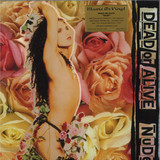
Nude is the fourth album by the English pop band Dead or Alive. After the separation from their successful production team Stock-Aiken-Waterman band members Pete Burns and Steve Co took over the control of the ship. They created a respectable release which covers most of their highly attractive and energetic dance, pop and euro-disco music. The big hits of this release were 'Turn Around And Count 2 Ten' and 'Come Home With Me Baby', both an eclectic fusion of electronica beats and danceable rhythms. One thing that makes this album so remarkable is the fact that each song flows into the next and perfectly accompanies the previous one.
Dead or Alive gained success in the mid-1980s and sold over 50 million records worldwide. Founder and vocalist Pete Burns passed away in 2016 and since the band discontinued.
Nude is available as a pressing of 1.500 individually numbered copies on pink & black mixed vinyl.
Genre: Electronic, World (Arabic). 180gram vinyl includes 12'x24' art print poster + 320kbps DL card. RIYL: Matar Mohammad, Pauline Oliveros, Nadah El Shazly, Lucrecia Dalt, Chino Amobi, Sote, Arca, Fatima Al Qadiri, Tacita Dean, Stan Brakhage. Jerusalem In My Heart (JIMH) returns with Daqa'iq Tudaiq, the third full-length album from the Montréal-Beirut contemporary Arabic audio-visual duo, following the acclaimed 2015 release If He Dies, If If I f If If If (ye ar-end li sts at The Wire (#39), The Quietus (#24) and A C loser Listen (Top 10), among other accolades).
Featuring voice, electronics, buzuk and other instrumentation from composer-producer Radwan Ghazi Moumneh (Matana Roberts, Suuns, Big Brave) and abetted by the 16mm analog film work of Charles-André Coderre in live performance, JIMH continues to expand the horizons of its profound conceptual and aesthetic engagement with Arabic/Middle-Eastern traditions. Daqa'i q Tudaiq translates as 'minutes that bother/oppress/harass'—which presumably needs no further explanation—and features two distinct album sides of music. Side One realizes a long-held dream of Moumneh's to record a modern orchestral version of the popular Egyptian classic 'Ya Garat Al Wadi' by the legendary composer Mohammad Abdel Wahab. JIMH assembled a 15-piece orchestra in Beirut, enlisting the celebrated Montréal-Cairo composer Sam Shalabi (Land Of Kush) as arranger and musical director for the session. Anchored by the stately hypnotic pace of mallet and percussion instruments (riq, santur, derbakeh, kanun), the piece unfolds with lush, languid, reverb-drenched manoeuvrings through virtuosic Maqam shifts (Oriental scales). Moumneh's melismatic lead vocals and electronic production sensibility pay homage to the genre's documented historical recording traditions, while pushing things subtly and respectfully into new territories of sonic distortion and noised, artefact-laden transmission.
The song's original title (with lyrics penned in 1928 by the poet Ahmad Shawqi) translates as 'Oh Neighbour Of The Valley', but JIMH takes a different line from the original lyric as the new title for its orchestral-electronic re-interpretation. 'Wa Ta'atalat Loughat Al Kalam' (' The Language Of Speech Has Broke Down') is an expression of wordless love and transcendent communication between two lovers' eyes in Shawqi's poem; JIMH re-titles the song with this line, exploding the sentiment with more complexity, tragedy and socio-political meaning - also prefiguring the formal aesthetic ruptures JIMH bring to the piece itself. Love in a time of politics, politics in a world conspiring against love, and the specificity of Arab diasporic experience in our brutish 21st century. Side Two comprises four tracks of non-ensemble 'solo' material by Moumneh which push rupture and decomposition/recomposition of tradition further into avant-garde territory - voice, buzuk and electronics take the lead on a suite of emotive and evocative songs, including the percussive loopdriven instrumental 'Bein Ithnein' ('Between Two' ) and the stunningly unsettling processed vocal track 'Thahab, Mish Roujou', Thahab' ('(The Act Of) Departing, Not Returning, Departing'). Daqa'iq Tudaiq is a masterful, mesmerizing artistic statement and confirms Jerusalem In My Heart as one of the most engaged and forward-looking avant-Arabic projects at work in contemporary music today. Thanks for listening.
out of Stock
Last delivered 5 years ago available to reorder, subject to availability
We were always living in nonlinear times, but a significant cycle is coming to an end so we are noticing a growing number of severe changes and happenings caused by the nonlinear nature of things. For human beings it's difficult to imagine exponential growth despite it surrounding us in almost every aspects of life.
In music one can find such nonlinear increases or logarithmical declines in the core of sound creation itself, namely in envelopes controlling levels, texture and frequencies. But also in real life in the rise and fall of popularity, in viral news or in the development of music technology.
Utilising his sound pallet comprised of modular synthesis and electronic instrumentation, Florian Meindl highlights these resonances of thought and exploration with a sonic statement of his current vision around electronic music in the form of his 4th artist album.
For Phonica's landmark 25th main label release we present the latest 12' from Will Saul.
Will is known to many as the man behind Aus Music and prior to that Simple Records as well as an excellent recent mix for the highly respected DJ-Kicks series. If that wasn't enough to keep him busy he has produced a sizable back-catalogue for his own labels and the likes of Kompakt, Buzzin' Fly and Systematic.
Will's relationship with Phonica goes back a long time, as a core member of staff he worked in the shop in its early days and needless to say, we've been following his career since day one, so it feels right that he returns to Phonica, though this time as an artist on our main label.
A prolific producer, he's explored everything from Micro-House and Minimal Techno to Deep House and Acid. For the 'Lakeside EP', Will unleashes three peak-time House tracks, starting off with the anthemic 'For Joanie' and its heartfelt vocal loops, onto the uplifting and euphoric 'Drama' before rounding the record off with the late 80s electro-pop vibes of 'Never Enough'.
From four individual parts, with distinct musical pasts but also
overlapping histories, a new unified chapter begins with Piroshka and
the quartet's thrilling debut album 'Brickbat'.
The album is named after the word for a missile, which nails the
record's heavyweight lyrics if not the music's gorgeous, bittersweet
and euphoric pop. Think of 'Brickbat' as a wolf in sheep's clothing -
which suits the name Piroshka, the Hungarian take on the wolf
terrorised fairytale hero Little Red Riding Hood - a subtle nod, too, to
a certain red hairdo that stood out in the 1990s Brit-guitar-pop
scene...
The four band members are former Lush vocalist / guitarist (and
former redhead) Miki Berenyi, former Moose guitarist KJ 'Moose'
McKillop, Modern English bassist Mick Conroy and former Elastica
drummer Justin Welch. The connections between them are a
veritably tangled family tree. Before they lived together and raised a
family, Miki and Moose were notable figures on the so-called
shoegaze scene, while Elastica were Britpop peers. After post-punk
pioneers Modern English split for a second time, Mick became a
latterday member of Moose, while Justin joined the reformed Lush in
2015. And when Lush required a bassist for what proved to be their
final show (in Manchester) in November 2016, Mick stepped in.
It was the rehearsals for that Manchester show that laid the
foundations for Piroshka. 'We sounded great!' says Justin. 'Like a
proper punk band. Mick brings a huge amount of enthusiasm and
livens up the room, and I thought, this is the kind of band I want to
be in again.' Mick agreed. 'I'd seen Lush so many times, it was like
playing with old friends. Miki agreed it was good fun too. And with
Moose available, we thought, let's all have a bash, see what
happens.'
Though 'Brickbat' kicks off with a squeal of feedback, the album is far
from a proper punk record, with as much sublime delicacy as physical
force, with guitars to the fore but also electronic flourishes in all
manner of spaces. Combined, they drive the nuggety melodic bombs
long associated with Miki's songwriting
LP format includes digital download code.
Paul DeMarinis is a key figure in the history of electronic music since the 1970s. Collaborator with the likes of Robert Ashley, David Behrman, and David Tudor, DeMarinis is a pioneer in the development of gallery sound installation and digital music technologies. Black Truffle is thrilled to announce the release of a double-LP collection, selected in collaboration with the artist, focussing on DeMarinis's exploration of synthesized voice and the digital analysis and manipulation of speech sounds. Drawing together tracks dispersed on compilations along with a number of pieces previously unheard in any form, Songs Without Throats offers a revelatory look into DeMarinis's alternately accessible and uncompromising production between 1978 and 1995. Opening with a mesmerizing piece from 1978 pairing the voice and tamboura playing of Anne Klingensmith with strings of letters spat out by a Speak n' Spell to the accompaniment of the randomised melodic patterns of DeMarinis's homebuilt electronic instrument 'The Pygmy Gamelan', the record then dispenses with the live human voice in favour of its recorded and synthetic doubles. We follow DeMarinis's restless probing of the possibilities of new technologies, from the hacked Speak n' Spell (which gives us the austere 'Et Tu, Klaatu' 1979, another duet with Klingensmith, this time on bowed psaltery, in which the toy's synthetic voice is stretched into an alien song) through to the use of digital audio samples manipulated with home computer technology in the early 1990s (including a remarkable dream-like collage piece that weaves a rare recording of Stalin's voice and bird-like electronic twittering derived from its formant-glides into a rich tapestry of samples reflective of the dictator's musical life). In between we get a rich sampling of DeMarinis's signature work with speech melodies - usually unnoticed melodic inflections that lie within speech patterns - which he analyses and translates into synthesized musical accompaniment. These pieces draw on a wide variety of textual and vocal sources, which range from the hilarious to the menacing ('Cincinatti (1830-1850)' sets a detailed description of butchering techniques, for example) and an equally broad range of musical conceptions, combining elements as seemingly unlikely as Beethoven's Opus 31 pianos sonatas and the sounds of 80s synth pop. The results are an extraordinary combination of the alien and the familiar. As DeMarinis himself characterises his work with vocal synthesis, this is 'a kind of signal that simultaneously carried and obscured meaning and ideation, even as it created a sound world totally alien in esthetic'. Presented in a deluxe gatefold sleeve with archival images and liner notes by Paul DeMarinis. Design by Stephen O'Malley. Mastered and cut by Rashad Becker at D&M, Berlin