Jake Muir's latest set of soft-focus, sensual electro-concrète, dissolves X-rated gay sleaze flick soundtracks into a shimmering suite of subdued orchestral flourishes and surreal cosmic psychedelia.
Back in 2020, Muir put together a 90-minute mix for Honey Soundsystem, blending tracks from Kelman Duran, DJ Olive, Daniel Lanois and Terre Thaemlitz with obliquely camp dialog samples from vintage gay porn. The idea was to represent queer sexuality in a looser, more experimental manner, grazing the super-sensory pleasure of the bathhouse experience and the illicit joy of cruising without getting too self-serious while doing it. The mix was so popular that Muir followed it up with a weightless sequel two years later, and began developing the concept into a proper album, using more samples of music and dialogue, eventually performing the piece at the esteemed GRM as part of their FOCUS #4 concerts alongside work by Eliane Radigue, Folke Rabe and Chris Watson.
Bathhouse Blues is split into two side-long pieces that wash and ripple with nervous tension and discreet salaciousness. Opening with a familiar theatre sting, there are echoes here of kosmische and experimental electronics on 'Cruisin’ 87', fashioned into puddles of syrupy, back-room ambience. Occasionally we hear lascivious words thru the fog, men mumbling to each other before sex. "That's beautiful," a voice mutters over a dusky cricket chirp on 'Pipe Dream'. "It is," another replies.
Muir's sonic treatment is suitably explicit, like a 1950s Hollywood jump-cut to a train going into a tunnel; he takes the whole-body, mutual release of queer sex and interprets it with heady gestures, peppering jazzy rhythmic frostings into basins of skewered drone and gurgling synths. His sound is coloured by the pleasure of physical touch, a mussy flux of high frequency scrapes and caresses juxtaposed with woozy, dubbed-out fondles and thrusts. Who said the GRM was buttoned up?
Cerca:electro pop
A much-needed reissue of an all-time house classic, from the early explosion of the genre on dancefloors the world over. From the minds behind C+C Music Factory, David Cole and Robert Clivillés, Sandee ‘Notice Me’ encapsulates the New York Freestyle era of the late ‘80s perfectly. Early house heat laced with a distinctly Latin American feel, that has been heavy sampled since it burst onto the scene in ‘88. It’s syncopated, seductive and seriously infectious, with a steamy bassline that couples with Sandee’s echoed vocals to send your brain into a state of rapture.
The ‘Notice The House’ mix is a shining example of that freestyle flavour, with the ‘Club Vocal’ leaning into a more synth pop meets electro, proto house feeling. Taking the final spot the stripped back dubbed out, b-boy beast ‘Dubbin' At Studio 54’.
A must have record that still lights up the dance to this day.
Sometimes, space is the perfect catalyst for intense creativity. Following the release of their fourth LP, 2019's Your Church On My Bonfire, PAWS - the Scottish DIY indie rock songwriting partnership of Phillip Jon Taylor and Joshua Swinney, toured briefly, and as the world began to shut down, they slipped out of sight. Phillip retreated north to the Highlands where he focused on his painting, solo work and the rewarding demands of fatherhood. Josh headed south to London, pursuing his other passion as a chef at the highly acclaimed Plimsoll. It would have been easy for both to settle into their new lives, but PAWS never died…and neither did the tie connecting the two friends. Having missed playing together for too long, a plan was set and in October 2022 Josh travelled to Phillip's home studio in his crofters cottage where work began on the band's fifth self-titled LP. Relying on a set of phone demos and chemistry honed after years on the road the songs came together surprisingly fast. Having recorded previously with both Blink 182’s Mark Hoppus and Frightened Rabbit’s Andy Monaghan, the band once again seized control of production duties as they had on their sophomore release Youth Culture Forever. Utilizing all they had learned and adding their own DIY ethos into the mix, the music was done in a week. Josh headed home and Phillip set to work on lyrics. The resulting record finds the band as grounded and assured as they ever have been. Marrying the deafening assault of youthful abandon with the whispered reasoning that comes with getting older; swaying from anger and exasperation to wide eyed optimism. PAWS is a succinct, razor wire encased documentary chronicling the pains of modern living. Delving into the dark underbelly of 90s alternative rock, painting with evocative instrumentals and reveling in celebratory indie punk, the band also embrace sordid pop and ambient electronics. And while it pays homage to where they have come from, it also signals a clean slate for the pair. Two friends united over distance. After some time apart, all they needed was a spark.
Idina Menzel is a Tony-Award winning, powerhouse multi-hyphenate: a singer, an actress in film and TV, a songwriter, a Broadway star, and a philanthropist. Drama Queen is Idina Menzel’s celebration of love filled with original pop/electro-pop anthems meant for the dancefloor!
“I am a Drama Queen…I’m dramatic and emotional and passionate. I love the stage and the spotlight. I love the attention and the roar of an audience. I have big feelings. I sing my ass off through tears of joy, heartbreak, anger, and sadness. This project is the most fun I’ve ever had writing and recording an album. I want everyone to move and sing with me and embrace their inner Drama Queen. From this Drama Queen to anyone and everyone who wants to join me in celebration: I’ll meet you on the dance floor or at the stage door or wherever you will have me. This album is for you.”
- A1: The Connection Machine - Echoes From Tau Ceti
- A2: Direct Movement - Natural Chemistry
- A3: Paradise 3001 - Surfin The Cuban Waves
- B1: Exquisite Corpse - Strange Attractor
- B2: Orlando Voorn - Still
- B3: Nyx - Delphi (Rewaxed)
- C1: Stefan Robbers - Afridisiac (Jumpy Mix)
- C2: Fluxland - Fluxland
- C3: This Side Up - Glider
- D1: Georgio Schultz - Trance
- D2: Quazar - Cycle Drops
- D3: 2000 And One - Crystal
Vol.2[25,17 €]
Through 35 hedonistic highlights stretched across three volumes, Music For The Radical Xenomaniac delivers the first ever deep dive into The Netherlands’ colourful house sound of the 90s and the under-celebrated producers and record labels whose music soundtracked a countrywide cultural movement.
Plenty of books and documentaries have celebrated the riotous raves, legendary clubs, high profile DJs and promoters who shaped The Netherlands’ hedonistic house scene throughout the 90s. Music For The Radical Xenomaniac dares to challenge these narratives by shining a light, for the first time, on those who created the scene’s kaleidoscopic, game-changing and globally influential soundtrack.
Leading the charge were a disparate group of key creators who not only forged links with their counterparts in Detroit, Chicago, New York, Belgium, Germany and the United Kingdom, but also became celebrated figures on the worldwide electronic underground (Eric Nouhan, Aad De Mooy, Orlando Voorn, Stefan Robbers and Steve Rachmad). Alongside key underground imprints (Stealth Records, Basic Energy, ESP, Prime and Outland Records included) and lesser-known producers, these pioneers gave flavour to a radical musical movement via open-mindedness, unheard-of creativity and a genuinely futuristic ethos. All of these artists and labels are represented throughout the series.
So, what defined this hedonistic house sound from The Netherlands? Stylistically, it was varied – as the series so emphatically proves – but was defined by a set of distinctive sonic characteristics: emotive musical motifs, high-frequency synth sounds, mellow basslines, pulsating rhythms and more than a touch of hallucinatory intent.
Volume 3 is packed with in-demand tracks and hard-to-find gems, including a previously CD-only cut from Dutch techno originator Orlando Voorn (1999’s ‘Still’), a genuine rave classic from The Hague by hardcore DJ Charly Lownoise as Fluxland, and a killer cut from prolific producer – and genuinely influential pioneer – Aad De Mooy AKA D-Shake. He’s represented on this volume by Paradise 3001 cut ‘Surfin The Cuban Waves’, which first appeared on ESP Records in 1993.
Other highlights include Direct Movement’s ‘Natural Chemistry’, a sought-after slow house cut produced by Dennis Buné, who had an enormous impact on the Dutch house scene as Jaimy, and ‘Delphi (Rewaxed)’ by NYX, a highly regarded and hard to find single from former new wave and synth-pop producer Bart Barten, and occasional studio partner Hanz Meyer.
Packed full of forward-thinking 90s gems remastered for today’s dance floors by Alden Tyrell, Music For The Radical Xenomaniac Volume 3 is a life-affirming celebration of a distinctly Dutch musical movement, whose rich textures and melodies are still inspiring new generations of DJs and dancers today.
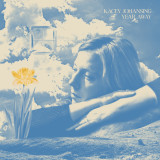
In March of 2020, after learning that a dear friend’s life was coming to an end, Johansing sat down and in one sitting wrote the song “Daffodils”. An elegiac tribute to someone facing death with grace and curiosity, the lyrics confront Johansing’s own mortality by observing the brief lifespan of a Hlower. Only a week later when the world came to an abrupt standstill, she soon found herself processing this recent loss while trying to make sense of a new global reality. Across the ensuing months, Johansing found herself increasingly untethered by a world of isolation and political upheaval.
Having been a frequent touring member of bands like Hand Habits and Fruit Bats, and often being called into the studio to lend her harmonies and multi-instrumental talents to records, Johansing’s phone no longer rang. Living in Los Angeles she feared her musical community was vanishing, as friends and collaborators continually announced they were leaving the city. It was in returning to her piano nightly that she found the greatest solace, feverishly writing the songs that would be collected on her next album. Resulting from this new sense of time and focus was a deepening of her songwriting. As Johansing recalls, “I felt like a metamorphosis happened during that time. There was a lot of personal growth and healing.”
Throughout Year Away Johansing traverses uncharted emotional landscapes brought upon by the changes occurring all around her. The forced self-reflection of the moment is aptly captured by “Old Friend”, featuring an aching melody and swooning production that recalls the best of Harry Nilsson. The epic piano and saxophone-driven “Smile with My Eyes” addresses the loss of community as friends became distant and political divides between family grew. On “Smile” Johansing pushes her vocals further than ever, expanding her range and using her peerless voice as the singular instrument it is. Facing the loss of a family home due to environmental destruction, “Shifting Sands” is marked by soaring Hlutes, Hield recordings and glassy synthesizers that nod to Japanese New Age.
“Daffodils”, the stunning album centerpiece, is built from a pastiche of looping samples, swirling Mellotron and dazzling vibraphone. “Keep your heart open wide, you never know your time / Keep your heart wild, true Hlower child”, Johansing sings as she says goodbye to an elder, while the band reaches a grief-stricken crescendo of woodwinds and chiming bells. On the title track, Johansing takes listeners on an eerily meditative journey of collective experiences. “I wanted to keep the progression simple and repetitive so that musically we could add new elements little by little, while the emotional tone of the lyrics becomes increasingly more strained and expressive”. The song grows to a fever pitch as Johansing sings higher than she thought possible; the tension of the repeating chords Hinally resolving into a hopeful coda as multiple soloists weave around each other.
Amidst heavier themes, Johansing still leaves room for her love of irresistible pop melodies and lush production. The driving “Last Drop” and mid-tempo “Valley Green” are two of her catchiest songs to date. On the former Johansing sings the anthemic chorus, “As if it were the last drop, and nothing ever lasts forever / As if it were the last stop, too far out to come back ever”, longing for a love that she’ll never take for granted, while also admitting that she doesn’t always know how good she has it. “Valley Green” features shimmering layers of 12- string guitars, stacked horns and an impeccable solo by co-producer and multi- instrumentalist Tim Ramsey (Vetiver, Fruit Bats), hinting at a love for bands like NRBQ.
Having been eager to capture the initial spark of songwriting, Johansing booked time at Highland Park’s 64 Sound Studio the week that it reopened. Over the course of three days, she and her band gathered basic tracks for 10 songs, before returning home to Hinish the record with Ramsey. Setting forth to make an album that paid homage to the music that kept them company during the months spent alone together, the duo pulled inspiration from a wide net including Burt Bacharach, John Carroll Kirby & Haruomi Hosono. Ramsey’s newfound love of early digital synthesizers dovetailed effortlessly with Johansing’s fondness for classic 70’s horn and string arrangements, creating a sound that is distinctly modern yet warm and familiar.
Once again Johansing called upon some of the Hinest players of Northeast Los Angeles’ vibrant music community to lend a hand with the record. The 70s R&B-folk of “Watch It Like a Show” features an electric guitar solo from Hand Habits’ Meg Duffy, while album closer “Endless Sound” boasts backing vocals from electronic musician Kaitlyn Aurelia Smith and swooping Indian-inspired violins from Amir Yaghmai (HAIM, The Voidz). The record shines brightly thanks to an ace mix from veteran producer Rob Schnapf (Beck, Elliott Smith, Cat Power), woodwinds from Logan Hone (John Carroll Kirby, Eddie Chacon), and a featured rhythm section of drummer Josh Adams (Jenny Lewis, Bedouine) and bassist Todd Dahlhoff (Feist, Devendra Banhart). Recorded across multiple studios including LA’s famed Sunset Sound, the album remains steadfastly buoyed by the adept engineering of Tyler Karmen (MGMT, Alvvays).
Though born of turbulent times, Year Away is ultimately interested in moving forward. The album ends with “Endless Sound,” where Johansing laments seismic global changes, (“The water is hotter, the mighty thaw / The current’s reversing, the last are lost”) but vows to keep going (“No storm can take me down / Endless light, endless sound”). It’s Year Away’s resilience that shines through despite the darkness. It’s a sound all her own and Johansing’s most cohesive set of songs yet.
Die unerschrockenen Australier VOYAGER legen mit ihrem brandneuen Album "Fearless in Love" ihren bisher epischsten Electro-Progressive-Pop-Metal vor. Das Album ist eine berauschende Mischung aus 80er Jahre Synthpop und modernem Progressive Metal und bietet ihr bisher mitreißendstes und hymnischstes Werk. Mit dem Eurovisions-Top-10-Titel "Promise" und dem Australia Decides-Favoriten "Dreamer", dem pulsierenden "Prince of Fire", dem beschwingten "Submarine" und vielem mehr ist "Fearless in Love" Prog-Metal auf höchstem Niveau und sprengt alle Erwartungen.
- 01: Subterraean Futari Botchi - Nanako Sato
- 02: Silhouette - You & The Explosion Band
- 03: I Wish You Love - Hatsumi Shibata
- 04: Kirameku Inner Space - Yuji Ohno & Galaxy
- 05: Speak Low - Ann Young & Yuji Ohno Trio
- 06: Lilac-Gai No Aki - Ken Tanaki
- 07: I Want To Be Happy - Mieko Hirota
- 08: The Soaring Seagull - Electric Keyboard Orchestra
- 09: Mouchido Kikasete - Hatusmi Shibata
Wewantsounds is delighted to announce the release of "TOUCH," a selection of sought-after tracks produced by Yuji Ohno, one of the most revered producers and arrangers on the Nippon music scene. His blend of Jazz, Space Funk and Disco have long been highly sought-after by DJs around the world and we've been given unique access to the Nippon Columbia vaults and to Mr. Ohno himself to come with a versatile selection from his 70s body of work, all bearing his uniquely recognisable sound. The set includes works with singers Nanako Sato, Hatsumi Shibata and Ken Tanaka alongside tracks from his cult anime soundtracks for "Lupin III" and "Captain Future." Approved by Yuji Ohno himself, "Touch" was remastered in Tokyo by Nippon Columbia and features liner notes by Nick Luscombe in conversation with the maestro and artwork by Optigram's Manuel Sepulveda.
Born in Atami in 1941, Yuji Ohno started learning the piano at a young age and formed his own band during his teenage years, getting into Jazz in the process. After high school, he entered the prestigious Keio University in Tokyo and played in the revered university big band alongside two other pianists, Masahiko Sato and Hirosama Suzuki, who would have an illustrious career in their own right. After University, Ohno became a professional musician and started playing with the new wave of Japanese Jazz musicians forming his own trio and recording with the likes of Hideo Shiraki, Terumasa Hino and Masahiko Togashi from 1967 onwards.
At the turn of the 60s, Ohno started to veer away from the Jazz scene as he realised, as told to Nick Luscombe that "the jazz music being played by the Japanese at the time was only chasing the cutting edge, and was ignoring the roots and origins of jazz." Ohno therefore shifted his efforts to film and TV and also to producing artists for various Japanese labels, becoming one of the most in-demand composers, arrangers and producers in Japan. This is when Ohno developed his unique sound across a wide variety of styles. More than anything else, he got renowned for his anime soundtracks, particularly with the Lupin III series - represented here by the superbly funky "Silhouette" - which made his fame in Japan
Whether it's jazz, funk, disco or Pop, the "Ohno Sound" is unmissable both in terms of melodies and arrangements, on a par with those of such legends as Quincy Jones and Michel Legrand. Ohno's melodies are sophisticated yet accessible and there's a great sense of space in his productions especially when it comes to slow-burning grooves as heard on "Kirameku Inner Space" from the cult anime soundtrack "Captain Future" or "The Soaring Seagull" from the sought-after 1975 album "Electro Keyboard Orchestra." This album was recorded with seven fellow musicians including Kentaro Haneda and Ohno's old friend, Masahiko Sato and using twenty Korg synths to create a unique blend of futuristic jazz funk. "The Soaring Seagull" could be the perfect embodiment of Ohno's signature sound when it comes to instrumentals. The producer was however equally at ease with producing lush disco extravaganzas such as "Subterranean Futari Botchi" by Nanako Sato or "I Wish You Love" by Hatsumi Shibata, a revamp of Charles Trenet classic, both colourful and glitzy.
Ohno's versatility is on display here with a couple of jazz vocal tracks, "Speak Low" by Ann Young accompanied by the Yuji Ohno Trio and Mieko Hirota's fast and furious "I Want to Be Happy" while he also excelled at crafting gorgeous mellow songs such as Ken Tanaka's "Lilac-gai No Aki" and Hatsumi Shibata's "Mouichido Kikasete" closing the selection on a perfect note. "Touch" is just a tiny selection from Yuji Ohno's immense body of work and it will hopefully open the ears of Japanese music lovers to one of the most important musician, producer and arrangers of his generation.
Formed in 1984, Fields of the Nephilim is the creation of vocalist and front man Carl McCoy. Highly influential, especially in the world of goth, but also within the metal and electronic genres, their legacy endures to this day. You can hear their influence on bands like Swans, Godspeed! You Black Emperor, Explosions In The Sky, Wolves in The Throne Room, Behemoth and more. The Nephilim was recorded in a former courthouse in the Somerset countryside where defendants who were sentenced to death were hung. "Moonchild" is the band"s best known song due to it reaching #28 in the UK single charts, and LouderSound called it a classic and said that it "perfectly encapsulates this era of the band: it has some nifty guitar work, great bass lines from Tony Pettitt, Nod"s stellar drumming and McCoy"s distinctive vocals." The song is named after a novel by Aleister Crowley, and there are several other nods to Crowley throughout The Nephilim. In a 2013 remembrance of the album, PopMatters said "The band"s sophomore effort, regarded not only as its best work but also as one of the UK goth scene"s masterpieces, is a seamless, hour-long trek into a surreal land populated by chiming guitars, hypnotic bass, found samples, and McCoy"s storytelling."
The Spanish-Dominican label led by the Spanish Sergio Parrado and the Dominican Jee Bear presents its Lmtd series, where art, design and music go hand in hand. A collectible series where each reference is a piece of a mural by the Argentine designer Lucien Le Grub, this being the first of four.
This first reference is the work of Chilean Alejandro Vivanco (Cadenza, Melisma) who joins forces with fellow Chilean Dorian Chavez (8bit, Viva Music) to bring us this incredible “Dabtrack”.
The original cut (A1) is to go back in time, return to the essence of the mid-2000s where artists like Luciano or Ricardo Villalobos put the Andean country in the eyes of the world with their organic micro house. “Dabtrack” is about this, but with a renewed sound, where the organic and the digital embrace to create an intense track, with fat basses that will make the sound system rumble. Special synths that catch you to create a magnificent sound collage.
The A2 is for the master master and lord of the deep sound. We are talking about the Romanian Mihai Popoviciu, who brilliantly reinterprets the track and takes it to his own terrain, but without neglecting the essence of the original and giving it his particular groove that works so well late at night. The groove, together with the set of synths, which elaborates it magnificently, makes his remix of Dabtrack” an indispensable work in the DJ's suitcases.
Now it's time to close this incredible album. For this we have reserved the entire B-side for one of the Chilean artists who has left the most mark in the last two decades on the international electronic scene: Pier Bucci. He takes us on a 12-minute journey through his signature style where anything can happen. Little more to say, we invite you to discover it for yourself. Because it is a work of art.
Balladur is not limited to a label or two since they draw their inspiration (among others) from East African and South Asian music without forgetting their Italian electro-pop side and of course, their references to Debussy's opera. . Many ingredients which, with the talent to combine them, give very pleasant compositions.
Die italienische Singer-Songwriterin Marta Del Grandi meldet sich mit "Selva" zurück, ihrem bisher komplexesten und schillerndsten Werk, einer raffinierten, hingebungsvollen Suite aus scharfsinnigem Pop, die mühelos fließt und emotionale Komplexität, göttliche, organische Arrangements mit einem Sci-Fi-Finish vereint.Wenn ihr Debüt "Until We Fossilize" alle Qualitäten von Martas einzigartigem Ansatz zeigte, der sich zwischen Laurel Canyon Staub, Lynch'schem Ätherismus und dramatischer Morricone-Vertonung bewegte, taucht "Selva" tiefer in das Unterholz ein und zeigt den Ehrgeiz, ein ganz neues Universum zu schaffen, ihr eigenes Ökosystem, in dem die Stärke ihrer Stimme allein die Säule ist, auf der sie aufbauen kann.Strahlen aus chorischem Licht durchdringen jeden Track, mit überlagerten Gesangsdrones, die eine kathartische Kollision von scharfen und weichen Texturen erzeugen, als würden sie uns Hand in Hand durch Marta Del Grandis verzaubertes Universum führen. Der Ehrgeiz ist blendend, und das Ergebnis beweist es: 12 Songs mit ausuferndem, ätherischem Pop, der lebendig, gewaltig und voll erleuchtet ist. "Ultimately compels with its detached, lynchian ambience." ALLMUSIC "Bucolic yet often emotionally complex, her songwriting - patching electronic synths against ambient elements, with a touch of modern classical - taps into areas that go beyond words." CLASH Classic Black LP mit Poster & DLC
Kalipo prepares to launch his new album Happy Little Accidents, which counts with twelve electro-focused tracks as well as the participation of feature artists Rampue, Ira Atari, Oberst & Buchner and subkutan. Iconic 80s painter and TV host, Bob Ross is celebrated for his thirty-minute landscapes, recognizably soothing voice as well as the 'happy little quotes' he imprinted on pop culture. One of Ross' most memorable turns of phrase, "We don't make mistakes; we just have happy accidents," went on to encourage thousands worldwide. And not just painters. "For me, this album was about letting the songs develop very quickly and not evaluating them too much, or trying to avoid mistakes," says German electronic music producer, Kalipo (Jakob Häglsperger) who named his latest release Happy Little Accidents after Ross' signature phrase. "Bob Ross really impressed me as a child, he was always so accessible to everyone and demonstrated how easy it was for anyone to work creatively," says Kalipo, who translated Ross' fast and instinctive wet-on-wet painting technique to music-making on Happy Little Accidents. The 12 tracks that make up PART I and PART II of the album are a celebration of the method - sometimes it's a floaty journey with tinkering sounds, at other times dark fast beats create the core of the music, but there's always a sense of intuition and heart driving Kalipo's productions.
Following the news that all three Lush albums are going to be reissued, Emma Anderson, the band’s co-founder, has announced her debut solo album, Pearlies. One of the most underrated British songwriters to emerge from the era that encompassed shoegaze and Britpop, she has teamed up with producer James Chapman (aka Maps) for this collection that combines effervescent electronic pop with psych and folk textures with lyrics covering themes such as confronting your fears, embracing independence and moving on in life.
The Titillators became a band in 2018 and emerge from a bold
compulsion: to sound completely unlike any other musical group in
existence
On their third album to date, That's The Night , it's clearer than ever that they've
been successful in this endeavour.
It's a tuneful, mainly instrumental batch of bent exotica played by a group of
some of Toronto's most inventive and highly regarded musicians. And while
listeners will catch aural whiffs of jazz, pop, soul, electronica, and free
improvisation there's something irrefutably singular about their output.
They're led by Ryan Driver, whom you may know from his solo recordings on Tin
Angel, from groups such as Eucalyptus, and from his frequent collaborations with
Eric Chenaux. Driver provides the compositions and plays street sweeper bristle
bass, an instrument of his own devising consisting of a small tine of metal
plucked on top of an amplifed cigar box.
The ubiquitous and multitalented Thom Gill's whistling often plays a
disconcerting lead role, while both he and acclaimed jazz pianist Tania Gill play
synths. Meanwhile the trifecta of percussionists Phil Melanson, D. Alex Meeks,
and Nick Fraser offer rhythmic interplay with one crucial caveat: none of them are
permitted to play any component of a standard drum kit.
PR will be dealt with in-house at Tin Angel.
Limited edition of 300 copies on 180gram Atlantic Pearl Blue Vinyl + OBI strip
Oakland CA's Blue Ocean have been working around the fringes of the
Bay Area indie scene since 2019, honing their very particular noisesoaked racket into a unique and instantly identifiable sound - They blend
elements of shoegaze, pop, noise rock and electronics into a dense,
sometimes disorienting soundworld that embodies a spectral mystery
that recalls forebears like Disco Inferno, Bark Psychosis and Flying
Saucer Attack
"Fertile State" is their debut album, following on the heels of 3 tape EPs and a LP
drawn from those tapes that sold out instantly on release in 2021. Songs like
"Ode," "Fertile State" and "Syncnine" show how much Blue Ocean has grown in the
last few years. They've easily shrugged off many of the markers of their punk/
indie roots, allowing their experimental urges free rein and and the noise to find
it's own level. It's a bracing, invigorating album that truly rewards deep listening
and points the way forward to an intriguing future
Second album from the electronic lounge-jazz-dance hybrid of William Basinski, Preston Wendel (Shania Taint), and Gary Wright. Limited edition Opaque Red Colored Vinyl (TRR412LPC Edition of 1,500) is for Indie stores only. 1969. Two gorgeous young interns in the film industry get invited to a glamorous A-list Hollywood party in the Trousdale Estates in one of those fabulous pavilion-style mid-century modern homes at the top of Beverly Hills. They go in their best mod clewths. Eyes popping at the technicolor scene of Hollywood stars smoking and drinking in the sunken living room, they do as instructed and have some punch and watch wallflower style as drama ensues...oh, and the the house is owned by Foxy, the pimp and drug dealer who everybody there owes munty, hunty...and he’s ready to get paid! Oh yeah, and the punch is dosed with LSD25. They manage to make it home, panties and purses and shoes intact and will never forget this party for as long as they live.
Dan Lacksman is a Belgian electronic music pioneer who co-founded the Electro Pop Dance formation Telex and is credited for their classic 'Moskow Diskow.' He also worked under the Transvolta name but put out only one single, 1978's impossibly hard-to-find classic 'Disco Computer.' Dan himself has carefully remastered the original for this special 12" reissue. It's still a retro-future sound all these years later with the signature talk box vocals and sleek drum machines under cosmic synths. On the flip is a long version of 'You Are Disco' which is a similar vibe but with a slightly more lively groove and vocal. Two serene dancefloor gems by any standards.
- A1: Alien Starr - Music-A-Lizer
- A2: Chance - Master Groove (Instrumental)
- A3: The Bobby Deemo Band - More Ounce Rap
- A4: Mack Simmons - Skin Tight
- B1: Maggotron - Computer Pop
- B2: Tribe - Vulcan Voyage
- B3: Command Performance - Breakdance
- B4: Junei - Let's Ride
- C1: The Graingers - Shine Your Light
- C2: Mid City Crew - Get Right
- C3: Chapter Three - Smurf Trek
- D1: X-Ray Vision - Video Control
- D2: Rich Cason And The Galactic Orchestra - Year 2001 Boogi
- D3: Frank James And Shadow - Summer Time
You are about to embark on a new intergalactic journey into black space, fuelled by funk, powered by computers. Soul Jazz Records" new second collection of twisted hyperspace electro/funk "Space Funk 2: Afro Futurist Electro Funk in Space 1976-84", continues its intergalactic journey.
Featuring rare and off-the-wall space funk and electro rarities and obscurities, all released on small independent USA record labels in the late 1970s and 1980s. Artists on this release include Alien Starr, Bobby Demo, Maggatron, Mid-City Crew, Tribe, Junie, Rich Cason and the Galactic Orchestra and many more intergalactic space warriors! This is space age bionic funk, programmed to make you dance!!!
Green Vinyl[16,39 €]
We are thrilled to kick off our label endeavors with one of the rarest and simultaneously best-recorded independently released German new wave singles in history: "Jede Nacht derselbe Traum" ("The Same Dream Every Night") by Total.
Back in late 1983, Total found themselves in a pivotal rendezvous with CBS Records in a Frankfurt hotel lobby. The entire band was present, along with the esteemed NDW manager Jim Rakete, who had played a role in launching Nena to national and international stardom. Also in attendance were the A&R representatives from CBS. It was on this day that Total was presented with the opportunity to ink an album deal with CBS. However, since they had only recorded the titular song thus far, negotiations hit a snag. CBS insisted on a full album rather than a standalone single.
Ultimately, the band decided to independently issue a limited 7" run of "Jede Nacht derselbe Traum" under Günther Mannschreck's Schreckschuss label in January 1984. These vinyl copies became the band's currency for pursuing record deals and promotional prospects. However, despite the potential to achieve commercial success and garner radio airplay, the song and the "Total" project gradually waned from the music landscape. Regrettably, only a few vinyl copies have managed to endure over time. This NDW "holy grail" may have prompted a fair share of dreams for serious vinyl collectors, as to this day, not a single physical copy has been put up for sale on platforms like eBay or Discogs. Interestingly, Maisenbacher has even fielded an offer of over 400 Euros for an original copy, although he regretfully couldn't fulfill the request due to possessing just a single copy himself.
The song itself is a fusion of diverse musical styles. Crafted using the Oberheim OB8 system, complete with the DMX drum machine and a bassline woven from a Jupiter 8 keyboard, it carried a groove reminiscent of New York's electro hip-hop sound in "The Message," setting it apart from typical German new wave productions. Additionally, a Korg Polysix was integrated, and guitar effects were layered to finalize the infectious synth-pop instrumental. Newcomer to the band, Andrea Ströbel, laid down a flawless vocal layer that steered the song towards a straightforward NDW direction, giving it a resonance that surely resonated with mainstream and radio audiences. To complete a B-side for the original vinyl single, the legendary state-of-the-art L480 Lexicon reverb was used. In the more experimental "Maxi Mix," now known as the "Dub Mix," Mannschreck expertly manipulated the machine. The outcome stands as a historical example of incredible studio craftsmanship and the cutting-edge techniques of the 80s.
For the new 12" release, Mannschreck unearthed an alternative mix of the song on the original tapes, featuring a distinct introduction, break, and exciting edits. In addition, DJ Friction, who contributed to the transfer and mastering for the release, treated us to a superb edit that cleverly melds all versions of the song while incorporating a few extra bassline groove elements.
The captivating reissue cover spotlights vocalist Andrea Ströbel, who gazes with determination. A hand reaches out to grab her shirt, attempting to pull her down. Symbolizing the song's theme, it embodies the unsettling dream conveyed by the lyrics-yet she steadfastly resists.
In summary, we are elated to present a significant gem for vinyl enthusiasts: a splendid mid-tempo tune that dances on the boundary of synth-pop, new wave and electro. The new 12" single underwent meticulous mastering, and the outcome is nothing short of astounding, surpassing the sonic quality of the original pressing.