It began with a cassette tape entitled 'Pleased To Meet You' gifted to us at Sessa's Fasching, Stockholm show by Yann Dardenne, the multi-tasking tour manager/sound engineer/producer/merch stall worker and co-owner of Seloki Records. On first listen, the selection of underground Brazilian artists from the Seloki's roster was superb, however, one song stopped us in our tracks. The hauntingly captivating ' GOSTO MEIO DOCE' by Nina Maia and Francisca Barreto, gave us a taste of Nina's ethereal, addictive voice and we knew we needed to hear more. Born in Minas Gerais but now based in Sao Paulo, the 22-year-old has already packed a lot into a relatively short space of time. The singer, songwriter, instrumentalist, and producer, has already collaborated on the soundtracks for six Brazilian feature films, including a track with the vocalists Maria Gadu, Iza, and Liniker. But things enter a new exciting era with this, her remarkable debut album entitled 'INTEIRA', which translates to English as 'whole'.
As much inspired by Billie Eilish and Rosalia, as Milton Nascimento and Toninho Horta and not sounding like other records coming out of Brazil, 'INTEIRA' is unique. Though rich in its Brazilian heritage, inspired by samba cancao, MPB, and the Clube da Esquina movement, it also channels influence from bands such as Portishead and Massive Attack, mixed with jazz, contemporary leftfield and electronic pop artists. Musically, it is not easily pigeonholed, with beautiful, well-crafted songs, sophisticated arrangements, eloquent vocals and intimate lyrics. Each track reflects different moments and stories from Nina's youth but with dialogues, feelings, and questions that span generations and resonate with all. This ambitious debut album is Nina's vision and sound, expressing herself without constraints and making music with her friends. Featuring a lineup of Thalin (drums), Valentim Frateschi (bass), Francisca Barreto (cello and vocals), Thales Hashiguti (viola and violin), Yann Dardenne (acoustic guitar and co-producer) and Nina on piano, Rhodes, guitar and production. The album led to a nomination in Paulista Association of Art Critics (APCA) award's 'Breakthrough Artist' category, who also listed 'INTEIRA' as one of the 50 best albums of 2024.
It also received support from Bandcamp Weekly and Jamz Supernova on BBC 6 Music. Released digitally by Seloki Records in Brazil in 2024, Mr Bongo in partnership with Seloki Records now present this new, deluxe worldwide edition that includes four additional songs. These comprise the brand-new exquisite 'MANHA', as well as an original twist on Vinicius de Moraes' classic 'Serenata Do Adeus'. Elsewhere you'll find a live recording showcasing Nina's remarkable energy on stage courtesy of 'DE DENTRO' and 'GOSTO MEIO DOCE' with the amazing musician/vocalist Francisca Barreto, where our whole story began. Here at Mr Bongo, we are honoured to release music by such a remarkable new talent - one whose musical trajectory is most certainly about to soar.
Buscar:electro pop
Step into the emotional landscapes of Saudade’s new EP Expensive Noise, a multi-textured journey where analog machines speak louder than words. Each track captures a different state of mind, blending depth and groove with raw, honest sound design. The EP opens with “Expensive Noise” — direct, grounded, and hypnotic. No detours, no hesitation — just raw analog power locking into a loop with magnetic tension. The groove builds steadily, shifting your state of mind as the rhythm takes hold. “Anyway” brings a dreamy, bittersweet touch. Exclusive to vinyl, this extended version unfolds like a teenage memory you never shared — warm, nostalgic, somewhere between electro and pop, glowing softly from within. “Colored Life” dives into detailed minimal deep house territory. Rounded and generous, its sound design sculpts soft clouds of melodies against crisp, syncopated snares — floating between dream and presence, like a cushion made of rhythm and light. “Porte de la Villette 45” echoes the EP’s birthplace — a raw area near the Parisian périphérique, where engines roar, people hustle, and concrete weighs heavy. Yet within this urban friction stands Studio Villette 45 — a funky, soulful shelter where the machines find their groove. The record closes on “Cœur” (heart in French) — a stripped-down, heartfelt outro. Just a Prophet 5 pad, no tricks. A moment of vulnerability, stillness, and truth — as if the music had finally dropped its armor. Between analog heat and emotional honesty, Expensive Noise is Saudade at his most sincere — building bridges between power and softness, body and soul, sound and silence.
Aer making everyone dance with "I'm Gonna Dance," Muzic Family Vs. Stylóo is ready to ignite the
dancefloors again with "Sweat," an adrenaline-fueled track that unites the tradi!on of Italo Disco with a
modern pop-dance sound.
At the helm of "Sweat" is Roberto Tura, one of the most influen!al producers in the Italian and
interna!onal dance scene. A key figure of 80s Italo Disco, Tura( has shaped !meless hits for ar!sts like Den
Harrow, Joe Yellow, Albert One, and Stylóo themselves, helping to define the sound of an era that s!ll
makes fans' hearts beat faster all over the world. With "Sweat," Tura( once again proves his ability to
merge the magic of those years with a modern, powerful sound, capable of winning over new genera!ons of
listeners and ge(ng everyone dancing.
By his side is Silvio Melloni, a top-level musician and arranger, who is now part of the historic band Ma"a
Bazar. Melloni brings his experience and musical sophis!ca!on to the project, cura!ng arrangements rich in
detail and nuance, where every element is calibrated to maximize the emo!onal and rhythmic impact of the
track. His ar!s!c sensi!vity perfectly matches Tura('s energy, crea!ng a winning combina!on of technique,
passion, and crea!vity.
The release of "Sweat" doesn't stop at the original version: two exclusive remixes are included to enrich the
project, promising to make the track explode on the most demanding dancefloors.
Italoconnec"on Remix – The duo formed by Fred Ventura and Paolo Gozze( (aka Italoconnec!on)
transforms "Sweat" with their characteris!c touch: sonic elegance, pulsa!ng energy, and a refined
sound that blends dance-pop rhythms with the vibrant nostalgia of Italo Disco. It's an interpreta!on
that leaves no room for rest and pushes you to listen and move.
A.P. Mono Remix – A.P. Mono infuses an 80s-flavored electro-disco soul: funk syncopa!on,
enveloping synths, and an irresis!ble groove. His reinterpreta!on turns the track into a true
energe!c vortex, perfect for making anyone who dances to it sweat.
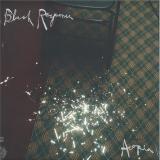
Naarm/Melbourne trio Acopia return with Blush Response, their highly anticipated third album, and first release on Scenic Route. Arriving September 12, this 8-track LP captures the band at their most open and self-assured—an emotionally resonant work shaped by silence, space, and sincerity.
At its core, Blush Response is an exploration of emotional distance, unresolved feelings, and the quiet tension between vulnerability and strength. It’s introspective and melancholic, yet with an underlying clarity that marks a new chapter for the group.
Formed in 2018 by Kate Durman, Lachlan McGeehan, and Morgan Wright, Acopia began with a minimalist palette—slow tempos, sparse arrangements, and a distinct sense of restraint. Since then, they’ve evolved into a more fluid and expressive unit, blending elements of dream pop, downtempo, indie, and post-punk into a sound that’s as delicate as it is disarming.
Following the release of 2022’s Chances and their self-titled 2023 album, Acopia gained significant critical momentum with praise from Pitchfork, The Guardian, The FADER, and The Beat. Pitchfork described their work as “a nod to 1980s ennui and 2020s anxiety”—an apt summation of their unique place in today’s musical landscape. Their growing international footprint includes support slots for Bar Italia and Tirzah, festival appearances at Golden Plains, Rising, and NTS Naarm, and a sold-out 2024 headline show at London’s Lexington.
Recent collaborators include UK producer Daniel Avery, who’s shown strong support for the band—elevating their profile across both electronic and alternative audiences.
With Blush Response, Acopia deliver their most expansive and expressive project to date—anchored by the emotional depth fans have come to expect, but now sharpened by bold songwriting and a broader sonic reach. Their arrival on Scenic Route marks an exciting new era, one that’s already resonating with tastemakers, record buyers, and a fast-growing global fanbase.
The KNOW was an early 80's electronic duo, comprised of brothers Garry and Neil Todd from Stoneydelph, Tamworth (near Birmingham), UK. After playing in a conventional rock group and having to deal with the issues of too many cooks spoiling the broth, they decided to stay a two piece while the affordability of synthesisers and drum machines came in handy to replace additional human band members – shall we say for the better in the end?!
Regarding the name, Neil says: “Garry and I came up with this name in relation to the saying, oh you know he’s in “The Know” you know.“ The KNOW released only two tracks “Times Change“ and “Knights of Pleasure“ on a 7“ single in 1982, which is ultra rare now (only being sold once on Discogs for almost €300). Neil used Korg Micro Preset M-500, Moog Liberation, Roland Jupiter-8 synthesisers, and a Roland CR-8000 drum machine to create these two minimal synth pop anthems.
The original masters have been lost over the years, but the recordings have been carefully digitized from vinyl and meticulously restored and remastered and sound better than ever before. Additionally, five cover versions have been added by no less than minimal electronic synth pop heroes BLIPBLOP, doing both tracks, the THE SILICON SCIENTIST adding his dreamy synth pop melancholia signature sound, FLASHBACKS (aka Echo West, Silent Signals) with his icy cold yet playful minimal electronics, and TWINS NATALIA featuring KRIISTAL ANN delivering a rather faithful to the original yet up-to-date version while adding lots of new bits like a choir, vocoder, and one of Dave Hewson's unique synth solos.
All of this is pure and classy 80s electronic synth pop bliss!
Ottagono Italian Dojo presents the second release on the Ottagono Retro outlet imprint label through South America. This special occasion marks the opening of a second Ottagono headquarters in Argentina, introducing an exclusive project that blends the essence of the Italian music family. If you’re familiar with Latin American music genres like Rock, Post Punk, Industrial, Minimal Synth, New Wave, Synth Pop, and the broader electronic music scene of the last 40 years, you’ve surely heard of iconic bands such as Virus, Soda Stereo, and Sumo. Among these bands, having in common their birth in Argentina, Alfredo Peria is another influential music pioneer and key figure in the entire Latin American underground movement. In the mid-80s, he founded the techno duo Mimilocos. Because of this, over the years, Alfredo has been renamed the “Juan Atkins de Latino America”. Later in the 90s, he joined major labels like Polygram and BGM, living between Spain and the United States. He founded another project called Limbo with Julio Moura, a member of Virus and brother of Federico Moura. In the late ’90s, he released his first solo album with Fonovisa. After spending years travelling the world, Alfredo returned to Argentina and, alongside Cecilia Olariaga, founded his own production company, Pulpería Discos. The music world once again showcases the strong connection between Argentina and Italy, evident in the heritage of artists and figures like Maestro Alfredo Peria and la familia Ottagono, including the new Latin America manager, Federico Luchetti.
A.1: Sentidos is a new wave Latin American classic! After over 30 years, it finally received its first vinyl release. Originally written in the early ’90s by Alfredo and Julio Moura, then members of Limbo, a band formed after Virus disbanded following the passing of Federico Moura, Julio’s brother, Virus frontman. This updated version, enhanced with synthesizers and additional production by tech wizard Franco Colombo , transforms the original lyrics into a retro-futuristic club anthem with 80s vibes, It captures the essence of early Depeche Mode, Nitzer Ebb, and the Chicago Warehouse scene, while also being a great fit for fans of Juan Atkins and Yellow Magic Orchestra as well.
A.2: Yo soy su Cuba – 3.0 Adicta mix is the latest version inspired by the original demo from the 80s. This mix showcases Electro Tech Synth Pop music created by Alfredo, Rudie Martínez, Joaquín Franco, Juan Pablo Bidegain, Germán Moreno, and Pablo Torterolo, collectively known as Adicta.
A.3: Castillitos de arena – original ’87 demo, it’s a classic in Argentina underground music movement, among fans and people lost in club culture, even though it never got an official release in any format. This was frequently performed during the early years of Mimilocos live shows, but it was never officially released. A few years later in Spain, a Latin pop tropical house version was released, presenting a fresh and entirely different take from the original’s obscure essence marked by minimal synth, EBM, and deep, atmospheric sounds, which thanks to Ottagono family will see the light.
B.1: Gesell – From Villa Gesell to Ibiza, from Alfredo with love to another renowned
“Argentino” known as DJ Alfredo. This is an Ottagono tribute to one of the Isla masters and the Balearic sound. Gesell feels like a fresh 90s UK track by Farley & Heller or DJ Harvey, immersed in the emotive Alfredo Peria landscape—something you could easily hear at Café del Mar during sunset, played by another maestro we all miss, José Padilla.
B.2: Yo soy su Cuba – Now available on vinyl for the very first time, featuring the original demo. There’s not much to add—just sit back and enjoy this pure 80s treasure in all its glory.
B.3: Over the past months, Claudio and Federico have listened to many unreleased
demos and tapes from Alfredo’s extensive musical career. Among them, “7 Days” stood out for its simple beauty and potential as a hit for underground enthusiasts. This track seamlessly combines post-punk, new wave, and tropical Balearic vibes. From ’95 to ’25, it has remained fresh and innovative, once again proving that the Ottagono crew understands the essence of timeless music.
- A1: Maria Kocic And The Mk Sound - Trust Me
- A2: Whadya Want - Open Spaces
- A3: Poets Of The Machine - Arabs
- A4: The Couch - Full Treatment
- A5: Sedation
- B1: The Igniters - Hakka Suru
- B2: Mumbo Jumbo - Wind It Up
- B3: Mix - Do You Do It
- B4: Cameron Allen And Graham Bidstrup - Bikini Atoll
- B5: Foot And Mouth - I Want My Mummy On Midnite Spares
2025 Repress
Australian music devotees András and Instant Peterson hold a candle to overlooked avant-pop and electronic works by antipodean artists and outsiders working through the 80s and 90s. Through co-presenting weekly radio show Strange Holiday, the duo slowly upturned their locale for inspiration - archives, country bookstores, private collections and convenience stores, searching for a place to anchor their own identities in the oceans of the island continent. The 10 tracks acknowledge a minor history, passed on via a network of friends, friends of friends, the libraries of radio station 3RRR and more often than not, the artists themselves. Renowned mixed media artist Maria Kozic enters with the mysterious downbeat of Trust Me, her husband Philip Brophy responsible for digital and analogue sonic construction. A recurring character in András and Instant Peterson's investigations, Brophy reappears with a score piece from his divisive feature film Salt, Saliva, Sperm and Sweat, recorded as (pronounced 'Tch Tch Tch"). Other links are thread under the surface. Melbourne inner north experimentalist David Chesworth explores his Australiana songcraft leading Whadya Want. The short lived project also featured Philip Jackson, whose husband-wife duo The Couch is restored from Fast Forward's dance issue - a pioneering cassette fanzine published by early-80s 3RRR personality Bruce Milne.
Fishing for Gravel is the debut solo mini-LP from Dublin-born, Amsterdam-based producer Paraflow (aka Niall Rogers), via Superconscious Records. Known for his work as a music supervisor and dream pop collaborator (Officer John), Paraflow dives deep into a world of EBM and dub-infused electronics-granular textures, mid-tempo chug, and flashes of blissful uplift driving seven tracks of earthy, drum-heavy synthesis. Includes a rugged remix from Superconscious' own FIO. For fans of Jonquera, Parchman, BPM AM.
The writer Max Sebald often pondered over the nature of human memory, specifically, how our thoughts and desires - and their results - overlap and mutate over time. In A Place in the Country, he writes of the significance of what see as “similarities, overlaps and coincidences”. Are they the “delusions” of the self and senses, or manifestations of “an order underlying the chaos of human relationships, ... which lies beyond our comprehension”?
Song of the Night Mists, the new album by post-classical composer Stefan Wesołowski, often feels it draws on Sebald’s premise.
On a simpler plane, the one where the market dictates the neatly ordered information we consume, Song of the Night Mists can be described thus: recorded in the main by Stefan Wesołowski in Gdańsk, both in his studio and in Saint Nicholas' Basilica, the album incorporates acoustic instruments - piano, violin, double bass - and classic synthesizers such as the Roland Jupiter-8, the Soviet Polivoks. A Roland Space Echo RE-150 tape delay was also pressed into service as an instrument. We also hear the basillica’s organ and field recordings from the Tatra Mountains. Other musicians were Maja Miro, who played the flute parts on ‘Glacial Troughs’ and brother Piotr Wesołowski, who played the organ on ‘Wilhelm Tombeau’. Sound engineer was Marcin Nenko, who was also on hand to record the basilica organ parts. The album was mixed in New York by Al Carlson (Oneohtrix Point Never, Jessica Pratt, Zola Jesus, Lady Gaga, and Liturgy) and Rafael Anton Irisarri handled the mastering.
Ostensibly, Song of the Night Mists is the last in a trilogy, following on from albums Liebestod (2013) and Rite of the End (2017). All three deal with existential matters such as love, death, decay and “an ultimate end”; apocalyptic and Promethean in spirit, and betraying very human conceits. The Sebaldian nature of the new record starts to make itself felt when Wesołowski talks of how he used sampling. One element is unexpected, that of sampling himself: “I go back to dozens of my own unused sketches and recordings, treating them as raw material to cut, slow down, reverse, and transform in every possible way.” Memory as sound, to be reemployed by the listener through their own imaginings.
Another set of samples made by Wesołowski plays another role. These are field recordings, originally created for an audio illustration of the formation of the Tatra Mountains, and used in a film by sound designer Michał Fojcik. Wesołowski: “You can hear cracking ice, streams, footsteps in the snow and the wind, and a real avalanche, recorded from the inside.” The “Tatra connection” on the album is also found in samples referencing composer Karol Szymanowski. The album’s title alludes to a poem about the mountains by Polish poet, Kazimierz Przerwa-Tetmajer.
Wesołowski’s Tatra recordings are “about a world without humans - about the fact that the world existed, was beautiful, and had meaning long before people arrived, and for the vast majority of its history, it was a place without us.” Wesołowski, using one iteration of the natural world, plays out in sound Sebald’s idea of another order, underlying the chaos of human relationships lying beyond human comprehension.
These feelings play themselves out on the five album tracks. Sonorous and rich, they illustrate tectonic shifts we have no control over. Wesołowski hints that the overall sound is a “meditation on the metaphysics of the non-human set against the spirituality that human presence has brought into it.” In that light, the opening number, ‘Core’, with its slow build, and crackling and straining sound effects, create an effect of the earth groaning into life in a creation myth. Once the piano part raps out a simple melody and modulated tonguing trumpet samples add to the overall atmosphere, the listener can certainly find a cue in the “spiritual”, or “human” side of the story. Human versus nature: from the strains and harmonic muscle stretches of the second number, ‘Glacial Troughs’, through to the powerful and filmic ‘Stalagmite’ and heart-on-sleeve romance expressed in closer, ‘Wilhelm Tombeau’, we listeners are cast as Friedrich’s wanderer, looking out over a landscape that will appear only if we engage with it.
Formations of melody appear incrementally, almost appearing by chance - like hidden footings in the rock shelves to give us something to grasp onto. Rhythms are used sparsely: the prolonged percussive taps on ‘Glacial Troughs’ are an anomaly and maybe there to give pace to the album to come; essentially to keep the listener strapped in. Elsewhere, percussion is used as an aid to mood, the two thudding, timpani-style passages on ‘Peak’ there to offset the short, beautiful, kosmische passage that splits them.
Elements of the borderline religious spirit that drove German electronic music in the late 1960s and 1970s also find a place on Song of the Night Mists. The swells and recessions of the organ find their emotional climax on ‘Wilhelm Tombeau’, a track which summons up echoes of the “mountain magic” vistas created by Popol Vuh or Tangerine Dream, especially with the slightly atonal wobble of the Mellotron that counters it.
This is a dramatic album, but it does feel a strangely short, or curtailed listen on ending, evoking the feeling one gets when waking from a dream, and, for all its incipient grandeur, a track like ‘Stalagmite’, for instance, ends on a minor note. Wesołowski admits that Song of the Night Mists is born of the all too human process of temptation, doubt and recalibration - Sebaldian overlaps and coincidences forming something that must live another life, away from its creator. In Wesołowski’s words, the album is “a newborn foal must stand up and walk right after birth.” Now it is yours to ponder.
- A1: กรองทอง ทัศนพันพั ธ์ - มิมี่มิ วัมี่ นวั Krongthong Thatsanaphan - Mi' Mi Wan ("The Day Will Never Come")
- A2: อัจจิมจิ า ทีฆวาทิน - วัยวั สาว Atchima Thi-Khwathin - Wai Sao ("Girlhood")
- A3: ภัทรา ทิวานนท์ - วุ่นวุ่ วายนะเนี่ยนี่ Phatra Thiwanon - Wun Wai Na Nia ("What A Mess!")
- A4: เดอะฮ็อทเปปเปอร์ ซิงซิเกอร์สร์ - รักรั ก็บอก The Hot Pepper Singers - Rak Ko Bok ("If You Love Me, Say So")
- A5: แอน รัตรั ติยา - สนม๊ะม๊ Ann Rattiya - Son Ma ("Want Some?")
- B1: ทานตะวันวั - แล้งในออก Thantawan - Laeng Nai Ok ("Drought Of The Heart")
- B2: เดอะฮ็อทเปปเปอร์ ซิงซิเกอร์สร์ - ฉันกับวันวั นี้ The Hot Pepper Singers - Chan Kap Wan Ni ("Me Today")
- B3: ซันซั เดย์บย์ อย - รักรัเธอมิคมิ ลาย Sunday Boy - Rak Thoe Mi' Khlai ("Love You Without End")
- B4: เกษรา สุดสุ ประเสริฐริ - เงา Ketsara Sutprasoet - Ngao ("Shadow")
- B5: กรองทอง ทัศนพันพั ธ์ - ครั้งรั้เดียดี วไม่เม่ คยพอ Krongthong Thatsanaphan - Khrang Diao Mai Khoei Pho ("Once Is Never Enough")
Southern Thailand, Songkhla-based Baa Records takes you on a guided tour of the grooviest tracks to come out of the
Golden Sound studios! From their headquarters on Bangkok's Sukhumvit Road, GS were pioneers of Thai studiocraft and
electronization, bridging the gap between the nightclub disco showbands of the '70s and major-label pop idols of the '90s.
Collected here are 10 rare and glorious cuts introducing you to this highly influential yet little-remembered scene.
All of the music that emerged from the studio, though, shared an unmistakable signature production sheen: like the
producers of Japan's city pop scene, Golden Sound was influenced by Southern California's "West Coast sound", an
amalgam of smooth soul, jazzy R&B and tight disco sounds, with an emphasis on both high-calibre musicianship and
adventurous incorporation of electronic gadgetry.
This excellent selection of tunes from the folks at Baa Records highlights some of the most vibrant and danceable of the
label's output, with an intriguingly synthesized sonic palate.
- A1: You Say I'm Crazy (Feat. Alice Carreri )
- A2: Sign Me Out (Feat. Fanney Osk)
- A3: Bodycodes (Feat. Asbjorn)
- B1: The Song Is In The Drum
- B2: Romano Song (Feat. Annisette Koppel)
- B3: Welcome To My Dream (Feat. Tuco)
- C1: Smoke Through Fire (Feat. Asbjorn)
- C2: Grey Heron Man
- C3: Landscape Of Love (Feat. Fanney Osk)
- D1: Ghost Mosquitoes
- D2: Crazy Epilogue (Feat. Alice Carreri)
Limited, 500 copies black gatefold 2LP...
Originally released in 2013, the long-awaited second album from Lulu Rouge finally returns to vinyl in its first-ever limited repress — revived after years of growing demand.
The Song Is In The Drum captures the duo at their most fearless and immersive. Known for their deep melancholia and anti-traditional pop structures, Lulu Rouge blur the lines between dark dub, cinematic electronica, and left-field songwriting. Intense, soul-cutting vocal pieces unfold alongside towering instrumentals — brooding, beautiful, and unapologetically atmospheric.
The album features standout appearances from Danish indie pop visionary Asbjørn and Icelandic-born vocalist Fanney Osk, adding further depth to an already richly textured sonic landscape.
Across 11 meticulously crafted tracks, producers Torsten “Buda” Jacobsen and Thomas “T.O.M” Bertelsen shape a world that feels both intimate and vast. Every beat is deliberate, every space intentional. This is music that doesn’t simply play — it envelops.
Fifty-three minutes that grip you by the heart and refuse to let go.
Welcome to the brightest dark place you’ve ever been.
Look out for a much anticipated new album coming later this year from Lulu Rouge - making this re-issue a timely reminder of the power of their work.
Blending British techno and hyperpop with the Baile Funk and samba of singer Paula's native Brazil, PPJ are considered by British magazine NME to be one of the most innovative bands of the moment.
The double EP "Bloco Vol.1 & Vol.2" tells the story of the band's journey to Rio de Janeiro, far from the postcards we know of Brazil.
"One of the most innovative new names around" NME
"A fascinating and exhilarating blend of neoperreo, techno and electroclash from a group to watch" RESIDENT ADVISOR
"Kaleidoscopic techno-pop" DJ MAG
"A real anti-depression remedy"LINE OF BEST FIT
"Their main goal? To make everybody dance" METAL MAGAZINE
‘It’s hard to find an act as distinctive as PPJ » MIXMAG
Unlike the main Magic Wand label, the imprint's offshoot 'Special Editions' series is a little more fluid about what it releases, with some EPs sporting original productions - many of which are admittedly sample-heavy - as well as re-edits. That's the case for this second missive from Matsoaka (real name Matt Lundgren). So, while the EP begins with a genuinely gorgeous and Balearic original cut (the dreamy and slow-motion folk-rock of 'Butterflies', featuring the emotive and harmonic vocals of Butterflies), much of the rest falls into the "Balearic re-arrangement" category. In this camp you'll find the immersive, trip-hop style dreaminess of 'Faith', the mid-80s Yellow Magic Orchestra-style Fairlight-sporting electro of 'Gin Yuzu', and the dollar bin brilliance of 'Sheriff' (a take on a Japanese city-pop cover of a reggae favourite).
Efficient Space honours trailblazing Australian imprint Volition Records with Volition Cuts Vol. 1. Evolving from Andrew Penhallow’s time at GAP Records, which smuggled Cabaret Voltaire, The Fall and the Factory catalogue into the region, Volition shifted focus to homegrown talent over imported sounds. Echoing its precursor’s blend of indie friction and electronic curiosity, the label wired itself into the pulse of club and rave culture, linking city scenes and amplifying them for the mainstream. With retina-scorching design, uncompromising packaging and top-tier remixes, Volition consistently bent the major label machine to its will.
No Volition retrospective would be complete without Sisters Underground’s intergenerational anthem ‘In the Neighbourhood’. Otara teenagers Brenda Makamoeafi and Hassanah Iroegbu brought their Pasifika perspective to Proud (An Urban-Pacific Streetsoul Compilation), a commercial success that platformed NZ rap and R&B with a clarity that outshone its overseas counterparts. The quiet architect of Volition’s sound, producer prodigy Robert Racic flipped the classic as a hip-house dub before his untimely passing in 1996.
Its A-side companion comes from Brisbane synth-pop unit Boxcar, who signed to Volition after frontman Dave Smith handed a cassette to Tom Ellard of Severed Heads during a school newspaper interview. That unlikely handoff led to their 1990 debut Vertigo. Here, their ritual-laced, body-jacking industrial is retooled by Miami freestyle maverick Tony Garcia.
Further cherry-picking from the VOLT vaults, Sexing The Cherry unleash a bleep-addled meltdown from Brisbane’s Edwin Morrow and Cherryn Lomas. ‘This Is A Dream’ was recorded exclusively for High (A Dance Compilation), the first all-Australian V/A to top the ARIA charts, propelling the local movement into national consciousness.
Closing the sampler, Sydney’s Single Gun Theory joined Volition as they moved from post-punk abstraction and electronic collage toward downtempo, sample-based mysticism. Their 1994 ambient-pop reverie ‘Fall’ is reimagined by Stuart Crichton and Apollo 440’s Norman Fisher-Jones as full-throttle Goa trance, a final surge that channels the label’s relentless push into new terrain.
Volition Cuts Vol. 1 is dedicated to the loving memory of Volition’s visionary founder Andrew Penhallow, and key contributors Robert Racic and Edwin Morrow.1
Blending Afro-Brazilian roots, electronic textures and transatlantic songwriting, Yemamaya is the debut album by French-Brazilian duo Luizga & iZem, born from a chance meeting on the shores of the Atlantic Ocean in Lisbon. The project brings together the melodic and spiritual sensibility of Brazilian singer Luizga with the urban, hybrid touch of producer iZem, creating a musical journey that feels both grounded and universal.
At the heart of the album is the title track “Yemamaya”, a word whispered to Luizga in a dream. It pays tribute to Yemanjá, the Afro-Brazilian sea goddess. The song is a joyful and healing incantation, carried by Luizga’s luminous voice and subtle electronic arrangements that bridge the sacred and the rhythmic. It’s an ode to the feminine, to the ocean, and to vital energy.
“Say My Name” boldly reimagines the Destiny’s Child classic through a fresh and soulful lens. Silky R&B vocals glide over warm Brazilian acoustic guitar, while Afrobeat-inspired rhythms bring an irresistible pulse. A surprise horn section blossoms mid-track into a deep, sultry bass drop. The result is both nostalgic and forward-thinking — a perfect snapshot of the duo’s aesthetic.
On “Feelings Going Through”, the instantly recognizable voice of Curumin — a key figure on Brazil’s alternative music scene — adds a new dimension. The track is a smooth, soulful meditation on emotion, wrapped in organic percussion and refined production.
Rooted in the legacy of Brazilian popular music while embracing the global sounds of today, Yemamaya is a free-spirited and luminous musical statement. An album that sits at the crossroads of genres and continents, where introspection meets celebration.
- A1: Animotion - Obsession (12“ Remix Version)
- A2: Visage - The Damned Don‘t Cry (Dance Mix)
- A3: Moskwa Tv - Moskwa Electronic (12“ Version)
- A4: Fokewulf 190 - Body Heat (Vocal)
- B1: J W.b. - Never Again (Again And Again Mix)
- B2: Mcl - Satellite (Original Mix)
- B3: Fake - Donna Rouge (Remix)
- B4: Roy - Shooting Star (12“ Version)
Die Erfolgsreihe geht weiter! Mit 80s Electro Tracks – Vinyl Edition 5 präsentieren wir die neueste Fortsetzung unserer beliebten Vinyl-Serie – randvoll mit elektrisierenden Club-Hits aus den 1980er Jahren. Diese exklusive LP richtet sich an Fans des klassischen Electro Sounds und Liebhaber kultiger
Synth-Pop-Klänge.
Mit dabei sind wieder namhafte Künstler der Szene:
Animotion, Visage, Moskwa TV und MCL liefern einige ihrer ikonischsten Tracks – sorgfältig ausgewählt und in extra langen Versionen, wie sie damals in den Clubs liefen.
Ein Muss für Sammler, DJs und alle, die den Sound der 80er neu entdecken oder wieder aufleben lassen wollen – stilecht auf hochwertigem Vinyl.
naemi follows last year’s excellent Erika de Casier-starring »Dust Devil« with a genius new album of ultra-catchy, perfectly executed shoegaze diamonds, powered by Ulla on drums and additional vox, flutes and extra vocals by Baptist Goth, and fuzz guitar by Kouhei.
»Breathless Shorn« is the Berlin-based Kansas-born producer's most compelling move thus far, featuring 11 perfectly fuzzed songs that almost completely shake off any electronic remnants in favour of a light-touched act of MBV worship. naemi has long nurtured an obsession with vintage dreampop and shoegaze, but until now they mostly blurred those influences with dubby ambience and delicate, heart-slicing production. On »Breathless Shorn« they completely re-draw their outlines, bristling with a much looser energy in a mode that feels like a big step up - more impactful, full of easy swagger and a bona fide emotional resonance.
Distorted, tremolo-bent guitars, boxy drums, electric bass and delirious multi-tracked vocals are the backbone here, mostly sounding like they could have been lifted off Kevin Shields' »Ecstasy and Wine« sessions. naemi's attention to detail is remarkable; no longer leaning on electronic masking or the influence of '90s British slacker rawk or twee pop, instead deploying the genuine article, with ambient music left as just a faint note wafting in the background.
This album, “Crystallization,” was released in 1978 as the second release on Vanity Records, a leading indie label in Osaka during the post-punk era.
The epic musical odyssey envisioned by the then 19-year-old musical prodigy known as SAB was 'crystallized' on magnetic tape using electronic music equipment.
It is a masterpiece of pre-New Age music that emerged before the term “New Age” became popular in Japan.
Although he was supported by two musicians on the recording, the majority of the work is so-called “home recording” based, produced by SAB himself with multiple recordings.
In the midst of the new age revival that has emerged in recent years and the rediscovery of Japanese environmental music, the music has taken on an even more brilliant musical value over time.
This definitive edition features AD conversion/the latest high-res mastering from the original masters, plus correct song titles that clear up long-standing misconceptions!
Following their mesmerizing debut Tradition, CHO CO PA CO CHO CO QUIN QUIN return with Correspondances—a 7-inch release that drifts effortlessly between organic textures and delicate electronic landscapes. Expanding on their signature blend of dreamy synth work and nylon-stringed warmth, the trio refines their approach with a more mature, immersive sound that feels both nostalgic and forward-thinking.
The A-side, “Adan no Umibe” (Adan’s Seashore), opens with a soft, relaxed vocal delivery reminiscent of Haruomi Hosono’s solo work, floating over a gentle groove of nylon guitars and spacious synths. It captures the essence of a quiet shore, where melodies ebb and flow like waves against the sand, infused with the scent of Okinawa.
The title track, “Correspondances,” embraces an airy, ambient minimalism. Whispered vocals glide over sparse beats, floating basslines, and interwoven birdsong—blurring the lines between nature and sound.
Closing the record, “Koe o Kikasete” (Hear Me Your Voice) introduces a subtle rhythmic pulse, with its soft vocal refrain weaving through a beautiful chord progression, layered with nylon guitar and delicate electronic textures. The birdsong theme resurfaces here, echoing the lyrics and enhancing the immersive, weightless atmosphere.
While rooted in the warmth of vintage Japanese pop experimentalism, Correspondances carries CHO CO PA CO CHO CO QUIN QUIN’s sound into new, refined territory.
This is a record of quiet yet deeply expressive beauty—an invitation to pause, listen, and drift.
The third album by Lucca Leeloo titled “SAKAMOTO” features a unique blend of futuristic and retro-inspired music, drawing heavily from synth-pop and Italo disco influences. Thematically, “SAKAMOTO” explores the concept of searching and navigating life’s challenges, with a particular emphasis on personal growth and self-discovery.
The album was produced in collaboration with Italoconnection, known for their expertise in electronic and Italo-disco music, adding a retro yet futuristic vibe to the work.