INDUSTRIAS MEKANIKAS returns to the fray, and comes with force, with this new release from producer CUTE HEELS.
This Colombian producer and DJ based in Berlin, and who has published in labels like; Dark Entries, Moustache Records or Schrödinger’s Box, lands in the Madrid label to present us his latest work “Steel Field”, a 12″ of six tracks in mini LP format, where the producer shows us his darker side.
All his tracks converge in styles with a very marked influence of EBM and the most hypnotic Techno, along with the treatment of his vocals with distortion and delay effects, as well as lyrics with a very devastating message,
His new Mlp “Steel Field”, will make you travel from the beginning to the end, will take you to the darkest and murkiest worlds of electronica, will make you can not stop dancing, playing, thinking and moving between the sensations and the most recondite desires of your mind.
Search:electro
Dan Lacksman is a Belgian electronic music pioneer who co-founded the Electro Pop Dance formation Telex and is credited for their classic 'Moskow Diskow.' He also worked under the Transvolta name but put out only one single, 1978's impossibly hard-to-find classic 'Disco Computer.' Dan himself has carefully remastered the original for this special 12" reissue. It's still a retro-future sound all these years later with the signature talk box vocals and sleek drum machines under cosmic synths. On the flip is a long version of 'You Are Disco' which is a similar vibe but with a slightly more lively groove and vocal. Two serene dancefloor gems by any standards.
In the late 1980s, Disco was taking a backseat to the burgeoning psychedelic scene in San Francisco, marking a pivotal shift in musical culture. A dynamic transformation was underway as the younger generation sought a fresh auditory adventure, all while the devastating AIDS epidemic cast a somber pall over the city's nightlife. Amidst this evolving backdrop, a subtle yet distinct sonic movement quietly emerged within the confines of San Francisco’s vibrant club scene, often referred to as "The Beat." Although Hip-Hop, New Wave, Gothic, Punk, and the burgeoning Modern Rock genre held considerable sway, the pre-RAVE clubs in SF witnessed the fusion of these genres into a unique amalgam of sound that insiders dubbed “The Beat.” This musical tapestry encompassed everything from Hip-Hop and Freestyle to Industrial, New Wave, Boogie, Miami Bass, and Techno – the unifying thread being the distinctive vibe that characterised this eclectic mix.
As House, Techno, and Raving gradually gained prominence along the West Coast, a distinctive interpretation of these evolving sounds took root. Drawing inspiration from influential hubs like New York, Chicago, Detroit, Europe, and notably the UK, which saw a wave of talented young DJs migrate to California, San Francisco became the backdrop for its own version of the second Summer of Love. While the exact chronology might spark debate – some recalling '92, while others leaning towards '93 – what remains indisputable is the era spanning from 1990 to 1994, an unparalleled epoch of exuberant dancefloor revelry on the western shores.
In the face of limited backing from major labels or established independent dance music entities of the time, a grassroots movement of labels and producers emerged organically, ardently championing this distinct sound and catapulting it onto the global stage. This sonic identity was deeply influenced by “the Beat,” acting as a creative wellspring that informed the musical landscape. While the tracks compiled in these volumes might not encompass the entirety of this transformative musical epoch, they offer a vivid snapshot of the melodious tapestry that coloured San Francisco and the broader West Coast during that era. Each track featured stands as a 100% Sure Shot that was played heavily by DJ Spun back in those very heady days.
Finally, but by no means least, we unveil the third and concluding volume of this extensive, impeccably curated chronicle of San Francisco's underground rave scene and its unique soundscape. Mirroring the same fervour and meticulous track selection as the first two volumes, 'The Beat By Spun' is nothing less than indispensable for any dedicated music enthusiast, DJ, or dancer. Once again, this collection showcases an outstanding array of tracks, featuring music from talents like Mattski, Bass Kittens, Hawke, and Deep2, all maintaining the high standards set by the previous volumes. It's a blend of rarities, classics, and obscurities, combining to deliver an exhilarating, almost transcendental experience to those who dare to immerse themselves in the sonics!
Mike Salta & Mortale release their debut album ‘Moloko Island’ on Music For Dreams label. Moloko Island is a getaway where good vibes can float freely. An island where only fantasy set the limits.
It is a collection of tracks, some of which have already been buzzing around the balearic / downtempo scene for a while now. The Album includes the infectious ‘Hey Moloko’ which was picked up by Hot Chip for their splendid Late Night Tales compilation, and the gamers amongst you may have noticed it in the most recent Playstation – Gran Turismo 7 soundtrack. Outro track ‘Bye Moloko’ is a brand new Re-edit of this classic.
The music of Mike Salta aka Gert Nygaard flaunts an eclectic palette, collecting strands from New Orleans funk, 80’s italo disco or Brazilian tropicalia and transforming them into rich and sun-drenched dance music.
The album is produced in collaboration with long-time studio partner Mortale, and is a sumptuous piece of chillout to call on the summer. A full-bodied groove of an album to transport you and soundtrack those sunny days & balmy evenings. Moloko Island concludes a voyage and reconcile an era where electronics and acoustics have been explored and united in the unique sound and vibe Mike Salta and Mortale has strived to unfold
Originally released in 1991, ex:el was the third studio album by 808 State, and the last to feature founding member Martin Price. The album contains guest vocals from Bernard Sumner of New Order in the single ‘Spanish Heart’, and Björk with ‘Qmart’ and ‘Ooops’, paving the way for early concepts of modern electronic music. The release comes as a limited-edition 140-gram blue vinyl.
Although sound is his medium, what is seen is central to Larionov’s new 12”; I Want To Believe. After scanning the heavens, the Russian producer lands with six tracks that encompass a spectrum of electronics. A glistening dawn of bright melodies and murky basslines introduces “Morning Light”, crisp percussion adding balance and ballast. Aquatic lines and soulful arcs are at the core of “Across the Sky” before the bold synth stabs and rasping rhythms of “External Twilight.” Illuminating the flip is the sci-fi inspired “Strange Lights” with the eclipsing shades and tones of “Shadows” darkening speakers while igniting floors. The close is the future gazing “Space and Time.” Fluid strings, reverberating arpeggiators and vocoder lyrics are kept in check by incising snares in this superb finale.
The story of the phenomenon that is Kraftwerk, and how they revolutionised our cultural landscape
'We are not artists nor musicians. We are workers.' Ignoring nearly all rock traditions, experimenting in near-total secrecy in their Düsseldorf studio,
Kraftwerk fused sound and technology, graphic design and performance, modernist Bauhaus aesthetics and
Rhineland industrialisation - even human and machine - to change the course of modern music.
This is the story of Kraftwerk the cultural phenomenon, who turned electronic music into avant-garde concept art and created the soundtrack to our digital age.
Ático Corp. presents his third EP on his own label UFC, co-owned with also producer R.I.P Bestia. Simulación Ep is the name where you will find four cuts with breaks, electro and trance grooves in an always cyberdelic way. On the A side you have two versions of the same track, AT68. First original version with electro style and big bass leading the track and a second version remixed by german duo Not Even Noticed with a trance vibe oriented remix.
On the flip side, AT70 explores a more upfront breakbeat groove, with big drums, big pads and dreamy melodies. To close the Ep we have AT69, which provides a more trance-breakbeat track
Emerging from the ashes of Ireland's early rave era - that had been absorbed into the vastly commercialised club scene of the late '90s - was an oft forgotten, but exceptionally fertile period for electronic music in Ireland. Spearheaded by the then Dublin duo of Decal (later becoming the solo project of Alan O' Boyle), nurtured through nights like Phunk City at The Funnel, Model One at Switch and at a later point midweek club haunt Electric City, an unlikely Irish electro movement was born; breeding an abundance of new labels, parties and producers hungry to make their mark. "Dreams of Electric Bleep" revisits a crucial time of development (1999-2005), when production standards on the island of Ireland rose in perfect synchronicity with the collapse of the music industry as we knew it.
While Detroit, The Hague and London heavily influenced the sounds heard in the clubs, clubs in pubs, warehouses and great outdoors of Ireland - it was producers from Belfast, Cork, Donegal, Dublin, Limerick and Mayo who created the first significant chunk of high-quality Irish electro, demonstrated here over a range of styles (originally released a variety of local and international labels). This double 12" release - featuring key tracks from Decal, Magnetize, Metroneem, Americhord, Phil Kieran, Takeover Sound, Chymera and John Braine - comes on picture-sleeved coke bottle clear vinyl, and includes a download code.
Designed by Jonny Costello (Adult Art Club) with liner notes from Stephen Rennicks (Drexciya Research Lab). Mastered by Paul Mac at Hardgroove Mastering, vinyl mastered and cut by Simon Davey at The Exchange Vinyl.
Green Vinyl[16,39 €]
We are thrilled to kick off our label endeavors with one of the rarest and simultaneously best-recorded independently released German new wave singles in history: "Jede Nacht derselbe Traum" ("The Same Dream Every Night") by Total.
Back in late 1983, Total found themselves in a pivotal rendezvous with CBS Records in a Frankfurt hotel lobby. The entire band was present, along with the esteemed NDW manager Jim Rakete, who had played a role in launching Nena to national and international stardom. Also in attendance were the A&R representatives from CBS. It was on this day that Total was presented with the opportunity to ink an album deal with CBS. However, since they had only recorded the titular song thus far, negotiations hit a snag. CBS insisted on a full album rather than a standalone single.
Ultimately, the band decided to independently issue a limited 7" run of "Jede Nacht derselbe Traum" under Günther Mannschreck's Schreckschuss label in January 1984. These vinyl copies became the band's currency for pursuing record deals and promotional prospects. However, despite the potential to achieve commercial success and garner radio airplay, the song and the "Total" project gradually waned from the music landscape. Regrettably, only a few vinyl copies have managed to endure over time. This NDW "holy grail" may have prompted a fair share of dreams for serious vinyl collectors, as to this day, not a single physical copy has been put up for sale on platforms like eBay or Discogs. Interestingly, Maisenbacher has even fielded an offer of over 400 Euros for an original copy, although he regretfully couldn't fulfill the request due to possessing just a single copy himself.
The song itself is a fusion of diverse musical styles. Crafted using the Oberheim OB8 system, complete with the DMX drum machine and a bassline woven from a Jupiter 8 keyboard, it carried a groove reminiscent of New York's electro hip-hop sound in "The Message," setting it apart from typical German new wave productions. Additionally, a Korg Polysix was integrated, and guitar effects were layered to finalize the infectious synth-pop instrumental. Newcomer to the band, Andrea Ströbel, laid down a flawless vocal layer that steered the song towards a straightforward NDW direction, giving it a resonance that surely resonated with mainstream and radio audiences. To complete a B-side for the original vinyl single, the legendary state-of-the-art L480 Lexicon reverb was used. In the more experimental "Maxi Mix," now known as the "Dub Mix," Mannschreck expertly manipulated the machine. The outcome stands as a historical example of incredible studio craftsmanship and the cutting-edge techniques of the 80s.
For the new 12" release, Mannschreck unearthed an alternative mix of the song on the original tapes, featuring a distinct introduction, break, and exciting edits. In addition, DJ Friction, who contributed to the transfer and mastering for the release, treated us to a superb edit that cleverly melds all versions of the song while incorporating a few extra bassline groove elements.
The captivating reissue cover spotlights vocalist Andrea Ströbel, who gazes with determination. A hand reaches out to grab her shirt, attempting to pull her down. Symbolizing the song's theme, it embodies the unsettling dream conveyed by the lyrics-yet she steadfastly resists.
In summary, we are elated to present a significant gem for vinyl enthusiasts: a splendid mid-tempo tune that dances on the boundary of synth-pop, new wave and electro. The new 12" single underwent meticulous mastering, and the outcome is nothing short of astounding, surpassing the sonic quality of the original pressing.
Black Vinyl[14,24 €]
We are thrilled to kick off our label endeavors with one of the rarest and simultaneously best-recorded independently released German new wave singles in history: "Jede Nacht derselbe Traum" ("The Same Dream Every Night") by Total.
Back in late 1983, Total found themselves in a pivotal rendezvous with CBS Records in a Frankfurt hotel lobby. The entire band was present, along with the esteemed NDW manager Jim Rakete, who had played a role in launching Nena to national and international stardom. Also in attendance were the A&R representatives from CBS. It was on this day that Total was presented with the opportunity to ink an album deal with CBS. However, since they had only recorded the titular song thus far, negotiations hit a snag. CBS insisted on a full album rather than a standalone single.
Ultimately, the band decided to independently issue a limited 7" run of "Jede Nacht derselbe Traum" under Günther Mannschreck's Schreckschuss label in January 1984. These vinyl copies became the band's currency for pursuing record deals and promotional prospects. However, despite the potential to achieve commercial success and garner radio airplay, the song and the "Total" project gradually waned from the music landscape. Regrettably, only a few vinyl copies have managed to endure over time. This NDW "holy grail" may have prompted a fair share of dreams for serious vinyl collectors, as to this day, not a single physical copy has been put up for sale on platforms like eBay or Discogs. Interestingly, Maisenbacher has even fielded an offer of over 400 Euros for an original copy, although he regretfully couldn't fulfill the request due to possessing just a single copy himself.
The song itself is a fusion of diverse musical styles. Crafted using the Oberheim OB8 system, complete with the DMX drum machine and a bassline woven from a Jupiter 8 keyboard, it carried a groove reminiscent of New York's electro hip-hop sound in "The Message," setting it apart from typical German new wave productions. Additionally, a Korg Polysix was integrated, and guitar effects were layered to finalize the infectious synth-pop instrumental. Newcomer to the band, Andrea Ströbel, laid down a flawless vocal layer that steered the song towards a straightforward NDW direction, giving it a resonance that surely resonated with mainstream and radio audiences. To complete a B-side for the original vinyl single, the legendary state-of-the-art L480 Lexicon reverb was used. In the more experimental "Maxi Mix," now known as the "Dub Mix," Mannschreck expertly manipulated the machine. The outcome stands as a historical example of incredible studio craftsmanship and the cutting-edge techniques of the 80s.
For the new 12" release, Mannschreck unearthed an alternative mix of the song on the original tapes, featuring a distinct introduction, break, and exciting edits. In addition, DJ Friction, who contributed to the transfer and mastering for the release, treated us to a superb edit that cleverly melds all versions of the song while incorporating a few extra bassline groove elements.
The captivating reissue cover spotlights vocalist Andrea Ströbel, who gazes with determination. A hand reaches out to grab her shirt, attempting to pull her down. Symbolizing the song's theme, it embodies the unsettling dream conveyed by the lyrics-yet she steadfastly resists.
In summary, we are elated to present a significant gem for vinyl enthusiasts: a splendid mid-tempo tune that dances on the boundary of synth-pop, new wave and electro. The new 12" single underwent meticulous mastering, and the outcome is nothing short of astounding, surpassing the sonic quality of the original pressing.
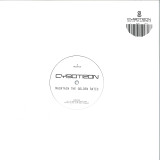
Cybotron has re-emerged in our contemporary cybercultural age when artifactual futures begin a transition into a new era of "Meta".
By combining their knowledge of philosophy, science fiction, and mechanical engineering, at a time when electronic instrument companies were only just beginning to distribute their products to the masses, two prosumer audio technicians named Juan Atkins and Rik Davis were able to re-engineer Cybotron – a combination of the words “Cyborg” and “Cyclotron” (an atomic particle accelerator) – to be used as a home studio performance music that would change the course of independently produced and distributed electronic music.
Dissolving the boundary between singer, songwriter, and producer, Juan Atkins named Cybotron’s future forward funkadelic sound “techno” in reference to Alvin Toffler’s concept of unlikely “techno rebels” against technocracy. Techno is music that sounds like technology, and its purpose was to help society survive our collision with a universally felt “future shock” by inserting an audio virus into the cultural matrix.
Techno’s blueprint spread across the Detroit-Berlin Axis between Metroplex and Tresor. As human society began its transition from a post-industrial to an information-based market economy, Cybotron enabled a thorough system override of the human senses towards a tangible man-machine hybridity and showed the world how to channel their emotions and imaginations into new sound technologies and create new ‘sonic’ spatialities where listeners can transport themselves out of the physical world into the future. The cover of their debut album Enter (1983) transmitted a fragmented view of a body in motion being digitized mid-stride, dissolving physical and virtual reality into sonic fiction.
Today, the man-machine hybridity of Cybotron is still the truest form of techno, coevolving in conversation with the technological music they created and inspired. The latest data disk marks a new chapter that reflects a techgnostic musical expression of the knowledge acquired during their decades-long hiatus. Unlike the dance music industrial replications of the Model 500 formula, acknowledging the content marketing expectations that segments music into specific, sellable genres, this techno music is self-aware. Cybotron processes dance music tropes spawned from its very own blueprint with a meta-tactical precision out of sync with our current rave new world.
Cybotron’s return demonstrates a studied engagement with what techno was and should be with a peerless update of Juan Atkins’ initial inventive idea of do-it-yourself electrically reengineered music xeroxed onto both sides of the 12” – uploaded directly into the alleys of your mind.
- The Rhythmanalyst
First 7'' release from Dressel Amorosi, the duo of Federico Amorosi (bass) and Valerio Lombardozzi (keys, synth & programming). Halfway between cosmic-funk and Italo-disco, the two tracks on this release are infused with the fusion- and electronic-oriented spirit of late '70s and early '80s Italian soundtracks and library music.
"Synthporn", on side A, is a midtempo instrumental with a voluptuous electronic feel, a mixture of glamour and retrofuturism driven by Amorosi's pulsating bass and Lombardozzi's elegant oscillators.
"Cargo", on the flip side, brings infectious '80s dance vibes to the table with a warm slice of synth-pop that can fit any scenario and filmic mood, from action to comedy.
The Art of Surrender marks a return to life, sown from primal impulses and hard-won emotional truths. Unrestrained melodic rapture soars above a relentless kick drum, speaking a need to move, to dance, to love. The music is as ambitious as its origins are personal. Tignor plays with scale, crafting multi-movement epics alongside one-minute miniatures. The smallest, most fragile violin gestures, where the finger barely touches the string to extract natural harmonics exist side by side with angular, exotic melodies, asymmetric rhythms, and rapid-fire string crossings. On this LP, Tignor digs even more deeply into the violin and its technicolor reimaginings under his electroacoustic treatments. Christopher Tignor is a composer, violinist, lecturer, and software engineer. His emotionally charged scores and unique focus on live, performance-based electroacoustic practice has won acclaim within both the classical and experimental communities across 10 LPs on the Western Vinyl and New Albion record labels. He creates the live performance software he uses, shared freely. As a composer he has written and recorded work for ensembles including The Knights, A Far Cry string orchestra, and Brooklyn Rider string quartet, performing alongside them at premiere venues including Carnegie's Zankel Hall. As a string arranger he has worked with Helios, Jefre Cantu-Ledesma, John Congleton, This Will Destroy You, Meshell Ndegeocello, and several other artists at the boundaries of popular music. This music breathes, swoons and swoops elegiacally, in the same way a crack symphony might on a good night." MAGNET // "A bulwark against the ambient clatter of everyday life...sheer technical mastery" BANDCAMP (ALBUM OF THE DAY) // "Tignor creates a muttered hum of activity that burbles at the fringes of an internally focused halo of sustained, glowing chords, and the effect is powerful." NPR // "Making computers coexist in harmony with acoustic instruments in a live setting is more easily imagined than achieved. But Christopher Tignor, a young composer and performer shaped as much by his work in downtown nightclubs as by his formal education at Bard College and New York University, proves that it can be done." THE NEW YORK TIMES // "Absurdly talented"
Previously released on Fabrika Records in 2011 by the band members at the ripe old age of 17, this release marks a milestone in the Goth and Wave revival of the early 2010s. With hits like "Du rennst" or "Raben", Die Selektion blew some very fresh air into the dusty world of dark electronic music, featuring haunting trumpet melodies and German lyrics that question the meaning of life and love once again, encased in brutal sounds that taste like iron and lust. These 11 songs push you straight back into early days of Electronic Body Music.
Die Selektion take you on a wild ride through the suburbs of your soul, joined by Nitzer Ebb, Die Krupps, Cabaret Voltaire and DAF.
Italian sound Dino Sabatini is back on his own Outis Music, Opera Quattro Ep on the Outis Opera Series it's a mesmerizing collection of playful electronica, heavily influenced by trip-hop and dub music, perfectly capturing Sabatini's current state of mind. Balancing in between half-tempo drum and bass and organic techno grooves, it's an essential pack of Italian deep techno trips.
The dual forces of shadow and light, despair and hope, frustration and catharsis are at play in the music of Cupid & Psyche, the Los Angeles-based indie rock duo of Michael Vidal and Juan Velasquez. First gaining recognition in the late aughts as members of the punk band Abe Vigoda, whose 2010 album Crush was named one of the "Best 50 Albums of the 2010s" by Pitchfork, the two have reunited as collaborators for the first time in a decade. Cathartic jam sessions would birth the emotionally resonant songs that appear on their debut album, Romantic Music. Though they pull from a wide array of `80s and `90s influences, Cupid & Psyche bring together these disparate moods and genres through their own esoteric lens on Romantic Music_making for a singular sound that at once feels familiar and alluringly hypnotic. Listeners will detect the gloom of post-punk and goth, the haziness of dream-pop and shoegaze, the bittersweet guitar melodies of second-wave emo, and the manic electronic rhythms of trip-hop and big beat. The immersive soundscapes on Romantic Music are sometimes agitated and driving, while other times ethereal and transcendent. This duality matches the album's lyrics of looking for a divine escape from the grim realities of existence, as well as the darkest parts of one's psyche. "The thesis of the album is trying to transcend the limits of life and the struggle therein," Vidal says. "There's a lot of lyrics about feeling trapped or frustrated, and then trying to find a way out. There's a lot of times I sing of hope and grasping towards love. But maybe in trying to escape, you take the wrong door, be it substance abuse or other vices." Now as Cupid & Psyche, Vidal and Velasquez return to a friendship that creatively feels like home_except this time, with more experience, self-knowledge, and less pressure to make anything other than the music that emerges naturally. The LP's title Romantic Music is tongue-in-cheek, since there are no love songs proper on the project, and the phrase itself can imply a kind of light listening. But it befits that deep bond that the members have, as friends who understand and empathize with each other's worst, so they're capable of bringing out each other's best.
Producer, DJ, and composer Seb Wildblood returns tothe fold with third album "separation anxiety." Set for release via his own "all my thoughts" label, the prolific producer"s blissful electronics are on full display across the album"s 10 tracks, his most ambitious and fully realised offering yet. "The record largely explores coming to terms with abandonment, and what that looks like when starting to build a future of your own," explains Wildblood.
- Listen Up
- See What You Mean
- Don’t Let Me Be Misunderstood
- I Can’t Help It
- Balancing Scales
- I’m Hearing You
- Move On
Nicky Prince has never been bound by musical genre. The Milton Keyes born and raised. Vocalist has the versatility to fit any vibe while not compromising her signature sound. Although best known for her Garage hits with Zed Bias in the early 2000s, Nicky was performing and recording with various acts well before the height of Garage’s popularity. She started her career singing in Soul and Funk bands, and over the last two decades has lent her voice to Electro, Hip-Hop, Drum & Bass, House, and Ska tracks.
In 2009 Nicky graced listeners with her debut solo EP “See What You Mean.” Within only five tracks the singer-songwriter displays impressive range, from the up-tempo, energetic funk of “I’m Hearing You” to a bluesy rendition of Nina Simone’s “Don’t Let Me Be Misunderstood,” to the hushed tones of the EP’s sole acoustic number, “Balancing Scales.” She is backed on this effort by her band Soul Selecta, which includes renowned UK session players Dave Baldwin on Hammond organ and Robert ‘Skins’ Anderson on drums/percussion. Sadly, the release was criminally slept-on.
While “See What You Mean” was available on streaming services and CD, the EP
never received the vinyl treatment. So, rather than simply reissuing the project, Nicky has teamed with KU to offer what she calls a “reincarnation” of her debut on wax.
Now retitled “Listen Up,” this underrated affair has had new life breathed into it. To bring out the best in the original recordings, each song has been meticulously remastered by Christian Obermayer at Strype Audio. Then to fill out the 12”, Nicky has added a handful of unreleased songs, including a heavy groove cover of Michael Jackson’s “I Can’t Help It,” which sees her reconnect with Zed Bias; a punchy, funked up tune titled “Listen Up;” and the original version of “Balancing Scales” that reveals what the track sounded like before it was stripped down to just guitar and vocals. This offering perfectly captures Nicky’s distinct tastes and inspirations. Further, it fills a hole in your record collection that you didn’t know was there until now.