JAUZAS THE SHINING - MECHATRONICA, BROKNTOYS, SHIPWREC , SPECIMEN.
Jauzas the Shining was known as Adjust before taking that new alias - which is a salute to Kubrick's movie and the telepathy of his young character.
Since 2001, he's one of the most active electro producers in France, with several solid EPs released on Shipwrec, Last Known Trajectory, Transient Force, New Flesh, Minimum Syndicat, Mechatronica or Brokntoys and collaborate with iconic artists like Heinrich Mueller, Orgue Electronique, Ekman, Shemale, Faceless Mind, Specimen, and Ultradyne. He shared the decks with the hall of fame of electro music.
From the 90s IDM influences, Jauzas The Shining is a deep odyssey into the cold groove of electro sounds, using his sickness on skyzophrenic beats from his electronic dark side.
Hidden in the shadow of this room, Jauzas looks himself in a broken mirror but he doesn't recognise himself, he doesn't remember..the only thing he knowns is that he's now on board the nautilus ship, deeper and deeper is an ocean of sounds ...Artificial lights, mechanical noise and metallic walls..He starts hearing these voices but he doesn't know who they belong to? Utilising his sickness on skyzophrenic beats and abstract electronic dark side, he became "Jauzas the shining" The mysterious and miraculous journey of Jauzas who spent his nights and days on Formentera.
Here he conjures up a concoction of deep ocean meanderings and spellbound nights, underneath the shooting stars and radiant waters. Images of the past merged with future, becoming a collage of voices across projected shapes which make presence in their ghostlike form. This is another outing which explores the surreal and the abstract, which expressed though Jauzas's electro-musicalities with Specimen.
Suche:electro
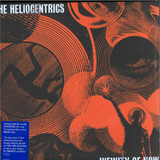
The UK’s cosmic, psychedelic-funk ensemble issue their first album on maverick producer Madlib’s label, Madlib Invazion. The Heliocentrics’ albums are all confounding pieces of work. Drawing equally from the funk universe of James Brown, the disorienting asymmetry of Sun Ra, the cinematic scope of Ennio Morricone, the sublime fusion of David Axelrod, Pierre Henry’s turned-on musique concrète, and Can’s beat-heavy Krautrock, they have – regardless of the label on which they’ve released their music - pointed the way towards a brand new kind of psychedelia, one that could only come from a band of accomplished musicians who were also obsessive music fans. Drummer Malcolm Catto and bassist Jake Ferguson are the Heliocentrics’ masterminds and producers, and they are obsessive weirdos in today’s musical climate, searching, progressive humans who are often out-of-time with current trends. They have been playing together for nearly two decades and their collective drive is to find an individual voice. The Heliocentrics search for it in an alternate galaxy where the orbits of funk, jazz, psychedelic, electronic, avant-garde and “ethnic” music all revolve around “The One.” With Madilb’s label Madlib Invazion for Infinity of Now, the Heliocentrics have returned to develop their epic vision of psychedelic funk, while exploring the possibilities created by their myriad influences, Latin, African, and more.
As time moves forward, it becomes increasingly clear that the need for emotional expression through artistry is more important than ever, especially in the wake of emerging AI technology that threatens to replace human creativity. Minus & MRDolly's new album, "Giant Stops," is a testament to the enduring power of art to connect with audiences on a deep emotional level.
Named in direct reference to arguably one of the greatest albums ever created, "Giant Steps" by John Coltrane, "Giant Stops" pays homage to the rich legacy of jazz while pushing the boundaries of the genre with a contemporary twist. The album seamlessly blends jazz, hip-hop, and electronic elements to create a unique sonic landscape that is both nostalgic and modern.
For Minus & MRDolly, "Giant Stops" represents a new chapter in his evolution as a musician, showcasing his growth and commitment to pushing boundaries in his genre-bending style. Taking inspiration from the creative process of Makaya McCraven, the album features dynamic instrumentals backed by a live band, with Minus & MRDolly's signature lyricism and storytelling shining through both the instrumentals and the lended work of guest musician such as Meta_ or Luca Argel. By using this production method the album takes a bold stand for the importance of sampling as an art form hoping to encourage listeners to appreciate the rich history and evolution of hip hop and to recognize the essential role that sampling has played in shaping the genre.
As a nod to his Portuguese roots, "Giant Stops" represents a deeper exploration of the artist's identity and a commitment to looking inward to find creative inspiration. With this album, Minus & MRDolly hopes to inspire others to embrace their own unique perspectives and use them to create art that connects with audiences on a deeply emotional level.
In a world where technology threatens to replace human creativity, "Giant Stops" is a reminder that the power of art to connect with people on a fundamental level is enduring and will continue to shape our world for generations to come.
The recent find of four Joe Graham recordings in the GRC/Aware tapes has shown there was much more to Joe’s talents than the southern soul of his 60s Chant recordings and the synthesiser, electro pop he recorded for various Atlanta labels in the 80s. ‘Higher Than High’ is a soulful disco number featuring a relentless beat. The track already has a strong following, thanks to advance plays in Europe and the UK from DJ Dave Thorley. This track, along with three other numbers, were recorded around 1976 for the GRC stable – just as the company was floundering so badly that the songs were left as unmixed multi-track tapes. Now mixed the demand for this one will be high.
We’ve taken the opportunity of including another excellent, unreleased at the time, recording from the revered John Edwards. ‘It’s Got To Be The Real Thing For Me This Time’ is an uptempo Sam Dees song, unheard until the 1990s release of the first batch of GRC/Aware tapes
In the late 2000s a sprawling catalog of what is now genre-defining music was emanating from an unlikely place. Cleveland, Ohio has a broad reputation for many things, but in the aughts, psyche-expanding Kosmische wasn’t necessarily Cleveland’s calling card… until Emeralds. The trio of John Elliott, Steve Hauschildt, and Mark McGuire had released a profusion of limited-run cassettes, CD-Rs, and vinyl titles that had been passed around basement shows and then migrated to niche music communities online, creating a unique kind of murmur, even in the height of the DIY blog era. Three kids from the rust belt were crafting a distinctive and truly far-out strain of music on their own terms in the Midwest. They were flipping lids in wood-paneled basements and circulating around the underground with soaring sounds stylistically indebted to deep German electronic music pioneers and released with the ethos and twisted fervor of renegade Midwestern noise freaks. After several releases garnered a die-hard fandom in niche circles of internet/music culture, and then catching the attention of the late Peter Rehberg, the renowned artist and curator of the Editions Mego label, an expectation was set that the next Emeralds record was going to be a big one. And in 2010, Does it Look Like I’m Here? was it.
mp3s of this album; they can finally get a fresh copy on vinyl. Does It Look Like I’m Here? became a hallmark that would carve a path for an entire scene. Ghostly International is thrilled to reissue the album, remastered by Heba Kadry, including 7 bonus tracks exclusive to the digital album and CD. The limited edition 2xLP includes extensive liner notes by Chris Madak (Bee Mask).
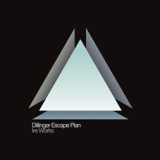
After Miss Machine, Dillinger Escape Plan fans were divided. Many of the folks who were attached to the screaming mathematical metal of Calculating Infinity bailed on the band, disapproving of the experimental musical direction and the meathead appearance of new singer/screamer Greg Puciato. Open-minded listeners were excited about the progressive journey they were taking and many critics hailed the group as a true innovator of metalcore. Ire Works succeeds in many of the same ways that their previous album did, while branching out creatively. They continue to toy with technical metal, blistering hardcore, jazz breaks, and post-punk, but here they evolve again by adding more twists and turns with additional electronic elements. While the merging of too many styles in hardcore can make for a convoluted result (see Avenged Sevenfold's self-titled release), the added instruments and genre changeups enhance the result rather than acting as ornamental distractions. Edgy Aphex Twin-style drill'n'bass drum breaks and stretched and squeezed electro blips feel strangely at home next to the psychotic time-signature changes and manic riffs, especially on the tracks "Sick on Sunday," "Dead as History," and "When Acting as a Wave." Violins, pianos, and trumpets sit nicely in the mix, and the group's willingness to take chances leads to stunning artistic endeavors rather than stale attempts at crossing genres just for the sake of being clever. Original vocalist Dimitri Minakakis makes an appearance, as does Mastodon guitarist Brent Hinds, but the most notable inclusion is drummer Gil Sharone, who proves himself an expert at picking up the slack after the departure of founding member Chris Pennie to play in Coheed and Cambria. Undoubtedly, this act added anger to fuel the fire of their heavier numbers. "82588," "Fix Your Face," and "Party Smasher" are as wicked and manic as their most difficult earlier stuff; conversely, the melodic hooks and falsetto of "Black Bubblegum" and the watery ambience of "Mouth of Ghosts" balance out the album nicely. It can be inaccessible and terrifying all at once, but in a genre overly saturated with formulaic groups, Ire Works is a true standout. If DEP aren't careful and continue down this innovative path, they could easily be labeled the Radiohead of metalcore
Wewantsounds continues its Akiko Yano reissue programme with the release of "Iroha Ni Konpeitou," another superb Akiko Yano album and one of her funkiest, highlighting her unmissable singing and songwriting talents. Recorded in Tokyo and New York City, the album features a superb line up of the best musicians from both cities and sees Yano mixing Japanese pop with funk and a touch of electronics, playing a wide array of keyboards programmed by YMO synth wizard Hideki Matsutake. This is the first time the album is released outside of Japan and this deluxe LP edition includes remastered sound, download card plus the original 4-page insert with poster, lyrics and full line-up.
Sucesiones is a compilation of studies written for 53 equal divisions of the octave (53 EDO). This tuning temperament was selected after analyzing the work of Mexican researcher and visionary Augusto Novaro, one of the microtonal and just intonation pioneer theorists. Novaro claims that 53 EDO is one of rich musical qualities, which has good approximations to the harmonic series.
The use of simple textures such as sine waves was a conscious decision, this in order to maintain the focus on the relationship between the frequencies and the possibilities this tuning allows, that fluctuate from aggressive beat frequencies to pure intervals. These four compositions serve as an introduction and familiarization to the tuning’.
Recorded, mixed and mastered by José Orozco Mora in his studio (Mexico City)
José Orozco Mora (Chapala, México) has worked with different aspects of sound creation, such as composition, sound design, recording and production. His work mainly explores the fundamental aspects of the sonic spectrum, implementing alternate tunings and temperaments, exploring their harmonic content through the combination of frequencies, using both acoustic and electronic sources. These explorations had led Orozco to utilize different artistic mediums such as quadraphonic compositions, sound installations, and others.
Orozco has released his work in labels such as Debacle Records (USA), Constellation Tatsu (USA), Hole Records (MEX). He has performed and presented his work in Austria, Germany, Greece, Italy, México, Netherlands, New Zealand, Switzerland, etc.
Earlier this year, Subwax Bcn made an important contribution to the electronic music community by having the timeless dub techno compilation Vibrant Forms II by Fluxion remastered and reissued. First released in the year 2000 on Chain Reaction, Earlier this year, Subwax Bcn made an important contribution to the electronic music community by having the timeless dub techno compilation Vibrant Forms II by Fluxion remastered and reissued. First released in the year 2000 on Chain Reaction, Vibrant Forms II is widely considered to be one of the greatest achievements in the genre. As it turned out, Vibrant Forms II became one of the last records to be released on Mark Ernestus and Moritz von Oswald's classic label - a suitable swan song if there ever was one. And that's it, right
Well not quite.
If one would search for Fluxion - Vibrant Forms III, Discogs would come up empty and Google would treat it as a misspelling. Until now.
Konstantinos Soublis, aka Fluxion, and Subwax Bcn have decided to pick up the banner and release Vibrant Forms III as a CD as well as four individual 12" records under 2016. It contains everything you could hope for and more: The massive, booming basses, the clicks and hisses, the atmospheric thunderstorms, the opium smoke-scented streaks of reverb and dub echoes. The warmth. Yes, above all else the warmth: Sometimes moist and dripping as in Safe Harbour, sometimes blisteringly dry as in Variant. It's no easy task, giving cold, dead machines warm breaths. And no-one quite does it like Fluxion.
The Reissue of Vibrant Forms II was an act of cultural preservation. It reminded us about the legacy of the Basic Channel label family, in which Chain Reaction played an important part. Without this legacy, the contemporary body of electronic music would look different and make very different sounds. With the Release of Vibrant Forms III, Subwax Bcn takes it one step further. Fluxion's Vibrant Forms III album remind us of the timelessness of truly great music, never mind the genre.
Adam Deitch, Grammy-nominated artist & world-renowned drummer of Lettuce and Break Science, has released his latest Producer album ‘TAKE YOUR TIME’ via his record label Golden Wolf Records. This is Adam’s third full-length Producer album, and showcases the multi-talented musician’s production prowess and beat-making abilities. The record offers a heavy dose of drumming (of course), but the tunes soar to new heights with dreamy electronic beats as the backdrop and genre-spanning undertones– hip-hop, soul, r&b, and funk to name a few. This release is sure to delight both fans of Adam’s multiple other projects and new electronic listeners alike
Since 2016, Public Memory has been crafting lo-fi electronica from the darker corners of the psychic landscape. Gritty atmospherics, damaged synthesizers, and unearthly vocals blend with a mixture of electronic and organic percussion, creating a sense of forceful unease. This, when combined with the shadowy production and emotive singing of Robert Toher, creates a singular contrast between power and vulnerability.
Octave One return with Never On Sunday Vol.2, an EP with new remixes from Orbital and Giorgia Angiuli next to three standout recent tracks.
The Detroit duo’s Never On Sunday alias was born in the nineties with a view to making a mix of downtempo, deeper and more thoughtful electronic sounds. After just two EPs, it lay dormant until last year when the new EP The Bearer on their own 430 West label brought it back to life to a great reception. Then came the Octave One Presents Never On Sunday album this year that collected together a wealth of originals and remixes which are now coming on 12".
First up is legendary brotherly duo Orbital - a UK antecedent to the Burden brothers who have been crafting pioneering electronic sounds for decades. Their remix of ‘Price We Pay’ feat. Karina Mia is deep house excellence. It has a bouncy groove, elastic bassline and simmering vocals that send shivers down the spine and the sci-fi synths twinkle up top. Italian multi-instrumentalist Giorgia Angiuli has long been innovating in the techno world, drawing on her classical background to craft standout sounds for the likes of Kevin Saunderson’s KMS label. Her remix is six uplifting minutes of synth arpeggios, soulful techno drums and epic breakdowns that will captivate any dance floor.
The b-side features three cuts from the Never On Sunday (Deluxe) album and opens up with 'Lifelike', a slow, pulsing dub with mysterious melodies and sinewy synths reflecting light like stars in a night sky. A textured bassline arrives to bring a real sense of tension to the melodic beauty. 'Soon After' is another cosmic cut that rides on hammering bass beneath lush synths capes and rays of hope that pierce the darkness. The blissful 'Mona' closes down with heavenly and expansive pads that shimmer and shine as rich bell sounds and choral pads bring a warm sense of atmosphere.
Never On Sunday Vol.2 is another package of deeply emotional electronic sounds.
Gatefold single vinyl LP with an 8 page 12" size bookelt in the other side of the gatefold.
We're thrilled to announce the return of Tobor Experiment, the visionary musical project led by the enigmatic Giorgio Sancristoforo, to the Bearfunk fold. After a twelve-year hiatus, Tobor Experiment emerges from the shadows with their second LP, "Available Forms". Picture the ethereal ambiance of a dimly lit jazz club colliding with the futuristic vibrations of a 1970s sci-fi TV show, and you'll begin to grasp the sonic experience that awaits. Giorgio draws on a whole host of musical inspirations, from the name checked Tim Gane & Letitia Sadier to the moog pioneers Claude Denjean & Jean Jaques Perrey. With the moogsploration of contemporary jazz Tobor Experiment invites listeners on an extraordinary musical odyssey where jazz meets electronica meets nu-disco.
Prepare to be captivated from the very first note of the infectious opener, "Lowpass Risotto" as Tobor Experiment masterfully combines familiar elements with their unique artistic vision. Resonating with undertones reminiscent of the timeless classic "Take Five" the track immediately grabs your attention. While the familiar drum shuffle sets a comforting foundation, Tobor Experiment takes an unexpected twist by infusing the composition with squelchy Moog lines and captivating hollow body guitar solos. The result is a harmonious blend of nostalgia and innovation that transports you to an entirely new sonic realm.
Continuing the journey, the mesmerizing 6/8 rhythm of "Up!" pays homage to the iconic sounds of Stereolab while showcasing Tobor Experiment's innovative spirit. As enchanting synth pads weave through the air, you find yourself immersed in a dream-like state, carried away by the hypnotic shifting patterns of the bass and drums.
With "Astounding Stories" Tobor Experiment returns to the energetic vibes of the album opener, inviting you to surrender to a sonic tapestry rich with musical exchanges. In traditional jazz style we receive solo's from all parties. Each instrument adding its unique voice to the narrative, creating a dynamic and engaging musical conversation.
As the album progresses, "Moonscape Dust" emerges, drawing inspiration from the atmospheric brilliance of "Low." This track serves as a portal to an otherworldly sonic landscape where time and space lose their hold. Here, organic drums step aside, making way for a low-fi drum pattern that lays the foundation for ethereal synth pads. The composition invites you to explore the depths of your imagination, transcending earthly boundaries and allowing you to float in an immersive soundscape.
The album's closing track, "Monsters" has an air of "Air" about it... the ethereal synths beckon you to surrender to the weightlessness of space, just allow yourself to be carried away by the infectious rhythms, intricate melodies, and atmospheric textures that shape this extraordinary musical journey.
Each track on "Available Forms" showcases Tobor Experiment's exceptional ability to transcend musical boundaries, creating a genre-bending album that defies all expectations. From start to finish, the soundscape presented is a testament to Tobor's relentless pursuit of musical innovation. Each composition is a fusion of diverse elements, seamlessly blending organic instruments and electronic textures in a way that challenges traditional genre classifications.
The AI-generated artwork serves as a portal to an alternate dimension. Paying homage to the retro-futuristic aesthetic of 1970s science fiction TV shows, it captures the essence of the album's fusion between organic and electronic realms.
Deena Abdelwahed's first album is shifting the epicenter of contemporary electronic music south: 'Khonnar' will be released on November 16, 2018 by InFiné. Pronounced 'Ronnar' (an essential detail so as to avoid facile misinterpretation by French-speakers) it is a term that makes the most of Tunisia's cultural and linguistic spectrum. It evokes the dark, shameful and disturbing side of things, the one we usually seek to hide, but which Deena instead sticks our noses in with her debut. It is a testament to Deena's coming into her own as a world citizen, and as an artist. A self-construction made of frustrations and constraints, borne of retrograde mindsets, which are not the prerogative of either the East or the West, and which she tirelessly strives to expose and break. Throughout the 45 minutes of 'Khonnar", Deena breaks down the codes of bass, techno and experimental music, and writes the manifesto for a generation that does not seek to please or to conform, taking back control of its identity - with all the attendant losses and chaos. A new creative world order is taking shape, a new tilting point between north and south, the response of a connected and liberated youth who takes the control of the new decolonization. About Deena Abdelwahed A Tunisian producer and DJ, Deena Abdelwahed arrived in France at the age of 26 after earning her stripes on the Tunis scene and as part of the Arabstazy collective.
Das französische Label Infiné ist dafür bekannt, elektronische Musik jenseits ausgetretener Pfade zu veröffentlichen - hier wird Techno und House neu definiert. So passt es ganz gut, dass die aufstrebende tunesische DJ und Underground-Produzentin Deena Abdelwahed bei dem Lyoner Imprint eine Veröffentlichungsplattform gefunden hat. Abdelwahed performte in den letzten Jahren zwischen Boiler Room und Berghain in allen namhaften Clubs und hinterließ bei der globalen Dance-Gemeinde mehr als staunende Münder. Nach der im Frühjahr 2017 veröffentlichten EP "Klabb" präsentiert die Tunesierin mit "Khonnar" jetzt ihr sehnlichst erwartetes Debütalbum.
Was beide Tonträger vereint: sie verbinden nordafrikanische Klangelemente mit elektronischen Sounds, haben jedoch mit Weltmusik nichts am Hut.
Repress!
The boys from Munich are back on RNT with a 4-tracker of serious flavor! 'Express Lane' launches the 12' on the disco highway for a wild ride of cheeky vocals, horn stabs, and vocoded synths, then veers south for some North-African New Wave with 'Libyan Sun'.The B side kicks off with the Afro-disco monster 'Don't Oho', already a staple in RNT sets and then finishes with the minimalist electro-soul bounce of 'Emergency Loop'. Sure-shots, the lot of 'em!
Attarazat Addahabia & Faradjallah's album came to us as quite a mystery. Our friends from Radio Martiko got access to the studio archive of the Boussiphone label and a reel labeled “Faradjallah” was among the items they had found there. After listening to the selection of reels they borrowed, Radio Martiko felt it was not a fit for their label and helped us licensing it from Mr. Boussiphone instead. We knew nothing about the band. We just had the reel with the music but very little information. What we knew was that the music was incredible and very unique. Gnawa sounds were combined with funky electronic guitars, very dense layers of percussions and female backing vocals more reminiscent of musical styles further south than Morocco. We started asking around whether anyone knew the band with no immediate success until we asked Tony Day, a musician from Morocco who helped us during our search for Fadoul’s family. His sharp memory came through once again, remembering all the names of the Attarazat Addahabia band members and even how to contact the bands singer and leader Abdelakabir Faradjallah. After visiting him at his home in Casablanca with our Moroccan colleague Sabrina multiple times, he shared his personal story. His father arrived in Casablanca from Aqqa at the age of six and his mother came from Essaouira. Abdelakabir was born in the neighbourhood of Benjdia in 1942. Abdelakabir Faradjallah studied fine arts in Casablanca, graduating in 1962. He also played soccer in the second team of "Jeunesse Societe One". His brother-in-law Ibrahim Sadr worked for one of the biggest football teams of the time in Morocco called "Moroco Sportive Union", which allowed him to travel to France occasionally. While Ibrahim was never part of the band he brought along a few instruments from trips.
Yet the majority of the instruments they could not afford to buy were build by Faradjallah and Abderrazak, Faradjallah's brother who passed away early. For instance they had built a Spanish guitar and a drum made of wood barrel and sheepskin by themselves.During the 1950s Faradjallah was booked as a singer for surprise parties with friends. He started to write his first songs including "L’gnawi" in 1967 and wanted to make people discover Gnawa culture, or maybe rather his take on the culture to be more exact. Faradjallah recalls his first interaction with the genre in the streets of the Dern neighbourhood, where he used to go to elementary school. Gnawa is one of the essential musical genres of Morocco. It combines ritual poetry with traditional dances and music linked with a spiritual foundation. Musically a lot of influences originated from West Africa as well as Sudan. Gnawa is usually played by a selection of specific instruments such as the qaraqab (large iron castanets centrally associated with the music), the hajhouj (a three string lute), guembri loudaâ (a three stringed bass instrument) and the tbel (large drums). People would put shells on their clothes and instruments and use incense at their parties. "Sidi darbo lalla - lala derbo khadem..." came from Gnawa verses Faradjallah used to sing when he was 14. The lyrics tackle a global (im)balance of power and the question of social status in this course. The band Attarazat Addahabia was formed in 1968. The original line-up included 14 members, all from the same family. They played their first small concerts here and there starting in 1969. Later in 1973 they performed bigger shows for instance at the Municipal Theatre followed by the "Al Massira Show" at Velodrome Stadium in downtown Casablanca. Their first album "Al Hadaoui" (the one you are listening to) was recorded at Boussiphone studios in 1972 and was never released before. Nobody seems to remember the exact reason why Boussiphone ended up deciding not to put the album out. The album's title track also served as the basis for Fadoul's "Maktoub Lah", who frequented the same circles as the band for some time.
Their shows sometimes could go as long as 12 hours, starting at 5pm in the afternoon, with an occasional break here and there. In the 1980s the band took a brief break. Faradjallah recalled the reason for that break like this: "Zaki, the bands drummer, had fallen in love with a young girl from Mohammedia. Soon after, he fell very ill. The group members were convinced that the girl had given him ‘s'hor’ (a kind of local Moroccan version of "black magic"). For four years, the whole group stopped playing. It was unthinkable to find another drummer to replace Zaki, even temporarily." So they waited four years for Zaki to "get back on his feet" before going back on stage. Apart from very few gigs here and there Faradjallah stopped playing music in the mid 1990s. Some members from the younger generations formed a new band and still play frequently to this day. Faradjallah runs a television repair shop coupled offerings beverages and snacks in the Belevedere /Ains Sbaa district of Casablanca. While Faradjallah was primarily a musician, he would work for the local cinema and paint their posters for new movies by hand and he designed all artworks and cover posters of the band.
And this eventually led to him participating actively in our first exhibition dealing with Habibi Funk’s work in Dubai 2018. He helped us by creating calligraphic complementations on large photo prints for that show.
'We're All Improvisers Now' is the debut solo album by New York/
Montreal-based performer Tommy Crane, a tranquil, introspective journey through boundary-traversing ambient jazz, buoyed by the creative elan of an artist in full experimentation mode.
Using sensory percussion and a battery of synthesisers, Crane creates a sequence of lucid sonic environments, where the real and synthetic meet, overlap and reappear disguised and opaque.The title's double meaning is immediately apparent; the album is an uncommon take on improvising from a performer incorporating ambient sensibilities and the title also accurately describes the situation many artists found themselves in amidst the pandemic. For Crane, the
pandemic provided a rare gift of time that allowed him to explore his love for electronic and analogue production.
"I don't think I will ever make a record like this again - this was one big
experiment," he says of a project with DIY trappings. After eventually returning from Italy where he was teaching drums and improv classes as Siena Jazz Institute, Crane settled in Montreal with his Canadian partner. At the beginning of the lockdown, he created a spaceship- like rig in his spare room comprised of assorted synths and 'sensory' percussion (which assigns new sounds to drums).
The album features welcome contributions from colleagues phoned in from afar, including saxophonists Logan Richardson and Charlotte Greve, guitarist Simon Angell and bassist Jordan Brooks.