DJ Support: Midland, Craig Richards, Vladimir Ivkovic, Benji B, Emerald, Cici, Darwin, Jossy Mitsu, I JORDAN, Daria Kolosova, Alienata, Carl Craig, Paula Tape, OK Williams, Hammer, Kassian
Kilig Unveils New Era with Air In The Dark / Back To Sofa Surfing
Elusive leftfield electronica producer Kilig emerges from the shadows to unveil a new era on Cross Country with Air In The Dark and Back To Sofa Surfing—two tracks that signal a matured, exploratory sound, balancing introspective ambience with subtle rhythmic propulsion.
In a celebration of London’s enduring spirit of community, experimentation, and unity - fabric resident Bobby. and FOLD’s own Voicedrone join forces to rework Air In The Dark. Bobby. crafts an epic, psilocybin-inspired reinterpretation; Voicedrone - a hard-hitting high BPM electro reinterpretation; and cult favourite RAMZi offering a warm, deep ambient cut.
Back To Sofa Surfing receives its own forward-facing treatment from Manami and Dufraine — two voices at the cutting edge of London’s bass and electro underground. Hailing from a shared studio space , the remixes are infused with raw dub, bass, acid, and electro infused energy.
Search:electro
Gladstone Deluxe is one of the most exciting musicians in the US right now. They make futuristic, deep, percussive yet smooth techno, deep house and electro. They also play timbales in NYC queer and trans salsa band Las Mariquitas, and are a frequent collaborator with fellow East Coast sonic trailblazers Kiernan Laveaux, Johnny Zoloft, and Mira Mira. They have released on Black Techno Matters, Data Disk, Misc, Innocent Music, How Things Are Made, and now Fixed Rhythms is excited to add to the Gladstone lore with their new offering, “No Haterade EP”.
A1 “Cleanse” is zippy tech-y house…think groovy, up-beat, sexy, like something you’d hear in a Titonton Duvante set. A2 is a remix, “Teakup – Where’s My Snare (Gladstone Deluxe Remix)”. Now the EP takes a turn towards psychedelic electro. Spacey trippy vocal manipulations, swelling deep space gravitational waves swelling and resolving. The B side opens with the “No Haterade” track. Arpeggiated electro that slaps with swagger. The final track is a longer, 9 minute driving deep housey techno tune. A bass line that you never want to stop, luscious pads, brain-tingling pings, melodic percussive synth runs, and a touch of acid.
If Gladstone is not already on your radar, take heed! Big tunes here!
fka boursin is a DJ and producer out of Bristol, UK.
Previously known as DJ Boursin, he is recognized for his deep, ambient-infused house music that explores political dimensions of clubs and identity politics.
Welcomed into the Scissor & Thread fold, fka boursin shares two cuts of deep and introspective
electronic music.
The original Listless Intertext is a hazy trip through ambient soundscapes, shuffling rhythms and half-caught conversations, drifting across a 12 minute run time that slowly evolves and shifts with time.
"Listless Intertext is a track centred around the "failed" employment of cheap vocoder software that attempted to process explicit words and phrases across 11 minutes." says fka boursin. "Instead, the vocoder output made any words indecipherable and I was left with thematic vagueness. The final text of the track is simply a submission to its own limitations with some french thrown in."
When label bosses Frank & Tony step up for their Housebeat Dub, they keep the essential mood but introduce a thick, fat groove that works just as well in conveying the mood.
"Our remix is a strictly dancefloor approach," says Frank, "an extended psychedelic beat rework perfect for late night, early morning vibes".
Grittier than their previous work, they take techno themes we know and love in a decidedly personal direction, emphatically divorced from current tropes. Each song clearly captures a vibe, some of which are recognisable love letters to the genre and several of which are unrecognisable in a
great way. Their first album show how Neotex have been informed by parts of electronic music which formed a strong impression and then chose with clarity of mind to break with those patterns and carve their own path
NRV008 delivers two immersive tracks from Za__Paradigma, elevated by a standout remix from Romania’s minimal maestro, Cezar Lazar.
Za__Paradigma’s "Pianeta Extrasolare" opens with hypnotic rhythms and lush textures, ideal for intimate dancefloors. "Senza di te" follows with minimalistic grooves and a compelling, building energy.
Cezar Lazar’s remix of "Pianeta Extrasolare" is an 11-minute journey, blending intricate rhythms with subtle orchestral undertones, showcasing his visionary mastery.
A must-have for minimal, deep tech, and electronic audiophiles.
Lucy Duncombe and Feronia Wennborg compose a modern symphony for virtual choir on 'Joy, Oh I Missed You', muddling sound poetry with Nuno Canavarro and ‘Systemische'-style machine-damaged surrealism. Like a mashup of Lee Gamble's 'Models', Akira Rabelais' 'Spellewauerynsherde' and Robert Ashley's timeless 'Automatic Writing’ screwed to perfection.
Duncombe and Wennborg have been chewing over ‘Joy, Oh I Missed You’ for four long years, working their process until they were "queasily intimate" with their arsenal of artificial voice tools. Tracing the history of the technology, from voice synthesisers and chatbots to AI voice analysis tools, the duo experiment relentlessly to develop a digital-age response to IRL extended vocal technique - think François Dufrêne, Yoko Ono or Phew. Less interested in replicating human sounds exactly, they instead test how various tools might cough up their own idiosyncratic tics as they stretch and stutter through attempts to mimic their "fleshware" counterparts.
Duncombe's got prior form here, most recently re-synthesising her voice on the brilliantly oily 'Sunset, She Exclaims' 45 for Modern Love, following a stunner for 12th Isle in 2021. Wennborg brings along experience from her tenure as one half of microsound duo soft tissue, whose 2022 LP 'hi leaves' (Students of Decay) was a haptic treasure. These approaches mesh remarkably well on their first collaborative full-length, with Duncombe's eerie bio-electronic incantations providing the ideal foil for Wennborg's carbonated hardware processes. It's not completely clear where the human voice ends and the zeroes and ones begin on 'Your Lips, Covering Your Teeth', as rolling cyborg syllables tumble over OS-startup womps and surprisingly svelte outcroppings of glassy, synthetic glitches. The music is surprisingly mannered, a sonic reflection of the cover, where a mouth is pixellated until only colour swatches remain. Duncombe and Wennborg trace the gradual erosion of their voices, leaning into the chaos as their various tools veer off into unique patterns of failure.
What sounds like a far-off, ghosted folk rendition (we're reminded of the Icelandic laments that Rabelais chewed up on 'Spellewauerynsherde') is offset by gnarled, bitcrushed machine faults and pneumatic lip smacks on the brilliant 'Residue', and on 'Brushed My Hair', the duo massage the voice until it sounds like a flute. Assembling stutters and barks and sighs into a celestial chorus alongside time-stretched moans, they create a levitational atmosphere on 'Smell It', freezing the energy from bizarre pitch steps to configure a zonked vocal ensemble.
'Joy, Oh I Missed You’ is an album that, like its source material, constantly morphs, testing the boundaries of its concept repeatedly without bubbling over into conceptual goo. In fact, it's remarkably euphonious, even at its most theoretically abrasive; Duncombe and Wennborg wring out uniquely angelic formations through a process of trial and error that packs a surprising, hefty emotional punch.
- A1: Reise Der Schatten (Titles)
- A2: Sans Visages #1
- A3: The Wind Comes From The East #1
- A4: U?Berwacht #1
- A5: Pyrapulse
- A6: The Silver Tree #1
- A7: Tod Und Der Affe #1
- A8: The Wind Comes From The East #2
- A9: U?Berwacht #2
- A10: Candle With Wings #1
- A11: Tage Ohne Stunden #1
- A12: City Symphony
- B1: Candle With Wings #2
- B2: A Friend From The Deep #1
- B3: The Silver Tree #2
- B4: Paper Moon
- B5: Mechanocrab #1
- B6: Tage Ohne Stunden #2
- B7: Mechanocrab #2
- B8: Island Interlude
- B9: Mechanocrab #3
- B10: U?Berwacht #3
- B11: A Friend From The Deep #2
- B12: Mechanocrab #4
- B17: Tod Und Der Affe #2
- B13: Sans Visages #2
- B14: U?Berwacht #4
- B15: Assimilation
- B16: Sans Visages #3 (Credits)
»Reise der Schatten« (»Journey of Shadows«) is the soundtrack to the eponymous debut feature-length animation film by Swiss artist Yves Netzhammer. Composed by Anthony Pateras and released as a stand- alone album through Hallow Ground, the 29 pieces are based on »weird folk melodies ornamented with electro-acoustics to give the film a more fantastical, fairy-tale feeling,« as the composer puts it. His extensive international recording sessions with a slew of guest musicians results in a record imbued with a sense of mystical surrealism, otherworldly and haunting.
»Reise der Schatten« tells the abstracted story of a genderless being coming to terms with its identity and place in a world full of conflicts and systems of control. »The film was made with old animation software that only works on Mac OS 9. So already, we are in a very hermetic, unique space,« says Pateras. Having tried (and failed) to compose something »typically experimental,« he went for long walks in the Australian bushlands and came home with something else: the idea to create a soundtrack that would create »a kind of distance, or perceptual shift, but also a narrative drive and emotional context which is not always clear.«
While recording the album, the tētēma co-founder did not use digitally generated sound, instead workingwith live instrumentation whose sound palette was enriched by the use of feedback, tape delay, analogue synthesizers, and samples from vinyl records. Wanting to work primarily with acoustic instruments suchas the clarinet made Pateras embark on a complicated journey of his own. The initial recording sessions took place in Basel on metallophones that were designed by Domenico Melchiorre’s Lunason company and laid the foundation for everything that came after.
Pateras recorded with musicians such as guitarist Alexander Garsden, viola player Erkki Veltheim, clarinetist Aviva Endean, multi-instrumentalist Justin Marshall and Lizzy Welsh on the viola d’amore among other instruments. He recorded percussion and recorders with Rohan Rebeiro and Natasha Anderson in his hometown of Castlemaine, double bass with Benjamin Ward in Sydney, bass and flutes with Jon Heilbron and Rebecca Lane in Berlin, and electronics in Zürich with Netzhammer. »Reise der Schatten« was thus a literal journey, made with a »big, international electro-acoustic ensemble.«
As a stand-alone album, »Reise der Schatten« opens up a space of its own. Its stylistic diversity makes it atmospherically and emotionally multi-faceted. As its composer notes, »music for screen can be very virtuosic, sophisticated, and variegated!« His own work is a testament to that claim.
ele
Seoul-based producer and DJ Yetsuby conjures immersive, layered soundscapes that glide between breakbeat, jungle, and leftfield bass. As one half of the duo Salamanda and co-founder of Computer Music Club, she has released music on labels like Wisdom Teeth, all my thoughts, Human Pitch, and Métron. And her boundary pushing sets on Seoul Community Radio, Boiler Room, and NTS Radio have brought her experimental Seoul roots to a global audience.
Her new album, 4EVA, invites listeners to wander through strange musical landscapes. Blending digital, analog, and acoustic sounds, Yetsuby explores the magnetic pull between people and music—an experience that feels both cosmic and deeply personal. Effortlessly weaving through genres such as bass, breakbeat, ambient, footwork, contemporary club, and IDM, she creates maximalist compositions that remain cohesive and refined.
The inspiration behind 4EVA is equally surreal. A childhood doodle from her sister, calling her a “brain-ful human,” sparked reflections on loneliness, togetherness, and the joy of navigating both. The album channels these themes of connection, introspection, and the transformative power of music, delivering catchy melodies and restless harmonies that invite listeners to lose themselves in its nuanced rhythms.
Out on Pink Oyster Records in LP and digital formats, 4EVA marks a bold new chapter for Yetsuby. With this release, she emerges as one of electronic music’s most original and exciting voices, defining the sound of Seoul’s underground—and beyond.
Pink Oyster is a new label from Jess Goodchild and Jack Hardwicke (Métron Records)
Fishing for Gravel is the debut solo mini-LP from Dublin-born, Amsterdam-based producer Paraflow (aka Niall Rogers), via Superconscious Records. Known for his work as a music supervisor and dream pop collaborator (Officer John), Paraflow dives deep into a world of EBM and dub-infused electronics-granular textures, mid-tempo chug, and flashes of blissful uplift driving seven tracks of earthy, drum-heavy synthesis. Includes a rugged remix from Superconscious' own FIO. For fans of Jonquera, Parchman, BPM AM.
Debut LP by Benedikt Montiel Mathews
Frankfurt-based producer, multi-instrumentalist, and DJ Benedikt Montiel Mathews is set to release his debut LP in August 2025 in collaboration with Jazz Montez. Fusing Jazz, Funk, Electro, House, and Techno, the album reflects Benedikt’s genre-bending sound and unique musical voice — shaped by his skills on keys, trombone, guitar, bass, and vocals.
The record will be released on vinyl and accompanied by a music video and a release gig on August 31st, where Benedikt will curate and DJ the entire night. Expect rich textures, danceable grooves, and a fresh perspective from one of Frankfurt’s most exciting young talents.
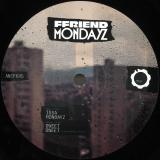
From concept to format Analog Concept is delighted to bring you the sharp, stimulating electro and techno sounds of the talented yet mysterious Ffriend.
A lysergic cloaked story is told in the Mondayz EP; your audio travel visa will be initiated on the A side of the ride through lush permeating pads, epileptic arpeggios, and the 808 jammed program of Issa, while the title track Mondayz and its dub dipped stabs of pleasure with conga percussion is the type of electro that moves the mind and physical in addictive mysterious ways.
Side B takes a detour to the peaks of Deep courtesy of the driving deep techno house style, charming chirps, and oceanic vibes of Dweet. In addition we have included a stripped back yet magnetically atmospheric and percussive perked remix delicacy from Command D. (Animalia).
“Mondayz” EP suited for home and the DJs, right on time for the future summer sun days.
43°C, the debut LP by French electronic producer Basile3, is the result of a decade of cultivating a musical identity that focuses on hybridization, sonic recycling, and playfulness. The enigmatic title "43°C" signifies a haze of bliss (4+3=7, the producer's lucky number) backdropped by the ecological state of a world that’s grown slightly but surely warmer.
In this anticipation fiction, Basile3 offers a soundtrack that is an exploration of club music, electronica infused with r&b and ambient synths. The French producer warmly invites listeners to his state of mind, blooming with genre-bending floating soundscapes.
Featuring Telma Cappelo, Daisy Ray, Loydfears, Lucy Sissi Miller and Minor Science.
The writer Max Sebald often pondered over the nature of human memory, specifically, how our thoughts and desires - and their results - overlap and mutate over time. In A Place in the Country, he writes of the significance of what see as “similarities, overlaps and coincidences”. Are they the “delusions” of the self and senses, or manifestations of “an order underlying the chaos of human relationships, ... which lies beyond our comprehension”?
Song of the Night Mists, the new album by post-classical composer Stefan Wesołowski, often feels it draws on Sebald’s premise.
On a simpler plane, the one where the market dictates the neatly ordered information we consume, Song of the Night Mists can be described thus: recorded in the main by Stefan Wesołowski in Gdańsk, both in his studio and in Saint Nicholas' Basilica, the album incorporates acoustic instruments - piano, violin, double bass - and classic synthesizers such as the Roland Jupiter-8, the Soviet Polivoks. A Roland Space Echo RE-150 tape delay was also pressed into service as an instrument. We also hear the basillica’s organ and field recordings from the Tatra Mountains. Other musicians were Maja Miro, who played the flute parts on ‘Glacial Troughs’ and brother Piotr Wesołowski, who played the organ on ‘Wilhelm Tombeau’. Sound engineer was Marcin Nenko, who was also on hand to record the basilica organ parts. The album was mixed in New York by Al Carlson (Oneohtrix Point Never, Jessica Pratt, Zola Jesus, Lady Gaga, and Liturgy) and Rafael Anton Irisarri handled the mastering.
Ostensibly, Song of the Night Mists is the last in a trilogy, following on from albums Liebestod (2013) and Rite of the End (2017). All three deal with existential matters such as love, death, decay and “an ultimate end”; apocalyptic and Promethean in spirit, and betraying very human conceits. The Sebaldian nature of the new record starts to make itself felt when Wesołowski talks of how he used sampling. One element is unexpected, that of sampling himself: “I go back to dozens of my own unused sketches and recordings, treating them as raw material to cut, slow down, reverse, and transform in every possible way.” Memory as sound, to be reemployed by the listener through their own imaginings.
Another set of samples made by Wesołowski plays another role. These are field recordings, originally created for an audio illustration of the formation of the Tatra Mountains, and used in a film by sound designer Michał Fojcik. Wesołowski: “You can hear cracking ice, streams, footsteps in the snow and the wind, and a real avalanche, recorded from the inside.” The “Tatra connection” on the album is also found in samples referencing composer Karol Szymanowski. The album’s title alludes to a poem about the mountains by Polish poet, Kazimierz Przerwa-Tetmajer.
Wesołowski’s Tatra recordings are “about a world without humans - about the fact that the world existed, was beautiful, and had meaning long before people arrived, and for the vast majority of its history, it was a place without us.” Wesołowski, using one iteration of the natural world, plays out in sound Sebald’s idea of another order, underlying the chaos of human relationships lying beyond human comprehension.
These feelings play themselves out on the five album tracks. Sonorous and rich, they illustrate tectonic shifts we have no control over. Wesołowski hints that the overall sound is a “meditation on the metaphysics of the non-human set against the spirituality that human presence has brought into it.” In that light, the opening number, ‘Core’, with its slow build, and crackling and straining sound effects, create an effect of the earth groaning into life in a creation myth. Once the piano part raps out a simple melody and modulated tonguing trumpet samples add to the overall atmosphere, the listener can certainly find a cue in the “spiritual”, or “human” side of the story. Human versus nature: from the strains and harmonic muscle stretches of the second number, ‘Glacial Troughs’, through to the powerful and filmic ‘Stalagmite’ and heart-on-sleeve romance expressed in closer, ‘Wilhelm Tombeau’, we listeners are cast as Friedrich’s wanderer, looking out over a landscape that will appear only if we engage with it.
Formations of melody appear incrementally, almost appearing by chance - like hidden footings in the rock shelves to give us something to grasp onto. Rhythms are used sparsely: the prolonged percussive taps on ‘Glacial Troughs’ are an anomaly and maybe there to give pace to the album to come; essentially to keep the listener strapped in. Elsewhere, percussion is used as an aid to mood, the two thudding, timpani-style passages on ‘Peak’ there to offset the short, beautiful, kosmische passage that splits them.
Elements of the borderline religious spirit that drove German electronic music in the late 1960s and 1970s also find a place on Song of the Night Mists. The swells and recessions of the organ find their emotional climax on ‘Wilhelm Tombeau’, a track which summons up echoes of the “mountain magic” vistas created by Popol Vuh or Tangerine Dream, especially with the slightly atonal wobble of the Mellotron that counters it.
This is a dramatic album, but it does feel a strangely short, or curtailed listen on ending, evoking the feeling one gets when waking from a dream, and, for all its incipient grandeur, a track like ‘Stalagmite’, for instance, ends on a minor note. Wesołowski admits that Song of the Night Mists is born of the all too human process of temptation, doubt and recalibration - Sebaldian overlaps and coincidences forming something that must live another life, away from its creator. In Wesołowski’s words, the album is “a newborn foal must stand up and walk right after birth.” Now it is yours to ponder.
- A1: Treble Control
- A2: Bass Control
- A3: Playback Amplifier
- A4: Speed Tolerance
- A5: Monitoring
- B1: Transistors
- B2: Consumption
- B3: Reel Size
- B4: Standard Model
- C1: Erase & Bias + Signal/Tape Noise
- C2: Tape Speeds
- C3: Frequency Response
- C4: Play Head
- D1: Mains Voltage
- D2: Record Level
- D3: Demdike Stare - Process Ion (Part 1 - Remix)
- D4: Demdike Stare - Religious Dub (Part 2 - Remix)
Organic Analogue returns with a rediscovery of Beppu's rare dubbed-out electronica and circuit-bent techno. Andrew Hargreaves is the Manchester-based producer behind this alias which was first making waves back in the late-2000s. Back then it was three limited CDr EPs in 2009, which came with just 50 copies each, that made a stir and still stand up today. As such, the sought-after recordings receive a proper vinyl pressing and have been mastered by Miles Whittaker. Two distinct remixes from Demdike Stare also add further quality and contemporary context to the origins, which blend dub techno and braindance with textured noise. IPOP continues Organic Analogue's tradition of spotlighting overlooked talent having already done so with names like DJ Guy and Jean-Louis Huhta.
DJ Feedback
dBridge:
"A moment in time."
Ben UFO:
"This is gorgeous, thank you."
Tolouse Low Trax:
"Very much my start into Electronic Music back in the days. Cool Reminder!"
Stonecirclesampler:
"All time Manchester classic from one of the best in the city, incredible project and so so so happy for it to be reissued and on vinyl, original and Demdike remixes are all beyond incredible and absolutely nail the sound of the late 2000s early 2010s post-Sandwell District/Berghain techno and pre-noise/techno/post-punk - an absolute snapshot of a city and sound moving FWD, brilliant cant wait for the wax!!!"
Eric Cloutier (Palinoia, Tresor | Detroit):
"Well god damn. I mean...god damn."
Yu Su:
"These are so good. Demdike Stare's remix also!!"
Ruf Dug:
"Next level even almost 20 years later."
Silent Era (Of Paradise) :
"Great project. What a gem."
In the previous episode, the Vibracid technique was discovered as a way to deactivate memories imposed by technocratic elites.
Now, with VIBRACID 2, its real deployment begins: a series of sonic attacks targeting control systems through rave vibrations.
Each track is a weapon. Each producer, a node of resistance. “Vibracid Advent,” the single that launched the assault, opens the mini album with acidic force — delivering the first sonic strike that breaks through imposed control. From the acidic and powerful aggression of Calagad 13 (Spain), through the modular precision and acid techno of C.C.O (Contra Communem Opinionem, Switzerland), to the dark, industrial electro of Mokotron (New Zealand). Atix brings the French 90s rave energy; Wicked Wes, from Florida (USA), builds grooves with bifasic rhythms and glitch textures; and Romphea (Greece) closes with distorted breaks exploring chaos and sonic escape.
Careful sound and mastering, and exceptional design for a limited edition of 150 copies on solid red vinyl.
ZUG is without a doubt one of the leading and most compelling forces in contemporary European body and minimal electronic music. Once again joining forces with Oráculo Records, they present a retrospective that traces the arc of their already extensive and influential career. The result is a powerful compilation that blends previously unreleased material with some of their most iconic tracks to date—specially remixed and remastered for this edition. Every piece captures ZUG’s signature approach: a fusion of machine precision and raw physicality that transcends genre limitations. Tailored for fans of truly experimental, humanized electronica, primal drum patterns, and proto, body-shaking basslines, this release is a visceral listening experience from beginning to end. This is body music in its purest form. Presented in a ONE-OFF, truly limited edition of 300 copies, lacquer-cut and pressed on 180g high-quality solid BLACK vinyl. All tracks have been specially remastered and mastered for vinyl by Daniel Hallhuber at Young and Cold Studios (Germany).
A record woven deep into the tapestry of South African electronic music, ask any SA selector about Blackwhole’s ‘1000 Seconds’ and its certain to evoke a reaction. Alongside the first ever global release of the record. A “stone cold classic” that has never had a release beyond South Africa, Stay True Sounds has also commissioned a remix from label mainstay Atmos Blaq. Also, adding a fresh new perspective to this track is Jullian Gomes who is making his first appearance on the Stay True Sounds imprint.
The Armenian electronic underground has been quietly brewing something visceral. After years navigating the labyrinth of electronic production from his Yerevan studio, Dave N.A. strips away the excess to reveal six raw, uncompromising cuts that pulse with quiet intensity. Not the manufactured urgency of algorithmic dance floors, but the honest tension of someone who’s spent years refining his craft while the scene evolved around him.
Following his debut ‘Altura EP’ on no•id, where collaborations with freq444 showcased his ability to merge Armenia’s electronic scene with Brussels’ underground pulse, Dave N.A. returns with ‘Echoes EP’ after the label’s necessary creative hibernation. This isn’t about comebacks or grand statements. It’s about persistence. About the kind of restless creativity that emerges when you’ve been grinding in relative obscurity, releasing on labels like Uppers and Downers, Typeless, and Elicit Records, slowly building a sound that refuses easy categorization.
The EP opens hard and unexpectedly with “BLINK,” delivering a throat-cutting and all-consuming bassline. “ECHOES” builds around atmospheric sounds and percussive elements, driven by a straightforward yet effective drum sequence. “SHADO” ventures into darker and faster territory with sparse drum programming and heavy sub-bass emphasis. Both “RUSH” and “ORB” unleash torrents of unrelenting breaks, each percussive hit landing with surgical precision as sub-bass currents pull everything forward into hypnotic repetition. “HUNTER” closes the journey, stalking into frame with predatory low-end and razor-sharp hi-hats slicing through dense atmospheric fog.
The no•id ship continues to chart its course through Brussels’ underground, prioritizing artists who value craft over hype. With Dave N.A.’s return, the label reinforces its commitment to electronic music that functions on multiple levels: cerebral yet visceral, local yet universal.
Since 2019, Amsterdam-based curator Pieter Jansen has used his yeyeh label as a vehicle for carefully considered (and sometimes unlikely) ‘first time’ collaborations between different experimental and avant-garde artists including Eversines, Carolina Eyck, Greetje Bijma and Oceanic. After pairing saxophonist/composer/producer Jerzy Maczyński with fellow Polish experimentalist Waclaw Zimpel on 2021 collaborative release Sariani (which was credited to Jerry&ThePelicanSystem in a nod to the former’s earlier album for Warner Music’s Polish Free Jazz series), yeyeh founder Pieter Jansen had an idea. That simple idea – getting Maczyński in the studio with Chicagoan DJ/producer Hieroglyphic Being – was the genesis of this record, the debut album by Universal Harmonies & Frequencies. In June 2022, Hieroglyphic Being flew to Amsterdam to spend five days improvising with Maczyński in a rented studio beneath Volkshotel, under the watchful eye of recording and mix engineer Rein De Sauvage Nolting, better known in electronic music circles for his work as RDS. During those sessions, 26 long, improvised compositions were recorded, with Maczyński contributing saxophones and electronic tools, and Hieroglyphic Being laying down synthesizer parts and vocals. These sessions were captured on film by VLF (Katarzyna Debska), who later created the artwork and visual language for this record release. Some days after the recording sessions, Sauvage Nolting – who had delivered artistic input during the improvisations – sat down with Jansen to select 13 pieces to put forward for the album and a loose conceptual framework. It was then that the hard work began. While a decision was taken to present some improvisations in full, most of what you will hear on Tune IN, as the album is titled, is based on fragments of improvisation. The resultant pieces were reconfigured, re-worked and re-produced by Maczyński and Sauvage Nolting over many months, and in discussion with Hieroglyphic Being. Maczyński added more layers of instrumentation, creating a “whole digital band of reed instruments” – a method he previously utilized on Sariani. What you hear when you play the record defies categorization. It is rooted in a specific moment in time and the spontaneity of musical improvisation – both Maczyński and Hieroglyphic Being are experienced improvisers, albeit with different musical instruments and tools – but also the product of extensive post-production and reflective re-shaping. It is not free-jazz, ambient, electronica, rhythmic cubism (as Hieroglyphic Being’s distinctive sound has previously been called), or avant-garde experimentalism, but something that combines all these musical approaches and more, with a sprinkling of far-sighted futurism mixed in. It is a magical and mystical meeting of musical minds that will pass the test of time in decades to come.