
pas en stock
Commandez maintenant et nous commanderons l'article pour vous chez notre fournisseur.
Last In: 5 years ago
9,20 €
Commandez maintenant et nous commanderons l'article pour vous chez notre fournisseur.

Italian production duo natural/electronic.system. is back on their homebase Tikita Recordings. With four immersive deep techno cuts they continue the journey they've started when debuting on the label back in 2016. Now they could be seen as one of the key figures on the Moroccan based imprint with 'Mediterranea' being their third full EP on the label.
'Scirocco' starts in a deep mood, on low pace and mesmerizing percussion improvisations. 'Grecale' is the most swinging cut of all four with its tribal drum flow rambling on a playful up-tempo groove. Flipping to the b-side 'Libeccio' comes in at a lower bpm but still an unavoidable catchy and danceable motive where 'Maestrale' ends this playful EP with a lush and dreamy electro jam in deep blue space atmospheres.
Commandez maintenant et nous commanderons l'article pour vous chez notre fournisseur.

Tikita return with more of their deep and groovy techno, this time from Lapien, who is one half of Artefakt and a master of deep voodoo sounds. His 'Brumal' EP includes a remix from label mainstays natural/electronic.system. that completes a deep and powerful three track disc.
Lapien s 'Brumal' kicks off with deep, swirling pads and punchy drums. It s soft and atmospheric techno with a dubby bottom end and cosmic moods that is soothing and warm. The natural/electronic.system. remix of 'Moonset' is simmered down into an absorbing ambient soundscape with rolling, rubbery drums deep down below. It s thoughtful mind music to get utterly lost in. Last of all, the original 'Moonset' is another richly layered and spacious techno groove, with gentle percussion over underlapping drums and synths smearing out in all directions. It s brilliantly expansive music for intimate dance floors.
Commandez maintenant et nous commanderons l'article pour vous chez notre fournisseur.

Keroxen presents Spandauer Damm 103, a new album by Dancelwerk.
Bringing together modular systems, worn drum machines and digital synthesis, the record nods directly to the first decade of Warp Records and the early logic of bleep culture.
Dancelwerk is a Tenerife-based electronic pioneer and one of the foundational figures of the Canary Islands underground. Active for over 30 years, Spandauer Damm 103 marks both a personal milestone and a renewed point of focus, reaffirming his role in shaping the region’s electronic lineage. The album draws on 1990s electronic futurism, filtering those references through a contemporary production approach rather than nostalgia.
The music moves between places and periods: from the early rave circuits of southern Tenerife, where Dancelwerk built his reputation through DIY releases and warehouse-level experimentation, to his later relocation to Berlin, famously arriving with a shipping container of vintage synthesizers and modular equipment.
Balancing melody and impact, Spandauer Damm 103 sets custom-programmed percussion against detailed sound design. FM, spectral and wavetable synthesis shape its harmonic and textural focus, resulting in music that remains physical without sacrificing clarity.
A long-standing practitioner reconnecting with his roots while pushing the system forward.
il devrait être publié sur 02.10.2026
Kukangendai are the innovative three-piece Kyoto based experimental rock band formed in 2006 with Junya Noguchi on guitar and vocals, Keisuke Koyano on bass, and Hideaki Yamada on drums. Since 2016 the band have set up shop in their studio and venue space, Soto, which houses an incredibly well tuned and powerful sound system that has become a well known destination for touring musicians. In March of 2025, Marionette was celebrating a belated 10 years of activity with label showcases across Japan in collaboration with Dotei Records, and Soto was inevitably one of the stops as many label alumni have set foot in the venue over the years. This is where I got to experience Kukangendai perform for the very first time and knew right then we were destined to work together.
Kukangendai embody an undeniable sense of timing and precision through collage-like repetition of minimalist phrases that manifest as a single unified rhythm. Their latest offering for Marionette, titled Baquet Wheel, is a purely acoustic endeavor, remarkably recorded live using Taku Unami's special binaural microphone. The trio seamlessly twist polyrhythms and melodies rooted in jazz, krautrock, blues, and Tuareg producing a timeless sound that preserves the primitive and memory evoking narratives buried deep within the music. Over the course of five tracks, the visceral nature of Kukangendai’s dynamic evolves from playful riffs that are seemingly familiar yet strikingly original, making it impossible to discern exactly when this material was conceived.
Kukangendai have maintained a prolific yet relatively low profile for the last two decades, with a handful of self-released editions on their own labels (Soto and Leftbrain) as well as a collaborative album with pioneering electronic music composer Ryuichi Sakamoto in 2018, then venturing outside Japan in 2019 to release their first widely distributed album on Ideologic Organ, a label curated by Sunn O)))’s Stephen O'Malley. Other collaborative projects to date include an album produced with rap group Moe and ghosts, live performances with Keiji Haino and with poet Gozo Yoshimasu, productions with the Chiten theater company, and most recently a remix album of their works featuring Carl Stone and Madteo.
il devrait être publié sur 02.10.2026
Carl Cox drags Renegade Soundwave’s “The Phantom” back onto the dancefloor with a fierce, high-pressure rewire built for peak-time systems. Running at 130BPM, the mix combines pounding techno kicks, snapping breakbeats and metallic percussion with dark, rolling bass and flashes of rave-era synth energy. Chopped vocal chants and distorted samples cut through the rhythm, steadily increasing the tension before the track erupts into a relentless, warehouse-sized groove. Raw, physical and deliberately uncompromising, it preserves the original’s rebellious industrial spirit while giving it the weight, momentum and modern production power of a full-blooded Carl Cox club weapon.
Mr C breaks into Renegade Soundwave’s “Probably a Robbery” and escapes with a hypnotic, acid-soaked rewire designed for the darker reaches of the dancefloor. Opening with clipped percussion and shadowy vocal fragments, the track gradually locks into a muscular groove as a snarling 303 line twists, bubbles and mutates across the mix. Layers of machine-funk rhythm, metallic drums and psychedelic electronics steadily intensify, creating a raw tension that rarely lets up. Spacious enough to draw DJs deep into the journey but relentlessly physical when it hits full force, this is classic British electronic mischief rebuilt as a tripped-out, late-night acid workout.
il devrait être publié sur 02.10.2026
Max Cooper delivers the latest instalment in the acclaimed fabric presents series, marking a landmark release as the first tracks to be presented in Spatial Audio. Fusing his signature blend of emotive electronica, immersive sound design and club-focused energy, the project captures Max’s ability to bridge the gap between cutting-edge technology and deeply human storytelling. Featuring exclusive material alongside carefully curated selections, the mix places him alongside previous fabric presents contributors including Daniel Avery, Overmono, Helena Hauff and Mount Kimbie, while pushing the series into new sonic territory.
Leading the accompanying EP is Flecks, a collaboration with LSB that pairs fast drum & bass breaks with Max Cooper’s unmistakable immersive production. Referencing the iconic Hurt You So break, the track fuses old-school jungle influences with a modern, spatial mix, hypnotic synth lines and subtle vocal fragments draw the listener deeper into its expansive soundscape. Also featured is Bredren’s Hash (Max Cooper Remix), a tension-filled drum & bass track built around distorting basslines and constantly evolving movement.
The EP's focus track, AO, sees Max Cooper reunite with Rival Consoles for a more introspective moment. Swapping high-tempo breaks for a slower electronica and house framework, the track unfolds through beautifully detailed percussion, organic rhythmic textures and sweeping synth melodies, culminating in a soaring central passage that showcases the pair's shared gift for emotionally resonant electronic composition.
Released via fabric Records, fabric presents: Max Cooper represents another evolution of the long-running series, a release that is equally at home on immersive listening systems and the dancefloor.
il devrait être publié sur 02.10.2026
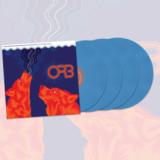
In 2000, after almost two decades of hibernation under the ambient waves and dub currents of the Sargasso Sea, LSD revived the seminal ‘Auntie Aubrey's' series, an Orb Remix Project. Released as a 2 x CD compilation, Part 3 is a veritable smorgasbord of classic, new and unreleased labour-of love remixes that span three decades yet still transcend space and time.
Many influential artists have been involved with The Orb since the beginning, and the project keeps evolving and adapting. Dr. Alex Paterson, the gravitation centre of the Orb is known for his playfully subversive remixes and true to form this album highlights the diversity of his musical mind.
We see the good doctor remix the melancholy and evocative “The Last Lighthouse Keeper” from The Transit Kings, an early British electronic music group that included Jimmy Cauty of The KLF, one of the original members of The Orb. The remix of ‘Davy Jones’ Locker’ from System 7 takes you surfing on a sun-dappled sea of ambient dance nostalgia, while Killing Jokes’ ‘European Super State’ remix (in which LSD label founder Martin ‘Youth’ Glover plays bass guitar) sounds like the soundtrack for an imaginary spy thriller with the powerful lyrics and hypnotizing voice of Jaz Summers.
Legendary producer Youth teams up with Lx yet again on a psychedelic rocker with spellcasting vocals by Lara Smiles, and this is just the beginning! Boasting an all-star lineup, the compilation includes many of our scenes most esteemed electronic music producers such as Coldcut, David Harrow, Sendelica and Gaudi as well as the ambient blissed out vibes from the enigmatic DF Tram, Duende India Collective and The Gyuto Monks of Tibet, this collection offers up such the variety to appease even the most dedicated Orbsessives and music connoisseurs
il devrait être publié sur 05.10.2026

As the first release of Flux Code Recordings, Ferplay brings us this 4 tracks EP called “Electric Waves”.
Blending trance and breakbeat elements, acid sequences and punchy old-school drums, each track captures the energy of the 90s underground electronic music spirit.
Flux Code Recordings is a record label inspired by old-school and underground electronic music, exploring styles such as trance, breakbeat, acid and more.
It is born from the concept of music as a living language, an ever-changing code and a continuous flow of rhythms and melodies in constant evolution.
Flux Code channels the raw energy and the rave spirit of the underground electronic music culture, connecting past roots with future sonic pathways.
il devrait être publié sur 05.10.2026

After running a sound system and studying electronics overseas, Spanish Town-based Harry Mudie began releasing rhythm and blues recordings by local performers, enjoying more concerted success during the reggae era of the late 1960s and mid-1970s, crafting lasting hits with artists like Dennis Walks and the Spanish Town-based toaster I Roy.
The first volume of the Dub Conference series, made with King Tubby, has stripped-down cuts of some of Mudie’s greatest productions, including ‘Lorna’s Dance,’ a percussion and horns take of ‘Caught You In A Lie’, and a strings cut of the Heptones’ ‘Love Without Feeling.’
il devrait être publié sur 05.10.2026
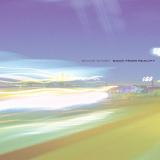
Space Ghost returns with Back From Reality, his first solo album since 2022. Blending ambient, downtempo and house, the LP explores themes of escapism, introspection and the search for moments of calm in an increasingly overwhelming world. Out October 9th, 2026 via Space Ghost’s own Peace World Records.
Drawing influence from late '90s and early 2000s ambient and electronic music, the record channels the nostalgic atmosphere of PS2-era video game soundtracks, console startup screens, and save menus. “I used to play games like Spyro, Crash, Ape Escape, Gran Turismo. It's fun for me to reimagine songs that could have lived in games from that era. ” The project reveals Space Ghost's interest in writing music for video games, with tracks such as "System Reset" reimagining an alternate PS2 startup screen or “VGM” visualizing a stage selection screen for an imaginary game.
Visually, the project emulates the minimalist design trends of album artwork from the same era: sparse industrial landscapes paired with minimal type. Space Ghost took the cover photo himself while driving around the quiet, empty Oakland ports at night. Tracks like “Sugar Cube” and “Back From Reality” mimic these late night environments and create a downtempo zone for listeners to get lost in. “One of my favorite things to do after writing songs, is to drive around Oakland listening to them. It's almost like the final test for the songs, to see if their emotion holds up.
”
Written over the course of five years, Back From Reality reflects Space Ghost’s experience of balancing everyday life with the desire to be creative. “This album is me coming home from my day job and returning back to the place where I feel the joy and freedom in making my music. If I could, I would work on my music full time, but for now it's part time and often a form of escapism. ” Beneath its calming surface, the LP quietly wrestles with larger questions. Against the backdrop of global conflict, environmental decline, and economic uncertainty, the album searches for small moments of optimism through creativity and introspection. Back From Reality holds a moment of space away from these overwhelming times, allowing listeners to pause and recharge.
Back From Reality releases on Peace World Records October 9th, 2026
il devrait être publié sur 09.10.2026
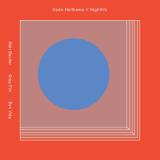
Composer and multi-instrumentalist Koen Holtkamp has spent more than two decades shaping a body of work at the intersection of ambient, experimental, and electroacoustic music. Known for his role in the influential duo Mountains, as well as a solo catalog defined by texture and spatial awareness, Holtkamp has long explored how sound interacts with environment and perception. With Nightlife, he enters a new phase of that inquiry, one shaped as much by physical relocation as artistic evolution.
After leaving Brooklyn for the relatively rural setting of New York’s Hudson Valley, Holtkamp found himself immersed in nature and embracing a slower way of life, a shift that directly informed the album’s creation. Rather than rushing into a new project, he allowed the space itself to guide him, focusing on experimentation and play instead of a fixed outcome. Over time, a new instrument emerged from his modular system, built around physical modeling techniques that emulate plucked string sounds. Drawing on a deep affinity for acoustic traditions, from guitar soli to the kora and other chordophones, he began translating those influences into an electronic language, creating music that feels tangible, effusive, and even intimate, despite its synthetic nature. As the pieces took shape, Holtkamp expanded the project into a kind of imagined ensemble. Composed with specific collaborators in mind, the album features extensive contributions from drummer Greg Fox and saxophonist and flutist Matt Bauder, whose performances subtly reshape the material and draw it toward more fluid, song-like forms, alongside a guest appearance from Ben Vida on synth bass. Yet even as Nightlife occasionally resembles a band in motion, its construction resists traditional cohesion. Acoustic and electronic sources coexist to create a hyper-dimensional sense of space, with each element deliberately placed in its own distinct environment, yielding a complex yet inviting setting that feels both otherworldly and completely natural.
Much of the album was created during late-night sessions, which became a kind of personal ritual and ultimately inspired its title. Nightlife unfolds as a series of finely detailed environments, where stillness, texture, and subtle interplay take precedence over momentum. Each piece invites close listening while remaining open and unforced, reflecting both a change in pace and a deepening of focus. The result extends Holtkamp’s ongoing interest in how sound can shape, and be shaped by, the spaces we inhabit.
il devrait être publié sur 09.10.2026
It’s been 10 years since ‘Love Over Will’. In that time I have been experimenting with music outside of the purely electronic, working with musicians, other tuning systems and the role of sound in healthcare, amongst other things.
Is With Us is a return to what I love most about electronic music: the combination of sound design, rhythm and emotion. It doesn’t fall into any specific category but is rather a reflection on those elements I find interesting within the context of beats-led music.
Where ‘Love Over Will’ was slightly brooding, ‘Is With Us’ strikes a more positive note, something which wasn’t a conscious decision. It is just a moment in time.
il devrait être publié sur 09.10.2026
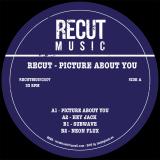
With Picture About You, Recut opens a new chapter, blending the heritage of house music, acid textures and underground electronic culture into a contemporary vision for today’s dancefloors. Rooted in the essence of club culture, the EP explores hypnotic grooves, evolving patterns and the timeless dialogue between the DJ, the sound system and the crowd, where emotion, movement and energy become a universal language. The title track, “Picture About You”, reflects Recut’s artistic identity through the lens of his personal history and family roots. An important part of this story comes from his uncle, known as Mr. Steve, who in 1975 founded one of the pioneering independent radio stations in Southern Italy during the early years of independent broadcasting. His connection with radio, disco culture and the first generation of Italian clubs embodied a spirit of discovery, sharing and musical exploration that continues to shape Recut’s approach to music.
Musically, “Picture About You” unfolds through a hypnotic and emotional groove, blending old-school character with a contemporary perspective. A timeless club track where past and present come together in Recut’s own musical language. “Hey Jack” is a powerful dancefloor weapon driven by unstoppable grooves, hypnotic acid lines and captivating arpeggios. Built for peak-time moments, it pushes the energy forward with a relentless rhythm designed to ignite the crowd.
“Subwave” takes the journey into a deeper and more massive dimension. Driven by powerful low-end pressure, evolving dynamics and explosivetransitions, the track builds tension throughout its progression before releasing its full impact on the dancefloor. Closing the EP, “Neon Flux” delivers the final impact: fierce, electric and uncompromising, a track designed to push intensity beyond the limit and leave a lasting impression. Recut Music — Fun for DJing!
il devrait être publié sur 09.10.2026
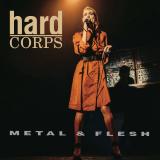
“When the flesh gets cut off the soul, it’s not the end.”
More than forty years after hardCORPS emerged from a Brixton basement, ‘Metal & Flesh’ returns in a new expanded edition on double vinyl and CD, newly remastered with the full involvement of surviving members Rob Doran and Clive Pierce. Born from the collision of punk, analogue synthesisers, sequencers, disco, reggae and experimental studio techniques, hardCORPS created electronic music that was as physical and emotional as it was mechanical. The arrival of French vocalist Regine Fetet gave the group its defining identity, placing her raw, uncompromising voice against the dense machinery of Hugh Ashton, Clive Pierce and Rob Doran. Working mainly with a Roland System 100, several Roland MC4 sequencers and later an additional MC500 and Atari ST 1040 computers, etc. pp., hardCORPS always transformed limitations, accidents, distortion and human imperfection into part of the music itself. Although rooted in the early 1980s, ‘Metal & Flesh’ refuses easy nostalgia, retaining the tension, space and character that made hardCORPS unlike their contemporaries. Yet, shall we eventually mention Kraftwerk, maybe let’s quote Ian Shirley from Record Collector magazine: „’Je Suis Passée‘ was not only a love letter to Kraftwerk but penned with such verve, passion and precision that Ralf and Florian probably would have accepted a blind date at a Düsseldorf cocktail bar (…).“ And as Martin Rushent famously said in 1990: “Hard Corps were ignored in their time. Perhaps it is the burden of the adventurous and the innovative to be ignored in their time, which is sad. Don’t ignore them now.”
This new edition has been carefully remastered to preserve that character and dynamics rather than simply making the recordings louder or more ‘modern’, while the artwork has likewise been developed to reflect the band’s original identity. Metal & Flesh’ is not merely an artefact of the 1980s, but a rare and fiercely individual document of four people discovering what happens when human instinct and machines collide.
Remastered by Martin Bowes. Graphic design by hard CORPS and Steve Lippert.
Gatefold sleeve gloss lamination, printed inner sleeves with lyrics, two double-sided hand-numbered.
il devrait être publié sur 09.10.2026
South Asian super-producers Lapgan and Baalti – the former a Madlib-disciple spinning hip-hop grooves out of dusty desi samples, the latter duo purveyors of intricately tapestried dance music – holed up in the California desert in early 2024 for a songwriting session to blend their complimentary styles. They ended up with several albums worth of club material built upon decades of Indian music history – floor fillers that move like early Four Tet meets The Avalanches. They’ve been teasing this material around the world during live sets – from Paris Fashion Week to Glastonbury, London Clubs to BK Warehouse parties, sessions at Lot Radio and Karachi Community Radio, and anywhere else they find an aux. The result has been endless ID requests for unreleased gems like “Ipa Ma” and “Lime Tikka”, calls which should finally be answered with the release of Threads.
Lapgan Bio
Chicago-based archivist and producer Lapgan has become renowned for his signature style: unearthing rare and forgotten Indian & Pakistani sounds and recontextualizing them into hip-hop and dance beats that evoke J Dilla and Madlib. He has cultivated a reputation for quietly revolutionary sample-work across his beloved solo projects History and Duniya Kya Hai, as well as LAFANDAR, his critically acclaimed team up with Heems (of Das Racist / Swet Shop Boys). He has worked with a range of artists from both the West (Your Old Droog, Saul Williams, Cool Calm Pete, Kool Keith, Open Mike Eagle, Blue, Quelle Chris) and the East (EXCISE DEPT, Baalti, Sid Sriram, Sid Vashi, Dynoman), and has been featured in global media including Pitchfork, FADER, Stereogum, Passion of the Weiss, Mixmag, Homegrown, and Vinyl Me, Please. Over the past year he has headlined clubs and performed at festivals across the world from Chicago and New York to London and India, and was personally invited to soundtrack back to back Paris Fashion Week shows for the similarly norm-shifting designer Kartik Research. In 2026 he will soundtrack his third Kartik Research runway show, as well as reissue Duniya Kya Hai for its five-year anniversary alongside a companion EP featuring remixes from peers and supporters Arushi Jain, Loris, Mera Bhai, Malkfunktion, and Maral.
Baalti Bio
Baalti makes electronic music built around rhythm, pressure, and collective release – weaving through leftfield bass, dusty hip hop, tripped out dub and raw house all while maintaining a throughline rooted in South Asian culture seen through the lens of a sweaty dancefloor. In the last year they have experienced a whirlwind rise and growing global recognition: from their EP Mela vividly evoking West Bengal’s sound system culture to their Tamil-cinema-infused filter-house project with Anish Kumar Stunt Doubles, in addition to wide-ranging collabs and remixes alongside DJ ADHD, Naya Beat, and A.R. RahmanThey have also built a reputation for their frenetic live show, with appearances at international festivals like Glastonbury and MELT, headlining shows across Australia and Europe and supporting influences turned peers like Four Tet and Disclosure across North America. Their explosive, percussion-heavy sets have been platformed by Rinse FM, NTS, The Lot Radio, Beats In Space, and Refuge Worldwide, and their music has been renowned by publications including Pitchfork, Bandcamp Daily, RA, and MixMag. Their forward momentum continues into 2026 with slated headline tours in India, Australia, and Asia along with appearances at Coachella, Party in the Paddock, Fvded in the Park, and We Out Here festivals.
il devrait être publié sur 09.10.2026
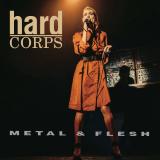
colored vinyl[31,51 €]
“When the flesh gets cut off the soul, it’s not the end.”
More than forty years after hardCORPS emerged from a Brixton basement, ‘Metal & Flesh’ returns in a new expanded edition on double vinyl and CD, newly remastered with the full involvement of surviving members Rob Doran and Clive Pierce. Born from the collision of punk, analogue synthesisers, sequencers, disco, reggae and experimental studio techniques, hardCORPS created electronic music that was as physical and emotional as it was mechanical. The arrival of French vocalist Regine Fetet gave the group its defining identity, placing her raw, uncompromising voice against the dense machinery of Hugh Ashton, Clive Pierce and Rob Doran. Working mainly with a Roland System 100, several Roland MC4 sequencers and later an additional MC500 and Atari ST 1040 computers, etc. pp., hardCORPS always transformed limitations, accidents, distortion and human imperfection into part of the music itself. Although rooted in the early 1980s, ‘Metal & Flesh’ refuses easy nostalgia, retaining the tension, space and character that made hardCORPS unlike their contemporaries. Yet, shall we eventually mention Kraftwerk, maybe let’s quote Ian Shirley from Record Collector magazine: „’Je Suis Passée‘ was not only a love letter to Kraftwerk but penned with such verve, passion and precision that Ralf and Florian probably would have accepted a blind date at a Düsseldorf cocktail bar (…).“ And as Martin Rushent famously said in 1990: “Hard Corps were ignored in their time. Perhaps it is the burden of the adventurous and the innovative to be ignored in their time, which is sad. Don’t ignore them now.”
This new edition has been carefully remastered to preserve that character and dynamics rather than simply making the recordings louder or more ‘modern’, while the artwork has likewise been developed to reflect the band’s original identity. Metal & Flesh’ is not merely an artefact of the 1980s, but a rare and fiercely individual document of four people discovering what happens when human instinct and machines collide.
Remastered by Martin Bowes. Graphic design by hard CORPS and Steve Lippert.
Gatefold sleeve gloss lamination, printed inner sleeves with lyrics, two double-sided hand-numbered.
il devrait être publié sur 09.10.2026
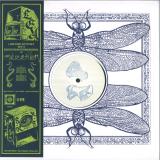
Digital Sting returns after a bit of a hiatus with an across-the-globe collaboration featuring two of contemporary electronic music's most mysterious and prolific figures. Berlin-based, UK- born Low End Activist meets British Columbia-based, Philippines-born SeekersInternational for a seamless merger of their distinct but eclectic styles. SKRSINTL's woozy abstracted dubwise and dancehall psychedelia drips in, pooling and merging into Low End Activists minimalist and precision delivered bass bin pressure. Both artists' music spends some of its time in the hazy edges and ambience between sounds with hints of the activity,
atmosphere and noise of the larger world present in the individual sounds themselves. An aspect of this record rides like a distilled essence of a merger between vhs era soundtracks, dusty live sound system tapes and classic era grime instrumentals but avoids the trap of obvious nostalgia. What is created through collage, deconstruction and refinement is in its whole very now. Like all things SKRSINTL and Low End Activist the continuum is honored and the momentum is always pushing forward.
The records come in double sided silk screen printed DJ Jackets, with Obi Strip style stickers and hand stamped white labels printed and assembled by Digital Sting.
The artwork for this release was created in collaboration between SKRSINTL and Digital Sting.
Mastered by Alec Ness and Greg Reierson. Vinyl run of 330 copies.
Disponible en stock et prêt pour l'expédition
Active Systems' debut EP, The Red EP (Split Lip Records), finds beauty in chaos and strangeness in the familiar: drawing from 90s/00s experimental grooves and stark electro (Underground Resistance, Boards of Canada, μ-ziq, Aphex Twin's Rephlex label) to create something rooted in the "dust, dirt and nostalgia" of underground electronica, Detroit techno and weirdcore. A genuine debut rather than an established alias, the four-track release moves from familiar patterns into unexpected new emotions, from the glacial hip-hop beat and starlit melancholia of "Gabbol" to the skippy rhythms of "Itsover" and the clock-shop funk of "Avoid”. This year, Active Systems has been invited to perform at Superbooth Berlin by Sequentix, played a debut show in Lost's much-hyped Club Room and closed Houghton Festival's The Warehouse stage on theopening night.
Disponible en stock et prêt pour l'expédition
Berlin-based friends and cult DJs and producers Mor Elian and Gramrcy hook up here for A-Lo, a new collaborative project that comes after more than a decade in the game. Both have their own distinct approaches but fuse them here into "a fluid, hybrid system of production." 'Marzelvane' opens with drums that move you while also suspending you in the moment on shimming bass. 'Side Fumble' is glitchy, minimal electronic music with weighty bass buried way down low. There is a more electro-leaning kinetic energy to 'Tremie' as well as plenty of hi-fidelity details, while 'Lotus Deltoid' shuts down with loose jazzy cymbals and slow, dusty broken beats for a more abstract trip.
il devrait être publié sur 12.10.2026
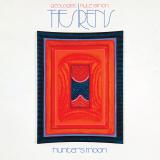
The sun sat high above the desert outside Joshua Tree on October 17, 2024, baking the rocks and shrubbery outside the Farrington Observatory as a small group of invited guests ventured up a steep path towards the telescope. Kyle Simon, the artist and printmaker who founded the Observatory, was standing outside the print studio sat below the towering cylindrical building, greeting friends alongside his wife Sarah and lifelong friend Brian Weitz, the musician widely known as Geologist of Animal Collective. Simon and Weitz had spent the previous day testing and retesting a system that would transform the light of the oncoming full moon captured by the gigantic telescope into a signal that would modulate the control voltage of Weitz’s modular synthesizer. As the sun dipped below the horizon line, the audience gathered on a small wooden patio surrounded by speakers while Weitz readied himself behind the array of patches and knobs. Simon addressed the group, presenting the history of The Sirens, the sonic exploration of the night sky’s mystical and scientific significance about to unfold.
The music conjured under the Hunter’s Moon that night is now documented on this first official release of The Sirens, which was conceived by Simon and Weitz as a recurring performance piece and sound installation. Over a decade ago, Simon began immersing himself in literature on humanity’s sonic relationship to the celestial realm, including Homer’s Odyssey, Plato’s “Spindle of Necessity, ” Kepler’s Harmonices Mundi, and the field of astroseismology. He fitted homemade telescopes with photodiodes and optical sensors to make the images audible, finding latent patterns in the noisy sonic signals he began receiving from the stars. With Weitz, the process expanded as the signal was routed through an analog amplifier and set to modulate the pitch, filter, and other elements of his synthesizer. Together they developed a system of improvisation, with Simon adjusting the telescope to change the intensity of the light based on its relationship with the moon’s position (imagine a theremin player moving their hands in subtle, meaningful motion), and Weitz responding to that input in real time: bending it, amplifying it, or letting it stand on its own. The duo debuted the piece at the Integretron in Joshua Tree in 2018, providing a crucial proof of concept for the performance at Farrington featured here.
The first thing the listener hears on The Sirens is the opening of Farrington Observatory, the cranking of motor and metal. As the lens of the telescope is exposed to the evening air, a wavering drone emerges from the synthesizer, flickering at the margins, the tuning of the oscillators adjusting to the rapidly cooling desert air. The piece progresses and the drone becomes a luminous, spherical constant, bathing the listener in pure tone as Weitz draws out harmonically ambiguous melodies that spiral upwards. Electronics crackle and convulse, coalescing into dense dissonance before widening out into an open octave. Just as the moon orbits the Earth and the stars shift as the planet rotates, so each sonic element appears in flux, interrelationships slowly forming and falling away. Divided into two parts, The Sirens flows as a continuous conversation between the artists and the starlight completing its thousand-year journey across the galaxy.
The Sirens belongs primarily to a lineage beyond music: of sea captains navigating by looking skyward, of astrophysicists studying the formation of the Milky Way, of the modern myths of werewolves, of the stories embedded in constellations. As Simon writes in the album’s extensive liner notes, “These stories and explorations reveal a collective yearning to become conscious of our connection to the universe, our deep-seated desire to understand how we fit into it all.” This music underscores the history of the night sky as the place where poetry and science find common ground, where exploration hinges on the imagination. Driven by curiosity and ingenuity, Weitz and Simon look up and wonder.
il devrait être publié sur 16.10.2026

* long version / previously unreleased on vinyl
** exclusive / previously unreleased
Felix Laband's highly acclaimed electronica masterpiece album "Dark Days Exit" (2005) is now available as an Extended Version 2LP vinyl. Originally planned for last year's 20th anniversary, this special edition features a new design by Felix Laband and includes a double-sided DIN A2 art print. Dark Days Exit features four exclusive tracks, alongside five vinyl-only tracks available for the first time in their original long versions. Listening to the key track, Sleeping Household, on Dark Days Exit is unsettling: like being an impostor rambling around an uncanny house, a Lynchian leitmotif in the form of a young girl divulging secrets that you probably shouldn't hear. Dark Days Exit is an album that paints an interior landscape, an invitation to transgress private thresholds. Made with old-school production tools that require hands-on application, Dark Days Exit is a sound-production tour de force. The music is as wide as the savannah and microscopic at the same time, a lesson in what can be achieved when 'music' is placed on an equal footing with sound as a phenomenon, by an artist who decides to apply themselves without reserve. The masterful manipulation of reverb and delays and hyper-detail was a generation ahead of its time, and Dark Days Exit is preferred by audiophiles for testing their systems. Dark Days Exit is intimate, demanding, and a masterclass in tension, and Laband's ability to use all sound without hierarchy to paint a detailed personal vision — one that is less overtly political and streetwise than on subsequent albums — is unsurpassed. Most discerning listeners are into music because, in the hands of a master, it can manipulate our mood and transport us. Felix Laband opens with a sonic portrait of spring happiness and gradually dismantles the atmosphere in front of our ears, as epitomised by the haunting track Black Shoes. No sooner are we afraid than the artist drops us off where we started. In many ways, the intimacy derives from the tight group of friends and believers whom Laband corralled as contributors: Mark van Niekerk (xylophone, "Miss Teardrop"), Jane Rademeyer (clarinet, "Black Shoes," "Radio Right Now"), Brendon Bussy (mandolin, "Black Shoes"), and Derek Gripper (sampled violin, used throughout) and Alex van Heerden on Minka. The difficulty in categorising Dark Days Exit is probably due to Laband listening mostly to ambient and classical music at the time, and consequently registering the album at the lush, cinematic end of the electronic spectrum. There is poise and restraint in the spare use of beats, and when they do appear, they hit hard. Forged in the optimistic post-apartheid years, Dark Days Exit is music about life and death, spanning hope, despair, terror, tension, with humour and empathy. Twenty one years on, the album's gravity endures, due to its almost perverse authenticity, its timeless themes of hope and despair, and its apex level of technical mastery. The additional, immaculately produced tracks add new rooms to the uncanny house we are invited into.
il devrait être publié sur 16.10.2026
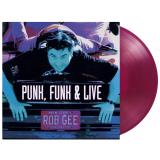
Legendary Gabber/Hardcore dj & producer Rob GEE is famous in New York as “the hardest DJ to ever play the Limelight.” In the early 90’s, GEE kept delirious audiences going – spinning at Limelight’s “Future Shock” dance/techno nights and performing with his live band and spinning at the club’s “Rock And Roll Church” metal/rock/industrial nights.
Rob GEE is the only artist of his kind to collaborate and create with members of respected rock, metal, hardcore and hip-hop acts such as Slipknot, Hatebreed, Biohazard, Wu-Tang Clan, Cypress Hill, & System Of A Down, creating a unification of electronic, metal, hardcore, hip-hop, and any other style for that matter known as gabber music. GEE is writing history launching gabber onto the world scene.
To celebrate its 30th anniversary, Rob GEE's legendary 1996 hardcore masterpiece Punk, Funk & Live is now officially available on vinyl again. For several years, this EP has become a highly sought-after holy grail, for both old-school gabbers and new harddance, hardtechno and hardstyle collectors.
Punk, Funk & Live features the classic anthems "Ecstasy, You Got What I Need", "Gabberslam", "Son Of Rob GEE" and exclusive bonustrack "Rob GEE Megamix", mixed by Bass-D & King Matthew.
This limited 30th anniversary edition of Punk, Funk & Live is available on purple vinyl.
il devrait être publié sur 16.10.2026

Following hot on the heels of the Frequency Damage EP, DJ Quest returns to Cyberfunk with Squeaks / Snake Style— a two-track release that dives deep into the unmistakable sound that made Quest’s productions stand out during the early 2000s.
Rather than simply recreating the past, both tracks tap directly into the DNA of the original Cyberfunk sound: rolling breakbeats, huge basslines, twisted analogue synths and the kind of distinctive production that became synonymous with DJ Quest at the height of the Bassline Breaks era.
Built around original analogue synth work throughout, Squeaks / Snake Style is a deliberate throwback to the raw, futuristic sound of the early 2000s, produced with the weight and clarity needed for today’s sound systems.
It’s classic Quest, strange noises, big bass, rolling drums and plenty of attitude.
A. Squeaks
Everything DJ Quest became known for rolled into one track. Squeaks is an unapologetic throwback to the classic Quest sound of the early 2000s, driven by heavyweight breaks, deep bass and original analogue synth work throughout.
Twisted electronic squeaks and evolving analogue sounds weave their way around the drums, giving the track that instantly recognisable combination of funk, darkness and futuristic weirdness that characterised so many of Quest’s early productions.
Raw, energetic and built firmly for the dancefloor, Squeaks takes the spirit of the original Bassline Breaks era and brings it straight back onto a modern sound system.
AA. Snake Style
On the flip, Snake Style takes the same analogue-driven approach but moves into deeper rolling territory.
A more hypnotic, heads-down breaks roller, the track develops around a heavyweight bass groove, rolling drums and constantly shifting analogue synth lines. There’s less emphasis on the immediate impact of the A-side and more on building a groove that locks into a DJ set and keeps moving.
Still unmistakably Quest, Snake Style combines the rawness and character of early-2000s breakbeat with modern low-end weight and production, proper rolling Cyberfunk business.
Special Vinyl Edition
Making this release particularly special for collectors, the 12” vinyl comes with an exclusive book showcasing the artwork from some of DJ Quest’s biggest and most memorable releases.
The book looks back through Quest’s extensive catalogue and the visual identity that accompanied the records, bringing together a selection of classic release artwork from across his career plus photo collages of memories made across his journey.
It turns Squeaks / Snake Style into more than just a new DJ Quest 12”, it’s also a celebration of the music, artwork and history surrounding one of the original pioneers of the Bassline Breaks sound.
For long-time followers it offers a piece of Quest history alongside two brand-new productions, while newer listeners get an introduction to the catalogue and imagery behind the sound
il devrait être publié sur 16.10.2026

A significant force in the development of British electronic music, Fluke return to the culture and reinvigorate their forward-thinking library of material on an unexpected and powerful new album, The Second Bite.
Due for release internationally via Surface Records in association with !K7 Music, The Second Bite arrives on limited-edition, double-vinyl gatefold LP.
Driven by principal band members Jon Fugler, Mike Tournier and Julian Nugent, The Second Bite boldly yet subtly reimagines twelve Fluke tracks from different eras of the band, including crossover hits Atom Bomb, Groovy Feeling and Absurd. Retaining their peerless groove and cinematic atmosphere, the band rework each with contemporary production touches and arrangements that invite these ambitiousrecordings into a digital future.
Making a significant contribution to both rave and chillout sound systems throughout the nineties and deep into the new millennium, Fluke’s progressive sonic philosophy saw the band invited to remix boundary-pushing artists including Bjork, New Order, Talk Talk and even The Rolling Stones, while their original productions were integral to the cult soundtracks of blockbusters The Matrix Reloaded and Sin City.
Their music remains instantly recognisable to renewed generations of gamers, having featured on the multi-million selling console series’ Need For Speed: Underground as well as seminal racing game Wipeout 2097, for which the band recorded original music to feature alongside The Chemical Brothers, Daft Punk, The Prodigy and Underworld.
Regaining control of their original compositions, Fluke approached The Second Bite with the same sense of creative community and futurist philosophy that has been fundamental to the band since their earliest recordings. Formed on the experimental fringes of London’s nascent acid house culture, informed by a shared love of progressive electronic sounds, Fluke have remained deeply invested in the possibilities of recording technology. Decades later, reunited in a profoundly altered musical landscape, The Second Bite serves as a typically ambitious reintroduction to one of electronic music’s most essential back catalogues.
Disponible en stock et prêt pour l'expédition
Stoked to announce the debut record by Faulsk on Ruff Kutz!
Sometimes life can feel cyclical and having the first solo release on the label by someone other than myself had to be the right choice, it just so happened to be the producer from Tāmaki Makaurau / Auckland, which is where I started my lifelong obsession with Electronic music.
Shortly after playing a gig together at Whakamana in late 2024, we started exchanging tunes and I immediately wanted to put a release together with the first track he sent.. The release also features 2 collaborative tracks with myself and consists of 4 deep psychedelic grooves across the tempo ranges, built with the sound system in mind. This is an outrageous debut EP, and I am stoked to have it on Ruff Kutz!
Whilst having a low social media profile and only a few tracks released into the wild, Faulsk seems to have carved out a honed in sonic identity. Mixing Techno and Dub production techniques whilst still having swagger and depth that appeals to the bass heads. Expect expertly crafted soundscapes, interesting loopy grooves, lush evolving pads/stabs and low end wizardry. Genre - Faulsk, just how we like it.
Galvanize was the first track to build the EP with a relentless 4x4 groove, perfectly balanced low end and washy atmospherics, the track gradually evolves to show that less is more sometimes - with it's use of stripped back restraint and negative space to create energetic mood shifts.
On the A2, the first collaboration track Exhalation slows the tempo to 100 BPM for some kind of bass mutation straight from the underworld. This one taps into the tense atmospherics of Galvanize whilst cranking up the intensity with evolving drones and razor sharp percussion to sit amongst the dense soundscape.
The title track on the flip, is a 9 min roll out, reminiscent of early Forest Drive West. The subtle modulation and dubbing on musical parts draws you in and is a nice juxtaposition to the crunching percussion, militant groove and precise low end. Chugging away at 115 BPM, this is a versatile track to inject some kinetic energy into your local underwater dancehall.
Closing out on the B2 we have another collaboration. Upping the tempo to the mid 120s, Retrospect sinks deeper into hypnotism with polyrhythmic grooves and an unresolving feel which creates steady momentum, coupled with lush and evolving synth work which take the track into serenity. Regulate your sound system.
One for the heads!
il devrait être publié sur 23.10.2026
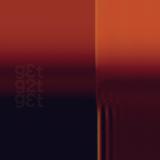
“Negative Music / The Poorest! If they still know silence at all, then only as holes in the continuum of noise…” — Günther Anders, 1965
Editions Mego presents GETGETGET, a new release by Thomas Brinkmann which serves as an inquiry into silence, code, and the limits of perception.
The title GETGETGET references the trilogy of ‘Get’ lp’s made by Rehberg under his PITA moniker; Get Out, Get In and Get On. The music is based on material by Rehberg and Brinkmann morphing these two identities into a third colour, a disappearing color.
Emerging from a live performance at the label’s 30th anniversary in Berlin, the work unfolds as both sonic artifact and conceptual system: a study in what remains when sound is reduced, extracted, and reconstituted.
Taking inspiration from Günther Anders’ notion of “negative music”—composition through absence—Brinkmann’s approach aligns with Heinrich Böll’s idea of “collected silence”: silence not as void, but as a material framed against the constant pressure of noise. In GETGETGET, pauses are not gaps but structural elements, cut from a continuum and reinserted as signals.
The two side long tracks weave a dark abstract and ‘twisted’ presence where the ghosts of the machines and their operators fuse into a fantastical whole. One can hear traces of both Brinkmann and Rehberg logic which seems to fuse in a hallucinatory manner.
Brinkmann’s work reflects a broader condition: the translation of material processes into informational ones. As images detach from bodies and code separates from matter, sound too loses its fixed resonance. What remains is circulation—of signals, of data, of meaning—within systems that increasingly define perception itself.
GETGETGET is an album where absence is equal to presence, a metaphor with suggestive tones of the influence Rehberg had and continues to have in the world of the radical experimental electronic avant garde. The “zero” is not empty; it is what makes everything else work.
il devrait être publié sur 23.10.2026

No Drama, the imprint founded and curated by Roy Rosenfeld, continues to expand its artistic vision with a sixth release valuing originality over convention. The label has steadily established a platform for forward-thinking electronic music, inviting artists to challenge familiar structures while remaining grounded in musical substance.
The latest release features two tracks by internationally recognized producer Yuvée, known for seamlessly blending live instrumentation with deep house, melodic elements, and organic percussion. While Yuvée appears solo on one track, the other is a collaboration with Omer Inbar, who performs under the name Oi.
The opening track, Lava Core, presents the sound that has earned Yuvée international recognition. Tribal influences unfold through carefully crafted percussion, while evolving textures occupy every part of the stereo field. Every section advances the narrative, allowing the arrangement to grow naturally while maintaining dancefloor impact from beginning to end.
The second piece, Blue, brings Yuvée together with Oi, an internationally acclaimed DJ, producer, and sound engineer whose work bridges psychedelic vibes and groove-driven electronic music. The collaboration introduces greater club energy. Tonal and atonal elements interact with shifting harmonies and evolving instrumental phrasing, creating constant movement without losing coherence.
Rather than relying on formulas, the duo demonstrates the value of artistic perspective in an era increasingly shaped by technological automation. The result is music that balances intellect with feeling, offering a listening experience that remains equally compelling on a festival sound system, in a club, or through focused listening at home.
With its sixth release, No Drama reinforces its commitment to artists who expand the language of contemporary electronic music through craftsmanship, authenticity, and creative ambition.
Disponible en stock et prêt pour l'expédition

With MYSTERIUM COSMOGRAPHICUM, the ALIEN CODE series opens a new transmission within the Cosmic Tribe universe — a speculative exploration of ancient futurism, extraterrestrial civilizations, sci-fi architectures and hidden technologies through electro-oriented sound research.
Across six tracks, the compilation moves through atmospheric electro, cosmic electronics, galactic basslines and contemporary machine-driven structures, combining cinematic tension with underground functionality.
MYSTERIUM COSMOGRAPHICUM unfolds as an episodic interstellar narrative — where each track operates like a different scene, transmission or passage within the wider ALIEN CODE universe.
For this transmission, Cosmic Tribe brings together an international selection of artists exploring contemporary electro and futurist electronic sound, featuring Raakel Bloody Raakel, Lups Digga, Aztronouth & Machinefunk, EC13, Lloyd Stellar and NOAMM.
Visually and conceptually, ALIEN CODE continues Cosmic Tribe’s investigation into lost and unknown civilizations, symbolic technologies and non-human futurist aesthetics — where ancient structures and ultra-advanced systems coexist beyond historical time.
il devrait être publié sur 26.10.2026

Magazine Announces 15th Anniversary Remaster of Barnt’s Techno Classic Geffen
Cologne-based record label Magazine celebrates the 15th anniversary of Barnt’s visionary anthem Geffen. One of electronic music's most defining tracks of the 2010s will be reissued in a 2026 remaster edition, marking the first time it receives its own dedicated standalone release.
Originally published on the legendary Cómeme imprint as part of the Various Artists EP The Power Of Now, the track rapidly became a global phenomenon. Looking back, one can hardly imagine Geffen without the 2010s, or, conversely, maybe even electronic music of that era without it. The composition mirrors the expressive possibilities of bedroom producers at the beginning of that decade—an era where artists could launch tracks into the world and have them resonate through their sheer sonic power, without major marketing efforts.
Barnt remembers: "It was one of my earliest tracks. I had just entered art school and didn't own much equipment. My MIDI keyboard only had two octaves. I would always play notes with my right hand while simultaneously shifting through the octaves with my left. This is how the hook line came to life. The production only consisted of seven or eight stems, and barely any equalizers were used during the mixdown. In hindsight, this sparse approach to production probably made it sound different and is why it hits so hard on big sound systems (while sounding unfinished to some on YouTube). At that time, we were doing a small festival on a playground in the center of Cologne. When I played the CDR there, Matias Aguayo demanded it right after. That is how it ended up on Cómeme."
The release comes with two very Magazine-esque reinterpretations from the label's two other co-founders alongside Barnt: a powerful atmospheric club remix by Jens-Uwe Beyer, and Magazine Hallucination, a wild, collaborative, psychedelic mutation by Crato and Beyer.
Jörg Burger, who already mastered the original track, is also responsible for the mastering of this release.
Disponible en stock et prêt pour l'expédition
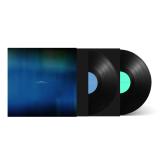
Twenty years after the release of Anjanas, Pablo Bolivar returns to the album that marked the beginning of his distinctive and deeply emotional approach to electronic music.
Originally released in 2006, Anjanas became an important milestone in Pablo’s musical journey, introducing the atmospheric textures, hypnotic rhythms and subtle emotional depth that would shape his sound for years to come.
To celebrate its 20th anniversary, Pablo has revisited and remixed every track, bringing a fresh sonic perspective while preserving the essence and timeless character of the original album.
More than a look back, Anjanas 20th Anniversary is a dialogue between past and present — a personal reimagining of where it all began, seen through twenty years of experience, evolution and musical exploration.
il devrait être publié sur 30.10.2026

Mechatronica presents “Residual Future” by Koloah. Across six tracks, Koloah delivers a striking fusion of futuristic electro, bass-heavy rhythms, and expressive vocal experimentation. Combining powerful machine grooves, processed voices, and detailed synth programming, the EP explores the connection between human emotion and technology. From the driving energy of “Graduate” and the vocoder-driven character of “Vocodex” to the deeper moods of “System” and the sharp rhythm of “Edge”, the release moves through a wide spectrum of electronic forms — balancing dancefloor impact with atmosphere, melody, and a strong sense of storytelling. The journey expands further with “Elevator”, a slower, immersive descent built around hypnotic movement, spacious textures, and a more introspective emotional pull. On the other side, “Jump” pushes the pressure higher — a peak-time electro weapon driven by explosive rhythms, heavy low-end force, and Koloah’s unmistakable futuristic energy. Throughout “Residual Future”, vocals become a central element: fragmented, transformed, and woven into the machinery of the tracks. Human traces merge with precise rhythms and futuristic textures, creating a sound world that is both soulful and synthetic. A distinctive statement from Koloah, delivering forward-thinking electro with depth, emotion, and a unique voice-driven identity.
Disponible en stock et prêt pour l'expédition

For our next release, we welcome Eduardo de la Calle. An artist whose music has long moved beneath the surface of electronic music, shaping minds and dancefloors through depth, restraint and timeless vision. This EP drifts through hypnotic rhythms, deep pulses and evolving textures, inviting the listener into a space where time softens and movement becomes instinct. A meeting of two currents, flowing in the same direction, guided by depth, energy and a shared love for the spaces between sound. Eduardo de la Calle Synthetic Collapse CRRT02 A1 Eduardo de la Calle - Subverse A2 Eduardo de la Calle - Black Input B1 Eduardo de la Calle - Protocol Remain B2 Eduardo de la Calle - Systemic Error All tracks written and produced by Eduardo de la Calle except Black Input and Subverse written and produced by Eduardo de la Calle and Andres Fusaro under the project RSCA. Brighter Days Vocals from Karen Gordon - Djaè - extract from - CAJ201 1992 Mastered by Javier KTC Mastering
Disponible en stock et prêt pour l'expédition
2026 Repress
Reissue of Stephan Bodzin and Marc Romboy´s iconic „The alchemist“ which was released on Ralph Lawson´s legendary 20:20 Vision in 2006 and has been played by loads of jocks.
Here you find a brand new Marc Romboy remix which has been already massively supported by the likes of Laurent Garnier, Oliver Huntemann, John Digweed and Raxon and which can be considered as a, let´s say tasteful sure shot.
This powerful vinyl release is a must-have for enthusiasts of cutting-edge electronic music.
Disponible en stock et prêt pour l'expédition
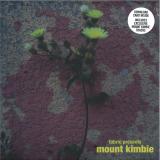
Mount Kimbie’s forthcoming contribution to the acclaimed fabric presents series marks one of the duo’s most dancefloor-focused bodies of work in years. More than simply a release on fabric Records, the project sits within the revered fabric presents mix series, placing Mount Kimbie alongside artists such as Daniel Avery, Midland, Helena Hauff and Overmono, artists who have each delivered defining entries for the series.
Leading the project is first single “Monroe”, a warm yet uplifting club track that unfolds gradually through loose percussion, driving synth work and subtle vocal fragments drifting in and out of the mix, adding flashes of emotion without interrupting the track’s momentum. An ode to their 2017 hit ‘Marilyn’ featuring Micachu, the track carries elements of the original throughout, with flourishes over reverb washed vocals that float around you amongst driving drums and bass. There’s a summery energy running throughout the track, making it equally suited to late-night club systems and open-air festival stages.
Long celebrated as pioneers of the post-dubstep and future garage movements, Mount Kimbie continue to evolve beyond genre boundaries while maintaining the unmistakable sonic identity that has made them one of the defining acts in UK electronic music. Their contribution to the fabric presents series captures the duo at their most refined and exploratory, without losing the emotional atmosphere and understated intensity that has always defined their work.
Released as part of the prestigious fabric presents series via fabric Records, the project signals a bold new chapter for Mount Kimbie.
Disponible en stock et prêt pour l'expédition
The intriguingly named Pigeon Steve joins Especial for an EP of trippy, psychedelic electronic dance music that goes far beyond its origin – a thirst for all forms of movement – a struggle filled with all possibility.
Since its inception, the label has sought to take inspiration from a wide range of music genres – new wave and new beat to disco-not-disco, post punk and proto-house – never looking for a trend. This belief system expressed is human; intimate and authentic, dissolving and uniting around shared truths and universal values.
Music as ecstasy, the flux of rhythm and sound, to find and be yourself; no guilt, no competition, no games. It is phenomenon – magick – that short circuits through human (emotional) response.
Relocated to South-East London, Glaswegian DJ and producer, Pigeon Steve aka Adam Low, showcases his talent. A dubby, trippy approach to DJing mirrored in his productions; the recent, well-received EPs on the esteemed Offen Music and Weirdos Inc lead here – an EP of sample heavy cuts, wrapped in echo-laden grooves, the beats dripping in psychedelic, new beat and steppers electronica.
Dialect locates us, through its cadences, inflections and intonations we journey through life. Language allows us to escape the lion in a cage. The moment we forget ourselves, we can reach joy and clarity. To live is to exist, the struggle against controls, fighting for an individual destiny.
il devrait être publié sur 09.11.2026
Portuguese experimental musician António Feiteira returns to Perf with Amuleto Apotropaico’s sophomore album. Língua Espúria (Spurious Tongue) withdraws from the guitar-and-drums interplay that anchored the self-titled debut, moving toward fully electronic arrangements of concrète mechanics. What was once shaped through shared physical gesture now condenses into a singular current: a hermetic pulse carving its own labyrinth through the pandemonium.
The album draws inspiration from Milford Graves's visionary mapping of the body's secret rhythms into function generators. Amuleto Apotropaico has engineered a system that emulates Feiteira's own improvisational drumming language such that muscle memory becomes stochastic digital precision.
Língua Espúria opens with 'Abafador'. A track relishing in burnt afterimages as it patiently leads the listener into Amuleto Apotropaico’s new sound world. Its insistent double-tapped rhythm splinters into four cascading versions of itself, a pulse folding & refolding until it becomes its own perforated haze.
'Carpideira' follows as an algorithmic lamentation set in motion by shimmering temporal reversals: motion-captures of cyclic grief. The track persistently builds until only a few pure tones remainder.
The album's most pared-down moment is 'Espinha de Vidro'. It is the clearest statement of the system underlying Língua Espúria. Here, Feiteira's rhythmic concern is laid bare, every detail exposed in a distilled form, its melodic thread emerging with equal exactness.
'Apotropia III' begins as a subtle hinge in the catalogue, its brutalist‑liturgical atmosphere recast in a divined, techgnostic register. A narrative, gestural drift threads through the piece that connects it to Feiteira’s 'Killswitch Counterpoint', which appeared on his Eastern Nurseries release Performing the Heimlich on an Ouroboros. Shared samples cross-feed his parallel projects, letting them momentarily run on the same signal path. Stuttering percussion, flickers of glitched air & a brooding bass melodic line fill out the margins before the track finally shears off into harsh, serrated noise.
il devrait être publié sur 13.11.2026

Subtle Beginnings is the second of the ReKab albums originally released on Móatún 7 to be reissued on vinyl for the first time by System One. Analogue Isolation came in May & sold out everywhere almost immediately
Label head D. Howard first came across ReKab while deep diving through Bandcamp, and like many lovers of deep, late night, soulful electronic music immediately fell for the emotional pads, pristine melodies & immaculate productions, simultaneously summoning up the essence of early 90s electronic while sounding thoroughly contemporary.
They connected and a plan hatched to make the Móatún 7 albums available on vinyl for the first time, something that avid record collector James was delighted about. Unfortunately James sadly passed away late August last year, but following conversation with the family & friends of James, it was decided to honour his wishes & make the albums available on vinyl & across all digital services once again. Proceeds after costs will be paid through to the trust fund set up to support James’ surviving son.
System One is a new label dedicated to soulful electronic music, late night grooves & intergalactic beats, drawing its inspiration from the early 90s techno & ambient sounds of Uk, Frankfurt, Detroit & beyond
Disponible en stock et prêt pour l'expédition

Common Language is a project of the Community Library label. We started it as a way to reconnect with the ideas that drove ComLib’s inaugural releases back in 2005, uncompromising and eclectic DJ 12’s. We’ll be focused on this imprint for a while, and near-term, putting the emphasis on releases by label cofounders and our closest friends.
On CLANG02, the Middlemarch 12” EP, Solenoid transmutes his signature buoyant syncopated acid, electro, and mutant techno into moodier, reverberant territory. If you previously knew Solenoid for his restless, sophisticated Braindance-adjacent stuff, this EP is totally consistent with his long discography. Here though, he gets into a dreamier, and also bassier zone that is equally rewarding either in the innerspace immersion of headphones or in the warmth of your favorite local underground club’s sound system--lots of detail and atmosphere to sink into.
“Middlemarch” is moody deep techno-- a clatter of distant percussion encircles eerie pads and an extra-bassy, double-filtered TB303 bassline. “Ways and Means” rotates perplexing polyrhythmic patterns driven by bright, elasticchords that keep it moving (reminding me of The Martian’s stuff on Red Planet a bit). “A Winter Walk” offers a skeletal, skittering rhythm that wouldn’t be out of place next to a Livity Sound track; and the closer, “Dvv Waltz” reserves a 3/4-time experiment for the bravest / most inquisitive DJs.
Edition of 300 vinyl copies includes special full- color insert
Mastered by Dietrich Schoenemann
About Solenoid
Solenoid is the primary musical vehicle of David Chandler, a lifer underground producer, musician, and visual artist. As a lone electronic voice in the wilderness of early-90s Portland (which was at the time a grunge-saturated third backwater) he started out releasing adventurous, now- unobtainium tapes on his DIY Pharmacy label. Solenoid then became known internationally at the turn of the millennium as one of Portland’s persistent ambassadors for underground crossover electro and techno, releasing on labels like Outward Music Company, Emanate, Orac, and many others (most recently, on the Paris label Partout). He’s a real legend honestly--doggedly clocking in almost 40 years of uncompromising experimentalism with a signature sound and vision running all the way through.
-- Paul Dickow (Strategy)
Disponible en stock et prêt pour l'expédition

Emotional Rescue returns after a much-needed year hiatus, refreshed and ready, as it moves into its 15th year, to further explore the environs of oft-forgotten musical secrets and present them to new heads and minds.
To celebrate, the label looks back to one of its favourite collaborations, the music of French ‘Ethno-Industrialists’ Vox Populi! in presenting a truly unique EP of “In Dub”, inspired remixes by 4 fellow Paris based artists of today in Full Circle, Froid Dub, Krikor and Shelter.
“In Dub” takes a selection of songs from the series of albums reissued or compiled on Emotional Rescue and sister label, Platform 23, and gives the Master tapes to this talented ensemble to offer their own, unique dub reworks. The project explores the on-going advances in technology offered, mixed with pure talent and a respectful homage.
Formed by Axel Kyrou and including wife Mitra, as well as long-term music and art partners Pierre Jolivet aka Pacific 231 and Francis Lafont aka FR6 Man, they forged a path from obscure, drum and drum-based cassette releases on to fully realized albums and compilations on their now cult Vox Man Records.
Alexis Le Tan and Joakim’s Full Circle project starts, with their electronic dub remake of Soleyman Dub from the ‘Alternatif Réalisme’ compilation (ERC079). With releases on Good Morning Tapes, Offen and their own “Released” label, their plaudits as master diggers and producers of dubby tripped-out inspired electronics – releasing slowed Trance some 10 years before anyone else – is inspired. Tuning in and turning on the original dub into a mantra style slow-breaks (Digi)dub is the perfect experimental flavour.
Jube Man is next, a twisted, psychedelic dub out by rising stars Froid Dub. The stand-out from the ‘Magiques Creations’ release (ERC052), an album that explored Vox Populi’s furtive post-industrial period of 1984 to 1988, Jube Man was the perfect selection by the duo of François Marché and Stéphane Bodin.
Froid Dub have steadily developed their “cold” Digidub style to acclaim –
releasing a steady flow of dub inspired electronics on their own label Delodio, as well as recently appearing on sister label Emotional Response’s 10th year anniversary collection, ‘All Trades’. Their haunting, shuffling and murky acid / piano dub, with the drifting “Space Echoing” of Mitra’s vocals from the live desk mix, creates a ghostly version to effect.
Next, master mixer, producer and engineer Krikor serves a steppers remake with his “OverDub” of Zen-Dub. With a career that spans releases on Tigersushi, LIES and Soul Jazz, his sound has developed from Electro, House and Techno, to Acid, Bleep, Dancehall, Dub and touches of Gabba.
Taken from Vox Populi!’s master-opus Aither (ERC030), the first of our reissues dating back to 2016, Zen-Dub’s pacey, lo-fi dub experience is transformed and overdubbed into an incessant sound system throb, a true bass quaking “steppa”.
To close, Micro Climax is put through Shelter’s increasing avant dub exposition. Appearing on the likes of Growing Bin, Emotional Response and his own Protopost, as well for – and being in-house designer – on the much-missed Séance Centre, Alan Briand aka Shelter productions have developed from Balearic, Edits and House to explore Avant, Raga and live Dub productions.
Appearing on the recent ‘Ethniques Pyschedeliques’ compilation on Platform 23 (PLA032), in original form Micro Climax is a sprawling 10-minute ethno-dub of whispered vocals, drone and sub bass. Shelter strips it back, keeping background effects, adding live bass and percussion to create a wonky, slow, shuffling ska-lite excursion to complete a true “In Dub”.
Disponible en stock et prêt pour l'expédition
