"Mr Bongo" is proud to present three unique reworks of Kit Sebastian.
Each of the producers featured in this package created their own
interpretation of the 'lo-fi-hi-fi’ originals and have taken the duo’s
sound into bold new directions. When it came to choosing who should remix Kit Sebastian, Natureboy Flako (Flako/Dario Rojo Guerra) was a producer at the top of our list.
Keeping true to the original, whilst leaving his own stamp on the
track, his mix adds break-beat drums and middle-Eastern guitar riffs
that transform the track into a more cinematic piece. It sounds to us
like the music from an exotica dive-bar scene in a David Lynch film -
which of course, is a very good thing.
Producer and DJ Baris K, who was behind the awesome 'İstanbul 70'
series (re-edits of classic Turkish gems), takes ‘Durma’ in a very
different direction. Totally reconstructing the track, his remix has
flipped the original and totally run wild.
The results are an epic left-field electronic workout. By bringing the spoken-word vocals to the forefront and giving the track a darker industrial vibe, it wouldn't sound out of place bouncing around the walls of a Berlin basement club at 5am on a Sunday morning.
The paring of Kit Sebastian and Halal Cool J grew after DJing together
at the alternative Great Escape party at the Mr Bongo HQ in May 2019.
They share a love for dusty old psychedelic Turkish records. Halal Cool J (aka Aly Jamal/Don Leisure) has released records on First World and is a co-member of Darkhouse Family with Earl Jeffers.
For his interpretation he has delivered a mix-tape-collage with a hip-hop aesthetic, and rather than focusing on remixing a specific song, he has cut and paste his favourite elements of tracks taken off the band’s 'Mantra Moderne’ album. Available in 2 limited-edition, hand-numbered sleeve designs.
quête:electronic world
- A1: Concrete & Glass
- A2: Back To Your Heart (Feat Kate Nv)
- A3: We Forgot To Love (Feat Kadhja Bonet)
- A4: What Makes Me Think About You
- A5: Time On My Hands (Feat Kirin J Callinan)
- B1: The Foundation (Feat Cola Boyy)
- B2: Catch Yourself Falling (Feat Alexis Taylor)
- B3: The Border
- B4: Turn Right, Turn Left
- B5: Cite Radieuse
- C1: Concrete & Glass
- C2: Back To Your Heart (Feat Kate Nv)
- C3: We Forgot To Love (Feat Kadhja Bonet)
- C4: What Makes Me Think About You
- C5: Time On My Hands (Feat Kirin J Callinan)
- C6: The Foundation (Feat Cola Boyy)
- C7: Catch Yourself Falling (Feat Alexis Taylor)
- C8: The Border
- C9: Turn Right, Turn Left
- C10: Cite Radieuse
When Air’s Nicolas Godin released his debut solo album, Contrepoint (2015), he channelled the influence of Bach into a rich, resonant and hugely rewarding spread of musical explorations. One soundtrack (A Very Secret Service) later, Godin builds on equally fertile conceptual foundations for the follow-up. Released through Because Music on 24th January, Concrete and Glass is an exquisitely crafted set of variations on architectural reference points: mounted with minimalist precision and delivered with an abundance of pop warmth, it finds Godin in his element, working seductive wonders with poise and style to spare.
For Godin, the album circles back to his formative work as half of ground-breaking French electronic group Air. Revered modern architect Le Corbusier was an influence on the young architecture graduate’s music, notably on his 1997 debut “Modular Mix”. Twenty-plus years later, Le Corbusier featured on a list of modernist architects Godin was invited to compose tributes for, tributes intended to be heard as the soundtrack to site-specific installations around the world.
In its soft ambient pulse and melting minimalism, lead track “The Border” is a perfect entry-point to Godin’s hymns to buildings, arranged and co-produced with Pierre Rousseau. Its levitating synths, vocoder vocals and scudding bass hove into view with understated elegance, all the better to accommodate the discreet slow-build of delicate details within. As with Air, Godin makes gorgeously light work of every angle: this is music that seems entirely unperturbed by gravity, occupying an elevated atmosphere of its own.
Elsewhere, the title-track’s clean synth lines, crisply apportioned arrangements and tender timpani offer another inviting entry-point, sculpted with architectural clarity. While Godin’s vocoder vocals also hark back to Air’s early work, the album accommodates a diverse spread of guest vocalists elsewhere. Hot Chip’s Alexis Taylor guests on the falsetto-soul dream-pop of “Catch Yourself Falling”, one of Godin’s sweetest melodies yet. Oxnard singer/activist Cola Boyy brings soul to the righteously engaged “The Foundation”; the squelchy synths and buoyant grooves burn slow, allowing the stealthy arrangements and message room to resonate. Psychedelic soul singer Kadhja Bonet sings with measured serenity over tremulous synths on “We Forgot Love”, while Russian experi-pop artist Kate NV brings a gracefully aching romanticism to the blissful swoon-pop of “Back to Your Heart”.
Additionally, Australian conceptual provocateur Kirin J Callinan contributes a vocal of restrained drama to “Time on My Hands”, a midnight-drift soft-pop ballad with a silky allure. One of the quickest tracks to record for the album, it emerged in collaborations between Los Angeles (”During some lively sessions in Mac DeMarco’s studio,” notes Godin) and Paris. After he missed his flight home, Callinan stayed in France for a day as the guitar solos were recorded, complementing the song's air of sleek luxuriousness.
Between its title-track and the sultry, smoky jazz stylings of closer “Cité Radieuse”, Concrete and Glass is an album that truly travels, in tune with its global pitch. For Godin, it marks another milestone in a musical journey that began when Air’s 1998 debut album, Moon Safari, became the sublimely weightless soundtrack of its time. For Concrete and Glass, Godin builds on his storied past with tremendous finesse, charm and fluency, opening fresh windows of perspective at every lovingly executed turn.
For its second vinyl release, Eternal Ocean is proud to present ‘Static Flow’: the debut EP of Timo Bürgler AKA Awo Ojiji. Creating his own unique sonic world, Awo Ojiji has delivered a four track body of work that feels at once fresh and familiar. Opening the EP, ‘Lifeforms’ swings out of left field with an off kilter swagger sure to inspire more than a few unique dancefloor experiences. On the interior comes ‘Grainhive’, a groover that strikes a deep and rare balance of emotive texture and raw bassline energy. Flipping over, we find ‘Laura’s Lodge’, perhaps the most oblique tune of the bunch, where slick and expertly crafted percussion compliments the alien sound design that rides out the tune into its own dimension. Closing the record, ‘Swarm Align’ invites the dancer on a journey inwards, deftly maneuvering through a myriad of sonic waypoints until finally finding its way home, to be filed straight away under ‘Deep/Last Song’. Based in Graz, Austria, and having honed his skills alone and through close involvement with the disko404 family, Awo Ojiji steps up in offerance of a unique and personal statement. Taking influence from the current climate and deep history of electronic music and finding a space that is honest and genuine, this is music for the body, mind and soul.
March 2017: Alessandro Alessandroni's 'Afro Discoteca' is released on a blasting 12'' containing 4 cosmic/disco tracks drawing influences from African music – never published before these incredibly powerful and evocative recordings were rescued from an old dusty tape found in the Maestro's vaults.
The EP became an instant classic for diggers and worldwide tastemakers, bringing the name of Alessandroni to new audiences,
far beyond the circle of film scores and library music aficionados.
March 2019: Four Flies asks to a rock band (CALIBRO 35) and three amongst the most brilliant and visionary Italian DJs and producers (Jolly Mare, L.U.C.A., pAd) to rework the original tracks, giving them new life for refined modern dancefloors.
The result is a stunning collection of electronic/cosmic/balearic reworks, which respects the spirit of Alessandroni's compositions, projecting them into our present
Portuguese artist Armando Mendes makes a huge statement with his debut album 'Parallel Universe', which was written and recorded over two and half years between LA, London and Berlin with legends including Robert Owens,Ithaka from the N.W.A. crew and Defected's Jinadu.
Armando Mendes is one of Portugal's most assured artists. His rich and musical sound is informed by jazz and funk and he has played all over the world from Russia to Australia, all while picking up more than 80,000 monthly plays on Spotify for his music. His tremendous debut album ranges across the electronic music spectrum from downbeat and jazzy to deep house and electronica.
Ithaka is the guest on the album opener 'This Life's All We Got,' which is a lush downbeat song with pensive lyrics. Late night jazz house stylings define 'Things U Do 2 Me' while 'Acid Yardies' looks to the club with its serrated 303s and dub wise drums. Chicago vocal royalty Robert Owens lends his heartfelt and buttery tones to the perfectly deep 'No Regrets' and after an acid and piano ambient fusion on 'MS20 Interlude' there is more rich, spiritual and jazzy house ('Parallel Universe,' ' Khun Pui - Mae Nam' and 'The Melody Inside') as well as more synth laden and electronic grooves to get dance floors moving ('One Night in Bangkok').
The majestic, percussive and colourful 'Tropical Affair' is just that, then things get tender and introspective on the gorgeous 'Electric 88' before a radio edit of the classy pop house that is 'The Melody Inside' feat. Jinadu closes things out in emotional fashion. This is a widescreen musical journey that makes a lasting impact from an artist who is looking set for big things.
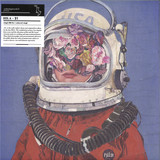
"21" is the well-crafted, sharp and original first album by the duo HILA, composed by American cellist Artyom Manukyan (who already worked with Kamasi Washington, Daedalus, Flying Lotus, Run DMC, Gretchen Parlato, Raphael Saadiq, Clive Lowe Mark...) and french producer Dawatile.
The combination of jazz, Los Angeles beat-scene and the vibrations of 80s and 90s Soviet Armenia make it a striking and unprecedented fusion. These kind of nostalgic and unconventional references forcefully shake the codes of mainstream culture to create a sincere, raw and intimate expression.
"HILA" was born from a spontaneous and intense creative impulse between Artyom Manukyan, a Los Angeles-based Armenian celloist and his partner in crime, David Kiledjian aka Dawatile, a French multi-instrumentist of Armenian descent. This project is proving to be a true master stroke given that it only took 21 days for the duo to make it a reality.
"HILA" was made in less a moon cycle but captivates and electrifies audiences upon its first outings. "H.I.L.A" colors the warmth of the Californian "High" with Armenian vibes. The artists chose this name for their creation since both have a close and valuable connection to these locales. This journey began in 2007, on the day Dawatile went to Yerevan, the capital of this small country in the Caucasus mountain to realize a first fusion project centered around local folkloric music genres.
There he was introduced to local musicians including the Armenian Navy Band, one of the country's foremost groups in which Artyom played the bass and cello. In this context, he also met many musicians such as Tigran Hamasyan and Norayr Kartashyan. This will be the beginning of connections between Lyon, Yerevan and Los Angeles. The following year, the two artists will be be seen performing next to Taylor Mc Ferrin at the Jazz à Vienne festival. More recently, they partnered up again when the cellist, who had freshly relocated in California, invited Dawatile to produce his album. As soon as the studio’s threshold was crossed, they decided to postpone this record and create a joint project: Hay (as the Armenians call themselves) / High In Los Angeles. HILA was born at the end of these 21 days of intense creation. The association of Artyom Manukyan and Dawatile is the combination of two visions, two versions of Armenia, two personalities, the reunion of the Eastern and Western blocs.
One grew up nurtured by the sounds of hip-hop and jazz in Europe and the other by art music and Russian-influenced 1980s Armenian folkloric music before moving to L. A., Ca. The cornerstone of it all, the glue that unites everything : Armenia and music. They generate a new identity synthesizing two perceptions, their complicity transcending these cultural discrepencies. To achieve this, they will scour through images of Artyom’s childhood, within the popular culture of Soviet Armenia. Together, they revisit this decidedly retro vibe, based on the work of Caucasian groups inspired by African American music. This background is rehashed and fused with ancestral Armenian sounds. The DNA of the album "21" is molded by these dear influences.
We can also hear the ancestral sounds of Armenia, a country at the edges of both Europe and Asia. The presence on two tracks of Armenian music Master Norayr Kartashyan, infuses the languor of past melodies and traditions. These purposeful anachronistic sounds offer a fantastic depth to this powerful opus. Listening to the album, one can appreciate the successful fusion of styles and influences. Those combinations, however, manage to preserve individual identities only to enhance the art through an adamant musical dialogue.
Being driven by the urge to transpose Armenian musical traditions into a unique universe, the daring artists, offer an innovative combination by blending, for the first time, these ancestral sounds with the world of Los Angeles beat-scene and jazz. An invention largely fueled by the magic strings of Artyom and maestro Miguel Atwood-Ferguson, a pillar of the genre in Los Angeles combined. These associations resonate with a triumphant equilibrium. HILA is musical uncharted territory in which Artyom's cello strings intertwine to ignite the harmonies of keyboards, the machines, the vocals and electronic layers Dawatile pieced together. HILA plays the soundtrack of an adventure set between Armenia around the end of the Soviet era and a mysterious near future.
Artyom Manukyan grew up in Armenia in the 90s. At the time, he studied Russian classical music while learning jazz with assistance by his father, a music journalist. Being an unconditional music lover, he went on to sharpen his skills at the prestigious Berkelee College of Music. Subsequently, he’s been lucky enough to travel the world touring with numerous acts and mainly with the Armenian Navy Band. The group has fostered alacritous success honored by a BBC Award as a crowning achievement. He moved on 10 years ago and made his way to L.A. with his cello on his back. In the City of Angels, he quickly became a popular figure of the jazz and hip-hop scenes thanks to his first album "Citizen". He’s accompanied prestigious musicians such as Kamasi Washington, Melody Gardot, Daedalus, Flying Lotus, Run DMC, Gretchen Parlato, Raphael Saadiq, Clive Lowe Mark, or Vulfpeck. He released his solo album on the cello, "Alone" in October 2019.
Dawatile is a bold producer and multi-instrumentist as well as a passionate and resolute musician molded by jazz. As a versatile artist, he handles and juggles the saxophone, the keys, the bass and composition. Simultaneously, Dawatile produces cross-over projects and soundtracks for the movie industry. He, as well, has had the opportunity to be a part of many tours, including with his electro hip-hop band, Fowatile and more recently with the "Future Kreyol" trio, Dowdelin. Being the ever workaholic, he has under his belt a string of prestigious collaborations with the likes of Talib Kweli, Foreign Beggars, Roy Ayers, Tigran Hamasyan, Mathieu Boogaerts, Voodoo Game and Piers Faccini. His taste for developing new musical recipes and his know-how in production make him a much sought-after album producer. In concert, the HILA duo offers a sober, precise and rhythmic performance. "21" is an aerial and lively album taking the audience on an at times joyous and sometimes melancholic dreamlike journey. The magic of "HILA" operates at the speed of light and positions it already as an avoidable group.
A record to be enjoyed to its very last second AM Jazz is set to place this songwriter where he just might, finally, receive the recognition he deserves; from unsung hero to a truly worthy candidate for being called up to join the City of Manchester’s ranks of great musical icons. Whether you prefer to know him as Mr. Roberts or simply call him Al, it’s time to become acquainted with the real Jim Noir.
Tossing his bowler onto the hat stand and sliding on his slippers, AM Jazz sees ‘Jim’ putting his feet up whilst Alan Roberts takes the lead. A creative masterpiece for the record player and the mantlepiece, it’s a multi-layered album that features close friends including those dearly departed, and is his truest record to date, by a songwriter painting his own hypnotic Portrait of the Artist as a Young Man.
“I haven’t 'felt' like Jim Noir for a long time. I’m not sure I ever did; it was a construct of other people’s imaginations,” reveals Al. “AM Jazz is definitely the kind of music I make generally. It harks back to when I started making music years ago and didn’t worry about capturing a particular style. It will be nice to show people more of that.
It's the best album I've written; real hypnotic minimalism, the good stuff!” 15 years since he recorded the first ever 'Jim Noir' EP, AM
Jazz is the record all Noirheads won’t be surprised Al had inside him.
Letting the Beatlesesque stylings of his most recent album Finnish Line be (5 years ago no less), AM Jazz suits the Noir repertoire of his catalogue so far and is another homegrown offering which sees the Daveyhulme composer tinkering in his suburban Manchester studio once more, with the magic of his computer work sorcery, analog and tape recordings.
“For this I went back to the slightly more haphazard way I wrote my first album, Tower Of Love, wherein I’d use things in front of me, or a bit wrong like headphones for a microphone, to make the most Hi-Fi Lo-fi album ever.”
Whilst a brief disappearance of Jim’s online persona may have provoked bleak theories as to his whereabouts, Al had little time for digital distraction. Whilst writing and creating with friends, he has worked on electronic pet project, FAX with former Alfie guitarist, Ian Smith, and the vintage analogue house meets electro sound of his own solo EP Granada Personnel Recovery, as well as producing local band, Shaking Chainsor, and helping long-time musical colleague, Aidan Smith with his long-awaited 'The Planets' project; “I’ve been writing in dribs and drabs when I feel like it,” Al says. “I used to write all day everyday but it’s a lot harder now I’m (feeling) over 100 years old.” Never not sonically exploring or being inspired by the sounds around him, there was even a red-carpet moment when he appeared as a film premier guest after a couple of his songs were selected for the OST of director Jason Wingard’s film Eaten By Lions.
Performing all AM Jazz’s instrumental parts himself but also, at the right moment, bringing in present and past pals along the way, sexy lounge song, ‘Hexagons’ features 'Phil Anderson' and Mark Williamson singing and playing “legendary OTT guitar solo” respectively. Meanwhile the orchestration of ‘Peppergone’ waltzes like a beautifully romantic ode to Beethoven’s Moonlight Sonata – a tribute to dearly departed best friend 'Batfinks' who originally wrote the chords in his song 'Peppercorn.' “I hope he doesn’t think it’s shit,” Al jests. Listen closely and you may even find a few unsuspecting celebrity guest appearances as, perhaps, it could be the very first album to feature soundbites of podcasts sneaking onto the recordings. “I will have a podcast on if I’m recording; Adam Buxton, Athletico Mince, Frank Skinner or Richard Herring… I’m sure some mics will have picked them up, like in the old Tower of Love days,” he says referring to his breakout debut.
Culled from around 50 tunes AM Jazz moves like the time of the day, from dawn to night, stirring from the pop of ‘Good Mood’ and ‘Upside Down’s Beta Band groove. “As the album was playing, I imagined this smoky backstreet with all those neon signs outside clubs at about 4am,” Al says. Mellow ‘TOL Circle’ is like Percy Faith’s Theme From A Summer Place synthesized, capturing the style of TV library music or movie soundtrack obscurity that has always stirred Al’s curiosity, and the album plunges into a vast chasm of instrumental exploration with ‘Mystermoods,’ visiting Japan’s funky synth whiz duo Testpattern and Hakabashi Sakamoto. Darkening and deepening in intensity, ‘Eggshell’ is like an undiscovered gem from Angelo Badalamenti’s cutting room floor, the Panda Bear shimmer of ‘Lander’ is where blissful positivity and sadness meet, about another of his friends who left the world too young. “By the album’s close, its nearly time to let go and enter the ether,” he says of the album’s story. “Like one would do when they take their final sigh on this earth.”
As electronic musician Lorenz Brunner sketched his vision for the first Recondite full-length on Ghostly in five years he took a step back to assess who and where he was as an artist. 2013’s Hinterland accelerated a progression — he’s since been touring around the world and releasing music with labels such as Hotflush and his own Plangent Records — yet, for him, the album cast a shadow of pressure that widened over time. As with most art forms, perhaps especially music, there is an expectation to change, to creatively pivot elsewhere with each project. After careful consideration, Brunner rejects this notion with his new work, opting alternately to use the icy Hinterland as an aesthetic and tonal template for a like-minded map of evocative compositions aptly titled after the German word “stillstand,” now presented as Dwell.
“I am coherent with what I do, even if I’m not reinventing myself,” Brunner says contentedly. In regards to the album title, he adds, “It’s like when you’re on a hike and you stop and look at the scenery; you may know which path you want to go next but right now you are dwelling.” The title also doubles as a reference to everyday domestic life, a restorative haven for Brunner between tours. Like Hinterland, he incorporates a subtle range of field recordings to intensify the textural atmosphere. While he worked at home on “Mirror Games,” Brunner noticed the buzz coming from across the room, where his wife was using an electric toothbrush, naturally harmonized with the track. He decided to push that frequency further and record the device directly, syncing vibrations for added urgency across the propulsive piece as well as parts of the ambient “Interlude 2.”
Windswept, moody, and melodic, moments on Dwell linger with emotional resonance. The title track sends an eerie synth loop through a field of techno kicks. The beats recede for a breather four minutes in as if to survey the surroundings. If Brunner pivots anywhere — possibly just a new perspective afforded by being confidently stationary in his craft — it’s by leaning more into hip-hop structures. He’s an avid rap fan and his love for those production techniques is notably present on “Nobilia,” a queasy shuffler (titled in reference to the Super Nintendo game Secret of Evermore), “Interlude 1,” which skitters in lockstep with contemplative synth chords, and “Surface,” an isolatory, ruminative sequence. The closer “Moon Pearl” soothes and shimmers like its namesake, a cherished gem in The Legend of Zelda series that allows carriers of the gem to retain their shape and essence in the Dark World.
In an era where constant reinvention and highly self-reflexive brand awareness reigns supreme in the music industry, Brunner as Recondite does something many artists try to avoid, he dwells in his own established identity, one that has garnered him a devoted fanbase. His murky electronic productions, built around mirage-like pads and clipped drum programming, have proven to be highly functional and spectrally enveloping; Dwell is not a return to form, it is a further study of the shapes, it is the modes, and the structures Brunner has trademarked.
As electronic musician Lorenz Brunner sketched his vision for the first Recondite full-length on Ghostly in five years he took a step back to assess who and where he was as an artist. 2013’s Hinterland accelerated a progression — he’s since been touring around the world and releasing music with labels such as Hotflush and his own Plangent Records — yet, for him, the album cast a shadow of pressure that widened over time. As with most art forms, perhaps especially music, there is an expectation to change, to creatively pivot elsewhere with each project. After careful consideration, Brunner rejects this notion with his new work, opting alternately to use the icy Hinterland as an aesthetic and tonal template for a like-minded map of evocative compositions aptly titled after the German word “stillstand,” now presented as Dwell.
“I am coherent with what I do, even if I’m not reinventing myself,” Brunner says contentedly. In regards to the album title, he adds, “It’s like when you’re on a hike and you stop and look at the scenery; you may know which path you want to go next but right now you are dwelling.” The title also doubles as a reference to everyday domestic life, a restorative haven for Brunner between tours. Like Hinterland, he incorporates a subtle range of field recordings to intensify the textural atmosphere. While he worked at home on “Mirror Games,” Brunner noticed the buzz coming from across the room, where his wife was using an electric toothbrush, naturally harmonized with the track. He decided to push that frequency further and record the device directly, syncing vibrations for added urgency across the propulsive piece as well as parts of the ambient “Interlude 2.”
Windswept, moody, and melodic, moments on Dwell linger with emotional resonance. The title track sends an eerie synth loop through a field of techno kicks. The beats recede for a breather four minutes in as if to survey the surroundings. If Brunner pivots anywhere — possibly just a new perspective afforded by being confidently stationary in his craft — it’s by leaning more into hip-hop structures. He’s an avid rap fan and his love for those production techniques is notably present on “Nobilia,” a queasy shuffler (titled in reference to the Super Nintendo game Secret of Evermore), “Interlude 1,” which skitters in lockstep with contemplative synth chords, and “Surface,” an isolatory, ruminative sequence. The closer “Moon Pearl” soothes and shimmers like its namesake, a cherished gem in The Legend of Zelda series that allows carriers of the gem to retain their shape and essence in the Dark World.
In an era where constant reinvention and highly self-reflexive brand awareness reigns supreme in the music industry, Brunner as Recondite does something many artists try to avoid, he dwells in his own established identity, one that has garnered him a devoted fanbase. His murky electronic productions, built around mirage-like pads and clipped drum programming, have proven to be highly functional and spectrally enveloping; Dwell is not a return to form, it is a further study of the shapes, it is the modes, and the structures Brunner has trademarked.
As electronic musician Lorenz Brunner sketched his vision for the first Recondite full-length on Ghostly in five years he took a step back to assess who and where he was as an artist. 2013's Hinterland accelerated a progression he's since been touring around the world and releasing music with labels such as Hotflush and his own Plangent Records. His new album uses the icy Hinterland as an aesthetic and tonal template for a like-minded map of evocative compositions aptly titled after the German word "stillstand," now presented as Dwell. Windswept, moody, and melodic, moments on Dwell linger with emotional resonance. The title track sends an eerie synth loop through a field of techno kicks. The beats recede for a breather four minutes in as if to survey the surroundings. If Brunner pivots anywhere - possibly just a new perspective afforded by being confidently stationary in his craft - it's by leaning more into hip-hop structures. He's an avid rap fan and his love for those production techniques is notably present on "Nobilia," a queasy shuffler (titled in reference to the Super Nintendo game Secret of Evermore), "Interlude 1," which skitters in lockstep with contemplative synth chords, and "Surface," an isolatory, ruminative sequence. The closer "Moon Pearl" soothes and shimmers like its namesake, a cherished gem in The Legend of Zelda series that allows carriers of the gem to retain their shape and essence in the Dark World. Recondite does something many artists try to avoid, he dwells in his own established identity, one that has garnered him a devoted fanbase. His murky electronic productions, built around mirage-like pads and clipped drum programming, have proven to be highly functional and spectrally enveloping; Dwell is not a return to form, it is a further study of the shapes, it is the modes, and the structures Brunner has trademarked.
On The Corner favourites Penya kick off the new year with a collaborative EP with legendary gogo musician Msafiri Zawose. The collaboration began in September 2017 when Penya's Magnus P.I spent a week in Tanyania, East Africa, recording material at Zawosi's studio.
Penya are a genre defying quartet that embody the energised sound of a cosmopolitan UK. A host of traditional folkloric rhythms, club culture motifs and DIY electronics mark the band's distinct sound. Drums, horn and vocals evoke Penya's live performance from a world of euphoric ritual and visceral dance scapes, ancient and future.
Kicking off 2020 in style, Life And Death welcome Madrid based groove maker Bawrut for some of his distinctly off kilter brilliance.
Italy born Bawrut makes warm, heartfelt electronic music that crosses the musical spectrum, doing so with a true left of centre perspective. He imbues his productions with weird and wonderful sounds and an exquisite sense of craft that make them both unusual and engaging. He has done so on the likes of his own Silencio label as well as Ransom Note and PETS Recordings and has become a mainstay of the DJ circuit as a result. Next to high profile shows at places like Nuit Sonores he has also toured as far afield as Vietnam, and here he brings some worldly perspective to this latest for DJ Tennis’ always cultured label, Life And Death.
First up is 'Rollin'', almost ten minutes of synth based excellence that takes you on a real sonic adventure. The drums are firmly rooted and hypnotic while the various pads up top unfold like aural fireworks. It's a tense track that never lets up and keeps you locked for the epic duration. Equally fantastic is 'Terza' with its twisted, tortured synth lines and vocal yelps all bringing real drama to the deep and rolling drums. It's a turbulent track to bring real edginess to the club. Lastly, the grinding 'Drum Beat' has a menacing bassline and tribal vocal stabs cut up with rave sirens. It's a sweaty, strobe lit monster that takes you to the heart of the dance floor.
These are three perfectly slow-release but high impact tracks from this ever more vital talent.
2024 Repress
Red Vinyl
Born and raised in the Techno capital of Berlin, Opal merges experimental and forward stepping electronic music with an unique touch. His latest "Dominator" EP coming via Voxnox is no exception.
Following his industrial steps from his last productions, the opener and title track "The Dominator" brings raw, yet pushing heat for your infamous dancing pleasure by combining a shouting vocal rip with an ever growing groove - eventually turning things to a dominating level. Netherlands native Remco Beekwilder delivers the A-side remix by not only keeping this vibe, but with even extending it with his own synthesiser symbiosis in order to move things to a deeper level.
"New World Order" represents the EP's flip side, focusing on the good old rave experiences we all remember very well. An ever marching kick teams up with mysterious patterns and evolving drums to blurry your mind the right way. Inhalt Der Nacht remixing this track can only mean an ecstasy of emotions and power, perfectly rounding off this release.
- non-gatefold sleeve without 7"
Rush Hour announces their second artist compilation Patchwork, curated by one of the label’s most loved family members, Sassy J. The Swiss DJ is the very embodiment of passion and long-standing dedication to the craft of the DJing, but also to the community surrounding the music that she lives and breathes. For the past fourteen years Sassy J has run the Patchwork night in her native Bern and in London, with guests ranging from Theo Parrish and Little Dragon to Floating Points and MF Doom invited to share their respective musical visions. Her collaborative approach stands out in a DJ world that is too often weighted in favour of promoting the individual. This compilation grows out that unique sensitivity, foregrounding a theory of curation that centres on long-term bonds, articulated through Sassy J’s personal relationships with the contributing artists.
Patchwork speaks to the grass roots values that Sassy J espouses, showcasing music by many of the artists that have joined her throughout the years in clubs, on the radio, and at home. It is an expression of Sassy J’s individual musical path that casts its gaze firmly in the future: Patchwork is made up almost entirely of new and unreleased songs that are exclusive to this collection. Patchwork captures a sound that has continued to evolve in its restless search for new musical directions. Across thirteen tracks we find forward thinking electronic music rubbing elbows with cosmic jazz and deep percussion workouts from Brazil and beyond.
There are irresistible calls to the dancefloor: 2000 Black’s UK boogie and the syncopated rhythms of WaH-chU-kU nod to the West London sound, whilst the early rave of Nu Era and Aardvarck’s sub-rattling techno channel the grittier edges of the club experience. We find machine music imbued with humanity in Larry Heard’s deep house classic “Survivor” and in Ron Trent’s WARM project, whose gentle breeze points to a different side of the legendary producer. Patchwork also opens a more immersive listening space in which the radical indie soul of Georgia Anne Muldrow, the ambient spiritual jazz of bandleader Carlos Niño & Friends, and the lament for the Amazon rainforest by Azymuth’s drummer Ivan Conti can channel the overall spirit of group interplay and solidarity. Patchwork also includes Sassy J’s collaboration with veteran producer Alex Attias, marking her own place in a universe that is held together by her singular thread.
"This is the compilation of the year!" - DJ Spinna
The mostly anonymous producer FSS joins Veyl with ‘MMXX_FFS’, a collection of nine raw, mangled numbers that manage to make lo-fi sound hi-fi. Built in moments stolen from working with DIY punk bands and artists producing for Warp, UNO, True Panther, Lucky Me and Tri Angle.... Originally from New Mexico, now living in London, with NYC on the horizon, FSS is no newcomer, and this isn’t your usual debut.
Inspired by a need to release the rage and disillusionment brought on by the extreme shit show the world has become, the writing of ‘MMXX_FSS’ — “it’s nearly 2020, for fuck’s sake” — doubled as a cathartic process for the artist, providing much-needed relief from the constant struggle of living on this planet.
Urged to push into the wild and off the beaten path, the record’s sound is iltered through an ongoing battle with tinnitus, a heavy fascination with distortion, and a treasure of inspired electronics. Memories of clear, bright landscapes play like loops, bombarded with the shock and suffering of urban action. Based on the constantly vacillating reality between moments of familial bliss to existential terror in white hot flashes, ‘MMXX_FFS’ is a snapshot of this process. Generating more.
FSS’ debut is out this December on cassette and digital, as always featuring artwork by Tomaso Lisca.
- A1: Piper Spray & Ebb Loops & Dritter Verkehrsring - Daunen Und Federn
- A2: Piper Spray - Remove This Later
- A3: Piper Spray - Category
- A4: Piper Spray - No Money In This Room
- A5: Piper Spray & Pedro De Pakos & Blue Stork & Ann Dunham - Dogheads Clowns
- B1: Piper Spray - Realists
- B2: Piper Spray - They Broken This Track
- B3: Piper Spray - Knives On Cars
- B4: Piper Spray - How Late It Was, How Late
- B5: Piper Spray - Boat With Milk
C/D Side[7,52 €]
"Drugstore phones" is a double LP from Russian wizard Piper Spray. This enigmatic producer is a hidden gem of Russian electronic underground. The album is taking you on an unexpected trip in many ways - it's hard to define the genre but one can feel the author's willingness to experiment and explore new sounds. This sonic documentary of Piper's world is breathing and constantly changing, though it's the most balanced and mature work of the author. A spectacular opener for GOST ZVUK's gatefold LP series.
- C1: Piper Spray & 23 Million Pigs Worldwide - Trimmed Eyes
- C2: Piper Spray - Stash Box
- C3: Piper Spray - I Still Hate Summer
- C4: Piper Spray - Aerial Gymnastics
- C5: Piper Spray - December
- D1: Piper Spray - First Snow
- D2: Piper Spray - Drugstore Phones
- D3: Piper Spray - Hello
- D4: Piper Spray - New Sneakers
- D5: Piper Spray - Autumn In Chertanovo
Side A/B[7,52 €]
"Drugstore phones" is a double LP from Russian wizard Piper Spray. This enigmatic producer is a hidden gem of Russian electronic underground. The album is taking you on an unexpected trip in many ways - it's hard to define the genre but one can feel the author's willingness to experiment and explore new sounds. This sonic documentary of Piper's world is breathing and constantly changing, though it's the most balanced and mature work of the author. A spectacular opener for GOST ZVUK's gatefold LP series.
In the mid-80's, an original form of music was discovered on the midi-capable little planet of Austin, Texas. At the age of 32, Charles Ditto would release his first solo album applying cutting edge computers and synthesizers of the era (Roland DX7, Roland MKS-20, Roland MKS-80, Sequential Circuits Profit 2000 along with a Macintosh SE), creating a unique and detailed world that was inspired by Cluster, Eno & The Residents.
In Human Terms bridges the gab between contemporary classical and minimal pop. Rhythmic but melodically abstract. Microtonal and organic. Often described as experimental electronics, tone poems or Cyber-delic-psychotropic-avante-garde.
In Human Terms, remains very emotion, deep and different. Ditto's music imparts a new listening experience that is still somewhat indescribable today, but remains approachable and relatable.
'What makes Ditto's music so strikingly different is his overt use of emotion, very descriptive melodies and deep atmosphere' Audio Magazine - August 1988 // 'If Erik Satie had midi gear' Keyboard Magazine - April 1988 // 'Brian Eno meets Seastones, but with more melody' Relix Magazine - August, 1988 // 'Ditto's choice of Synthesizer tones are at once both organic and unique' Electronic Musician - June 1988.
A chance meeting in a New York club led to the conception of Mowgan’s debut album, in collaboration with renowned African Benin-born Nigeria raised singer and multi-instrumentalist, Kaleta (Leon Ligan-Majek) an ex Fela Kuti, Sunny Ade, Lauryn Hill cohort who also fronted Akoya Afrobeat Ensemble and presently heads up a 70s style afro funk band called Super Yamba based in NYC.
The Frenchman was working at Lina Frey when he overheard a Beninese salsa singer called Laurent Hounsavi channeling Afro-centric vibes through his performance. He approached the singer and was put in touch with Kaleta, who lives in the Big Apple, too. What happened next was pure magic, as the two men got to work in the studio to bring their two worlds together.
It’s the kind of mystical alchemy that only happens once in a blue moon; Kaleta was given carte blanche over Mowgan’s extensive collection of Africa-inspired electronic instrumentals.
He selected his favourites and performed on each one, delivering an original vocal, and his own guitar licks, over the top. To stir up even more electrifying vibes, Kaleta also invited several of his talented friends to join the recordings sessions - they included vocalists Shade Myers Emmanuel, Justin Masters and Gbenga Wise, Freddie Deboe on sax, Mic Dada assisting Mowgan on synth pads and Takuya Kuroda, the infamous Japanese trumpet player from Kobe who specialises in neo-soul, hip hop and electronica.
The result is ‘Karoussel’, a vibrant, dynamic, soul-enriching hybrid between electronica and deep African musicality that sets the standard for contemporary collaborations between western and African artists, and the first in a series of album projects from Mowgan on his fledgling label Mow Records...
‘Wild Slide’ is the debut album from techno supergroup, Better Lost Than Stupid, aka 3 of the world’s finest producers and DJs - Martin Buttrich, Davide Squillace, and Matthias Tanzmann.
Released on 13 September by Skint/BMG, the 11 track album follows a slew of singles - ‘Back From The Desert’, ‘The Sky Is Too Low’, and ‘Inside’ – which have won praise from the likes of Mixmag, Dancing Astronaut, RA, Radio 1 (Pete Tong and Danny Howard), Marco Carola, Dubfire, Nicole Moudaber, Kolsch, Joris Voorn, Claptone, Eats Everything, Adam Beyer, and many more.
Electronic music underpins ‘Wild Slide’, but Better Lost’ look beyond it with a varied collection of song ‘Wild Slide’ is the debut album from techno supergroup, Better Lost Than Stupid, aka 3 of the world’s finest producers and DJs - Martin Buttrich, Davide Squillace, and Matthias Tanzmann.
Released on 13 September by Skint/BMG, the 11 track album follows a slew of singles - ‘Back From The Desert’, ‘The Sky Is Too Low’, and ‘Inside’ – which have won praise from the likes of Mixmag, Dancing Astronaut, RA, Radio 1 (Pete Tong and Danny Howard), Marco Carola, Dubfire, Nicole Moudaber, Kolsch, Joris Voorn, Claptone, Eats Everything, Adam Beyer, and many more.
Electronic music underpins ‘Wild Slide’, but Better Lost’ look beyond it with a varied collection of songs that combine synth-pop (‘Inside’, ‘Wild Slide’), electronica (‘Boys & Girls’, ‘Harder Than Gold’), indie rock (‘Back From The Desert’), and downtempo (‘Without The Feeling’, ‘Bender’), with the kind of euphoric techno moments they’re individually known for (‘Inside’, ‘Right Now’).
‘Wild Slide’ shows that the comparisons made between Better Lost’ and stadium techno acts like The Chemical Brothers, and Underworld, stand up. The production quality is every bit as good as you’d expect from Buttrich and co, and the songs have been crafted and written by three people who’ve spent their lives making music and then playing it to hundreds of thousands of people.


![Piper Spray - Drugstore phones [C/D]](https://www.deejay.de/images/l/4/8/944748.jpg)