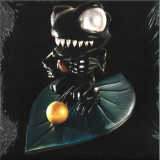
We are very excited to present our first release "Prelude" RU001. This exceptional record marks the beginning of a new era in minimal electronic music, fusing the creativity of Lucas Moss with the unique interpretations of Vlad Arapasu and Nu Zau. "Prelude” is more than an album; it is a testament to our commitment to change and evolution in musical culture. This journey of original sounds reveals our vision of embracing art in all its forms, contributing to a cultural change on a global level. On the two original tracks by Lucas Moss, we explore the depths of change and transformation. Vlad Arapasu brings his unique perspective with a remix that captivates, while Nu Zau features a vibrant and joyful remix that redraws the boundaries of the dancefloor. “Prelude" symbolises a trip where change and purification can be achieved by bringing just a little bit of light into the darkness. The vocals symbolize the intuition we all have but which is sometimes dormant. Cumacanga express our shadows; we recognize that without them, the light would not shine as brightly. This release is our call for change, innovation and the continued support of art in all its forms. Join us on this journey, where minimal electronic music becomes the way to transcend barriers and create a permanent impact on the world of art. Together, we start the journey with "Prelude" RU001, and this is just the beginning...
Buscar:electronic world
Since 2013 - Brighton & Barcelona duo PAYFONE have been releasing records on respected NYC and UK labels GOLF CHANNEL , LENG and DEFECTED.
Now releasing on their own OTIS imprint - PAYFONE deliver another deep 12 in preparation for their debut album.
In September 2024 PAYFONE released their WILD BUTTERFLY EP which appeared in many best of 2024 end of year DJ charts whilst gaining the support from the likes of Richard Dorfmeister, Leo Mas and Daddy G.
Phil Passera and Jimmy Day's productions continue to gain fans across the disco world with a template of synth and bass that equates to a heady and intoxicating excursion into early electronic soul disco circa late 70's / early 80's.
Known for their atmospheric, mid-tempo sultry selections, PAYFONE offer up another deep dive of synth-driven drum machine pleasure with remix duties courtesy of San Francisco trio 40 Thieves: Corey Black, Layne Fox and Jay Williams.
Latest offering VOLT to VOLT is a moody meltdown of Moog bass and full frontal vocals featuring the talents of North Carolina's JO GABRIEL HARRIS and New York City's TERI JACKSON.
Always a cut above, this Payfone release will be VINYL ONLY.
Get with it !
Payfone have released over 16 individual 12" releases, including Phonica's 'Record of 2023 - 'I Feel You'
- A1: Biomantric L-If-E (Remastered)
- A2: 0093 (Remastered)
- A3: Phil Because Ov, Indeed (Remastered)
- A4: You're Only Sql (Remastered)
- A5: We Are Haunted (Remastered)
- B1: Cctv Nation (Remastered)
- B2: Stempel (Remastered)
- B3: Northern Electronic Soul Pt 1 (Remastered)
- B4: Northern Electronic Soul Pt 2 (Remastered)
- C1: Northern Electronic Soul Pt 3 (Remastered)
- C2: Skin Clock (Remastered)
- C3: Dada Mindstab (Remastered)
- D1: Tunnels Ov Set (Remastered)
- D2: Later Vexations (Remastered)
- D3: Kissing Someone Else's D O.g (Remastered)
As part of maintaining The Black Dog's back catalogue, Dust Science has now re-issued the 2010 album, "Further Vexations". It's a real successor to Radio Scarecrow, moving forward with the dark tone and concepts.
Further Vexations picks up from what was started in Radio Scarecrow, moving beyond the world of open secrets and the bemusing transmissions of number stations, to exploring the dark cynicism of Orwellian practices carried out by our Govern-
ments, institutions and corporations.
Martin Dust from tBd explained, “Our main concern was and still is the amount of personal freedoms being surrendered under the banner of "for your own safety" – CCTV, Biometrics and the World Wide Databases being the latest inventions to save us from ourselves. What is it going to take for people to wake up? How much further can the people that we’ve put into power go before something finally snaps? We've had enough now! We believe that people have become lazy and accepting of "beige" political parties who have realised if they stand for nothing, people will fall for anything.”
10 years on, the references to George Orwell's 1984 appear to be a little naive and wholly inadequate. From billion-dollar corporate entities openly mishandling our data for profit to highly-targeted and manipulative political propaganda campaigns, the misuse of our data and communications is far more sophisticated and devious than originally envisaged.
The stark omens of Further Vexations are now more prophetic than ever.
Two sought after artists, Deft and Manni Dee, combine their uniquely eclectic sounds on collaborative EP ‘Swamp Season’ arriving on Hooversound in March 2025.
Deft, a familiar favourite within the Hooversound family having released two EP’s on the label, is no stranger to breaking boundaries when it comes to sonic stereotypes. Enter: Manni Dee. Another equally exciting name on the London circuit who is an advocate for non-conformism. Between them they have released on Exit, 1985 Music, Critical and Fabric Originals - their style has been recognised globally and continues to grow. Both creatives bring something refreshingly new to the table, whether it’s with their amalgam style of music making, their esteemed record platforms (Silk + Steel, B4 Music) or their DJ sets - it makes perfect sense for the duo to unite on their vision.
Their latest offering combines their boundaryless artistic style of forward-thinking atmospheric production on an EP named ‘Swamp Season’. The two producers play with different elements of club music and hip hop by blurring genres and throwing the rule book out of the window. The end result highlights how Deft and Manni Dee have excelled once again across five bass-fuelled tracks which will expand your perspective on electronic music.
On their single, the duo said “‘Charged’ was the last track we wrote for the EP. Rooted in the simplicity of 00's hip hop instrumentals, on steroids, adapted with the wider electronic sphere in mind. Inspired by the past and present, facing the future.”
Deft and Manni Dee also explained how they came to collaborate; “We've always shared the same taste in hip hop and electronic music, and also share a studio together underneath FOLD in Canning Town, so it just made sense for us to make a record together. Our process was creatively free with no preconceptions, having worked together remotely and together across multiple studios around the world. The result has created a new and exciting avenue for us both, opening the floodgates to eliminate boundaries. It's Swamp Season.”
Tesfa Williams celebrates his personal ancestry and the diversity of black electronic music with a name change on his Heist Recordings debut.
First things first. T. Williams is now Tesfa Williams. And although the dot is gone after the T, by taking that away, the artist openend up a whole world of meaning, personal storytelling and recognition of his roots.
“Originally when I started "T.Williams" it felt like my African first name Tesfa wouldn't be welcomed in the scene. Something I've experienced in general from school, college, work etc….. I grew up in a Rastafarian family with Carribean heritage and my parents decided to give me and my siblings African names to connect us to our African ancestry. I now feel like I’m ready to embrace this part of me as an artist and share it with the world.”
Tesfa Williams is an artist with a long history in UK club music. Long before his critically acclaimed debut album in 2024 ‘Raves of future past’, he was knee-deep in the UK grime scene and throughout the years, he has built a strong reputation in UK funky, soulful house and Garage with remixes of Latch for Disclosure and Sam Smith (yes, that track), bumping originals on Strictly Rhythm, Local Action with Julio Bashmore, and much more. On his debut for Heist, we see the artist dig deep into his black roots and deliver an EP that celebrates his eclectic sound with 4 originals full of high notes.
The ’Beyond today’ EP kicks off with ‘Moments Ahead’, a classic filter-house jam with lovely soulful chops and the perfect amount of grit. It’s the type of funky, peak-time house track that will ignite any dancefloor with its irresistible groove. ‘Get it together’ sees the artists layer some classic R&B vocals over an infectious warehouse groove. It’s the kind of track that’ll grab anyone’s attention on a first listen. The breakbeat loop in the background gives the percussion its dry immediacy and the sparse melodic hits and irresistible vocal chops turn this track into an absolute dancefloor monster.
On the flip, the London producer merges his love for soulful house with contemporary electronics on ‘Brighter life’. There’s something deliciously breezy about this song, where the vocals, chord hits, sweeps, and hits deliver a groove that’s laidback and powerful at the same time. The electronic parts of this track are cleverly laid out to contrast the syrupy sweet vocal and underline the class of the artist’s ability to effortlessly blend genres.
The EP closes with ‘Futures’, a bottom-heavy late-night burner much in the style of Dam Swindle’s 2023 Heist outing ‘Soul’s lament’ or the percussive goodness of Alma Negra tracks such as ‘Conversation’. There’s a nice blend of trippy electronics and driving Rhodes hits, which makes this a track perfect for those moments you simply want to go deep, heads-down, and feel the music.
With ‘Beyond Today’, Tesfa Williams has written a piece of music that pays homage to so many of the genres that have influenced him as well as to his black roots. ‘Beyond Today’ is a contemporary club record that oozes positive energy just the way we like it and we can’t wait to play this one out to all of you.
Enjoy the music and get ready to dance!
Lars & Maarten
- My Darling, My Angel
- Pavement
- Something For Somebody
- Virtue
- Defibrillator
- The Light Streams In And Hits My Face
- Hocus Pocus
- Hideaway
- Love Songs/ Heart Strings
- Ray Of Light
- The Worst Thing I Would Ever Do
- Horses
In Mallrat’s (aka Grace Shaw’s) vision of the world, light is more than photons and electromagnetic radiation hitting the eye — it’s a moment of divine intervention. A bold swerve into the metaphysical, this is the premise of the prized Brisbane-born, LA-based pop songwriter and producer’s 2025 sophomore album: Light hit my face like a straight right. Set against a newly informed backdrop of expressive breakbeats and dance music, its 12 songs explore the intangible and mysterious allure of human connection, held together by curious investigations into light — “the closest thing to a concept this album has,” Mallrat says. She reunited with Butterfly Blue producers Styalz Fuego (Troye Sivan, Tate McRae) and Alice Ivy, while bringing into the mix indie electronic producers Chrome Sparks and Casey MQ. Mallrat serves up highs like “Hideaway,” a song where heart-racing garage clashes with her trademark candor: “I’ll be your lucky charm just let me hang around your neck,” she sings. Sleek and early standout “Pavement” gets a gritty underlayer with chopped up vocals from DJ Zirk’s “Born 2 Lose” and mid-album standout “Hocus Pocus” finds Mallrat singing about being pulled “under the spell” of someone new, borrowing a different part of the same DJ Zirk sample to build its shimmering, dancefloor-ready facade. It’s an endeavor that perhaps reaches a peak on “Horses,” the record’s gentle and organic closer which Shaw herself calls “objectively the best song.” Written after returning home to Brisbane and “feeling like an alien,” it gained new meaning in the wake of her late sister’s passing. For Shaw, it’s the convergence of the song’s minimalism, lyrics, space, and the way her voice cracks on the recording as she sings, “Hey, I’m right here, I look different now.” After years of solidifying herself as a master of well-crafted, timeless pop — fielding recognition from New York Times, NYLON, Teen Vogue, Billboard, The FADER, NPR, and more — Light hit my face like a straight right is a step into the art of world-building, bolstered by her intuitive songwriting and clever, studied production.
Jesse Hackett returns with another unclassifiable co-mingling of genres, this time made in collaboration with Durban-based gqom trio Phelimuncasi. The group met up in Nyege Nyege's Kampala studio last year, spending three days engineering a sequence of tracks that turned the acts' respective sounds inside out, stretching urgent vocals over mutating backdrops of time stretched electronic drums, saturated noise and unstable synths.We last heard from Hackett on last year's chilling 'Shadow Swamps', a chilly, surrealist blast of disembodied folk and vintage electronics that added a cinematic twist to industrial music. Phelimuncasi meanwhile followed their acclaimed debut with the enormous 'Ama Gogela', asserting their dominance with tight, dancefloor-fwd, hook-led jams produced by some of the scene's most important beatmakers. In collaboration, both Metal Preyers and Phelimuncasi materialized a few worlds outside their comfort zones, with the Durban trio's words frothing from Hackett's marshy productions like echoes from another universe.Opening track 'Gidigidi ka Makhelwane' erupts in a fizz of beatbox percussion that loops noisily alongside Makan Nana, Khera and Malathon's stirring vocals, delivered in their local isiZulu tongue. Hackett's process is relatively restrained, offering Phelimuncasi the space to work their rousing magic unimpeded and adding punctuation where necessary. But when he takes more of a destructive role, it's just as impressive: on 'Gqom slowgen Chant', he corrupts his rhythm into a ritualistic pulse, letting the trio's words melt into metallic clicks and nauseous atmospheres.Elsewhere on 'Mgiligi wableka', Phelimuncasi's words create a rousing rhythm against a low-n-slow gqom thud from Hackett, and on 'Coffin Roller' he brings to mind '80s video nasty soundtracks, toying with analog synth sequences against Makan Nana, Khera and Malathon's distant chants. 'Like A Corpse' might be the album's most hollowed-out banger, turning the beat into a chopped 'n screwed drag that scrapes clamorously against Phelimuncasi's gurgling raps. Needless to say, there's nothing else like this.Jesse Hackett returns with another unclassifiable co-mingling of genres, this time made in collaboration with Durban-based gqom trio Phelimuncasi. The group met up in Nyege Nyege's Kampala studio last year, spending three days engineering a sequence of tracks that turned the acts' respective sounds inside out, stretching urgent vocals over mutating backdrops of time stretched electronic drums, saturated noise and unstable synths.We last heard from Hackett on last year's chilling 'Shadow Swamps', a chilly, surrealist blast of disembodied folk and vintage electronics that added a cinematic twist to industrial music. Phelimuncasi meanwhile followed their acclaimed debut with the enormous 'Ama Gogela', asserting their dominance with tight, dancefloor-fwd, hook-led jams produced by some of the scene's most important beatmakers. In collaboration, both Metal Preyers and Phelimuncasi materialized a few worlds outside their comfort zones, with the Durban trio's words frothing from Hackett's marshy productions like echoes from another universe.Opening track 'Gidigidi ka Makhelwane' erupts in a fizz of beatbox percussion that loops noisily alongside Makan Nana, Khera and Malathon's stirring vocals, delivered in their local isiZulu tongue. Hackett's process is relatively restrained, offering Phelimuncasi the space to work their rousing magic unimpeded and adding punctuation where necessary. But when he takes more of a destructive role, it's just as impressive: on 'Gqom slowgen Chant', he corrupts his rhythm into a ritualistic pulse, letting the trio's words melt into metallic clicks and nauseous atmospheres.Elsewhere on 'Mgiligi wableka', Phelimuncasi's words create a rousing rhythm against a low-n-slow gqom thud from Hackett, and on 'Coffin Roller' he brings to mind '80s video nasty soundtracks, toying with analog synth sequences against Makan Nana, Khera and Malathon's distant chants. 'Like A Corpse' might be the album's most hollowed-out banger, turning the beat into a chopped 'n screwed drag that scrapes clamorously against Phelimuncasi's gurgling raps. Needless to say, there's nothing else like this.
The influence of the UK’s Steel City on electronic music is well documented and undisputed and continues to push the envelope with key figures such as Winston Hazel (Forgemasters, The Step), DJ Parrot/Crooked Man, Richard Benson (RAC, SWAG, Altern 8), Chris Duckenfield (RAC, Popular Peoples Front, SWAG, All Ears Distribution), a thriving underground club scene and the likes of Synaptic Voyager reinforcing the city’s rich musical legacy.
Matt White and Paul Baines have been making off-kilter, emotive, late night electronic jams since meeting in the early 90’s and while life took them on different paths for a while, they have recently blown the thick layer of dust from their synths and drum machines and got busy in the studio to create some amazing new music which draws influence from that classic UK techno sound which played such an important part in the development of dance music culture around the world. With recent releases on Frame Of Mind, Acquit and Telomere Plastic the duo are clearly on a roll, wearing the heritage of their city on their sleeve and delivering what can only be described as heartfelt, authentic machine music made with love and soul.
From the opening beats of lead track Dawn Till Dusk we are drawn in to another place which feels comfortably familiar yet organic, fluid and loose in a way that tugs on the heartstrings. A million miles from cookie-cutter tech house, this is two guys in a bedroom studio, digging deep on hardware machines to create a sound to get completely lost in. Lonely Promontory takes things deeper still with immersive pads, taught electro beats and blissed-out melodic lines which give just hint of optimism and recall those beloved sounds of B12, Redcell and Likemind.
Flipping over we have Stellar Engine which goes a littler heavier on the beats and bass whilst still retaining a floating quality, once again highlighting the hardware jam workflow that Synaptic Voyager utilise in their studio. Once Exposed takes us back to those heady days of the early 90’s when techno, house and ambient electronics combined to create a heady blend of deep atmospherics and driving beats which could work on both dance floors and car stereos alike. Rounding off the EP we have Cognitive Network which goes for a straighter four on the floor techno groove and a killer bassline to lose yourself in. These recordings were delivered to the label in unedited long form (some tracks totalling 15 minutes or more in length!) which Jimpster lovingly edited into the versions which you hear on this release.
- A1: Progetto Tribale - The Sweep
- A2: Onirico - Echo Giomini
- A3: Open Spaces - Artist In Wonderland
- B1: Alex Neri – The Wizard (Hot Funky Version)
- B2: M C.j. Feat. Sima - To Yourself Be Free - Instrumental Mix Energy Prod
- B3: Mato Grosso - Titanic Expande
- C1: Dreamatic - I Can Feel It (Part 1)
- C2: Carol Bailey - Understand Me Free Your Mind (Dream Piano Remix)
- C3: The True Underground Sound Of Rome - Secret Doctrine
- D1: Don Carlos - Boy
- D2: Lazy Bird – Jazzy Doll (Odyssey Dub)
Vol 2[28,99 €]
Volume 1 of this expertly curated project of 90s Italian House - put together by Don Carlos.
If Paradise was half as nice… by Fabio De Luca.
Googling “paradise house”, the first results to pop up are an endless list of European b&b’s with whitewashed lime façades, all of them promising “…an unmatched travel experience a few steps from the sea”. Next, a little further down, are the institutional websites of a few select semi-luxury retirement homes (no photos shown, but lots of stock images of smiling nurses with reassuring looks). To find the “paradise house” we’re after, we have to scroll even further down. Much further down.
It feels like yesterday, and at the same time it seems like a million years ago. The Eighties had just ended, and it was still unclear what to expect from the Nineties. Mobile phones that were not the size of a briefcase and did not cost as much as a car? A frightening economic crisis? The guitar-rock revival?! Certainly, the best place to observe that moment of transition was the dancefloor. Truly epochal transformations were happening there. From America, within a short distance one from the other, two revolutionary new musical styles had arrived: the first one sounded a bit like an “on a budget” version of the best Seventies disco-music – Philly sound made with a set of piano-bar keyboards! – the other was even more sparse, futuristic and extraterrestrial. It was a music with a quite distinct “physical” component, which at the same time, to be fully grasped, seemed to call for the knotty theories of certain French post-modern philosophers: Gilles Deleuze, Félix Guattari, Paul Virilio... Both those genres – we would learn shortly after – were born in the black communities of Chicago and Detroit, although listening to those vinyl 12” (often wrapped in generic white covers, and with little indication in the label) you could not easily guess whether behind them there was a black boy from somewhere in the Usa, or a girl from Berlin, or a pale kid from a Cornish coastal town.
Quickly, similar sounds began to show up from all corners of Europe. A thousand variations of the same intuition: leaner, less lean, happier, slightly less intoxicated, more broken, slower, faster, much faster... Boom! From the dancefloors – the London ones at least, whose chronicles we eagerly read every month in the pages of The Face and i-D – came tales of a new generation of clubbers who had completely stopped “dressing up” to go dancing; of hot tempered hooligans bursting into tears and hugging everyone under the strobe lights as the notes of Strings of Life rose up through the fumes of dry ice (certain “smiling” pills were also involved, sure). At this point, however, we must move on to Switzerland.
In Switzerland, in the quiet and diligent town of Lugano, between the 1980s and 1990s there was a club called “Morandi”. Its hot night was on Wednesdays, when the audience also came from Milan, Como, Varese and Zurich. Legend goes that, one night, none less than Prince and Sheila E were spotted hiding among the sofas, on a day-off of the Italian dates of the Nude Tour… The Wednesday resident and superstar was an Italian dj with an exotic name: Don Carlos. The soundtrack he devised was a mixture of Chicago, Detroit, the most progressive R&B and certain forgotten classics of old disco music: practically, what the Paradise Garage in New York might have sounded like had it not closed in 1987. In between, Don Carlos also managed to squeeze in some tracks he had worked on in his studio on Lago Maggiore. One in particular: a track that was rather slow compared to the BPM in fashion at the time, but which was a perfect bridge between house and R&B. The title was Alone: Don Carlos would explain years later that it had to be intended both in the English meaning of “by itself” and like the Italian word meaning “halo”. That wasn’t the only double entendre about the song, anyway. Its own very deep nature was, indeed, double. On the one hand, Alone was built around an angelic keyboard pattern and a romantic piano riff that took you straight to heaven; on the other, it showcased enough electronic squelches (plus a sax part that sounded like it had been dissolved by acid rain) to pigeonhole the tune into the “junk modernity” section, aka the hallmark of all the most innovative sounds of the time: music that sounded like it was hand-crafted from the scraps of glittering overground pop.
No one knows who was the first to call it “paradise house”, nor when it happened. Alternative definitions on the same topic one happened to hear included “ambient house”, “dream house”, “Mediterranean progressive”… but of course none were as good (and alluring) as “paradise house”. What is certain is that such inclination for sounds that were in equal measure angelic and neurotic, romantic and unaffective, quickly became the trademark of the second generation of Italian house. Music that seemed shyly equidistant from all the rhythmic and electronic revolutions that had happened up to that moment (“Music perfectly adept at going nowhere slowly” as noted by English journalist Craig McLean in a legendary field report for Blah Blah Blah magazine). Music that to a inattentive ear might have sounded as anonymous as a snapshot of a random group of passers-by at 10AM in the centre of any major city, but perfectly described the (slow) awakening in the real world after the universal love binge of the so-called Second Summer of Love.
For a brief but unforgettable season, in Italy “paradise house” was the official soundtrack of interminable weekends spent inside the car, darting from one club to another, cutting the peninsula from North to centre, from East to West coast in pursuit of the latest after-hours disco, trading kilometres per hour with beats per minute: practically, a new New Year’s Eve every Friday and Saturday night. This too was no small transformation, as well as a shock for an adult Italy that was encountering for the first time – thanks to its sons and daughters – the wild side of industrial modernity. The clubbers of the so-called “fuoriorario” scene were the balls gone mad in the pinball machine most feared by newspapers, magazines and TV pundits. What they did each and every weekend, apart from going crazy to the sound of the current white labels, was linking distant geographical points and non-places (thank you Marc Augé!) – old dance halls, farmhouses and business centres – transformed for one night into house music heaven. As Marco D’Eramo wrote in his 1995 essay on Chicago, Il maiale e il grattacielo: “Four-wheeled capitalism distorts our age-old image of the city, it allows the suburbs to be connected to each other, whereas before they were connected only by the centre (…) It makes possible a metropolitan area without a metropolis, without a city centre, without downtown. The periphery is no longer a periphery of any centre, but is self-centred”.
“Paradise house” perfectly understood all of this and turned it into a sort of cyber-blues that didn’t even need words, and unexpectedly brought back a drop of melancholic (post?)-humanity within a world that by then – as we would wholly realise in the decades to come – was fully inhuman and heartless. A world where we were all alone, and surrounded by a sinister yellowish halo, like a neon at the end of its life cycle. But, for one night at least, happy.
- 1: St Boom
- Nxt Msg
- 2: Nd Boom
- Conversion Theory
- Time To
- 3: Rd Boom
- So Ridiculous
- Collection Plate
- 4: Th Boom
- Mind Of
- Push On
Grammy-nominated artist, producer and label-head TOKiMONSTA and prolific composer, producer and songwriter, Suzi Analogue have officially released their collaborative mini-album, Analogue Monsta: BOOM via Young Art Records. Originally released in limited quantities exclusively on vinyl in 2012, the 11-track project has now been remastered. Analogue Monsta: BOOM serves as a time capsule to the eclectic sound of the early 2010’s beat scene, which both TOKi and Suzi’s futuristic production styles helped champion out to a broader audience outside of the world of “bedroom producers.” Suzi Analogue's smooth R&B vocals pair perfectly with TOKiMONSTA's glitchy beats and pulsating bass, demonstrating their versatility and flair for pushing sonic boundaries. The album lays one of the early foundations to the fusion of future bass, alternative R&B and electronica, highlighting the pioneering spirit of two acclaimed female artists.
Analogue Monsta: BOOM marks an important milestone for the two as they reflect on the prescient nature of their early collaboration. “This special project with Suzi Analogue is one of my favorites. It never had a formal release so it feels right to share it with the world a decade later with fresh ears,” states TOKiMONSTA. Both Suzi and TOKi’s journeys converged early in their careers as the two paved the way for a groundbreaking era of femme-identifying producers and songwriters within the music industry. Speaking on the project’s significance Suzi Analogue adds, “The Analogue Monsta project was truly ahead of its time. We felt a strong calling to propel it into the future, recognizing the trailblazing potential it held. It provided a vital space for femme-identifying producers and songwriters to fearlessly explore beats, lyrics and tempos with us. This experimental journey not only influenced the current musical landscape but is poised to leave a lasting mark on the soundscape of the future."
The result is a record that very much is its own world. Where chaos is carefully organized, where being able to ever actually chill out is totally illusory, a trick mirror.
Blending influences from classical, film and electronic music, Angus MacRae's extensive musical output encompasses solo albums, concert performances, and award-winning scores for theatre, film, ballet, television and contemporary dance. His has scored internationally touring dance productions, Olivier Award winning shows heard across London's West End and on Broadway, and acclaimed films screened at international festivals. Drawing on themes of memory and imagination, his immersive solo work transcends its classical roots to create transportive, elegiac compositions of unflinching emotional honesty. Spanning three albums and a number of EPs, his work has reached a global audience.
Vivarium, his third full length studio album, is an otherworldly journey through the lost worlds of childhood imagination. A blend of intimate piano, soaring strings, ethereal voices and haunting electronic textures, Vivarium evokes what the artist describes as "a series of bell jars to be traveled between." Reflecting on the album's genesis, MacRae shares: "I spent years trying to capture the emotional resonance of my childhood imagination. As a child, the world felt as magical, mysterious, and boundless as my dreams. In time, fragments of music emerged that seemed to recapture that feeling—a glimmer in the dark, an echo of the magic, fear, and mystery of those early memories. Through Vivarium, I hope to offer a portal back into those worlds."
This exclusive double vinyl release also includes Bell Jar, an evocative bonus track on Side D, featuring a collaboration with acclaimed New York clarinetist Michael Winograd. In this new composition, MacRae reimagines themes from the album, weaving in Winograd's improvised melodies to create a fresh, expressive piece that brings a touch of Klezmer soul to Vivarium's ethereal soundscape.
Miki Yui is a musician, artist, and composer, originally from Tokyo, who has been based in Düsseldorf since 1994. Her whose work has long explored multiple forms of media, while documenting liminal zones of perception. On her latest album, As If, Yui creates a subtly connected suite of electronic music, drawn from improvisations and randomised processes that she has engaged with modular synthesis. Deeply poetic in its expression, even at its most minimal, the six pieces on As If have a curious tenor – they are, each of them, intensely sensuous, almost haptic listening experiences, as though the laser focus that Yui displays towards her compositions allows her to engage them as almost physical presences in the world.
One of the keys that unlocks the intimate complexity-in-simplicity of As If was Yui’s encounters with the Amazonian rainforest in Manaus, Brazil in 2018. Finding that the sounds in the rainforest both shadowed and echoed the music she had been making for two decades, she embraced the possibilities of modular synthesis, the sounds of which she discovered “have astonishing similarities to the sounds I experienced in the rainforest.” There is, indeed, something natural about the way these sounds bloom in real time; in their dedicated focus to the subtle development and mutation of several discrete parameters of sound, they grow slowly, gradually, their rhizomic structures suggesting that we are always situated within the middle of sound.
Sometimes, the material here has a kind of febrile energy, as on the ticking, clacking electronics of “Generativ”, a track that seems to rotate in the air in front of the listener, the light reflecting off its multiple surfaces as we catch the intricacies of its micro-patterns. Elsewhere, we slide into a cooled but welcoming environment, like the late-night fire-fly horizon of “Song 4”; there’s also the humid, dripping tropical sunset that’s documented on “Summernight”. It’s a music that’s hard to locate external coordinates for, though there are, perhaps, some parallels with the work of Laurie Spiegel, Eliane Radigue’s Vice Versa, and Pauline Oliveros’s “Roots of the Moment”. But As If is an extraordinary collection of naturally developing, rich studies for slowly mutating, enveloping, elemental electronics.
WRWTFWW Records is honored to present a one of a kind collaboration release between buzzing UK producer and DJ Pizza Hotline and Swedish electronic and synth icon Mitch Murder, delivering 3 gigantic tracks each for the Anti Gravity Tournament album, now available as a limited-edition LP housed in a heavyweight 350gsm sleeve illustrated by the legendary junkboy. It is also available in digital formats.
Inspired by the classic WipEout video game series, this high-energy boosted split-album transports listeners into the futuristic world of anti-gravity racing, a colorful turbo adventure soundtracked by 6 mega tracks of fast-paced atmospheric jungle, thunderous breaks, and liquid drum & bass. The adrenaline-fueled collection delivers maximum energy and dreamy vibes, a true paradise for fans of 90s/Y2K video games, LTJ Bukem, Peshay, Soichi Terada, and previous efforts by Mitch & Pizza.
Anti Gravity Tournament follows 2 critically-acclaimed albums by Pizza Hotline – Level Select and Polygon Island, both still available on WRWTFWW Records, as well as the limited Low Poly Breaks cassette series which sold out in a few minutes.
Mitch Murder is known as one of the originators of synthwave and has released timeless albums on Rosso Corsa Records, Mad Decent, and My Pet Flamingo (TimeSlave Recordings). He is also the man behind the Kung Fury soundtrack and has collaborated with…David Hasselhoff himself!
The astonishing exclusive artwork comes from the one and only junkboy, creative director at Mojang Studios (Minecraft) and all-around design grandmaster.
Fasten your seatbelt and join the fun.
In February 2023, multi-instrumentalist, producer, songwriter, and “genre-defying melody man” (Billboard) Amtrac released his highly-anticipated third album ‘Extra Time’ via Openers.
Inspired by a period of deep reflection during the 2020 lockdowns, ‘Extra Time’ consists of a handcrafted fuse of delicate textures and gritty styles into an unfiltered sonic trip, with each song depicting the process of emotions during a time of uncertainty for the future. It’s a 13-track exploration of forced introspection, a cohesive story that finishes with a surreal feeling of hope.
Amtrac stated: “I made this record to encompass what I was feeling during the times of uncertainty in the world, it helped me cope and was my outlet for everything I was going through. When the listener is done with this album I’m hoping to create the feeling of when you left the movie theater as a child and just saw something that made you think differently.”
Designed to mimic the tension and release of a classic film score, the unique sound of ‘Extra Time’ was heavily influenced by Amtrac’s immersion in the worlds of Jazz and 90s video game music, particularly the classic 90s computer game Grim Fandango and the sonic landscapes of Miles Davis and Stanley Turrentine in addition to the groundbreaking work of fellow electronic pioneers such as Bonobo and Dan Snaith.
Album highlights include kickoff track “Heard Me Right” which was described by Billboard as a “moving mix of rhythmic bass lines and atmospheric melodies”, “Contrast” featuring vocalist Reva Devito, and “Domino” featuring Future Islands frontman Samuel T. Herring that Fangoria described as “like John Carpenter and Basement Jaxx had a baby”. The album also features vocals from his friend Naeem, who worked closely with Amtrac on the jazzy and suspended-in-time groove of “Hesitation.” “Nobody Else” flips a vocal from the Four Tops classic “I Can’t Help Myself” over energetic drums and sultry guitar, and “Dancing With You” unfolds with traditional house elements toward an explosive climax of layered synths. Having made his name with intense DJ sets and creative remixes and collaborations, ‘Extra Time’ is the perfect showcase for Amtrac’s trademark stylistic dexterity and melodic sensitivity - and redefines what it means to create electronic music in 2023.
This follows his collab with Diplo and Leon Bridges on “High Rise” and the recent release of “I’ll Be Around”, his collaboration with English vocalist/producer Elderbrook.
X-Coast unveils 9-track 2xLP The Riviera Collection on his label Riviera Records.
Hot on the heels from remixing instant dance hits such as Shygirl's '4eva' and DJ Gigola's 'La Batteria' and spotted in the studio with adored vocalists Eartheater and Miss Bashful, Serbian-born, NYC-based DJ/producer X-Coast returns with a collection of signature tracks that feel like the lost treasure chest of his dance island.
X-Coast is your favorite DJ's favorite producer, whose tracks you’ve undoubtedly danced to, whether on a massive festival stage or at an intimate, underground rave. Over the past decade, he has quietly but consistently shaped the pulse of dancefloors worldwide, with a distinctive style that traverses genres like house, techno, electro, drum and bass, and trance. This rare versatility has led X-Coast to release on the likes of Mall Grab’s Steel City Dance Discs, Diplo’s Higher Ground, Anetha’s Mama Told Ya and DJ Haus’s Unknown To The Unknown, to name a few.
What sets X-Coast apart is not just his ability to move fluidly between styles but the unique character embedded in every track. His productions have an undeniable warmth and authenticity, often evoking the raw, euphoric spirit of the 90s and 00s rave era. This nostalgic yet forward-thinking approach makes his music feel timeless, effortlessly blending old-school rave energy with modern production techniques. It's a quality that has made him a go-to for DJs across the board, whether they’re playing peak-time techno sets or deep, groovy house sessions.
On The Riviera Collection, released on his own label, Riviera Records, X-Coast opens the vault to reveal a diverse range of tracks that showcase his deep connection to multiple eras of electronic music. This collection reflects the breadth of his eclectic DJ sets, where various sounds and styles converge into a cohesive journey. Each track feels like a contemporary reimagining of a classic moment in dance music history.
From the early 2000s tribal influences layered with X-Coast’s signature chord work on ‘Neapolis,’ to the soaring, synthetic trance energy of ‘Desert Storm,’ and the infectious, camp vibe of the diva house ‘Hold Me Baby,’ the collection takes us on a nostalgic trip back to the origins of rave culture. It echoes a time when DJs crafted a journey through genres, playing everything from house to trance to techno in one seamless night.
The collection’s first hidden gems and long-awaited singles are “Da Boing Boing Trak” and "Put Your Hands Together". Both staples in his sets at iconic venues and festivals like Pitch Music & Arts, fabric, Circoloco, AVA Festival, Melt!, and Intercell, this track has been in high demand among fans, finally seeing its release. With The Riviera Collection, X-Coast continues to cement his status as a versatile producer capable of bridging the gap between past and present, while delivering music that moves crowds everywhere.
A new full-length from THE ORB following last year's acclaimed album MOONBUILDING 2703 AD.
An expertly crafted ambient experience from two pioneers at the height of their creativity
180g standard vinyl version comes with download code of the full album
Being pioneers with a new album created in no more than 6 months, THE ORB are bound to be exposed to fan expectations running high, while quizzical questions about little fluffy clouds and the good old times take over. It's especially jarring as the duo of accomplished soundsmiths Alex Paterson and Thomas Fehlmann has become known for its genre-bending curiosity and surprising sonic detours, exploring experimental soundscapes as well as club-friendly beats.
The funny thing is, though, that whatever the context, you know a track from THE ORB when you hear it. Case in point: COW / CHILL OUT, WORLD!, their latest full-length offering - a masterful ambient album that branches out in many directions, but unmistakably sounds like THE ORB in either ear (and probably to your third ear, too).
"The idea was simply to make an ambient album", Dr Paterson explains, "we didn't look back and study earlier recordings, but wanted a more spontaneous approach, a focus on THE ORB today, our vibe in 2016."
In contrast to their much-acclaimed previous full-length MOONBUILDING 2703 AD (KOMPAKT 330 CD 124) - which took years to prepare and finetune -, the new album was produced over the course of only five sessions in six months, directly following the like-minded ALPINE EP (KOMPAKT 339): "it got so spontaneous that a track like 9 ELMS OVER RIVER ENO (CHANNEL 9) consisted only of material collected at North Carolina's Moogfest in May - second-hand records from local stores, field recordings, live samples from gigs that we liked, and of course an excursion to the Eno River, which actually exists. This geographic intimacy and the spontaneity are among the top reasons why we love this album so much."
Herr Fehlmann sees the duo's relentless gigging schedule as a formative influence on the new album: "the countless performances we've played in the last years - probably up to 300 - have brought us closer as a musical unit. The spice of our concerts is improvisation - a fertile process that we've brought to the studio, where we operate with very simple rules of engagement (in this case "ambient") and go wherever the flow takes us." It's an approach that one might expect from traditional acoustic instrumentation, not necessarily an electronic set-up, but for THE ORB it works wonders: "we're quite happy and also a little bit proud that we've reached this level of unscripted levity with purely electronic means. We're finessing ourselves, sort of, always looking for the next sonic surprise that leaves us rubbing our eyes about how the heck we got there."
Once more, THE ORB's trademark playfulness is on full display on COW / CHILL OUT, WORLD!, and it doesn't limit itself to the multi-layered sampling and psychedelic sound composites that the duo has become known for - you'll find it in the album title as well. The simple invitation (or order) to chill out (relax Calm the eff down) is converted into an acronym - and the cow that you might expect to find on a Pink Floyd cover or with iconic UK chill-out/dance pranksters The KLF. It's not so much an obscure trope coming full circle as a perfect example for THE ORB's multitimbral approach to sound and meaning - a compelling, immersive journey to diverse places and impressions.
Each track title is a conceptual work in its own right, playing with multiple references, some of which remain highly personal and mysterious. But the greatest feat of THE ORB's latest outing might just be how all this semantic doodling never gets in the way of the actual listening, at all times directly relating the artists' sonic vitality and cheerful nosiness. Chill out world! and treat yourself to an outstanding new ambient experience from THE ORB.
- 01: Dynamo Dance
- 02: Cosmic Warmup (Causeway Version)
- 03: Dub-Chugger (Jarle Bråthen Version)
- 04: Nautilus Experience (Lovelock Version)
- 05: A Tribute To Florian Schneider
- 06: Phase Induction (Seahawks Version)
- 07: Dilating Departure (Dr Atmo Version)
- 08: Overnight Vision (Mary Yalex Version)
- 09: Decompressed System (One Million Eyes Version)
- 10: Deep Dream (Patricia Wolf Version)
‘Dynamic Movements - Music for Exercise & Relaxation’ is the new album by the Swedish electronic music producer/remix duo of Johan Agebjörn and Mikael Ögren, lovingly released on Ltd. cassette via Lo Recordings.
Back in the 1980’s there was an exercise craze, people wore lycra bodysuits and headbands. All over the world people were making ‘Dynamic Movements’, determined to change the flow, turn their lives around and step into a bright new future. At the same time the New Age movement was blossoming and meditation was the way forward. Meditation and deep relaxation with maybe some crystals and Unicorns, just for fun.
Inspired by these exercise tapes of the 70s/80s and in tribute to those times and movements, Johan and Mikael worked with producers from around the world to create an album of diverse interpretations, bringing us an album of deep sonic nourishment. Sometimes throbbing and at other times gently lapping at your toes, the result is a lavish cassette contrasting ‘music for exercise’ on side A and ‘music for relaxation’ on side B.
Kicking off side one is the duo’s own ‘Dynamo Dance’, a resonant, pulsating slice of electronic pleasure, which gives way to tracks by acclaimed collaborators like the crisp, cruise control groove of Causeway, the dub chug delight of Jarle Brathen and the irrepressible majesty of ‘Lovelock’ (Steve Moore), before Johan and Mikael return with a tribute to the late great Florian Schneider of Kraftwerk.
Side two’s sumptuous drift into a world of soft pads, rippling arpeggios and sultry saxophone (all the saxophone on the album is by the aforementioned Steve Moore) is initiated by Seahawks, with their lysergic ‘Phase Induction’ leading to the extended Cafe Del Mar beach bar ambience of the legendary Fax records maestro Dr Atmo, continuing with the impossibly lush shimmer of Mary Yalex, the gravity defying drift of One Million Eyes and the divine dream world of Patricia Wolf.
Since the late 90"s, Jakob "Dino" Dinesen has become a stalwart of the Danish jazz scene, performing with nearly everyone of note in the country as well as internationally celebrated names such as Kurt Rosenwinkel, Jeff "Tain" Watts, Jakob Bro and Paul Motian. Finding joy and inspiration in the building of bridges between genre boundaries, his career in music has seen him travel and perform all over the world, enriching his sound and soul with every new experience. His new record seeks to convey his dream of a future world at peace with itself. "Slow Flow" is set to release on January 25th on April Records. "I envision a world where people from every corner of the globe come together, dancing, sharing meals, and finding joy through my music. My children are a blend of Africa and Denmark, and I hope they"ll carry the traditions and wisdom of both their mother and father as they navigate their path. I would love for music like this to be the soundtrack to their journey through life." Rooted in the playful live sound of an atypical quintet featuring cello and djembe, Slow Flow sits in a unique space somewhere between earthy, simplistic, and acoustic and contemporary, electronic, and unexpected. The record"s sound is soft spoken and full of compassion-a dark-timbred music where the intimate, warm breath of his tenor saxophone intertwines with the crisp, organic tones of the cello. Together, they float over smooth, analog synths and electronic loops, while the carefully crafted lines of the bass and the gentle rhythm of hands on drum skins carry the music forward. Occasional erratic, quirky bursts from an affected keyboard and weaving improvisations offer moments of energy and contrast. Each of the album"s nine original compositions paint musical pictures of contentment that are dear to Dino, as well as offering musical tributes to four of his heroes in Yusef Lateef, Wayne Shorter, Coleman Hawkins and Eddie "Lockjaw" Davis". Drawing on modern European jazz, African rhythms, Italian circus music, and reggae, Slow Flow plays as a deeply personal exploration of Dino"s identity, whilst providing a dream-like message of global peace that promises to resonate with like-minded people all around the world..
Dutch electronic music duo Polynation returns to Atomnation with Bloom, a new EP featuring guest appearances from Itai Weissman and Eric Vloeimans.
Polynation has always employed a wide range of gear to make their music, from synths, bass, guitar, and pedals to their unmistakable use of acoustic drums. This time, they have guest musicians Eric Vloeimans on trumpet and Itai Weissman playing saxophone and EWI — a digital wind instrument. The EP is their investigation into the symbiosis between electronically generated sounds and acoustic wind instruments. It finds them playing wind instruments in unconventional ways to mimic the language of a synthesizer and contrasting them with electronic sounds that breathe and feel alive, as if acoustic. "We are particularly interested in the sonic world where the boundaries between electronic and acoustic sounds begin to blur," they explain. They now take that concept one step further on this latest outing.
Bloom is another deep dive into the adventurous sonic alchemy of the continually innovative Polynation.
Pedro Vian Vian and Maalem Najib Soudani "Mogador": A Fusion of Analog Electronic Music and Traditional Gnawa Sounds
"Mogador" stands as a compelling exploration of the intersection between seemingly irreconcilable musical worlds: the experimental realm of analog electronic music and the deep-rooted tradition of Gnawa. This project is more than just a juxtaposition of styles; it’s a meeting of minds where the ancient and the modern, the analog and the organic, are woven together into a seamless auditory dialogue.
What truly sets "Mogador" apart is the way Pedro Vian’s use of the EMS AKS Synthi and Buchla doesn’t overpower the mix but instead forms a perfect synergy with Maalem Najib Soudani’s qrebeb and guimbiri. Rather than competing, the analog pulses intertwine with the hypnotic lines of the traditional instruments, amplifying the trance-inducing qualities inherent in Gnawa music. The Maalem’s vocals, steeped in history and spirituality, float over layers of synths that feel both ethereal and tangible, crafting a soundscape that is as cinematic as it is visceral.
This is not just a collision of cultures or a superficial fusion exercise. "Mogador" represents a genuine dialogue between two ways of understanding sound and space, where every element—from the syncopated percussion to the serpentine modular waves—contributes to a sonic landscape that is both haunting and profoundly resonant. Here, tradition isn’t a museum piece, and analog electronics aren’t a rootless futurism; instead, they transform each other, creating something greater than the sum of their parts.