For release number 045, Luv Shack Records brings together two long time contributors Jakobin and ROTCIV for a split EP thats brimming with references to early 90s electronica.
Jakobin lays the foundation with the bubbly, trance infused „Drawan“, follows up with the spooky, upbeat electro of „Skulpt“, and finishes off with „Octagonial Tribe“, a track that oscillates between laid back melodies and squelchy acid sequences.
On the flip-side, ROTCIV showcases his signature style of industrial new beat madness: „Frenesy“ marries breakbeats with syncopated synthesizer sequences, „No More Room in Hell“ sound like a late 80s Italo Disco instrumental on steroids, while „The Confidence“ opts for broken beats and ethereal FM-flutes. As a digital bonus, ROTCIV gifts us with a heavy hitting, acid infused track by the name of „Living Art“.
Поиск:electronica
Все
Rain/Water is the fourth album by Tokyo's Kariu Kenji. Following 2021's Sekai, also on Bruit Direct Disques, rain/water is a gorgeous haze of song, a modern driftwork that's creatively rich, and full of fleeting sensation. These twelve lush pop songs point in multiple directions, outwards to bossa nova, modern R&B and soul, ambient bliss-outs, city pop confections, and electronica. But rain/water also has a sly experimentalism at its core, the kind of experimentation that doesn't need to call attention to itself, but that exists 'between the cracks' of the songs - in small, curious gestures of arrangement, in a sudden twist in melody, or an unexpected detour in a song's narrative. In this way, they share something of the stylistic free range in other great recent avant-pop moments - think, perhaps, of the music of Maher Shalal Hash Baz; Stereolab's more late-night, hermetic moments, or High Llamas' recent Hey Panda.
Mazz Swift (they/them), the composer, conductor, bandleader, educator, singer, and Juilliard-trained violinist who weaves classic African-American musics, electronica, and mindfulness into their music, releases "No More" from their upcoming debut solo album The 10000 Things: PRAISE SONGS for the iRiligious via New Amsterdam Records.
Flunk's third ordinary album 'Personal Stereo' was released in 2007.
The album "Personal Stereo" is similar to the first two ("For Sleepyheads Only" (2002) and "Morning Star" (2004)) in that it is centered around Anja's elf-like vocals over Ulf's programmed electronica and Jo's layers of guitars and other stringed instruments. And even if uplifting melancholy is still the Flunk trademark, and Anja sings more beautifully than ever, "Personal Stereo" is in some ways darker than its predecessors. But it also sees a return to the debut album notion of cutting and pasting from the last 30 years of popular music, sometimes in an obvious way (as on the title track and "Change My Ways"), other times as more obscure nods to Flunk heroes. One of them, cult favorite Daniel Johnston, contributes with vocals on "Haldi".
As usual, Flunk's "budget pop" is recorded and produced in its entirety in bedrooms in two different apartments in Oslo, at Ulf's and Jo's.
The album has not been available on vinyl. Until now! It will be printed in a limited run of 200 copies.
Die schwedische Post-Rock-Band OH HIROSHIMA kehrt zurück, um in einem Zeitalter der verblassten Jugend und der Ernüchterung für Wunder und Ehrfurcht einzutreten. All Things Shining", das fünfte Studioalbum der Band, zeigt das auf einen brüderlichen Kern reduzierte Projekt, während es sich immer weiter in neue klangliche Gefilde ausdehnt. Vor über 15 Jahren als DIY-Post-Rock-Aufnahmeprojekt in Kristinehamn gegründet, ist Oh Hiroshima stetig über seine schwedische Heimatstadt hinausgewachsen und zu einem hoch angesehenen Studio- und Live-Projekt in der internationalen Post-Rock-Szene geworden. Nach vier abwechslungsreichen Alben, die Elemente von Shoegaze, Electronica, Post-Punk und tanzbarem Indie-Rock beinhalten, stellt Oh Hiroshimas bevorstehende fünfte Veröffentlichung All Things Shining" eine bedeutende Entwicklung im Songwriting und Sounddesign der Band dar. All Things Shining" ist eine musikalische Reflexion über den bisherigen Lebensweg der Band und darüber, dass das Staunen über die Welt heutzutage so viel schwieriger zu erreichen ist - ein weiterer bedeutender Meilenstein in Oh Hiroshimas Reise. Das Album, das gleichzeitig persönlich und universell ist, dient als klangliche Erkundung der zweischneidigen Natur des Alterns; das zweischneidige Schwert der Anhäufung lebensbejahender Erfahrungen, die unweigerlich unsere Wahrnehmung der Welt um uns herum trüben. Wie der Titel schon andeutet, betonen Oh Hiroshima jedoch, dass noch nicht alles verloren ist. Mit Songs, die von zeitlosen literarischen Werken inspiriert sind, die für Jakob und Oskar im Laufe ihres Lebens von zentraler Bedeutung waren, ist "All Things Shining" eine Erinnerung daran, dass es im Gegensatz zu den anderen Bands, die sich mit dem Alter befassen, noch etwas gibt.
Released in 1999 on Taylor Deupree’s 12k label, »optimal.lp« was the debut album by Dan Abrams under his Shuttle358 moniker. For its 25th anniversary, Keplar presents it on vinyl for the first time with three previously unreleased tracks—the digital version also includes a alternative version of »Tank«—as well as a new artwork recreated by Daniel Castrejón and a remaster by Andreas LUPO Lubich based on the original pre-masters that were been restored and cleaned up for the reissue project by Abrams. »optimal.lp« was inspired by the rich tradition of ambient music and the rhythmic complexity of 1990s electronica while also sharing many traits with the then-emerging clicks’n’cuts movement, making it a true sui generis piece of work—both informed by tradition and visionary, idiosyncratic and seminal for many artists after him.
Abrams developed an interest in ambient music when he was still a child, scouring through cassette tapes of environmental sounds, new age music, and world percussion. Discovering Brian Eno’s »Thursday Afternoon« as a young teenager marked a turning point for him. »It gave me the idea that ambient music could be an intentional creative act, that tone itself is a legitimate form of expression,« he says today. During the 1990s, he increasingly immersed himself in the electronica scene and the output of labels such as Instinct, where Deupree worked as an Art Director and released his first records as Human Mesh Dance. Abrams found a home on 12k after sending Deupree a demo tape that would later evolve into »optimal.lp,« released as the label’s fifth catalogue number.
Abrams was still in college when he started experimenting with a sound module, his laptop and a mixer as well as a MIDI card and a small controller. »Each note was composed in MIDI and played back when I was ready to record,« he explains his working process at the time. »The tracks could be replayed, but the sound interactions with glitches and noise would be a little different each time. I decided to base the concept of the album on these interactions.« Each piece started with a single sound or tone that, as Abrams puts it, already contained the entire composition: »I let these interactions guide me, and tried to complement them as I added sounds. It’s a conversation of sorts with the medium.«
While refining this technique that he would go on to use on every album until 2004’s »Chessa,« reissued by Keplar in 2021, he also used the first-ever Native Instrument product, the Generator soft synth, to write the record’s title track—possibly making it the first album on which it was being used. »optimal.lp« is marked by this curious interplay of cutting-edge technology, the limitations with which every college student with a small budget is faced, and boundless creativity. »I’ve talked with other artists about how we feel about our early work,« Abrams says today. »We all agreed that there were elements that remain a part of us in a timeless way, despite our techniques—or lack thereof—at the time. ›optimal.lp‹ has a lot of things that will always be with me, that are me. I think I left some clues in there for my future self.«
This sense of timelessness remains tangible after a quarter of a century after the album’s original CD release and is even being expanded upon by the vinyl reissue, which is complemented by three pieces that were made while Abrams was working on the album. The digital release even features an entirely new take on the original album’s final piece, »Tank.« While Abrams let one of the masters go through his customised reverb unit when preparing the reissue, he started recording the results of this accidental dialogue between past and present. It’s a fitting tribute to an album whose delicate circular rhythms, rich textures, and ethereal melodies are precisely so exhilarating because their interplay seems to suspend the passing of time altogether.
Monochord are Vienna-based musicians Bernhard Hammer and Jakob Schneidewind, two thirds of Elektro Guzzi, though Monochord paints a different picture. Electroacoustic experiments and filmic elements define the music that develops instinctively yet irrevocably, a sense of forward motion setting them apart. Compositionally minimal, their tracks maximise their inherent potential all the way through to their logical and even illogical end.
Referencing electronica, ambient, shoegaze and at times modern classical harmonics, Monochord builds and unbuilds in a slow heartbeat. Introspective and filmic, its quiet and non-confrontational nature makes Monochord move in the interzone between various spheres. Their music escapes definition and that is its truest definition. Its subtle pulse and evocative and drony feel invite and inspire.
Four years after releasing their debut record, Indus are back in 2024 with Negra, their second album. This record explores the essence of the night through dance, seduction and mystery, while paying homage to Colombian amphibious cultures and the land as that place that has seen us moving and that we always return to. With these ten songs Barranquilla producer Oscar Alford, along with Andres Mercado and a select group of collaborators, builds a bridge between the sounds and histories of the Pacific and the Caribbean, bringing together territories like a river running through them and connecting them. Oscar says that on this record "there's this confluence of various cultural universes, on the one hand there's the traditional music of the coast and river areas, there are various maestros who collaborated on the record and they brought that, also there's electronica which is a universal language, and even hip hop and more urban genres like dembow." The record kicks off with "Deja," a ritual of initiation, a galactic, synthetic entrance into a place of plenty, a journey to the ethereal and the night. It's followed, like light and guide, by the song "Alfa Indi," with Gamero singer Nelda Piña, a release of electronic sounds evoking creation in all its senses. The night is an excuse for and a generator of desire, seduction and flirting in "Candela tu Trá," in collaboration with Tomás Llerena, grandson of the legendary Petrona Martínez. The earth is evident in tracks like "Canción del muerto," homage to the marimba maestro Gualajo, with his brother Pacho Torres and Bogotá rapper N. Hardem, a song that could be a farewell ritual and tribute to the land as the place to which we always return, one that holds the history of those who walked that land and left their mark on it. We hear this in "Corre Cimarrón" with Ka Oddun, portraying the journeys of fleeing enslaved ancestors as they tried to survive until they reached the palenque, a place of freedom. Negra explores the mysticism of the night and the cosmos within the Colombian musical tradition. A dialog between root rhythms, voices and synths with bases oscillating between techno-champeta, afro-tech and future-dembow. With this record Indus comes across as one of the most versatile acts on the Latin American scene, especially in the way they reinterpret ancestral music and resignify its sound.
• Transparent red LP with HQ download limited to 250 units worldwide.
• Previous collaborations with Pete Namlook for the FAX label and Alio Die for Projekt .
• Soundtrack work featured in trailers for The Hunger Games 1 & 2 and Blade Runner 2049.
Vion is the 29th full-length album to bear the name of Italian soundtrack composer, engineer, and producer Lorenzo Montanà. It is his first solo effort for Oakland-based emotive electronics outpost n5MD.
Vion began as a means for Montanà to experiment with jazz brush drum patterns. The album slowly took shape, and further experimentation gave way to stylistic shifts that, in turn, broadened the album's palette to include ought-era experimental electronica motifs and percolating ambiance. Motion is a constant with nearly all of Montanà's output; details are ever-evolving, rarely static. The brushed drums and leftfield production comple- ment each other and give Vion a sense of lightness juxtaposed with its somewhat melancholic tonality.
With Vion, Montanà has stretched beyond his recent more ambient offerings to include a cross-section of his electronic music output thus far.
The 9th Installment by Fuckthegovernment is a sonic exploration that fuse the nuances of house music, electronica, minimal, and deep, creating a compelling journey through underground worlds, sparse and compelling grooves. Intricate metrics and arrangements serve as a guide in this musical universe, where cross-pollinations are our daily bread.
The Italian Duo F.T.G & Marco Riff (Fuckthegovernment), along with the emerging LCDOT and singer Jenime, join forces with Alex Neri, Germano Ventura, and Giovanni Verrina to weave a captivating musical narrative, celebrating the only medium that embodies the true spirit of sonic art: vinyl; a tangible and unique value for music, preserving stories and emotions that go beyond mere notes.
FUCKTHEGOVERNMENT.LTD project continues to break barriers and chart new paths in the contemporary music universe.
First released over 30 years ago, this EP is where The Future Sound Of London started before “Papua New Guinea” later in 1991. All four tracks were instrumental in establishing a new genre of electronica within dance music. They were ahead of their time and extremely progressive, and here three decades later they are making an impression. “Pulse State” has been described as the ‘best bleep track ever made’, and at the time dominated the airwaves on London pirate stations.
First reissue in original format since 1991!!
First released over 30 years ago, this EP, as with Volume 1, is where The Future Sound Of London started before “Papua New Guinea” later in 1991. All four tracks were instrumental in establishing a new genre of electronica within dance music. They were ahead of their time and extremely progressive, and here three decades later they are making an impression. “Stolen Beats” is a hypnotic roller with all the jazz, bleeps and bass you could want, still a regular Radio 1 ‘Essential Mix’ track, and “I’ve Become What You Were” pure hard hitting UK techno from the heyday of this music in the early 90s and the blueprint for the deep jungle sound to emerge later.
This edition of The Pulse EP is the first reissue in its original vinyl form since 1991, those initial pressings now expensive on Discogs.
Limited vinyl edition of 300 copies on 180g white vinyl with download card. Deleted Scene, the 8th studio album from UK producer Stumbleine, overflows with beautiful nostalgia-tinged electronica. The album is steeped with cloud-like beauty, with opener I Can Stop Anytime I Like fusing addictive sampled vocals with soft, glassy guitars, as if a reflecting pool of the listeners' memories. Cinderhaze ripples that pool with a more driving, magnetic force, shifting and pulling its emotional weight in cyclic waves. Ursa Minor Sleeps Forever is fittingly sleepy, circling soft slow synth arpeggios in a dreamy haze, a sound built upon by Somnia to an epiphany-like string bed, never straying too far from Stumbleine's serene haven of melodic grace. On Catastrophette Stumbleine crafts a more dramatic and poignant web of sound, as if running through the memories created by the rest of Deleted Scene. The album as a whole is an escape to a dream-state of Stumbleine's making, captivating, yet familiar, and completely enveloping. According to Peter, "Deleted scene refers to the memories that play over and over inside your own head, replaying hazy copies of hazy copies that evolve into a bittersweet fever dream. Everybody has their own unique collection of deleted scenes slowly distorting and fading away." 'Stumbleine is the alias of Peter Cooper. With roots in the UK post rock scene, the reclusive producer began blending slow dream-like pop with fractured lo-fi beats as Stumbleine in 2012. Melancholic rnb vocals ebb and flow above submerged guitar ballads. Sand blasted samples intertwine with broken beats to create music with a nostalgic fragile warmth. Stumbleine is known for a DIY ethic, releasing music directly to fans or via the independent label Monotreme Records.'
- A1: Polaris (북극성) 04:22
- A2: Insomnia (불면증) 04:49
- A3: Arrival (도착) 07:44
- B1: We Shine At Night (우리는 밤이 되면 빛난다) 06:27
- B2: Parade 07:34
- B3: Sketchbook 07:02
- C1: Imagination 04:37
- C2: Sound Inside Me, Waves Inside You 05:13
- C3: Blossom 05:13
- D1: After The Magic 06:11
- D2: Your Place 10:51
"A sprawling patchwork of the artist’s dreams and fears, Parannoul’s third album After the Magic explores the enigmatic solo artist’s life in the wake of his second album’s overnight success.
Expanding on the shoegaze-shaded emo that made Parannoul’s To See the Next Part of the Dream so beloved by lo-fi and indie rock fans alike, After the Magic sees the anonymous auteur striving to write a follow-up as worthy of acclaim as the last.
Across the album’s ten songs, Parannoul plunges yet deeper into his diverse pool of influences, coming back to the surface with a record that captures and extends the magic of its predecessor. Unexpected flashes of orchestral ambient and glitched-out electronica meld seamlessly with Parannoul’s signature passages of noisy, distortion-laden shoegaze, offering a real time glimpse into the maturation of one of indie rock’s most exciting artists.
In the artist’s own words, “This album is not what you expected, but what I always wanted.”"
A Haunted Tongue is the third album by Colossal Squid, the solo project of producer/virtuoso drummer Adam Betts (Goldie, Squarepusher, Melt Yourself Down, Jarvis Cocker). The first self-titled Colossal Squid album (2016) was intended by Betts as a way of exploring the process of creating music from purposefully limited tools (a drumkit and electronica) and finding a place where technology and live performance could happily meet. In comparison, the second album Swungert (2019) acted as a chance to see if the music written from that same process could be moulded (via collaboration and editing) into something more traditionally recognisable as a ‘song’. A Haunted Tongue moves things on one step further, letting the process and approach fade into the background, freeing Betts to balance a million inspirations (early 90s Warp, rave tapes, Nubian drumming, Indonesian gabba…) and filter them through an anything-goes punk aesthetic that results in a feeling of freedom that is both refreshing and rare. Betts has spoken of “a recurring dream of a stranger trying to get across an important message but not talking in any discernible language” that guided these recordings. This feels appropriate to the listener – the language of A Haunted Tongue isn’t straightforward or easily classified but yet the message is clearly understood and embraced by the listener at a primal level. That message is one of hope - channelling the shared euphoria of communal musical experience and searching for an uncynical and personal expression of positive energy that can move people and resonate with them. “A while back we had a chat with JR Moores, he was doing a Bandcamp piece on the label. We mentioned we wished we did more rave-related releases. Within seconds we had the Johnny Broke album in our inbox. Johnny Broke is actually Wayne Adams. Wayne messaged and told us about Adam Betts (AKA Colossal Squid). And here we are, dealing with someone who drums for Squarepusher and Goldie. Both Chris and I have the biggest love for 90s rave music. For me (Joe) I'm listening to an alternative world that I was old enough for but missed out on. I knew the music but didn't have the knowledge to drive around the M25 looking for the fields. It's a history I don't quite have but feel like I do. It's like the Beatles: known all my life but no idea why. It's cut into our DNA. It was our punk rock but we missed it. This Colossal Squid album, no matter how many times I listen to it, brings something new every time. And it makes me feel like I'm finally there” – Wrong Speed HQ
Saoirse looks to talent from her home country for the next release on her trUst imprint.
A versatile emotive four-tracker soaked in euphoric melodies and jacking basslines from Belfast born Swoose. With one eye on the past and another firmly on the future, Swoose’s amalgamation of sun-kissed house, 90s IDM, warm soul, and electronica has earmarked the artist as one of Ireland’s finest electronic talents.
Lead track "Cubensis" has been one of the most ID'd tracks from Saoirse's sets over the last 2 years.
'Bra Tid' marks the vibrant debut LP from D. Apal, a playful exploration of dance music characterized by creamy synths, dub-infused rhythms and soulful melodies.
The album showcases a fusion of 70's and 80's influences alongside nods to modern music, resulting in a captivating blend of funk, disco and electronica.
The latest EP for Tee Mango’s SUPERUNKNOWN imprint shines a light on up and coming Mancunian DJ & producer Joey T.
With the SUPERUNKNOWN label continuing to shine a light on artists Tee has met via his ‘FINISH YOUR F***ING EP’ coaching and mentoring program.
This aptly titled STRONG TEAM EP combines original tracks from Permanent Vacation favourite Tee Mango & Joey T. It feels very much like a family affair, and comes fresh off the back of Joey’s sold out shows with Luke Una’s excellent E Soul Cultura.
The lead track is by Joey T titled "When You Are Not On My Mind" (WYNOMM) comes in original (Maurice Fulton inspired) loose house flavour, courtesy of Joey himself.
We are also treated to a Tee Mango remix, which channels Joe Claussell’s seminal Instant House via warehouse era Chicken Lips.
The remaining x2 Tee Mango's trax are a left leaning electronica made in his inimitable style. Plenty of feel and colouring outside of the lines.
This is house music for cultured dancefloors, sparse, minimally melodic and just the right amount of weird.
Support from: Mixmag, Tim Sweeney, Crazy P, PBR Streetgang, Hot Toddy, Bill Brewster, Will Saul & Mano Le Tough with others sure to follow.
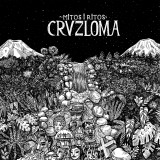
Mitos & Ritos, the debut EP by the Ecuadorian group Cruzloma, consolidates in its six songs a spirit of promoting traditional rhythms in contemporary styles, a process of reinvention and self-discovery in homage to the indigenous peoples of the Ecuadorian jungle and the riches of ceremonial music all in a mix featuring electronica, global bass and dembow. The hostile times humanity is going through have awoken a need to get back to our roots, reclaim ancestral knowledge, and question where the excessive exploitation of natural resources has led us. We have heeded that urgent call to care for everything that seems unlimited but which is increasingly scarce. And so we have looked to the past to understand our relationship with what surrounds us and establish a dialogue between the past, the present and the uncertain idea of the future. Applied to music, this has aroused the interest of artists and producers who use the rich folklore and traditions of Latin America to replicate that dialogue between what was and what will be. With this in mind, Mitos & Ritos ("Myths and Rites"), the debut EP by the Ecuadorian group Cruzloma, consolidates in its six songs a spirit of promoting traditional rhythms in contemporary styles, a process of reinvention and self-discovery in homage to the indigenous peoples of the Ecuadorian jungle and the riches of ceremonial music, based around the bambuco style from Esmeraldas on the northern coast, and the bomba del chota and the san juanito from Imbabura province. On this EP there are also sacred prayers of the Shuar nation, called Ujaj and Anets, including ceremonies like the taking of ayahuasca and of the tzan tza, all in a mix featuring electronica, global bass and dembow. It is a journey into mysticism, the jungle and the dancefloor, reflecting a search for musical identity that is at once contemporary and futurist.
A kaleidoscopic sonic riot, Nandakke? is the hotly anticipated debut album from Japanese-Belgian duo Aili. Featuring 10 tracks of surreal electro-pop, joyful electronica, house music and more, Nandakke? is a euphoric album that sees Aili Maruyama and Orson Wouters more than fulfil the promise of their acclaimed debut EP.
Recorded over the course of six months in Orson's studio, packed full of vintage synths, Nandakke? captures the spontaneous spirit and creativity of those sessions. Exchanging riffs and rhythms, bouncing sounds and samples off each other, Aili and Orson would let the music take them where it wanted. The result,an album full of wild ideas and bold, playful experimentation.
More than anything an exhilarating feeling of discovery courses through Nandakke?, leaving you never sure where it will go next. One minute a pulsing electro-pop number featuring Aili's dad discussing his takoyaki (battered octopus) recipe, the next an explosive high energy workout song like Up & Down.
Certainly Aili was surprised to find herself singing in her own unique version of Japanese again.
"I thought that I was done with that after our debut EP, but apparently not as I speak even more Japanese on the album!" said Maruyama. "Every time we were in the studio these words would just tumble out. It's a complicated language but I just love to play with it.
"In many ways I'm an outsider, I left Tokyo aged 7, so there's a lot I notice as someone who is not a native speaker and it doesn't always make sense, there's a lot of mistakes in it.But in a way that sums up the whole philosophy of the album and how Orson and I work together."
That notion of duality, a sense of belonging but feeling apart, of being between two worlds and inventing your own captures the spirit of Nandakke?, itself a Japanese word that roughly translates to "Well, what was it?".
"It's something you say when you're looking for a word, like you know it but have forgotten how to say it. That's literally how I communicate with my dad the whole time," Maruyama explains. "The main feeling I have when I go to Japan is that I know the language, I can speak it, but part of me still feels like it doesn't have all the vocabulary. There's a gap there that nandakke has always filled for me. All the lyrics come from that place, that seven-year old trying to speak Japanese."
Whether Aili's singing about the language she invented with her father over the years to bridge the gap between them (Nandakke?), the idiosyncratic Japanese relationship to fashion (Fashion) or riffing on children's playground songs (Yubikiri) the result is a remarkable album that defies easy categorisation.
Bursting onto the Belgian scene in 2021 with their acclaimed debut EP, Dansu, its lead track spent 8 consecutive weeks at the #1 spot of Radio 1's VOX list and saw the band nominated for Studio Brussel's De Nieuwe Lichting ('New Generation') award. Since then Aili have appeared playing live on the Belgian TV show Roomies, been tipped by the likes of Rolling Stone, become regulars on tastemaker stations like KEXP and KCRW in the US and Nova in France, toured across Europe and, just recently, played their first sell out shows in Japan.