tapetopia 006 In 1983, some more subdued sounds began to waft from the GDR punk underground into the second half of the ’80s. At five to the end of time, it was perpetually striking midnight and the occasional punk band would mix a little laudanum into their potential for aggression. Portents in this vein preceded a dark wave whose foamy crest would break on fog walls of dry ice. Especially in Leipzig and East Berlin, a chain-rattling zeitgeist produced bands that drew from a dark well. Many of these bands arose from the still hot or already cold ashes of punk. The two founding fathers of Neuntage Alt, René Glofke and Taymur Streng (nicknamed “Strangler”), knew each other from the East Berlin punk scene. The third man aboard, Mike Sauer, played drums in the early 1980s for Sendeschluß, a punk band that, lost in thought somewhere in the no-man’s land between punk and post-punk, faded away in 1984. Punk was no longer the order of the day, but it was a form of expression among many and easy to combine. Glofke and Streng found common ground in experimental set-ups with such otherworldly names as Medusa Brahma or Die zeitweilige Erscheinung.
From this far-flung point of departure, a short tunnel led straight into the black light of Neuntage Alt, the coldest star in the low-hanging sky above East Berlin. Neuntage Alt appeared at the end of 1986, during the last blackout phase of the GDR, on the threshold between the underground and the so-called “other bands” – a scene that used the non-socio-critical approach of German Wutwave (“anger wave”) in order to be allowed to perform publicly. In the context of this scene, Neuntage Alt did not belong to the inner circle. Moreover, the band’s subcultural base was initially in Mahlsdorf, on the south-eastern edge of East Berlin. This was where the DIY sound studio of amplitude apostle and great modulator Taymur Streng was situated. Strangler held the position of house electrician and keyboard god in various projects. One of them had the bland alias Mahlsdorfer Wohnstuben Orchester, behind which the avant-garde court chapel of the bungalow studio was concealed. There Taymur also conspired with the East Berlin underground band Ornament & Verbrechen (tapetopia #001). Ronald Lippok of Ornament & Verbrechen remembers how once, at the opening of a joint session, he and his brother Robert attended Taymur’s engaging slide show of his collection of test patterns. Afterwards, they created a piece with the psychedelic title “Das sentimentale UfO”, which sheds an iridescent light on the bizarre atmosphere in the studio. Taymur’s obsession with technology was legendary. The home studio was also his living space; a circuit, a machine park of screwed and soldered equipment, a single keyboard orgy. His own creations were also based on circuit diagrams found in the radio amateur magazine “Funkamateur”. Its somewhat clueless subtitle “Praktische Elektronik Für Alle” (Practical Electronics for All)
Cerca:elek drums
Mit der um sieben Bonusstücke ergänzten Neuauflage von "Passive With Desire" (2016) kommen zu den neun Originaltiteln des Albums die beiden Songs der Single "Sunday Light" (2017) sowie die fünf Aufnahmen der limitierten Kassette "Part Time Punks Sessions" (2018) hinzu. Letztere erschienen ebenfalls bei Dais, das Debüt kam via Team Love Records in die Läden. Hinter Choir Boy verbirgt sich ein synthielastiges und 80er-dominiertes Dream-Pop-Projekt von Adam Klopp (Gesang, Synthesizer, Piano, Gitarre, Perkussion, Elektronik). Der verbrachte zwar seine Kindheit und Jugend in der Glaubensgemeinschaft der Mormonen in Salt Lake City, aber mit zunehmendem Alter auch immer mehr Zeit in der DIY-Punk-Szene. Schließlich gelang es Klopp, die Sekte zu verlassen. Die Stücke für sein Debüt skizzierte er als Single-Demo-Tracks, doch die finalen Aufnahmen fanden im Studio mit Begleitung - Katrina Marie Rick Peterson (Gesang), Bret Meisenbach (Gitarre), Jacob Hall (Drums), Kyle Hooper (Keys), Chaz Costello (Bass), Alyssa Pyper (Violine) - statt. Flankiert wird die CD durch ein informatives 12-seitiges Booklet.
Die französische Sängerin, Multi-Instrumentalistin und Produzentin Halo Maud veröffentlicht ihr neues Album 'Celebrate'. Die zwölf Tracks bieten eine nahtlose Mischung aus Französisch und Englisch, analoger Elektronik, kratzigen Gitarren, verspielten Drums und Dream Pop-Elementen, aufgenommen zwischen Paris und Los Angeles.
Egil Kalman has levelled up on this one; we were stunned by his last solo opus, and on ‘Forest of Tines’, the bassist/synthesist has traded the EMS Synthi 100 for the Buchla Series 200, recording at Stockholm’s illustrious Elektronmusikstudion (EMS). Here, he builds on themes he explored on his debut with a generous 20 track double album that marks firmer lines between Scandinavian folk music and contemporary electro- acoustic minimalism.
Using woody, synthesised tones that gradually open into sawing wails, Kalman suggests harmonies that lie between the 17th century polska and earlier, pre-Renaissance sounds, mimicking the tonal and textural fluctuations of strings with advanced tuning and sequencing techniques. There are plenty of artists delving into the past to unravel their identity, but Kalman’s approach is refreshingly unadulterated. He recorded the entire set on the fly, using just spring reverb to add extra texture, without overdubs or modern DAW-style layering, the Buchla 200 played almost like an acoustic instrument.
There’s a glimmer of vintage acid on the lithe ‘Dub One’, a complex, rhythmic experiment that lashes its pulses together with willowy portamento slides. And on ‘Klystron’, he absorbs warehouse techno’s architectural oomph, splaying psychedelic, reverberating ascending sequences over jagged kicks; listen carefully, and there’s something else going on in the background too, as Kalman meets his stabs with flute-like echoes. It’s a peculiar cocktail of ideas and provocations: ‘Mbira’ finds the composer shaping his synth into dusty, fluttering hits that resemble the titular Zimbabwean finger harp, and on ‘Drums’, he pipes pre-recorded percussion through the system, triggering its oscillators and helping shape its rhythmic patterns. He’s most comfortable when he’s mines a hazier past, ‘Autumn Leaves’ is a mystickal, just intoned droner that harmonises with Mattias Petersson’s awesome ‘Triangular Progressions’, and ‘Subtines’ sounds as if Kalman has deployed his instrument in a subterranean crevice, resonating his rumbles around synthetic water droplets.
If it’s uncanny court music you’re particularly interested in, there’s plenty of that too. ‘Polska’ is another sublimely hauntological Swedish folk interpolation, while closing track ‘Ocquet’ appears to blur Kalman’s ideas more thoroughly, melting folk phrasing and peaceful, uneasy drones to draw us to a neat conclusion. Soft-hearted but animated, it’s modern electronic music that isn’t afraid of employing vintage techniques to suggest new directions.
Es ist eine futuristische Musik, die auf dem Debut-Album von THE DRAW zu hören ist - mit einem elektroakustischen Set-Up aus modularen Synthesizern und akustischem Schlagzeug. Ursprünglich hatten die beiden Musiker Uwe Haas und Eric Schaefer, die sich für dieses Projekt zusammengefunden haben, zwei Alben geplant. Deshalb besteht das Doppel-Vinyl MAIKRO eigentlich aus zwei Teilen, die thematisch und musikalisch klar voneinander abgegrenzt sind - und doch in einem Spannungsverhältnis zueinander stehen. So sind auf dem ersten Longplayer mit dem Titel MAKRO Spielformen des Dub, Industrial und Noise zu hören. Mit ihrer Kraft und Vitalität von verzerrten Drums und pumpenden Bässe erinnert diese Musik an den akustischen Raum repetitiver Clubmusik. Im Gegensatz dazu ist MIKRO von der Anmutung und dem Detailreichtum der Musique concréte und des Ambient geprägt. Nahe mikrophonierte Perkussion, Field-Recordings und Oszillatoren führen in eine Welt, in der feine, kaum hörbare Klänge, wie unter ein Mikroskop gelegt, vergrößert werden. Die beiden Musiker lassen ihre Improvisationen auf MAIKRO organisch wuchern, lassen Klanglandschaften entstehen, aufregend, ungehört und unberechenbar - und halten ihre Kompositionen doch stets in der Schwebe zwischen Spontaneität und struktureller Klarheit.
"An ACE Tone Compact Drum'n'Bass Psych Punk LSD Massacre pressed on WAX and just produced for your 24h Dance and Hangover Nights in Haarlem/Amsterdam!" Haarlem Amsterdam's Underground-Helden aus der Niederlande - eine Band, die mit einer ACE Tone Compact Orgel (aus der Mitte der 60er Jahre) arbeitet und den erstaunlichsten Sound aller Zeiten herausquetscht, in einem Song ins orbit katapultiert und im anderen eine Fuzz-Shred-Punkrock panzer Faust direkt in die Mitte _ und Ganz zu schweigen von der großartigen Drums-n-Bass-Sektion, die einem in kürzester Zeit den Kopf um 380 grad umdreht. 3 Leute machen einen Sound von 5, in diesen Aufnahmen gehen sie mehr in die Richtung Synthesizer oder Elektronik angehaucht. Aber es ist nicht nur das, es ist diese verdammte ACE Tone Compact Orgel die durch deine Ohren dröhnt!!!! Die Platte beginnt mit ,Boots` einem typischen ,E.T. Explore Me" Smasher, Ark ist eine Reise in sich selbst eine religiöse Offenbarung. Erhelle die Dunkelheit!!! ,Drug me, haben wir bereits als Vinyl 7 veröffentlicht und erzählt wie im song in ,Drip" über die Einnahme von verbotenen halluzinierenden Medikamente in einer 24 Stunden party und eine durchgeknallte Tanznacht in den Nachtclubs von Amsterdam, ,SIC" ist eine gefährliche unkontrollierte Fahrt mit dem Auto durch die Nächte in Haarlem und im song 98% mit gast Sängerin Kim-Lee Tio Bitte Nehmen Sie sich eine Minute Zeit und tauchen Sie ein in die Welt von ,E.T. Explore Me" ein und erfahren sie sich selber neu mit dieser Truppe aus Haarlem/Amsterdam. Digisleeve CD incl. 12page booklet, Vinyl-LP classic black w/ pinted inlay plus dlc.
- City Gate
- Rumble
- Side Walk
- Cool Weasel Boogie
- Got A Match?
- Elektric City
- No Zone
- King Cockroach
- India Town
- All Love
- Silver Temple
- Light Years
- Second Sight
- Flamingo
- Prism
- Time Track
- Starlight
- Your Eyes
- The Dragon
- View From The Outside
- Smokescreen
- Hymn Of The Heart
- Kaleidoscope
- Home Universe
- Passage
- Beauty
- Cascade Part 1
- Cascade Part 2
- Trance Dance
- Eye Of The Beholder
- Ezinda
- Amnesia
- Inside Out
- Make A Wish Part 1
- Make A Wish Part 2
- Stretch It Part 1
- Streeth It Part 2P
- Kicker
- Child's Play
- Tale Of Daring Chapter 1
- Chapter 2
- Chapter 3
- Chapter 4
- Beneath The Mask
- Little Things That Count
- One Of Us Is Over 40
- A Wave Goodbye
- Lifescape
- Jammin E. Cricket
- Charged Particles
- Eternal Child
- Free Step
- 99: Flavors
- Illusions
- Forgotten Past
Led by the legendary pianist and composer Chick Corea - the venerated 27-time Grammy winner and National Endowment for the Arts Jazz Master - The Elektric Band stormed onto the jazz scene in the mid-1980s, making an immediate and lasting impact on the genre. With their electrifying performances and innovative blend of jazz fusion, the group produced a series of albums that set the bar for excellence in contemporary jazz. Featuring a core lineup of virtuosic musicians - John Patitucci on bass, Dave Weckl on drums, Eric Marienthal on saxophone and Frank Gambale on guitar - the group created a dynamic and electrifying sound that came to define the jazz fusion style. Their collective musicianship was on full display on each album, as they seamlessly blended complex compositions with captivating improvisations. With each outing, the band explored new sonic territories, incorporating elements of funk, Latin and Afro music, and pop sensibilities. Their 5-album studio discography is a masterful tapestry of multi-layered music, showcasing their creativity, innovation, and musicianship. A restlessly creative, eternally youthful and uncommonly generous spirit, Armando Anthony “Chick” Corea left behind an incredibly rich legacy of recorded music when he passed away on February 9, 2021. The music of the Elektric Band continues to inspire and influence musicians to this day, cementing their legacy as one of the most important and iconic jazz fusion bands of all time
Das experimentelle elektronische Hiphop-Duo H31R (sprich: air) - bestehend aus der Produzentin/ Komponistin JWords aus New Jersey und der Rapperin/ Sängerin maassai aus Brooklyn - kündigt seine neueste Veröffentlichung, „HeadSpace“, auf dem Ninja Tune-Sublabel Big Dada an. Das Album folgt auf ihr außergewöhnliches Debütalbum, „ve-loc-i-ty“, aus dem Jahr 2020, das sofort die Aufmerksamkeit von Pitchfork, The Wire, Brooklyn Vegan, Okayplayer, Cabbages, Bandcamp und anderen auf sich zog.
„HeadSpace“ markiert eine neue Phase des Erwachsenwerdens für das Duo; es findet sich mit einem neuen Verständnis dessen ab, was es ist, und erkundet, wie es mit der Welt interagieren möchte. Wie sein Vorgänger manövriert auch „HeadSpace“ mit rasender Geschwindigkeit durch seine 14 Tracks. „Glitch In Time“ gibt den Ton für das Album an, mit düsteren Bässen, groovigen Drums und schrägen Melodien, die sich durch das ganze Album ziehen. Es enthält Momente der Introspektion und Selbstreflexion, in Songs wie „Static“ und „Reflection“, während das erbauliche Diptychon „Rotation“ - ein oszillierender Track, der die Essenz von Licht und Dunkelheit einfängt - und „All Over The Place“, das die Dualität transzendiert und sich zu einem multidimensionalen Selbst ausweitet. Auch „Backwards“, das trotz seines Namens ein treibendes Stück ist, in dem es darum geht, sich von Dingen zu lösen, die einen zurückhalten, und „Train Of Thought“, das die Mechanismen des Denkens untersucht und zunächst konkreter beginnt, bevor es gegen Ende des Songs allmählich abstrakter wird.
„HeadSpace“ enthält außerdem Beiträge des aufstrebenden Rappers und Produzenten Semiratruth aus Chicago zu dem motivierenden „Glass Ceiling“ und eine verspielte Strophe des für den GRAMMY nominierten Produzenten und Rappers Quelle Chris aus Detroit zu „Down Down BB“.
The Elektric Band, led by the legendary pianist and composer Chick Corea, made a
significant impact on the jazz scene in the mid-1980s. Comprising virtuoso musicians like
John Patitucci on bass, Dave Weckl on drums, Eric Marienthal on saxophone, and Frank
Gambale on guitar, they created a dynamic and electrifying fusion of jazz. They released
several influential albums in a short span of time.
After this initial period, Chick Corea pursued various musical projects. However, before his
passing in February 2021, he compiled and completed an unreleased album of live
recordings featuring the original Elektric Band, captured during tour stops in 2016, 2017,
and 2018. This album, produced by Corea and mastered by Bernie Grundman, is
available as a 3-disc vinyl LP and a 2-disc CD. It serves as a fitting closing chapter and is
a must-have for fans of this groundbreaking group.
Nachdem der französische Pianist und Producer sich mit 'O', dem ersten Album (2020 auf Mercury) einer elektronischen Symphonie widmete, kehrt LAAKE mit 'VOLT' zurück, mit einem umfangreichen und sonnigen Werk vollkommen contrair zur Entwicklung der aktuellen elektronischen Musik- Szene. Die Piano-Loops, eine der musikalischen Speerspitzen des Musikers, kollidieren mit Percussions und Drums in einer progressiven und treibenden Sintflut. Die Energie des Albums bewegt sich mühelos zwischen elektronischen und klassischen Dimensionen und flirtet mit Orgelklängen, kraftvollen Bässen und polyphonen Stimmen. Aufgenommen mit 10 Musikern aus der Klassik- und Jazzwelt zwischen Paris und Brüssel, folgen die 10 Titel des Albums einem Konzept, ohne sich zu wiederholen.
Schicksal is the alias of Rudi Huybrechts from Belgium. Heavily inspired by Front 242 first album “Geography”, DAF’s elektronische körpermusik “Alles Ist Gut” and of course Kraftwerk’s “Man Machine” and “Computer World”, Rudi bought his first Roland SH-101 synthesizer and started in 1982 with Schicksal to experiment with synths and drum computers. He spent lot of hours programming and composing on his bedroom and recording everything on a tape recorder. A selection of these old tracks are included on “Perpetuum Cycle I”. You can definitely feel the vibe of this period and the place where the songs were created: the old industrial town of Hoboken, the culmination of the cold war and the aim of a young musician to combine melody and harmony into minimal electronic music. Recommended for fans of Absolute Body Control, The Klinik, minimal-synth and early EBM
Faitiche presents the album Exq I by Berlin underground techno legends Muellie Messiah & Punk not Punk, mainly known under their 100Records moniker. Weighing in at 36 minutes, the track was recorded in 2010, effortlessly intermingling dub, drone and collage, a blend achieved thanks to the duo’s jazz-inspired approach to improvisation.
_
100records is one of the last undiscovered treasures of the Berlin underground of the 1990s and 2000s. Like Elektro Music Department, 100records is unthinkable without techno and the club scene, but with a few exceptions the duo’s tracks are not aimed at the dancefloor. With a claim to universality and a broader frame of reference, 100records developed a more extensive understanding of sound that rests on three pillars: the understated analogue drums of the Roland TR-808, a blurred, dubby sound, and improvisation.
On first hearing, Exq I has little in common with the groovy, detailed, variation-rich sound usually associated with 100records. Recorded at the end of a highly productive decade, it is an echo speaking of exhaustion in which dub, drone and collage converge to form something whose jazz sensibility makes it readily identifiable as the work of 100records.
100records was founded in 1994 by Muellie Messiah (Dirk Budde) and Ekki 808 (Ekkehard Rau), who were joined in 1999 by Punk not Punk (Martin Osti). Around 2002, Ekki departed, leaving Budde and Osti to continue as a duo. Since then, their relationship has shaped 100records: Budde is the driven lone genius doggedly pursuing sounds, Osti the pragmatist who turns ideas into music.
As well as making music, Budde is also a musicologist. In 1997 he published his PhD thesis entitled Take Three Chords... Punk Rock and the Development to American Hardcore. As well as being his specialization, punk is also part of his identity: in the 1980s he sang and played keyboards in various punk bands in Kassel, the best known being Haunted Henschel.
After the fall of the Wall, attracted by the freedom of the newly reunited Berlin, Budde packed his bags and drove to the formerly divided city, having already become acquainted with techno at Kassel’s influential Stammheim club.
Pianist, drummer, composer and producer Hamish Balfour presents jazz funk, soul and electronic music, bridging the gap from classic Blue Note to Warp via Sonar Kollektiv on Running Colours, his electrifying debut album for London's Shapes of Rhythm Records.
Praised by Jazzwise for hissolo flourishes and sidestepping harmonies, Hamish Balfour should be a recognisable face to jazz addicts. The go-to keys player has performed and recorded alongside American jazz drumming legend Harvey Mason, Tenderlonious, The Temptations, Odyssey, Faze Action, Yolanda Charles' Project PH, Bassically, Nim Quartet and Yam Who. Popping up not only in the credits of many sought-after albums, but also Channel 4, ITV and BBCprogrammes for his compositions on various shows.
Over the course of eleven tracks, Balfour folds in and explores his influences, with a wide yet highly cohesive and strong palette of sounds, whilst interacting with high caliber guest vocalists such as spoken word artist and broken beat icon, Lyric L(Seiji,Nathan Haines), London Elektricity and Hospital Records' star vocalist Elsa Esmeralda, award-winning and chart-storming singer-songwriter Belle Humble (Freestylers, Paloma Faith) and soul and house mainstay Andre Espeut (Afriquoi,Simbad,Faze Action).
Responsible for all piano, synths, percussion and production on the album, Balfour's musicality shines through, a reminder of how overdue this debut album as leader is. However, in addition to the incredible vocalists, he's joined by some of the UK's finest jazz musicians: James Copus (trumpet), Pete Matin (bass), Laurie Lowe and Saleem Raman (drums) and Rob Updegraff (guitar).
Elsa Esmeralda implores us 'not to be afraid' on lead single and title track Running Colours. A perfect invitation to get stuck into this many layered album. Balfour compliments Esmeralda's soothing vocals with delicate piano intro before Lowe's bruk-easque drums and lead an irresistible groove bedded in warm synths and guitar licks.
Yes or No showcases Loose Lips legend Lyric L contemplating the uncertainty of love over a swinging mid-tempo jazz funk boogie groove propelled by tight drums and Hammond chords, closing with a flying trumpet solo from Copus, weaving around Balfour's nimble keys.
Wealth, featuring singer/songwriter Belle Humble, displays incredible depth and restraint. Humble delivers the enticing vocal with ease, as it slides over the intricate webs of jazz fusion and electronics.
Mogul is arguably Running Colours' curveball. An eastern-inspired whirlwind of all manner of synths and twisting drums which constantly morph throughout. Guitars and trumpets take turns to solo on a track that feels like a series of questions that we never quite get answers to.
Balfour's ability to merge free wheeling jazz and fusion with timeless electronic production and soulful compositions is also apparent on instrumental pieces such as Reflector 28. Here, we find the musicians upbeat, uplifting, progressive and playful, showcasing the keys whilst the bass underpins the groove.
South Of The Sun is Running Colours' laid-back moment with Roy Ayers-type vibrations as bass and drums sit in the pocket (at least to begin with), whilst a Rhodes weaves its magic. Like many of the album's tracks we take a few twists and turns before returning to our main feel-good motif.
Hamish's long awaited debut is sure to exceed the expectations of those who know him already, whilst introducing a whole new audience to his wealth of talent and originality.
- A1: Music Of The Earth
- A2: When I Found You
- A3: Changes (In Your Life)
- A4: Wishful Thinking
- A5: Let’s Sing A Song Of Love
- B1: Hang It Up
- B2: Cha-Cha
- B3: It’s Just
- B4: A Natural Thing
- B5: Didn’t You Know?
- B6: Play!
- C1: Music Of The Earth (Danny Krivit Edit)
- C2: Hang It Up (12” Version)
- D1: Play! (12” Version)
- D2: Didn’t You Know? (Extended Version)
Strut continue their Patrice Rushedn original album reissue series with the definitive edition of her influential classic ‘Now’ from 1984.
Released after the global success of ‘Straight From The Heart’ and the huge hit ‘Forget Me Nots’, ‘Now’ stripped back the arrangements and explored a new sonic palette, combining top level musicianship with the evolving studio technology of the mid-‘80s. “By this time, I had built a little home studio,” explains Patrice, “and the new synthesizers and drum machines opened a lot of possibilities. A lot of the pieces on ‘Now’ started off as demos based on these instruments and we just went with it quite naturally, adding guitar, bass and drums.”
The album continued Patrice’s unerring skill in fusing intricate jazz musicianship with infectious grooves. The solid boogie classic ‘Get Off (You Fascinate Me)’ lit up dancefloors and ‘Feels So Real’ became one of Patrice’s best loved songs, an effortless mid-tempo soul stepper. The album is also celebrated for the tender ‘Gotta Find It’ and one of Patrice’s most poignant ballads, the intricate and politically charged ‘To Each His Own’.
The album marked the end of Rushen’s tenure with Elektra before a move to Arista and remains a much-referenced part of her career. “I think it was a great representation of where we were at the time and it may have been a little bit ahead of its time”, she reflects. Famously, Jimmy Jam and Terry Lewis had become fans, attending her live shows, and, allegedly, the feel of Janet Jackson’s debut album ‘Control’ two years later was heavily influenced by Rushen’s approach on ‘Now’.
Nach zwei überzeugenden Alben erscheint mit "Sauropoda" nun das dritte Album der Electro-Funk Band L"ECLAIR. Die fünf Songs sind absolut dancefloor-tauglich und groovy. Zwei Jahre nach dem Debüt "Cruise Control" (2017) und ein Jahr nach dem erfolgreichen zweiten Album "Polymood" (2018) erscheint nun das dritte Album der Genfer L"ECLAIR. Auch auf "Sauropoda" setzt die Band eine Vielfalt von Vintage-Equipment und Synthie- Sounds ein. Die Tracks sind allesamt sehr warm und erinnern an elektronische Songs aus den 1970ern. Eine Art spaciger Grundteppich durchzieht die Songs, während Bass und Drums einen unwiderstehlichen Groove über das Ganze legen. Aber auch experiementelle Kraut-Elemente lassen sich in den Songs finden. "Proto-Prog-Groove" nennt die Band ihren Sound und trifft es damit genau auf den Punkt.
The long-running Kompakt imprint will release an EP by German DJ and producer Sascha Funke in September. Sharing five tracks that traverse quirky house and techno, Treets marks Funke’s monumental return to Kompakt since his Zug um Zug two-tracker in 2014.
Speaking about Treets, Funke says he is "very happy to be back on the mothership Kompakt" after an eight-year break. As one would expect with Funke, the EP fits the cosmic world of Kompakt to a tee. The title track conveys a weird, tripped-out atmosphere as an alien-like vocal burbles between an acid bassline and squeaky percussion. It's a tantalising glimpse of Funke's freaky underworld. E_Plus follows a similar wonked-out vein, only this time, the vibe is ominous. Funke pairs an orchestral vocal with bleepy pads and signature acid-drenched melody — a solid offering oddball of energy. On Alles Paletti, a 2-step drum pattern and string of bright claps create a sunny soundscape, complemented by a robust bassline and ethereal synth notes. It's fairytale house music, the kind only Funke can produce. The penultimate track Haus More is subdued, as chugging drums slither between a wobbly melody. The Other Version feels futuristic, as Funke goes full-force electro. Extra-terrestrial vocals return, but the pace is cranked up by strident sound FX and thudding drums. An eccentric end to an eccentric EP.
Sascha Funke is a Berlin-based producer and DJ with two decades' worth of releases building his back catalogue. BPitch Control, Turbo Recordings, Endless Flight, Running Back, and several more esteemed imprints have released his work. Today, he continues to create sleek sounds that weave various genres from house, techno, disco, Krautrock, wave, electro and unclassified anomalies. As a DJ, Funke is just as free-wheeling as his productions. He's played E1 in London, Caos in São Paulo and Renate in Berlin, amongst others, displaying his sweeping sound to a worldwide audience. Having been exposed to euro-dance pop as a youngster, you can hear flashes from the genre stitched throughout his work but blended in a way that's quintessential to Funke. Never one to change his sound according to the latest trend, Funke stays true to his creative vision — one of the most significant challenges for producers today.
Das traditionsreiche Kompakt-Imprint wird im September eine EP des deutschen DJs und Produzenten Sascha Funke veröffentlichen. Mit fünf Tracks, die sich durch schrulligen House und Techno auszeichnen, ist “Treets” Funkes monumentale Rückkehr zu Kompakt seit “ Zug um Zug” im Jahr 2014.
Im Gespräch über Treets sagt Funke, er sei "sehr glücklich, nach acht Jahren Pause wieder auf dem Mutterschiff Kompakt zu sein". Wie bei Funke nicht anders zu erwarten, passt die EP hervorragend in die kosmische Welt von Kompakt. Der Titeltrack vermittelt eine seltsame, abgedrehte Atmosphäre, wenn eine außerirdisch anmutende Stimme zwischen einer Acid-Bassline und quietschenden Perkussionsinstrumenten dahinplätschert. Es ist ein verlockender Einblick in Funkes freakige Unterwelt. “E-Plus” geht in eine ähnliche Richtung, nur dass dieses Mal die Stimmung bedrohlich ist. Funke paart einen orchestralen Gesang mit bleepigen Pads und seiner typischen Acid-getränkten Melodie - ein solides Angebot voller Energie. Auf “Alles Paletti” schaffen ein 2-Step-Drum-Pattern und eine Reihe heller Claps eine sonnige Klanglandschaft, die durch eine robuste Bassline und ätherische Synthesizernoten ergänzt wird. Das ist märchenhafte House-Musik, wie sie nur Funke produzieren kann. Der vorletzte Track Haus More ist zurückhaltend, da tuckernde Drums zwischen einer wackeligen Melodie schlittern. “Treets (The Other Version)” fühlt sich futuristisch an, weil Funke hier voll auf Elektro setzt. Der außerirdische Gesang kehrt zurück, aber das Tempo wird durch schrille Soundeffekte und stampfende Drums angezogen. Ein exzentrisches Ende für eine exzentrische EP.
Sascha Funke ist ein in Berlin ansässiger Produzent und DJ mit einem Backkatalog von zwei Jahrzehnten an Veröffentlichungen. BPitch Control, Turbo Recordings, Endless Flight, Running Back und einige andere angesehene Labels haben seine Arbeiten veröffentlicht. Heute kreiert er weiterhin geschmeidige Sounds, die verschiedene Genres wie House, Techno, Disco, Krautrock, Wave, Electro und unklassifizierte Anomalien miteinander verweben. Als DJ ist Funke genauso freizügig wie seine Produktionen. Er hat unter anderem im E1 in London, im Caos in São Paulo und im Renate in Berlin aufgelegt und seinen mitreißenden Sound einem weltweiten Publikum vorgestellt. Da er schon als Jugendlicher mit Eurodance in Berührung kam, sind in seiner Arbeit immer wieder Anklänge an dieses Genre zu hören, die aber auf eine Art und Weise vermischt werden, die ganz typisch für Funke ist. Niemals verändert Funke seinen Sound nach dem neuesten Trend, sondern bleibt seiner kreativen Vision treu - eine der größten Herausforderungen für Produzenten heutzutage.
Mit ihrem neuen Album „3“ öffnen die belgischen Krautrocker MOTOR!K ein neues Kapitel ihrer musikalischen Bandgeschichte. Während die Schlüsselelemente ihrer vorherigen Alben „MOTOR!K“ und „2“ (hypnotisierende Basslines, hämmernde Drums und sich repetetiven Gitarrenlinien) auch im neuen Album wiederzukennen sind, unterscheidet sich dieses Album dennoch von seinen Vorgängern.
Von Tracks mit minimalen Techno-Grooves, ambientartiger Gitarren- und Elektronik-Tracks, "Vintage" MOTOR!K Songs bis hin zu Post-Rock Feelings und psychedelischen Gitarren & Synthesizern. Delay-Gitarrenspiel und spacige Elektronik bauen hier neue Horizonte auf und zollen damit den Klängen der späten 70er Jahre ihren Respekt.
Motor!k 3 - ein Album dass geradezu danach schreit, in einer schweißtreibenden Konzertumgebung live gehört zu werden.
Das Belgische Trio bestehend aus Gitarrist/Synthesist & Motor!k Songkomponist Joeri Dobbeleir, Dirk Ivens - Guitar / FX (The Klinik/ Dive) und Drummer Dries D'Hollander, hält den instrumentalen Krautrock Vibe aufrecht & lebendig, sowohl auf Platte als auch live auf der Bühne.
LeSale is back with the Synchronized EP, which marks his fifth solo EP on Luv Shack Records.
The title track is LeSale´s first foray into boogie-funk, featuring lyrics and vocals by Kathy Diamond, one of the great voices of the early nu-disco era and former singer of the duo KDMS, as well as tape mixing by vienna based studio wizard Sam Irl. "Synchronized" comes in 4 versions; the classic vocal mix featuring the full vocals by Kathy Diamond, the instrumental mix which is stripped of the vocals entirely, the extended dub mix, featuring arrangement and additional overdubs by Sam Irl, concentrating on the bare,funky essence of the track and finally a special remix by Ooft!.
The Ooft! remix lays a club foundation for "Synchronized", taking it to proto house territory with a sparse use of original vocals and additional drums, synth leads and pads.
As a bonus original track, we get "Superfluid", an upbeat elektro-funk journey with the right amount of
Elektro Guzzi from Vienna are back with their new, their ninth album »Triangle«. Since their first, self-titled album in 2010, Elektro Guzzi have been working on a variety of techno that is not programmed on a computer or sequencer, but rather analogously performed by using
electric bass (Jakob Schneidewind), drums (Bernhard Breuer) and electric guitar (Bernhard Hammer) and it is techno-music, that arises in the moment of interaction - a music that often develops in the direction of cosmic music. On »Triangle«, Elektro Guzzi overcame the
natural, »learned« sound of their instruments. The futuristic concept of techno shines through all the more as a role model - that there is precisely this clear idea of transcending the present by playing a hypnotic, interlocking music of the future. »Triangle« is the logical
next step for a band that is always looking for »more«, for departure, for consistency. The forced break of the lockdowns 2020/2021 and the restrictions in the context of the crisis made the band move closer together; on »Triangle«, Elektro Guzzi increased their efficiency to the unbelievable.
Audio premiere for Povratak na Parni Pogon on Monday 24th of May via Music is my sanctury
Video premiere via Clash or Twisted Soul
Airplay - dom servini (soho radio), WYEP Pittsburg (dubmission), WKDU Philadelphia (eavesdrop radio), Jocks & nerds (soho radio), Basic Soul Show, Bondfire Radio NYC + many smaller stations across EU, UK & US
LP review - Mojo, Songlines agreed so far
Key selling points:
Kozmodrum are pioneers of the Croatian nu-jazz scene
Kozmodrum's second albumGravitywon the highest award in Croatia, Porin
Individual members of Kozmodrum as well as Kozmodrum as a collective are acclaimed musicians in the Balkans and have won numerous prestigious awards for their work
Their music is like a DJ set played live - as all the music is played live with 'traditional' instruments by the Kozmodrum ensemble
numerous great reviews, but not many in English - we're looking to introduce the band to UK audiences with this release -- this is one review in english for their album Gravity:https://exclaim.ca/music/article/kozmodrum-gravity
Our PR for this 3rd album by Kozmodrum is done by Francesco Soragna (Jus Like Music) with specific focus on UK market.
BIO:
Kozmodrumhave been pioneering a new approach to electronic music in Croatia, often described by the band as Organic Dance Music. Techno, House and Dub styles intertwine through a continuous set, played by a live band on guitars, drums and keyboards.Simultaneously, the tradition of jazz ensemble performance is stitched into the architecture of music itself.
Kozmodrum have released 2 albums, 'Na Tragu Satelita' in 2016, and 'Gravity' the following year, receiving a Porin Award for the latter (the Croatian Grammy). Individual band members also received numerous awards for their accomplishments and are considered by many to be pioneers in the Croatian nu-jazz scene. Kozmodrum's main influences are Tycho and Elektro Guzzi, as well as Jaga Jazzist with whom they performed live. The band have played numerous festivals and concerts, with Kozmodrum's members performing with Hans Joachim Roedelius, noise/art/sound figure Sunao Inami, as well as jazz masters Reggie Washington, Peter Erskine, David Liebman, Alan Broadbent, David Murray and Saskia Laroo.
Onstage, Kozmodrum is a five-piece ensemble that adds a third dimension to their music, written and produced by the band's founder Janko Novoselić. Using the framework of a DJ set, the compositions are made to be played openly, where the beat is 'looped' until a cue is given to make a change or switch to another part. The pieces are often minimalistic to start with, but evolve over the performance into more complex patterns, harmonies and melodies. With constant shifts between the natural and the artificial, organized and improvised, quiet and loud - Kozmodrum create an unforgettable, mantric performance.
Having already unearthed three collections of archival ‘70s recordings by Catherine Christer Hennix, Blank Forms continues their annual illumination of the visionary Swedish composer’s music by turning to more recent work with this first-time vinyl edition of Hennix’s “Blues Alif Lam Mim in the Mode of Rag Infinity/Rag Cosmosis,” a 2014 piece first released as a CD in 2016 (Important Records).
The double album captures the April 22, 2014 premiere of Hennix’s composition by by the Chora(s)san Time-Court Mirage, her expanded just intonation ensemble, featuring a brass section of Amir ElSaffar, Paul Schwingenschlögl, Hilary Jeffery, Elena Kakaliagou, and Robin Hayward; live electronics by Stefan Tiedje and Marcus Pal; and voice by Amirtha Kidambi, Imam Ahmet Muhsin Tüzer, and Hennix herself. Intended to reveal the blues’ origins in the eastern musical traditions of raga and makam, “Blues Alif Lam Mim in the Mode of Rag Infinity/Rag Cosmosis” has its roots in Hennix’s 2013 realization of an “Illuminatory Sound Environment,” a concept developed in 1978 by anti-artist Henry Flynt on the basis of Hennix’s own “The Electric Harpsichord.”
As Hennix explains in Other Matters, Blank Forms’ 2019 collection of her writings:
“Rag Infinity/Rag Cosmosis presents fragments of ‘raga-like’ frequency constellations following distinct cycles and permuting their order, creating a simultaneity of ‘multi-universes.’ When two such ‘universes’ come in proximity of each other and begin unfolding simultaneously along distinct cycles, there is a kaleidoscopic exfoliation of frequencies as one universe is becoming two, but not separated—the effect of cosmosis is entrained, binding two or more frequency universes into proximity where their modal properties interact and blend, creating in the process entirely new microtonal constellations in an omnidirectional simultaneous cosmic order with phenomenologically ‘transfinite’ Poincaré cycles (cyclic returns to initial conditions).”
As with Hennix’s best work, the organic unfolding of this quivering drone belies a precision that opens onto the infinitesimal. Upon its mesmerizing ebb and flow, the vocalists incant a devotional poem written in Arabic by Hennix and featuring quotations from the Quran. Also reproduced on the album’s gatefold jacket, Hennix’s reduction of the sacred text to its most elegant formulation invites the contemplator to bring their inner knowledge to the composition for use as a prompt for meditation. Yet the piece offers depth to even the most secular listener willing to immerse themselves in music brimming with such serene intensity.
Catherine Christer Hennix (b. 1948) started her creative life playing drums with her older brother Peter, growing up in Sweden where she heard jazz luminaries, such as John Coltrane, Eric Dolphy, Dexter Gordon, Archie Shepp, and Cecil Taylor perform from 1960 to 1967. Directly after high school, Hennix went to work at Stockholm’s pioneering Elektronmusikstudion (EMS), where she developed early tape music, incorporating computer generated speech done at the Royal Technological University (KTH), where she was an undergraduate student. After traveling to New York In 1968, she met artists Dick Higgins and Alison Knowles who invited her to stay at the Something Else Press Town House where she had the opportunity to meet, among others, composers John Cage, James Tenney, and Phil Corner. During the following years she developed fruitful collaborative relationships with many composers in the burgeoning American avant-garde, including, most significantly, Henry Flynt and La Monte Young. Young introduced Hennix to Hindustani raga master Pandit Pran Nath and she would later study intensively under him as his first European disciple. While Hennix continued to make music performing alongside Arthur Russell, Marc Johnson, Henry Flynt, and Arthur Rhames, she also served as a professor of Mathematics and Computer Science at SUNY New Paltz and as a visiting Professor of Logic (at Marvin Minsky’s invitation) at MIT’s Artificial Intelligence Laboratory. In recent years Hennix has led the just-intonation ensemble the Chora(s)san Time-Court Mirage, which has featured musicians Amelia Cuni, Amirtha Kidambi, Chiyoku Szlavnics, Hilary Jeffrey, Amir El-Saffar, Benjamin Duboc and Rozemarie Heggen. She currently resides in Istanbul, Turkey pursuing studies in classical Arabic and Turkish makam.
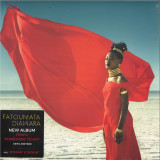
Fatoumata Diawara ist eine malische Singer/Songwriterin und Schauspielerin. Ihr Debüt "Fatou" (2011) und darauffolgende Aktivitäten machten die Künstlerin zu einer der wichtigsten Vertreterinnen moderner afrikanischer Musik. Sie sang auf Alben von Dee Dee Bridgewater ("Red Earth"), Oumou Sangaré ("Seya") und Herbie Hancock ("The Imagine Project"). Darüber hinaus kollaborierte sie mit Bobby Womack, Mulatu Astatke, Cheikh Lô, dem Orchestre Poly-Rythmo de Cotonou, Blick Bassy sowie Rocket Juice & the Moon. Diawara spielte bereits Glastonbury und andere große Festivals, trat in der Carnegie Hall auf und begab sich an Bord von Damon Albarns Africa Express, wo sie sich als Höhepunkt eine Bühne mit Paul McCartney teilte. Parallel setzte sie ihre Karriere als Schauspielerin fort, unter anderem in den Filmen "Timbuktu" (2014) und "Mali Blues" (2015). Ihr Album "Fenfo" (deutsch: "Etwas zu sagen") wurde in Mali, Burkina Faso, Paris und Barcelona aufgenommen und von Diawara selbst sowie dem französischen Superstar Matthieu Chedid alias -M- produziert. "Fenfo" geriet zu einem im besten Sinne grenzenlosen Album. Die elf Songs verbinden alte afrikanischen Saiteninstrumente wie die Kora und Ngoni mit elektrischen Gitarren sowie traditionelle Perkussion mit Kit-Drums. Diawara, die meist auf Bambara singt, wird unter anderem von -M- (Gitarre, Keyboards) dem brillanten Cellisten Vincent Ségal und dem Kora-Spieler Sidiki Diabaté begleitet.
Originally released in 1980, ‘Amanita’ is an early approach of Canadian artist Sherine Cisco, formerly known as Stu Cisco, to the limitless world of synthesizers in music, through ambient, progressive rock and drone noise.
A unique combination of ambient, progressive rock and even drone noises and space-age that converged in ‘Amanita’, her first full album and a piece of music history. This LP marks a milestone in the investigation, experimentation and evolution of musical instruments, where the Mini Moog demonstrated its versatility and creative potential, opening Sherine a path of limitless possibilities.
By the time ‘Amanita’ was first released in 1980 (only 300 copies were pressed at the time), Sherine had been playing synths for seven years. But far from acknowledging how traditional instruments were played, she tried to do things her own way, creating moving landscapes and a unique language of sound. This DIY approach to music was, as well how the album was made, in her own studio, with synthesizers that were originally meant for live performances such as the Elka Rhapsody or the Elektro Harmonix, channeled through a Dokorder 4 Tape Recorder.
However, what Sherine Cisco was living in her personal life, a gender transition, was as important to the record as the instruments she used to create it. “Beginning in the early 1980's, I began experimenting with taking the female hormone, estrogen. I felt like I was gradually being re-born. It affected my music, the mood of the music, and me, physically and mentally”.
A spacey vibe surrounds each of the 12 cuts that compose ‘Amanita’, waving from ambient to experimental music, introducing drone noises that add mystery to the whole piece and creating epic moments, with the Mini Moog accompanied by Randy Gray’s drums. To close things off, a synth pop infused track works as a masterpiece ending to this story.
Kompakt welcomes 2021 with a new member that many of you will recognise. For over 3 decades, Orlando Voorn has been a force in dance music like few others. One of the first Dutch producers to establish a connection between Detroit and Amsterdam (check “Game One” his collaboration with Juan Atkins for Metroplex). He has recorded under a trove of alias that include Fix, Frequency, Format to name a few.
Orlando Voorn brings his extensive knowledge of Techno and House to the forefront for his Kompakt debut “Internal Destination”. We offer up the title track ahead of the 3 track EP’s February 19 release date. Spacial sounds connect perfectly together – the playfulness of the track feels like each moment is caught in mid-air but the beat keeps it all moving forward without hesitation. “Ride The Wave” rounds out this EP – an electro loop is serenaded by a funked up synth melody that jams to the drum in the most soulful of ways.
Kompakt begrüßt das neue Jahr mit einem neuen Familienmitglied, das dem ein oder anderen geläufig sein dürfte. Schon seit über 3 Jahrzehnten prägt Orlando Voorn die elektronische Tanzmusik wie wenige andere. Als erster holländischer Produzent werkelte er schon sehr früh an der Detroit - Amsterdam Achse (siehe "Game One" mit Juan Atkins oder die legendären Ghetto Brothers Releases mit Blake Baxter). Er hat unter unzähligen Pseudonymen wie Fix, Format oder Frequency Platten veröffentlicht, die heute Kultstatus haben.
Mit seinem Kompakt Debut "Internal Destination" zeigt er, dass seine Musik auch im Jahre 2021 tiefes Wissen verströmt und nichts an Relevanz eingebüßt hat. Der Titeltrack "Internal Destination" ist Groove pur. Räumliche Klänge verbinden sich perfekt miteinander - die Verspieltheit des Tracks fühlt sich an, als wäre jeder Moment in der Luft gefangen, aber der Beat hält alles ohne Zögern in Bewegung."Ride The Wave" rundet diese EP ab - ein Elektro-Loop wird von einer funkigen Synthie-Melodie begleitet, die auf gefühlvolle Art und Weise mit den Drums jammt.
Unbegrenzt is the third in an ongoing series of archival records of the unheard music of Swedish composer Catherine Christer Hennix, co-released by Blank Forms Editions and Empty Editions. It follows Selected Early Keyboard Works and Selections from 100 Models of Hegikan Roku (named the #1 archival release of 2019 by The Wire), in addition to a two-volume collection of Hennix’s writing titled Poësy Matters and Other Matters.
Recorded in February of 1974 and featuring Catherine Christer Hennix (recitation, percussion, and electronics) and Hans Isgren (bowed gong), Hennix’s realization of Karlheinz Stockhausen’s “Unbegrenzt” (German for “unlimited”) from Aus den Sieben Tagen is an elaboration both rigorous and radically different from the canonical 1969 recording issued by Shandar. The collection of 15 text pieces written in Paris during May of 1968, Aus den Sieben Tagen, denies its performers notated direction and instead provides poetic cues that hinge upon Stockhausen’s conception of “intuitive music,” a Eurocentric perspective on improvisation antithetical to the vernacular forms Hennix had engaged with as a young drummer performing in Stockholm jazz clubs with musicians like Bill Barron, Cam Brown, Hans Isgren, Lalle Svenson, Allan Vajda, Bo Wärmell, and many others. While both Hennix and Isgren saw the formal prospect of Aus den Sieben Tagen as a productive development of and beyond La Monte Young’s event scores, she here steadfastly counters his rationalization of intuition with the Principle of Sufficient Reason. (Cf. Brouwer’s Lattice.) Eschewing the busy, conservatory-addled lapses into idiomatic citation of Stockhausen’s 1969 recording, Hennix’s alternative realization of the “Unbegrenzt” score’s instructions to “play a sound with the certainty that you have an infinite amount of time and space” is based on her concept of Infinitary Compositions, the trademark of her ensemble The Deontic Miracle which, at one time, considered adding Stockhausen, La Monte Young and Terry Jennings scores to its repertoire. Taking a mature, minimal iteration of Stockhausen’s compositional method of “moment-forming” to heart, her version’s dark, controlled feedback and amplified bowed gong subtly shift through an immanent sequence of formative moments, step by step. Its bubbling computer noise, percussion, and repeated ominous transient sounds of temple blocks over the bowed gong terminate with the integrated recitation of exotic text fragments from Hevajra Tantra which faithfully take Stockhausen’s score into deeper vistas of the unconscious and a more devastating opening to the unlimited time and space of a dreaming mind.
Audio restoration and mastering by Stephan Mathieu, with an essay by Bill Dietz.
Catherine Christer Hennix (b. 1948) started her creative life playing drums with her older brother Peter, growing up in Sweden where she heard jazz luminaries, such as John Coltrane, Eric Dolphy, Dexter Gordon, Archie Shepp, and Cecil Taylor perform from 1960 to 1967. Directly after high school, Hennix went to work at Stockholm’s pioneering Elektronmusikstudion (EMS), where she developed early tape music, incorporating computer generated speech done at the Royal Technological University (KTH), where she was an undergraduate student. After traveling to New York In 1968, she met artists Dick Higgins and Alison Knowles who invited her to stay at the Something Else Press Town House where she had the opportunity to meet, among others, composers John Cage, James Tenney, and Phil Corner. During the following years she developed fruitful collaborative relationships with many composers in the burgeoning American avant-garde, including, most significantly, Henry Flynt and La Monte Young. Young introduced Hennix to Hindustani raga master Pandit Pran Nath and she would later study intensively under him as his first European disciple. While Hennix continued to make music performing alongside Arthur Russell, Marc Johnson, Henry Flynt, and Arthur Rhames, she also served as a professor of Mathematics and Computer Science at SUNY New Paltz and as a visiting Professor of Logic (at Marvin Minsky’s invitation) at MIT’s Artificial Intelligence Laboratory. In recent years Hennix has led the just-intonation ensemble the Chora(s)san Time-Court Mirage, which has featured musicians Amelia Cuni, Amirtha Kidambi, Chiyoku Szlavnics, Hilary Jeffrey, Amir El-Saffar, Benjamin Duboc and Rozemarie Heggen. She currently resides in Istanbul, Turkey pursuing studies in classical Arabic and Turkish makam.
A trio of guitar, bass and drums, Elektro Guzzi overcome the boundary between analogue versus digital, performing techno live with the drive of a machine and the sonic detail of an instrument - without any computers or loopers. For their upcoming album Polybrass, Elektro Guzzi have drastically expanded their sonic repertoire: both in the studio and on stage, they are joined by an ensemble of three trombonists, opening up a whole new realm of possibilities. With Hilary Jeffrey, Daniel Riegler and Martin Ptak, the band are joined by three brass heavyweights, each of them well renowned for both their solo ventures as well as projects such as The Kilimanjaro Darkjazz Ensemble, Sand and Zeitkratzer. By treating the three trombones not simply as a set of extra instruments but rather as one coherent body of sound on its own, Elektro Guzzi dissociate the brass instruments from their conventional use and repurpose them into something completely different: a modular synthesizer, with each trombone representing one oscillator. In doing so, Elektro Guzzi add new layers of depth to their music, emphasizing a more cinematic side of their music: like the soundtrack for a movie, Polybrass is bigger, darker, more dramatic, more intimate. Warm and fuzzy textures float weightlessly above fragile soundscapes and complex sonic fragments. At the same time, the band's signature sound runs distinctly through the entire album: solid percussive grooves, stripped down to the absolute minimum it takes to make your body move. Hypnotic repetition, building tension and suspense up to a point where the energy of the music gets so intense you feel like you can physically touch it with your hands, interlaced with organic patterns of sound, constantly changing and evolving, pulsating and oscillating. Vinyl: heavy sleeves + heavy printed inner sleeves, 180g vinyl with download code.
pulsewidthmod,creates tracks that are very epic and driving in nature; all of which are recorded as live techno jams using Elektron's Dark Trinity and an MS20 mini. Her influences from Techno to Industrial, EBM, and Belgium New Beat leaves the listener with some menacing drums and a juxtaposition of both pleasing and disorienting melodies.
Serpentine Servitude explores the idea that perhaps the serpent in the garden of eden was really being humanities servant. Who was this creator character to dictate which fruit was ok for us to eat Who was he or they to say that if we ate the fruit we would be tainted and forever separate from divine love All this did was create the idea in our consciousness that we were tainted. It is of my personal belief that the idea that we are sinful is the original sin. This God character who created beings in his own image and then dictated how they were to live their life kind of sounds like an over controlling father. Where is mother in all this The album started with the track 'Original Sin' which was originally titled 'acid'. Seems somewhat appropriate since the concept of original sin seems to be a violation on humanities consciousness
Im Hauptfokus des Albums 'Ore' sind Drums, umspielt von elektronisch manipulierten Texturen und akustischen Details.
Über die Jahre hat Belfi eine Soundwelt kreiert, die gleichermaßen ein Drum Set-up mit elektronischen Komponenten vereint.
Es war ein langer Weg, die Akustik seines Saari Drumkits zu entwickeln, bis es seinen Ansprüchen genügte.
In perfekter Symbiose stehen die elektronischen Elemente des Nord Modular und Samplers.
Beide Welten vereinen sich auf Ore. Belfi ist bekannt für seine energetischen und charismatischen Auftritte. Solo, sowie als Teil seiner unzähligen Kollaborationen. 2016 war er mit Nonkeen auf Tour, der dreiköpfigen Band von Nils Frahm. Belfi war schnell das Highlight der Shows, nachdem sie das London Barbican Centre ausverkauft hatten. Mit seinem beeindruckenden und explosiven Drum Soli, wurde dies ein unvergesslicher Moment.
Bottom Forty's fifth release and second vinyl press showcases two French producers living and banging the drums in Berlin; a long time Bottom Forty favorite, La Fraicheur, teamed up with veteran producer and Leonizer record label ownerLeonard de Leonard. La Fraicheur, a producer of emotional and story-telling minimal techno, is seen here paired with Leonard de Leonard to turn up the heat on our first club-banger release track, 'Afraid of the Groove'. La Fraicheur and Leonard de Leonard beat the hell out of their analog Elektron to lay out a relentless whipping melody that demands a twirling dance floor while a classic minimal bass line, rhythm and 'she's uh-fraid of the groove' sample keep this track dark, dirty and underground.
In a beautiful contrast to the heart-pounding A-side, flip to the B-side for 'Une Place au Soleil'. Literally translated as 'a place in the sun', the saying is more about conveying the emotion of 'your hard work is putting you in a good place in life'. 'Une Place au Soleil' is a gorgeous deep house track filled with teasingly melodic stabs and subtle hardware sounds that come and go, crashing on the record like powerful but soothing waves on the hot beach sands. While 'Afraid of the Groove' may twist a peak-hour dance floor into a frenzy, 'Une Place au Soleil' will entrance them in the after hours, reminding dancers why electronic music is so beautiful and why dance floors can carry so much emotional release.
Yet another contrasting track, the remix of 'Afraid of the Groove' by the Milan based Elisa Bee, is what makes this record compact yet powerfully diverse for many dance floors. Entering the realm of ghetto-tech with pounding and distorted toms and kicks and fervent stabs, Elisa Bee's remix is like a rollercoaster that keeps ascending, building tension upon tension as it rides further into the sky, taking everyone along for the ride with it.
Yellow Vinyl
Elektro Guzzi combine club music and live performance to a unique, energetic mixture. They overcome the rigid boundary of analog versus digital, unifying the human being with his machines in an unprecedented way and surprising the listener with their innovative productions. Sónar, Roskilde, Melt!, C/O Pop or Mutek are just a few stations among others, where Elektro Guzzi fascinated with their dynamic live show, without the use of computers or loops.
With their new EP - Parade , the first release on German label Denovali, Elektro Guzzi broaden their trinity of drums, bass and e-guitar. With implementing trombones as extra oscillators, dissociating them from their conventional use, the trombones become part of the human-machine-universe and are used as an additional sound source in order to modulate and explore its variety live on the stage.
The four tracks emerged from commissioned work for the Artacts Festival for Jazz and Improvised Music. They move along familiar paths, but also show some new, unusual dimensions of Elektro Guzzi. Opener - Element starts gently, bringing the trombones slowly into appearance, culminating in that driving groove, which whips the melancholic sound of the track. Title track - Parade reveals the new source of inspiration of the Vienna-based trio. From Haitian Rara music, through New Orleans brass bands to Basic Channel dub, Elektro Guzzi create rhythms beyond four-to-floor, with that special, warm vibe, which remains in the ear of the listener.
Recording, mixing and sound design results from a collaboration with sound enthusiast Nik Hummer. The - Parade -EP hypnotizes the listener with its diversity of sounds, with floating and dubby rhythms, situated in a stunning sound aesthetic, in which the feeling of its live performance is conserved.
Drums, bass, saxophone. Three main ingrediences for the three members in Kriget. In this gorgeous 7" they've added mad nice electronics. It's krauty, spacey, free jazzy etcetera, so forth, blah blah blah. Lets settle at free music for free people.
A-side Dincons bass seduces you so subtle that you hardly notice that you're about to take off for a ride that you can't fight. Only feel. When you think you've landed safe and sound its time for side
B: Sama kicks of like a no-nonsense session with a sleazy elektroschaman who wants to hypnotize and program you with so vicious methods that the CIA would be impressed. When the acid kicks in at the end it's time to breathe slowly and quietly repeat for yourself:
Keep calm and remember that being paranoid doesn't mean they aren't after you.
Traversing with an understated technical assuredness, the ambitious shapes of Steely Dan, the popping lounge funk of McDonald era Doobie Brothers, the sweet mourning of the Stylistics and Delfonics, and the exquisite song-craft and flawless harmonising of CSNY, Daniel Collas (The Phenomenal Handclap Band), Bart Davenport and Quinn Luke aka Bing Ji Ling have recorded an absolute darling of an album under the name Incarnations. They are three friends with enough musical guises, side-projects, collaborations and production jobs to fill the annual itinerary of your average musician twice over. When three CVs like these get together on a regular basis, it's only logical they speculate and hypothecate on the possibility of an album together. But, how to make those congested diaries synchronise? Bart lives in Oakland and Quinn and Daniel are in New York, all three of them are on tour for the better part of the year. One sunny day in Madrid, Spain, a plan was hatched and a proposal was made. Lovemonk, a small, eclectic and affable Spanish label, dangled the carrot that clinched the deal; 'find two weeks between gigs/productions/recordings and head down to this little place we know in Tarifa, Southern Spain'. A family-run studio, in a house 5 minutes from a wild beach and a short ferry ride from the coast of Africa; the perfect ambience for the fleeting melody and sultry grooves of the Incarnations debut album, "With All Due Respect". Arriving with bits and bobs of half-songs, grooves and melodies, Daniel, Quinn and Bart, sketched and improvised their way to the most intensely evocative songs you'll hear this year. Punctuated by a day trip across the water to Tangiers, all 9 songs were written and recorded inside a fortnight in October 2009 and laid to rest while our protagonists jetted off to their respective diary appointments. Whether it was the beach, the soft weather, the fact that you can smell Africa from the studio, the home cooked Spanish food or the relaxed environment of the recording room, when the band returned to the songs at a New York studio earlier this year, they found an album as fresh and resonant as the moment it came into being. Quickly mixed down with no over-dubs or re-records, "With All Due Respect" captures the combined gifts of Tarifa and the three very talented friends that paid a visit. Incarnations are: Daniel Collas: DJ, drummer, organist, and one half of production team Embassy Sound Productions, the minds behind The Phenomenal Handclap Band. Plays - drums, percussion, organ and synthesizers. Bart Davenport: Collaborator with Greyboy, General Elektriks and The Phenomenal Handclap Band; Singer-songwriter with The Loved Ones, The Kinetics and Honeycut, and most recently a touring member of the Kings Of Convenience. Plays - guitar, bass and vocals. Quinn Luke a.ka. Bing Ji Ling: Part of The Phenomenal Handclap Band, one half of DFA recording artists Q&A and long time member of Tommy Guerrero's band; Solo artist on labels Ubiquity and Lovemonk among others. Plays - guitars, keyboards, vocals The band are named after Encarnacion "Nini" Sagrista, owner of the recording studio in Tarifa, who housed and fed them during their stay.
If the "Parquet" album saw them delivering a unified vision of dancefloor purity to massive acclaim, "Cashmere" now takes ELEKTRO GUZZI's signature man-machine sound up a notch. It is moving their rock-solid base towards ecstatic moments of techno bliss. In the title track layers of circling angular chords cause goose bumps, while a warmly pulsating foundation of bass and drums locks in
the groove. The "Reverse Mix" does exactly what it says: reversing the arrangement and re-building the track back to front. In "Crack Fox" it is then the interaction of shifted bass line and countering melodic scraps that pushes the whole thing forward. All set off against ultra-steady drumworks, only swelling in lengthy waves towards eerie peaks, the result is sheer madness. Essential material from
the band that reinvented "live techno."