Repress
Its been more than 2 years since I did an original release on my own label. Its been 9 months since I had an original NOIR release.I wanted some time without releases. Some time to breathe, to think and most importantly time to be creative and to experiment.I have picked 2 productions I felt sounded different to everything else out here. Eruption was already made in the fall 2017 and I have been road-testing it since ADE17 and changed it quite a lot over the 6 months period from when I thought it was finished to what it actually sounds like now. I wanted the track to be brutal like a volcano erupting but at the same time have beautiful and peaceful elements. Hence the breakdown lava sliding into the middle of the track before it all erupts again. I have spent many hours trying to make it sound raw and unpolished. Disruption is build around a super simple sequence loop I played by hand while jamming with new pluck sounds. As the sequence got layered and washed in effects it became a quite haunting loop and that led me to add a boys choir to give that feel bigger impact.This track sounds simpler than Eruption but its actually stacked with layers. Disruption is meant to make you close your eyes, follow the rhythm, the simple sequenced loop and get hypnotized.
Suche:elements of peace
Bringing a combination of two conceptual artists Ultrastretch 11 moves away from dance music to present this comtemporary off kilter.
On the A side, Montreal based producer Ohm Hourani, known for minimalistic jazz influenced works on his own imprint ANOMA and beyond, with compositions showcasing infusions of organic sounds combined with modular synthestisers, drum machines and vocalists such as his collaboration with award winning Jazz singer and Vocalist Diminique Fils Aime.
On this release he presents a 14 minute stripped down, intrinsically and subtly arranged combination of elements Initiale by a minimalistic kick drum joined by a synth driven, quirky / hypnotic mind drilling element paired with the finest straight hihats delicately placed on the background as the Constant. The subtle movement of the track is introduced by percussive drumming, vocals and piano keys forming the most beautiful atmospheric melody. The last element of surprise brings shuffling hihats bringing amazing swing to the overall elegantly slick piece.
The B side brings the highly sought-after drummer Samuel Rohrer. Ranging from ECM sideman to member of KAVE, a quartet alongside techno pioneer Max Loderbauer, Stian Westerhus and Tobias Freund as well as collaborative works with Ricardo Villalobos and Laurie Anderson, he is known for his unique sound aesthetics on advanced musical cross-pollination, developments of improvisation in acoustic jazz and wider horizons of live electronics.
Rohrer also brings a hypnotic reinterpretation but in a very different manner / mood than the A side. Initiated by strings combined with Rohrer’s tight drumming patterns at the forefront and bass line underneath as the constant, combination by which forms a tense yet peaceful core pattern to this track. To compliment this, synths create movement by adding cosmic and quirky sounds forming an atmospheric soundscape with the whispering vocal “shake it” on top. Overall, the paradoxical relationship between tight (rhythm) and lose (soundscape) is presented in perfect harmony with each other.
German-Syrian band Shkoon will release their long-awaited debut album “Rima”, sending out a message of cultural diversity to the world. Shkoon’s concerts have attracted a diverse audience for many years, bringing together people of all religions, colors and backgrounds. For their album-tour through Germany and Switzerland, stops in Berlin, Hamburg, Cologne, Munich and Zurich are planned.
Musically, the album is situated between influences of electronic downbeat, deep house, dub and hip-hop. The band members come from a variety of different musical backgrounds and have created their very own sound with a mix of influences between the Arabic and Western world. Piano, violin, synthesizers, percussion and vocals merge oriental melodies with western electronic beats, taking the listener on a journey that blurs the boundaries of cultures.
Shkoon is more than a German-Syrian live act with Arabic lyrics. In addition to their own lyrics, the band uses traditional musical folklore elements of the Arab community, which today appear more relevant than ever. The title song of the debut album is inspired by a story from Arabic folklore, in which a mother tells peaceful tales to her child as the world sinks into chaos. This song is accompanied by the singer and rapper Tareq Abu Kwaik, also known as "El Far3i", by the band
47Soul.
After the war in their home country drove the two Syrians to relocate to Germany, Ameen, Thorben and Maher met in the hanseatic city of Hamburg in 2015. During a spontaneous jam session, an unexpected energy and thus the project Shkoon emerged, which was soon followed by the release of the band’s very first EP a few months later.
During the first performances of Shkoon, a spark quickly jumped over to the audience, which soon allowed the group to play major festival stages all over Europe. Even as Shkoon’s musical expression knows no boundaries, it is not easy for the band to travel other countries, as Ameen (the vocalist) and Maher (the violinist) consistently face difficulties of getting visa documents due to their refugee status.
This is particularly lamented in Arab countries, where the band has long been celebrated as stars, for example when they played a sold-out show in Beirut for an audience of more than 3,000 people. But also in Europe, especially in Germany, there is immense enthusiasm in their fans-base is huge.
- 1: In The Morning, The Mist Will Fade
- 2: Heartbeat
- 3: Take My Head
- 4: Mosaics Of Madness
- 5: Lies In Ink
- 6: Trust Me, I Love You
- 7: Make Up Your Mind, Before You See Us Fall
- 8: Pandaemonia
- 9: End Of The Road
- 10: Dantes Goodbye
- 11: Playbill
- 12: The River Styx
- 13: Th0Rns
- 14: Orpheus
With “chapters left unread” , 22-year-old Berlin artist Dust of Apollon presents his debut album: an electrifying yet deeply emotional work that moves between electronic and rock elements. Across 14 tracks, the album revolves around themes such as identity, inner conflict, love, depression, and healing. Throughout, there is a recurring sense of looking back on the unread chapters of one’s own life: moments that once felt impossible to understand, and wounds that only years later found their words. The focus track, “end of the road, ” stands as one of the album’s most intense moments. It tells the story of two lovers who draw closer to each other in the night, only to drift apart again when daylight breaks. A raw and honest conflict between hope and letting go, between closeness and the fear of reopening a wound that may never fully heal Thus, “chapters left unread” becomes not only a musical debut, but an intimate self-portrait: a look back at what once was, and an attempt to make peace with one’s past...chapters left unread that are now finally being read!
- Rabbit
- Whip The Wind
- Let's Get Involved
- It's Your World
- Cherry
- Bottomless
- Be Better
- The Valley
- In Orbit
- Paper Children
- Breathe
Green Vinyl[23,49 €]
Singer-songwriter and multi-instrumentalist Son Little expands his musical palette on his upcoming album, Cityfolk. Blending elements of soul, folk, and blues, Son Little captures his signature sound along with expressive yet personal lyrics. Cityfolk is a reflection on love, loss, and finding peace in the chaos. It"s about holding on, letting go, and learning to breathe again when the world feels heavy. Born Aaron Earl Livingston to a preacher and a teacher in Los Angeles, Little"s collaborations with The Roots and RJD2 helped him make a name for himself in his adopted hometown of Philadelphia. Critics were quick to recognize the unique power of Little"s solo recordings, which stripped the past for parts that could be reconstituted into something wholly new and original. NPR hailed Little"s "impeccably crafted songs" as "honest and unpretentious," while The Independent proclaimed him "a formidable talent." Since then, his catalog has racked up over 250 million streams, and Little has toured with everyone from Leon Bridges and Kelis to Shakey Graves and Mumford & Sons alongside festival appearances at Bonnaroo, Newport Folk, and more. Never one to rest on his laurels, Little also earned a GRAMMYî for his work helming Mavis Staples" acclaimed "See That My Grave Is Kept Clean."
- Adjame Street
- Marie Dance
- Yélé Kura
- Mandingo Galaxy
- Mogo-Sobé
- Farafinko
- Balafon Evolution
- Dreams Of Mikael
- Peace In The World
On his new album, the Ivorian balafon virtuoso Aly Keïta explores new horizons for his instrument in improvised music. Together with his Berlin-based trio, he conquers the peaks of balafon possibilities one by one, wandering between groovy African rhythms, spectacular polyphony and elements of jazz, and combining them into a fusion that is both futuristic and deeply in roots. In Balafon Evolution, Keïta establishes a new level of balafon artistry, creating universal, contemporary soundscapes that transcend cultural boundaries. The Aly Keïta Trio embodies the pulsating spirit of the Berlin jazz scene. Coming from different cultural backgrounds, the three musicians found a common language on stage as they explored the metropole, one of the most active, buzzing jazz hubs of Europe. Aly Keïta and the Dutch drummer Marcel van Cleef, began playing together in 2008, forming the core of the trio"s future "groove machine". As a part of the "Aly Keïta and Magic Balafon" formation, they shared a prize of the Global music contest "Creole" in 2009. Recognised as one of the most intriguing and innovative bass players among the new generation, the Italian bass player Roberto Badoglio, joined trio in 2014, becoming a true "fusion reactor" of the band.
- Hasiera 00:50
- 2: Iratzarri 0:37
- Sarrakio 02:10
- Dantza Bihurritua 03:50
- Desagertu 03:18
- Meditazioa I 02:09
- Besarkatu Ninduzun (Cdr Y Basandere Ahotsak) 03:50
- Meditazioa Ii 02:53
- Ametza Iii 02:06
- Oroipen 04:04
- Fallen Gaza 03:09
- Atseginzale Dantza 02:14
- Sua Eta Heriotza 00:59
- Agur Maria (Cdr Y Basandere Ahotsak) 03:55
- Bukaerako Dantza 04:03
- Amaiera 00:36
Una interpretación de Soinuarenbidea II debería partir de esta premisa: todo es posible, nada es aleatorio, y en sí mismo es un imposible de aleatoriedades. El escenario planteado explora la idea de realidad aumentada desde una percepción sonora, ambiental y colectiva. La obra transita hacia adelante y hacia atrás recreando experiencias extintas de porvenir incierto, tratando de facilitar un fin pacificador. Cada pieza sonora se crea, se despliega, se repliega y se destruye, en una torsión permanente de toda la realidad que hace posible cada fragmento musical, cada identidad acústica, cada espacio sonoro. Lo onírico, la ficción, y el viaje están continuamente presentes, y es en el transitar de cada fragmento donde se produce el diálogo de la exposición musical. Los elementos de esta ficción se recrean continuamente, en un continuum donde se entrelazan y se van contorsionando a medida que crecen o decrecen con cada fragmento de síntesis concreta. Los temas explícitamente musicales son el magma que conduce a dar voluptuosidad al disco, siendo la piel un contexto o límite que en sí mismo fluctúa indefinidamente en texturas y configuraciones posibles. Y la urdimbre del silencio es la síntesis que está continuamente presente y que trata de cohesionar los fragmentos en continua colisión expresiva. Las grabaciones de campo proporcionan el material sonoro concreto, y como un fractal sonoro cada una de ellas ofrece diferentes grados de interpretación que a su vez conduce a nuevos fragmentos y nuevas creaciones. Así que se puede pensar que esta es una síntesis de una posible realidad, pero interpretable en infinidad de maneras. Un movimiento y una estaticidad implícitas que generan estructuras y dinámicas acústicas. Lo que se escucha no es real, pero en sí mismo forma parte de la realidad, creando un escenario expectante. Lo cinematográfico, plástico y teatral, danzante y dinámico cobra importancia en este juego, porque se trata de contar una historia, una experiencia recreada desde los puntos de vista del arte visual. Es a su vez hilo conductor y entretenimiento, discurso político y puro divertimento. Es desde este espacio de convivencia artística que tiene sentido la totalidad y justifica el formato sonoro planteado. La contradicción de la obra es patente en el formato, y es a su vez el planteamiento de una accidentalidad en el devenir vital. Contenedor de Ruido recoge todas estas contradicciones y las manifiesta en la obra Soinuarenbidea II. Es una historia sonora, es un cuento acústico. Es un fragmento de vitalidad en imágenes audibles. Es una invitación a la reflexión, a la crítica, al disfrute, a la meditación, a la celebración. Y sobre todo es esperanzadora apreciación de la realidad como algo maleable que confeccionamos colectivamente, que requiere de una paciente observación y la participación colectiva global, en un mundo finito pleno de diversidades y del que ignoramos prácticamente todo, al que deberíamos volver con respeto y devoción.
Soinuarenbidea II-ren interpretazio batek premisa honetatik abiatu beharko luke: dena da posible, ezer ez da ausazkoa, eta, berez, ausazkotasun ezinezko bat da. Planteatutako agertokiak errealitate areagotuaren ideia aztertzen du, soinu-, ingurumen- eta talde-pertzepzio batetik abiatuta. Lanak aurrera eta atzera egiten du, etorkizun zalantzagarriko esperientzia desagertuak birsortuz eta helburu baketsua lortzen saiatuz. Soinu-pieza bakoitza sortu, hedatu, tolestu eta suntsitu egiten da, musika-zati bakoitza, identitate akustiko bakoitza eta soinu-espazio bakoitza ahalbidetzen dituen errealitate osoaren etengabeko bihurdura batean. Onirikoa, fikzioa eta bidaia etengabe daude presente, eta pasarte bakoitzaren joan-etorrian gertatzen da musika-erakusketaren elkarrizketa. Fikzio honen elementuak etengabe birsortzen dira, continuum batean, non sintesi zati zehatz bakoitzarekin hazi edo txikitu ahala elkar lotzen eta bihurritzen diren. Esplizituki musikalak diren gaiak diskoari atsegintasuna ematera eramaten duen magma dira, azala testuingurua edo muga izanik, testura eta konfigurazio posibleetan mugarik gabe aldatzen dena. Eta isiltasunaren irazkia etengabe presente dagoen sintesia da, zatiak etengabeko adierazpen-talkan kohesionatzen saiatzen dena. Landa-grabazioek soinu-material zehatza ematen dute, eta soinu-fraktal batek bezala, horietako bakoitzak interpretazio-maila desberdinak eskaintzen ditu, eta horrek, aldi berean, zati eta sorkuntza berrietara eramaten du. Beraz, pentsa daiteke errealitate posible baten sintesia dela, baina hamaika modutan interpreta daitekeena. Egitura eta dinamika akustikoak sortzen dituzten mugimendu eta estatikotasun inplizitu bat. Entzuten dena ez da erreala, baina, berez, errealitatearen parte da, eta agertoki espektakularra sortzen du. Zinematografikoak, plastikoak eta antzerkikoak, dantzariak eta dinamikoak garrantzia hartzen dute joko honetan, ikusizko artearen ikuspegitik birsortutako istorio bat, esperientzia bat, kontatzea baita helburua. Aldi berean, hari gidaria eta entretenimendua da, diskurtso politikoa eta dibertimendu hutsa. Elkarbizitzarako espazio artistiko honetatik osotasunak zentzua du eta planteatutako soinu-formatua justifikatzen du. Obraren kontraesana nabarmena da formatuan, eta, aldi berean, bizi-bilakaeran istripu-tasa bat planteatzea da. Zarata-edukiontziak kontraesan horiek guztiak jasotzen ditu eta Soinuarenbidea II obran adierazten ditu. Soinu istorio bat da, ipuin akustiko bat. Bizitasun zati bat da, irudi entzungarrietan. Hausnarketarako, kritikarako, gozamenerako, meditaziorako eta ospakizunerako gonbidapena da. Eta, batez ere, itxaropentsua da errealitatea modu kolektiboan egiten dugun gauza xaflakor gisa hautematea, behaketa pazientea eta partaidetza kolektibo globala eskatzen dituena, dibertsitatez betetako mundu mugatu batean, ia guztia kontuan hartzen ez duguna, eta errespetuz eta debozioz itzuli beharko genukeena.
An interpretation of Soinuarenbidea II should start from this premise: everything is possible, nothing is random, and in itself is an impossible randomness. The proposed scenario explores the idea of augmented reality from a sonic, environmental, and collective perception. The work moves back and forth, recreating extinct experiences of an uncertain future, seeking to facilitate a peaceful end. Each sound piece is created, unfolds, retreats, and is destroyed, in a permanent twisting of all reality that makes each musical fragment, each acoustic identity, each sonic space possible. The dreamlike, the fictional, and the journey are continually present, and it is in the transit of each fragment that the dialogue of the musical exposition takes place. The elements of this fiction are continually recreated, in a continuum where they intertwine and contort as they grow or diminish with each fragment of concrete synthesis. The explicitly musical themes are the magma that leads to the work's voluptuousness, the skin being a context or boundary that in itself fluctuates indefinitely in possible textures and configurations. And the warp of silence is the synthesis that is continually present and seeks to unite the fragments in a continuous expressive collision. The field recordings provide the concrete sound material, and like a sonic fractal, each one offers different degrees of interpretation that in turn lead to new fragments and new creations. So one can think of this as a synthesis of a possible reality, but interpretable in an infinite number of ways. An implicit movement and staticity that generate acoustic structures and dynamics. What is heard is not real, but in itself is part of reality, creating an expectant scenario. The cinematic, plastic and theatrical, dance and dynamic aspects take on importance in this game, because it is about telling a story, an experience recreated from the perspective of visual art. It is at once a common thread and entertainment, political discourse and pure entertainment. It is from this space of artistic coexistence that the whole makes sense and justifies the proposed sound format. The contradiction of the work is evident in its format, and it is, in turn, the presentation of an accidentality in the course of life. Noise Container gathers all these contradictions and manifests them in the work Soinuarenbidea II. It is a sound story, an acoustic tale. It is a fragment of vitality in audible images. It is an invitation to reflection, to critique, to enjoyment, to meditation, to celebration. And above all, it is a hopeful appreciation of reality as something malleable that we collectively craft, requiring patient observation and global collective participation, in a finite world full of diversity and of which we know practically nothing, to which we should return with respect and devotion.
Paisajes sonoros, diseño sonoro, drones y música grabada, realizada y arreglada para Contenedor de Ruido por David Aranaz. Coro: Basandere Ahotsak. Producido y mezclado por David Aranaz. Mástering: Estanis Elorza. Fotografía: David Aranaz. Texto: David Aranaz. Traducción: Saioa Aranaz Oreja. Trabajo y Diseño artístico: Cristina Martinez. Edición: Contenedor de Ruido Producciones y Sarbide Music. Distribución: Contenedor de Ruido.
Contenedor de Ruido agradece el apoyo en la realización de Soinuarenbidea II al coro Basandere Ahotsak y en especial a Eva Orbara Goicoa.
Soinuarenbidea II está dedicado al pueblo palestino.
Paisajes y objetos Sonoros, samplers y otras músicas transformadas para Soinuarenbidea II
Burlada: Paseos sonoros matinales por Merindad de Sangüesa, Calle Mayor, Capuchinas, Parque Uranga y varias iglesias y plazas. Pasajes del cotidiano: basura de papel, cristal y plástico.
Pamplona: Cementerio de San José. CEIP Sanduzelai /// Quinto Real: Fábrica de Armas, Puerto de Urkiaga y alrededores. Suite del silencio, bosques en movimiento /// Fábrica de armas de Orbaiceta: regatas, biosques, paseo sonoro hasta regata /// Belate: Puerto de Belate y alrededores. Vacas en pradera junto a las turberas /// Bardenas Reales: Suite de guitarra y Suite del silencio, estepa desértica /// Austria: Tranvías de Graz y Viena. Muchedumbre del metro de Viena.
Voces cinematográficas de: Matanza en Texas, Robocop, Espíritu Sagrado, Solo los Amantes Sobreviven, Voces de Gaza, Yojimbo, Terciopelo Azul, Los 7 Magníficos.
La pista A2 está dedicada a la memoria de David Lynch.
La pista B4 está dedicada a Eva Orbara Goicoa.
Pista A4: Contiene interpretaciones de piano de Three Piano Pieces Op.11 de Arnold Schoenberg.
Pista A5: Es una interpretación expandida con síntesis FM del Concerto Op. 24 - Etwas lebhaft - de Anton Webern.
Pista A7: Contiene la canción Besarkatu ninduzun (Letra de Josune López y música de Josu Elberdin) en interpretación de Basandere Ahotsak en la iglesia de Burutain bajo la tormenta.
Pista B2: Contiene la canción Recuerdos de la Alhambra (Fernando Tárrega) en interpretación torsionada de David Aranaz Sarasa.
Pista B14: Contiene la canción Agur María (Letra y Música de Estíbaliz Robles “Estitxu” y arreglo exclusivo de Alfonso Ortiz para Basandere Ahotsak) en interpretación de Basandere Ahotsak.
Equipamiento para Soinuarenbidea II.
Micros de condensador SE7, configuración XY y ORTF; Micros de cinta ORTIZ LUTHIER configuración XY y Blumlein; Grabadoras MARANTZ y ZOOM; Sintetizadores y samplers Elektron MONOMACHINE SPS-1, MACHINEDRUM SFX6 y MODEL:SAMPLES. Dave Smith MOPHO. Torso Electronics S-4. Sintetizador Modular 333 DIY; Guitarra clásica ALHAMBRA 6P; Esculturas Sonoras tipo Baschet, cristal y metales; Mesa Soundcraft FX16ii; Interface de Audio RME Babyface Pro FS; DAW Logic Pro; Procesamiento de modelado analógico con Acústica Audio, Waves, Softube, Brainworx, Sonible, Analog Obsesion, Tokio Dawn. Metering de Logic y RME DigiCheck . Amplificación Hafler PRO2400. Monitorización BW DM602 S3. Mezcla digital; Mastering híbrido.
- A1: Intro: Soushiki (01:26)
- A2: Shingontachikawa (05:27)
- A3: Doman Seman (05:33)
- B1: Imiuta (03:14)
- B2: Shikigami (06:22)
- B3: Outro: Higeki (01:31)
Marble Vinyl[27,31 €]
Japanese black metal legends Sigh formed in 1989/1990. The genre-classic debut ‘Scorn Defeat’ followed on Euronymous’ Deathlike Silence Productions in 1993 & with each subsequent release, Sigh grew to become one of the country’s greatest & most revered metal exports. With a journey through the strange & the psychedelic, incorporating a whole eclectic mix of genre styles & experimentation throughout their career, Sigh has remained a vital creative force in the avantgarde field whilst maintaining their old school roots, as witnessed with the stellar 2022 album, ‘Shiki’. 2025 also saw Sigh reimagining their ‘Hangman’s Hymn’ album for a release on Peaceville as part of the band’s 35th anniversary celebrations, in the shape of ‘I Saw The World’s End: Hangman’s Hymn MMXXV’.
Maintaining the core trio of Mirai Kawashima, Shinichi Ishikawa & Satoshi Fujinami & on the back of the epic & darkly symphonic opus ‘Infidel Art’ (1995), Sigh adopted a more boundary-defying approach to their writing, whilst still keeping the dark foundations & traits of the band’s fundamental sound. The result was ‘Ghastly Funeral Theatre’ which surfaced in 1997 & draped in Eastern & horror-based atmospherics, the band also embraced elements outside of metal with what was their most experimental offering to date; utilising instruments such as the saxophone as well as acoustic passages & notoriously drawing comparisons to the moods of bands such as The Beatles at times, featuring catchy hooks & structures in line with the rock music genre, but masterfully woven into Sigh’s unique blackened metal tapestry.
Continuing with Peaceville’s re-issues of Sigh’s classic early ( & until now, hard to find) works, this edition of ‘Ghastly Funeral Theatre’ contains a new master created by Patrick Engel at Temple of Disharmony, featuring a new transfer from the original DAT source.
The release also includes a new interview with main-man Mirai Kawashima conducted by Dayal Patterson of Cult Never Dies, delving into the history & inspirations behind ‘Ghastly Funeral Theatre’.
This edition of ‘Ghastly Funeral Theatre’ is presented on black vinyl.
- A1: Intro: Soushiki (01:26)
- A2: Shingontachikawa (05:27)
- A3: Doman Seman (05:33)
- B1: Imiuta (03:14)
- B2: Shikigami (06:22)
- B3: Outro: Higeki (01:31)
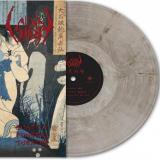
Black Vinyl[21,81 €]
Japanese black metal legends Sigh formed in 1989/1990. The genre-classic debut ‘Scorn Defeat’ followed on Euronymous’ Deathlike Silence Productions in 1993 & with each subsequent release, Sigh grew to become one of the country’s greatest & most revered metal exports. With a journey through the strange & the psychedelic, incorporating a whole eclectic mix of genre styles & experimentation throughout their career, Sigh has remained a vital creative force in the avantgarde field whilst maintaining their old school roots, as witnessed with the stellar 2022 album, ‘Shiki’. 2025 also saw Sigh reimagining their ‘Hangman’s Hymn’ album for a release on Peaceville as part of the band’s 35th anniversary celebrations, in the shape of ‘I Saw The World’s End: Hangman’s Hymn MMXXV’.
Maintaining the core trio of Mirai Kawashima, Shinichi Ishikawa & Satoshi Fujinami & on the back of the epic & darkly symphonic opus ‘Infidel Art’ (1995), Sigh adopted a more boundary-defying approach to their writing, whilst still keeping the dark foundations & traits of the band’s fundamental sound. The result was ‘Ghastly Funeral Theatre’ which surfaced in 1997 & draped in Eastern & horror-based atmospherics, the band also embraced elements outside of metal with what was their most experimental offering to date; utilising instruments such as the saxophone as well as acoustic passages & notoriously drawing comparisons to the moods of bands such as The Beatles at times, featuring catchy hooks & structures in line with the rock music genre, but masterfully woven into Sigh’s unique blackened metal tapestry.
Continuing with Peaceville’s re-issues of Sigh’s classic early ( & until now, hard to find) works, this edition of ‘Ghastly Funeral Theatre’ contains a new master created by Patrick Engel at Temple of Disharmony, featuring a new transfer from the original DAT source.
The release also includes a new interview with main-man Mirai Kawashima conducted by Dayal Patterson of Cult Never Dies, delving into the history & inspirations behind ‘Ghastly Funeral Theatre’.
This edition of ‘Ghastly Funeral Theatre’ is presented on black vinyl.
‘Pilot’ is the debut album from London quintet Miniseries. Channelling the epic sweep of TV themes and movie soundtracks into resplendent space rock they explore themes of youth and ageing, heartbreak and paranoia, euphoria and existential dread.
Songwriter Doug Morch (Longview) had been working on largely acoustic folk songs when he met Angela Gannon (The Magic Numbers) at Glastonbury 2017. Romance and musical collaboration ensued. The band coalesced in the hallowed environs of Farringdon's The Betsey Trotwood pub – a musical nexus where burgeoning indie and Americana scenes collide – where they met fellow songwriter and guitarist Dermot Watson (from Brighton's The Dials) and drummer Danny Abbasi and were joined by Doug's former bandmate Aidan Banks on bass. When they came together, their indie folk mutated into motorik art rock, with their first single being an eight-minute jam called "Road".
When it came to capturing their sound, the band reached for maverick musician and producer Sean Read. They recorded tracks at Read's Famous Times studio in Clapton, London, as well as at Edwyn Collins' Clashnarrow in Helmsdale, Scotland – one of the world's most breathtaking and idiosyncratic studio locations, adding unquantifiable magic to the proceedings.
For the closing track "May You Always", they headed to another studio imbued with tangible inspiration: Blueprint Studio in Salford with producer Craig Potter (Elbow) at the helm. For the song, Dermot drew cinematic inspiration from the Withnail & I line "I'll never play The Dane", the song is about realising that the things you aspired to in youth will never come to pass and being at peace with that realisation.
The recurring themes of youth and ageing are apparent in the resplendent lead track ‘You're Gold’ – a heartfelt call for young people to reject materialism and exploitative influencer culture in search of life's deeper meaning, with stylistic nods to The Pixies and early Stereolab.
On the opposite end of the spectrum, "Sepia" explores old age and fading memories through dementia, where the ending descends into chaos like a fragmenting mind. Elements of "Sepia" are foreshadowed in the album's opening track, the instrumental "Pilot Theme", which pays homage to TV theme music, invoking spy thrillers or perhaps something otherworldly from science fiction.
“Offcumdens” is a Calder Valley, Yorkshire term for people who live in the area but come from somewhere else. Hailing from Bury, Lancashire, Morch wrote the song while living in Hebden Bridge (and watching too much Happy Valley) and found himself being an offcumden. It’s a pop at the kind of local nativism which breeds intolerance and an illustration of the sinister rise of wider political populism.
Miniseries' Pilot is just the beginning of the story. Enthralling and atmospheric, the London quintet have created something familiar yet timeless. As singer Doug Morch says, "It's the Miniseries Pilot episode. Like the TV episode a studio makes to test whether it's viable.” In the age of streaming and box-sets, this is an album to truly binge on. We can’t wait to hear what happens next.
- 1: Nothing Is Sacred ( 05:42 )
- 2: Wailing ( 04:3 )
- 3: At Dusk ( 05:40 )
- 4: When All Hope Is Gone ( 05:01 )
- 5: Wisdom ( 04:0 )
- 6: Dust To Dust ( 0:02 )
- 7: For My Days Are Vanity ( 06:25 )
- 8: I Am A Stranger In The Earth ( 06:52 )
- 9: Deliverance ( 05:50 )
Formed in 1993 & hailing from Monaco, Godkiller was the vision of multiinstrumentalist & sole founding member, Duke Satanael, who between 1996 & 2000 released an EP & 2 studio albums under the Godkiller name, commencing with the black metal cult classic debut 'The Rebirth Of The Middle Ages'. Though initially more a death metal inspired act in the formative years, Godkiller quickly developed into a project fully engulfed in the spirit of 1990s black metal, bringing to mind acts like Emperor & Satyricon for the implementation of such strong atmospherics, though on later releases Godkiller incorporated more industrial & electronic elements into the compositions as part of its creative evolution. 'Deliverance' was Godkiller's second studio album & final release before the project was laid to rest & ventured into a more electronic & industrially metallic direction for what could be considered a more contemporary & expressive take on Godkiller's established brand of darkness.
Repress!
200 COPIES ONLY
Nils Frahm has unexpectedly confirmed details of a new collection of solo piano music, his first album since 2022’s three-hour Music For Animals. Day will be released by LEITER on March 1st, 2024, and it will be available on limited edition vinyl as well as via all digital platforms. Recorded in the summer of 2022 in complete solitude and away from his studio at Berlin’s famed Funkhaus complex, it is preceded by a single, ‘Butter Notes’, out on January 19. Day may come as a surprise to those who, over the last decade, have watched Frahm shift slowly away from the piano compositions with which he first made his name in favour of a nonetheless still-distinctive approach that’s considerably more instrumentally complex and intricately arranged. In addition, in 2021, having spent the early part of the pandemic arranging his archives, he released the 80 minute, 23-track Old Friends New Friends, a compilation of previously unreleased piano music intended to enable him to ”start over” with a clean slate. Judging from the extended, ambient nature of Music For Animals, it proved a successful gambit, but Frahm has never been able to resist returning to his first love, and those who enjoyed earlier acclaimed albums like The Bells, Felt and Screws will once again revel in Day’s familiar, personal style. Day, which contains six tracks, three over the six-minute mark, is the first in a pair of albums Frahm has lined up for 2024. In keeping with their nature, however, he won’t be making a song and dance about the release. Instead, he’ll resume his ongoing world tour, which has already included fifteen sold-out dates at Berlin’s Funkhaus as well as a show at Athen’s Acropolis. It will continue with shows all over the world, among them several sold-out dates at London’s Barbican in July 2024, where he previously curated a weekend of music, film and art, Possibly Colliding, in 2016. The album is best enjoyed in the manner in which it was recorded, in the intimacy of a peaceful, cosy room. There are muffled pedal creaks on the cyclical, quietly jazzy ‘You Name It’ and, during the palliative ripples of ‘Butter Notes’’ arpeggios, the sound of dogs barking in the streets outside. The compassionate, hesitant ‘Tuesdays’ and emotionally ambiguous ‘Towards Zero’ linger with the poignant persistence of Harold Budd’s earliest work, while ‘Hands On’ is a sometimes brighter, airier tune that sets its own, deliberate pace, and, as he has on occasions before, ‘Changes’ sees Frahm employing elements of his instrument’s construction in a ‘prepared piano’ fashion. Characterised by its confidential mood, Day confirms that, while Frahm is arguably now best known for elaborate, celebratory concerts calling upon an arsenal of pianos, organs, keyboards, synths, even a glass harmonica, he’s still a prolific master of affecting simplicity, tenderness and romance.
- Moonrise
- Caedes Sacrilegae
- Above The Pantheon
- De Praestigus Daemonium 1563
- Sarah Ellen
- Serenade In Blood Minor
- Mena Glade
- Luna Garden
- Ggal Hannahh
- Dawn
THE CULT 1994 ALBUM FROM THE ENIGMATIC NORWEGIAN BLACKENED DOOMSTERS.
PRESENTED ON VINYL FOR THE FIRST TIME. Carpathian Full Moon formed in Norway in 1992 & was responsible for the sole full-length album, ‘Serenades In Blood Minor’; considered somewhat of a lost classic of melodic Scandinavian blackened doom. The style was reminiscent of acts such as Ophthalamia, as opposed to the more traditional & conventional style of black metal which was sweeping Europe at the time. ‘Serenades In Blood Minor’ was originally released on Avantgarde Music in 1994 & showcased refined musicianship as well as an eclectic mix of influences, whilst incorporating elements of progressive music into the compositions to give a rich texture throughout (members went on to form the more prog rock based act, Julia Dream). A darkly atmospheric opus which evoked the grandiose nature of black metal, but with a more melodic & often sombre doom core, ‘Serenades In Blood Minor’ saw Carpathian Full Moon sculpting an identity of their own with this release, before eventually splitting up. ‘Serenades In Blood Minor’ was recorded & mixed in October & November 1993, at Waterfall Studios in Oslo & is presented for the first time on the vinyl format. "
In a history that stretches back some 25 years, Faithless have long occupied a pivotal position in the world of British electronica. Marrying elements of house, trip-hop, dub and a songwriting flair into arena-filling, explosive, euphoric dance floor classics. Their accomplishments tell their own story: seven Top 10 singles, six Top 10 albums (three at Number 1), a Mercury Prize nomination for their brilliant sophomore album, 1998’s ‘Sunday 8PM’ and their impressive four times Platinum certified ‘Forever Faithless -The Greatest Hits’ adding to a career total in excess of 15 million sales worldwide
Woo, formed in 1975 by brothers Mark and Clive Ives in London, is known for its experimental blend of folk, jazz, ambient, and electronic music. Their sound, characterised by the delicate integration of acoustic and electronic elements, has earned them recognition in ambient and healing music spheres. Over decades, the duo has produced over 1,500 tracks, evolving a unique style that evokes dream-like atmospheres and a meditative, soothing quality perfect for moments of reflection.
Dedicated to intertwining the serene beauty of music with the nurturing process of planting seeds when the first new signs of life emerge in the growing season. A carefully crafted collection of ambient & minimalist soundscapes, occasionally branching into the new age. A soundtrack for quiet moments of sowing, nurturing, & witnessing the slow reward of growth.
Each artist will release a recycled cassette and digital format. We plan to release one cassette each month from November through June, aligning our releases with the ideal growing period. Each physical release will precede its digital counterpart by a few months, allowing the music to be experienced in its intended form first, with the tangible connection of a cassette and seeds before becoming accessible to a broader audience in the online sphere. This staggered release allows listeners to engage with the music more profoundly and intentionally, akin to the patience and care required in gardening. Best get that portable cassette player on eBay!
Each release will serve as a soundtrack to quiet moments of sowing, nurturing, and witnessing the slow, rewarding growth process, both in plants and in the listeners' lives. Whether tending to a window sill garden or simply seeking a peaceful retreat in sound, "Music to Watch Seeds Grow By" is an invitation to pause, listen, and cultivate.
Early DJ support including Tom Ravenscroft, Deb Grant, Vladimir Ivkovic,Ruf Dug, Eva Geist, Domenic Cappello, Fergus Clarke & Sofie K.
It’s very difficult to describe someone as prolific as Misha Panfilov. So, I feel the best way to define him is to think of a “Trivial Pursuit Playing Piece,” where each pie piece represents one of the bands he heads up, and each band has its own distinct style and genre. Yet, when looked at all together, create the whole musical persona of Misha. This is the lens I would like to view his latest endeavor, Days As Echoes.
The vibe on this sophomore release channels Krautrock philosophy and Library music, peppered with elements of jazz, Ethiopian, cinema, ambient and bits of everything between. This atmosphere is created from all the instruments Misha uses and the resulting compositions are heard as repetitive patterns that are forged from the multiple layering of melodies. Thus, creating six unique songs with emotional granularity, yet collectively encompass a genuinely positive “feel good” vibe…with a hint of nostalgia.
Moods of the day, moods like echoes say, A future of hope is yours, by following the Sun’s ray.
The opening track, “Days As Echoes,” is a dedication to a much simpler time when the sky was bluer and the snow was whiter…just like how you remember it when you were a child. A time when people honestly cared more about everything as a given, and not as a selfish accolade. A time when optimism seemed within reach. In other words, nostalgia marred by awareness.
…Leading to a path where the skies are not gray. Where dreams of castles in the air are the mainstay.
“In A Dream” has a style that pays homage to both spiritual jazz and ambient music. A simple theme is introduced and leads to the climax of this stormy dream, putting it all in perspective. That pivotal point when one realizes the truth by re-tracing the events, which led to the epiphany of how to find the answer while traveling within this airy soundscape.
…Diurnal or nocturnal, day or night, Traveling the path of truth must be done without fright.
One can’t help but feel a definite traveling vibe that comes from “Moonscape Waltz” To me, it has a dual-characteristic that can be visualized as a train trip, either at sunrise or sunset. Regardless, the time is not of major relevance, but the actual pursuit is. Lao Tzu said, “The journey of a thousand miles begins with that first step.” This track takes you beyond that initial step into this vast world toward your destination as you search for the truth.
…The unknown is real, but you know the deal. People need people to show which direction you point the wheel.
“Together” is the most peaceful and solo oriented compositions of this album. It shows how one cannot achieve happiness alone, but the importance of having someone special or a group of others to help along the way. Not only to help seek your goal, but also the ability to enjoy the scenery while on your journey
…The end of this tunnel has a light that’s so bright. Illuminating the trodden way, your destination, now in sight.
One is free from the chains of the unknown as you listen to a “Few Layers For Smith”, a dedication to a friend. A song that draws energy from the ECM works of Steve Reich, thats married with a primitive lo-fi basement setting. Its positive force breaks those encumbrances and gives you a glimpse of your prize. But you ruminate on this and come to the conclusion that the path that led you there is equally important as the goal itself. Question is, how do you share your realizations and experiences?
…The route was cast, the trials have passed. The glittering treasure you sought is yours now, at last.
“Ocean Song” meanders from the ritual rhythms of its shoreline to the crashing riptides of unbridled guitar feedback, creating this raging ocean atmosphere. However, its message is quite clear and states that people’s goals and experiences are not just meant for personal growth, but to be shared with
others, so that they too can live vicariously thru your story and somehow utilize it for their own.
…The prize has been won, but the journey is never done. You now have the responsibility to share everything under the Sun.
These six songs, each with its own sound, collectively comprise the vibe of this album. One cannot help but feel a sense of joy and fulfillment when listening to it. Each song has its own unique mood, yet together create an atmosphere of hope and happiness that has no choice but to spill out of the listener. I feel this was the ultimate goal of Misha’s on this record. Quite a challenge for the man who never sleeps, but is always searching for the perfect beat. One may not fully grasp his musical mind, but this album does give you a gateway into the moods and magic of Misha!
- Brent Sawicki
Chaz Bear (formerly Bundick) was a musician from birth. Growing up, it was normal to hear music across genres, from Michael Jackson to Elvis Costello to The Specials, in the Bundick household. These influences were quite unique for a biracial kid growing up in South Carolina, contributing to the complexity of Chaz’s self-understanding and expression through his own music.
Chaz began playing and recording original compositions in his preteen years, forming multiple indie bands starting in middle school and continuing until his personal project, Toro y Moi, was signed by Carpark Records in 2009. Before getting signed, he was already an incredibly prolific artist, having released over 10 Toro y Moi albums on his own (and undoubtedly retaining a vast compendium of unreleased songs). His personal work drew upon a vaster array of influences than did his full band. Early Toro work called upon Chaz’s childhood exposure to 80’s R&B, pop and electronic music, while also evolving with his discoveries of acts like My Bloody Valentine and J Dilla and his burgeoning interest in French house. Just before his graduation from the University of South Carolina, where he earned a degree in graphic design, Chaz caught the attention of music bloggers and record labels with his dreamy, bedroom recordings.
Outer Peace, was written and recorded in the Bay Area after Chaz’s return from a one year stint in Portland. It is somewhat of a homecoming celebration, filled with features by friends and saturated with a playfulness that had not previously been embraced in past Toro albums. Outer Peace stands in contrast to the more sparse and contemplative Boo Boo, an album recorded while in Portland in relative isolation. With Outer Peace, Chaz showcases his ability to remain on the cutting edge of music’s evolution while not taking himself too seriously. There are contemporary hip hop references mixed in with funk, Eurodance and ambient elements, all interwoven expertly and retaining that quintessential Toro y Moi aesthetic.
This new "Experimental Chapter" by DJ Narciso comes as no surprise, really. Autonomous in the motorization of his music, pushing for progress within the framework of an undeniable (inescapable?) heritage. Twisting and bending sound every step of the way, Narciso definitely keeps in touch with the dancefloor, offering the always much needed transcendence through distinctive, non-linear melodies and patterns. The artist pursues a direct link with bodies in motion but seldom in the expected, institutionalized way club culture is being largely promoted.
This is challenging dance music, proud statements of difference. Narciso's previous record was named "Diferenciado". Now we get "Dificuldades", a track that simultaneously carries the weight of being somewhat odd and the difficulties of life. Check how the piano is venting, freestyle, communicating a feeling, and then lets itself get stuck in a loop, but that's exactly when the groove really starts flowing. And then another layer. It's like direct speech.
A common assertion of pride is found in the origin of the artists. The ghetto as a place where any transformation projects more power precisely because of... inherent difficulties. As others (including himself) did in more or less obvious ways, Narciso clearly states "I come from the ghetto" ( "Não Sabes" ). Twice the value. At least. Almost every segment of music in this album ends up sounding heavily emotional, reaffirming what may be - perversely - a well-known characteristic of Portuguese music: melancholy.
"Não Quero" begins side B as a march maybe more significant than a thousand words, such is the ominous tone of its texture. Next track is another lunar tarraxo, pulling down the shades. Then, "Dor de Barriga" lets things loose again, steering clearly off road, shouting this way and that until a peaceful resolution comes. In "Livra-me Desta", vocal snippets blend into synth snippets, disembodied voices abandon all traces of humanity and finally mutate into different entities that, towards the end, again sound vaguely human but now we find ourselves doubting. Closer "Bob" is a rather classic percussion track with plenty of echo, reverb and an unconscious nod to dodecaphonic music. Unlikely? No, the structural ADN of this music is made up of elements western and eastern, southern and northern. To say all-over-the-place is usually not flattering but in this case the expression translates as wonder, surprise, The Unexpected, and reveals Narciso perfectly at ease inside the nucleus of creation.
- Shiva Interfere (9:10)
- Ion Storm (4:20)
- Magic (1:35)
- Regno Potiri (10:20)
- Carpet Bombing (2:25)
- Final Conquest (5:59)
- Logic (1:01)
- Sonar Bliss (7:39)
- Completion (6:32)
- Outro (1:30)
To fans of black metal, Dødheimsgard need no introduction, being one of the great purveyors of the Norwegian Black Metal creative evolution.
The band was formed in 1994 by Aldrahn (Thorns) and Vicotnik (Ved Buens Ende). The early incarnation was that of a raw and at often melodic black metal band, with their debut album also featuring Fenriz of Darkthrone on bass. In recent years, Dodheimsgard has become known for its eclectic musical ventures and poignant mood shifts, with a less chaotic, more considered approach compared to their earliest works. Following the 'Kronet til Konge' and 'Monumental Possession' opuses, there was a shift in direction as demonstrated on 1998's 'Satanic Art' EP and by Dødheimsgard's third album, 666 International, Vicotnik had taken over a lot of the writing duties, with DHG's style becoming more technical yet ferocious black metal, with strong experimental ideas and industrial elements.
Vicotnik's riffs were inspired by cult bands such as Thorns and perfectly entwined with Aldrahn's delightfully twisted lyrics and immense vocals to create something truly unique. In its 666 International incarnation, DHG (as they were later to be known) featured a line- up of well- respected Norwegian musicians including Czral (Aura Noir, Ved Buens Ends, Virus), Apollyon (Aura Noir, Immortal), plus Mr Magic Logic (Fleurety) on keyboards, as the album was constructed over a period of time. All in all, 666 International is rightly regarded as a highly influential masterpiece of avant-garde metal by many since its release in 1999.