
4
En stock
Disponible en stock et prêt pour l'expédition
Derniere entrée: 45 jours
13,24 €
Disponible en stock et prêt pour l'expédition

Joel “Pibo” Márquez is a renowned Venezuelan percussionist, who specializes in salsa and Latin jazz. He has been part of projects of artists such as Chico Free-man, Arturo Sandoval, David Valentin, Dominic Miller, Cheick Tidiani Seck, Juanes, Alfredo De La Fe, Guayacán Orquesta and Aterciopelados. 5to Aniversario
This album draws inspiration from the sounds of 1970s New York salsa and en- gages with the contemporary language of Colombian salsa. Featuring a four-trombone arrangement, it showcases solo performances and musical inter-ludes. The album also includes collaborations with prominent figures in today's salsa scene, such as Ray Bayona, Eliazar Medina, Marcial Istúriz, and Wason Bra-zobán, among others.
Disponible en stock et prêt pour l'expédition

Disponible en stock et prêt pour l'expédition

Disponible en stock et prêt pour l'expédition

Disponible en stock et prêt pour l'expédition

In the late 1980s, three young musicians – Rick and Remon Melsert, along with Paul Nieuwenhuijsen – approached Michiel van der Kuy with a demo titled “She.” Their collaborative project, dubbed Kick The Habit, was poised to blend their talents with Michiel’s signature touch, infused with a hint of early house music. However, for reasons unknown, the project was shelved and remained hidden for over three decades.
Now, 35 years later, thanks to the efforts of Michiel Van Der Kuy, Sergi Elias and Vintage Pleasure Boutique label, this long-lost gem is finally seeing the light of day. The maxi single not only resurrects the original track but also features remixes by the amazing Prospero duo, adding a nostalgic layer of Michiel’s classic 1980s sound. The release includes five stunning versions of “She,” including the original, making this a must-listen for fans of vocal space synth, vocoders, Laser Dance, Michiel van de Kuy talent and vintage synth-driven music.
Disponible en stock et prêt pour l'expédition

Disponible en stock et prêt pour l'expédition

Novi orbis 06 compiled by elias sternin is out.
Order now. Collecting orders for repress.

Limited translucent yellow vinyl LP
'Afro-cuban : that term which sets the world on fire, from rumba to boléro, mambo to cha-cha- cha, before salsa, that 70's spicy sauce, took over from the others. But to speak truly, since the mists of times (of slavery), both Africa and Cuba aim to vamp that umbilical cord. The most recent example, CubAfrica, a record born from the reunion of a master from Africa and this very living institution from Cuba, during a show around Albi (in the south of France) where they were both headlining in spring 1996. Manu Dibango's sax melted perfectly with the rural music of Eliadès Ochoa and his Cuarteto Patria, here's the beginning of an idea.
Disponible en stock et prêt pour l'expédition

Disponible en stock et prêt pour l'expédition

“Sainen Hildo” is an album based on Miguel’s original compositions, recomposed and rearranged for accordion and voice by the two composers. Using the natural resonance and harmonics of these two instruments to influence their introspective interactions, resulting in evolving drones and tones and puzzling percussive outbursts. Unusual and at times unsettling, they manage to create a calibrated, deep and complex exploratory universe of ambience and drone where listening becomes a ritual. Highest recommendation for fans of Pauline Oliveros, Eliane Radigue or Phill Niblock.
Garazi Navas (accordion + voice). Original compositions by Miguel A. García. Recomposed and rearranged by Garazi Navas & Miguel A. García. Recorded by Ibon Rg at Azkuna Zentroa (Contemporary Art Centre in Bilbao) in June 2022, as part of the associated artists program. Mixing and mastering by Juan Carlos Blancas. Compiled by Mikel Acosta.
Acrylic painting on heavyweight paper by Maite Mugerza Ronse. Limited edition of 300 black vinyl LP’s housed in a coloured matt laminated cover. Released by Hegoa Diskak.
Dopelganger is the project in collaboration between classically trained accordion player and singer Garazi Navas (Usansolo, Bizkaia-Biscay, 1995) and Miguel A. Garcia (Vitoria-Gasteiz), an artist living in Bilbao with an extensive career in the fields of experimental music and sound art.
Garazi Navas / Classically trained at Musikene School of Music in San Sebastian with a masters in traditional music, Garazi, is a restless accordionist who, despite her young age, has taken part in a multitude of projects in theater, poetry, ballet, art installations and even playing with the Bilbao Symphony Orchestra. Her works are a personal interpretation of the close relationship which she feels exists between cutting-edge and traditional music.
Miguel A. García / Has performed extensively in Europe, America and Asia, both as a solo artist, improvising and in multiple ensembles. He has collaborated with dozens of artists (Al Karpenter, Jean Luc Guionnet, Sébastien Branche...) in studio and live, and appeared in more than a hundred albums. At the same time, he is organizer and curator of events, being founder of Club Le Larraskito, director of Zarata Fest, and part of the coordination of the cycle Hotsetan at Azkuna Zentroa itself
Disponible en stock et prêt pour l'expédition

Shake The Feeling: Outtakes & Rarities 2015-2021, Iceage's second full length for Mexican Summer, is a collection of non-LP cuts (or “misfit children,” as lead singer Elias Bender Rønnenfelt describes them) from the seven years during which Iceage made Plowing Into the Field of Love (2014), Beyondless (2018), and Seek Shelter (2021). As with all of Iceage’s albums, whether it be the sensual daring-do of their dark-hardcore masterpiece debut, the Flying Nun-dappled “Oi!!!!” of You’re Nothing, the shift to cowpunk gothic romanticism on Plowing Into the Field of Love, or the space truckin’ gospel-rock of their most recent albums, Elias Bender Rønnenfelt, Johan Suurballe Wieth, Jakob Tvilling Pless and Dan Kjær Nielsen make the impossible seem effortless.
Disponible en stock et prêt pour l'expédition

John Ghost (Ghent, Belgium) is the sextet led by guitarist/composer Jo De Geest. As a group, they draw influences from jazz, rock, and contemporary classical music. Minimalism, electronics, and an overall cinematic quality characterize their instrumental sound. The ensemble's sound can be described as a symbiosis of Hidden Orchestra, Portico Quartet, and James Holden.
After the critically acclaimed “Airships Are Organisms” (4-star reviews in The Guardian and Financial Times, as well as airplay on BBC 6 and Worldwide FM) John Ghost is back with “Thin Air . Mirror Land”, to be released on October 6 via Sdban Ultra, the label of ECHT!, Black Flower, Glass Museum, STUFF. and more.
For this album, they continued their fruitful collaboration with legendary producer Jørgen Træen, known for his work with Jaga Jazzist, Electric Eye, Kaizers Orchestra, and numerous projects on the Hubro Record Label. The result is an album with a slightly more somber tone, focussing on a broader range of instruments and an emphasis on percussive elements."Thin Air . Mirror Land" unfolds as an aesthetic refuge in stormy times. It is a musical urge for introspection in a chaotic reality, and a longing to reconnect with a natural environment.
During the creative process, Jo drew inspiration from the music of artists such as Hans Zimmer, György Ligeti, Magma, The Residents, Disasterpeace, James Holden & The Animal Spirits, Do Make Say Think, William Basinski, and Jóhann Jóhannsson. The album title "Thin Air . Mirror Land" and the song titles are driven by a fascination with the artwork of Edvard Munch. Jo found inspiration in Munch's painting "The Storm" (1893) as a catalyst for the writing process, exploring a dystopian backdrop and the intriguing interplay between comfort and unrest. Heavily inspired by the music, Jaak De Digitale created the gloomy artwork for the album.
Members of the band are Jo De Geest (Endlingr), Rob Banken (Rapidman, HAST), Wim Segers (Compro Oro, PAARD.), Karel Ceulenaere (Black Flower), Lieven Van Pée (Echoes of Zoo, De Beren Gieren) and Elias Devoldere (Nordmann, Elias) who went through a thoughtful studio process, with the result being a conceptual and slightly dystopian atmosphere.
Disponible en stock et prêt pour l'expédition

Disponible en stock et prêt pour l'expédition

Recut & Repressed!
Kharkiv label Trance Pandemic did not have to wait long for the announcement of the next release and already in september plans to release a new work Komponente and Kurilo, known for their love of trance and acid. The album "Lord Of Destruction", consisting of four dashing tracks, justifies the name with its energy, which quickly brings to consciousness from summer drowsiness.
"Lord Of Destruction", which opens the pawn - the real master of
destruction, an extraordinary track, which is designed to conquer the
dance floor with its non-linear bass lines and smooth pedal
arrangements, including the singing of Elina Elian and the voice of
Kurilo. "Magnifico" is a mysterious trance xenomorph. The multifaceted "Etat" starts from a state of ecstatic joy, and then carries to the depths of the subconscious. "Oblivion" is an acid forgetting of this record, a message in which vocal samples and acid stuffing, seasoned with good bleep techno are intertwined.
Order now. Collecting orders for repress.

Everything is vibrations.
The infinitely deep chaos of things rests on the tiny and fragile chemical balance of the depths.
Eliaz traps us in his raw and introspective groove with complex and saturated signals that call for bodies motions. He gives us a key to read and decript the Mercury Frequencies.
Disponible en stock et prêt pour l'expédition

After a vigorous start from the freshly formed Alzaya label, next up is the Chilean rising talent Paula Tape who has teamed up with Volantis for the new brand release ‘Octava Dimension’, including the remixes curated by the prince of Netherlands, Elias Mazian and the Australian icon Tornado Wallace, masters like few others.
Paula Tape has developed a signature style in front of listeners eyes and ears with her drum patterns and her voice samples. After ‘Agua Congas EP’ on SOBO was welcomed warmly around the world and opened the door for club-oriented releases on Rhythm Section and Permanent Vacation. The original track channels electro and dreamy vibes carefully crafted by Volantis with Paula Tape’s hypnotic voice, all blending together for a single summer heater.
Remix by Elias Mazian, that recently pleased us with a sophisticated electronic pop release, kicks things off with a beautiful, melodic, overwhelming tune.
Tornado Wallace revisited the original version with his spacious sense of deep house groove and an unique, relentless drum programming.
Disponible en stock et prêt pour l'expédition

Otis Stacks, three syllables. A name and a first name that recall a mythical singer as much as the Memphis music label that got him to it's days of glory. A name that evokes him in particular and soul music in general. Behind a name that sounds familiar are Elias Wallace and Justmike, two men united to become one: Otis Stacks. In truth, the optimized version of a work started long ago, when Justmike was producing the Danish hip-hop sound of Dafuniks and decided to get in touch with Elias after hearing his voice on a friend's tune. He first wanted him to lay his voice on a
chorus, then a verse, and ended letting him take over the lyrics of 'All I Want', the song that would later bring Dafuniks on air and around Europe. After traveling miles and miles across the ocean and the seas separating California from Denmark, Elias undeniably became a member of the group. As gigs went on, stages after stages, Justmike got inspired by Elias's voice and presence. Thus, the idea of a duo collaboration between the two men geminated and grew in his mind. As the evidence of their getting along, 'Fashion Drunk' became the first tune to
infiltrate Nova and FIP radio playlists, as its music video reached 8 million views. This now obvious complicity as extended in the form of an album, also called Fashion Drunk, released by Underdogs Records. With this French stopover, the line between California and Denmark is now completed. The result is an artistic fusion in which Justmike has plugged his instruments to the machines he uses to compose, letting Elias in charge of the
lyrics and singing. Here, the soul music is printed as a guideline in an organic and digital composite matter. In an ethereal and aerial production that perches its arrangements in the air of the mix or buries them in its bases, letting electro music spread on a groove punched with black and white keys. Each element intervenes with discretion to let Elias stories be related with elegance. Frustrated, disappointed or aborted love stories.
Disponible en stock et prêt pour l'expédition

The Yummy Fur’s first album of new material in over 25 years is seductive and ambiguous; a fast-paced flip through scenes from art, myth, life and fantasy; a witty whole made from glittering scraps. The band’s original incarnation – fronted by singer, songwriter and guitarist John McKeown from 1992 to 1999 – morphed from making quick-hit cartoon-art songs to Eno and Cale-influenced creepers, populated by characters from McKeown’s life in Glasgow and the films, books and poetry that he lived a parallel life through. Everybody Talks About The Weather delights in using every past iteration of the band as potent collage material: a melee of sounds and ideas existing at once, revealing themselves then dipping back into hiding.
Recorded by the original core trio of McKeown, Brian MacDougall (guitar) and Paul Thomson (drums), Everybody Talks About The Weather comes 17 years after the band reformed for sporadic live shows, and seven years after the release of their sorta-greatest hits compilation Piggy Wings (Rock Action). Ten tracks long with nothing to spare, it is as condensed and vital as their best songs, with a new clarity of sound that allows their ambiguities to come into the light.
The album begins with “Cogs”, a taunting inquisition from within. As McKeown stages a fight between his id and ego, the tension heats up between conversational guitar lines and minimalist repetition; threatening sing-song melody and real, palpable menace. The band members are forced in tandem only to break apart, sustaining a genuine sense of just-hidden danger throughout the whole record – except, arguably, “Headphones”, a looser moment which sees McKeown make an existential something out of nothing while waiting for someone in the car (“I should have brought a book.../My ears are bleeding from the compression on your album”)
The songs are riots of reference: “Unity Over Europe” is a slyly complex two act play about the Mitford sisters – Diana, Unity, and Nancy, in a wink to the YF canon – smashing tragic biographical detail together with allusions to Thomas Pynchon and Francis Bacon. Pynchon is also lifted to serve “Blue Sunshine”, a collision of school shooters, serial killers and fictional fuck-ups (“Fast forward to Compton/Fast forward to Pynchon/Fast forward to Columbine'”) whose buzzy guitar lines are taunting and confrontational like a smarmy teenager. The innocuous title of “My Lasagne” belies a song that exists in several time periods at once: a visit to see Guernica, 50 people with their backs to the portrait of Dora Maar; the time that Picasso painted from; the Reina Sofia and the dirty streets of the Malasaña; myth-making musicians and the myths they’re riffing off overlapping and leering at each other.
All this could be laboured in lesser hands, but cultural verbosity is second nature to The Yummy Fur, who transform all this source material into songs that are weird, sexy, funny and absurd. Meaning is not happily understood or flattened. Susan Sontag's essay Against Interpretation accompanied McKeown as he wrote this album, and she’s paraphrased in “Semolina Ballerina”, the album’s justification of artistic ambiguity. Thomson’s motorik beat leads a gathering of back-and-forth instrumental phrases – including a wiry contribution on saxophone – embodying the futility of trying to parse something definitive from repeated action. “Listen to the very first thing that’s in your head,” Sontag-via-McKeown commands directly, then slinks sideways: “Interpretation is a conversation in an unmade bed”
The album features two more focused portraits, or at least The Yummy Fur’s version of such a thing. “Wanda” merges the life of filmmaker Barbara Loden and the title character of her semi-autobiographical 1970 feature film, with Loden’s then-husband Elia Kazan joining the fray of no-good men in her film. It’s a mix of adaptation and avant-criticism, with McKeown’s wordplay and mannered pronunciation mirroring the way that non-fiction and fiction twist around each other in the song. The title track is a series of vignettes and impressions from the lives of the band’s ‘90s inner circle, positing painter Mac McNaughton as a kind of Falstaffian ringleader. As with Piggy Wings and the recent single “New T-Shirt”, McNaughton painted the cover of Everybody Talks About The Weather – like the album’s music, the image of a coy girl in a white dress is an uncanny amalgamation of styles, suggestions and references just out of reach, as though seen in an art museum in a dream.
The album ends with two reads of the same frustration. “King of Nothing” is the closest The Yummy Fur will ever get to sludge-rock: the band melts together into a dusty, dreary haze as McKeown drowns in a drudgery of personal struggle (“Two jumpers on in Babylon/And only cats to talk to”) and the rhythmic toppling of heroes (Rowlands, Duvall, Munro). The majority of visible dirt is cleaned off for “Say Hello”, an uncharacteristic depiction of throwing the windows open after a dark night of the soul. Here, the situation is still cold and hard (“When the sun burns gold, but the heat never reaches your fingertips”) but it feels surmountable. Everybody Talks About The Weather is an unpredictable album from an unpredictable group, but ending on a moment of almost uncomplicated light is maybe its biggest surprise. - Claire Biddles (2026)
il devrait être publié sur 25.09.2026

Black Vinyl[15,55 €]
The Yummy Fur’s first album of new material in over 25 years is seductive and ambiguous; a fast-paced flip through scenes from art, myth, life and fantasy; a witty whole made from glittering scraps. The band’s original incarnation – fronted by singer, songwriter and guitarist John McKeown from 1992 to 1999 – morphed from making quick-hit cartoon-art songs to Eno and Cale-influenced creepers, populated by characters from McKeown’s life in Glasgow and the films, books and poetry that he lived a parallel life through. Everybody Talks About The Weather delights in using every past iteration of the band as potent collage material: a melee of sounds and ideas existing at once, revealing themselves then dipping back into hiding.
Recorded by the original core trio of McKeown, Brian MacDougall (guitar) and Paul Thomson (drums), Everybody Talks About The Weather comes 17 years after the band reformed for sporadic live shows, and seven years after the release of their sorta-greatest hits compilation Piggy Wings (Rock Action). Ten tracks long with nothing to spare, it is as condensed and vital as their best songs, with a new clarity of sound that allows their ambiguities to come into the light.
The album begins with “Cogs”, a taunting inquisition from within. As McKeown stages a fight between his id and ego, the tension heats up between conversational guitar lines and minimalist repetition; threatening sing-song melody and real, palpable menace. The band members are forced in tandem only to break apart, sustaining a genuine sense of just-hidden danger throughout the whole record – except, arguably, “Headphones”, a looser moment which sees McKeown make an existential something out of nothing while waiting for someone in the car (“I should have brought a book.../My ears are bleeding from the compression on your album”)
The songs are riots of reference: “Unity Over Europe” is a slyly complex two act play about the Mitford sisters – Diana, Unity, and Nancy, in a wink to the YF canon – smashing tragic biographical detail together with allusions to Thomas Pynchon and Francis Bacon. Pynchon is also lifted to serve “Blue Sunshine”, a collision of school shooters, serial killers and fictional fuck-ups (“Fast forward to Compton/Fast forward to Pynchon/Fast forward to Columbine'”) whose buzzy guitar lines are taunting and confrontational like a smarmy teenager. The innocuous title of “My Lasagne” belies a song that exists in several time periods at once: a visit to see Guernica, 50 people with their backs to the portrait of Dora Maar; the time that Picasso painted from; the Reina Sofia and the dirty streets of the Malasaña; myth-making musicians and the myths they’re riffing off overlapping and leering at each other.
All this could be laboured in lesser hands, but cultural verbosity is second nature to The Yummy Fur, who transform all this source material into songs that are weird, sexy, funny and absurd. Meaning is not happily understood or flattened. Susan Sontag's essay Against Interpretation accompanied McKeown as he wrote this album, and she’s paraphrased in “Semolina Ballerina”, the album’s justification of artistic ambiguity. Thomson’s motorik beat leads a gathering of back-and-forth instrumental phrases – including a wiry contribution on saxophone – embodying the futility of trying to parse something definitive from repeated action. “Listen to the very first thing that’s in your head,” Sontag-via-McKeown commands directly, then slinks sideways: “Interpretation is a conversation in an unmade bed”
The album features two more focused portraits, or at least The Yummy Fur’s version of such a thing. “Wanda” merges the life of filmmaker Barbara Loden and the title character of her semi-autobiographical 1970 feature film, with Loden’s then-husband Elia Kazan joining the fray of no-good men in her film. It’s a mix of adaptation and avant-criticism, with McKeown’s wordplay and mannered pronunciation mirroring the way that non-fiction and fiction twist around each other in the song. The title track is a series of vignettes and impressions from the lives of the band’s ‘90s inner circle, positing painter Mac McNaughton as a kind of Falstaffian ringleader. As with Piggy Wings and the recent single “New T-Shirt”, McNaughton painted the cover of Everybody Talks About The Weather – like the album’s music, the image of a coy girl in a white dress is an uncanny amalgamation of styles, suggestions and references just out of reach, as though seen in an art museum in a dream.
The album ends with two reads of the same frustration. “King of Nothing” is the closest The Yummy Fur will ever get to sludge-rock: the band melts together into a dusty, dreary haze as McKeown drowns in a drudgery of personal struggle (“Two jumpers on in Babylon/And only cats to talk to”) and the rhythmic toppling of heroes (Rowlands, Duvall, Munro). The majority of visible dirt is cleaned off for “Say Hello”, an uncharacteristic depiction of throwing the windows open after a dark night of the soul. Here, the situation is still cold and hard (“When the sun burns gold, but the heat never reaches your fingertips”) but it feels surmountable. Everybody Talks About The Weather is an unpredictable album from an unpredictable group, but ending on a moment of almost uncomplicated light is maybe its biggest surprise. - Claire Biddles (2026)
il devrait être publié sur 25.09.2026

Some recordings herald the future in ways that are impossible to see in real time. Teodros Makonnen With His Organ (ቴዎድሮስ መኮንን ከኦርጋኑ ጋር), by the artist Teodros Makonnen, also known as Teddy Mak, is one of those. Today, electronic sounds, synthesizers, and digital production are taken for granted in Ethiopian music, but in the early 1980s, they were novelties that polarized opinion. Even to this day, the story of Teodros Makonnen’s legacy has never been properly told. He played a decisive role in defining the sound of the digital era of Ethiopian music that emerged in the 1980s and beyond, both as a keyboard player and as a producer, songwriter, performer, and sound designer.
Ethiopian music was at a crossroads in the early 1980s. Much like music in the rest of the world, technology and automation heralded either a quantum leap in musical development or the annihilation of musicianship, depending on who you’d ask. The changes were incremental nonetheless, but with the benefit of hindsight one can clearly see that the changes meant different things in different contexts. Drum machines and electric organs came to replace many hotel bands because, all of a sudden, one musician could control drums, melody, and accompaniment. Teodros was one of the first musicians in Ethiopia to explore the possibilities this opened up.
Teodros’ father, Captain Makonnen Beri, was a chief pilot at Ethiopian Airlines and a music enthusiast at that. This would prove important to his development, as Makonnen brought back a piano from Germany, which would lead to the first steps in Teodros’ long musical career. Captain Makonnen’s work as Head of Flight Operations and as a pilot exposed him to the wider world that was far from commonplace for most Ethiopians. In a house where music captivated the whole family, the piano gave Teodros’ talent an outlet. Not only was a piano at home rare in Ethiopian households, his father also brought an Indian teacher to their home to teach Teodros and his brother, Captain Samuel Makonnen, music theory (solfeggio or ear training) and piano. Teodros and his youngest brother, the late great Dereje, a member of both the legendary Ibex Band and the Ethiopian reggae group Dallol, took up music from that point onward, with Teodros beginning to develop his proficiency at the age of eight. His father encouraged him to practice tirelessly at home, and Teodros later received musical schooling at the German School in Addis Ababa.
His obvious talent led to studies and formal education at the Yared School of Music, followed by continued studies in American jazz at Northern Virginia Community College in Virginia. Teodros cut his teeth professionally in his mid-teens, not only as a keyboardist, but also as an arranger for the Wabi Shebelle and Dahlak bands in the 1970s. He mastered electronic sequencing early, rising to prominence through the midnight recording sessions held during the military curfew. The pressures imposed by the curfew required precise and disciplined recordings, and Teodros delivered just that. This, in turn, led to collaborations with iconic artists such as Mulatu Astatke, Aster Aweke, Menelik Wossenachew, Tilahun Gessesse, Mahmoud Ahmed, and Alemayehu Eshete.
In those days, he sat in as a keyboardist with the Dahlak Band when Dawit Yifru took a hiatus to study in Russia, and also with the Ethiostar Band. He secured a residency at the Wabi Shebelle Hotel with the Shebele Band, together with Zelalem Tadese (drums), later succeeded by Elias Bekele, Mulugeta Hailu (bass), Teferi ‘Bibisha’ Mengesha (guitar), Kumelachew G/Selassie (trumpet), and Teshome Deneke (saxophone). A friendly competition developed between the bands associated with the Ras Hotel (the Ibex Band), Ghion Hotel (the Dahlak Band), and Wabi Shebelle Hotel (the Shebele Band). The music scene at Wabi Shebelle saw teenagers commanding the spotlight in an industry otherwise dominated by musicians of an older generation.
At the Wabi Shebelle Hotel, Teodros met a diplomat from Saudi Arabia and later visited him at his home in Addis Ababa, a meeting that had unexpected musical consequences. The man owned a Yamaha double-deck keyboard. That evening, they recorded Teodros Makonnen With His Organ (ቴዎድሮስ መኮንን ከኦርጋኑ ጋር) in one take. This recording, a cornerstone in the early digital sound of Ethiopian music, came about almost by chance, simply because Teodros got the opportunity. Traditional Ethiopian songs were cast in a wholly electronic style.
Once freed from backing duties, Teodros’ keyboards could explore dreamlike soundscapes that took Ethiopian music in new directions. Even though the cassette contained well-known Ethiopian songs, they were given highly original arrangements, performed on an electric organ with drum machine backing and rhythm patterns that left the listener with suggestive, lingering sounds. “Libesh Kabashen” (also known as “Anchi Bale Game”) and “Odu Gol Golesa” wrap you in the very stuff that dreams are made of.
Originally released on cassette only, this recording exudes a mystique that surpasses even some of the most obscure Ethiopian recordings of the day. It remained more or less unknown outside of Ethiopia until now. Some of the tracks, like “Addis Fikir,” are permeated with an almost naive buoyancy, free-floating sounds that lost contact with the ground the moment they were conceived. Others, like “Meche New Hageren Yemayew” and “Lelitu Alnega Alegn,” carry a moodier, quirkier timbre, with pulsating rhythms in the background. Yet even the darker pieces contain an unmistakable wave, something essentially Ethiopian. If most recordings of Teodros’s contemporaries at the time were teeming with atmosphere, his songs seem instead at home in the stratosphere, almost ethereal. Some of the music here could be filed under “lullabies,” were it not for the recurring, almost brooding feeling that engulfs the listener on the aforementioned tracks. You could easily be forgiven for drifting into a blissful haze as the music washes over you.
Up to the advent of electronic music production, Ethiopia was totally dominated by big bands on the one hand, and small groups on the other. The former were tied to large institutions such as the military, the latter emerged from the entertainment industry, in hotel bars and nightclubs. These groups were commercially driven, and bands ultimately had to foster a mercenary approach to employment, albeit not to the passion for music. In the light of this, Teodros’ musical legacy can be seen in two ways. On the one hand, he is a key player in Ethiopian music from the 1970s onwards, leaving an indelible mark through hundreds of compositions and arrangements, including soundtracks for numerous documentary films and advertisements for different companies. On the other hand, the way he and others employed electronics brought Ethiopian music onto a fork in the road.
The replacement of traditional instruments with electronic equipment was seen as impending doom by some. Others, like Teodros, saw new avenues for performance, production, and creativity. Just as later producers like Abegasu Shiota of Admas, Teodros was a trailblazer who opened paths that it took Ethiopian music as a whole more than a decade to rush into. The hotel scene had already been pushed toward electronic music by financial necessity and cost-cutting. Today’s revived global interest in Ethiopian music from the seventies and eighties, alongside a broader resurgence, has changed the reasons for using digital means of music production. They have become tools for musical dreaming. This is where the dreaming began.
Commandez maintenant et nous commanderons l'article pour vous chez notre fournisseur.
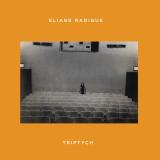
The final collaboration between Eliane Radigue and Important Records is this double LP edition of Triptych. Radigue insisted that her music only be released on vinyl if the pieces would fit without being edited or cut. Triptych met those requirements leaving room for an etching on the 4th side.
Back to music after three years of silence... On the suggestion of Robert Ashley, Douglas Dunn commissioned Triptych from Eliane Radigue for choreography. Only the first part of Triptych was staged at the premiere at the Dancehall/Theatre of Nancy on February 27 1978. Recorded in the composer's studio in Paris.
After the 1974 premiere of Adnos in San Francisco, a group of French students introduced Eliane Radigue to Tibetan Buddhism. When she returned to Paris, she†began to explore this spirituality in depth, which slowed her musical production up until 1978. Triptych marks her return to composition, and draws its inspiration from "the spirit of the fundamental elements, water, air, fire, earth" Eliane Radigue likes to add that this has often been useful to her in her moments of research and transitions.
This three-part composition, with its great humility and contemplative simplicity, heralded a new period of her work and was the first in a series of masterpieces inspired by Tibetan Buddhism: Adnos Trilogy (1980), Songs of Milarepa (1983) - with the voices of Lama Kunga Rinpoche and Robert Ashley , "Jetsun Mila"(1986), as well as the Trilogy of Death: Kyema (1988), Kailasha†(1991) and Koume†(1993).
-Manu Holterbach (translation: Maxime Guitton)
il devrait être publié sur 11.09.2026
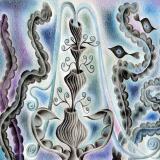
There is a pivotal scene in “August in the Water” (dir. Sōgo Ishii, 1995) where the surface of a pool turns into a stone wall. The water that gave the protagonist's life its meaning becomes a threat. As you fall through this stone wall, you appear in a set of underwater coral-reef corridors, and one of the most beautiful musical themes begins to play: Aquatic Ambience, composed by David Wise for Donkey Kong Country (1994). It's a theme that represents the weightless vibe of your new deep-sea life, where you go about your mundane errands, collecting bananas while driving on a swordfish, or, as HerzMayhem put it: "Poor monkey... always swimming, never going anywhere..."
Synthetic Water Music is the second of three compilations, following Synthetic Bird Music and timed to mappa's 10th anniversary. As with the birds, it gathers friends of the label, artists who have released with mappa or played our shows. Most of the music is new, made to measure for this compilation, much of it from Central and Eastern European hands. Birds and water mix well, so please feel invited to play them together, creating your own environments.
Where the birds were in one flock, water is dispersed across four chapters. You live your life as a droppity drop: vapour in the heavens, condensing in clouds, falling into a swamp, trickling into the deepest sea.
Tlālōcān (Cassette 1, Side A)
A place of eternal spring, of aquatic energy that nourishes everything and allows all things to bloom. Bubbly and splishy-sploshy, it is full of dripping sounds and moist caverns (“Emerald Pool” by Pauline Anna Strom), a landscape filled with living fountains (“Oh, to be a Fountain” by Eva Sajanová) and winding streams that flow through the area, forming part of its organic architecture. It is also a paradise reserved for those whose deaths were water-related, where the aquatic and terrestrial beings live in symbiosis and perspectives shift rapidly, from observing a single droplet (Shakali, Lau Nau) to dew (Feronia Wennborg & Lucy Duncombe) and on to flowing currents (Visible Cloaks) that gradually transform into river music (Ursula K. Le Guin & Todd Barton).
Nephelora (Cassette 1, Side B)
A celestial anti-gravity sound world made of evaporation, steam and the formation of clouds, as if looking at “The Sky At The Bottom of the Well” (by Natalia Beylis) or at “The Cloud That Never Rains” (by Henrique Vaz).
If a cloud never rains,
it is not a cloud at all, but a veil that parches the earth with its gaze.
It generates only its own shadow —
a looming mass of suspended longing,
a sky that hoards but never yields,
a reservoir that swallows every river and returns nothing but echoes.
The water in this world is often invisible but sometimes all the more present, as Bint Mbareh describes it: “Recently been obsessed with invisible waters because I come from a place where you have to imagine the water is there even though you cannot see a river, a sea, usually no rain, so water is in the air, the voice and the imaginal realm, drought is imagined to be negotiable.”
Žaboglach Zha-bo-glahch (Cassette 2, Side A)
A fusion of Scottish lochs and Slovak ponds: a misty, foul-smelling, swampy realm, the kind of place that swallowed Artax from The NeverEnding Story. Stagnant waters full of decay become a blooming habitat for sirens (“thereby losing the weightless delight of being swept along with it” by Adam Badí Donoval) and beings straddling the line between fauna and flora, inventing their own communication systems (“Water-lily phase” by Action Pyramid).
R'lyeh (Cassette 2, Side B)
A brooding sunken city at the bottom of the ocean. It’s a journey to get there. Let this chapter guide you, from the shore down to the depths, to the gates of an unexplored world that is inherently dark, unfathomable, and beyond the limits of human perception: starting with seasickness ("Seasick" by Nikolaienko), passing through a classic Poe-esque maelstrom ("Flurry at the Whirl-pull" by Atte Elias Kantonen), a gateway into the darkness and emptiness of the ocean floor, and finally traversing the city itself (“last waves of 2025” by Jules Reidy).
But what is pulling you to a place like this that only a few explore and even fewer leave? Maybe “the darkness that water can contain, the expanse of things we don't know and that can trigger fear instincts even as we try to rationalise them and think we are in control of the rest of nature” (“supercritical fluids” by Diane Barbé).
Dive in and surface wherever you like. Always swimming, never going anywhere. Just don’t forget to take water breaks.
P.S. Birds, then water, can you guess what comes next? Synthetic Soil Music, an elegy for insects and worms? Synthetic Glaciers, or maybe Pollinators? Which sounds would you miss the most if they disappeared? Or what if the third one never comes at all, and somebody, or something, makes Synthetic mappa Music instead. Don't you worry, with the right training data, it can all be replicated, better than the real thing.
il devrait être publié sur 11.09.2026

Michaela Turcerová’s compositions unfold in slow motion. The saxophonist and composer’s glacial music zeroes in on the granularities of each note as it rings, soaking in every subtle shift in texture and pitch.
Šumum exemplifies this patient approach to writing music, branching out from themes of loss and togetherness into an intricate tapestry of introspective sound. These four pieces invite deep collaboration between performers, who together shape the music through the shared process of listening and interpreting Turcerová’s relatively open scores. And while these works often grow from long, stretched-out tones, they also foreground forward direction: no note stays in one place, no melody is without action. Instead, Šumum chronicles how the tiniest shifts can lead to major transformation.
Šumum builds from Turcerová’s longheld interests in place and minimalism. Many of the composer’s works explore perception: how a room can shape the music we hear, and how repetition alters a melody. Like the music of Éliane Radigue, Šumum embraces the rainbow of colors that appear when close listening with the wave-like flow of looped melodic and rhythmic patterns. All the album’s pieces observe the subtle changes that happen as music grows.
Group communication yields the constant evolution that defines Šumum. The album feels like a conversation, with each instrumentalist swapping phrases or trading places when the moment feels right. “Straty” builds from a series of strongly accented drones that appear as quickly as they fade away; underneath them is a perpetual rhythm that drives the color of each long held note, from melancholy into radiance and back again. With “Vlny,” pitch eventually disappears, leaving a delicate rhythm, and with “Masy,” a matrix of brassy tones link together and eventually burst. No matter where the music goes, one thing remains true: Šumum invites close listening, and in the process, reveals the beauty of continual motion.
il devrait être publié sur 14.08.2026

For Love of Grace & the Hereafter is the sixth studio album from beloved Danish quintet Iceage. Across the sprawling, twelve song arc of the album, love variously retaliates and retreats in an eternal tango, Elias Rønnenfelt's lyrics burn with apocalyptic intimacy while the band manically maneuvers around their shape-shifting brand of feral post-punk. Produced by Iceage and longtime collaborator Nis Bysted, the album threatens to bite back if bitten, thriving in the haunted shadows with streetwise, saintly splendor.
Commandez maintenant et nous commanderons l'article pour vous chez notre fournisseur.

Freerange welcomes Italian via Berlin producer/DJ/label boss Enzo Elia for his debut on the label entitled The Lost Guitar Tapes. Enzo is someone who has been releasing consistently great music for many years, although
often hidden behind a myriad of pseudonyms and underground imprints. For starters he's responsible for a mysterious yet established and very excellent edits label as well as being a member of Balearic Gabba Sound System alongside Bjorn Torske amongst others. Following the philosophy of this collective, Enzo is also producing lovingly and respectfully created re-edits of long lost techno and house tracks as well as many new tunes
for influential labels including Golf Channel and Compost.
But for now we turn to The Lost Guitar Tapes and specifically the original mix of Drifting which opens up the release with a brilliant tension builder. A rolling bassline, crisp minimal drums and a subtly Middle Eastern-influenced melodic line give just a hint of mysticism to this jewel of a track.
For the remix we have none other than the Tel Aviv via Berlin producer Moscoman, fresh from his brilliant debut LP on ESP Institute and releases on Eskimo and his own Disco Halal label. Moscoman's organic, percussion- heavy sound and Middle Eastern roots make him the perfect choice to take
on Drifting and we couldn't have wished for a better outcome. He manages to inject his own identity to the track with newly recorded live guitar and bass parts and taking in elements of techno, new wave and house, he's created a sublime piece of dancefloor drama. Finally we have an alternate Dub version which lays down a firmer four on the floor, extra percussion and dubby stabs for a more driving atmospheric club tool.

After a period orbiting singles and the release of her debut LP “Solid Space” on Topo 2 at the end of 2025, Mor Elian snaps back to the dancefloor with her first vinyl outing on Fever AM since 2022.
Built in Waves distills and extends her language of club mechanics, tightly coiled percussive structures cut with high definition sound design. The EP marks a return to the stripped, pressure focused approach she carved out early on, now refined and retooled with a sharper sense of space, tension and propulsion.
Commandez maintenant et nous commanderons l'article pour vous chez notre fournisseur.

Erwan Keravec is a virtuoso Scottish bagpiper, accomplished composer, innovator and performer of considerable distinction. Active since the 1990s, he represents a singular and remarkable figure within the French musical landscape, navigating the fertile terrain between Breton traditional music and cutting-edge contemporary creation. His forthcoming solo album "Whitewater," to be released through Ici d'ailleurs, marks a deeply personal artistic statement-a homecoming of sorts for the musician, following fifteen years devoted primarily to collective endeavours. His sonic palette evokes the pioneering electronic work of Eliane Radigue, the experimental philosophy of Pauline Oliveros, and the musique concrète innovations of Nurse With Wound. A Homecoming: The album represents a work of artistic maturation, gestating over several years whilst Keravec devoted considerable energies to developing his ensemble projects since 2010. For this accomplished musician, the album marks a significant return to intimate, personal engagement with his instrument-a meditative and exploratory practice pursued in solitude. A Poetic Journey: "Whitewater" stands as a rich and deeply poetic achievement-a sound voyage of considerable delicacy and enchantment, which reinvents the bagpipe as a portal to profound listening. Rather like an immersion within water itself, it invites the attentive listener into a wholly transformed relationship with an instrument of ancient provenance.
il devrait être publié sur 26.06.2026

Superb repress of the praised GTI 005. With a the printed sleeve :)
The B2 is a bit shorter than the original tune, a wish from Atomic Compressor himself.
ENJOY da old school Paris Hardcore featuring a track composed by L(enny Dee) & L(iza N'eliaz) at the GTI studio, comming back from a party... A "One Nite In Paris" with good vibes for a change !
Commandez maintenant et nous commanderons l'article pour vous chez notre fournisseur.

From Peter Peter the composer behind the Pusher soundtracks, Valhalla Rising, releases Marble Station EP with his group Bleeder. Featuring Majke Voss and Elias Rønnenfelt (Iceage) on vocals. The release also includes the new Bleeder track "Here Comes the Dead", a cover of Lydia Lunch’s "Boy/Girl", and the Fifty Foot Hose classic "If Not This Time."
il devrait être publié sur 15.06.2026

Maximum Exposure Inc. presents Joy Rider, the debut album from Down Town, the Toronto duo of Ian Elias Afif (bass+effects) and Maxwell Cecil Stover (soprano saxophone + electronics).
Produced and mixed in collaboration with Tony Price in Toronto, Joy Rider portrays a new vision for low-end music as sculpture. Liquid bass paintings, alloy tone abstractions — a virtual still life formed out of fretless aluminum bass, specular soprano saxophone cybernetics, and metallic rhythm architectures.
These pieces belong to a lineage of post-minimalist, low-end experimentalism that treats electroacoustic improvisation and ambient synthesis as mutable sound matter - Joe Zawinul's circuitboard cartographies, the insurgent bass guitar mutations of Bill Laswell, Mick Karn, and Robbie Shakespeare, Evan Parker's recursive multiphonic sax investigations, the most textural sides from the ECM catalogue and the sonic holography constructed by Jon Hassell and Michael Brook during their sessions with Eno and Lanois Hamilton, Ontario.
The album unfolds like a series of suspended environments - music for inside a city.
il devrait être publié sur 12.06.2026

For Love of Grace & the Hereafter is the sixth studio album from beloved Danish quintet Iceage. Across the sprawling, twelve song arc of the album, love variously retaliates and retreats in an eternal tango, Elias Rønnenfelt's lyrics burn with apocalyptic intimacy while the band manically maneuvers around their shape-shifting brand of feral post-punk. Produced by Iceage and longtime collaborator Nis Bysted, the album threatens to bite back if bitten, thriving in the haunted shadows with streetwise, saintly splendor.
il devrait être publié sur 29.05.2026

On "Enduring Sonance," saxophonist and flutist Steve Wilson reflects on a lifetime of lyrical, deeply felt songs drawn from jazz, pop, and film—brought to life by an all-star ensemble featuring Renee Rosnes, Joe Locke, Jay Anderson, and Kendrick Scott. *** Certain songs have a way of lingering in the imagination—resonating long after we’ve last heard them, sometimes for a lifetime. On his breathtaking new album "Enduring Sonance," veteran saxophonist and flutist Steve Wilson celebrates the music that has left the deepest imprint on his musical life. “Some of the tunes on this record have stayed with me for, in some cases, over 50 years from the time that I first heard them,” Wilson says. “I wanted to put some music out there that people can connect with, no matter what kind of music they like.” Originally conceived as a ballads project, Enduring Sonance evolved into something broader and more personal. Rather than focusing on tempo or style, Wilson gravitated toward a sense of lyricism—music whose emotional clarity and melodic resonance endure across genres, decades, and listening habits.
To realize this vision, Wilson assembled a deeply intuitive ensemble featuring pianist and arranger Renee Rosnes, vibraphonist Joe Locke, bassist Jay Anderson, and drummer Kendrick Scott, with special guest Kevin Newton (French horn, Imani Winds) appearing on two tracks. Each musician brings a rare sensitivity to melody, texture, and space, allowing the material to unfold with warmth, restraint, and quiet authority. The repertoire draws from a wide musical landscape, including works by close collaborators and modern jazz masters Billy Childs and George Cables, alongside enduring songs by Michel Legrand, Quincy Jones, Milton Nascimento, Gino Vannelli, Bill Lee, and Eliane Elias. These are not standards in the traditional sense, but deeply personal selections—songs that have accompanied Wilson through different chapters of his life. The album opens with Childs’ “Quiet Girl,” its subtle rhythmic motion enhanced by Newton’s luminous French horn, and travels through cinematic ballads, soulful grooves, and reflective lyricism. The title Enduring Sonance speaks both to the lasting resonance of these songs and to Wilson’s enduring musical relationships—most notably with Rosnes, whom he has known for nearly four decades and whose sensitive arrangements help unify the album’s diverse repertoire. “These songs are the soundtrack of my life,” Wilson says. “I’d love it if listeners came away from this album with the same kind of enduring sound and feeling.”
il devrait être publié sur 24.04.2026

Six years down the line we are welcoming back a very close friend of the label Aljaz who goes by the moniker Eliaz. The Slovenian resident of the infamous festival Butik is landing another EP on the label that is filled to the brim with roaring of his machines whom he controls like he controls his body and their sequences all combined + perfectly implemented with a lot of acid in the best possible way. As a society we have a mission in this world to connect to each other, that’s why this world is filled with so many opportunities and extra curriculum activities. This one is made to connect us with the extraterrestrial societies and it’s done so impeccably. Most likely after playing this record you will establish a contact with the other worlds. Do not panic, it is absolutely fine. How you will act after all this will depend on you, but sincere suggestion is to crank up the volume to the highest levels possible for our far away brothers and sisters to feel the rhythms loud & clear.
Commandez maintenant et nous commanderons l'article pour vous chez notre fournisseur.

For our first split, we’re thrilled to welcome Alicante-born, Berlin-based producer Hurtado.
Hurtado headlines our seventh Prophecy with two powerful tracks featuring his signature Birmingham sound, plus a noise/ambient track to complete the A-side.
The samples on “Choose Your Fighter” will transport you to a 90s arcade as you gallop through its distorted percussion.
“Avoiding You” feels like stepping into a terrifying tunnel from a horror movie, while the most primal rhythms resonate in your head.
Hurtado finishes his contribution with “Catacombs of Niagara,” a fantastic noise tool for starting or ending sets.
Side B is handled, as expected, by Elías the Prophet, with two more techno bangers and a short ambient track.
“Resurrection” is a dark track with a melancholic melody fused with powerful beats—Elías’s signature recipe—while “Underdog” is a strong tool ready to be mixed with anything.
To close the album, we have “Good or Evil,” an ambient track divided into two parts: one celestial and the other more tenebrous, ideal for opening sets.
All of this makes up Split Grooves EP, a complete, fully equipped release, just the way we like it.
Commandez maintenant et nous commanderons l'article pour vous chez notre fournisseur.

MEKONS - OUT OF DESPERATION (LUXURY CHICKEN SONG): ,Ein Luxus-Huhn ist was ganz Besonderes und Einzigartiges und hat einen hohen Wert. Es gibt auch ein handbemaltes Mekons-T-Shirt mit einem Huhn drauf, das eine Zigarette raucht. Hagar the Womb sind auch ganz besonders und einzigartig und haben einen hohen Wert, und ich bin froh, dass sie sich an dem Abend im Hawley Arms nicht wirklich getrennt haben, obwohl sie unseren Rider geklaut haben." - JON LANGFORD (Gründungsmitglied von Mekons, Three Johns und Waco Brothers), 2025 // HAGAR THE WOMB - FARE DODGING WITH THE MEKON'S RIDER (3 BEERS & A LEMON): Geschrieben von Ruth Elias & Chris Knowles. Aufgenommen bei Church Road Recording Company, Hove, von Paul Pascoe 2025. Hags: Ruth, Karen, Paul, Lorna, Mitch, Chris. Coverdesign & Illustration von Lorna Tiefholz. Text von Ruth. Der Labelaufdruck zeigt Chris, wie er eines der drei Biere im Zug trinkt. Dieser Song entstand kurz nachdem das dritte Bier getrunken war. ,Fare Dodging with the Mekon's Rider" entstand, nachdem wir vor ein paar Jahren in Brighton unsere Lieblingsband The Mekons supportet hatten. Im Gegensatz zu den Hags hatten sie einen reichhaltigen Rider, darunter eine Obstschale mit einer prächtigen Zitrone. Als wir uns auf den Weg zum Zug zurück nach London machten, steckte Ruth heimlich drei Bier aus dem Rider der Mekons in ihre Tasche und konnte sich dann nicht von der Zitrone trennen! Von Gesetzlosigkeit erfüllt, sind wir aus dem Zug ausgestiegen, nachdem uns gesagt wurde, dass wir nicht einsteigen könnten, weil wir die falschen Fahrkarten hatten. Wir haben die Biere getrunken, bevor der Zug den Bahnhof verließ, aber, liebe Leser, die Zitrone wurde nie verzehrt. Ein trauriges Ende für die Zitrusfrucht, aber in diesem Song, der unsere Errungenschaften des Abends feiert, wird sie nie vergessen werden.
il devrait être publié sur 27.02.2026
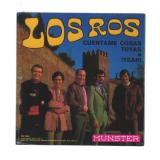
'Cuéntame cosas tuyas' is perfect pop with flawless arrangements; it's crossed over into the international soul scene, made its way into playlists by DJs like Gilles Peterson, and was even covered in the early 2000s by La Costa Brava-proof of its appeal among an ever-broader audience. On the B-side you'll find the superb '¡Yeah!', packed with soul and funk flair. Two irresistible tracks that, after years out of print, we're putting back into circulation with the reissue of this essential record-one that's practically impossible to find in its original pressing. Few late-'60s Spanish pop songs have reached the status that 'Cuéntame cosas tuyas' has earned decades after its original 1969 release. The single, put out by Barcelona label Belter, has become one of the most coveted gems for collectors of '60s sounds. 'Cuéntame cosas tuyas' is perfect pop with flawless arrangements-a sure-fire dance-floor killer, right up there with Elia y Elizabeth's 'Alegría' in any imaginary ranking of Spanish-language pop anthems. Although originally from Valencia, Los Ros (formerly Los 4 Ros) built their career in Palma de Mallorca and released nearly twenty singles on Belter. Between 1968 and 1970, their friendly, commercial pop started weaving in bolder elements drawn from soul, funk, and even psychedelia-something you can also hear on the B-side of this very single, featuring the superb '¡Yeah!'
Commandez maintenant et nous commanderons l'article pour vous chez notre fournisseur.

When you listen to birds, they usually talk about food, sex/family, or anxiety. If they knew about the true nature of humanity's cruel and exploitative relationship with birds, they would be discussing rebellion. Humanity's current trajectory about birds is to cause the extinction of one-third of all bird species by the end of this century.
This record crystallises the borders between memory, beauty, and anxiety. At the core is an amalgam of all the birds we have met and heard, their sounds synthesised from a blend of memories. Esthetically it simulates the qualities of bird sounds, hitting similar frequential sweet spots. There is a great variety of birds captured here, from high to low frequencies, from solo voices to groups, from birds standing on their own to complex world-building, where the bird voices are part of an ecosystem, becoming one of the instruments.
You could stop there, enjoying this record on a musical level, but it invites us to do one step further, to consider reconfiguring our relationship with the Earth and its inhabitants. To question our impact, and to ask why we need synthetic bird music. Is it just a visionary endeavour or is it because we are failing at fostering a world in which organic birds and other creatures can thrive?
32 artists from the whole world, including our favourite artists from Eastern Europe, have contributed to this compilation both with new and previously released music. Their music is ordered from dawn to dusk and into the night. For many of the artists it's their first time on mappa, but some have previously released an album with us.
Commandez maintenant et nous commanderons l'article pour vous chez notre fournisseur.

We Jazz Records kicks off their new series of archival 7" releases with Esa Pethman "In Belgium 1967" released 23 September 2022. The two-tracker is licensed from the Belgian VRT radio archives and both of the pieces are previously unreleased. Finnish jazz legend Pethman, heard here on alto flute and tenor sax, joins forces with European jazz greats such as Heinz Bigler, Uffe Karskov and Jean Fanis. This is a small but valuable piece of unheard European jazz history from the early heyday of modern jazz. The physical release is a quality "inside-out"-styled EP with 3mm spine and small center hole on the 45rpm vinyl.
An excerpt from the liner notes by Mikko Mattlar:
"Esa Pethman (b. 1938) was one of the key figures of modern Finnish jazz in the 1960s. His album The Modern Sound Of Finland was the first Finnish modern jazz album and his composition "The Flame" a true modern Fenno-jazz evergreen.
Pethman was born in Kuusankoski, 135 kilometres from Helsinki in the Kymenlaakso area. The jazz scene was active even though it was an area of rural landscapes and paper mills. Pethman discovered jazz when he heard a Charlie Parker record being played at a local music shop in the late 1940s. Following Parker, bebop became his favourite style of jazz.
Young Pethman played flute and saxophone in local bands who accompanied schlager singers. They played tangos and waltzes for dancers, but usually started a typical dance event with an hour of jazz. In 1959 Pethman moved to Helsinki to study music at the Sibelius Academy. Back then it was a strictly classical music academy, but Pethman later described the studies as crucial for his development and career. He quickly made his way to studio sessions and into the best orchestras in Helsinki.
As a student of composition, Pethman also began writing his own music. "The Flame" was a melody he just got on his mind one night, and he decided to write it down. The catchy composition was released as a 7" single in 1964, a year before Pethman's debut album. Both records stand as benchmarks for modern Finnish jazz. The album consisted entirely of Pethman's compositions, not versions of jazz standards like a lot of the Finnish jazz released until then.
In the mid 1960s, Finnish jazz was also taking its first international steps. Pethman's quintet took part in the first Montreux Jazz Festival in Switzerland in June 1967. At the Montreux jazz band competition, the quintet came in fourth of the twelve contestants. Despite not winning the competition, the band got an honourable mention, and Pethman was now recognized outside Finland.
In December 1967 Pethman travelled to Brussels. His visit was organised by the national Finnish broadcasting company Yleisradio and their jazz program producer Matti Konttinen. Konttinen was supposed to go to Brussels with Pethman, but the musician ended up traveling alone.
In the Decca recording studios Pethman played two songs. He recorded a version of his most famous composition "The Flame", where he played the alto flute and was accompanied by Belgian musicians. On Swiss saxophonist Heinz Bigler's composition "Like Steel", Pethman played the tenor saxophone. The band was now more international, consisting of Bigler, the Italian Francesco Santucci, the Dane Uffe Karskov, a Belgian rhythm section and Pethman. After 55 years, Pethman still remembers Bigler's remarkable skills as a saxophonist.
The two-day visit included the recording session, a dinner and a concert. Pethman and the other non-Belgian musicians came to Brussels mainly to play at a jazz concert organised by the European Broadcasting Union EBU. They played at the studio first, and the concert was held the following day. Pethman and all the other soloists played as members of an international big band. The studio and live session were produced by the Belgian Radio and Television jazz section leader Elias Gistelinck."
Commandez maintenant et nous commanderons l'article pour vous chez notre fournisseur.

After two decades in the experimental music scenes of New York and Western Massachusetts, Wednesday Knudsen might be known equally as a sought-after improv collaborator and the vocalist and guitarist for the beloved long-running psych band Pigeons or, more recently, as a member of the New England psych-folk ensemble Stella Kola. Though her forthcoming release, Atrium, is Knudsen’s fifth solo album, it is both her first solo work to appear on vinyl and a double LP, marking her rich recording history with a stunning masterwork. Channeling the “atmosphere of presence” alongside the legions of Éliane Radigue, Hiroshi Yoshimura, and Joanna Brouk, on Atrium, Knudsen plays it all—alto saxophone, flute, guitar, synth, piano, autoharp, bass guitar, and vocals. The collected compositions are studies in the tones, timbres, and pacing particular to the woodland environment of the Taconic Mountains where she lives. Atrium’s tracks are sculptural rather than ambient, with a release into the gorgeous hold of gravity that insists we don’t escape or drift away. This is music for remembering time. This is music that reinforces the power of art as resistance. The songs on Atrium distill our attention in a language that Knudsen calls “the opening of the heart,” reminding us that subsistence and community results from our own actions and engagement with our exterior. Atrium is a refuge, vital in our current moment and imbued with resonant power for our future.
il devrait être publié sur 30.01.2026
