It’s been nearly eight years since the last Mondo Drag album came out. In that time, the Bay Area psych-prog band toured the US and Europe, performed at major festivals and—once again—reformed their rhythm section. But in the context of the band’s nearly two-decade existence, this period may have been the most fraught. Vocalist and keyboardist John Gamiño lost friends and family members. Meanwhile, humanity suffered the throes of a global pandemic. “It was a dark chapter,” he recalls. “I was going through a lot of stuff personally—there’s been a lot of death, loss of family members, and grief. Plus, the band was inactive. It felt like time was slipping away from me. I felt like I was wasting my opportunities. I felt like I wasn’t participating in my story as much as I could have.” This feeling of time slipping away is the prevailing theme on Mondo Drag’s new album, Through the Hourglass. “For me, Through the Hourglass really encompasses the quarantine/pandemic years,” Gamiño says. “But in a way that includes a couple of years before that for us, because the band was stagnant during that time. Living with that was really impactful on our daily lives. So, the album is reflective. It’s looking at time—past, present, future.” Luckily, Mondo Drag emerged from this dour period reborn. Freshly energized by bassist Conor Riley (formerly of San Diego psych squad Astra, currently of Birth), who joined in 2018, and drummer Jimmy Perez, who joined in 2022, Gamiño and guitarists Jake Sheley and Nolan Girard have triumphed over the seemingly inexorable pull of time’s passage. “Astra was the one contemporary band that we felt was on the same tip as us,” Gamiño says. “We saw the similarities and felt the same vibe. Conor moved to San Francisco in 2018 and heard we were looking for a bassist, so we got in touch. For us, it was like, ‘The synth player from Astra wants to play bass for us?’ We couldn’t think of anybody more perfect.” Perez, meanwhile, brings deep psych-prog knowledge and impeccable skill. “He’s an amazing drummer, and he allowed us to do what we’ve been trying to do,” Gamiño says. “Before he came along, it was like, ‘Where are the drummers who like psych and prog and can play dynamically?’ We ended up trying out metal drummers, but they couldn’t swing. Jimmy was the final piece of the puzzle.” The result is a dazzling and often plaintive rumination on the hours, days, and years—not to mention experiences—that comprise a lifetime. Two-part opener “Burning Daylight” smolders with melancholy, offering a whirl of multi-colored and hallucinatory imagery. “It’s about the California wildfires and a feeling of helplessness,” Gamiño explains. “There’s a juxtaposition between the dark lyricism and upbeat music which is meant to imply a sort of delusional state—and choosing our own delusion to overcome the crushing despair of reality.” Eleven-minute centerpiece “Passages” is a sprawling prog-rock adventure, festooned with lofty guitar melodies, sweeping organ flourishes and a delicately finger-picked outro. But the heaviest song, thematically speaking, might be the mournful and hypnotic “Death in Spring,” which borrows its title from the like-named Catalan novel. “In the novel, people are placed inside opened trees and their mouths filled with cement before they die to prevent their souls from escaping,” Gamiño explains. “The song is about three people I knew who lost their lives to gun violence, addiction, and mental health. It’s my way of cementing their souls in song form.” Mondo Drag fans might be surprised by this blend of hard reality with literary surrealism, but it’s a perfect example of how the last several years have impacted Mondo Drag—and Gamiño in particular. “On all of our previous albums, the lyrical content is more psychedelic and out there,” he acknowledges. “This is the most personal stuff I’ve ever done, so I’m definitely feeling vulnerable on this one.” The title Through the Hourglass comes from the opening of the long-running soap opera Days of Our Lives. It’s less inspired by a predilection for daytime TV than Gamiño’s connection with his late mother, who passed during the time since the last album. “I used to watch Days of Our Lives with her everyday growing up,” he explains. “The song is kind of a reinterpretation of the theme song, although it’s different enough that probably no one will catch it. Now that I’m getting older, I like to put these little Easter eggs in the songs for myself and for archival purposes—for memories.” Through the Hourglass was tracked at El Studio in San Francisco, with an additional ten days of recording at the band’s rehearsal space, which doubles as a hybrid analog-digital recording studio. The album was engineered and mixed by Phil Becker, drummer of space-punk mainstays Pins Of Light. “We’re still here,” Gamiño says. “We’ve been in the studio working on our craft and honing our skills. Now we’re re-emerging for the next stage of our life cycle.”
Buscar:emerge
Toronto-based producer and DJ Ciel is renowned for a style of dancefloor material that’s as heady as it is visceral. The Xi’an-born artist’s ascendant profile has seen her cutting- edge and club-ready EPs released on UK labels Peach Discs and Coastal Haze, as well as Stateside imprints Spectral Sound and Mister Saturday Night.
As a member of the renowned collective Discwoman and the creator of femme-forward party Work in Progress Ciel’s thoughtful narratives are clear, running in parallel to the perception-altering sounds that are consistently woven deeply into her wide-ranging sets, beloved mixes and inventive collaborations. Now the Parallel Minds label co- founder is crystallising her imaginative and omnivorous sound with her !K7 Records debut, ORLANDO.
Written during her emergence from an uncharacteristic bout of writers’ block, the three original tracks of Orlando chart a return to the musical self, spurred along by a cinephile’s embrace of film, a love of classic literature, and a curiosity for the oddest corners of popular culture. “SCENES FROM A MARRIAGE” might share a name with the episodic series, but is rather a nuanced critique of the modern rite of union, moving through structured chapters, and mirroring the un-static nature of longtime love.Inspired by Virginia Woolf’s radical novel, and its superphysical protagonist, “ORLANDO” considers the cult literary figure who lived from the renaissance to the modern age, and embodies both sides of the sex binary.
The thrown sounds and aural illusions of “EL CALIFA” create the effect of a beckoning, beguiling psychedelic experience. To complete the EP, Ali Berger, Ciel’s recent collaborator on the Jacktone Records’ release Damn Skippy! repurposes the mind-bending flourishes of “El Califa” into a noodly and spacious deep house production, replete with pillowy, gauzy pads.
- 1: Hello
- 2: A Love From Outer Space
- 3: Crack Up
- 4: Timewind
- 5: What's All This Then?
- 6: Snow Joke
- 7: Off Into Space
- 8: And I Say
- 9: Yeti
- 10: Conundrum
- 11: Honeysuckleswallow
- 12: Long Body
- 13: In A Circle
- 14: Fast Ka
- 15: Miles Apart
- 16: Pop
- 17: Mars
- 18: Spook
- 19: Sugarwings
- 20: Back Home
- 21: Down
- 22: Supervixens
- 23: Insect Love
- 24: Sorry
- 25: Catch My Drift
- 26: Challenge
A.R. Kive collates the three most astonishing works from that most miraculous of duos - A.R. Kane - comprising the ‘Up Home’ EP from 1988 that signified the band’s dawning realisation of their own powers and possibilities, their legendary debut LP ‘sixty nine’ (1988) and its kaleidoscopic, prophetic double-LP follow up ‘i’ (1989).
In founder-member Rudy Tambala’s new remastering, the music on these pivotal transmissions from the birth of dream pop, have been reinvigorated and re-infused with a new power, a new depth and intimacy, a new height and immensity. Vivid, timeless and yet always timely whenever they’re recalled, these records still force any listener to realise that despite the habits of retrospective myth-making and the
safe neutering effects of ‘genre’, thirty years have in no way dimmed how resistant and dissident to critical habits of categorisation A.R. Kane always were. Never quite ‘avant-pop’ or ‘shoegaze’ or ‘post-rock’ or any of those sobriquets designed to file and categorise, A.R. Kive is a reminder that those genres had to be coined, had to be invented precisely to contain the astonishing sound of A.R. Kane, because
previous formulations couldn’t come close to their sui generis sound and suggestiveness. This is music that pointed towards futures which a whole generation of artists and sonic explorers would map out. Now beautifully repackaged, remastered and fleshed out with extensive sleeve notes and accompanying materials, ‘A.R. Kive’ reveals that 35 years on it’s still a struggle to defuse the revolutionary and inspirational possibility of A.R. Kane’s music.
A.R. Kane were formed in 1986 by Rudy Tambala and Alex Ayuli, two second-generation immigrants who grew up together in Stratford, East London. From the off the pair were outsiders in the culturally mixed (cockney/Irish/West Indian/Asian) milieu of the East End, with Alex and Rudy’s folks first generation immigrants from Nigeria and Malawi, respectively. The two of them quickly developed and fostered an innate and near-telepathic mutual understanding forged in musical, literary and artistic exploration. Like a lot of second-generation immigrants, they were ferocious autodidacts in all kinds of areas, especially around music and literature. Diving deep into the music of afro-futurist luminaries such as Sun Ra, Miles Davis, Lee Perry and
Hendrix, as well as devouring the explorations of lysergic noise and feedback from contemporaries like Sonic Youth and Butthole Surfers, they also thoroughly immersed themselves in the alternate literary realities of sci-fi and ancient history (the fascination with the arcane that gave the band their name), all to feed their voracious cultural thirsts and intellectual curiosity.
It was seeing the Cocteau Twins performing on Channel 4 show the Tube that spurred A.R. Kane into being - “They had no drummer. They used tapes and technology and Liz Fraser looked completely otherworldly with those big eyes. And the noise coming out of Robin’s guitar! That was the ‘Fuck! We could do that! We could express ourselves like that!’ moment”, recalls Tambala - and through a mix of
confidence, chutzpah, ad hoc almost-mythical live shows and sheer innocent will the duo debuted with the astonishing ‘When You’re Sad’ single for One Little Indian in 1986. Immediately dubbed a ‘black Jesus & Mary Chain’ by a press unsure of WHERE to put a black band clearly immersed in feedback and noise, what was immediately apparent for listeners was just how much more was going on here - a
tapping of dub’s stealth and guile, a resonant umbilicus back to fusion and jazz, the music less a conjuration of past highs than a re-summoning of lost spirits.
The run of singles and EPs that followed picked up increasingly rapt reviews in the press, but it was the ‘Up Home EP’ released in 1988 on their new home, Rough Trade that really suggested something immense was about to break. Simon Reynolds noted the EP was: Their most concentrated slab of iridescent awesomeness and a true pinnacle of an era that abounded with astounding landmarks of guitar-reinvention, A.R. Kane at their most elixir-like.
If anything, the remastered ‘Up Home’ that forms the first part of ‘A.R. Kive’ is even more dazzling, even more startling than it was when it first emerged, and listening now you again wonder not just about how many bands christened ‘shoegaze’ tried to emulate it, but how all of them fell so far short of its lambent, pellucid wonder. This remains intrinsically experimental music but with none of the frowning orthodoxy those words imply. A.R. Kane, thanks to that second generation auto-didacticism were always supremely aware about the interstices of music and magic, but at the same time gloriously free in the way they explored that connection within their own sound, fascinated always with the creation of ‘perfect mistakes’ and the possibilities inherent in informed play.
‘sixty nine’ the group’s debut LP that emerged in 1988 had
critics and listeners struggling to fit language around A.R. Kane’s sound. As a title it was telling - the year of ‘Bitches Brew’, the year of ‘In A Silent Way’, the erotic möbius between two lovers - and as originally coined by the band themselves, ‘dream pop’ (before it became a free-floating signifier of vague import) was entirely apposite for the music A.R. Kane were making. Crafted in a dark small basement studio in which Tambala recalls the duo had “complete freedom - We wanted to go as far out as we could, and in doing so we discovered the point where it stops being music”. There was an irresistibly dreamy, somnambulant, sensual and almost surreal flow to ‘sixty nine’s sound, but also real darkness/dankness, the ruptures of the primordial and the reverberations of the subconscious, within the grooves of remarkable songs like ‘Dizzy’ and ‘Crazy Blue’. Alex’s plangent vocals floated and surged amidst exquisite peals of refracted feedback but crucially there was BASS here, lugubrious and funky and full of dread, sonic pleasure and sonic disturbance crushed together to make music with a center so deep it felt subcutaneous, music constructed from both the accidental and the deliberate, generous enough to dance with both serendipity and chaos. ‘sixty nine’ remains - especially in this remastered iteration - ravishing, revolutionary.
The final part of this ‘A.R. Kive’ contains 1989’s astonishing double-LP ‘i’ which followed up on ‘sixty nine’s promise and saw the duo fully unleash their experimental pop sensibilities over 26 tracks, plunging the A.R. Kane sound into a dazzlingly kaleidoscopic vision of pop experiment and play. Suffused with new digital technologies and combining searingly sweet and danceable pop with perhaps the duo’s strangest and boundary-pushing compositions, the album did exactly what a great double-set should do - indulge the artists sprawling pursuit of their own imaginations but always with a concision and an ear for those moments where pop both transcends and toys with the listeners expectations. Jason Ankeny has noted that “In retrospect, ‘i’ now seems like a crystal ball prophesying virtually every major musical development of the 1990s; from the shimmering techno of ‘A Love from Outer Space’ to the liquid dub of ‘What’s All This Then?’, from the alien drone-pop of ‘Conundrum’ to the sinister shoegazer miasma of ‘Supervixens’ — it’s all here, an underground road map for countless bands to follow.” Perhaps the most overwhelmingly all-encompassing transmission from A.R. Kane, ‘i’ bookended a three year period in which the duo had made some of the most prophetic and revelatory music of the entire decade.
After ‘i’ the duo’s output became more sporadic with Tambala and Ayuli moving in different directions both geographically and musically, with only 1994’s ‘New Clear Child’ a crystalline re-fraction of future and past echoes of jazz, folk and soul, before the duo went their separate ways. Since then, A.R. Kane’s music has endured, not thanks to the usual sepia’d false memories that seem to maintain interest in so much of the musical past, but because those who hear A.R. Kane music and are changed irrevocably, have to share that universe which A.R. Kane opened up, with anyone else who will listen. Far more than other lauded documents of the late 80s it still sounds astonishingly fresh, astonishingly livid and vivid and necessary and NOW.
Following nearly 20 years of working together as a trio, and numerous cross-collaborations in different configuration between them, Ideologic Organ presents Placelessness, the debut full-length by Chris Abrahams, Oren Ambarchi, and Robbie Avenaim, comprising two long-form works at juncture of ambient music, minimalism, rigorous experimentalism and improvisation, and machine music. Having carved distinct pathways across a diverse number of musical idioms for decades, Chris Abrahams, Oren Ambarchi, and Robbie Avenaim are each, respectively, among the most noteworthy and groundbreaking figures to have emerged from Australia's thriving experimental music scene. Ambarchi and Avenaim first encountered Abrahams when seeing the Necks - the project that has served as the primary vehicle for his singular approach to the piano since its founding in 1987 - together during the late 1980s, not long after having met in Sydney's underground music community. The pair's collaborations date back more than 35 years, criss-crossing Ambarchi's pioneering solo and ensemble work for guitar and Avenaim's visionary efforts for SARPS (Semi Automated Robotic Percussion System), robotic and kinetic extensions to his drum kit. In 2004, fate brought the three together in a trio performance at the What Is Music? Festival, the annual touring showcase of experimental music founded and run by Ambarchi and Avenaim between 1994-2012. For the nearly two decades since, Abrahams, Ambarchi, and Avenaim have intermittently reformed in exclusively live contexts, in Australia and abroad, cultivating and refining the fertile ground first tilled in that early meeting. Placelessness is the first album to present this remarkable trio's efforts in recorded form. Placelessness is the joining of three highly individualised streams, working in perfect harmony; the point at which friendship, mutual respect, and decades of creative exploration produce a singular spectrum of sound. Featuring Abrahams on piano, Ambarchi on guitar, and Avenaim on drums, the album's two sides draw on each artist's enduring dedication to long-form composition. Its two pieces, Placelessness I and Placelessness II, initially began as a single, 40 minute work, before being divided and reworked into distinct, complimentary gestures for the corresponding sides of the LP. Beginning with restrained clusters of reverberant piano tones, Placelessness I progresses at an almost glacial pace, with Abrahams' interventions increasing met by sparse responses, darting within vast ambiences, on guitar and percussion by Ambarchi and Avenaim. Remarkably conversational within its convergences of tonal, rhythmic, and textural abstraction, over the work's duration a progressive sense of tension unfurls and contracts, refusing release, as each of the ensemble's members contribute to an increasingly tangled sense of density at its resolve. While an entirely autonomous work, Placelessness II rapidly realises a distillation of the energy hinted at across the length of its predecessor. Following a luring passage of harmonious calm, Abrahams' launches into shimmering lines of repeating arpeggios, complimented at each escalation of tempo by Avenaim's machine gun fire percussion work and Ambarchi's masterful delivery of tonality and texture, as the trio collectively generate dense sheets of pointillistic ambience within which individual identity is almost lost, before slowly unspooling into unexpected abstractions and dissonances that deftly intervene with the work's inner logic and calm. What could easily be termed a maximalist take on Minimalism, Placelessness is a masterstroke of contemporary, real time composition, that blurs the boundaries between ambient music, experimentalism, free improvisation, and machine music. Drawing on Chris Abrahams, Oren Ambarchi, and Robbie Avenaim's decades of respective solo and collaborative practice, and the culmination of nearly twenty years of working together as a trio, it's two durational pieces - Placelessness I and Placelessness II - take form with a startling sense of effortlessness and grace, neither shying away from explicit beauty or rigorously tension within their forms.
- A1: Yantra
- B1: Tor 8
- B2: Temple
- C1: Black Jack
- C2: Astra
- D1: Gamma (Alternate Mix)
- E1: Sexuality (My Reality)
- E2: Space Cowboys I
- F1: Raum 422
- G1: Friedrichshain Funk
- G2: Solar
- I1: Hymn (In The Name Of Fantasy)
- I2: Gamma (The Other Side)
- J1: Don't Be Stupid Day (Extended Album Mix)
- K2: Waver
- L1: It's Time (To Move Your Body)
- M1: Shri Yantra
- M2: Make Me Scream
- N1: Liyah
- O1: Halide Part 1
- O2: Voices
- P1: Halide Part 2
- K1: Space Cowboys Ii
EACH COPY Personally SIGNED BY LEN FAKI
Len Faki has always been a defining character of the techno underground. His unique approach to DJing, the consistent work as a producer and the quality output of his label Figure has all shaped the current environment.
Starting out as a clubber in the 90's, his inspirations have always reached back to the first encounters with electronic music, when new worlds opened and everything seemed possible.
While these experiences have always influenced Faki's productions and used to be released under many different aliases back in the day, they have been waiting since to be made into a proper album under the Len Faki moniker.
After quickly climbing to the top of the international DJ circuit, busy touring schedules never quite allowed for it. Finally faced with the opportunity of a long overdue creative break, Faki decided tackle the life-time venture with the necessary dedication and focus.
Excited about the new project, he also took the time and energy needed to expand his production methods. Finding new techniques allowed him to truly bring all his different influences to the surface. The process was one of following his own heart, occasionally challenging and surprising himself. Naturally the result emerged as two parallel experiences, which are now presented across two discs. Both still carry all the signature features of Faki's style but with added layers of depth and detail. There's that special contrast of dark and heady grooves, paired with dreamy melodies that transport the listener to places beyond the mind. But we also see all strains of his previous work being incorporated, mixed and molded into something new altogether.
While the first disc focuses on the kind of techno, which Faki has been brought up by and given back to for so many years of his life, the second is more loose and experimental, with forays into house, ambient and broken beats - the sounds he has always kept very passionate about.
It creates two distinct experiences, showcasing the entire breadth of Faki's cosmos. Where some ideas stay straight and kick hard, like the neon bleep opener Tor 8 or joyfully booming Astra, others take the newfound freedom to inspire a wistful broken beat ballad such as Hymn (In the Name of Fantasy) or the soulfully subdued Drum & Bass closer Voices.
Many songs even exist as pairings, with their respective counterpart on the other disc. For example, the duo of Shri Yantra/Yantra, where similar soundscapes have been looked through different lenses, making for a more straight-laced or shuffled rhythm. Also noteworthy are Faki's appearance as a veritable house producer on Hymn (In the Name of Freedom) as well as the inclusion of two very personal pieces:
The Halide tracks were made in remembrance of Faki's late mother, who passed away during the final production stage of the EP. These delicate tracks capture the intense sadness Faki was feeling at the time and helped him to process his grief and eventually to finish off the album.
By doing so Faki has given us a complete artistic statement, one that proves him to be as curious and driven now as ever, taking his sound to all-new realms.
A long-in-the-works project of ours, here comes A Tribe Called Kotori's first foray into full-length territories, as the immensely talented Rampue takes us on a melancholy-riddled ride across his phantasmatic mindscapes. A true sound explorer, deftly steering his ship down the junction of electronica, abstract and balearic-infused prog house, the Berlin-based vibist has us transfixed and elevated throughout the twelve cuts that form the backbone to this lushly textured promenade in sound - at times understatedly euphoric, at others rivetingly exotic.
Of the creative process that lead to 'Bubblebath Trance', Rampue explains "It all started and ended in the same moment: my cherished feline companion, my laptop awash with an unintended bath, and alas, a dearth of backups. The resultant calamity, an echo of chaotic tranquility." Under the generous layer of irony lies some unaltered truth about Rampue's debut long-player for A Tribe Called Kotori: this sense of serenity that goes with stepping into this warm and bubbling primitive chaos of sorts infuses the listening experience far and wide. Distantly emulating the "euphonious strains" of iconic PS1 video games soundtracks from his youth days, the album has us surfing a constant paradox of emotions, wistful but not abandoning itself to sorrow, dynamic yet suspended in some sort of mind-expanding stasis. As if you were looking at the world beneath you in exploded view, conscious of all thing, slowly moving up the many layers of our atmosphere towards uncharted skies.
A paragon of Rampue's most poignant take on classic electronica tropes, 'Harmonie' blazes with a poetic fire that engulfs about everything in its wake. Just figure yourself riding a chocobo across the sand-covered expanse of North Corel (toasting to the FFVII nerds here) as this blasts out in the distance. From this trancey bubblebath emerge lots of musical shades and nuances, from the nicely dubbed-out, brass-heavy coastal jazz of 'Schattenschranz' to the choppy, trip-hop-adjacent future electronics of 'Inside', via the exuberantly joyous mess of faux-organic number 'Tripomatic' and cinematic charisma of 'Ich hasse Sonne' high-flying orchestrations.
Connecting the dots between that trance-indebted ebullience and further downtempo-friendly attraction, 'Verfahren' perhaps encompasses best what 'Bubblebath Trance' is about: gracefully walking the tightrope in-limbo nostalgia-soaked inner movements and a powerful outward thrust, burning to let the feelings ooze out from the shell that holds them.Clad in purely 90s-compatible breaksy motion, 'Salz' is another attempt to reconcile emotional and physical dissonance, like kneading all states - solid, liquid and vaporous - into an impossible mega-vibe of its own; malleable, strong and enveloping in equal measure. Borrowing from two-step and UK garage, 'Take Away' is a definite high in Rampue's master unfolding of musical twists and turns, summoning a Boarder Community-esque atmosphere and clashing it alongside floor-ready footwork motifs to fascinating effect.
An ode to his studio companion, 'Buchla Trip' finds Rampue's exploring his machinic friend's quirky yet soulful array of electronic potentialities - making it sound like a conversation you'd have with R2-D2 in the heart of a Sandcrawler, whereas 'Kajal' beams us up to a fragmented headspace, halfway altered PC-Pop and arps-loaded electronica on amphetamines. Effusive and transporting, the title-track 'Bubblebath Trance' could well figure as the album's no.1 medley in essence: a bountiful lucid dream of dancing forms, colours and sentiments to wrap your head around, confidently drifting from a liminal state of consciousness down the rapids of one's troubled inner workings.
Rounding off the package, the languid ambient finale of 'Die Leiden des hungrigen Fruehstuecks' rubber-stamps the feeling that 'Bubblebath Trance' belongs to that rare category of albums. The ones that mint their own alphabet aside from typical norms and expectations, teaching you the ropes of their new language as it unreels between your ears - real and unreal, elusive to any other meaning than the one your guts and brains will be inclined to give it to, in real time. A crystal-pure object if you will, that shall not reveal its secrets, even after a thousand listens and just as many wowing moments.
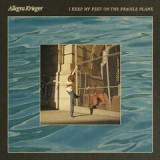
It contains all the signatures of her best lyricism: delicate and precise phrasings, moments that flicker between beauty and banality, meaning that forms through the accretion of observations, memories, and unexpected adages. This is an album that is at once post-theistic and devoted to a relationship with the divine, each song blinking in and out of "the fragile plane," a place Krieger describes as "a middle ground in the universe," both abstract and peaceful, where time, bodies, and names don't exist.
Krieger initially collaborated with Luke Temple and Jeremy Harris to record her vocals and guitar to tape at Panoramic Studios in West Marin, CA. As the album continued to form, Krieger envisioned instruments - like the French and English horn (Nancy Ranger and Priscilla Reinhart), electric guitar (Jacob Drab), and pedal steel (Kevin Copeland) - as characters which would walk in and out of the soundscape. What emerged from conversations with composer Sammy Weissberg, are brass parts that have a dark, almost surreal logic: horns arise to emphasize a word or phrase, fall out completely, only to rush back with dissonant orchestrations that gesture simultaneously toward deterioration and generation.
While Krieger takes inspiration from Elliot Smith's honesty, Judee Sill's cosmic reaching, and Joni Mitchell's sharp noticing, the dream-like association, harmonic dissonance, and angular melodic ascensions in each song are singularly and delightfully Krieger's.
"I Keep My Feet on the Fragile Plane" is a daring collection of songs by an artist who scries with both the cold glass eye of truth and the beating heart of empathy; who portrays life in all its twisted complexities.
After the thematic albums 'True' (2012 inspired by Berlin and David Bowie).
'Desire' (2015, an instrumental opera about longing), 'Goldbrun' (2017 a homage to Europe and Honing's interest in European art music) and 'Bluebeard' (2020, a dark album mainly inspired by the 300-year-old fairy tale of the same name), there is now 'Heaven on my mind'.An album on which the quartet's now decade- long existence undoubtedly pays off. Not only is the almost telepathic way the band members communicate with each other an important feature; this fifth quartet album also clearly shows Honing's love for Charles Lloyd, Pharoah Sanders and the freer acoustic jazz that emerged along with the 1960s hippie movement.
On this album, his third work published on Umor Rex, the french producer Alexandre Bazin takes what he started in Four Steps (Umor Rex 2022) to the maximum point. However, on Innervision, there is no longer that discreet flirtation towards the dance floor. Instead, the ten cuts that make up the album are influenced by musical research and the UK and Berlin electronic scene. Bazin's new proposal revolves around sound textures, saturations, feedback, autosampling, and cut and tuned sounds, allowing new melodic elements to emerge in the process, akin to a live act. While maintaining his minimalist exploration and obsession with melody and structure, Innervision undoubtedly marks a turning point in Bazin's discography. It is epic, compelling, euphoric, utterly enjoyable, and at times violently beautiful.
The album was composed and mixed by Alexandre Bazin at Château Rouge, Paris, and mastered by Rafael Anton Irisarri at Black Knoll, New York. François Desmoulins played the acoustic drums on Four Steps (Remix). The artwork for the album was created by Daniel Castrejón in Mexico City.
Ray Mono started out as a resident in Leeds at the cult mono_cult party and has since gone on to emerge as a top talent in the studio. He has a fresh blend of minimal, house and tech that has taken him to labels like Moxy Music but now it is that OG home of mono_cult that welcomes him for a first release on the new label. True to form this is silky and irresistible tech with liquid grooves and smart samples, seductive synth lines and plenty of emotion as well as dancefloor clout. Mihai Pol and Sota remixes completely Ray's standout originals to make for a fine first outing from this label.
Hot Creations welcomes Viot and Vitor Vinter as they make their label debut with ‘FMF’, featuring a remix from Bruno Furlan.
Brazilian-born pairing Viot and Vitor Vinter have both emerged as rising names to watch in the scene, capturing the attention of industry heavyweights like Joseph Capriati, Michael Bibi, Marco Carola and many more. Previously collaborating on SOSA’s imprint COCO, they now bring their latest offering ‘FMF’ to Jamie Jones and Lee Foss’ esteemed label Hot Creations, marking another milestone in their careers - accompanied by fellow Brazillian talent Bruno Furlan who returns to the label on remix duties.
With both artists favouring a freaky atmosphere, ‘FMF’ unveils deep, sultry vocals nestled over the top of an alluring acid bassline that drives the track forward. Bruno Furlan’s twist to the track injects a surge of high-octane energy with tumbling percussion and shadowy stabs, guaranteed to whip the crowd into a frenzy.
- A1: I Told Them Feat Gza
- A2: Normal
- A3: On Form
- A4: Sittin On Top Of The World By Burna Boy & 21 Savage
- A5: Tested, Approved & Trusted
- A6: Virgil
- A7: Cheat On Me Feat Dave
- B1: Big 7
- B2: Dey Play
- B3: City Boys
- B4: Jewels Feat Rza
- B5: If I'm Lying
- B6: Thanks Feat J. Cole
- B7: Talibans Ii By Burna Boy & Byron Messia
On the 25th August, Burna Boy will release his brand-new album ‘I Told Them…’. It will be available to stream everywhere as well as on CD & Vinyl. The Pre-order will go live alongside the album announce on the 28th July. ‘I Told Them…’ features Burna’s newest hit singles ‘Sittin’ On Top Of The World (feat. 21 Savage)’, ‘Talibans II’ & ‘Big 7’ as well as a whole host of album features.
Burna Boy was born Damini Ogulu in Port Harcourt, Rivers State, Nigeria, in 1991 and began making music at just ten years old. As a teenager he honed his craft on Nigeria’s southern coast, delving into dancehall, reggae and Afrobeat’s. In the early 2010s Burna Boy emerged as one of Nigeria’s fastest-rising stars, combining influences from his Nigerian heritage with hook-filled pop stylings to create unforgettable tracks. His 2012 single ‘Like to Party’ broke into the global mainstream and paved the way for his full-length debut L.I.F.E, a year later.
Over the next five years, Burna Boy released two more albums and collaborated with a long list of high-profile artists including J Hus, Skales, Fall Out Boy and Lily Allen. African Giant was released in 2019 followed by his fifth album Twice as Tall in 2020 (which featured collabs with Chris Martin and Youssou N'Dour), both charted in several countries across the globe andgarnered worldwide acclamation, with the latter winning a Grammy Award for ‘Best Global Music Album’. Breaking cultural boundaries, he became the first Nigerian to headline a show at New York’s Madison Square Garden, he released his sixth album, Love, Damini, last year (featuring collabs with the likes of Ed Sheeran and Khalid). It deservedly became the highest-charting Nigerian album in history and currently holds the record for the only African artist to earn a no. 1 on iTunes in 16 countries worldwide.
black LP[27,69 €]
King Krule, Interpol, Alex G, Orion Sun, Snail Mail, Toro Y Moi, Unknown Mortal Orchestra. “Transparent Yellow” Indie Store Colour. (LPC1) available while stocks last. For Lutalo, creating music is an act of hope in and of itself. Throughout their meticulously crafted folk, rock, and soul, on which they sing and play all the instruments, the Twin Cities-raised, Vermont-based musician embeds golden lines of poetry that inspire curiosity about the world and empathy for everyone searching for a way through it. After releasing their 2022 debut EP, Once Now, Then Again, Lutalo emerged as a rising talent in the indie world, catching the attention of Fleet Foxes’ Robin Pecknold and Big Thief’s Adrianne Lenker, who invited the young musician on tour. Following a vinyl release with that breakthrough project, they are releasing its companion EP, AGAIN, on August 25 via Winspear. On the ambitious AGAIN, a collection of kinetic indie rock tracks, Lutalo makes bold critiques of systemic oppression, capitalism, and the digital attention economy. Though these topics are heady, their writing always sits at an accessible place of personal introspection. Like on the arresting single “Push Back Baby,” whose fuzzy electric guitar lines twist and unfurl in intricate patterns, Lutalo paints a complex portrait of our current reality that’s “rooted in the greed or narcissism of capitalists,” they explain. “I’m analyzing those systems and patterns, and also asking, ‘Can we continue to not perpetuate this?’ Because it’s hurt a lot of people historically. I’m just asking people to question it.” Through their music, but also through their lifestyle that’s alternative to America’s economic and political systems, Lutalo asks listeners to imagine new possibilities. “I want to help people question the way they’re living,” they say, “so we can create a better reality for us to exist in together.”
yellow LP[27,69 €]
King Krule, Interpol, Alex G, Orion Sun, Snail Mail, Toro Y Moi, Unknown Mortal Orchestra. “Transparent Yellow” Indie Store Colour. (LPC1) available while stocks last. For Lutalo, creating music is an act of hope in and of itself. Throughout their meticulously crafted folk, rock, and soul, on which they sing and play all the instruments, the Twin Cities-raised, Vermont-based musician embeds golden lines of poetry that inspire curiosity about the world and empathy for everyone searching for a way through it. After releasing their 2022 debut EP, Once Now, Then Again, Lutalo emerged as a rising talent in the indie world, catching the attention of Fleet Foxes’ Robin Pecknold and Big Thief’s Adrianne Lenker, who invited the young musician on tour. Following a vinyl release with that breakthrough project, they are releasing its companion EP, AGAIN, on August 25 via Winspear. On the ambitious AGAIN, a collection of kinetic indie rock tracks, Lutalo makes bold critiques of systemic oppression, capitalism, and the digital attention economy. Though these topics are heady, their writing always sits at an accessible place of personal introspection. Like on the arresting single “Push Back Baby,” whose fuzzy electric guitar lines twist and unfurl in intricate patterns, Lutalo paints a complex portrait of our current reality that’s “rooted in the greed or narcissism of capitalists,” they explain. “I’m analyzing those systems and patterns, and also asking, ‘Can we continue to not perpetuate this?’ Because it’s hurt a lot of people historically. I’m just asking people to question it.” Through their music, but also through their lifestyle that’s alternative to America’s economic and political systems, Lutalo asks listeners to imagine new possibilities. “I want to help people question the way they’re living,” they say, “so we can create a better reality for us to exist in together.”
Athens, Georgia's Telemarket emerges with force and finesse on its debut full length, Ad Nauseum, due out August 25th on Elephant 6 label affiliate Cloud Recordings and Science Project Records. The record by tums navigates loops of existential quandary, heartache, and hilarity in a world gone awry. Running at 34 minutes and 34 seconds, this thirteen track odyssey discovers itself through bouts of exuberant feedback and snappy hooks, and ultimately finds resolution surrounded by good friends in its musical home of Athens. Among these friends is John Fernandes of Cloud Recordings, a former member of projects Olivia Tremor Control and Circulatory System and longtime Elephant 6 collaborator, who teamed up with Telemarket to release and distribute the group's LP. Ad Nauseum features artwork from late Georgia artist Patrick Dean, to whom the record is dedicated. Dean’s piece ‘Welcome to Athens, Y'all” was featured on Athens GA publication Flagpoles cover in August of 1999, and now adjourns the Telemarket cover reflecting the themes of repetition, redundancy, and relief. Telemarket provides a distorted vessel for the shape-shifting songeraft of vocalist / guitarist Adam Wayton, and features collaborations with many of his talented Athens friends. Wayton together with guitarist and engineer Will Wise hunkered down in their Odd Street home studio (originally built by a former Widespread Panic fiddle player) for much of 2021-2022 a piece of time many would just as soon forget and managed to create something memorable together in Ad Nauseum
Wewantsounds Is Pursuing Its Ambitious Akiko Yano Reissue Program With The Release Of "japanese Girl", Her Landmark Debut Album From 1976. Backed By Little Feat With Lowell George And By The Cream Of Japanese Musicians (including Haruomi Hosono), Japanese Girl Is One Of The Most Important Japanese Albums Of The 70s, Mixing Pop, Rock, Japanese Folk Together With Little Feat's Superb Classic Sound. This Is The Very First Time The Album Is Released Internationally. The Deluxe Lp Edition Includes Remastered Sound, Tip-on Lp Sleeve, Download Card Plus The Original 4-page Insert With Lyrics And Full Line-up!
When Akiko Suzuki Left Her Home Town Of Aomori For Tokyo In The Early 70s Aged Just 15 To Become A Professional Musician, She Quickly Started Making Waves On The Local Music Scene Performing At The Jazz Club Rob Roy. In 1973 She Released A 7" With The Group Zariba And Caught The Attention Of A&r Man Koki Miura. She Then Recorded One Song, "oinaru Shiino-ki" With Haruomi Hosono On Bass And Drummer Tatsuo Hayashi (who Features On Many Hosono Albums And Also Hiroshi Sato's 1979 Album Orient) With A Full Album In Mind.
After A Marriage With Musician/producer Makoto Yano And The Birth Of Her Son (named Fuuta), Yano And Her Team Resumed The Recording Of The Album And Decided To Pitch Little Feat For A Collaboration As She Loved The Group. Against All Odds They Said Yes And Yano Left Tokyo For Los Angeles In March 1976 To Record A Full Side With Them. The Legend Has It They Found It So Difficult To Keep Up With Yano's Compositions They Returned Some Of Their Fee. The Session Was Nevertheless Stunning And Lowell George Even Compared Yano To Stevie Wonder. The Little Feat Blend Of New Orleans Groove Matched Yano's Melodies Perfectly, As Witnessed On "funamachi-uta Part 2." Originally A Traditional Song From The Nebuta Festival In Her Hometown Of Aomori (part I On Side 2 Gives A Good Idea Of What The Original Form Sounds Like), The Little Feat Version Is A Formidable Slow-funk Workout Not Dissimilar To Their Classic, "spanish Moon", Serving Yano's Beautiful Vocals And Sense Of Groove To Perfection. The Whole Side Is A Match Made In Heaven, Showcasing The Classic Little Feat Line Up At Their Funkiest With Yano's Unique Japanese Twist.
The Japanese Side On The Album Gives A Great Snapshot Of The Tokyo Music Scene Of The 70s With Many Musicians Gravitating Around Haruomi Hosono (and Present On His 1973 Classic Album 'hosono House' Including Sound Engineer Kinji Yoshino) And Also Several Musicians From Japanese Band, The Moonriders.
Recorded At The Legendary Onkyo Haus Studio In Tokyo, The Sessions Mix Singer-songwriter Sensitivity And Pop With Traditional Japanese Sounds And Instruments Like The Shinobue Transverse Flute, The Koto String Instrument Or The Tsuzumi Hand Drum As Played On "hekoriputaa" By The Legendary Percussionist Kisaku Katada Who Was Appointed Living National Treasure By The Japanese State In 1999; Together They Create A Beautiful East-meets-west Mix Masterfully Driven By Yano's Creativity And Unique Talent.
A Breathtaking Debut Album That Made Akiko Yano One Of The Most Important Artists To Emerge From The 70s, Japanese Girl Has Since Become A Milestone In Japanese Music With A Recent Documentary On Nhk Tv Telling The Whole Story Behind This Classic. Wewantsounds Is Now Proud To Present This Essential Album To The Rest Of The World.
The Whatnauts emerged from Baltimore in the late 60's and were produced by George Kerr & Michael Watson.
This 8-song original LP has become a classic 70s soul album, mixing ballads and groovy tracks. While "You forget too easy" could be played on any lowriders mixtape, "Im So Glad I Found You" featuring Linda Jones is the perfect Northern soul floor filler. The beatmakers & producers are given their share too, with the drum breaks of the groovy "Why Can't People Be Colors Too?" And to make this reissue even more collectable, Playoff Records added the 80s funky "Help is on the way" sampled by De La soul as the perfect bonus track. A must have for any diggers or soul music fans.
teely Dan's gold-selling third studio album Pretzel Logic, charted at No. 8 on the Billboard 200 and restored the group's radio presence with the single "Rikki Don't Lose That Number," which became the biggest pop hit of their career and peaked at No. 4 on the Billboard Hot 100. The 1974 album was produced by Gary Katz and was written primarily by Walter Becker (bass) and bandleader Donald Fagen (vocals, keyboards). The album marked the beginning of Becker and Fagen's roles as Steely Dan's principal members.
They enlisted prominent Los Angeles-based studio musicians to record Pretzel Logic, but used them only for occasional overdubs, except for drums, where founding drummer Jim Hodder was reduced to a backing singer, replaced by Jim Gordon and Jeff Porcaro on the drum kit for all of the songs on the album. Steely Dan's Jeff "Skunk" Baxter played pedal steel guitar and hand drums.
Pretzel Logic has shorter songs and fewer instrumental jams than the group's 1973 album Countdown to Ecstasy. Steely Dan considered it the band's attempt at complete musical statements within the three-minute pop-song format. The album's music is characterized by harmonies, counter-melodies, and bop phrasing. It also relies often on straightforward pop influences. The syncopated piano line that opens "Rikki Don't Lose That Number" develops into a pop melody, and the title track transitions from a blues song to a jazzy chorus.
Other standout tracks include "Any Major Dude Will Tell You," a reflective ballad with lush harmonies, and "Parker's Band," a playful ode to the jazz great Charlie Parker.
Lyrically, the album explores themes of nostalgia, lost love, and the struggles of the creative process. In "Barrytown," the band reflects on their early days as struggling musicians, while in "Through with Buzz," they offer a biting critique of the music industry and the pressure to conform to commercial expectations.
One of the defining characteristics of Pretzel Logic is its use of unusual chord progressions and unexpected musical twists and turns. The band's intricate arrangements and skilled musicianship are on full display throughout the album.
Rolling Stone praised the album, calling Steely Dan the "most improbable hit-singles band to emerge in ages."
"When the band doesn't undulate to samba rhythms (as it did on 'Do It Again,' its first Top Ten single), it pushes itself to a full gallop (as it did on 'Reelin' in the Years,' its second). These two rhythmic preferences persist and sometimes intermingle, as on 'Rikki Don't Lose That Number,' which jumps in mid-chorus from 'Hernando's Hideaway' into 'Honky Tonk Women.' Great transition." — the review said.
AllMusic gave the album 5 stars, with reviewer Stephen Thomas Erlewine noting that "instead of relying on easy hooks, Walter Becker and Donald Fagen assembled their most complex and cynical set of songs to date." Dense with harmonics, countermelodies, and bop phrasing, Pretzel Logic is vibrant with unpredictable musical juxtapositions and snide, but very funny, wordplay.
The album's cover photo featuring a New York pretzel vendor was taken by Raeanne Rubenstein, a photographer of musicians and Hollywood celebrities. She shot the photo on the west side of Fifth Avenue and 79th Street, just above the 79th Street Transverse (the road through Central Park), at the park entrance called "Miners' Gate."
After a brief battle with esophageal cancer, Walter Becker died on September 3, 2017 at the age of 67. Steely Dan has sold more than 40 million albums worldwide and were inducted into the Rock and Roll Hall of Fame in March 2001. VH1 ranked Steely Dan at No. 82 on their list of the 100 Greatest Musical Artists of All Time. Rolling Stone ranked them No. 15 on its list of the 20 Greatest Duos of All Time.
This stereo UHQR reissue will be limited to 20,000 copies, with gold foil individually numbered jackets, housed in a premium slipcase with a wooden dowel spine.
Overall, Pretzel Logic is a standout album in Steely Dan's discography. The album's blend of catchy hooks, complex arrangements, and thoughtful lyrics has made it a favorite among fans of classic rock and pop music.
The issue was always: How could I transport my work as a producer and beatmaker on to a stage? How can something, that is happening behind locked doors in the studio, emerge into a live experience?" With this vivacious live quartet, he has found his answer.
Songs from a productive solo career spanning a period of over 10 years, Sepalot has a wide variety of songs to pick and choose from. Even in the live set up, his ove for electronic music remains unaffected and the subtle influence of Hip Hop is un- deniable. Despite this being the initial state of the project, a distinctive sound has evolved from jamming together in dark rehearsal rooms. The different characters compliment each other like a puzzle on stage, though Sepalot's part as producer and svengali is undisputable.
FABIAN FU?SS on the drums - longtime partner on the drum set and the voice behind Sepalot's unmistakable radio hit "Rainbows". ANGELA AUX on the bass and mostly the voice of the quartet is a writer and solo artist in his own right. Having released albums on Millaphone his roots are undeniably in hip hop with a heavy tinge of folk. MATTHIAS LINDERMAYR on the trumpet, who originated from a family of musicians, is highly decorated jazz virtuoso. His very own releases grace modern jazz specialist label Enja Records. ... and finally SEPALOT, bringing them together and making them more than the sum of its parts.
The electronic beats, the pulsating bass, Sepalot's enthusiasm for ambient sound design - all this remains unchanged and is garnished with the element of jazz. A unique, unequalled sound that strives for higher ideals and has immense international potential.