For Martin Gretschmann, the ever-evolving Berlin artist known as both Acid Pauli and Console, music has always been a deeply personal journey.
His new imprint, All Is Acid, is the destination, a creative home for his uncompromising and experimental sound. Breaking from the cycle of trends, the label is a return to the essential, offering just a few curated releases a year. Each is intended as a timeless artifact for deep listening, primarily showcasing Acid Pauli's own intricate and intimate productions.
The label debuts with a newly remastered version of his classic 2010 EP "Den Mahlstrom rauf." But the release is given a powerful new dimension by a standout remix from Italian artist Adiel. Their collaboration was sparked by pure serendipity: a fan video of Acid Pauli playing her music in Milan reached Adiel, who responded with a short film for Vogue. In it, she revealed that "Den Mahlstrom rauf" was a formative influence and one of the very first records she ever bought.
Inviting her to remix the track that helped shape her sound was a full-circle moment, artistically and emotionally. Her bold, reverent reinterpretation honors the original's spirit while imprinting it with her own unique signature. With this release, All Is Acid launches not just with music, but with a story of connection, community and a shared artistic lineage
quête:emotion
Wally Badarou is a synth pioneer and musical polymath. But rarely does he sing over his sumptuous tracks. The 6 songs that comprise new record Simple Things finally realise Wally's vision for select backing tracks from his beloved Colors Of Silence.
The tracks were originally developed back in 2001 for the release of the original CD; here, Wally has “simply" added overdubs and vocals to their mastered mixes with some discerning edits. Simply put, Simple Things is another slice of simply stunning Wally Badarou genius.
Simple Things has been decades in the making. Indeed, Wally struggled not only with the idea of singing these wonderful songs himself but singing them in English and writing his own lyrics, while wrestling with the sensational backing tracks, which themselves seemed to have taken on a life of their own.
As Wally explained to us: "In addition to the instrumental artist I have been known as, so far, there has always been a singer who simply was not sure he was, up until now. Even though “Back To Scales Tonight”, my very first album, was, indeed, a song album."
Opener "It Couldn't Be You" embellishes the uptempo groove of soca-funk gem "The Lights Of Kinshasa". As Wally explained to us, it's about “a simple love story somewhere, one rainy night, under the lights of Kinshasa. A woman, a man, online dating, quite usual in our times. Then they meet, almost missing each other." The guide vocal Wally had laid for Colors Of Silence - with an organ sound - seemed striving for words in Linguala, a Congolese language he could not speak. Therefore the decision to do it himself was not an easy one, for it had to be in English to fit his singing. We think it turned out pretty good!
"You Can't Hide Always" vocalises Wally's deep concerns set to the propulsive "Smiles By The Millions": "Populism, ostracism, radicalism, ethics and values all turned upside down worldwide, are they all inevitably exacerbated by our social networks? It could all melt down one day, like a house of cards in the ocean of fake news and false prophecies”. Wally wanted to keep the track as bare as possible but, inevitably, the backing vocals and the synth-brass arrive ultimately to present a welcome 70s flavour, with no snare-drum added.
The bright and breezy "We'll Make It Again" adds vocals to "Where Were We", a tropical, reggae-tinged bounce through the islands. Here's Waly: "Where were we when we last said: "I love you"? Simple words to express something quite common, but never quite simple to deal with. A simple song about the resilience of the broken hearts.” The reggae came from it being conceived when Wally was scoring for “Third World Cop”, a 1999 Jamaican action movie.
"Walk Straight Ahead" provides Wally's gorgeous, contemplative and idiosyncratic vocals to the deep serenity of Colors Of Silence highlight, "Amber Whispers". It's a gliding, divine, mini melodic masterpiece. It'll make you swoon in its extreme beauty. As Wally describes, "it started as just whispers, sweet amber whispers. Then the colour turned darker, as darker skies seemed to fall upon us while the whole world keeps on walking ahead, straight ahead, regardless of the blatant warnings, feeling much too comfortable in conformity. Initially, the verses were to be spoken only. I realised they could be sung all the while, without overshadowing the ethereal atmosphere." Amen.
The serene, celestial "Painting My Life Blue" presents the vocal version of "Days To Wonder". Says Wally, "how does it feel when your second half is gone after decades of riding life together? Past the temporary loss of your bearings, you come to realise you've been blind to the essential, and suddenly you can see...For this most intimate song of mine, I had tried to come up with a melody on top of the existing backing track, long before realising the melody was in the keyboard part already. It just needed to be properly mixed with it."
The profoundly emotional "Just Two Lovers" works up the formerly-too-brief and glorious "Crystal Falls" into a much fuller masterpiece and features acoustic guitar sparkle before fully glistening with some gentle head-nod percussion. Waly explains further: "Dear little green men, please tell me, what is it about us that makes you want to come and visit us so often (contrary to Fermi's assertion)? And here is the reply I believe I heard them sing: "You've got the key you've been searching for: Love”. I reverted to the initial backing track I had made around 1985, which already bore the melody, and which I added acoustic guitars to, before singing it." An astounding closer.
A synth specialist, there can be few artists more under-appreciated given their vast influence than Wally Badarou. His solo work practically defined the sound of the Balearic DJs of the 1980s, and thus the more sophisticated sound of dance culture thereafter. He was one of the Compass Point All Stars (with Sly and Robbie, Barry Reynolds, Mikey Chung and Uziah "Sticky" Thompson), the in-house recording team of Compass Point Studios responsible for a series of albums in the 1980s recorded by Grace Jones, Tom Tom Club, Mick Jagger, Black Uhuru, Gwen Guthrie, Jimmy Cliff and Gregory Isaacs. Badarou's keyboard playing could also be heard on albums by Robert Palmer, Marianne Faithfull, Herbie Hancock, M (Pop Muzik), Talking Heads, Manu Dibango and Miriam Makeba. He also produced Fela Kuti. Phew!
When we asked Wally about the significance of this collection's title, he explained: "These are "Simple things” that everyday’s life seems to build upon. The simplest are the harder to describe, but when satisfactorily described i.e. with simple words, they are the more genuine and authentic to express and share. I’ve immersed myself in other classic song lyrics, something I hardly did before, just to appreciate the genius behind the simple words they were made of, and had a great time studying how powerful they were in expressing complex ideas such as love."
Recording was twofold: first, most of the backing tracks were recorded in 2001, in Wally's studio in Normandy, mostly using hardware synths and Yamaha digital consoles. Then, he fine-tuned the melodies and wrote the lyrics in late 2023, then added some overdubs and sang them all during summer 2024. States Wally, "Digital Performer was and remains the DAW I’ve been using throughout, ever since the 80s."
Wally's sophisticated synth textures and expressive keyboard runs are so full of character, so full of life, that this work of art transcends any easy genre categorisation. Meticulously remastered and cut by both Simon Francis and Cicely Balston respectively, it has been pressed to the highest possibly quality at Record Industry in Holland. Sometimes, the simple things are the most extraordinary.
Introducing OBI02 – Plight of the Gifted EP by TB Shine, the second release on
Dutch-label OBI Trackz.
Operating under various aliases since the early 2000s, TB Shine is one of the many expressions of Norwegian artist Terje Bakke. Plight of the Gifted EP holds five tracks that drift between hypnotic minimalism and raw percussive workouts, told through disjointed rhythms, haunting atmospheres, and layered tension.
The A side kicks off with Dopamine Dungeon—a slippery, low-end-driven roller wrapped in hazy textures and unstable euphoria. The track traps the listener in a quirky haunt, like the title describes accordingly. Red Army Moody Troopers follows with a tougher edge: straight drums, spectral pads, and an undercurrent of unrest. It’s a track that marches forward but never fully lands, suspended in an unresolved urgency.
On the B side, Plight of the Gifted appears in two versions. The original leans into emotional melodic motifs and fragmented structures, evoking both vulnerability and defiance. The Haunted Version strips things back further—bleeding with space, odd grooves, and a kind of post-club phychosis that lingers long after. Closing the EP is Plague Doctor, a slow-burning piece where a hopeful melody echoes and distant percussion round off the release with a sense of closure while being wrapped in a warm blanket.
With Plight of the Gifted EP, TB Shine offers a layered and personal collection— one that walks the tightrope between control and collapse, rhythm and mood. A fitting next step for Obi Trackz: cryptic, cinematic, and carved with intent.
Part 3 of 3 opens with an absolute weapon of a track from Medlar, ‘Hardly Workin’ is a peak time track of the highest order fusing straight up House with a UK baseline to rattle any system. Next up is Texan Father Sheed (full EP from him coming very soon) with a jack track to get the body moving.
Over on the B-side Kenny Blacksmith takes us in a deeper direction with ‘Church’ full of lush pads and warming baselines. To close out the record Dim City takes it up a notch with an end of the night rave anthem.
Providing more prolific dance floor energy this winter are Italian house pushers Black Box Records, a carefully curated VA of feel good vibe from producers Ruff Stuff, Floska, label founder Vito Fattore, and the eclectic sounds of, DJ GLC. Available on vinyl this Oktober.
Kicking off proceedings is Berlin based Italian, Ruff Stuff. A killer cut, with ice cold drum arrangement which becomes one with the playful chords which propel the energy of the ‘Son Of Will’ track, the female vocal sample sprinkled in for some added pleasure. Young Italian trio Floska deliver ‘Get Up & Dance’ dreamy and mellow sounds on a lo-fi tip, almost seven minutes of pure bliss.
The brain behind Black Box,Vito Fattore, steps up for the B1 as any leader should. Clinical dance floor moods, laced with emotion. Magical pads and synths work their way around the funk laden body of the track, explosive summer time feelings. Switching things up for the closing track is DJ GLC, with a deeper and darker energy than the other three track. Aptly entitled ’Suspense’ mechanical whirrs carry the track, as broken drums burst through the seams of the record. A trip through murky waters that compliments the EP in great fashion.
Another display of zestful house music from a blossoming label, sure to be a winner with tastemakers and groove explorers alike. One to watch out for in the coming periods as Black Box Records continue to supply you with what you need.
- A1: Falling Apart (Extended Mix) With Maz'n 5 42
- A2: Rise & Fall With Maz'n, Margret 6 15
- A3: Stellar 5 35
- B1: Thunderstorm Crane 5 02
- B2: Dancing In The Morning Light 6 22
- B3: Another Fall With Maz'n 5 28
- C1: The Devil In Us 5 48
- C2: The Curtain Falls (Album Version) 6 46
- C3: Stay With Maz'n 5 40
- D1: Orange Sky (Extended Mix) 9 25
- D2: Leaves In The Wind 5 00
- D3: Lost (Radio Version) With Andy's Echo 3 54
Uncertainty about and confidence in the future, melancholia and euphoria, tears and hope: The 5th Mollono.Bass album resonates with a zeitgeist that is a complex, highly divergent, sometimes even opposing state of thoughts and emotions. Deep and heady groove structures create compelling drive, emotive human voices add introspective fragility, free flowing harmonies unfurl as intense collective ecstasy. Vocals reflect pensively on issues like falling apart, yet the tracks themselves are magnificent examples of what happens when creative minds come together. MAZ’N contributed to several titles on Tear & Hope, in one of them we also hear the voice of Margret. The song-oriented approach of these tunes is another very contemporary aspect – one that will find expression in a special live show this year. Andy’s Echo adds to the signature vibe of friendship and co-creation on this Mollono.Bass album with a mutual production, as well. With many different expressions of its main theme, Tears & Hope has everything it takes to make a powerful, electrifying impact - on major dancefloors and in intimate listening settings alike.
Melody Of the Soul returns with its 7th exclusive vinyl, showcasing a beautifully crafted selection of deep and organic cuts. On the A-side, M.O.S., Ilias Katelanos & Plecta, and Alexandra Savvidi join forces on their captivating collaboration entitled 'When We Are Alone'. A-side als features 'Nymfes' - a dreamy and emotional collaboration between Ilias Katelanos & Plecta and Alexandra Savvidi. The B-side delivers two standout tracks from Ilias Katelanos & Plecta — ''Althea' and 'Kentima' — each rich in warmth and groove.
Nachdem sie auf ihrem gefeierten Debütalbum ein multidimensionales Klanguniversum definiert hatten, verlassen der Komponist und Filmemacher Chris Hunt und James ,Munky" Shaffer von Korn auf EXINFINITE das Vertraute und driften in ein Reich der Rekursion, wo sie auf ein Gewirr aus gespiegelten Wurmlöchern blicken, die mit unheimlicher Mehrdeutigkeit summen. Das zweite Album von VENERA ist düsterer, heavier und perkussiver als sein Vorgänger, aber es gibt etwas Intimeres in seinen Schaltkreisen, das schwer zu definieren ist - etwas Mystisches, Geheimnisvolles und Melancholisches. Songs materialisieren sich aus dem Nichts, nur um von sauren Synthesizern aufgelöst oder von Hunts geschärften Beats durchbohrt zu werden, während Shaffers dichte, gequälte Riffs durch euphorische, zeitverzerrte Vocals von FKA twigs, Dis Fig und Chelsea Wolfe ausgeglichen werden. Nach ihrer Begegnung mit der Unendlichkeit haben VENERA nach innen geschaut, über die Grenzen der Existenz nachgedacht und ihre tiefsten Emotionen ausgegraben. VENERA entstand 2022, als Hunt und Shaffer nach Aufnahmen mit der albanischen Künstlerin Xhoana X. ihr eigenes musikalisches Terrain betraten. Das Duo improvisierte gemeinsam und experimentierte mit cineastischem, von Science-Fiction inspiriertem Sounddesign und erkannte, dass die Zusammenarbeit Potenzial hatte. So begannen sie, ihren Sound weiterzuentwickeln und zu verfeinern, wobei sie Unterstützung von Deantoni Parks, dem ehemaligen Schlagzeuger von Mars Volta, Alain Johannes von Queens of the Stone Age, dem Post-Punk-Duo VOWWS und den LA-Noise-Rock-Legenden HEALTH erhielten. Nachdem ihr Debütalbum 2023 auf Mike Pattons Label Ipecac erschienen war, setzten VENERA die Dekonstruktion und Neugestaltung ihres Songwritings fort, tauschten Eno-artige Ambient-Atmosphären gegen explosive Beats und dichte Texturen aus und fanden heraus, wie sie die von ihnen eröffnete Erzählung erweitern konnten, ohne alte Pfade zu beschreiten. Auf ,Tear" ist die neue Richtung des Duos deutlich zu hören, wenn Shaffers ursprüngliche Gitarrenklänge zu unheimlichen Widescreen-Expositionen umgestaltet werden, die Hunt mit pneumatischen Kick- und Snare-Zyklen untermalt. Unterbrochen von Luftschleusen-Zischen und leuchtenden Synthesizern, bietet der Track eine Kulisse, die VENERA kontinuierlich verwandelt und das Konzept im Laufe des Albums neu formt. Die Kult-Singer-Songwriterin Chelsea Wolfe gibt dem düsteren ,All Midnights" einen gotischen amerikanischen Touch, indem sie kraftvoll über VENERAs vakuumverpackte Rhythmen und gasförmige Synthesizer singt, und der in Berlin lebende Noisemaker Dis Fig, der bereits mit The Body und The Bug zusammengearbeitet hat, verleiht Shaffer und Hunts tape-verzerrten Industrial-Pops und -Whirrs in ,End Uncovered" hauchige, emotional vielschichtige Töne. Sie lassen squelchigen, verlangsamten Techno in okkulte Noise-Reflexionspools auf dem schlängelnden ,Asteroxylon" einfließen, und Hunt antwortet auf Shaffers hallende Zupftöne mit Nebelhorn-Stöhnen auf dem unheilvollen, nachdenklichen ,uuu773". ,EXINFINITE" baut sich kontinuierlich auf, bis es ,Caroline" erreicht, eine intensive Zusammenarbeit mit FKA Twigs, die ihre unheimlichsten Töne isoliert. Zunächst umspielt sie ihre Worte mit bedrohlichen elektrischen Verzerrungen und verstümmelten, geisterhaften Stimmen, bevor sie in einen aufgeladenen opernhaften Schrei ausbricht, dem Shaffer und Hunt mit flirrenden kybernetischen Beats und dichten Wänden aus Gitarrenlärm begegnen. Dieser Track bricht das Konzept von VENERA vollständig auf, verschmilzt das Synthetische mit dem Natürlichen und löst Dysphorie, Selbstverlust und unendliche Regression aus. So wirken der blutrünstige Lärm und die finstere Atmosphäre von ,Decreation" wie eine dissoziierte Coda. In ,EXINFINITE" werden Zerstörung und Tod nicht überwunden, sondern so lange intensiviert, bis sie sich vollständig verwandeln.
- 01: Tafese Tesfaye - The Dove &Amp; The Pigeon
- 02: Yetemwork Mulat - Heathen &Amp; Earth
- 03: Alemu Aga - The World Is But A Place Of Survival
- 04: Sosena Gebre Eyesus - Save Us From Our Death
- 05: Abiy Seyoum - The Last Judgement
- 06: Tafese Tesfaye - You Who Take Good Care Of Me
- 07: Sosena Gebre Eyesus - When I Say Your Name
- 08: Akalu Yossef - Who Can Doubt
- 09: Abiy Seyoum - We Are All Mortals
- 10: Yetemwork Mulat - The Second Coming Of Christ
- 11: Akalu Yossef - Our Father
- 12: Alemu Aga - Song Of Praise Played With A Plectrum
LP 2x12"[28,36 €]
The begena is a large ten-stringed lyre which is part of the traditional Amharic heritage of Ethiopia. The Amharas, who have long formed the politically and culturally dominant people of Ethiopia, mainly inhabit the central and northern part of the country. In the majority, they follow the monophysite Orthodox Tewahido Church established in the early fourth century AD.
Music plays a very important part in the life of the church. Most of the liturgy is sung and, contrary to secular music, it is accompanied by percussion instruments only. The begena occupies a special place because it is the one melodic instrument exclusively dedicated to the spiritual repertory. Because of its mythical origin, it is highly respected. Tradition holds that the begena was given to king David by God, and brought to Ethiopia by Menelik I, together with the Ark of the Covenant. It has always been the instrument of kings and nobles. Played by pious men and women of letters, it never became widespread. But it never disappeared either, not even under the Derg regime (1974-1991) which had banned the instrument.
Among Amhara string instruments, the begena is the most carefully crafted, especially with regard to the ornately sculpted crossbar. Its ten gut strings are cleaned and twisted several times. The characteristic buzzing timbre equalled by no other Amhara instrument is due to the enzirotch, that is, small bits of leather placed between each string and the bridge. This plays an important part in the sound production by creating a brief contact between the string and the upper rim of the bridge, thus modifying the vibrating properties of the string. In this manner, the spectrum of the sound is considerably enhanced (up to over 10 kHz).
The begena is a very powerful instrument, it keeps the devil thirty steps away, and its presence in the home wards off malicious spirits. Priests and preachers recommend its presence, especially during Lent (Fassika Tsom) when the Orthodox Amharas ponder their sins and repent. Because of its spiritual import, the begena generates intense emotion. According to some musicians, playing the begena brings them into direct contact with God or the Virgin Mary. The religious role of the begena is underscored by the shape of the instrument, each part symbolises an important element of the faith. The crossbar for instance, which reaches across the entire width of the instrument, represents God who is above all things. The belly which "gives birth" to the sound represents the Virgin Mary, and the ten strings recall the Ten Commandments.
Recorded by Stéphanie Weisser in Addis Ababa, Ethiopia, March 2002-December 2005.
Mastered by Renaud Millet-Lacombe.
Issued under license from VDE-Gallo, Switzerland.
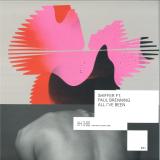
Blazing onto ICONYC for its 21st release, Swiss sonic alchemist Shiffer makes a striking debut with the magnetic All I’ve Been EP. Celebrated for his emotional finesse and innate ability to connect with unexplored corners, Shiffer’s latest creation, including a lucious collaboration with Paul Brenning and capped off by Jonathan Kaspar’s trademark rework, is a tantalizing suite designed to echo in our timeless halls.
The journey begins with Shiffer & Paul Brenning’s opening manifesto, “All I’ve Been”, a track that unfurls with both confidence and caution, as if self-aware from its very first beat. Mechanical whirs and fractured frames give way to low-end swells that drive forward with an unrelenting undertow. Brenning’s unmistakable vocals start to break a warmer ground as they linger in the liminal space between today and tomorrow before slowly growing in gravitas. Suddenly, the piece begins to contort, drawing spellbinding figures as arresting arrangements and melodic flourishes allow for decompression. Imbued with a tantalizing breakdown that amplifies their exquisite use of negative space, “All I’ve Been” is a fascinating and intimate take that feels as expansive as it ever could.
The follow-up, “Urban Legends”, takes a bolder stance. Anchored by heavy drum programming that carves its place with deliberate force, the track is haunted by ghostlike vocal fragments that lend an unsettling, cinematic edge.. Out from the left field, Shiffer deploys undulating synthetics that intertwine with consummate ease as they glide under the spotlight. An alluring act that treads unhurried and unconcerned, “Urban Legends” operates at its own pace, far from the demands of a world lost in the metropolitan hustle, allowing us to bask in a lore of things that might or might never have happened.
Closing the release, ICONYC calls upon Cologne innovator Jonathan Kaspar, who delivers a singular reinterpretation of “All I’ve Been”. Immersed in iridescent textures, Kaspar layers lush, swelling pads over pulsing low frequencies, their ebb and flow punctured by flashes of distortion that spark like electric currents.. Reflective and equally immersive, Jonathan Kaspar’s take on “All I’ve Been” pushes the collaboration into a brash new terrain while retaining the spiritual ethos intact
The Rhythm Vision — the Berlin-based trio of Francesco Passantino, Daniele Ricca, and Francesco Monaco — debuts on Tractorecords with Techno Ballad EP, a vibrant four-tracker blending analog depth with dancefloor functionality.
The A-side kicks off with "Techno Ballad", a hypnotic, emotional techno cut with deep pads and raw drums, followed by "Love Love", an uplifting jam that nods to the golden era of '90s club music while keeping it fresh and modern.
On A2, "Folleti" explores a groovy, warm house atmosphere, born from a spontaneous studio session with guest artist Dahbar — pure jam energy pressed to wax.
The B-side closes with "RADUNO", a bonus track from the now-classic Resilience Groove collective, offering deep rhythms and a rolling analog feel perfect for late-night transitions.
A versatile EP with character — bridging techno and house with soul, groove, and timeless analog aesthetics.
Following the debut album Only Skies Stay Eternal, the Remixes EP takes a bold step forward. These reinterpretations reshape Fille’s introspective sound into more club-oriented territories, signalling a new phase in her sonic evolution.
Rico Casazza opens the release with a standout electro remix - fluid rhythms, a wavy bassline, and catchy vocal hooks push Fille’s sound into elevated, high-energy territory. Alienata follows with a deep, broken-beat techno version that’s both shadowy and hypnotic, crafted for dark rooms and powerful systems.
Sestrica delivers a rolling breakbeat interpretation with a pulsing low end - engineered to move peak-time floors with force and precision. Closing the release, Clouzer’s remix of Thistles blends dreamy textures, trancy momentum, and broken rhythms, adding emotional depth to the club experience.
An exclusive collaboration lands on Drumcode, with Bart Skils linking up with rising German artist A.D.H.S for the divine ‘Can’t Hear You’. Fresh off the excellent ‘Torn Clouds’ single with Weska on Drumcode, Bart Skils is on-point as ever with his production output. The Dutchman has enjoyed a strong summer highlighted by Awakenings and a sunrise set at the iconic Fusion Festival. Meanwhile A.D.H.S is no stranger to Drumcode, having shared slick contributions to past A-Sides compilations including ‘Razor’ and ‘2Step’. He’s otherwise dropped strong releases on Exhale, Spannung and Electric Ballroom. “Can’t Hear You” was born during a Sri Lanka holiday after A.D.H.S injured his back and spent time sketching ideas on his phone. “I started playing around with samples on my phone and found this beautiful vocal and just started sketching some ideas. No pressure, just emotions,” A.D.H.S explains. “Back at the little jungle studio I had set up, I kept working on it – really taking the time to find the right chords to match what I was feeling at that moment. It’s a bit of an unusual track, and I had no intention of ever releasing it. It was just for this moment,” he shares. A.D.H.S begun testing an early version at open airs and festival, later uploading a teaser clip onto Instagram. When Skils heard the track’s unique vocal line, he was hooked. “It was a no-brainer for me to decide to work on the track with Bart, I’d been a big fan of his for years. He brought in his ideas, worked on the mix and arrangement, and together we shaped it into a version that we both absolutely love.
It’s one of those rare tracks that just capture a moment.” Indeed ‘Can’t Hear You’ is an emotional behemoth; one of those rare tracks that sounds genuinely unique and is simultaneously a banger and tear-jerker in one. “When I first heard the clip Michael (A.D.H.S.) shared of ‘Can’t Hear You,’ I was hooked by the infectious vocal. We decided to craft a full collab blending both our signature sounds, and the result is a rolling party weapon that’s become my go-to closing track,” shares Bart Skills.
Following up a string of releases on labels such as Mana, Sun Ark, Orange Milk Records and Abyss, Other People are honoured to present the new album Fobia by Argentinian musician and sound artist aylu, real name Ailin Grad. Inspired in part of Grad's many collaborative projects over the last few years, Fobia sees her collecting and rearranging the music and sounds fostered within these to create an intimate, spiritually charged album that turns personal struggle into collective resistance and resilience. What initially started as a way for Grad to process her own experiences with agora- and claustrophobia, and an attempt to navigate feelings of shame and a perceived demand to keep these feelings bottled up and hidden from the world, she began to realise how mental health struggles are not isolated incidents but part of broader systems of collective suffering and injustice. “It took a long time for me to discover that my issues were part of a system that produces these kinds of symptoms and that it takes a lot of courage to find a way around them. I have the feeling that more and more people suffer from these kind of things in some way or another, and what was at first taught as something you should be silent about and keep private, I discovered that the more you talk about it and share it with people you trust, the more you realise that it’s part of something much bigger.” This tension and constant pull between fear and joy, light and dark, is present throughout the album. From the strained breathing featured in opening track Yodo echoing the suffocating feeling from claustrophobia interspersed with the lighter textures of Obelisco Elysium and Prospero offering up a sense of relief, to the almost cacophonous, immersive soundscapes of El Sol Mal, mirroring the complex, often contradictory emotions when navigating mental health challenges. Fobia invites listeners to move through pain with honesty, finding strength in shared experiences.
After the warm reception of its first VA release, Phosphor is back with a new chapter: darker, more mysterious, and with a solid line-up of artists. The A-side sets the tone with two club-focused tracks made to move the floor, while the B-side drifts into a more hypnotic and introspective territory.
The record opens with “Satisfaction”, a club-driven cut marking Jesse Maas’ first appearance on Phosphor. Heavy basslines, crisp percussion and a vocal hook give it a strong presence on the dancefloor.
Next up, “Unlimited” sees the label’s founders, Blue Vision, reaffirming their style: melancholic yet groovy, nostalgic yet forward-looking. Deep electro wrapped in lush synths and a powerful low end, it’s a track that continues to shape their identity.
On the B-side, Light Blue File steps in with “Consciousness”, a hypnotic journey marked by his signature production. Rolling basslines and intricate breakbeat drums build a tense, immersive energy.
The VA concludes with B.AI delivering a spacious, emotional piece. Floating textures, drifting pads and a subtle pulse create a deep and introspective finale.
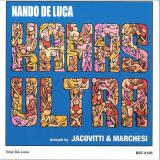
Italian leftfield funk heat reissued on Best Record, with artwork by famous cartoonist Jacovitti! The link between music and art has always been constantly renewed! Even when the union between these profound expressions of the soul manifests itself in an eccentric, surreal way, as happened in 1978 with Kamasultra a downtempo, vaguely funky that only the courageous record producer, talented musician and conductor Aldo Pagani had the courage to release. Nando De Luca, a Milanese composer and acclaimed jazz musician, who 10 years earlier, had arranged Paolo Conte's Azzurro for Adriano Celentano, accepted the strange recording project as a joke, or rather for fun, strongly influenced, like co-author Roberto Rizzo, by Jacovitti' s cheeky and impertinent artwork. Danilo Braca' s restoration and editing work, well supported by talented musicians, reestablishes the balance between music and art. It is also worth his respect for the two original versions of Kamasultra and Kama Kama just extended for the DJ's work in the club. Then the New York-based Italian DJ - known to his friends as Danyb - performs two robust house-style arrangements, evoking memories and emotions, making this reissue unique and rich. Best Record 's main aim is to make us smile and reflect on the talent of Jacovitti, able to assert his own style without indulging in conformism.
Long-standing friend of Stampo and affiliated labels, SJV heads up the third release on the label. The UK producer shines strong with his debut vinyl release—four cuts immersed with emotion but a distinct drive we have grown fond of over the years as he shared tracks with us. Now they will gain their deserved recognition as we release them into the wild, ready for those deeper moments on the dance floor.
Twin Dots is a brand new Music label founded by Alexia & Just1 based in Berlin exploring the interplay between sound & sight. The first release on the Twin Dots is by Moroccan/French DJ & producer Kizoku.
In Arabic, "Suad" suggests happiness, yet these nine tracks navigate more complex emotional terrain – bittersweet foundations supporting quirky, smile-inducing melodies born from contemplative moments.
"Suad" documents a musical journey from sample-heavy constructions toward more synthesized landscapes, paying tribute to the hip-hop Kizoku loves, from its organic roots to electronic contemporary developments. Each composition is a carefully assembled patchwork of sounds, transformed through his distinctly dreamy yet melancholic lens.
The vinyl release features a trippy illustration by Achot, whose dripping style echoes Kizoku's sonic world. Roger brought Achot's artwork to life through analog animation, adding his own experimental touch.
- A1: Émotions (02 38)
- A2: Conditions (02 52)
- A3: La Ride (02 21)
- A4: Pas Facile (02 32)
- A5: Juge (02 28)
- A6: Larguer Les Amarres (02 11)
- A7: Il Y A (04 18)
- B1: Convaincre (02 43)
- B2: Révolution 77 (03 42)
- B3: Folie Douce (02 26)
- B4: Tu N’es Pas Là (Feat Jwles) (02 55)
- B5: Boule À Facettes (02 44)
- B6: Atomic Dislexia (03 38)
Sélavy is Prosper’s debut album. It features 13 tracks that range from fairly traditional French chanson to more techno, rap, rock, punk, and even pop styles. Wordplay and stylistic devices play a central role in the lyrics. Much like his work as a visual artist—where he cuts and assembles elements that seem to have little in common at first glance.
Prosper uses the French language as a tool to express his emotions and reflections on life, with all its sorrows and joys. In doing so, he dissolves the boundaries between poetry, song, and artwork.