LMYE first came to light in 2016 on Funkineven's Apron imprint with the LMYE EP, which quickly became a regular fixture at the London label's infamous parties and bbqs as well as with house DJs worldwide. Since then the pair have been relatively quiet, only appearing once on record, with a release for Bristol's Idle Hands in 2016.
The paucity of their output though belies a busy production schedule behind the scenes. Tracks from those sessions have surfaced occasionally in the sets of DJs like Shanti Celeste and Ben UFO but they have never seen the light of day on a full release until now.
As you would expect from their first releases, the self-titled LP treads a line between classic house and UK garage with a nod here and there to boogie and Latin freestyle, genres which have inspired their production techniques.
From barnstorming new jack house cut 'The Gift' to the classic UK funky sound of 'Hypnotized', LMYE have selected only the most weighty numbers at their disposal, with the aim of offering an LP that will catch the ear of those at every end of the house spectrum.
That's not to say that this is an LP of dancefloor-only cuts though. 'Long Island at Night', which features Bristol's Typesun and Adam Davies live in session, shows the softer, more musical side of LMYE's output. Meanwhile 'XTC Rising' is a uk garage cut with a classic edge which nevertheless still feels modern and up to date in its outlook.
In short, 'LMYE' collects the highlights of a number of years' work, with the aim of finding a home in the boxes of the most discerning and listeners for years to come.
Search:end of date
After a break of 6 years, Atlanta based electronic musician, producer and sound designer Richard Devine returns with a new album 'SortLave' on Venetian Snares' Timesig imprint. Recorded between 2016 and 2017 using Richard's custom built Eurorack modular system and two Nord G2 Modular units, SortLave features 12 tracks of intricate electronica that ranges from abrasive percussive experiments such as 'Revsic' to 'Astra's dazzling juxtaposition of sounds and onto the radiant ambience of the album's closer 'Takara'.
Talking about the album's genesis Devine explains 'I've been using modular synthesizers since I was 17, but have never written complete tracks using these newer systems. This was my first experiment to see if it would be possible and I probably spent about 5 years building up the systems that I used on this album.' 'I wanted the record to sound very different to my previous works which had been more cold, digital, clinical even, and had all been made using computers. The aim here was the complete opposite, to create something that felt very organic, detailed, spacious, big and warm and just as importantly, a record that you could put on and play all the way through that flowed in a seamless way.' This new approach was to prove fruitful and enabled Devine to create music in an entirely new way. 'I really wanted to break free from timeline-based music creation and do things with my hands on the fly,' he explains. 'So the tracks are more like captured snapshot performances where I could experiment and play around with the idea of probability-based sequencing for every patch, string multiple sequencers together that would feed other sequencers to come up with interesting rhythms and melodies. It was really fun coming up with new sounds this way too, I felt like I created several I haven't heard before with this album. Some of the tracks on the album were complete accidents and evolved from something that happened spontaneously. In the end I feel this is one of the best records I have released to date, so I'm very excited to share it with the world.'
Making his debut in 1995, Devine's releases for labels including Schematic, Warp Records and Detroit Underground have established him as one of the leading figures within the electronica community. In addition to his musical productions, Devine has enjoyed a lengthy and successful career in sound design, developing patches for many of the world's leading music technology businesses and working with companies such as Google and Nike.
Continually pushing the boundaries of jazz, funk, electronic music and disco, as expressed through their signature samba swing, the Brazilian mavericks have recreated the energy of those spellbinding seventies' sessions which would launch them into international recognition and confirm their status as one of Brazil's most successful bands. Since the passing of keyboard maestro Jose Roberto Bertrami in 2012, remaining members Ivan Conti and Alex Malheiros have worked tirelessly to keep the spirit of Azymuth alive, and to continue the legacy of Bertrami's genius. But Fênix also marks a new era as the Azymuth trio is complete once again, by special guest keyboardist Kiko Continentino. A hugely talented pianist, composer and arranger, Kiko has worked with the likes of Milton Nascimento, Gilberto Gil and Djavan, and the fresh energy and inspiration he has brought to the group is undeniable. The album also features Brazilian percussion legend Robertinho Silva, one of Brazil's most important and influential players.
From the disco-carnival title track to sunny jazz-funk head-nodder Orange Clouds, through to the deep-space samba Corumbá, Azymuth have drawn upon five decades of consummate craftsmanship - which coupled with their endless desire for experimentation and improvisation - has resulted in a 10-track journey encapsulating the full spectrum of Azymuth's brilliantly coloured expressionist fusion. With all the cosmic energy and masterful musicianship you'd expect from the three-man orchestra, Azymuth rise from the ashes!
Recorded in Rio De Janeiro in May 2016 with producers Daniel Maunick and Joe Davis the official release date is set for December 2016, on super-heavyweight vinyl.
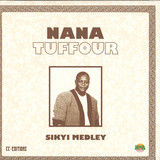
Kalita Records and CC:EDITIONS (a new venture by
Australia's CC:DISCO) jointly announce a 12' EP
comprised of four of Nana Tuffour's greatest electronic
burger highlife tracks, accompanied by interview-based liner
notes. Here, in partnership with Nana, we select two highly
sought-after songs from his 1993 release 'Genesis', namely
'Sikyi Medley' and 'M'Anu Me Ho', and pair them his with two
lesser known yet equally deserving tracks 'Asamando' and
'Jesus' from his 1997 CD-only release 'Highlife Tropicana'.
Hailing from Kumasi, the capital of the Ashanti region in Ghana,
Nana Tuffour is by far one of the most important exponents of
modern highlife music. He studied piano at college and cut his
teeth in the '70s as an organist and vocalist for the incomparable
Kyeremanteng Atwede and Dr. K Gyasi's Noble Kings Band.
Fast forward to 1981 and Ghana was at the apex of its golden age
of music. This era was brought to an abrupt end by political
upheaval when the military took over the government and as a
result a restrictive dusk to dawn curfew was imposed between
1982 and 1984. This resulted in a total obliteration of the country's
night life, and Nana just like many other prominent musicians
including Pat Thomas and George Darko left Ghana for greener
pastures, the most popular destinations being Nigeria and
Germany. The Rheinklang Studio in Düsseldorf run by a young
inimitable German sound engineer Bodo Staiger and another
'exiled' Ghanaian musician Charles Amoah played a crucial role
for those musicians who had chosen Germany. This studio
became the focal point for Ghanaian musicians and the birthplace
of a new sound, now known as 'Burger highlife' - traditional
Ghanaian highlife infused with the more up to date electronic and
disco sounds of the West. It is arguable that Nana has played a
crucial role in Burger highlife and developing the sound of
traditional Ghanaian highlife more widely to what it is today, with
his innovative use of electronic accompaniment pushing its
boundaries to its creative extremes.
It is Burger highlife's transcendence of traditional musical
boundaries that helps make it so accessible to listeners,
appealing not only to Ghanaians back home but now highly
regarded and sought-after by those in the West interested in
more occidental disco and electronic sounds. We hope that you
enjoy the four songs offered here, each chosen to demonstrate
Nana's singular influence on the development of Burger highlife.
- A1: I Wanna Go Where The People Go
- A2: Greetings From Shitsville
- A3: Top Of The World
- A4: Vanilla Radio
- A5: Caffeine Bomb
- B1: O.c.d
- B2: Someone That Won't Let Me Go
- B3: Nita Nitro
- B4: Caprice
- C1: Girlfriend Clothes
- C2: Jonesing For Jones
- C3: Suckerpunch
- C4: Beautiful Thing You
- D1: Weekend '96
- D2: My Baby Is A Headfuck
- D3: Nothing Ever Changes But The Shoes
- D4: Love U Til I Don't
- D5: Don't Worry About Me
1st ever vinyl reissue of The Wildhearts classic 2004 Live double LP 'The Wildhearts Strike Back' originally released
by Gut Records.
The Wildhearts, led by Ginger Wildheart himself, are one of the most enduring and entertaining British rock bands,
still performing today after over 25 years.
Recorded Live in London, Liverpool, Nottingham, Northampton, Leeds, Sheffield, Norwich and Edinburgh, with The
Wildhearts at the top of their game
Pressed on 2 x 180grm heavyweight vinyl, and presented in a replica of the original gatefold sleeve, with the addition
of printed inner bags with lyrics.
Includes material from the full career of the band up to this date, and featuring the hits 'I Wanna Go Where The People
Go', 'Caffeine Bomb', 'Vanilla Radio' and 'Suckerpunch.'
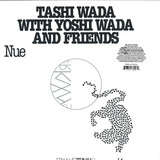
Composer Tashi Wada has performed for years with his father Yoshi Wada—artist, composer, and early member of the Fluxus movement. However, they have rarely appeared together in studio settings. Nue, the fourteenth entry in RVNG Intl.'s intergenerational FRKWYS series, finally brings Tashi and Yoshi, along with an eclectic group of close friends and extended family, together on tape.
Nue draws on aspects of Tashi's background for his widest vision to date—among them the minimalist bagpipe music of Yoshi, who co-composed three of the tracks, the psychoacoustic and perceptual explorations of his mentor, composer James Tenney, and reimagined forms of ancient and devotional music. The album, however, is not a tribute to the past or a recapitulation of familiar sounds. Instead, Nue is an intertwining of people and ideas as a means of growing, of looking inward to move outward, and of looking back to move forward.
To achieve this growth, Tashi assembled a core group of fellow travelers, including Yoshi, composer Julia Holter, producer Cole MGN, and percussionist Corey Fogel, to give life to this multifaceted suite. As an experience, Nue subtly navigates the interactions, intimacy and spaciousness of this group.
The album's title itself is a nod to Tashi's abiding interest in duality and the unknown: nue is a mythological Japanese chimera with the face of a monkey, the legs of a tiger, and a snake for a tail, a composite form, at once disturbing and otherworldly. But, as the composer points out, nue is also French for naked—stripped of complexity, bare and exposed, but also raw and essential.
From the doubling of tones—and the world of harmonic nuances such an action produces—to the rich interplay between individual musicians, all baring their own personalities and experiences through shared performance, Tashi's compositions allow space for these elements to join and grow. The multipartite creature that is an ensemble melds in the simplicity and purity of the music itself.
As explained by Tashi, each part was written with an individual in mind, not simply an instrument. And each individual performer makes their mark, from Holter's vocal performances on the cresting, oceanic 'Mutable Signs' and 'Ondine' with guest vocalists Simone Forti, Jessika Kenney and Laura Steenberge, to Fogel's resonant, precise percussion on 'Bottom of the Sky.' Producer Cole MGN, who has worked extensively with artists like Beck and Ariel Pink, helped to create a world of sound with minimal yet multi-dimensional materials. Like many of its influences, Nue uses deceivingly simple means to create complex, coherent worlds and narratives.
Tashi notes the influence of legendary Brazilian writer Clarice Lispector, whose work looked inward, investigating memory and emotion and dream, to understand the often overwhelming world outside the self. Like Lispector's classic novel Near to the Wild Heart, Nue cleaves these archetypal dualities—world/self, old/new, complex/simple—to create a work that allows them to coalesce into something singular.
As Tashi states in his liner notes: 'My desire was to create something both old and new sounding—ancient and futuristic—and ultimately something of its own world and other. Nue is a vision, an endless night of dreams, and a personal history of sorts, full of joys and demons.'
After a barnstorming live reunion which saw them play to ecstatic audiences across Europe throughout 2017, Britain's giants of electronic music Orbital are back, with new music and an upgrade of the legendary live show that transformed festivals across the world.
First single Tiny Foldable Cities opened the account, an intricate piece of electro-hypnotica, takes their signature sound forward into a new and fascinating phase, heralding their first new album in five years, Monsters Exist.
Throughout 2018 they play a string of high-profile festival dates and headline shows across Europe, featuring new material alongside classics like 'Chime', 'Belfast' and 'Impact'.
This surge of creativity shows how reunited brothers Paul and Phil Hartnoll have rebuilt one of electronic music's best-loved partnerships after Orbital's surprisingly bitter break-up in 2012. They'd been onstage with Stephen Hawking at the Paralympics, in front of the whole world. They'd remixed Madonna. They'd played Glastonbury many times and travelled the world yet were driven apart by music's strange and infamous brother-vs-brother dynamic. But now the brothers have a pact: whatever happens, Orbital does not stop. They've learned to talk and accept each other. As Paul says, "If we were both the same, then it wouldn't be Orbital."
Matthew Dear's Black City Can't Be Found On Any Map. It's A Composite, An Imaginary Metropolis Peopled By Desperate Cases, Lovelorn Souls, And Amoral Motives. Like Most Literary Gothams, Black City Is A Place To Love And Hate, As Seedy As A Nightclub's Back Room And As Seductive As The Promise Of Power. Matthew Dear, The Musician, May Live In New York City, But The Matthew Dear Of Black City Inhabits A Sound-world Unlike Any Other: A Monument To The Shadowy Side Of Urban Life That Bumps And Creaks, Shudders And Wakes Up Screaming In The Middle Of The Night. Black City Is Matthew Dear's Third Album On Ghostly International, And It's His Darkest And Most Engrossing Work To Date.
From The rst Notes Of Album Opener "honey", It's Clear That The Love-obsessed Matthew Dear Of 2007's Asa Breed Has Given Way To A More Existentially Paranoid Entity, As Creeping Tempos Dominate, Cavernous Atmospherics Envelop The Listener, And Strange Distortions Crackle On The Horizon. In Black City, Nothing Is At It Seems: Leadoff Single "little People (black City)" Is A Nine-and-a-half Minute Disco odyssey, subverting its gleaming electronic lead with eerily giddy backing vocals and cryptic, ominous lyrics ("a frozen wasted heart / has died", "love me like a clown"); "You Put a Smell on Me" is a sordid sex romp set to hysterically chattering percussion and a serrated synth line that will set your teeth on edge; "More Surgery" at rst recalls the barely-there Krautrock of Harmonia in its burbling minimalism, until Dear's chanted chorus of "Alter genetics / to make my body glow / I need more surgery / there's so much more to know" sends the track hurtling into a dystopian future.
And yet, for all the foreboding moods on Black City, it's the album's sweeter moments that illustrate Matthew Dear's growing maturity as a songwriter. "Slowdance" is a futuristic lullaby in which Dear articulates a lover's helplessness ("I can't be the one to tell you everything's wrong") over breathy, Arthur Russell-esque cello swishes; the album-closing "Gem" is an achingly simple, reverb-drenched piano ballad that ends with a long, slow fade. Even in Matthew Dear's Black City, there is hope.
The first release on Standards & Practices since the widely acclaimed remixes of Talker's 'Battle Standards' EP (by Surgeon / Regis / Broken English Club) from late last year, 'Live From Frankfurter Strasse' represents the first recorded collaborative effort from Jonathan Krohn (Stave, also 1/2 of Talker) and Jan Grebenstein (Downwards, Horo).
Culled from recording sessions following several successful improvised live performances in San Francisco, Los Angeles, & Berlin, 'Live From Frankfurter Strasse' is 3 tracks of seismically powerful, industrial dub music that represents a new direction for the pair and is unquestionably some of their strongest material to date.
The twitchy, pared-to-the-bone opener 'Alfa' is at once vast and frighteningly claustrophobic, recalling the brutal, clinical precision of Mika Vainio & Ilpo Vaisanen's output, with a brilliantly tricky arrangement that continually pulls the rug out from under the listener - it's vertigo-inducing twists and turns are simultaneously disorienting and endlessly hypnotic. On the flip, the brooding, scorched-earth 'Stirn' & 'Verstarkerstufe' work at a much slower tempo, uncurling like a plume of smoke with a spacious, cerebral quality that occasionally brings to mind early Gescom.
The first release on Standards & Practices since the widely acclaimed remixes of Talker's 'Battle Standards' EP (by Surgeon / Regis / Broken English Club) from late last year, 'Live From Frankfurter Strasse' represents the first recorded collaborative effort from Jonathan Krohn (Stave, also 1/2 of Talker) and Jan Grebenstein (Downwards, Horo).
Culled from recording sessions following several successful improvised live performances in San Francisco, Los Angeles, & Berlin, 'Live From Frankfurter Strasse' is 3 tracks of seismically powerful, industrial dub music that represents a new direction for the pair and is unquestionably some of their strongest material to date.
The twitchy, pared-to-the-bone opener 'Alfa' is at once vast and frighteningly claustrophobic, recalling the brutal, clinical precision of Mika Vainio & Ilpo Vaisanen's output, with a brilliantly tricky arrangement that continually pulls the rug out from under the listener - it's vertigo-inducing twists and turns are simultaneously disorienting and endlessly hypnotic. On the flip, the brooding, scorched-earth 'Stirn' & 'Verstarkerstufe' work at a much slower tempo, uncurling like a plume of smoke with a spacious, cerebral quality that occasionally brings to mind early Gescom.
- A1: Emad Youssef - Al Bareedo Ana (The One I Love)
- A2: Abdel El Aziz Al Mubarak - Ma Kunta Aarif Yarait (I Wish I Had Known)
- B1: Kamal Tarbas - Min Ozzalna Seebak Seeb (Forget Those That Divide Us)
- B2: Madjzoub Ounsa - Arraid Arraid Ya Ahal (Love, Love Family)
- B3: Khojali Osman - Malo Law Safeetna Inta (What If You Resolve What's Between Us)
- C1: Zaidan Ibrahim - Ma Hammak Azabna (You Don't Care About My Suffering) (Live)
- C2: Saied Khalifa - Igd Allooli (The Pearl Necklace)
- C3: Taj Makki - Ma Aarfeen Nagool Shino! (We Don't Know What To Say!)
- D1: Hanan Bulu Bulu - Alamy Wa Shagiya (My Pain And Suffering) (Live)
- D2: Abdelmoniem Ekhaldi - Droob A Shoag (Paths To Love)
- D3: Samira Dunia - Galbi La Tahwa Tani (My Heart, Don't Fall In Love Again)
- E1: Mohammed Wardi - Al Sourah (The Photo)
- E2: Abdullah Abdelkader - Al Zaman Zamanak (It's Your Time)
- F1: Mustafa Modawi & Ibrahim El Hassan - Al Wilaid Al Daif (The Youth Who Came As A Guest)
- F2: Ibrahim El Kashif - Elhabeeb Wain (Where Is My Sweetheart)
- F3: Mohammed Wardi - Al Mursal (The Messenger)
In Sudan, the political and cultural are inseparable. In 1989, a coup brought a hardline religious government to power. Music was violently condemned. Many musicians and artists were persecuted, tortured, forced to flee into exile — and even murdered, ending one of the most beloved music eras in all of Africa and largely denying Sudan's gifted instrumentalists, singers, and poets, from strutting their creative heritage on the global stage.
What came before in a special era that protected and promoted the arts was one of the richest music scenes anywhere in the world. Although Sudanese styles are endlessly diverse, this compilation celebrates the golden sound of the capital, Khartoum. Each chapter of the cosmopolitan city's tumultuous musical story is covered through 16 tracks: from the hypnotic violin and accordion-driven orchestral music of the 1970s that captured the ears and hearts of Africa and the Arabic-speaking world, to the synthesizer and drum machine music of the 1980s, and the music produced in exile in the 1990s. The deep kicks of tum tum and Nubian rhythms keep the sound infectious.
Sudan of old had music everywhere: roving sound systems and ubiquitous bands and orchestras kept Khartoum's sharply dressed youth on their feet. Live music was integral to cultural life, producing a catalog of concert recordings. In small arenas and large outdoor venues, musical royalty of the day built Khartoum's reputation as ground zero for innovation and technique that inspired a continent.
Musicians in Ethiopia and Somalia frequently point to Sudan's biggest golden era stars as idols. Mention Mohammed Wardi — a legendary Sudanese singer and activist akin to Fela Kuti in stature and impact in his music and politics — and they often look to the heavens. A popular story is of one man from Mali who walked for three months across the Sahel to Sudan because the father of the woman he wanted to marry would only allow it if he got him a signed cassette from Wardi himself. Saied Khalifa is said to be the one of the few singers to make Ethiopian emperor Haile Selassie smile.
Such is the stature of Sudanese singers and the reputation of Sudanese music, particularly in the "Sudanic Belt," a cultural zone that stretches from Djibouti all the way west to Mauritania, covering much of the Sahara and the Sahel, lands where Sudanese artists are household names and Sudanese poems are regularly used as lyrics until today to produce the latest hits. Sudanese cassettes often sold more in Cameroon and Nigeria than at home.
But years of anti-music sentiment have made recordings in Sudan difficult to source. Ostinato's team traveled to Ethiopia, Somalia, Djibouti, and Egypt in search of the timeless cultural artifacts that hold the story of one of Africa's most mesmerizing cultures. That these cassette tape and vinyl recordings were mainly found in Sudan's neighbors is a testament to Sudanese music's widespread appeal.
With our Sudanese partner and co-compiler Tamador Sheikh Eldin Gibreel, a once famous poet and actress in '70s Khartoum, Ostinato's fifth album, following our Grammy-nominated "Sweet As Broken Dates," revives the enchanting harmonies, haunting melodies, and relentless rhythms of Sudan's brightest years, fully restored, remastered and packaged luxuriously in a triple LP gatefold and double CD bookcase to match the regal repute of Sudanese music.
A 20,000-word liner note booklet gives voice to the singers silenced by an oppressive regime.
Take a sail down the Blue and White Nile as they pass through Khartoum, carrying with them an ancient history and a never-ending stream of poems and songs. It takes two Niles to sing a melody.
Repress!
First Word Records is very proud to present the debut album by Children of Zeus - 'Travel Light'. It's been a long road leading to this album for Tyler Daley and Konny Kon.
They first embarked on their expedition into the music game two decades back - Tyler entered the scene as a songwriter, producer and vocalist, originally under the moniker Hoodman, whilst Konny began MCing, DJing and beat-making for hip hop crews The Microdisiacs and Broke'n'£nglish, along with DRS & Strategy.
To date, Children of Zeus have released three sell-out singles on First Word ('Still Standing', 'I Can't Wait' and 'Slow Down') and a compilation EP comprised of tracks made by the duo over the last decade entitled 'The Story So Far...'. Children of Zeus are finally at the stage where they are releasing their debut album proper, the over-riding ethos of which is about keeping their eyes on the road ahead, whilst shedding the baggage they've accumulated over the years - 'Travel Light'.
Features mainly come from Manny family, ( K S R ), LayFullStop, Metrodome (Levelz) and former Broke 'n' £nglish spar DRS. Guest production comes in the form of Switzerland's Sebb Bash, Nottingham's Juga-Naut, and London's Beat Butcha, and there's your favourite DJ's favourite DJ,
Mr Thing, slicing up the turntables on two tracks too. There's a few extra special ingredients on this album, along with their trademark sub-heavy, rhodes-laden hip hop soul hybrid. Reggae music has always been an integral piece of the CoZ sound-system ethic, so we see Tyler putting on his lover's rock hat for 'Hard Work', and they invite soul queen Terri Walker to join them on the fierce 'Sling Shot Riddim', while the album closes with the epic K15-produced jazz-bruk opus, 'Vibrations', on which Konny breaks it down quite simply: "high frequency means that you travel light, so get lifted yo, we'll live gifted".
Long as the journey has been, the time for looking back is over. This is about the present and future of Children of Zeus. A shining light in Manchester's now-school, and rightly heralded by many as the best new act to emerge in British soul music in the past decade. Aside from the above features, this project is written, performed and produced entirely by Tyler and Konny.
Since the crew first took flight, the end destination has never changed, the aim remains the same - to create timeless music, in their own unique style, without compromise, irrespective of industry and life distractions. The moral being this - travel light.
While notorious in the Chicago streets, RP Boo's music had been unfairly confined to a few white labels and self-released mixtapes until his two archival Planet Mu LPs Legacy and Fingers, Bank Pads & Shoe Prints introduced broader audiences to his sonic history, some of it fifteen years after it was first recorded. I'll Tell You What! is the next step in his mission, and the first time he's released an album of contemporary material. The title, a favorite maxim of his, welcomes listeners to sit down and let him narrate in the unforgettable abstract fashion he's known for. He explores familiar motifs such as the cosmos, movement, and opposition, using densely interwoven vocals, unpredictable percussion, and evil humming bass as his tools of choice. RP Boo's music doesn't follow the traditional rules that most compositions do. Layering decades of samples from yesteryear to the present over his commanding vocal cut-ups, he transports the listener to their own realm of the space-time continuum. The main difference between this record and his prior work is now we hear Boo tell new stories about preaching his gospel outside of Chicago, from his experiences frantically touring the globe over the last five years. The words 'things ain't been the same / since I hopped the plane' are repeated on top of engine sounds and rumbling bass on Flight 1235, a glorious paean to his new jet-setting adventures. The spirit of competition runs through RP's veins as much as blood does, something you can't unlearn when you've been making music for Chicago's footwork circuit as long as he has. The local culture has served as a shelter from the violence that has plagued the city, pitting kids against each other with their feet rather than weapons. On At War Boo reminds us 'we are at war in the streets', a double meaning to both the mayhem in this world and the sweetness of rivalry on the dance floor. Another battle-themed track Cloudy Back Yard, one of the spacier moments on this album, is an abstract on the state of footwork's home. Chicago remains the backyard of this artform even though it's left the porch and traveled to new neighborhoods worldwide. Back at home though, competition among the DJs and dancers continues, and as the man himself says, 'with all this hate, there's smoke, and it's cloudy'. I'll Tell You What! throws more than a few curveballs into the mix. Footwork has always borrowed from hip-hop, and many vocal tracks are almost condensed raps, dating back to the street chants pioneered on Dance Mania Records in the ghetto house days. On Bounty, Boo grabs the mic and brazenly lays down a full-on verse of terror over a thick atmosphere of his signature sweltering low-end and erratic Roland R-70 patterns. While he's most famous for his confrontational battle anthems, his melancholy moments are just as powerful. You get the best of both of those worlds on U-Don't No, with soulful samples finishing his own cocky sentences, one of the most elegant tracks RP has made to date. Deep Sole closes the record out, with the words 'It's always beautiful at the end' looping over waves of hypnotic synthesis, confidently looking death straight in the eyes.
One of our humble imprint's closest allies and a longstanding pillar of Philadelphia's electronic music community, Billy Werner has been a constant presence in the booth at parties throughout the Northeast Corridor since 1998. We debuted his M//R alias in 2014 with the 'Gathering Response Data' 12" . Since he's been busy bringing the grit to points beyond the City of Brotherly Love, putting in work for the likes of DetailsSound, L.I.E.S. and JackDept. Most recently, he turned out a remix of Karen Gwyer's 'Why Does Your Father Look So Nervous' for the 'Rembo' remixes on Don't Be Afraid, as well as another for Chaperone's 'Grit Neglect' on the aforementioned 'SnapbackBalaclava'EP.
Written, recorded, and mixed over a period of 15 months,'Among The Methods' is in no small part a reflection of the affinities and sensibilities Billy holds as both selector and producer. Referencing a variety of influences from jazz to dub to electro, the album's allure stems from his deft ability to recontextualize those genres' disparate aspects into a familiar-yet fiercely idiosyncratic-musical context.The end result is at once wildly fractured and precision-focused as 'Among the Methods' finds its own seductive rhythm within a matrix of dub echoes and modulated low-end. It's heady ground,to be sure;as well as the most declarative aesthetic statement fromM//R to date.
Presented without further comment. The music is the message
s
- A1: Hold Your Colour (Noisia Remix)
- A2: Blood Sugar (Knife Party Remix)
- A3: 9000 Miles (Eelke Kleijn Remix)
- B1: The Island, Pt. 1 (Dawn) (Skrillex Remix)
- B2: Propane Nightmares (Grabbitz Remix)
- B3: Crush (Devin Townsend Remix)
- C1: Tarantula (Icarus Remix)
- C2: Witchcraft (Pegboard Nerds Remix)
- C3: Watercolour (Matrix & Futurebound Remix)
- C4: The Island, Pt. 1 (Dawn) (An21 Remix)
- D1: Still Grey (Dj Seinfeld Remix)
- D2: Vault (Moby Remix)
- D3: Streamline (Attlas Remix)
One of the world's most iconic drum & bass acts, Pendulum have announced their return for 2018 with a brand new album and brand new live shows. 'The Reworks' is a project unlike any
other released by the band before, and marks the end of their seven year hiatus, officially launching on 16th March.
To mark their return, the band have announced their first headline show since 2011 at London's unique new space, Printworks . The show sold out in under an hour and will be both an auditory and visual spectacle for fans.
Also announced is Pendulum's return to one of the UK's biggest events - Reading and Leeds Festival . Headlining the BBC Radio 1 stage - the same slot they graced the last time they played in 2010, the shows mark a welcome return for the band in the UK.
The news will undoubtedly be well received by Pendulum 's legions of fans, with the band having hinted at a comeback by returning to the live stage last year, headlining the UK's South
West Four and Nass Festival , and confirming for this years Snowbombing festival in Austria.
For 'The Reworks' , the internationally-renowned band have tapped some of the most innovative talents from over the past few years to deliver dynamic and refreshing interpretations of their
biggest hits and some of their personal favourites. Friends and collaborators Skrillex , Icarus ,Knife Party and Matrix & Futurebound take their turn on this who's who of electronic music
royalty, whilst Noisia 's explosive cut of the now-iconic track 'Hold Your Colour' will be available with the album preorder from the 16th March.
'The Reworks' album will be available in both CD and vinyl formats from the 29th June.
This exciting announcement marks the beginning of a new era for Pendulum , who have long been considered one of electronic music's most important and pioneering acts, famed for their
no-holds-barred live shows. With more huge festival dates TBA across the summer and new originals on the horizon, 2018 marks the an exciting chapter in Pendulum's already lengthy career.
Noisia' s remix of ' Hold your Colour' , the first single to be taken from Pendulum 's 'The Reworks' album, is set for release on 16th March alongside the preorder, with the full album set to drop on 29th June.
The new Release on Shaddock Records is more than just dance tracks, 2 songs that come with full-blown vocals, a Re-edition of classic Latin Freestyle by Jorge Ojeda ft. Hilda Mariee with an up-to-date cover version by Mr. & Mrs. Jonson
The original version is a freestyle slammer coming straight from Miami the capital of Freestyle Music.
Driven by hard electro beats and Ojeda's signature Miami Bass with Latin Hip Hop/ Freestyle Dance grooves, "Betrayal" when initially released on Ojeda's Destune records became a club and street phenomenon in Miami. It would be one of the first of many productions between Jorge Ojeda and Hilda Mariee' and their project Teaz II Pleaz.
Now "Betrayal" catches new life on Shaddock Records and continues to tell it's story.
On the 2nd A side Mr. & Mrs.Jonson aka Mathew Jonson and Isis Kuaygarond created an incredible cover version keeping the electro and freestyle spirit but taking arrangement and production to the next level and thus into 2018.
Mathew and Isis, after their recent marriage have spent endless hours in the studio and with Betrayal - the couple's very 1st release - they are giving us a first insight into their joint musical vision.
Raga Yaman
1) Alap
2) Jod
3) Jhala
4) Gat (Composition in Chautal)
Zia Mohiuddin Dagar : rudra veena
Manik Munde : pakhawaj
Gayathri Rajapur & Annie Penta : tanpuras
Recorded by unknown at the University of Washington, HUB Auditorium, Seattle, Washington 15 March 1986 , concert co-sponsored by the UW Ethnomusicology Division and Ragamala.
Original digitally processed audio recording made with Panasonic PV-9000 VCR, Sony PCM-F1, PZM mics. Mastered & Cut by Rashad Becker at Dubplates & Mastering 1117 & 0318.
Liner notes by Renaud Brizard, Stephen O'Malley & Ian Christe.
Front and back cover photos by Niranjan B. Benegal, Seattle Center Folklife Festival 1979. Elizabeth Reeke & Annie Penta on tanpuras.
Inner gatefold photography by Niranjan B. Benegal & Ira Landgarten.
Around ten years ago, deep into a cozy and hazy night following a concert with my sound brothers Daniel O'Sullivan and Kristoffer Rygg in London (as Æthenor), they graciously introduced me to a recording of rudra veena (a kind of noble deeper bass relative to the sitar, in a way) as performed by dhrupad master Zia Mohiuddin Dagar.
Dhrupad, for those who do not know, is a branch of Hindustani classical music said to "show the raga in its clearest and purest form". It's pacing concentrates heavily on the slow, contemplative alap section and works with specific microtonal gestures and deep characteristics of resonance ... in short I was hooked on this new (to me) and ancient form of music from the first listen, and feel that a more or less continual listening & reviewing of Zia Mohiuddin Dagar's recordings in the years that followed have influenced my own approach to music quite heavily (if, albeit, indirectly).
In early 2015 I was able to make contact with Zia Mohiuddin Dagar's son Bahauddin and some of his American students/disciples, primarily Jeff Lewis. Over time we developed a friendly and educational exchange, access a massive archive of recordings and developed these two paired titles for my label. It's been a long path to arrive at actually releasing them but also probably in many ways one of the most significant releases I've worked on. And I'm proud to be able to reveal these to date unreleased archival recordings of one of the masters of dhrupad, Z. M. Dagar, to the public for the first time.
Zia Mohiuddin Dagar was the nineteenth generation in a family tradition known as Dagar gharana, a rich lineage which continued and performed the musical form of dhrupad (Bahauddin Dagar continues the lineage as a master rudra veena dhrupad player of note today). Initially, dhrupad was a rigorous, austere, devotional genre that was sung in Hindu temples. But between the 16th and the 18th centuries, it became the preeminent genre in royal courts in North and Central India, and the Dagar gharana developed and continued publicly following the eventual loss of court patronage for dhrupad in the 19th century. The French ethnomusicologist Renaud Brizard covers the story of Zia Mohiuddin Dagar's life and teaching (a long story also in Seattle, my hometown!), the Dagar family and gharana, the rudra veena and more topics in an extensive set of liner notes in this release.
Raga Yaman was recorded at a public concert in Seattle at the HUB Ballroom at the University of Washington in March 1986 (the week after the accompanying release SOMA028 Ragas Abhogi & Vardhani was recorded) at the end of his last tour of the United States. Yaman was a special raga for Zia Mohiuddin Dagar, one of his signature raags. For centuries, Yaman has been considered as one of the most fundamental ragas in Hindustani music and is one of the first ragas which is taught to students. A deep knowledge of Yaman gives a key for understanding many other ragas. It's filled with tranquility, contemplation, pathos and spiritual yearning. .
-Stephen O'Malley, March 2018, Paris, France
Mgun, Or Manuel Gonzales To His Friends, Has Long Been A Fixture Artist For Dba. Since Making His Uk Debut On The Label In 2012, Having Already Featured On Detroit's Celebrated Wild Oats Imprint, He Has Smoothly Yet Slowly Progressed Through The Presses Of Fellow Dance Music Tastemakers Third Ear Recordings And Kiev's Wicked Bass. Following 2016's Warmly Received 'gentium', 'axiom' Finds Manuel Gonzales Back On Dba With An Index Of Offbeat Jams That Couldn't Have Emerged From The Mind Or Studio Of Any Other Producer.
Once More Envisioned And Engineered In His Native City Of Detroit, The Record Finds Mgun In More Auspicious And Domestic Circumstances. Now Firmly A Father And A Homeowner, 'axiom' Allows Gonzales To Flex His Party Muscle, While Further Pushing The Elastic Boundaries Of His Notoriously Unpredictable And Brilliantly Raw Production Style. Across Twelve Tracks, Listeners Are Offered An Unpredictable Trip Into The Restlessly Experimental Snatches Of Studio Time Gonzales Is Afforded Away From His Day Job At The Legendary People's Records Store. It's Here That Gonzales Absorbs Endless Releases And Rediscoveries Passing Through The Stock, Trading The Occasional Tip With Some Of Detroit's Best Known Producers.
Beginning With The Off-kilter Funk Of 'you Inside Me', 'axiom' Expertly Toes The Line Between Full-bodied, Soulful Club Weapons ('you're Never Home', 'nichrome'), And The Sort Of Lo-fi Tinged Jams That Enable Gonzales's Unusual Weirder Hooks And Rhythms To Extend Into Something Altogether More Hypnotic And Psychedelic ('kartwheel', 'sil').
There Are New Sounds And Approaches Throughout. Centrepiece Track 'see It For Myself' Finds Gonzales On Vocal Duties For The First Time, And The Dystopian Tinted 'vap' Finds His Sound Expanding Into Weightless, Dreamlike Electro. And While Certain Tracks Date Back Years, Having Slowly Matured To Full Funk, Others, Such As The Gloriously Unhinged '359' Were Rapidly Produced To Capture The Inspiring Energy Of A Late-night Glaswegian Rave.
Simply Put, 'axiom' Does The Work Of Representing Mgun At His Musical Best, An Analogue Celebration Of Pure Party Potential.
Grammy-nominated Ostinato Records presents "Abu Obaida Hassan & His Tambour: The Shaigiya Sound of Sudan" in a gatefold LP packaging with vintage photos and authentic Sudanese designs.
A complex blend of Arab melodies, Nubian rhythms, and signature Sudanese call and response by a legend of Shaigiya music from nothern Sudan.
Abu Obaida Hassan and the wonders of his five-string tambour remained largely a mystery. In the early 2000's, a prominent Sudanese newspaper declared him dead. Internet forums confirmed his passing. Many in Khartoum, Sudan's capital, said he had indeed died.
But rumors that he was still alive persisted.
What was always certain is Abu Obaida Hassan's mercurial talent.
His command of a modified tambour, backed by a chorus and two drummers, unleashed swirling melodies alongside complex Nubian rhythms and hypnotic Sudanese call and response. His bands roster constantly changed, but he remained at the helm, playing for sold out shows in cities across the country and capturing the dancefloors and youth of 1970's and 80's Sudan. This is a rich, raw example of the human experience with sound from northern Sudan, an ancient part of the world, and the birthplace of civilization. Music like this isn't mastered overnight.
The Ostinato team first came across Abu Obaida's recordings in 2011, finding scratchy bits and pieces along the years. We traveled to Sudan in 2016 to find the clues to piece together the Abu Obaida Hassan puzzle. Through some extensive detective work with our man in Khartoum, Ahmed Asysouti, and a generous dose of good fortune, we tracked Abu Obaida to the rural outskirts of Omdurman, the old capital just across the White Nile from Khartoum. Age has taken its toll, but he remains full of life and music, ready to jointly curate a selection of his eight best cuts. He has written over 100 songs, only 30 were recorded.
Abu Obaida comes from the Shaigiya people, whose culture is spread around the ancient city of Merowe, home of traditional Nubian culture, where pyramids older than those in Egypt still stand. They trace their entire lineage to one man, Shaig, who migrated from the Arabian peninsula in the 15th century. An endlessly rhythmic syncretism between Arab and Nubian styles, Abu Obaida's Shaigiya music was an in demand party affair in an era when a vibrant nightlife and roving sound systems were a staple of life in Sudan.
It was music for a modern era, and Abu Obaida, at just 19, rebelliously abandoned traditional Shaigiya music traditions, pioneering a new sound by adding an extra string to his tambour and electrifying an instrument adored across East Africa. The result was complexity in simplicity and a hyper-talented artist who mirrors the story of Sudan's highs and lows, from the leading tambour maestro of the hour to such obscurity on the fringes that he was believed dead. "They killed me!", he likes to joke.
Abu Obaida Hassan, his music and the musical traditions of the Shaigiya remain alive and kicking. A culmination of a 7-year journey — from first hearing Abu Obaida's distinct sound, found only in Sudan, to finding the man — has produced the first global release of Shaigiya music and is just the beginning of Ostinato's immersion into Sudan, with a full compilation of the lavish musical history of one the most diverse countries in Africa due later this year. All brought to you by the Grammy-nominated team behind last year's "Sweet As Broken Dates."
3x12"
Listening back to Roman Poncet's first releases on Figure just a couple years ago, they already hinted at the producer's keen technical abilities and a knack for rich texturing, resulting in tracks that were
both carried by force and form. What he delivers now is an impressively mature debut album, ripe with personal creative realization.
On Gypsophila the French producer uses the extended format to slowly shape up a scenery of epic proportions where surprise and constant change lurk around every corner. A certain sense of
progression and evolution runs throughout Poncet's music; it invariably keeps one locked in, no matter for the opening drones of Do Not or the patiently growing Thick Vegetation, which fuses tribal
percussion and choral chants to showcase another of this LP's key features: its dense soundscape, which at once feels inherently electronic yet deeply organic, translating the abstract futuristic themes
of techno into something jam-packed and heady albeit steadily grounded - a listening experience that is as dreamy as it remains tangible.
This holds true for the highly atmospheric synth-lead pieces, such as the cinematic intro Hello You, the elevating arp-ride Epreuve or the suspended celestial groove of Atlas. But equally goes for the floorfocused
rhythms, like relentless steam engine-workout Piege or mid-album mind-trip In Aeternam. Adding even more variety and depth to the mix, the tidal title track is given its own side to explore the
sheer endless expanses of dub...
Bundling the complete range of his influences, Gypsophila marks the pinnacle of Roman Poncet's work to date. Covering a spectrum this broad in his very own way, the album proves as relevant for the
current club scene as it will be for repeated return visits.