The impact, influence, and importance of Run-D.M.C.'s self-titled debut – the album that invented hardcore hip-hop and bridged rap, rock, and funk in then-unparalleled ways – cannot be measured. The first full-length record released by Profile Records, the 1984 set permanently changed the sound of music, broadcast streetwise wisdom to every corner of the country, and made the notion of a one-man band a distinct reality. Bolstered by an incendiary blend of staccato deliveries, stark beats, aggressive exchanges, evocative hooks, and socially conscious messages, Run-D.M.C. still hits listeners in the jaw with the same intensity it did nearly 40 years ago when it could be heard booming from ghetto blasters carried around city blocks nationwide.
Sourced from the original master tapes, pressed on MoFi SuperVinyl, and strictly limited to 3,000 numbered copies, Mobile Fidelity's 180g SuperVinyl 33RPM LP is the definitive-sounding version of the groundbreaking work cited by Rolling Stone as the 378th Greatest Album of All Time. This reissue also represents the first time this gold-certified effort has been presented in audiophile quality. Benefitting from the ultra-low noise floor, superb groove definition, and dead-quiet surfaces of SuperVinyl, Run-D.M.C. now plays with a clarity, immediacy, punchiness, and directness worthy of the artistry, urgency, and intellect of the trio's material.
The brilliance of Russell Simmons and Larry Smith's production comes into view as if the music is being broadcast on a giant system in a small club — only more focused, lively, and unlimited. Free of dynamic constraints and fatiguing harshness, this LP invites you to turn up the volume and experience the raw, rough, invigorating songs that changed the look, sound, and feel of hip-hop overnight. Think the trio’s sparse framework of drum machines, tag-team rhymes, keyboard accents, and turntable scratches is stuck in the mid-80s? Spin MoFi’s SuperVinyl LP and gain new appreciation for the music, messages, and production on display on Run-D.M.C.
Recorded in the wake of two successful and pioneering singles, both included on the album, Run-D.M.C. effectively took a sheet of coarse-grit sandpaper to the polish, sheen, and linear presentation of all the hip-hop that preceded it. Stripped to bare-bones foundations, the songs grab your attention and shake you by the collar with a combination of industrial-leaning rhythms, staggered deliveries, dance drama, and hard, minimalist percussion. Then there are the lyrics.
The LP broadcasts a smart mix of boots-on-the-ground reports, uplifting advice, and then-nascent b-boy culture. In one fell swoop, its narratives and music rendered the scene’s proclivity toward glamor and softness passé. Run-D.M.C.’s tough, cool-minded fashion sense showed the trio walked its talk and gave fans — particularly those living in long-ignored urban areas — heroes which with they could identify. Kangol hats, black jeans, leather jackets, Adidas sneaks, and gold chains were the new currency.
In every regard, Run-D.M.C. signifies the birth of modern hip-hop. Never more obviously than on the groundbreaking “Rock Box,” where rap and rock were first fused. As the first hip-hop video to receive regular rotation on MTV, the track eviscerated racial and social boundaries, awakened musicians and listeners to new possibilities, and redefined both popular music and, ultimately, popular culture. As the Roots’ Questlove has stated, it “ knocked down many obstacles, enabling hip-hop to become the new gospel."
Such teaching includes the real-world scripture of “Hard Times,” utopian hopefulness of “Wake Up,” and observational truths of “It’s Like That.” Released as the group’s debut single well before its eponymous album, the latter tune established themes and outlooks Run-D.M.C. would embrace during its career. Namely, the keen awareness of various prejudices, economic ills, and disruptive violence as well as the knowledge that education, self-motivation, and hard work were the ways to escape disadvantages and disillusionment.
Inspired and inspirational, the song reflects the spirit and shrewdness that courses throughout Run-D.M.C. That includes a detailed account of the trio’s not-so secret weapon (“Jam-Master Jay”), purpose statement (“Hollis Crew (Krush-Groove 2)”), and a revolutionary hybrid autobiographical narrative-dis track (“Sucker M.C.’s (Krush-Groove 1)”) widely regarded as one of the best hip-hop songs ever created. The same can be said for every moment on Run-D.M.C.
MoFi SuperVinyl
Developed by NEOTECH and RTI, MoFi SuperVinyl is the most exacting-to-specification vinyl compound ever devised. Analog lovers have never seen (or heard) anything like it. Extraordinarily expensive and extremely painstaking to produce, the special proprietary compound addresses two specific areas of improvement: noise floor reduction and enhanced groove definition. The vinyl composition features a new carbonless dye (hold the disc up to the light and see) and produces the world's quietest surfaces. This high-definition formula also allows for the creation of cleaner grooves that are virtually indistinguishable from the original lacquer. MoFi SuperVinyl provides the closest approximation of what the label's engineers hear in the mastering lab.
Suche:engine one
repress !
“Tubby did three original dub albums, ‘Dub From The Roots’. ‘The Roots of Dub’ and the third is ‘Brass Rockers’ with Tommy McCook ‘pon the flying cymbals. Where he mixed it with the horn going in and out in a dub way and one named ‘Shalom Dub’ you can call Tubby’s too because he mixed the versions as they were off forty fives’’
Bunny ‘Striker‘ Lee
King Tubby and Producer Bunny ‘Striker’ Lee are intertwined in the birth of Dub Music. After discovering a mistake that made a ‘serious joke’ ( more of which later...) they went on to release the first pressings of this new musical genre namely ‘Dub Music’. Tubby’s vast knowledge of electronics and Bunny’s vast catalogue of rhythms would lay the foundations of what today is taken as a standard... the Remix / Version cuts to an existing vocal tune.
Osbourne ‘King Tubby’ Ruddock was born in Kingston, Jamaica on 28th January 1941 and grew up in the High Holborn Street area of downtown Kingston. He studied electronics at Kingston’s National Technical College and also on two correspondence courses from the U.S.A... When he had qualified Tubby began repairing radios and other electrical appliances in a shack in the back yard of his mother’s home. His work in the early days included winding transformers and building amplifiers for Kingston’s Sound Systems. Tubby built his first Sound System in 1957 playing jazz and Rhythm & Blues at local weddings and birthday parties. His reputation as a man who knew and understood both electronics and music grew steadily and as the sixties drew to a close. Tubby purchased his own basic two track equipment. He installed this alongside his dub cutting machine, a home made mixing console and his impressive collection of Jazz albums in the back bedroom of his home at 18 Dromilly Avenue which he christened his music room.
Tubby and Striker were at Treasure Isle Studio’s one day while Ruddy from Spanish Town was working with the engineer Byron Smith....
“Tubby and myself was talking when Ruddy was cutting some dub but Smithy (engineer) made a mistake through we were talking and forgot to put in the voice. It was two track recording in those days. Ruddy said ‘No Man! Make it stay! and so they cut the rhythm. When I went over to Ruddy’s that Saturday night a dance was in progress and when they played the vocal to the tune... then he said we’re going to play ‘Part Two’. They never called it ‘Version’..and then he played the rhythm track. The song was a catchy song and everybody started to sing along and the deejay started to toast so everything went down well. On Monday morning I went up and I said ‘Tubbs the mistake we made was a serious joke.It mash up Spanish Town! The people went wild. So you have to start to do that now ‘cause when the man put on the ‘Part Two’ everyone start singing this song. It played about twenty times. I said you try Tubbs!’...Well the next Saturday night now when Tubby strung up down the farm U Roy said he’s going to play ‘Part Two’ but Tubby did it different now. He started with the voice then dropped it out and let the rhythm run and then he brought in the voice in the middle and from there Tubby started to get really popular.’’
Bunny ‘Striker’ Lee
Dynamic Sounds upgraded to sixteen track recording in 1972 and Tubby purchased, again with the help of a deal brokered by Bunny Lee. The old four track equipment and the MCI console from their Studio B. The four tracks now gave him far wider scope to work with and he began to create a new musical form where the bass and drum parts were brought up while the faders allowed Tubby to ease the vocal and rhythm in and out of the mix. It was only a matter of time before Tubby’s dub plate experiments began to make it on to vinyl and the first ever long playing King Tubby releases would feature a collection of his mixes to a selection of Strikers rhythms. So please sit back and enjoy this historic set of sounds. Lovingly restored and with a few extra gems added to the CD Editions. These releases were the first to carry the name of King Tubby and the first to credit the great musicians that contributed so much to the rhythms that made these albums possible.
2024 REPRESS
Fourth corner. Physically, it's where four states in the U.S. come together at one singular point. Symbolically, it's where the four great rivers in China come together as one. Or, it could be the cycle of life during the four seasons of the year. For Trixie Whitley, it's a metaphor for trying to find balance and belonging from the songs that make up her scintillating debut album, Fourth Corner.
Whitley burst into public consciousness in 2011 as the lead singer of Black Dub, super-producer Daniel Lanois' (U2, Bob Dylan) project, blowing people away with a voice and presence beyond her now-25 years.
And it's that voice: an emotional, blues-drenched instrument that ranges from a lilting slap to a knock-you-backwards uppercut. On Fourth Corner, Whitley explores the range of human emotion in another set of four: utter love, total rage, unadulterated happiness, and crippling loneliness. "It's those elements of life I keep coming back to," she says. "Both as a person and musically as well."
Recorded in New York with producer/keyboardist Thomas Bartlett (aka Doveman, who's also worked with Glen Hansard, Antony and the Johnsons, Grizzly Bear and the National) engineer Pat Dillett (David Byrne, St. Vincent, Mary J. Blige), and string arrangements by Rob Moose (Antony, Bon Iver), aching songs like "Need Your Love" have Whitley working from a spare beginning that explodes into a blossom dripping with pleading vocals and delicate piano. On tracks like the sassy "Irene" and the sinister "Hotel No Name," Whitley lays down a snarling guitar line on top of scuzzy beats while her voice veers from defiant to remorseful.
It's a tantalizing mix of sounds that can come only from someone who says: "I'm from everywhere but have never felt like I belong." Whitley lived a nomadic life: born in Belgium, she split her time growing up there and in New York but also frequently visiting family in France, Texas, and Mexico. Her mother came from an artistic European gypsy family, filled with musicians, painters, writers, and sculptures, while her father, renowned singer-songwriter Chris Whitley, thrust her into the world of music as a toddler when she joined him onstage in Germany at age three.
After a few years of touring and recording experience with some of the most inspiring artists around, Trixie is ready to presenther anticipated first solo full length.
"I'm psyched and petrified," says Whitley in her archetypal wide-eyed wonderment mixed with a fierce determination. "As a songwriter, I want to go to places people don't expect and with that is complete freedom of expression." Perhaps that place is another version of a fourth corner: something spiritual perhaps, certainly emotional, but most definitely real.
The second release to come out of Sound Metaphors’ collaboration with the Italian electronic music Don, Gianpiero Pacetti aka JP Energy. “I Have A Pessimistic Outlook Of Life E.P.” showcases a considerably more mature and polished sound relative to the previous release as the artist moves into the end of the 90’s and seems to shed the naive playfulness one could still hear in “Strano E.P.” with it's Italo-disco influences. Here things get more serious and even more “industrial” with a darker and perhaps more cynical tone, not unlike the title of the EP. A 3 track record, very much oriented towards the dance floor, “Fantastic Machine” comes in at over 130BPM with a very metallurgical flavour, something one could imagine hearing at a moving assembly line for car engine parts in a factory somewhere in Brescia, yet with an overlaying eerie nuance. “Automatic Sun” comes in with a very driving beat, the secret weapon of the release by all means, very effective employment of electronic percussive elements. And finishing the EP, Gianpiero’s Requiem to the format, a once record store owner who by 1999 might have already been feeling the tides of change brought in with the early CDJs (one could imagine) “The End Of Vynil” goes into full on electro territory with the beat and very much in tune with the title expresses a funerary darkness with the melodic elements. All in
Previously Unreleased Recording. Limited to 1200 copies on transparent cherry vinyl. Tip-on jacket, Download code. Insert featuring LP sized original art by Grungie O'Muck. Includes the original recording of Richard Tucker's "Are You Leaving For The Country", later covered by Karen Dalton, and the only song co-written by Karen & Richard, "Sleeping In The Garden". "Richard, Cam & Bert seem to have grasped The Great Harmony. That is, ensemble singing that is at once sweet, precise, funky and a bit sardonic..." -Mike Jahn / New York Times (1970) "For a few years in the late sixties and early seventies Richard Cam & Bert ruled MacDougal St. walking a fine line between the increasingly commercialized demands created by groups like Crosby Stills and Nash and the fierce integrity of earlier folk performers, the generation to which Richard belonged. They managed this with great aplomb, producing original tunes of great integrity and obvious folkloric origins, as well as those which expressed the anarchic omnipresent psychedelia of the moment. They also never abandoned the idea of including some traditional material in their performances. But for the usual random application of luck they could have been very big." - Grungie O'Muck / Artist, Bluesman, Cover artist for their first album and contributor to this one. Richard Tucker, Campbell Bruce, and Bert Lee coalesced as a trio in the spring of 1968, and by the end of that year had become regular performers at fabled Greenwich Village nightspots - The Gaslight, The Bag I'm In, Cafe Feenjon, among others. But mostly they were street singers, busking regularly in Central Park. Their only LP, Limited Edition, was released in 1970, and sold mainly at gigs and on the street. Somewhere in The Stars compiles earlier, previously unreleased recordings, when all three members were signed with Peer-Southern Music publishers as writers and began using their studio to make demos and experiment musically. Beautifully recorded by house engineer Charlie Mack (supervised by Jimmy Ienner), the demos capture a back room casualness and rustic, homespun quality. For me, listening to their songs and harmonies is like entering a world you always hoped existed but had never experienced. Some of the songs were re-recorded the following year for Limited Edition, but many are heard here for the first time. Among them is the original demo for Richard Tucker's song, "Are You Leaving For The Country", which Karen Dalton covered on her seminal 1971 release, In My Own Time. Richard and Karen were husband and wife for much of the 1960s, performing as a duo (initially as a trio with Tim Hardin), and navigating their time on the Village scene while alternating living in a small mining town outside Boulder, Co. before splitting up in 1967. Also making its debut, is the only song Richard and Karen ever wrote together, the haunting "Sleeping In The Garden". Also contains two epic songs by Cam "One Of These First Nights", and "Stockholm") not on their LP, but staples of their live performances, and noted in a gig review by The New York Times, and in a column by future A&R hero, Karin Berg, who was an early champion. Another rarity is the only cover of "Sweet Mama" by Fred Neil we've ever heard. Campell Bruce came to New York in 1967 as lead singer with a band from Washington, DC, The Natty Bumpo. They'd recently signed a record deal with Phillips, but were falling apart. Cam landed in the Village with an acoustic guitar and first started playing and singing in the basket houses, and shortly thereafter at The Gaslight, as the "Cam Bruce Trio" (which included Collin Walcott). After opening for Mose Allison, Cam's hero, the trio went their separate ways, and Cam returned to regular solo gigs at The Flamenco, and the basket houses on Bleecker. Richard and Cam met up on that scene and quickly found a musical kinship as well as becoming best pals. Bert Lee arrived in New York as a runaway the following winter, and began playing and sleeping wherever he could. His sometime accompanist, Ron Price, introduced Bert to Richard and Cam just as Bert's own songs were garnering attention from publishers. According to Bert, "I arrived on the New York scene during a time of great change, and it was the notion of change that influenced me. All around me I saw there were two sorts of songwriters, on the one hand dedicated to the traditions that had inspired them, folk, jazz, the American songbook. On the other hand were songwriters influenced by the wave of experimentation that The Beatles were the perfect example of. Mixing genres, writing lyrics that weren't just about ordinary love and loss. Richard Tucker was a country blues player, with a relaxed and melodic approach to the craft. Cam wrote something more akin to soul songs, with a hint of jazz in the changes. I was writing tunes that sometimes drew on classical structures with a tendency toward what I suppose would be known as prog-rock. But I was rather adamant about not being pinned down stylistically, and so I would write, for example, a song based on some complex classical chord structure, and then go right ahead and write a simple folk song, like Evelyn. Our band was popular locally, and it was this variety that made it distinct." Delmore is excited to present this unearthed treasure, fifteen years in the making. In the words of Richard Tucker, "Tap on your knee, roll on the floor; if you aint free, what's it all for?" "The trio's singing, playing, and writing have all withstood the test of time. Believe me, because I was there. In 1969 R,C&B, myself, Charles John Quarto, David Bromberg, Ron Price, and Keith Sykes were just a few of that year's crop of song-slingers. We were young turks back then, out on the prowl in New York's Greenwich Village for record deals, gigs, and beautiful young women to sleep with and maybe even write a song about. I've lost the names and numbers of those lovelies and I'm not sure what happened to Ron Price, but Richard, Cam, and Bert are back! - Loudon Wainwright lll
- Hollow Inside
- Light The Beacon
- Not Like I Was Doing Anything
- Note On The Table
- You Know It's True
- What Time Is It There?
- I Can't Sleep Thinking You Hate Me
- Smitten
- Portland, Oregon
- Let Me Brush The Hair From Your Face
- Stay
- Shoot The Moon
- Barney & Me
- Firefly
- La International Airport
- Crying
- If Things Had Been Different
- I Take It That We're Through
Repress
Songs ’94-’98 is a smart selection of material from The Cat’s Miaow, an Australian indie-pop group that gifted their decade with some of its finest songs. Released on World Of Echo, the album draws from the group’s string of excellent seven-inch singles, a small clutch of compilation contributions, and features one previously unreleased song, “I Take It That We’re Through”, recorded in 1998. Part of the burgeoning international pop underground of the nineties, The Cat’s Miaow’s legend has only built over subsequent decades, as more people discover this most quixotic and curious of groups: a recent appearance on A Colourful Storm’s compilation of Australian indie-pop, I Won’t Have To Think About You, is testament to their enduring influence. In part emulating the selection of tracks on the 1997 CD-only compilation, Songs For Girls To Sing, Songs ’94-’98 is also the group’s first ever full-length 12” vinyl collection. The Cat’s Miaow started out in 1992 as a home-recording duo, Bart Cummings (guitar, bass, vocals) and Andrew Withycombe (bass, guitar) taking time out from duties with Girl Of The World and The Ampersands (respectively), knocking out songs on Withycombe’s four-track. Soon joined by Kerrie Bolton (vocals) and Cam Smith (drums), the quartet spent the next five years quietly, slowly working away in the suburbs of Melbourne, recording gem after gem of independent pop. Like many of their Australian precursors or peers – The Particles, Even As We Speak, The Cannanes – The Cat’s Miaow were more successful overseas, a sadly typical phenomenon within the Australian musical landscape. The Cat’s Miaow were always worldly and stylish, anyway, each seven-inch single a refined artifact, each song a peaceable jewel. You could hear some relationships with other music – someone (if not everyone) in The Cat’s Miaow was a Galaxie 500 fan; there’s a minimalism to the playing and melodies that recalls Young Marble Giants, Marine Girls, Beat Happening – but the spirit in these songs is endearingly individualised, the result of a hermetic vision, an ideal of what a simple, unadorned pop song could be. They had a winning way with simplicity, songs like “Autumn”, “Crying” and “I Can’t Sleep Thinking You Hate Me” passing by in the blink of a moistened eye, and when they stretched out, as on “Firefly”, you can hear hints of the drifting ambience they’d perfect in their other band, Hydroplane. It’s not much of a surprise that The Cat’s Miaow found a receptive audience, and no small amount of support, from the networked communities of indie-pop labels and fanatics that developed in the nineties – they released records on imprints like Drive-In, Darla, Bus Stop and Quiddity, shared a flexi-disc with Stereolab, and appeared on countless compilations over the years. But they also understood the importance of the local: their first few cassettes reached the world’s mail routes via Wayne Davidson’s legendary Melbourne tape label, Toytown; they turned up on a split single with Davidson’s group, Stinky Fire Engine; they appeared on a tribute cassette for one of Australia’s finest, The Sugargliders, and indeed that’s Josh Meadows of said group playing wah guitar on “Stay”. The Cat’s Miaow also rarely played live – one launch gig, for the Munch video compilation, and a few parties – which is a great way to maintain mystique. Cosmopolitan yet homely, dedicated to their craft, The Cat’s Miaow always felt a little like a group moving in slow motion, using that pace and focus fully to embrace the art of the perfectly stated pop song – every element in place, no flash and no fuss, no excess, just the core of the thing. Few managed to tease such fierce poetry from such understated, elegant means. From Australia or anywhere.
Simple Reality cements the short lived legacy of Coventry DIY group Skeet.
Emerging from a scene of first-generation punks and 2 Tone kids, Skeet was instigated by Gary and Nigel Meffen in 1981, fusing tightrope instrumentals with a Roland CR-8000 under the glow of projected visuals. After a cassette of their debut performance found its way to Kay Booth who worked at Inferno Records, the unsuspecting frontwoman took the liberty of adding her own vocals. Instantly embraced as a permanent member, Booth’s shy delivery and open-diary expressions of social alienation and romantic rejection hovered over the brothers’ scratchy guitar and agitated bass.
Playing as few as 10 shows, their unnerving minimalism was recorded in a suburban home studio, borrowing a reel-to-reel from Toby Lyons (The Colourfield) and a mixer from Jerry Dammers (The Specials). Record labels gestured interest until one day they were no more - no arguments, no official split, just a silent parting of the ways and three people taking journeys in different directions. Unheard and unloved in the vaults for nearly four decades, 'Brief Call' finally resurfaced via the Coventry Music Museum compendium Alternative Sounds Volume 1, followed by a micro pressing of the full suite on Chris Long’s Almost Unknown imprint in 2023.
Simple Reality now offers a definitive snapshot of these must-hear neurotic post-punks. Mastered by Skeet fanatic Mikey Young, newly discovered instrumental multitracks are restored alongside a live recording of their final stand. Performed atop of a trailer in a pub beer garden, the release-worthy desk tape adds three new tracks and a more energised swing at ‘Left On the Shelf’s apathetic techno-pop.
RIYL: Fire Engines, 23 Skidoo, A Certain Ratio, Young Marble Giants, pel mel
On 9 August, 2024, Merge Records reissues David Kilgour's A Feather in the Engine, remastered and pressed on vinyl for the very first time. Originally released in 2002, A Feather in the Engine followed two full-band efforts_1997's David Kilgour & the Heavy Eights and The Clean's 2001 album Getaway_and is thus almost startling in its intimacy. Recorded at home and mostly alone (The Verlaines' Graeme Downes provides lush string arrangements), Kilgour once called A Feather in the Engine "the most solo LP I've made." Interpolating his genius for guitar pop through acoustic guitars and gorgeous instrumentals, its melodies unfold gently, suggesting that the 13 songs here, written over the course of four years, were searching Kilgour as much as he was searching them. The dichotomy between A Feather in the Engine's pop songs and instrumentals fascinates the ear, drawing the listener closer and closer to Kilgour's virtuosic guitar playing when his lyrics aren't imparting his breezy charm. The depth of style he achieves_the psych pop of "Today Is Gonna Be Mine," the Velvet Underground-esque churn of "All the Rest," the chamber folk of "The Perfect Watch"_is daunting; listening to it now, every song feels capable of generating a dozen playlists, or like the spawning point of a new microgenre. Perhaps anomalous upon release, it's A Feather in the Engine's instrumentals that feel weightiest in this regard now. "Sept. 98" and "Backwards Forwards," respectively the opening and closing tracks of the album, are elegant, pastoral epics that call out into the yawning expanse, presaging the simmering ambient country of William Tyler and SUSS, while "Instra 2" pushes out the boundaries of Eastern-influenced psychedelia. Lovingly remastered (and in some cases remixed) from the original tapes by Tom Bell at Port Chalmers Recording Services, the vinyl reissue of A Feather in the Engine is a crucial opportunity to rediscover one of David Kilgour's best records, a handcrafted gem that perfects guitar pop's past while pointing to its future, idiosyncratic in its making and tantalizing in its potential. There is good reason for David Kilgour to be your favorite musician's favorite musician. A Feather in the Engine is good reason for him to become yours.
Indignation Meeting are punky rail fans from Leeds. 15-year-old Peter is the driver - he's the drummer and lead singer, writes most of the songs, and also plays bass and trumpet on the album. The rest of the crew is his dad Michael on guitar, Hugo on bass, and with Keith, Heather and Sally often along for the ride when they play out. Here at DGHQ we've been listening to their self-released debut album Trouble In The Shed since last year and finally spoke with the band and agreed to release it on vinyl for the first time. It was very good timing as they've just been in the studio to finish recording their second album, so we'll be releasing that later in 2024. Welcome on-board! We caught up with Peter to ask as few questions about the band_ Q: "In a week when the Labour Party promised to return the rail network to public ownership, we ask how did your fascination with trains begin?" A: "Honestly, I don't really know - I've just loved them ever since I can remember. It's not like with some people who had a family connection or watched Thomas the Tank Engine; I've just always loved them. I guess it's just a childhood obsession that never went away!" Q: "'Trouble In The Shed' is quickly becoming a firm office favourite here at DG. There's a touch of punk, indie and new wave about it. What would you say are the key influences that make up your musical DNA?" A: "My main influence when this album was released was Blyth Power. They'd been my favourite band for years when this was recorded, so everything on it was influenced by them in some way. They've had so many different musical styles over the years that they kind of conglomerated into this album, to create yet another eclectic mix of songs. The only real exception to that on this album is Electrification - no prizes for guessing the influence there! If you see us live, however, you may notice another influence pervading through our songs. That influence is the anarcho-hippy band 'The Astronauts,' whom I discovered midway through the recording process, and have quickly become one of my all-time favourite bands!" Q: "What's the story behind your song 'Hornby Horrors'?" A: "Hornby Horrors is an interesting one. People who haven't heard it may assume it's about some ill-fated model railway endeavour, but it's actually a tale of corruption in, of all places, the model train company Hornby! This song was the result of several minor scandals at Hornby HQ making their way to the modelling masses, the main ones of which were an ill-fated tier list, which placed retailers in three categories as to whether or not they received Hornby's products, with tier 3 retailers barely getting anything at all. Interestingly, the UK's former biggest retailer, Hatton's Model Railways, was a tier 3 retailer due to their 'competing products' (made by their own small brand Hatton's Originals') and has recently announced closure due to financial hardship. Now as we all know, correlation does not equal causation, but I wonder_" Q: "The album is being released on a specific shade of green vinyl. What's the significance?" A: "The shade of green on the vinyl is very similar to the shade worn by the locomotives from the Great Western Railway in the 1870s - 1940s. Due to this connection, we thought it was only proper we picked this colour, which we have dubbed 'Great Western Green!'" Q: "The album release coincides with an appearance at Rebellion Festival in Blackpool this August. Can you give the readers three reasons why they should come and see your performance?" A: "1 - We like to think we provide something different with our music - it is very obviously punk, but it's a bit more light-hearted than a lot of the political stuff, with nearly all the songs being about some sort of obscure steam loco engine. If you just want something light-hearted to enjoy, we might just be the band for you! 2 - We've got a rather interesting line up - instead of the usual line-ups you see, we've got a 15 year-old singing drummer with his dad on guitar, a newly-turned adult with a massive ginger afro playing the bass, the guitarist from the old anarcho band 'Dog On A Rope' playing some gnarly lead parts, and all topped off with some beautiful backing vocals from the drummer's sister and mother. As Attila the Stockbroker described us, Blyth Power meets the Partridge Family - not to be missed! 3 - Here's something you won't forget in a hurry - as well as his vocals, our 15-year-old frontman Peter plays drums and trumpet at the same time! If that's something you want to see, make sure you get down to see us!"
Visionary engineer, producer and dub experimentalist, Scientist returns to his roots to mix new album direct-to-disc for latest Night Dreamer session. With over 60,000 recordings to his name, Scientist (born Hopeton Overton Brown) is one of the most influential figures in dub. From Studio One to King Tubby"s, Channel One to Tuff Gong, he worked at Kingston"s premier studios, pioneering recording techniques and elevating the dub mix into an rt form in his own right. Known as the "Dub Chemist" for both his technical expertise and forwardthinking ideas, Scientist"s Night Dreamer session brings together musicians from across the London reggae scene, including The Instigators" rhythm section Mafia (bass) and Fluxy (drums), Creation Rebel guitarist Tony Ruffcut, vocalist Donovan Kingjay, Jah Shaka keyboardist Greg Assing and saxophonist Finn Peters.
Heaven Born and Ever Bright is the third studio album by British rock band Cardiacs. It was produced by Tim Smith, engineered by David Murder and mixed by both Available on CD Digifile and Single Sleeve Violet coloured vinyl (pressed from the 1991 master) Cardiacs are an English rock band formed in Kingston upon Thames by Tim Smith (guitar and lead vocals) and his brother Jim (bass, backing vocals) in 1977 under the name Cardiac Arrest. One of Britain's leading cult rock bands, Cardiacs' sound folded in genres including art rock, progressive rock, art punk, post-punk, jazz, psychedelia and heavy metal (as well as elements of circus, baroque pop, medieval music, nursery rhymes and sea shanties), all of which was topped by Smith's anarchic vocals and impressionistic lyrics. Their bizarre sound and image made them unpopular with the press, but they amassed a devoted following Tim Smith was the primary lyricist, noted for his complex and innovative compositional style. He and his brother were the only constant members in the band's regularly changing lineup. The band created their own indie label, the Alphabet Business Concern, in 1984 and found mainstream exposure with the single "Is This the Life?" from their debut album A Little Man and a House and the Whole World Window (1988). Their second album, On Land and in the Sea (1989), was followed by Heaven Born and Ever Bright (1992), which displayed a harder edged, metal-leaning sound retained in the subsequent albums Sing to God (1996) and Guns (1999). Tim Smith was hospitalised with dystonia resulting from a cardiac arrest in 2008, which brought increased and belated critical recognition to Cardiacs, with several music outlets calling Sing to God a masterpiece. His death in 2020 saw a raft of tributes on social media
Pleasure Planet’s kaleidoscopic debut album has been a long time coming, but good things come to those who wait. Developed over years of late-night studio improvisations, ‘Pleasure Planet’ is an affectionate and colorful patchwork of the New York City-based trio’s knotted influences that’s suspended between the rave and the chill-out room, weaving glistening pads and chunky basslines into vocal earworms and warm, saturated rhythmic cycles. Bandmates Andrew Potter, Kim Ann Foxman and Brian Hersey enter into a lysergic dialog with their discrete personal musical histories, drawing inspiration from vintage EBM, ambient music and heady early ’90s West Coast rave sounds and launching these classic elements into a transcendent new sonic universe.
Celebrated DJ and producer Foxman was a lead singer of Hercules and Love Affair when she first ran into DC rave veteran Potter, and the two rapidly realized their musical interests overlapped. So when Potter was recording with his studiomate Hersey, a NYC underground club scene mainstay, and they needed to bring in a vocalist, the choice was simple. Working together was a refreshing, freeing experience for the three seasoned artists, and the more they experimented, the closer they became; Foxman ended up moving into the studio, and Pleasure Planet was manifested into existence. “We’re like family,” says Potter. “We’re always on the same page – we couldn’t make this music solo.”
For Foxman, the open-ended jam sessions provided her with a chance to try something new, a few steps from the dancefloor-forward DJ tracks she’s best known for producing. And as the trio pooled their adolescent rave memories, reflecting on them with more mature ears, they began to develop the signature sound that was first heard on the Throne Of Blood-released ‘Animals’ 12″. Pleasure Planet aren’t trying to re-capture the past, but suggest a poetic contemplation that layers their recollections and musical obsessions into a hypnotic sci-fi dream. Harnessing a self-described “Aladdin’s cave” of analog and digital gear that help galvanize the timeline, they bridge the gap between avant-pop and icy bleep techno, curving suggestive words through lattices of tightly-engineered electronics.
On ‘Endless’, Foxman’s voice is echoed into a glistening haze that hovers around ethereal pads and tense, electroid pulses. Slow-moving and evocative, it’s a track that capture the open endedness of post-rave euphoria, touching the afterparty but moving far beyond the material world. She’s more recognizable on ‘Alien’, the album’s most upfront track, singing in a glassy, upper-register coo over urgent bass bumps, taut guitars and florid electronic atmospheres. “Are you an alien, or are you an angel?” she asks, fractalizing the borders between genres. And the band’s sense of cosmic togetherness bubbles to the surface on ‘Saved by the Bells’, a meditative after-hours experiment that diminishes the pulsing beats for a moment to bring out a spectrum of interconnected, serpentine melodies.
Modular bleeps and echoing percussion anchor the swooning ‘Planet Love’, one of Pleasure Planet’s most recent compositions and one of the album’s most outwardly psychedelic cuts, while the urgent and anthemic ‘Go With Madness’ steps back towards the main stage, evaporating Foxman’s memorable calls into a thumping procession of analog drums and squelchy, acidic bass tweaks. But they save the best for last, tugging at the heartstrings with ‘Remember (In Dreams)’, a giddy spiral of blipping synth arpeggios and haunting, reverberated chorals. It’s the perfect way to conclude an album that cryptically gestures towards the vulnerability of friendship, celebrating the shared experiences that result in some of the most meaningful memories of all.
Extra Soul Perception proudly unveils a new collaboration between two of the most captivating artists from the future soul and R&B scene. "Undercover Lover" is the culmination of three years of an organic creative partnership between Jamma-Dee and Qendresa - one that has manifested itself just in time to soundtrack summer in LA and London; their respective homes.
Following Jamma-Dee's celebrated debut album, "Perceptions," and Qendresa's recent midnight soul bomb, "2 Much", "Undercover Lover" is a highly anticipated release that emerges as an effortlessly smooth summer anthem.
The genesis of "Undercover Lover" was Jamma-Dee's irresistibly heavy beat, which underpins an intricate mirage of interlocking rhythms and textures, with the eclecticism that has cemented the producer as a mainstay of the West Coast soul-funk scene. Qendresa's songwriting prowess shines through in seamless hooks and vocal melodies that flow effortlessly over the production with bold and uncompromising energy. Gary Gritness's live bassline, introduced during an impromptu studio session, injects a deep groove into the track.
At the engineering helm, K15's expertise further elevates the record with a resonating richness and vitality. An instrumental version on the B-side allows listeners to experience the production and bassline on a deeper level.
The resulting sound is a collaborative effort that transcends borders and genres, delivering a record that is as heartfelt as it is infectious.
"Undercover Lover" stands as a testament to the power of collaboration and creativity, embodyingExtra Soul Perception's mission to facilitate transformative musical exchanges between artists worldwide.
.
About Extra Soul Perception:
Extra Soul Perception is an artist development program that operates as a label, music agency, event curator, and producer of international musical residencies. With a mission to facilitate artistic collaboration across borders, Extra Soul Perception has garnered acclaim for its innovative approach to fostering creativity and diversity within the music industry.
Following a ten-year hiatus, multi-instrumentalists Rafael Anton Irisarri and Benoît Pioulard return with »How to Color a Thousand Mistakes«, their third LP together as Orcas. Building on the electronic minimalism of »Orcas« (2012) and the Twin Peaks-inspired haze of »Yearling« (2014), the duo have expanded their sound and vision into a full-spectrum ensemble.
In the time since their last major collaboration, Irisarri and Pioulard have done plenty on their own, while also traversing significant life changes: relocation from Seattle to New York, separation and divorce, illness, hospitalizations, and the loss of siblings, parents, and friends. Yet from these tribulations, they gleaned inspiration to reconstruct their lives, creating music with new collaborators and partners. Recorded in a variety of studios and cities including Brooklyn, Cambridge, Oxford, Seattle, and upstate New York, the resulting album, under the tutelage of UK producer James Brown (Arctic Monkeys, Kevin Shields, Nine Inch Nails), is a patiently-crafted beast, equally inspired by impressionism, British new wave, and dream pop.
With Irisarri’s guidance and Brown’s encouragement, Pioulard brings his velvety voice to its harmonized peak on songs like »Wrong Way to Fall« and the Durutti Column-indebted »Fare«. Where his most recent solo albums for Morr Music (»Sylva« and »Eidetic«) navigated foggy forests of ambient pop and stacked tape loops, here his characteristic blur shifts into focus with a unique degree of clarity and confidence. »How fare against balance do I / Navigate my errors?«, Pioulard sings in a heartbreaking tenor, echoing the album’s broader themes of introspection, grief, loss, trial and trauma.
Lead single, »Riptide«, is a summary of Pioulard’s life changes and personal upheavals in the past decade, »flitting eastward toward a yen deep in the past« and learning to glide through the tumult of ocean waves, as a metaphor for the punches one takes in pursuit of grace. Its towering, key-changing midsection arrives with the monumental drumming of Slowdive’s Simon Scott, a long-time friend and cohort who appears on most songs in the set. Scott’s quintessentially English, jazzier approach offers a balance of force and restraint as the backdrop for Irisarri’s majestic guitars, analog synth lines, and Martin Heyne’s Fender Rhodes counterpoints.
Second single, »Next Life«, began as a sketch by Scott, and reached its final form in the hands of Pioulard and Irisarri, at a point that each had endured major concurrent losses, finding a commonality in the need to gaze over the horizon while acknowledging the unavoidable bittersweetness of letting go – not only of people, but of routines, places, and expectations. It’s one of Orcas’ most nuanced pieces, with a mid-tempo, sunset glow that unfolds into a sparkling, slide-guitar finale as it disappears in the rear view.
On third-act highlight, »Bruise«, Scott is doubled on the drum kit by MONO’s Dahm Majuri Cipolla, whose Liebezeit-influenced metronomy anchors a nimble bass groove from Andrew Tasselmyer (of Hotel Neon), and some of the album's most syncopated, spaced-out interplay, courtesy of Puerto Rican guitar player Orlando Méndez (a childhood friend of Irisarri’s). Originally a droney, fingerpicked guitar demo, »Bruise« is the most storied composition here, having gone through almost a dozen versions and lyrical edits, with Brown distilling hours of improvised performances into the final arrangement.
Throughout »How to Color a Thousand Mistakes«, Irisarri uses his deep well of production experience to paint the stereo field with meticulously designed textures, exemplified on the slow burn of »Heaven’s Despite« and the heady rush of »Swells«. As a mixing and mastering engineer with Black Knoll, he has built a client list that reads as a who’s-who of modern, forward-thinking composition, including Temporary Residence, All Saints Records, and Ghostly International, among many others.
As with previous collaborations, Irisarri and Pioulard bring disparate styles and specialties to the table, but with an interpersonal dynamic that transcends friendship into brotherhood, their open-minded workflow and mutual respect are evident at every turn. »How to Color a Thousand Mistakes« brims with tight, complex art rock songwriting, masterful production, and sonic versatility, informed by a plethora of genres and tonal hues. The title might promise answers, but the gravitational center of the album is the dawning realization that, as you reckon with the infinite whims of the cosmos, there could be none.
Originally released in 1969, “Poe Through The Glass Prism” was one of the first ever concept-based rock albums. This Scranton, PA band (the first rock group from the Northeast to perform on national television shows and obtain a major record label deal) adapted Edgar Allan Poe poems to psychedelic rock with stunning results: swirling organ, fuzz bursts, passionate vocals… the sound quality was exceptional as the album was engineered and produced by Les Paul (the legendary inventor of the electric guitar and many studio recording devices) at his recording studio in New York. The album and its single “The Raven” hit the Billboard, Cashbox and Record World charts in 1969 and remained on for several weeks.
We’re proud to offer the first ever band sanctioned LP reissue of this cult psychedelic classic.
*Sourced from the original master tapes
*Insert with liner notes by Plastic Crimewave and rare photos
“The Glass Prism were forerunners of the Goth movement. “The Raven” was the first true expression of Goth Rock.
One Voice melden sich mit zweiter Platte zurück und dürften damit definitv ein heißer Mitanwärter auf das Oi!-Album des Jahres werden! Nach ihrem ausverkauftem Debut-Scheibe "Tradition not Trend", zahlreichen Singles und Samplerbeiträgen hat die Band den Nachfolger diesmal bei "Heartbreak Engines"-Okie porduziert und aufgenommen. Und die 12 neuen Songs zeigen eindrucksvoll, dass diese Entscheidung goldrichtig war! ONE VOICE haben ihren Song weiter perfektioniert und konnten dabei ihr Potential voll entfalten, es gibt viel zu entdecken auf "Not everybody's cup of tea": Natürlich kann nicht Jeder so umtriebig sein, wie die drei Freunde Joost, Andre und Phil und alle Bands, in denen die Jungs von ONE VOICE mitspiel(t)en, können wir auch gar nicht aufzählen (Diggerz, On the Rampage, Dörpms, Bunga Bunga Club, Evil Conduct sollen reichen). Der Opener "Back in the Days" ist aber ein leidenschaftlicher Weckruf an alle Szeneveteranen verdammt nochmal ihre Ärsche wieder hochzukriegen, statt in Erinnerungen zu schwelgen...die Szene lebt nicht von alleine "Don't you think it's time again to go to gigs....sing a long, dance and drink with your friends?" Die knackige 3 Akkorde-Hymne "Cheers To You" zollt allen Supportern und Szene-Aktivisten, die das möglich machen ihren tiefsten Respekt. "Not everybody's cup of tea" ist eine Offenbarung für Freunde des klassischen Skinhead-Sounds! Auf den Punkt gebrachte Härte gepaart mit der genau richtigen Dosierung Melodie und Emotionen. Ein Oi!light des Jahres! 180gr vinyl, inside-out cover + printed innersleeve
HIGHLIGHTS Originally released in 1980, this was Stiv Bators' first solo album. Now reissued with 2 bonus tracks, not available on the original version, a slightly different picture on the cover (the actual unfiltered photo as used on the 1980 issue) and a booklet with extensive liner notes and photos. Bators was the man who destroyed Rocket from the Tombs, from which he hijacked half the members to found one of the most influential American punk bands to have existed, The Dead Boys. Stiv had turned in his broken teeth for a more power pop oriented solo career. This is not an album recorded by a has-been former punk idealist; instead it's a true step forward into another unknown arena packing all the glare and attitude that remained from the last. The music is more similar to 60's power pop than the vicious punk rock that Bators became known for originally, while a member of The Dead Boys. New generations continue to discover it. It still holds up very well and sounds as fresh and vibrant as ever. DESCRIPTION On August 11th of 1980, Stiv Bators, David Quinton Steinberg, George Cabaniss and Frank Secich flew to Vancouver, in British Columbia, Canada. They were there to do the West Coast leg of the "URGH! A Music War" tour. On the bill of the tour were Pere Ubu, Magazine, the Members, and they were billed as Stiv Bators and the Dead Boys or just the Dead Boys. After the tour they were supposed to embark on a 6-week tour of Australia, New Zealand, and the Far East. During the beginning of the Urgh Tour the Australian Tour was abruptly canceled. Greg Shaw who owned Bomp Records decided that since the band were already going to be in California that they should do Stiv's solo album which they had planned to do after returning from Down Under. So, Bators and the rest of the group set up camp at the infamous Tropicana Motel in West Hollywood and Greg booked them into Perspective Studios in Sun Valley, CA. Before going into Perspective, they went into Andy Chappel's Stone Fox rehearsal studio in North Hollywood, CA for a few days to rehearse the songs and arrange them for the album. "We had 'Evil Boy' (Zero-Secich), David Quinton's 'Make Up Your Mind' and my song 'A Million Miles Away'. We also rearranged mine and Stiv's 'The Last Year' changing the key from D to F# and making it much easier to sing in a power pop vein. In addition, we had 'Swinging A Go-Go' another great contribution by George Cabaniss. Stiv and I had written two more for the album 'Ready Anytime' and the album closer 'I Wanna Forget You (Just the Way You Are)'. We also had a moody dark instrumental (written by Cabaniss-Quinton-Secich) that we were playing around with for some time. Stiv was supposed to write lyrics for it, but he never got around to it, so we left it as an instrumental. It had a great vibe and reminded me of the John Cassavetes 1956 film "Crime in The Streets" and was thus christened that. The last song we picked for the LP was 'I Had Too Much To Dream (Last Night)' which was the one cover we did that suited Stiv's voice perfectly. After a few days of rehearsing at Stone Fox, we went into Perspective Studio in Sun Valley, California. Greg hired Thom Wilson (who would later become a famous punk rock producer of Offspring, Iggy Pop, Dead Kennedys, T.S.O.L., Bad Religion and many others). Stiv co-produced with Thom and Andy Chappel and Thom did the engineering." Frank Secich recalls. In September, after the "Disconnected" mixing sessions, Stiv went to Baltimore to film "Polyester" with Movie Director John Waters and actors Tab Hunter and Divine. Stiv then went to the UK to record with the Wanderers doing their LP "Only Lovers Left Alive". He wanted to have both bands going simultaneously but logistically and practically they all knew that could never work. The "Disconnected" Band would do one last tour to support the album release of "Disconnected". The LP was released by Bomp Records on Monday December 08th, 1980. Later that night, John Lennon was murdered in New York City. So many of the principal characters involved in the creation of "Disconnected" have passed on. Stiv Bators (June 3rd, 1990), Greg Shaw (October 2nd, 2004), Thom Wilson (February 8th, 2015), and George Cabaniss (July 17th, 2020). But "Disconnected" lives on and on and has left quite a legacy for itself. There have been over 100 cover versions internationally of the songs from "Disconnected" and it has been in print and reissued in various forms in many countries around the world. New generations continue to discover it. It still holds up very well and sounds as fresh and vibrant as ever.
Pledging to Keep It Alive with her debut album in 2022 (In The Red), Liz Lamere doubles down with her latest full-length second album, One Never Knows, released on In The Red. Dedicated to her late partner Alan Vega, with whom she collaborated on his solo works for over three decades, Lamere’s minimalist approach to creating music is clearly in line with the Vega aesthetic that she helped develop with him during countless experimental hours in the studio since the late ’80s. Lamere teamed up again with her and Vega’s son Dante Vega Lamere in their Dujang Prang NYC home studio surrounded by the Suicide singer’s spectacular light sculptures, co-producer Jared Artaud, and mixing and mastering engineers Ted Young and Josh Bonati. Vega had always encouraged Lamere to create her own music. After he passed away, she began writing as a form of catharsis which became the inspirational bedrock for her solo music. Lamere said, “At the end of Alan’s life, he was using the expression ‘one never knows’ to underscore that we don’t know how much time we have in this realm or where this journey will lead us. It was a phrase that had resonated so much for me. Alan taught me to go bravely into the unknown; to be fully present in the moment and deeply explore what is already here.”
Color Vinyl[24,58 €]
Valley of Rain was Tucson’s Giant Sand’s debut album recorded in 1983, and eventually released by 1985. It included Howe Gelb on vocals, guitar and Winston Watson on drums for most of it, Tommy Larkins on drums for some of it and Scott Garber on fretless bass for all of it. At the time of the recording, Howe was unacquainted with the possibilities of tube (valve) amps and had recorded most of the album with a Roland JC120 at the miraculous 8 track facilities of The Control Center in Korea Town, Los Angeles by Ricky “Mix” Novak. This impromptu recording had occurred because the band refused to cancel their first Los Angeles live gig, at Madame Wong’s, when the band (Giant Sandworms) had broken up days before in Tucson. Instead, Howe headed out anyway with Scott, the newest member who’d only been in the band for about a year, after band mainstays Billy Sed and Dave Seger reasonably decided ‘enough was enough’ following a rough and tenuous year spent in the lower east side of NYC attempting to further the band circa 1981/82. Tucsonan Winston Watson, (who would go on to tour with Bob Dylan in the 90s, as well as Alice Cooper, Warren Zevon etc ) was already living in Los Angeles and was brave/kind enough to jump in for the live date with no rehearsal. The result was so sparked with adrenalin, that the trio set up an impromptu studio session the next day to attempt to capture the sonic thrust on tape. The total cost of the day and a half recording was $400 including one 1” reel of 30 minute tape. When Enigma Records offered to release the album they requested another 15 minutes of music to make it a full LP. Ron Goudie was then called in to oversee the extra recordings at a Venice, CA studio called Mad Dog with Eric Westfall engineering. Tommy Larkins, who had been on the previous country punk album of Howe’s “The Band of ... Blacky Ranchette” came in to drum for those last 3 songs. It was there when Howe borrowed an amp that had been stored at the studio did he discover the bolster of a tube amp and his world changed. The amp was a slightly modified Fender Twin Reverb owned by Robbie Krieger of The Doors. 30 some years later, now that the band had been put to sleep indefinitely, those very first songs had begun creeping into the last Giant Sand tours. It somehow seemed appropriate to give them another shot with the proper amp just to see what they could’ve been. What made the idea more approachable was the availability of both original drummers living back in Tucson. The first attempt came last summer with both Winston & Tommy and Thøger Lund on bass, as well as the 2 newest members, 29 year old Gabriel Sullivan and 23 year old Annie Dolan on double neck guitars. The sound was insane. The funny part was Gabriel, who engineered and mixed the session, gave it an intentional 80s production sound. Howe later explained to Gabe he had been at war with that production trend since those first original recordings. So they all tried it again at Christmas time, this time with a newly discovered Fender 30 amp that had only been in production from 1980 – 1983. This new re-recording of that first album now sounds like it should’ve sounded. It was re-done for $400 and the same day and a half session time as the original. Scott Garber even drove up from Austin TX with his fretless to play so that the album is literally the originally line up for at least half of the songs. And yes, no pedal boards were used too. The band intends to tour this summer playing only those Valley of Rain songs. Giant Sand Returns To Valley Of Rain.
- A1: So Close
- A2: Life Of A Dj (Feat Demolition Man)
- A3: Outta Orda
- B1: Save Me From Myself
- B2: Endless Dreaming (Feat Bulgarian Goddess)
- C1: Automatic
- C2: Consciousness
- D1: Moonshine
- D2: Odyssey (Feat Evil B)
- D3: Keep On Dancing
- E1: Make Me Feel
- E2: Natty Love (Feat Sweetie Irie)
- F1: Pyramidz
- F2: Journey To Outer Space
Warehouse Find!
Undoubtedly one of the most exciting acts to have emerged in drum & bass over the past decade, Voltage has joined forces with Hospital Records for the release of his long-awaited studio album 'Balance Over Symmetry' which marks the tenth year of his journey as a solo artist.
No stranger to the Hospital family with an album, 2 EPs and a handful of singles under his belt as part of drum & bass powerhouse group Kings Of The Rollers, it's now time to explore the solo sounds of Voltage which have slowly but surely carved him to be one of the most respected DJ & producers in the scene.
In his true rambunctious style, Voltage sets the swing with a wild card. 'So Close' is a sub-120BPM synthwave weapon which matches his retro-inspired fashion to his musical vibrations. The combination of catchy vocals, an 80s-esque bassline and an unforgettable topline melody sees the creation of something extremely different yet irresistible from Voltage.
Not straying too far from the roots of his influences, 'Natty Love' features the groove inducing vocals of sound system legend Sweetie Irie. Saturated sub wobbles juxtaposed with potent string plucks are intertwined with ease, peppered with that signature Voltage flair.
Teaming up with reggae and dancehall superstar Demolition Man known for his skill as a vocalist, producer, MC and sound engineer, 'Life Of A DJ' combines the sounds of Demo's with Voltage's unmissable sonic technique. 'Save Me From Myself' exposes
the lighter side to Voltage as he illustrates his versatility as an artist through a soul-heavy amen roller with a classic liquid bassline.
Reminiscent of the days of euphoric hardcore, 'Keep On Dancing' sets the vibe with uplifting piano chops and adrenalised vocals as crunchy snaps and rhythmic cymbals keep things moving beneath. An iconic duo to everyone who knows their drum & bass, Voltage and Evil B come together for 'Odyssey' which sees ambient soundscapes
and earnest lyrics on a truly heartfelt piece of music.
With releases on foundational imprints such as Metalheadz, 31 Recordings, RAM, Souped Up and Spearhead to name a few, Voltage's discography speaks for itself in laying down his years’ worth of experience within drum & bass. With support for his productions coming from a wide range of influential selectors including the likes of Andy C, Hype, Friction, Goldie, Bailey, Hazard and Bryan Gee, it's safe to say that 10 years of Voltage has been a remarkable decade to say the least. Here's to 10 more…
- A1: Dire Wolf
- A2: The Race Is On
- A3: Oh Babe It Ain't No Lie
- A4: It Must Have Been The Roses
- B1: Dark Hollow
- B2: China Doll
- B3: Been All Around This World
- B4: Monkey And The Engineer
- B5: Jack-A-Roe
- C1: Deep Ellum Blues
- C2: Cassidy
- C3: To Lay Me Down
- D1: Rosalie Mcfall
- D2: On The Road Again
- D3: Bird Song
- D4: Ripple
"To celebrate the Grateful Dead's 15th anniversary in 1980, they did something extraordinary: they played a fifteen-show run in San Francisco, and an eight-show run in New York City, with the most exciting of these being an additional, acoustic 45 minute set to open every show, their first acoustic sets since 1970. These sets saw the reinterpretation of some classic Dead and solo songs, older traditional songs from the jugband days and the 1970 acoustic sets, and some new additions to the Dead's repertoire. Recorded to 32-track tape (two 16-track tape machines synced up), Reckoning is one of the greatest, most clear sounding live records the Dead ever produced. Featuring countless classics including “Cassidy”, “Bird Song”, “Monkey and the Engineer”, and “Ripple”. • Will be newly mastered by GRAMMY® Award-winning engineer David Glasser, Produced for release by the Dead’s Audio Archivist and Legacy Manager, David Lemieux"
- A1: Soar (Main Title Theme From “Masters Of The Air”)
- A2: Post Engines Pre-Flight
- A3: Around The Clock
- A4: Every Second Is A Little Death
- A5: I Can Fix It
- A6: Rack 'Em Up And Knock 'Em Down
- B1: Kind Of Beautiful
- B2: The Bloody Hundredth
- B3: One Day In Hell
- B4: The Enemy Below
- B5: Punching Through
- C1: Stories Over Poker / Burned City
- C2: Borrowed Time
- C3: An Impossible Ask
- C4: Unchosen Transfers
- C5: Long Winter March / The White Horse
- D1: Horrors
- D2: The Flag / All This Killing
- D3: Surrender
- D4: Celebrations
- D5: This Is It
- D6: Going Home (End Titles From “Masters Of The Air”)
Der Soundtrack zur Apple TV+ Originalserie "Masters Of The Air" ist ein epischer und innovativer Score des EMMY®-preisgekrönten Komponisten Blake Neely. Die ausführenden Produzenten der Serie sind Steven Spielberg, Tom Hanks und Gary Goetzman (siehe auch "Band Of Brothers" und "The Pacific"), zur herausragenden Besetzung gehören unter anderem die Oscar-Nominierten Austin Butler und Barry Keoghan. Im Mittelpunkt von "Masters Of The Air" steht die Darstellung des psychologischen und emotionalen Preises, den junge Männer zahlten, die dabei halfen, den Schrecken des Dritten Reiches zu zerstören.
January 2023, Dorset. Snow is piled at the door, icy roads are closed, and Emily Cross is in a coffin. Not a setting typical for a rebirth. But for Loma, this is where they bring their band back from the brink. "It's like a demon enters the room, whenever we get together", writer, singer and instrumentalist Cross says of the struggle to bring new Loma music into the world. Following the release of their 2020 second album Don't Shy Away, Loma's three members were cast around the globe and the band-not for the first time-entered a deep sleep. Multi-instrumentalist and recording engineer Dan Duszynski remained in his studio in Don't Shy Away's central Texas heart, but Cross, a UK citizen, moved to Dorset, and writer and instrumentalist Jonathan Meiburg left the US for Germany to research a book. In the pandemic years, even being in the same room was impossible, and attempts to start a new record faltered. The following winter, in an attempt to salvage the record and the band, Cross suggested they regroup in the UK, in the tiny stone house-once a coffin-maker's workshop-where she works as an end-of-life doula. With minimal recording gear and few instruments, Loma turned two whitewashed rooms into a makeshift studio, using a padded coffin as a vocal booth. It was a turning point. They scrapped much of what they'd made, letting a new place set a new course. The one-lane roads, hedgerows and dark skies of Dorset gave the new songs an ineffable but unmistakable Englishness. The band used the ruin of a 12th-century chapel as a reverb chamber-surprising hillwalkers who peeked in to find them singing to no one-and the sounds of Cross's chilly workshop wormed their way into the recording: a leaky pipe, a drummer's brushes on a metal lampshade, the voices left on an ancient answering machine. What emerged was How Will I Live Without A Body?: a gorgeous, unique, and oddly comforting album about partnership, loss, regeneration, and fighting the feeling that we're all in this alone. Many of its songs have a feeling of restless motion; faceless characters drift through meetings and partings, tangling together and slipping away. "I Swallowed A Stone" is like a nightmare with a happy ending; "How It Starts" and "Broken Doorbell" reflect on the challenge (and necessity) of wrestling with agoraphobia. Though the record nods to the trio's separate lives- a German percussion ensemble, a pair of Texan owls, and the surf at Chesil Beach make guest appearances-the core of Loma's sound remains intact: earthy, organic and deeply human, anchored by Cross's cool, clear voice. Loma's previous album, Don't Shy Away, was galvanized by the unexpected encouragement and contributions of Brian Eno. This time, they found inspiration in another hero, Laurie Anderson, who offered a chance to work with an AI trained on her entire body of work. Meiburg sent her a photo from his book-in-progress about the once and future life of Antarctica; Anderson's AI responded with two haunting poems. "We used parts of them in a few songs," he says. "And then Dan noticed that one of its lines, 'How will I live without a body?' would be a perfect name for the album, since we nearly lost sight of each other in the recording process." In the end, Loma's efforts to reconnect with one another are the album's central focus: what do you owe a shared past, when everyone and everything has changed? "Making this record tested us all," says Duszynski. "I think that feeling was alchemized through the music." Alchemized, because How Will I Live Without A Body? is by no means a stressed-out record: an undercurrent of deep calm runs through it. But maybe 'relaxed' isn't the right word. It's more like a feeling of relief, of making it through a tough journey together.
Cloudy Vinyl[25,00 €]
Baby Blue & Halloween Orange Vinyl. In their decade-plus together, the four-piece_Julia Shapiro (guitar, vocals), Lydia Lund (guitar, vocals), Gretchen Grimm (drums, vocals), and Annie Truscott (bass, vocals)_have created a resonant body of work. Live Laugh Love is a natural continuation. Against the bizarre backdrop of the past few years, Chastity Belt remained a supportive space for the members to grow and experiment, drawing on the ingredients most essential to their process since the beginning: authenticity and levity. Recorded over three sessions in as many years (January 2020, November 2021 and 2022), the focus became more about enjoying their time together in the studio than making it feel like work. Their ease and familiarity with engineer Samur Khouja in LA, who also recorded their last album, made for a particularly enjoyable process. Once completed, they returned to renowned engineer Heba Kadry who mastered the album.Album opener "Hollow" sets the tone with a gently driving rhythm while guitar layers stream like sun rays through an open car window. A warmth radiates through Shapiro's voice, even while grappling with feeling lost and stuck. "The older I get," Shapiro says of the lyrics, "the more I realize that I might just always feel this way, and it's more about sitting with the feeling and accepting it, rather than trying to fight it." That wisdom seems to anchor Live Laugh Love. Chastity Belt has never shied from navigating the spectrum of difficult emotions, and an existential thread weaves throughout the subject matter. And yet the songs feel more grounded than ever; there's a sense of quiet confidence and self-assurance that comes with being less numb and more present. Facing discomfort takes more fortitude, after all.Live Laugh Love finds the members in their prime as musicians. Their parts trace intricate patterns over one another, but there's room to breathe between the layers. Everyone contributes to the writing, sometimes switching instruments, and for the first time, all four members sing a song. It's never been more apparent that they are creative siblings, cut from the same belt. "We've been playing music with each other for over a decade," says Shapiro, "so it really does feel like we're all fluent in the same language, and a lot of it just happens naturally.""Laugh" seeks in the balm of friendship, aware of the anticipatory nostalgia that hits during a good time that you're already missing before it's gone; the heavier guitar tones on "Chemtrails" streak ominous chord progressions over Grimm's precision timekeeping, lamenting memories that won't fade easily. During a transitional time, Truscott came across a note in their phone that read, "it's not hard all day, just sometimes," which inspired a poignant line in the chorus of "Kool-Aid," their first song as lead vocalist on a Chastity Belt recording. Another standout, "I-90 Bridge" shines with a silvery melody that soars as Lund belts one of the most resounding moments on the album: "Tell your girlfriend she's got nothing to fear/I'm set in my head/My body's a different story." The track "Blue" saunters nonchalantly with a wink; you can almost hear Shapiro's smile as she sings "Faking it big time/So I can hit my stride/Man, it feels good to be alive," channeling early Chastity Belt channeling early '90s before channeling the late Elliott Smith in a spiral of distortion and insight: "Don't get upset about it/It's gonna pass/Tell all your friends about it/They're gonna laugh.""We have such a strong sense of each other's musical inclinations" says Lund. "I think this allows for a lot of playfulness_we can kinda surprise each other, like a good punchline would."
On the top floor of RG Scotts in Margate you'll find an assortment of tables _ tables that became field recordings, then programmed scatter rhythms, and eventually the foundations of the new solo album from Mike Lindsay: supershapes (volume 1). It's the first instalment in a series of records from the Mercury Prize-winning producer and mixing engineer (who's also the co-founder of UK acid folktronica band Tunng, and one half of electronic alt-psych duo LUMP, with Laura Marling), a series that explores "the miraculous in the mundane". Volume 1 looks widely at "everyday domestic objects, especially tables, coffee table books, and the daily rituals that shape us, heavily focusing on the majestic in the domestic". The album is a kind of table in its own right: those who sit round it include Anna B Savage and many other musicians and artists _ a sense of collaboration that has run through all of Lindsay's work.
- Overture
- Main Title Klingon Battle
- Total Logic
- Floating Office
- The Enterprise
- Malfunction
- The Crew Briefing
- Leaving Drydock (Film Version)
- Captain's Log/Warp One
- No Goodbyes
- Spocks Arrival
- Captain's Log/Warp Seven
- Meet V'ger
- The Cloud (Film Version)
- V'ger Flyover
- The Force Field
- Micro Exam
- Games
- Space Walk (Film Version)
- System Inoperative
- Hidden Information
- Inner Workins
- V'ger Speaks
- The Meid And A Good Start
- End Credits
Enjoy The Ride Records, in conjunction with Paramount Music proudly presents Star Trek: The Motion Picture – The Director’s Edition, Music Composed and Conducted by Jerry Goldsmith.
Jerry Goldsmith's iconic score to the 1979 film has been restored, remixed, and mastered from the first-generation multi-track masters by Bruce Botnick (Original album Executive Producer and Goldsmith's long-time engineer). Mike Matessino co-produced the album with Botnick, handling the restoration, editing, and track assembly.
With over 80 minutes of music, Star Trek: The Motion Picture – The Director’s Edition is available on vinyl for the first time in this definitive assembly. Pressed on 2xLP 140g colored vinyl and housed in a high gloss gatefold jacket with black poly-lined inner sleeves, there is also a double-sided full-color insert nestled inside.
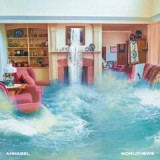
"On “We Are Where We Are,” a glimmering mid-tempo highlight from Annabel’s new album, Ben Hendricks sings of “a modern way to fill the empty space.” Worldviews, the band’s fourth LP and first in nine years finds the band reconciling with the ways the world has changed in the decade since they’ve been away. His protagonists are trying to determine the boundaries between what’s real and imagined, navigating their worldviews and the dominant ones around them, fighting for an escape or at least a distraction, wondering where the time goes, “going through the motions, running in a circle.” That could’ve been Annabel’s fate, too. But the core of the Ohio band is brothers Ben and Andy Hendricks, and as long as they’ve got each other, we’ve still got Annabel. In a world that feels so uncertain and so disconnected, where else is there to turn but back to Annabel? Think of Worldviews less like a comeback and more as the product of years spent gestating.
Hendricks spends the chorus of “All Time” promising to “make up for all the lost time,” and Annabel makes good on that promise for the next half hour. Worldviews is the most locked in the band has ever sounded, perfecting and building on their indie-emo sound. The title track and “Dog” are classic Annabel, sprightly and jangly midwestern rock songs, while “Defense Mechanism” is a rougher-edged update; when they go in the opposite direction, it results in some of their best work: “Every Home Needs a Ghost” is spartan and spectral, worthy of its title, and the beautiful “Small Victories” dabbles in downtempo electronics. They don’t sound like a band returning after nearly a decade; they sound at the same time hungry and lively like scrappy upstarts and wizened and seasoned like they never left."
Color Vinyl Repress
The world moves faster than ever these days, and even in the digital age, things can always be counted on to go in cycles. Despite all of the advances in computer recording technology, home studios, and electronic instruments, there is a flourishing interest in analog recording techniques and in recreating the mood and sound of vintage soul records. With one foot in the past but their eyes firmly set on the future, El Michels Affair are among the leaders of a resurgent funk & soul movement from New York City that’s sweeping both the music community and the charts.
Led by saxophonist/organist Leon Michels and producer/engineer Jeff Silverman, El Michels Affair began as a loose collaboration of session musicians (including members of top-selling acts Sharon Jones & the Dap Kings, the Budos Band, and Antibalas) that looked to blend some of the vibrant quality of soundtrack records with the recording aesthetic of early reggae, and the rawness of 60's rock--they called it 'Cinematic Soul.' This delicate balance was evident on their 2005 debut album Sounding Out the City, which earned critical acclaim and acted as the inaugural full-length release for Michels and Silverman’s burgeoning label Truth & Soul (also the moniker for the duo as a production team).
The buzz generated from the album and a series of moderately successful 7” vinyl singles from Truth & Soul led to an invitation by Toyota’s Scion division for El Michels Affair to accompany the rapper Raekwon of Wu-Tang Clan for a promotional concert. As avid Wu-Tang fans, not only were the band leaders thrilled with the opportunity, but Michels found that the ‘Cinematic Soul’ sound was consistent with the moods of RZA’s gritty soundscapes on the classic Wu-Tang releases. The concert was such as success, El Michels Affair went oan to play several more concerts nationwide backing Raekwon and other members of the Clan, and the shows led to the recording of two smash 7” singles featuring instrumental reinterpretations of the Wu-Tang classiac songs “C.R.E.A.M.” and “Bring Da Ruckus.” The singles combined to sell an extraordinary amount of over 7,000 units worldwide, and their success led to a contract in 2007 with indie hip hop powerhouse Fat Beats Records to record an entire album of Wu-Tang Clan interpolations entitled Enter the 37th Chamber.
Since the contract was inked, a worldwide explosion of retro soul led by Amy Winehouse, Mark Ronson, and Sharon Jones and the Dap-Kings has transformed the pop music landscape, and the Truth & Soul production duo have been in strong demand, recording with everyone from breakthrough Grammy-nominated artist Adele to punk rock innovator Iggy Pop. They’ve been commissioned for official remixes of Amy Winehouse and Dinah Washington (for the popular Verve Remixed series), and produced for Australian multi-platinum acts Jet and Gabriella Cilmi.
Despite the eclectic group of clients for the Truth & Soul production company, El Michels Affair continued to build an audience within the hip hop community. A track from Sounding out the City was sampled for Ghostface Killah’s 2007 track “Shakey Dog Lolita,” and a horn part written and performed by Michels (for Menahan Street Band) was famously lifted for Jay-Z’s smash single “Roc Boys.” Truth & Soul also worked in the studio on original productions with multi-platinum producer Just Blaze (T.I.’s “Live Your Life,” Jay-Z, Usher).
With their increasing presence behind the scenes in the industry, El Michels Affair looks to have their status as recording artists rise significantly in 2009. With the release of their finally-completed album Enter the 37th Chamber, they can finally step out of the shadows of the retro-soul trend and establish their status as one of the most exciting and versatile bands in modern recorded music.
Rockpile was a short-lived yet highly influential quartet, composed of Nick Lowe, Dave Edmunds, Billy Bremner and Terry Williams. Though Rockpile played together throughout the 1970s, the original 1980 release of Seconds of Pleasure was the only time the band was able to capture their magic on tape. Meshing the sounds of pub rock, power pop and rockabilly all through a blossoming new wave lens, Rockpile were renowned for their blistering live performances, which were brought to national attention on tours supporting Blondie, Bad Company, Van Morrison and Elvis Costello. Seconds of Pleasure has stood the test of time and cemented Rockpile as a one-album-wonder, but what a wonder it is! Featuring classics like Lowe’s pop-perfect “When I Write the Book” and “Play That Fast Thing (One More Time)” and Rockpile’s sole Billboard hit “Teacher Teacher,” Seconds of Pleasure remains a classic that should be found on the turntable of every music collector. Yep Roc is proud to announce a long overdue vinyl reissue of Seconds of Pleasure, pressed on yellow color vinyl and limited to 1,000 copies worldwide. The reissue was pressed at the state-of-the-art facilities of Citizen Vinyl in Asheville, North Carolina and the lacquer was cut by renowned mastering engineer Kevin Gray at Cohearent Audio. Over four decades later, Seconds of Pleasure has brought years of enjoyment and now has never sounded better!
Principal member Keith Finch linked up with reggae manager and publisher Othman Mukhlis at Stanley House Studio in 2001 and began a series of projects featuring there love of retro reggae. JA13 worked with major reggae stars of the sixties on the ‘Heroes of Kingston’ project, Alton Ellis, Derrick Morgan, Dave Barker Dave and Ansell Collins Winston ‘Mr Fixit’ Francis, Denis Alcapone, Owen Grey, BB Seaton Gaylads and legendary trombonist Rico Rodriguez. [Which lead to two solo albums with Rico Rodriguez]. Project championed by David Rodigan and Ranking Miss P. Music in films and TV including Hawaii 5-0, various US films, BA, Tesco, various BBC, latest and currently they have many tracks on BBC most successful export ‘Death in Paradise’. They also feature two tracks in the forthcoming Shaggy documentary Other reggae artists projects include Bob Andy, Joseph Cotton, General Saint and Clint Eastwood, Don Campbell, J C Lodge, Susan Cadogan, Glen Adams [Upsetters] Pat Rhoden [first artist on Trojan] Tippe Irie, Tenor Fly, Spanna Banner, FYA [Platinum in Japan], Bounty Killer, Elephant man, and many more on ‘Bar Mitzvah riddim’ which was co written and produced with Skatta Burrell. Written for UK pop reggae band Madness on last two albums, and on the project ‘Charge of the Dance Brigade’ with Lee Thompson [Madness] and Jennie Matthias Belle stars singer] with Brazilian jazz accordionist/pianist Chico Chagas. And a host of other top musicians. [Which he co wrote, produced, engineered and nurtured] JA13 have featured on many reggae projects and remixes, the latest offering is ‘World Radio Dub – Chapter One’
When I arrived in Geneva, Claude picked me up in his Aston Martin. He had a tape deck playing Lowell Fulsom – a guy who used to come to Memphis a lot and I knew some of his musicians. I grew up around the Blues, so this was a natural sound for me. Claude didn’t tell me until much, much later that he played Blues harmonica. He took us to the hotel where we had a warm and cordial welcome. Montreux was a quaint and sleepy town in 1967. However, there was a palpable excitement in the air and we could feel it. Everyone seemed to know that they were about to launch something great – the Montreux Jazz Festival - and there was no turning back. I was their first international artist to perform there with my quartet with Keith Jarrett, Jack DeJohnette and Ron McClure.
We played two concerts at the Casino one in the afternoon and one at night. That was the start of three great and lasting friendships; Claude Nobs, Montreux Jazz Festival co-founder, Rene Langel, and the engineer of the recording, Pierre Grandjean, from Radio Suisse. And - a fourth person, who was 6 at the time, Yvan Ischer. We did not meet until many years later and have become good friends. It is thanks to Yvan’s persistent belief in this music and Pierre Grandjean’s safe keeping of the tapes, that we hear them now, more than fifty years later. live at Montreux Jazz Festival, June 18, 1967. Featuring Charles Lloyd, Keith Jarrett, Ron McClure, and Jack DeJohnette.
Are you ready to hear the best live band of the early ‘70s? We at Real Gone Music have been privileged and proud to release Fanny’s four classic Reprise albums, each a tuneful testament as to why they were the first all- female band signed to a major label. But there has always been a piece missing from the Fanny fable; for while the band hooked up with big-time producers and engineers like Richard Perry, Todd Rundgren, and Geoff Emerick, their studio albums never really were able to capture the sheer excitement they could generate in concert. However, buried away in a vault thousands of miles away from their Los Angeles base there long lay a recording that could make the Fanny myth a reality, one that could provide the emphatic answer as to why these four ladies were the hottest ticket on the Sunset Strip during the early ‘70s. Now, over 50 years later, its time—and their time—has come. Live on Beat-Club ’71-’72 presents the two sets Fanny recorded for the German TV show, mastered by Mike Milchner of Sonic Vision from hi-res mono files taken from the original videotape. Aside from the incendiary and incredibly tight performances, what immediately becomes apparent is that all four of these women were powerhouses in her own right. June Millington’s stringbending Les Paul wizardry, her sister Jean’s driving, melodic bass lines and Janis Joplin-esque vocals, Nickey Barclay’s intricate yet somehow rocking keyboard work, and Alice de Buhr’s precise, piston-like drumming punctuated by ferocious fills—put together Fanny was an overwhelming display of talent, Yet somehow, as these shows reveal, live they were greater than the sum of their parts. That’s why getting these recordings released has long been a crusade for Alice, and why June tells the story in the accompanying liner notes (which feature contributions from June, Jean, and Alice) that the engineer who was assigned to do the transfers of all the Beat-Club material told her that their material was the best in the vault, better even than Hendrix. We are releasing this invaluable archival recording on juicy peach vinyl and on CD with a bonus track of the soundcheck to boot. Essential for a full understanding of ‘70s rock!
Repress!
Having initially forecast his production energy into his own Tartan imprint, Wallace’s music quickly developed a cultish following among record collectors and influential DJs including Gilles Peterson, Optimo, Hunee and Ryan Elliott. Another supporter has been CWPT’s founder Palms Trax, who, following releases on Studio Barnhus and Rhythm Section, snatches four highly sought-after tracks for the seventh release on the label, each showcasing Wallace’s inimitable and enviable skills as an engineer and a willingness to stoke the sort of organic euphoria that DJs dream of igniting.
Amongst the curios, rarities and other finds that have peppered Palms Trax’s sets this past summer, it’s title track ‘Willow’ that has levitated entire club and festival dance floors like few others. Escalating from a disco percussion loop, ‘Willow’ soon brings on high-energy melodies and a captivating sense of something more ethereal, seemingly reinvigorating old tricks with exciting new flavours: if you only raise your hands to one climactic snare roll this year, we ask you to make it this one.
This refreshing intersection between flourish and function is felt even more heavily on ‘Breathe’, a contemporary electronic battle weapon whose breaks-and-bassline arrangement fluctuates between weightless wonder and heavy business. Frontloaded with the detail and atmosphere of a vintage Chems or Leftfield cut, 'Breathe' exhales then explodes all the skill and reverie of the most memorable 90s techno.
Wallace appears to dip into the chillout room for the swampy rhythm of ‘Masada’, before proving his slow-motion mettle, a Sergeant Peppering of psychedelia creating true hedonistic density and groove. In conclusion and on the contrary, ‘River Dancers’ maintains subtle hypnosis at a similar pace with much less, employing simple timbres and a stuttering, innocent vocal inflection to conjure wide-eyed whimsy far downstream from the EP’s earlier, maximal wonders.
Marking one year following Phase Fatale’s (aka Hayden Payne’s) last EP on his label BITE, ‘Love Is Destructive’ is a clear shift into true techno territories, integrated with his distinct curation of narrative and sonic framework, imprinted with a musical diet of sleek, synthesised storytelling.The 4-Track EP reflects the turbulent ebb-and-flow found with emotional conclusion - a genesis soundtracked by raw energy and driving undercurrents. The Berlin-based DJ, Producer and Label-owner’s propensity for creating a symbiotic harmony by blending seemingly divisive elements from his genre defying repertoire, demonstrates his masterful understanding and control of the listener’s borderless, auditory journey. Exemplified by his marathon closing sets at Berghain, as well as techno arenas such as Khidi in Tbilisi (both of which he is a resident), Phase Fatale’s recent DJ performances and production endeavours reflect his fresh approach to pure techno sensibilities. The title track sets the tone with imperative grooves, energetic vigour and intrepid attitude. Following a progression of techno propulsion in ‘Magma Driver’, infused metallic textures and trippy, headier elements add depth, whilst the body of work’s cutting edge sound design echoes spacey vivacity and purification in equal measures. Dichotomy comes forward with tracks ‘Ambivalence’ and ‘Introjection’, processed vocal samples with dub techno leanings and hints towards broken rhythms are sculpted by Payne’s focused approach, resonating a feeling of hopeful resolution akin to resurgence. These romantic sensibilities offset by cold mechanical nuances are reflected in the EP’s artwork, depicting roses against the backdrop of engine-like machinery. ‘Love Is Destructive’ is dedicated to Juan, Simone and Luis. Featuring artwork by Silent Editions.
- A1: Dustin O'halloran - An Ending A Beginning
- A2: Bonobo - Get Thy Bearings (Exclusive Donovan Cover Version)
- A3: Darondo - Didn't I ?
- A4: Nina Simone - Baltimore
- A5: Menehan Street Band - The Traitor
- A6: Romare - Down The Line (It Takes A Number) (It Takes A Number)
- B1: Shlohmo - Places
- B2: The Invisible - Wings (Floating Points Remix)
- B3: Badbadnotgood - Hedron
- C1: Matthew Bourne - Viii Juliette
- C2: Airhead - South Congress
- C3: Matthew Halsall - Sailing Out To Sea
- C4: Dorothy Ashby - Essence Of Sapphire
- C5: Peter & Kerry - One Thing
- D1: Eddie Front - Gigantic
- D2: Bill Evans - Peace Piece
- D3: Benedict Cumberbatch - Flat Of Angels (Part 3 - Exclusive Spoken Word Piece)
Late Night Tales and Bonobo were pretty much made for each other, it just took them a while to both realise it. Stepping forward into the compilers spotlight for the 33rd edition is Simon Green - aka Bonobo - a musician, producer and DJ perfectly suited to soundtrack an evening spent reclining to some parallel beats. Six albums to the good (most recently 'The North Borders' released earlier in 2013), Green has been on a winning streak since 2010's breakthrough 'Black Sands', which has now sold in excess of 160,000 copies. His music has aided the sales of Citroen cars and Olay creams, as well as soothing the puzzlement of Lost. Wrapped in delicately programmed drums, Green's music is at once both sombre and reassuring. If what comes out the other end is the music of Bonobo, then this is the fuel that keeps the engine running: soul, jazz, classical, pop, funk, leftfield, rock. Pianos and brass are abundantly present. Our ivories are warmed and tickled by the classic, Bill Evans, and new school, with Matthew Bourne's mournfully beautiful 'Juliet' and Dustin O'Halloran's 'An Ending A Beginning'. The brass section comes courtesy of Menehan Street Band's jazzy 'The Traitor', 'Flipside' by the Hypnotic Brass Band. Exclusives include YouTube sensation 'One Thing' by Peter & Kerry . Not only that, but there's Bonobo's special LNT cover version, a brilliant reading of Donovan's 'Get Thy Bearings', As the light dims, the unsettling sounds of Lapalux or maybe even Shlomo pierce the misty evening air, before giving way to the ethereal splendour of Eddi Front's 'Gigantic' or even Nina's paean to an imagined rural idyll 'Baltimore'. Amble down to the riverside. It could be the Great Ouse, as willows weep into the water; it could even be in Brooklyn overlooking the Lower East Side, as the sun slides down the sides of the skyscrapers. Take a notepad for inspiration. Maybe even a hipflask for a slug of something warm. Sit down and reflect and let those beautiful pianos skim the water's surface. Sometimes, you think, life is good. You can't play a symphony alone, it takes an orchestra to play it: Simon Green is your conductor.
Andrea has his roots in the independent musical scene in the first decade of the 2000s. In addition to his compositional and live experience as the first Nadàr Solo drummer, he is one half of the Turin duo Anthony Laszlo with Anthony Sasso, ex guitarist and singer of Milena Lovesick. Andrea Laszlo De Simone made his debut in 2012 when he released his first homemade album, Ecce Homo. Recorded at home by makeshift means and accompanied by the following videos: Solo un uomo, 11:43, I nostri piccoli occhi, Perdutamente.
At the beginning of 2014, he met some experienced musicians from Turin’s underground scene that later, after a few months in a rehearsal room, became his band: Damir Nefat (guitar/backing vocals), Dani C (bass guitar/backing vocals), Filippo Cornaglia (drums/backing vocals), Zevi Bordovach (keyboards/backing vocals) and Anthony Sasso (keyboards/backing vocals/percussions).
Anticipated by the individual tracks Uomo Donna, Vieni a salvarmi and La guerra dei baci on June 9, 2017 - for 42Records - Uomo Donna came out. It’s Andrea Laszlo De Simone’s first real album, a well received work by both audience and critics. It also was pointed as one of the best albums of 2017 by several national music magazines.
Uomo Donna is a complex, articulate and vital album that lives in its own time - where past, present and future coexist. It’s a time in which a sonic world takes shape blending classic and modern, Italian songs with psychedelia, Battisti and Radiohead, Modugno and Verdena, the Beatles and Tame Impala, the magical flight of Claudio Rocchi and the earthly flight of IOSONOUNCANE.
The album was self-produced and then post-produced by Andrea in collaboration with Giuseppe Lo Bue, a sound engineer from Bologna. The recordings were made between October 2014 and the end of 2016 with experimental techniques straddling digital and analogic.
After playing in some important Italian festivals as Siren Festival and TOdays -- that earned him a special mention in the live scores by Rolling Stones -- on October 28, 2017 the first Uomo Donna album tour started in the clubs of the major Italian cities.
On November 30th 2017, Andrea Laszlo De Simone presented his video, Sogno l'amore, during the Torino Film Festival as a short film, shot in Sicily and directed by Francesca Noto and Andrea Laszlo De Simone.
On March 15th 2018 the music video of Gli uomini hanno fame was released, the most political song of the album, an overlook through ferocious human emotions, an eleven and fifty minutes trip within human nature portrayed even in its most ferocious instincts. The music video was directed by Andrea Laszlo De Simone and the mysterious duo Sans. The official cycle of Uomo Donna ends on 31 December 2018 with the music video of Sparite Tutti created by the creative collective Irene&Irene.
2019 was a year of new goals for Andrea, in fact, the album Uomo Donna leaves national borders and got a special mention on social media by the famous American band The Lumineers which included Andrea Laszlo De Simone and Uomo Donna among the most interesting discoveries of the international musical underground and inserts Solo un Uomo in the Spotify playlist “Inspirations”. A few days later, Solo un Uomo was broadcasted by KEXP Radio. On November 4th Andrea and his band were chosen to open for The Lumineers’ only Italian show at Alcatraz, in Milan.
On November 8th Andrea released a brand new work, digitally and on vinyl for 42Records, Immensità, a ‘suite’ of four singles: Immensità, Conchiglie, Mistero and La Nostra Fine. Turned into a medium-length film using Immensità as the soundtrack.
Immensità was presented with four special sold out concerts in Rome, Turin, Padua and Milan. For these shows Andrea Laszlo De Simone was accompanied on stage by a mixed orchestra composed of synths, electronics, choirs, strings and woodwinds. Classic and modern instruments that are intertwined in a nine elements formation: an immersive concert, a contemporary version of chamber music.
In March 2020 Immensità was released also in France, UK, Canada, Belgium and the United States with Ekleroshock/ Hamburger Records (Roster: Benjamin Clementine, Polo & Pan, Limousine and many others). The response of the transalpine press and media, sector and not, was unexpected: major French newspapers and magazines - from Le Monde to Liberation, Vanity Fair and Les Inrockuptibles - dedicated entire pages and rave reviews to Immensità and Andrea Laszlo De Simone. The track Immensità entered, after a few days, at the fourteenth rank of Spotify’s Top viral 50 playlist and broadcasted on France Inter and Radio Nova.
“Immensità” is a complex cross media work of music and images. A project divided into four chapters (the songs) for nine tracks (each chapter has a prologue or a conclusion). A true suite, using the classic term that best describes an instrumental composition in several stages, that can be enjoyed in its entirety only by listening to vinyl or digitally in the innovative single track format, without pauses: a single symphony of 25 minutes and 6 seconds.
In September 2020, Dal giorno in cui sei nato tu was released on all italian platforms, a song dedicated to Andrea’s children, a real love letter in the form of a small speech, where he tries to give them the three keys to approaching life: fantasy, music and irony. Martino, 8 years old, replies to his father’s love letter by making the video accompanying the song, created in Super 8. It's the story of the world through the eyes of the child. It is also an homage to the new little girl in family, Lucia.
Mr Bongo proudly presents the debut album from Tasmania-born, Melbourne-based, Finn Rees. Gliding across a swirling palette of saturated hues, Dawn Is A Melody feels vintage yet vibrant, new but familiar at the same time. A spiritual, deep and textured jazz record, tipping its hat to greats from the past, capturing memories and reformulating them into new ideas with the help of some of Melbourne’s finest talent.
Expert keys player for the likes of 30/70 and Elle Shimada, alongside one-half of Close Counters, this debut LP was Finn’s conscious departure from the realm of groove-based jazz. Instead, Dawn Is A Melody places the piano and arrangements centre stage, giving Finn and his fellow Melbourne crew freedom to explore the spaces in between, new emotions and alternate soundscapes.
In Finn’s own words: “My intention with Dawn Is A Melody was to create a world; a microcosm of colour. Something rich and beautiful that allowed the melodies and compositions to reach their full potential. It was driven by hope, curiosity and the search for beauty and reassurance in this ever-changing world. The emotion behind the music is really about the journey of life, growing up and changing, as well as my relationship with Tasmania’s natural landscapes where I grew up, a part of the world that is incredibly unique and beautiful.”
The album arcs between opening, middle and end. Beginning with the optimism of ‘Looking Up’ and ‘Lagoon’, the former a celestial, string and harp marbled slice of positivity, the latter a spiritual journey of exuberance and hope, Finn’s fingers dancing across the ‘70s Yamaha grand piano. From there the songs blossom outwards with the cinematic soulful journey of ‘It’s Behind Me Now’ and Brazilian-inspired ‘Expansion’, as the divine ‘Crossing’ signals a transition to a new realm. The energy is transformed from the rich cosmic textures to a more intimate and personal feeling with ‘Ablaze’, ‘Between Spaces’ and ‘As It Passes’ which blissfully fades down to simply piano and strings to close out the record.
Recorded at Rolling Stock in Collingwood, Melbourne, Henry Jenkins was drafted in as recording and mix engineer, his minimal vintage mic setups giving a live aesthetic and warmth to the arrangements. Lucky Pereira and Blakely McLean Davies form the rock-solid rhythm section, with a hand-picked line-up of other Melbourne talent on display, including Cheryl Durongpitikul on tenor sax, Siwei Wong on harp, Audrey Powne on trumpet and Allysha Joy on vocals to name only a few.
Plotting a course from Alice Coltrane, through Herbie Hancock, to Arthur Verocai, this is a debut nourished by the past but firmly made in the present. A record unable to be age-stamped, casting ambiguity as to when, what era and by whom it has been crafted. Like a vintage lens capturing a current scene, Dawn Is A Melody is warm and familiar yet focused on the here now.
SIMON AND GARFUNKEL’S SWAN SONG: BRIDGE OVER TROUBLED WATER FEATURES METICULOUS PRODUCTION, GORGEOUS SONGWRITING, AND HEALING SPIRIT
Sourced from the Original Master Tapes and Limited to 4,000 Numbered Copies: Mobile Fidelity’s 180s SuperVinyl 33RPM LP Plays with Staggering Detail, Clarity, and Definition
1/4" / 15 IPS analogue master to DSD 256 to analogue console to lathe
Unifying, soothing, comforting: Simon and Garfunkel's Bridge over Troubled Water quickly became the album of an era upon release in 1970, the benchmark set serving as a beacon of hope and hymn of reassurance during a time marked by polarizing changes, social unrest, uncertain politics, and the dawn of a new era. These uplifting reasons — to say nothing about the gorgeous songwriting, meticulous production, and watershed performances — attest to why it is more relevant than ever in our current climate. Music, Bridge over Troubled Water simultaneously suggests and proves, heals all wounds and lifts all boats.
The seminal effort Rolling Stone named the 51st Greatest Album of All Time reaches illustrious sonic and emotional heights on Mobile Fidelity’s 180g SuperVinyl 33RPM LP. Pressed on MoFi SuperVinyl and strictly limited to 4,000 numbered copies, this ultra-hi-fi collector's edition brings you closer to music that picks up where the duo's Bookends leaves off. You'll enjoy deep-black backgrounds and pointillist details. Seemingly every note, breath, and movement is reproduced with exquisite accuracy, clarity, and balance. Each rotation benefits from SuperVinyl’s ultra-low noise floor and superb groove definition.
The best-selling record in the U.S. for several years running and winner of six Grammy Awards — including nods for Record of the Year, Album of the Year, Song of the Year, and Best Engineered Recording — Bridge over Troubled Water endures as a staple of accessible sophistication, angelic elegance, effortless singing, unhinged ambition, and therapeutic spirit. While it would turn out to be the final studio set for a duo surrounded by creative and personal disagreement, Simon and Garfunkel's collaborative ethos and soaring harmonies — combined with reflective narratives centred on the American experience, friendship, romance, and farewells — combine to turn the 11-track work into a paean to resolution, reconciliation, calm, and balance.
Home to the legendary title track graced by Garfunkel's pacifying solo lead vocals as well as the equally famous folk ballad "The Boxer," Peruvian-based "El Condor Pasa," upbeat "Cecilia," and rock ’n’ rolling "Baby Driver,” Bridge over Troubled Water remains as renowned for its musical diversity as its lyrical poignancy. Moving beyond the templates they'd perfected on four prior albums, Simon and Garfunkel embrace a then-unimaginable swath of styles. Rock, pop, gospel, country, R&B, South American, and jazz strains course throughout the songs, each sparked with bold experiments yet grounded in a well-orchestrated melange of melody, rhythm, and classicism that makes everything personal, familiar, and warm.
Not for nothing is Bridge over Troubled Water one of the finest-sounding albums ever made. Featuring instrumentation helmed by members of Los Angeles' fabled Wrecking Crew as well as multiple choral and string sections, songs took hundreds of hours to complete and involved pioneering recording techniques. Evoking both Phil Spector's live"Wall of Sound" approach as well as inventive effects, Bridge over Troubled Water is a triumph of texture, atmosphere, and architecture. Our audiophile edition brings the record's unique traits to the fore.
Whether the reverberation generated by Garfunkel's cassette recorder on "Cecilia," echoing drums captured in a corridor heard throughout "The Boxer," automobile noises peppering "Baby Driver," layer upon layer of voices dotting "The Only Boy Living in New York," or echo-chamber percussion on the title track, details comes through with stunning accuracy, clarity, and dimensionality. In every regard, Bridge over Troubled Water exudes genius.
Released only eight months after his exhilarating debut, Bruce Springsteen's The Wild, the Innocent & the E Street Shuffle contains rousing dispatches from the boardwalk, the street, the beach, and the bedroom. It explodes with energy, dares to dream, teases with humour, crackles with tragedy, clings to hope, and overflows with discovery, youthfulness, and personality. It features an unforgettable cast of characters — corner boys, teenage hustlers, doomed lovers, jazz men, junk men, factory girls, fortune tellers, alley cats, pimps, escorts, and more — illuminated by vivid colour, breathtaking detail, and poetic action.
Musically, the heartfelt 1973 record is inhabited by sympathetic vignettes and cinematic arrangements steeped in rock 'n' roll, soul, jazz, and R&B. It finds the New Jersey native looking beyond the parameters of his preceding record and seeking to move on from environments he knows well (and chronicles here) by rushing headlong toward unknown territories, adventures, and people. Underpinned by the singer-guitarist's ambitious poetic enterprise and will to succeed, The Wild, the Innocent & the E Street Shuffle is the album on which Springsteen becomes the Boss.
Mastered on Mobile Fidelity's renowned mastering system, pressed at RTI on MoFi SuperVinyl, and strictly limited to 7,500 numbered copies, Mobile Fidelity's UltraDisc One-Step 180g 33RPM LP set is the definitive-sounding version of Springsteen's sophomore record. Benefitting from SuperVinyl’s nearly non-existent noise floor, superb groove definition, and dead-quiet surfaces, The Wild, the Innocent & the E Street Shuffle plays with a clarity, energy, presence, and openness that complement the expressiveness, dynamics, and scope of the seven restless songs that comprise a work Rolling Stone ranked the 345th Greatest Album of All Time.
Beyond the audiophile sonics that practically place you behind the console at 914 Sound Studios — listen to the separation between the instruments, natural decay of the notes, interplay within the widescreen soundstaging, and nothing-to-lose youthfulness of Springsteen’s voice — this reissue takes seriously this record’s influential merit by presenting it in packaging that underlines its status. Tucked in a beautiful slipcase, the LP is housed in a special foil-stamped jacket with faithful-to-the-original graphics. This reissue is made for listeners who prize sound quality and who want to engage themselves in everything involved with the invigorating set that busted Springsteen loose from the club circuit and landed him on the radio
Determined to liberate anyone within earshot and unafraid to come on strong, The Wild, the Innocent & the E Street Shuffle serves as the debut of the E Street Band — not only heard but seen for the first time by most of the public courtesy of the back-cover photograph. This is where saxophonist Clarence Clemons, organist-accordionist Danny Federici, and pianist David Sancious step out of the shadows — and drummer Vini Lopez and bassist Garry Tallent again stoke a fiery rhythmic engine that helps drive the untamed, reimagined big-band swing of “Kitty’s Back,” breathless R&B thrust of “Rosalita (Come Out Tonight),” and carefree dance steps of the funky “The E Street Shuffle.”
Of course, the main attraction remains a then-24-year-old visionary on the precipice of becoming a sensation and turning a then-bloated rock scene on its head. Recorded over three months while Springsteen and company were busy touring his debut LP, The Wild, the Innocent & the E Street Shuffle reflects the high-octane approach the vocalist embraced onstage and drifts away from the label-dictated acoustic-based frameworks of his debut. The set also witnesses Springsteen deepening his observational skills, with narratives such as the romantically tinged “4th of July, Asbury Park (Sandy)” and redemptive epic “Incident on 57th Street” mirroring changes taking place in the singer’s own life, small towns, and America at large.
A thrilling collision of memories, reflections, and composites — Sandy, Rosalita, and the latter’s parents are all based on actual people Springsteen knew, as is the community depicted in the opening track — the aptly titled The Wild, the Innocent & the E Street Shuffle resonates decades on due to its truths, authenticity, and spirit. Those characteristics — as well as the fact that many of its lengthy songs come on as the equivalent of sweaty, feverish soul revue that won’t stop until you’ve been exhausted — also explain how this now-iconic album triumphed over the reservations of industry “experts” that both demanded Springsteen re-record it and instructed deejays not to play it.
Yet there’d be no stopping a record that saw the past, present, and future, a band whose will would not be denied, and a phenomenon who was born to run. A never-ending invitation to act real cool and stay up all night, The Wild, the Innocent & the E Street Shuffle always feels alright.