Comes with 4 page insert, English and Japanese liner notes and lyrics.
A contemporary folk wonder from Cornwall (Falmouth), England.
"We at EM Records love to transport our listeners to new worlds, other worlds; “Pantilde”, this magical new album from Cornish avant-folk performance artist The Worm, is indeed an ethereal new world: otherworldly, but somehow rooted; an imaginary oral and musical story of everyday village life in an alternative Celtic landscape. The music here is strange yet familiar, fantastical and enchanting while remaining simultaneously attached to the earth. Amy Lawrence, aka The Worm, plays cello, harp, recorders and percussion, accompanying and framing her rich voice, which is often overdubbed into lovely homespun vocal ensembles; they tell song-stories of mythical and mystical village life, of nature and the human relationship with the natural world. The Worm can be considered part of a lineage which includes The Incredible String Band, Shovel Dance Collective, Bridget St John, Dorothy Carter, Vashti Bunyan, Jessica Pratt, Cathrine Howe, Mary Lattimore, Tristwch Y Fenywod and of course many others. “Pantilde”, a time-trip to a dreamlike, pastoral world that nevertheless feels distinctly realized, is a remarkable avant-folk fantasia, co-released with Prah Recordings.
Suche:english man
- A1: Waiting For The Sign (Feat Lispector)
- A2: Patch 1985
- A3: Count To 10 (Feat Domotic)
- A4: Godbot
- A5: Skyway
- A6: Le Robot Gentilhomme
- B1: Ufo (Feat Lispector)
- B2: Cosmic Battle
- B3: Olympus
- B4: Shoppers On The Run
- B5: Postcard (Feat Kumisolo)
- B6: Melchiator
Emile Sornin has a robot in his life. It's not love, but it's not friendship either, and Forever Pavot is releasing an album documenting the affair on Born Bad. After a bunch of bold pop studio albums and a small stack of soundtracks, Emile needed a break. To put an end to it, he embarked with handyman extraordinaire Jonas Euvremer on the manufacture of an automaton destined to make his musician’s life easier. Melchior, who gave his name to the record, has the face of a ventriloquist's dummy, two plastic left hands, preppy clothes and a primitive logic circuit. This goodie two-shoes cousin of Bender’s is supposed to be doing the interviews and deal with socials for Emile. The plan worked admirably : Melchior is a perfect cover-boy, and his very existence has put our man back to work.
They set a path for phat electronic ventures (and by the way, mostly english-speaking). Sub- continental bass & massive drums, heavy-footed and unabashed : as much appreciated as unexpected. The half-android shares songwriting credits and vocal parts vocoded to perfection. Not a jealous lad, Melchior makes way for a guest of choice on “UFO” and “Waiting for the sign” : Lispector. Julie Margat sings and collaborated on the lyrics for these two bangers that provide a lot of context (robot angst is real). Kumisolo, our favorite Japanese « it » girl in Paris, also sent her “Postcard”, more vapour than song, unreal musical cotton candy of arrangements.
Domotic, who mixes and co-produces, gives a nice spin to “Count to 10”, a hip-hop/kraut crossover with a BEAK> flavour. The Forever Pavot, once a big-band, will be touring as a bass/ drums/keys & vocals trio, with Melchior as guest.
Record after record, Emile Sornin has become an increasingly literate musical illiterate. When needed, his music can still become a thicket of ancient and modern finds. « Le robot gentilhomme », a skillful pastiche of baroque composer Jean-Baptiste Lully, would stand a few rounds against Wendy Carlos. His love for oldies also shines through “Skyway”, a nod to the late Pierre Arvay, France’s Colonel Sanders of library music nuggets.
Forever Pavot may have gone wild, but remains indebted vis-à-vis the golden age of film music. Forebears deluxe Ennio Morricone & François de Roubaix make Hitchcock-style cameos: discreet appearances that you’ll watch out for (those syncopated cascades of syllables at the end of « UFO », and I guess we can indulge with some clavichord/ondioline Victoria sponge). His new flirt is all but a toxic relationship. « Melchior, Vol. 1 »: the robo-bromance is not over yet.
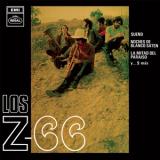
For the first time ever, the only full-length album by Spanish soul and garage legends Z-66 is being reissued. Z-66's signature blend of powerful soul, psychedelia, and pop-clearly influenced by bands like The Move, Stones, Vanilla Fudge, and Blood, Sweat & Tears delivers a bold, modern sound that remains fresh and compelling. Unlike other Spanish bands of the time, Los Z-66 enjoyed unique conditions that allowed their sound to stand out as one of the most advanced on the local scene in the late 1960s. As was the case with many other groups, their repertoire for entertaining discotheques had to include the hits of the moment and was not always open to the songs of the most daring international bands, which was the sound that most stimulated the musicians. In the case of Los Z-66, being based in Mallorca meant they had privileged access to hard to-find records, imported by foreign tourists, and to a much more modern atmosphere than in other parts of the country. Songs in Italian and French soon gave way to English hits by the Animals, the Stones, and the Beatles. But it was the offer received from Mike Jeffries, manager of Jimi Hendrix, the Animals, and others, to serve as the house band at the newly opened club Sgt. Pepper's that allowed the group to raise their live performances to a level rarely seen in these parts... They even soon incorporated the distorted sound of fuzz into their guitar when they received a fuzz face pedal as a gift from Jimi Hendrix himself, who was invited to play at the club's opening! Their excellent blend of stunning soul, psychedelia, and pop became their hallmark, not only in the band's concerts but also in the handful of singles and EPs they released on the Regal label. We are now re-releasing for the first time their only full-length album, originally published in 1969, which is actually a compilation of songs previously released in 45 rpm format, complete with two bonus tracks not included on the original LP plus a booklet with liner notes and rare photos.
The word "amateur" originates from the Latin word "amator," meaning "lover" or "admirer". This Latin term is derived from "amare," which means "to love". The French adopted "amateur" from Latin, and the English then borrowed it from French, initially retaining the sense of someone who loves or is devoted to something. Over time, the English usage of "amateur" also developed a meaning related to a lack of professional skill or experience. How did a word derived from love become a slur? Is love really so defenseless? They say love conquers all, but in reality isn’t love quite ridiculous? It has no intention, no motive, no agenda. How could it possibly prevail? It can’t be bought or sold, or so they say.Its mere existence can't be proven or even measured. What an impossible thing. Trying and failing, time and time again, no wonder cynicism always seems to win. I see “amateurism” as a delighted, even foolish, protest. Protest against everything. Of what’s expected of someone, or expected of someone to desire or strive for. To be elite, to be expert, to be professional, to be a master, to excel and succeed. Where’s the joy in that? I just want to have fun. I want to want. I want to love. And keep doing it, forever. I want to have fun, even when it’s tiring and sometimes even heaven is boring as hell. I want to be bad. I want to do my own thing. “I vant to be alone”. I want to be someone so dedicated to their passion that it starts to seem like there’s something wrong with them. All the way. We can take it all the way, and never get it back. ” - Molly Nilsson Amateur is the 12th studio album by Molly Nilsson. Deep in the teeth of a career that threatens to tip into something resembling a “legacy,” Molly Nilsson celebrates with an album recorded instinctively, quickly and bursting with so many moments of emotional brilliance and clarity it may be her greatest yet. Hers has been a career spent reaching out, perennially powerful in her earnestness, a warrior ridiculously defenceless and armed with a glittering sincerity. Shearing herself of the machinations of the music industry, recording at home, writing direct to the heart. Amateur is a jubilee for losers. A treatise in 13 songs, Amateur states clearly that we should live our life with eternal curiosity, offers us an open hand of comradeship out of the rat race. The songs on the album are both some of the most personal of Nilsson’s career and the most anthemic. First single How Much Is The World asks us to re-evaluate value in the face of a Neo-liberal system squeezing the life out of our loves. Pulsing opener Die Cry Lie satirises the commercialisation of emotion in the form of a shout-along diss-track. With a pounding rhythm track held down by gorgeous chord changes, heartbreaker Valhalla carries the torch for the main themes of the album: never growing up, making mistakes with kindness, moving on. When the drums crash in on the line “It’s going to get better now, you’ll see, going to be much better off without me” there is a world of feeling swirling about in the vocal delivery. One reading of the track might be that it’s a break up song but the subtext is classic Molly Nilsson: by living truthfully, making mistakes, we’re active agents against the myriad oppressions of the world. All The Way takes the theme for a run into the eternal sunset. It’s a manifesto for living fully. “Take it all the way, and never get it back” - it’s the process that’s the important point. The journey not the destination. Big Life, follows on like a part 2: An ode not only to Molly Nilsson’s career of endless gigs, endless connections with people, it’s a massive ode for following your dreams, doing it yourself. Closer The Bitter End is a powerful anthem for friendship, another definition of love infused in Nilsson’s work, A beautifully poignant ode to comradeship til the end, it seems to be the songwriter approaching aging, approaching life’s inevitability with the same vigour and earnestness, the same love of life she enjoyed at the onset of her career. There are moments on Amateur shrouded in reverb, slightly out of focus, forcing the listener to step deeper into the Mollyverse.. Nilsson’s open-armed beseeching to the world permeates every beat, every chord. These are songs exploding with life: the chunky, aggressive bassline on the punker Get A Life can’t hide its massive, catchy chorus. The sweeping Swedish Nightmare might be a tongue-in-cheek self-reference, but at its heart it’s a song about the duality of living life large, what is a dream, what is a nightmare? Molly Nilsson says you can’t have one without the other, and why would you want to? Here’s to making mistakes.
- A1: Snow Sniffing Matador (5:29)
- A2: In Heaven (4:15)
- A3: The Cuckoo (4:15)
- B1: Flashback Stonehenge (22:07
LIMITED 500 ONLY (WORLDWIDE) FIRST PRESS ON CRYSTAL CLEAR VINYL WITH GREEN SMOKE SWIRLS. HOUSED IN GLOSS FINISHED FULL COLOUR SLEEVE WITH POLYLINED INNER BAG. NON-RETURNABLE.
Japanese psych rockers Hibushibire return with album number four ‘Flashback Stonehenge’ and a UK/European tour to coincide.
‘Flashback Stonehenge’ is the bands first studio album as a four piece, with live guest Kohei Katsuma now joining as a full time member on percussion/congas (an absolute must see live) alongside Changchang (Guitar/Vocal), Tetsuji Toyoda (Bass/Vocal) and Aoi Hama (Drums/Vocals).
Like the band's previous three albums, this one continues with the three shorter songs on side one, and one epic long song filling out side two mantra that has served them so well thus far.
Opening track ‘Snow Sniffing Matador’ is already a firm live favourite, with it’s heavy riffage and 70’s rock swagger. Things then cool down with a more laid back ‘In Heaven’, featuring Aoi Hama’s dreamlike vocal whispers, and a fuzzed out take on traditional English folk song ‘The Cuckoo’ with Changchang & Aoi trading verses.
Flip it over, and you have the epic title track, which sees the band take a slightly different approach recalling the likes of Steve Reich, Terry Riley, Faust, CAN, Eno etc over its extraordinary 22 minutes.
The band return for their fourth UK tour in October, and also play their first mainland European dates to coincide.
- A1: Édith Piaf - La Vie En Rose
- A2: Édith Piaf - Paris
- A3: Édith Piaf - J'm'en Fous Pas Mal
- A4: Édith Piaf - Plus Bleu Que Tes Yeux
- A5: Édith Piaf - L'homme À La Moto
- A6: Édith Piaf & Théo Sarapo - A Quoi Ca Sert L'amour ?
- A7: Édith Piaf - Hymne À L'amour
- B1: Édith Piaf - Les Amants De Paris
- B2: Édith Piaf - La Valse De L'amour
- B3: Édith Piaf - Le "Ça Ira
- B4: Édith Piaf - Cri Du Coeur
- B5: Édith Piaf & Les Compagnons De La Chanson - Les Trois C
- B6: Édith Piaf - L'accordéoniste
- B7: Édith Piaf - Padam, Padam
- C1: Edith Piaf - Sous Le Ciel De Paris
- C2: Édith Piaf - La Goualante Du Pauvre Jean
- C3: Édith Piaf - Autumn Leaves (Les Feuilles Mortes)
- C4: Édith Piaf - Mon Dieu
- C5: Édith Piaf - Exodus
- C6: Édith Piaf - Hymn To Love
- C7: Édith Piaf - La Foule
- D1: Édith Piaf - Mon Manège À Moi (Tu Me Fais Tourner La Tê
- D2: Édith Piaf - La Vie En Rose (English Version)
- D3: Édith Piaf - Tu Es Partout
- D4: Édith Piaf - Milord
- D5: Édith Piaf - Non, Je Ne Regrette Rien
- D6: Édith Piaf - Johnny, Tu N'es Pas Un Ange
- D7: Édith Piaf - Les Amants D'un Jour
Mit der exklusiven Doppelvinyl in zartem Pink erscheint eine Hommage an eine der größten Künstlerinnen Europas: Édith Piaf. Ihre Lieder sind nicht nur musikalische Meisterwerke, sondern auch emotionale Zeitdokumente, die Millionen Menschen berührt haben - in Frankreich, Deutschland und weit darüber hinaus. Geboren 1915 in Paris, wuchs Piaf unter schwierigen Umständen auf, sang auf den Straßen und wurde 1935 von einem Cabaret-Besitzer entdeckt. Ihr Spitzname "La Môme Piaf" - der kleine Spatz - wurde zum Symbol für ihre fragile Erscheinung und ihre kraftvolle Stimme. Ihre Musik war oft autobiografisch, geprägt von Liebe, Verlust und Hoffnung. Sie sang mit einer Intensität, die bis heute unter die Haut geht. Piaf wurde zur Nationalikone Frankreichs, besonders nach dem Zweiten Weltkrieg. Ihre Lieder wie "La Vie en Rose", "Non, Je Ne Regrette Rien" oder "Hymne à l"Amour" wurden zu Hymnen einer Generation. Auch in Deutschland und Europa wurde sie gefeiert - als Stimme der Versöhnung, der Leidenschaft und der Menschlichkeit. Diese Vinyl-Edition vereint ihre größten Werke in einem liebevoll gestalteten Sammlerstück - ein Muss für Musikliebhaber und Kulturinteressierte.
- Take It From Me
- Let It Hiss
- English Harbour
- Run Right Into It
- Moonbeam
- She Doesn't Sleep With The Covers On
- Naturally
- Owning Up To Everyone
- Another Tangerine
- Upsetter
Dark Purple Vinyl[32,14 €]
Es sind acht Jahre vergangen, seit Montreals The Barr Brothers ein Album veröffentlicht haben. In dieser Zeit hat das Leben sie - persönlich wie beruflich - in neue Richtungen geführt und ihre Art, gemeinsam Musik zu machen, verändert. Ihr viertes Studioalbum Let it Hiss ist nicht einfach nur eine neue Sammlung von Songs. Es ist ein Dokument der Transformation. Die Entstehung dieses Albums markierte einen Wendepunkt: eine Phase der Reflexion, eine Auseinandersetzung mit Verletzlichkeit und eine Wiederverbindung zwischen den beiden Brüdern, die seit über drei Jahrzehnten Seite an Seite Musik machen.,Im Jahr 2022 standen wir an einem Wendepunkt", sagt Brad Barr, Gitarrist, Sänger und Haupt-Songwriter der Band. ,Es war klar, dass sich etwas ändern musste. Die wahre Geschichte dieses Albums ist die Geschichte dieser Veränderung - und von allem, was danach kam.",Let it Hiss ist das, was passiert, wenn man aufhört, so zu tun, als wäre alles in Ordnung - und endlich wirklich hinhört", sagt Andrew.Das Album beginnt im Kleinen: eine winzige mexikanische Gitarre, der sanfte Puls eines Klaviers, ein minimalistischer Rhythmus - und eine Stimme, die sowohl Hingabe als auch Stärke vermittelt. ,Take it from me", singt Brad - nicht als Befehl, sondern als Geständnis. Schon ab diesem ersten Moment lädt das Album in einen Raum ein, in dem Makel nicht herausgeschnitten, sondern verstärkt und gefeiert werden. Es ist ein kraftvoller Einstieg in ein Album, das auf Ehrlichkeit, Wiederentdeckung und Vertrauen beruht.Für die Brüder wurde das Aufnehmen zu einem Spiegel. Der Prozess begann nicht mit Klang - er begann mit Wahrheit. Sie setzten sich nicht nur mit kreativen Blockaden auseinander, sondern auch mit persönlichen: alten Mustern, unausgesprochenen Spannungen, Trauer, Wachstum. Durch all das fanden sie wieder zu einem Rhythmus - nicht durch Perfektion, sondern durch Erlaubnis.Brad und Andrew machen schon Musik zusammen, seit sie Kinder sind - zuerst in der sich ständig wandelnden Rockband The Slip, später als The Barr Brothers, wo sie amerikanische Roots-Musik mit experimentellen Klangtexturen zu etwas ganz Eigenem verbanden. Ihr Ruf für musikalische Raffinesse und emotionale Tiefe brachte ihnen weltweit Fans - und Anerkennung von musikalischen Größen.Der Titel des Albums ist zugleich ein Leitbild. ,Es fühlte sich einfach richtig an", sagt Andrew. ,Das Rauschen drin zu lassen. Das Unbehagen, die Unvollkommenheit, den Kampf. Wir haben aufgehört, alles sauber machen zu wollen. Und genau da fing die Musik wieder an zu atmen. Und Spaß zu machen."Tatsächlich steht Let it Hiss stärker als frühere Alben der Barr Brothers für eine freudvolle Ungezwungenheit - hörbar etwa im Roadtrip-Hymnus "Run Right Into It" (mit Elizabeth Powell von Land of Talk) oder im verspielten Garagenband-Reggae von "She Doesn't Sleep With the Covers On". Doch das Album lässt die intime Erzählweise, die das Markenzeichen der Barr Brothers ist, keineswegs hinter sich: "English Harbour" ist eine wunderschöne Folk-Hymne, bereichert durch die Harmonien von Jim James (My Morning Jacket), während "Moonbeam" eine opulente Soul-Serenade mit Streichern ist - veredelt durch den frankophonen Gastgesang der quebecischen Artpop-Künstlerin Klô Pelgag.Die Songs auf Let it Hiss besitzen eine zeitlose Qualität - besonders spürbar in Stücken wie "Naturally", das leise an die Ära klassischer Songschreiber erinnert, in der Melodie und Botschaft untrennbar miteinander verbunden waren. Es ist Musik, die dem Hörer vertraut und sich nach und nach entfaltet - mit Arrangements, die Zurückhaltung und Ambition in Einklang bringen. Im Zentrum steht vielleicht der Song "Owning Up to Everyone", der den Geist des Albums im Kleinen einfängt. ,Dieser Song hat etwas in uns aufgebrochen", sagt Andrew. ,Er fühlte sich wie ein Durchbruch an."Doch all die musikalische Freiheit und emotionale Aufwühlung, die sich durch Let it Hiss zieht, bereitet nicht auf den letzten Song vor: "Upsetter", ein schweißgetränkter, punkgetriebener Rock'n'Soul-Explosion, gekrönt von einem absolut wahnsinnigen Gitarrensolo. Es ist schlicht der wildeste Song, den die Barrs je aufgenommen haben - ein Song, der die Let it Hiss-Philosophie so weit ins Rote treibt, dass er den VU-Meter fast sprengt. ,Ich dachte mir: ,Na ja, der wird es eh nicht aufs Album schaffen`, weil er vielleicht für viele unserer Hörer unerwartet kommt", gibt Brad zu. ,Aber ich glaube, unsere Hörer schätzen es, wenn wir einfach wir selbst sind - und dazu gehört eben auch sowas."Brad und Andrew produzierten Let it Hiss selbst, hauptsächlich zu zweit in ihrem Studio in Montreal. Um die rohe Direktheit und Komplexität des Albums einzufangen, arbeiteten sie mit Mix-Ingenieur Jon Low (The National, Taylor Swift, Bon Iver). Sie luden enge Freunde aus ihrer musikalischen Community ein, ihre Stimmen, Instrumente und Texturen beizusteuern, wenn es die Songs verlangten - Kollaborationen, die sich weniger wie Features, sondern mehr wie natürliche Erweiterungen der Musik anfühlen. Viele dieser Beziehungen entstanden über Jahre gemeinsamer Bühnen, langer Nächte im Studio und einer gemeinsamen Hingabe an das Handwerk. So ist Let it Hiss zugleich das persönlichste und das kollaborativste Album, das sie je gemacht haben.Let it Hiss will nichts auflösen - es will offenlegen. Es lädt die Hörer ein, genau hinzuhören - auf das Rauschen, das Gewicht, das Staunen. Während die Barr Brothers ihren Weg fortsetzen, ist eines klar: Sie haben einander wiedergefunden - und darüber auch ihre Musik.And the rest is hiss-tory
Young Gun Silver Fox are the captains of AM Waves, setting sail towards an isle where melodies soak the shoreline and grooves sway like palm trees. Their route traces a natural progression fromWest End Coast, an album that cast Andy Platts (Young Gun) and Shawn Lee (Silver Fox) as musical virtuosos of SoCal-infused pop. AM Waves does more than duplicate the perfection of West End Coast. It improves it.
Recorded at The Shop in London and Roffey Hall in the English countryside, AM Waves burnishes the blend between the duo's modern aesthetic and their sumptuously crafted homage to '70s-styled pop, rock, and soul. "This music hits a certain spot for me personally that nothing else quite does," says Shawn, who produced the album amidst his projects for Saint Etienne, Shawn Lee's Ping Pong Orchestra, and several other acts. "It's real high-caliber music. It's easy and breezy to listen to but it's really hard to make. Every aspect is A game."
The A game behind AM Waves fuels 43 minutes of Young Gun Silver Fox in peak form. "AM Waves is much more instinctive," says Andy, whose penchant for writing irresistible hooks and melodies also shapes his role as lead singer and lyricist/composer for the band Mamas Gun. "It's more vivid. You can see the clarity to the colors of AM Waves whereas West End Coast is slightly more impressionist, as it were."
Originally issued as a single in September 2017, "Midnight in Richmond" is the anchor of AM Waves. "I hit one chord, which I'd never played before, and the song sort of wrote itself," notes Shawn. "It was intuitive. In many ways, the primary function of what I'm doing is trying to find that chord that opens a door and takes you someplace else. Those chords have magic." Andy embellishes the song's appeal by nimbly juxtaposing wistful emotions with a sun-kissed melody, his voice evoking richly drawn memories. The qualities that make "Midnight in Richmond" an instant classic abound throughout the album.
"Lenny" and "Take It or Leave It" spotlight Andy's versatility as a songwriter. The former was inspired by a dream he had where Lenny Kravitz owned a bar. "It was surreal," he says. "He was polishing the glasses and just serving me hit after hit." Like swimming through moonshine, Andy languorously savors every syllable in the song. "Take It or Leave It" is pure pop bliss. "That was one of those songs that fell out in half an hour," he says. "I had everything and it was done." Shawn adds, "It's such a perfect song in itself. When I listen to it, it's like you've created a record that already existed."
Young Gun Silver Fox introduce a five-piece horn section on "Underdog" that literally trumpets the song's protagonist. Shawn affectionately dubbed them the "Seaweed Horns" in honor of the Seawind Horns, an LA-based unit that recorded with powerhouses like Michael Jackson,Rufus & Chaka Khan,and Earth, Wind & Fire during the late-'70s. Andy explains, "The horns grab another hue of the west coast sound, which is the starting point, but it's also maybe the point where we're injecting a little bit more of ourselves and some outside colors into the familiar west coast palette."
A bounty of treasures course through AM Waves' ebb and flow. "Mojo Rising," which the duo penned with Rob Johnson, is a veritable retreat to paradise. "Sky-bound, heaven sent / Way above the clouds watching shootingstars descend," Andy sings, mirroring the music's celestial undertones. Sensuality contours the notes on "Just a Man," a song that basks in the allure of a woman who leaves "footprints on the water" while "Love Guarantee" is festooned with the Seaweed Horns. "I wanted to bring more of that R&B slickness into the mix," Shawn notes about the latter track. "We hadn't done a tune with that sort of groove." Similar to his work on "Underdog," Nichol Thomson's intricate horn arrangement on "LoveGuarantee"exemplifies another distinction between AM Waves and its predecessor.
"Caroline" occupies a special place on AM Waves, beyond spawning the album title. It tells the story of Radio Caroline, a pirate radio station that broadcast from an offshore vessel during the '60s and '70s. "They played the music that kids wanted to hear, whether it was the old stuff or cutting edge stuff," says Andy. "'Caroline' is about Radio Caroline's eventual capture." Complementing Andy Platts' deft wordplay, which draws parallels between radio airwaves and the station's literal home on the ocean, Shawn Lee layers nearly a dozen different parts on "Caroline," showcasing the vastness of his musicality. "I loved that track as soon as I heard it," Andy continues. "It's a beautiful fusion of me and Shawn."
The Seaweed Horns joinYoung Gun Silver Foxas they detour to the dance floor on "Kingston Boogie." Shawn explains the track's genesis, "I was thinking, what have we not done yet We definitely should get an AOR disco thing happening. I quite like disco. The beat is so metronomic that it allows you to be really sophisticated on top. 'Kingston Boogie' just laid itself out. I call it 'midnight disco.'" With a nod to "Lenny," Andy Platts sets "Kingston Boogie" back at Lenny's Bar, this time revealing a detail or two about its mysterious proprietor as he pours sweet wine and moonshine.
In a sense, AM Waves ends with the beginning. Even before there was Young Gun Silver Fox, there was "Lolita," the first song Andy Platts and Shawn Lee wrote together and a crowd-pleasing staple of the duo's live sets. The tale of a femme fatale who harbors a secret was recorded for West End Coast but instead furnished the B-side to "Long Way Back" as well as a bonus track on the North American edition of the album. Despite the song's checkered trajectory, its infectious chorus sparked the brighter, more buoyant orientation of AM Waves.
Like the moon pulling the tide, Young Gun Silver Fox are a magnet for good songs. "We're both so obsessed and constantly interested in music-making," says Andy. "We're both thinking about it all the time. When you know you have an accomplice with you that's the same as you, it's very liberating. Suddenly, worlds of color start to appear." Indeed, AM Waves is elemental in its power to induce pleasure. Dive right in.
Christian John Wikane
(New York City / February 2018)
STANDFIRST Titanic, the project spearheaded by Mabe Fratti and Hector Tosta (aka I. la Católica), return with a sumptuous and life-affirming new album.
In her sensational 1929 biography Tiger Woman, dancer and socialite Betty May claimed her ‘coster’s eye’ meant she liked to wear as many colours as possible. “Colours to me are like children to a loving mother. Each is my favourite, yet I can never bring myself to deny the others by preferring one.” May’s bold and inclusive strategy is one that manages to transfer itself, almost a century later, to Hagen, the new record by Titanic.
Many will know Titanic as the Mexico City-based brainchild of cellist and singer Mabe Fratti and multiinstrumentalist Hector Tosta who is now operating under the pseudonym, I. la Católica, (taken, rather unusually, from the name of the street the pair live on). With Hagen, and their previous release, Vidrio, (2023), the pair are creating a distinctive signature sound in modern alternative pop music. Nobody else sounds quite like them. Both records have an open hearted nature and simple, winning melodies that play off against a taste for drama, spectacular orchestration and a feeling of otherworldly mystery. Hagen is the more ambitious, sometimes more mystical effort. From the opening handclaps of ‘Lágrima del Sol’, (a wonderfully uptempo playground chant translating as a tear from the sun but, surely, not referencing the brand of pineapple wine?), the record dances its way through various mid-to-late-eighties inspirations, lush and widescreen passages of melancholy and vertiginous contrasts.
Mystery is often found in the simple but slightly odd song titles. English translations of various track titles give, ‘you swallowed the gum’, ‘leak’, ‘a tear from the sun’, ‘raising the trophy’ ‘digging dimensions’, ‘the owner’, ‘the decapitated hen’ and ‘the trap is exposed’. All denote striking images, metaphysical hints and emotional cues or simple, even childlike actions. Though Fratti and Tosta don’t reveal its provenance, the album’s title could even be a crafty play on words: the listener would be forgiven in thinking the moments of brash contrast and eyebrow raising theatricalism in the music constitute a musical nod to German punk chanteuse, Nina Hagen.
On Hagen, singer and cellist Mabe Fratti once again displays her brilliant knack of speaking to us directly. There is never the suspicion of her playing to the gallery, and the directness of many of the lyrics don’t allow it. Parallel to this, Fratti has an almost magical ability to give Hector Tosta’s melodies, and her and Tosta’s lyrics ones imbued with an insight and meaning that feels otherworldly. Tosta admitted it was “pretty wild to hear Mabe take the interpretations to a different place” and the listener can pick up on the delight Fratti takes in (literally) adding a voice to the many narratives.
Two examples can be shown here: ‘Gotera’ (Leak) uses harsh slashes of cello and tough, gunfire-like guitars and drums and multiple vocal lines that could be acting as a Greek chorus. They play off brilliantly against Fratti’s soft, slightly baleful vocal take that delivers lyrics such as: ‘nobody knows where the leak is / but I know where it is / they fight in front of the door and / nobody can go in’. With ‘La Gallina Degollada’ the somewhat blithe melody melody line, sung with what could be sarcastic brio by Fratti, plays against an itchting rhythm and rasping guitar part. The punch comes when you see that the song is about a chicken that has been decapitated and read lyrics such as: ‘I already saw it, it moved, the decapitated chicken’ / ‘could it be that I'm broken’ and ‘Two people hurt each other by thinking that they no longer agree’/ ‘Hours pass and the chicken represents what scares me’.
There may be death and fights to deal with, but there is also a quality of chirpy self-reliance about Hagen that is a key part of its nature. Like Betty May and her colourful outfits, Hagen’s sound often revels in its own sense of richness. Throughout, the record delivers vaulting string sections or glutinous guitar squeals that could, like the powerful, driving ‘Escarbo Dimensiones’ (Digging Dimensions) have come directly from a glossy 1980s TV series. Fratti sees this “glam sound” developed by Tosta on the aforementioned track and ‘Te Tragaste el Chicle’ (You Swallowed The Gum), as moments that were truly “revealing” for the album as a whole during its making.
What else? The thud and thump of ‘La Trampa Sale’ (The Trap is Exposed), and its sudden change of tempo and mood betrays a monstrously ambitious piece of music, the players almost greedily creating the sounds. Other moments are heart wrenching: ‘Libra’ ends on a poppy chord switch that cleverly ramps up the emotion inherent in the music’s notation. You could almost imagine a teenager in a bedroom forty years ago, rewinding the track over and over on a small, cheap cassette player, unable to get enough of that sugarsweet switch. Elsewhere, Oneohtrix Point Never adds stardust and an unearthly sense of space on the changeable, slightly moody meditation, ‘Pájaro de Fuego’ (Firebird). The record ends with ‘Alzando el Trofeo’ (Lifting the Trophy), a track that could soundtrack a state wedding, what with its beautiful cascading piano parts, a sugary vocal and short triumphal guitar riffs that add a rich patina to the overall sound. Fratti: “When I doubled those vocals on ‘Alzando el Trofeo’ I felt there was an epiphany happening, right at that moment.”
Making a good record is a team game. Tosta and Fratti recall seeing Randall from Circular Ruin Studios in NYC “tweak the drums in ‘Libra’ to make that amazing effect of the gated reverb”, or the shaping of ‘Gotera’, “when (recording engineer) Nate Salon added some synths to the track.” Drummer Eli Keszler, “an amazing and versatile player” had the songs down pat in a couple of days” and, according to Tosta, Oneohtrix Point Never “just came to one of the sessions and we hung out, and after all the recordings he and Nate were together in some studio and out of nowhere they sent us some beautiful tracks for ‘Pájaro de Fuego’! Fratti concurs. “He decided that he wanted to record because he was listening to the record (Nate works closely with him) and he really liked it! It was a total honour, indeed!”
Bedazzled by the playing, the skyscraping ambition in the arrangements and the giddy moments of contrast thrown up by Hagen, we could allow ourselves a brief moment of flippancy and state that Titanic’s new record is Yacht Rock meets Aeschylus, full-on. It’s also worth speculating that, in this hyper-sensitive, intemperate age, Titanic’s music has the power, however fleetingly, to heal hurts. Hagen is a brilliant showcase for a fresh and enriching form of pop music: displaying a magpie eye for what glints and plundering what has gone before.
Like Vidrio, Hagen was partially and additionally recorded at Fratti and Tosta’s house, aka Tinho Studios in Mexico City, as well as Golden Girl Studios & Circular Ruin Studios in New York City. Mixing was done by Santiago Parra in Pedro y el Lobo Studios, Mexico City and mastered by Rafael Anton Irisarri at Black Knoll Studios, New York City. The recording engineer was Nate Salon.
Hagen featured Mabe Fratti on cello, vocals & backing vocals, I. la Católica on guitar, keyboards, prepared piano, bass & backing vocals, drums by Eli Keszler and synths in ‘Pájaro de Fuego’ from Daniel Lopatin and Nate Salon.
All compositions on Hagen are written by I. la Católica, except ‘Escarbo Dimensiones’ & ‘Pájaro de Fuego’, which were composed by I. la Católica and Mabe Fratti. The record was produced by I. la Católica and co-produced by Nate Salon & Mabe Fratti. And all lyrics are by I. la Católica except ‘Escarbo Dimensiones’, ‘Gotera’, ‘Gallina degollada’ & ‘Pájaro de Fuego’, which were written by I. la Católica & Mabe Fratti.
STANDFIRST Titanic, the project spearheaded by Mabe Fratti and Hector Tosta (aka I. la Católica), return with a sumptuous and life-affirming new album.
In her sensational 1929 biography Tiger Woman, dancer and socialite Betty May claimed her ‘coster’s eye’ meant she liked to wear as many colours as possible. “Colours to me are like children to a loving mother. Each is my favourite, yet I can never bring myself to deny the others by preferring one.” May’s bold and inclusive strategy is one that manages to transfer itself, almost a century later, to Hagen, the new record by Titanic.
Many will know Titanic as the Mexico City-based brainchild of cellist and singer Mabe Fratti and multiinstrumentalist Hector Tosta who is now operating under the pseudonym, I. la Católica, (taken, rather unusually, from the name of the street the pair live on). With Hagen, and their previous release, Vidrio, (2023), the pair are creating a distinctive signature sound in modern alternative pop music. Nobody else sounds quite like them. Both records have an open hearted nature and simple, winning melodies that play off against a taste for drama, spectacular orchestration and a feeling of otherworldly mystery. Hagen is the more ambitious, sometimes more mystical effort. From the opening handclaps of ‘Lágrima del Sol’, (a wonderfully uptempo playground chant translating as a tear from the sun but, surely, not referencing the brand of pineapple wine?), the record dances its way through various mid-to-late-eighties inspirations, lush and widescreen passages of melancholy and vertiginous contrasts.
Mystery is often found in the simple but slightly odd song titles. English translations of various track titles give, ‘you swallowed the gum’, ‘leak’, ‘a tear from the sun’, ‘raising the trophy’ ‘digging dimensions’, ‘the owner’, ‘the decapitated hen’ and ‘the trap is exposed’. All denote striking images, metaphysical hints and emotional cues or simple, even childlike actions. Though Fratti and Tosta don’t reveal its provenance, the album’s title could even be a crafty play on words: the listener would be forgiven in thinking the moments of brash contrast and eyebrow raising theatricalism in the music constitute a musical nod to German punk chanteuse, Nina Hagen.
On Hagen, singer and cellist Mabe Fratti once again displays her brilliant knack of speaking to us directly. There is never the suspicion of her playing to the gallery, and the directness of many of the lyrics don’t allow it. Parallel to this, Fratti has an almost magical ability to give Hector Tosta’s melodies, and her and Tosta’s lyrics ones imbued with an insight and meaning that feels otherworldly. Tosta admitted it was “pretty wild to hear Mabe take the interpretations to a different place” and the listener can pick up on the delight Fratti takes in (literally) adding a voice to the many narratives.
Two examples can be shown here: ‘Gotera’ (Leak) uses harsh slashes of cello and tough, gunfire-like guitars and drums and multiple vocal lines that could be acting as a Greek chorus. They play off brilliantly against Fratti’s soft, slightly baleful vocal take that delivers lyrics such as: ‘nobody knows where the leak is / but I know where it is / they fight in front of the door and / nobody can go in’. With ‘La Gallina Degollada’ the somewhat blithe melody melody line, sung with what could be sarcastic brio by Fratti, plays against an itchting rhythm and rasping guitar part. The punch comes when you see that the song is about a chicken that has been decapitated and read lyrics such as: ‘I already saw it, it moved, the decapitated chicken’ / ‘could it be that I'm broken’ and ‘Two people hurt each other by thinking that they no longer agree’/ ‘Hours pass and the chicken represents what scares me’.
There may be death and fights to deal with, but there is also a quality of chirpy self-reliance about Hagen that is a key part of its nature. Like Betty May and her colourful outfits, Hagen’s sound often revels in its own sense of richness. Throughout, the record delivers vaulting string sections or glutinous guitar squeals that could, like the powerful, driving ‘Escarbo Dimensiones’ (Digging Dimensions) have come directly from a glossy 1980s TV series. Fratti sees this “glam sound” developed by Tosta on the aforementioned track and ‘Te Tragaste el Chicle’ (You Swallowed The Gum), as moments that were truly “revealing” for the album as a whole during its making.
What else? The thud and thump of ‘La Trampa Sale’ (The Trap is Exposed), and its sudden change of tempo and mood betrays a monstrously ambitious piece of music, the players almost greedily creating the sounds. Other moments are heart wrenching: ‘Libra’ ends on a poppy chord switch that cleverly ramps up the emotion inherent in the music’s notation. You could almost imagine a teenager in a bedroom forty years ago, rewinding the track over and over on a small, cheap cassette player, unable to get enough of that sugarsweet switch. Elsewhere, Oneohtrix Point Never adds stardust and an unearthly sense of space on the changeable, slightly moody meditation, ‘Pájaro de Fuego’ (Firebird). The record ends with ‘Alzando el Trofeo’ (Lifting the Trophy), a track that could soundtrack a state wedding, what with its beautiful cascading piano parts, a sugary vocal and short triumphal guitar riffs that add a rich patina to the overall sound. Fratti: “When I doubled those vocals on ‘Alzando el Trofeo’ I felt there was an epiphany happening, right at that moment.”
Making a good record is a team game. Tosta and Fratti recall seeing Randall from Circular Ruin Studios in NYC “tweak the drums in ‘Libra’ to make that amazing effect of the gated reverb”, or the shaping of ‘Gotera’, “when (recording engineer) Nate Salon added some synths to the track.” Drummer Eli Keszler, “an amazing and versatile player” had the songs down pat in a couple of days” and, according to Tosta, Oneohtrix Point Never “just came to one of the sessions and we hung out, and after all the recordings he and Nate were together in some studio and out of nowhere they sent us some beautiful tracks for ‘Pájaro de Fuego’! Fratti concurs. “He decided that he wanted to record because he was listening to the record (Nate works closely with him) and he really liked it! It was a total honour, indeed!”
Bedazzled by the playing, the skyscraping ambition in the arrangements and the giddy moments of contrast thrown up by Hagen, we could allow ourselves a brief moment of flippancy and state that Titanic’s new record is Yacht Rock meets Aeschylus, full-on. It’s also worth speculating that, in this hyper-sensitive, intemperate age, Titanic’s music has the power, however fleetingly, to heal hurts. Hagen is a brilliant showcase for a fresh and enriching form of pop music: displaying a magpie eye for what glints and plundering what has gone before.
Like Vidrio, Hagen was partially and additionally recorded at Fratti and Tosta’s house, aka Tinho Studios in Mexico City, as well as Golden Girl Studios & Circular Ruin Studios in New York City. Mixing was done by Santiago Parra in Pedro y el Lobo Studios, Mexico City and mastered by Rafael Anton Irisarri at Black Knoll Studios, New York City. The recording engineer was Nate Salon.
Hagen featured Mabe Fratti on cello, vocals & backing vocals, I. la Católica on guitar, keyboards, prepared piano, bass & backing vocals, drums by Eli Keszler and synths in ‘Pájaro de Fuego’ from Daniel Lopatin and Nate Salon.
All compositions on Hagen are written by I. la Católica, except ‘Escarbo Dimensiones’ & ‘Pájaro de Fuego’, which were composed by I. la Católica and Mabe Fratti. The record was produced by I. la Católica and co-produced by Nate Salon & Mabe Fratti. And all lyrics are by I. la Católica except ‘Escarbo Dimensiones’, ‘Gotera’, ‘Gallina degollada’ & ‘Pájaro de Fuego’, which were written by I. la Católica & Mabe Fratti.
Lilya Mandre makes her Crosstown Rebels debut with her emotive three-tracker, ‘Exi(s)t’. Out on 10th October 2025, the Casablancan artist unveils two originals, including a collaboration with Zac Martel and Jono McCleery, backed by a remix from Haitian star Francis Mercier. Marking her first appearance on Damian Lazarus’ iconic Crosstown Rebels imprint, Moroccan-born artist Lilya Mandre steps into the spotlight with ‘Exi(s)t’. Landing on 10th October, the EP pairs her expressive, melodic style with a striking vocal feature from UK-based singer-songwriter Jono McCleery and a collaboration with Montreal’s Zac Martel, completed by a stellar remix from Haitian heavyweight Francis Mercier.An ascending name in the global electronic sphere, Lilya Mandre channels her Casablanca roots into a sound that balances deep, minimal-leaning grooves with raw emotional weight. Her magnetic presence has already taken her to stages such as Hï Ibiza, where she joined Crosstown head honcho Lazarus for his summer residency, plus the likes of Moga Festival, La Clairière Paris, and Picnik Electronik, while recent releases on Mind of A Genius, IN/ROTATION and Madorasindahouse continue to position her as one of the scene’s most exciting breakthrough candidates. With ‘Exi(s)t’, she brings this same captivating energy into the studio, weaving powerful collaborations and evocative solo work into a release that captures her artistry in full.
Opening track ‘A Part Of Your Soul’, crafted alongside. Canadian producer Zac Martel (Madorasindahouse), sees Lilya also link up with acclaimed English singer-songwriter Jono McCleery (Ninja Tune), whose delicate and soulful vocals glide over rich synth work and fluid percussion to deliver a stirring and cinematic cut. Deep Roots founder Francis Mercier then steps in on remix duties, injecting his signature blend of worldly percussion and driving energy to transform the original into a hypnotic, club-ready anthem. Closing the package, ‘Malou’ takes things deeper as Lilya steps out solo, layering subtle melodies and textural flourishes for a track that’s both restrained and emotionally resonant. With its balance of expressive collaborations and immersive solo work, ‘Exi(s)t’ sets a compelling tone and brings an impressive debut to Crosstown Rebels, showcasing her ability to craft moments that resonate both on the dance floor and beyond.
It began with a cassette tape entitled 'Pleased To Meet You' gifted to us at Sessa's Fasching, Stockholm show by Yann Dardenne, the multi-tasking tour manager/sound engineer/producer/merch stall worker and co-owner of Seloki Records. On first listen, the selection of underground Brazilian artists from the Seloki's roster was superb, however, one song stopped us in our tracks. The hauntingly captivating ' GOSTO MEIO DOCE' by Nina Maia and Francisca Barreto, gave us a taste of Nina's ethereal, addictive voice and we knew we needed to hear more. Born in Minas Gerais but now based in Sao Paulo, the 22-year-old has already packed a lot into a relatively short space of time. The singer, songwriter, instrumentalist, and producer, has already collaborated on the soundtracks for six Brazilian feature films, including a track with the vocalists Maria Gadu, Iza, and Liniker. But things enter a new exciting era with this, her remarkable debut album entitled 'INTEIRA', which translates to English as 'whole'.
As much inspired by Billie Eilish and Rosalia, as Milton Nascimento and Toninho Horta and not sounding like other records coming out of Brazil, 'INTEIRA' is unique. Though rich in its Brazilian heritage, inspired by samba cancao, MPB, and the Clube da Esquina movement, it also channels influence from bands such as Portishead and Massive Attack, mixed with jazz, contemporary leftfield and electronic pop artists. Musically, it is not easily pigeonholed, with beautiful, well-crafted songs, sophisticated arrangements, eloquent vocals and intimate lyrics. Each track reflects different moments and stories from Nina's youth but with dialogues, feelings, and questions that span generations and resonate with all. This ambitious debut album is Nina's vision and sound, expressing herself without constraints and making music with her friends. Featuring a lineup of Thalin (drums), Valentim Frateschi (bass), Francisca Barreto (cello and vocals), Thales Hashiguti (viola and violin), Yann Dardenne (acoustic guitar and co-producer) and Nina on piano, Rhodes, guitar and production. The album led to a nomination in Paulista Association of Art Critics (APCA) award's 'Breakthrough Artist' category, who also listed 'INTEIRA' as one of the 50 best albums of 2024.
It also received support from Bandcamp Weekly and Jamz Supernova on BBC 6 Music. Released digitally by Seloki Records in Brazil in 2024, Mr Bongo in partnership with Seloki Records now present this new, deluxe worldwide edition that includes four additional songs. These comprise the brand-new exquisite 'MANHA', as well as an original twist on Vinicius de Moraes' classic 'Serenata Do Adeus'. Elsewhere you'll find a live recording showcasing Nina's remarkable energy on stage courtesy of 'DE DENTRO' and 'GOSTO MEIO DOCE' with the amazing musician/vocalist Francisca Barreto, where our whole story began. Here at Mr Bongo, we are honoured to release music by such a remarkable new talent - one whose musical trajectory is most certainly about to soar.
- A1: The Good Life – José James
- A2: Texting In The Street
- A3: Barber Elevator Fight
- A4: Straight Forward Snatch
- A5: There You Are
- A6: Plummerville
- A7: Happy Memories
- A8: Head Bop
- A9: Not Just Any Wine
- A10: When The Saints
- A11: Duck Boat Fight
- B1: Black Jack
- B2: Keep Calm & Carry On
- B3: Warehouse Rescue
- B4: Mother Fucking Morons
- B5: Fix That Shit
- B6: Waterpark Montage
- B7: Time’s Up
- B8: End Battle
- B9: Lendina Arrives
- B10: Ring Of Fire – Des Rocs
Nobody 2 is the sequel to the 2021 action-packed blockbuster film starring Bob Odenkirk, Connie Nielsen, Christopher Lloyd and Colin Hanks. amongst others The soundtrack for the film was composed by Emmy-nominated filmcomposer Dominic Lewis (Bullet Train, The King's Man, Karate Kid: Legends) and features two cover songs. The first one is a cover by José James of the classic 1962 song "The Good Life". The song was originally sung in French by Sacha Distel, but became more popular when released in English by Tony Bennett. The other cover is performed by American rock musician Des Rocs of "Ring of Fire", written by June Carter and Merle Kilgore and popularized by Johnny Cash. Nobody 2 is available as a limited edition on turquoise coloured vinyl and includes an insert.
- A1: The Whole Of The Law
- A2: Another Girl, Another Planet
- A3: Breaking Down
- A4: City Of Fun
- A5: The Beast
- B1: Creature Of Doom
- B2: It S The Truth
- B3: Language Problem
- B4: No Peace For The Wicked
- B5: The Immortal Story
Two years after their formation, the English power pop band The Only Ones released their self-titled debut album in 1978.
The Only Ones played not-so-fast guitar rock that sounded deeply indebted to the New York Dolls and other mid-70s proto-punks.
Their debut album The Only Ones is regarded as a classic of the first wave of UK punk and features the brilliant hit
“Another Girl, Another Planet”, which is their most successful track and has since been covered by many other performers.
Since the Nineties, the album has appeared on several all-time greatest albums lists, including the book 1001 Albums
You Must Hear Before You Die in 2006. This edition of The Only Ones features remastered audio and is available on black vinyl.
- Elby "Bee" Deshotels - Dessus Le Natchitoches
- Alma Barthélémy - Jamais Je T'oublierai (La Claire Fontaine)
- Alma Barthélémy - Ma Bonne Créole
- Alma Barthélémy - Tu Peux Pas Mettre Ce Macaque Dessus Mon Dos
- Caesar Vincent - Vive Le Vin
- Caesar Vincent - Travailler C'est Trop Dur
- Caesar Vincent - La Chanson De Ma Jolie Maîtresse
- Caesar Vincent - Oh Les Trains Quand Ils Jubutaient
- Raywood Morvant - La Cravate
- Chalvin Godar - Ma Négresse M'a Quitté
- Chalvin Godar - Allons Au Bal, Colinda
- Raywood Morvant - J'ai Passé Devant Ta Porte
- Burton Lemaire - La Marseillaise
- Clifton Chenier - Laissez Les Bons Temps Rouler
- Clifton Chenier - Les Haricots Sont Pas Salés (Zydeco Sont Pas Salé)
- Clifton Chenier - Jolie Blonde
- Isome J. Fontenot - J'ai Traversé La Mer Et Les Montagnes
- Isome J. Fontenot - La Banane À Nonc Adam (Club 73 Special/Acadian Two-Step)
- Isome J. Fontenot - Rythmes De Triangles
- Gabriel Broussard - Train À Vapeur
- Gabriel Broussard - Train À Vapeur Avec Un Chien Qui Essaie D'attraper Un Prisonnier Qui S'est Échappé Du Train
- Chalvin Godar - Oh Oui, Dans La Triste Vise
- Gabriel & Emeline Broussard - J'ai Engagé Ma Promesse Au Baptême
- Cyril Cyril - Evangelione Bebop
- Radio Hito - Bonne Créole
- Yama Warashi - Librement
- Herandu - Jungle Blonde
- _Thesmoothcat - Systems Everywhere
- Juu - Ride Out
- Nappynappa - Fear Of Freedom
- Deafkids - A Travessia
- Madteo - From The Boot To Tap (Foot Version)
- Chimère Fm - Train À Vapeur Avec Un Chien (Hobo Des Limbes Retouche)
- Tanz Mein Herz - Le Natchitoches 06:11
Vinyl + Book[48,32 €]
The songs of Louisiana's Francophone and Creole heritage have flowed through the bayous for centuries, shaped by African, Native American, French, and Caribbean influences. Combining a vinyl record and a bilingual book, Pasé Bél Tan: Francophonies and Creolities in Louisiana celebrates this cultural legacy. It pairs historical recordings with contemporary reflections, inviting artists and scholars to explore this ever-evolving soundscape. Bridging a vibrant present with a painful past, it creates a space for dialogue around identity, memory, and the ongoing transformation of Louisiana’s musical traditions.
The double vinyl compilation and its OBI strip features a staggering 34 songs, ranging from French ballads and Creole renditions to zydeco hooks and reinterpretations by a wide array of contemporary artists such as Madteo, Tanz Mein Herz, Radio Hito, Cyril Cyril, and Deafkids, among others. With archival recordings and contemporary creations side by side, it serves as a bridge across the vast bayou of Louisiana music.
The book is a 272-page bilingual (French/English) publication that seeks to encapsulate the far-reaching implications of Louisiana’s musical heritage within both Louisianan and American society. It explores how this culture has shaped—and been shaped by—its surroundings. With contributions from many key figures of the scene—musicians, researchers, club owners, and other vital witnesses—it aims to present the intricate and singular relationship that exists between Louisiana and its music.
The book only is not available through distribution but only as a bundle with the 2LP version.
- Elby "Bee" Deshotels - Dessus Le Natchitoches
- Alma Barthélémy - Jamais Je T'oublierai (La Claire Fontaine)
- Alma Barthélémy - Ma Bonne Créole
- Alma Barthélémy - Tu Peux Pas Mettre Ce Macaque Dessus Mon Dos
- Caesar Vincent - Vive Le Vin
- Caesar Vincent - Travailler C'est Trop Dur
- Caesar Vincent - La Chanson De Ma Jolie Maîtresse
- Caesar Vincent - Oh Les Trains Quand Ils Jubutaient
- Raywood Morvant - La Cravate
- Chalvin Godar - Ma Négresse M'a Quitté
- Chalvin Godar - Allons Au Bal, Colinda
- Raywood Morvant - J'ai Passé Devant Ta Porte
- Burton Lemaire - La Marseillaise
- Clifton Chenier - Laissez Les Bons Temps Rouler
- Clifton Chenier - Les Haricots Sont Pas Salés (Zydeco Sont Pas Salé)
- Clifton Chenier - Jolie Blonde
- Isome J. Fontenot - J'ai Traversé La Mer Et Les Montagnes
- Isome J. Fontenot - La Banane À Nonc Adam (Club 73 Special/Acadian Two-Step)
- Isome J. Fontenot - Rythmes De Triangles
- Gabriel Broussard - Train À Vapeur
- Gabriel Broussard - Train À Vapeur Avec Un Chien Qui Essaie D'attraper Un Prisonnier Qui S'est Échappé Du Train
- Chalvin Godar - Oh Oui, Dans La Triste Vise
- Gabriel & Emeline Broussard - J'ai Engagé Ma Promesse Au Baptême
- Cyril Cyril - Evangelione Bebop
- Radio Hito - Bonne Créole
- Yama Warashi - Librement
- Herandu - Jungle Blonde
- _Thesmoothcat - Systems Everywhere
- Juu - Ride Out
- Nappynappa - Fear Of Freedom
- Deafkids - A Travessia
- Madteo - From The Boot To Tap (Foot Version)
- Chimère Fm - Train À Vapeur Avec Un Chien (Hobo Des Limbes Retouche)
- Tanz Mein Herz - Le Natchitoches 06:11
Vinyl[28,15 €]
The songs of Louisiana's Francophone and Creole heritage have flowed through the bayous for centuries, shaped by African, Native American, French, and Caribbean influences. Combining a vinyl record and a bilingual book, Pasé Bél Tan: Francophonies and Creolities in Louisiana celebrates this cultural legacy. It pairs historical recordings with contemporary reflections, inviting artists and scholars to explore this ever-evolving soundscape. Bridging a vibrant present with a painful past, it creates a space for dialogue around identity, memory, and the ongoing transformation of Louisiana’s musical traditions.
The double vinyl compilation and its OBI strip features a staggering 34 songs, ranging from French ballads and Creole renditions to zydeco hooks and reinterpretations by a wide array of contemporary artists such as Madteo, Tanz Mein Herz, Radio Hito, Cyril Cyril, and Deafkids, among others. With archival recordings and contemporary creations side by side, it serves as a bridge across the vast bayou of Louisiana music.
The book is a 272-page bilingual (French/English) publication that seeks to encapsulate the far-reaching implications of Louisiana’s musical heritage within both Louisianan and American society. It explores how this culture has shaped—and been shaped by—its surroundings. With contributions from many key figures of the scene—musicians, researchers, club owners, and other vital witnesses—it aims to present the intricate and singular relationship that exists between Louisiana and its music.
The book only is not available through distribution but only as a bundle with the 2LP version.
- Flying North
- Commercial Breakup
- Weightless
- Europa And The Pirate Twins
- Windpower
- The Wreck Of The Fairchild
- Airwaves
- Radio Silence
- Cloudburst At Shingle Street
"The Golden Age of Wireless is the debut album by English musician Thomas Dolby. The album was originally released in May 1982. Several tracks have a submerged, barely audible layer of almost random sound that serves as a constant (and disturbing) subtext, occasionally erupting into a song. This sonic underworld is all part of Dolby's mechanical wizardry. Rolling Stone magazine awarded The Golden Age of Wireless four stars out of five, calling it ""one of the most impressive debuts"" of 1982. They compared the album's melodicism to the works of Paul McCartney and concluded that ""unlike many synthesizer bands from England, Dolby eschews morbid, droogy drones."" Musician magazine said the album was ""the best damned record to come out of Europe's current fascination with synth-pop. Period."" Theye added, ""Dolby is purely amazing. And best of all, he writes songs.""
The Golden Age Of Wireless is available as a limited edition of 1000 individually numbered copies on silver coloured vinyl and includes an insert. "
- A1: Malavoi - Te Traigo Guajira
- A2: Los Caraibes - Donde
- A3: Tropicana - Amor En Chachacha
- A4: Ryco Jazz - Wachi Wara
- A5: Eugene Balthazar - Dap Pignan
- A6: Roger Jaffort - Oye Mi Consejo
- A7: Les Kings - Oriza
- B1: Les Supers Jaguars - Tatalibaba
- B2: Super Combo De Pointe A Pitre - Serrana
- B3: L'ensemble Abricot - Se Quedo Boogaloo
- B4: Henri Guedon - Bilonga
- B5: Les Aiglons - Pensando En Ti
- B6: Los Martiniquenos - Caterate
In Guadeloupe, many people think that jazz and ka music are like a ring and a finger. To some extent, the same could be said about so called Latin music and the music played in the French West Indies.
Both aesthetics were born in the Caribbean and bear so many connections that they can easily be considered cousins. In constant dialogue, there are lots of examples of their fruitful alliance and have been for a while. The English country dance that used to be practiced in European lounges came to be called kadrille in Martinique and contradanza in Cuba. They both featured additional percussion instruments inherited from the transatlantic deportation. Drawing from shared feelings about the same traumatized identity – later to be creolized – it would be hard not to assume that they were meant to inspire each other. The golden age of the orchestras that graced the Pigalle nights during the interwar period further proves the point. As soon as the 1930s, Havana-born Don Barreto naturally mixed danzón and biguine music in a combo based at Melody's Bar. In the following decade, Félix Valvert, a conductor who was born and raised in Basse-Terre in Guadelupe, also worked wonders in Montparnasse with La Coupole, which was an orchestra made up of eclectic musicians. Afro- Caribbean performers of various origins were often hired on rhythm and brass sections in jazz bands, which used to enliven the typical French balls of the capital. In the 1930s and onwards, Rico’s Creole Band was one of them.
Martinican violinist-clarinettist Ernest Léardée, who would become the king of biguine music as well as the main figure of French Uncle Ben's TV commercials (a dark stigma of post-colonial stereotypes), had musicians from the whole Caribbean sphere play at his Bal Blomet – and they all enchanted "ces Zazous-là" (according the words of Léardée's biguine-calypso piece). In les Antilles (French for French West Indies), music history started to speed up in the 1950s, when trade expanded and radio stations grew bigger. The Guadelupean and Martiniquais youth tuned in their old galena radio sets to South American and Caribbean music. As for the women traders, les pacotilleuses, they bought and sold goods across different islands (the "passing of items through various hands" was thought to be most pleasurable) and brought back countless sounds in their luggage. Such was the case of Madame Balthazar, who once returned from Puerto Rico with the first 45rpm and 33rpm to ever enter Martinique.
Out of this adventure was created the famous Martinican label La Maison des Merengues, a music business she opened and undertook with her husband and which proved to be a major landmark. At the end of the 1950s, in Puerto Rico, Marius Cultier competed in the Piano International Contest playing a version of Monk's Round 'Midnight. He won the first prize and this distinction foreshadowed everything that was to come. Cultier, the heretic Monk of jazz, was quickly praised for writing superb melodies, always tinged with a twist that conferred a unique sound to his music. It didn't take long for the gifted self-taught musician to get to play with Los Cubanos, making a name for himself thanks to his impressive maestria on merengues.
The rest is history. Besides, in the late 1950s, Frantz Charles-Denis, born into the upper middle class in Saint-Pierre and better known by his first name Francisco, went back home after working at La Cabane Cubaine – a club located rue Fontaine where he had caught the Latin fever. Francisco's music was therefore heavily marked by his Cuban cousins' influence, which gave the combos he led a specific style and also led to renewal. Things were swinging hard in La Savane, located in the main square in Fort-de-France. He set up the Shango club close by and tested out the biguine lélé there, a new music formula spiced up with Latin rhythms. Soon afterwards, fate had him fly to Puerto Rico and Venezuela.
As for percussionist Henri Guédon (percussions were only a part of his many talents), he was born in Fort-de-France in May 22nd 1944, the day marking the celebration of the abolition of slavery. As an old man, he could remember that in " his father's Teppaz, a lot of hectic 6/8 music was constantly playing...". In the opening lines of his Lettre à Dizzy, a small illustrated collection of writings published by Del Arco, he highlighted the huge impact that cubop had on him as a teenage boy, around 1960. He eventually turned out to be the lider maximo in La Contesta, a big band steeped in Latin jazz. He was also the one who originated the word zouk to describe music which brought the sound of the New York barrio to Paris. It was the culmination of a journey that started in Sainte-Marie: "a mythical place for bélé, the equivalent of Cuban guaguancó". In the early 1960s, the tertiary economy developed to the detriment of agriculture. Yet rural life was where roots music emerged in Martinique and in Guadeloupe.
Record companies played a major part in the process of Latin versions sweeping across the islands – before reaching everywhere else. Producer Célini, boss of the great Aux Ondes label, and Marcel Mavounzy, both the head of Émeraude records - a firm which was founded in 1953 - as well as the brother of famous saxophonist Robert Mavounzy, were big names to bear in mind. Although there were many of them - all of whom are featured on this record - Henri Debs was definitely the major figure in the recording adventure. He proved to be so influential that he even got compared to Berry Gordy. In the mid 1950s, when he acquired his first Teppaz, he worked on his first compositions: a bolero and a chachacha. Then, he became the one man who made people discover Caribbean music, from calypso to merengue. He was among the first ones to rush out to San Juan, Puerto Rico, to buy records and distribute them through a store run by one of his brothers in Fort-de-France. He had members of the Fania All Star come and perform there, which he was madly proud about. He was also the first one to pay attention to Haitian music, such as compas direct and various other rhythms which would soon flood the market. As a result, many of the combos hitting his legendary studio would end up boosted by widespread "Afro-Latin" rhythms. However, he never denied his identity: gwo ka drums were given a major role, although they were instruments which had long been banned from the "official" music spheres. The present selection bears witness to such a creative swarming. Here are fourteen tracks of untimely yet unprecedented cross-fertilization: all types of music rooted in the Creole archipelago have found their way, whatsoever, to the tracklisting. Whether originating from the city or being more rural, they all go back to what Edouard Glissant, in an interview about the place of West Indian music in the Afro-American scope, called "the trace of singing, the one which got erased by slavery." "It is so in jazz, but also in reggae, calypso, biguine, salsa... This trace also manifests through the drums, whether Guadelupean, Dominican, Jamaican or Cuban... None of them being quite the same. They all point to the idea of a trace, seeking it out and connecting to each other through it. This is the hallmark of the African diaspora: its ability to create something new, in relation to itself, out of a trace. It may be the memory of a rhythm, the crafting of a drum, a means of expression which doesn't resort to an old language but to the modalities of it." The opening track features one of the emblematic orchestras of this aesthetic identity, criscrossing many music types from the archipelago. The 1974 Ray Barretto guajira – Ray Barretto was a major New York drummer influenced by Charlie Parker and Chano Pozzo – is magnificently performed by Malavoi, a legendary Fayolais group (i.e from Fort-de-France). Additionally, the compilation ends on a piece by Los Martiniqueños de Francisco. It symbolically closes the circle as it is a genuine potomitan of Martinique culture which also functions as a tireless campaigner for Afro-Caribbean music. Practicing the danmyé rounds (a kind of capoeiria) to the rhythm of the bèlè drum, it delivers a terrific Caterete, a kind of champeta of Afro- Colombian obedience which was originally composed by Colombian Fabián Ramón Veloz Fernández for the group Wgenda Kenya. The icing on the cake is Brazilian Marku Ribas, who found refuge in Martinique in the early 1970s, bringing his singing to the last trance-inducing track. These two "versions" convey the whole tone of a selection composed of rarities and classics of the tropicalized genre, swarming with tonic accents and convoluted rhythms. It is the sort of cocktail that the West Indians never failed to spice up with their own ingredients. For instance, the Los Caraïbes cover of Dónde, a famous Cuban theme composed by producer Ernesto Duarte Brito, has a typical violin and features renowned Martinique singer Joby Valente and his piquant voice.
The track used to be – or so we think – their only existing 45rpm. The meaningful Amor en chachachá by L'Ensemble Tropicana, a band which included Haitian musicians among whom was composer and leader Michel Desgrotte, also recalls how Latin music was pervasive in the tropics in the mid-1960s. They were the ones keeping people dancing at Le Cocoteraie in Guadelupe and La Bananeraie in Martinique. Around the same time, another "foreign" band, Congolese Freddy Mars N'Kounkou's Ryco Jazz, achieved some success on both islands by covering Latin jazz classics – such as their adaptation of Wachi Wara, a "soul sauce" by Dizzy Gillespie and Chano Pozo whose interweaving of strings and percussions can have anyone hit the dancefloor. How can you resist Dap Pinian indeed, a powerful guaguancó by Eugene Balthazar, performed by the Tropicana Orchestra and published by the Martinique-founded La Maison des Merengues? It also acts as a symbol of the maelstrom at work. Going by the name Paco et L'orchestre Cachunga, Roger Jaffory used to play guaguancó too: his Fania-inspired Oye mi consejo is one example of his style. Baila!!!!! Dancing was also one of the Kings' focus points. Oriza is a Puerto Rican bomba and a "classic" originally composed by Nuevayorquino trumpeter Ernie Agosto, which reserves major space for brasses, giving it a special sheen.
Emerging from the New York barrios crucible was also La Perfecta, a Martinique group originating from Trinidad, whose name directly references the totemic Eddie Palmieri figure as well as his own band, also called La Perfecta. Here they borrow Toumbadora from Colombian producer and composer Efraín Lancheros and interpret it by emphasizing percussions, which set fire to the track even more than the wind instruments. The same goes for Martinique's Super Jaguars, who use Tatalibaba – a composition by Cuban guitarist Florencio "Picolo" Santana which was made famous by Celia Cruz & La Sonora Matencera – as a pretext for sending their cadences into a frenzy. In a more typically salsa vein, the Super Combo, a famous Guadelupean orchestra from Pointe-Noire that was formed around the Desplan family and had Roger Plonquitte and Elie Bianay on board, adapt Serana, a theme by Roberto Angleró Pepín, a Puerto Rican composer, singer and musician also known for his song Soy Boricua. Here again, their vision comes close to surpassing the original. In the 1970s, L'Ensemble Abricot provided a handful of tracks of different syles, hence reaching the pinnacle of the art of achieving variety and giving pleasure. They played boleros, biguines, compas direct, guaguancó and even a good old boogaloo - the type they wanted to keep close to their hearts for ever, "pour toujours", as they sang along together in one of their songs. Léon Bertide's Martinican ensemble excelled at the boogaloo which had been composed by Puerto Rican saxophonist Hector Santos for the legendary El Gran Combo.
Three years later, in 1972, Henri Guédon, with the help of Paul Rosine on the vibraphone, tackled the Bilongo made famous by Eddie Palmieri. Such a classic!!!!! And so were the Aiglons, the band from Guadelupe: choosing to execute Pensando en tí, a composition by Dominican Aniceto Batista, on a cooler tempo than the original, they noticeably used a wonderfully (un)tuned keyboard in place of the accordion. On the high-value collectible single – the first one released by Les Aiglons under the Duli Disc label – there is a sticker classifying the track under the generic name "Afro". Now that is what we call a symbol. Jacques Denis
Lucas Chantre, aka WORLD BRAIN, last graced us with a solo release half a decade ago, with 2019’s Peer 2 Peer. As its name suggests, that album explored the promise and perils of universal connectivity via quirked-up songwriting and instrumental psychedelia. His new release, Open Source, deepens this internal and external journey. Bursting beyond the four walls of ‘bedroom pop’ and reflecting a move from Berlin to Paris—where much of the album was recorded—and on to Brussels, the album has a jazzy, cinematic scope (as on the Brubeck-inspired march “Fromage collatéral,”) enveloping the listener in a cosmic-pastoral audiosphere.
There are still many tones that evoke the software sounds of decades past (the exemplar here is “cAPTCHA,” whose virtual marimba and vocalese suggest a breathless, Exotica-inspired introduction .mov for the information superhighway) but the palette has become richer and more organic, lead by the woodwinds which play a major role throughout, with flute provided by labelmate Martha Rose. (On the aforementioned “cAPTCHA” one also hears the world-class whistling talents of the incomparable Molly Lewis.)
Yet the single most noticeable new element may be the use of Chantre’s native French, sung by his sister on “Ville fleurie” and the gorgeous, fluttering “Minute papillion” (the title an idiomatic injunction to slow down!) Chantre initially wrote these lyrics in English, but felt something wasn’t quite right, only realizing what was off when he heard them sung in another language. That spirit of discovery – of finding a new spark in returning home – suffuses Open Source. It invites us to play, beckons us to relax, reminds us to find serenity amidst the churn of the present: minute papillon, dans le tourbillon.
- A1: Time Was
- B1: Sometime World
- B2: Blowin' Free
- C1: The King Will Come
- C2: Leaf And Stream
- D1: Warrior
- D2: Throw Down The Sword
Wishbone Ash reigned supreme through the 1970s — centered on inspired musicianship, joyful spirit and inventive songs. Their concerts were uplifting and their recorded work sublime. Argus remains a stunning high point in the band's startling repertoire. Argus was a 1972 tour de force, a hard-rocking masterpiece that has gone on to have a huge impact on rock bands moving forward. If you've never heard Argus, you've surely heard music that it inspired.
The British quartet's trademark harmony guitars became a touchstone for many: Thin Lizzy, Iron Maiden, Opeth, and Lynyrd Skynyrd have all acknowledged an Ash influence, and tracks such as Lizzy's "The Boys Are Back in Town," Maiden's "The Trooper," and even Steely Dan's "Reeling in the Years" all have twin-guitar moments that hark back to Argus. But Wishbone Ash were different from the start. They were never strictly a hard rock band; their soaring vocal harmonies and musical grandeur placed them close to progressive rock.
But they weren't strictly prog either: They had no keyboards, no real classical influence and weren't into side-long suites. Their roots were in the blues, and their calling card was twin lead guitars in harmony (played in the original lineup by Ted Turner and Andy Powell). Even the hardest Ash rockers — like "Blowin' Free," the most famous track from Argus — had an ethereal touch. They could rock the big stages, but they did it with subtlety and grace. This is reflected perfectly in the classic album sleeve by prog-associated designers Hipgnosis: The front cover shows a Greek sentry — the "argus" of the title — staring off into the distance. It's a mythic, old-world kind of image until you look closely at the back cover, and see that he's heralding the arrival (or perhaps watching the departure) of a spaceship.
Two worlds colliding. Exactly what the band and album were all about. By the time of Argus, Wishbone Ash were stars in England and cult heroes among Anglophiles in the US. What made Argus a step forward was its flow of moods. The songs don't run together, but there's an emotional connecting thread from the album's somber beginning to its heroic end. The band insisted at the time that lyrics were something of an afterthought: Shortly after its release, main lyricist Martin Turner told NME that he wrote them mainly to fit the mood of the music: "The music that was coming out was very English, very medieval, and the lyrics had to reflect that." Added Powell at the time, "The expression comes out in the guitars. We wouldn't play it if it didn't express something." Now, Analogue Productions has applied all of its vaunted craft and technical expertise to make this epic album shine! Two 45 RPM LPs pressed on virtually silent 180-gram vinyl at Quality Record Pressings make the remastered audio sparkle. Quieter lyrical sentiments and softer musical passages are rendered precisely, while majestic riffs and fist-waving anthems fully reveal the energy of the music! Argus isn't just another rock record — it's a journey through a sonic landscape rich with depth, emotion and technical prowess. It's the album that solidified Wishbone Ash as masters of twin guitar harmony. Discerning audiophiles will find Argus an essential addition to their record collection. It's a masterclass in sound engineering that fully captures the intricate interplay of dual guitars with pristine clarity and a warmth that only analog recordings can provide.